
Home » Posts tagged 'Academia'
Tag Archives: Academia

Reflections and Perspectives from an Ex-masters Student and Current PhD Student
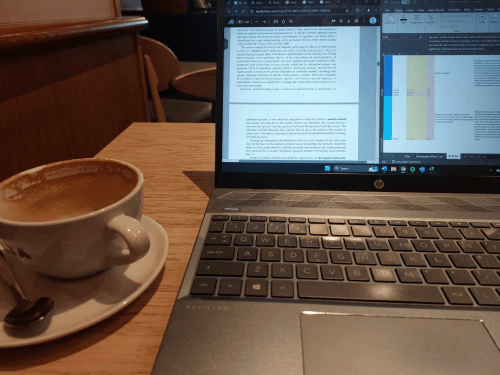
Back in September, I submitted my final dissertation for my Master of Science in International Social Policy and Welfare. The masters was not what I expected at all, but at the same time it was pretty much what I anticipated.
During my undergraduate degree, I never really felt that my socio-economic status effected my time at university that much. Of course, it did to a certain level, but it never felt overt. Perhaps the more diverse student population made me feel that way, as going to university and studying at undergraduate level is an opportunity that a range of people get, from a range of backgrounds. Since finishing my masters and beginning my PhD level study, I’m starting to appreciate how entering postgraduate study as a working class person can be particularly challenging. Applying for my masters, and my PhD, was extremely challenging as I didn’t know anyone else who had done it previously, being the first in my family and peers to continue so far with formal education.
In light of this, I really wanted to write this entry sharing some of the things I have learnt and realised during my postgraduate study. Hopefully this could maybe reach someone who is the first of their family or circle of friends, for whatever reason, to take the step into postgraduate education.
For context, my masters was a year at Anglia Ruskin University and entirely course work based with a fifteen thousand word dissertation carried out in the third semester. Here are some of my most prominent realisations and things to consider about postgraduate study in the social sciences.
1- A masters is not like a repeat of the third year of your undergraduate degree:
So perhaps I was slightly naïve when I started my masters thinking this would be the case. I thought I’d be writing 2,500- 3,000 word essays every so often then calling it a day, maybe 3,500 at a push. This wasn’t the case, some of my essays were 3,500 words, but the majority were 4,000 or 6,000 words typically. It felt daunting to start of with, but as you explore issues more critically, widely and with greater complexity, the word count really does get used up easily.
2- You might get to practise your presentation skills:
As someone who doesn’t typically enjoy presenting, this was difficult for me. But often your masters peer group is smaller, and your topic is really tailored to what you want to study, so its not as bad as doing it at undergraduate level, at my university, three out of the four modules I took involved some presenting.
3- The dissertation sounds scary to start off with:
I started my masters just under four months after finally finishing my undergraduate dissertation, so I had the stress and exertion still fresh in my mind. I was nervous thinking about how I was going to conduct research and write up a 15,000 word masters dissertation, especially as the dissertation module only formally started in the final semester (12 weeks before submission). But the whole point of education is learning how to do things you currently cannot do, if I attempted to do my research and masters dissertation in the first month of the course, I would have probably catastrophically failed, but that’s sort of the whole point. Writing lengthier essays, exploring ideas further and practising applying theoretical frameworks to other issues prepared me for the dissertation.
4- Make a Gantt chart:
Linked to number 3, my Gantt chart saved my life during my dissertation. You can easily make one on Excel, I also broke down my work into week chunks, and at the top I wrote any social commitments so I had a clear idea on how much work I could realistically aim to get done each week. You can see lots of examples of this time management strategy online by searching for google images of Gantt charts, below is an example of the one I’ve made for my PhD.

5- Read, read, read:
Demonstrate that you have wider understanding of a concept, that goes beyond the lectures and seminars. And read for pleasure too, reading long documents is a skill and skills need practise and rehearsal! But if there is a key document/ paper that you simply just can’t get into the groove of, copy and paste the text into a word document and use the text to speech function and listen to it like a podcast.
6- It’s really independent:
At my university, we had six hours of face to face contact per week. So this means a lot of independent study. I found trying to maintain self discipline and routine more helpful than maintaining motivation; motivation is something that can be really unstable depending on your mood, and you can’t necessarily gain motivation when you don’t have it. But sticking to routines and developing an environment of self discipline is something you have a bit more control over, but remember to carve rest periods into that routine.
7- A word on using AI:
Universities often have their own policy on using AI. Personally, I would avoid it and I haven’t used it for any of my university work across both degrees and I’m not planning on doing so for my PhD. However, that being said, if you do want to use it, check the university’s AI policy, clarify with your lecturers, double check information with additional sources and do not use it just to do your work. I know some students use it to gather preliminary sources or to time manage. For one of my Masters module, three people used AI to make their presentations, and it was painfully obvious, very embarrassing for them and it is academic misconduct.
8- Consider PhD options a few months into your masters:
Being extremely early on in my PhD journey (I started the programme in January) I can only give one piece of advice regarding it so far. Start considering things to do with your PhD a few months into your masters. I didn’t realise how extensive the application processes are, most universities will ask you to create a research proposal- universities I looked at ranged between a 1,000- 2,500 word count- and some ask for an academic and professional CV. Choosing a university isn’t as simple as undergrad or even masters study, you need to find a university that has supervisors that supervise the topic you want to research, then they sometimes like you to identify an appropriate supervisor and send the research proposal draft to them before submitting an application. Some supervisors may then want to talk to you about your research multiple times before recommending you to apply/ giving an offer to you. But don’t panic if you leave it later, or can’t cope with thinking about those things during your masters. I only started seriously applying a month after my Masters finished, and I still had just enough time to figure it all out and get it done in time.
Share this:


Killed with kindness #RaceEd

What does it say about the education sector that we don’t say what we mean? What does it say that I attended a conference on racism at universities that didn’t have racism in the title? “Racial harassment” is what they called it, as in Westminster Higher Education Forum Keynote Seminar: Priorities for Tackling Racial Harassment & Improving the BAME Experience in HE. Racial harassment? Racism. Name it. Own it. We’re nearly in 2020 and we’re still wrapping these issues in bubblewrap to make it more palatable for, dare I say, senior management at UK universities (overwhelmingly White). Should we draw a nail? Pop. Pop. Pop.
Arising from my bed at 5:45am to make a 7:30am(ish) train, only to arrive at this conference feeling a bit awkward. The whole delivery felt “preachy” from the get-go. Being lectured on race by mainly White middle class people brought me back to first year on my Creative Writing degree where I did a number of literature modules, delivered by a lecturer who talked about slavery like a trivial matter. That’s my family history you’re talking there!
As Vice President BME at Northampton, I’m facing more and more problems with the language and rhetoric we use around race. The sector lumps all Black and brown students together and calls them BME / BAME. What about the term people of colour? I, too, am guilty of using “people of colour” and do myself have issues with it. It’s probably the best of the worst.
The term B(A)ME is not homogeneous. Even among Black people, there is differences. i.e between African and Caribbean, as well as Black British people whose families come from those places. Even to call someone African; there are fifty-four different nations in Africa, each with their own languages, culture, traditions and so on. Nigeria alone has over 250 different languages. But we continue with BME and BAME. Racial / cultural identity matters. Do we lump all White people together? No. And I bet if you called someone from Belfast, English, they’d have something to say!
Watching Dr. Zainab Khan (Assoc. Pro-Vice Chancellor at London Met) speak was a breath of fresh air, telling it like it is. And having been to a few conferences like this, it seems to me that the sector is more set on managing racism than taking to steps to eradicate it. Both Dr. Khan, and Fope Olaleye (Black Students’ Officer at NUS) brought a much needed clarity to racism (not racial harassment) at our universities, as well as institutional racism. It was great to hear comments on Macpherson and Critical Race Theory too.
And in my opinion, best practice is the brutal, honest truth. Not statistics, but qualitative data. Real life experiences and true stories by people on the ground experiencing this on a day-to-day.
The Royal Over-Seas League private members club was our host. Plaques to Britain’s colonial past in what was then British India hung on the wall. Staff meandered in capes and gowns, and plums in their mouths. What’s more, it was six speakers before a Black or brown person came to the floor. As a Students’ Union, we did not have to pay to attend. But others did pay the three-figure entrance fee. And there sat problem number one, why do these conferences seek money for attendance? Are they cashing in on Black and brown trauma? Is there an argument of ethics to be had here?
During the half-day conference there were four non-White speakers. This did not occur until towards the end of proceedings, in what felt like a very shoehorned state of affairs. Again, I felt that I was being preached at on my own narrative of racism in higher education. Whitesplaining is very real, when White British people talk about racism like its their lived experience.
At an event, wherein, we discussed things like the ethnicity award gap, decolonising the curriculum and anti-racist learning, to have a conference of this matter in a place that was overtly classist and elitist with nods to a system which in itself was built of white supremacy, it’s quite difficult to not see the irony in it all. We also discussed institutional racism in the same breath as decolonial thinking. Ha! And really, all you can do is laugh.

White British people organising events on behalf of Black / brown people on themes that impact us more than them, on symptoms that were originally created by the White elite – in the jaws of colonisation and the whims of European empires. The times that made Britain “great” – imperialism in the tint of gold, glory and god, eclipsed by the Ritz in London’s southwest as I bump into austerity and homelessness, like cold corpses by Green Park.
In the making of Westminster Higher Education Forum Keynote Seminar: Priorities for Tackling Racial Harassment, the White middle class stands tall as colonialism walks with us in the present. The bellowing voice of White privilege. I know plenty of students that would have come to this. Alas, this forum fell into the trap that many discussions have fallen into. Well-meaning White people telling us what we ought to do about racism.

Whilst I made some valuable connections, the wider narrative of whitesplaining ran riot, like Robert Redford and Meryl Streep spread-eagled across the plains in Out of Africa. Diversity in panel discussions is a must. It was functional in concept, but the swaggering thoughtlessness in venue, entry fee and panellists left for a very awkward-feeling in the audience.
If these types of conferences aren’t done properly (from diverse panels to organisational competence), are we not just feeding the racist systems we want to deconstruct?
Share this:


my dyspraxia is making order out of chaos
Inspired from “On being a University Student with Asperger Syndrome” – Stephanie Nixon

When I returned for my third year at the new Waterside Campus in October 2018, my world fell apart. It was like the sky was falling: confused at the layout, annoyed at the classroom style, mobile desks in my poetry classes (on BA Creative Writing). I thought the university had gone mad. What were they thinking? I was now used to Avenue Campus. It was nice. It was familiar. It was comfortable. And honestly, I never thought I’d ever go to university, since I had extra lessons every week only to just maybe have a chance at keeping up with everyone else. I struggled to achieve academically at both GCSE and A-Level. What they’d now label Special Educational Needs (or SEN). Another box. And, at nine years old I was diagnosed with the development disorder known as Dyspraxia.

So, now fifteen years diagnosed. A disorder that impacts the way brain orders movement and thought. It really is a wonder how I got to grips with cricket, both with bat and ball. Having five and half ounces thrown at me at school pushed me into the deep end. It showed me how to hide it a bit more. At the crease, my sense of direction is very good. In villages, it’s good. In the home counties, my sense of direction is good. It’s familiar. It’s comfortable. But drop me in London or New York. Ha! I navigate those places with GPS and headphones, someone speaking to me, guiding me. Really like Iron Man. Though, Google Maps is no match for J. A. R. V. I. S or F. R. I. D. A Y.
I have to find my way through verbal instructions. And over the years, like with any condition, hidden or not, you develop coping mechanisms. And I lived set on not playing the victim. No special treatment for Tré (for it not infringe on my life). I tried to live like everyone else. Why would I do that when I wasn’t like everyone else? That’s a question, isn’t it? Why?
I would avoid certain types of places. Things that were very twisty and turny were a no-go. Fairs. Oh, and UCL destroyed my spirit when I visited. Basically, a real world version of Hogwarts. No talking pictures, but the stairs like to change!
Northampton College’s Booth Lane corridors challenged me between the years of 2012 and 2016, where I went from BTEC Level 2 qualifications through A-Levels and into the first year of a HND before coming to university. Where I was befuddled by the hexagonal building. Or was it octagonal? I forget. One of those types of shape where my perceptions of depth were challenged five days a week for four years.

Anyone that’s seen me work, knows that I love a good folder. I love highlighters. Clipboards, post-it notes. I’m a stationary freak! At work, I print more than most. I like to lay things out on a desk, or seven. Or have it on a pinboard. I spread my belongings out and apologise later. I love White boards. I don’t like E-Books. That’s a struggle. Give me that new book smell.
I found many of the discussions around Dyspraxia to be about co-ordination but it’s also includes perception and memory. As a youth, tasks would take me longer to do simply because of the thought processes I would take to go through and then translating those thoughts to action.
Dyspraxia, often confused with clumsiness, is more than just having two left feet. I struggled to learn – write, read, learn, to play sports. But I got it eventually. And even to walk in a straight line. From scanning your card on the barriers to pressing buttons on the lifts to ascending the stairs and paying for stuff at the checkout, Dyspraxia is real and often goes undiagnosed. And the links between attainment and academic performance; is it worth looking into things like this in regards to attainment in HE – be it, race, class, sexuality or otherwise?
I knew I was academically able, but in the education system (Level 1 – 4 + FE) as it stood, I was not achieving academically on paper. Graduating with a 2.1 in Creative Writing in July 2019, it showed me that the problem wasn’t me (as I once thought), but the sector, in how it deals with and treats individuals with SEN and other issues that can act as barriers to study.
I didn’t choose to talk about my Dyspraxia on entry to university because I wanted people to see me as a person, not a dyspraxic person (for some tick box exercise). At school, my Dyspraxia was humiliating. Poor co-ordination 70% of the time. Spilling drinks. Missing my mouth at dinner. Walking into stuff. Occasionally ridiculed for it by teachers, who meant it in jest but didn’t have a clue.
So, anything that makes order of chaos is a gift. Lists. Boards, like the ones you see in crime dramas with all the bits of a crime scene – photographs, bulletpoints etc. Anything that brings clarity is a godsend. To learn, I had to teach myself how other people think. That’s why doing A-Level Communication and Culture helped a lot. I had to analyse people. Why do people think that way in certain situations? The series Lie to Me was helpful too, teaching me how to come to conclusions, finding method in madness.
It took me six months to accept Waterside, and another six months to get used to it. The almost Milton Keynes-like repetition, John Carpenter’s They Live in the view of John Franklin and Thomas Beckett. George Orwell laughing violently at the smell of rotten cabbage and hegemony.
But I have my lists. Boards. Cutting out the noise. Stripping through the bullshit; an alternative view of society through the lens of someone who sees the world different.
Share this:


Whiteness Walks into a Bar
When we think about race: the narratives, stories and experiences of people of colour are raised. And to be “of colour,” is essentially tied to anything from Black to Polynesian, Middle Eastern and Asian, including mixed-race. The perception of whiteness is the absence of blackness / brownness, that makes people that look like me up to nine times more likely to be stop and searched by police in Northamptonshire than a White person. But white is a colour too, is it not? When it comes to talks about “whiteness,” not a peep is to be heard from the people it impacts most, White European-looking people. Shocked? Not really! It can’t just be up to people of colour to talk to about whiteness. White people need to be talking about whiteness!
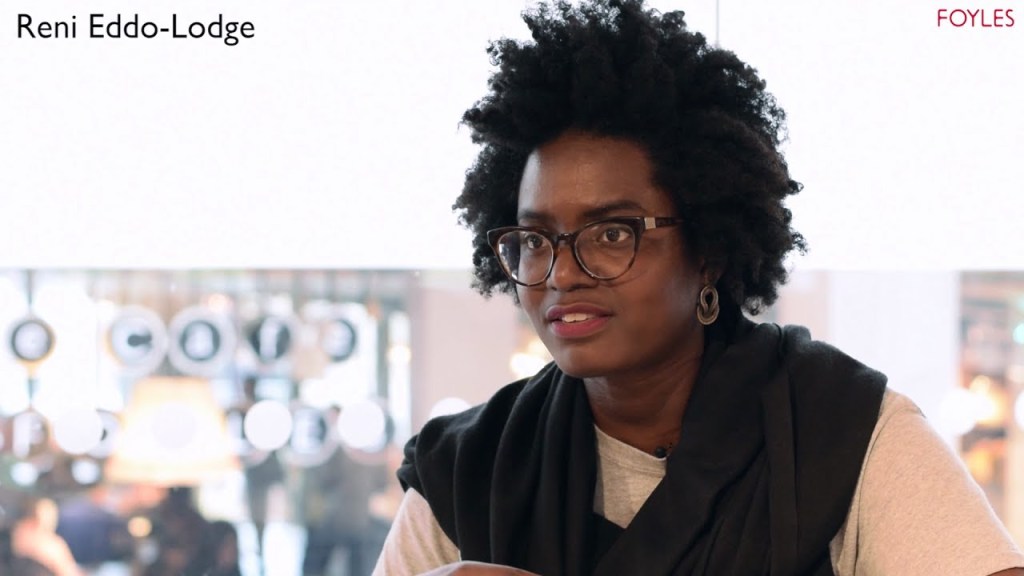
Photo Credit: Foyles
In the conversations about unconscious bias, as far as race is concerned, too often the focus is on the prejudice and discrimination that’s inherently built into the system. That’s fine and all, but unconscious bias also impacts White people. Whilst it’s a tool of institutional violence to working-class people, irrespective of race, bias also favours those born into the hue of lighter skin.
Look at drugs, for example; Black people are routinely stereotyped as drug dealers. However, going to private schools for twelve years in my youth showed me that the worst consumers and dealers of drugs were middle-class White people. The ones whose parents were lawyers and judges or rich landowners with reputations to uphold. And when you watch shows like The Wire or Toy Boy, which shows Black people a certain way, you begin to see how these racial stereotypes have taken root in people’s minds.
Whilst working-class White people will struggle, their struggles won’t be because they are White.
How whiteness is peddled can be both positive and negative. There are examples of White people using their privilege for great good, and great evil: from the White clergy that marched at Selma, to groups like Extinction Rebellion, slammed for being a White middle-class movement that glamourises arrest. Arrest is racialised and a White encounter with the police is not the same for a person who is not White, loaded with history: from Brixton to Emmett Till, lynchings and slave plantations. Call it stop and search, call it police brutality; call it the Southampton Insurrection, same symbols, different uniform, be it with blue sirens or burning crosses.
Looking at XR, Brock Turner and the Selma peace march, here lies a spectrum of White privilege: from the freedom to protest (without thinking of the consequence of arrest) – all the way up to rape and sexual assault on university campuses, with The People v. Turner.
White Privilege is existing in society without the consequences of racism, as discussed by Reni Eddo-Lodge in Why I’m No Longer Talking to White People About Race. Whiteness is living in a postcolonial world, disregarding the impact colonialism has in how race (historically), and the racial neo-politic continues to permeate society: from racism on university campuses to the legacy of colonialism, stop and search and the ongoing Windrush crisis.
Whiteness is cultural appropriation and the loots in the V&A / the British Museum. It’s White British academics having more authority on racism than academics of colour, even when it’s their lived experience. Stories lodged in their throats. It’s teaching children that Christopher Columbus was an explorer, finder – not invader, rapist, coloniser, thief, slaver.
What can White (British) academics tell you about racism other than what’s in theories and articles? Whilst White British people can experience prejudice, I believe racism is about power, and when you look at who holds the social power in society (in this country), it’s Whites, British or otherwise.
And you can bet that employer is second guessing the CVs with names like Muhammad or Asante, not Smith and Jones or even Lowell or Roberts (though those last ones could just as well be a Black person too). The legacy of colonialism in our names. The legacy of whiteness is in Tré Ventour, from the slaves of the Fontenoy Estate in St. George, Grenada. And if you want to get that loan, or that promotion, “Debroah, you should be less confrontational.” Why do Black people have to censor their mannerisms for their White colleagues? Laugh quieter. Walk slower. Breathe lighter.
I write this blog in a language I didn’t get to choose. It was given to my ancestors at the end of the sword, along with the songs of Solomon, bibles and this name that I carry. White Privilege is the freedom to choose – your language, beliefs, name, your essence of being. But you call us stupid.
Whiteness walks into a bar like he owns it. The bar is any institution. Any industry. Any topic of discussion. Brexit. Black History Month. Diwali. Whiteness is an authority because whiteness built the bar for himself.
Whiteness asks:
“Where did you learn to speak English so well?”
Whiteness asks:
“Do you hate White people? Why do you talk about slavery? It’s long lost, in the past
Whiteness asks:
Explain to me how I can be a better person

Critical Race Pedagogy (Theory) tells us that it’s deeper than the individual racist. It’s the system. How do you fight an abstraction? How do you get more Black and brown people into policing? Into academia or education?
However, if you don’t address the violence already in those spaces, what you’re doing is sending people of colour (unarmed) into a conflict, POWs with no hope of escape.
Works of Interest
Legacies of British slave-ownership – LBS, University College London.
Top Boy (2011 – 2013) – Channel 4 (Netflix)
People of the State of California v. Brock Allen Turner
People of the State of California v. Orenthal James Simpson (O. J Simpson)
The People v. O. J. Simpson: American Crime Story (2016) – FX (Netflix)
‘The True Legacy of Christopher Columbus’ – George Monbiot (YouTube)
‘Whiteness Walks into a Bar’ – by Franny Choi (Button Poetry, YouTube)
‘White Privilege’ – by Kyla Jenée Lacey (WAN Poetry, YouTube)
The Wire (2002 – 2008) – HBO
Why I’m No Longer Talking to White People About Race – Reni Eddo-Lodge

 Thoughts from the criminology team