
Home » Zemiology
Category Archives: Zemiology

Crime II: Nature and Nurture?
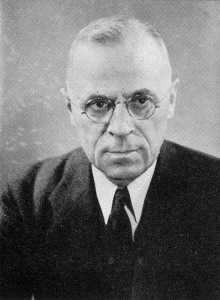
Fifty years after Lombroso’s theory of the “born criminal” an American criminologist explored the origins of criminality from a different perspective. For Edwin Sutherland people weren’t born criminal but more likely influenced by their environment. Differential association became a theory that changed the focus from biology to environment. This change signified the change of focus within criminology from biological attributes to social features.
This change, whilst it appears to have capture a wider social sciences debate at the time is also the outcome of trying to understand a world in motion. Sutherland’s theory comes in the early 20th century after the First World War and a massive economic crash. These placed in doubt the scientific and political economy of the time, putting many of these earlier ideas to the test. Popular movements challenged the authority of the state and the way hegemony suppressed people. Differential association was exploring how people learn crime by observing others; it becomes what Kornhouser called a ‘cultural deviance theory’.
What Sutherland articulated is that crime is learned through group conflict, again attempting to explain all types of crime like the biological theories before. The 20th century with its fast pace, European (World) wars, was the embodiment of modernity, progression and change. The world outside Europe began to rise against colonial rule, whilst civil rights became a rallying objective for many disenfranchised groups. In most countries worldwide women got the vote in the 20th century whilst, many countries recognised unions, and civil rights organisations, a consequence of people’s mobilisation.
It comes as no surprise then that differential association was a theory of crime that tried to account for social change and understand criminality as a process that moves within this change. The foundations of the theory in its simplest form are straightforward, covered in 9 main points:
1. Criminal behavior is learned from other individuals.
2. Criminal behavior is learned in interaction with other persons in a process of communication.
3. The principle part of the learning of criminal behavior occurs within intimate personal groups.
4. When criminal behavior is learned, the learning includes (a) techniques of committing the crime, which are sometimes very complicated, sometimes simple; (b) the specific direction of motives, drives, rationalizations, and attitudes.
5. The specific direction of motives and drives is learned from definitions of the legal codes as favorable or unfavorable.
6. A person becomes delinquent because of an excess of definitions favorable to violation of law over definitions unfavorable to violation of the law.
7. Differential associations may vary in frequency, duration, priority, and intensity.
8. The process of learning criminal behavior by association with criminal and anti-criminal patterns involves all of the mechanisms that are involved in any other learning.
9. While criminal behavior is an expression of general needs and values, it is not explained by those needs and values, since non-criminal behavior is an expression of the same needs and values.
The theory is more than a compilation of points and citing them is informative, but it doesn’t really explain the reach and extent. As a general theory of crime it can account for violent crime, theft and even white collar crimes. This reach of theory coincided with the wider discussion on “normative conflict” that focused on cultures. As discussions on cultural dominance, subcultures and the role of social groups became a sociological and criminological point these ideas introduced by Sutherland seemed to bare relevance.
There were questions already regarding the theory’s basis in terms of clarity as a cultural deviance theory, when culture focused away from poverty and social struggles. The cultural conflict seemed to resonate with certain crime categories, but it could not account for harm, leaving zemiologists to doubt the accuracy of its scope as theory. Furthermore, whilst the focus moved on from an arbitrary biology to the role of the environment some of the fundamental problems expected to be resolved in a general theory of crime remained unanswered.
So what is the answer? We can safely say that crime and most importantly criminality isn’t the product of a singularity nor its binary. How can we account for example for a social phenomenon whose definition of crime (in some instances) relies on law. A mechanism that the establishment uses to safeguard its privileges and position. The definitional factors therefore ought to transcend general conventions of biology or social interaction. Often they don’t, they merely describe the phenomenon but in closed cultural formats. There is a much more interesting and complex explanation that take us away from this binary. If you are more curious and you want to know more, why not join a criminology course and see if you can get the answer you expect or not. Criminology is a fascinating discipline not because we talk blood and bones but because we reflect on the current state of crime and imagine a world of crime (or free of crime) in the future. If you wish to share that imagination you can but join us!
https://www.northampton.ac.uk/courses/criminology-ba-hons/ https://www.northampton.ac.uk/courses/criminology-phd/ https://www.northampton.ac.uk/courses/criminology-with-psychology-ba-hons/ https://www.northampton.ac.uk/blog/why-i-chose-criminology/
Share this:


Is it time to unleash your criminological imagination?

In this blog entry, I am going to introduce a seemingly disconnected set of ideas. I say seemingly, because at the end, all will hopefully make sense. I suspect the following also demonstrates the often chaotic and convoluted process of my thought processes.
I’ve written many times before about Criminology, at times questioning whether I have any claim to the title criminologist and more recently, what those with the title should talk about. These come on top of hundreds of hours of study, contemplation and reflection which provides the backdrop for why I keep questioning the discipline and my place within it. I know one of the biggest issues for me is social sciences, like Criminology and many others, love to categorise people in lots of different ways: class, race, gender, offender, survivor, victim and so on. But people, including me, don’t like to be put in boxes, we’re complex animals and as I always tell students, people are bloody awkward, including ourselves! There is also a far more challenging issue of being part of a discipline which has the potential to cause, rather than reduce or remove harm, another topic I’ve blogged on before.
It’s no secret that universities across the UK and further afield are facing many serious, seemingly intractable challenges. In the UK these range from financial pressures (both institutional and individual), austerity measures, the seemingly unstoppable rise of technology and the implicit (or explicit, depending on standpoint) message of Brexit, that the country is closed to outsiders. Each of the challenges mentioned above seem to me to be anti-education, rather than designed to expand and share knowledge, they close down essential dialogue. Many years ago, a student studying in the UK from mainland Europe on the Erasmus scheme, said to me that our facilities were wonderful, and they were amazed by the readily available access to IT, both far superior to what was available to them in their own country. Gratifying to hear, but what came next was far more profound, they said that all a serious student really need is books, a enthusiastic and knowledgeable teacher and a tree to sit under. Whilst the tree to sit under might not work in the UK with our unpredictable weather, the rest struck a chord.
The world seems in chaos and war-mongers everywhere are clamouring for violence. Recent events in Darfur, Palestine, Sudan, Ukraine, Venezuela and many other parts of the world, demonstrate the frailty, or even, fallacy of international law, something Drs @manosdaskalou, @paulsquaredd and @aysheaobrien1ca0bcf715 have all eloquently blogged about. But while these discussions are important and pertinent, they cannot address the immediate harm caused to individuals and populations facing these many, varied forms of violence. Furthermore, whilst it’s been over 80 years since Raphäel Lemkin first coined the term ‘genocide’, it seems world leaders are content to debate whether this situation or that situation fits the definition. But, surely these discussions should be secondary, a humanitarian response is far more urgent. After all, (one would hope) that the police would not standby watching as one person killed another, all whilst having a discussion around the definition of murder and whether it applied in this context.
The rise of technology, in particular Generative Artificial Intelligence, has been the focus of blogs from Drs @sallekmusa, @5teveh and myself, each with their own perspective and standpoint. Efforts to combat the harmful effects of Grok enabling the creation of non-consensual pornographic images demonstrate both new forms of Violence Against Women and Girls [VAWG] and the limitations of control and enforcement. Whilst countries are rushing to ban Grok and control the access of social media for children under 16, it is clear that Grok and X are just one form of GAI and social media, there is seemingly nothing to stop others taking their place. And as everyone is well aware, laws are broken on a daily basis (just look at the court backlog and the overflowing prisons) and with no apparent way of controlling children’s access to technology (something which is actively encouraged in schools, colleges and universities) these attempts seem doomed to fail. Maybe more regulation. more legislation isn’t the answer to this problem.
Above I have briefly discussed four seemingly intractable problems. In each arena, we have many thousands of people across the globe trying to solve the issues, but the problems still remain. Perhaps we should ask ourselves the following questions:
- Maybe we are asking the wrong people to come up with the answers?
- Maybe we are constraining discussions and closing down debate?
- Maybe by allowing the established and the powerful to control the narrative we just continue to recycle the same problems and the same hackneyed solutions?
What if there’s another way?
And here we come to the crux of this blog, in Criminology we are challenged to explore any problem from all perspectives, we are continually encouraged to imagine a different world, what ought or could be a better place for all. I have the privilege of running two modules, one at level 4 Imagining Crime and one at Level 6 Violence. In both of these students work together to see the world differently, to imagine a world without violence, a world in which justice is a constant and reflection a continual practice. Walking into one of these classrooms you may well be surprised to see how thoughtful and passionate people can be when faced with a seemingly unsolvable problem when everything on the table is up for discussion. Although often misattributed to Einstein, the statement ‘Insanity is doing the same thing over and over again and expecting different results’ seems apposite. If we want the world to be different, we have to allow people to think about things differently, in free and safe spaces, so they can consider all perspectives, and that is where Criminology comes in.
Be fearless and unleash your criminological imagination, who knows where it might take you!
Share this:


The future of criminology

If you have an alert on your phone then a new story may come with a bing! the headline news a combination of arid politics and crime stories. Sometimes some spicy celebrity news and maybe why not a scandal or two. We are alerted to stories that bing in our phone to keep ourselves informed. Only these are not stories, they are just headlines! We read a series of headlines and form a quick opinion of anything from foreign affairs, transnational crime, war, financial affairs to death. We are informed and move on.
There is a distinction, that we tend not to make whenever we are getting our headline alerts; we get fragments of information, in a sea of constant news, that lose their significance once the new headline appears. We get some information, but never the knowledge of what really happened. We hear of war but we hardly know the reasons for the war. We read on financial crisis but never capture the reason for the crisis. We hear about death, usually in crime stories, and take notice of the headcount as if that matters. If life matters then a single loss of life should have an impact that it deserves irrespective of origin.
After a year that forced me to reflect deeply about the past and the future, I often questioned if the way we consume information will alter the way we register social phenomena and more importantly we understand society and ourselves in it. After all crime stories tend to be featured heavily in the headlines. Last time I was imagining the “criminology of the future” it was terrorism and the use of any object to cause harm. That was then and now some years later we still see cars being used as weapons, fear of crime is growing according to the headlines that even the official stats have paused surveying since 2017! Maybe because in the other side of the Atlantic the measurement of fear was revealed to be so great that 70% of those surveyed admitted being afraid of crime, some of whom to the extent that changes their everyday life.
We are afraid of crime, because we read the headlines. If knowledge is power, then the fragmented information is the source of ambiguity. The emergence of information, the reproduction of news, in some cases aided by AI have not provided any great insight or understanding of what is happening around us. A difference between information and knowledge is the way we establish them but more importantly how we support them. In a world of 24/7 news updates, we have no ideological appreciation of what is happening. Violence is presented as a phenomenon that emerges under the layers of the dark human nature. That makes is unpredictable and scary. Understandably so…
This a representation of violence devoid of ideology and theory. What is violence in our society does not simply happens but it is produced and managed through the way it is consumed and promoted. We sell violence, package it for patriotic fervour. We make defence contracts, selling weapons, promoting war. In society different social groups are separated and pitted against each other. Territory becomes important and it can be protected only through violence. These mechanisms that support and manage violence in our society are usually omitted. A dear colleague quite recently reminded me that the role of criminology is to remind people that the origins of crime are well rooted in our society in the volume of harm it inflicts.
There is no singular way that criminology can develop. So far it appears like this resilient discipline that manages to incorporates into its own body areas of work that fiercely criticised it. It is quite ironic for the typical criminology student to read Foucault, when he considered criminology “a utilitarian discipline”! Criminology had the last laugh as his work on discipline and punishment became an essential read. The discipline seems to have staying power but will it survive the era of information? Most likely; crime data originally criticised by most, if not all criminologists are now becoming a staple of criminological research methods. Maybe criminology manages to achieve what sociology was doing in the late 20th century or maybe not! Whatever direction the future of criminology takes it will be because we have taken it there! We are those who ought to take the discipline further so it would be relevant in years to come. After all when people in the future asked you what did you do…you better have a good answer!
Share this:


Extortionate Concert Tickets and the Cost of Access

In the realm of live music, few things can compare to the amazing feeling of a packed venue, a beloved band, and the shared energy of thousands of fans singing in unison. But for many, especially those from lower socio-economic backgrounds, this dream remains frustratingly out of reach not due to lack of passion, but because of skyrocketing ticket prices driven by monopolized ticketing systems. Using the example of the band Oasis and their upcoming tour.
The recent announcement of Oasis’ long-awaited reunion concerts sent shockwaves through the music world; particularly for fans who have waited over a decade to hear some of their classic songs sung live again. The excitement was quickly tempered by the reality of ticket prices and the process of getting tickets. Standard Oasis tickets before any premium charges were reportedly being resold for upwards of £300, with official prices starting around £75. For a band rooted in working-class Manchester, the irony is stark: the people who Oasis originally resonated with most are now priced out of seeing them live. Oasis is just an example of this, this can be seen with many different artists globally, and it raises a question of should something be done, and if so, who needs to make the first step and what should that first step be?
At the heart of this issue are ticketing giants who dominate the live event landscape. These companies often employ dynamic pricing models similar to airline pricing where ticket prices fluctuate based on demand. In theory, this aims to reflect market value. In practice, it frequently drives up costs to exploit fan enthusiasm, creating a system that prioritizes profit over accessibility. Worse still, these companies allow and often profit from reselling schemes that further inflate prices. It is only recently where some sites have now put procedures in place for tickets to be resold at the same value to which they were purchased. Additionally, there is the issue of bots buying hundreds of tickets during presales then relisting them on other sites for extortionate prices.
Now to put it into perspective, are there more pressing issues globally that need to be addressed, the answer is yes. However, in the world of criminology where we are constantly thinking about harm, what should be a crime or criminalised, it poses an interesting question and debate. The consequences are significant, particularly for lower-income individuals. Live music, once a unifying and accessible cultural experience, has become a luxury. For a working-class fan, spending £300 on a single concert excluding travel, accommodation, and other costs is unlikely. Add to this the current economic constraints they may be facing elsewhere, and it makes it even more unlikely.
In a world where there are so many pressures, restrictions, worries and concerns, music can be a form of escape and enjoyment. So, should ticket companies be held more accountable? Should there be stronger regulations to prevent price gouging and limit resale abuses? Governments could enforce price caps, mandate transparent pricing structures, or require a certain percentage of tickets to be sold at accessible prices. Additionally, artists themselves may have a role to play; by partnering with ethical ticket vendors or pushing for more equitable ticket distribution. I managed to get tickets at face value price after trying for the third time recently, this was through a process of receiving a unique code via email as a result of being identified as one of the many who had failed on previous occasions. In this sense, I may be classed as one of the lucky ones.
Oasis, a band that once embodied the voice of working-class Britain, now symbolizes a broader issue: the commercialisation of joy. Music should transcend economic boundaries rather than reinforcing them.
Share this:


Global perspectives of crime, state aggression and conflict resolutions

As I prepare for the new academic module “CRI3011 – Global Perspectives of Crime” launching this September, my attention is drawn to the ongoing conflicts in Africa, West Asia and Eastern European nations. Personally, I think these situations provide a compelling case study for examining how power dynamics, territorial aggression, and international law intersect in ways that challenge traditional understandings of crime.
When examining conflicts like those in major Eastern European nations, one begins to see how geopolitical actors strategically frame narratives of aggression and defence. This ongoing conflict represents more than just a territorial dispute in my view, but I think it allows us to see new ways of sovereignty violations, invasions, state misconduct and how ‘humanitarian’ efforts are operationalised. Vincenzo Ruggiero, the renowned Italian criminologist, along with other scholars of international conflict including von Clausewitz, have contributed extensively to this ideology of hostility and aggression perpetrated by state actors, and the need for the criminalisation of wars.
While some media outlets obsess over linguistic choices or the appearance of war leaders not wearing suits, our attention must very much consider micro-aggressions preceding conflicts, the economy of war, the justification of armed interventions (which frequently conceals the intimidation of weaker states), and the precise definition of aggression vs the legal obligation to protect. Of course, I do recognise that some of these characteristics don’t necessarily violate existing laws of armed conflict in obvious ways, however, their impacts on civilian populations must be recognised as one fracturing lives and communities beyond repair.
Currently, as European states are demonstrating solidarity, other regions are engaging in indirect economic hostilities through imposition of tariffs – a form of bloodless yet devastating economic warfare. We are also witnessing a coordinated disinformation campaigns fuelling cross-border animosities, with some states demanding mineral exchange from war-torn nations as preconditions for peace negotiations. The normalisation of domination techniques and a shift toward the hegemony of capital is also becoming more evident – seen in the intimidating behaviours of some government officials and hateful rhetoric on social media platforms – all working together to maintain unequal power imbalance in societies. In fact, fighting parties are now justifying their actions through claims of protecting territorial sovereignty and preventing security threats, interests continue to complicate peace efforts, while lives are being lost. It’s something like ‘my war is more righteous than yours’.
For students entering the global perspectives of crime module, these conflicts offer some lessons about the nature of crime – particularly state crimes. Students might be fascinated to discover how aggression operates on the international stage – how it’s justified, executed, and sometimes evades consequences despite clear violations of human rights and international law. They will learn to question the various ways through which the state can become a perpetrator of the very crimes it claims to prevent and how state criminality often operates in contexts where culpability is contested and consequences are unevenly applied based on power, rather than principle and ethics.
Share this:


Everyone loves a man in uniform: The Rise and Fall of Nick Adderley

Some of our local readers will be familiar with the case of former Chief Constable Nick Adderley who was recently dismissed from Northamptonshire Police. The full Regulation 43 report can be found here and it provides an interesting, and at times, comical, narrative of the life and times of the now disgraced police officer.
The Regulation 43 report describes Adderley’s creation of a “false legend” of military service, whereby this supposed naval man fought bravely to protect the Falkland Islands (despite only being 15 when the conflict ended), rescued helicopters and ships in the height of battle, commanded men, was a military negotiator during the Anti-Duvalier protest movement in Haiti. In short, an all round real-life Naval action man! It’s pity for Adderley, that the Regulation 43 panel found none of this was true, instead a ‘Walter Mitty‘ like trail of lies were revealed throughout the investigation.
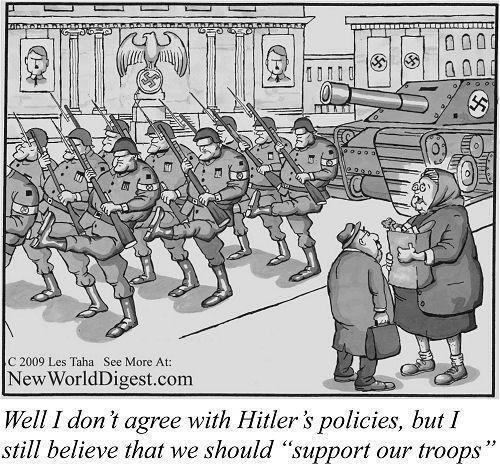
Nevertheless, not content with his brave military career, our intrepid hero decided he would take his considerable (in his estimation at least) skills into policing. First applying to Greater Manchester Police [GMP] (who turned him down on the grounds that there were ‘better candidates’) and then Cheshire Police. From Cheshire Police, he went to GMP and then to Staffordshire Police, finally arriving in Northamptonshire in the summer of 2018. Despite all of these different forces, all of the different application and promotion forms that our brave hero completed, not one person bothered to check that he was telling the truth. To check that this man, responsible for upholding law and order, was a fit candidate for the role. instead, I suspect, like so many it seems, we are so in love with our military and all its trappings, that we lose any sense of criticality when it comes to uniforms. After all who would dare to question a Chief Constable, whether a police officer, civilian worker or member of the public? Easier to keep parroting the mantra of “our brave boys”, than to think critically about institutions and their members, as the cartoon below demonstrates all too well.
At this point Adderley has been dismissed from Northamptonshire Police and banned from policing. In 2024 the Angiolini Inquiry published its report, which in part focused on police vetting and there is no doubt, post-Adderley the police as an institution, will undertake more soul searching. Additionally, some commentators have begun a campaign to have Adderley’s police pension reduced/removed. These matters will continue to rumble along for some time. But, in short, Adderley has been punished and publicly outed as a liar, but that does not begin to undo the immense harm his behaviour has inflicted on the community.
During his time at Chief Constable of Northamptonshire, Adderley called upon his supposed military history and experience to support his arguments and the decisions he made. For instance, the 2019 arming of Northamptonshire’s police with tasers or the 2020 launch of eight interceptors, described by Adderley as “a new fleet of crime-busting cars” or the 2021 purchase of “eight Yamaha WR450F enduro bikes“. To me, all of these developments scream the militarisation of policing. Since the very foundation of the Metropolitan Police in 1829, serving officers and the public have continually been opposed to arming the police, yet Adderley, with his military service, seemingly knew best. But what use is a taser, fast car or motorbike in everyday community policing, how do they help when responding to domestic abuse, sexual violence, or the very many mental health crises to which officers are regularly called? How do these expensive military “toys” ensure that all members of society feel protected and not just some communities? How can we ensure that tasers don’t do lasting harm to those subjected to their violence? Instead all of these developments scream a fantasy of both military and policing, one in which the hero is always on the side of the righteous, devoting his life to taking down the “baddies” by whatever means necessary.
Ultimately for the people of Northamptonshire we have to decide, can we view Adderley’s police leadership as the best use of taxpayers’ money, a response to evidence based policing or just a military fantasy of the man who lied? More importantly, the county and its police force will struggle to untangle Adderley’s web of lies and the harm inflicted on the people of Northamptonshire, making it likely that this entirely unevidenced push to militarise the police will continue unchecked.
Share this:


Zemiological Perspective: Educational Experiences of Black Students at the University of Northampton

As a young Black female who has faced many challenges within the education system, particularly related to behavioral issues, I noticed how the system can unintentionally harm black students. I observed that Black children’s experiences in the education system are not always viewed from a deviant perspective, because they are not inherently deviant. The institutional harm faced by Black students is not always a ‘crime’ nor is it illegal, yet it is profoundly damaging.
This realisation prompted me to adopt a zemiological perspective, drawing upon the work of Hillyard et al. (2004) to highlight the subtle yet impactful harms faced by Black students in the educational system. My primary objective was to uncover the challenges these students face, as outlined in my initial research question: ‘To what extent can the experiences of Black students in higher education be understood as a form of social harm?’ To achieve this, I analysed the educational experiences of Black students at the University of Northampton. This involved reviewing the university’s access and participation plans, which detail the performance, access, and progression of various demographics within the institution, with a particular focus on BAME students.
Critical race theory (CRT) was the guiding theoretical framework for this research study. CRT recognises the multifaceted nature of racism, encompassing both blatant acts of racial discrimination and subtler, systemic forms of oppression that negatively impact minority ethnic groups (Gillborn, 2006). This theoretical approach is directly correlated to my research and was strongly relevant. This allowed me to gain insight into the underlying reasons behind the disparities faced by Black students in higher education. As well as enabling me to unpack the complexities of racism and discrimination, providing a comprehensive understanding of how these issues manifest and persist within the educational landscape.
Through conducting content analysis on the UON Access and Participation Plan document and comparing it to sector averages in higher education, four major findings came to light:

Access and Recruitment: The University of Northampton has made impressive progress in improving access and recruitment for BAME students, fostering diversity and inclusivity in higher education, and surpassing sector standards. Yet, while advancements are apparent, there remains a need for more comprehensive approaches to tackle systemic barriers and facilitate academic success across the broader sector.
Non-Continuation: Alarmingly, non-continuation rates among BAME students at the University of Northampton have surpassed the sector average, indicating persistent systemic obstacles within the education system. High non-continuation rates perpetuate cycles of disadvantage and limit opportunities for personal and professional growth.
Attainment Gap: Disparities in academic attainment between White and BAME students have persisted and continue to persist, reflecting systemic inequalities and biases within the academic landscape. UON is significantly behind the sector average when it comes to attainment gaps between BAME students and their white counterparts. Addressing the attainment gap requires comprehensive approaches that tackle systemic difficulties and provide targeted support to BAME students.
Progression to Employment or Further Study: UON is also behind the sector average in BAME students progression in education or further study. BAME students face substantial disparities in progression to employment or further study, highlighting the need for collaborative efforts to promote diversity and inclusivity within industries and professions. Addressing entrenched biases in recruitment processes is essential to fostering equitable opportunities for BAME students.
Contributions to Research: This research deepens understanding of obstacles within the educational system, highlighting the effectiveness of a zemiological perspective in studying social inequalities in education. By applying Critical Race Theory, the study offers insights that can inform policies aimed at fostering equity and inclusion for Black students.
The findings hold practical implications for policy and practice, informing the development of interventions to address disparities and create a more supportive educational environment. This research significantly contributes to our understanding of the experiences of Black students in higher education and provides valuable guidance for future research and practice in the field.
Aside from other limitations in my dissertation, the main limitation was the frequent use of the term ‘BAME.’ This term is problematic as it fails to recognise the distinct experiences, challenges, and identities of individual ethnic communities, leading to generalisation and overlooking specific issues faced by Black students (Milner and Jumbe, 2020). While ‘BAME’ is used for its wide recognition in delineating systemic marginalisation (UUK 2016 cited in McDuff et al., 2018), it may conceal the unique challenges Black students face when grouped with other minority ethnic groups. The term was only used throughout this dissertation as the document being analysed also used the term ‘BAME’.
This dissertation was a very challenging but interesting experience for me, engaging with literature was honestly challenging but the content in said literature did keep me intrigued. Moving forward, i would love Black students experiences to continue to be brought to light and i would love necessary policies, institutional practises and research to allow change for these students. I do wish i was more critical of the education system as the harm does more so stem from institutional practices. I also wish i used necessary literature to highlight how covid-19 has impacted the experiences of black students, which was also feedback highlighted by my supervisor Dr Paula Bowles.
I am proud of myself and my work, and i do hope it can also be used to pave the way for action to be taken by universities and across the education system. Drawing upon the works of scholars like Coard, Gillborn, Arday and many others i am happy to have contributed to this field of research pertaining to black students experiences in academia. Collective efforts can pave the way for a more promising and fairer future for Black students in education.
References
Gillborn, D. (2006). Critical Race Theory and Education: Racism and anti-racism in educational theory and praxis. Discourse: Studies in the Cultural Politics of Education, 27 (1), 11–32. [Accessed 21 April 2024]
Hillyard, P., Pantazis, C., Tombs, S. and Gordon, D., (Eds), (2004). Beyond Criminology: Taking Harm Seriously, London: Pluto Press.
Milner, A. and Jumbe, S., (2020). Using the right words to address racial disparities in COVID-19. The Lancet Public Health, 5(8), pp. e419-e420
Mcduff, N., Tatam, J., Beacock, O. and Ross, F., (2018). Closing the attainment gap for students from Black and minority ethnic backgrounds through institutional change. Widening Participation and Lifelong Learning, 20(1), pp.79-101.
Share this:


Birth Trauma

I recently passed through Rugby Motorway Services with my family and I was amazed by what was on offer. It consisted of a free internal and external play area and the most baby friendly changing rooms that I have ever encountered. This visit to the Rugby services made me think;
Isn’t it a shame that the same amount of family friendly consideration is not found elsewhere.
Even more so;
Isn’t it a shame that many babies, mothers and birthing parents are treated with such a common and serious violence during the birth
The Birth Trauma Inquiry has been published this week, I am sure that CRI3003 students would be able to critique this Inquiry but in terms of the responses from mothers who have experienced birth trauma it makes for an incredibly harrowing read.
In the words of one mother;
‘Animals were treated better than the way we were treated in hospital’ (p.26).
Yet, none of these accounts of violence are surprising; casual conversations with friends, family, relatives resemble many of the key themes highlighted within the inquiry. The inquiry includes accounts of mothers before, during and after birth being ‘humiliated’ (p.20) and bullied, experiencing extreme amounts of pain, financial ruin, life limiting physical and mental health problems, due to institutional issues raised such as: negligence, poor professional practice, mistakes, mix ups, lack of consent, inhumane treatment, lack of pain relief and compassion. With the most serious consequences being baby and or mother loss.
The report also makes reference to at least a couple of incidents involving mobile phone usage. This did remind me of a conversation that I was having with a fellow criminologist quite recently. Aside from issues that have existed for a long time, it seems that the use of phones may impact on our ability to work in a safe and compassionate manner. I am sure that some staff scroll on phones when victims of crime report to the police station, or scroll whilst ‘caring’ for someone who is either mentally or physically unwell. How such small technological devices seem to have such huge impact on human interaction amazes me.
A quote from the inquiry states: ‘the baby is the candy, the mum is the wrapper, and once the baby is out of the wrapper, we cast it aside’ (p.20), how awful is that?
All-Party Parliamentary Group. Listen to Mums: Ending the Postcode Lottery on Perinatal Care (2024). Available at: https://www.theo-clarke.org.uk/sites/www.theo-clarke.org.uk/files/2024-05/Birth%20Trauma%20Inquiry%20Report%20for%20Publication_May13_2024.pdf [Accessed 16/05/24].
Share this:


Doing the right thing
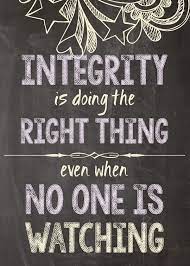
It seems that very often, the problem with politics in this country is that it gets in the way of doing the right thing. Despite the introduction of the The Seven Principles of Public Life known as the Nolan Principles, politicians (not all of them of course, but you will have seen ample examples) still seem to be hell bent on scoring political advantage, obfuscating on matters of principle and where possible avoiding real leadership when the country is crying out for it. Instead, they look to find someone, anyone, else to blame for failures that can only be described as laying clearly at the door of government and at times the wider institution of parliament.
One example you may recall was the complete farce in parliament where the speaker, Sir Lyndsay Hoyle, was berated for political interference and breaking the rules of the house prior to a debate about a ceasefire in Gaza. It became quite obvious to anyone on the outside that various political parties, Conservatives, Labour and the Scottish National Party were all in it to score points. The upshot, rather than the headlines being about a demand for a ceasefire in Gaza, the headlines were about political nonsense, even suggesting that the very core of our democracy was at stake. Somehow, they all lost sight of what was important, the crises, and it really is still a crisis, in Gaza. Doing the right thing was clearly not on their minds, morals and principles were lost along the way in the thrust for the best political posturing.
And then we come to the latest saga involving political parties, the WASPI women (Women Against State Pension Inequality) campaign. The report from the Parliamentary and Health Service Ombudsman has ruled that the Department for Work and Pensions (DWP) “failed to provide accurate, adequate and timely information” about changes to pension ages for women. The report makes interesting reading. In essence, it accuses the DWP of maladministration on several counts.
The Pensions Act 1995 changed the way in which women could draw their pensions in an effort to equalise the age with men. A timetable was drawn up raising the qualifying age for women from 60 to 65, with the change phased in between 2010 and 2020. However, under the Pensions Act 2011, the new qualifying age of 65 for women was brought forward to 2018. The report acknowledges that the DWP carried out campaigns from 1995 onwards but in 2004 received results of research that a considerable number of affected women still believed that their retiring age was 60. Unfortunately, through prevarication and for some quite inexplicable reasoning the women affected were not notified or were notified far too late. There was a calculation carried out that suggested some women were not told until 18 months before their intended retirement date. The matter was taken before the courts but the courts ruling did nothing to resolve the issue other than providing a ruling that the DWP were not required by law to notify the women.
You can read about the debacle anywhere on the Internet and the WASPI women have their own Facebook page. What seems astounding is that both the Government and the opposition have steadfastly avoided being drawn on the matter of compensation for these women. I should add that the maladministration has had serious detrimental impacts on many of them. Not even a sorry, we got it wrong. Instead we see articles written by right wing Conservatives suggesting the women had been provided with ample warning. If you read the report, it makes it clear that provisions under the Civil Service Code were not complied with. It is maladministration and it took place under a number of different governments.
Not getting it right in the first instance was compounded by not getting it right several times over later on. It seems that given the likely cost to the taxpayer, this maladministration is likely, like so many other cock ups by government and its agencies, to be kicked into the long grass. Doing the right thing is a very long, long way away in British politics. And lets not forget the Post Office scandal, the infected blood transfusion scandal and the Windrush scandal to name but a few. So little accountability, such cost to those impacted.
- The quotation in the image is often wrongly misattributed to C. S. Lewis. ↩︎
Share this:


Meet the Team: Liam Miles, Lecturer in Criminology

Hello!
I am Liam Miles, a lecturer in criminology and I am delighted to be joining the teaching team here at Northampton. I am nearing the end of my PhD journey that I completed at Birmingham City University that explored how young people who live in Birmingham are affected by the Cost-of-Living Crisis. I conducted an ethnographic study and spent extensive time at two Birmingham based youth centres. As such, my research interests are diverse and broad. I hold research experience and aspirations in areas of youth and youth crime, cost of living and wider political economy. This is infused with criminological and social theory and qualitative research methods. I am always happy to have a coffee and a chat with any student and colleague who wishes to discuss such topics.
Alongside my PhD, I have completed two solo publications. The first is a journal article in the Sage Journal of Consumer Culture that explored how violent crime that occurs on British University Campuses can be explained through the lens of the Deviant Leisure perspective. An emerging theoretical framework, the Deviant Leisure perspective explores how social harms are perpetuated under the logics and entrenchment of free-market globalised capitalism and neoliberalism. As such, a fundamental source of culpability towards crime, violence and social harm more broadly is located within the logics of neoliberal capitalism under which a consumer culture has arisen and re-cultivated human subjectivity towards what is commonly discussed in the literature as a narcissistic and competitive individualism. My second publication was in an edited book titled Action on Poverty in the UK: Towards Sustainable Development. My chapter is titled ‘Communities of Rupture, Insecurity, and Risk: Inevitable and Necessary for Meaningful Political Change?’. My chapter explored how socio-political and economic moments of rupture to the status quo are necessary for the summoning of political activism; lobbying and subsequent change.
It is my intention to maintain a presence in the publishing field and to work collaboratively with colleagues to address issues of criminal and social justice as they present themselves. Through this, my focus is on a lens of political economy and historical materialism through which to make sense of local and global events as they unfold. I welcome conversation and collaboration with colleagues who are interested in these areas.
Equally, I am committed to expanding my knowledge basis and learning about the vital work undertaken by colleagues across a breadth of subject areas, where it is hoped we can learn from one another.
I am thoroughly looking forward to meeting everyone and getting to learn more!

 Thoughts from the criminology team
