
Home » Youth
Category Archives: Youth

A new model for policing: same old rhetoric, same old politics, same old reality

The Home Secretary’s White Paper ‘From Local to National: A New Model for Policing’ promises a complete revamp of policing in England and Wales. The Northamptonshire Police Federation website provides a fairly good synopsis of what the white paper contains. Although one does hope that they didn’t resort to the use of AI to produce it otherwise they may find themselves going the same way as the beleaguered former chief constable of the West Midlands Police.
When listening to the Home Secretary Shabana Mahmood’ address to parliament regarding these reforms, I am reminded of a timeless quote from Robert Reiner regarding a former Home Secretary, Michael Howard’s address to parliament regarding another Home Office police reform White Paper back in the early 1990s. Michael Howard had stated that ‘the job of the police was to catch criminals’ and Robert Reiner, if I remember the quote correctly, stated that this statement was ‘breathtaking in its audacious simple mindedness’.
My bookshelf used to be full of Home Office White papers regarding police reform. If I went through every one of them, I would find almost all the suggestions, in one form or another, being put forward by this Home Secretary. It is like revisiting my former reality, change for change’s sake to detract from a poor performing government. Although no one could have guessed that Lord Mandelson would quickly hog the news and railroad the political landscape.
The police don’t do themselves any favours, you’ve only got to look at the headlines over the decades to know that. But of course, policing is not easy and sometimes hitting the headlines for the wrong reasons is inevitable. Rarely do the police hit the headlines for the right reasons, not because there aren’t plenty of right reasons, they simply aren’t newsworthy. However, every failure or perceived failure is ammunition for the ambitious politician and police reform is always a headline grabbing option and a distraction from other politically difficult and damning matters.
Let’s be clear, policing doesn’t happen in a vacuum. Policing relies on the public; it relies on other institutions within the criminal justice system and outside of it and it relies on good governance. If the police are underfunded, then the service they deliver to the public is substandard and this then dents confidence in the police which in turn impacts public co-operation. If the other institutions within the criminal justice system are poorly funded such as the courts, then it doesn’t matter what the police do, cases do not get to court in a timely manner, the public withdraw their support and cases collapse. If prisons are overcrowded due to lack of funding and other issues, the courts can’t function correctly and the public lose confidence. As an aside remember the furore around the wrong prisoners being released and the number of prisoners wrongly released over a year. Funny how that seems to have disappeared from the news.
But the problems for policing and the rest of the judicial system pale into insignificance when compared to the issues with underfunding in areas of social services, welfare, the NHS, education and so much more. It is easy to point to policing when the key areas that impact the public the most are decimated. People don’t just commit crime because they are greedy, they don’t resort to violence for absolutely no reason. And it doesn’t take a rocket scientist to work out that if you stop supporting young people, stop giving them hope for a future, stop keeping them engaged in meaningful activities when they are out of school then you will see crime and anti-social behaviour spiral out of control. And of course, its not just young people that feel the impact. Not so long ago there was a movement towards defunding the police. The ideas behind the movement were sound but I think perhaps a little naïve. But what was right was the idea of pouring more money into welfare and youth services. Crime is so much more than just policing, and the police have very little control over it, despite all the rhetoric.
As for policing, the white paper is just a rehash of the same old ideas and another way of wasting public money, not dissimilar to that in 2006 when another Home Secretary decided on police mergers which saw millions spent before the idea was shelved as too expensive. The police have adapted to issues identified by HMIC prior to the proposed mergers in 2006. Collaboration between forces works well, saves money and enables smaller forces to deal with large scale issues. There is no evidence anywhere that big is better. In fact there is plenty of evidence to suggest that it may not be.
If the police have retracted from neighbourhood policing it is because of underfunding. Austerity measures introduced in 2010/11 decimated police forces and their ability to deliver both neighbourhood and response policing. Neighbourhood policing became a luxury and coincidentally was also the area where instant savings could be made. Police Community Support Officers could be shed because unlike police officers, they can be made redundant. As for vetting, something that has grabbed the headlines, well what did you expect? Cut the budgets and those important but less immediate functions are also decimated. Add to this the political pressure to recruit 20,000 officers in a short space of time and you have a recipe for disaster.
I do wonder whether those chief officers that support the latest police reform agenda do so because they really understand policing and its history or because they are naïve or ambitious or perhaps a bit of both. To return to Robert Reiner, the reforms are quite simply ‘breathtaking in their audacious simple mindedness’ and the sooner they are shelved the better.
Share this:


A year on… semantics, semantics and semantics?

In October 2024, I wrote a blog on the recently opened Secure School- Oasis Restore. The shiny new edition to the Children and Young People Secure Estate (CYPSE) in England and Wales. In the introduction I pondered on whether this would bring about change within the CYPSE or if this was more of the same. There were lots of positives to consider with the resources, ethos and style of the new Secure School but I, and many others, had concerns that these changes were just words and would amount to little substance. Serious issues within the YJS such as the use of remand, the increasing number of Black and dual heritage children in the CYPSE (despite the overall downwards trend), the continued use of isolation and the high rates of self-harm all appeared to be forgotten with the unveiling of the new Secure School. However, a year on, and the CYPSE failing children appears to be continuing.
Oasis Restore had to ‘temporarily’ close in the summer of 2025 over safety concerns (BBC, 2025). Upon closer reading, and looking at the Ofsted report from April 2025, the main issue is around doors not being able to close properly due to how they were initially made and the damage they have sustained. The Ofsted report (2025) also highlights the use of physical restraint but is positive in how this is only used as a last resort and recorded effectively. The report claims there is a nurturing environment at Oasis Restore, and is overall relatively positive (Ofsted, 2025). The concern is the harm the displacement will have on the children. And why, a CYPSE institution which has cost approximately £40million, was not built fit for purpose?
The children who are placed in CYPSE, for welfare or justice grounds, are incredibly vulnerable. They have often experienced trauma, oppression and isolation at various stages in their childhood from various people and institutions (especially care and CJS). The reality is, these children have been failed multiple times before their arrival in the CYPSE and these failures continue whilst they are there. Oasis Restore was supposed to be different: it was supposed to help, support, nurture and protect. And whilst that appeared to be very much on the agenda, the closing and displacement of these vulnerable children is going to add to being failed by society. I ended my previous blog, reflecting on John Rawls’ when thinking about justice, if an institution cannot be reformed then it should be abolished. I asked, if it was finally time to abolish the CYPSE. I whole heartedly believe it is.
Bibliography:
Askew, J. (2025) Young Offenders School Closes After Safety Concerns, BBC. [online] Available at: https://www.bbc.co.uk/news/articles/cde3g28gxp4o [Accessed 14.10.25]
End Child Imprisonment (2024) Why child imprisonment is beyond reform: A review of the evidence August 2024. [online] Available at: https://article39.org.uk/wp-content/uploads/2024/08/Why-child-imprisonment-is-beyond-reform.-A-review-of-the-evidence-August-2024.pdf
Share this:


Reflecting on Adolescence

This short series from Netflix has proven to be a national hit, as it rose to be the #1 most streamed programme on the platform in the UK. It has become a popular talking point amongst many viewers, with the programme even reaching into parliament and having praise from the government. After watching it, I can say that it is deserving of its mass popularity, with many aspects welcoming it to my interests.
It is not meant to be an overly dramatised show as we see from other programmes on Netflix. Whilst it fits in the genre of “Drama” it mainly serves itself as a message and portrayal of how toxic masculinity takes form at a young age. One episode was an hour long interrogation that became difficult to watch as it felt as if I was in the room myself, seeing a young boy turn from being vulnerable and scared to intimidating, aggressive and manipulative. As a programme, it does its job of engagement, but its message was displayed even better. Our society has a huge problem with perceptions of masculinity and how young men are growing up in a world that normalises misogyny. The microcosm that Adolescence shows encapsulates this problem well and highlights the problem of the “manosphere” that many young men and even children are turning to as they become radicalised online.
Commentators such as Andrew Tate have become a huge idol to his followers, which are often labelled as “incels”. Sine his rise in popularity in past years, an epidemic of these so called manosphere followers perpetuate misogyny in every corner of their lives, following and believing tales like the “80-20 rule” in which 80% of women are attracted to 20% of men. This kind of mindset is extremely dangerous and, as displayed in Jamie’s behaviour, leads to a feeling of necessity in regard to women liking them. This behaviour isn’t exactly new; it is a form of misogyny that has plagued society for as long as society has been around, however it has been perpetuated further by the “Commentaters”, as I call them.
As a fan of the Silent Hill series, I have always enjoyed stories that dive deep into the psyche and explore wider themes in ways that make the audience uncomfortable, yet willing, to confront. Adolescence does this in the form of a show not so disguised as an overarching message. I feel like it has done its job of making people reflect and critically think about what is wrong with society, and exposing those who do not think about the wider messages and only care about entertainment. I mean, people sit and question whether or not Jamie did the crime and argue that he is not guilty, when the show explicitly shows and tells you what happens through Jamie’s character, demeanour and interactions in the interrogations.
Misogyny and the forces that uphold it are not new concepts and nor will it be an ancient concept any time soon with the way contemporary society functions. Even as society may become more tolerant, there will always be a way for women to be disadvantaged. However, stories like Adolescence may provide a glimmer of hope in dissecting and being a piece of the puzzle that pieces together the wider branches of misogyny and allow for more people to explore its underpinnings.
Share this:


25 years of Criminology

When the world was bracing for a technological winter thanks to the “millennium bug” the University of Northampton was setting up a degree in Criminology. Twenty-five years later and we are reflecting on a quarter of a century. Since then, there have been changes in the discipline, socio-economic changes and wider changes in education and academia.
The world at the beginning of the 21st century in the Western hemisphere was a hopeful one. There were financial targets that indicated a raising level of income at the time and a general feeling of a new golden age. This, of course, was just before a new international chapter with the “war on terror”. Whilst the US and its allies declared the “war on terror” decreeing the “axis of evil”, in Criminology we offered the module “Transnational Crime” talking about the challenges of international justice and victor’s law.
Early in the 21st century it became apparent that individual rights would take centre stage. The political establishment in the UK was leaving behind discussions on class and class struggles and instead focusing on the way people self-identify. This ideological process meant that more Western hemisphere countries started to introduce legal and social mechanisms of equality. In 2004 the UK voted for civil partnerships and in Criminology we were discussing group rights and the criminalisation of otherness in “Outsiders”.
During that time there was a burgeoning of academic and disciplinary reflection on the way people relate to different identities. This started out as a wider debate on uniqueness and social identities. Criminology’s first cousin Sociology has long focused on matters of race and gender in social discourse and of course, Criminology has long explored these social constructions in relation to crime, victimisation and social precipitation. As a way of exploring race and gender and age we offered modules such as “Crime: Perspectives of Race and Gender” and “Youth, Crime and the Media”. Since then we have embraced Kimberlé Crenshaw’s concept of intersectionality and embarked on a long journey for Criminology to adopt the term and explore crime trends through an increasingly intersectional lens. Increasingly our modules have included an intersectional perspective, allowing students to consider identities more widely.
The world’s confidence fell apart when in 2008 in the US and the UK financial institutions like banks and other financial companies started collapsing. The boom years were replaced by the bust of the international markets, bringing upheaval, instability and a lot of uncertainty. Austerity became an issue that concerned the world of Criminology. In previous times of financial uncertainty crime spiked and there was an expectation that this will be the same once again. Colleagues like Stephen Box in the past explored the correlation of unemployment to crime. A view that has been contested since. Despite the statistical information about declining crime trends, colleagues like Justin Kotzé question the validity of such decline. Such debates demonstrate the importance of research methods, data and critical analysis as keys to formulating and contextualising a discipline like Criminology. The development of “Applied Criminological Research” and “Doing Research in Criminology” became modular vehicles for those studying Criminology to make the most of it.
During the recession, the reduction of social services and social support, including financial aid to economically vulnerable groups began “to bite”! Criminological discourse started conceptualising the lack of social support as a mechanism for understanding institutional and structural violence. In Criminology modules we started exploring this and other forms of violence. Increasingly we turned our focus to understanding institutional violence and our students began to explore very different forms of criminality which previously they may not have considered. Violence as a mechanism of oppression became part of our curriculum adding to the way Criminology explores social conditions as a driver for criminality and victimisation.
While the world was watching the unfolding of the “Arab Spring” in 2011, people started questioning the way we see and read and interpret news stories. Round about that time in Criminology we wanted to break the “myths on crime” and explore the way we tell crime stories. This is when we introduced “True Crimes and Other Fictions”, as a way of allowing students and staff to explore current affairs through a criminological lens.
Obviously, the way that the uprising in the Arab world took charge made the entire planet participants, whether active or passive, with everyone experiencing a global “bystander effect”. From the comfort of our homes, we observed regimes coming to an end, communities being torn apart and waves of refugees fleeing. These issues made our team to reflect further on the need to address these social conditions. Increasingly, modules became aware of the social commentary which provides up-to-date examples as mechanism for exploring Criminology.
In 2019 announcements began to filter, originally from China, about a new virus that forced people to stay home. A few months later and the entire planet went into lockdown. As the world went into isolation the Criminology team was making plans of virtual delivery and trying to find ways to allow students to conduct research online. The pandemic rendered visible the substantial inequalities present in our everyday lives, in a way that had not been seen before. It also made staff and students reflect upon their own vulnerabilities and the need to create online communities. The dissertation and placement modules also forced us to think about research outside the classroom and more importantly outside the box!
More recently, wars in Europe, the Middle East, Africa and Asia have brought to the forefront many long posed questions about peace and the state of international community. The divides between different geopolitical camps brought back memories of conflicts from the 20th century. Noting that the language used is so old, but continues to evoke familiar divisions of the past, bringing them into the future. In Criminology we continue to explore the skills required to re-imagine the world and to consider how the discipline is going to shape our understanding about crime.
It is interesting to reflect that 25 years ago the world was terrified about technology. A quarter of a century later, the world, whilst embracing the internet, is worriedly debating the emergence of AI, the ethics of using information and the difference between knowledge and communication exchanges. Social media have shifted the focus on traditional news outlets, and increasingly “fake news” is becoming a concern. Criminology as a discipline, has also changed and matured. More focus on intersectional criminological perspectives, race, gender, sexuality mean that cultural differences and social transitions are still significant perspectives in the discipline. Criminology is also exploring new challenges and social concerns that are currently emerging around people’s movements, the future of institutions and the nature of society in a global world.
Whatever the direction taken, Criminology still shines a light on complex social issues and helps to promote very important discussions that are really needed. I can be simply celebratory and raise a glass in celebration of the 25 years and in anticipation of the next 25, but I am going to be more creative and say…
To our students, you are part of a discipline that has a lot to say about the world; to our alumni you are an integral part of the history of this journey. To those who will be joining us in the future, be prepared to explore some interesting content and go on an academic journey that will challenge your perceptions and perspectives. Radical Criminology as a concept emerged post-civil rights movements at the second part of the 20th century. People in the Western hemisphere were embracing social movements trying to challenge the established views and change the world. This is when Criminology went through its adolescence and entered adulthood, setting a tone that is both clear and distinct in the Social Sciences. The embrace of being a critical friend to these institutions sitting on crime and justice, law and order has increasingly become fractious with established institutions of oppression (think of appeals to defund the police and prison abolition, both staples within criminological discourse. The rigour of the discipline has not ceased since, and these radical thoughts have led the way to new forms of critical Criminology which still permeate the disciplinary appeal. In recent discourse we have been talking about radicalisation (which despite what the media may have you believe, can often be a positive impetus for change), so here’s to 25 more years of radical criminological thinking! As a discipline, Criminology is becoming incredibly important in setting the ethical and professional boundaries of the future. And don’t forget in Criminology everyone is welcome!

Share this:


Just semantics?

This summer has seen the opening of the first secure school in England and Wales. The idea of secure schools was first introduced in 2016 in line with reforming the youth secure estate given a wide range of failings across institutions and harms experienced by children placed in there. The original proposed date for opening one of the schools was 2020; but what is a four-year delay? In 2022 the National Audit Office reported the refurbishment of Medway Secure Training Centre (closed down in March 2020 following the harrowing findings by Panorama), where the new secure school would be, was costing approximately £36.5 million (National Audit Office, 2022). But will this new secure school actually change something within the youth secure estate, or this is more of the same but with a new sparkly name?
Oasis Restore (the first secure school in England and Wales) opened this summer and can hold up to 49 children. It is registered jointly as a Secure Children’s Home (SCH) and a secure academy which has raised concerns by Ofsted due to difference in size of Oasis Restore in comparison to other SCHs. Education is central to the secure school (although haven’t we heard this before with Secure Training Centres), with comments from Youth Justice Board (YJB) Chief Executive Steph Roberts-Bibby comparing Oasis Restore with University accommodation (Youth Justice Board, 2024). Apparently, the new secure school is a far cry from the unsafe, violent, prisons which already exist in the youth secure estate (SCT and YOIs). On a tour of the secure school earlier in the year, the Chief Executive was very positive about the physical environment and philosophies underpinning Oasis Restore where ‘strong relationships between staff and children are at the heart of the Oasis model’ and the importance of ‘having a space promoting learning, togetherness and care’ as being essential in line with rehabilitation (Youth Justice Board, 2024). So far, so good. The right words are being uttered, changes appear to have been made, but… we have been here before. The same rhetoric of the child’s best interests being promoted and being seen as ‘children first’: which is good. But is this round of reform just more of the same with different semantics?
End Child Imprisonment (2024) demonstrates how child imprisonment, which Oasis Reform still is, is beyond reform. There are ample examples of how the Youth Secure Estate has historically, and remains, a harmful unsafe environment which does not address the needs of the children they come into contact with. Missing from the positive comments from the Chief Executive of the YJB is the highlighting that the children who come into contact with the YJS are incredibly vulnerable and have often experienced traumas before their incarceration. The language is still all wrong: the myriad of challenges these children have already faced and will face within the YJS remain overlooked. In 2023 the United Nations Committee on the Rights of the Child urged the UK to introduce legislation directly prohibiting the use of solitary confinement, due the continuing harms/findings of its use: but so far, no comment from the UK Government. Time and time again, we see reforms brought in but with little to no actual change or improvement. Will Oasis Restore be the face of change of just another failure in a long line of failing reforms?
Something which rings true: “A recurrent theme in the history of child imprisonment is that evidence of failure and maltreatment is met with promises of reform which too frequently involve semantic amendment rather than changes of substance” (End Child Imprisonment, 2024, p.28). And as John Rawls argues when thinking about justice, if an institution cannot be reformed then it should be abolished. Is it finally time to abolish the child prisons which exist within society?
References:
End Child Imprisonment (2024) Why child imprisonment is beyond reform: A review of the evidence August 2024. [online] Available at: https://article39.org.uk/wp-content/uploads/2024/08/Why-child-imprisonment-is-beyond-reform.-A-review-of-the-evidence-August-2024.pdf [Accessed 14th October 2024].
Monster Ztudio/Shutterstock (2017) Change. [Online] Available at: https://ziplinelogistics.com/blog/navigating-change/ [Accessed 21.10.24].
National Audit Office (2022) Children in custody: secure training centres and secure schools. [online] London: National Audit Office. Available at: https://www.nao.org.uk/wp-content/uploads/2022/04/Children-in-custody-secure-training-centres-and-secure-schools.pdf [Accessed 17.10.24].
Rawls, J. (1971/1999) A Theory of Justice. Oxford: Oxford University Press
Youth Justice Board (2024) Inside the Oasis Restore Secure School. GOV.UK [online]. Available at: https://www.gov.uk/government/news/inside-the-oasis-restore-secure-school [Accessed 17.10.24]
Share this:


Let us not forget
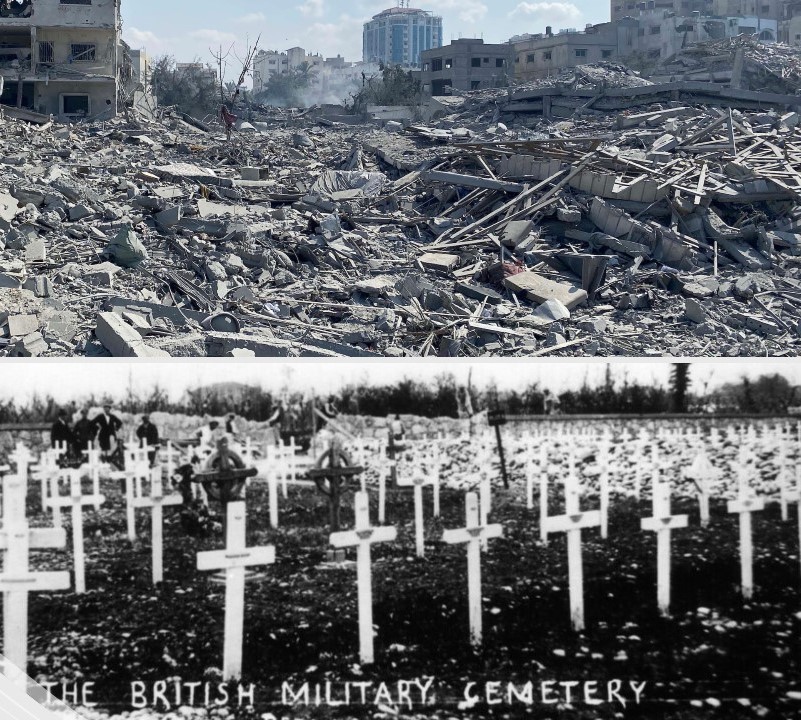
Yesterday marked the 80th anniversary of the D Day landings and it has seen significant coverage from the media as veterans, families, dignitaries, and others converge on the beaches and nearby towns in France. If you have watched the news coverage during the week, you will have seen interviews with the veterans involved in those landings. What struck me about those interviews was the humbleness of those involved, they don’t consider themselves heroes but reserve that word for those that died. For most of us, war is something that happens elsewhere, and we can only glimpse the horrors of war in our imaginations. For some though, it is only too real, and for some, it is a reality now.
I was struck by some of the conversations. Imagine being on ship, sailing across the English Channel and looking back at the white cliffs of Dover and being told by someone in charge, ‘have a good look because a lot of you will never see them again’. If knowing that you are going to war was not bad enough, that was a stark reminder that war means a high chance of death. And most of those men going over to France were young, to put it in perspective, the age of our university students. If you watched the news, you will have seen the war cemeteries with rows upon rows, upon rows of headstones, each a grave of someone whose life was cut short. Of course, that only represents a small number of the combatants that died in the war, there are too many graveyards to mention, too many people that died. Too many people both military and civilian that suffered.
The commemoration of the D Day landings and many other such commemorations serve as a reminder of the horrors of war when we have the opportunity to hear the stories of those involved. But as their numbers dwindle, so too does the narrative of the reality, only to be replaced with some romantic notion about glory and death. There is no glory in war, only death, suffering and destruction.
The repeated, ‘never again’ after the first and second world war seems to have been a utopian dream. Whilst we may have been spared the horrors of a world war to this point, we should not forget the conflicts across the world, too numerous to list here. Often, the reasons behind them are difficult to comprehend given the inevitable outcomes. As one veteran on the news pointed out though ‘war is a nonsense, but sometimes it’s necessary’.
The second part of that is a difficult sentiment to swallow but then, if your country faces invasion, your people face being driven from their homes or into slavery or worse, then choices become very stark. We should be grateful to those people that fought for our freedoms that we enjoy now. We should remember that there are people doing the same across the world for their own freedoms and perhaps vicariously ours. And perhaps, we should look to ourselves and think about our tolerance for others. Let us not forget, war is a nonsense, and there is no glory in it, only death and destruction.
Share this:


It’s all about perspective…

Within criminology, and other social science disciplines, the understanding that knowledge is socially constructed and meaning is given to things from people and their interactions is particularly pertinent: especially for researchers involved with people. And ‘perspective’ can be challenging to navigate, challenging to be critical of and challenging to recognise within and outside of a research context. Thinking about the public, the understanding of the nature of knowledge is often taken at face value and not viewed critically; perhaps a skill or requirement which should be part of mainstream education, then again maybe not. Consider the below example, your thoughts and attitudes towards the actors, actions and outcomes… consider your perspective.
A boy begins testing boundaries with his father, he deliberately disobeys him around where he can go and what he can do. He even encourages a friend to join him on his adventures: ducking away from the adult eyes that are watching over them. The boy is told off for putting himself and friend in a dangerous situation, and he appears sincere for his mistakes. Alas, he finds himself in trouble again; this time with dire consequences. The boy’s father dies trying to get him out of trouble. The boy runs away to a place where his past is unknown, and joins a group of outcasts. He grows up into a young man on the fringes of society. He is persuaded to return home, whereby he is involved in a violent fight, which almost results in his death. Luckily, he overcomes his opposition; finding himself with a only a few cuts and bruises. His opponent is forced to flee. He is triumphant, but at what cost?
This is one perspective and overview: from an outsider looking in. There are other ways to describe the example below (which we will come on to), but firstly: what are your thoughts on the young boy and his behaviour? What outcomes are required, if any, and at what stages of this boy’s life? Is this something which requires support, love and care or surveillance, control and discipline?
Another way of looking at the above scenario is to watch the Lion King (1994).1 The young boy in question is Simba. Maybe you already spotted that, maybe you aren’t familiar with the story or perspectives the film is told by. Perspectives matter….
- For those less familiar with Disney animations, the themes are also apparent within Shakespeare’s Hamlet (c. 1600). ↩︎
Share this:


Meet the Team: Liam Miles, Lecturer in Criminology

Hello!
I am Liam Miles, a lecturer in criminology and I am delighted to be joining the teaching team here at Northampton. I am nearing the end of my PhD journey that I completed at Birmingham City University that explored how young people who live in Birmingham are affected by the Cost-of-Living Crisis. I conducted an ethnographic study and spent extensive time at two Birmingham based youth centres. As such, my research interests are diverse and broad. I hold research experience and aspirations in areas of youth and youth crime, cost of living and wider political economy. This is infused with criminological and social theory and qualitative research methods. I am always happy to have a coffee and a chat with any student and colleague who wishes to discuss such topics.
Alongside my PhD, I have completed two solo publications. The first is a journal article in the Sage Journal of Consumer Culture that explored how violent crime that occurs on British University Campuses can be explained through the lens of the Deviant Leisure perspective. An emerging theoretical framework, the Deviant Leisure perspective explores how social harms are perpetuated under the logics and entrenchment of free-market globalised capitalism and neoliberalism. As such, a fundamental source of culpability towards crime, violence and social harm more broadly is located within the logics of neoliberal capitalism under which a consumer culture has arisen and re-cultivated human subjectivity towards what is commonly discussed in the literature as a narcissistic and competitive individualism. My second publication was in an edited book titled Action on Poverty in the UK: Towards Sustainable Development. My chapter is titled ‘Communities of Rupture, Insecurity, and Risk: Inevitable and Necessary for Meaningful Political Change?’. My chapter explored how socio-political and economic moments of rupture to the status quo are necessary for the summoning of political activism; lobbying and subsequent change.
It is my intention to maintain a presence in the publishing field and to work collaboratively with colleagues to address issues of criminal and social justice as they present themselves. Through this, my focus is on a lens of political economy and historical materialism through which to make sense of local and global events as they unfold. I welcome conversation and collaboration with colleagues who are interested in these areas.
Equally, I am committed to expanding my knowledge basis and learning about the vital work undertaken by colleagues across a breadth of subject areas, where it is hoped we can learn from one another.
I am thoroughly looking forward to meeting everyone and getting to learn more!
Share this:


Mundial: Why I won’t be watching the World Cup this time

It has been called the beautiful game; in the past even during war the opposing sides played a game; it has made some of its players stars and household names, football or soccer has a global appeal. From the townships in South Africa, to the Brazilian Favelas, the makeshift pitches the world over to the highly pristine pitches in academies, kids the world over learn to kick a ball, and play the game that requires speed, agility, and dexterity in the feet. Kids who just play for fun in an after-school club or to bond with friends. The appeal of this game has been intertemporal.
Generations of kids, begged their parents to stay longer out to play with their friends, asked for another ball, shoes or shorts and each family responded according to their means. After all, football is/was a working-class game. The relative low cost makes it accessible; it allows plenty of kids to play together and build relationships. Football was an equaliser that did not care who you are or where you come from.
I remember as a kid, year after year playing in the summer with the same kids in teams between Greek and Yugoslavians. We were keeping score and the losing side was buying the other side ice-creams. Not quite the golden ornate cup but a wager worth playing 10 games across the summer. We called each other’s teams with the name of the country we came from. My lasting memory was the last time we played together before the civil war in Yugoslavia erupted. The Yugoslavians won and they were chanting “Yugoslavia, Yugoslavia”. Those kids did not come the following summer. In the next summer, the same kids would be carrying the flag and arms of one of the opposing sides armed to kill each other. When football is not the game, disputes are resolved in brutality.
In the past decades, football’s appeal made it the game to watch. The transition to professional football made the game lucrative, some clubs acquired big budgets and of course attracted a finer audience. The pundits, as a former footballer put it, started eating “prawn sandwiches” an indication of their more expensive tastes. Still people stick with the sport because of their own memories and experiences. My first ever game was with my grandfather. We went to the stadium of the club that was to become the team I support for life. The atmosphere, the emotional roller coaster and most importantly a shared experience with someone very dear, that even when they are gone, you carry the sounds, the emotions with you forever.
Some footballers started earning enormous fees for playing the game; the club colours became trademarked and charged over the odds for a simple scarf or a top. The rights to the games sold to private companies requiring people to pay subscriptions to watch a simple game. People objected but continued still to support, although some people were priced out of the game altogether. The game endures because it still resonates with people’s experiences.
In particular, the national games have kept some of their original appeal of playing for your country, playing for your colours! Football is an unpredictable sport and in international events you can have an outsider taking the cup against the odds! Like Greece winning the UEFA Euro in 2004! The games in international tournaments leads to knock out games, with the drama of extra time and of course the penalty shootout. Nail biting moments shared with family and friends. These magical moments of personal and collective elevation, as if you were there with the players, part of their effort, part of their victory.
When the host country was announced some years ago that will be hosting this year’s world cup there were already calls for investigation into the voting process raising concerns. Since then, there have been concerns about the safety of those who work on the infrastructure. Thousands of migrant workers, many of whom are/were undocumented have worked in building the stadiums that the games will be played in. There are accusations of numerous deaths of migrant workers (an estimate from The Guardian comes to a staggering 6,500 deaths). This has raised a significant question about priorities in our world. It is unthinkable to put a game above human life. This was later followed by “the guidelines” to teams and visitors that alternative sexualities will not be tolerated. Calls about respecting the host’s culture adding to the numbers of people calling for a boycott. So why I won’t be watching this time around?
We have been talking for years about inclusivity and tolerance. Women’s rights, LGBTQ+, immigrant rights, worker rights and all of them being trampled for the sake of a competition. Those who have been asked about the issues from the football federation, former footballers and even governments have played down all these concerns. In some cases, they opted for a tokenistic move like rainbow-coloured planes or include the rainbow on national team logo. Others will be issuing rainbow bracelets and some saying that they will raise issues if/when given the opportunity. This sounds too little considering what has happened so far especially all the fatalities caused building all the constructions. If we are not to uphold civil rights and if we are not ready to act on them, why talk about them?
I remember the game for being inclusive and serving to get people together; this competition is setting an incredibly horrible precedent that human life is cheap and expendable; that people’s rights are negotiable and that you can stop being who you are momentarily, because the game matters more than any of the above. It does not! Without rights, without respect, without life there is no game, there is nothing, because there is no humanity. These games do not bother me, they offend me as a human being. If people died to build this stadium then this space is not fit for games; it’s a monument to vanity and greed; hardly sportsmanlike qualities.
Share this:


The dance of the vampires

We value youth. There is greater currency in youth, far greater than wisdom, despite most people when they are looking back wishing they had more wisdom in life. Modernity brought us the era of the picture and since then we have become captivated with images. Pictures, first black and white, then replaced by moving images, and further replaced by colour became an antidote to a verbose society that now didn’t need to talk about it…it simply became a case of look and don’t talk!
The image became even more important when people turned the cameras on themselves. The selfie, originally a self-portrait of reclusive artists evolved into a statement, a visual signature for millions of people using it every day on social media. Enter youth! The engagement with social media is regarded the gift of computer scientists to the youth of today. I wonder how many people know that one of the first images sent as a jpeg was that of a Swedish Playboy playmate the ‘lady with the feathers’. This “captivating” image was the start of the virtual exchange of pictures that led to billions of downloads every day and social media storing an ever-expanding array of images.
The selfie, brought with it a series of challenges. How many times can you take a picture, even of the most beautiful person, before you become accustomed to it. Before you say, well yes that is nice, but I have seen it before. To resolve the continuous exposure the introduction of filters, backgrounds and themes seems to add a sense of variety. The selfie stick (banned from many museums the world over) became the equipment, along with the tripod, the lamp and the must have camera, with the better lens in the pursue of the better selfie. Vanity never had so many accessories!
The stick is an interesting tool. It tells the individual nature of the selfie. The voyage that youthful representation takes across social media is not easy, it is quite a solitary one. In the representation of the image, youth seem to prefer. The top “influencers” are young, who mostly like to pose and sometimes even offer some advice to their followers. Their followers, their contemporaries or even older individuals consume their images like their ‘daily (visual) bread’. This seems to be a continuous routine, where the influencer produces images, and the followers watch them and comment. What, if anything, is peculiar about that? Nothing! We live in a society build on consumption and the industry of youth is growing. So, this is a perfect marriage of supply and demand. Period!
Or is it? In the last 30 years in the UK alone the law on protecting children and their naivety from exploitation has been centre stage of several successive governments. Even when discussing civil partnerships for same sex couples, Baroness Young, argued against the proposed act, citing the protection of children. Youth became a precious age that needed protection and nurturing. The law created a layer of support for children, particularly those regarded vulnerable. and social services were drafted in to keep them safe and away from harm. In instances when the system failed, there has been public outrage only to reinforce the original notion that children and young people are to be protected in our society.
That is exactly the issue here! In the Criminology of the selfie! Governments introducing policies to generate a social insulation of moral righteousness that is predicated on individual – mostly parental – responsibility. The years of protective services and we do not seem to move passed them. In fact, their need is greater than ever. Are we creating bad parents through bad parenting or are people confronted with social forces that they cannot cope with? The reality is that youth is more exposed than ever before. The images produced, unlike the black and white photos of the past, will never fade away. Those who regret the image they posted, can delete it from their account, but the image is not gone. It shall hover over them for the eternity of the internet. There is little to console and even less to help. During the lockdown, I read the story of the social carer who left their job and opened an OnlyFans account. These are private images provided to those who are willing to pay. The reason this experience became a story, was the claim that the carer earned in one month of OnlyFans, more than their previous annual income. I saw the story being shared by many young people, tagging each other as if saying, look at this. The image that captures their youth that can become a trap to contain them in a circle of youth. Because in life, before the certainty of death there is another one, that of aging and in a society that values youth so much, can anyone be ready to age?
As for the declared care for the young, would a society that cares have been closing the doors to HE, to quality apprenticeships, a living wage and a place to live? The same society that stirs emotions about protection, wants young people to stay young so that they cannot ask for their share in their future. The social outrage about paedophiles is countered with high exposure to a particular genre in the movies and literature that promotes it. The vampire that has been fashioned as young adult literature is the proverbial story of an (considerably) older man who deflowers a young innocent girl until she becomes infatuated with him. The movies can be visually stunning because it involves the images of young beautiful people but there is hardly any mention of consent or care!
It is one of the greatest ironies to revive the vampire image in youth culture. A cultural representation of a male prototype that is manipulative, intruding into the lives of seemingly innocent young people who become his prey. There is something incredibly unsettling to explore the semiology of an immortal that is made through a blood ritual. A reverse Peter Pan who consumes the youth of his victims. The popularity of this Victorian literary character, originally conceived in the era of industrial advancement,at a time when modernity challenged tradition, resurfaces with other monsters at times of great uncertainty. The era of the picture has not made everyday life easier, and modernity did not improve quality of life to the degree it proclaimed. Instead, whilst people are becoming captivated by ephemera they are focused on the appearance and missing substance. An old experience man, dark, mysterious with white skin may be an appealing character in literature but in real life a someone who feeds on young people’s blood is hardly an exciting proposition.
The blood sacrifice demanded by a vampire is a metaphor of what our society requires for those who wish to retain youth and save their image into the ether of the cyberworld as a permanent Portrait of Dorian Gray. In this context, the vampire is not only a man in power, using his privilege to dominate, but a social representation of what a consumer society places as the highest value. It is life’s greatest irony that the devouring power of a vampire is becoming a representation of how little value we place on both youth and life! A society focused on appearance, ignoring the substance. Youth looking but not youth caring!

 Thoughts from the criminology team

