
Home » Young people (Page 2)
Category Archives: Young people

Documenting inequality: how much evidence is needed to change things?
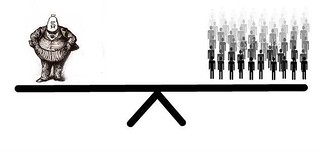
In our society, there is a focus on documenting inequality and injustice. In the discipline of criminology (as with other social sciences) we question and read and take notes and count and read and take more notes. We then come to an evidence based conclusion; yes, there is definite evidence of disproportionality and inequality within our society. Excellent, we have identified and quantified a social problem. We can talk and write, inside and outside of that social problem, exploring it from all possible angles. We can approach social problems from different viewpoints, different perspectives using a diverse range of theoretical standpoints and research methodologies. But what happens next? I would argue that in many cases, absolutely nothing! Or at least, nothing that changes these ingrained social problems and inequalities.
Even the most cursory examination reveals discrimination, inequality, injustice (often on the grounds of gender, race, disability, sexuality, belief, age, health…the list goes on), often articulated, the subject of heated debate and argument within all strata of society, but remaining resolutely insoluble. It is as if discrimination, inequality and injustice were part and parcel of living in the twenty-first century in a supposedly wealthy nation. If you don’t agree with my claims, look at some specific examples; poverty, gender inequality in the workplace, disproportionality in police stop and search and the rise of hate crime.
- Three years before the end of World War 2, Beveridge claimed that through a minor redistribution of wealth (through welfare schemes including child support) poverty ‘could have been abolished in Britain‘ prior to the war (Beveridge, 1942: 8, n. 14)
- Yet here we are in 2019 talking about children growing up in poverty with claims indicating ‘4.1 million children living in poverty in the UK’. In addition, 1.6 million parcels have been distributed by food banks to individuals and families facing hunger
- There is legal impetus for companies and organisations to publish data relating to their employees. From these reports, it appears that 8 out of 10 of these organisations pay women less than men. In addition, claims that 37% of female managers find their workplace to be sexist are noted
- Disproportionality in stop and search has long been identified and quantified, particularly in relation to young black males. As David Lammy’s (2017) Review made clear this is a problem that is not going away, instead there is plenty of evidence to indicate that this inequality is expanding rather than contracting
- Post-referendum, concerns were raised in many areas about an increase in hate crime. Most attention has focused on issues of race and religion but there are other targets of violence and intolerance
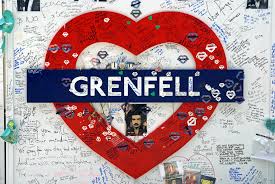
These are just some examples of inequality and injustice. Despite the ever-increasing data, where is the evidence to show that society is learning, is responding to these issues with more than just platitudes? Even when, as a society, we are faced with the horror of Grenfell Tower, exposing all manner of social inequalities and injustices no longer hidden but in plain sight, there is no meaningful response. Instead, there are arguments about who is to blame, who should pay, with the lives of those individuals and families (both living and dead) tossed around as if they were insignificant, in all of these discussions.
As the writer Pearl S. Buck made explicit
‘our society must make it right and possible for old people not to fear the young or be deserted by them, for the test of a civilization is in the way that it cares for its helpless members’ (1954: 337).
If society seriously wants to make a difference the evidence is all around us…stop counting and start doing. Start knocking down the barriers faced by so many and remove inequality and injustice from the world. Only then can we have a society which we all truly want to belong to.
Selected bibliography
Beveridge, William, (1942), Report of the Inter-Departmental Committee on Social Insurance and Allied Services, (HMSO: London)
Buck, Pearl S. (1954), My Several Worlds: A Personal Record, (London: Methuen)
Lammy, David, (2017), The Lammy Review: An Independent Review into the Treatment of, and Outcomes for, Black, Asian and Minority Ethnic Individuals in the Criminal Justice System, (London: Ministry of Justice)
Share this:


Should reading be a punishment?

Gillian is an Academic Librarian at the University of Northampton, supporting the students and staff in the Faculty of Health and Society.
I was inspired to write this blog post by an article from the BBC news website that my friend sent me (BBC, 2019). A reading list was used as a punishment for teenagers who were convicted of daubing graffiti across a historically significant building in the state of Virginia, USA. Normally such an offence would earn a community service order. In this case, due to the nature of the crime – using racially charged symbols and words, the Prosecutor and Deputy Commonwealth Attorney Alejandra Rueda decided education may be the cure. She provided the five teenagers with a reading list that they had to read, and write assignments on, over the course of their 12-month sentence.
“Ignorance is not an excuse” is a principle expressed regularly throughout society, yet are we doing anything to address or dispel this ignorance? Rueda realised that books may help these teenagers to understand the impact of what they’d done and the symbols and language they had used in the graffiti. She chose books that would help educate them about racism, anti-Semitism, apartheid and slavery, to name just a few of the topics covered in the reading list. These were the books that helped her understand the wider world, as she grew up. Rueda’s approach indicated that punishment without an understanding of the impact of their crime, would not help these teenagers to engage with the world around them. These books would take them to worlds far outside their own and introduce them to experiences that were barely covered in their High School history lessons.
It’s not the only time an ignorance of history has been highlighted in the news recently. A premiere league football player was investigated for apparently making a Nazi salute. Although he was found not guilty, the FA investigation found him to be appallingly ignorant of Fascism and Hitler’s impact on millions of people across the globe (Church, 2019). Whilst the FA lamented his ignorance, I’m unsure they have done anything to help him address it. Would he be willing to read about the Holocaust and impact of Fascism in Europe? Would being forced to read about the lives of people over 70 years ago, help him understand how a chance photograph can affect people?
Should reading be a punishment, would it help people understand the impact of their actions? As a Librarian, people often assume that all I do all day is read. For me, reading is a luxury I indulge in daily, when I’m at home. I find a distinct difference between reading by choice, for escapism, and reading because you have to. I remember studying English Literature at school and finding any books I was forced to read, quickly lost their charm and became a chore rather than a pleasure. I’m not sure reading should be a punishment; it could disengage people from the joy and escapism of a good book. However, I understand the value of reading in helping people to explore topics and ideas that may be well outside their own world.
There is a growing body of literature that reflects on bibliotherapy and how reading can help people in varying stages of their life (Hilhorst et al., 2018; Brewster et al., 2013). A recent report by Hilhorst et al., (2018) advocates reading to transform British society, address isolation and improve social mobility. I believe reading can help improve our quality of life, helping us improve literacy, understand complex social issues and offer escapism from the everyday. However, I hesitate to view reading as a magical solution to society’s problems. Some people advocate the literary classics, the numerous lists you can find online that extort the virtues of reading the finest of the literary canon – but how much of it is just to conform to the social snobbery around reading ‘good literature’, a tick list? We should encourage reading, not force it upon people (McCrum, 2003; Penguin Books Ltd, 2019; Sherman, 2019).
Reading can help expand horizons and can have a tremendous impact on your world view, but it shouldn’t be a punishment. What Rueda did in Virginia, is illustrate how an education can help us address the ignorance in our society. We should encourage people to explore beyond their community to understand the world around us. Reading books can offer an insight and allow us to explore these ideas, hopefully helping us to avoid repeating or perpetuating the mistakes of the past.
References:
BBC (2019) Graffiti punished by reading – ‘It worked!’ says prosecutor, BBC News [Online]. Available from: https://www.bbc.co.uk/news/stories-47936071 [Accessed 18/04/19].
Brewster, L., Sen, B. and Cox, A. (2013) ‘Mind the Gap: Do Librarians Understand Service User Perspectives on Bibliotherapy?’, Library Trends, 61(3), pp. 569–586. doi: 10.1353/lib.2013.0001.
Church, B. (2019) Wayne Hennessey: EPL player showed ‘lamentable’ ignorance of Fascism, CNN [Online]. Available from: https://edition.cnn.com/2019/04/16/football/wayne-hennessey-fa-nazi-salute-english-premier-league-crystal-palace-spt-intl/index.html [Accessed 18/04/19].
Hilhorst, S., Lockey, A. and Speight, T. (2018) “It’s no exaggeration to say that reading can transform British society…”: A Society of Readers, DEMOS [online] Available from: http://giveabook.org.uk/wp-content/uploads/2018/11/A_Society_of_Readers_-_Formatted__3_.pdf [Accessed 15/04/19]
McCrum, R. (2003) The 100 greatest novels of all time: The list, The Guardian [Online]. Available from: https://www.theguardian.com/books/2003/oct/12/features.fiction [Accessed 18/04/19].
Penguin Books Ltd (2019) 100 must-read classic books, as chosen by our readers, Penguin [Online]. Available from: https://www.penguin.co.uk/articles/2018/100-must-read-classic-books/ [Accessed 18/04/19].
Sherman, S. (2019) The Greatest Books, The Greatest Books [Online]. Available from: https://thegreatestbooks.org/ [Accessed 18/04/19].
Share this:

“Political Drillin”
A recent track that has come to light which incorporates Drill Music is that called ‘Political Drillin’. On the track the artist manages to incorporate quotes from politicians; which proves he is highly deserving of his title ‘DrillMinister’.
What was particularly shocking to me was how easy it was for the governmental quotes to actually fit in with what he was initially rapping about, considering how frowned upon the genre is by these same figures.
It becomes very obvious that the slurs deemed as “violent” are ones that much of us are accustomed to hearing on a daily basis. In my interpretation, the artist seems to be bringing this to light. When young people use similar racial, derogatory terms towards one another it is seen to be violent and makes headlines, but politicians seem to throw these around in parliament without being reprimanded for their actions. Why is this continuously tolerated?
The fact that these comments are known to all and no action is taken against them demonstrates that there is a certain calibre of people that can be deemed as criminal and those who will not. Once again shedding light on the class, age and racial division that is hanging over society.
So once again I put the question out…is drill music a cause of violent crime, or are we simply a criminal society? If the DrillMinister can be labelled violent, surely politicians should be too?
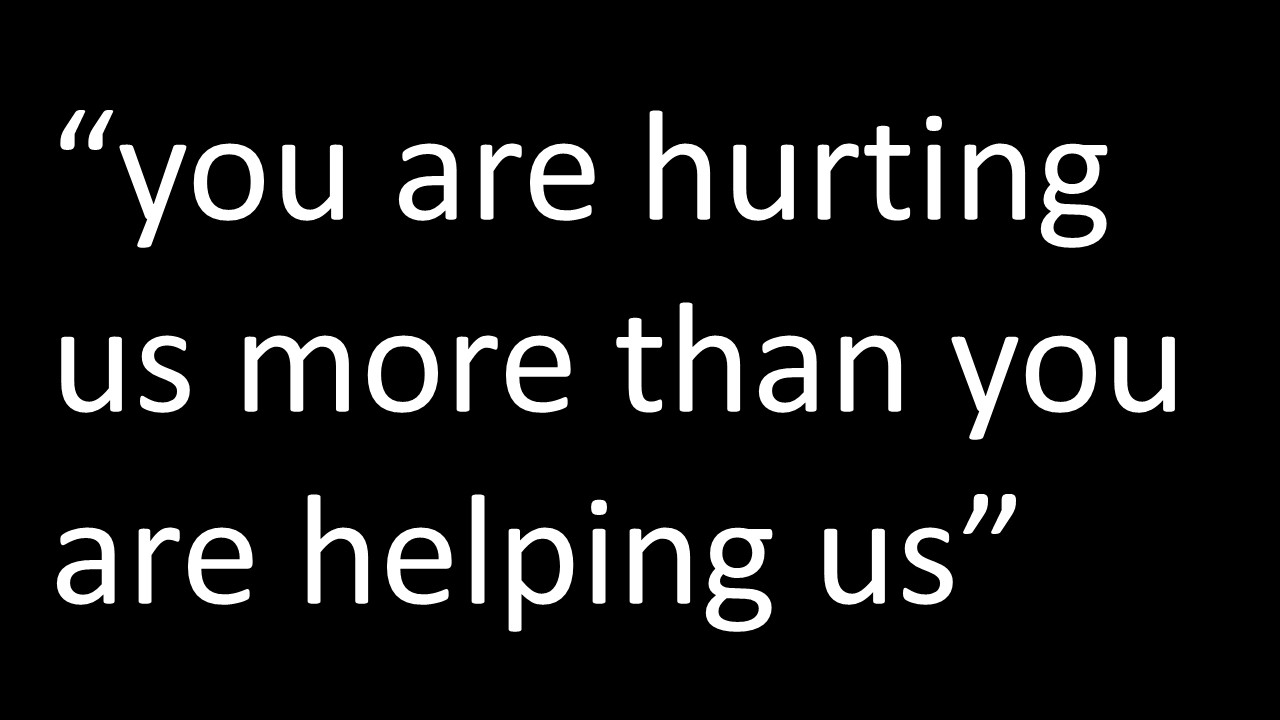
*The image contains a quote from Jess Phillips MP utilised as a lyric by DrillMinister:
https://www.youtube.com/watch?v=spJoRLpDLLM
Share this:


The Other Side of Intelligence

After I graduated I had a bit of tunnel vision of what I wanted to do. I wanted to either work with young offenders or work with restorative justice. Many opportunities actually came up for me to do several different things, but nothing really worked out and nothing felt right.
I carried on working in retail till February 2018; I was honestly starting to lose hope that I would find something that I would enjoy. I started working for a security company that does many things; from employment vetting to gaining intelligence of various kinds. Although the role is not focused on the criminality side entirely, the theme is very much apparent. I find myself thinking about all the different concepts of criminology and how it ties in to what I am doing.
A big part of my role is intelligence and at first, I didn’t think I would enjoy it because I remember in third year in the module, Violence: Institutional Perspectives*; we looked at the inquiry Stockwell 1; an inquiry into the metropolitan police force following the death of Jean Charles de Menezes. Jean Charles was mistaken by intelligence officers for Hussain Osman, one of the terrorists responsible for the failed bomb attacks in London. This particular inquiry frustrated me a lot, because I just felt like, how is it possible for the police to mistake an individual for an innocent person. I just couldn’t accept when we were going through this case how trained officers were able to fail to identify the correct person, regardless of all the other factors that pointed to Jean Charles being the culprit. However, now being in a similar position I understand more how difficult it actually is to identify an individual and being 100% sure. There have been times in my line of work that I have had to question myself 2, 3, even 8 times if the person I found was really who I was looking for.
I do think I question it a lot more because I know how much my job can affect a person’s life and/or future. I do think criminology has been one of the best decisions I made. I know that I view things differently from other people I work with, even my family. Just little things that people tend not to notice I see myself. Thinking, but could it be because of this, or could it be because of that. Criminology really is part of everyday life, it is everywhere, and knowing everything I know today I wouldn’t have it any other way.
*Now CRI3003 – Violence: From Domestic To Institutional
Share this:

An Officer’s Perspective

Northampton University…. In 2011, I first moved up to Northampton to study criminology and sociology. At the time I had never moved away from home before and it was a somewhat daunting experience. However, now looking back at this, it was one of the best decisions I have made.
Before I set out to go to university I had always said to my family I wanted to join the police force. I chose to study criminology as I believed this was going to help me with joining the police and also provide me with an insight as to what I was potentially going to be letting myself in for.
From studying criminology for three years I learnt about various ideas surrounding police and their interactions with communities, portrayal within the media and about the history of the police and how it has developed into the service we have today.
I remember, in particular, being interested in the way in which the media portrayed the police and the impact this had on how young people, and whether this influenced their opinions on police, so much to the point I completed a dissertation on this topic. This interest came about from a module called YOUTH CRIME AND MEDIA. Ultimately, I found that young people, in particular those aged between 18-25, were influenced by the media and this helped them form their opinions of the police.
Whilst I was at Northampton University, I was a Special Constable for the Metropolitan Police having joined them in 2013, my third year at uni. This began to give me some experience into what the police dealt with on a day to day basis. Although I was only doing this for 16 hours per month, I would recommend this to anybody who is considering joining the police.
Since graduating from Northampton University, I joined the Metropolitan Police as a PC and I have been with the Met now for 2 years. I can honestly say that, when people say this is a job like no other, they are all correct. I go to work not knowing what I am going to encounter from one call to the next. The one thing which has really stood out for me since joining as a PC, and having graduated from university, is how misunderstood the role of police appears to have become. When I was growing up I remember thinking that the role of police was to chase criminals and drive fast cars. However, this nowadays is a small proportion of the work we do and the role of police officers is a lot more diverse and changing daily. We have a lot of interactions with people who are suffering a mental health crisis who may need our assistance because they are feeling suicidal, investigate the disappearance of missing people and even attend calls where someone is suffering a cardiac arrest and a defibrillator is required, as police officers now carry these in their vehicles.
However. I feel the biggest thing that my criminology degree has assisted me with in relation to my job is how I analyse situations. Criminology was largely centred around different theories and analysing these perspectives. On a day to day basis I regularly find myself analysing information provided to me and trying to understand different accounts people provide me with and trying to use these accounts to decide what action needs to be taken. Overall criminology has allowed me to take a step back from somewhat stressful situations and analyse what has happened. This has given me the confidence to present different viewpoints to people and also challenge people at times on controversial topics or viewpoints they may have.
I do think that I took the right path to becoming a police officer; criminology did equip me with various different skills that I utilise in my day-to-day role. I wouldn’t change the path I took. I enjoyed every bit of my degree, and the lecturers were always supportive.
Share this:

The Next Step: Life After University

My name is Robyn Mansfield and I studied Criminology at the University of Northampton from 2013 to 2016. In 2016 I graduated with a 2:2. The University of Northampton was amazing and I learnt some amazing things while I was there. I learnt many things both academic and about myself. But I honestly had no idea what I wanted to do next. I went to University wanting to be a probation officer, but I left with no idea what my next step would be and what career I wanted to pursue.
My first step after graduating was going full-time in retail because like most graduates I just needed a job. I loved it but I realised I was not utilising my degree and my full potential. I had learnt so much in my three years and I was doing nothing with my new knowledge. I started to begin to feel like I had wasted my time doing my degree and admitting defeat that I’d never find a job that I would use my degree for. I decided to quit my job in retail and relocate back to my hometown.
I was very lucky and fell into a job working in a High School that I used to attend after I quit my retail job. I became a Special Educational Needs Teaching Assistant and Mentor. I honestly never thought that I’d be working with children after University, but the idea of helping children achieve their full potential was something that stood out to me and I really wanted to make a difference. The mentoring side was using a lot that I’d learnt at University and I really felt like I was helping the children I worked with.
I am currently an English Learning Mentor at another school. I mentor a number of children that I work with on a daily basis. As part of my role I cover many pastoral issues as well. I am really enjoying this new role that I am doing.
Eventually, in the short-term I would love to do mentoring as my full role or maybe progress coaching in a school. In the long-term I would love to become a pastoral manager or a head of year. The work I have been doing is all leading up to me getting the experience I need to get me to where I want to be in the future.
The best advice I would give to people at University now or who have graduated is not to worry if you have no idea what you want to do after you’ve got your degree. You might be like me, sat at University listening to what everyone else has planned after University; travelling, jobs or further education. Just enjoy the University experience and then go from there. I had no idea what I was doing and at certain points I had no job for months. But in a months time, a years time or longer you will finally realise what you want to do. It took me doing a job I never expected I would do to realise what I wanted to do with my degree.

 Thoughts from the criminology team