
Home » White saviours
Category Archives: White saviours

St Valentines Day! Love and other emotions

This blog today is all about love…. or maybe not! As criminologists, we tend to see things slightly different, and our perspective is influenced by functions other than undying declarations of love.
Saint Valentine is associated with love and people celebrate the day with their special romantic person, or by pursuing any person of interest, with romantic cards. Greeting cards, bottles of wine, boxes of chocolates, bunches of flowers, heart shaped jewellery, lovely sonnets, sexy underwear, kinky gifts and over the top romantic gestures! All of the above are anticipated actions on this day. Any of these will act as a demonstration of love. In some ways the more enormous the gesture the greater the demonstration of love and intimacy to the intended special person. Many times, we hear those in a relationship rut complaining that “they don’t even buy me chocolates anymore” a sign that love has fizzled out.
Love is a powerful emotion, and I dare not to challenge it. Artists have created their best work on love! Religion has created its strongest appeal on love. People, the world over, have based their entire lives of how they feel about a person they choose to be their partner and share their lives with. So clearly love is important! Enough for an Austrian psychotherapist to create an entire theory on love and sex. We feel ready to go to war for love and we are completely convinced that love is the force that keeps us going. Love is strong and we feel it every day.
Therefore, it is slightly surprising that the patron saint of romantic love is a rather fictional character! The saint is meant to be a priest who lived in the 3rd century AD and martyred by tortured for his faith. There was no romance involved and there were no love poems written of the time. In fact, the Roman Catholic church did not recognise or mentioned this martyrdom at the time. The first accounts on St Valentine appear in the 6th and later the 9th centuries, some centuries later. Since then, the story of the saint is embellished further, until the 19th century when it becomes connected with romantic love in some tenuous way. For example, the more recent narratives claim that before his execution he would convert and cure the daughter of his jailer. He was also officiating wedding ceremonies between Christians which may have given him the romantic connection. In the 19th century we have the first mass production of love tokens dedicated to the day and in the 20th, century especially post 1960s the celebration was growing in popularity and appeal. Currently the day is a celebration that has a significant capitalist value. It is usually a commercial success midway between Christmas and Easter.
Some religious historians noted that in the Roman calendar in February there have been rituals and celebrations on fertility and cleanliness (physical, spiritual). It was the time presumably when young Romans prepared for sexual relations. Therefore, an amalgamation of the old practices and the then new religion overlap with an obscure Saint to act as the glue to connect them and reaffirm the importance of love. Ironically the Roman citizens of the time, in particular the patricians, would not recognise such acts! They married out of interest, connecting the wealth and power of different factions. In those cycles love was more of a chimera rather than a reality.
Romantic love with knights, towers, dragons and gestures of devotion will appear as fanciful tales. Who hasn’t heard of Odysseus and his beloved wife Penelope who remained faithful to him for 20 years! Her fidelity was not reciprocated, and Odysseus had multiple affairs and fathered several children across the Mediterranean. Not quite the romantic story people would like to believe. Romantic love was always a tale, with vivid twists and turns. Love appears almost pure, undiluted that lifts those in its path. Shakespeare wrote fantastic sonnets on love. Some of the best things ever written in English. Still his contemporaries did not recognise this love. The majority of people at the time died young, malnourished and exhausted. Those who barely survive cannot afford to embrace love. As for those in power their relationship with love can be summed up in the old mnemonic rhyme “divorced, beheaded, died; divorced, beheaded, survived”!
We presume that romantic love is a representation of two people having feelings for one other. That is a nice sentiment but historically weak. Love for women does not exist. Not because women are devoid of emotions; quite the contrary! Because women have been used in social transactions between men who barter and use them as part of their household. A feminist today can recognise, despite all assurances for equality, how unequal life is. Especially in the household! If anyone wants to see why love is not equal only see how domestic and intimate violence is spread between gender lines. Because St Valentine brings flowers and chocolates, but it also brings beatings and abuse. Across the year it is during holidays and significant dates, including St Valentines that violence against women surges. One can unfortunately deduce that love is not for women. Oh…. The irony as romantic novels and movies are presented mostly for women as “chick flicks”!
Earlier in this post, it was said that the bigger the romantic move the better! Who will do this big romantic gesture? A man with chivalrous intent. Our household data reveal that men will spend more than double on what women will spend on the day, making their romantic intent more obvious. Perhaps men are more romantic and feel the need to satisfy that internal need. Or maybe there are other emotions at play. Love is very powerful, but so is possessiveness. In a history of transactions men used women for trading, so their gestures may be a latent act of dominance, a fresh reminder of possession. Instead of giving them chocolates, you may as well urinate all over them. That way your beloved will have your scent and keep other suitors away. So, this is not love but control, jealousy and dominance. Every drop of wine, every piece of chocolate, every flower petal, is yet another link in the chain of ownership. In case this gets misunderstood, the individual who buys flowers isn’t a villain, but the history of this kind of love is pointing in this direction. Your partner may have the best intentions and the greatest love and regard for you, but our society has never really acknowledged the transactional relationship between men and women. It is similar to those who speak of the evils of slavery, but with no recognition of reparations. This love is not pure and clean. It is the darkest form of patriarchy that controls people making them to believe in an adult fairytale once the other story of Santa Claus is not believed any more.
Romantic actions target all incomes and all ages, but of course there is a drive to get younger people, new generations of customers, on the love spending machine. At this stage I shall write…what not to do when you are planning a romantic day! Do not go overboard. Love is something felt in the heart not in the pocket. Heart-shaped products do not say “I love you” more than square or round ones! Red is no more appealing than any other colour and of course if emotions are high, they tend to last more than a day! Ideally do not spend any money! In the unfortunate event that you do, do not cook your romantic meal with a sharp knife. You may pierce the palm of your hand and end up with stitches. Do not spread chocolate on a partner before establishing if they are allergic to any of the ingredients, you may end up in A&E. Do not offer them wine, if they have an intolerance to alcohol, they may vomit all over your pristine bedspread. Do not write something funny or profound if they are thick and unable to comprehend deeper meanings (in that case what are you doing with them???). Love is not an idea, a moment, a day, an instant. It is a lifetime however long or short it is. You will live in love and you will die in love. Even when you are by yourself love is in you and it cannot be defined by the actions of people around you. Finally, love is selfless so do not try to control them, “love is a rebellious bird that nobody can tame”!

Share this:


Will Santa Visit?
For me Christmas always acts as a stark reminder of inequity, both past and present. I tend to remember television and music, stories of inequity between the haves and the have nots at Christmas time being told by the privileged few. Such as the Muppets Christmas Carol’s (1992) depiction of Tiny Tim, as being poor and disabled but ever so grateful for what he had. Quite recently I was doing some food shopping when I heard the Band Aid (1984) song, Do they know it’s Christmas playing on the tannoy. Despite the criticism relating to white privileged saviorism apparently still this song is popular enough to have a revival in 2024.
Christmas things cost money. So the differences between Christmas experiences of the haves and the have nots are drastic. Whilst many children are very aware that it is Christmas they might also be very aware of the financial constraints that their parents and/or guardians may be in. On the flip side there are other children who will have presents galore and are able to enjoy the festivities that Christmas bring.
This is also a time where goods are advertised and sold that are not needed and not recommended by healthcare professionals. Such as the sale of children’s toys that are dangerous for young children. For example, I was considering purchasing Water Beads as a fun crafting gift option for some children this year, until I was made aware that a children’s hospital and local playgroup are warning parents of the dangers of these as if swallowed can drastically expand in the body which could cause serious health complications.
It seems that social media also adds to the idea that parents and/or guardians should be providing more to enhance the Christmas experience. With posts about creating North Pole breakfasts, Christmas Eve boxes, matching Christmas family Christmas pajamas and expensive Santa visits. All of which come at a financial cost.

As well as this some toys that seem to be trending this year might be seen to misappropriate working class culture. For example, if your parents can afford to take you to Selfridges you can get a ‘fish and chip’ experience when buying Jelly Cat soft toys in the forms of items traditionally purchased from a fish and chip shop (see image above). This experience plus a bundle of these fish chips and peas soft toys cost £130 according to the Jelly Cat website. The profits gained for the Jelly Cat owners are currently being quoted in the news as being £58 million. Whilst at the same time some customers of these real life fish and shops will find it difficult to afford to buy a bag of chips. And some real life fish and chip businesses seem to be at risk of closure, in part due to high cost of living climate which impacts on cost of produce and bills.
Given the above issues it is not surprising that some children are worried that Santa won’t visit them this year.
Share this:


‘White Women, Race Matters’: The White Saviour Industrial Complex
Chapter I: No More White Saviours
This post in-part takes its name from a book by the late Whiteness Studies academic Ruth Frankenberg (1993) while the subtitle is taken from a journal article by Brittany Aronson (2017), the first of three blogs that will discuss Whiteness, women, and racism.
In the middle of August 2021, I saw a Facebook post by an institution platforming one of their staff who happened to say that she helped build a playground in an African country. I shared this post with a gentle critique of Whiteness attached. In the comments some of my friends and colleagues gave their two cents, with comments such as ‘white privilege’ and ‘gap-year activism’. It would be useful to say this staff member was White. A week to ten days later I recieved of a hostile message from one of their friends claiming I had upset the person in question with the comments. In the conversation I had with the third party (over messenger), I was witness to the hostility that Black and Brown people often experience from White women via tone-policing and their emotions as weapons (Hamad, 2018; Phipps, 2021). Her friend thus began to lecture me on the work of East African Playgrounds and use the so-called ethnically diverse makeup of the group that built the playground as a cover for the friend’s participation. In short, “I have Black / Asian / POC friends so it’s all good” – not, let me check my White privilege.
After being called a “bully” I did apologise, as maybe some of the comments did make it about the individual in question. However, in hindsight I do not think I should have (I was manipulated). I do not think the comments were bullyish, but this was simply a response consistent with ‘White defense’ (Lewis, 2000; Gunaratnam, 2003; DiAngelo, 2019), and I was not as savvy because it happened online rather in person. I was bullied as a youth so I have done my utmost since to not be one of those people. However, in this first act of ‘White defense’ it brought me to think about charity as one of the sectors where Whiteness is most pervasive. As an undergrad, I remember attending a presentation evening at Park Campus aiming to convince students to do aid work in East Africa, presented as “good for the CV”. How HE works with charities to send students to these places is problematic revisiting violent histories of colonial paternalism and the place of Blackness and Browness in the White imagination. Or as one postcolonial theorist writes:
“The Orient is not only adjacent to Europe; it is also the place of Europe’s greatest and richest and oldest colonies, the source of its civilizations and languages, its cultural contestant, and one of its deepest and most recurring images of the Other. In addition, the Orient has helped to define Europe (or the West) as its contrasting image, idea, personality, experience.”
Said, 1978: 2
The “helping hand of the West” in countries that are seemingly presented as unable to help themselves (or so is the concept / idea that White Western Aid presents) is rooted in White supremacy. When White people go to these countries under the guise of “good intent”, it brings the histories of White supremacy in these nations back to the floor. For Black/Brown people, who do this work, irrespective of our ancestries in global southern countries, I have to ask myself if I’m wanted there. Although I’m racialised outside of Whiteness, I was still reared in Europe. It is also a reminder of the differences between race and culture, as a Black person that was raised in Britain compared to my grandfather, for example, who spent nearly all of his childhood in Grenada. “Aid” reminds me of Othering through how previously colonised nations “still apparently” need “the help” of the West, countries that were never able to realise their potentials because of colonial exploitation wrought by Europe (re: the plot to Black Panther) colonialisms they still continue to do through different means. i.e the Israeli state’s illegal occupation of Palestine. Colonialism never ended.
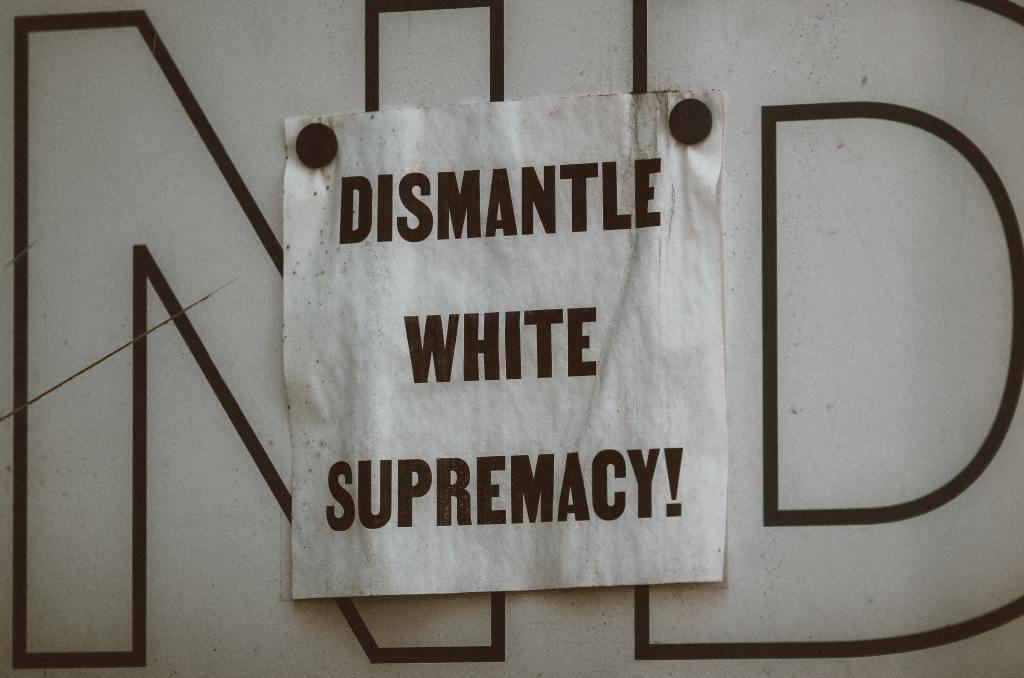
It reminds me of the so-called “inferiority” of countries in the Global South (what many sectors call developing nations) when westerners continue to go there in the name of aid, whilst at the same time not helping these countries to be self-sufficient. Simply we just send people there hoping that is enough. And we do this yearly without thinking about the broader problems. The roles of individuals in doing that, is really complicit into Whiteness through aid AKA White savourism. Short term, it feels good; long-term, this does more for the West than it does for those we want to help.
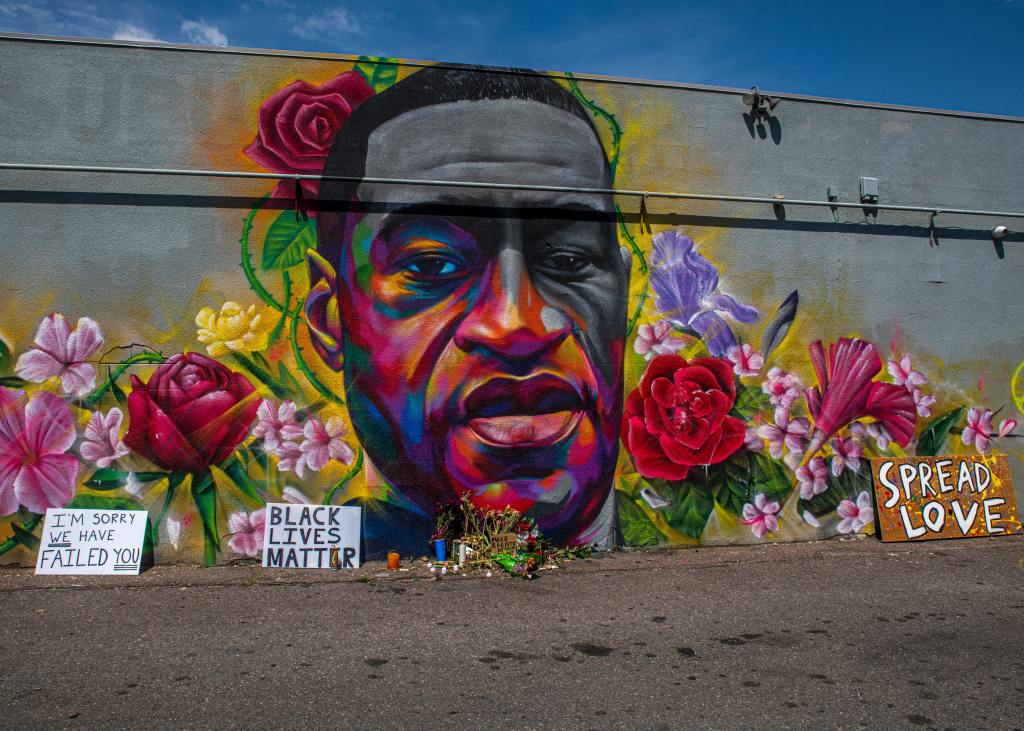
Aid aside, a comparison could be how following the Murder of George Floyd, lots of White people felt the euphoria of the protests and solidarity, but when it came to making good on pledging to dismantle systems of violence they benefit from, I could hear a pin drop. Seldom do we seek to empower these nations. What we frequently do is send westerners, often (but not always) for that feeling of goodness in building schools and their CVs, but at the end of it all, these tourists get to come back to the West. And when global sourthern nations have organised themselves historically, western governments have assasinated their leaders (i.e Belgium and Congo’s Patrice Lumumba).
What has become known as ‘poverty tourism’ is purported by not just White people from the Global North but also people like me who have ancestry in the Global South but were born and raised in the West. For those of us that do aid work, it would be worth thinking about how Whiteness can appear in the faces of Black and Brown people through the social, economic, and political investments institutions continue to have in these nations via the actions of individuals on the ground. That aside, it is seen as much more acceptable for a White person to do this work than it is for people of colour. When White people do “aid work” in previously colonised nations, it is viewed as “adventure” (i.e look at lit canon works of White westerners going to these nations). However, when Black and Brown people do this, in Northampton we just call it community work. To see an institution platform this ‘white saviourism’, it was insulting to many of my friends and colleagues, and their heritage, as descendants of indentured and enslaved labour.
Whilst I know there are many people ignorant to this history, I also know there are many people that know this and still continue to do it anyway. They may well go to countries in the African and Asian continents with good intentions, but those intentions are not divorced from histories of colonial exploitation these countries still haven’t recovered from. In seeing numbers of White people celebrating these “achievements” supported by White institutions, White privilege is evidently in-play in charity and in education, when the institutional thought plays into ‘institutional Whiteness’ because:
“the everyday work of establishing whiteness as a racialised enactment; of doing whiteness; of getting into it, is also institutional work. Whiteness is not just a personal investment practice it frames our chances for life or death, whether we are imprisoned or walk free, we are rich or poor, which university or not we attend, what marks we attain when we get there, if we do. The notion of institutional whiteness is a way of recognising the links between whiteness and institutional reproduction.”
White Spaces
In charity and by association third sector, this is an environment dominated by White middle-class women and White women are not divorced from histories of racism, in fact they are an important part of it (Ware, 1992). Rather than send students into these countries, I ask what global northern universities are doing with their global sourthern partner institutions to help on the ground. It is all very well sending students to build schools, but decolonisation is more than a curriculum-focussed endeavour. We must understand as Prof. Tao Leigh Goffe writes, “colonialism is ongoing … profound, sad, and beautiful because … decolonization is a prophecy and urgent call to action” Decolonisation requires colonisers to give the colonised their lands back and she goes on to say that “…decolonize is a a verb not a metaphor as Tuck and Yang teach us they wonder why Afro-Asian solidarity and Afro-Native coalition does not always exist in the world where it should or could.” I question if it is appropriate for higher education to send, often people who are westerners, to these countries, without any prior exploration of Whiteness nor the overarching system of White supremacy as a social and political system (Mills, 2003; 2004). My encounter with this White woman also saw her position bodies like mine in effort to cover Whiteness, but when we have a history/present of Black/Brown bodies being used as a flimsy cover for White supremacy (Ash Sakar in DDN, 2021), it makes sense that she would do this.
As a precedent, discourses around David Lammy and Stacey Dooley are worth looking at. Brittany Aronson (2017) argues that in the system of White supremacy, “we are falsely taught that being white is better so it makes sense why we would instill our white values upon students of color.” The hostility of this encounter in my direct messages reflects the ongoing systematic racism that people of colour face, via tone-policing because so often White people do not like how we experess ourselves, be it through speech or even in body language. For me, this has come more from White women than it has from White men. Today, I am still more conscious of them in anti-racism spaces than men. With the added intersection of womanhood, women of colour frequently experience this, with one of the most vivid examples of policing women of colour being when Matt Hancock tone-policed Dr Rosena Allin-Khan MP in May 2020.
When White people go into these countries to build schools, it makes many of us Black/Brown people uncomfortable when we as POCs have done this historically, only for these buildings to have been destroyed by White supremacists, or when we do like-for-like community work in the Global North … it is scorned. And whilst the woman in my messenger praised the diversity of this project, this revisits how Whiteness as an action can also be done by people that are not racialised as White (i.e The Sewell Report). So, although POCs took part, they are enacting the dominant thought of the institution which is the White institution. Seeing that western institutions are shaped by Euroecentricism AKA White thought / epistemologies, we can see regardless of how institutions can sometimes position POCs on these trips, they are in some ways doing the bidding of the institution really showing how Whiteness can appear with Black and Brown faces. The comments from the staff member’s friend in my messenger claimed the comments of my friends were “hateful” and “bullying”, this is a covert example of tone-policing when White people are held accountable.
After to-ing and fro-ing, this conversation ended with an obligation for the commenters and I to educate her and her friend. I’m not against aid work per sé, simply the lack of analysis or critique of aid work through a Whiteness lens by the institutions initiating those projects is troubling. Furthermore, I do not see White people that want to think about their own complicity in White supremacy in this work. If I saw more of an anti-racist commitment from aid institutions and so proclaimed White anti-racists, I would be less cynical about it. Yet, until that day comes, it will always be an uncomfortable topic especially when these countries only need aid namely because of colonialism and the postcolonial aftershocks countries like Britain left behind. It’s one thing saying these countries are “unstable” politically and socially as I am often told (but when you start asking why, it leads in one direction). It’s really an open secret that lots of White people, do emotionally benefit from this work (verily women), and that is Whiteness. This happens at the same time as White subjects really benefiting from Black/Brown trauma. If all of the above is acknowledged and explored in doing the work, then I might relax a bit more but it looks to me that the West is still profitting from the issues they create(d).
We said our goodbyes. Actually, I said goodbye, and that was that.
One thing is certain, this encounter for me, assured the everlasting relevance of Critical Race and Whiteness Studies further showing how Whiteness happens on social media. The microaggressions felt like bell hooks’ “white terror” (1992: 167) … it’s violence upon the body via stress. I’m tired now.
References
Aronson, B (2017) The White Savior Industrial Complex … Journal of Critical Thought and Praxis, 6(3), pp. 36-54.
DiAngelo, R (2019) White Fragility. London: Allen Lane.
[DDN] Double Down News (2021) The Alternative Race Report. YouTube.
Frankenberg, R (1993) White Women, Race Matters: The Social Construction of Whiteness. MI: UoM Press.
Gunaratnam, Y (2003) Researching ‘Race’ and Ethnicity: Methods, Knowledge and Power. London, Sage.
hooks, b. (1992) Black Looks: Race and Representation. MA: Southend Press.
Hamad, R (2018) How white women use strategic tears to silence women of colour. The Guardian.
Lewis, G (2000) Race, Gender, Social Welfare: Encounters in a Postcolonial Society. Oxford: Polity Press.
Mills, C. (2003) White Supremacy as a Sociopolitical System: A Philosophical Perspective. In: Doane, A and Bonilla-Silva, E (eds) White Out: The Continuing Significance of Racism. London: Routledge, pp. 35-48.
Mills, C. W (2004) Racial Exploitation and the Wages of Whiteness. In: Yancy, G (ed.) What White Looks Like: African-American Philosophers on the Whiteness Question. London: Routledge. pp. 25-54.
Phipps, A (2021) White tears, white rage: Victimhood and (as) violence in mainstream feminism. European Journal of Cultural Studies, 24(1), pp. 81-93.
Said, E (1978) Orientalism. London: Penguin.
Ware, V. (1992/2015) Beyond the Pale: White Women, Racism, and History. London: Verso.
White Spaces. Institutional Witnesses. White Spaces.

 Thoughts from the criminology team