
Home » Violence (Page 3)
Category Archives: Violence

The Problem with True Crime

There has been a huge spike in interest in true crime in recent years. The introduction to some of the most notorious crimes have been presented on Netflix and other streaming platforms, that has further reinforced the human interest in the gore of violent crimes.
Recently I went to the theatre to watch a show title the Serial Killer Next Door, which highlights some of the most notorious crimes to sweep the nation. From the Toy Box Killer (David Ray-Parker) and his most brutal violence against women to Ed Kemper and the continuous failing by the FBI to bring one of the most violent and prolific killers to justice. While I was horrified by the description both verbal and photographic of the crimes committed, by the serial killers. I was even more shocked at the reaction of the audience and how the cases were presented. The show attempted to sympathise with the victims but this fell short as the entertainment value of the audience was paramount and thus, the presenter honed in on the ‘comedic’ factor of the criminal and the crimes committed. Graphic pictures of the naked bodies of men, women and children brutalised at the hands of the most sadistic monsters were put on screens for speculation and entertainment. Audience members enjoyed popcorn and crisps while lapping up the horror displayed.
I did not stay for the full show…..
The level of distaste was too much for me but from what I did watch made me reflect deeply and led me to the age-old topic among criminologists and victimologists that question where the victims are and why do they continue to be dehumanised. Victims of these heinous crimes are rarely remembered and depicted in a way that moves them away from being viewed as human and instead commodities and after thoughts of crime.
The true crime community on YouTube has been criticized for the sensationalist approach crime. With niche story telling while applying one’s makeup and relaying the most brutal aspects of true crime cases to audiences. I ask the question when and how did we get to this point in society where entertainment trumps victims and their families. Later, this year I will be bringing this topic to a true crime panel to further explore the damage that this type of entertainment has on both the consumer and the victim’s legacy. The dehumanisation of victims and desensitisation of consumers for entertainment tells us something about the society we live in that should be addressed…..I am sure there will be other parts to this post that will explore the issues with true crime and its problematic and exploitative nature.
Share this:


Let us not forget
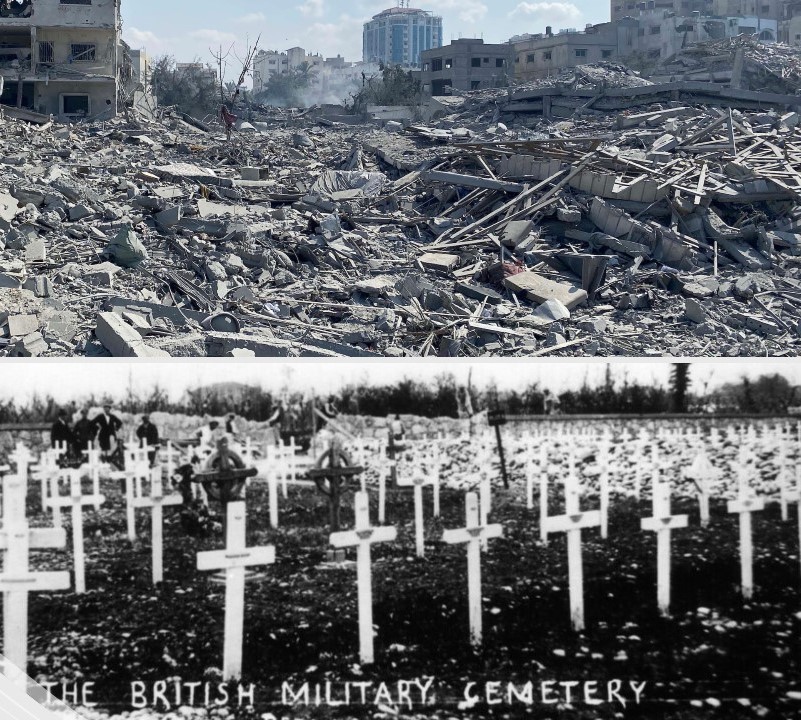
Yesterday marked the 80th anniversary of the D Day landings and it has seen significant coverage from the media as veterans, families, dignitaries, and others converge on the beaches and nearby towns in France. If you have watched the news coverage during the week, you will have seen interviews with the veterans involved in those landings. What struck me about those interviews was the humbleness of those involved, they don’t consider themselves heroes but reserve that word for those that died. For most of us, war is something that happens elsewhere, and we can only glimpse the horrors of war in our imaginations. For some though, it is only too real, and for some, it is a reality now.
I was struck by some of the conversations. Imagine being on ship, sailing across the English Channel and looking back at the white cliffs of Dover and being told by someone in charge, ‘have a good look because a lot of you will never see them again’. If knowing that you are going to war was not bad enough, that was a stark reminder that war means a high chance of death. And most of those men going over to France were young, to put it in perspective, the age of our university students. If you watched the news, you will have seen the war cemeteries with rows upon rows, upon rows of headstones, each a grave of someone whose life was cut short. Of course, that only represents a small number of the combatants that died in the war, there are too many graveyards to mention, too many people that died. Too many people both military and civilian that suffered.
The commemoration of the D Day landings and many other such commemorations serve as a reminder of the horrors of war when we have the opportunity to hear the stories of those involved. But as their numbers dwindle, so too does the narrative of the reality, only to be replaced with some romantic notion about glory and death. There is no glory in war, only death, suffering and destruction.
The repeated, ‘never again’ after the first and second world war seems to have been a utopian dream. Whilst we may have been spared the horrors of a world war to this point, we should not forget the conflicts across the world, too numerous to list here. Often, the reasons behind them are difficult to comprehend given the inevitable outcomes. As one veteran on the news pointed out though ‘war is a nonsense, but sometimes it’s necessary’.
The second part of that is a difficult sentiment to swallow but then, if your country faces invasion, your people face being driven from their homes or into slavery or worse, then choices become very stark. We should be grateful to those people that fought for our freedoms that we enjoy now. We should remember that there are people doing the same across the world for their own freedoms and perhaps vicariously ours. And perhaps, we should look to ourselves and think about our tolerance for others. Let us not forget, war is a nonsense, and there is no glory in it, only death and destruction.
Share this:


The bitter-sweet sport of boxing

For over a decade, the sport of boxing had not witnessed an undisputed heavyweight championship. The last time the undisputed heavyweight title was held was by Lennox Lewis in 1999. However, on Saturday, the 18th of May, the boxing world witnessed a historic moment as a new king was crowned in the heavyweight division. The Ukrainian boxer, Oleksandr Usyk handed Tyson Fury his first career loss, becoming the first undisputed heavyweight champion and the only one to hold all the belts simultaneously.
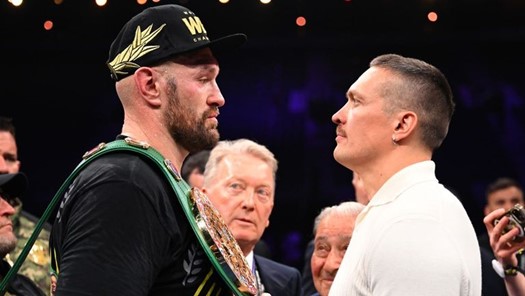
Boxing is a sport that unites people from diverse backgrounds, where we celebrate the tactical movements and the sweet science of the sport. It is a discipline filled with emotions, deep concentration, and strategic movements. While the crowning of a new undisputed heavyweight champion is a momentous occasion and a historic achievement worth celebrating, it is also important to reflect on the inherent dangers of the sport. The tragic death of British boxer Sherif Lawal serves as a sobering reminder of the risks that these athletes face every time they step into the ring. Boxing, like many combat sports, carries the potential for serious and life-altering injuries, including traumatic brain injuries, concussions, facial injuries, and so forth.. The sport has witnessed several heartbreaking stories, such as the case of Muhammad Ali and Michael Watson, who suffered devastating injuries that forever changed the course of their lives. Thus, as we celebrate in the excitement of a new undisputed heavyweight champion, we must also acknowledge the sacrifices these warriors make and the commitment they have to their craft. It is a delicate balance – celebrating the sweet science of boxing while recognising the inherent dangers that come with it. By keeping these realities in mind, we can appreciate the greatness of the sport while advocating for the utmost safety measures and support for those who put their well-being on the line for our entertainment.
Rest easy Champ!! 🕊 🕊

Share this:


Birth Trauma

I recently passed through Rugby Motorway Services with my family and I was amazed by what was on offer. It consisted of a free internal and external play area and the most baby friendly changing rooms that I have ever encountered. This visit to the Rugby services made me think;
Isn’t it a shame that the same amount of family friendly consideration is not found elsewhere.
Even more so;
Isn’t it a shame that many babies, mothers and birthing parents are treated with such a common and serious violence during the birth
The Birth Trauma Inquiry has been published this week, I am sure that CRI3003 students would be able to critique this Inquiry but in terms of the responses from mothers who have experienced birth trauma it makes for an incredibly harrowing read.
In the words of one mother;
‘Animals were treated better than the way we were treated in hospital’ (p.26).
Yet, none of these accounts of violence are surprising; casual conversations with friends, family, relatives resemble many of the key themes highlighted within the inquiry. The inquiry includes accounts of mothers before, during and after birth being ‘humiliated’ (p.20) and bullied, experiencing extreme amounts of pain, financial ruin, life limiting physical and mental health problems, due to institutional issues raised such as: negligence, poor professional practice, mistakes, mix ups, lack of consent, inhumane treatment, lack of pain relief and compassion. With the most serious consequences being baby and or mother loss.
The report also makes reference to at least a couple of incidents involving mobile phone usage. This did remind me of a conversation that I was having with a fellow criminologist quite recently. Aside from issues that have existed for a long time, it seems that the use of phones may impact on our ability to work in a safe and compassionate manner. I am sure that some staff scroll on phones when victims of crime report to the police station, or scroll whilst ‘caring’ for someone who is either mentally or physically unwell. How such small technological devices seem to have such huge impact on human interaction amazes me.
A quote from the inquiry states: ‘the baby is the candy, the mum is the wrapper, and once the baby is out of the wrapper, we cast it aside’ (p.20), how awful is that?
All-Party Parliamentary Group. Listen to Mums: Ending the Postcode Lottery on Perinatal Care (2024). Available at: https://www.theo-clarke.org.uk/sites/www.theo-clarke.org.uk/files/2024-05/Birth%20Trauma%20Inquiry%20Report%20for%20Publication_May13_2024.pdf [Accessed 16/05/24].
Share this:


I want to study Criminology

This is the time of the year we meet a lot of prospective students who come to one of our discovery/open days telling us why they wish to join us! I have taken some of their ideas and put them into content reflecting on our curriculum and the programme(s) we offer at the UON
I have read something in my sociology textbook, it was talking about deviant behaviour, and I thought to myself; that is interesting! I was reading in a psychology textbook something about a doll that adults are hitting and the kids watching them emulate their behaviour and I thought, if that explains the behaviour in my school when the kids used to fight. I was going over my notes in religious education talking about ethics and morality and I wondered if we are born with an innate moral compass that tell us right from wrong. The starting point in all three examples is curiosity. We explore some ideas at school, we hear stories in the news, and we are intrigued. The name sounds interesting because at the end of deviance lies crime, in the explanation of doll hitting the behaviour is violence and at the end of the questions about morality, rests criminality. For some others the curiosity comes from a true crime book that describes how a monstrous killer was able to kill two schoolgirls whilst joining the town in their search: or after watching a documentary of this female serial killer who worked as a sex worker and occasionally killed her punters. Maybe it was that crime series about this seemingly nice, terminally ill schoolteacher who started making drugs and selling them to gangs.
Any of the above sound exciting, interesting to enroll in at a university of your choice. In fact, every year hundreds of UK students will choose to study criminology in one of the different available ways to study it across the country. The curiosity and interest materialise and in recent years criminology has overtaken several cognate disciplines in terms of student numbers. Universities have invested in teams delivering renditions of criminology across the country. Our version of criminology is focused on multidisciplinary perspectives exploring different theoretical conventions and helping our students to grow in confidence in an area that is both fascinating and complex. Firstly we dispel the mythology on criminology from the reality and the scientific explorations of the discipline. We provide the relevant examples to see the evolution of thought and the development of perspectives. Then we work with our students to acquire the skills to seek out the information that will become their knowledge base. We encourage the development of independence, creativity and critical analysis.
In a recent session with finalists, one student commented that she found criminology challenging. It is a discipline that looks at crime and its aftermath but also considers that as a phenomenon crime is a social construct. In other words, of course its complex; we are talking about harm and the effects/causes it has on individuals and the wider society; but understanding how crime is generated, the impact it has and the ways we can address the “problem of crime” is an insightful educational experience. Like going up a mountain, you may feel the strain and pain of doing it whilst at the base camp or halfway but once you reach the peak, you get views of something else. For those who wish to join us; be open to new perspectives and be prepared to have your mind blown!
To find out more, please visit:
BA (Hons) Criminology with Psychology
Share this:


It’s all about perspective…

Within criminology, and other social science disciplines, the understanding that knowledge is socially constructed and meaning is given to things from people and their interactions is particularly pertinent: especially for researchers involved with people. And ‘perspective’ can be challenging to navigate, challenging to be critical of and challenging to recognise within and outside of a research context. Thinking about the public, the understanding of the nature of knowledge is often taken at face value and not viewed critically; perhaps a skill or requirement which should be part of mainstream education, then again maybe not. Consider the below example, your thoughts and attitudes towards the actors, actions and outcomes… consider your perspective.
A boy begins testing boundaries with his father, he deliberately disobeys him around where he can go and what he can do. He even encourages a friend to join him on his adventures: ducking away from the adult eyes that are watching over them. The boy is told off for putting himself and friend in a dangerous situation, and he appears sincere for his mistakes. Alas, he finds himself in trouble again; this time with dire consequences. The boy’s father dies trying to get him out of trouble. The boy runs away to a place where his past is unknown, and joins a group of outcasts. He grows up into a young man on the fringes of society. He is persuaded to return home, whereby he is involved in a violent fight, which almost results in his death. Luckily, he overcomes his opposition; finding himself with a only a few cuts and bruises. His opponent is forced to flee. He is triumphant, but at what cost?
This is one perspective and overview: from an outsider looking in. There are other ways to describe the example below (which we will come on to), but firstly: what are your thoughts on the young boy and his behaviour? What outcomes are required, if any, and at what stages of this boy’s life? Is this something which requires support, love and care or surveillance, control and discipline?
Another way of looking at the above scenario is to watch the Lion King (1994).1 The young boy in question is Simba. Maybe you already spotted that, maybe you aren’t familiar with the story or perspectives the film is told by. Perspectives matter….
- For those less familiar with Disney animations, the themes are also apparent within Shakespeare’s Hamlet (c. 1600). ↩︎
Share this:


Justice or Just Another One?

Luckily I’ve never been one for romantic movies. I always preferred a horror movie. I just didn’t know that my love life would become the worst horror movie I could ever encounter. I was only 18 when I met the monster who presented as a half decent human being. I didn’t know the world very well at that point and he made sure that he became my world. The control and coercion, at the time, seemed like romantic gestures. It’s only with hind sight that I can look back and realise every “kind” and “loving” gesture came from a menacing place of control and selfishness. I was fully under his spell. But anyway, I won’t get into every detail ever. I guess I just wanted to preface this with the fact that abuse doesn’t just start with abuse. It starts with manipulation that is often disguised as love and romance in a twisted way.
This man went on to break me down into a shell of myself before the physical abuse started. Even then, him getting that angry was somehow always my fault. I caused that reaction in his sick, twisted mind and I started to believe it was my fault too. The final incident took place and the last thing I can clearly recall is hearing how he was going to cave my head in before I felt this horrendous pressure on my neck with his other hand keeping me from making any noise that would expose him.
By chance, I managed to get free and RUN to my family. Immediately took photos of my injuries too because even in my state, I know how the Criminal Justice System would not be on my side without evidence they deemed suitable.
Anyway, my case ended up going to trial. Further trauma. Great. I had to relive the entire relationship by having every part of my character questioned on the stand like I was the criminal in this instance. I even got told by his defence that I had “Histrionic Personality Disorder”. Something I have never been diagnosed with, or even been assessed for. Just another way the CJS likes to pathologise women’s trauma. Worst of all, turns out ‘Doctor Defence’ ended up dropping my abuser as he was professionally embarrassed when he realised he knew my mother who was also a witness. Wonderful. This meant I got to go through the process of being criminalised, questioned, diagnosed with disorders I hadn’t heard of at the time, hear the messages, see the photos ALL over again.
Although “justice” prevailed in as much as he was found guilty. All for the sake of a suspended sentence. Perfect. The man who made me feel like he was my world then also tried to end my life was still going to be free enough to see me. The law wasn’t enough to stop him from harming me, why would it be enough to stop him now?
Fortunately for me, it stopped him harming me. However, it did not stop him harming his next victim. For the sake of her, I won’t share any details of her story as it is not mine to share. Yet, this man is now behind bars for a pretty short period of time as he has once again harmed a woman. Evidently, I was right. The law was not enough to stop him. Which leads me to the point of this post, at what stage does the CJS actually start to take women’s pleas to feel safe seriously? Does this man have to go as far to take away a woman’s life entirely before someone finally deems him as dangerous? Why was my harm not enough? Would the CJS have suddenly seen me as a victim, rather than making me feel like a criminal in court, if I was eternally silenced? Why do women have to keep dying at the hands of men because the CJS protects domestic abusers?”
Share this:


State Crime

A year ago, on this day a terrible accident took place. Two trains collided head on: a passenger and a cargo train. The crash was ferocious, following a massive bright explosion, that was heard for miles. The official count of fatalities are 57 dead and over 100 injured, some of whom very seriously, one of whom at least on a medically-induced coma. The term accident implies something that happened unintentionally and unexpectedly. As the story emerged, different elements came to the surface which indicated that what happened, was not unexpected. The people who worked in the train service raised the alarm months, if not years in advance, sending official statements to the relevant departments and the minister for transport. There were several accidents months before the disaster and there were calls to correct the infrastructure, including the signalling system. Several politically motivated appointments in key positions also meant that the people in the organisation at certain levels lacked the expertise and knowledge to work with the complexities of the railways. The employees’ protests were largely ignored as they never received an official response. So, was it an accident, a disaster, or a crime?
I have left the details, names and even the country of the disaster out, for one reason only. This tragedy can happen in any place at any time and for any kind of people. The aftermath leaves people wondering why it happened and if it was preventable. The pain of those who lost loved ones transcends borders, race, and origin. The question posed earlier remains. Worldwide we have seen similar disasters some of which have permanently marked the local and international community. It is the way we deal with the aftermath that will partially answer the question of what this tragedy was. A disaster goes in deep highlighting questions such as; what do people pay taxes for, what is the role of the State and how important is human life?
People in position of power were warned about it beforehand. There were similar incidents that should have signalled that something wasn’t right. There was underfunding and lack of staffing. All of these may have happened separately, but considered together, they cannot support this being an accidental event. It was a disaster waiting to happen. Then the question is whether this event is a crime or not. Crime is usually seen as a social construction of individual behaviour in conflict with social conventions. This focuses crime onto an action by an individual and therefore the motivations and intent focus on the usual gains, opportunity and other personal rewards. This approach largely ignores an entire section of criminology that deals with harm and social injustices. A crime of this magnitude has individual actors who for their own motivations contributed to the disaster. Nonetheless this is something bigger; it encompasses, services, organisations, departments, and ministries. This is a State crime. Different parts of the State contributed to the disaster and once it happened, they tried to provide a harried response on an individual’s fault…human error.
Years ago, in another place the toxic gases of a plant killed and blinded thousands of people; a nuclear cloud was released in another incident and people were made to evacuate their homes for ever. Some years ago, a fault in a type of plane grounded an entire fleet after a couple of crashes. A terrible earthquake which revealed errors in construction and design. Boats full of people sinking and no one seems to take any notice. A similar picture in most disasters: people looking for their loved ones, feeling powerless in front of a State that took decisions to ignore the risk and the calls of the experts. So, what does this train disaster, the plane crashes, the boat sinkings and the earthquake destruction have in common? They are all State crimes. In modern literature we have learnt to recognise them, identify the commonalities, and explain what a State crime is. What we haven’t done as effectively is to find a way to punish those responsible. Each State, like in this train disaster, recoils into providing all necessary information and changing its mechanisms; maybe because for some countries profit is above people, providing of the main intentions behind State crime. Whilst the State delays, the dead await justice.
In memoriam to the 57 and to the millions of victims of state crimes.
Share this:


Christmas Toys

In CRI3002 we reflected on the toxic masculine practices which are enacted in everyday life. Hegemonic masculinity promotes the ideology that the most respectable way of being ‘a man’ is to engage in masculine practices that maintain the White elite’s domination of marginalised people and nations. What is interesting is that in a world that continues to be incredibly violent, the toxicity of state-inflicted hegemonic masculinity is rarely mentioned.
The militaristic use of State violence in the form of the brutal destruction of people in the name of apparent ‘just’ conflicts is incredibly masculine. To illustrate, when it is perceived and constructed that a privileged position and nation is under threat, hegemonic masculinity would ensure that violent measures are used to combat this threat.
For some, life is so precious yet for others, life is so easily taken away. Whilst some have engaged in Christmas traditions of spending time with the family, opening presents and eating luxurious foods, some are experiencing horrors that should only ever be read in a dystopian novel.
Through privileged Christmas play-time with new toys like soldiers and weapons, masculine violence continues to be normalised. Whilst for some children, soldiers and weapons have caused them to be victims of wars with the most catastrophic consequences.
Even through children’s play-time the privileged have managed to promote everyday militarism for their own interests of power, money and domination. Those in the Global North are lead to believe that we should be proud of the army and how it protects ‘us’ by dominating ‘them’ (i.e., ‘others/lesser humans and nations’).
Still in 2023 children play with symbolically violent toys whilst not being socialised to question this. The militaristic toys are marketed to be fun and exciting – perhaps promoting apathy rather than empathy. If promoting apathy, how will the world ever change? Surely the privileged should be raising their children to be ashamed of the use of violence rather than be proud of it?
Share this:


Festive messages, a legendary truce, and some massacres: A Xmas story

Holidays come with context! They bring messages of stories that transcend tight religious or national confines. This is why despite Christmas being a Christian celebration it has universal messages about peace on earth, hope and love to all. Similar messages are shared at different celebrations from other religions which contain similar ecumenical meanings.
The first official Christmas took place on 336 AD when the first Christian Emperor declared an official celebration. At first, a rather small occasion but it soon became the festival of the winter which spread across the Roman empire. All through the centuries more and more customs were added to the celebration and as Europeans “carried” the holiday to other continents it became increasingly an international celebration. Of course, joy and happiness weren’t the only things that brought people together. As this is a Christmas message from a criminological perspective don’t expect it to be too cuddly!
As early as 390 AD, Christmas in Milan was marked with the act of public “repentance” from Emperor Theodosius, after the massacre of Thessalonica. When the emperor got mad they slaughtered the local population, in an act that caused even the repulson of Ambrose, Bishop of Milan to ban him from church until he repented! Considering the volume of people murdered this probably counts as one of those lighter sentences; but for people in power sentences tend to be light regardless of the historical context.
One of those Christmas celebrations that stand out through time, as a symbol of truce, was the 1914 Christmas in the midst of the Great War. The story of how the opposing troops exchanged Christmas messages, songs in some part of the trenches resonated, but has never been repeated. Ironically neither of the High Commands of the opposing sides liked the idea. Perhaps they became concerned that it would become more difficult to kill someone that you have humanised hours before. For example, a similar truce was not observed in World War 2 and in subsequent conflicts, High Commands tend to limit operations on the day, providing some additional access to messages from home, some light entertainment some festive meals, to remind people that there is life beyond war.
A different kind of Christmas was celebrated in Italy in the mid-80s. The Christmas massacre of 1984 Strage Di Natale dominated the news. It was a terrorist attack by the mafia against the judiciary who had tried to purge the organisation. Their response was brutal and a clear indication that they remained defiant. It will take decades before the organisation’s influence diminishes but, on that date, with the death of people they also achieved worldwide condemnation.
A decade later in the 90s there was the Christmas massacre or Masacre de Navidad in Bolivia. On this occasion the government troops decided to murder miners in a rural community, as the mine was sold off to foreign investors, who needed their investment protected. The community continue to carry the marks of these events, whilst the investors simply sold and moved on to their next profitable venture.
In 2008 there was the Christmas massacre in the Democratic Republic of Congo when the Lord’s Resistance Army entered Haut-Uele District. The exact number of those murdered remains unknown and it adds misery to this already beleaguered country with such a long history of suffering, including colonial ethnic cleansing and genocide. This country, like many countries in the world, are relegated into the small columns on the news and are mostly neglected by the international community.
So, why on a festive day that commemorates love, peace and goodwill does one talk about death and destruction? It is because of all those heartfelt notions that we need to look at what really happens. What is the point of saying peace on earth, when Gaza is levelled to the ground? Why offer season’s wishes when troops on either side of the Dnipro River are still fighting a war with no end? How hypocritical is it to say Merry Christmas to those who flee Nagorno Karabakh? What is the point of talking about love when children living in Yemen may never get to feel it? Why go to the trouble of setting up a festive dinner when people in Ethiopia experience famine yet again?
We say words that commemorate a festive season, but do we really mean them? If we did, a call for international truce, protection of the non-combatants, medical attention to the injured and the infirm should be the top priority. The advancement of civilization is not measured by smart phones, talking doorbells and clever televisions. It is measured by the ability of the international community to take a stand and rehabilitate humanity, thus putting people over profit. Sending a message for peace not as a wish but as an urgent action is our outmost priority.
The Criminology Team, wishes all of you personal and international peace!


