
Home » Victimisation (Page 2)
Category Archives: Victimisation

Proud to be kind
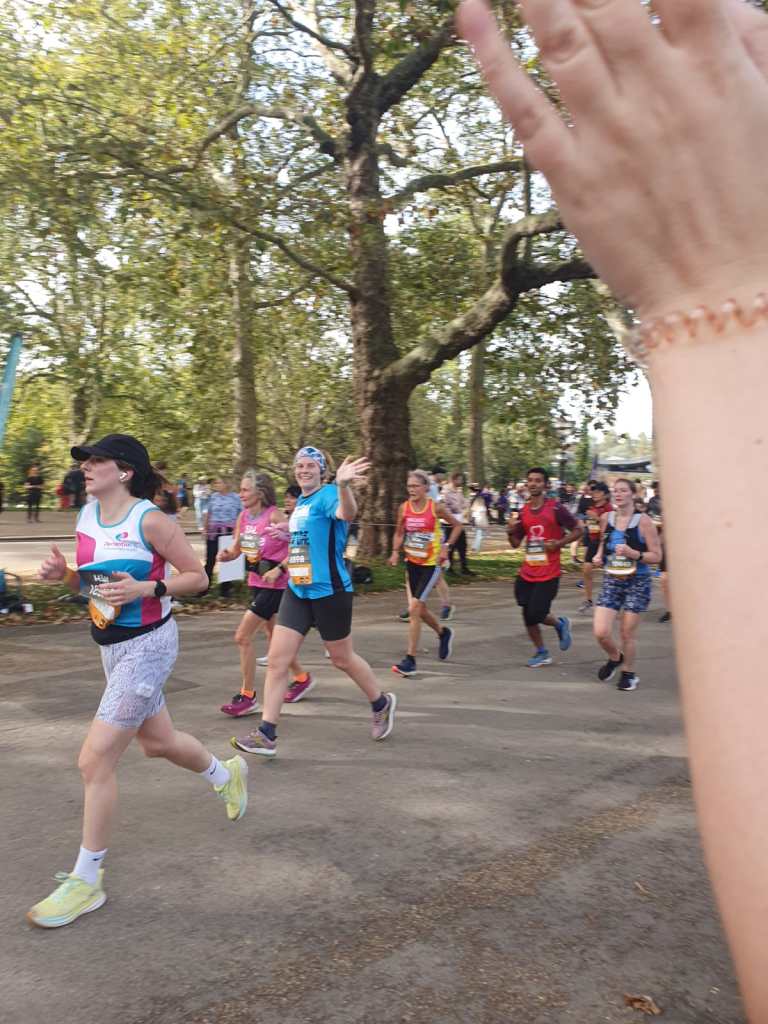
On Sunday 8th October 2023, I ran the Royal Parks Half Marathon to raise money for Freedom From Torture. It took 2hrs 11mins and 56 secs in 24 degree heat; 27 supporters who donated to Freedom From Torture to sponsor me; 5 friends who were with me on the day and kept my dehydrated spirits up; 30+ individual messages of support and encouragement on and before race day; countless well wishes and congratulations after the race; and £705 raised to rehabilitate and treat torture survivors.
The humanity and kindness shown by those who donated, checked in on me, wished me well and trained with me was overwhelming. £705 is an extraordinary amount of money and is going to make a huge difference to people’s lives who have run from torture, harm and unlawful persecution. Freedom From Torture offers, people who have experienced torture, safety and provides them with skills to be able to manage and overcome their trauma. Rooted in the foundations of this charity, and individuals that support it, is the notion of kindness, caring and wanting to live in a better world were our identities as humans are what transcends all conflict, hostility and harm in the world.
Sunday 8th October was an emotional day. Because of the focus on training (actually reaching 13.1miles/21.097km), my reasons for running and raising money for Freedom From Torture became, sort of, an afterthought- something that snuck up on me now and then rather than the focal fuel powering my legs! Even the steady influx of donations didn’t quite have the gravatas to let the reality sink in. That my silly (albeit very long) run is going to be positively impacting people’s lives! People who have experienced grave harms, displacement and social injustice. It wasn’t until the race began, where other charities and organisations were visible, being surrounded by other runners in their tops signifying who they were running for, where the enormity of the event, distance and possible impact this could have, hit home! Tears as the race begins.
Tears also followed after the race. Not to be too boastful but: I ran a half marathon! On a week where my chronic illness had seriously kicked my butt! Flash back to Thursday that week and I was concerned I wouldn’t make it to the race, let alone finish it! Once that wave of overwhelmingness passed, the next wave was not far behind. People I know and care for, and people I do not know, have banded together to support survivors of torture. Their donations will provide therapy, counselling, support for survivors of torture to manage their trauma and to be able to rebuild lives which had been destroyed. The people who donated and supported in all capacities have demonstrated incredible kindness, and the reality of what this money is going towards reduced me to yet another round of tears. But this time, tears of joy. Look what we can achieve! Look what we can do with kindness! Look what we can do when we lean on those around us!
Sunday 8th October 2023 will be a day I shall not forget. It is a day which I am immensely proud of. Not just of my running achievement, but the achievement of all those committed to making a change and providing support to those that need it. Thank you to everyone who has been with me on this journey to raise money to support survivors of torture: it couldn’t have been done without you!
Share this:


Media Madness

Unless you have been living under a rock or on a remote island with no media access, you would have been made aware of the controversy of Russell Brand and his alleged ‘historic’ problematic behaviour. If we think about Russell Brand in the early 2000s he displayed provocative and eccentric behaviour, which contributed to his rise to fame as a comedian, actor, and television presenter. During this period, he gained popularity for his unique style, which combined sharp wit, a proclivity for wordplay, and a rebellious, countercultural persona.
Brand’s stand-up comedy routines was very much intertwined with his personality, which was littered with controversy, something that was welcomed by the general public and bosses at big media corporations. Hence his never-ending media opportunities, book deals and sell out shows.
In recent years Brand has reinvented (or evolved) himself and his public image which has seen a move towards introspectivity, spirituality and sobriety. Brand has collected millions of followers that praise him for his activist work, he has been vocal on mental health issues, and he encourages his followers to hold government and big corporations to an account.
The media’s cancellation of Russell Brand without any criminal charges being brought against him raises important questions about the boundaries of cancel culture and the presumption of innocence. Brand, a controversial and outspoken comedian, has faced severe backlash for his provocative statements and unconventional views on various topics. While his comments have undoubtedly sparked controversy and debate, the absence of any criminal charges against him highlights the growing trend of public figures being held to account in the court of public opinion, often without a legal basis.
This situation underscores the importance of distinguishing between free speech and harmful behaviour. Cancel culture can sometimes blur these lines, leading to consequences that may seem disproportionate to the alleged transgressions. The case of Russell Brand serves as a reminder of the need for nuanced discussions around cancel culture, ensuring that individuals are held accountable for their actions while also upholding the principle of innocent until proven guilty in a court of law. It raises questions about how society should navigate the complex intersection of free expression, public accountability, and the potential consequences for individuals in the public eye.
There is also an important topic that seems to be forgotten in this web of madness……..what about the alleged victims. There seems to be a theme that continuously needs to be highlighted when criminality and victimisation is presented. There is little discussion or coverage on the alleged victims. The lack of media sensitivity and lay discussion on this topic either dehumanises the alleged victims by using lines such as ‘Brand is another victim of MeToo’ and comparing him to Cliff Richard and Kevin Spacey, two celebrities that were accused of sexual crimes and were later found not guilty, which in essence creates a narrative that does not challenge Brand’s conduct, on the basis of previous cases that have no connection to one another.
We also need to be mindful on the medias framing of the alleged witch hunt against Russell Brand and the problematic involvement that the UK government. The letter penned by Dame Dinenage sent to social media platforms in an attempt to demonetize Brand’s content should also be highlighted. While I support Brand being held accountable for any proven crimes he has committed, I feel these actions by UK government are hasty, and problematic considering there have been many opportunities for the government to step in on serious allegations about media personalities on the BBC and other news stations and they have not chosen to act. The step made by Dame Dinenage has contributed to the media madness and contributes to the out of hand and in many ways, nasty discussion around freedom of speech. The government’s involvement has deflected the importance of the victimisation and criminality. Instead, it has replaced the discussion around the governments overarching punitive control over society.
Brand has become a beacon of understanding to is 6.6 million followers during Covid 19 lockdowns, mask mandates and vaccinations. This was at a time when many people questioned government intentions and challenged the mainstream narratives around autonomy. Because Brand has been propped up as a hero to his ‘awakened’ followers the shift around his conduct and alleged crimes have been erased from conversation and debates around BIG BROTHER and CONTROL continue to shape the media narrative………
Share this:


The True Crime Genre and Me

I have always enjoyed the true crime genre, I enjoyed the who dunnit aspect that the genre feeds into, I also enjoyed “learning” about these crimes, and why people committed them. I grew up with an avid interest in homicide, and the genre as a result. So, studying criminology felt like it was the best path for me. Throughout the three years, this interest has stayed with me, resulting in me writing my dissertation on how the true crime genre presents homicide cases, and how this presentation influences people’s engagement with the genre and homicides in general.
With this being my main interest within the field of criminology, it was natural that True Crime and Other Fictions (CRI1006) module in first year caught my attention. This module showed me that my interest can be applied to the wider study of criminology, and that the genre does extend into different areas of media and has been around for many years. Although this module only lasted the year, and not many other modules- at least of the ones that I took- allowed me to continue exploring this area, the other modules taught me the skills I would need to explore the true crime genre by myself. Something- in hindsight- I much prefer.
I continued to engage with the wider true crime genre in a different way than I did before studying criminology- using the new skills I had learnt. Watching inaccurate and insensitive true crime dramas on Netflix, watching YouTubers doing their makeup whilst talking about the torture of a young girl, podcasts about a tragic loss a family suffered intercut with cheery adverts. This acts as a small snapshot of what the genre is really like, whereas when I originally engaged with it, it was simple retellings of a range of cases, each portrayed in slightly different ways- but each as entertaining as the next. To me, I think this is where the genre begins to fall apart, when the creators see what they are producing as entertainment, with characters, rather than retellings of real-life events, that affects real people.
Having spent so much time engaging with the genre and having the skills and outlook that comes with studying criminology, you can’t help but to be critical of the genre, and what you are watching. You begin to look at the reasoning behind why the creators of this content choose to present it in such ways, why they skip out on key pieces of information. It all makes a bit more sense. Its just entertainment. A sensationalist retelling of tragic events.
Although studying criminology may have ruined how I enjoy my favourite genre of media, it also taught me so many skills, and allowed me to develop my understating in an area I’ve always been interested in. These skills can be applied in any area, and I think that is the biggest take away from my degree. Considering I now work as the Vice President of Welfare at the Students Union– and getting some odd looks when I say what my degree was- I have no regrets. Even if I walk away from my time at university and never use the knowledge I gained from my studies, I can walk away and know that my time was not wasted, as the skills I have learnt can be applied to whatever I do moving forward.
Share this:


A world without prisons follow-up. A student/staff reflection piece
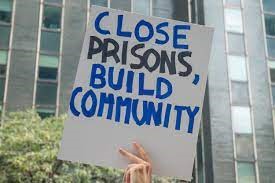
As a department Criminology has pushed the envelope in promoting discussions around the key disciplinary debates. @franbitalo and myself co-ordinated a conversation where the main focus was to imagine “a world without prisons”. The conversation was very interesting, and we decided to post parts of it as a legacy of the social debates we engage in. The discussion is captured as a series of comments made by the students with some prompts in bold.
The original question stands, can you imagine a world without prisons? First thing first, there is a feeling that prisons will always exist as mechanisms to control our society. Mainly because our society is too punitive and focused on punishment rather than rehabilitation. We live in a society that ideologically sees the prison as the representation of being hard on crime. Further to this point we may never be able to abolish the prison, so it can always remain as the last resort of what to do with those who have harm others. Especially for those in our society who deserve to be punished because of what they did. Perhaps we could reform it or extend the use of the probation service dealing with crime.
In an ideal world prisons should not exist especially because the system seems to target particular groups, namely minorities and people from specific background. It important to note that it does stop people seeking or taking justice into their hands and deflecting any need for vengeance “eye for an eye”. Prison is a punishment done in the name of society, but it does carry political overtones. There are parts of political ideology that support the idea that punishment is meant to make an example of those breaking the law. This approach is deeply rooted, and is impervious to reform or change. Which can become one of the biggest issues regarding prisons.
Then there is the public’s view on prisons. When people hear that prisons will go they will be very unhappy and even frightened. They will feel that without prisons people will go crazy and commit crimes without any consequences. Society, people feel, will go into a state of anarchy where vigilantism will become the acceptable course of action. This approach becomes more urgent when considering particular types of criminals, like sex offenders and in particular, paedophiles. Regardless of the intention of the act, these types of crime cause serious harm that the victim carries for the rest of their lives. The violation of trust and the lack of consent makes these crimes particularly repulsive and prison worthy. How about child abduction? Not sure if we should make prison crime specific. That will not serve its purpose, instead it will make it the dumping ground for some crime categories, sending a message that only some people will go to prison.
Will that be the only crime category worthy of prison? In an ideal world, those who commit serious financial crimes should be going to prison, if such a prison existed. Again, here if we are considering harm as the reason to keep prisons open these types of crime cause maximum harm. The implication of white-collar crime, serious fraud and tax evasion deprive our society of taxes and income that is desperately needed in social infrastructure, services and social support. Financial crime flaunts the social contract and weakens society. Perhaps those involved should be made to contribute reparations. The prison question raises another issue to consider especially with all the things said before! Who “deserves” to go to prison. Who gets to go and who is given an alternative sentence is based on established views on crime. There are a lot of concerns on the way crime is prioritised and understood because these prioritisations do not reflect the reality of social disorder. Prison is an institution that scapegoats the working classes. Systematically the system imprisons the poor because class is an imprisonable factor; the others being gender and race.
If we keep only certain serious crimes on the books, we are looking at a massive reduction in prison numbers. Is that the way to abolitionism? The prison plays too much of a role in the Criminal Justice System to be discounted. The Industrial Prison Complex as a criminological concept indicates the strengths of an institution that despite its failings, hasn’t lost its prominence. On the side of the State, the establishment is a barrier to any reform or changes to this institution. Changes are not only needed for prison, but also for the way the system responds to the victims of crime as well. Victims are going through a process of re-victimisation and re-harming them. This is because the system is using the victims as part of the process, in giving evidence. If there is concern for those harmed by crime, that is not demonstrated by the strictness of the prison.
As a society currently we may not be able to abolish prisons but we ought to reduce the harm punishment has onto people. In order to abolish prisons, the system will have to be ready to allow for the change to happen. In the meantime, alternative justice systems have not delivered anything different from what we currently have. One of the reasons is that as a society we have the need to see justice being served. A change so drastic as this will definitely require a change in politics, a change in ideology and a change in the way we view crime as a society in order to succeed. The conversation continues…
Thank you to all the participating students: Katja, Aimee, Alice, Zoe, Laura, Amanda, Kayleigh, Chrissy, Meg, and Ellie also thank you to my “partner in crime” @franbitalo.
Share this:


There’s no I in teamwork but maybe there’s space for me and you?


Teamwork is often promoted as a valuable transferable skill both by universities and employers. However, for many the sheer mention of this type of group activity is enough to fill them with dread. This is a shame, and I want to use this blog to explain why.
I’m definitely not one for sports, but even I cannot avoid the discourse around women’s football and Euro 2022. Much has been written about the talents and skill of England’s Lionesses, of which I know very little. Equally there has been disquiet around the overwhelming whiteness of the team, an inequality I am very familiar with throughout my studies of crime, criminality and criminal justice. Nevertheless this blog isn’t about inclusion and exclusion, but about teamwork. Football, like many activities is not a solo enterprise but a group activity. All members need to be able to rely upon their team mates for support, encouragement and ultimately success. If a player doesn’t turn up for training, doesn’t engage in sharing space, passing the ball and so on, the team will fail in their endeavours. Essentially, the team must be on the same page and be willing to sacrifice individuality (at times) for the good of the team. But football isn’t the only activity where teamwork is crucial.
One only has to imagine the police, another overwhelmingly white institution, but with a very different mandate and different measures of success. Here a lack of support from team mates could be a matter of life and death. Even if not so severe, the inability to work closely with other officers in a team can make professional and person life extraordinarily difficult to maintain. It has repercussions for individual offices, the police force itself and indeed, society.
Whilst I’ve the made the case for teamwork, it is not clear what makes a good team, or how it could be maintained. Do all teams work? Personal experience tells me that when members have very different agendas and lose sight of the main objective, team work can be very challenging, if not impossible. There has to be a buy in from all members, not just some. There has to be space for individuals to develop themselves as well as the wider team. However, when the individual aims continue to take priority over the collective, cracks emerge. The same experiences suggest that teamwork cannot be accomplished instantly regardless of intent. Teams take a long time to build rapport, to bond, to gain trust across members and this cannot be hurried. Furthermore, this process requires continuing individual and collective reflection and development. So where can we find an example of such excellence (outside of the wonderful Criminology Team, of course)?
I recently watched the BBC 4-part documentary My Life as a Rolling Stone. Produced to mark 60 years of the band, the documentary explores the lives of Mick Jagger, Keith Richards, Ronnie Wood and the late, Charlie Watts. There were lots of interesting aspects to each part, but the most striking to me was the sense of belonging. That the Rolling Stones are a cohesive team, with each member playing very different parts, but all essential to not only the success of the band, but also to the well-being of the four men. Alongside discussions around creativity, musicality and individual skills, they describe drug taking, alcohol abuse, romantic relationships, fights, falling out and making up. There were periods of silence, of discord and distrust and periods of celebration and sheer personal and collective joy. Working together they provide each other with exactly what they need to thrive individually and collectively.
These men have made more money than most of us can dream of. They have been to parts of the world and seen things that most of us will never see. All of them are heading toward 80 but keep writing and performing. More importantly for this blog, they seem to illustrate what teamwork looks like, one where communication is key, where disputes must be resolved one way or another, regardless of who was right and who was wrong and where the sheer sense of needing one another, belonging remains paramount. I could use a dictionary definition of teamwork, but it seems to me the Rolling Stones say it better than I ever could:
“You can’t always get what you want
But if you try sometime
You’ll find
You get what you need”
(Jagger and Richards, 1969).
Share this:


Refugee Week 2022

Next week (20th-26th June) is Refugee Week, coming at a moment in time days after the first deportation flight of asylum seekers to Rwanda was scheduled. Luckily the government’s best efforts were thwarted by the ECHR this time. Each year Refugee Week has a theme and this year’s focus is healing. People fleeing conflict and persecution have a lot to heal from and I am pessimistic about whether healing is possible in the UK. My own research examines the trajectories of victimisation among people seeking safety. I trace experiences of victimisation starting from the context from which people fled, during their journeys and after arrival in the UK. It is particularly disturbing as someone who researches people seeking safety that once they arrive in a place they perceived to be safe, they continue to be victimised in a number of ways. People seeking safety in the UK encounter the structurally violent asylum ‘system’ and discriminatory attitudes of swathes of the public, sections of the media and last not certainly not least, political discourse. Even after being granted leave to remain, refugees face a struggle to find accommodation, employment, convert education certificates and discrimination and hate crime is ongoing.
Over the years I have supported refugees who suffered breakdowns after having their asylum claim awarded. They are faced with the understanding of the trauma they suffered pre-migration, compounded by the asylum system and the move-on period following claims being awarded. Yet this is no time to heal. In the wake of the Nationality and Borders Act 2022, no migrant nor British citizen with a claim to citizenship elsewhere is safe. There is no safety here and therefore there can be no healing, not meaningful healing anyway.

Despite my negative outlook on the state of immigration policy in the UK, there are some positive signs of healing for some people seeking safety. These experiences are often facilitated by peer support, grassroots organisations and charities. I recall one woman who had fled Iraq coming into a charity I was undertaking research in. When we met for the first time, she was tiny and looked much older than she was. She would pull her veil tightly around her head, almost like it was protecting her. This woman did not speak a word of English and the only volunteer Kurdish Sorani interpreter did not attend the group every week. The womens’ group I attended conducted activities which overcame language barriers and at the time we were working with tiles and mosaics on a project which lasted a few weeks. During this time I could visibly see this woman start to heal. She started to stand up straight, making her appear taller. Her face softened and she appeared younger. She started smiling and her veil loosened. She was relaxing among us. In my experience, I’ve noticed that the healing comes in ebbs and flows. Relief of being ‘safe’, compounding stress of asylum, making friends, waiting, waiting, waiting for a negative decision, being supported by NGOs, letters threatening deportation, having a ‘safe’ place to live, having a firework posted through your letterbox.
For me this week is about celebrating those fleeting moments of healing, since I spend so much of my time discussing and researching the negative. The University of Northampton is co-hosting a number of events to mark Refugee Week 2022, starting with a service being held to remember all those seeking sanctuary both past and present. The event will be held on Monday 20th June at 1pm at Memorial Garden, Nunn Mills Road, Northampton, NN1 5PA (parking available at Midsummer Meadow car park).
Monday will end with an ‘in conversation with’ event with University of Northampton doctoral candidate Amir Darwish. Amir is Kurdish-Syrian and arrived in the UK as an asylum seeker in 2003. He is now an internationally published poet and writer. This event will be run in conjunction woth Northampton Town of Sanctuary and will be hosted at Delapre Abbey at 7pm. You can find further details and book tickets here.
On Wednesday the University of Northampton and Northampton Town of Sanctuary will be hosting an online seminar at 3pm with Professor Peter Hopkins, whose recent research examined the exacerbation of existing inequlaities for asylum seekers during the pandemic. I’ve just written a book chapter on this for a forthcoming volume reflecting on the unequal pandemic and it was staggering – but unsurprising – to see the impact on asylum seekers. This seminar can be accessed online here.
The week’s events will conclude with a Refugee Support Showcase which does what it says on the tin. This event will be an opportunity for organisations working with refugees in the local area to show the community the valuable work they do. This event will take place on Thursday 23rd June 4-6pm at the Guildhall, St. Giles Square, Northampton.
This year the University has worked with a number of organisations to produce a well-rounded series of events. Starting with reflection and thought of those who have sought, and continue to seek sanctuary and celebrating the achievements of someone who has lived experiences of the asylum system. Wednesday contibutes to the understanding of inequalities for people seeking safety and we end Friday on a positive note with the work of those who facilitate healing.
Share this:


Youth or Adult: can you tell?

This week’s blog begins with a game: youth or adult, secure estate in England and Wales. Below are some statements, and you simply need to guess (educated guesses please), whether the statement is about the youth, or adult secure estate. So, are the statements about children in custody (those under the age of 18 years old) or adults in custody (18+). When you’re ready…
- 70% decrease in custody in comparison to 10 years ago
- Segregation, A.K.A Solitary Confinement, used as a way of managing the most difficult individuals and those who pose a risk to themselves or others
- Racial disproportionality in relation to experiencing custody and being remanded to custody
- Self-harm is alarmingly high
- 1/3 have a known mental health disability
- Homelessness after release is a reality for a high proportion of individuals
- Over half of individuals released from custody reoffend, this number increases when looking at those sentenced to 6months of less
How many did you answer youth secure estate, and how many adult secure estate? Tally up! Did you find a 50/50 split? Did you find it difficult to answer? Should it be difficult to spot the differences between how children and adults are treated/experience custody?
All of the above relate specifically to children in custody. The House of Commons Committee (2021) have argued that the secure estate for children in England and Wales is STILL a violent, dangerous set of environments which do little to address the needs of children sentenced to custody or on remand. Across the academic literature, there is agreement that the youth estate houses some of the most vulnerable children within our society, yet very little is done to address these vulnerabilities. Ultimately we are failing children in custody! The Government said they would create Secure Schools as a custody option, where education and support would be the focus for the children sent here. These were supposed to be ready for 2020, and in all fairness, we have had a global pandemic to contend with, so the date was pushed to 2022: and yet where are they? Where is the press coverage on the positive impact a Secure School will make to the Youth estate? Does anyone really care? A number of Secure Training Centres (STCs) have closed down across the past 10 years, with an alarmingly high number of the institutions which house children in custody failing Ofsted inspections and HM Inspectorate of Prisons (2021) found violence and safety within these institutions STILL a major concern. Children experience bullying from staff, could not shower daily, experience physical restraint, 66% of children in custody experienced segregation which was an increase from the year prior (HM Inspectorate of Prisons, 2021). These experiences are not new, they are re-occurring, year-on-year, inspection after inspection: when will we learn?
The sad, angry, disgusting truth is you could have answered ‘adult secure estate’ to most of the statements above and still have been accurate. And this rings further alarm bells. In England and Wales, we are supposed to treat children as ‘children first, offenders second’. Yet if we look to the similarities between the youth and adult secure estate, what evidence is there that children are treated as children first? We treat all offenders the same, and we treat them appallingly. This is not a new argument, many have raised the same points and concerns for years, but we appear to be doing very little about it.
We are kidding ourselves if we think we have a separate system for dealing with children who commit crime, especially in relation to custody! It pains me to continue seeing, year on year, report after report, the same failings within the secure estate, and the same points made in relation to children being seen as children first in England and Wales: I just can’t see it in relation to custody- feel free to show me otherwise!
References:
House of Commons Committees (2021) Does the secure estate meet the needs of young people in custody? High levels of violence, use of force and self-harm suggest the youth secure estate is not fit for purpose [Online]. Available at: https://houseofcommons.shorthandstories.com/justice-youth-secure-estate/index.html. [Last accessed 4th April 2022].
HM Inspectorate of Prisons (2021) Children in Custody 2019-2020: An analysis of 12-18-year-old’s perceptions of their experiences in secure training centres and young offender institutions. London: Her Majesty’s Inspectorate of Prisons.
Share this:


Meet the Team: Hannah Smith, Associate Lecturer in Criminology

Making that choice…
As semester two is now upon us, I thought it would be a nice time to introduce myself to you all.
My name is Hannah Smith and I started at UoN in 2015, although I began my degree in Criminology in 2014. I completed my first year at Sheffield Hallam University and then transferred to UoN to complete my final two years and graduated in 2017.
To be honest, when I graduated, I was not ready to give up studying. I enjoyed reading, analysing topics, and debating for hours in seminars. I really enjoyed Criminology as it gave me the passion to ask why and look deeper into issues. Because of this, I carried on my studies and completed a Master’s degree in International Criminal Law and Security at UoN, as I wanted to learn more about the legal aspects of certain areas such as migration and I felt this was a sensible step with my knowledge from Criminology.
Since graduating from my Master’s degree, I began an internship at a local anti-poverty charity where I learned lots about voluntary sector working, governance, as well as working on some of the matters we talked about a lot in Criminology. After a year, I decided to take a leap into the world of migration and began working for a regional organisation who works in partnership with the Home Office and local authorities. I spend my days challenging practices, influencing policy, and working to try and help people who experience isolation, victimisation, discrimination and much more resettle and integrate into the UK. I also joined the UoN Criminology team at the end of 2020 and support the team as an Associate Lecturer.
One thing I have learnt along my short career journey so far is that it is not always about having the bit of paper that counts. Don’t get me wrong, it helps to have it written down on your CV, but it ultimately is about what you do with it and what you do with the skills you develop along the way. I never thought that a Criminology degree would lead me to a career in migration, but each and every day I use the skills I gained. Being analytical, being able to have the confidence to have a debate, working on my own to deadlines, working in groups, presenting to professionals and lots more.
So, if there is any advice I could give to you, it would be to focus on what you want to get from your degree rather than where you want to be. I remember being asked ‘what do you want to do when you leave university’, which was so much pressure as I just didn’t know! But there is no harm in not knowing. I would say enjoy and embrace the moment you are in and also get stuck in. Try new things, challenge yourself and enjoy learning all the new concepts and ideas that come your way. Keep using those the skills that feel natural to you as these will just strengthen and challenge yourself with the ones that need some extra attention! Because one day it will help out and pay off. You won’t know when that will be until a time of reflection in a few years’, similar to my time of reflection right now.
& When that happens – I would love to see a blog from you on this page!
Look forward to seeing you all on campus this semester!

Share this:


Auschwitz – secrets of the ground
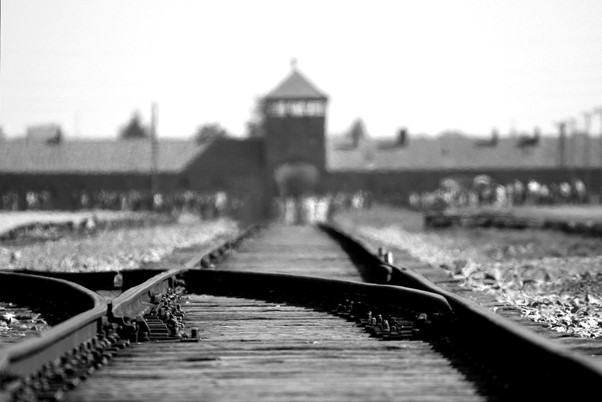
Indifference is not a beginning; it is an end. And, therefore, indifference is always a friend to the enemy, for it benefits the aggressor – never his victim
Elie Wiesel
I have been fortunate enough in my life to have been able to live and travel abroad, a luxury you should never take for granted. Having traveled in every continent there are plenty of things I will never forget, mostly good but one thing that will stay with me will be Auschwitz. It is hard to get excited about visiting Auschwitz, but it is also hard to not get excited about visiting Auschwitz. The day I visited Auschwitz, on the journey there a flurry of strange thoughts went through my head, perhaps ones you would only have when attending a funeral where you are supposed to be in grief. What do you wear, should I smile, what do you talk about, essentially you are creating a rule book inside your head of how not to be offensive. It’s a strange thought process and perhaps completely irrational, one of which I will probably never go through again. If I had to describe Auschwitz in one word, that word would be haunting and I could write for hours about Auschwitz without ever being able to get across the feeling of visiting it, but instead, I am going to share with you a poem I wrote on the journey back from Auschwitz, this poem has never seen the light of day and has been in my diary for over a decade, until now, but it feels like a perfect time to finally share, it’s called secrets of the ground.
Dark skies and tearful eyes,
only God knows the secrets this ground hides.
The flowers mask the crimes of old,
the walls are chipped by bullet holes.
Haunting sounds drowned out by hymns,
the shoes of children too scared to blink.
A cold wind howls in these Polish fields,
one million people how can this be real.
A train stands alone on the blackened track,
barb wire fences to hold them back.
The secrets out, the grounds have spoken,
we must never forget the lives that were taken.
Share this:


Holocaust Memorial Day: 27th January
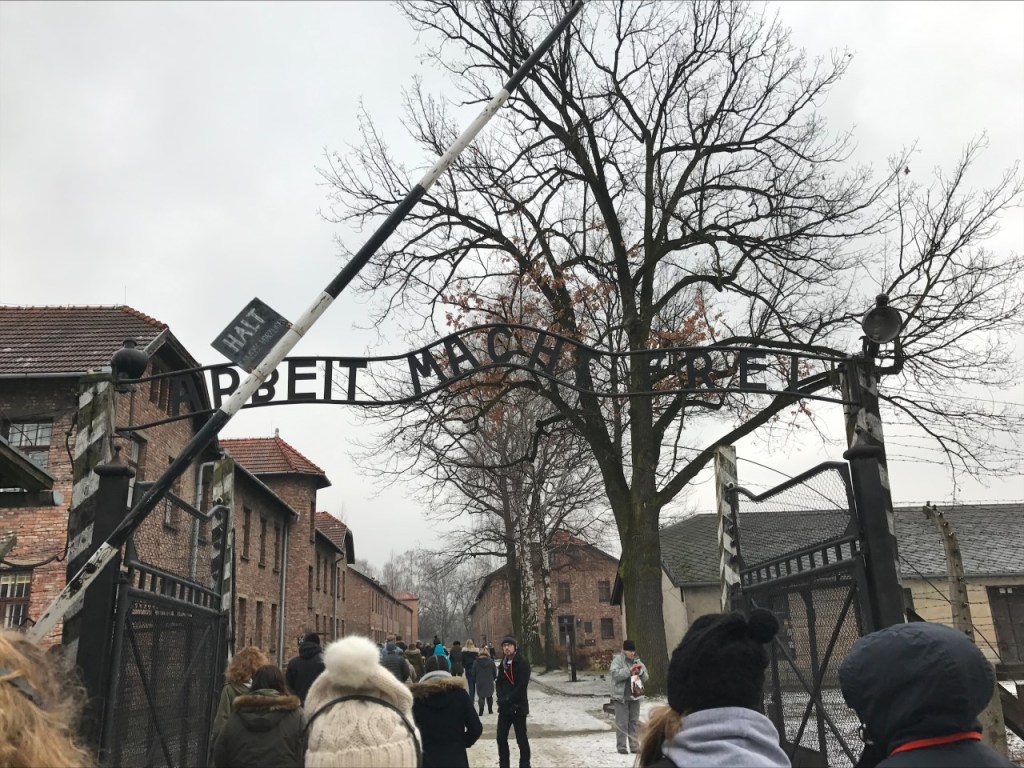
The 27th January marks an important event, Holocaust Memorial Day. This is a day to remember those who were murdered by the cruel Nazi regime, including 6 million Jews. These people were subject to the worst treatment that the modern world has ever seen. The Holocaust reminds us of how dangerous humankind can be to one another. These Nazi men went to work each morning knowing what they were doing and going home to their family at the end of their day of murders. This is something that I cannot comprehend, people that were so truly evil to degrade a whole group of people just because of who they are.
As someone who has had the opportunity to visit Auschwitz on an education trip while at school, I can say that the place is like nothing I could have ever imagined. The vast size and scale of both camps was inconceivable. To be in a place where so many people suffered their worst pains and lost their lives, it was a harrowing experience. From the hair to the scratch marks on the gas chamber walls, the place felt like no other. There was an uncomfortable feeling when you enter the gates of Arbeit macht frei, meaning, work will set you free. To know that so many walked under these gates not knowing what their fate held. And all of this for the Jews was because of their religion and the threat Hitler perceived them to have on Germany.
This is a topic that has always interested me, questioning why the Jewish community? My dissertation research so far has shown how the Jews were scapegoated by the Nazis for their successful businesses in and around Germany. Many Jewish families owned banks, jewellers and local businesses. The Nazis used this peaceful group of people and turned them into the enemy of the Nazi regime. The Jewish community was seen as a financial threat to the Nazis and needed to be eradicated for Nazi German to be successful. The hatred of the Jews developed, bringing in more dated views of the Jewish community. Within Nazi Germany, they were treated like filth and seen as subhuman because of their ‘impure’ genetics. Anyone seen to be from Jewish decent was seen as dirty and an unwanted member of society.
The stereotypes that the Jews are rich continued even after the war and still to this day, along with the stereotypes that Jews are the evil of society. Since March 2020, there have been conspiracy theories circulating on social media that the Jewish community was behind the COVID 19 pandemic. Many are suggesting that the Jewish people are trying to gain financially from the pandemic and destroy the economy. This is not something that is new, the Jewish community has faced these prejudices for as long as time.
My dissertation incorporates a study on social media and archival research. This project has taken me to the Searchlight Archives, located at the University of Northampton. The information held here shows how Britain’s far right movements carried on their anti-Semitic hate after the end of WWII. It’s very interesting to find that antisemitism never went away and still has not. Recently, the Texas Synagogue hostage crisis has show how much anti-Semitic hate is still in society. Three days after the Texas crisis, there was no longer headline news about it and those tweeting about it were part of the Jewish community.
Does this suggest that social media is anti-Semitic? Or is anti-Semitic hate not shared on social media because it is not of interest to people? Either way, Jews are still treated horribly in society and seen as a subhuman by many. This is the sad truth of antisemitism today, and this needs to change.

 Thoughts from the criminology team