
Home » Value for Money
Category Archives: Value for Money

Technology: one step forward and two steps back
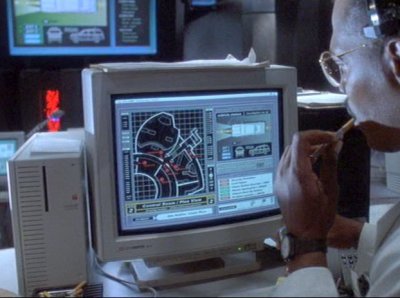
I read my colleague @paulaabowles’s blog last week with amusement. Whilst the blog focussed on AI and notions of human efficiency, it resonated with me on so many different levels. Nightmarish memories of the three E’s (economy, effectiveness and efficiency) under the banner of New Public Management (NPM) from the latter end of the last century came flooding back, juxtaposed with the introduction of so-called time saving technology from around the same time. It seems we are destined to relive the same problems and issues time and time again both in our private and personal lives, although the two seem to increasingly morph into one, as technology companies come up with new ways of integration and seamless working and organisations continuously strive to become more efficient with little regard to the human cost.
Paula’s point though was about being human and what that means in a learning environment and elsewhere when technology encroaches on how we do things and more importantly why we do them. I, like a number of like-minded people are frustrated by the need to rush into using the new shiny technology with little consideration of the consequences. Let me share a few examples, drawn from observation and experience, to illustrate what I mean.
I went into a well-known coffee shop the other day; in fact, I go into the coffee shop quite often. I ordered my usual coffee and my wife’s coffee, a black Americano, three quarters full. Perhaps a little pedantic or odd but the three quarters full makes the Americano a little stronger and has the added advantage of avoiding spillage (usually by me as I carry the tray). Served by one of the staff, I listened in bemusement as she had a conversation with a colleague and spoke to a customer in the drive through on her headset, all whilst taking my order. Three conversations at once. One full, not three quarters full, black Americano later coupled with ‘a what else was it you ordered’, tended to suggest that my order was not given the full concentration it deserved. So, whilst speaking to three people at once might seem efficient, it turns out not to be. It might save on staff, and it might save money, but it makes for poor service. I’m not blaming the young lady that served me, after all, she has no choice in how technology is used. I do feel sorry for her as she must have a very jumbled head at the end of the day.
On the same day, I got on a bus and attempted to pay the fare with my phone. It is supposed to be easy, but no, I held up the queue for some minutes getting increasingly frustrated with a phone that kept freezing. The bus driver said lots of people were having trouble, something to do with the heat. But to be honest, my experience of tap and go, is tap and tap and tap again as various bits of technology fail to work. The phone won’t open, it won’t recognise my fingerprint, it won’t talk to the reader, the reader won’t talk to it. The only talking is me cursing the damn thing. The return journey was a lot easier, the bus driver let everyone on without payment because his machine had stopped working. Wasn’t cash so much easier?
I remember the introduction of computers (PCs) into the office environment. It was supposed to make everything easier, make everyone more efficient. All it seemed to do was tie everyone to the desk and result in redundancies as the professionals, took over the administrative tasks. After all, why have a typing pool when everyone can type their own reports and letters (letters were replaced by endless, meaningless far from efficient, emails). Efficient, well not really when you consider how much money a professional person is being paid to spend a significant part of their time doing administrative tasks. Effective, no, I’m not spending the time I should be on the role I was employed to do. Economic, well on paper, fewer wages and a balance sheet provided by external consultants that show savings. New technology, different era, different organisations but the same experiences are repeated everywhere. In my old job, they set up a bureaucracy task force to solve the problem of too much time spent on administrative tasks, but rather than look at technology, the task force suggested more technology. Technology to solve a technologically induced problem, bonkers.
But most concerning is not how technology fails us quite often, nor how it is less efficient than it was promised to be, but how it is shaping our ability to recall things, to do the mundane but important things and how it stunts our ability to learn, how it impacts on us being human. We should be concerned that technology provides the answers to many questions, not always the right answers mind you, but in doing so it takes away our ability to enquire, critique and reason as we simply take the easy route to a ready-made solution. I can ask AI to provide me with a story, and it will make one up for me, but where is the human element? Where is my imagination, where do I draw on my experiences and my emotions? In fact, why do I exist? I wonder whether in human endeavour, as we allow technology to encroach into our lives more and more, we are not actually progressing at all as humans, but rather going backwards both emotionally and intellectually. Won’t be long now before some android somewhere asks the question, why do humans exist?
Share this:


Cost of Living Crisis: Don’t worry it’s the Sovereign’s Birthday!*

On Saturday 31st May 2025, on Wellington Arch there was an increased presence of police. It was a sunny, albeit windy day in central London, and lots of people (tourists and locals) raised questions around why there appeared to be an increased police presence on this final Saturday of the May half term. At around 1pm approximately, what appeared to be hundreds of uniformed royal officers on horseback paraded through Wellington Arch into Hyde Park. They appeared to have come from Buckingham Palace. It was quite a sight to see! Every Sunday, there is a small parade, known as Changing of the Guard, but this was a substantially bigger ordeal. There is usually 2/3 police bikes that escorts the parade on the Sunday but not the numbers of Police (vans, bikes and officers) out on this sunny Saturday. It is over quickly, but the amount of people power, and I would imagine money, this has used seems quite ridiculous.
It turns out the large parade on May 31st was a ‘practice run’ for the Trooping of the Colour, which will occur on Saturday 15th June 2025. The Trooping of the Colour marks the ‘official’ birthday of the British Soverign and has done so for over 260years (Royal Household, 2025). It involves “Over 1400 parading soldiers, 200 horses and 400 musicians […] in a great display of military precision, horsemanship and fanfare to mark the Sovereign’s official birthday” (Royal Household, 2025). Having seen this every year, it is quite a spectacle and it does generate a buzz and increase in tourism to the area every year. I know the local small businesses in the surrounding areas are grateful for the increase in people, and it draws tourists in globally to view which generates money for the economy. But given the poverty levels visibly evident in London (not to mention those which are hidden), is this a suitable spend of money? Add on the more alarming issues with the monarchy and what it represents steeped in the clutches of empire and fostering hierarchies and inequalities, should this ‘celebration’ still be occurring? It’s the ‘Official’ Birthday of the Sovereign, but how many Birthdays does one need?
According to a Freedom of Information Request, the Ministry of Defence claimed in 2021, the Trooping of the Colour cost taxpayers around £60,000 (not the cost of the event, as there would have been other monies attached to funding this). Imagine what good this money could do: the people it could feed, the people it could provide shelter for, the medical treatment or research it could fund! Given this was 2021, I am going to hazard a guess that in 2025 this is going to cost significantly more. And for what? The Monarchy is the visual embodiment of empire, and according to the National Centre of Social Research, support for and interest in the Monarchy has been steadily declining for the past decade (NCSR, 2025). So even if people choose to ignore the horrific past of the British Sovereigns, it would appear that many are not interested in the Monarchy, regardless of its history (NCSR, 2025). I am aware the Royal family, and these ‘celebrations’, bring in income and generates global interest which translates to the argument that having a Monarchy is ‘economically viable’, but when you look at the disadvantage elsewhere, especially in London, its hard not to question clinging on to such traditions and the expense of meeting people’s basic needs. There is no critical consideration of what maintaining these traditions might suggest, or how they might impact those most effected by the British Empire and Colonialism. So why are these ‘celebrations’ persisting, and why are they having a practice run when steps away from them, in the underpass by Hyde Park Tube station there are people sleeping rough and begging for food? It feels as though there is a serious disconnect between what society needs (affordable homes, food, reasonable living wage, rehabilitation programmes, support and care) and what society will get (a glorified Birthday party for the ‘British Sovereign’).
*Note: the title of the blog should be read dripping in sarcasm.
References:
The National Centre for Social Research (2024) British Social Attitudes: Support for the Monarchy Falls [online]. Available at: https://natcen.ac.uk/news/british-social-attitudes-support-monarchy-falls-new-low [Accessed 4th June 2025].
The Royal Household (2025) What is Trooping the Colour? [Online]. Available at: https://www.royal.uk/what-is-trooping-the-colour#:~:text=The%20Trooping%20of%20the%20Colour,mark%20the%20Sovereign’s%20official%20birthday [Accessed 4th June 2025].
Share this:


Extortionate Concert Tickets and the Cost of Access

In the realm of live music, few things can compare to the amazing feeling of a packed venue, a beloved band, and the shared energy of thousands of fans singing in unison. But for many, especially those from lower socio-economic backgrounds, this dream remains frustratingly out of reach not due to lack of passion, but because of skyrocketing ticket prices driven by monopolized ticketing systems. Using the example of the band Oasis and their upcoming tour.
The recent announcement of Oasis’ long-awaited reunion concerts sent shockwaves through the music world; particularly for fans who have waited over a decade to hear some of their classic songs sung live again. The excitement was quickly tempered by the reality of ticket prices and the process of getting tickets. Standard Oasis tickets before any premium charges were reportedly being resold for upwards of £300, with official prices starting around £75. For a band rooted in working-class Manchester, the irony is stark: the people who Oasis originally resonated with most are now priced out of seeing them live. Oasis is just an example of this, this can be seen with many different artists globally, and it raises a question of should something be done, and if so, who needs to make the first step and what should that first step be?
At the heart of this issue are ticketing giants who dominate the live event landscape. These companies often employ dynamic pricing models similar to airline pricing where ticket prices fluctuate based on demand. In theory, this aims to reflect market value. In practice, it frequently drives up costs to exploit fan enthusiasm, creating a system that prioritizes profit over accessibility. Worse still, these companies allow and often profit from reselling schemes that further inflate prices. It is only recently where some sites have now put procedures in place for tickets to be resold at the same value to which they were purchased. Additionally, there is the issue of bots buying hundreds of tickets during presales then relisting them on other sites for extortionate prices.
Now to put it into perspective, are there more pressing issues globally that need to be addressed, the answer is yes. However, in the world of criminology where we are constantly thinking about harm, what should be a crime or criminalised, it poses an interesting question and debate. The consequences are significant, particularly for lower-income individuals. Live music, once a unifying and accessible cultural experience, has become a luxury. For a working-class fan, spending £300 on a single concert excluding travel, accommodation, and other costs is unlikely. Add to this the current economic constraints they may be facing elsewhere, and it makes it even more unlikely.
In a world where there are so many pressures, restrictions, worries and concerns, music can be a form of escape and enjoyment. So, should ticket companies be held more accountable? Should there be stronger regulations to prevent price gouging and limit resale abuses? Governments could enforce price caps, mandate transparent pricing structures, or require a certain percentage of tickets to be sold at accessible prices. Additionally, artists themselves may have a role to play; by partnering with ethical ticket vendors or pushing for more equitable ticket distribution. I managed to get tickets at face value price after trying for the third time recently, this was through a process of receiving a unique code via email as a result of being identified as one of the many who had failed on previous occasions. In this sense, I may be classed as one of the lucky ones.
Oasis, a band that once embodied the voice of working-class Britain, now symbolizes a broader issue: the commercialisation of joy. Music should transcend economic boundaries rather than reinforcing them.
Share this:


Welcome to the University: How can I help you?

In recent years, and to be more specific, ever since universities were forced to introduce fees, a wider discussion emerged regarding what the Universities are for. The fees changed the nature of education and from a right, it became a privilege. The choice of going to Higher Education [HE] to improve oneself was combined with what the universities can offer to make their education “value for money”! This of course had to be done in line with consumer policy and practice. That led to a shift from educational principles to commercial concerns. Changing the process from what universities do, to what they can offer for their prospective students. Talking consumer law and setting thing up to align with what we can offer, not what students can achieve. This led to a fierce competition in the sector about which university offers the greatest value for money.
“Come to our university, we have nice buildings”, “come to us we have nicer laptops”, “no, come to us we have fabulous sports facilities” “no please come to us we will take you away on great trips”. Although telling students what to expect and how this is offered is great, it does miss the fundamental principle of what a university is! Universities evolved from philosophical academies that posed questions about the world. The participants engaged in dialogue that challenged their perspectives and viewpoints. Out of their works our collective understanding on nature and the world, was and is still, being shaped.
A university is an annex of learning. It covers a wide variety of disciplines and provides opportunities for advancing education locally, nationally and internationally. Academics who teach are experts in their field, having undergone a long educational process themselves. The people who come to the university to learn, are adults, the majority still young adults, who wish to develop their skills and advance their education to the highest level. The last point is the most poignant when it comes to Higher Education. It builds up learning experience together with hard and soft skills on academic writing and articulation, advancing disciplinary knowledge and a profound understanding of self; “a know thyself” moment.
The services offered pale into comparison with what students can really acquire from a university education. No amount of consumer products can replace the insight and of course the transformative nature of Higher Education. A number of helpful services are a great addition to the educational experience, and I am forever grateful to the hard work to all of our colleagues in students’ services and other administrative services that makes our lives, and the lives of the students so much better, but they are not the main reason why so many come through the doors of HE. The university has its place in education and what it does is already clear. It gives people the opportunity for employment and personal advancement, and that is great, but what it really does is to be transformative. People get time to consider things they may have never thought before and discuss them with people who have spent a considerable time in studying them.
As this week marks the start of the academic year and we are all happy welcoming our students, I would like to remind everyone that Higher Education is not a passive process but an active one that allows each participant to interact with and to interrogate the materials and ideas they are presented with. Whilst some students influenced by a consumer mentality may be asking what I am getting, this may not be a satisfactory question because each person wants different things, but we all aspire to improve ourselves in the process. So to paraphrase a US president: “Ask not what your University can do for you – ask what you can do for your University studies”.
Share this:


Visiting the Zoo: a staple of privilege

Whilst the current weather may not imply it, we are into the summer months! At this time of year staff and students begin to take a much needed and well-deserved rest after the challenging academic year we have all faced. With this time, holidays, day trips, meals out, picnics, walks and many more joyful pastimes begin to fill up the calendar, although many of us find ourselves quite restricted due to the ongoing pandemic. Nevertheless, we should all make the most of the time off to re-charge and spend time with our loved ones. For myself and my partner, this meant a day trip to Whipsnade Zoo!
Whilst the weather app assured us it would not rain, we spent a fairly windy and wet day walking around Whipsnade Zoo viewing the animals and all in all having a fabulous day. The schools are not out yet, therefore most visitors were adults on annual leave, individuals who I assume are retired, or parents with small children. We had plenty of space and time throughout the day to see the animals, read the information plaques and enjoy a wet but scrummy picnic. I dread to think what it would have been like in the height of the summer holidays!
But where am I going with this other than to brag about my fabulous day at the Zoo and what has this got to do with checking our privilege? Well, it begins with the cost to entire said Zoo. I have not been to a Zoo since I was in my school years. We used to visit Colchester Zoo most summer holidays with the Tesco Clubcard vouchers, which in a nutshell meant you could exchange Clubcard points for vouchers/tickets which included the Zoo. Therefore a trip to the Zoo when we were younger cost petrol money and a picnic (which was always done on the cheap). This is an affordable day out, but we were only a family of 3 (1 adult and 2 children), so not that many Clubcard points required, and quite a minimal picnic. Also we were fortunate enough to have a car which is not the case for all families. So even with the vouchers and picnic I cannot help but reflect and think how privileged we were to be able to visit the Zoo.
The Zoo trip this week cost just short of £50 for a student admission and an adult admission. I did think this was quite a lot. I think about what the cost would be for 2 adults and a child (or multiple children). Already this is gearing up to be an expensive day out. The Zoo has lots of interactive parts for children to engage with and learn from, and of course they have animals. But is the Zoo really aimed at educating all children or is it only those children whose families can afford it (E.I children belonging of a certain socio-economic status)? Once we arrived at the Zoo and looked around the carpark we couldn’t see a Bustop. What about the families who cannot afford a car? The food outlets were extortionate: £4 for a coffee!! Its cheaper in the West End! The same statement although different prices applies to ice-cream. I feel good that we have taken our makeshift picnic and flasks with us: but what about those who cannot?
The long-winded and verbose point I am trying to make is that even everyday things require us to check our privilege. I spoke to my partner on the drive home about the beauty and wonder of the Zoo and how we are fortunate to be able to go and how I was fortunate to go most summers as a child. But once the Clubcard vouchers stopped, so did the trips to the Zoo. There are many who are unable to enjoy the Zoo, to gain from the educational experience of learning about the animals, what they eat, where they live etc. And I can’t help but reflect and wonder is this establishment really inclusive to all? Is there something society can do to break down the class barriers which appear to be present when planning a trip to the Zoo?
Share this:


Deniable racism: ‘I’m alright Jack’

Photograph: Bill Orchard/Rex/Shutterstock
I heard on the news a week or so ago that an investigation by ITV news had found that the majority of NHS Trusts have not completed full risk assessments on BAME staff. Considering that BAME groups are impacted disproportionately by COVID-19 I have to ask why? And, probably more importantly, now that the issue has been raised, what are the government doing to make sure that the risk assessments are carried out? Since I heard about it I’ve seen no response, so I guess I can answer my own question ‘nothing’.
But then maybe I shouldn’t be surprised, I read an article on Racism and the Rule of Law and you can’t but be appalled by the number of recommendations from various inquiries and reviews that have failed to be acted upon. The problem is that the action requires more than just the eloquently spoken or written word; to put it very bluntly and maybe crudely, ‘put your money where your mouth is’. It is easy to state that this is wrong or that is wrong in our institutions, the term ‘institutional racism’ trots off the tongue, seized upon by the wronged and more worryingly banded about by the societal racists of the elite who are only too willing to blame someone else. In thinking about this I wonder whether when we use the term racism, we are all talking the same language. The ‘deniable’ racism is easy to identify, ‘we don’t use that sort of language anymore’, ‘we no longer put those signs in our windows’, we have laws that say you can’t act in that way. ‘Actually, I’m not a racist’. But the statistics don’t lie, they can be bent, manipulated to some extent to favour one argument or another but there are some very basic inescapable facts, BAME groups are over represented in the wrong areas of our society and under represented in the right areas. And most of this I dare say does not owe itself to ‘deniable’ racism, it’s more than that, it’s embedded in our society, it’s not institutional racism, it’s societal racism and it’s hidden. The problem with societal racism is that we only see the positive attributes of people that are like us and we promote those that excel in showing those attributes. Hence, we have the elite in business and government that are not ‘deniable’ racists but nonetheless are the epitome of, and lead a racist society.
I want to return to the idea of ‘putting your money where your mouth is’ mantra. They say money makes the world go around, I’m not sure that is entirely true, but it certainly goes a long way to getting things done and conversely the lack of it ensures that nothing happens or in some cases that good things come to an end. A prime example is the austerity measures put in place in 2010 that saw budgets to government agencies and funding to councils cut significantly. Those that suffered were the most deprived. Even worse, was the fact that funding for youth projects in inner cities suffered and those initiatives that were aimed at reducing violent crime amongst young people ground to a halt. Policing saw huge cuts and with it the withdrawal of neighbourhood policing. This link to communities was severed and any good work that was going on was quickly undone. That doesn’t explain all that is wrong with policing, but it certainly doesn’t help in building bridges. Who in their right mind would embark upon fiscal policies with no regard to such outcomes, our elected government did. If we think now about the so-called return to normality post the Covid-19 pandemic, which caring company or institution would suggest that the most impacted by the virus should continue or return to work, or study, or any other activity, without considering their specific risks and needs? Probably those that have more concern for the bottom line than peoples’ lives. ‘I’m alright Jack’ comes to mind or at least I want to make sure I am.
In thinking about policies, procedures, risk assessments or recommendations, managers have an eye to finance. In the NHS, the day to day business still has to happen, in policing, incidents still need to be attended to, so where is the money to do the extra? Everything comes at a cost and every recommendation in every review will cost something. The NHS risk assessments will cost money. The question is whether government and all of us in society really believe that ‘black lives matter’. If we do, then then it’s time to acknowledge the type of society we live in and who we really are and for government to ‘put the money where its mouth is’ so that the recommendations can be acted on. Or of course, we could just have another review and ‘Jack’ will do very nicely out of that as well thank you.
Share this:


A $40 tip at the all-day-breakfast joint (A Prose about this American moment). #BlackenAsiaWithLove

1st Sunday 2020 Sunrise over Lake Jordan, Alabama
It’s 6:20am.
I’ve stopped by an infamous breakfast food chain and ordered a bottomless coffee, and a breakfast combo that comes with two fried eggs, two different rations of fried pork and bottomless pancakes.
Waiting for my order, I notice that not less than four varieties of syrup rest on the table, accompanied by salt, pepper, and a ceramic cup full of packages of sugar and two varieties of artificial sweeteners.
A whole tub of single-serve full fat creamers comes with my bottomless coffee, which I promptly sent back.
The young lady serving is massively obese, as are most of the other people who both serve and patronize this business.
And this is business as usual throughout the south, and now most of America, particularly at these sorts of times, especially in these sorts of businesses.
The joint had only been open since the top of the hour, and so I could overhear the duty manager dealing out the day’s duty rations.
As two of the team followed her around, I heard her explain that she was reserving the spillover seating section for whoever showed up “super-late.”
Knowing management speak, I heard ‘super-late’ as a shaming label used to monitor and control behavior.
I heard her punctuate these instructions by explaining that someone’s shift had started at 5:30 yet they still hadn’t shown up.
“You ok, sweetie,” the young lady breezes over and asks me casually.
“I’m fine,” I quickly replied, adding: “It’s good, too,” as if she or the cook had actually hand-made any of this meal.
They’ve each opened a prescribed set of processed-food packages, followed heavily prescribed recipes, and followed heavily prescribed orders passed down from management.
And yet I do appreciate their labour.
In my capacity, I get to sit and muse about them, while THIS is their career.
Yesterday, while sitting in another infamously southern* roadside-mass-food-chain, my uncle mentioned that he was pleased to see that young people were working at these types of places again.
“Uh huh,” I hummed agreeingly as I panned the restaurant noting the youthfulness of the staff.
Since the 90’s and certainly since the recession, these jobs had become life-long career moves, where previously these were held down by early-career part-timers.
Whether paying their way through school or training, or beefing their resumes for eventual factory employment, these part-timer jobs weren’t suitable for adults as they come with few, if any, benefits…most notably, healthcare.
This satellite town, for example, sits just outside the seat of Civil Rights and grew during Jim Crow around a large paper mill that one can still smell miles away.
Back in my bottomless breakfast, my server keeps inquiring if I’m ok as she goes about setting up the condiments and flatware for each table.
I’m the only one here, which I remark upon.
This is the south, so that remark garnered a whole commentary on her part.
She detailed when they opened and closed, and that she’d recently shifted from the nightshift to mornings, as “making $10 here and $10 there don’t cut it.”
She then added that she’d served a party of 15 who’d left her a $40 tip.
She further explained that last year she’d served at a 1-year old’s birthday party, “because they didn’t have no cake.”
By now, I’ve gotten a good look at the server and sense that she’s in her mid-twenties.
As I listen, I, of course, contemplate what sort of tip I should leave: Would it be obscene to leave a $10 tip which I could easily afford. Afterall, I had shown up in what must seem like a large, expensive, exotic European vehicle (how could she know it’s my mom’s not mine; how would she know that I’m just passing through town).
This year, she continued, they had her “second birthday party right back there,” pointing to a far corner.
Remember, all I did to kick off this conversation was remark how quiet it was at this time in the morning.
From then on, the server kept offering me little tidbits of info each time she passed by.
I hadn’t lived in the south for many years, but it was still this sort of human interaction that drummed-up home for me.
“I’m gonna go ahead and do my syrups,” she quipped as she passed each table over lightly with a dry cloth.
Then, after passing to reassure me that my next helping of pancakes was on its way, she explained that the location was under new management.
Pointing to the woman I’d overheard earlier dealing out duties and instructions, the server said, “This one’s only been here since Sunday.”
It’s Tuesday morning.
Now, I notice that the server has leaned against a nearby chair, pausing with her other hand on her hip.
It’s as if settling in to tell me a good story. She is now giving me unsolicited insider information.
I start to realize and remember just how such interactions are so disarming. She had something to say each time she was within earshot, as if mindfully managing our shared personal space.
I smile at this realization, recalling the familiarity with which people speak in Vietnam. The distance of more formal ways of being and communicating seem silly here…and there.
I am simultaneously reminded of life in Mali, where people genuinely do greet anyone nearby, referring to those in their personal space with some term of familial familiarity depending on the relationship and perceived ages like auntie/uncle, or else girl/boy-friend (teri- muso/ce), big/little- sister/brother (koro-/dogo- muso/ce).
It’s as if all of these experiences collide into the present moment, and I experience them all at once, like Dr. Manhattan.
The server then explained in detail how the previous manager had fallen ill and could therefore only show up intermittently.
Apparently, the point of all this was that they were hiring a manager, and sought someone outside the current team, because, as my server said, “We all know one another.”
“Don’t that make sense,” she said raising her brow, nodding grinningly.
“So, if you know anybody with management experience,” she said, then tailored off.
I suddenly wonder what Flannery O’Conner must have witnessed in her life and times in the dirty south.
I was on my way to grab a coffee at THAT internationally known coffee house, but passed this all-day-breakfast joint on the way.
I recalled the bottomless offers here and knew I could get more value here than a $5 Latte. Sure, I’ve got country music in the background, but at least it’s not tuned to conservative propaganda Faux News like in most other public spaces here in Alabama.
Indeed, for just a few dollars more, I’ve got access to bottomless filtered coffee and well more than any human should eat in any one sitting.
Besides, no one is in here posing, and, as I said, I got a side of free companionship.
—
*Infamously southern food consists of mostly fried foods negotiated in ingredients and meaning along the color line.
Share this:


Painting by numbers: The problem with HE.

Tillovision, http://www.Tillovision.com
I read a report the other week about concern over the number of 1st degrees that are being achieved within higher education in the UK (Richmond, 2018) and the fact that the volume of such achievements is devaluing university degrees. I juxtapose this with another report that states that 32% of students do not think they get value for money (Neves and Hillman, 2018) and the result is some soul searching about what it is I’m trying to achieve as a lecturer, aside from survival, and what higher education (HE) is about. A conversation with a friend who works in Information Technology muddies the water even more. He’s a high flyer, jetting backwards and forwards to the USA, solving problems, advising on, and implementing major change projects within large corporations and generally making a lot of money along the way. For him a degree is not as important as the ability to ‘think outside the box’, find solutions to problems and show leadership that enables change or fixes. If you have a degree then you ought to be able to do all these things to some extent, experience will then build on it. He lets on that his company will not touch graduates from certain universities, simply because they do not have the requisite skills or abilities, their degrees are effectively meaningless. A sad generalisation but one that is becoming increasingly prominent amongst employers. One other thing that he was quick to point out is that the ‘real world’ is highly competitive and his company are looking for the best potential.
So, what is higher education all about, higher than what? What is the benchmark and what is the end goal? I have always believed that higher education is about taking students beyond what can be read in books or can be followed in manuals. It is about enhancing the understanding of the world in which we operate, either professionally or socially and being able to redesign or reimagine that world. It is about leadership in its many guises, problem solving and the ability to use initiative and autonomy. It is about moving a student from being able to paint by numbers under supervision to a student that can paint free hand, understanding light and colours, understanding how to capture moods or how to be evocative, a student who uses materials that they want to use, and they are not frightened to do so. It stands to reason that not every student can achieve excellence. If the starting point is the ability to paint by numbers, then some will move only slightly beyond this and some will excel, but only a few will warrant a 1st degree. What is clear though is that the students really ought to be able to paint by numbers before they enter HE otherwise they will need to be taught that skill before they can move on. That then is no longer higher education but further education (FE) and more importantly, it sets students up to fail, if they are being measured against HE standards. An alternative to avoid this potential failure requires HE standards to be lowered to those of FE. In which case what is the point of HE?
So why would I be confused about HE? Well, when students are seen as cash cows, each being worth £9250 a year to an institution, being able to paint by numbers becomes a barrier to recruitment in a highly competitive market. Institutions can help students that do not have the requisite skills, but this requires either extra time before joining the HE course, this has funding implications, or a lot of extra work by the student during the HE course, and this means that students with limited academic ability struggle. A need to retain students over the three-year period of a degree, to ensure institutional financial stability or even viability, becomes problematic. Struggling students have a double whammy, they have to catch up to the starting point for each year, whilst also progressing through the year. The choices are stark for HE institutions, progress students by lowering standards or lose them.
HE institutions are measured on the number of good degrees and it makes for good advertising. There is enough literature around to suggest that such unsophisticated quantitative measures are never a good thing. The complexity of higher education, where there is a heavy reliance on students engaging in their studies (there is something to be said about reading for a degree), puts much of the achievement of grades beyond the control of lecturers or even institutions. The resultant solution appears to be the lowering of assessment standards and teaching to assessments. In effect, HE is falling in line with FE and teaching students to paint by numbers. It is easy to see why there is disquiet then about an increase in 1st degrees and more importantly, in a competitive world, why employers are becoming increasingly concerned about the value of a degree. As for value for money for students, for many, it’s a bit like being charged a fortune to race a Maserati round a track for a day but not being able to drive.
Neves, J. and Hillman, N. (2018) Student Academic Experience Survey report 2018 [online] available at https://www.heacademy.ac.uk/knowledge-hub/student-academic-experience-survey-report-2018 [accessed 20 June 2018]
Richmond, T. (2018) A degree of uncertainty: An investigation into grade inflation in universities. [online] available at, http://www.reform.uk/publication/a-degree-of-uncertainty-an-investigation-into-grade-inflation-in-universities/ [accessed 20 June 2018].
Share this:


Driving value for money: My fairy tale

A few years ago I had the good fortune of being able to go to a driving experience event where I was able to drive an Aston Martin (my dream car) around a race track.
I arrived on the day and presented my provisional driving licence, a full licence was required really, but the nice people there said I could have a go as I said I loved Aston Martin cars and I would try really hard to learn to drive them.
There was a briefing about car safety that I went to and I listened but don’t think I took that much in, it was a bit boring, just some chap talking really. Then we were given the opportunity to be driven, in groups of three, around the track by an experienced driver. He would show us how to drive and the best lines to take so that we could take the corners at speed. I was a bit nervous about this and I didn’t want to be in the car with others so I missed this bit. Another nice driver took me out on my own and showed me what to do.
After that I got to drive my first Aston Martin, I took it steady because the driver kept telling me to do things and I wanted to stop because my phone was pinging and I needed to look at it. Anyway we did the track about ten times, it got a bit boring in the end. After the drive I was told to go to the briefing room and get further instructions about a time trial. I went and got some coffee and looked at Facebook on my phone, I didn’t need to go to the briefing because I’ve done the track anyway and it’s not very exciting. I did the time trial thingy, I didn’t do very well, and I don’t think they taught me much about driving or about Aston Martins.
Three weeks later I was asked by a research company what I thought about my driving experience. I said it wasn’t very good. I remember one of the questions was about value for money. The whole day cost me a lot of money and I don’t think it was value for money at all.*
Anyway I’m off to read that National Audit Office report on universities, I’m thinking about going to one sometime soon.
*The reality was that my driving experience in an Aston Martin was both frightening and exhilarating. I learnt so much on the day but it was hard work concentrating on the instructions being given and pushing myself to the limit in respect of my driving capabilities. The staff were brilliant and in the end I think I got it but there is so much more to do and as for value for money – I want to go back, that should say it all.

 Thoughts from the criminology team