
Home » USA
Category Archives: USA

Who needs enemies when you have friends like this?
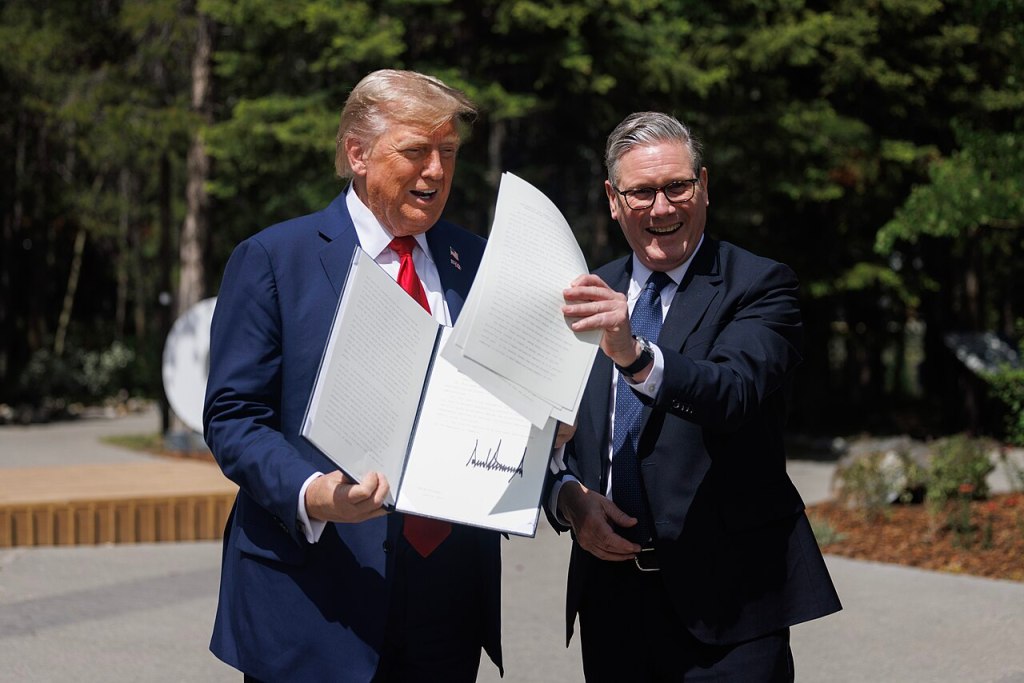
The so called ‘special relationship’ between the United States of America and the United Kingdom is certainly being tested at the moment. It is bizarre how the two leaders, if you can call them that, of two supposedly great nations can have their love/hate relationship played out so publicly. Remember not so long ago that cringe worthy handing over of the King’s invite by the Prime Minister to the President. This amid the fiasco of worldwide tariff hikes imposed by Donald Trump, or the Trump administration at his behest. Remember everyone globally, bar a few, running round in circles kowtowing to Trump whilst trying to get the best deal. Didn’t Trump look pleased with himself at the daily press conferences. And weren’t the United Kingdom falling over themselves with glee that they weren’t part of Europe and could get a better deal. And then we had the Ukraine war fiasco, Trump in his attempt to find peace was prepared to bully and belittle the president of Ukraine publicly. Actually, was it about finding peace or appeasing Putin, it really is quite unclear. Throw in the mix the genocidal attitudes of the Israeli government towards the Palestinians, supported by the USA, I mean what else could you call it if we are being truthful. It certainly wasn’t a measured response to Hamas’ atrocities; it is revenge and population clearance. I say is because that country is still being blockaded. Trump said he would bring peace in the Israel/Palestine conflict, and he would bring peace to Ukraine. Neither were nor could be so easily achieved. The response by Trump and his administration, start a conflict elsewhere. Of course, such a conflict suits Israel and their leader Benjamin Netenyahu. It allows the Israeli despot to continue in power despite allegations of corruption and war crimes. It allows Israel to continue its thinly veiled mission to drive the Palestinians out of the area, to land grab by opening up a second front in Lebanon. And before all this, statements by Trump that he wanted Canada to become another American state, that Greenland should be annexed, by force if necessary, and then of course the regime change in Venezuela, brought about by America’s intervention and let us not forget the murderous attacks on so called drug running boats. Blowing them out of the water seemed to be part of this what can only be described as real life gamification. You only have to listen to the rhetoric to realise this is a game to Trump and parts of his administration but with real life consequences. Eleanor Roosevelt must be turning in her grave as Israel and America attempt to trump each other on Human Rights and International Law violations. And yet nobody seems to be stopping them, nobody seems to dare, something reminiscent of Hitler’s rise in the 1930s. Somewhat Ironic given that the Israeli state was borne out of the atrocities of the Hitler’s regime. So, when Trump asked, nay demanded that the UK and others fall in behind the war game against Iran it is hardly surprising that the answer was no. This of course was met by a tantrum, toys thrown out of the pram stuff, that a two-year-old would have been proud of and some ‘really mean’ name calling with regards to the UK prime minister. Special relationship, more like an infantile friendship? And, when Israel hit Iran’s oil refinery the response from Trump was very much ‘That’s another nice mess you got me into’. As we watch oil prices go up, as Ukraine fears more Russian attacks funded by the lifting of embargoes by the US on Russian oil, as the people of Gaza and Lebanon fight for survival and as countries around the world ask themselves what next, one thing is certain, we don’t need enemies when we have friends like this.
As Donald Trump said, ‘when crazy people have nuclear weapons, bad things happen’. I think we’d all agree with that sentiment. Res ipsa loquitur.
Share this:


The Caracas Job: International Law and Geo-Political Smash and Grab

So, they actually did it, eh?
It’s January 2026, and I, for one, am still trying to remember my work logins and wondering if this is the year that Aliens invade Earth. Yet, across the pond, the Americans have decided to kick off the New Year with a throwback classic: decapitating a sovereign Latin-American government.
Adiós Maduro. We hardly know yer pal. Well, we all knew you enough to know you were a disastrous authoritarian kleptocrat who managed to bankrupt a country sitting on a lake of oil. But we need to talk about how it happened, because if you listen carefully enough to the wind wuthering through the empty corridors of the UN Building in New York, you can probably hear the death rattle of what I once studied and was quaintly entitled, ‘Rules-Based International Order’-aka International Law.
As one colleague and our very own Dr Manos Daskolou pointed out to me this very day, it’s almost eighty years since 1945. Eight decades of pretending we built a civilised global architecture out of the ashes of World War II. We built tribunals in The Hague, we wrote very sternly worded Geneva Conventions, and we created a Security Council where superpowers could veto each other into paralysis. It was a lovely piece of Geo-Political theatre.
The days-old removal of the Venezuelan head of state by direct US intervention isn’t just a deviation from the norm: it’s a flagrant breach of the foundational prohibition on the ‘use of force’ found in Article 2(4) of The UN Charter. The mask has slipped, and underneath it is just raw, naked power.
As a Brit observing this rigmarole from the very cold and soggy sidelines, it’s hard not to view this from a very specific lens. We invented modern imperialism, after all. Criminologists will often discuss concepts like State Crimes. They will often question who indeed polices the Police?
If I decide to kick down my neighbour’s door because I don’t like the way she runs her household, steal her assets and install her sister as the new head of the family, I’m going to court. I am a burglar, a thug and a violent criminal. If a superpower does the same thing to a sovereign nation, they get a press conference at Mar-a-Lago.
For eighty years, the West has been incredibly successful at labelling its own interventions as ‘police actions’ or ‘humanitarian missions’, all the while labelling acts of rivals as ‘aggression’. The Caracas job is the ultimate expression of this.
Listen to the rhetoric coming out of Washington right now. It’s textbook gaslighting. ‘Maduro was a tyrant’, ‘Other countries do worse’, i.e condemning the condemners. They certainly are not arguing that entry into Caracas was legal under the UN Charter was legal because it most definitely wasn’t. They are arguing that the law should not apply to them because their intentions were pure.
Deja Vu-Iraq
The darkest irony of the Venezuelan decapitation is the crushing sense of deja vu. We cannot talk about removing a dictator in the 2020s without flashbacks to Saddam Hussein and Dr David Kelly entering the scene. The parallels are screaming at us. In 2003, the justification for taking Saddam (and, sadly, Dr Kelly as a direct result) out was a cocktail of WMD lies and dangerous rhetoric. As the Chilcot Report stated years ago, the legal basis for military action against Iraq was ‘far from satisfactory’.
The critical failure in Iraq and the one we are doomed to repeat in Venezuela is that it is terrifyingly easy for a superpower like the USA to smash a second-rate military. The hard part is what on earth comes next?
Perhaps it would have been better for the superpowers to manipulate Maduro’s own people, taking him out, so to speak. Organic change in any situation lends legitimacy that enforced or imported change never does. When you decapitate a state at 30,000 feet, you create a vacuum. The USA may have created a dependency, effectively violating the principle of self-determination, which is enshrined in the Human Rights Convention.
The Iranian Elephant In The Room
Of course, none of this is actually happening in a vacuum. Being a Yorkshire lass with Middle Eastern Heritage, I am keenly aware of the politics of the regions hitting the headlines on an almost daily basis. Yet, no one has to have bloodline ties to any of the countries or regions involved to see the obvious Elephant in the room. It’s that flipping obvious. Maduro wasn’t just an irritant because of his economy-crashing style. It was a strategic flipping of the bird for America’s rivals-Crucially, Iran. This is where the narrative gets even darker. This is gang warfare.
The danger here is escalation. If Tehran decides that the fall of Maduro constitutes a direct challenge to its own deterrence strategy, it will not retaliate in the Caribbean. They are likely (if history has taught us anything) to retaliate in the Strait of Hormuz. The butterfly effect of a regime change in Caracas could easily result in the closure of the Suez Canal. Yes, that old chestnut.
The old guard loved International Law. They loved it because they knew how to manipulate it. They used the UN Council like a skilled Barrister uses a loophole. They built coalitions. The current approach-Let’s call it ‘Act Now Think Later Diplomacy’ dispenses with the formalities and paperwork. It sees International Law NOT as a tool to be manipulated, but as an annoying restraint to be ignored. It confirms the narrative that the Nuremberg trials were merely ‘Victors’ Justice’, a system where legal accountability is the privilege of the defeated.
The difference between Putin invading Ukraine and the USA decapitating Venezuela is rapidly becoming a distinction without a difference.
So, here we go in 2026. The powerful have shown they don’t give a toss about the rules. They’ve shown that ‘sovereignty’ is just a word they use in speeches, not really a word they respect.
When people stop believing in the legitimacy of the law, they usually stop following it. We are about to see what happens when the entire world stops believing in the legitimacy of International Law.
It is going to be a messy few decades. Cheers, mine’s a double.
Share this:


Britain’s new relationship with America…Some thoughts

Within the coming weeks, Keir Starmer is due to meet Donald Trump and in doing so has offered an interesting view into the complexities of managing diplomacy in the modern age. Whilst the UK and US work collaboratively through bi-lateral trade agreements, and national security collaborations, the change in power structures within the UK and USA marks significant ideological difference that can arguably present a myriad of implications for both countries and for those countries who are implicated by these relations between Britain and America. In this blog, I will outline some of the factors that ought to be considered as we fast-approach this new age of international relations.
It can be understood that Starmer meeting Trump, despite some ideological difference is rooted in a pragmatic diplomacy approach and for what some might say is for the greater good. In an age of continual risk and uncertainty, allyship across nations has seldom been more necessary nor consolidated. On addressing issues including climate change, national security, trade agreements within a post-Brexit adversity, the relationship between America and Britain I sense is being foregrounded by Starmer’s Labour Government.
Moreover, I consider that Starmer should tread carefully and not appear globally as though he is too strongly aligned with Trump’s policies, especially on foreign policy. This mistake was once made by Tony Blair, following the New Beginnings movement after 9/11. It is essential that whilst we maintain good relations with America, this does not come at a cost to our own sovereignty and influence on global issues. I see here an opportunity for Starmer to re-build Britain’s place on the global stage. Despite this as what some strategists might call a ‘bigger picture’, it goes without saying that Starmer may face backlash from his peers based on his willingness to enter a liaison with Trump’s Government. For many inside and outside of the Labour Party, the politics of Trump are considered dangerous, regressive, and ideologically dumbfounded. I happen to agree with much of these sentiments, and I think there is a risk for Starmer… that will later develop into a dilemma. This dilemma will be between appeasing the party majority and those who hold traditional Labour values in place of moving further into the clutches of the far right, emboldened by neoliberalism. It is no secret however that the Labour party has entered a dangerous liaison with neoliberalism and has alienated many traditional Labour voters and has offered no real political alternative.
Considering this, I sense an apprehension is in the air regarding Starmer’s relationship building with America and Donald Trump, that some might argue might be more counter-productive than good. Starmer must demonstrate political pragmatism and arguably the impact of this government and the governments to come will weigh on these relations… Albeit time will tell in determining how these future relations are mapped out.
Share this:


A visual walk around a panopticon prison in the city of “Brotherly Love”
Conferences…people even within academia have views on them. This year the American Society of Criminology hosted its annual meeting in Philadelphia. In the conference we had the opportunity to talk about course development and the pedagogies in criminology. Outside the conference we visited Eastern State Penitentiary one of the original panopticon prisons…now a decaying museum on penal philosophy and policy.

The bleak corridors of a panopticon prison

the walls are closing in and there is only light from above

these cells smell of decay; they were the last residence of those condemned to death
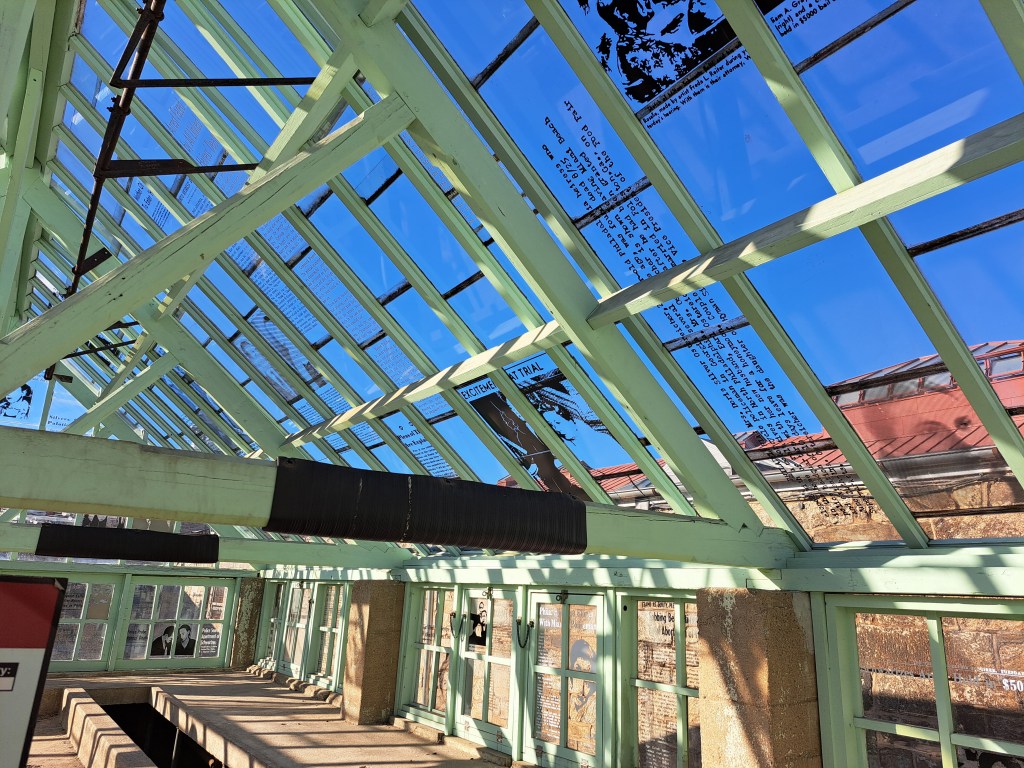
the old greenhouse; now a glass/concrete structure…then a place to plant flowers. Even in the darkest places life finds a way to persevere

isolation: a torture within an institution of violence. The people coming out will be forever scared as time leaves the harshest wounds
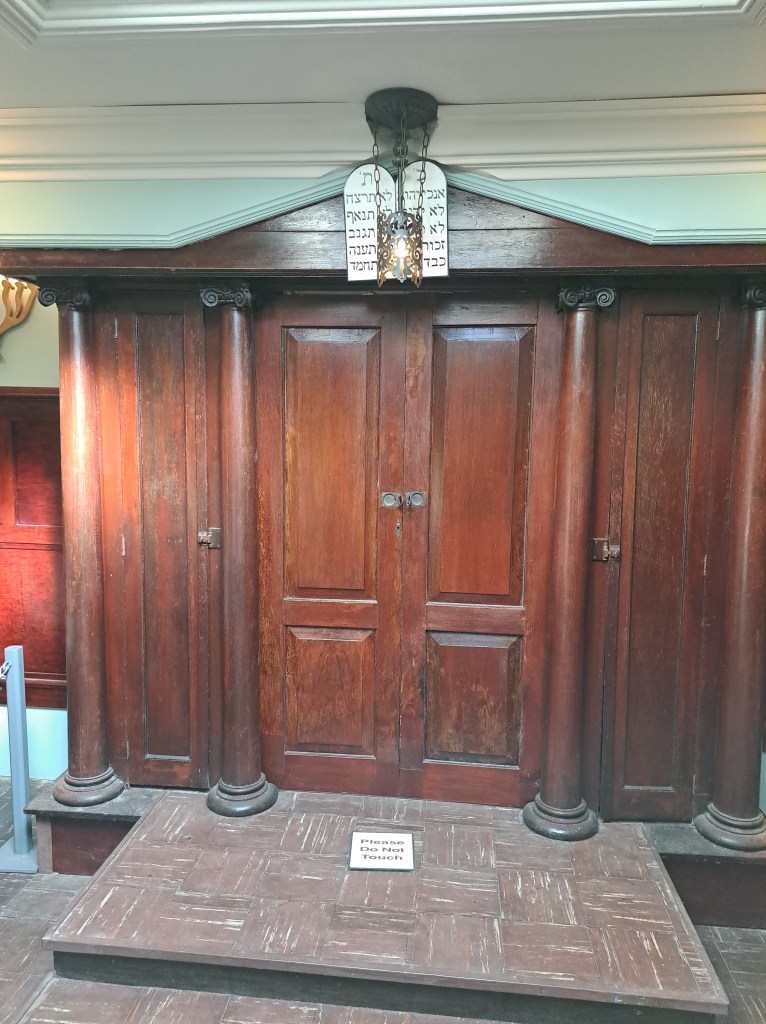
a place of worship: for some the only companion to abject desperation; for those who did not lose their minds or try to end their lives; faith kept them at least alive.

the yard is monitored by the guards at the core; the chained prisoners will walk outside or get some exercise but only if they behave. To be outside in here is a privilege

the corridors look identical; you become disoriented and disillusioned

everything here conjures images of pain

an ostentatious building, build back in the 19th century to lock in criminals. It housed a new principled idea, a new system on penal reform. the first penitentiary of its kind. Nonetheless it never stopped being an institution of oppression…it closed in 1970.
The role of the criminologist (among others) is to explain, analyse and discuss our responses to crime, the systems we use and the strategies employed. So before a friendly neighbour tells you that sending people to an island or arming the police with guns or giving juveniles harsher penalties, they better talk to a criminologist first.
As a final thought, I leave you with this…there are people who left the prison broken but there are those who died in this prison. Eleven people tried to escape but were recaptured. Once you are sent down, the prison owns you.
Share this:


For Tyre’s last Five badges. (spoken word)
The badges you wear were betrayed the very instant you flashed your sights on me.
You had nothing good in mind from the start.
I was doomed from the beginning.
By the time the brutality started,
The senselessness of it all kept my body numb to the assault.
“What did I do,” I keep asking, as
Your brutal blows, strongholds and punches bend my body into painful pretzels.
While y’all’ve got me firmly pressed against the pavement, y’all yell:
“Get on the ground.”
Pressed on the ground, I say disarmingly:
“You guys are really doing a lot right now.”
My calmness stands out against all your unwavering aggressions.
Yet, you continue to play the same game: “Get on the ground.”
Beneath the ground there is only hell, and yet
My face pressed against the gravel by your hooves feels like hell, right here, right now.
‘Watching the world wake up from history.’
As if wielding your fists and batons, tasers and bullets don’t threaten me enough,
There are five of you, and
Each of you is massive.
Each of you …highly trained, experienced, and tremendously pumped up.
I am a little weasel sized up against any one of you, and
You are a mob of five.
Too weak to lift my own self, two officers hoisted me up by my limp arms, blood streaming from my head and outta ev’ry orifice, voice too weak to shout. I’m beaten badly, and yet you continue to brutalise me.
Manhandled.
I stumble up, firmly in your grasp, and all I do is plead, which gave enough time for another officer to grab a baton.
He quickly came back with the baton, screaming “give us your hands,” while the two officers still restrained me by these very same hands.
You continually scream “Stop resisting,” while
At least two if not three of you all strangling some part of my body.
The agony is immense.
You’re a pack on the hunt.
You chase me down, and
Torture and kick me more feverishly for running away.
I am in a battle for my life, you…
You are in a battle for your manhood.
“Bruh, you say, and words like these are the same words used to connect us to one another.
The words you use to abuse me could be endearing in another context.
Yet you have the nerve to call me “bruh,” and beat your brother to death.
‘I was alive and I waited, waited’
Waited for your humanity to show up,
Waited for justice to be served to me equally.
‘I was alive and I waited, waited,’ waited three days in the hospital…and
Neither justice nor your humanity ever showed up.

Share this:

Refugee Week 2023

Monday 19th June commences the 2023 Refugee Week and this year’s theme is compassion, a quality we have seen little of in Fortress Europe policy and practice this year. As many of you will know, Jessica James and I founded the Northampton Freedom From Torture local supporter’s group earlier this year. Part of the reason for setting up the group was to help foster compassion towards people seeking safety in our local area. Admittedly, we’ve been pretty quiet so far (workloads, life etc. – we welcome volunteers to help organise events) but for Refugee Week we have organised a film screening of MATAR and The First Drop of Rain: Making MATAR.
MATAR is a WaterBear Original following the story of an asylum seeker in England who, when confronted with the hostile immigration system in the UK, is forced to live on the fringes of society and rely on his bike to survive.
A powerful and poignant story of resilience and perseverance, based on the lived experience of co-writer Ayman Alhussein. MATAR stars actor Ahmed Malek (The Swimmers) in the titular role, with BAFTA-nominated actor Youssef Kerkour (Home) and Elmi Rashid Elmi (The Swimmers). This docu-fiction short film is directed by BAFTA-winning Hassan Akkad and produced by Deadbeat Studios in association with Choose Love.
The event will be hosted on Wednesday 21st June 2023 from 5.30pm in the Morley Room at the University of Northampton. Tickets are free and can be booked here but we welcome donations and sponsorship for @jesjames50’s forthcoming half marathon.
In October, Jes will be running the Royal Parks Half Marathon to fundraise for Freedom From Torture. Running is one of Jes’ favourite hobbies and is enjoyed by millions across the globe as a popular pastime and fitness activity. However, running in this capacity is a privilege. For some it is forced upon them to flee harm, torture and unlawful prosecution. Freedom For Torture is a charity which is dedicated to helping, healing and protecting people who have survived torture. The half marathon is 13.1miles and has raised nearly £60million for over 1000 charity partners since 2008, and in 2023 we are aiming to contribute to this! Watch this space for more details about the upcoming fundraising activities and sponsoring Jes take on her longest run ever for survivors of torture. You can find Jes’ Just Giving page here.

Now we have the promotion out of the way, let’s talk about why compassion matters. The UK government is intent on ‘stopping the boats’, yet the policies they propose to achieve this do not include opening safe and legal routes to those seeking safety here. Instead, governments throughout much of Europe opt for deterrent measures, the results of which mean border deaths as we have seen in the tragedy off the coast of Greece this week. The omission of opening safe routes contributes to the structural violence of immigration policy and practice in Europe and means that deaths at the border are, as Shahram Khosravi argues, an acceptable consequence of border practices. There exists a gaping chasm where the compassion should be.
Meanwhile, those who do show compassion such as those volunteering to help refugees, protesters and even refugees themselves risk criminal prosecution. Sara Mardini is among a group of volunteers who faced prosecution in Greece earlier this year for a number of charges relating to their voluntary work with refugees. Although acquitted of a number of charges, some of the volunteers still face investigation for people smuggling and other offences. Meanwhile in the UK protesters are routinely arrested for protesting inhumane deportation and the Nationality and Borders Act 2022 allows maximum sentences of life imprisonment for those piloting small boats to smuggle migrants into the UK, not considering that many of these people will be refugees themselves who have paid smugglers and been forced to pilot boats, or who have agreed to pilot a boat in return for their passage. The stakes are high for acts of compassion.
As a border criminologist and activist, the refugee ‘crisis’, political, media and public responses to people seeking safety can feel overwhelming at times. It is difficult to comprehend what one person can do, yet there is power where lots of individuals stand up against injustice. Just over a year ago, I was at a protest outside an immigration removal centre on the day the first flight to Rwanda was due to take place. There were others there and at various locations around the country, and even more mobilised on social media. Campaign groups, charities and lawyers worked together to bring a court case against the UK government. While the war is ongoing, we won the battle that day and the plane was not allowed to leave.
We can all do something to spread compassion towards people seeking safety. Actions could be as simple as learning about refugees by watching a film or reading a book. It could mean sharing your thoughts in conversations and viA social media platforms. You could write to your MP and ask them to show some compassion or volunteer with a group like our Freedom From Torture local group or participate in a protest.
Share this:


Tyre Nichols’ last bird’s eye view.
[Spoken Word/Read aloud]

After my death, the New York Times reported that you all gave me “at least 71 commands.”
“Many were contradictory or impossible,” the Times tweeted.
In a mob frenzy throughout the whole ordeal, y’all kept shouting at me over each other.
When I couldn’t comply – and even when I did manage to obey– you…(SMH)
“Responded with escalating force.”
Hmph!
NYT’s tweet is cleverly crafted, with a photo – a bird’s eye view of us from the street camera.
There we see 4 of you hunched down on me, pressing my whole body against the ground.
The 5th thug is lunging toward me with a weapon.
After my death, I wonder how y’all will explain this footage –
Knowing the nature of these viral tweets?
I’ve personally reposted too many posts of Black bodies in my exact position to count.
I know I didn’t have to do anything to get here,
Knowing this brings me no comfort in this moment.
All of your commands ignore my humanity.
I am powerless and yet you persist.
In the many video angles of your fatal attack, we all see that…
Each of you had so many chances to just stop!
I’ve always tried to make sense of such lethal violence.
I try to understand the who, what and why of your attack that led to my death.
You had me pinned and pressed to the ground when you kept barking:
“Get on the ground.”
When you kept yelling, one after the other, “Give me your hands,”
Two or three of you were already bending my arms backward and forward with force.
I contort myself and try to comply, yet
You keep screaming “Stop resisting,” meanwhile,
At the same time, two or three of you are manhandling some part of me, at all times.
At the end when you leaned my beaten-up, bleeding, limp body against your car,
One of you snaps-n-shares pictures of me with colleagues and friends.
He’s proud and reaching out to folks who’ll pat him on the back for his latest accomplishment.
During the whole attack, I notice this is the only time he’s cool. He smiles.
He’s clearly used to this exact same rush, this exact same thrill.
I’m more disappointed than angered by his grin.
Mine is an all-American honor killing –
Most just get shot, but many have been tortured just like me.
We see this is how too many of his brethren defend their shield.
Where was I to go?
Appeal to the other officers on the scene whose negligence is pristine?
I tried to run, you captured me, which provoked more torture; nowhere feels safe.
Why was I being terrorized?
And by you, who’ve pledged to protect us from (this) terrorism and (this) thug behavior.
What was I to do?
Flight, freeze or fight.
I am tiny compared to any one of you, y’alls combat training and y’alls five big bodies built-up for battle.
I am a fly; you act like lords.
“Bruh,” you call me, but there is no evidence of brotherliness here.
Or, does your fraternity honor and practice such sadomasochistic rituals?
I like skateboarding and photography, another magazine writes, trying to digest my senseless murder.
Yet the videos of me captured for the world to see are
“…absent all beauty and sterilized of hope.”
When would this end?
Would I have to die for you to stop.
How had I possibly provoked this attack?
Who was I to obey?
You? You’re no good, like Linda Ronstadt said:
You’re no good. You’re no good. Baby, you’re no gooooooood…..
You’re no good.
Or perhaps good in your god’s eyes?
Or, are you God?
No.
You’re not anybody’s God, but…
You play one out here on these streets.
Now, you’re playing my God… my life is keenly in your fists.
Yes! These unceasing murders that I’ve seen – not just mine now–
Is what makes this place hell on Earth in the here and now.
So perhaps y’all’re just agents of the devil,
A force unleashed from the depths upon these streets.
“Momma,” I cry out as loud as I can, and you continue to holler obscenities at me.
Momma used to say all people are fundamentally good,
But lately, I’ve felt fundamentally unsure, and now I’m convinced.
“I didn’t do anything,” I plea, rolling on the ground with my hands behind my back.
Y’all kick me.
“Mom,” I cry out again.
I will die here alone.
No mother should lose her child like this.
The agony inside now, as I call out to my momma, is not for her help,
But because I can already feel her pain once she hears how I’m dying.
Since momma fought for the public release of the videos of my attack,
My name is a hashtag and we have been written about a plenty.
“Every Black mother knows she is a split second,” one newspaper writes,
“… a quirk of chance, from joining a lineage of suffering that stretches back through Mamie Elizabeth Till-Mobley…”
When she saw y’all in court for my kidnapping, assault, oppression, and murder,
Momma said you didn’t even have the courage to look her in the face.
Cowards.
Momma said you’re gonna see her each time you are called to see the judge.
-END-
Photo:
NPR OBITUARIES: “Tyre Nichols loved skateboarding. That’s how his friends say they’ll remember him.”
Share this:


Do You Remember the Time? At the Lynching Memorial
On September 11, 2021 I visited the Lynching Memorial, which is near the newly expanded Equal Justice Initiative Museum, From Enslavement to Mass Incarceration.
At the heart of the “National Memorial for Peace and Justice” (Lynching memorial) is a vast collection of giant, rusty metal, rectangular pillars, hanging tightly together like a neatly planned and well-looked-after orchard.
Etched in each are the names of (known) lynching victims by date.
We can see that, at times, entire families were lynched.

The pillars are hung so cleverly that one has to experience this artistic installation in person.
Nonetheless, the subject of white terrorism in the deep south is heavy,
Which is perhaps why Guests are invited to visit the nearby museum before the Memorial.
One needs time to prepare.
Naturally, sandwiched between enslavement and mass incarceration exhibits,
The museum also has an array of material on lynching.
This included a giant mural of jars surrounded by videos, infographic murals, maps and
An interactive register of every known lynching by county, date, state, and name.
I’m still stuck on the mural of snapshots of actual lynching advertisements, and
Pictures of actual news reports of victims’ final words.
These were the actual final words of folks etched forever in these hanging, rusty pillars.
Ostensibly, written by war correspondents.
Standing in awe of the museum’s wall of jars, I chatted with a tall Black man about my age.
He’d traveled here from a neighboring state with his teen son to, as he said,
“See how this stuff we go through today ain’t new.”
I recounted to him what a young man at the EJI memorial had showed me a few years ago:
A man’s name who’d been lynched early last century for selling loose cigarettes –
Just like Eric Garner!
Yet, even since then,
We’ve gotten the police murders of George Floyd and Breonna Taylor,
Or even Michael Brown, Walter Scott and Philando Castile.
Amadou Diallo was shot 19 times in 1999, standing on his own stoop
And while Jayland Walker got 46 bullets this year while fleeing on foot.
Tamir Rice!
Tamir Rice was a little boy.
A little boy playing in the park. But his mere presence terrified a white man.
So he called 9-1-1 and the police showed up and shot Tamir within seconds!
We can watch the tape.
All of these martyrs are included in the museum’s growing timelines (sigh).
After their own legal work in representing the wrongfully imprisoned for damn near life,
EJI began collecting jars of dirt near every known lynching, and
If invited by local officials, EJI would offer a memorial plaque and ceremony commemorating that community’s recognition of historic injustice(s).
An open field sits next to the suspended pillars, filled with a duplicate of each pillar.
These duplicates sit, having yet to be collected and properly dedicated by each county.
These communities are denied healing, and we know wounds fester.
The field of lame duplicates effectively memorializes the festering denial in our body politic.
There are far too many unrecorded victims and versions of white mob violence, and intimidation, not just barbarous torture and heinous murder.
Outside of these few sorts of memorials,
We do have to wonder how else this rich history has stayed in our collective memories.
Too many Black families were too traumatized to talk and didn’t want to pass it to their kids.
We know many fled after any minor incursion,
Just as someone had advised Emmet Till to do,
And there’s no accounting for them and the victims’ families who fled and
Even hid or discarded any news clippings they’d seen of the events.
Yet, whites must have kept record.
Did whites collect the newspaper ads or reports of a lynching they’d attended or hoped to?
They made and sold lynching postcards, curios, and other odd lynching souvenirs.
Where are the avid collectors?
Plus, apparently, terrorists don’t just kidnap and hang someone to death,
So what did they do with all the ears, noses, fingers, and genitals they cut off?
Or eyes they plucked out?
Or scalps they shaved?
Many victims pass out from the immense pain of being tortured and burned alive, but still
I doubt all those pieces and parts got thrown in the fire, because, of course,
Plenty of pictures show entire white families there to celebrate the lynching like (a) V-day.
And in many ways, it was, and
The whites looked as if they would’ve wanted to remember.
Looks can be deceiving, but the ways whites were also bullied into compliance is real.
Still, my mother swears that some white families’ heirlooms must include
Prized, preserved pieces of Nat Turner.
Ooh, wouldn’t that be a treasure that would be.
Plus, given the spate and state of anti-Black policing and violence,
Our democracy, nay, our Constitution itself, is as rusty as these pillars.
The pillars resting in the field remind us not only the work left to do, but also, it’s urgency.
How many more pillars may we still need?
How many amendments did will freedom take?
It goes to show how great thou art now!
See: Slave Ads at the EJI Museum
Share this:


Catalog of Negores, mules, carts and wagons to be sold
In September 2021, I visited the newly expanded Equal Justice Initiative’s Legacy Museum: From Enslavement to Mass Incarceration, in my maternal grandparents’ hometown, Montgomery, Alabama. I was struck by the range of artifacts used to chronicle each era. Consider these1854 slave market advertisements from the Montgomery Advertiser and Gazette – still the local newspaper!
Catalog of Negroes, mules, carts, wagons and Co., to be sold in Montgomery. Headlines included: Wenches and bucks, quality Negroes for sale.
Nancy – about 26, fieldhand, cannot recommend her particularly, complains of indisposition, but probably a proper master might cure her.
Ben – A strong and hearty man, about 30 years old, an excellent field hand, and a remarkably handy boy, in any use, being usually quick and intelligent; a No. 1 Negro.
Suckey, A remarkably intelligent Negro girl about 15 years of age, understands General house work well for her age; can sew tolerably, and is a most excellent nurse and attendant for children; has remarkable strength of constitution, and never known to have been complaining even for a moment; a pretty good field hand, and would make an excellent one.
Allison – about 15, fine body and house servant, carriage driver and Ostler, honest, steady, handy, healthy, smart, intelligent, and in all respects a choice and desirable boy.
Mary Jane – about 11.
Martha – about 10.
Louisa – about 7.
Old George – as faithful and honest an old African as ever lived.
His wife Judy, the same sort of character.
Henrietta – about 24… First-rate cotton picker.
One of the humans being trafficked recounted:
“To test the soundness of a male or female slave… They are handled in the grossest manner, and inspected with… disgusting minuteness… in the auction room where the dealer is left alone with the ‘chattels’ offered… God has recorded the wickedness that is done there, and punishment will assuredly fall upon the guilty.” -J. Brown.
The ebb and flow of freedom.
Each exhibit in the ‘Enslavement to Mass Incarceration’ museum takes visitors seamlessly through the Atlantic slave trade, past Jim and Jane Crow segregation, to a recorded face-to-face visit with a real-life, modern-day inmate. As you enter what seems like the final hall, you are confronted with an array of individual seats at a glass window/screen projecting an inmate calmly sitting, waiting. Like a real prison visit, there’s a telephone, which once lifted, the prisoner does the same, introduces themselves, and recounts their story. History confronts you in the present: The confederacy surrendered on April 9, 1865. By 1898, 73% of state revenue came from convict leasing. Now?
One explicit goal of the EJI project, reflected and reinscribed in the exhibits’ descriptions, is a shift in language from slavery and slaves to human trafficking and enslavement. Surely, one can feel the sublingual, subliminal shift from victimology to responsibility, and that implies accountability. To be clear, the entire economy centered around usurping land, driving-out or exterminating the indigenous people, human trafficking and slave labor, shredding the natural environment into farmland to produce cotton, cane and tobacco, manufacturing a range of commodities from these raw materials, trading around the world. Who got rich? Whose labor was exploited?
Who is accountable for giving birth to Jim Crow, if slavery died with ole Abe Lincoln’s Emancipation Proclamation? Who is accountable for cultivating chronic poverty and voter intimidation, if we’d exterminated white lynch mobs through the Civil Rights codes of the sixties? Who indeed is responsible for mass incarceration? The exhibits challenge language that focuses on the victim and remains hush about the status quo, masking the ensuing abuse of power needed for its maintenance, especially hidden from abusers who may themselves be exploited by the myth of meritocracy.
As a side note, perhaps people will not actually be able to reckon with this cognitive dissonance of heroic CONfederate generals and their cause to uphold each state’s right to let white men traffic and enslave Blacks. I’d truly like to see public statues of say, the valiant General Lee, standing next to two or three statues of enslaved people, and a few statues of the white people charged with the quotidian physical labor of enslavement, e.g., driving labor (whip crackers), capturing and punishing escapees (slave catchers, the original law-enforcement force), breaking in new arrivals (torture), breeding ((gang)rape), and general humiliation throughout these duties (sadomasochism). Perhaps the museum just needs to add another exhibit with busts of them.
With stark population stats posted big and bold as visitors transition from room to room, the exhibits chronologically shift through significant eras. Today in the prison industrial complex there are 8 million incarcerated. 10 million were segregated under Jim and Jane Crow until the Civil Rights movement. 9 million terrorized by lynching, accelerating the erosion of Reconstruction. The nation was born and raised with 12 million kidnapped and enslaved Africans. Dear reader, right now I ask, what precisely has our nation done to upend caste?
Share this:


Lines of soldiers snaked around the airport departure area…
In the middle of the so-called Iraq war, I remember encountering a group of soldiers headed to the battlefield from the Atlanta airport. I was heading back to my cushy, comfy apartment in New Delhi, to continue my doctoral fieldwork. I had visited my family in Alabama and Georgia for as long as I wanted, and so was comfortably heading back to my normal life. Lines of soldiers in uniform snaked all around the airport.
They were everywhere. From check-in, through security, to the lounges, especially where they pacify our waiting times with crowds of sofas. No matter where we went, no matter what we did – waiting, wandering, shaving or brushing our teeth in the bathroom, loitering, or just tax-free window shopping – we were surrounded by America’s finest, cleanest, most highly trained youth. What’s more, one easily noticed that they were far more black and brown people amongst the soldiers than the civilians hovering around. More still, it was clear from the news that these soldiers were only there – armed and ready – because ‘we’ were sending them directly to the battlefield. The same shield on their uniforms was the very same shield on the passport I was using to effortlessly cross all these borders; supposedly they were defending me, too.
“Baby come back! Any kind of fool can see…” -Player, 1977.
I love landing in the Atlanta airport when coming home from abroad. Atlanta is a chocolate city, and one sees that right from the opening of the airplane doors. There are all sorts of regular Black people doing every sort of job, and so I get the Black-head-nod at least twenty times before I reach my luggage. I’m always feeling myself in the ATL.
Of course, like any day at any airport around the world, there are tons of screens floating from the ceilings, muted with subtitles, positioned conveniently around the masses of sofas meant to pacify the masses of passengers’ long waits. The screens show every news channel, and every news channel steadily feeds us a minute-by-minute update of the war. So of course, as a passenger headed east from America to India, I would inevitably have a layover either in Europe or the Middle East, again comfortably cruising past the battlefield.
Only a few years earlier, I had visited my cousins in Germany who were military medics receiving soldiers from the battlefield, making their way home. I knew that everywhere I was going, every nation over which we flew, was entangled in the battle these young people standing before me were about to face.
“Kein Blut für Öl” (no blood for oil!)
In true Southern charm, I had to say something. You just don’t spend that much time physically near other people and not acknowledge their presence. It’s rude to ignore people, which I only point out because I realize this is not the case everywhere, even in our own country. Acknowledging strangers may therefore seem strange to you, dear reader. Besides, how rude would it be to avert one’s eyes from this reality. Bon voyage!
There were soldiers in long lines snaking around the whole airport. So, by the time you’ve reached your gate, you’ve had a long time to ponder the youths’ circumstances, one by one. Waiting there, they see you. You see them, too, and you want them to know that they are seen, not averted or ignored simply because this was all very uncomfortable.
What could I say to any of them, that would not reveal my heartbreak, which is certainly something these people did not need to see. Nor did I need to share my complete dissent from the dominant WMD narrative being spun by the very government sending them into battle. As many marches and protests as I had taken part of in the buildup to this war, I may have even had an anti-war sticker plastered across my backpack. It’s a shame, and THAT war is filled with war crimes.
So: “Y’all take care,” and, “Y’all come back,” were all I could mutter behind my grin-n-tears, what Fela called suff’rin’ and smilin’. War is not the answer.

 Thoughts from the criminology team

