
Home » University (Page 4)
Category Archives: University

Meet the Team: Hannah Smith, Associate Lecturer in Criminology

Making that choice…
As semester two is now upon us, I thought it would be a nice time to introduce myself to you all.
My name is Hannah Smith and I started at UoN in 2015, although I began my degree in Criminology in 2014. I completed my first year at Sheffield Hallam University and then transferred to UoN to complete my final two years and graduated in 2017.
To be honest, when I graduated, I was not ready to give up studying. I enjoyed reading, analysing topics, and debating for hours in seminars. I really enjoyed Criminology as it gave me the passion to ask why and look deeper into issues. Because of this, I carried on my studies and completed a Master’s degree in International Criminal Law and Security at UoN, as I wanted to learn more about the legal aspects of certain areas such as migration and I felt this was a sensible step with my knowledge from Criminology.
Since graduating from my Master’s degree, I began an internship at a local anti-poverty charity where I learned lots about voluntary sector working, governance, as well as working on some of the matters we talked about a lot in Criminology. After a year, I decided to take a leap into the world of migration and began working for a regional organisation who works in partnership with the Home Office and local authorities. I spend my days challenging practices, influencing policy, and working to try and help people who experience isolation, victimisation, discrimination and much more resettle and integrate into the UK. I also joined the UoN Criminology team at the end of 2020 and support the team as an Associate Lecturer.
One thing I have learnt along my short career journey so far is that it is not always about having the bit of paper that counts. Don’t get me wrong, it helps to have it written down on your CV, but it ultimately is about what you do with it and what you do with the skills you develop along the way. I never thought that a Criminology degree would lead me to a career in migration, but each and every day I use the skills I gained. Being analytical, being able to have the confidence to have a debate, working on my own to deadlines, working in groups, presenting to professionals and lots more.
So, if there is any advice I could give to you, it would be to focus on what you want to get from your degree rather than where you want to be. I remember being asked ‘what do you want to do when you leave university’, which was so much pressure as I just didn’t know! But there is no harm in not knowing. I would say enjoy and embrace the moment you are in and also get stuck in. Try new things, challenge yourself and enjoy learning all the new concepts and ideas that come your way. Keep using those the skills that feel natural to you as these will just strengthen and challenge yourself with the ones that need some extra attention! Because one day it will help out and pay off. You won’t know when that will be until a time of reflection in a few years’, similar to my time of reflection right now.
& When that happens – I would love to see a blog from you on this page!
Look forward to seeing you all on campus this semester!

Share this:


Striking is a criminological matter

You may have noticed that the University and College Union [UCU] recently voted for industrial action. A strike was called from 1-3 December, to be followed by Action Short of a Strike [ASOS], in essence a call for university workers to down tools for 3 days, followed by a strict working to contract. For many outside of academia, it is surprising to find how many hours academics actually work. People often assume that the only work undertaken by academics is in the classroom and that they spend great chunks of the year, when students are on breaks, doing very little. This is far from the lived experience, academics undertake a wide range of activities, including reading, writing, researching, preparing for classes, supervising dissertation students, attending meetings, answering emails (to name but a few) and of course, teaching.
UCU’s industrial action is focused on the “Four Fights“: Pay, Workload, Equality and Casualisation and this campaign holds a special place in many academic hearts. The campaign is not just about improving conditions for academics but also for students and perhaps more importantly, those who follow us all in the future. What kind of academia will we leave in our wake? Will we have done our best to ensure that academia is a safe and welcoming space for all who want to occupy it?
In Criminology we spend a great deal of time imagining what a society based on fairness, equity and social justice might look like. We read, we study, we research, we think, and we write about inequality, racism, misogyny, disablism, homophobia, Islamophobia and all of the other blights evident in our society. We know that these cause harm to individuals, families, communities and our society, impacting on every aspect of living and well-being. We consider the roles of individuals, institutions and government in perpetuating inequality and disadvantage. As a theoretical discipline, this runs the risk of viewing the world in abstract terms, distancing ourselves from what is going on around us. Thus it is really important to bring our theoretical perspectives to bear on real world problems. After all there would be little point in studying criminology, if it is only to see what has happened in the past.

Criminology is a critique, a question not only of what is but might be, what could be, what ought to be. Individuals’ behaviours, motivations and reactions and institutional and societal responses and actions, combine to provide a holistic overview of crime from all perspectives. It involves passion and an intense desire to make the world a little better. Therefore it follows that striking must be a criminological matter. It would be crass hypocrisy to teach social justice, whilst not also striving to achieve such in our professional and personal lives. History tells us that when people stand up for themselves and others, their rights and their future, things can change, things can improve. It might be annoying or inconvenient to be impacted by industrial action, it certainly is chilly on the picket line in December, but in the grand scheme of things, this is a short period of time and holds the promise of better times to come.
Share this:


Refugee Week 2021
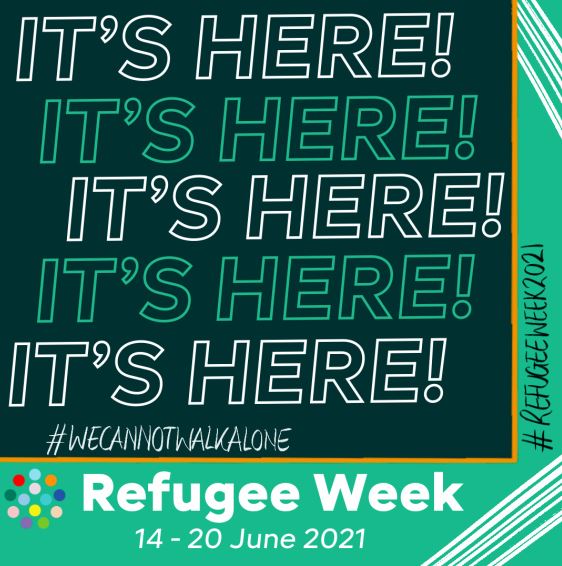
This year’s refugee week begins today, 14th June 2021 with the theme ‘we cannot walk alone’. The aim is to encourage all of us to reach out and help someone new. This week is close to my heart as border criminology is one of my key research interests. I am strongly committed to impactful research, activism and contributing my time and resources to helping refugees and making those fleeing persecution feel welcome in the UK’s hostile environment. As the resident border criminologist, I want to introduce Refugee Week activities at the University of Northampton but also to suggest how we can help ensure nobody walks alone.
The University of Northampton is hosting a week of talks in conjunction with Northampton Town of Sanctuary. Beginning on Monday at 2pm we welcome Gulwali Passarlay who fled Afghanistan at the age of 12, travelling alone through 8 countries to the UK where he was eventually granted asylum. Having spent the last few years interviewing, supporting and advocating for refugees I have heard many stories of survival. No two have been the same but each shares such painful paths that I cannot imagine. Each time I hear a refugee speak about the situations they fled I feel humbled, and grateful that despite its array of flaws, the UK is safe. In our Outsiders module, students were recently asked to challenge assumptions of minority groups. Hearing the stories of refugees from the mouths of refugees is enough to shatter any assumptions, rhetoric and media narratives about those fleeing persecution so for those who have undertaken or will sit the module next year this is a must!
On Tuesday 15th June at 2pm there will be an introduction and update to the City of Sanctuary movement. Being a City (or Town) of Sanctuary means committing to becoming a place which welcomes those seeking safety. The movement extends to universities, many of which offer Sanctuary Scholarships to asylum seekers and refugees. The Northampton Town of Sanctuary movement wants the University of Northampton to become a University of Sanctuary. Dependents of asylum applicants who arrive in the UK as children, go to school and college here, make friends, speak English, and have GCSEs and A-levels, are then unable to continue in their education as they would be liable to pay international student fees. Asylum seekers currently receive £39.63 per week from the government and are prohibited from seeking employment. They are not entitled to student finance. They are at the end of the road, forced to sit quietly and wait for the letter to come through their door with a decision.
In my own research, many of the asylum seekers I interviewed had been in the asylum process for years. For those who arrived as children and attended school here, once they left college and all their friends were going to university, they were left behind with nothing to do. This had enormous impact on their mental health and their sense of identity. They hid their asylum-seeking identity from their friends in fear of judgement, creating false narratives about who they were. This was often due to past experience of xenophobic abuse after disclosing their immigration status at school. Upon leaving school they would further advance these false narratives, making up stories about why they were not working or going to university. Just one of the people I interviewed managed to secure a Sanctuary Scholarship, despite many of them submitting applications. Having seen the impacts of exclusion from higher education, I want to see every university being a University of Sanctuary, but let’s start with the University of Northampton.
The third talk of the week is delivered by Emma Harrison from IMIX, an organisation which delivers valuable work in changing the conversation around migration and refugees. We’ve all seen the headlines and media reports of ‘illegal immigrants’ (the term ‘illegal immigrant’ infuriates me but that’s another future blog). We’ve heard Priti Patel’s plans to overhaul the ‘broken’ immigration system. The plans include further criminalisation of people seeking safety, avoiding death, rape, persecution, war; and extreme sentencing rules for those who help them reach a place of safety. The media and political rhetoric are relentless and a change in the conversation is desperately needed. I often feel hopeless about my work, that the work of myself and other border criminologists falls on deaf ears. I was at a conference a few weeks ago where the keynote was discussing the abolition of immigration detention. Immigration detention is pointless and harmful and research outputs have been good at pointing out the harms but perhaps we need to tell them what they want to hear: immigration detention is a pointless waste of money. I am looking forward to listening and hope I can pick up some tips to alter the way I communicate findings to different audiences. This talk is on Wednesday 16th June at 2pm.
The final talk of the week is delivered by a representative from the British Red Cross on Friday 18th June at 11am. The British Red Cross do a range of invaluable work from practical support such as supplying clothing and food, to finding missing family members of people seeking sanctuary. The talk will be focussed on the work the organisation does in Northamptonshire and Leicestershire during the pandemic. One of the first things I intend to do when I move to Northampton is to familiarise myself with the local service provision for refugees and asylum seekers and get involved so for me this will be a good place to start.
I encourage all our students to attend at least one of these events. They are all virtual so you could even listen while you sunbathe in the park. To attend, please email Nick who will forward a link. For our students who are interested in supporting refugees, we have a Student Action for Refugees branch at the university who coordinate student efforts to help refugees. There are many other ways we can all contribute to making sure people do not ‘walk alone’. We can read books such as Behrouz Boochani’s No Friend but the Mountains or The Good Immigrant edited by Nikesh Shukla, or watch one of the films free on the British Film Institute’s Refugee Week event. We can have conversations with others and try to think about what refugees might be going through. Next time you see a news report about a conflict talk about what you would do in that situation, what belongings you would take, which of your family would you leave behind? Having conversations such as these helps to build empathy and compassion. We can go further to challenge racist and xenophobic assumptions. I often ask, ‘what is your fear?’ to which I can invariably rationally explain why whatever they disclose will not materialise. Do one, all or some of these things. But I implore you to do SOMETHING to contribute not only to Refugee Week but to making the UK a more welcoming place.
Share this:


Thank F**k it’s Easter!

A number of years ago I wrote a blog entitled: ‘Thank F**k it’s Christmas!’. In it, I had a general moan (nothing new there) about how exhausted the staff and students were in the first term of the new academic year: Christmas break felt desperately needed. At the time, I was still an Associate Lecturer but had just begun my MSc at Leicester as well as supporting my partner on the weekends. I felt burned out, overwhelmed, and ridiculously grateful that the Christmas break had arrived. I also commented on the importance and need for work-life balance for both staff and students, something which many of us have still not managed to achieve and something which appeared increasingly challenging during the various Lockdowns. Yes; a number of us have worked/studied from home, but that has blurred what used to be clear working hours (in theory), and home life. I honestly do not know where one ends and the other begins. Therefore, I find myself back in a head space which is screaming: ‘Thank F**k it’s Easter!’.
This term has been challenging, term 2 always is. We have navigated another lockdown, assessments, lectures, workshops, all sorts. Now, throw into the mix a cyber attack on the University and ‘Thank F**k it’s Easter’ rings louder. Staff and students have persevered in the name of education and demonstrated resilience. Something I think we should all be proud off. But the anxiety, frustrations and exasperation which the lack of IT services has generated, feels like it might take some time to overcome. I am cautious to advise us to consider work-life balance as we go into the Easter Break, as I fear I will sound hypocritical. I advised the need to take time to ourselves before, and to organise some kind of work-life balance, and in all fairness that went straight out the window once we returned from Christmas break (maybe a week of two after, I am sure I attempted a balance to begin with).
Nevertheless, I do think it is important to recognise our strengths, our achievements and to take time to breathe! For many of us, we have been without our families and friends for months. Lockdown is easing, and I am naively hopeful that this will mean we can see those who are dear to us again soon: safely and sensibly. But until we reach that point, I am also exceptionally grateful that the Easter weekend is upon us. Whether we celebrate the bringing of chocolate by the Easter Bunny, or the death and resurrection of Christ: we should all celebrate that we have made it to the end of term 2. Celebrate our achievements no matter how big or small, timetable some time to yourselves: read, run, drink gin, watch films, cross-stitch, do whatever brings you some kind of peace and most importantly: breathe. The University is closed from Friday 2nd April and re-opens on Wednesday 7th April. Lets all take some time for ourselves and breathe. Happy Easter Everyone!
Share this:


Education, education, education: We’ve lost the plot

Some of you might remember Tony Blair’s speech introducing the Labour party’s education manifesto in 2001. In it he proclaimed that education was at the forefront of government policy. Education is often high on government’s agenda even if it is only to berate previous administrations for failing our youngsters. I have watched with interest the current government’s farcical approach to education and in particular the attainment of qualifications during the first period of Covid lockdown and to some extent even felt sorry for them as they grappled with what were not insignificant problems. My benevolence, however, has long been drained as I watch the news more recently only to see the same farce emerging. But what really intrigues me is the conflation of the notion of qualifications and education. It seems to me the clamber to get children back into school is only right given that they are missing out on education and other social aspects. However, I cannot see how the dealing with the qualifications issue can ignore the fact that the students have not received all of their education.
In a previous blog I have used the analogy of a driving instructor giving lessons to a pupil. In that blog the point being made was that the education of the pupil was a two-way enterprise. If the pupil didn’t engage or didn’t turn up for their lessons, then the instructor could not be held responsible for the pupil’s failure in the driving test. But what of the test itself, what is that designed to achieve? It is not simply to provide a person with a driving licence, what would be the point of that? It is to ensure that the person taking the test can drive to a satisfactory standard that would help ensure the roads were safe for all users. So, the point of the driving lessons is to provide the education in ‘road craft’ and the point of the driving test is to test knowledge and ability in that ‘road craft’ to ensure it meets satisfactory standards. The driving licence is a form of certificate that states the driver has achieved the knowledge and skills required.
So, what of education? Surely GCSEs, A levels, BTec and so on are a test of the knowledge and skills acquired. A degree is the same, is it not? How then could we reasonably expect students to pass any of these tests if they have lost significant periods of tutorship or teaching? The suggestion, dumb down the tests in some way by only testing what they have been taught, or as in the case of university students suggestions, be more lenient with the marking. Now as I understand it, that would be akin to saying to a learner driver that because through no fault of their own, they could not engage in all of their lessons, they will only be tested on their ability to park and not on their ability to carry out an emergency stop as they hadn’t been taught the latter. How ridiculous would that be? Imagine then that the very same driver, who now has a driving licence, goes onto some advanced motoring course. A course that starts with the premise that they have all the skills tested in a ‘full’ driving test.
Whilst, I can understand students’ preoccupation with tests and qualifications, I somehow think that government and teaching establishments should be more concerned with education and the knowledge gap. How will they ensure that students have the requisite skills and knowledge? Tony Blair may have said ‘Education, Education, Education’ and subsequent governments might well nod in agreement, but somehow I think they’ve all lost the plot.
Share this:


Reality and the fairy tale world of policy and procedures

In the concept of managerialism, we see that both policy and procedures form part of the techniques employed to enhance productivity and cultural changes. These changes use a ‘calculative and rationalistic knowledge base’ which appears both ‘universalistic’, and [at first sight] ‘seems entirely good sense’ (Gilling, 2014:82).
However, this knowledge base is far from universalistic and to the ‘street level bureaucrat’ (Lipsky, 1980) often falls little short of complete naivety. Lipsky (2010) provides a valuable insight into how individuals in public service adapt unworkable policies and procedures as the idealistic meets the reality of overstretched resources and ever demanding and needy consumers of services.
Whilst both working in and studying the police as an organisation subjected to and adopting managerialist policies, I witnessed the nonsensical notions of measuring activities and the subjugation of professionalism to management ideals (Hallam, 2009). Perhaps, there could be no better example than the measurement of the length of time a call handler spent dealing with a call. This derived from the need to answer calls within a target time period. It all made sense until you begin to take into account reality – the lack of resources and the nature of calls which demanded that on some occasions operators ought to spend far longer on the phone to deal with more protracted matters, such as someone in crises who really needed help and a comforting voice whilst someone was on their way. The result of the measurements was often counterproductive, officers being sent to incidents that amounted to little more than a waste of time, ‘My Jimmy is missing and I haven’t seen him for three days’ – when the officers turn up, Jimmy turns out to be a cat or, officers being sent to locations where information regarding the incident is scant because little time has been spent on the phone to get sufficient details. In the clinical world of the policy maker, there are ideal call takers, those that have knowledge about every eventuality, and ideal call makers, those that are precise, unemotional and to the point. Nothing of course could be further from reality.
Disappointingly, I find little solace in academia. Policy and procedures abound. Teaching styles are based, not on the nuances of student types but on the ideal student. The student that has the requisite skills to read and write and think critically. The student that is always engaged and always turns up and above all else, teaching is based on idealistic (see Morse and Lewis for tutorial sizes) small student classes. Policies that are well meaning such as catering for additional needs, become unworkable in an environment where class sizes and teaching demands outstrip available resources. Like the call handler, for the lecturer, it becomes impossible to cater for those that need more attention and time. And like the call handler, lecturers are subjected to managerialist idealistic measurements of success and failure. I once heard of a manager that referred to academics as ‘slackademics’, I think is probably just an indication of how far removed from reality managers are. There are two worlds in organisations that provide a service to the public, one is based on reality the other, a fairy tale world of policies and procedures based on the ideal.
References
Gilling, D. (2014) Reforming police governance in England and Wales: managerialisation and the politics of organisational regime Change, Policing and Society, 24 (1): 81-101.
Lipsky, M. (2010) Street-Level Bureaucracy: Dilemmas of the Individual in Public Services. New York: Russell Sage Foundation.
Share this:


Meet the team – Amy Cortvriend, Lecturer in Criminology
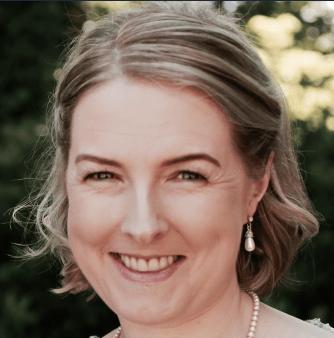
I am one of the new members of the criminology team at UoN and have joined from the University of Manchester where I have been a teaching assistant (probably the equivalent of associate lecturer at UoN) for the last couple of years while I’ve been working on my PhD. I’m looking forward to my new role as lecturer in criminology and hopefully at some point meeting students in real life, face to face. It’s a bit strange starting a new job in a new town when I’m still sat in my living room in Manchester, but the rest of the team have made me feel welcome regardless.
My journey into criminology is a funny one. I did life the opposite to many people, having my first child at 16. When my second child went to school I decided to return to education and as I didn’t have A-levels I has to undertake an Access diploma to get into university. I was required to choose three subjects and at first, I opted for English literature because I love(d) reading (I’m sure I still love reading but I’ve not read anything non-work related for a long time). I picked sociology because it sounded interesting and the same with history. At the last minute I swapped history to criminology and never looked back. From my first lesson I knew this was my future, although at that point I wasn’t sure how.
I always had imposter syndrome and never thought my work was good enough (still do today but we’ll save that for another blog post), but my Access tutor believed in me and suggested I apply to the University of Manchester. As I was a mature student, I had to attend an interview with two of the lecturers. I was super nervous, but I got a place and never left. The undergraduate degree was difficult at times because there were only a couple of mature students and they eventually dropped out. I wasn’t in halls and had kids at home, so I didn’t have the same student experience as many of my cohort, however I made some great friends particularly those who stayed to undertake our MRes.
I finished my undergraduate degree with a first and was awarded a scholarship for my research Masters’ then luckily got another studentship for my PhD which is near completion and here I am. Since I’m teaching research methods modules this year my students will be pleased to know that my BA (Hons) and MRes were heavily focussed on research methods and my PhD has given me three years of real-life research experience. My dissertations and thesis have all followed my research interests in the psychology of victimisation and border criminology. My PhD thesis explores the victimisation of refugees and how they cope. That’s all I will say about my research right now, but I will write another blog about it at some point. Probably when I’ve finished writing it and the hard work is a distant memory.
On a personal note, the daughter I had at 16 is now grown up and lives on her own and my youngest is a sassy 14-year-old girl. We have also just got our Pomeranian puppy Prince. In my free time I’m usually doing something active. I’m a Crossfitter and many of my closest friends are gym friends so the gym is both my mental health crutch and my social life. When I do eventually sit down, I love a good box set. I’m currently watching The Morning Show with Jennifer Aniston and Reese Witherspoon. Recommendations via email are welcome.
Now you know a little bit about me. I’ll look forward to getting to know all the criminology students soon, either virtually or face to face. Hopefully some of you will put your cameras on at least for a day so that when we eventually meet, I’ll know who you are.

Share this:


My Criminology Journey: Haley

The start of my criminology journey is not very exciting. I am not fully sure of how or why I ended up studying the subject. I was advised to study hairdressing at school as my predicted grades were not good enough for university, but the idea of trusting myself with a pair of scissors was very unnerving. I had a dilemma at college as I was unable to decide whether I wanted to study healthcare or construction – two courses which bore no similarity. In the end I give up trying to make decisions and studied A Levels because that was what my friends were doing.
University may as well have been on Mars at this point, as it was completely mysterious and unknown to me. Whilst at college, I was asked by my tutor to go to an open day at Oxford University. I saw this as an opportunity to unmask this university ‘thing’ for what it really was, so I agreed to go. I felt completely out of place throughout the day and found myself gobsmacked by the sheer privilege of the place, the culture and the students etc. At the same time, I was fascinated by the available courses, so I decided to continue my studies into higher education.
My first attempt at university did not go as well as I had intended it to. I had other issues to contend with at the time, so I dropped out after two weeks. However, in 2010 I enrolled at the UoN and never really left. I had a great time studying criminology at UoN as I thought that my course was very interesting and the teaching staff (aka @paulaabowles and @manosdaskalou) were spectacular.
I did not realise this it at the time but I was well prepared for critical criminological discussions because I came from a background where people would be demonized for a whole host of social problems – it was clear to me at the time that this was unfair. Whilst enjoying the course content I did have to make a considered effort to improve on my writing skills, but it was worth the effort as this improvement worked wonders on my grades. As an undergraduate, I used my overdraft and savings from working part-time jobs to go travelling at the end of each academic year, this was beneficial for helping me to understand criminological issues outside of the UK.
In 2015 I began teaching as an associate lecturer at UoN and I really enjoyed it. I also completed an MA degree in Social Research. To fast-forward to today, I now work as a lecturer in criminology – and this really is, beyond my wildest dreams!
Studying is not always a smooth ride for some, but if you work hard, you never know where you might end up.

Share this:


Time to meet our newest colleague: Jessica James

It is quite difficult to write an introductory blog, introducing yourself to new, current and Alumni Criminology students at UoN when you have been there for the past 8 years as either a student or member of staff. What is particularly difficult is figuring out where to start: how do I (re)introduce myself to students, both past and present? What do students want to know? What am I willing to share? What follows is a brief overview of my own journey as a student and with the UoN, as well as a some ‘fun’ (I use this term very lightly) facts about me.
I began my criminological journey in 2012 at the UON. I lived in halls, and had no previous knowledge of anything criminological (or so I thought). I had studied Philosophy and Ethics at A-level which proved helpful throughout my degree (and life in all honesty), but I had not studied psychology or sociology before. I don’t have the fondest memories of year 1; it was all quite overwhelming and A LOT of information to absorb and try to make sense of. And in all truthfulness my grades for the first year were not great (by my standards at least). I think I had feedback from every assessment throughout that first year telling me to check the Harvard Reference Guide! And thankfully in the summer between year 1 and 2, I did check the Guide, in fact I studied the full 100 odd page guide, and never looked back (well occasionally).
Year 2 I decided I was going to get serious about my studies, and serious I got! I didn’t miss a session, I read pretty much everything on the reading lists for my modules and found my voice in a number of seminars. I would say that in comparison to year 1, I really enjoyed my second year of Criminology, especially the placement (yes: even I have completed the placement report and presentation). And my grades reflected the commitment, passion and seriousness which I had applied.
Year 3 was pretty similar to year 2, although the stress levels were heightened. I loved my dissertation, which was an empirical piece on single parenthood and fears around juvenile delinquency. I also loved all the modules I took in year 3, which I cannot say the same for the previous years (sorry team)! Year 3 is when I realised that I would never be bored in Criminology. That is not to say that I do not find some topic areas less interesting than others, or that there are not some theories or perspectives that I do not agree with. But they are not boring (although some topics areas are pushing it). So in one way or another I had decided that my academic journey in Criminology would not end after graduation. And it didn’t.
I became an Associate Lecturer the September after I graduated, and have been on True Crime and Other Fictions and The Science of Crime and Criminals since that first year. I have also led seminars in Research Methods for Criminology, and taken lectures for Violence: From Domestic to Institutional. And basically I never left!
Alongside my AL role, I have completed my MSc in Criminology from the University of Leicester (would have done it at UON but they do not run one: cough cough). I had assumed I would continue my focus on juvenile offending in some capacity, but no I took an entirely different route to one I was familiar with and completed an empirical dissertation on The Prevalence of Rape Myths. Going forward I will hopefully do a PhD, and I currently envisage it being within the realm of Violence Against Women (VAW): but who knows?
In terms of ‘fun’ facts about me, you can know the following:
- I have two house rabbits who are both 6 years old, and have chewed every note book/pad I have ever owned. If the connection goes via online teaching, they might be responsible
- I adore pretty much all of the Disney animations, yes even the outright racist and misogynistic ones
- I eat chocolate every day without fail: pretty sure my body would just stop without it. The same goes for coffee
- And shocker: I love to read!
So to all new Criminology students, I look forward to meeting you (albeit virtually for the time being) and to all returning students (most of whom I shall have met in some capacity) I look forward to meeting you again! And finally I look forward to the next stage in my academic journey as a Lecturer in Criminology.
Share this:

A grand day out
Have you noticed how the news is reported these days in respect of Covid-19? Gone are the individualised and personalised stories of the casualties of this awful virus. Gone are the stories of individual and collective heroism of ordinary, actually extraordinary, people. Gone is the mention of the R rate and the discussion around it. Gone are those pictures of the people that died. No longer the headline, Covid- 19 is reduced to the middle order and consists predominately of the number of cases and the number of deaths. We watch these figures rise on a daily basis and we hear discussion about local lockdowns and areas with high incidents. We hear confusing stories about lockdown and then no lock down and then lockdown or is it partial lockdown and where exactly does it apply? We hear about areas that have high incidents where no action is being taken, well not yet anyway. And companies that remain open despite outbreaks only to be forced to close, let’s be honest, because of media scrutiny. We hear more from Nicola Sturgeon the first minister of Scotland than we do from our own prime minister.
We are sucked into a world of tourism, safe corridors and safe countries, lists and the plight of the aviation industry. We hear tourists moaning about self-isolation (I constantly scream at the tv you made that choice you ****). We are sucked into the debacle around schools and qualifications and returning to school. And we are told by Boris that we should all go back to work, back to the office. We hear of tourists returning on flights having contracted Covid-19 and passengers not wearing masks on flights. At the same time, we are told by bosses in the aviation industry that the industry is doomed unless something is done about it, this self-isolation malarkey really isn’t good for business. Once again, I shout at the tv (I don’t suppose you’ll be getting on one of those cattle trucks in a hurry you ***). Do I sound angry, I guess I am?
When the virus first struck, whenever that was, we all probably didn’t take it that seriously, serious but you know, not that serious. Then there was the lockdown, now that was serious, and it hit home how serious it was. Then we watched the tv and that reinforced how serious it was and if you weren’t a little concerned for yourself, your friends and your loved ones then you really weren’t in touch with reality. And then the economic costs started to rack up and that became really serious. And then, the government decided that since the NHS hadn’t been overwhelmed it was now permissible to open things up. And then, the government decided that it would pass the responsibility for the management of Covid to local authorities. And somewhere along the line, the responsibility for ensuring my safety, and yours became that of business. As long as businesses could assure us that they were Covid safe then we could go back to work and go shopping and eat out. In fact, you could eat out for 50% less in some places aided by a government scheme. A scheme to get businesses back on their feet which of course involved packing people in. Just how Covid secure are these places, well you take your chance, but you can feel assured.
I decided to venture out with my wife to get ourselves a new mattress. The old one has had its day, we meet in the middle of the bed every night, whether we want to or not, the only solution, to try to sleep as close to the edge as you can and if possible somehow cling on. Time for a new mattress. I’m not sure about these new-fangled mattresses (you know, the ones that come in a box and then pop out never to be returned to the box) and so rather than shopping on line we went to a store. We entered the store, masked up as is required, to be greeted by an assistant who pointed to the hand sanitiser. “oh, that bottle doesn’t work”, she says, “try the other but you’ll have to hit it quite hard”. Oh well, at least she’s wearing a face shield and I notice the other assistants are doing the same, except that theirs are up, a bit like a visor really, as they hang about talking to each other. One saunters over to us and after a brief conversation leaves us to look at and try the mattresses. Now that sounds alright doesn’t it, except that not only was his face shield not down, he’d taken it off altogether and thrown it onto the bed. We kept our distance. So, the markings on the floor suggesting 2 metre distance and the hand sanitiser at the entrance and the issue of face shields to staff are all Covid compliant but in operation, not really. Still we had a grand day out and felt quite assured.
As we hear the clamour to get schools back up and running, we hear about the plight of the school children and as a consequence, the voices and concerns of the teachers are drowned out. As we hear the concerns of lecturers from their union, the lecturers themselves and even the medical profession, their voices are drowned out. The only thing that seems to matter now is the economy and business. Those that run it are not on the coal face and will not be putting themselves at risk, but they tell us how we must all do our bit and return to work. If you wonder how getting children back to school fits in, well parents caring for children at home are not in the office working.
I selected some passages from the government guidelines regarding Covid 19.
“The more people you have interactions with, the more chance the virus has to spread. Therefore, try to limit the number of people you see – especially over short periods of time”
“limit the number of different activities which you partake in succession to reduce the potential chain of transmission”
“group size should be limited to the minimum which allows the activity to take place”
Now isn’t that confusing. We must all get back to work and back to the offices and, yet the government’s own guidelines seem to suggest this should not happen unless absolutely necessary. How exactly does this fit with teaching and class sizes and the number of students that teachers interact with? The same applies to lecturers at university, of course they have the added problem that the students will have come from all over the country and then come together in a Covid -19 cauldron. Pack them all in but you can feel assured that schools and campuses are Covid safe (a bit like those planes returning from foreign climes).
I feel like I am in a socio-economic experiment. An experiment where I see the disadvantaged and weak in our society put at risk for the sake of business. Where the older generation are made to feel dispensable and unimportant. Where figures are manipulated to downplay the seriousness of the problem. Die on day 29 after infection and you won’t be included in the Covid statistics. I see an experiment where facts are bent, ignored, and a narrative that subjugates the truth to management and business ideals. It looks like I’m going to be shouting at the tv for a very long time and I must be honest I really don’t feel very assured.


 Thoughts from the criminology team