
Home » True Crimes
Category Archives: True Crimes

St Valentines Day! Love and other emotions

This blog today is all about love…. or maybe not! As criminologists, we tend to see things slightly different, and our perspective is influenced by functions other than undying declarations of love.
Saint Valentine is associated with love and people celebrate the day with their special romantic person, or by pursuing any person of interest, with romantic cards. Greeting cards, bottles of wine, boxes of chocolates, bunches of flowers, heart shaped jewellery, lovely sonnets, sexy underwear, kinky gifts and over the top romantic gestures! All of the above are anticipated actions on this day. Any of these will act as a demonstration of love. In some ways the more enormous the gesture the greater the demonstration of love and intimacy to the intended special person. Many times, we hear those in a relationship rut complaining that “they don’t even buy me chocolates anymore” a sign that love has fizzled out.
Love is a powerful emotion, and I dare not to challenge it. Artists have created their best work on love! Religion has created its strongest appeal on love. People, the world over, have based their entire lives of how they feel about a person they choose to be their partner and share their lives with. So clearly love is important! Enough for an Austrian psychotherapist to create an entire theory on love and sex. We feel ready to go to war for love and we are completely convinced that love is the force that keeps us going. Love is strong and we feel it every day.
Therefore, it is slightly surprising that the patron saint of romantic love is a rather fictional character! The saint is meant to be a priest who lived in the 3rd century AD and martyred by tortured for his faith. There was no romance involved and there were no love poems written of the time. In fact, the Roman Catholic church did not recognise or mentioned this martyrdom at the time. The first accounts on St Valentine appear in the 6th and later the 9th centuries, some centuries later. Since then, the story of the saint is embellished further, until the 19th century when it becomes connected with romantic love in some tenuous way. For example, the more recent narratives claim that before his execution he would convert and cure the daughter of his jailer. He was also officiating wedding ceremonies between Christians which may have given him the romantic connection. In the 19th century we have the first mass production of love tokens dedicated to the day and in the 20th, century especially post 1960s the celebration was growing in popularity and appeal. Currently the day is a celebration that has a significant capitalist value. It is usually a commercial success midway between Christmas and Easter.
Some religious historians noted that in the Roman calendar in February there have been rituals and celebrations on fertility and cleanliness (physical, spiritual). It was the time presumably when young Romans prepared for sexual relations. Therefore, an amalgamation of the old practices and the then new religion overlap with an obscure Saint to act as the glue to connect them and reaffirm the importance of love. Ironically the Roman citizens of the time, in particular the patricians, would not recognise such acts! They married out of interest, connecting the wealth and power of different factions. In those cycles love was more of a chimera rather than a reality.
Romantic love with knights, towers, dragons and gestures of devotion will appear as fanciful tales. Who hasn’t heard of Odysseus and his beloved wife Penelope who remained faithful to him for 20 years! Her fidelity was not reciprocated, and Odysseus had multiple affairs and fathered several children across the Mediterranean. Not quite the romantic story people would like to believe. Romantic love was always a tale, with vivid twists and turns. Love appears almost pure, undiluted that lifts those in its path. Shakespeare wrote fantastic sonnets on love. Some of the best things ever written in English. Still his contemporaries did not recognise this love. The majority of people at the time died young, malnourished and exhausted. Those who barely survive cannot afford to embrace love. As for those in power their relationship with love can be summed up in the old mnemonic rhyme “divorced, beheaded, died; divorced, beheaded, survived”!
We presume that romantic love is a representation of two people having feelings for one other. That is a nice sentiment but historically weak. Love for women does not exist. Not because women are devoid of emotions; quite the contrary! Because women have been used in social transactions between men who barter and use them as part of their household. A feminist today can recognise, despite all assurances for equality, how unequal life is. Especially in the household! If anyone wants to see why love is not equal only see how domestic and intimate violence is spread between gender lines. Because St Valentine brings flowers and chocolates, but it also brings beatings and abuse. Across the year it is during holidays and significant dates, including St Valentines that violence against women surges. One can unfortunately deduce that love is not for women. Oh…. The irony as romantic novels and movies are presented mostly for women as “chick flicks”!
Earlier in this post, it was said that the bigger the romantic move the better! Who will do this big romantic gesture? A man with chivalrous intent. Our household data reveal that men will spend more than double on what women will spend on the day, making their romantic intent more obvious. Perhaps men are more romantic and feel the need to satisfy that internal need. Or maybe there are other emotions at play. Love is very powerful, but so is possessiveness. In a history of transactions men used women for trading, so their gestures may be a latent act of dominance, a fresh reminder of possession. Instead of giving them chocolates, you may as well urinate all over them. That way your beloved will have your scent and keep other suitors away. So, this is not love but control, jealousy and dominance. Every drop of wine, every piece of chocolate, every flower petal, is yet another link in the chain of ownership. In case this gets misunderstood, the individual who buys flowers isn’t a villain, but the history of this kind of love is pointing in this direction. Your partner may have the best intentions and the greatest love and regard for you, but our society has never really acknowledged the transactional relationship between men and women. It is similar to those who speak of the evils of slavery, but with no recognition of reparations. This love is not pure and clean. It is the darkest form of patriarchy that controls people making them to believe in an adult fairytale once the other story of Santa Claus is not believed any more.
Romantic actions target all incomes and all ages, but of course there is a drive to get younger people, new generations of customers, on the love spending machine. At this stage I shall write…what not to do when you are planning a romantic day! Do not go overboard. Love is something felt in the heart not in the pocket. Heart-shaped products do not say “I love you” more than square or round ones! Red is no more appealing than any other colour and of course if emotions are high, they tend to last more than a day! Ideally do not spend any money! In the unfortunate event that you do, do not cook your romantic meal with a sharp knife. You may pierce the palm of your hand and end up with stitches. Do not spread chocolate on a partner before establishing if they are allergic to any of the ingredients, you may end up in A&E. Do not offer them wine, if they have an intolerance to alcohol, they may vomit all over your pristine bedspread. Do not write something funny or profound if they are thick and unable to comprehend deeper meanings (in that case what are you doing with them???). Love is not an idea, a moment, a day, an instant. It is a lifetime however long or short it is. You will live in love and you will die in love. Even when you are by yourself love is in you and it cannot be defined by the actions of people around you. Finally, love is selfless so do not try to control them, “love is a rebellious bird that nobody can tame”!

Share this:


25 years of Criminology

When the world was bracing for a technological winter thanks to the “millennium bug” the University of Northampton was setting up a degree in Criminology. Twenty-five years later and we are reflecting on a quarter of a century. Since then, there have been changes in the discipline, socio-economic changes and wider changes in education and academia.
The world at the beginning of the 21st century in the Western hemisphere was a hopeful one. There were financial targets that indicated a raising level of income at the time and a general feeling of a new golden age. This, of course, was just before a new international chapter with the “war on terror”. Whilst the US and its allies declared the “war on terror” decreeing the “axis of evil”, in Criminology we offered the module “Transnational Crime” talking about the challenges of international justice and victor’s law.
Early in the 21st century it became apparent that individual rights would take centre stage. The political establishment in the UK was leaving behind discussions on class and class struggles and instead focusing on the way people self-identify. This ideological process meant that more Western hemisphere countries started to introduce legal and social mechanisms of equality. In 2004 the UK voted for civil partnerships and in Criminology we were discussing group rights and the criminalisation of otherness in “Outsiders”.
During that time there was a burgeoning of academic and disciplinary reflection on the way people relate to different identities. This started out as a wider debate on uniqueness and social identities. Criminology’s first cousin Sociology has long focused on matters of race and gender in social discourse and of course, Criminology has long explored these social constructions in relation to crime, victimisation and social precipitation. As a way of exploring race and gender and age we offered modules such as “Crime: Perspectives of Race and Gender” and “Youth, Crime and the Media”. Since then we have embraced Kimberlé Crenshaw’s concept of intersectionality and embarked on a long journey for Criminology to adopt the term and explore crime trends through an increasingly intersectional lens. Increasingly our modules have included an intersectional perspective, allowing students to consider identities more widely.
The world’s confidence fell apart when in 2008 in the US and the UK financial institutions like banks and other financial companies started collapsing. The boom years were replaced by the bust of the international markets, bringing upheaval, instability and a lot of uncertainty. Austerity became an issue that concerned the world of Criminology. In previous times of financial uncertainty crime spiked and there was an expectation that this will be the same once again. Colleagues like Stephen Box in the past explored the correlation of unemployment to crime. A view that has been contested since. Despite the statistical information about declining crime trends, colleagues like Justin Kotzé question the validity of such decline. Such debates demonstrate the importance of research methods, data and critical analysis as keys to formulating and contextualising a discipline like Criminology. The development of “Applied Criminological Research” and “Doing Research in Criminology” became modular vehicles for those studying Criminology to make the most of it.
During the recession, the reduction of social services and social support, including financial aid to economically vulnerable groups began “to bite”! Criminological discourse started conceptualising the lack of social support as a mechanism for understanding institutional and structural violence. In Criminology modules we started exploring this and other forms of violence. Increasingly we turned our focus to understanding institutional violence and our students began to explore very different forms of criminality which previously they may not have considered. Violence as a mechanism of oppression became part of our curriculum adding to the way Criminology explores social conditions as a driver for criminality and victimisation.
While the world was watching the unfolding of the “Arab Spring” in 2011, people started questioning the way we see and read and interpret news stories. Round about that time in Criminology we wanted to break the “myths on crime” and explore the way we tell crime stories. This is when we introduced “True Crimes and Other Fictions”, as a way of allowing students and staff to explore current affairs through a criminological lens.
Obviously, the way that the uprising in the Arab world took charge made the entire planet participants, whether active or passive, with everyone experiencing a global “bystander effect”. From the comfort of our homes, we observed regimes coming to an end, communities being torn apart and waves of refugees fleeing. These issues made our team to reflect further on the need to address these social conditions. Increasingly, modules became aware of the social commentary which provides up-to-date examples as mechanism for exploring Criminology.
In 2019 announcements began to filter, originally from China, about a new virus that forced people to stay home. A few months later and the entire planet went into lockdown. As the world went into isolation the Criminology team was making plans of virtual delivery and trying to find ways to allow students to conduct research online. The pandemic rendered visible the substantial inequalities present in our everyday lives, in a way that had not been seen before. It also made staff and students reflect upon their own vulnerabilities and the need to create online communities. The dissertation and placement modules also forced us to think about research outside the classroom and more importantly outside the box!
More recently, wars in Europe, the Middle East, Africa and Asia have brought to the forefront many long posed questions about peace and the state of international community. The divides between different geopolitical camps brought back memories of conflicts from the 20th century. Noting that the language used is so old, but continues to evoke familiar divisions of the past, bringing them into the future. In Criminology we continue to explore the skills required to re-imagine the world and to consider how the discipline is going to shape our understanding about crime.
It is interesting to reflect that 25 years ago the world was terrified about technology. A quarter of a century later, the world, whilst embracing the internet, is worriedly debating the emergence of AI, the ethics of using information and the difference between knowledge and communication exchanges. Social media have shifted the focus on traditional news outlets, and increasingly “fake news” is becoming a concern. Criminology as a discipline, has also changed and matured. More focus on intersectional criminological perspectives, race, gender, sexuality mean that cultural differences and social transitions are still significant perspectives in the discipline. Criminology is also exploring new challenges and social concerns that are currently emerging around people’s movements, the future of institutions and the nature of society in a global world.
Whatever the direction taken, Criminology still shines a light on complex social issues and helps to promote very important discussions that are really needed. I can be simply celebratory and raise a glass in celebration of the 25 years and in anticipation of the next 25, but I am going to be more creative and say…
To our students, you are part of a discipline that has a lot to say about the world; to our alumni you are an integral part of the history of this journey. To those who will be joining us in the future, be prepared to explore some interesting content and go on an academic journey that will challenge your perceptions and perspectives. Radical Criminology as a concept emerged post-civil rights movements at the second part of the 20th century. People in the Western hemisphere were embracing social movements trying to challenge the established views and change the world. This is when Criminology went through its adolescence and entered adulthood, setting a tone that is both clear and distinct in the Social Sciences. The embrace of being a critical friend to these institutions sitting on crime and justice, law and order has increasingly become fractious with established institutions of oppression (think of appeals to defund the police and prison abolition, both staples within criminological discourse. The rigour of the discipline has not ceased since, and these radical thoughts have led the way to new forms of critical Criminology which still permeate the disciplinary appeal. In recent discourse we have been talking about radicalisation (which despite what the media may have you believe, can often be a positive impetus for change), so here’s to 25 more years of radical criminological thinking! As a discipline, Criminology is becoming incredibly important in setting the ethical and professional boundaries of the future. And don’t forget in Criminology everyone is welcome!

Share this:


The Problem with True Crime

There has been a huge spike in interest in true crime in recent years. The introduction to some of the most notorious crimes have been presented on Netflix and other streaming platforms, that has further reinforced the human interest in the gore of violent crimes.
Recently I went to the theatre to watch a show title the Serial Killer Next Door, which highlights some of the most notorious crimes to sweep the nation. From the Toy Box Killer (David Ray-Parker) and his most brutal violence against women to Ed Kemper and the continuous failing by the FBI to bring one of the most violent and prolific killers to justice. While I was horrified by the description both verbal and photographic of the crimes committed, by the serial killers. I was even more shocked at the reaction of the audience and how the cases were presented. The show attempted to sympathise with the victims but this fell short as the entertainment value of the audience was paramount and thus, the presenter honed in on the ‘comedic’ factor of the criminal and the crimes committed. Graphic pictures of the naked bodies of men, women and children brutalised at the hands of the most sadistic monsters were put on screens for speculation and entertainment. Audience members enjoyed popcorn and crisps while lapping up the horror displayed.
I did not stay for the full show…..
The level of distaste was too much for me but from what I did watch made me reflect deeply and led me to the age-old topic among criminologists and victimologists that question where the victims are and why do they continue to be dehumanised. Victims of these heinous crimes are rarely remembered and depicted in a way that moves them away from being viewed as human and instead commodities and after thoughts of crime.
The true crime community on YouTube has been criticized for the sensationalist approach crime. With niche story telling while applying one’s makeup and relaying the most brutal aspects of true crime cases to audiences. I ask the question when and how did we get to this point in society where entertainment trumps victims and their families. Later, this year I will be bringing this topic to a true crime panel to further explore the damage that this type of entertainment has on both the consumer and the victim’s legacy. The dehumanisation of victims and desensitisation of consumers for entertainment tells us something about the society we live in that should be addressed…..I am sure there will be other parts to this post that will explore the issues with true crime and its problematic and exploitative nature.
Share this:


I want to study Criminology

This is the time of the year we meet a lot of prospective students who come to one of our discovery/open days telling us why they wish to join us! I have taken some of their ideas and put them into content reflecting on our curriculum and the programme(s) we offer at the UON
I have read something in my sociology textbook, it was talking about deviant behaviour, and I thought to myself; that is interesting! I was reading in a psychology textbook something about a doll that adults are hitting and the kids watching them emulate their behaviour and I thought, if that explains the behaviour in my school when the kids used to fight. I was going over my notes in religious education talking about ethics and morality and I wondered if we are born with an innate moral compass that tell us right from wrong. The starting point in all three examples is curiosity. We explore some ideas at school, we hear stories in the news, and we are intrigued. The name sounds interesting because at the end of deviance lies crime, in the explanation of doll hitting the behaviour is violence and at the end of the questions about morality, rests criminality. For some others the curiosity comes from a true crime book that describes how a monstrous killer was able to kill two schoolgirls whilst joining the town in their search: or after watching a documentary of this female serial killer who worked as a sex worker and occasionally killed her punters. Maybe it was that crime series about this seemingly nice, terminally ill schoolteacher who started making drugs and selling them to gangs.
Any of the above sound exciting, interesting to enroll in at a university of your choice. In fact, every year hundreds of UK students will choose to study criminology in one of the different available ways to study it across the country. The curiosity and interest materialise and in recent years criminology has overtaken several cognate disciplines in terms of student numbers. Universities have invested in teams delivering renditions of criminology across the country. Our version of criminology is focused on multidisciplinary perspectives exploring different theoretical conventions and helping our students to grow in confidence in an area that is both fascinating and complex. Firstly we dispel the mythology on criminology from the reality and the scientific explorations of the discipline. We provide the relevant examples to see the evolution of thought and the development of perspectives. Then we work with our students to acquire the skills to seek out the information that will become their knowledge base. We encourage the development of independence, creativity and critical analysis.
In a recent session with finalists, one student commented that she found criminology challenging. It is a discipline that looks at crime and its aftermath but also considers that as a phenomenon crime is a social construct. In other words, of course its complex; we are talking about harm and the effects/causes it has on individuals and the wider society; but understanding how crime is generated, the impact it has and the ways we can address the “problem of crime” is an insightful educational experience. Like going up a mountain, you may feel the strain and pain of doing it whilst at the base camp or halfway but once you reach the peak, you get views of something else. For those who wish to join us; be open to new perspectives and be prepared to have your mind blown!
To find out more, please visit:
BA (Hons) Criminology with Psychology
Share this:


For Tyre’s last Five badges. (spoken word)
The badges you wear were betrayed the very instant you flashed your sights on me.
You had nothing good in mind from the start.
I was doomed from the beginning.
By the time the brutality started,
The senselessness of it all kept my body numb to the assault.
“What did I do,” I keep asking, as
Your brutal blows, strongholds and punches bend my body into painful pretzels.
While y’all’ve got me firmly pressed against the pavement, y’all yell:
“Get on the ground.”
Pressed on the ground, I say disarmingly:
“You guys are really doing a lot right now.”
My calmness stands out against all your unwavering aggressions.
Yet, you continue to play the same game: “Get on the ground.”
Beneath the ground there is only hell, and yet
My face pressed against the gravel by your hooves feels like hell, right here, right now.
‘Watching the world wake up from history.’
As if wielding your fists and batons, tasers and bullets don’t threaten me enough,
There are five of you, and
Each of you is massive.
Each of you …highly trained, experienced, and tremendously pumped up.
I am a little weasel sized up against any one of you, and
You are a mob of five.
Too weak to lift my own self, two officers hoisted me up by my limp arms, blood streaming from my head and outta ev’ry orifice, voice too weak to shout. I’m beaten badly, and yet you continue to brutalise me.
Manhandled.
I stumble up, firmly in your grasp, and all I do is plead, which gave enough time for another officer to grab a baton.
He quickly came back with the baton, screaming “give us your hands,” while the two officers still restrained me by these very same hands.
You continually scream “Stop resisting,” while
At least two if not three of you all strangling some part of my body.
The agony is immense.
You’re a pack on the hunt.
You chase me down, and
Torture and kick me more feverishly for running away.
I am in a battle for my life, you…
You are in a battle for your manhood.
“Bruh, you say, and words like these are the same words used to connect us to one another.
The words you use to abuse me could be endearing in another context.
Yet you have the nerve to call me “bruh,” and beat your brother to death.
‘I was alive and I waited, waited’
Waited for your humanity to show up,
Waited for justice to be served to me equally.
‘I was alive and I waited, waited,’ waited three days in the hospital…and
Neither justice nor your humanity ever showed up.

Share this:


Media Madness

Unless you have been living under a rock or on a remote island with no media access, you would have been made aware of the controversy of Russell Brand and his alleged ‘historic’ problematic behaviour. If we think about Russell Brand in the early 2000s he displayed provocative and eccentric behaviour, which contributed to his rise to fame as a comedian, actor, and television presenter. During this period, he gained popularity for his unique style, which combined sharp wit, a proclivity for wordplay, and a rebellious, countercultural persona.
Brand’s stand-up comedy routines was very much intertwined with his personality, which was littered with controversy, something that was welcomed by the general public and bosses at big media corporations. Hence his never-ending media opportunities, book deals and sell out shows.
In recent years Brand has reinvented (or evolved) himself and his public image which has seen a move towards introspectivity, spirituality and sobriety. Brand has collected millions of followers that praise him for his activist work, he has been vocal on mental health issues, and he encourages his followers to hold government and big corporations to an account.
The media’s cancellation of Russell Brand without any criminal charges being brought against him raises important questions about the boundaries of cancel culture and the presumption of innocence. Brand, a controversial and outspoken comedian, has faced severe backlash for his provocative statements and unconventional views on various topics. While his comments have undoubtedly sparked controversy and debate, the absence of any criminal charges against him highlights the growing trend of public figures being held to account in the court of public opinion, often without a legal basis.
This situation underscores the importance of distinguishing between free speech and harmful behaviour. Cancel culture can sometimes blur these lines, leading to consequences that may seem disproportionate to the alleged transgressions. The case of Russell Brand serves as a reminder of the need for nuanced discussions around cancel culture, ensuring that individuals are held accountable for their actions while also upholding the principle of innocent until proven guilty in a court of law. It raises questions about how society should navigate the complex intersection of free expression, public accountability, and the potential consequences for individuals in the public eye.
There is also an important topic that seems to be forgotten in this web of madness……..what about the alleged victims. There seems to be a theme that continuously needs to be highlighted when criminality and victimisation is presented. There is little discussion or coverage on the alleged victims. The lack of media sensitivity and lay discussion on this topic either dehumanises the alleged victims by using lines such as ‘Brand is another victim of MeToo’ and comparing him to Cliff Richard and Kevin Spacey, two celebrities that were accused of sexual crimes and were later found not guilty, which in essence creates a narrative that does not challenge Brand’s conduct, on the basis of previous cases that have no connection to one another.
We also need to be mindful on the medias framing of the alleged witch hunt against Russell Brand and the problematic involvement that the UK government. The letter penned by Dame Dinenage sent to social media platforms in an attempt to demonetize Brand’s content should also be highlighted. While I support Brand being held accountable for any proven crimes he has committed, I feel these actions by UK government are hasty, and problematic considering there have been many opportunities for the government to step in on serious allegations about media personalities on the BBC and other news stations and they have not chosen to act. The step made by Dame Dinenage has contributed to the media madness and contributes to the out of hand and in many ways, nasty discussion around freedom of speech. The government’s involvement has deflected the importance of the victimisation and criminality. Instead, it has replaced the discussion around the governments overarching punitive control over society.
Brand has become a beacon of understanding to is 6.6 million followers during Covid 19 lockdowns, mask mandates and vaccinations. This was at a time when many people questioned government intentions and challenged the mainstream narratives around autonomy. Because Brand has been propped up as a hero to his ‘awakened’ followers the shift around his conduct and alleged crimes have been erased from conversation and debates around BIG BROTHER and CONTROL continue to shape the media narrative………
Share this:


The True Crime Genre and Me

I have always enjoyed the true crime genre, I enjoyed the who dunnit aspect that the genre feeds into, I also enjoyed “learning” about these crimes, and why people committed them. I grew up with an avid interest in homicide, and the genre as a result. So, studying criminology felt like it was the best path for me. Throughout the three years, this interest has stayed with me, resulting in me writing my dissertation on how the true crime genre presents homicide cases, and how this presentation influences people’s engagement with the genre and homicides in general.
With this being my main interest within the field of criminology, it was natural that True Crime and Other Fictions (CRI1006) module in first year caught my attention. This module showed me that my interest can be applied to the wider study of criminology, and that the genre does extend into different areas of media and has been around for many years. Although this module only lasted the year, and not many other modules- at least of the ones that I took- allowed me to continue exploring this area, the other modules taught me the skills I would need to explore the true crime genre by myself. Something- in hindsight- I much prefer.
I continued to engage with the wider true crime genre in a different way than I did before studying criminology- using the new skills I had learnt. Watching inaccurate and insensitive true crime dramas on Netflix, watching YouTubers doing their makeup whilst talking about the torture of a young girl, podcasts about a tragic loss a family suffered intercut with cheery adverts. This acts as a small snapshot of what the genre is really like, whereas when I originally engaged with it, it was simple retellings of a range of cases, each portrayed in slightly different ways- but each as entertaining as the next. To me, I think this is where the genre begins to fall apart, when the creators see what they are producing as entertainment, with characters, rather than retellings of real-life events, that affects real people.
Having spent so much time engaging with the genre and having the skills and outlook that comes with studying criminology, you can’t help but to be critical of the genre, and what you are watching. You begin to look at the reasoning behind why the creators of this content choose to present it in such ways, why they skip out on key pieces of information. It all makes a bit more sense. Its just entertainment. A sensationalist retelling of tragic events.
Although studying criminology may have ruined how I enjoy my favourite genre of media, it also taught me so many skills, and allowed me to develop my understating in an area I’ve always been interested in. These skills can be applied in any area, and I think that is the biggest take away from my degree. Considering I now work as the Vice President of Welfare at the Students Union– and getting some odd looks when I say what my degree was- I have no regrets. Even if I walk away from my time at university and never use the knowledge I gained from my studies, I can walk away and know that my time was not wasted, as the skills I have learnt can be applied to whatever I do moving forward.
Share this:


What to do with my criminology?

Let’s arrange time and set out two temporal constants: point one: a random meeting now and another one about three years later! The first one occurs during a standard University Open Day; a young person coming to a session to hear about criminology; they have seen crime programmes, read crime fiction, bought some real crime literature and now they feel fascinated. There is an interest there; what happens next? Why did they do it? How did they do it? Many questions and even more ideas of what to do to those who do horrible things. The Open Day is not just a response to singular identities, in fact it takes these curiosities and turns them on their head. Crime is bigger and smaller; its is more and less and, of course, most importantly is socially constructed, meaning that is does not mean the same thing across time and space.
This first encounter, was interesting, informative, and on the way home generated more questions and more curiosities. It is the first step to a decision to come back to read the subject, to get involved studying the course material and engaging in discussions. Suddenly the crime programme seems artificial; it does not explore social realities; the methods employed are too expensive and the investigation timeframe random. Knowledge is constructed on information but challenging the source of that information becomes the tool of academic exploration. Reading the crime novel or exploring true crime literature is not simply a guilty pleasure, it is a means to get narratives to ascertain cultural dominance and to address crime prioritisation (you wish to know more…then join us!).
Point two: an event sometime after the three years; a graduation. Wearing a gown and taking pictures with family and friends. A recognition that three years of study have come to a successful conclusion. The curiosity remains; there are still a lot of questions to ponder but now there is a difference in how this takes hold. The concept of crime becomes complex, interconnected with social and personal experience, but this is just the beginning. Studies haven’t answered the original questions, in fact they have added more questions, but they have given a “methodology of thought”. A process to relate to any situation that is known or unknown and explore the criminology within.
The completion of studies inevitably bring the issue of what to do next. How to use criminology; professionally, educationally, academically. As a social science, criminology contains plenty of theoretical perspectives and those relate to the lived experience and in many ways explain it or even predict future criminalities. Some decades ago, criminological imagination, considered cyber justice as a model of swift resolution, international justice was seen as the tool to prevent conflict and global crisis. Suffice to say that neither worked. Criminologists are more than keen to explain why neither of these work.
At both points we have been there; we saw you struggle at first to set the question, to consider the merit of the argument. We also saw you growing in confidence and writing work that you never thought you would, but most importantly to consider perspectives never thought of before. Your criminology is a tool; an instrument to understand social realities, when people are at their worst. To observe, study, analyse and explain crime without judgment or bias. Your criminology is a tool to let you join those groups that will ask “what about the human rights” that will consider “what is the value in this rehabilitation” that will advocate the objections for those people who are deprived a voice and for you to give them space. It is not always easy working with people who are kept locked up for the protection of others but it is in that point that your criminology lights up their lives. When all others give up and when the systems seem not to be working and when all seems so hopeless, your criminology will give hope and clarity to those who need it.
From a small personal curiosity, this is not a simple journey, but it is definitely one worth taking and now that you finish, you take with you that mindset and the professional obligation to carry it further. It’s your voice and the way you articulate it; it’s your appreciation of the complexity and these are invaluable skills to carry with you. From us, all we have to say now is…Happy journeys.
Share this:

And still the message is the same…
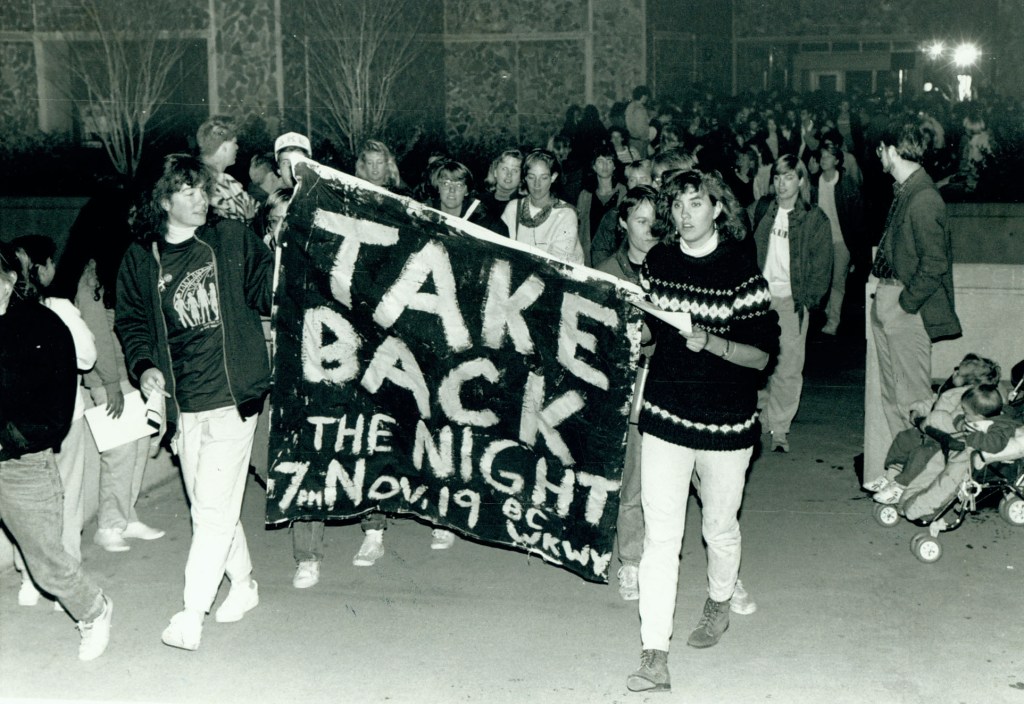
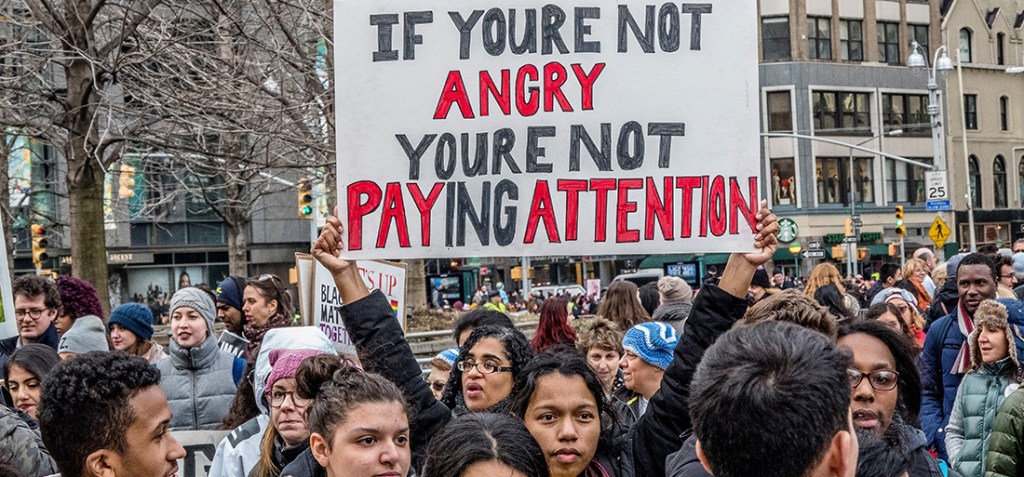
Following on from last week’s blog entry from @5teveh, @jesjames50 explores further dimensions of Sarah Everard’s murder.
Recently we saw the sentencing of Sarah Everard’s kidnapper, rapist and murderer. He has received a whole life sentence. As a woman within society I welcome this sentence. As a criminologist I am at a loss. There is a lot to unpick here in terms of ‘justice’ and whether this has been served. It is pertinent to question the use of a whole life order on a violent, misogynistic, kidnapper, rapist and murderer; who cooperated after arrest, who pleaded guilty and expected the full force of the law. But I shall leave that to another day, as the media’s portrayal of the sentencing and aftermath is what is currently fuelling my anger. The message remains the same, women can and should do more to prevent their victimisation.
The sentence given is at odds with the coverage which has followed. Handing down the most severe sentence available in England and Wales represents the seriousness of the offence, and the damage it has caused to those directly involved and those further afield. The possibility that the offender was in a position of trust, has violated this trust and committed abhorrent acts appears to justify the whole life order. The comparison to terrorism, something which violence against women has been linked to before within academia, is also very telling. But what is the focus? The focus is on how women can go about feeling safe in society and make lines of inquiry if they have doubts about a police officer’s conduct! Here the onus is on women acting in a manner of keeping themselves safe. The message remains the same: women should prevent their victimisation. Excellent I’ll add this nugget of information to my bag of ‘top tips for walking alone at night’.
Why aren’t the media building on this platform to challenge misogynist attitudes? Why are they not raising awareness of violence against women? Sarah’s kidnapping, rape and murder is horrific: but what about the women who undergo daily violence at the hands of their partners, family, friends? These individuals are also in a position of trust and abuse this position to cause harm to women! Here the media could raise awareness about how deep-rooted the issue of violence against women is, but instead they reinforce the idea that women can prevent their victimisation, and that violence occurs at night, by a stranger, and will have the offender brought to justice. This is not the reality for the vast majority of women. It is an extreme and exceptional case (no doubt something True Crime will encapsulate in years to come) and this is further reinforced by the sentence given. Yet violence against women is not exceptional, or rare: it is an everyday reality! Something the media has failed to draw attention to. And by failing to cement Sarah’s kidnapping, rape and murder in the wider context of violence against women, it raises the potential to set a standard of violence against women. Those everyday cases which do not fit the same circumstances are not considered an issue.
My intentions are in no way to take away from the abhorrent crimes committed against Sarah. The crimes sit in the context of violence against women which is still a fundament issue overlooked within society, and has been overlooked once again. And the rhetoric which has followed, yet again, is around how women can protect themselves in the future. The message remains the same…
Share this:


Thinking Criminologically: Engaging with darkness

Often when you mention the word criminology to lay people outside of the academy, the initial response is “ooh that’s interesting” or “that sounds exciting”. The next step in the conversation usually reverts to the most extreme forms of interpersonal violence, murderers, serial killers and so on. For many, criminology appears to be the home of “whodunnits”. People talk of Ted Bundy, Ian Brady and Myra Hindley, Fred and Rose West and want to know why they did what they did. For decades, the unsolved case of Jack the Ripper has been pored over by authors, television makers and the general public. For those who choose to engage, we have seen the female victims of this unknown man, eviscerated, degraded and ultimately slain, again and again for the reader/viewers’ delectation. This is not criminology.
Criminology recognises there are no winners in crime, only people left shattered, those devastated by their actions or those impacted by criminality. People are left bloody, bowed and bereaved through victimisation by individuals, institutions and the State. Yet just look on a bookshops ‘Crime’ shelves or flick through the programme schedules and you will find no sign of this. As a society we revel in this darkness and package it as entertainment. This is not criminology.
On the news we see discussions around crime and criminals. What should we do? Shall we give the police yet more powers? Shall we give those oh so lenient judges less leeway for discretion? Should we lock the offenders up and throw away the key? Should we bring back National Service? What about a boot camp? Should we consider bringing back the death penalty? How can we teach these people a lesson they won’t forget? Notice that all of these suggestions are designed to be more and more punitive, no discussions are focused around purely rehabilitative programmes, defunding the police or penal abolition. This is not criminology.
The problem with all of the ideas contained within the preceding paragraphs, is they are entirely negative. Criminology despite its focus on crime, criminality and criminalisation, has a positive focus, motivated by empathy and non-violence, if not pacifism. It is about trying to understand complexity and nuance in human and institutional behaviour. It is not interested in simplistic, quick fire, off the cuff answers for crime. It is forward looking, unconcerned with the status quo and more focused on what ought or might be. It intrinsically has social justice at its heart, an overwhelming desire for fairness for everyone, not just some. This is criminology.
This month is Gypsy, Romany, Traveller History Month, this week is also Refugee Week. Both are groups rarely treated fairly, they are criminalised and subjected to victimisation by individuals, institutions and the State. Their narratives have profound importance to our society. These experiences are far more central to Criminology than who Jack the Ripper might have been. This is criminology.
Also the beginning of this week marked the fourth anniversary of the disaster at Grenfell Tower. The graffiti above (I know, @5teveh and @jesjames50!) seems to capture the feelings of many when we consider this horrific tragedy. I taught for the first time on Grenfell in 2020/2021 and again this year. Both times I have been wracked with huge concerns around whether it was appropriate (many of our students are intimately connected), whether it was too soon and whether I could teach around the disaster with sensitivity. Running counter to this was a strong belief that criminology had a duty to acknowledge the disaster and enable our students to also make sense of such horror. In classes we have utilised poetry, music, graffiti and testimony in sessions to give us all space to consider how we can respond as a society. The biggest question of all, is what would justice look like for the bereaved, the survivors, friends, families and neighbours, the first responders? Some of that discussion is focused on the Grenfell Inquiry but far more is on how we can support those involved, what kind of advocacy can we engage with and how we can all raise our voices. As a society we cannot bring the dead back to life, but we can insist that the survivors and their families get meaningful answers. We can also insist that we make room for these individuals and families to have their voices heard. We can demand that fundamental changes are made so that disasters like these do not happen again. That we learn valuable lessons. This is criminology.
Unfortunately, experience tells us that previous victims of similarly horrible disasters do not receive anything that approximates justice, consider the events at Hillsborough in 1989. Likewise, as a society we do not seem able to learn lessons from inquiries, think about the deaths of Victoria Climbié and Peter Connelly. Nevertheless, as humans we have huge capacity for change, we do not need to keep repeating the same behaviours ad nauseum. As scholars of criminology we are well placed to argue for this change, to understand holistically, the complexities of crime and deviance, to empathise and to make space for marginalised voices to be heard. In addition we must be prepared to challenge and advocate for change. Some of us may be pacifist in orientation, but we must never be passive! This is Criminology.

 Thoughts from the criminology team