
Home » Trauma
Category Archives: Trauma

Birth Trauma
I recently passed through Rugby Motorway Services with my family and I was amazed by what was on offer. It consisted of a free internal and external play area and the most baby friendly changing rooms that I have ever encountered. This visit to the Rugby services made me think;
Isn’t it a shame that the same amount of family friendly consideration is not found elsewhere.
Even more so;
Isn’t it a shame that many babies, mothers and birthing parents are treated with such a common and serious violence during the birth
The Birth Trauma Inquiry has been published this week, I am sure that CRI3003 students would be able to critique this Inquiry but in terms of the responses from mothers who have experienced birth trauma it makes for an incredibly harrowing read.
In the words of one mother;
‘Animals were treated better than the way we were treated in hospital’ (p.26).
Yet, none of these accounts of violence are surprising; casual conversations with friends, family, relatives resemble many of the key themes highlighted within the inquiry. The inquiry includes accounts of mothers before, during and after birth being ‘humiliated’ (p.20) and bullied, experiencing extreme amounts of pain, financial ruin, life limiting physical and mental health problems, due to institutional issues raised such as: negligence, poor professional practice, mistakes, mix ups, lack of consent, inhumane treatment, lack of pain relief and compassion. With the most serious consequences being baby and or mother loss.
The report also makes reference to at least a couple of incidents involving mobile phone usage. This did remind me of a conversation that I was having with a fellow criminologist quite recently. Aside from issues that have existed for a long time, it seems that the use of phones may impact on our ability to work in a safe and compassionate manner. I am sure that some staff scroll on phones when victims of crime report to the police station, or scroll whilst ‘caring’ for someone who is either mentally or physically unwell. How such small technological devices seem to have such huge impact on human interaction amazes me.
A quote from the inquiry states: ‘the baby is the candy, the mum is the wrapper, and once the baby is out of the wrapper, we cast it aside’ (p.20), how awful is that?
All-Party Parliamentary Group. Listen to Mums: Ending the Postcode Lottery on Perinatal Care (2024). Available at: https://www.theo-clarke.org.uk/sites/www.theo-clarke.org.uk/files/2024-05/Birth%20Trauma%20Inquiry%20Report%20for%20Publication_May13_2024.pdf [Accessed 16/05/24].
Share this:


Civilian Suffering Beyond the Headlines
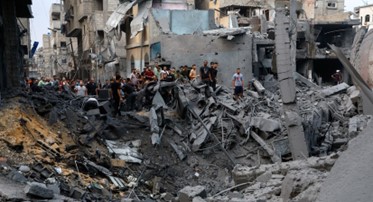
In the cacophony of war, amidst the geopolitical chess moves and strategic considerations, it’s all too easy to lose sight of the human faces caught in its relentless grip. The civilians, the innocents, the ordinary people whose lives are shattered by the violence they never asked for. Yet, as history often reminds us, their stories are the ones that linger long after the guns fall silent. In this exploration, we delve into the forgotten narratives of civilian suffering, from the tragic events of Bloody Sunday to the plight of refugees and aid workers in conflict zones like Palestine.
On January 30, 1972, the world watched in horror as British soldiers opened fire on unarmed civil rights demonstrators in Northern Ireland, in what would become known as Bloody Sunday. Fourteen innocent civilians lost their lives that day, and many more were injured physically and emotionally. Yet, as the decades passed, the memory of Bloody Sunday faded from public consciousness, overshadowed by other conflicts and crises. But for those who lost loved ones, the pain and trauma endure, a reminder of the human cost of political turmoil and sectarian strife.
Fast forward to the present day, and we find a world still grappling with the consequences of war and displacement. In the Middle East, millions of Palestinians endure the daily hardships of life under occupation, their voices drowned out by the rhetoric of politicians and the roar of military jets. Yet amid the rubble and despair, there are those who refuse to be silenced, who risk their lives to provide aid and assistance to those in need. These unsung heroes, whether they be doctors treating the wounded or volunteers distributing food and supplies, embody the spirit of solidarity and compassion that transcends borders and boundaries.

But even as we celebrate their courage and resilience, we must also confront our own complicity in perpetuating the cycles of violence and injustice that afflict so many around the world. For every bomb that falls and every bullet that is fired, there are countless civilians who pay the price, their lives forever altered by forces beyond their control. And yet, all too often, their suffering is relegated to the footnotes of history, overshadowed by the grand narratives of power and politics.
So how do we break free from this cycle of forgetting? How do we ensure that the voices of the marginalized and the oppressed are heard, even in the midst of chaos and conflict? Perhaps the answer lies in bearing witness, in refusing to turn away from the harsh realities of war and its aftermath. It requires us to listen to the stories of those who have been silenced, to amplify their voices and demand justice on their behalf.
Moreover, it necessitates a revaluation of our own priorities and prejudices, a recognition that the struggle for peace and justice is not confined to distant shores but is woven into the fabric of our own communities. Whether it’s challenging the narratives of militarism and nationalism or supporting grassroots movements for social change, each of us has a role to play in building a more just and compassionate world.
The forgotten faces of war remind us of the urgent need to confront our collective amnesia and remember the human cost of conflict. From the victims of Bloody Sunday to the refugees fleeing violence and persecution, their stories demand to be heard and their suffering acknowledged. Only then can we hope to break free from the cycle of violence and build a future were peace and justice reigns supreme.
Share this:


Proud to be kind
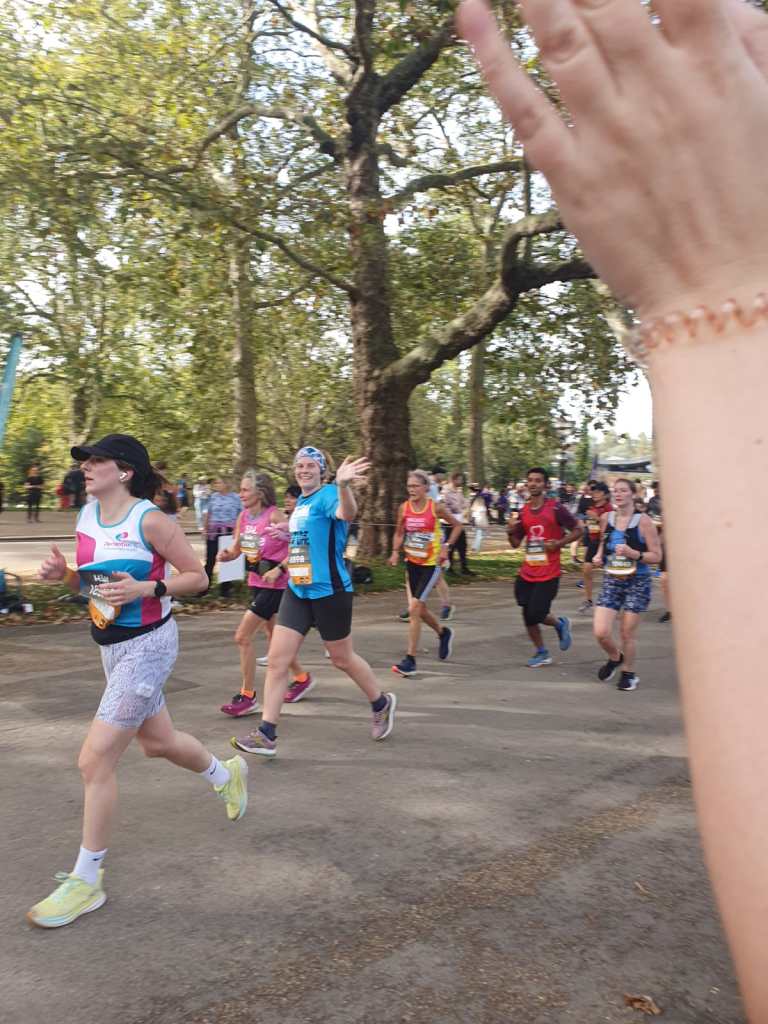
On Sunday 8th October 2023, I ran the Royal Parks Half Marathon to raise money for Freedom From Torture. It took 2hrs 11mins and 56 secs in 24 degree heat; 27 supporters who donated to Freedom From Torture to sponsor me; 5 friends who were with me on the day and kept my dehydrated spirits up; 30+ individual messages of support and encouragement on and before race day; countless well wishes and congratulations after the race; and £705 raised to rehabilitate and treat torture survivors.
The humanity and kindness shown by those who donated, checked in on me, wished me well and trained with me was overwhelming. £705 is an extraordinary amount of money and is going to make a huge difference to people’s lives who have run from torture, harm and unlawful persecution. Freedom From Torture offers, people who have experienced torture, safety and provides them with skills to be able to manage and overcome their trauma. Rooted in the foundations of this charity, and individuals that support it, is the notion of kindness, caring and wanting to live in a better world were our identities as humans are what transcends all conflict, hostility and harm in the world.
Sunday 8th October was an emotional day. Because of the focus on training (actually reaching 13.1miles/21.097km), my reasons for running and raising money for Freedom From Torture became, sort of, an afterthought- something that snuck up on me now and then rather than the focal fuel powering my legs! Even the steady influx of donations didn’t quite have the gravatas to let the reality sink in. That my silly (albeit very long) run is going to be positively impacting people’s lives! People who have experienced grave harms, displacement and social injustice. It wasn’t until the race began, where other charities and organisations were visible, being surrounded by other runners in their tops signifying who they were running for, where the enormity of the event, distance and possible impact this could have, hit home! Tears as the race begins.
Tears also followed after the race. Not to be too boastful but: I ran a half marathon! On a week where my chronic illness had seriously kicked my butt! Flash back to Thursday that week and I was concerned I wouldn’t make it to the race, let alone finish it! Once that wave of overwhelmingness passed, the next wave was not far behind. People I know and care for, and people I do not know, have banded together to support survivors of torture. Their donations will provide therapy, counselling, support for survivors of torture to manage their trauma and to be able to rebuild lives which had been destroyed. The people who donated and supported in all capacities have demonstrated incredible kindness, and the reality of what this money is going towards reduced me to yet another round of tears. But this time, tears of joy. Look what we can achieve! Look what we can do with kindness! Look what we can do when we lean on those around us!
Sunday 8th October 2023 will be a day I shall not forget. It is a day which I am immensely proud of. Not just of my running achievement, but the achievement of all those committed to making a change and providing support to those that need it. Thank you to everyone who has been with me on this journey to raise money to support survivors of torture: it couldn’t have been done without you!
Share this:


When This is Over: Reflections on an Unequal Pandemic
This week a book was released which I both co-edited and contributed to and which has been two years in the making. When This is Over: Reflections on an Unequal Pandemic is a volume combining a range of accounts from artists to poets, practitioners to academics. Our initial aim of the book was borne out of a need for commemoration but we cannot begin to address this without considering inequalities throughout the pandemic.
Each of the four editors had both personal and professional reasons for starting the project. I – like many – was (and still is) deeply affected by the COVID-19 pandemic. When we first went into lockdown, we were shown the data every day, telling us the numbers of people who had the virus and of those who had died with COVID-19. Behind these numbers, I saw each and every person. I thought about their loved ones left behind, how many of them died alone without being able to say goodbye other than through a video screen. I thought about what happened to the bodies afterwards, how death rites would be impacted and how the bereaved would cope without hugs and face to face social support. Then my grandmother died. She had overcome COVID-19 in the way that she was testing negative. But I heard her lungs on the day she died. I know. And so, I became even more consumed with questions of the COVID-19 dead, with/of debates. I was angry at the narratives surrounding the disposability of people’s lives, at people telling me ‘she had a good innings’. It was personal now.
I now understood the impact of not being able to hug my grandpa at my grandmother’s funeral, and how ‘normal’ cultural practices surrounding death were disturbed. My grandmother loved singing in choirs and one of the traumatic parts of our bereavement was not being able to sing at her funeral as she would have wanted and how we wanted to remember her. Lucy Easthope, a disaster planner and one of my co-authors speaks of her frustrations in this regard:
“we’ve done something incredibly traumatising to the families that is potentially bigger than the bereavement itself. In any disaster you should still allow people to see the dead. It is a gross inhumanity of bad planning that people couldn’t’t visit the sick, view the deceased’s bodies, or attend funerals. Had we had a more liberal PPE stockpile we could have done this. PPE is about accessing your loved ones and dead ones, it is not just about medical professionals.”
The book is divided into five parts, each addressing a different theme all of which I argue are relevant to criminologists and each part including personal, professional, and artistic reflections of the themes. Part 1 considered racialised, classed, and gendered identities which impacted on inequality throughout the pandemic, asking if we really are in this together? In this section former children’s laureate Michael Rosen draws from his experience of having COVID-19 and being hospitalised in intensive care for 48 days. He writes about disposability and eugenics-style narratives of herd immunity, highlighting the contrast between such discourse and the way he was treated in the NHS: with great care and like any other patient.
The second part of the book considers how already existing inequalities have been intensified throughout the pandemic in policing, law and immigration. Our very own @paulsquaredd contributed a chapter on the policing of protests during the pandemic, drawing on race in the Black Lives Matter protests and gender in relation to Sarah Everard. As my colleagues and students might expect, I wrote about the treatment of asylum seekers during the initial lockdown periods with a focus on the shift from secure and safe self-contained housing to accommodating people seeking safety in hotels.
Part three considers what happens to the dead in a pandemic and draws heavily on the experiences of crematoria and funerary workers and how they cared for the dead in such difficult circumstances. This part of the book sheds light on some of the forgotten essential workers during the pandemic. During lockdown, we clapped for NHS workers, empathised with supermarket workers and applauded other visible workers but there were many less visible people doing valuable unseen work such as caring for the dead. When it comes to death society often thinks of those who cared for them when they were alive and the bereaved who were left to the exclusion of those who look after the body. The section provides some insight into these experiences.
Moving through the journey of life and death in a pandemic, the fourth section focusses on questions of commemoration, a process which is both personal and political. At the heart of commemorating the COVID-19 dead in the UK is the National COVID Memorial Wall, situated facing parliament and sat below St Thomas’ hospital. In a poignant and political physical space, the unofficial wall cared for by bereaved family members such as Fran Hall recognises and remembers the COVID dead. If you haven’t visited the wall yet, there will be a candlelit vigil walk next Wednesday, 29th March at 7pm and those readers who live further afield can digitally walk the wall here, listening to the stories of bereaved family members as you navigate the 150,837 painted hearts.

The final part of the book both reflects on the mistakes made and looks forward to what comes next. Can we do better in the next pandemic? Emergency planner Matt Hogan presents a critical view on the handling of the pandemic, returning to the refrain, ‘emergency planning is dead. Long live emergency planning’. Lucy Easthope is equally critical, developing what she has discussed in her book When the Dust Settles to consider how and what lessons we can learn from the management of the pandemic. Lucy calls out for activism, concluding with calls to ‘Give them hell’ and ‘to shout a little louder’.
Concluding in his afterword, Gary Younge suggests this is ‘teachable moment’, but will we learn?
When This is Over: Reflections on an Unequal Pandemic is published by Policy Press, an imprint of Bristol University Press. The book can be purchased directly from the publisher who offer a 25% discount when subscribing. It can also be purchased from all good book shops and Amazon.
Share this:


Food Banks: The Deserving vs Undeserving

A term that has been grating on me recently is ‘hard work’. I have had a recent bout of watching lots of television. From my observations it appears that more commentators within the media have grasped the idea that the continued need for Food Banks in the United Kingdom is awful. Yet commentators still continue with the same old deserving/undeserving tripe which has existed for centuries (which CRI2002 students are well-aware of). That being, that we should be concerned about food banks… ‘because now even hard-working people are using them!’, aka those within formal (preferably full-time) employment.
What is it that is not being said by such a statement? That being unable to survive off benefits is perfectly fine for people who are unemployed as they do not deserve to eat? If that is the case perhaps a reconsideration of the life experiences of many unemployed people is needed.
To provide some examples, a person might claim unemployment benefits because they are feeling mentally unwell or harmful to themselves but a variety of concerns have prevented them from seeking additional support and claiming sickness benefits, in this situation working hard on survival might be prioritised over formal employment. Another person might sacrifice their work life to work hard to unofficially care for relatives who have slipped through cracks and are unknown to social services, whilst not reaching out for support due to fear/a lack of trust social services – they have good reasons to be concerned. Some people might have dropped out of formal employment due to experiencing a traumatic life event(/s) which means that they now need to work hard on their own well-being. Or, shock-horror, people may be claiming unemployment benefits because they are working hard post-pandemic to find a job which pays enough for them to survive.

Let’s not forget that many of those who access Food Banks are on sickness benefits because they cannot work due to experiencing a physical and/or mental health disability. The underserving/deserving divide appears to be further blurred these days as those who claim sickness benefits are frequently accused of being benefits cheats and therefore undeserving of benefits and Food Bank usage. Even so, the acknowledgement of disability and Food Bank usage within the media is rare.
Is it really ok to perceive that the quality of a person’s life and deserved access to necessities should depend on their formal employment status?
There is twisted logic in the recent conservative government discourse about hard work. There is the claim that if we all work hard we will reap the rewards, yet in the same breath ‘deserving hard workers’ are living from payslip to payslip due to the cost of living crisis, poor quality pay and employment. Hence the need to use Food Banks.
The conservatives hard working mantra that all people can easily gain employment is certainly a prejudiced assumption. With oppressive, profit seeking, exploitative and poor quality employment there is little room allowed for humans to deal with their personal, family life pains and struggles which makes job retention very difficult. Perhaps the media commentators need a re-phrase: It is awful that any person needs to use a Food Bank!
Share this:


Stop strip searching children!

The Metropolitan Police are under constant criticism, more than any other police force, for at least as long as I have been a criminologist. Their latest scandal began with the case of Child Q, a 15 year old girl who was strip searched in school while she was menstruating after being suspected of carrying cannabis. No drugs were found and Child Q was extremely traumatised, resulting in self-harm and a suicide attempt. Tré Ventour recently wrote a blog about Child Q, race and policing in education here but following this week’s Children’s Commissioner report, there’s so much more to discuss.
The report focussed on the Metropolitan Police who strip searched 650 children in 2 years, many (23%) of whom were searched without the presence of an appropriate adult and as we criminologists would expect, the children were disproportionately Black boys. These findings were not surprising or shocking to me, and I also know that the Metropolitan Police force are not just one bad apple in this respect. The brutal search of Child Q occurred in 2020 but incidences such as these have been happening for years.
A teenage boy aged 17 was subject to an intimate search in 2019 where the police breached a number of clauses of PACE, ultimately resulting in the boy receiving an apology and £10,000 damages for the distress caused by the unlawful actions. These actions started with basic information being withheld such as the police officer failing to identify himself and informing the boy of his rights and ended with the strip search being undertaken without an appropriate adult present, in the presence of multiple officers, without authorisation from a senior officer and with no justification for the search recorded in the officer’s pocket book. Now I understand that things may be forgotten in the moment when a police officer is dealing with a suspect but the accumulation of breaches indicates a more serious problem and a disregard to the rights of suspects in general but children more specifically.
These two cases are the cases of children who were suspected of carrying cannabis, an offence likely to be dealt with via a warning or on the spot fine. Hardly the crime of the century warranting the traumatising strip searching of children. And besides, we criminologists know that the war on drugs is a failed project. Is it about time we submit and decriminalise cannabis, save police time and suspect trauma?
What happens next is a slightly different story. Strip searching in custody is different because as well as searching for contraband, it can also be justified as a protective measure where there is a risk of self-harm or suicide. Strip searching of children by the police has risen in a climate of fear surrounding deaths in custody, and it has been reported that there could be an overuse of the practice as a result of this. When I read the report, I recalled the many conversations I have had over the years with my friend Rosie Flatman who is a practitioner who specialises in working with victims of Child Sexual Exploitation (CSE) and other forms of abuse. Rosie has worked with many girls who have been subject to strip searches when in custody. She told me how girls would often perceive the search as punishment for being what the police believed was disruptive. That is not to say that the police were using strip searches as punishment, but that is how girls would experience it.
Girls in custody are often particularly vulnerable. Like Rosie’s clients, many are victims and have a number of compounding vulnerabilities such as mental ill health or they may be looked after children. Perhaps then, we need to look at alternatives to strip searching but also custody for children, particularly for those who have suffered trauma. Rosie, who has delivered training to various agencies, suggests only undertaking strip searches where absolutely necessary and even then, using a trauma informed approach. She argues that even the way the procedure and justification is explained can make a big difference to the amount of harm caused to vulnerable children in police custody.

 Thoughts from the criminology team