
Home » Support
Category Archives: Support

To be a keeper of these stories. A collector of trust.
I think this will be somewhat of a poem; I guess.

About all the tears I’ve held space for lately.

There has been quite a lot. Is it any surprise?

Big ones, small ones. Happy and sad ones. Not really sure why ones.

‘cept it’s the happy ones I want to share today.

They’ve got me thinking. Reflecting.

A proper headshake, actually.
It’s not the best space for sensitive conversations but it’s what we’ve got.

I wait and I wait. Sometimes a flurry. Sometimes not.

The enthusiasm is sometimes hard to muster.

If I’m really being honest.

But wait I do. And wait I shall.

Oftentimes it’s a woman, who needs another.

It’s a gift I’ve got, I suppose.

“I’ve never seen her sit and talk with someone like this”

An aura, someone once said.

Lures people in and their story they are compelled to tell.

I’ve tried to teach it. We give and we take from every interaction.

You just have to be aware enough to see it.

There’s been some big ones just lately.

And what a pleasure it’s been.
She’s a ‘do it all’ Black mother.

A woman of incredible resilience.

We’ve been speaking for months now. Bit of this. Bit of that.

A call from the school one day, her son has self-harmed.

What do I say, she asks.

Everything is money. Money I don’t have.

She checks her sugars. Low again.

I can’t afford this canteen food.

Have to make a poster. Sustainable practice or something like that.

All this technology she says, I’m too slow.

I do what I can. Build her up. See her again.

I do what I can. Build her up. See her again.

There’s a little bit more brightness every time I do.

It’s Friday before last, how was your session I ask.

I was in a room with women doctors she says.

Little old me. I could never. Right at the start…and I don’t think I’m going to make it.

Can you believe it? she says. Women…with PhDs. Not me.

“Back home women get no such thing.” No no. Daren’t even dream.

Days roll on until a week's gone by.

She prances across the library. Beaming.

She’s come to share her joy with me.

A 60 she says. A 60!

My boys are so proud of me. Maybe I’ll make it after all.
Another. Working, studying, working, studying.

Mum needs the money. Physio for the cancer in her bones, she says.

She’s avoiding my questions about rest and nourishment.

Surviving on Mum’s joy receiving another ‘Look what I’ve done.’

This is just a flying visit though. Easy fix, I thought.

We’ve been here a while. Lingering.

I think I’ve said something wrong. She’s welling up again.

No. I’m so grateful to be here she says...with all you kind people.

I ask what she needs. Its courage, she says.

I write it out. A post-it note. Just the trick.

What would my most courageous self do?

Stick it to the fridge I say.

Mine is bravery. I share.

An inspiration! she cries. An inspiration? I cry.

I’m going to make it across that stage one day, she says. Yes, I am.
Her story. Quite overwhelming actually.

Though not easily shaken. I’m taken aback.

Intimate partner violence a divorce did not remedy.

A home of her own, apparently not to be.

In the hospital every other week.

The victim of a scam I realise as we speak.

Held up at every angle.

Yet she shows up. She shows up. She shows up.

It’s what we do, isn’t it?

It’s too much. Quitting. she says. Though I can’t say I believe it.

We’re here for 90 minutes. It’s all out on the table.

I hardly say a word really. I’m all ears, kind eyes and the occasional shoulder pat.

A breakthrough.

Look at me here laughing with you now.

What a relief. To be heard.  Maybe I’ll be able to sleep tonight.
Its all stuck with me, a sort of niggle.

I thought I knew what I was doing. I thought I was grateful for it all.

But to be a keeper of these stories. A collector of trust. I realise I was nothing of the sort.

So, on my own journey, I start anew, and that’s thanks to all of you.
This healing thing. Tricky business, really.
Reader, if you find yourself saying I HAVE TO this week.

That meeting, That essay. That commute.

Consider I GET TO

Because not everyone does and some that do give more than we can imagine, even just to be in the room with us.
Share this:


The Journey of a University of Northampton Criminology Graduate

On this Jubilee year, I ponder and reflect on my 3 years as a joint honours Criminology student, and where my life journey has taken me since
In 2012-2015, I did joint honours Criminology and Education studies, and later did the LLM in International Criminal Law and Security at from 2015-2017.
My journey as a Criminology Student alumni has lead me to all sorts of unique pathways.
Having a background in notetaking and student support at different universities, I worked for 6 1/2 years as a Co-op Member Pioneer (8th January 2018-10th August 2024), where, in the community I served, I supported the local police with crime related issues, and mediated between them and the public on crime issues that mattered to them and helped to support the police, as blogged about here ‘As a Member Pioneer Supporting the Police’ . Whilst this role was about connecting communities, supporting charities, causes and local people, I saw the opportunity to help the police and the community on crime related issues.
From December 2019-June 2020, I worked for 6 months in an addiction recovery unit. Here, I learned about addiction on a more deeper and personal level. I was one of 2 members of staff who were not addicts, and so the experience was eye-opening! The staff who had ‘come clean’ from their addictions would talk about their lives before becoming clean, and how they would resort to crime to fund their addictions. It was a vicious cycle for them as they were fighting traumatic battles which lead them down the route of addiction, and could not find their way out.
I was trained on taking phone calls, and spoke with so many devasted individuals who had lost their sons, daughters, husbands and wives to addiction, and were desperate to get them the help they needed. Seeing families torn apart by addiction, and meeting with new clients who had come in to get help and learning about their stories revealed deep sufferings and traumas, some of which were life-changing events, and harrowing cries for help.
I audited medication on a daily basis, worked with the Addiction specialist doctor to make sure all new clients had been seen to, and prepared folders for each client which the support team used in their care plans. I would also create certificates for all clients who had completed their time at the unit, and celebrated in their success.
When COVID struck, I was put on furlough, and later made redundant – such is life XD – Onto my next adventure!
Where am I now?
Fast forward to March 2021; after completing a lengthy job application and job interview, I landed myself a job in the Civil Service working for the Ministry of Justice! I do casework, work with the Judges on progressing cases, I clerked a few hearings previously too. Everyday is different, and every case I work on is different.
I process new claims and with the support of the Legal Officers, issue directions to the parties if any other information is required. I oversee the progress of cases and ensure all correspondence is up to date, all orders have been issued, and the case is ready to be heard.
Each day is different, and I love everything that I do working for the justice system.
Share this:


Why I refuse to join the hate train

In a world drowning in outrage, where every headline screams division and every scroll brings fresh fury, it’s easy to forget something fundamental: there’s still beauty everywhere.
Turn on the news and you’re bombarded with it all—bans, blame, and bitter arguments about who’s ruining what. Immigrants, the wealthy, the homeless, the young, the benefits claimants—everyone’s apparently the problem. It’s a relentless tide of negativity and moaning that can sweep you under if you’re not careful.
But what if we chose differently?
Here are a few things I noticed in the last couple of weeks:
I came across a book that someone left on a park bench with a note: “Free to a good home.” On another late night, a man saw a mother struggling—baby in one arm, shopping bags in the other—and didn’t hesitate to help her to her car. And if you’re thinking “why didn’t she use a trolley?” then you’re part of the problem I’m talking about, because there were no trolleys in that shop.
In another moment, a homeless person was offering water to a runner who’d collapsed in the heat, providing comfort when it mattered most.
Elsewhere, a teacher stayed late for his “troubled” student preparing for exams. When I asked why, he said: “Everyone calls him destructive. I refuse to lose hope. He’s just a slower learner, and I’ll support him as long as it takes.”
In another event, teenagers on bikes formed a protective barrier around an elderly woman crossing the road.
Small acts. Quiet kindness. The stuff that never makes headlines, doesn't trend on social media, and doesn't fuel debates.
The truth is, these things happen everywhere, all the time. While we’re busy arguing about who’s destroying society, society is quietly rebuilding itself through a million small kindnesses. The coffee lady in the Learning Hub who remembers your order. The elderly doorman at Milton Keyens Costco who draws smiley faces on reciepts and hands them to children on their way out, just to see them smile. The neighbour who randomly helps pick up litter in the neighbourhood with her girls every Sunday afternoon. The friend who texts to check in with the simple words “how are you?”
The truth is simple: for every voice spreading hate, there are countless others spreading hope. For every person tearing down, there are builders, healers, and helpers working in the quiet spaces between the noise.
Yes, problems exist. Yes, challenges are real. But so is the grandfather teaching his grandson about dignity and respect. So is the aunty teaching her niece how to bake. So is the library volunteer reading to the shelter dogs. So is the community garden where strangers become neighbours.
Today, I’m choosing to notice the nice. Not because I’m naive, but because I refuse to let the moaning and the loudest voices drown out the most important ones. The ones that remind us we’re more alike than different. The ones that choose connection over division.
Your turn: What nice thing will you notice today? Free your mind, pay attention—you'll see one.
Because in a sea of anger, being gentle isn’t weak or naive—it’s revolutionary.
Share this:


Embracing Technology in Education: Prof. Ejikeme’s Enduring Influence
Sallek Yaks Musa, PhD, FHEA
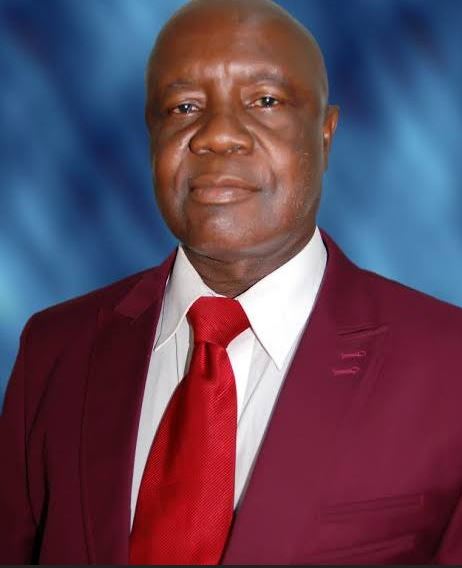
When I heard about the sudden demise of one of my professors, I was once again reminded of the briefness and vanity of life —a topic the professor would often highlight during his lectures. Last Saturday, Prof. Gray Goziem Ejikeme was laid to rest amidst tributes, sadness, and gratitude for his life and impact. He was not only an academic and scholar but also a father and leader whose work profoundly influenced many.
I have read numerous tributes to Prof. Ejikeme, each recognizing his passion, dedication, and relentless pursuit of excellence, exemplified by his progression in academia. From lecturer to numerous administrative roles, including Head of Department, Faculty Dean, Deputy Vice Chancellor, and Acting Vice Chancellor, his career was marked by significant achievements. This blog is a personal reflection on Prof. Ejikeme’s life and my encounters with him, first as his student and later as an academic colleague when I joined the University of Jos as a lecturer.
Across social media, in our graduating class group, and on other platforms, I have seen many tributes recognizing Prof. Ejikeme as a professional lecturer who motivated and encouraged students. During my undergraduate studies, in a context where students had limited voice compared to the ‘West,’ I once received a ‘D’ grade in a social psychology module led by Prof. Dissatisfied, I mustered the courage to meet him and discuss my case. The complaint was treated fairly, and the error rectified, reflecting his willingness to support students even when it wasn’t the norm. Although the grade didn’t change to what I initially hoped for, it improved significantly, teaching me the importance of listening to and supporting learners.
Prof. Ejikeme’s classes were always engaging and encouraging. His feedback and responses to students were exemplary, a sentiment echoed in numerous tributes from his students. One tribute by Salamat Abu stood out to me: “Rest well, Sir. My supervisor extraordinaire. His comment on my first draft of chapter one boosts my morale whenever I feel inadequate.”
My interaction with Prof. Ejikeme significantly shaped my teaching philosophy to be student-centered and supportive. Reflecting on his demise, I reaffirmed my commitment to being the kind of lecturer and supervisor who is approachable and supportive, both within and beyond the classroom and university environment.
Prof. Ejikeme made teaching enjoyable and was never shy about embracing technology in learning. At a time when smartphones were becoming more prevalent, he encouraged students to invest in laptops and the internet for educational purposes. Unlike other lecturers who found laptop use during lectures distracting, he actively promoted it, believing in its potential to enhance learning. His forward-thinking approach greatly benefited me and many others.
Building on Prof. Ejikeme’s vision, today’s educators can leverage advancements in technology, particularly Artificial Intelligence (AI), to further enhance educational experiences. AI can personalize learning by adapting to each student’s pace and style, providing tailored feedback and resources. It can also automate administrative tasks, allowing educators to focus more on teaching and student interaction. For instance, AI-driven tools can analyse student performance data to identify learning gaps, recommend personalized learning paths, and predict future performance, helping educators intervene proactively.
Moreover, AI can support academics in research by automating data analysis, generating insights from large datasets, and even assisting in literature reviews by quickly identifying relevant papers. By embracing AI, academics can not only improve their teaching practices but also enhance their research capabilities, ultimately contributing to a more efficient and effective educational environment.
Prof. Ejikeme’s willingness to embrace new technologies was ahead of his time, and it set a precedent for leveraging innovative tools to support and improve learning outcomes. His legacy continues as we incorporate AI and other advanced technologies into education, following his example of using technology to create a more engaging and supportive learning experience.
Over the past six months, I have dedicated significant time to reflecting on my teaching practices, positionality, and the influence of my role as an academic on learners. Prof. Ejikeme introduced me to several behavioural theories in social psychology, including role theory. I find role theory particularly crucial in developing into a supportive academic. To succeed, one must balance and ensure compatible role performance. For me, the golden rule is to ensure that our personal skills, privileges, dispositions, experiences from previous roles, motivations, and external factors do not undermine or negatively impact our role or overshadow our decisions.
So long, Professor GG Ejikeme. Your legacy lives on in the countless lives you touched.
Disclaimer: AI may have been used in this blog.
Share this:


Aspiration and Independence: A tale of Lego, Learning and Universities
A couple of year’s ago to mark the completion of my PhD, my husband presented me with a Lego kit, a Lego typewriter to be precise! This was an incredibly thoughtful gift, a nod to the start of my working life where I had used a very similar typewriter daily at the Magistrates’ Court. It was also recognition of the years I had spent writing the thesis. Simultaneously, it was also rather a surprising kit, my only other foray into Lego as an adult was building a Lego Yellow Submarine some years before. That kit had taken me considerable hours to build, which I had enjoyed, in part because of my love for the Beatles. However, I digress….
I embarked upon building the typewriter, which looked rather big and scary in its box, and even more daunting when I saw the huge instruction manual and lots and lots of bags of pieces. Nevertheless, how difficult can it be to build a Lego kit? I started with confidence, working my way through the step-by-step instructions, occasionally accidentally missing a step and having to go back through the booklet. However, about halfway through, I got completely stuck, I couldn’t make sense of the diagram and turned to google. Here I found lots of articles and videos, each of which seemed to stress that this was an extremely challenging kit, one of the most complex produced to date and not for the faint hearted. Regardless, I found some information about my particular hurdle and carried on working my way through the steps.
As time went on, I found the idea that what I was doing was difficult, playing across my mind. Increasingly, as I found a part challenging, rather than working my way backwards and forwards through the instructions, trying pieces one way and another, in trial and error, I turned again and again to google. Of course, each time I did this, as well as the answer, I was confronted by the continual narrative of challenge and difficulty. As I went on, I felt as if I could not complete this kit. Then disaster struck! As I fought to put in a moving part, a part of the model collapsed, I obviously hadn’t pressed the pieces in hard enough. I found myself facing what had been almost complete model (only one bag of pieces to go) but was now a complete mess. Now, remember this is just a model, not a matter of life and death, but I felt this mistake deeply. All of the commentators, self-proclaimed Lego “experts” were right, this was not a kit for me, a mere amateur.
This anecdote, really ends there, the kit is still in pieces in its box. I haven’t been able to bring myself to dismantle what’s left and start again. The fact that I haven’t completed the kit, plays on my mind. I don’t give up on anything (my work, education and family history attest to this), but here I am defeated by a toy![i] This “failure” got me thinking about learning and teaching and the role self-belief (or the lack of it) plays in the academic journey. This chimes with recent thoughts around independence and aspiration when it comes to excelling in study.
First a proviso, this is not about my institution, but seemingly every educational establishment and more broadly society. Everywhere I look it seems that young people are being told that they are incapable, that they need support in all aspects of their lives, including studying. That university study is incredibly difficult and probably not something that can done without enormous support. Sometimes this is an implicit message absorbed on daily basis, other times more explicit, posters, advertisements advising how to defer assessments, how to get in touch with support services, where to go for financial guidance, people you can talk to and so on. Now all of these are really important, but they are not the primary purpose of a university. That purpose is to provide a space for education, for thinking, for reading, for intellectual discourse, a place full of challenging ideas, allowing individuals to develop themselves in a variety of different and sometimes, surprising ways. It is also a place to make mistakes on that learning journey. After all, if we knew everything before we started studying for a degree, there would be little point in studying.
Nevertheless, in the modern university, there is little tangible evidence that this is what a university is for. To quote Nike (1988) where is the “Just do it”. Where does it remind us, that humans are powerful, resourceful, adaptable, that we can learn anything we put our minds to, we can succeed? Where are the messages designed to build self-confidence, self-esteem, and aspiration. Yes, there is help available, don’t be afraid to ask for support! There is no stigma, you are paying for every part of your university experience. Yes, studying is challenging, but so are lots of things in life; learning to drive, holding down a job, caring responsibilities, many of which we rely upon others for support.
Obviously, there is a big difference between Lego and an academic qualification, nevertheless they both (comparatively) require a big financial outlay, levels of dedication, concentration, aspiration and a desire for successful completion. I have three degrees, each has cost me financially, temporally and emotionally. This studying has given me the lowest of lows and the highest of highs along the way, but I have grown in ways I could never have imagined at the beginning of my studies. Along the way I have utilised support from academics and university professional services, for which I am very thankful, but the hard work is mine. Even better, those three pieces of paper belong to me and me alone, they are proof of my stamina, my perseverance and my ability to bounce back again and again. Nobody, can take those away from me!
It is for all these reasons that I will complete that Lego set! But I also recognise that I may need some expert help to build up my confidence again. This time I won’t call upon academics for support, but another expert, my 11 year old grandson, who has proved time and again, that no Lego kit will defeat him! With perseverance and an expert who will gently guide and enable me, that Lego kit will be complete in no time. Watch this space for the finished article!
EDIT Sunday 18 February: Mission Accomplished

[i] Apologies to all Lego aficionados, I fully recognise that Lego is so much more than a toy.
Share this:


Exams and Chronic Illness.

As we approach the exam period, I’ve been anxiously thinking about what exams are like for those, like me, with chronic illnesses.
You work the whole semester through, battling your mind and body, doing your best, doing it from your bed, through tears, winning some and losing some, and the apex of what you have managed to achieve boils down to one single day.
There is absolutely no guarantee that single day is going to be a good one.
Perhaps you have a chronic mental health condition, which is only exacerbated by the pressures of an exam. Maybe you had another panic attack on the way in and you can’t take your medication and be coherent enough to sit or be safe to drive home again afterward. It’s the first day of your period and you’ve got endometriosis so just standing to shower is agony. Maybe you have IBS and you’ve stumbled on yet another trigger food with terrible timing, maybe it’s chronic fatigue, the throes of menopause, PCOS, Epilepsy, Crohn’s, Cerebral Palsy, Asthma, Diabetes; a non-exhaustive list of course. Whatever it is, it isn’t going anywhere fast, and you know it, you spend your days waiting and worrying for the next flare up and hoping it isn’t on the morning of that exam.
In my second year, I sat a Time Constrained Assessment the day after being discharged from psychiatric hospital. I had to leave halfway through my cognitive psychology exam because symptoms of my illnesses were too much; forgoing the chance to show what I’d learned and worked on and earn the credit for it.
Of course, as I was, you will be advised to use Mitigating Circumstances, (which is totally ok if that’s what you feel is best) but with chronic illness you know that your symptoms aren’t going to be gone in a week like a bug you picked up, it will persist and the next time might be just as bad or even worse, and you don’t get another go. So inevitably, when you do sit down to take the exam, on a rough day, you sit knowing the whole way through that this is not your best work, this does not reflect the insurmountable effort you’ve put in the rest of the year, but right now it is all that you have.
I don’t know that I have much more of a point other than exams are hard for everyone, and that maybe their application needs a rethink, but it’s that bit more so for those with chronic conditions.
In any case, if you see yourself in this situation, remember that all you can do is what you can, with what you have at the time, or if you know of others, know that they are giving their all.
Take care.
Share this:


2024: the year for community and kindness?



The year 2023 was full of pain, loss, suffering, hatred and harm. When looking locally, homelessness and poverty remain very much part of the social fabric in England and Wales, when looking globally, genocide, terror attacks and dictatorships are evident. Politics appear to have lost what little, if any, composure and respect it had: and all in all, the year leaves a somewhat bitter taste in the mouth.
Nevertheless, 2023 was also full of joy, happiness, hope and love. New lives have been welcomed into the world, achievements made, milestones met, communities standing together to march for a ceasefire and to protest against genocide, war, animal rights, global warming and violence against women to name but a few. It is this collective identity I hope punches its way into 2024, because I fear as time moves forward this strength in community, this sense of belonging, appears to be slowly peeling away.
When I recollect my grandparents and parents talking about ‘back in the day’ what stands out most to me is the community identity: the banding together during hard times. The taking an interest, providing a shoulder should it be required. Today, and even if I think back critically over the pandemic, the narrative is very singular: you must stay inside. You must be accountable, you must be responsible, you must get by and manage. There is no narrative of leaning on your neighbours, leaning on your community to the extent that, I’m under the impression, existed before. We have seen and felt this shift very much so within the sphere of criminal justice: it is the individual’s responsibility for their actions, their circumstances and their ‘lot in life’. And the Criminologists amongst you will be uttering expletives at this point. I think what I am attempting to get at, is that for 2024 I would like to see a shared identity as humankind come front and central. For inclusivity, kindness and hope to take flight and not because it benefits us as singular entities, but because it fosters our shared sense of, and commitment to, community.
But ‘community’ exists in so much more than just actions, it is also about our thoughts and beliefs. My worry: whilst kindness and support exist in the world, is that these features only exist if it does not disadvantage (or be perceived to disadvantage) the individual. An example: a person asks me for a sanitary product, and having many of them on me the vast majority of the time, means I am able and happy to accommodate. But what if I only had one left and the likelihood of me needing the last one is pretty high? Do I put myself at a later disadvantage for this person? This person is a stranger: for a friend I wouldn’t even think, I would give it to them. I know I would, and have given out my last sanitary product to strangers who have asked on a number of occasions. And if everyone did this, then once I need a product I can have faith that someone else will be able to support me when required. The issue, in this convoluted way of getting there, is for most of us (including me as evidenced) there is an initial reaction to centralise ‘us’ as an individual rather than focus on the community aspect of it. How will, or even could, this impact me?
Now, I appreciate this is overly generalised, and for those that foster community to all (not just those in their community and are generally very selfless) I apologise. But in 2024, I would like to see people, myself included, act and believe in this sense of community rather than the individualised self. I want people to belong, to support and to generally be kind and not through thinking about how it impacts them to do so. We do not have to be friends with everyone, but just a general level of kindness, understanding and a shared want for a better, inclusive, and safe future would be great!
So Happy New Year to everyone! I hope our 2024 is full of peace, prosperity, community, safety and kindness!

Share this:


Proud to be kind
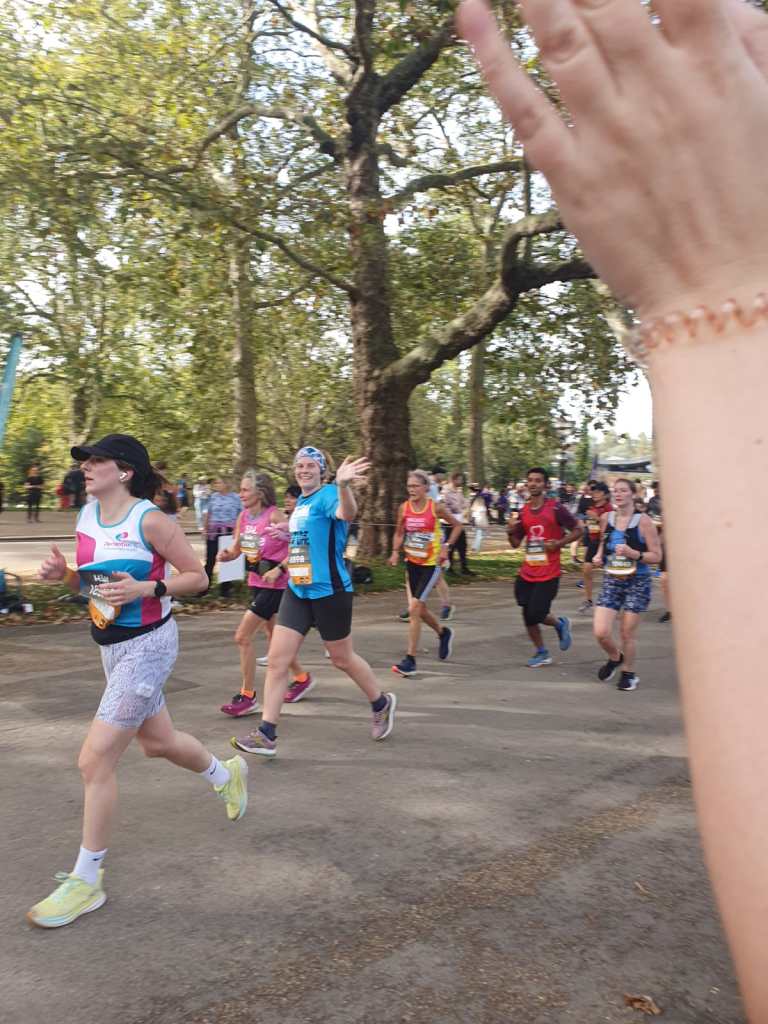
On Sunday 8th October 2023, I ran the Royal Parks Half Marathon to raise money for Freedom From Torture. It took 2hrs 11mins and 56 secs in 24 degree heat; 27 supporters who donated to Freedom From Torture to sponsor me; 5 friends who were with me on the day and kept my dehydrated spirits up; 30+ individual messages of support and encouragement on and before race day; countless well wishes and congratulations after the race; and £705 raised to rehabilitate and treat torture survivors.
The humanity and kindness shown by those who donated, checked in on me, wished me well and trained with me was overwhelming. £705 is an extraordinary amount of money and is going to make a huge difference to people’s lives who have run from torture, harm and unlawful persecution. Freedom From Torture offers, people who have experienced torture, safety and provides them with skills to be able to manage and overcome their trauma. Rooted in the foundations of this charity, and individuals that support it, is the notion of kindness, caring and wanting to live in a better world were our identities as humans are what transcends all conflict, hostility and harm in the world.
Sunday 8th October was an emotional day. Because of the focus on training (actually reaching 13.1miles/21.097km), my reasons for running and raising money for Freedom From Torture became, sort of, an afterthought- something that snuck up on me now and then rather than the focal fuel powering my legs! Even the steady influx of donations didn’t quite have the gravatas to let the reality sink in. That my silly (albeit very long) run is going to be positively impacting people’s lives! People who have experienced grave harms, displacement and social injustice. It wasn’t until the race began, where other charities and organisations were visible, being surrounded by other runners in their tops signifying who they were running for, where the enormity of the event, distance and possible impact this could have, hit home! Tears as the race begins.
Tears also followed after the race. Not to be too boastful but: I ran a half marathon! On a week where my chronic illness had seriously kicked my butt! Flash back to Thursday that week and I was concerned I wouldn’t make it to the race, let alone finish it! Once that wave of overwhelmingness passed, the next wave was not far behind. People I know and care for, and people I do not know, have banded together to support survivors of torture. Their donations will provide therapy, counselling, support for survivors of torture to manage their trauma and to be able to rebuild lives which had been destroyed. The people who donated and supported in all capacities have demonstrated incredible kindness, and the reality of what this money is going towards reduced me to yet another round of tears. But this time, tears of joy. Look what we can achieve! Look what we can do with kindness! Look what we can do when we lean on those around us!
Sunday 8th October 2023 will be a day I shall not forget. It is a day which I am immensely proud of. Not just of my running achievement, but the achievement of all those committed to making a change and providing support to those that need it. Thank you to everyone who has been with me on this journey to raise money to support survivors of torture: it couldn’t have been done without you!
Share this:


Mental Health Awareness Week…Should Be Every Week

When I began my A-Levels, I was an overly confident, happy female, looking forward to studying my chosen topics. By the end, I was holding on by a thread after many chats of dropping out, praying to pass, and wanted to stay inside and never go out again. I went from loving my friends, to finding it a chore to be with them. I would come home, lock myself in my room, and not come out unless I had to. Why was I feeling like this? I always felt I had been fortunate with a privileged upbringing, my family are financially stable, we live in a nice area, I have great friends, so what reason did I have to feel so bad about life?
This is mental health. It does not matter who you are or where you come from; it can affect anyone. After months of brushing it off, it was a shock to the system when I was told that I suffered from Depression and a GAD. But once you acknowledge that there is a problem, you are already one step ahead of the game. However, it is also important to talk to those around you too. Not one of my friends or family knew what I was going through, how could the confident happy girl, be anxious and depressed? It did not match. I could not tell them I was struggling; I would look like a failure. Why did I think like this?
Mental health, although getting better, has become a taboo subject, due to stereotypes being attached to those who suffer. You become dangerous, socially unacceptable, shameful, embarrassing. However, mental health does not come with a label attached; it does not look the same. Your favourite lecturer who is always happy may have PTSD, that chatty boy in class who you envy may be depressed, and that quiet ‘weird’ girl may suffer from social anxiety; we are all too quick to conclude these assumptions about people.
What is not spoken about, is how much studying in university can affect your mental health. The stress about assessments and exams, the anxiety about being behind or waiting for a grade to be released, or the worry about speaking up in class in case someone disagrees with your point. It can all get too much. This is something which is hidden from potential university students.
After coming off of anti-depressants, gaining a love for exercise, and meeting the most supportive friends, I can finally say, I am good. I have my wobbles, like we all do, but I am so proud of the progress I have made. If you are suffering from mental health, you are not alone. The World Health Organization recognises that 1 in every 8 people in the world live with a mental disorder. Let’s start talking about our experiences, normalise mental health chats and empower those who feel hesitant to speak out. From experience, I can promise you it will be worth it.
Share this:


There’s no I in teamwork but maybe there’s space for me and you?


Teamwork is often promoted as a valuable transferable skill both by universities and employers. However, for many the sheer mention of this type of group activity is enough to fill them with dread. This is a shame, and I want to use this blog to explain why.
I’m definitely not one for sports, but even I cannot avoid the discourse around women’s football and Euro 2022. Much has been written about the talents and skill of England’s Lionesses, of which I know very little. Equally there has been disquiet around the overwhelming whiteness of the team, an inequality I am very familiar with throughout my studies of crime, criminality and criminal justice. Nevertheless this blog isn’t about inclusion and exclusion, but about teamwork. Football, like many activities is not a solo enterprise but a group activity. All members need to be able to rely upon their team mates for support, encouragement and ultimately success. If a player doesn’t turn up for training, doesn’t engage in sharing space, passing the ball and so on, the team will fail in their endeavours. Essentially, the team must be on the same page and be willing to sacrifice individuality (at times) for the good of the team. But football isn’t the only activity where teamwork is crucial.
One only has to imagine the police, another overwhelmingly white institution, but with a very different mandate and different measures of success. Here a lack of support from team mates could be a matter of life and death. Even if not so severe, the inability to work closely with other officers in a team can make professional and person life extraordinarily difficult to maintain. It has repercussions for individual offices, the police force itself and indeed, society.
Whilst I’ve the made the case for teamwork, it is not clear what makes a good team, or how it could be maintained. Do all teams work? Personal experience tells me that when members have very different agendas and lose sight of the main objective, team work can be very challenging, if not impossible. There has to be a buy in from all members, not just some. There has to be space for individuals to develop themselves as well as the wider team. However, when the individual aims continue to take priority over the collective, cracks emerge. The same experiences suggest that teamwork cannot be accomplished instantly regardless of intent. Teams take a long time to build rapport, to bond, to gain trust across members and this cannot be hurried. Furthermore, this process requires continuing individual and collective reflection and development. So where can we find an example of such excellence (outside of the wonderful Criminology Team, of course)?
I recently watched the BBC 4-part documentary My Life as a Rolling Stone. Produced to mark 60 years of the band, the documentary explores the lives of Mick Jagger, Keith Richards, Ronnie Wood and the late, Charlie Watts. There were lots of interesting aspects to each part, but the most striking to me was the sense of belonging. That the Rolling Stones are a cohesive team, with each member playing very different parts, but all essential to not only the success of the band, but also to the well-being of the four men. Alongside discussions around creativity, musicality and individual skills, they describe drug taking, alcohol abuse, romantic relationships, fights, falling out and making up. There were periods of silence, of discord and distrust and periods of celebration and sheer personal and collective joy. Working together they provide each other with exactly what they need to thrive individually and collectively.
These men have made more money than most of us can dream of. They have been to parts of the world and seen things that most of us will never see. All of them are heading toward 80 but keep writing and performing. More importantly for this blog, they seem to illustrate what teamwork looks like, one where communication is key, where disputes must be resolved one way or another, regardless of who was right and who was wrong and where the sheer sense of needing one another, belonging remains paramount. I could use a dictionary definition of teamwork, but it seems to me the Rolling Stones say it better than I ever could:
“You can’t always get what you want
But if you try sometime
You’ll find
You get what you need”
(Jagger and Richards, 1969).

 Thoughts from the criminology team