
Home » Studying (Page 7)
Category Archives: Studying

Those kinde of people
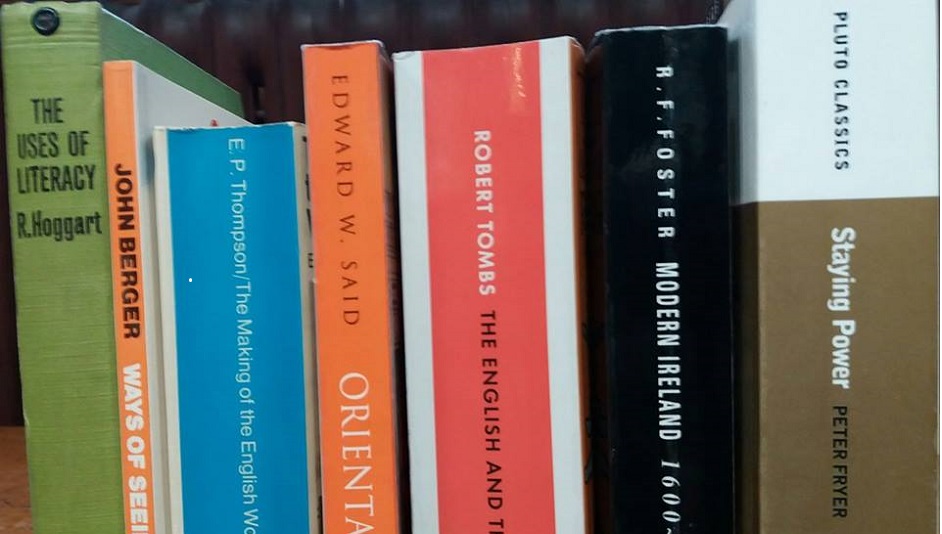
This poem is named for the first chapter of the iconic book Staying Power (1984) by historian and academic Peter Fryer. A book that talks about the history of Black people in Britain, from Roman times up to his modern-day. It’s also inspired by ‘Mathematics’ by British poet and author Hollie McNish.
Adam said:
those goddamn universities
and their goddamn books
learned people, crippling egos
with nothing but a look
he says those goddamn historians
and their god damn history
I tell them they worked hard
to get there, can’t you see?
I ask him what
he expects British history to be
he says he remembers
the land of Blyton and Christie
coastal wrecks, greenery
and a good wage before those people came
where people went to work, pot-bellied
national pride, stood proud before they came
now no British jobs, their kinde are to blame

I ask how he knows this to be true
he said he saw it on BBC News
every time a Pole takes a job from us
each time he hears a different language
whilst riding the bus
this divide and conquer, them and us
to me just does not add up
he makes a brew, two sugars in his tea
I say didn’t you know those granules
came from the sugar economy
he grunts, goddamn Blacks came and took our stuff
I tell him about sugar and cotton, you know
how slaves gave us indigo and tobacco – hot air to puff
I show him Brixton Road and Portobello Market
I show him rock n roll, Network Rail and the NHS
I show him the immigrant-built west
I show him straight roads and pictures of my Gran
how the Jamaican ackee comes from the Ghanaian Akan
He’s sick of history and social science
sitting all sad and smug on his island
I spent three years on a degree
did a dissertation on British identity
I geek over John Blanke
renaissance trumpeter who was Black
Oh and Ann Lister, call her Gentleman Jack
and Afro-Romans and The Slave Trade
Black Georgians, Saxons and Viking Raids
and I so want to scream when I hear folks say
goddamn immigrants taking our jobs
but how we teach history – we don’t talk
of Mrs Shah’s shop employing Bill and Bob
where people with money love to spend
employing women and men in tens,
her gift for business is self-taught
all her plans meticulously well-thought
and all your prejudice talk
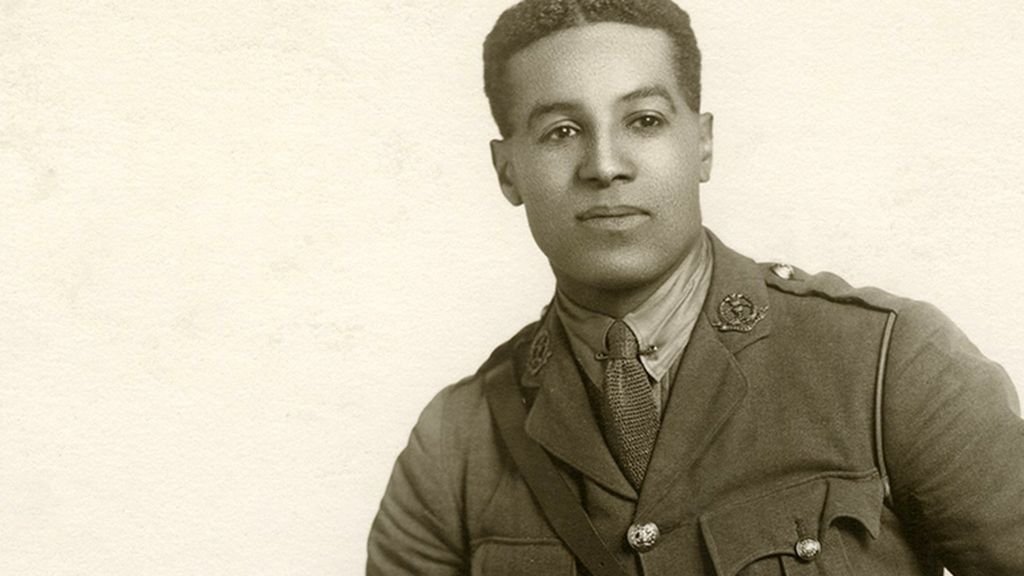
forgets the soldiers the colonies pledged
forgets the men left for dead
in Tangiers, Dunkirk and at the Somme
as the world wars went on and on
from Mr Smith to Mr Wong
and I know people love to complain
but England our name
the land of Angles is all that remains
from Saxons to Jutes
stories of migration since before WW2
and often, those kind of people
are more native than the locals.
Share this:


“What do you want to do?”

I was twenty-five when I first applied for university, studying BA Criminology. When I first told my family and friends, they were unsure. They did not understand why I wanted to change my career and study a subject without having a ‘plan’. I had accomplished many things since leaving school, such as buying a house with my partner, buying a dog and at the time I was a supervisor in a nursery. However, I was not satisfied, I wanted to be challenged and wanted to try something new. In all honesty when family and friends asked me what I wanted to do, I did not know.
Growing up, I was told I was not smart enough for university, as a young person you begin to believe it. It wasn’t until I began looking after children when I realised that children should be encouraged and if I was going to reinforce my belief – that you can do whatever you set your mind to – I should believe it in myself.
Choosing criminology was easy for me, crime was something I was sheltered from as a child, I did not experience crime. I only began my fascination, after watching documentaries on Netflix and even then, I was curious about the concept and naively wondered, ‘what makes a criminal?’ After studying for one year, it is now easy to see that it is not an easy question to answer – but don’t take my word for it, study criminology and see for yourself!
Reflecting on my first year, it was a lot of trial and error. Like many students, I was learning how to write essays again and abide by deadlines, work a part time job, balance study, volunteering and home life and try not to consume too much alcohol in the meantime.
As summer comes to an end, I am excited to begin again, the stresses of university become worth it, when you build friendships and have the realisation that you are one step closer to graduating. I will continue to be determined and optimistic in my future, because I believe I can finally be satisfied. The next time someone asks me what I want to do, I can be confident and say, ‘I haven’t decided yet, but you can do anything you set your mind to, and no-one can tell me I am not smart enough for university’.

Share this:


Are you faking it? : Impostor Syndrome in Academia

Bethany Davies is an Associate Lecturer teaching modules in the first year.
I really enjoyed my time at university but for me it felt almost like I’d got in by some whim of luck, I worked hard to get there but I still felt as though I had got in by chance. Which meant by I had even started; I feared others would think that too and I would become exposed. I’d picture that in class everyone would know something about a really important event in history that I was ignorant to not have heard of. I remember wishing there was a documentary I could watch or a book I could read that gave a brief summary of everything that was meant to be important so I could at least have a basic knowledge of everything and maybe I could fake the rest.
Impostor syndrome doesn’t go away, it evolves and alters and that doesn’t mean it necessarily grows or decreases in time. But rather it just seems like an annoying person sat in the back of hall that occasionally shouts loud enough that you can hear it.
I think it’s important to talk about it, I’m not even sure what it could be regarded as, I don’t believe it be a disease or a form of anxiety but rather something just in its own class that to a degree I like to think everybody has. It doesn’t have to ruin your university experience, it didn’t ruin mine, but it was certainly a part of it, almost like a step in the process; go to lectures, deal with the feeling that I’m pretending I belong there, go home, revise.
I had really only became aware of it properly further in my studies and it continues when working in academia. The labels of what degree you have or what level you are and how many certificates you have can give you the confidence you need to overcome this, but it can also feed it.
There will be students starting University in the next few weeks who already feel like this, asking questions of themselves or even dreading having to talk in lectures in case they reveal what they most fear – that they are a fake and do not actually know what they think they should know by now. There will be others submitting essays or dissertations who think they have got to where they are by pure luck and chance and that this is the time where it might be made public that they are not worthy of their previous grades. There are individuals who are considered as ‘Experts’ on a particular subject by everyone but themselves as they feel the area is so vast that even they are at the basics of the subject.
Even when I received high grades, or was given positive feedback, it didn’t silence the thoughts that I somehow didn’t earn them. From graduation to working in academia, I thought that would be it, I would prove to myself that I knew enough and that I wasn’t an impostor. To an extent, it did help, mainly because I didn’t have to prove myself in an essay or a test anymore. But I still think it’s there, because I know there is always another step when you are in academia, you can keep going forever and you’ll never truly be done.
If that sounds familiar, it is something you can take some comfort in the number of others with the same feelings. It should give you comfort because it shows the inaccuracy in those intrusive thoughts, as surely, we can’t all be faking it and impostors in our academic journeys? And if we are… then there isn’t really a problem either.
I’m not a psychologist nor would I be so impostorous to claim to be (do you like what I did there?) but I think we all know that the negative things we say about ourselves are not true, but they are a way to stop ourselves from doing something out of our comfort zone, which in itself is subjective – but that’s starting a philosophical ramble.
This blog post isn’t to make you overly aware of your fears nor do you have to address them right now. But rather, my intention is letting students know you are not alone, it doesn’t go away but it can get better if you separate how you think you feel about yourself from the reality of what you are achieving whether that be good feedback or even achieving a degree. The same way as receiving negative feedback, should not reaffirm your fears. Learn to accept that you will never know everything and that it’s okay to not know something even if everyone makes you feel like you should. Be kind to yourself in your studies, otherwise you might forget to enjoy the process of learning.
Share this:


On being a University Student with Asperger Syndrome
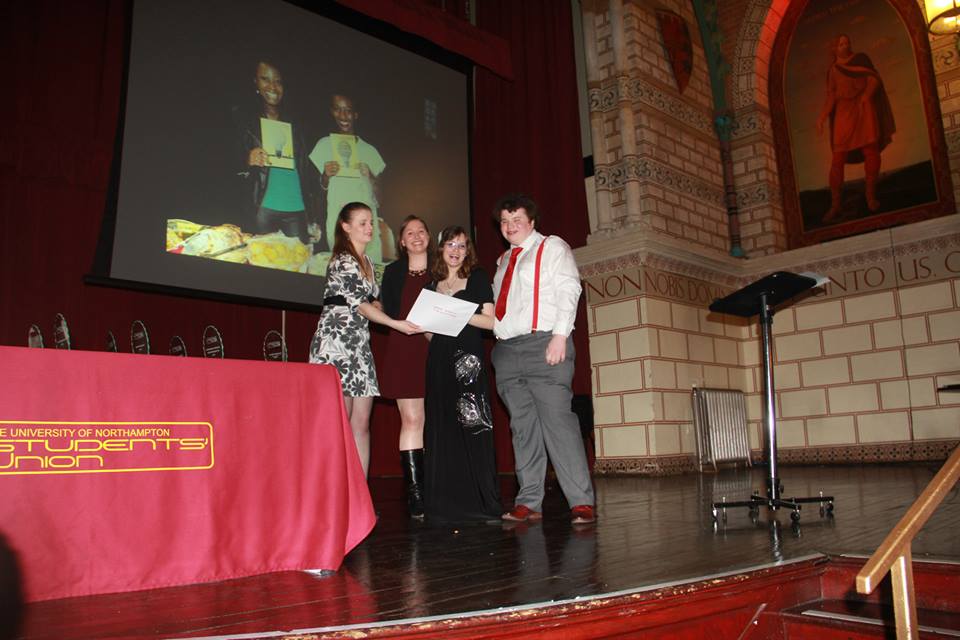
To all new students starting university who are on the autism spectrum and Asperger Syndrome – YOU CAN DO IT! YOU WILL THRIVE!
As a child I was different.
I preferred spending time on my own, did not care much about what others were doing, and kept myself to myself. In primary school I was a daydreamer, and always lived in a world of my own. I was always very happy and had a smile on my face. The early years of my life were cheerful and full of happiness. I loved painting and drawing and being outdoors. When I started secondary school, I faced a variety of challenges.
I struggled socially, especially as I went to a mainstream school, and generally disliked being around other people. I loved studying and learning, and was always very ambitious when I was in my teenage years. I dreamed of being an author and a lawyer among many things, and always aimed high. Due to being different I was left out, but didn’t care much. I struggled with my senses at times, and became overwhelmed when there was lots of loud noises. My memory was unusual – I could remember silly little details, facts and useless information. I loved learning new things, reading and filling my head with knowledge. In my family, I was the oddball – I had specific interests, displayed intense focus, and displayed signs of phalilalia (repeating myself). [1]
My mum suspected that I was ‘different’, and she wanted me to be properly seen by a medical doctor. One morning, after a number of referrals, it happened; Friday 2nd February, 2010, 9:35am 42 seconds within the minute, I received my diagnosis: High Functioning Autism/Asperger Syndrome. This diagnosis explained so much about me.
Fast forward 3 years, on Saturday 15th September 2012, after an hour long drive away from home, I was settled into my new flat at the University of Northampton. My family left and I was with my new flatmates. The start of a new chapter in my life. My time at university enabled me to flourish and blossom in ways I never knew I could! At this point, I knew that I could not stay in my shell and isolate myself, I pushed myself out of my comfort zone, tried new things, and challenged myself. I wanted to be able to integrate and enjoy myself as much as I possibly could.
Aware of how my Aspergers affected me; from sensory difficulties, challenges in reading people (which I’m much better at now), to social awareness (knowing how to behave in different social situations), but I was determined to learn and grow. I overcame them all by going out, meeting and learning from new people, and enjoying myself! First year at university was one of the happiest years of my adult life! I remember smiling so much that my cheeks hurt. I fully immersed myself into university life, and loved every single minute of it! I got myself a job, did some volunteering, and loved studying. Being away from home helped me to really grow, and was the best decision I ever made!
I’m somewhat of a chameleon; meaning that I have learned to blend in and ‘mask’ my Aspergic traits. My social skills were very good already, so, to the majority of people I met, no-one could pick up on my Aspergers. I have an unusual memory for detail, am very focused, driven and energetic. There were times where I would interpret things differently, or misunderstand. That’s ok. I just asked more questions and for clarification, so that I could understand.
After getting my DSA (Disabled Students Allowance) approved, I was given specialist equipment and software’s to help meet my academic needs. These were so useful and handy! I had never recieved so much support for studying before! I was given all the training and guidance I needed to help get to grips with everything.
On my assignments, I had an extra front sheet, informing my lecturers of my Aspergers, so that they were aware and could take it into consideration when reviewing my work.
Students with disabilities can also get a mentor, note-taking support, and other support in accordance with their needs.
When I was in my first year, I founded the Auto-Circle Spectrum Society; the first society of its kind in the country, supporting students with autism, Asperger Syndrome and other learning disabilities. Upon seeing that there was no group in the Student’s Union to represent this demographic of students, I wanted to help others.
The second and third year flew by very quickly; I found myself starting each year with excitement and enthusiasm. I loved studying too. I remember collecting several books, finding my corner in the library and reading for hours, noting each reference as I went, putting together bodies of information for my assignments.
Auto-Circle Spectrum also grew over the 3 years, and I met so many incredible individuals who brought their own sense of uniqueness, fabulouslness and eccentricity to the group! I became increasingly aware of the challenges other students with autism face, particularly, transitions and dealing with change. After a parent got in touch with me, concerned for her son who was to start university. Wanting to further my help for students on the spectrum, I undertook the Change Maker Certificate, guided by the incredible Tim Curtis; which, after numerous meetings, resulted in a, Autism Spectrum Condition Taster Day, which was a huge success!
Today, I am the first person from both sides of my family to go to university, and the only one to have a masters degree. Do NOT let others tell you what you can and can’t do. You can overcome all odds if you put your mind to it and let yourself grow. The more you put into university life, the more you get out, and the more memorable it will be. YOU CAN DO IT!
Links to info about Aspergers/Autism
[1] National Autistic Society ‘Obsessions, Repetitive Behavior and Routines’ Available online at: https://www.autism.org.uk/about/behaviour/obsessions-repetitive-routines.aspx
Share this:


Three Tips for Uni:

There are lots of blogs, articles, and Youtube videos which offer some useful tips for going to university, yet it always appears as though students haven’t watched/read them or in the excitement of coming to university they have forgotten what they were. So in the hope that new and existing students might read this, here are my 3 tips for studying at university, and they apply to all levels:
1) READ!!!
At various stages throughout your degree you will be told that you are reading for a degree, and that is the truth. Now reading may not be everybody’s cup of tea, however it is vital to attaining a degree. Lecturers will provide reading lists for your modules, and readings for seminars, however it is vital you go beyond these lists. In first year everything is new, and the likelihood of you being experienced in reading academic journals and textbooks is pretty slim, and therefore there is a good chance you’ll be reading things that don’t appear to make much sense. That is how I remember most of my first year at undergrad! However, perseverance is key: if you didn’t understand it the first time round, take a break and read it again! Still not making sense, then read it again. Variety in source selection and reading is also key, do not feel like you have to read everything off the reading lists, or that those are the only sources you should be engaging with: get creative, mix it up! To change a phrase from a certain, loveable but forgetful blue fish: ‘Just keep reading, just keep reading, just keep reading reading reading, what do we do, we read, read…’.
2) TALK!!
University is a new experience and it is very different from school! There are no teachers who will give you the answers, but rather lecturers who will help you harness the tools in order to pursue answers. Even returning students who are familiar with the university format of being vocal in seminars still feel uncomfortable the first few weeks back as they find their rhythm. Reading is key to acquire knowledge, but so is talking. Share your ideas and understandings with your friends, colleagues and lecturers. Answer the questions put to you by others. Ask questions when you are unsure or curious. Challenge views. Seminars run much smoother for everyone when discussion takes place, and discussion cannot happen without first reading and second talking. It can be uncomfortable and unnerving, even at MSc level when you’ve had 3 years of undergrad experience of talking in front of others and sharing ideas. It is not easy, and there is always fear of being wrong or sounding silly, but that is how we learn. I’m not saying you should go around talking to everyone and anyone about anything and everything, because I most certainly would not do that. But in seminars and lectures where knowledge is the goal, talking is key.
3) ENGAGE WITH FEEDBACK!
Finally, part of university life is assessments. Now if you are successful with reading and talking, then the assessment part of university should be less scary and more positive than if you otherwise have not read or asked questions/shared ideas. A large part of assessment is writing style, and there are various resources provided by the university at your disposal to help improve your writing, and to tailor your writing depending on the assessment. But a really crucial and essential tool is the feedback given to you by your lecturers. Whilst the feedback given to you on a piece of assessment is specific to that assessment in terms of content covered, it can also be applied to future assignments and therefore should be engaged with. We spend a large amount of time constructing feedback for students, in order to help improve their work and ultimately to help them succeed but very few students engage with it. If we have said you need to engage with more sources, the likelihood is that this needs to be done for all your assessments, similarly if there is a referencing issue or writing style concern. Engaging with your feedback is one of the quickest ways to improve your work, and if you do not understand the feedback, TALK to your lecturer about it.
Studying any level at university is very different to A-levels and college: it is ultimately independent learning where the lecturers will guide you and help you attain the skills required to complete your degree. It is an exciting and challenging time regardless of which stage you are at in your academic journey, and ultimately when you look back it should be something you are proud of. So to new students, welcome, to returning students, welcome back, and to you all: GOOD LUCK! 😊
Share this:


How to prepare for a year in University

In our society consumerism seems to rain supreme. We can buy stuff to make us feel better and we can buy more stuff to express our feeling to others and mark almost most events around us. Retail and especially all the shops have long been aware of this and so they have developed their seasonal material. These seasonal promotions may have become consumer events now although they do signify something incredibly important to culture and our collective consciousness. There is time for Christmas decorations and festive foods, Easter time and chocolate eggs, mother’s day and nauseating cards father’s day for equally grinchworthy cards. There is valentine’s day to say I love you in full fat chocolates, Halloween to give little kids rotten teeth and a red poppy to remember some of our dead. To those add the summer season with the disposable BBQs and of course the back to school season!
The back to school is one of the interesting ones. Geared to prepare pupils and parents for going back to school and plan ahead. From ordering the uniforms to getting all the stationery and books required. I remember this time of the year with some rather mixed emotions. It was the end of my summer holidays, but it was also the time to get back to school. Until one day I finished school and I went to university. Education is seen as part of a continuous process that we are actively involved from the first day at school to the last day in high school and more recently for more people also involve the first day of going to university. Every year is more challenging than the next, but we move up and continue. For those of us who enjoy education we continue the journey further to further or high education.
There is something to said about the preparation process coming to University; it is interesting seeing advertisements on education this time of the year on the tv and social media promoting stuff for this transition; from the got to have smartphone to the best laptop, the fastest printer scanner all in one thingy to the greatest sound system and many more stuff that would get you ready for the year ahead. Do they really help us out and if not, what do we got to do to prepare for coming to university?
Unfortunately, there is no standard formula here but there is a reason for that. Higher education is adult education. This is the first time in our educational journey that we are sitting firmly on the driving seat. We choose to study (or ought to) what we wish to study. It is an incredibly liberating process to have choice. This however is only the beginning. We make plans of our time. In higher education the bulk of the time required is independent study, and as such we got to negotiate how we will plan our time. We got to decide which reading we are going to do first which notes to read what seminar we shall prepare and what assignment we will make a draft of.
There will be days spent in the library looking for a book, days in a coffee shop talking to fellow students about the seminar reading, days in the learning hub working on an assignment. There are highs, lows and everything in between. But regardless of the emotion at every stage thee will be a sense of ownership of knowledge.
In the first couple of sessions, the bulk of the students keep quiet expecting the correct answer to be given. One interpretation or one truth that describes all. It takes a few times before the realisation emerges that the way we analyse, and project knowledge can be different provided we go through the same processes of scrutiny and analysis. Then conversation emerges and the more reading the better the quality of the ideas that shall emerge.
The first year at University is definitely a declaration of independence and the realisation that we all have a voice. Getting on to the road on empowerment. This is a long journey, and on occasions arduous but incredibly rewarding because it leads to an insight greater than before that removes ignorance and lifts the veil of the unfamiliar.
To our newest students – Welcome to the University and to our returning 2 and 3 years – Welcome back!
Share this:


The struggle is real

© Jonathan McHugh
Stephanie is a BA Criminology graduate of 2019 and was motivated to write this blog through the experience of her own dissertation.
Last year was a very important time for me, during my second year of studying Criminology I began doing a work placement with Race Act 40, which was an oral history project to celebrate 40 years of the Race Relations Act 1974. The interviews that were conducted during my placement allowed me to get a variety of in-depth stories about racial inequalities of Afro-Caribbean migration settlers in the UK. During my time with the Race Act 40 project it became clear to me that the people who had volunteered their stories had witnessed a long line of injustices from not only individuals within society, but also institutions that makeup the ‘moral fabric’ within society. When exploring whether they have seen changes post and pre-Race Relations they insisted that although the individual within society treated them better and accepted them post-Race relations, to an extent there is a long way to go to improve the hostile relationships that has been formed with politicians and police.
The notion of hostility between politicians and the Afro-Caribbean community was reinforced, as the UK was going through the Windrush scandal which affected the core of every Afro-Caribbean household within the UK. This was extremely important for me as both paternal and maternal grandparents were first generation Windrush settlers. During the scandal my father became extremely anxious and the ramifications of the Windrush scandal hit home when some of his friends that came to the UK in 1961, the same time as he did, were detained and deported on the grounds of them being ‘illegals’. The UK Government used their ‘Hostile Environment’ policy to reintroduce Section 3 paragraph 8 of the Immigration Act 1971, which puts burden of proof on anyone that is challenged about their legal status in the UK’.
The UK government was ‘legally’ able to deport Caribbean settlers, as many of them did not have a British passport and could not prove their legal right to be in the UK and the Home Office could not help them prove their legal rights because all archival documents had been destroyed. This was a hard pill to swallow, as the United Kingdom documents and preserves all areas of history yet, overnight, the memory of my family’s journey to the UK was removed from the National Archives, without any explanation or reasoning. The anxiety that my father felt quickly spread over my whole family and while I wanted to scream and kick down doors demanding answers, I used my family’s history and the experiences of other Black people under British colonial rule as the basis for my dissertation. The hostility that they faced stepping off the Windrush echoed similar hostility they were facing in 2018, the fact that the British government had started deporting people who were invited into the country as commonwealth workers to build a country that had been torn apart as a corollary of war was a slap in the face.
Under Winston Churchill’s government, officials were employed to research Black communities to prove they were disproportionately criminal as a strategy to legally remove them from the UK and although they did not have any evidence to prove this notion the government did not apologize for the distasteful and racist treatment they demonstrated. It is hard to convince Black people in 2019 that they are not targets of poor similar treatment when they have been criminalised again and documents have been destroyed to exonerate them from criminality.
A final thought:
I have outlined the reasons why this topic has been important to me and my advice to any Criminology student who is going to be writing a dissertation is, to find a topic that is important and relevant to you, if you are passionate about a topic it will shine through in your research.
Share this:

How literature failed me as a black student

My name is Francine Bitalo, I am 21 years old and a Criminology undergraduate at the University of Northampton. Coming from a black African background I have always had a strong interest in the Criminal Justice System and its treatment towards different groups in society.
My dissertation was based on the impact of police practices such as stop and search on young black men and their families. Whilst statistics present the alarming racial disproportionately which exist in many areas in the criminal justice system, it fails to portray the long-lasting effects it has had on Black families. For example, the daily harassment and differential treatment subjected to young Black men has forced black families to reinvent themselves to conform to institutional racism. Coming from a Black family myself and having male family member, the findings in my dissertation quickly became personal to me, as I could constantly relate them to the structuring of my own family. For example, the fact that it would take my father longer to find a job due to institutional racism, making my mother the breadwinner, or when my mother is preparing my brothers for police harassment and discrimination, but not me and sisters.
While conducting my research I was quick to learn that what literature may describe as a phenomenon, for many of us is a reality. If I am honest the writing stage of my dissertation was difficult for me because it was a passionate topic. I experienced a lot of self-doubt regarding my positionality for example, being a Black woman and facing my own forms of discrimination and now having to talk about the experiences of young Black men. I think my dissertation tutor would agree with me on this as I remember emailing her after I submitted my work expressing how I felt like I didn’t effectively capture the effects and the voices of the young Black men I interviewed, despite that being my main goal. I mean who would blame me, as a student, if I am honest I felt like literature really let me down for instance, when writing my literature review I found that literature neglected the subject of racism solely from the perspectives of young Black men, despite statistics showing them to being the largest group to experience institutional racism. At this point I had to laugh at the criminal justice system and its propositions to improving police relations as well as re offending.
With that being said the information I did come across I couldn’t help but sense the notion of white privilege lingering in the perspective of some scholars. I understand this is a strong claim to make however I say this because not only did literature provide little of the work of Black scholars regarding the topic, yet it was evident that most white scholars did not see the issue with stop and search and its discriminate use. Arguments for this were discussed in my dissertation for example, some argued that the process of racial socialisation in Black households were ineffective to police relations and the functioning of their services, which creates the notion that the Black community should submit to discrimination and harassment in favour of procedures and compliance during police encounter. Some tried to justify the disproportionality in stop and search by claiming that young Black men should be harassed because they tend to be out more especially in certain urban areas or the disproportionate targeting of Black minors is due to parental criminality. I felt there was a lack of accountability from white scholar thus, little understanding in the issue of race which is natural because their experiences do not allow them to understand. Yet this led me to ask questions such as why shouldn’t Black mothers have the right to prepare their sons for police discrimination, does it matter what time and area should a person of colour be around for them to be targeted at?
After completing my dissertation and getting a First Class I felt extremely proud of myself, the fact that I did not shy away from the research topic despite it being limited in literature. As a result, it was satisfying to know that I was able to articulate the experiences of others to a First Class standard. I hope this can encourage others to trust in their abilities and put aside any doubts especially when choosing a research topic. As a student writing a dissertation or even an assignment, I believe we should explore the unexplored, open the unopened and always be willing to discover and learn. Do not be afraid of researching something that is limited or has never been done. Lastly as my dissertation was extremely passionate to me I have decided to turn it into a personal project and continue researching the topic
Share this:


The same old rhetoric, just another place
 My sister phoned me the other day in great excitement. She’d just met a former criminology student from the University of Northampton, and she had an awful lot to say about it. She wasn’t in her hometown and had asked directions from a stranger to the river embankment. Having visited the embankment, she returned to town only to bump into the stranger again who enquired whether she managed to find it. They ended up chatting, my sister can do a lot of that, and she found out that the stranger was a police officer. My sister asked whether she knew me, why she would ask that I have no idea, it seems that she has formulated some notion in her head that all police officers must know each other or at least know of each other. This is the bit that my sister got so animated about, yes, the stranger did know me, I’d taught her at the University, and she was now in a budding police career. Apparently, I had done so much to help her. Now I don’t know about being that helpful and I suspect that many of my colleagues played a part in her success story, but it reminded me about what it is that we do and aspire to do as lecturers.
Whilst waiting to play my part in talking to school children the other day I started to read a new edition of a seminal piece of work on policing, The Politics of the Police (Bowling et al., 2019). The preface alone makes interesting reading and in ‘mentioning populist political reactions towards crime’, ‘zero tolerance of the marginalised and outsiders’ and ‘laissez-faire economics’ that promotes individual interests, my mind turned to the managerialist ideals that have dogged policing for over three decades. Those ideals saw the introduction of performance indicators, targets and the inevitable policing by objectives (Hallam, 2000), that resulted in some quite appalling manipulation of data and a diminution of service rather than an improvement. The problem was that the targets were never achievable and were simply put in place for managers to simplify the social world over which they had no control. What didn’t get measured, because it never could be, were the myriad of tasks that police officers and staff undertake daily. Dealing with people with mental illness, searching for missing persons and dealing with minor disturbances are an example of just a few such tasks. Bowling et al. (op cit.) subscribe to the notion that the job of the police is to help maintain social order, an ideal that does not lend itself to measurement. Counting the number of crimes committed in an area or the number of detected crimes is only an indication of failure, not success.
How does that policing narrative fit in with my opening paragraph? The former student was not an ideal student from a managerialist viewpoint. She didn’t attain so called ‘good grades’, I’m not even sure if she fully completed her studies. In terms of performance measurement, she doesn’t even feature and yet she, like so many others we have seen in Criminology, has flourished. Whilst concentrating on ‘retention and progression’ and ‘fails’ and ‘good grades’ we neglect the very reason we exist. Just as in policing where the figures were pored over by managerialist who had not slightest notion of the reality of the social world, so too are we in danger of simply seeking pleasing statistics to keep the wolves from the door because explanations of real success and failure are too complex for managers to understand or manage.
Imagine a world where the police just helped maintain social order, where probation were not plagued by notions of payment by results, where patients were just seen in A&E in a reasonable time and where lecturers just opened the minds of students and allowed them to think for themselves. Imagine the time and expense that could be saved and reinvested in providing real service and dare I say it ‘value for money’ if we stopped gathering meaningless data. Imagine managers casting aside the shackles of neoliberalist ideals and managing people, not using numbers as an indication of failure and impending doom. We can but dream, but my reality, as I’m sure is the reality of many of my colleagues, is the success stories that I occasionally hear and can reminisce about. No amount of number crunching can take that away and nor will it ever provide evidence of success or failure.
Bowling, B. Reiner, R. and Sheptycki, J. (2019) The Politics of the Police. (5th ed.) Oxford: OUP.
Hallam, S. (2000) Effective and Efficient Policing: Some Problems with the Culture of Performance, in Marlow, A. and Loveday, B. (eds.) After MacPherson: Policing after the Stephen Lawrence Inquiry. Lyme Regis: Russell House
Share this:


Teaching Criminology….Cui Bono?

Following several conversations with students and reflecting on another year of studying it got me thinking, what is or can be the quintessentially criminological issue that we can impart onto them? It is always interesting to hear from others how your ideas are transferred into their notes, phrases and general understanding. I think that there are a few things that are becoming clear early on, like the usual amazement of those outside the discipline who hear one studying criminology; a reverence as if the person reading the subject is on a par with those committing the deed. There is a natural curiosity to crime in all walks of life and those seen closer to the topic, attract part of that curiosity.
There are however some more profound issues relating to criminology that are neither clear nor so straightforward. The discipline is an amalgamation of thoughts and theories making it incredibly difficult to pinpoint a generic appreciation for the discipline. Some of us like the social discourses relating to social injustice, a matter traditionally closer to sociology or social work, while others ponder the conceptual dynamics of human behaviour, mostly addressed in philosophical debates, then there are those who find the individual characteristics and personality socio-dynamic dimensions intriguing. These distinct impressions will not only inform our understanding but will also provide each of us with a perspective, a way of understanding criminology at a granular level.
In criminological discourses, informed by law, I used to pose the old Latin question: Cui bono (who benefits)? A question posed by the old legal experts to trace liability and responsibility of the act committed. Obviously in their view crime is a choice committed freely by a deviant mind. But then I was never a legal expert, so my take on the old question was rather subversive. The question of who benefits can potentially lay the question of responsibility wide open, if it is to be looked from a social harm perspective. The original question was incredibly precise to identify a person for the benefit of a trial. That’s the old criminal evidence track.
Taking this question outside the forensic setting and suddenly this becomes quite a loaded query that can unpack different responses. Cui bono? Why are we talking about drug abuse as a crime and not about tax avoidance? Why is the first regarded a crime, whilst the second is simply frowned upon? Cui bono? When we criminalise the movement of people whose undocumented by we have very little information for those who have procured numerous properties in the country? If our objection is on transparency of movement then there is clearly a difference of how this is addressed. Cui bono? When we identify violence at interpersonal level and we have the mechanisms to suppress it, but we can engage in state violence against another state without applying the same mechanisms? If our objection is the use of violence, this is something that needs to be addressed regardless of the situation, but it is not. Ironically some of the state violence, may contribute to the movement of people, may contribute to the exploitation of population and to the use of substances of those who returned home broken from a violence they embraced.
Our criminology is merely informed from our perspective and it is my perspective that led me to those thoughts. I am very sure that another colleague would have been making a series of different connections when asked “Cui Bono?”


