
Home » Studying
Category Archives: Studying

Not reading criminology? That’s criminal!
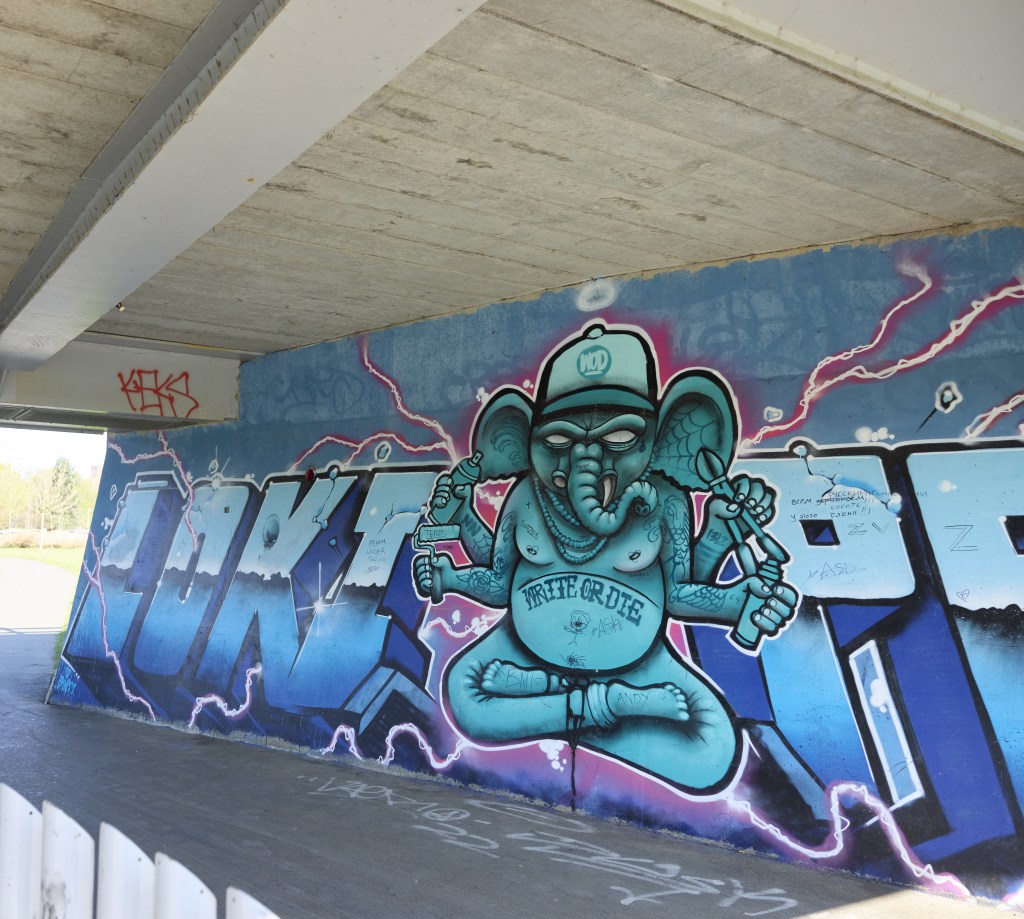
There are two kinds of criminology conversations I get embroiled in these days! Those with people who read criminology where we discuss many social/cultural phenomena under a specific lens or those with people who find criminology interesting, but consume popular crime instead. The first group with varying level of engagement is beginning to decode some tell-tell signs in current events, using their knowledge of the discipline, as a deciphering mechanism. The second group is quite different. Their understanding of crime is based on dramatisations and literary conventions around plots and characters. Even real crime is harbouring under the guise of some “exclusive” journalistic exposé…far from any basic criminological understanding.
Years ago, a colleague from Sociology told me a story regarding a family event. They were completing their PhD in the discipline, and they were questioned by an elderly person, as to what they would do when they finished their thesis. They responded in the usual way many graduate students tend to, about hoping to get into academia or get some funding for some further research. The elderly person didn’t seem satisfied…. they prompted further. What will be your specialism? What will you be able to tell people that you are proficient in? Society and people, the colleague replied! That’s hardly a skill, the old relative replied; we all live in society! The colleague was equally intrigued and offended. They thought that by offering a succinct response it would have helped their relative to understand without being confounded with notions on symbolic interactionism and ethnomethodology. This was a little anecdote that resonates with many social scientists, criminologists included, that whilst they try to explore people and culture around them, they are becoming distant to the actual people around them.
The degree of challenge in recent years seems to increase for disciplines where people in general have a vague idea of what it is. Many try to use psychological terms to explain other people’s behaviours, without realty appreciating, the clinical and scientific conditions of the term. That is relevant to criminology too. The representation of crime for public consumption has introduced some of the discipline’s terms into everyday parlance. From forensic terms on profiling, to the origins of criminality, expectations on crime are forged. A criminologist’s reaction to popular criminology pundits tends to be, well not quite, only to be met with disbelief of the criminology they know!
One of the ways to appeal to those interested in popular criminology and take them to the discipline will be to add some facts and figures that promote reality. Perhaps but that has been done before but only to give a gloss of “legitimacy” in fiction. It makes it more compelling, but it doesn’t really offer the depth of knowledge. To understand criminology, one must read criminology. The history is filled with colleagues who brought their imagination to the discipline. From Bonger’s Criminality and Economic Conditions to Jock Young and The Criminological Imagination there are books and papers that are waiting to be read by a new audience to try to figure out these ideas.
Maybe we all live in society and heard about crime and even experienced it, but to understand it we need some criminology. The discipline, as with all social sciences, is a dialogue between people ready to carry forward the next constructs that shall appear as crimes. If we read them and take part in these conversations maybe the area of harsh punishments, exclusion and persecution may not be as appealing. We are an academic discipline but at the same time we open the discussion to our community. So if you are neither a student, graduate, nor fellow academic and you are interested in criminology, why don’t you come to visit? https://www.northampton.ac.uk/about-us/contact-us/open-days/
Share this:


To be a keeper of these stories. A collector of trust.

I think this will be somewhat of a poem; I guess.

About all the tears I’ve held space for lately.

There has been quite a lot. Is it any surprise?

Big ones, small ones. Happy and sad ones. Not really sure why ones.

‘cept it’s the happy ones I want to share today.

They’ve got me thinking. Reflecting.

A proper headshake, actually.
It’s not the best space for sensitive conversations but it’s what we’ve got.

I wait and I wait. Sometimes a flurry. Sometimes not.

The enthusiasm is sometimes hard to muster.

If I’m really being honest.

But wait I do. And wait I shall.

Oftentimes it’s a woman, who needs another.

It’s a gift I’ve got, I suppose.

“I’ve never seen her sit and talk with someone like this”

An aura, someone once said.

Lures people in and their story they are compelled to tell.

I’ve tried to teach it. We give and we take from every interaction.

You just have to be aware enough to see it.

There’s been some big ones just lately.

And what a pleasure it’s been.
She’s a ‘do it all’ Black mother.

A woman of incredible resilience.

We’ve been speaking for months now. Bit of this. Bit of that.

A call from the school one day, her son has self-harmed.

What do I say, she asks.

Everything is money. Money I don’t have.

She checks her sugars. Low again.

I can’t afford this canteen food.

Have to make a poster. Sustainable practice or something like that.

All this technology she says, I’m too slow.

I do what I can. Build her up. See her again.

I do what I can. Build her up. See her again.

There’s a little bit more brightness every time I do.

It’s Friday before last, how was your session I ask.

I was in a room with women doctors she says.

Little old me. I could never. Right at the start…and I don’t think I’m going to make it.

Can you believe it? she says. Women…with PhDs. Not me.

“Back home women get no such thing.” No no. Daren’t even dream.

Days roll on until a week's gone by.

She prances across the library. Beaming.

She’s come to share her joy with me.

A 60 she says. A 60!

My boys are so proud of me. Maybe I’ll make it after all.
Another. Working, studying, working, studying.

Mum needs the money. Physio for the cancer in her bones, she says.

She’s avoiding my questions about rest and nourishment.

Surviving on Mum’s joy receiving another ‘Look what I’ve done.’

This is just a flying visit though. Easy fix, I thought.

We’ve been here a while. Lingering.

I think I’ve said something wrong. She’s welling up again.

No. I’m so grateful to be here she says...with all you kind people.

I ask what she needs. Its courage, she says.

I write it out. A post-it note. Just the trick.

What would my most courageous self do?

Stick it to the fridge I say.

Mine is bravery. I share.

An inspiration! she cries. An inspiration? I cry.

I’m going to make it across that stage one day, she says. Yes, I am.
Her story. Quite overwhelming actually.

Though not easily shaken. I’m taken aback.

Intimate partner violence a divorce did not remedy.

A home of her own, apparently not to be.

In the hospital every other week.

The victim of a scam I realise as we speak.

Held up at every angle.

Yet she shows up. She shows up. She shows up.

It’s what we do, isn’t it?

It’s too much. Quitting. she says. Though I can’t say I believe it.

We’re here for 90 minutes. It’s all out on the table.

I hardly say a word really. I’m all ears, kind eyes and the occasional shoulder pat.

A breakthrough.

Look at me here laughing with you now.

What a relief. To be heard.  Maybe I’ll be able to sleep tonight.
Its all stuck with me, a sort of niggle.

I thought I knew what I was doing. I thought I was grateful for it all.

But to be a keeper of these stories. A collector of trust. I realise I was nothing of the sort.

So, on my own journey, I start anew, and that’s thanks to all of you.
This healing thing. Tricky business, really.
Reader, if you find yourself saying I HAVE TO this week.

That meeting, That essay. That commute.

Consider I GET TO

Because not everyone does and some that do give more than we can imagine, even just to be in the room with us.

Share this:


What should criminologists talk about?

Recently, Criminology with Psychology graduate, now PhD student @zo3conneely wrote an entry focused on the rise of the Reform Party in British politics, which you can find here. In response, we received a comment via social media, asking what this entry had to do with Criminology. As we always say in Criminology, all questions are welcome and valid, after all, for many of us our mantra is ‘question everything’! From a lay perspective, the question indicates a particular understanding of academic disciplines, it presupposes that Criminology has a very narrow focus. In this view, criminologists should stay in their own lane and focus purely and simply on what is commonly understood as crime, i.e. actions which are against the law.
But hang on, doesn’t that fall under the purview of those who study or practice criminal law, something neither I not Zoe have undertaken? Alternatively, is it the business of those who work in the field of criminal justice, investigating and processing those believed to have been involved in law-breaking? Again, not something either Zoe or I have experience of. If my colleagues in law and criminal justice are the experts in actions against the law, where does Criminology fit in and why include a discussion on political parties such as Reform in a blog dedicated to the discipline?
However, the answer is more complex than the original question would indicate. The answer is also much longer than the question. Criminology has been described as a rendezvous or umbrella discipline, a space where everyone can gather to discuss crime from all perspectives. This includes disciplines as diverse as Drama, History, Literature, Philosophy, Psychology as well as many others, including Politics. It is therefore, expected that those who write for a Criminology blog will be drawn from a diverse range of academic backgrounds, for instance, whilst I have a BA and a PhD in Criminology, my MA is in the History of Medicine. For my fellow bloggers, their academic journeys will also be reflective of their curiosity and their developing academic knowledge and skills. It is therefore anticipated that each academic brings their own unique academic knowledge and personal experiences to the discussion table. It is this which enables Criminology to take a holistic approach, we don’t and should not seek consensus, but incorporate as many diverse views as is possible. Only then can we gain a real understanding of the phenomena we call crime, criminality, victimisation, and of course, the responses to such.
But what of crime itself? Do we all have a shared understanding of what ‘crime’ is? After all, much of the time we don’t see crime, only potentially some evidence that is has occurred. Furthermore, it depends very much on time and space. If we were living in 1960’s Britain, suicide, abortion and homosexuality would all feature heavily in our list of crimes. However, suicide was decriminalised in 1961, and abortion and homosexuality were partially decriminalised in 1967, with the latter further decriminalised in 2003. Likewise, if we were to look further afield we would crimes listed in statute books that we do not have here, for example adultery is a crime in Iran, Pakistan, Saudi Arabia, Somalia and was only repealed in Taiwan in 2020. Thus it is quickly evident that crime is not static, it can change drastically through time and place. We also have to recognise that crime can be decriminalised and recriminalised, for example the overturning of Roe vs Wade in the USA, removes the constitutional right for those pregnant to access abortions. If it taught us nothing else, the Covid-19 pandemic showed us rights can be granted and rights can be taken away, which means that criminologists need to keep a very careful eye on both the past and the present.
Whilst my colleagues in law have as their focus current legislation and how it is practised, and my colleagues in criminal justice seek to ensure that the law is enacted and used to the letter of that law, criminology is much freer. After all, we need to know who is making those laws and why. Whilst we can answer quite simply parliamentarians, this does not tell us very much. We also need to know who, for example only 14% of the current parliament belong to the Global Ethnic Majority, a smaller percentage than the population proportionately. Of these 90, 66 are drawn from the Labour Party, 15 Conservative and 5 Liberal Democrats. Likewise, at the 2024 election 40% of MPs are women, despite women making up over 50% of the UK’s population. Let’s not even get started on the disproportionate number of privately educated MPs, or the lack of visibility of disability, sexuality and so on…. Needless to say, the UK parliament does not look like the vast majority of the British public. Yet these are the people make our laws, and if we don’t understand that as a criminological issue, we will soon come unstuck.
We all need to understand what is happening once those laws have been passed, who is delivering justice for the UK? Whether we look at Judges, Barristers, Solicitors, we find a predominance of white men, only when we look at the magistracy we begin to find some real diversity. But don’t forget magistrates are unpaid, lay members of the judiciary, so it is perhaps unsurprising that women make up 57% of this particular field. So what about criminal justice practitioners? If we look at the police for England and Wales, over 91% are white, 65% are men. In relation to His Majesty’s Prison and Probation Service [HMPPS], over 54% are female, yet these are predominantly based within probation, not the prison service. So we begin to see that the people making, enacting and facilitation legislation and criminal justice do not look very much like the country’s population. Criminologically, this matters, how can we hope to tackle serious social harms like Violence Against Women and Girls [VAWG], homelessness, poverty etc when people have neither knowledge nor experience? Can we really talk achieve just outcomes if the people responsible do not look, sound like us, have very different, often privileged backgrounds which mean we have little shared experience?
Hopefully, this entry has gone a little way towards explaining why the discipline of Criminology (and of course, this blog) maintains an careful eye on politics, among a huge range of other interests. Don’t forget, Criminology is a positive discipline, focused on what could be, what ought to be, a fairer society for all of us.
Share this:

‘Do or do not, there is no try’

The Red Roses are playing in the rugby union world cup final on Saturday and I, amongst thousands, will be watching it on television with a heady mixture of anticipation, trepidation, excitement, fear and expectation. The England Women’s rugby union team is made up of some very talented individuals that come together as a team to produce some of the most electrifying displays of rugby, that is both mystical and awesome to watch. I won’t just be watching, I’ll be dodging every lunge, wincing at every tackle made, running like the wind, dotting down the ball and willing every kick over, I’ll be totally engrossed.
I will be watching elite athletes at the top of their game, and I know, not one of them got there by chance. To be an elite athlete requires hours of training, a strict dietary regime, and dedication. It requires mental agility, physical strength, sacrifice and focus. To get to the pinnacle of their chosen profession, requires total commitment, ‘Do or do not, there is no try’ (Yoda – The Empire Strikes Back).
We can’t all be elite athletes, for a variety for reasons, but what they demonstrate is that achievement is not chance. My life experience, like that of many others, has shown me that there is no such thing as a free lunch. Success, whatever that looks like, requires hard work, sacrifice and commitment. In any walk of life, people that are successful in what they do, have had to put in a lot of effort and make sacrifices. That effort and those sacrifices often started with study. Whether that’s study at school, further education or higher education, or study outside of the educational environment they have been committed to their learning and achieving the best they could. Some may have better opportunities than others but nonetheless, doing nothing, achieving nothing, rarely qualifies an individual to be a top executive in a company, a top lawyer, surgeon, politician, lecturer, sports person or anything else. Top footballers in both the men’s and women’s games don’t just turn up on a Saturday for a kick around. None of them allow themselves to be distracted from what they want to achieve. Some people may not be academically gifted but their success is predicated on hard work and dedication.
This week we welcome new students to the university and next week we will see familiar faces returning. To all our students I would urge you to remember why you are here, what it is you want to achieve? Education is a right but look around the world and you will see that not many can avail themselves of that right. You are privileged and whilst you may not be able to match the commitment shown by the Red Roses, few of us could, it is worth remembering that no one achieves anything without some commitment and sacrifice. Set your sights high and go for it, we are all willing you on. And like the Red Roses we want to rejoice in your success.
Share this:


School’s out!

The end of the academic year comes in many forms and guises. The end of the examination period, the submission of a final piece of work, the release of the grades and many more ways you can say that’s the end of this year! Unlike the calendar year, the end of the academic year comes in the summer as a natural end to work. It is like the school year that was shaped centuries ago! The reason for the summer break was the need for the kids to work in the harvest, a tradition that has remained past the agrarian society.
So, what does the end of an academic year signifies? For the students, there is a sense of accomplishment as they have completed their course or level of study. All the hard work, coming to class, long hours of making notes to complete THAT assignment, and all the heartache preparing the exams finally paid off and they can see their labours paying off. It is also a natural intellectual boundary that takes them a step up in the way they see the world through the lens of their subject. For colleagues the end of an academic year is slightly different…the next academic year’s preparation is upon them, the paper that needed writing is now facing a fast-approaching deadline and the resetting of all these priorities as set by management.
Since joining academia, the process of end of summer, has changed significantly from the working on research and scholarly output to administrative tasks! For those interested in a career in academia, on top of working with others, enjoying a discipline and being involved in education a wider question on how well they can handle paperwork, albeit virtual, is part of the job description. That comes as part of the job, always did, it is that it feels more intertwined with what we do.
There is undoubtedly a change in the role education plays in peoples lives especially Higher Education. This is a sector that in the 1970s recruited less than half a million to now being near the three million mark. This massive rise on student number has changed the way we see high education and the role it plays in our society. This is not the education of the elite but the opportunity for all to embrace opportunities and explore areas of interest that will allow them to find themselves, employment, build a career and ultimately a life! Whilst HE is still expanding the job market is becoming increasingly competitive and the cost of living is forcing people to adjust in how they plan the future.
So, what will the future hold for the end of year hiatus? Financially HE is facing challenges, culturally it is under attack, and socially it is being critiqued around whether it offers what it was set up to do. All these are short- and long-term challenges and they are not going away. Some will affect in future, access to HE, others will question the content and the basis of academic freedom and finally with the onset of Ai, the scope of HE itself. Despite all, I am still hopeful that HE is not a degree nor a job opportunity but a moment in any person’s life that takes a step up. It is a very important human need to fulfil curiosity and to embrace a path that wasn’t clear at the beginning of the journey. The first academia was founded in an agora under a tree and maybe we get back to that, but in the end human intellect will need stimulation and that is where, despite all challenges, HE prevails.
Perhaps the future of higher education won’t be defined by buildings or systems, but by the enduring human need to learn, to question, and to grow. Whether under a tree in an agora or through the lens of AI, the pursuit of knowledge remains a profoundly human act—and that is where higher education will always find its purpose.
Share this:


25th Year Reflection

I have been part of Criminology at UON as BA Criminology student, then Associate Lecturer then Lecturer in Criminology for about 13 years in total. My last reflection on my Criminology journey was in 2020 as I had just embarked on my new role as a Lecturer in Criminology. Every now and then I reflect on how lucky I am to be able to have a job role which has the potential to encourage a passion for learning, reading, writing, critical thinking as well as other life skills.
When reflecting on the 25th year Criminology anniversary I think mostly of the old Park Campus that I used to frequent and study at as a student. It had quite a nice feel to it and there was also enough surrounding nature for a famous badger to make this place part of its habitat! There were less books available online when I was an undergraduate compared to today so I have fond memories of going to the library often to have a browse and coming away with as many criminology related books that I could fit in my bag at once. Finding places where I could study for hours that were less frequented than the main library also gave me a bit of a buzz. There also used to be a Pavilion bar near to where the majority of exams would take place, one of my favorite past time memories is sipping on a beer in the Pavilion just after the end of my final third year Criminology exam season, (whilst secretly thinking of how I thought the exams went much better than expected).
When reflecting I am also reminded of how lecturers like Dr @manosdaskalou and Dr @paulaabowles can be incredibly inspirational and influential at guiding academic paths (such as my own!). The re-occurring ideas that ‘criminology is everywhere’ and that we should ‘question everything’ has boded well for helping me to make difficult decisions and in thinking about how I interacted with people when I was working within crime related industries.
In more recent years staff and students have moved to a new campus, have worked and studied through the challenges that come with Covid-19 and contextual uncertainties. This year has had some highlights for me, such as working on a new module Imagining Crime. Whereby we used inspiration from the novel 1984 by George Orwell to task students with committing weekly ‘thought crimes’ by seeing/hearing/reading about something criminological and questioning this by using critical thinking. Listening to the development of critical thinking via the ‘thought crime’ method has been a delight. The flexible, creative and multidisciplinary nature of criminology is also quite fabulous for maintaining interest in criminology over a long period of time but also for venturing into new and less explored areas. For instance, staff and students in Imagining Crime had the pleasure of attending a guest speaker session with @saffrongarside about children’s literature and the environment this academic year – at a time when Northampton itself seemed to be struggling to cope with flooding. Of course, this did highlight the importance of seeing environmental issues as criminological issues, but also the importance of considering children’s books as criminologically cultural artifacts, was something completely new and intriguing for me. I also gained a lot from hearing what our students (who are predominantly) young people think about environmental issues outside of the mainstream media angles that I have seen.
To round up, I loved my student life whilst studying BA Criminology and I am sure many others will say ‘ditto to that’. Long may the love for Criminology at UON continue!
Share this:


An annual reflection and a glance to the year ahead!

As we complete the last day before the Christmas break, I encourage you to sit back and reflect on what you have achieved this academic term. Some of you will have started university for the first time and will be getting to grips with the processes, the assessments, the staff and the learning styles of the university. Some of you will be navigating second year and the new expectations of you at this level, learning to move beyond discussion to instead evaluation and being critical, honing your research skills in preparation for your dissertations in the next academic year. For some of you this may have been a hard journey and one that will progress into the second semester, but please know that this will build up your skills and your confidence, turning you into the academic you need to be in order to succeed.
For some of you, you will have moved into your third and final year. With this comes more independence, and some of this may feel uncertain, confusing, and a bit unknown. Please know that again this does not last and you will find your feet. Whether that is a lightbulb moment with your dissertation, or finally finding the right article that helps you to write your essay. For those of you that have exams coming up in January, make sure you can enjoy the festivities and take a well earned break. But when you find those moments where you’re bored and have nothing to do, and you start to think about your criminology course, I think that will be a good indication to pick up a book, to read through your notes, or to practice some exam questions.
On a personal note as I reflect on this year there are things I am definitely proud to have achieved, and things I would like to work on in the future. One of my biggest achievements this year was completing my PhD. It has been a long, difficult journey, spanning over eight years, but the feeling of successfully completing my viva, making those final changes, and the recognition I feel when discussing my research to various people reminds me of its importance. The special moment of my graduation. At my graduation my research title was read aloud, I was applauded, and then welcomed into the academic community onstage to be seated with fellow academics such as my supervisors. This was a special moment I will cherish and having family there was all the more memorable and precious. Whilst the PhD journey has come to an end, new opportunities arise, so keep an eye out in 2025 for further publications!
In addition, this year, I navigated my new job at the University of Northampton. In the 12 months I’ve been here I have learnt a lot from colleagues, from the faculty, and from other departments. Looking ahead, the road is one of change and adjustment, but I am optimistic and ready for whatever changes may come.
I wish everyone a wonderful and restful Christmas. Like myself, I hope you return in the New Year with renewed energy ready to tackle any new adventures with poise and determination. Remember to push yourselves to get to the best version of you!
Share this:

A Love Letter: in praise of board games
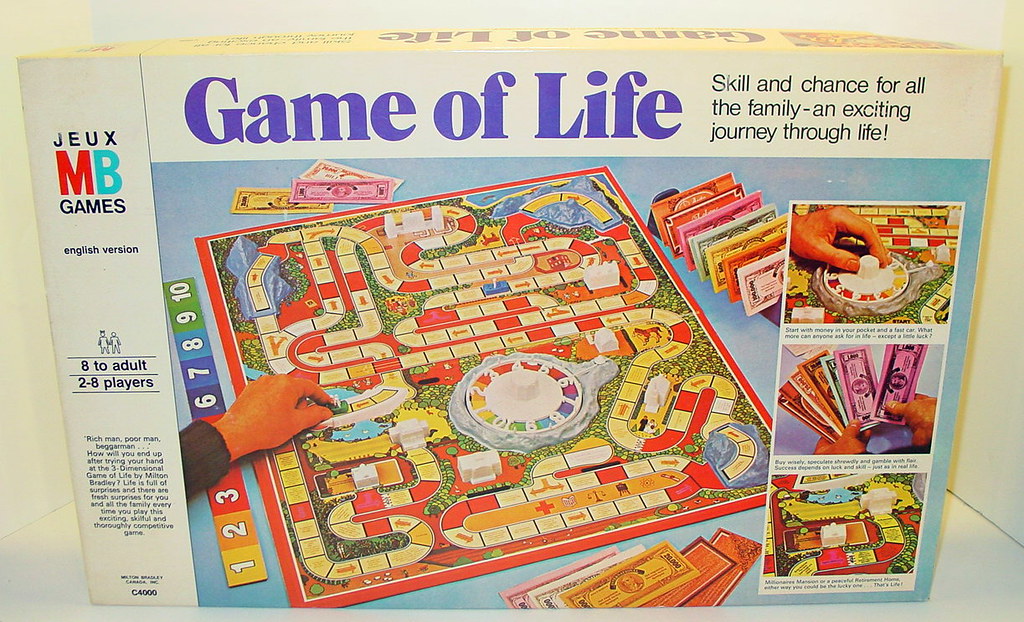
This my fifth love letter, previously I have written in praise of poetry, art, Agatha Christie and the Thoughts from the Criminology Team blog. Since early childhood, I have loved playing games and today’s entry is dedicated to this form of media. In the early years, the focus on fun is paramount, after all who wants to play a dull game? Equally important, the educational aim of games is sometimes explicit, other times less so. Nevertheless, they help us learn to match and sort colours and shapes, to develop our counting skills in an applied setting and improve our memory recall, as well as spelling. Games likes Snap, Happy Families, Hungry Hippos, Snakes and Ladders, Guess Who, Junior Scrabble offer a variety of different ways for children to learn important skills whilst playing. These games enable even very small children to share space, develop important interpersonal skills like taking turns and learn to deal with winning, and of course, losing. Often the latter is a very slow and painful lesson to learn….and one that isn’t always remembered into adulthood!
Of course, one of the most explicit part of playing games is learning the rules of the game, and of course, what happens when we deviate from those rules. It might lead to the loss of a turn or even forfeiture of the entire game. People interpret rules in different ways and families often develop their own “house” rules, but nevertheless there is always an agreed upon set of rules and a way of policing and punishing those who break them.
But once these lessons have been learned, what do games have to teach us as adults? I would say plenty! On a surface level, they offer an opportunity to relax and do something outside of our humdrum lives. Once the games have been purchased, they generally cost nothing to play unlike other forms of leisure time.1 Some can be played alone, others require competitors or even teams. They can aid our thinking, concentration and develop skills of strategy and tactics. They also have the general benefit of not being all consuming (unless at competition level), allowing for conversation to flow. The latter, conversing whilst doing something else, can often be useful for difficult emotional conversations, allowing people to open up without pressure (known colloquially as “health by stealth”).
But do board games have anything to offer to Criminology? Again, I would argue yes! Most games involve chance or luck, will you get the numbers you need, will you have the right pieces/cards in your hand, will the other person play their game in a way that benefits you? It is easy to recognise the role that luck or chance plays in games, but are we equally aware of their role in our lives. More importantly, as criminologists do we fully understand and acknowledge the role played by both in relation to criminality and victimisation?
We have no choice about whether we are born or not, when and where we arrive on the earth, who our parents are. These are all down to forces outside our individual and collective control. Our upbringing, our education, our employment opportunities are largely constrained by geography, money and influence. Compare the opportunities available to a baby born today in Sudan, with one born in the UK, another born in Palestine, and another born in Finland. Compare again, thinking about race, sex, class, disability, sexuality and so on. Very quickly you begin to understand the role played by chance and luck.
So if all of the above are imponderables, how much of a role does luck play in relation to criminality and victimisation? The regular publication of data relating to crime in postcodes, towns/cities and globally show huge diversity in the chance of victimisation. Lucky you, if you were born and live in the ‘Nordic countries of Europe (Norway, Sweden, Denmark, Iceland, and Finland) who rank among the 25 safest globally, most of them also being among the top 10 happiest nations worldwide’. Less fortunate, if you were born in Haiti, Ukraine, Palestine, Sudan or Iraq identified as some of the most dangerous places on earth currently. It is not very difficult to imagine the difference in opportunities in fundamental human rights; food, shelter, healthcare, education and so on. In war ridden nations it is incredibly difficult to separate different typologies of victimisation and for the individuals living under these conditions, it makes no meaningful difference who is/are the perpetrators.
Even if you are living in a “peaceful” state2 such as the UK, there are vast differences in the opportunities available. If you have money you can buy a car to get to work in your evening/night job, if you don’t, maybe you can take a bus, failing that you can walk. Each of those journeys carries its own risks. Your sex, your race, your ethnicity, your sexuality, your abilities/disabilities, your age add the aggravating/mitigating factors and see your risk increase/decrease. All a matter of chance and luck
What about criminality, is this, as the Classical School of Criminology would have us accept, a matter of free will, weighing up the pros and cons and making a deliberate and calculating choice to commit crime? Or can we also identify the same issues of luck and chance as shown above? If your family is loving, everyone has good health, housing is secure, food is plentiful and there are plenty of educational and employment opportunities in your area, would you still choose a life of crime? If there is violence at home, poverty impacts health, housing and regular meals, making it challenging to study or work, would you perceive crime to be a choice?
And what of those board game rules and consequences, real life has its own rules, some written in the forms of laws, others engrained via family, friends, institutions; the norms of our society. In the board game, these rules apply equally (aside from luck and chance) but in real life, not so much. Consider racial and ethnic disproportionality and the treatment of vulnerable women in the CJS, as just two examples. We may all be playing in the same “Game of Life”, but luck, chance and the rules we are subjected to are very different when it comes to criminality and victimisation.
- I appreciate that there are some very expensive board games out there, as well as expansion packs to enhance play. ↩︎
- There are lots of academic arguments around what constitutes a peaceful state, most agree that it more than just the absence of war. Whilst the UK has not seen active warfare on its shores for decades, its military has been involved in conflict throughout the world for more than a century. ↩︎
Share this:


Meet the FBL Student Experience Assistant Team – Kayleigh
My name is Kayleigh, and I am one of the Student Experience Assistants (SEAs) for the Faculty of Business and Law at UON.
I graduated from UON in 2024 with a BA in Psychology with Criminology, and alongside this role I have just started a Master of Research degree. I also work in mental health for the NHS at the weekends. My academic and professional interests are largely around peer support, diversity and inclusion; particularly around the value of lived and living experience, forensic mental health, and neuroscience.
I came to UON in 2021 as a mature student having worked and volunteered within various forensic mental health settings, and I assumed this would be the area I went back into when I finished my degree, but now I’m not so sure… Despite a lot of adversity, university was overall a hugely positive and pivotal experience for me and so I am currently exploring a more academic path. I have a lot of experience to call upon and to share and I’m hopeful that I can support you so that your time at university is positive too.
I am here to support both students and staff in the Faculty of Business and Law by meeting with teams to identify their needs and ensuring students get the right help. As a recent UON graduate, I understand the challenges you might be facing and can offer guidance, connect you with the right people, or just have an informal chat. I have been assigned to support Criminal Justice Studies and Strategy & International Business teams, but support to students is not necessarily limited to these subjects. You can reach out to any of the SEAs for help.
Contact the team at fblseat@northampton.ac.uk, or me directly at kayleigh.willis@northampton.ac.uk. We also hold a drop-in outside LH201, Monday to Friday, 10am-4pm, no booking needed.
Share this:


Meet the FBL Student Experience Assistant Team – Kezia

Hello everyone! My name is Kezia Asante, and I’m part of the Student Experience Assistance Team [SEAT]. I’ll be working with the Criminology and Law departments and am looking forward to meeting you all and providing necessary support wherever it’s needed.
My primary objective in this role is to enhance your overall student experience, and as a recent graduate of the university myself, I understand how overwhelming student life can be. Challenges like balancing coursework, managing deadlines, and navigating university resources can feel daunting, but I’m here to help guide and support you through all of it. Feel free to reach out whenever you need assistance or just a friendly chat!
Choosing criminology to study was a great decision, and if you allow yourself to, you can gain a wealth of knowledge and a fresh perspective on the world. I’ve developed a genuine passion for the subject, particularly because I believe it encourages us to examine the complexities in grey areas that others might view as simply black and white. Criminology has so many different aspects that stem from various fields such as sociology, psychology, law, policing, and forensics. It delves into the root causes of crime, the workings of the criminal justice system, and the societal impacts of crime and punishment and much much more! Moreover, pursuing a degree in criminology can lead you down numerous career paths. For instance, I will be starting my MSc in Cyber Security and Forensics in January, inspired by my interest in the digital realm initiated by my criminology studies.
Overall, what I’m trying to say is to make the most of your criminology studies. Immerse yourself in the subject, engage with your peers and professors, and take advantage of all the resources available to you. Attend workshops, research, and read up on areas of the subject you enjoy and participate in relevant events to deepen your understanding and broaden your perspective. The more actively you engage, the more you’ll get out of it.
Please don’t navigate the university experience on your own. There are many people like me and various support systems available to help you and make your journey easier.
Look forward to meeting you all!
Kezia Asante
kezia.asante-nkansa@northampton.ac.uk

 Thoughts from the criminology team