
Home » Students (Page 5)
Category Archives: Students

Complaint! (For Sara Ahmed)
This poem comes inspired from the recent UCU strikes, and also the underpinning arguements of Complaint by Sara Ahmed. The institution protects itself, while removing those who complain (or in many cases, they remove themselves). It is also inspired by ‘Testimony’ by Irish poet Seamus Heaney.
As higher education burns,
they blame white lecturers who picket,
and the Black and Brown lecturers
no longer willing to be ‘paid in exposure’
to the hull of slave ships. Colonialism’s hot mouth
at the nucleus of HE’s epistemes,
so senior leaders blame lecturers
for neglect. Meanwhile, the upper echelons
play Monopoly with staff pay checks
students left to grieve assignment
work revolving around conveyer belts
like undead corpses between indenture and slavery
it’s a Tuesday morning
a fever of claret runs riot
across picketing lines
turn cloaks to justice and equality,
there’s just ice behind the scab
where hearts used to beat. Back in the 80s,
gay and lesbian activists stood in solidarity
with the miners; and Arthur Scargill
and co scurried to Jayaben Desai at Grunwick
from the main road, you can still hear the screams
of comradery, and ‘we see yous’ …
yet behind picket tea and biscuits,
there are teary smiles –
death behind the bags,
and behind the pyre …
smoke could be seen for miles.
Share this:

UCU Strike 28 February-2 March 2022

More information around the University and College University [UCU] and the Four Fights Dispute can be found here.
Information about the Northampton branch of UCU can be found here and here.
You can also find out why striking is a criminological issue here: https://thoughtsfromthecriminologyteam.blog/2021/12/10/striking-is-a-criminological-matter/ and here: https://thoughtsfromthecriminologyteam.blog/2022/02/18/united-nations-un-world-day-of-social-justice/
Share this:

UCU Strike 21-22 January 2022
More information around the University and College University [UCU] and the Four Fights Dispute can be found here.
Information about the Northampton branch of UCU can be found here and here.
You can also find out why striking is a criminological issue here: https://thoughtsfromthecriminologyteam.blog/2021/12/10/striking-is-a-criminological-matter/ and here: https://thoughtsfromthecriminologyteam.blog/2022/02/18/united-nations-un-world-day-of-social-justice/
Share this:


Meet the Team: Tré Ventour, Associate Lecturer in Criminology
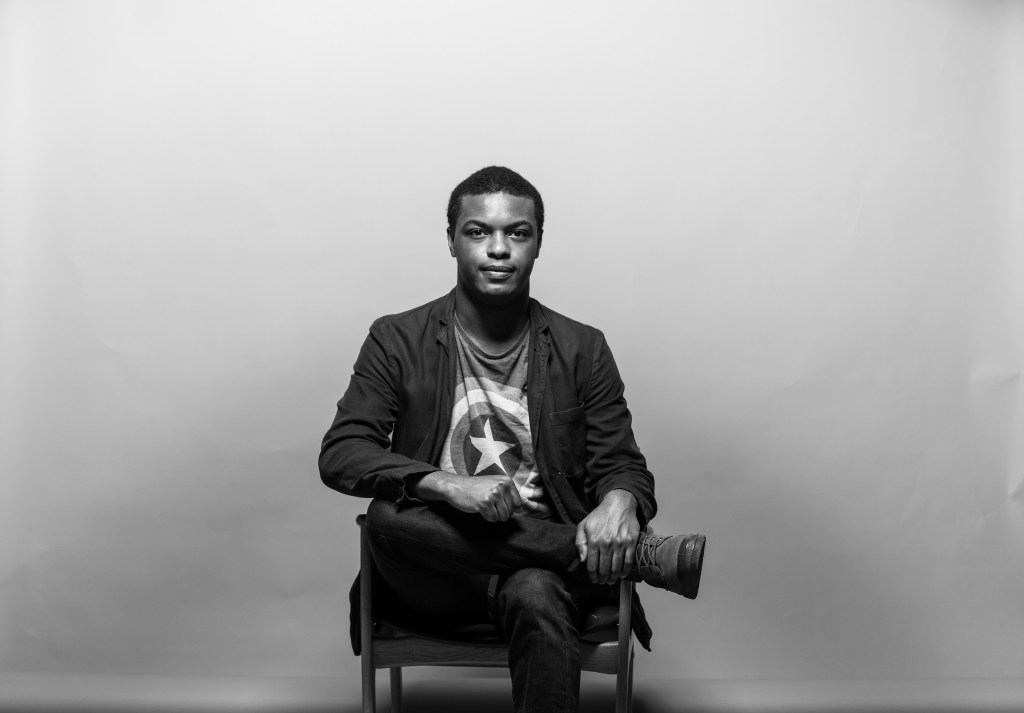
Hello everyone. My name is Tré and I will be one of the student success mentors [SSMs] starting from December 2021. Some of the now third-year criminology students reading this may remember me from when I attended some sessions within my role as a student union sabbatical officer (2019-2020) in their first year. However, as an SSM, I have previously been in some of the same situations many students have as I was also a student at the university (2016-2019).
The BTEC / A-Level-to-University pipeline can be challenging, but not impossible to navigate while the transition from school to university, is a social and cultural change that takes getting used to. Particularly the codes of acting and being so ingrained in university learning and working cultures.
I did my undergraduate degree in Creative Writing at Northampton. But I did my postgraduate degree in a completely different area of study — reading Race, Education, and Decolonial Thought within Leeds Beckett’s Centre for Race, Education, and Decoloniality. My academic interests are in race and social inequalities (but I previously used creative writing to discuss it), with my undergraduate dissertation being Permission to Speak: On Race, Identity, and Belonging. Furthermore, lots of my experience comes from the many talks I have done on Black history and race (including whiteness), further to the social investments I have in the local Northampton community where I grew up. Most recently, I am co-leading a Windrush project with a charity called NorFAMtoN built off an earlier largely Black community-led response to inequalities exasperated from issue relating to the COVID-19 pandemic (a project that is ongoing).
In 2018, I started using my knowledge on race to help organisations and that started with a theatre company called Now and Then Theatre where I was consultant on their play about Walter Tull. This took place in Buckingham and Northants. I became a student union sabbatical officer for Global Majority students in June 2019 where more questions about race occured. Leaving that role in July 2020, the overlap with the murder of George Floyd also saw more questions. And though I had done this sort of work prior to that summer, this time saw me and many of my colleagues being asked to do things where I have been freelancing as a race and Black history educator more consistently since September 2020.
Yet, I fell into criminology (as a sabbatical officer) when criminology programme leads @manosdaskalou and @paulaabowles contacted me to discuss my SU role, possibly in the July or August 2019. Unknown to me then, lots of the work I had done in the community including the types of poetry events I did (could be considered criminological). Over my year in the student union, I did think a lot about what my life would have been like had I done a creative writing-criminology joint honours degree rather than single honours creative writing. Anyhow, enough of whatifs. My life with the team since meeting Paula and Manos has not been the same, as they and Stephanie (@svr2727) convinced to go for my MA.
I didn’t study criminology in a formal capacity, but in terms of understanding crime — race and thus whiteness certainly have roles (which is my area). Criminology via many conversations with the team, pertinently interacting with Paula’s module on violence (and engaging with these students when I was sabb), showed me a context for my institutional experiences at university and elsewhere. Criminology simply added more layers to my understandings of the world. As an artist, I find criminology to be multidisciplinary informing some of my poetry as what happened when I went to Onley Prison in February 2020 showing criminology’s relevance in life beyond theory (as valuable as theory is).
As an artist, I try to approach as much as possible with an open-mind. Yet, as an academic as well, I also try my best to think how the issues we teach also have a human cost. For example, we must not only talk about violence as a purely academic matter. The decisions we make can have consequences. So, here then in your study time, I encourage you to think about the human cost of research (as there is both good and bad). Remember, there is no such thing as ‘being objective’ (there’s always a perspective or an agenda … see what I did there?). Debate with your lecturers, but more importantly debate with each other.
As an SSM, my role is about helping all students. Those that are just starting and also students that have been here for a while. I am here to help students that study at Northampton, including those who came straight from school all the way to those that came to university after a working career before going back to study. However, as an associate lecturer, I’m here specifically for criminology students.
My name is Tré and will be back at the university on a part-time basis starting from December 2021, and I look forward to meeting you all very soon! 😀
More on me here – https://linktr.ee/treventoured
Share this:


Striking is a criminological matter

You may have noticed that the University and College Union [UCU] recently voted for industrial action. A strike was called from 1-3 December, to be followed by Action Short of a Strike [ASOS], in essence a call for university workers to down tools for 3 days, followed by a strict working to contract. For many outside of academia, it is surprising to find how many hours academics actually work. People often assume that the only work undertaken by academics is in the classroom and that they spend great chunks of the year, when students are on breaks, doing very little. This is far from the lived experience, academics undertake a wide range of activities, including reading, writing, researching, preparing for classes, supervising dissertation students, attending meetings, answering emails (to name but a few) and of course, teaching.
UCU’s industrial action is focused on the “Four Fights“: Pay, Workload, Equality and Casualisation and this campaign holds a special place in many academic hearts. The campaign is not just about improving conditions for academics but also for students and perhaps more importantly, those who follow us all in the future. What kind of academia will we leave in our wake? Will we have done our best to ensure that academia is a safe and welcoming space for all who want to occupy it?
In Criminology we spend a great deal of time imagining what a society based on fairness, equity and social justice might look like. We read, we study, we research, we think, and we write about inequality, racism, misogyny, disablism, homophobia, Islamophobia and all of the other blights evident in our society. We know that these cause harm to individuals, families, communities and our society, impacting on every aspect of living and well-being. We consider the roles of individuals, institutions and government in perpetuating inequality and disadvantage. As a theoretical discipline, this runs the risk of viewing the world in abstract terms, distancing ourselves from what is going on around us. Thus it is really important to bring our theoretical perspectives to bear on real world problems. After all there would be little point in studying criminology, if it is only to see what has happened in the past.

Criminology is a critique, a question not only of what is but might be, what could be, what ought to be. Individuals’ behaviours, motivations and reactions and institutional and societal responses and actions, combine to provide a holistic overview of crime from all perspectives. It involves passion and an intense desire to make the world a little better. Therefore it follows that striking must be a criminological matter. It would be crass hypocrisy to teach social justice, whilst not also striving to achieve such in our professional and personal lives. History tells us that when people stand up for themselves and others, their rights and their future, things can change, things can improve. It might be annoying or inconvenient to be impacted by industrial action, it certainly is chilly on the picket line in December, but in the grand scheme of things, this is a short period of time and holds the promise of better times to come.
Share this:



Visiting the Zoo: a staple of privilege
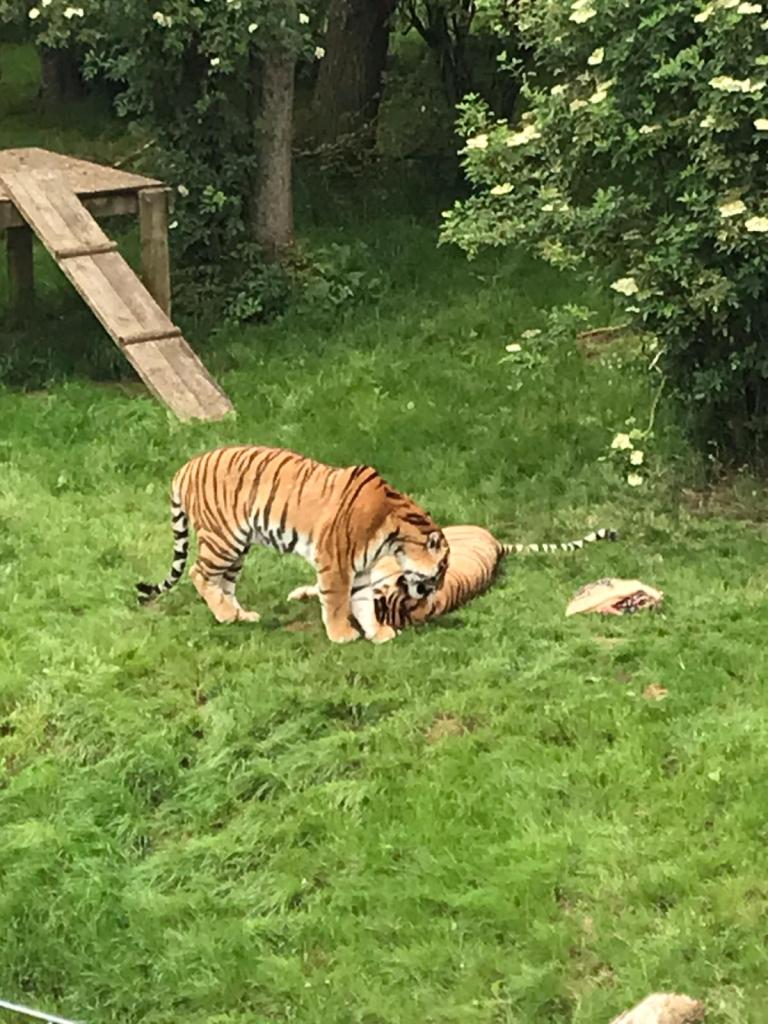
Whilst the current weather may not imply it, we are into the summer months! At this time of year staff and students begin to take a much needed and well-deserved rest after the challenging academic year we have all faced. With this time, holidays, day trips, meals out, picnics, walks and many more joyful pastimes begin to fill up the calendar, although many of us find ourselves quite restricted due to the ongoing pandemic. Nevertheless, we should all make the most of the time off to re-charge and spend time with our loved ones. For myself and my partner, this meant a day trip to Whipsnade Zoo!
Whilst the weather app assured us it would not rain, we spent a fairly windy and wet day walking around Whipsnade Zoo viewing the animals and all in all having a fabulous day. The schools are not out yet, therefore most visitors were adults on annual leave, individuals who I assume are retired, or parents with small children. We had plenty of space and time throughout the day to see the animals, read the information plaques and enjoy a wet but scrummy picnic. I dread to think what it would have been like in the height of the summer holidays!
But where am I going with this other than to brag about my fabulous day at the Zoo and what has this got to do with checking our privilege? Well, it begins with the cost to entire said Zoo. I have not been to a Zoo since I was in my school years. We used to visit Colchester Zoo most summer holidays with the Tesco Clubcard vouchers, which in a nutshell meant you could exchange Clubcard points for vouchers/tickets which included the Zoo. Therefore a trip to the Zoo when we were younger cost petrol money and a picnic (which was always done on the cheap). This is an affordable day out, but we were only a family of 3 (1 adult and 2 children), so not that many Clubcard points required, and quite a minimal picnic. Also we were fortunate enough to have a car which is not the case for all families. So even with the vouchers and picnic I cannot help but reflect and think how privileged we were to be able to visit the Zoo.
The Zoo trip this week cost just short of £50 for a student admission and an adult admission. I did think this was quite a lot. I think about what the cost would be for 2 adults and a child (or multiple children). Already this is gearing up to be an expensive day out. The Zoo has lots of interactive parts for children to engage with and learn from, and of course they have animals. But is the Zoo really aimed at educating all children or is it only those children whose families can afford it (E.I children belonging of a certain socio-economic status)? Once we arrived at the Zoo and looked around the carpark we couldn’t see a Bustop. What about the families who cannot afford a car? The food outlets were extortionate: £4 for a coffee!! Its cheaper in the West End! The same statement although different prices applies to ice-cream. I feel good that we have taken our makeshift picnic and flasks with us: but what about those who cannot?
The long-winded and verbose point I am trying to make is that even everyday things require us to check our privilege. I spoke to my partner on the drive home about the beauty and wonder of the Zoo and how we are fortunate to be able to go and how I was fortunate to go most summers as a child. But once the Clubcard vouchers stopped, so did the trips to the Zoo. There are many who are unable to enjoy the Zoo, to gain from the educational experience of learning about the animals, what they eat, where they live etc. And I can’t help but reflect and wonder is this establishment really inclusive to all? Is there something society can do to break down the class barriers which appear to be present when planning a trip to the Zoo?
Share this:


Thinking Criminologically: Engaging with darkness

Often when you mention the word criminology to lay people outside of the academy, the initial response is “ooh that’s interesting” or “that sounds exciting”. The next step in the conversation usually reverts to the most extreme forms of interpersonal violence, murderers, serial killers and so on. For many, criminology appears to be the home of “whodunnits”. People talk of Ted Bundy, Ian Brady and Myra Hindley, Fred and Rose West and want to know why they did what they did. For decades, the unsolved case of Jack the Ripper has been pored over by authors, television makers and the general public. For those who choose to engage, we have seen the female victims of this unknown man, eviscerated, degraded and ultimately slain, again and again for the reader/viewers’ delectation. This is not criminology.
Criminology recognises there are no winners in crime, only people left shattered, those devastated by their actions or those impacted by criminality. People are left bloody, bowed and bereaved through victimisation by individuals, institutions and the State. Yet just look on a bookshops ‘Crime’ shelves or flick through the programme schedules and you will find no sign of this. As a society we revel in this darkness and package it as entertainment. This is not criminology.
On the news we see discussions around crime and criminals. What should we do? Shall we give the police yet more powers? Shall we give those oh so lenient judges less leeway for discretion? Should we lock the offenders up and throw away the key? Should we bring back National Service? What about a boot camp? Should we consider bringing back the death penalty? How can we teach these people a lesson they won’t forget? Notice that all of these suggestions are designed to be more and more punitive, no discussions are focused around purely rehabilitative programmes, defunding the police or penal abolition. This is not criminology.
The problem with all of the ideas contained within the preceding paragraphs, is they are entirely negative. Criminology despite its focus on crime, criminality and criminalisation, has a positive focus, motivated by empathy and non-violence, if not pacifism. It is about trying to understand complexity and nuance in human and institutional behaviour. It is not interested in simplistic, quick fire, off the cuff answers for crime. It is forward looking, unconcerned with the status quo and more focused on what ought or might be. It intrinsically has social justice at its heart, an overwhelming desire for fairness for everyone, not just some. This is criminology.
This month is Gypsy, Romany, Traveller History Month, this week is also Refugee Week. Both are groups rarely treated fairly, they are criminalised and subjected to victimisation by individuals, institutions and the State. Their narratives have profound importance to our society. These experiences are far more central to Criminology than who Jack the Ripper might have been. This is criminology.
Also the beginning of this week marked the fourth anniversary of the disaster at Grenfell Tower. The graffiti above (I know, @5teveh and @jesjames50!) seems to capture the feelings of many when we consider this horrific tragedy. I taught for the first time on Grenfell in 2020/2021 and again this year. Both times I have been wracked with huge concerns around whether it was appropriate (many of our students are intimately connected), whether it was too soon and whether I could teach around the disaster with sensitivity. Running counter to this was a strong belief that criminology had a duty to acknowledge the disaster and enable our students to also make sense of such horror. In classes we have utilised poetry, music, graffiti and testimony in sessions to give us all space to consider how we can respond as a society. The biggest question of all, is what would justice look like for the bereaved, the survivors, friends, families and neighbours, the first responders? Some of that discussion is focused on the Grenfell Inquiry but far more is on how we can support those involved, what kind of advocacy can we engage with and how we can all raise our voices. As a society we cannot bring the dead back to life, but we can insist that the survivors and their families get meaningful answers. We can also insist that we make room for these individuals and families to have their voices heard. We can demand that fundamental changes are made so that disasters like these do not happen again. That we learn valuable lessons. This is criminology.
Unfortunately, experience tells us that previous victims of similarly horrible disasters do not receive anything that approximates justice, consider the events at Hillsborough in 1989. Likewise, as a society we do not seem able to learn lessons from inquiries, think about the deaths of Victoria Climbié and Peter Connelly. Nevertheless, as humans we have huge capacity for change, we do not need to keep repeating the same behaviours ad nauseum. As scholars of criminology we are well placed to argue for this change, to understand holistically, the complexities of crime and deviance, to empathise and to make space for marginalised voices to be heard. In addition we must be prepared to challenge and advocate for change. Some of us may be pacifist in orientation, but we must never be passive! This is Criminology.
Share this:


Finding focus in office exile

I have now passed a year of being exiled from my office, separated from people for most of the time. A couple of weeks before the first lockdown I was working in another university and we had just a day or two notice to switch to online teaching. As a doctoral candidate I valued the flexibility of being able to work from home, in the office, and in overpriced coffee shops in Manchester’s Northern Quarter. The weather helped with the first lockdown. I would have virtual office working sessions with my colleagues in the criminology department in my garden. I thought I was coping but the reality was I was masking any fear, sadness and the effects of having no human contact. I was training two or three times per day, counting every calorie I ate. I lost a few pounds, got stronger, fitter and felt physically amazing.
We got some respite in the summer when lockdown restrictions were lessened. However, I lost a family member to Covid-19 and still felt unsure and anxious about going out so I didn’t make the most of it. I did have a couple of work sessions in my local library which was a welcome change of scenery. This was short lived as I currently live in Manchester and we have been in either lockdown or tier 3 restrictions for most of the last year. My saving grace was my gym. We had outdoor sessions, new members joined, and I got to see real people, albeit in socially distanced marked off squares of territory on the gym floor. Life was much better then. I left the house most days.
By December’s lockdown I was starting to struggle. With dark mornings and nights there would be days when I wouldn’t leave the front door. I went from training daily to training once or twice per week and some days I wouldn’t get any more than 2,000 steps in. For my, training is my anti-depressant. It keeps me sane, it keeps be focussed and it keeps me connected to a community of people who value it too. For me, this was a worrying sign.
Fast-forward to today, a year on from lockdown 1. I sit here in front of my laptop day in, day out, trying to concentrate, trying to find the perfect playlist to make me concentrate, taking nootropic supplements (legal, not the drugs), brain vitamins and high caffeine supplements to make me concentrate. I sit here researching symptoms and self-diagnosing ADHD. But really, I just need my office. I need an over-priced lemon and ginger tea, I need a commute, I need people, I need to get out of my living room. But I don’t need it at a cost of losing more lives to Covid-19 so I’ll sit in my living room and wait.
For now, as difficult as it is to focus, I manage. I just have to work harder than ever at it. So for all of our students who are also struggling, I will finish with some of my top tips but bear in mind we all learn differently so find what works for you.

Amy’s top study from home tips:
- Host virtual study sessions with colleagues. I have at least 2 sessions per week with a colleague. We start the session by saying hi and having some human interaction before stating our goals. We keep each other accountable by asking if our goals are achievable within the 2 hour frame and suggesting more specific goals. We then mute and work, coming back at the end of the 2 hours to hold one another accountable and share how we have done. I cannot emphasise enough how much this has helped me!
- Write a to do list each day and week with SMART goals. You’re better off having smaller goals that are achievable than bigger goals that are not
- Use the Pomodoro technique. Ordinarily this is 25 mins work followed by a 5 or 10 minute break. There are online tools and apps or you can set a timer. One of my supervisors recently suggested to me to reduce the working session to 15 minutes to account for my reduced concentration span. This is helping!
- Don’t have the same expectations on yourself as you ordinarily would. These are not ordinary times
- Work with your own mind. My brain works well early in the morning so sometimes I have my laptop open at 5.30am. I have friends that work late in the night. I also know I read well in the afternoon and I do my best thinking when I am on a solitary walk in nature
- Set yourself little goals with rewards. Currently, if I finish editing 5 pages I get an episode of Grey’s Anatomy or a cookie (bad idea) or a 10 minute browse on Instagram
- Lean on the resources available to you. At UoN our students are lucky to have a tonne of informative resources on Skills Hub (see the section on ‘How to Study’), our Learning Development team to help with academic skills, a mental health team who can help support mental wellbeing, and a whole host of other services. Ask for help and accept it when it is offered (this I need to work on)
- Listen to a focus playlist. My go to Spotify playlists are here and here
Share this:

Education, education, education: We’ve lost the plot

Some of you might remember Tony Blair’s speech introducing the Labour party’s education manifesto in 2001. In it he proclaimed that education was at the forefront of government policy. Education is often high on government’s agenda even if it is only to berate previous administrations for failing our youngsters. I have watched with interest the current government’s farcical approach to education and in particular the attainment of qualifications during the first period of Covid lockdown and to some extent even felt sorry for them as they grappled with what were not insignificant problems. My benevolence, however, has long been drained as I watch the news more recently only to see the same farce emerging. But what really intrigues me is the conflation of the notion of qualifications and education. It seems to me the clamber to get children back into school is only right given that they are missing out on education and other social aspects. However, I cannot see how the dealing with the qualifications issue can ignore the fact that the students have not received all of their education.
In a previous blog I have used the analogy of a driving instructor giving lessons to a pupil. In that blog the point being made was that the education of the pupil was a two-way enterprise. If the pupil didn’t engage or didn’t turn up for their lessons, then the instructor could not be held responsible for the pupil’s failure in the driving test. But what of the test itself, what is that designed to achieve? It is not simply to provide a person with a driving licence, what would be the point of that? It is to ensure that the person taking the test can drive to a satisfactory standard that would help ensure the roads were safe for all users. So, the point of the driving lessons is to provide the education in ‘road craft’ and the point of the driving test is to test knowledge and ability in that ‘road craft’ to ensure it meets satisfactory standards. The driving licence is a form of certificate that states the driver has achieved the knowledge and skills required.
So, what of education? Surely GCSEs, A levels, BTec and so on are a test of the knowledge and skills acquired. A degree is the same, is it not? How then could we reasonably expect students to pass any of these tests if they have lost significant periods of tutorship or teaching? The suggestion, dumb down the tests in some way by only testing what they have been taught, or as in the case of university students suggestions, be more lenient with the marking. Now as I understand it, that would be akin to saying to a learner driver that because through no fault of their own, they could not engage in all of their lessons, they will only be tested on their ability to park and not on their ability to carry out an emergency stop as they hadn’t been taught the latter. How ridiculous would that be? Imagine then that the very same driver, who now has a driving licence, goes onto some advanced motoring course. A course that starts with the premise that they have all the skills tested in a ‘full’ driving test.
Whilst, I can understand students’ preoccupation with tests and qualifications, I somehow think that government and teaching establishments should be more concerned with education and the knowledge gap. How will they ensure that students have the requisite skills and knowledge? Tony Blair may have said ‘Education, Education, Education’ and subsequent governments might well nod in agreement, but somehow I think they’ve all lost the plot.

 Thoughts from the criminology team