
Home » Student (Page 6)
Category Archives: Student

“Things you need to know about criminology”: A student perspective – Bonnie Middleton (2017-2020)

We are all living in very strange times, not sure when life will return to normal...but if you're thinking about studying criminology, here is some advice from those best placed to know!

The most important module to my understanding of criminology is: All of them! Every module contributes to your understanding of Criminology and all are different and enjoyable. Personally, my favourite module was Violence: From Domestic to Institutional in Year 3; this module ties together everything you know about Criminology; the reasons why we are subjective as criminologists and our ability to look beyond the scope of what we know.

The academic criminology book you must read:
Outsiders: Studies in the sociology of deviance (1963) by Howard Becker. Albeit a dated book, its ideas are relevant and relate to many criminological such as; how and why criminals are labelled and stigmatised; why are the youth demonised; why people reject the norms and values of society and become criminals in doing so.

The academic journal article you must read:
This is a hard one. Articles are great for discovering new ideas and methodologically testing theories. I would recommend reading: Arrigo, J. (2004). A Utilitarian Argument Against Torture, Interrogation of Terrorists. Science and Engineering Ethics. 10(3), pp. 543-572. This article poses many questions for a criminologist which enlightens you to think subjectively and challenge your own views; which is what Criminology is all about. From reading this article you will learn to think critically when faced with a challenging dilemma; the rights of a terrorist and how can the law can be tailored to fit the crime.

The criminology documentary you must watch:
Where do I begin? Louis Theroux and Stacey Dooley are both great journalists and documentary makers. If I had to pick one, I would recommend watching the BBC’s documentary on Grenfell If you watch this documentary you must consider; the government’s response; who is accountable; why are the residents of Grenfell still in temporary accommodation. These are the sorts of questions you should be asking as someone studying Criminology.

The most important criminologist you must read:
Familiarise yourself with the ideas of Lombroso, this will aid your understanding on how criminological theory and ideas have developed overtime through biological, psychological and sociological standpoints.

Something criminological that fascinates me:
Domestic abuse. I had done my dissertation on this as I have a great interest in male dominance and power over women, especially in intimate relationships. Gender plays a key role in this which when examined in depth, will change your view on gender paradigms.

The most surprising thing I know about criminology is: Criminality was believed by Lombroso to be inherited and that criminals possessed physical defects, criminality would be measured by the size and shape of particular body parts; this was later discredited. I can remember learning this in first year and it fascinated me.

The most important thing I've learnt from studying criminology is:
To not judge a book by its cover and to not take everything at face value. Do not be afraid to challenge other’s standpoints and beliefs. Thinking critically is the most important skill to have, search deeper into issues and apply your own thoughts and experiences.

The most pressing criminological problem facing society is:
Mass incarceration and reoffending rates. The UK is yet to move away from the ‘tough on crime’ approach favouring law and order and punishment. The penal system needs to be reformed to ensure offenders are rehabilitated to break the cycle of criminality; definitely educate yourself on political party’s manifesto’s and what they say about crime and justice before voting.

When family and friends ask, I tell them criminology is: I tell family and friends that criminology is such a broad field of study; we look at law, psychology, science, sociology, politics, penal systems, criminal justice organisations, media and much more. From this, you attain the ability to think critically and reflect, it can help you in many situations not just criminological issues. It is an incredibly insightful and enlightening field to study; it opens up many opportunities.
Share this:


Time to hear from our students

As part of their commitment to provide an inclusive space to explore a diversity of subjects, from a diverse range of standpoints, the Thoughts from the Criminology team have decided to introduce a new initiative.
From tomorrow (Sunday 21 June) all weekend posts will come from our students. We know that all of our students have plenty to say, they are smart, articulate and have both academic and experiential knowledge on which to draw. We know our readers will be as impressed as we are, by their passion and their criminological imagination.
Over to you, Criminology Students!
Share this:


“My Favourite Things”: madams1965

My favourite TV show - So many to chose from! Recently finished Narcos and Narcos Mexico. Currently watching Better Call Saul and The Crown

My favourite place to go - Lyme Regis in Dorset. My parents retired there almost 20 years ago & we go down every Easter to enjoy bracing walks along The Cobb, leisurely lunches in village pubs, and fish and chips on the seafront. It’s the first place we’re going once Lockdown is over!

My favourite city - I have two: New York and Rome. I love the energy of New York, the friendliness of the people, the restaurants, theatres and bars – it just has something indescribable. In contrast, Rome is so laid back and chilled. I could sit outside a café in the Piazza della Rotonda, across from the Pantheon all day, just drinking coffee and watching the world go by, and the occasional street entertainers, before they are moved on by the Carabinieri.

And Heidelberg! Sorry I’m just being greedy now, but that is probably one of the most beautiful cities. And nothing beats a lazy cruise down The Necker River in the sun surrounded by all that lush green German countryside

My favourite thing to do in my free time - Read, read, read! Or watch Netflix! Or travel

My favourite athlete/sports personality - Not a sports fan I’m afraid

My favourite actor - Tom Hardy or Gary Oldman

My favourite author - I’ll read anything by anyone, but Jane Austen stands out from the crowd. I also love biographies

My favourite drink - Edinburgh Gin Rhubarb and Ginger Liqueur with ice and lemonade is beautifully refreshing in summer. In the winter I love a coffee flavoured Baileys with a shot of brandy. And all year round it’s red wine. Anyone will do, I’m not fussy!

My favourite food - As you can tell, I love all food!

My favourite place to eat - At home when my husband cooks his signature lamb pasanda

I like people who - don’t judge others, who are respectful and kind, and who make me laugh.

I don’t like it when people - dominate conversations, interrupt or are dismissive of others. And I don’t like bullies

My favourite book - So many I don’t know where to begin. A few of the best books I’ve read would have to include The Five by Hallie Rubenhold, Fanny and Stella by Neil McKenna, and The Fact of a Body by Alexandria Marzano-Lesnevich. I am currently reading The Poisonwood Bible by Barbara Kingsolver, and before that I read The End of the Affair by Graeme Greene, and One Flew Over the Cuckoo’s Nest by Ken Kesey

My favourite book character - At the moment (because I’m reading it) it’s Rachel from The Poisonwood Bible. She’s the eldest daughter of a bible thumping missionary who took his family to The Congo in the 1960s. Rachel is sassy and funny and thinks she’s worldly-wise at the age of 17 but mispronounces her big grown-up words and is completely oblivious to the danger around her!

My favourite film - There are so many brilliant films that I watch over and over, but my all-time favourite has to be Brokeback Mountain. Apart from the fact that the cinematography and music score are amazing, it’s just a story about such pure love and heartbreak, I cry more each time I watch it

My favourite poem - W. D. Auden’s Funeral Blues

My favourite artist/band - Showing my age here – Johnny Cash, U2, Queen, Elton John, but also Florence and The Machine, Coldplay and Mumford and Sons

My favourite song - Coldplay’s Fix You

My favourite art - I don’t have a favourite but like all sorts from Banksy to Lowry to Monet

My favourite person from history - Jane Austen

Share this:


Teaching, Technology, and reality

I’m not a fan of technology used for communication for the most part, I’d rather do things face to face. But, I have to admit that at this time of enforced lockdown technology has been to a large extent our saviour. It is a case of needs must and if we want to engage with students at all, we have to use technology and if we want to communicate with the outside world, well in the main, its technology.
However, this is forced upon us, it is not a choice. Why raise this, well let me tell you about my experiences of using technology and being shut at home! Most, if not all my problems, probably relate to broadband. It keeps dropping out, sometimes I don’t notice, that is until I go to save my work or try to add the final comment to my marking. I know other colleagues have had the same problem. Try marking on Turnitin only to find that nearly all of your feedback has just disappeared in a flash. Try talking to colleagues on Webex and watch some of them disappearing and reappearing. Sometimes you can hear them, sometimes you can’t. And isn’t it funny when there is a time lag, a Two Ronnies moment when the question before the last is answered. ‘You go, no you go’, we say as we all talk over each other because the social cues relied on in face to face meetings just aren’t there. I’ve tried discussion boards with students, it’s not like WhatsApp or Messenger or even text. It is far more staid than that. Some students take part, but most don’t and that in a module where attendance in class before the shutdown was running at over seventy per cent. I’m lucky to get 20% involved in the discussion board. Colleagues using Collaborate tell me a similar tale, a tale of woe where only a few students, if any appear. Six hours of emptiness, thumb twiddling and reading, that’s the lecturer, not the students.
Now I don’t know whether my problems with the internet are resultant of the increased usage across the country, or just in my area. I suspect not because I had problems before the lockdown. I live in a village and whilst my broadband package promises me, and delivers brilliant broadband speed at times, it is inconsistent, frequently inexplicably dropping out for a minute or two. It is frustrating at times, even demoralising. I have a very good laptop (supplied by the university) and it is hardwired in, so not reliant on Wi-Fi, but it makes little difference. I suspect the problems could be anywhere in the broadband ether. It could be at the other end, the university, it could be at Turnitin for instance or maybe its somewhere in a black hole in the middle. Who knows, and I increasingly think, who cares? When my broadband disappeared for a whole day, a colleague suggested that I could tether my phone. A brilliant idea I thought as our discussion became distorted and it sounded like he was talking to me from a goldfish bowl. I guess the satellite overhead moved and my signal gradually disappeared. I can tell you now that my mobile phone operator is the only one that provides decent coverage in my area. Tethered to a goldfish bowl, probably not a solution, but thanks anyway.
If I suffer from IT issues, then what about students? We are assured that those that live on campus have brilliant Wi-Fi but does this represent the majority of our student body? Not usually and certainly not now. Do they all have good laptops; do they all have a decent Wi-Fi package? I hazard a guess, probably not. But even if what they have is on par with what I have available to me could they not also be encumbered with the same problems? We push technology as the way forward in education but don’t bother to ask the end user about their experience in using it. I can tell you from student feedback that many don’t like Collaborate, find the discussion boards difficult to engage with and some are completely demotivated if they cannot attend physical classes. That’s not to say that all students feel this way, some like recorded lectures as it gives them the opportunity to watch it at their leisure, but many don’t take that final step of actually watching it. They intend to, but don’t for whatever reason. Some like the fact that they can get books electronically, but many don’t, preferring to read from a hard copy. Even browsing the shelves in the library has for some, a mystical pleasure.
I’ll go back to the beginning, technology has undoubtedly been our saviour at this time of lockdown, but wouldn’t it be a real opportunity to think about teaching and technology after this enforced lockdown? Instead of assuming all students are technology savvy or indeed, want to engage with technology regardless of what it is, should we not ask them what works for them. Instead of telling staff what they can do with technology, e.g. you can even remotely mark students’ work on a Caribbean island, should we not ask staff what works? Let’s change the negative narrative, “you’re not engaging with technology”, to the positive what works in teaching our students and how might technology help in that. Note I say our students, not other students at other universities or some pseudo student in a theoretical vacuum. We should simply be asking what is best for our students and a starting point might be to ask them and those that actually teach them.
Share this:


“My Favourite Things”: Kiera Slaven
My favourite TV show - Let’s start this off by going full nerd and saying that my all time fave tv show has to be Star Trek. Something that resonates with me is that this TV show paints the possibility of exploration of the unknown and as a global society we’ve constructed that reality. Perhaps not to the extent of beaming onto another space ship but certainly sending our own technology out to Mars…. it just fascinates me. fact check: the show started production in 67’ and we went to the moon in 69’

My favourite place to go - Easy… into nature! I’ve most definitely spent the majority of my life at Sywell Reservoir, Northamptonshire has a beautiful countryside to offer, in the spring/summer I tend to drive out into the small country villages and find a nice spot (usually a farmer's field with a public walking path) and just go for a stroll

My favourite city - Not a city person! I’ve travelled to many great cities but naturally I drift to the outskirts, the small towns, the countrysides. My favourite town would have to be Alice Springs, Australia. That dirt red town is full of so much life, vibrancy, culture, yes there is an evil side to it but there is so much beauty too

My favourite thing to do in my free time - Oh, easy one…. I love visiting second hand, vintage and charity shops. Honestly you find so many great wonders. Usually on the hunt for 60’s/70’s retro vintage furniture. Northampton has a great deal of vintage shops to offer, I would personally recommend the Vintage Retreat, lovely spot for lunch too

My favourite athlete/sports personality - certainly an oddball answer, but it would have to be Rey Mysterio. His identity eluded me when I was younger and he’s been in the business a long old time! (wrestling business that is)

My favourite actor - Jeff Bridges… what a man

My favourite author - H.P Lovecraft, an outsider in every sense of the word. He dove deep into his own mind and questioned the importance of the human race by stripping back the ego that surrounds us, and enforced the notion that actually human beings are not the most important thing in this universe. Also, he brought Cthulu to life

My favourite drink - Johnny Walker Red Label and Irn Bru (Scottish Heritage)

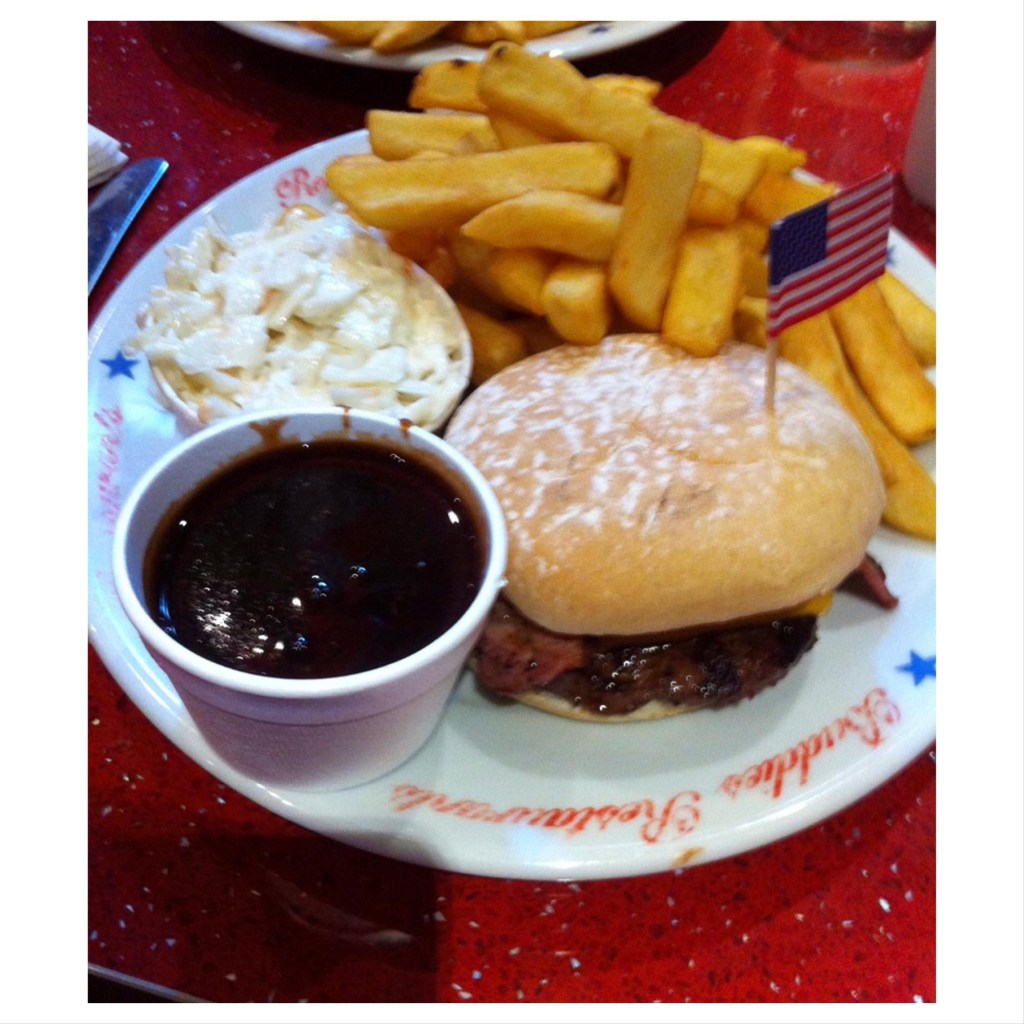
My favourite food - A sloppy Joe burger with extra rib sauce from Buddies. I'm bit rubbish at this because I can’t just pick one thing, so my other fave food would be my Granny’s home-made stovies

My favourite place to eat - Smoke Pit, in Northampton town centre, bit pricey but the food is so worth it

I like people who - are honest with themselves

I don’t like it when people - act out of fear

My favourite book - Collection of books, would have to be the graphic novel series Berserk which follows the lone mercenary Guts, for any comic book/manga fans out there, this one is a must

My favourite book character - Sorry but I have spent a few hours trying to figure my fave book character out and its just not happening. In replacement I will offer my fave TV show character and it would have to be Ragnar Lothbrok (from Vikings). Although I'm sure he exists in a historical book somewhere

My favourite film - No Country for Old Men. Need I say more

My favourite poem - I have never been one to frequent in poems, so I will insert my favourite quote here instead and you may seem to notice a reoccurring theme here (my love for H.P Lovecraft). “The oldest and strongest emotion of mankind is fear, and the oldest and strongest kind of fear is fear of the unknown.” It is certainly poetic

My favourite artist/band - Metallica!!!

My favourite song - Sam Cooke, A Change is Gonna Come and The Eagles, Hotel California

My favourite art - ANYTHING Raoul Dufy. Light hearted bursts of colour that paint the most luxurious and relaxing scenes. Artwork to get lost in

My favourite person from history - Marcus Aurelius. If you don’t know who it is get your google on, you won’t regret it. Fun fact: Aurelius’ personal ethics are informed by the philosophical concept of stoicism, a fascinating philosophical concept and one I deeply resonate with
Share this:


Things I Miss (and don’t) – 5teveh

I was chatting with my wife the other day about household finances in the current situation. My wife has lost her two zero hours contract jobs (I’m not sure why they call it a contract when basically it’s a one-way thing; you work when we want you to and if you don’t agree then you don’t work) and adjustments have to be made. I’m not moaning about our finances, just stating a fact, things have to change. Anyway, my wife declares that whilst she enjoys visiting coffee shops it’s not something she particularly misses. A bit ironic really as we can’t go out for coffee anyway in the current countrywide shutdown. Of course, not going out for coffee saves money. The conversation got me thinking about what I miss, and conversely what I don’t in these unusual circumstances.
In a previous conversation, a friend and colleague said he missed the chats over coffee that we’d have on a weekly basis. I too miss this, but it wasn’t just the chats but also the venue, where we were able to somehow hide ourselves in our own little sanctuary, away from what at times felt like the madness of the daily machinations of campus life.
I never thought I’d say this, but I miss the classes, lectures, seminars, workshops, call them what you will. I miss the interaction with the students and that spark that sometimes occurs when you know they’ve got it, they comprehend what it is you are saying. I don’t miss the frustration felt when students for what ever reason just can’t or won’t engage. I don’t miss travelling into work in all the traffic. At least my fuel bill has gone down, and the environment is benefitting.
I miss seeing my boys, I get to speak to them or text them all the time but its not quite the same. They are grown men now but, they are still my boys. I miss being able to see my mum, she’s getting on a bit now. Sometimes I thought it a bit of a chore having to visit her, a duty to be carried out, but now… well its hard, despite speaking to her everyday on the phone.
I miss being able to pop out with my wife to various antique shops and auction rooms in pursuit of my hobby. I’m repairing an old clock now and need some parts. Ebay is useful but its not quite the same as sourcing them elsewhere.
I miss going out to meet my best mate for a beer and a Ruby (calling it a curry just isn’t cool). We’ve been friends for over forty years now and perhaps only meet up every three or four months. We text and chat but its not quite the same.
But what I miss most of all, is freedom. Freedom to see who I like and when I like. Freedom to visit where I like and to chat to whom I like, whether that be in a coffee shop with the owner or another customer or at an auction with other bidders and onlookers. It’s funny isn’t it, we take our freedom for granted until it is taken away from us. All those things that we moan about, all the problems that we see, real or imagined, pale into insignificance against a loss of freedom.
Share this:


Never fear…. Spring is almost here

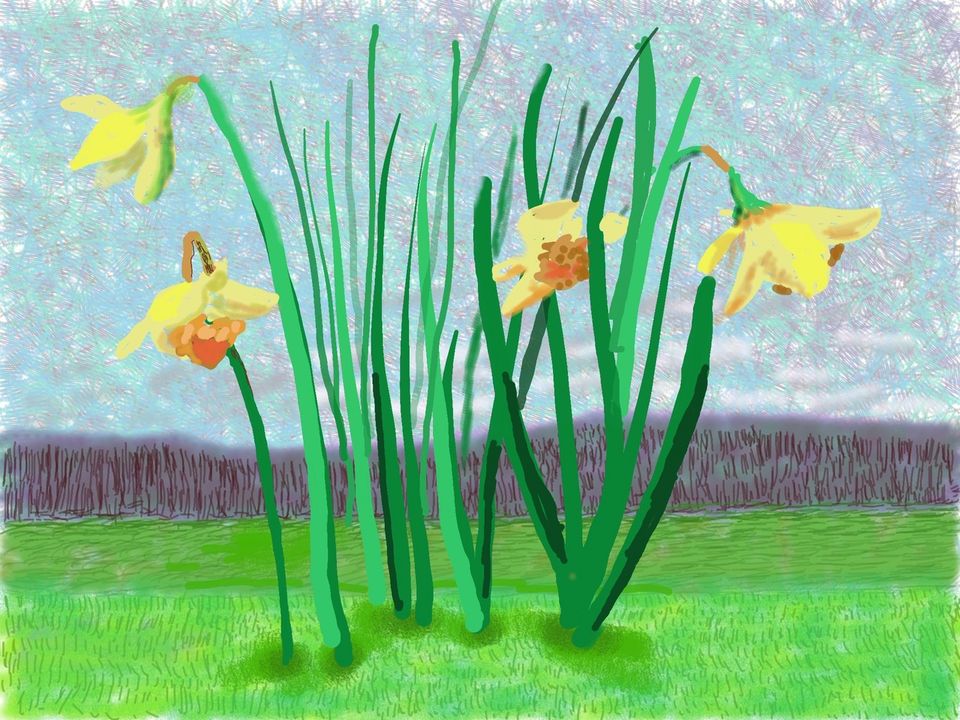
https://shop.royalacademy.org.uk/david-hockney-arrival-of-spring-poster
There is no doubt, we are living in a time of crisis. Everywhere we look there are signs of disorder, disruption and chaos, impinging on our real and virtual lives. You can see it in the faces of family, friends, colleagues, the old and the young from children to pensioners, and everyone in between. There is nothing else on anyone’s lips beyond what they’ve heard, what they’ve seen, how they’ve prepared, or haven’t for this human disaster. Scientific words like Covid-19, Coronavirus, criminological words such as isolation, criminalisation and newly minted words; social distancing are being pushed into conversations. These appear alongside the more prosaic questions, which shops have bread? toilet rolls? milk? eggs? Is this open, is that open, can I get there, am I allowed to go out?
Over the past week I have seen this fear develop, evolve and spread. It threatens to swallow us all up in our panic. Many people, myself included, are desperately trying to maintain the everyday, the mundane, some routine, some semblance of normality. My institution is trying to be supportive, lots of extra email, how to move your teaching online, what advice to give students, how to look after your mental and physical health and that of others, at a time like this. All of this advice is well-intentioned and aims to alleviate fear, after all scientia potentia est, or so we are told.
The problem with trying to recreate our real lives in a virtual environment is far more profound than simply changing our modes of operation. When people are worried, frightened and saddened, no amount of pretending that it is “business as usual” will distract them from the everyday lived experience. We can pretend, but when you are worried about your own health, that of your family, when you don’t know where you are going to be able to get the basics of life from, and for many, how on earth you will be able to pay for it with limited or no income, everything else pales into insignificance.
So far we have seen so much evidence of privilege: those that aren’t worried because they’re healthy, those that stockpile food and other essential products, because they can afford to and those that isolate themselves in the lap of luxury, because they have access to money, property and contacts. All of which feeds the fear by the second, minute and hour. Competing with this negativity are the stories around kindness, the narratives from the NHS, the police, carers, shop workers, the list goes on showing that the human spirit is still burning strong, that we have a choice about our behaviour, our thoughts and our feelings. That we can make a difference, if only we want to.
This week has felt like a nightmare, so dark, so stressed, the walls are closing in on all of us, forcing us into confinement. We look out of the window and nobody is moving outside. It has all the ingredients of my favourite genre, dystopic fiction, but this time we’re all fully immersed and we have no idea how the novel ends. How many will die, how many will find their finances, relationships, employment, education disrupted and/or destroyed?
That changed for me yesterday, when I stumbled upon a message from the artist David Hockney. The message was incredibly simple ‘Do remember they can’t cancel the spring’. I should declare in advance, I am a little biased, he’s one of my favourite artists, but with Hockney’s simple statement he touched on a profound truth. We are humans, infinitely resourceful, extremely adaptable, incredibly social.
Look after yourselves and each other, if not face to face, then virtually. Check in, touch base and create a life line for each other. But also remember to take some time away from the screens, look out of the window and remember the world is still a beautiful place, filled with many wonders, including humankind.
https://www.theartnewspaper.com/comment/a-message-from-david-hockney-do-remember-they-can-t-cancel-the-spring?fbclid=IwAR2iA8FWDHFu3fBQ067A7Hwm187IRfGVHcZf18p3hQzXJI8od_GGKQbUsQU
Share this:


Surviving Corona. #BlackenAsiaWithLove
In my Sabbatical year spent here in Vietnam, it would be disingenuous NOT to speak about the Coronavirus. Without being hyperbolic, this is a crisis of every proportion. Here are a few of my observations.
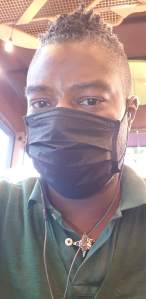
Today it was reported that the Whistle-blower, Dr. Li Wenliang, died of the virus. At the epicentre, Chinese health officials initially claimed the virus would peak and subside within a week’s time. There are claims that those predictions were made due to reticence to pass bad news up the political chain. Undoubtedly, we will celebrate him as a hero, for his efforts to alert the world while Corona was just an epidemic. For context: This same week, one of my state’s senators outed the whistle-blower who originally brought to light the massive corruption of the current White House occupant who was just acquitted. At the same time, in the middle of the (illegal) trade war between these two nations, Chinese health officials reference American health standards to legitimize their efforts to control this pandemic on the international stage – not the W.H.O. If my head weren’t spinning from all this news, then certainly even I am suspicious of my every cough or sneeze to the level of paranoia. Or, perhaps this pseudo-medical mask I am wearing is just rather annoyingly pinching my ears.
M-m-m-my Corona!
Sitting on the ground, people are handling it reasonably well. That is to say, no one is running around screaming or losing their heads. Logistically, the virus could hardly have come at a better time. The city was already emptied out by those who had returned home to celebrate the Lunar New year, known in Vietnam as Tet. The weekend folks were set to return, orders came from on high to close all educational institutions, due to the obvious fact that classrooms huddle groups of people into close, closed quarters – infection heaven. Heck, classrooms are built as fertile grounds! Morally, it’s the exact opposite: What an unsettling ending to the region’s most festive season!
Worse still, there is a travel ban from China, while estimating that “Chinese visitors comprised almost 30 percent of the approximate 15.5 million international travelers who arrived in either Hanoi or Ho Chi Minh City last year and translated into $30 billion from both the domestic and international market.” Who really can imagine the wider economic impact!?!
On my sabbatical, I am working in the language centre of a partner institution of my home university in the UK, which I got to know in my role as Senior Lecturer in International Business. Here, my desk is merely 15 feet away from the customer service desks where students come to register from the language classes, or any one of the ESL tests they must pass to graduate. Basically, at some point, every student at this university must come into this office. Additionally, we are a regional German-language testing centre, garnishing many folks from China (recall that travel ban!). While there are usually 6-7 ladies manning the kiosks, only two to three were called in the first few days to address students’ needs. Now, each day there is only one. Yesterday afternoon, it was announced again that all educational institutions would be closed for yet another week. Since I know that only a few of my colleagues are from Hanoi and are here with their parents, I suppose most of these ladies are home looking after their kids. I cannot imagine how other parents without grandparents nearby are dealing with this crisis.
A colleague told me last week that universities always reserve time within the term for such contingencies, but I imagine two full weeks of cancelled classes is a stretch. Certainly, my concerns have shifted towards the graduating seniors this term. Then, there are also the hourly-paid language teachers our/any centre hires. What about their labour? What’s more, our university is huge and sits next to at least 3 more universities, not to mention the 3 pre-schools I pass on my walk home. Again, all primary, secondary and tertiary schools are all closed for a second week after Tet. There are over 30,000 students, lecturers and staff. My husband has a similar gig down the road which boasts many, many more.
There are entire food and transportation economies woven around all these campuses. Most visibly, there are a host of corporate café chains, as well as typically Hanoian tea-stalls and street-food kiosks selling fast-food ranging from variations of noodle soups, to anything that can be deep-fried, steamed or cooked over a charcoal fire. Naturally, this Kentuckian spends way too much time at the grilled chicken lady. She does feet, as well as drumsticks and wings which she stretches out onto skewers and serves with hot sauce (so there’s no need to carry any in my bag). Most of these food outlets closed for Tet, but many simply have not re-opened since. The few that are open are virtually empty, save for the few pedestrians and commuters passing by, or the motorbike taxis that station themselves around each entrance to the campus alongside the tea-stalls. At least apparently, their persistence offers moral support, though it is possible that economically, there ain’t enough business between them. Enough?
Since the outbreak, I’ve regularly received text messages from the Ministry of Health, as has been widely reported in global media. The messages are in Vietnamese, which Google translates in 1-click just by copying the text. This is all –perhaps strangely- reassuring. No, it is very reassuring. The same messages are also sent straight to my phone via regionally popular chat programs such as Zalo. ‘Google Translate’ is integrated into that programme, too, like a virus. There, MoH’s chat messages include links to extended articles, especially details on how individuals can protect themselves, plus further info such as: “All hospitaliszation costs, medications, and testing costs for nCOV-positive patients are free.” There are layers of ways of spreading knowledge about the impact of potential outbreaks of disease, especially since SARS. It’s refreshing to see social media used so purposefully.
The streets are vacuous and quiet. Ordinarily, Hanoi is a loud, crowded, motorbike ridden city, so this peace is…(sigh)…morbid. Again, there are no visible signs of panic on the streets. It’s lunchtime here in the office. While I was engulfed in writing this blog-post, everyone else has quietly slipped away. This is the first time that I find myself alone in this building. All I hear are birds chirping outside, and a few horns blowing in the distance. The parking lot is empty. I’m going home.

For the courage of Dr. Li Wenliang (Photo from TheGuardian.com). May his family and friends at least know that his courage to speak truth to power has saved lives. May he Rest in Power.
Share this:

Criminology Society!
President: Natalie Humphrey
Secretary: Maisie Storr
Treasurer: Megan Petford
As many of you are aware, back at the beginning of the year, the Criminology was set up. However, I will admit we have been very lacking with content. I am writing this blog to try and get the word out and become proactive. This society could be something that bring all students studying criminology, joint and single honours, together. We have a few ideas in the works, with our first meet up being a movie night. This will be happening in the next few weeks, where we will be watching the new Ted Bundy film, with Zac Efron. Our other ideas include, visiting a court, an escape room and we are hoping for an abroad trip at some stage. However, we need many more suggestions from those who are part of the society. Please feel free to add our social media which I will leave at the end of this blog. We will be posting mainly on our Instagram where we have polls for you to partake in, asking you what you want from the society. If you haven’t already, and are interested, please visit Northampton’ Student Union website where you can officially join the society. Any suggestions would be really appreciated, so just contact us through social media to get your voice heard!
Twitter: @uon_criminology
Instagram: criminologysociety_uon
Share this:


20 years of Criminology

It was at the start of a new millennium that people worried about what the so-called millennium will do to our lives. The fear was that the bug will usher a new dark age where technology will be lost. Whilst the impending Armageddon never happened, the University College Northampton, as the University of Northampton was called then, was preparing to welcome the first cohort of Criminology students.
The first cohort of students joined us in September 2000 and since then 20 years of cohorts have joined since. During these years we have seen the rise of University fees, the expansion of the internet and google search and of course the emergence of social media. The original award was focused on sociolegal aspects, predominantly the sociology of deviance, whilst in the years since the changes demonstrate the departmental and the disciplinary changes that have happened.
Early on, as criminology was beginning to find its voice institutionally, the team developed two rules that have since defined the focus of the discipline. The first is that the subject will be taught in a multi-disciplinary approach, widely inclusive of all the main disciplines involved in the study of crime; so alongside sociology, you will find psychology, law, history, philosophy to name but a few. The impetus was to present these disciplines on an equal footing and providing opportunity to those joining the course, to discover their own voice in criminology. The second rule was to give the students the opportunity to explore contentious topics and draw their own perspective. Since the first year of running it, these rules have become the bedrock of UoN Criminology.
The course since the early years has grown and gone through all those developmental stages, childhood, adolescence and now eventually we have reached adulthood. During these stages, we managed to forge a distinctiveness of what criminology looks like; introducing for example a research placement to allow the students to explore the theory in practice. In later years we created courses that reflect Criminology in the 21st Century always relating to the big questions and forever arming learners with the skills to ask the impossible questions.
Through all these years students join with an interest in studying crime and by the time they leave us, to move onto the next chapter of their lives, they have become hard core criminologists. This is always something that we consider one of the course’s greatest contribution to the local community.
In an ordinary day, like any other day in the local court one may see an usher, next to a probation officer, next to a police officer, next to a drugs rehabilitation officer, all of them our graduates making up the local criminal justice system. A demonstration of the reach and the importance of the university as an institution and the services it provides to the local community. More recently we developed a module that we teach in prison comprised by university and prison students. This is a clear sign of the maturity and the journey we have done so far…
As the 21st century entered, twin towers fell, bus and tube trains exploded, consequent wars were made, riots in the capital, the banking crisis, the austerity, bridge attacks, Brexit, extinction rebellion, buildings burning, planes coming down, forest fires and #metoo, and we just barely cover 20 years. These and many more events keep criminological discourse relevant, increase the profile of the subject and most importantly further the conversation we are having in our society as to where we are heading.
As I raise my glass to salute the first 20 years of Criminology at the University of Northampton, I am confident that the next 20 years will be even more exciting. For those who have been with us so far a massive thank you, for those to come we are looking forward to discussing some of the many issues with you. We are passionate about criminology and we want you to infect you with our passion.
As they say in prison, the first 20 years are difficult the rest you just glide through…

 Thoughts from the criminology team