
Home » Student experience (Page 6)
Category Archives: Student experience
Your Name Is Not BAME
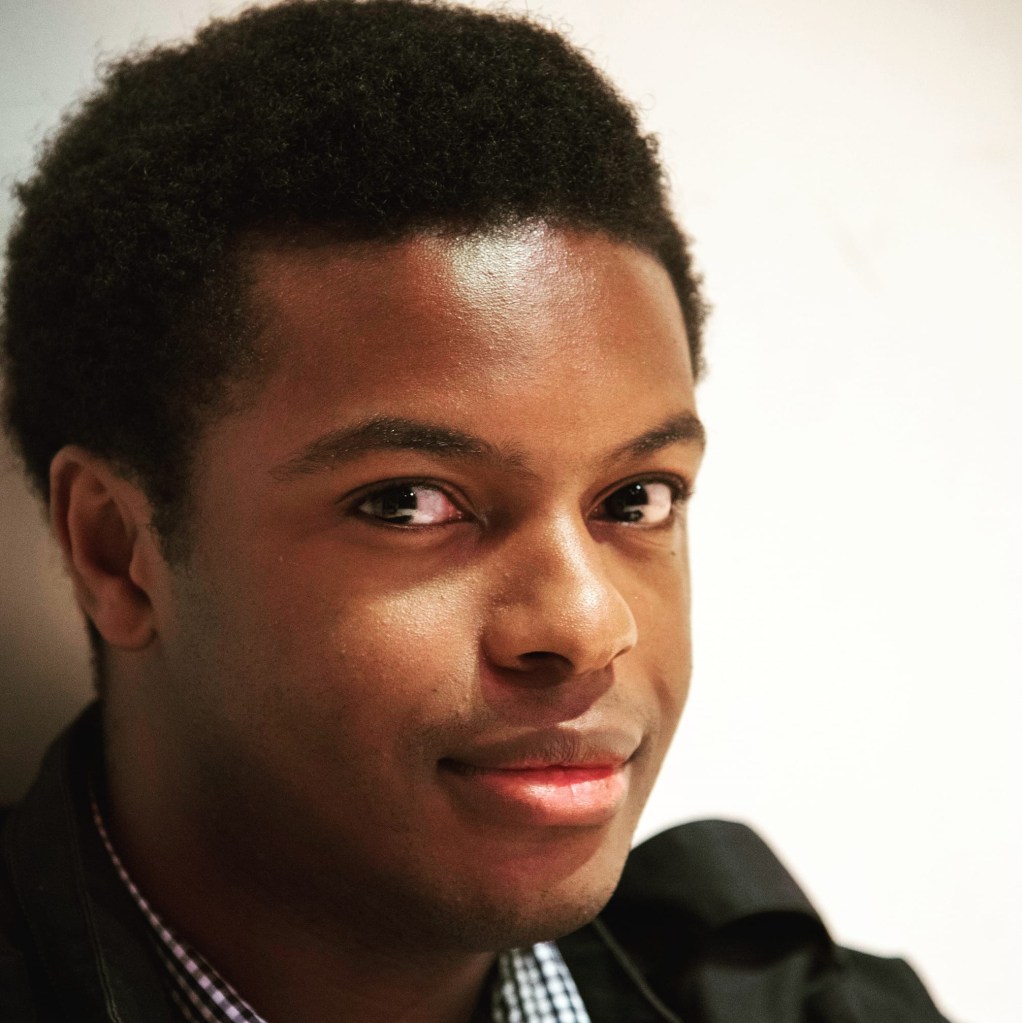
My name is Tré Ventour and I am the Students’ Union’s Vice President BME Sabbatical Officer. When I’ve asked students what BME stands for, most have been clueless – Black Minority Ethnic. The same could be said for BAME – Black Asian Minority Ethnic. I was elected to represent ethnic minority students. But I’ve been asking myself how much longer will this 47% be an ethnic minority? At Northampton, they will soon be the majority. This 14,000-student university in which nearly 7000 fit into this BME box.

Pigeon-holed. To be put into a box. I don’t like to think in boxes. I try not to think in labels but in this world, it’s naive to be colourblind. In the education sector, in this day and age, especially at Northampton, to not see race is to ignore the experiences of nearly 7,000 students – nearly 7,000 stories about potential hate crimes, and what about BAME members of staff? We must see race. We must see sex, class, and gender (all genders).
To be colourblind is to live life high on privilege – to exist without the consequences of hate crime. Some people live with racism, sexism and / or homophobia all their lives.
Many say “there’s one race, the human race.” That may be true but how comfortable must you be in your existence to come to that notion? And then push that notion on those who experience racism on a daily basis.
When I’ve spoken to students about BAME or ethnic minority, they say “Just call me by my name.” Students are flesh and bone, more than acronyms. And I do what they tell me to do (in a manner of speaking / within reason). I’m not Vice President, I’m not Mr Ventour; I am Tré and I am here to help students, to represent students (of colour) – more so Black students that look at White authority and see invader. Who I have heard compare university to apartheid South Africa – one in, one out – to a Zimbabwe under British rule – De Beers, Rhodes and racism. Fear and exclusion.
Call them minorities, call them BME, call them BAME. Yet, this acronym just seems like coded language for Black. And at Northampton, when people say BME or BAME, they mean Black students, so just say what you mean, “Black.”
And if these labels, if these pigeon-hole terms help Higher Education solve issues like attainment perhaps it’s worth it. But what I can say is that not all Black experiences are the same. To be a Black British student is not the same as to be a Black international from Africa, the EU or elsewhere.

But to be a person of colour in this country is to be immigrant, British or otherwise. To be overly polite. To be overly grateful or gracious. To be a good immigrant.
Share this:


How to prepare for a year in University

In our society consumerism seems to rain supreme. We can buy stuff to make us feel better and we can buy more stuff to express our feeling to others and mark almost most events around us. Retail and especially all the shops have long been aware of this and so they have developed their seasonal material. These seasonal promotions may have become consumer events now although they do signify something incredibly important to culture and our collective consciousness. There is time for Christmas decorations and festive foods, Easter time and chocolate eggs, mother’s day and nauseating cards father’s day for equally grinchworthy cards. There is valentine’s day to say I love you in full fat chocolates, Halloween to give little kids rotten teeth and a red poppy to remember some of our dead. To those add the summer season with the disposable BBQs and of course the back to school season!
The back to school is one of the interesting ones. Geared to prepare pupils and parents for going back to school and plan ahead. From ordering the uniforms to getting all the stationery and books required. I remember this time of the year with some rather mixed emotions. It was the end of my summer holidays, but it was also the time to get back to school. Until one day I finished school and I went to university. Education is seen as part of a continuous process that we are actively involved from the first day at school to the last day in high school and more recently for more people also involve the first day of going to university. Every year is more challenging than the next, but we move up and continue. For those of us who enjoy education we continue the journey further to further or high education.
There is something to said about the preparation process coming to University; it is interesting seeing advertisements on education this time of the year on the tv and social media promoting stuff for this transition; from the got to have smartphone to the best laptop, the fastest printer scanner all in one thingy to the greatest sound system and many more stuff that would get you ready for the year ahead. Do they really help us out and if not, what do we got to do to prepare for coming to university?
Unfortunately, there is no standard formula here but there is a reason for that. Higher education is adult education. This is the first time in our educational journey that we are sitting firmly on the driving seat. We choose to study (or ought to) what we wish to study. It is an incredibly liberating process to have choice. This however is only the beginning. We make plans of our time. In higher education the bulk of the time required is independent study, and as such we got to negotiate how we will plan our time. We got to decide which reading we are going to do first which notes to read what seminar we shall prepare and what assignment we will make a draft of.
There will be days spent in the library looking for a book, days in a coffee shop talking to fellow students about the seminar reading, days in the learning hub working on an assignment. There are highs, lows and everything in between. But regardless of the emotion at every stage thee will be a sense of ownership of knowledge.
In the first couple of sessions, the bulk of the students keep quiet expecting the correct answer to be given. One interpretation or one truth that describes all. It takes a few times before the realisation emerges that the way we analyse, and project knowledge can be different provided we go through the same processes of scrutiny and analysis. Then conversation emerges and the more reading the better the quality of the ideas that shall emerge.
The first year at University is definitely a declaration of independence and the realisation that we all have a voice. Getting on to the road on empowerment. This is a long journey, and on occasions arduous but incredibly rewarding because it leads to an insight greater than before that removes ignorance and lifts the veil of the unfamiliar.
To our newest students – Welcome to the University and to our returning 2 and 3 years – Welcome back!
Share this:


The same old rhetoric, just another place
 My sister phoned me the other day in great excitement. She’d just met a former criminology student from the University of Northampton, and she had an awful lot to say about it. She wasn’t in her hometown and had asked directions from a stranger to the river embankment. Having visited the embankment, she returned to town only to bump into the stranger again who enquired whether she managed to find it. They ended up chatting, my sister can do a lot of that, and she found out that the stranger was a police officer. My sister asked whether she knew me, why she would ask that I have no idea, it seems that she has formulated some notion in her head that all police officers must know each other or at least know of each other. This is the bit that my sister got so animated about, yes, the stranger did know me, I’d taught her at the University, and she was now in a budding police career. Apparently, I had done so much to help her. Now I don’t know about being that helpful and I suspect that many of my colleagues played a part in her success story, but it reminded me about what it is that we do and aspire to do as lecturers.
Whilst waiting to play my part in talking to school children the other day I started to read a new edition of a seminal piece of work on policing, The Politics of the Police (Bowling et al., 2019). The preface alone makes interesting reading and in ‘mentioning populist political reactions towards crime’, ‘zero tolerance of the marginalised and outsiders’ and ‘laissez-faire economics’ that promotes individual interests, my mind turned to the managerialist ideals that have dogged policing for over three decades. Those ideals saw the introduction of performance indicators, targets and the inevitable policing by objectives (Hallam, 2000), that resulted in some quite appalling manipulation of data and a diminution of service rather than an improvement. The problem was that the targets were never achievable and were simply put in place for managers to simplify the social world over which they had no control. What didn’t get measured, because it never could be, were the myriad of tasks that police officers and staff undertake daily. Dealing with people with mental illness, searching for missing persons and dealing with minor disturbances are an example of just a few such tasks. Bowling et al. (op cit.) subscribe to the notion that the job of the police is to help maintain social order, an ideal that does not lend itself to measurement. Counting the number of crimes committed in an area or the number of detected crimes is only an indication of failure, not success.
How does that policing narrative fit in with my opening paragraph? The former student was not an ideal student from a managerialist viewpoint. She didn’t attain so called ‘good grades’, I’m not even sure if she fully completed her studies. In terms of performance measurement, she doesn’t even feature and yet she, like so many others we have seen in Criminology, has flourished. Whilst concentrating on ‘retention and progression’ and ‘fails’ and ‘good grades’ we neglect the very reason we exist. Just as in policing where the figures were pored over by managerialist who had not slightest notion of the reality of the social world, so too are we in danger of simply seeking pleasing statistics to keep the wolves from the door because explanations of real success and failure are too complex for managers to understand or manage.
Imagine a world where the police just helped maintain social order, where probation were not plagued by notions of payment by results, where patients were just seen in A&E in a reasonable time and where lecturers just opened the minds of students and allowed them to think for themselves. Imagine the time and expense that could be saved and reinvested in providing real service and dare I say it ‘value for money’ if we stopped gathering meaningless data. Imagine managers casting aside the shackles of neoliberalist ideals and managing people, not using numbers as an indication of failure and impending doom. We can but dream, but my reality, as I’m sure is the reality of many of my colleagues, is the success stories that I occasionally hear and can reminisce about. No amount of number crunching can take that away and nor will it ever provide evidence of success or failure.
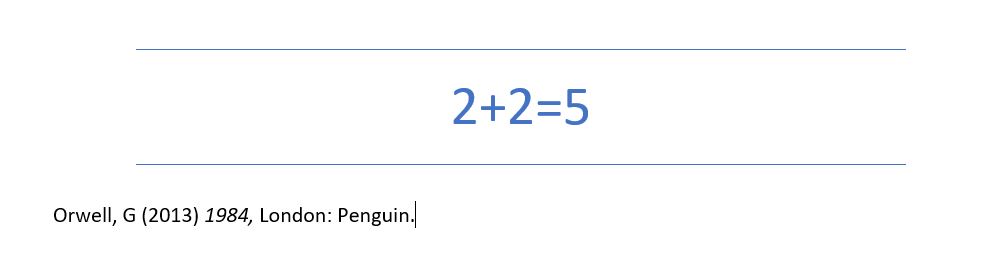
Bowling, B. Reiner, R. and Sheptycki, J. (2019) The Politics of the Police. (5th ed.) Oxford: OUP.
Hallam, S. (2000) Effective and Efficient Policing: Some Problems with the Culture of Performance, in Marlow, A. and Loveday, B. (eds.) After MacPherson: Policing after the Stephen Lawrence Inquiry. Lyme Regis: Russell House
Share this:


The Unbreakable Bond of Criminology

Every student has a different experience in their studies, be it through what they have studied, who they studied with or even where they studied. “Team Cops and Robbers” studied the same degree, the same modules at UON, yet we had different experiences. However what we share (and are all very fond of) is how positive the experience was, tackling the stresses (and joys) of the degree as a trio. We each offer a brief overview of our experience as a member of “Team Cops and Robbers”, who graduated in 2015 and still remain very involved in each other’s lives…
Jes: I was a late comer to Team Cops and Robbers, as Emma and Leona had already bonded without me (rude I know!). We were thrown together in Drew’s 2nd year History module, where there were only a few Crim students – so they didn’t get much of a choice with regards to me joining, the then, duo. And the rest as they say is history! What stemmed from there is quite remarkable; we all had own our strengths when it came to Crim. My recollection is Emma knew everything about everything, Leona kept us all motivated and on top of our seminar preparation and I kept us glued to the library and bossed us around -especially with group work (my car Geoffrey was an unofficial member of the gang taking us to and from Park campus). Although we took the same modules, due to our differing interests, we all did different assignment questions and had very different ways of writing and tackling assessments. In my third year, I distinctly remember Emma and Leona reminding me to take time to myself and to not live 24/7 in the library; and had they not been there to encourage me to breathe, it is likely I would have burned out! They were not afraid to question my views, or understanding, or challenge my bossy attitude when it came to group work, for which I am very grateful! And still today, even though we are no longer studying together, they keep me motivated with the MSc, sending me motivational gifts as a reminder that even though they are not studying with me, I am not alone! My academic journey would have been very different had it not been for our trio, and likely would not have been as successful.
Leona: Sometimes being in class with friends can be detrimental as you end up spending so much time having fun, you end up forgetting the work side of uni. However when you meet friends who are so determined to do well and hard-working, it can really motivate you to push yourself. Myself, Jes and Emma became a power trio; encouraging each other, motivating each other and always making sure we were working together for group projects. We are all completely different when it comes to learning but I think these differences really helped us. Learning from them really helped me to improve my own standard of work, and having the girls’ input and guidance throughout, really encouraged me and helped me gain confidence in my own voice. Plus it made doing all the studying we did much more bearable. I’m sure sometimes it took us longer to get through everything as we would be half working, half chatting, but as a trio it meant we could help each other if we got stuck or go for coffee breaks if we were bored or unmotivated. Having Jes and Emma there with me meant there was always someone there to go through notes with, always someone to explain something in a different way if I didn’t fully understand something, always someone to motivate me when I was exhausted and didn’t feel like working any more. It meant that my viewpoint expanded as I learned from their experiences and that once we had all finished writing our essays we could share them with each other to check, critique and make suggestions for improvement. But more than all that, it meant there was always someone there to help you balance the workload, someone to tell you when to take a break, and to “day drink” in the SU, explore winter wonderland, or have a Disney film day. During my time at uni these girls inspired me to work harder, and to really challenge myself to improve on everything I was doing. Without them there to encourage me and spur me on, I don’t think I would have come out with the grade I did, and I am certain that my uni experience wouldn’t have been half as memorable.
Emma: Meeting Jes and Leona was one of the best things about university. Not just because they are now two very dear friends of mine, but because we were vital to each other’s sanity at uni. I met Leona first in welcome week with a very interesting exchange asking if I was at the right seminar and proceeding to tell her my name, that I was from the south west and that I liked reading about serial killers. Leona reciprocated with the main difference being that she was from the north and from there our friendship blossomed. Jes was some girl who sat with another group of people. It wasn’t until 2nd year that Jes really came into our friendship group and “Cops and Robbers” was formed. We all had strengths and weaknesses that helped us when it came to group work. Jes was always super, super organised, having her essays completed with weeks to go. Leona was always bubbly and would follow Jes with completing her essay with time to spare. Me… I would research and collect quotes and references and then write my essays with 48-24hrs to go, as I liked the time pressure. This changed in my 3rd year though as being around Leona and Jes, they moulded me and proof read my concepts and challenged me back on things. Any time we had group work, I knew we would do well because as a trio we kicked ass! We did not always have the same views in our seminars and would often debate but we would always leave as friends. Best advice for getting through university sane, is to find people who are fun, you get on with and drive you to be the best.
Hopefully what is clear from each of our perspectives is how important we were to keeping each other (relatively) sane! Your friendship groups during your studies are essential to keeping you happy, but also keeping you motivated! Whilst it is independent studies, and at the end of the day is YOUR degree; the input from friends and family will shape your own ability and attitude. If you find the right group, hopefully you will find that they push you, support you and challenge you!
Share this:


Ignorance to curiosity

My name is Sean, I started studying Criminology at the University of Northampton in 2012, graduating in July 2016.
I started University as a switched off young man. I was very much in tune with media and social attitudes as wearing them cost very little and seemed to reap gratification. Studying was always enjoyable as it sparked my brain in ways television and games, or at least my choices in such, didn’t. Appreciating the concept and the opportunity however was always lacking in my 18 year old self. Coming to University and experiencing the electricity of passion mixed with contempt was very perplexing time. Not for long had I decided to think freely or passionately; choosing to study Criminology was a start. Meeting peers and idols of simultaneous do-good and work little nature, was an intense influence. Gratification ultimately came from within and this was the basis to which I began to restructure myself.
Personally, the highest credit should be placed with my course leaders and the content provided. Never in an academical setting had I experienced someone ask me so many questions, yet rather than make me feel stupid; made me feel unprepared. Rather than build themselves up to be superior and towering; made them feel wise and welcoming. It was this, paired with the already enticingly dark yet morally complex content of Criminology that lead to me to free many barriers and much ignorance. This is when the real questions followed and the search for real answers began. Never before had I truly questioned what I had read, seen, heard, even felt or experienced and wholly questioned myself.
This change truly opened a new way of living for me. I am fully aware that such reasoning and ways of thinking could been explored previously, however it was my ignorance and choices, rebellion and ego, that locked these gates. In reference to the timeless ‘Nature vs Nurture’ topic; it was within my path that University, Criminology, @paulaabowles and @manosdaskalou were to be the ones to trigger the break in the lock. Now, admittedly, this was not just an overnight spawning of a butterfly from a larva. I still, like many in life, held onto what was familiar with a tight grasp as for an ignorant; change is to admit defeat. Furthermore, to change, to really change, requires dedication and belief. But once logically thinking, questioning and reasoning, alongside giving in to pure curiosity; it is extremely hard not to follow the exciting direction within a moral compass.
From here I can genuinely say I have enjoyed life more and all of its experiences. I have appreciated people more, and taken much more time to try and understand exactly where they stand and come from. I have spent a long time questioning everything, looking for answers or options wherever I can, trying to better myself as a human and continuing to do so. I am honestly far from where I would like to ideally be, but I am truly proud of my experience and change. When I finished University I saw this as the end of my further education, and having worked full time for a few years I could feel my curiosity shift towards less academic interests and the passion begin to fade. However it was not long before a shift back began. This is where I came to a conclusion, which fills me with a happy heart when taken with a positive perspective, that we are all students; students of life. The stronger my curiosity is, the more passionately I will study. So thank you, Criminology Team, for igniting mine. I intend to try and share this passion wherever I go.
Share this:


The Lure of Anxiety

Helen is an Associate Lecturer teaching on modules in years 1 and 3.
I wear several hats in life, but I write this blog in the role of a lecturer and a psychologist, with experience in the theory and practice of working with people with psychological disorders.
In recent years, there has been an increase in awareness of mental health problems. This is very welcome. Celebrities have talked openly about their own difficulties and high profile campaigns encourage us to bring mental health problems out of the shadows. This is hugely beneficial. When people with mental health problems suffer in silence their suffering is invariably increased, and simply talking and being listened to is often the most important part of the solution.
But with such increased awareness, there can also be well-intentioned but misguided responses which make things worse. I want to talk particularly about anxiety (which is sometimes lumped together with depression to give a diagnosis of “anxiety and depression” – they can and do often occur together but they are different emotions which require different responses). Anxiety is a normal emotion which we all experience. It is essential for survival. It keeps us safe. If children did not experience anxiety, they would wander away from their parents, put their hands in fires, fall off high surfaces or get run over by cars. Low levels of anxiety are associated with dangerous behaviour and psychopathy. High levels of anxiety can, of course, be extremely distressing and debilitating. People with anxiety disorders avoid the things they fear to the point where their lives become smaller and smaller and their experience severely restricted.
Of course we should show compassion and understanding to people who suffer from anxiety disorders and some campaigners have suggested that mental health problems should receive the same sort of response as physical health problems. However, psychological disorders, including anxiety disorders, do not behave like physical illnesses. It is not a case of diagnosing a particular “bug” and then prescribing the appropriate medication or therapy to make it go away (in reality, many physical conditions do not behave like this either). Anxiety thrives when you feed it. The temptation when you suffer high levels of anxiety is to avoid the thing that makes you anxious. But anyone who has sat through my lecture on learning theory should remember that doing something that relieves or avoids a negative consequence leads to negative reinforcement. If you avoid something that makes you highly anxious (or do something that temporarily relieves the anxiety, such as repeatedly washing your hands, or engaging in a ritual) the avoidance behaviour will be strongly reinforced. And you never experience the target of your fears, so you never learn that nothing catastrophic is actually going to happen – in other words you prevent the “extinction” that would otherwise occur. So the anxiety just gets worse and worse and worse. And your life becomes more and more restricted.
So, while we should, of course be compassionate and supportive towards people with anxiety disorders, we should be careful not to feed their fears. I remember once becoming frustrated with a member of prison staff who proudly told me how she was supporting a prisoner with obsessive-compulsive disorder by allowing him to have extra cleaning materials. No! In doing so, she was facilitating his disorder. What he needed was support to tolerate a less than spotless cell, so that he could learn through experience that a small amount of dirt does not lead to disaster. Increasingly, we find ourselves teaching students with anxiety difficulties. We need to support and encourage them, to allow them to talk about their problems, and to ensure that their university experience is positive. But we do them no favours by removing challenges or allowing them to avoid the aspects of university life that they fear (such as giving presentations or working in groups). In doing so, we make life easier in the short-term, but in the long-term we feed their disorders and make things worse. As I said earlier, we all experience anxiety and the best way to prevent it from controlling us is to stare it in the face and get on with whatever life throws at us.
Share this:


Findings on the ‘traditional lecture’ format – perfect timing!

I seem to be reading more and more reports on the need to retain lectures as a form of teaching, as it is claimed to ensure students are more engaged and committed to their studies when this method is used. Well, these findings have come to my attention just as I am testing online technologies to replace the ‘traditional’ lecture, via Collaborate on the new Waterside campus. Collaborate is a tool in Blackboard which opens an online classroom for students to join, listen to the lecture and see slides or other media, while also being able to pose questions via a chat function.
On the face of it, not so different, just the physical world replicated in the real world, right? Well, I will reserve judgement as I am still coming to grips with what this technology can do, I am aware younger generations of students may embrace this, and the reality is, it is the only forum I have to offer teaching to large numbers of students. I suspect student experiences are mixed, I know some really like it, some are not so keen, so again, not so different to lectures? The article in the times suggests that students are less likely to drop out if they are taught via lectures and have perceptions of good one-to-one contact with staff. Some more interesting issues were raised from replies in the tweet about the story, raising questions about the need to focus on quality, not method, that many universities are playing catch up with new teaching technologies and that this needs to be better understood from social and cultural perspectives. I think it is also worth picking up on perceptions of students, along with their expectations of higher education and remember, they must develop as independent learners. The setting in this respect would not seem to matter, it is the delivery, the level of effort put in to engage students and reinforcing the message that their learning is as much their responsibility as ours.
There is certainly a lot to grapple with, and for me, just starting out with this new technology, I myself feel there is much to learn and I am keeping an open mind. I do feel there are aspects of traditional teaching which must be retained and this can be done via group seminars, with smaller numbers and an opportunity for discussion, debate and student-led learning. If we see the lecture as the foundation for learning, then perhaps its method of delivery is less important. Given the online provision I must use for lectures, during seminars, I step away from the powerpoint and use the time I have with students in a more interactive way. For those modules where I don’t use online lectures, not much has changed on the new campus, but I am always keen to see how online teaching methods could be adopted – and I am prepared to use them if I genuinely can see their value.
It would be easy to offer only critique of this technology, and I think it is also important not to see it as an answer to the perennial problems with lack of engagement and focus many lecturers experience from mid term onwards. Perhaps online provision can at least overcome barriers to attendance for commuting students, those who feel intimidated in large lecture halls, and those who simply find they don’t engage with the material in this setting. At a time when some courses attract high numbers of students, and the reality of having lectures with 150+ students in a room means potential for noise disruption, lack of focus and interaction then maybe online provision can offer a meaningful alternative. There is provision for some interaction, time can be set aside for this, students can join in without worrying about disruption or not being able to hear the lecturer and it removes the need for lecturers to discipline disruptive behaviour. It does require some level of ‘policing’ and monitoring, but the settings can enable this. Having done lectures with 100 plus students, it is not something I miss – I’ve always preferred smaller seminar group teaching and so I can see how online provision can be a better support for this.
Currently, I use the online session as a form of recap and review, with some additional content for students. This is in part due the timing of the session and I am sure it can work equally as well as preparation for seminars. Students can then use the time to clarify anything they don’t understand and it reinforces themes and issues covered in seminars as well as introducing news ways to examine various topics. As with any innovation, this needs more research from across the board of disciplines and research approaches. In order to move such innovation on from ‘trial and error’ and simply hoping for the best, as with any policy we need to know what works, when it works and why. Therefore, along with my colleagues, I will persist and keep a watchful eye on the work of pedagogic experts out there who are examining this. There have been the inevitable issues with wifi not supporting connectivity – I can’t believe I just used this sentence about my teaching, but there it is. I am optimistic these issues will be overcome, and in the meantime, I always have a plan B – relying on technology is never a good plan (hence the featured image for this blog), but this is perhaps something to reflect on for another day.
Share this:


Waterside: What an exciting time to be a student!
Bethany Davies is an Associate Lecturer teaching modules in the first year.
Last Friday I viewed the new Waterside campus for the first time, and my overwhelming thought now is… it’s a really exciting time to be a student at the University of Northampton.
Leading up to my visit, I had seen a few pictures and people had told me a few things about the campus, but to be honest I kind of let the worries of ‘change’ affect how I was viewing it in my head. I pictured it as a huge and daunting place and that I was going to feel like I was teaching for the first time even though it’s been many years now.
When I arrived, every fear and worry I had about the new term, training and changes I was going to face… just slipped away. I was blown away by how beautiful the place was and I felt like I was having flash backs to the feelings I had when I went to an open day at Park Campus as a student many years ago now. This feeling however was on an elevated level. The way the university seems to balance the old with the new and the large feature of natural surroundings almost seems like it’s a signature style of the university as it’s carried these aspects to the new campus.
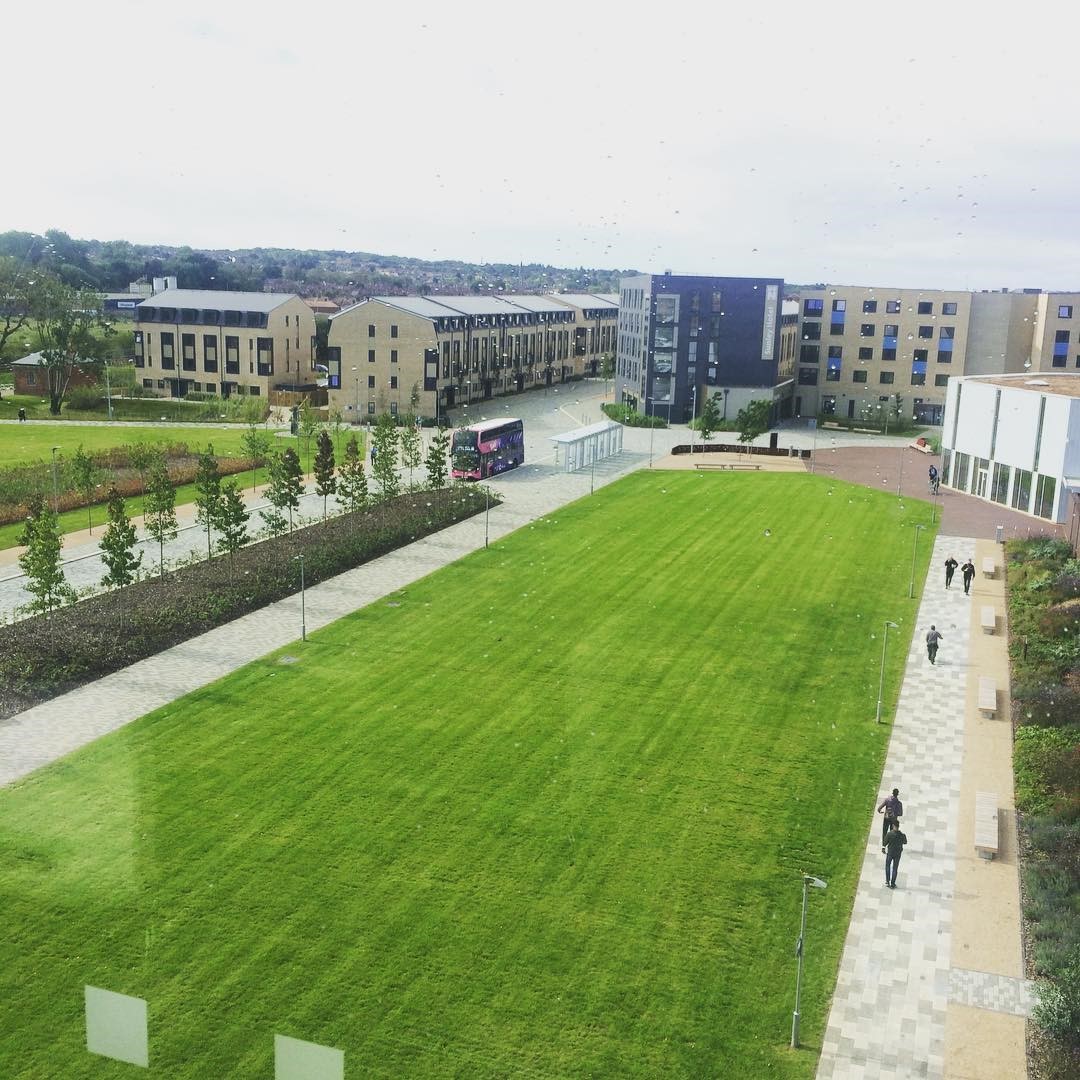
My reason for attending was for training on the new system which will allow students more freedom to work all around the campus and also some new creative interactive features. Some of these might not be as crucial to criminology lectures and seminars as other classes, but seeing the scale of what can be done is testament to the university’s aim to advance the student experience. Following the training, I wandered around and located what would be my new space for teaching in the Senate building. I decided to let myself in to take some pictures and I was really pleased with the room and the view from the window. The space is modern and I could picture the debates and discussions and the group work that I could plan.

There is a sense of familiarity with the campus, which may sound silly if it is your first visit, but to me it felt like a safe and motivating environment with student life at its focus. The ‘student village’ and the facilities such as the hotel, shops and many places to eat, made me feel rather envious of those experiencing student life at such a place.
There will be learning curves and bumps in the road as everything new does, but ultimately what has been created is a fresh start for the university and everyone in it. It’s an exciting time to be a student at the University of Northampton and I am excited to be a part of the journey.

 Thoughts from the criminology team