
Home » Student entry (Page 4)
Category Archives: Student entry

A commuting student and how to be as organised as possible

As a commuting student, I have a very different experience to most students. Many go to uni to get a sense of freedom away from their parents and away from their hometown. I knew this was not something for me. I had no reason to want to get away, I have a job and friends around me that I am not ready to leave.
I would say most students think that those of us who commute are not experiencing a sense of freedom, however I found the opposite. I would feel more trapped being in student accommodation and not having the freedom of leaving whenever I pleased. Keeping university and my home life separate meant my life didn’t really need to change that much, compared to the traditional student.
For me, university is a part of my life, not my whole life. This balance was much more manageable for me. I wouldn’t have been able to make my whole life about uni because that is not who I am. Completing my assignments in a quiet place at home, with my dog by my side was much more appealing to me than being in halls surrounded by noise and distractions.
As I have said, I was not ready to leave my job and all the friends I have made there over the years. Without my job, I wouldn’t have the freedom that I do. My job pays for my car and that is my lifeline when it come to getting anywhere. I need it to get to uni and to get my education.
I have really enjoyed the balance of university and home life. However, I can see the appeal of it, it’s just not something for me. I couldn’t imagine moving away from my parents and my little dog. I didn’t want university to change my day-to-day life much and it hasn’t.
As a commuting student, to some it may seem difficult to keep motivated as you are surrounded by home comforts and home life. I do believe you have to be very disciplined with yourself, especially when you have a deadline due and you can’t join in with a family night. Although I did try my best to get assignments done as soon as I could for the sake of this and if I was desperately needed at work. Although at sometimes I felt swamped by assignments and overtime at work, if you manage your time right, in the end you wonder why you even worried yourself about it.
Another way I keep my uni and home separate is by using my uni laptop for assignments and society related tasks. I do not use it for anything else and this helps me keep my two lives completely separate. This way I never get them mixed up and confused. My uni email strictly stays on my uni computer, which keeps it as only a part of my life and not overtaking it.
I would say to anyone wishing to commute to university to go for it. It’s the best thing I have ever done. But you need to remember to keep uni separate and make sure it doesn’t swamp the rest of your life. In my house, uni consists of one shelf and a desk. And if you are fortunate enough to have your own car, it makes a world of difference as you can come and go as you please from uni, with no strings attached.
To anyone beginning their studies, I would say start prepping your assignments before you think you should. Get ahead and then you’ll never fall behind. If you have a day where you just want to take some time to yourself, you will be able to as you have already prepared in advance. If you let it slip and fall behind with assignments, you have no space to breath when it comes to needing a break. I think this may be easier for commuting students due to the lack of distraction, but even in halls, separate your time according to how much work you have to do and if you need to take time out for yourself.
Overall, I would say to those commuting, be organised, be on time and get ahead. And to those in halls, ignore distractions when you have deadlines to achieve, be organised and make time for yourself.
Share this:


Betty Broderick

I’m sure many of you are aware of the Dirty John series two, Betty Broderick. Although it has not had as much coverage as I’d have hoped. Now true crime documentaries are not always the best way to find out the truth, after delving deep into the history of this case, I found it does represent it well. If you haven’t given it a watch, I would definitely recommend it and would love to know your thoughts on the case.
Betty was married to Daniel Broderick, having 4 children and helping him become a doctor and then through law school. Of course, it all ended in 1989 when Betty had finally had enough of the torturous years with her husband’s affair with Linda Kolkena, killing them both. Not that I am condoning what she did at all, it was wrong for her to end his and Linda’s life. Although I do understand why she did do it and believe others in her situation could be led to this end too. After she kept them afloat with money while he went through law school, having his children and being the perfect housewife, he decided she was too old and needed a young wife to suit his new high class life-style.
This is not to say that Daniel was the sole person to blame, Betty was in the wrong too. However, taking a woman’s children away from her and brainwashing them tipped her over the edge, as it would do with many women. Betty brought the children up alone, with Daniel always too busy with his company to care about them. It seems Daniel did love Betty to begin with, but to me, it seems it became easy and stayed with her to do everything for him.
Daniel began socialising with his new girlfriend, rubbing his success in Betty’s face. This really does make me sad for Betty, she had no money because all her time was invested in her husband’s career. When it came to the divorce, it became a game for Daniel, trying to leave her with next to nothing and only supervised visits with her own children. He really did drive her to the point of destruction.
This woman is now 72 and has been in prison since 1989. I may be too generous, but I believe that this woman should be let to live her final years as a free woman. Free from having to fight for her children, fight for money to live and fight for her sanity. Daniel took all these away from her. And, although he did not get to live, Betty merely existed in the years of their divorce. She lost her spark and became depressed.
What do you believe?
Share this:


“Things you need to know about criminology”: A student perspective – Bonnie Middleton (2017-2020)

We are all living in very strange times, not sure when life will return to normal...but if you're thinking about studying criminology, here is some advice from those best placed to know!

The most important module to my understanding of criminology is: All of them! Every module contributes to your understanding of Criminology and all are different and enjoyable. Personally, my favourite module was Violence: From Domestic to Institutional in Year 3; this module ties together everything you know about Criminology; the reasons why we are subjective as criminologists and our ability to look beyond the scope of what we know.

The academic criminology book you must read:
Outsiders: Studies in the sociology of deviance (1963) by Howard Becker. Albeit a dated book, its ideas are relevant and relate to many criminological such as; how and why criminals are labelled and stigmatised; why are the youth demonised; why people reject the norms and values of society and become criminals in doing so.

The academic journal article you must read:
This is a hard one. Articles are great for discovering new ideas and methodologically testing theories. I would recommend reading: Arrigo, J. (2004). A Utilitarian Argument Against Torture, Interrogation of Terrorists. Science and Engineering Ethics. 10(3), pp. 543-572. This article poses many questions for a criminologist which enlightens you to think subjectively and challenge your own views; which is what Criminology is all about. From reading this article you will learn to think critically when faced with a challenging dilemma; the rights of a terrorist and how can the law can be tailored to fit the crime.

The criminology documentary you must watch:
Where do I begin? Louis Theroux and Stacey Dooley are both great journalists and documentary makers. If I had to pick one, I would recommend watching the BBC’s documentary on Grenfell If you watch this documentary you must consider; the government’s response; who is accountable; why are the residents of Grenfell still in temporary accommodation. These are the sorts of questions you should be asking as someone studying Criminology.

The most important criminologist you must read:
Familiarise yourself with the ideas of Lombroso, this will aid your understanding on how criminological theory and ideas have developed overtime through biological, psychological and sociological standpoints.

Something criminological that fascinates me:
Domestic abuse. I had done my dissertation on this as I have a great interest in male dominance and power over women, especially in intimate relationships. Gender plays a key role in this which when examined in depth, will change your view on gender paradigms.

The most surprising thing I know about criminology is: Criminality was believed by Lombroso to be inherited and that criminals possessed physical defects, criminality would be measured by the size and shape of particular body parts; this was later discredited. I can remember learning this in first year and it fascinated me.

The most important thing I've learnt from studying criminology is:
To not judge a book by its cover and to not take everything at face value. Do not be afraid to challenge other’s standpoints and beliefs. Thinking critically is the most important skill to have, search deeper into issues and apply your own thoughts and experiences.

The most pressing criminological problem facing society is:
Mass incarceration and reoffending rates. The UK is yet to move away from the ‘tough on crime’ approach favouring law and order and punishment. The penal system needs to be reformed to ensure offenders are rehabilitated to break the cycle of criminality; definitely educate yourself on political party’s manifesto’s and what they say about crime and justice before voting.

When family and friends ask, I tell them criminology is: I tell family and friends that criminology is such a broad field of study; we look at law, psychology, science, sociology, politics, penal systems, criminal justice organisations, media and much more. From this, you attain the ability to think critically and reflect, it can help you in many situations not just criminological issues. It is an incredibly insightful and enlightening field to study; it opens up many opportunities.

Share this:


“My Favourite Things”: madams1965

My favourite TV show - So many to chose from! Recently finished Narcos and Narcos Mexico. Currently watching Better Call Saul and The Crown

My favourite place to go - Lyme Regis in Dorset. My parents retired there almost 20 years ago & we go down every Easter to enjoy bracing walks along The Cobb, leisurely lunches in village pubs, and fish and chips on the seafront. It’s the first place we’re going once Lockdown is over!

My favourite city - I have two: New York and Rome. I love the energy of New York, the friendliness of the people, the restaurants, theatres and bars – it just has something indescribable. In contrast, Rome is so laid back and chilled. I could sit outside a café in the Piazza della Rotonda, across from the Pantheon all day, just drinking coffee and watching the world go by, and the occasional street entertainers, before they are moved on by the Carabinieri.

And Heidelberg! Sorry I’m just being greedy now, but that is probably one of the most beautiful cities. And nothing beats a lazy cruise down The Necker River in the sun surrounded by all that lush green German countryside

My favourite thing to do in my free time - Read, read, read! Or watch Netflix! Or travel

My favourite athlete/sports personality - Not a sports fan I’m afraid

My favourite actor - Tom Hardy or Gary Oldman

My favourite author - I’ll read anything by anyone, but Jane Austen stands out from the crowd. I also love biographies

My favourite drink - Edinburgh Gin Rhubarb and Ginger Liqueur with ice and lemonade is beautifully refreshing in summer. In the winter I love a coffee flavoured Baileys with a shot of brandy. And all year round it’s red wine. Anyone will do, I’m not fussy!

My favourite food - As you can tell, I love all food!

My favourite place to eat - At home when my husband cooks his signature lamb pasanda

I like people who - don’t judge others, who are respectful and kind, and who make me laugh.

I don’t like it when people - dominate conversations, interrupt or are dismissive of others. And I don’t like bullies

My favourite book - So many I don’t know where to begin. A few of the best books I’ve read would have to include The Five by Hallie Rubenhold, Fanny and Stella by Neil McKenna, and The Fact of a Body by Alexandria Marzano-Lesnevich. I am currently reading The Poisonwood Bible by Barbara Kingsolver, and before that I read The End of the Affair by Graeme Greene, and One Flew Over the Cuckoo’s Nest by Ken Kesey

My favourite book character - At the moment (because I’m reading it) it’s Rachel from The Poisonwood Bible. She’s the eldest daughter of a bible thumping missionary who took his family to The Congo in the 1960s. Rachel is sassy and funny and thinks she’s worldly-wise at the age of 17 but mispronounces her big grown-up words and is completely oblivious to the danger around her!

My favourite film - There are so many brilliant films that I watch over and over, but my all-time favourite has to be Brokeback Mountain. Apart from the fact that the cinematography and music score are amazing, it’s just a story about such pure love and heartbreak, I cry more each time I watch it

My favourite poem - W. D. Auden’s Funeral Blues

My favourite artist/band - Showing my age here – Johnny Cash, U2, Queen, Elton John, but also Florence and The Machine, Coldplay and Mumford and Sons

My favourite song - Coldplay’s Fix You

My favourite art - I don’t have a favourite but like all sorts from Banksy to Lowry to Monet

My favourite person from history - Jane Austen

Share this:


“My Favourite Things”: Kiera Slaven
My favourite TV show - Let’s start this off by going full nerd and saying that my all time fave tv show has to be Star Trek. Something that resonates with me is that this TV show paints the possibility of exploration of the unknown and as a global society we’ve constructed that reality. Perhaps not to the extent of beaming onto another space ship but certainly sending our own technology out to Mars…. it just fascinates me. fact check: the show started production in 67’ and we went to the moon in 69’

My favourite place to go - Easy… into nature! I’ve most definitely spent the majority of my life at Sywell Reservoir, Northamptonshire has a beautiful countryside to offer, in the spring/summer I tend to drive out into the small country villages and find a nice spot (usually a farmer's field with a public walking path) and just go for a stroll

My favourite city - Not a city person! I’ve travelled to many great cities but naturally I drift to the outskirts, the small towns, the countrysides. My favourite town would have to be Alice Springs, Australia. That dirt red town is full of so much life, vibrancy, culture, yes there is an evil side to it but there is so much beauty too

My favourite thing to do in my free time - Oh, easy one…. I love visiting second hand, vintage and charity shops. Honestly you find so many great wonders. Usually on the hunt for 60’s/70’s retro vintage furniture. Northampton has a great deal of vintage shops to offer, I would personally recommend the Vintage Retreat, lovely spot for lunch too

My favourite athlete/sports personality - certainly an oddball answer, but it would have to be Rey Mysterio. His identity eluded me when I was younger and he’s been in the business a long old time! (wrestling business that is)

My favourite actor - Jeff Bridges… what a man

My favourite author - H.P Lovecraft, an outsider in every sense of the word. He dove deep into his own mind and questioned the importance of the human race by stripping back the ego that surrounds us, and enforced the notion that actually human beings are not the most important thing in this universe. Also, he brought Cthulu to life

My favourite drink - Johnny Walker Red Label and Irn Bru (Scottish Heritage)

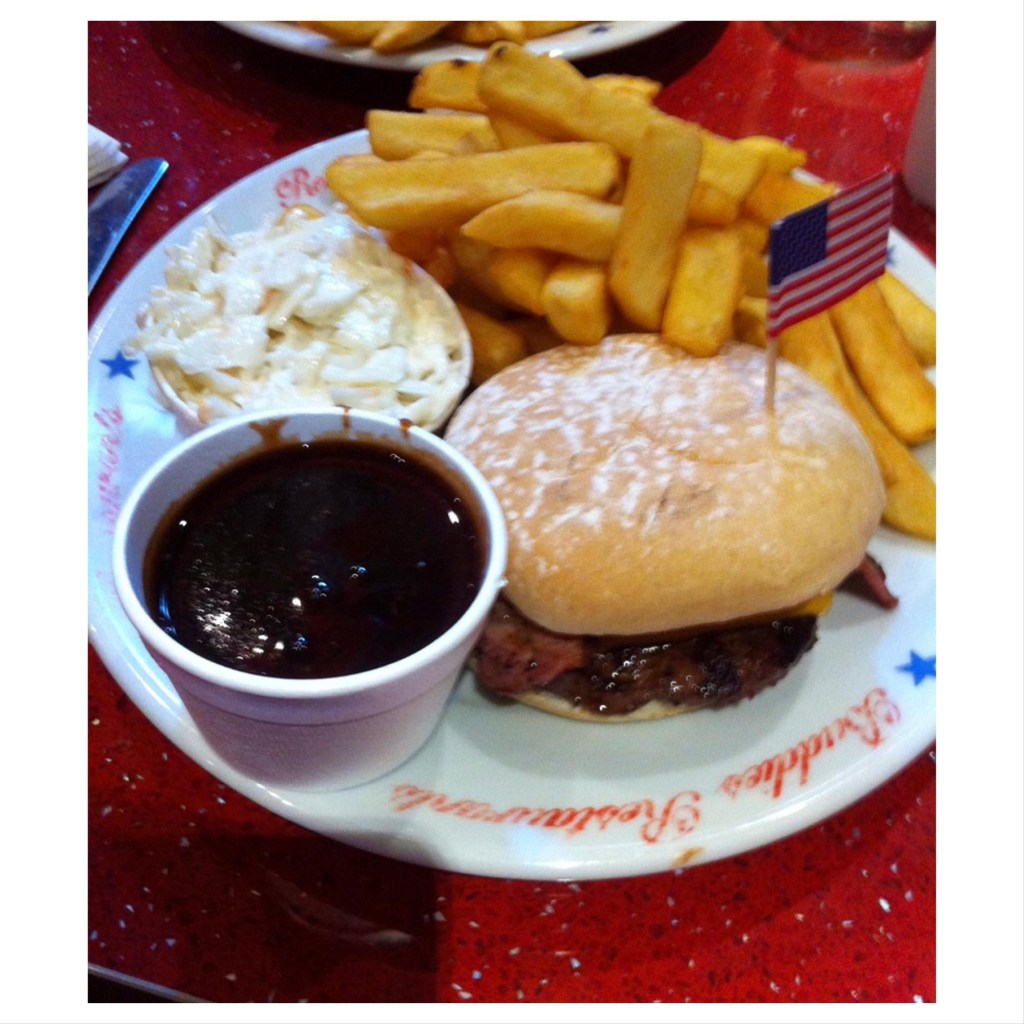
My favourite food - A sloppy Joe burger with extra rib sauce from Buddies. I'm bit rubbish at this because I can’t just pick one thing, so my other fave food would be my Granny’s home-made stovies

My favourite place to eat - Smoke Pit, in Northampton town centre, bit pricey but the food is so worth it

I like people who - are honest with themselves

I don’t like it when people - act out of fear

My favourite book - Collection of books, would have to be the graphic novel series Berserk which follows the lone mercenary Guts, for any comic book/manga fans out there, this one is a must

My favourite book character - Sorry but I have spent a few hours trying to figure my fave book character out and its just not happening. In replacement I will offer my fave TV show character and it would have to be Ragnar Lothbrok (from Vikings). Although I'm sure he exists in a historical book somewhere

My favourite film - No Country for Old Men. Need I say more

My favourite poem - I have never been one to frequent in poems, so I will insert my favourite quote here instead and you may seem to notice a reoccurring theme here (my love for H.P Lovecraft). “The oldest and strongest emotion of mankind is fear, and the oldest and strongest kind of fear is fear of the unknown.” It is certainly poetic

My favourite artist/band - Metallica!!!

My favourite song - Sam Cooke, A Change is Gonna Come and The Eagles, Hotel California

My favourite art - ANYTHING Raoul Dufy. Light hearted bursts of colour that paint the most luxurious and relaxing scenes. Artwork to get lost in

My favourite person from history - Marcus Aurelius. If you don’t know who it is get your google on, you won’t regret it. Fun fact: Aurelius’ personal ethics are informed by the philosophical concept of stoicism, a fascinating philosophical concept and one I deeply resonate with
Share this:

Criminology Society!
President: Natalie Humphrey
Secretary: Maisie Storr
Treasurer: Megan Petford
As many of you are aware, back at the beginning of the year, the Criminology was set up. However, I will admit we have been very lacking with content. I am writing this blog to try and get the word out and become proactive. This society could be something that bring all students studying criminology, joint and single honours, together. We have a few ideas in the works, with our first meet up being a movie night. This will be happening in the next few weeks, where we will be watching the new Ted Bundy film, with Zac Efron. Our other ideas include, visiting a court, an escape room and we are hoping for an abroad trip at some stage. However, we need many more suggestions from those who are part of the society. Please feel free to add our social media which I will leave at the end of this blog. We will be posting mainly on our Instagram where we have polls for you to partake in, asking you what you want from the society. If you haven’t already, and are interested, please visit Northampton’ Student Union website where you can officially join the society. Any suggestions would be really appreciated, so just contact us through social media to get your voice heard!
Twitter: @uon_criminology
Instagram: criminologysociety_uon
Share this:


“What do you want to do?”

I was twenty-five when I first applied for university, studying BA Criminology. When I first told my family and friends, they were unsure. They did not understand why I wanted to change my career and study a subject without having a ‘plan’. I had accomplished many things since leaving school, such as buying a house with my partner, buying a dog and at the time I was a supervisor in a nursery. However, I was not satisfied, I wanted to be challenged and wanted to try something new. In all honesty when family and friends asked me what I wanted to do, I did not know.
Growing up, I was told I was not smart enough for university, as a young person you begin to believe it. It wasn’t until I began looking after children when I realised that children should be encouraged and if I was going to reinforce my belief – that you can do whatever you set your mind to – I should believe it in myself.
Choosing criminology was easy for me, crime was something I was sheltered from as a child, I did not experience crime. I only began my fascination, after watching documentaries on Netflix and even then, I was curious about the concept and naively wondered, ‘what makes a criminal?’ After studying for one year, it is now easy to see that it is not an easy question to answer – but don’t take my word for it, study criminology and see for yourself!
Reflecting on my first year, it was a lot of trial and error. Like many students, I was learning how to write essays again and abide by deadlines, work a part time job, balance study, volunteering and home life and try not to consume too much alcohol in the meantime.
As summer comes to an end, I am excited to begin again, the stresses of university become worth it, when you build friendships and have the realisation that you are one step closer to graduating. I will continue to be determined and optimistic in my future, because I believe I can finally be satisfied. The next time someone asks me what I want to do, I can be confident and say, ‘I haven’t decided yet, but you can do anything you set your mind to, and no-one can tell me I am not smart enough for university’.
Share this:


University? At my age? You had better believe it!

It was whist working a shift at Tesco that the thought of doing that job for the next 35 years dawned on me. So, I took the decision that day to apply to university and start on a new career path. My career history is mainly within healthcare so I fancied something completely different. I have always been fascinated by crime and punishment, and would love to work within that field, that’s why I chose criminology to study.
When the acceptance email came through to say I would be starting university in October 2017 I went through every emotion possible, although I was really excited about it, I thought Jesus what have I done. I attended some of the activities that took place in welcome week which really helped to settle some of the nerves. This is where I met two very special mature (like me) ladies, the friendship blossomed from there and the support provided between the three of us has seen us all finish the first year. Making friends is a really important aspect of uni life, it provides a support network that can get you through tough and stressful times. The initial friendship group of three has grown throughout the year to include some amazing ladies from age 18 through to ** (I daren’t say), and as we have all discovered ‘age is just a number’, let’s just say it isn’t the young ones being told to keep their voices down in the library (ha ha).
From the very start of the academic year we were bombarded with assignments and expectations. This was an extremely scary and stressful time. The questions of ‘what am I doing here?’ ‘I am never going to survive first year’ and ‘what do all these long words mean?’ played over and over in my mind. It was only the return of each assignment result that kept me going. The thought that ‘wow I actually passed that’, encouraged me to remain on the course. One really frustrating part of assignments is that you work your butt off completing them, then you have an agonising four week wait for the result (probably more nerve racking than the exams).
The course lecturers came across scary and unhelpful to begin with, giving off a vibe of ‘you are an adult and at university so get on with it’. I was unsure if this was just the personality of the criminology staff, as no question has a simple answer and question everything (haha). This vibe soon changed once I got used to university life and they are in fact very helpful, supportive and want you to be the best you can be.
I have received my confirmation of results email and I have made it through to year two (whoop, whoop). Although the first year of uni has been tough, I am missing the people and mental stimulation and cannot wait to return in October. The new Waterside campus promises great things so here’s to the 2018/19 academic year!
Share this:

A mature student’s reflections on the first year
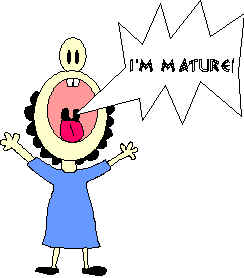
At the age of 51, when I first applied to study Criminology at the University of Northampton, I was a VERY mature student. I had previously been a Registered Nurse for 12 years, then after having a family, re-joined the workforce in various jobs from bar work to office work. I even worked at the local Crematorium for a few years, followed by a short stint at a Funeral Directors! But now my children are grown up and I wanted to do something for me for a change. I happened to see an article in my local newspaper about a 55 year old gentleman who had just graduated from university and that got me thinking….then my daughter told me that there was a man in his 70s at her uni, whose wife made him go so he’d be out from under her feet! That settled it….if they could do it then so could I.
To be honest I was actually amazed to be accepted after writing a 500 word essay on why Criminology is important today. Now that I actually know how to write an essay, the thought of what I wrote then makes me cringe, but onwards and upwards!
Then came the fear. What the hell was I doing? I must be mad! I’d never fit in. These youngsters would never accept me. I’d be useless cos it’s so long since I studied. Even the lecturers would be younger than me. I’d be a joke!
But, what the hell, I thought, ….you only live once! So I swallowed my panic, girded my loins and set forth……I could always run away if I didn’t like it and I’d never have to see any of these people again!
Then out of the blue, on the first day of welcome week, someone started talking to me! She was a mature student too, though much younger than me! The next day I met someone else and the three of us stuck together like glue (and still do now)! As each day went by I started talking to more and more people and before I knew it, I was part of a large group of students ranging from 18 years old right up to me (yes I’m still the oldest person I know!) with every decade in between! I’m just amazed that these people have accepted me and I wish I’d done it years ago! We’ve even had a few drunken nights out (but we won’t go into too much detail about that!).
I have totally surprised myself by how quickly I’ve got back into study mode. The Associate Lecturers have been a lifeline and I can’t praise them enough for all the help and support they’ve given me. Not sure if I’m allowed to mention names, but @jesjames50 and @bethanyrdavies….you know who I mean!!!
All in all, I have absolutely loved my first year. I’ve really enjoyed the studying and it has opened my eyes to so many things. I feel I have a totally different perspective on life now and I’m really excited for Year 2. I have met some amazing people and I feel so thankful and proud to be part of the community of the University of Northampton.
My advice to anyone, especially older people thinking of embarking on a degree is, to coin a phrase from Nike, “just do it!” Education is the greatest gift and you are never too old to learn.
Share this:


Painting by numbers: The problem with HE.

Tillovision, http://www.Tillovision.com
I read a report the other week about concern over the number of 1st degrees that are being achieved within higher education in the UK (Richmond, 2018) and the fact that the volume of such achievements is devaluing university degrees. I juxtapose this with another report that states that 32% of students do not think they get value for money (Neves and Hillman, 2018) and the result is some soul searching about what it is I’m trying to achieve as a lecturer, aside from survival, and what higher education (HE) is about. A conversation with a friend who works in Information Technology muddies the water even more. He’s a high flyer, jetting backwards and forwards to the USA, solving problems, advising on, and implementing major change projects within large corporations and generally making a lot of money along the way. For him a degree is not as important as the ability to ‘think outside the box’, find solutions to problems and show leadership that enables change or fixes. If you have a degree then you ought to be able to do all these things to some extent, experience will then build on it. He lets on that his company will not touch graduates from certain universities, simply because they do not have the requisite skills or abilities, their degrees are effectively meaningless. A sad generalisation but one that is becoming increasingly prominent amongst employers. One other thing that he was quick to point out is that the ‘real world’ is highly competitive and his company are looking for the best potential.
So, what is higher education all about, higher than what? What is the benchmark and what is the end goal? I have always believed that higher education is about taking students beyond what can be read in books or can be followed in manuals. It is about enhancing the understanding of the world in which we operate, either professionally or socially and being able to redesign or reimagine that world. It is about leadership in its many guises, problem solving and the ability to use initiative and autonomy. It is about moving a student from being able to paint by numbers under supervision to a student that can paint free hand, understanding light and colours, understanding how to capture moods or how to be evocative, a student who uses materials that they want to use, and they are not frightened to do so. It stands to reason that not every student can achieve excellence. If the starting point is the ability to paint by numbers, then some will move only slightly beyond this and some will excel, but only a few will warrant a 1st degree. What is clear though is that the students really ought to be able to paint by numbers before they enter HE otherwise they will need to be taught that skill before they can move on. That then is no longer higher education but further education (FE) and more importantly, it sets students up to fail, if they are being measured against HE standards. An alternative to avoid this potential failure requires HE standards to be lowered to those of FE. In which case what is the point of HE?
So why would I be confused about HE? Well, when students are seen as cash cows, each being worth £9250 a year to an institution, being able to paint by numbers becomes a barrier to recruitment in a highly competitive market. Institutions can help students that do not have the requisite skills, but this requires either extra time before joining the HE course, this has funding implications, or a lot of extra work by the student during the HE course, and this means that students with limited academic ability struggle. A need to retain students over the three-year period of a degree, to ensure institutional financial stability or even viability, becomes problematic. Struggling students have a double whammy, they have to catch up to the starting point for each year, whilst also progressing through the year. The choices are stark for HE institutions, progress students by lowering standards or lose them.
HE institutions are measured on the number of good degrees and it makes for good advertising. There is enough literature around to suggest that such unsophisticated quantitative measures are never a good thing. The complexity of higher education, where there is a heavy reliance on students engaging in their studies (there is something to be said about reading for a degree), puts much of the achievement of grades beyond the control of lecturers or even institutions. The resultant solution appears to be the lowering of assessment standards and teaching to assessments. In effect, HE is falling in line with FE and teaching students to paint by numbers. It is easy to see why there is disquiet then about an increase in 1st degrees and more importantly, in a competitive world, why employers are becoming increasingly concerned about the value of a degree. As for value for money for students, for many, it’s a bit like being charged a fortune to race a Maserati round a track for a day but not being able to drive.
Neves, J. and Hillman, N. (2018) Student Academic Experience Survey report 2018 [online] available at https://www.heacademy.ac.uk/knowledge-hub/student-academic-experience-survey-report-2018 [accessed 20 June 2018]
Richmond, T. (2018) A degree of uncertainty: An investigation into grade inflation in universities. [online] available at, http://www.reform.uk/publication/a-degree-of-uncertainty-an-investigation-into-grade-inflation-in-universities/ [accessed 20 June 2018].

 Thoughts from the criminology team