
Home » State Violence
Category Archives: State Violence

Who needs enemies when you have friends like this?
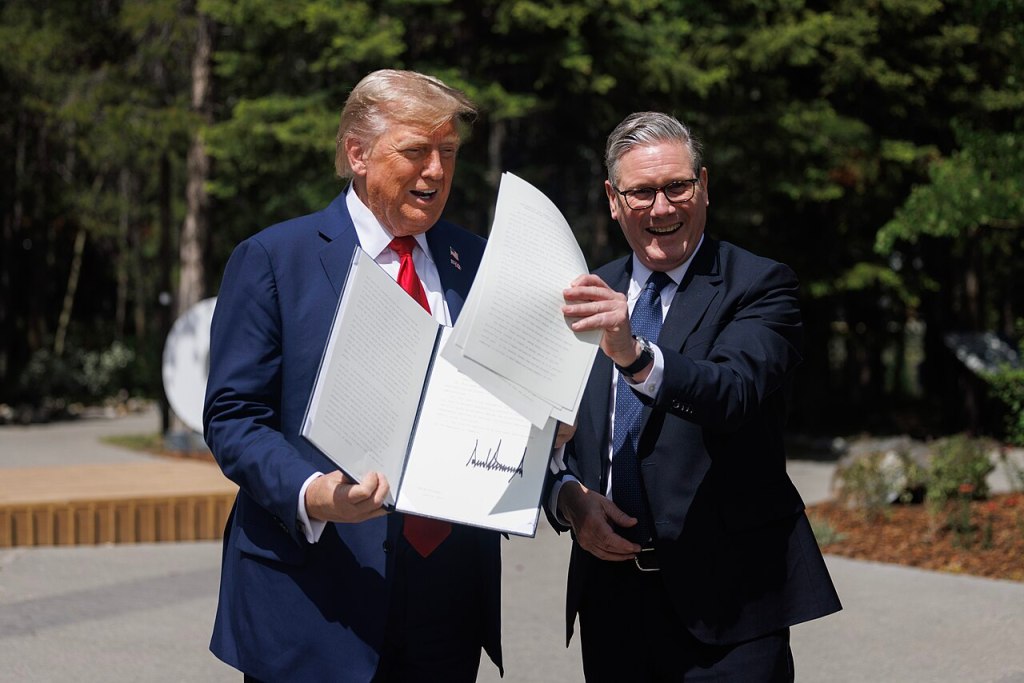
The so called ‘special relationship’ between the United States of America and the United Kingdom is certainly being tested at the moment. It is bizarre how the two leaders, if you can call them that, of two supposedly great nations can have their love/hate relationship played out so publicly. Remember not so long ago that cringe worthy handing over of the King’s invite by the Prime Minister to the President. This amid the fiasco of worldwide tariff hikes imposed by Donald Trump, or the Trump administration at his behest. Remember everyone globally, bar a few, running round in circles kowtowing to Trump whilst trying to get the best deal. Didn’t Trump look pleased with himself at the daily press conferences. And weren’t the United Kingdom falling over themselves with glee that they weren’t part of Europe and could get a better deal. And then we had the Ukraine war fiasco, Trump in his attempt to find peace was prepared to bully and belittle the president of Ukraine publicly. Actually, was it about finding peace or appeasing Putin, it really is quite unclear. Throw in the mix the genocidal attitudes of the Israeli government towards the Palestinians, supported by the USA, I mean what else could you call it if we are being truthful. It certainly wasn’t a measured response to Hamas’ atrocities; it is revenge and population clearance. I say is because that country is still being blockaded. Trump said he would bring peace in the Israel/Palestine conflict, and he would bring peace to Ukraine. Neither were nor could be so easily achieved. The response by Trump and his administration, start a conflict elsewhere. Of course, such a conflict suits Israel and their leader Benjamin Netenyahu. It allows the Israeli despot to continue in power despite allegations of corruption and war crimes. It allows Israel to continue its thinly veiled mission to drive the Palestinians out of the area, to land grab by opening up a second front in Lebanon. And before all this, statements by Trump that he wanted Canada to become another American state, that Greenland should be annexed, by force if necessary, and then of course the regime change in Venezuela, brought about by America’s intervention and let us not forget the murderous attacks on so called drug running boats. Blowing them out of the water seemed to be part of this what can only be described as real life gamification. You only have to listen to the rhetoric to realise this is a game to Trump and parts of his administration but with real life consequences. Eleanor Roosevelt must be turning in her grave as Israel and America attempt to trump each other on Human Rights and International Law violations. And yet nobody seems to be stopping them, nobody seems to dare, something reminiscent of Hitler’s rise in the 1930s. Somewhat Ironic given that the Israeli state was borne out of the atrocities of the Hitler’s regime. So, when Trump asked, nay demanded that the UK and others fall in behind the war game against Iran it is hardly surprising that the answer was no. This of course was met by a tantrum, toys thrown out of the pram stuff, that a two-year-old would have been proud of and some ‘really mean’ name calling with regards to the UK prime minister. Special relationship, more like an infantile friendship? And, when Israel hit Iran’s oil refinery the response from Trump was very much ‘That’s another nice mess you got me into’. As we watch oil prices go up, as Ukraine fears more Russian attacks funded by the lifting of embargoes by the US on Russian oil, as the people of Gaza and Lebanon fight for survival and as countries around the world ask themselves what next, one thing is certain, we don’t need enemies when we have friends like this.
As Donald Trump said, ‘when crazy people have nuclear weapons, bad things happen’. I think we’d all agree with that sentiment. Res ipsa loquitur.
Share this:


Is it time to unleash your criminological imagination?

In this blog entry, I am going to introduce a seemingly disconnected set of ideas. I say seemingly, because at the end, all will hopefully make sense. I suspect the following also demonstrates the often chaotic and convoluted process of my thought processes.
I’ve written many times before about Criminology, at times questioning whether I have any claim to the title criminologist and more recently, what those with the title should talk about. These come on top of hundreds of hours of study, contemplation and reflection which provides the backdrop for why I keep questioning the discipline and my place within it. I know one of the biggest issues for me is social sciences, like Criminology and many others, love to categorise people in lots of different ways: class, race, gender, offender, survivor, victim and so on. But people, including me, don’t like to be put in boxes, we’re complex animals and as I always tell students, people are bloody awkward, including ourselves! There is also a far more challenging issue of being part of a discipline which has the potential to cause, rather than reduce or remove harm, another topic I’ve blogged on before.
It’s no secret that universities across the UK and further afield are facing many serious, seemingly intractable challenges. In the UK these range from financial pressures (both institutional and individual), austerity measures, the seemingly unstoppable rise of technology and the implicit (or explicit, depending on standpoint) message of Brexit, that the country is closed to outsiders. Each of the challenges mentioned above seem to me to be anti-education, rather than designed to expand and share knowledge, they close down essential dialogue. Many years ago, a student studying in the UK from mainland Europe on the Erasmus scheme, said to me that our facilities were wonderful, and they were amazed by the readily available access to IT, both far superior to what was available to them in their own country. Gratifying to hear, but what came next was far more profound, they said that all a serious student really need is books, a enthusiastic and knowledgeable teacher and a tree to sit under. Whilst the tree to sit under might not work in the UK with our unpredictable weather, the rest struck a chord.
The world seems in chaos and war-mongers everywhere are clamouring for violence. Recent events in Darfur, Palestine, Sudan, Ukraine, Venezuela and many other parts of the world, demonstrate the frailty, or even, fallacy of international law, something Drs @manosdaskalou, @paulsquaredd and @aysheaobrien1ca0bcf715 have all eloquently blogged about. But while these discussions are important and pertinent, they cannot address the immediate harm caused to individuals and populations facing these many, varied forms of violence. Furthermore, whilst it’s been over 80 years since Raphäel Lemkin first coined the term ‘genocide’, it seems world leaders are content to debate whether this situation or that situation fits the definition. But, surely these discussions should be secondary, a humanitarian response is far more urgent. After all, (one would hope) that the police would not standby watching as one person killed another, all whilst having a discussion around the definition of murder and whether it applied in this context.
The rise of technology, in particular Generative Artificial Intelligence, has been the focus of blogs from Drs @sallekmusa, @5teveh and myself, each with their own perspective and standpoint. Efforts to combat the harmful effects of Grok enabling the creation of non-consensual pornographic images demonstrate both new forms of Violence Against Women and Girls [VAWG] and the limitations of control and enforcement. Whilst countries are rushing to ban Grok and control the access of social media for children under 16, it is clear that Grok and X are just one form of GAI and social media, there is seemingly nothing to stop others taking their place. And as everyone is well aware, laws are broken on a daily basis (just look at the court backlog and the overflowing prisons) and with no apparent way of controlling children’s access to technology (something which is actively encouraged in schools, colleges and universities) these attempts seem doomed to fail. Maybe more regulation. more legislation isn’t the answer to this problem.
Above I have briefly discussed four seemingly intractable problems. In each arena, we have many thousands of people across the globe trying to solve the issues, but the problems still remain. Perhaps we should ask ourselves the following questions:
- Maybe we are asking the wrong people to come up with the answers?
- Maybe we are constraining discussions and closing down debate?
- Maybe by allowing the established and the powerful to control the narrative we just continue to recycle the same problems and the same hackneyed solutions?
What if there’s another way?
And here we come to the crux of this blog, in Criminology we are challenged to explore any problem from all perspectives, we are continually encouraged to imagine a different world, what ought or could be a better place for all. I have the privilege of running two modules, one at level 4 Imagining Crime and one at Level 6 Violence. In both of these students work together to see the world differently, to imagine a world without violence, a world in which justice is a constant and reflection a continual practice. Walking into one of these classrooms you may well be surprised to see how thoughtful and passionate people can be when faced with a seemingly unsolvable problem when everything on the table is up for discussion. Although often misattributed to Einstein, the statement ‘Insanity is doing the same thing over and over again and expecting different results’ seems apposite. If we want the world to be different, we have to allow people to think about things differently, in free and safe spaces, so they can consider all perspectives, and that is where Criminology comes in.
Be fearless and unleash your criminological imagination, who knows where it might take you!
Share this:


The Caracas Job: International Law and Geo-Political Smash and Grab

So, they actually did it, eh?
It’s January 2026, and I, for one, am still trying to remember my work logins and wondering if this is the year that Aliens invade Earth. Yet, across the pond, the Americans have decided to kick off the New Year with a throwback classic: decapitating a sovereign Latin-American government.
Adiós Maduro. We hardly know yer pal. Well, we all knew you enough to know you were a disastrous authoritarian kleptocrat who managed to bankrupt a country sitting on a lake of oil. But we need to talk about how it happened, because if you listen carefully enough to the wind wuthering through the empty corridors of the UN Building in New York, you can probably hear the death rattle of what I once studied and was quaintly entitled, ‘Rules-Based International Order’-aka International Law.
As one colleague and our very own Dr Manos Daskolou pointed out to me this very day, it’s almost eighty years since 1945. Eight decades of pretending we built a civilised global architecture out of the ashes of World War II. We built tribunals in The Hague, we wrote very sternly worded Geneva Conventions, and we created a Security Council where superpowers could veto each other into paralysis. It was a lovely piece of Geo-Political theatre.
The days-old removal of the Venezuelan head of state by direct US intervention isn’t just a deviation from the norm: it’s a flagrant breach of the foundational prohibition on the ‘use of force’ found in Article 2(4) of The UN Charter. The mask has slipped, and underneath it is just raw, naked power.
As a Brit observing this rigmarole from the very cold and soggy sidelines, it’s hard not to view this from a very specific lens. We invented modern imperialism, after all. Criminologists will often discuss concepts like State Crimes. They will often question who indeed polices the Police?
If I decide to kick down my neighbour’s door because I don’t like the way she runs her household, steal her assets and install her sister as the new head of the family, I’m going to court. I am a burglar, a thug and a violent criminal. If a superpower does the same thing to a sovereign nation, they get a press conference at Mar-a-Lago.
For eighty years, the West has been incredibly successful at labelling its own interventions as ‘police actions’ or ‘humanitarian missions’, all the while labelling acts of rivals as ‘aggression’. The Caracas job is the ultimate expression of this.
Listen to the rhetoric coming out of Washington right now. It’s textbook gaslighting. ‘Maduro was a tyrant’, ‘Other countries do worse’, i.e condemning the condemners. They certainly are not arguing that entry into Caracas was legal under the UN Charter was legal because it most definitely wasn’t. They are arguing that the law should not apply to them because their intentions were pure.
Deja Vu-Iraq
The darkest irony of the Venezuelan decapitation is the crushing sense of deja vu. We cannot talk about removing a dictator in the 2020s without flashbacks to Saddam Hussein and Dr David Kelly entering the scene. The parallels are screaming at us. In 2003, the justification for taking Saddam (and, sadly, Dr Kelly as a direct result) out was a cocktail of WMD lies and dangerous rhetoric. As the Chilcot Report stated years ago, the legal basis for military action against Iraq was ‘far from satisfactory’.
The critical failure in Iraq and the one we are doomed to repeat in Venezuela is that it is terrifyingly easy for a superpower like the USA to smash a second-rate military. The hard part is what on earth comes next?
Perhaps it would have been better for the superpowers to manipulate Maduro’s own people, taking him out, so to speak. Organic change in any situation lends legitimacy that enforced or imported change never does. When you decapitate a state at 30,000 feet, you create a vacuum. The USA may have created a dependency, effectively violating the principle of self-determination, which is enshrined in the Human Rights Convention.
The Iranian Elephant In The Room
Of course, none of this is actually happening in a vacuum. Being a Yorkshire lass with Middle Eastern Heritage, I am keenly aware of the politics of the regions hitting the headlines on an almost daily basis. Yet, no one has to have bloodline ties to any of the countries or regions involved to see the obvious Elephant in the room. It’s that flipping obvious. Maduro wasn’t just an irritant because of his economy-crashing style. It was a strategic flipping of the bird for America’s rivals-Crucially, Iran. This is where the narrative gets even darker. This is gang warfare.
The danger here is escalation. If Tehran decides that the fall of Maduro constitutes a direct challenge to its own deterrence strategy, it will not retaliate in the Caribbean. They are likely (if history has taught us anything) to retaliate in the Strait of Hormuz. The butterfly effect of a regime change in Caracas could easily result in the closure of the Suez Canal. Yes, that old chestnut.
The old guard loved International Law. They loved it because they knew how to manipulate it. They used the UN Council like a skilled Barrister uses a loophole. They built coalitions. The current approach-Let’s call it ‘Act Now Think Later Diplomacy’ dispenses with the formalities and paperwork. It sees International Law NOT as a tool to be manipulated, but as an annoying restraint to be ignored. It confirms the narrative that the Nuremberg trials were merely ‘Victors’ Justice’, a system where legal accountability is the privilege of the defeated.
The difference between Putin invading Ukraine and the USA decapitating Venezuela is rapidly becoming a distinction without a difference.
So, here we go in 2026. The powerful have shown they don’t give a toss about the rules. They’ve shown that ‘sovereignty’ is just a word they use in speeches, not really a word they respect.
When people stop believing in the legitimacy of the law, they usually stop following it. We are about to see what happens when the entire world stops believing in the legitimacy of International Law.
It is going to be a messy few decades. Cheers, mine’s a double.
Share this:


The future of criminology

If you have an alert on your phone then a new story may come with a bing! the headline news a combination of arid politics and crime stories. Sometimes some spicy celebrity news and maybe why not a scandal or two. We are alerted to stories that bing in our phone to keep ourselves informed. Only these are not stories, they are just headlines! We read a series of headlines and form a quick opinion of anything from foreign affairs, transnational crime, war, financial affairs to death. We are informed and move on.
There is a distinction, that we tend not to make whenever we are getting our headline alerts; we get fragments of information, in a sea of constant news, that lose their significance once the new headline appears. We get some information, but never the knowledge of what really happened. We hear of war but we hardly know the reasons for the war. We read on financial crisis but never capture the reason for the crisis. We hear about death, usually in crime stories, and take notice of the headcount as if that matters. If life matters then a single loss of life should have an impact that it deserves irrespective of origin.
After a year that forced me to reflect deeply about the past and the future, I often questioned if the way we consume information will alter the way we register social phenomena and more importantly we understand society and ourselves in it. After all crime stories tend to be featured heavily in the headlines. Last time I was imagining the “criminology of the future” it was terrorism and the use of any object to cause harm. That was then and now some years later we still see cars being used as weapons, fear of crime is growing according to the headlines that even the official stats have paused surveying since 2017! Maybe because in the other side of the Atlantic the measurement of fear was revealed to be so great that 70% of those surveyed admitted being afraid of crime, some of whom to the extent that changes their everyday life.
We are afraid of crime, because we read the headlines. If knowledge is power, then the fragmented information is the source of ambiguity. The emergence of information, the reproduction of news, in some cases aided by AI have not provided any great insight or understanding of what is happening around us. A difference between information and knowledge is the way we establish them but more importantly how we support them. In a world of 24/7 news updates, we have no ideological appreciation of what is happening. Violence is presented as a phenomenon that emerges under the layers of the dark human nature. That makes is unpredictable and scary. Understandably so…
This a representation of violence devoid of ideology and theory. What is violence in our society does not simply happens but it is produced and managed through the way it is consumed and promoted. We sell violence, package it for patriotic fervour. We make defence contracts, selling weapons, promoting war. In society different social groups are separated and pitted against each other. Territory becomes important and it can be protected only through violence. These mechanisms that support and manage violence in our society are usually omitted. A dear colleague quite recently reminded me that the role of criminology is to remind people that the origins of crime are well rooted in our society in the volume of harm it inflicts.
There is no singular way that criminology can develop. So far it appears like this resilient discipline that manages to incorporates into its own body areas of work that fiercely criticised it. It is quite ironic for the typical criminology student to read Foucault, when he considered criminology “a utilitarian discipline”! Criminology had the last laugh as his work on discipline and punishment became an essential read. The discipline seems to have staying power but will it survive the era of information? Most likely; crime data originally criticised by most, if not all criminologists are now becoming a staple of criminological research methods. Maybe criminology manages to achieve what sociology was doing in the late 20th century or maybe not! Whatever direction the future of criminology takes it will be because we have taken it there! We are those who ought to take the discipline further so it would be relevant in years to come. After all when people in the future asked you what did you do…you better have a good answer!
Share this:


Global perspectives of crime, state aggression and conflict resolutions

As I prepare for the new academic module “CRI3011 – Global Perspectives of Crime” launching this September, my attention is drawn to the ongoing conflicts in Africa, West Asia and Eastern European nations. Personally, I think these situations provide a compelling case study for examining how power dynamics, territorial aggression, and international law intersect in ways that challenge traditional understandings of crime.
When examining conflicts like those in major Eastern European nations, one begins to see how geopolitical actors strategically frame narratives of aggression and defence. This ongoing conflict represents more than just a territorial dispute in my view, but I think it allows us to see new ways of sovereignty violations, invasions, state misconduct and how ‘humanitarian’ efforts are operationalised. Vincenzo Ruggiero, the renowned Italian criminologist, along with other scholars of international conflict including von Clausewitz, have contributed extensively to this ideology of hostility and aggression perpetrated by state actors, and the need for the criminalisation of wars.
While some media outlets obsess over linguistic choices or the appearance of war leaders not wearing suits, our attention must very much consider micro-aggressions preceding conflicts, the economy of war, the justification of armed interventions (which frequently conceals the intimidation of weaker states), and the precise definition of aggression vs the legal obligation to protect. Of course, I do recognise that some of these characteristics don’t necessarily violate existing laws of armed conflict in obvious ways, however, their impacts on civilian populations must be recognised as one fracturing lives and communities beyond repair.
Currently, as European states are demonstrating solidarity, other regions are engaging in indirect economic hostilities through imposition of tariffs – a form of bloodless yet devastating economic warfare. We are also witnessing a coordinated disinformation campaigns fuelling cross-border animosities, with some states demanding mineral exchange from war-torn nations as preconditions for peace negotiations. The normalisation of domination techniques and a shift toward the hegemony of capital is also becoming more evident – seen in the intimidating behaviours of some government officials and hateful rhetoric on social media platforms – all working together to maintain unequal power imbalance in societies. In fact, fighting parties are now justifying their actions through claims of protecting territorial sovereignty and preventing security threats, interests continue to complicate peace efforts, while lives are being lost. It’s something like ‘my war is more righteous than yours’.
For students entering the global perspectives of crime module, these conflicts offer some lessons about the nature of crime – particularly state crimes. Students might be fascinated to discover how aggression operates on the international stage – how it’s justified, executed, and sometimes evades consequences despite clear violations of human rights and international law. They will learn to question the various ways through which the state can become a perpetrator of the very crimes it claims to prevent and how state criminality often operates in contexts where culpability is contested and consequences are unevenly applied based on power, rather than principle and ethics.
Share this:


Uncertainties…
Sallek Yaks Musa

Who could have imagined that, after finishing in the top three, James Cleverly – a frontrunner with considerable support – would be eliminated from the Conservative Party’s leadership race? Or that a global pandemic would emerge, profoundly impacting the course of human history? Indeed, one constant in our ever-changing world is the element of uncertainty.
Image credit: Getty images

The COVID-19 pandemic, which emerged in late 2019, serves as a stark reminder of our world’s interconnectedness and the fragility of its systems. When the virus first appeared, few could have foreseen its devastating global impact. In a matter of months, it had spread across continents, paralyzing economies, overwhelming healthcare systems, and transforming daily life for billions. The following 18 months were marked by unprecedented global disruption. Lockdowns, travel restrictions, and social distancing became the new norms, forcing us to rethink how we live, work, and interact.
The economic fallout was equally staggering. Supply chains crumbled, unemployment surged, and entire industries teetered on the brink of collapse. Education was upended as schools and universities hastily shifted online, exposing the limitations of existing digital infrastructure. Yet, amid the chaos, communities displayed remarkable resilience and adaptability, demonstrating the need for flexibility in the face of uncertainty.
Beyond health crises, the ongoing climate and environmental emergencies continue to fuel global instability. Floods, droughts, erratic weather patterns, and hurricanes such as Helene and Milton not only disrupt daily life but also serve as reminders that, despite advances in meteorology, no amount of preparedness can fully shield us from the overwhelming forces of nature.
For millions, however, uncertainty isn’t just a concept; it’s a constant reality. The freedom to choose, the right to live peacefully, and the ability to build a future are luxuries for those living under the perpetual threat of violence and conflict. Whether in the Middle East, Ukraine, or regions of Africa, where state and non-state actors perpetuate violence, people are forced to live day by day, confronted with life-threatening uncertainties.
On a more optimistic note, some argue that uncertainty fosters innovation, creativity, and opportunity. However, for those facing existential crises, innovation is a distant luxury. While uncertainty may present opportunities for some, for others, it can be a path to destruction. Life often leaves little room for choice, but when faced with uncertainty, we must make decisions – some minor, others, life-altering. Nonetheless, I am encouraged that while we may not control the future, we must navigate it as best we can, and lead our lives with the thought and awareness that, no one knows tomorrow.
Share this:


Victims of Domestic Violence Repeatedly Failed by UK Police Forces

On the last day of August 2024 I was invited to an event focused on “Victims of Domestic Violence Repeatedly Failed by UK Police Forces” held at Fenny Compton Village Hall. The choice of venue was deliberate, it was the same venue where Alan Bates brought together for the first time, just some of the many post-masters/mistresses impacted by, what we now recognise as, Britain’s largest miscarriage of justice. This meeting demonstrated that rather than one or two isolated incidents, this was widespread impacting 100s of people. Additionally, the bringing of people together led to the creation of the Justice for Sub-Postmasters Alliance [JFSA], a collective able to campaign more effectively, showing clearly that there is both strength and purpose in numbers.
Thus the choice of venue implicitly encouraged attendees to take strength in collectivity. Organised by three women who had lost daughters and a niece who instinctively knew that they weren’t the only ones. Furthermore, each had faced barrier after barrier when trying to find out what had happened to their loved ones leading up to and during their deaths. What they experienced individually in different areas of the country, shared far more commonality than difference. By comparing their experiences, it became clear that their losses were not unique, that across the country and indeed, the world, women were being subjected to violence, dying, grieving and being subjected to organisational indifference, apathy, if not downright institutional violence.
At the event, woman after woman, spoke of different women, very much loved, some had died, some had fled their violent partners (permanently, one hopes) and others who were still trapped in a living hell. Some spoke with confidence, others with trepidation or nerves, all filled with anguish, passion and each determined to raise their voices. Again and again they detailed their heartbreaking testimony, which again showed far more commonality than difference:
- Women being told that their reporting of domestic abuse incidents may make things much worse for them
- Evidence lost or disposed of by police officers
- Corrupted or deleted body worn camera footage
- Inability or unwillingness to recognise that domestic abuse, particularly coercive behaviour escalates, these are not separate incidents and cannot be viewed in isolation
- Police often dismissing women’s reports as examples of “minor” or “borderline” domestic abuse, when as detailed above, individual incidents in isolation do not reflect the lived experience
- History of domestic abuse ignored/disregarded whether or not recorded by the police
- Victims of domestic abuse being asked for forensic levels of detail when trying to report
- Victims of domestic abuse being incorrectly refused access by the police to access to information covered by Clare’s Law (Domestic Violence Disclosure Scheme)
- The Domestic Abuse, Stalking and Honour Based Violence [DASH} forms treated as tick box exercise, often done over harried phone calls
- Victims of domestic violence, criminalised when trying to protect themselves and their children from violent partners
- When escaping from violent relationships women are placed in refuges, often far from their support networks, children move schools losing their friendship circles and breaking trusted relationships with teachers
- Suicide not investigated according to College of Policing own guidance: Assume Nothing, Believe nobody, Challenge everything!
- Police failing to inform the parents of women who have died
- Dead women’s phones and laptops handed over to the men who have subjected them to violence (under the guise of next-of-kin)
- The police overreliance on testimony of men (who have subjected them to violence previously) in relation to their deaths
- Challenges in accessing Legal Aid, particularly when the woman and children remain in the family home
- The lack of joined up support, lots of people and charities trying to help on limited resources but reacting on an ad hoc basis
- The police would rather use valuable resources to fight victims, survivors and their families’ complaints against them
The above is by no means an exhaustive list, but these issues came up again and again, showing clearly, that none of the women’s experiences are unique but are instead repeated again and again over time and place. It doesn’t matter what year, what police force, what area the victim lived in, their education, their profession, their class, marital status, or whether or not they were mothers. It is evident from the day’s testimony that women are being failed not only by the police, but also the wider Criminal Justice System.
Whilst the women have been failed, the criminologist in me, says we should consider whether the police are actually “failing” or whether they are simply doing what they were set up to do, and women are simply collateral damage. Don’t forget the police as an institution are not yet 200 years. They were set up to protect the rich and powerful and maintain control of the streets. Historically, we have seen the police used against the population, for example policing the Miners’ Strikes, particularly at Orgreave. More recently the response to those involved in violent protest/riots demonstrates explicitly that the police and the criminal justice system can act swiftly, when it suits. But consider what it is trying to protect, individuals or businesses or institutions or the State?
The police have long been faced by accusations of institutional racism, homophobia and misogyny. It predominantly remains a institution comprised of white, straight, (nominally) Christian, working class, men, despite frequent promises to encourage those who do not fit into these five classifications to enlist in the force. Until the police (and the wider CJS) are prepared to create a less hostile environment, any attempt at diversifying the workforce will fail. If it continues with its current policies and practices without input from those subjected to them, both inside and outside the institution, any attempt at diversifying the institution will fail. But again we come back to that word ‘failure’, is it failing if the institution continues to maintain the status quo, to protect the rich and powerful and maintain control of the streets?
But does the problem lie solely with the police and the wider criminal justice system, or are we continually failing as a society to support, nurture and protect women? Take for example Hearn’s astute recognition that ‘[f]or much too long men have been considered the taken-for-granted norm against which women have been judged to be different’ offers an alternative rationale (1998: 3).Many scholars have explored language in relation to women and race, identifying that in many cases the default is understood to be a white male (cf. de Beauvoir, 1949/2010, Lakoff, 1973, Spender, 1980, Eichler, 1988/1991, Penelope, 1990, Homans, 1997). As de Beauvoir evocatively writes, ‘humanity is male and man defines woman not in herself, she is not regarded as an autonomous being […] He is the Subject; he is the Absolute. She is the Other’ (de Beauvoir, 1949/2010: 26). Lakoff (1973) also notes that the way in which language is used both about them and by them, disguises and enables marginalisation and disempowerment. Furthermore, it enables the erasure of women’s experience. The image below illustrates this well, with its headline figure relating to men. Whilst not meaning to dismiss any violence, when women’s victimisation far outweighs that faced by men, this makes no logical sense.

Nevertheless, we should not forget men as Whitehead dolefully concludes:
‘to recognize the extent and range of men’s violences is to face the depressing and disturbing realization that men’s propensity for cruelty and violence is probably the biggest cause of misery in the world (2002: 36).’
Certainly numerous authors have identified the centrality of men (and by default masculinity) to any discussion of violence. These range from Hearn’s powerful assertion that it is ‘men [who] dominate the business of violence, and who specialize in violence’ (1998: 36) to Mullins (2006) suggestion that women act as both stimulation for men’s violence (e.g. protection) and as a limiter. Certainly, Solnit perceptively argues that armed with the knowledge that men are responsible for far more violence, it should be possible to ‘theorise where violence comes from and what we can do about it a lot more profoundly’ (2014: 25).
All of the challenges and barriers identified on the day and above make it incredibly difficult, even for educated well-connected women to deal with, this is compounded when English is not your first language, or you have a visa dependant on your violent partner/husband, or hold refugee status. As various speakers, including the spokeswoman for Sikh Women’s Aid made clear, heritage and culture can add further layers of complexity when it comes to domestic abuse.
Ultimately, the event showed the resilience and determination of those involved. It identified some of the main challenges, paid tribute to both victims and survivors and opened a new space for dialogue and collective action. If you would like to keep up with their campaign, they use the hashtag #policefailingsuk and can be contacted via email: policefailings.uk@yahoo.com
References
de Beauvoir, Simone, (1949/2010), The Second Sex, tr. from the French by Constance Borde and Sheila Malovany Chevalier, (New York: Vintage Books)
Eicler, Margrit, (1988/1991), Nonsexist Research Methods, (London: Routledge) (Kindle Version)
Hearn, Jeff, (1998), The Violences of Men, (London, Sage Publications Ltd)
Homans, Margaret, (1997), ‘“Racial Composition”: Metaphor and the Body in the Writing of Race’ in Elizabeth Abel, Barbara Christian and Helene Moglen, (Eds), Female Subjects in Black and White, (London: University of California Press): 77-101
Lakoff, Robin, (1973), ‘Language and Woman’s Place,’ Language in Society, 2, 1: 45-80
Mullins, Christopher W., (2006), Holding Your Square: Masculinities, Streetlife and Violence, (Cullompton: Willan Publishing)
National Centre for Domestic Violence, (2023), ‘Domestic Abuse Statistics UK,’ National Centre for Domestic Violence, [online]. Available from: https://www.ncdv.org.uk/domestic-abuse-statistics-uk/ [Last accessed 31 August 2024]
Penelope, Julia, (1990), Speaking Freely: Unlearning the Lies of the Fathers’ Tongues, (New York: Pergamon Press)
Solnit, Rebecca, (2014), Men Explain Things to Me, (London: Granta Publications)
Spender, Dale, (1980), Man Made Language, (London: Routledge and Kegan Paul)
Whitehead, Stephen M., (2002), Men and Masculinities, (Cambridge: Polity Press)
Share this:


Let us not forget
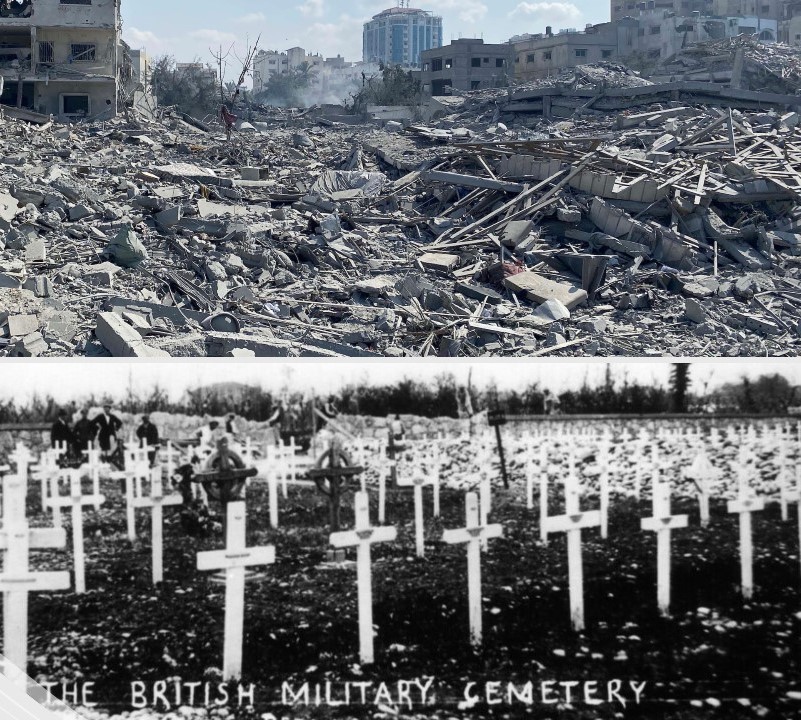
Yesterday marked the 80th anniversary of the D Day landings and it has seen significant coverage from the media as veterans, families, dignitaries, and others converge on the beaches and nearby towns in France. If you have watched the news coverage during the week, you will have seen interviews with the veterans involved in those landings. What struck me about those interviews was the humbleness of those involved, they don’t consider themselves heroes but reserve that word for those that died. For most of us, war is something that happens elsewhere, and we can only glimpse the horrors of war in our imaginations. For some though, it is only too real, and for some, it is a reality now.
I was struck by some of the conversations. Imagine being on ship, sailing across the English Channel and looking back at the white cliffs of Dover and being told by someone in charge, ‘have a good look because a lot of you will never see them again’. If knowing that you are going to war was not bad enough, that was a stark reminder that war means a high chance of death. And most of those men going over to France were young, to put it in perspective, the age of our university students. If you watched the news, you will have seen the war cemeteries with rows upon rows, upon rows of headstones, each a grave of someone whose life was cut short. Of course, that only represents a small number of the combatants that died in the war, there are too many graveyards to mention, too many people that died. Too many people both military and civilian that suffered.
The commemoration of the D Day landings and many other such commemorations serve as a reminder of the horrors of war when we have the opportunity to hear the stories of those involved. But as their numbers dwindle, so too does the narrative of the reality, only to be replaced with some romantic notion about glory and death. There is no glory in war, only death, suffering and destruction.
The repeated, ‘never again’ after the first and second world war seems to have been a utopian dream. Whilst we may have been spared the horrors of a world war to this point, we should not forget the conflicts across the world, too numerous to list here. Often, the reasons behind them are difficult to comprehend given the inevitable outcomes. As one veteran on the news pointed out though ‘war is a nonsense, but sometimes it’s necessary’.
The second part of that is a difficult sentiment to swallow but then, if your country faces invasion, your people face being driven from their homes or into slavery or worse, then choices become very stark. We should be grateful to those people that fought for our freedoms that we enjoy now. We should remember that there are people doing the same across the world for their own freedoms and perhaps vicariously ours. And perhaps, we should look to ourselves and think about our tolerance for others. Let us not forget, war is a nonsense, and there is no glory in it, only death and destruction.
Share this:


Birth Trauma

I recently passed through Rugby Motorway Services with my family and I was amazed by what was on offer. It consisted of a free internal and external play area and the most baby friendly changing rooms that I have ever encountered. This visit to the Rugby services made me think;
Isn’t it a shame that the same amount of family friendly consideration is not found elsewhere.
Even more so;
Isn’t it a shame that many babies, mothers and birthing parents are treated with such a common and serious violence during the birth
The Birth Trauma Inquiry has been published this week, I am sure that CRI3003 students would be able to critique this Inquiry but in terms of the responses from mothers who have experienced birth trauma it makes for an incredibly harrowing read.
In the words of one mother;
‘Animals were treated better than the way we were treated in hospital’ (p.26).
Yet, none of these accounts of violence are surprising; casual conversations with friends, family, relatives resemble many of the key themes highlighted within the inquiry. The inquiry includes accounts of mothers before, during and after birth being ‘humiliated’ (p.20) and bullied, experiencing extreme amounts of pain, financial ruin, life limiting physical and mental health problems, due to institutional issues raised such as: negligence, poor professional practice, mistakes, mix ups, lack of consent, inhumane treatment, lack of pain relief and compassion. With the most serious consequences being baby and or mother loss.
The report also makes reference to at least a couple of incidents involving mobile phone usage. This did remind me of a conversation that I was having with a fellow criminologist quite recently. Aside from issues that have existed for a long time, it seems that the use of phones may impact on our ability to work in a safe and compassionate manner. I am sure that some staff scroll on phones when victims of crime report to the police station, or scroll whilst ‘caring’ for someone who is either mentally or physically unwell. How such small technological devices seem to have such huge impact on human interaction amazes me.
A quote from the inquiry states: ‘the baby is the candy, the mum is the wrapper, and once the baby is out of the wrapper, we cast it aside’ (p.20), how awful is that?
All-Party Parliamentary Group. Listen to Mums: Ending the Postcode Lottery on Perinatal Care (2024). Available at: https://www.theo-clarke.org.uk/sites/www.theo-clarke.org.uk/files/2024-05/Birth%20Trauma%20Inquiry%20Report%20for%20Publication_May13_2024.pdf [Accessed 16/05/24].
Share this:


State Crime

A year ago, on this day a terrible accident took place. Two trains collided head on: a passenger and a cargo train. The crash was ferocious, following a massive bright explosion, that was heard for miles. The official count of fatalities are 57 dead and over 100 injured, some of whom very seriously, one of whom at least on a medically-induced coma. The term accident implies something that happened unintentionally and unexpectedly. As the story emerged, different elements came to the surface which indicated that what happened, was not unexpected. The people who worked in the train service raised the alarm months, if not years in advance, sending official statements to the relevant departments and the minister for transport. There were several accidents months before the disaster and there were calls to correct the infrastructure, including the signalling system. Several politically motivated appointments in key positions also meant that the people in the organisation at certain levels lacked the expertise and knowledge to work with the complexities of the railways. The employees’ protests were largely ignored as they never received an official response. So, was it an accident, a disaster, or a crime?
I have left the details, names and even the country of the disaster out, for one reason only. This tragedy can happen in any place at any time and for any kind of people. The aftermath leaves people wondering why it happened and if it was preventable. The pain of those who lost loved ones transcends borders, race, and origin. The question posed earlier remains. Worldwide we have seen similar disasters some of which have permanently marked the local and international community. It is the way we deal with the aftermath that will partially answer the question of what this tragedy was. A disaster goes in deep highlighting questions such as; what do people pay taxes for, what is the role of the State and how important is human life?
People in position of power were warned about it beforehand. There were similar incidents that should have signalled that something wasn’t right. There was underfunding and lack of staffing. All of these may have happened separately, but considered together, they cannot support this being an accidental event. It was a disaster waiting to happen. Then the question is whether this event is a crime or not. Crime is usually seen as a social construction of individual behaviour in conflict with social conventions. This focuses crime onto an action by an individual and therefore the motivations and intent focus on the usual gains, opportunity and other personal rewards. This approach largely ignores an entire section of criminology that deals with harm and social injustices. A crime of this magnitude has individual actors who for their own motivations contributed to the disaster. Nonetheless this is something bigger; it encompasses, services, organisations, departments, and ministries. This is a State crime. Different parts of the State contributed to the disaster and once it happened, they tried to provide a harried response on an individual’s fault…human error.
Years ago, in another place the toxic gases of a plant killed and blinded thousands of people; a nuclear cloud was released in another incident and people were made to evacuate their homes for ever. Some years ago, a fault in a type of plane grounded an entire fleet after a couple of crashes. A terrible earthquake which revealed errors in construction and design. Boats full of people sinking and no one seems to take any notice. A similar picture in most disasters: people looking for their loved ones, feeling powerless in front of a State that took decisions to ignore the risk and the calls of the experts. So, what does this train disaster, the plane crashes, the boat sinkings and the earthquake destruction have in common? They are all State crimes. In modern literature we have learnt to recognise them, identify the commonalities, and explain what a State crime is. What we haven’t done as effectively is to find a way to punish those responsible. Each State, like in this train disaster, recoils into providing all necessary information and changing its mechanisms; maybe because for some countries profit is above people, providing of the main intentions behind State crime. Whilst the State delays, the dead await justice.
In memoriam to the 57 and to the millions of victims of state crimes.

 Thoughts from the criminology team


