
Home » Society (Page 6)
Category Archives: Society

Deniable racism: ‘I’m alright Jack’

Photograph: Bill Orchard/Rex/Shutterstock
I heard on the news a week or so ago that an investigation by ITV news had found that the majority of NHS Trusts have not completed full risk assessments on BAME staff. Considering that BAME groups are impacted disproportionately by COVID-19 I have to ask why? And, probably more importantly, now that the issue has been raised, what are the government doing to make sure that the risk assessments are carried out? Since I heard about it I’ve seen no response, so I guess I can answer my own question ‘nothing’.
But then maybe I shouldn’t be surprised, I read an article on Racism and the Rule of Law and you can’t but be appalled by the number of recommendations from various inquiries and reviews that have failed to be acted upon. The problem is that the action requires more than just the eloquently spoken or written word; to put it very bluntly and maybe crudely, ‘put your money where your mouth is’. It is easy to state that this is wrong or that is wrong in our institutions, the term ‘institutional racism’ trots off the tongue, seized upon by the wronged and more worryingly banded about by the societal racists of the elite who are only too willing to blame someone else. In thinking about this I wonder whether when we use the term racism, we are all talking the same language. The ‘deniable’ racism is easy to identify, ‘we don’t use that sort of language anymore’, ‘we no longer put those signs in our windows’, we have laws that say you can’t act in that way. ‘Actually, I’m not a racist’. But the statistics don’t lie, they can be bent, manipulated to some extent to favour one argument or another but there are some very basic inescapable facts, BAME groups are over represented in the wrong areas of our society and under represented in the right areas. And most of this I dare say does not owe itself to ‘deniable’ racism, it’s more than that, it’s embedded in our society, it’s not institutional racism, it’s societal racism and it’s hidden. The problem with societal racism is that we only see the positive attributes of people that are like us and we promote those that excel in showing those attributes. Hence, we have the elite in business and government that are not ‘deniable’ racists but nonetheless are the epitome of, and lead a racist society.
I want to return to the idea of ‘putting your money where your mouth is’ mantra. They say money makes the world go around, I’m not sure that is entirely true, but it certainly goes a long way to getting things done and conversely the lack of it ensures that nothing happens or in some cases that good things come to an end. A prime example is the austerity measures put in place in 2010 that saw budgets to government agencies and funding to councils cut significantly. Those that suffered were the most deprived. Even worse, was the fact that funding for youth projects in inner cities suffered and those initiatives that were aimed at reducing violent crime amongst young people ground to a halt. Policing saw huge cuts and with it the withdrawal of neighbourhood policing. This link to communities was severed and any good work that was going on was quickly undone. That doesn’t explain all that is wrong with policing, but it certainly doesn’t help in building bridges. Who in their right mind would embark upon fiscal policies with no regard to such outcomes, our elected government did. If we think now about the so-called return to normality post the Covid-19 pandemic, which caring company or institution would suggest that the most impacted by the virus should continue or return to work, or study, or any other activity, without considering their specific risks and needs? Probably those that have more concern for the bottom line than peoples’ lives. ‘I’m alright Jack’ comes to mind or at least I want to make sure I am.
In thinking about policies, procedures, risk assessments or recommendations, managers have an eye to finance. In the NHS, the day to day business still has to happen, in policing, incidents still need to be attended to, so where is the money to do the extra? Everything comes at a cost and every recommendation in every review will cost something. The NHS risk assessments will cost money. The question is whether government and all of us in society really believe that ‘black lives matter’. If we do, then then it’s time to acknowledge the type of society we live in and who we really are and for government to ‘put the money where its mouth is’ so that the recommendations can be acted on. Or of course, we could just have another review and ‘Jack’ will do very nicely out of that as well thank you.
Share this:


“Things you need to know about criminology”: A student perspective – Bonnie Middleton (2017-2020)

We are all living in very strange times, not sure when life will return to normal...but if you're thinking about studying criminology, here is some advice from those best placed to know!

The most important module to my understanding of criminology is: All of them! Every module contributes to your understanding of Criminology and all are different and enjoyable. Personally, my favourite module was Violence: From Domestic to Institutional in Year 3; this module ties together everything you know about Criminology; the reasons why we are subjective as criminologists and our ability to look beyond the scope of what we know.

The academic criminology book you must read:
Outsiders: Studies in the sociology of deviance (1963) by Howard Becker. Albeit a dated book, its ideas are relevant and relate to many criminological such as; how and why criminals are labelled and stigmatised; why are the youth demonised; why people reject the norms and values of society and become criminals in doing so.

The academic journal article you must read:
This is a hard one. Articles are great for discovering new ideas and methodologically testing theories. I would recommend reading: Arrigo, J. (2004). A Utilitarian Argument Against Torture, Interrogation of Terrorists. Science and Engineering Ethics. 10(3), pp. 543-572. This article poses many questions for a criminologist which enlightens you to think subjectively and challenge your own views; which is what Criminology is all about. From reading this article you will learn to think critically when faced with a challenging dilemma; the rights of a terrorist and how can the law can be tailored to fit the crime.

The criminology documentary you must watch:
Where do I begin? Louis Theroux and Stacey Dooley are both great journalists and documentary makers. If I had to pick one, I would recommend watching the BBC’s documentary on Grenfell If you watch this documentary you must consider; the government’s response; who is accountable; why are the residents of Grenfell still in temporary accommodation. These are the sorts of questions you should be asking as someone studying Criminology.

The most important criminologist you must read:
Familiarise yourself with the ideas of Lombroso, this will aid your understanding on how criminological theory and ideas have developed overtime through biological, psychological and sociological standpoints.

Something criminological that fascinates me:
Domestic abuse. I had done my dissertation on this as I have a great interest in male dominance and power over women, especially in intimate relationships. Gender plays a key role in this which when examined in depth, will change your view on gender paradigms.

The most surprising thing I know about criminology is: Criminality was believed by Lombroso to be inherited and that criminals possessed physical defects, criminality would be measured by the size and shape of particular body parts; this was later discredited. I can remember learning this in first year and it fascinated me.

The most important thing I've learnt from studying criminology is:
To not judge a book by its cover and to not take everything at face value. Do not be afraid to challenge other’s standpoints and beliefs. Thinking critically is the most important skill to have, search deeper into issues and apply your own thoughts and experiences.

The most pressing criminological problem facing society is:
Mass incarceration and reoffending rates. The UK is yet to move away from the ‘tough on crime’ approach favouring law and order and punishment. The penal system needs to be reformed to ensure offenders are rehabilitated to break the cycle of criminality; definitely educate yourself on political party’s manifesto’s and what they say about crime and justice before voting.

When family and friends ask, I tell them criminology is: I tell family and friends that criminology is such a broad field of study; we look at law, psychology, science, sociology, politics, penal systems, criminal justice organisations, media and much more. From this, you attain the ability to think critically and reflect, it can help you in many situations not just criminological issues. It is an incredibly insightful and enlightening field to study; it opens up many opportunities.
Share this:


The pandemic and me – Lessons I’ve learnt from the #lockdown

This lockdown has certainly given us time to think and perhaps reflect on a variety of topics and situations. I’ve shared a few thoughts below and I wonder just how many are universal in some way.
I need to ensure I have a structure to my day and week. I think we all need some sort of structure to our lives and that structure is often given to us by work and perhaps other sociable events such as going to the gym or going to a coffee shop. It may be that the weekly shopping provides us with an anchor, Saturday may be a shopping day or religion might dictate a visit to a place of worship on a particular day. At times I’ve found myself getting confused about what day it is, Groundhog Day, I think. However, for the most part, I think I’ve got it sorted out. My wife and I discuss our schedule every morning over a cup of coffee. We have sorted out a routine of work, daily chores, fun bits and exercise.
My willpower is tested but I can be determined. I have never been a heavy drinker, the occasional binge, yes but then who hasn’t? It is however, quite easy to slip into the habit of having a glass or two of wine in the evening, every evening and perhaps a gin and tonic or two. I can’t go anywhere so thinking about having to drive the next day is not an issue. It’s not until you start totting up the consumption that you realise maybe you might have to reign this in. ‘School nights’ are back again, no drinking in the week. I make up for it at the weekend though.
I’m not risk adverse, I just like to think I’m logical. I don’t think it takes a rocket scientist or in fact any scientist to work out that the government (particularly a Conservative government) would not enforce the cessation of most business in the country without a very, very, very good reason. Stay in has been the mantra and of course we all know how difficult it is and we all know that as usual, the most vulnerable in society have been hit the hardest by this pandemic. Logic dictates, well at least to me, that going out to any store anywhere carries a risk. Some risks are necessary, for instance a trip to the chemist to pick up a prescription, but a trip to a DIY store, really? I’m sorry but given the risks, I think it’s a no brainer. Not only do I not want to catch the virus, but I would be distraught if I thought that through my own selfishness I had passed it onto someone else.
I never really thought about all those people that are truly special. We clap every week for the carers and the NHS and all those involved who are truly remarkable. I do ask myself though, would I want to turn up to work in a supermarket? Would I want to be out delivering parcels or the post? Would I be a NHS volunteer? Would I be happy working on public transport or emptying dust bins? There are so many people doing ordinary, even mundane jobs and volunteering roles that I now appreciate more than ever. And I would go far as to say I am humbled by what they do and continue to do despite the risks.
I appreciate the world around me. Not being able to go out and socialise in some way, be that work, or friends or family has provided more time for other activities. Our walks to the next village and back on roads devoid of most traffic has revealed an astonishing array of wildlife to be gazed upon and appreciated. That is of course if you’re not gasping for breath following a walk up a steep hill (well I call it steep but in a car its barely noticeable).
Some things don’t change. I’ve also noticed the gate to the footpath across the fields near our house has gone. A heavy wooden gate which, apparently has been stolen. On our walks we have noticed the increased number of cyclists whizzing along the road. Most give a wide birth, but some don’t seem to have a care for others, one nearly colliding with us as he flew around the corner. It seems with the reduction of cars; the idiotic driver has now given way to the idiotic cyclist.
What will a ‘new normal’ look like. At some stage we will get back to normal but its difficult to contemplate when that will be and what it will look like. Maybe getting back to the old normal is not what is needed. I’m trying to envisage how I will make changes in consideration of what I have learnt during this lockdown. What changes will you make?
Share this:


Coronavirus (Covid-19): The greatest public health crisis in my lifetime
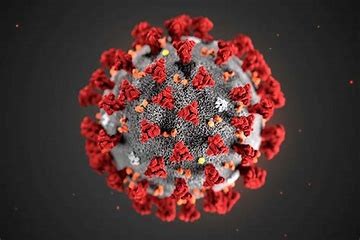
The coronavirus has caused an ongoing pandemic of coronavirus disease 2019 (COVID-19), caused by severe acute respiratory syndrome. The outbreak started in Wuhan, Hubei province, China, as early as November 2019. The World Health Organization (WHO) declared the outbreak to be a Public Health Emergency of International Concern on 30 January 2020 and recognized it as a pandemic on 11 March 2020. Whilst we all have an interest in the ongoing spread and consequence of the greatest public health crisis in generations it holds a specific interest for me given my visits to Wuhan and Hubei province whilst working for Coventry University. Wuhan is a massive city with over 11 million of a population, but little heard of until this outbreak. It is believed that its origins are most likely linked to the Huanan Seafood Wholesale Market, in Wuhan which also sold live animals, and one theory is that the virus came from one of these kinds of animals. The virus spread quickly through the population of Wuhan City which led to comprehensive lockdown to contain the virus. However, the virus spread beyond the city across China and into other countries. The scale of the spread has been significant and by the time the World Health Organisation declared the outbreak a full pandemic in March 2020 there were cases recorded in hundreds of countries.
Cases in the UK emerged on January 31st 2020, which prompted a government response to manage the outbreak. In the early stages there was some discussion about “taking it on the chin” and allowing the virus to spread through the population in order to gain “herd immunity”. However, the public health, medical and scientific experts at Imperial College London suggested that the death toll through their modelling exercises, if this strategy played out, could be in excess of 500,000. This was a situation that would be socially and politically unpalatable, and a change of thinking emerged with a combination of social distancing, public health advice on washing hands and a strategy to protect the capacity of the NHS to cope with escalating cases. A new lexicon emerged that we are now all familiar with: flattening the curve, delaying the spread, the peak of the infection and latterly the language of the health professionals in the frontline supporting and caring for people acutely ill with Covid-19; Personal Protective Equipment (PPE), Continuous Positive Airway Pressure (CPAP), ventilation and oxygen saturation and therapy. This is because the virus can attack the respiratory system leading to pneumonia and in several cases an immune response that leads to multi-organ shutdown. The media presentation of this crisis is all very frightening.
At the time of writing the pandemic has progressed relentlessly in the UK with currently over 65,000 people have tested positive and of those hospitalised nearly 8,000 patients have died. Some commentators have suggested that the UK was slow to recognise the seriousness of the virus and was slow to initiate the “lockdown” measures required to halt the spread. In addition, the UK’s position on testing for the virus has been criticised as slow, lacking preparation despite the global warnings from WHO and a shortage of the essential materials required. Whether these criticisms are valid only time will tell but the UK’s data on cases, hospitalisation, need for critical care and deaths is on a trajectory like other countries which could be described as liberal democracies. Here is the first clue to the timing of the response. The measures required to halt the spread of the virus have massive economic consequences. Balancing these two issues is incredibly difficult and has led to some commentators suggesting all liberal democracies will struggle to respond quickly enough.
What is now abundantly clear is that this is going to take some time for us to get through as a society and the consequences for large sections of our society are going to be devastating. However, what I’d like to discuss in the remainder of this blog are a number of early lessons and personal observations in terms of what we are seeing play out.
First, the data emerging indicates that the narrative about the “virus does not discriminate” is a false one. It is clear that health professionals are much more greatly exposed and that the data on cases and deaths indicate higher numbers of the socially deprived and BAME community. This should not be a surprise as the virus will be keenest felt in communities negatively impacted by health inequalities. This has been the case ever since we recognised this in the “Black Report” (DHSS 1980). The Report showed in detail the extent to which ill-health and death are unequally distributed among the population of Britain and suggested that these inequalities have been widening rather than diminishing since the establishment of the National Health Service in 1948. It is generally accepted that those with underlying health issues and therefore most at risk will be disproportionately from socially deprived communities.
Second, the coronavirus will force the return of big government. The response already supports this. In times of real crisis, the “State” always takes over. Will this lead to more state intervention going forward? If so then we will witness the greatest interventionist Conservative government in my lifetime.
Third, the coronavirus provides one more demonstration of the mystique of borders and will help reassert the role of the nation state. Therefore, the coronavirus is likely to strengthen nationalism, albeit not ethnic nationalism. To survive, the government will ask citizens to erect walls not simply between states but between individuals, as the danger of being infected comes from the people we meet most often. It is not the stranger but those closest to you who present the greatest risk.
Fourth, we see the return of the “expert”. Most people are very open to trusting experts and heeding the science when their own lives are at stake. One can already see the growing legitimacy that this has lent to the professionals who lead the fight against the virus. Professionalism is back in fashion, including recognition of the vital role of the NHS.
Fifth, the coronavirus could increase the appeal of the big data authoritarianism employed by some like the Chinese government. One can blame Chinese leaders for the lack of transparency that made them react slowly to the spread of the virus, but the efficiency of their response and the Chinese state’s capacity to control the movement and behaviour of people has been impressive.
Sixth, changing views on crisis management. What governments learned in dealing with economic crises, the refugee crisis, and terrorist attacks was that panic was their worst enemy. However, to contain the pandemic, people should panic – and they should drastically change their way of living.
Seventh, this will have an impact on intergenerational dynamics. In the context of debates about climate change and the risk it presents, younger generations have been very critical of their elders for being selfish and not thinking about the future seriously. Ironically the coronavirus reverses these dynamics.
Finally, I return to a point made earlier, governments will be forced to choose between containing the spread of the pandemic at the cost of destroying the economy or tolerating a higher human cost to save the economy. In conclusion, I have heard many say that this crisis is different to others we may have faced in the past 30 years and that as a result we can see society changing. Whilst I’m sure a number of the issues raised in this blog could potentially lead to society change it is also a truism that our memories are short, and we may return to life as it looked before this crisis quite quickly. Only time will tell.
Reference
“The Black Report” (1980): Inequalities in Health: Report of a Research Working Group. Department of Health and Social Security, London, 1980.
Share this:


Stop Protecting the #PervertPrince

In the past six months, I have been reflecting on recent stories that have hit media headlines. Although these topics are extremely important, in my opinion not enough “meaningful” discussion has been had. I’m referring to the sexual exploitation of children – the power imbalance, that powerful men within society have abused and have seeming got away with. I start with Jeffrey Epstein.
Although he was convicted of sexual crimes against children, his conviction is one of deceit. The American justice system let down his victims, disguising the severity of his crimes, allowing him to continue his abuse of power on vulnerable children. He was not charged with paedophilia or rape, the US legal system thought it would be fitting to charge him with solicitation of minors for prostitution.

There are various things that are problematic with this, but one of the biggest problems for me is using minors and prostitution in the same sentence. It annoys me that we tend to view our society as progressive and yet we still label children as prostitutes, forgetting that there is a legal age of consent and no child can be a prostitute as they cannot give consent, as much as the law would suggest. This is reminiscent of the Rotherham sex ring, where police labelled minors as prostitutes, forgetting that they are victims of coercion, exploitation and rape. This ideology quickly moves the emphasis away from the perpetrators of crime while negatively impacting the victim. It is time that we have compassion for the victims of such awful crimes and move away from labelling and blaming.
It makes my blood boil that people have the audacity to argue that the US legal systems failings can be used as an outlet of blame for the relationship that Epstein, Prince Andrew and President Clinton had. Lady Colin Campbell stated that if the US legal system had been more transparent Clinton and the shamed Prince would have made better judgements on their friendship with him. She and others have come to this defence of the ‘upper crust,’ using the American justice system failings as a crutch for their wrongdoings.
Although some may agree with her, I must highlight some glaring points that should be raised, before she states such ludicrous statements – such as: Prince Andrew and Bill Clinton’s advisors would have done thorough background checks on Epstein. This would have identified his crimes and his monstrous ways. They would have disclosed the information that was flagged to them and then warned them against forming relationships with the known predator. If these men had any shred of decency, then they would have kept a distance.
My conclusion as to why they did not, is because they feel they are above the law and do not have to conform to the norms that the rest of society subscribes too. It is all about money and status to them, if you are not one of them, you are not human. This notion was visible when Prince Andrew had his very uncomfortable interview with Emily Maitlis. During the interview he never displayed any kind of remorse for the victims. He didn’t even mention them or their harm. He used phrases like Epstein engaged in activity that is unbecoming rather than condemning his actions and showing any kind of emotion. This reaction, or lack of, has only stretched his credibility. He blazingly lied throughout the interview and his actions have made him look like a bumbling pervert.
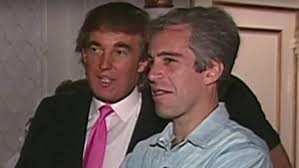
Even though Prince Andrew has demonstrated a lack of morality, the biggest discussion that surrounds this entity is whether he should step down from his royal duties. It seems everyone forgets that he has shown a lack of compassion, he has been pictured with young girls who have accused him and Epstein of violating them. But being a prince trumps all these facts, as he is let off lightly.
He is rich and powerful, and like Epstein, their status has sheltered them from real-world consequences. Epstein is now deceased, but it was all on his terms and once again the victimisation of children has been overshadowed by the circumstances of how he died. The salacious topic of how he managed to commit suicide and whether he was murdered is now big news. As for Prince Andrew, I cannot imagine he will be found guilty and he will not speak publicly about this topic again. Some may demand answers, but he will be protected from any real justice.
It is time that we start opening our eyes and acknowledging the victims of these crime. It is time to make it known that just because you are royalty, a billionaire or a socialite you are not above the law. We need to fight for the voiceless in our society, against the people who abuse their power and stop making excuses for them.
Share this:


Friday the 13th
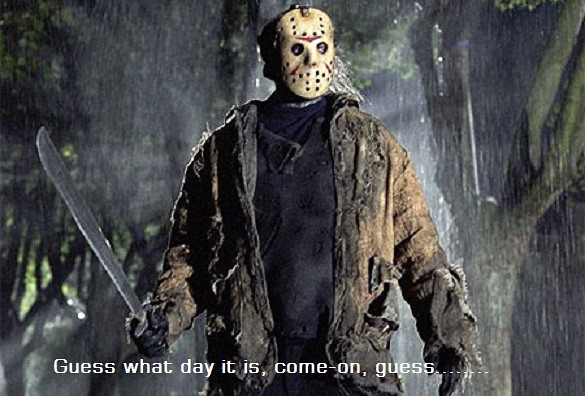
Odd thing superstition, it makes reasonable and seemingly rational people think and behave in the most irrational and inexplicable manner. Always we notice these behaviours and thoughts in other people, but so many of us carry in the back of our minds equally irrational ideas and beliefs. We hear of football club managers who always wear the same clothes at a game, athletes that engage in the same pre-game routine and of course, politicians who act in certain ways during their election campaign. For the rest of us there are ladders in the street, black cats, that we may avoid or there are dates in the calendar that we take notice. Friday the 13th is one of those Anglo-Saxon dates that people take notice of.
I am sure that some of my historian friends will be able to give a good account of the origin of the unfortunate date, but I can only go with the “official tradition” of Jesus, the 13th student, (Judas) and his subsequent arrest on the Friday before the Crucifixion. The day, somehow, became one of those that we notice, even when we are not superstitious. There is even a psychologically recognised fear of the date Triskaidekaphobia; which in Greek means the fear of 13! Of course social fears are blended with wider social anxieties, whether that is the fear of the unknown or the realisation that in life, there are things that we have little control of.
In the days leading up to this Friday the 13th we engaged with political discussions about what direction the country shall take. The health service, the justice system, the state’s responsibility, all the way to welfare and the state of the union, were all eclipsed by one topic that has dominated discourses, that of the execution of leave from the European Union commonly known as Brexit. Ironically the “exit” preface was used before for Greece (Grexit), and Italy (Italexit) but seems that Brexit has won the battle of the modern lexicon. The previous “exits” where used as a cautionary tale for the countries being forced out of the union, whilst Brexit is about leaving the Union.
Having considered all the issues, this one issue became the impetus for people to give politicians a mandate. Complete this issue before and above all the rest. It is an issue likened to a divorce, given a texture, (soft/hard) and has even been seen as the reason for generational conflicts. Therefore the expectation is clear now . Leave the European Union, and then let’s see what we can do next. The message is fairly clear and the expectation is palpable. Beliefs and hopes of the people narrowed down to one political move that shall terminate membership to the European Union. Of course there are subsequent questions and issues that this act of national defiance may come with. As for the state of the Union, that may have to be the next thing we discuss. This follow up conversation may not be as welcome, but it is definitely interesting. If joining the EU back in 1975, warranted a discussion, then the 1536 Act of Union may become the next topic for conversation. As for healthcare, justice, education and welfare, we may have to wait a little bit more longer. Whether this will mark Friday 13th December 2019 as a date of fortune or misfortune, that is yet to be decided, but that is the same for every day of the week.
Just for your records and for the Triskaidekaphobians out there, the next Friday the 13 is in March 2020 followed by the one in November 2020. Just saying…
Share this:


Empathy Amid the “Fake Tales of San Francisco”*
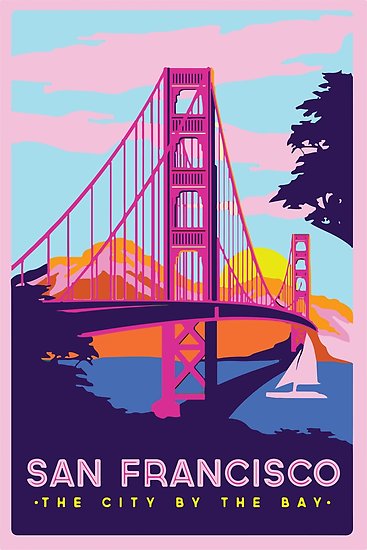
This time last week, @manosdaskalou and I were in San Francisco at the American Society of Criminology’s conference. This four-day meeting takes place once a year and encompasses a huge range of talkers and subjects, demonstrating the diversity of the discipline. Each day there are multiple sessions scheduled, making it incredibly difficult to choose which ones you want to attend.
Fortunately, this year both of our two papers were presented on the first day of the conference, which took some of the pressure off. We were then able to concentrate on other presenters’ work. Throughout discussions around teaching in prison, gun violence and many other matters of criminological importance, there was a sense of camaraderie, a shared passion to understand and in turn, change the world for the better. All of these discussions took place in a grand hotel, with cafes, bars and restaurants, to enable the conversation to continue long after the scheduled sessions had finished.
Outside of the hotel, there is plenty to see. San Francisco is an interesting city, famous for its Golden Gate Bridge, the cable cars which run up and down extraordinarily steep roads and of course, criminologically speaking, Alcatraz prison. In addition, it is renowned for its expensive designer shops, restaurants, bars and hotels. But as @haleysread has noted before, this is a city where you do not have to look far to find real deprivation.
I was last in San Francisco in 2014. At that point cannabis had been declassified from a misdemeanour to an infraction, making the use of the drug similar to a traffic offence. In 2016, cannabis was completely decriminalised for recreational use. For many criminologists, such decriminalisation is a positive step, marking a change from viewing drug use as a criminal justice problem, to one of public health. Certainly, it’s a position that I would generally subscribe to, not least as part of a process necessary to prison abolition. However, what do we really know about the effects of cannabis? I am sure my colleague @michellejolleynorthamptonacuk could offer some insight into the latest research around cannabis use.
When a substance is illegal, it is exceedingly challenging to research either its harms or its benefits. What we know, in the main, is based upon problematic drug use, those individuals who come to the attention of either the CJS or the NHS. Those with the means to sustain a drug habit need not buy their supplies openly on the street, where the risk of being caught is far higher. Thus our research population are selected by bad luck, either they are caught or they suffer ill-effects either with their physical or mental health.
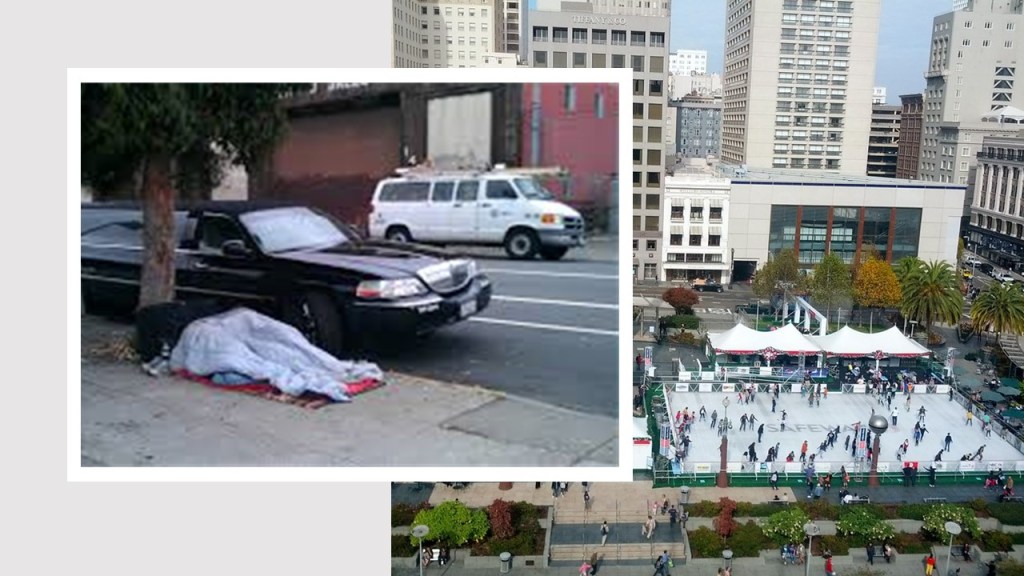
The smell of cannabis in San Francisco is a constant, but there is also another aroma, which wasn’t present five years ago. That smell is urine. Furthermore, it has been well documented, that not only are the streets and highways of San Francisco becoming public urinals, there are also many reports that public defecation is an increasing issue for the city. Now I don’t want to be so bold as to say that the decriminalisation of cannabis is the cause of this public effluence, however, San Francisco does raise some questions.
- Does cannabis cause or exacerbate mental health problems?
- Does cannabis lead to a loss of inhibition, so much so that the social conventions around urination and defecation are abandoned?
- Does cannabis lead to an increase in homelessness?
- Does cannabis increase the likelihood of social problems?
- Does the decriminalisation of cannabis, lead to less tolerance of social problems?
I don’t have any of the answers, but it is extremely difficult to ignore these problems. The juxtaposition of expensive shops such as Rolex and Tiffany just round the corner from large groups of confused, homeless people, make it impossible to avoid seeing the social problems confronted by this city. Of course, poor mental health and homelessness are not unique to San Francisco or even the USA, we have similar issues in our own town, regardless of the legal status of cannabis. Certainly the issue of access to bathroom facilities is pressing; should access to public toilets be a right or a privilege? This, also appears to be a public health, rather than CJS problem, although those observing or policing such behaviour, may argue differently.
Ultimately, as @haleysread found, San Francisco remains a City of Contrast, where the very rich and the very poor rub shoulders. Unless, society begins to think a little more about people and a little less about business, it seems inevitable that individuals will continue to live, eat, urinate and defection and ultimately, die upon the streets. It is not enough to discuss empathy in a conference, no matter how important that might be, if we don’t also empathise with people whose lives are in tatters.
*Turner, Alex, (2006), Fake Tales of San Francisco, [CD]. Recorded by Arctic Monkeys in Whatever People Say I Am, That’s What I’m Not, The Chapel: Domino Records
Share this:

‘Guilty’ of Coming Out Daily – Abroad. #BlackenAsiaWithLove

I am annoyed that our apartment-building manager told my husband that a two-bedroom had recently become available, and that we should move in because we would be “more comfortable.” My husband always takes such statements at face value, then performs his own cost/benefits analysis. Did the manager offer a discount, I asked? I mean, if he’s genuinely concerned about our comfort, shouldn’t he put his money where his mouth is? That’s probably just the American in me talking: He was either upselling the property or probing us to see what the deal was – not at all concerned about our comfort. I speak code, too.
The most homophobic thing that anyone has ever said to me is not any slur, but that gay people should not “flaunt it.” As if concealing our identities would magically erase homophobia. This reveals that the speaker either doesn’t know – or doesn’t care to know – how readily people everywhere speak about our personal lives. There are random people I have met in every single part of the world, that ask my marital status. It comes shortly after asking my name and where I’m from. The words used are revealing – just ask any divorced person who has engaged with any society’s traditions. Is it deceptive to say that they are “single,” instead? What’s more, regardless of language, preferred terms like “unmarried” reveal the value conferred upon this status. You’re not a whole person until you’re married, and a parent. It is only then that one is genuinely conferred what we sociologists call ‘personhood’. Also, are married lesbians called two Mrs.?
Come out, come out wherever you are.
In many parts of the world, being ‘out’ carries the death penalty, including parts of my father’s homeland, Nigeria. I’ve literally avoided visiting Nigeria because of the media-fueled fear of coming out. I hate the distance it’s wedged between my people, our culture and I. There was a time when coming out was literally the hardest thing I ever had to do. Now, l must come out daily.
Back in the UK, many educators would like to believe that they don’t discuss their personal lives with students. But who hasn’t been casually asked how one spent the weekend? Do I not say “My husband and I…” just as anyone else might? Abroad, do I correct co-workers when they refer to us as ‘friends’? Yesterday, I attended an academic conference. All the usual small talk. I came out a dozen times by lunch.
In teaching English here in Asia, isn’t it unfair for me to conceal from my students the gender of my “life-partner,” which is actually our formal legal status? Am I politicising my classroom by simply teaching gender-neutral terms like ‘spouse’ or ‘partner’? Or, do I simply use the term ‘husband’ and skim over their baffled faces as they try to figure out if they have understood me properly? Am I denying them the opportunity to prepare for the sought-after life in the west? Further, what about the inevitability of that one ‘questioning’ student in my classroom searching for signs of their existence!
I was recently cornered in the hallway by the choreographer hired by our department to support our contribution to the university’s staff talent competition (see picture below*). She spoke with me in German, explaining that she’d lived several years in the former GDR. There are many Vietnamese who’d been ‘repatriated’ from the GDR upon reunification. So, given the historical ties to Communism, it’s commonplace to meet German (and Russian) speakers here. Naturally, folks ask how/why I speak (basic) German. My spouse of seventeen years is German, so it’d be weird if I hadn’t picked up any of the language. It’s really deceptive to conceal gender in German, which has three. I speak German almost every day here in Hanoi.

The word is ‘out’.
In Delhi, we lived in the same 2-bedroom flat for over 7 years. It became clear to our landlady very early on that we slept in one bedroom. Neighbours, we’re told, also noticed that we only ever had one vehicle between us and went most places together. Neither the landlady nor any neighbour ever confronted us, so we never had to formally come out. Yet, the chatter always got back to us.
As a Peace Corps volunteer in rural Mali in the late 90’s, I learned to speak Bambara. Bambara greetings are quite intimate: One normally asks about spouses, parents and/or children, just as Black-Americans traditionally would say “How yo’ momma doin?’” In Mali, village people make it their business to get single folks hitched. Between the Americans, then, it became commonplace to fake a spouse, just so one would be left in peace. Some women wore wedding bands for added protection, as a single woman living alone was unconscionable. The official advice for gays was to stay closeted L. While I pretended to be the husband of several volunteers, I could never really get the gist of it in my village. Besides, at 23 years old, being a single man wasn’t as damning as it is for women. I only needed excuses to reject the young women villagers presented to me. Anyhow, as soon as city migrants poured back to the village for Ramadan, I quickly discovered that there are plenty of LGBTQ+ folks in Mali! This was decades before Grindr.
Here in Hanoi, guys regularly, casually make gestures serving up females, as if to say: ‘Look, she’s available, have her’. I’ve never bothered to learn the expected response, nor paid enough attention to how straight men handle such scenarios. Recently, as we left a local beer hall with another (gay) couple, one waiter rather cheekily made such gestures at a hostess. In response, I made the same gestures towards him; he then served himself up as if to say ‘OK’. That’s what’s different about NOW as opposed to any earlier period: Millennials everywhere are aware of gay people.
A group of lads I sat with recently at a local tea stall made the same gestures to the one girl in their group. After coming out, the main instigator seamlessly gestured towards the most handsome in his clique. When I press Nigerian youth about the issue, the response is often the same: We don’t have a problem with gay people, we know gay people, it’s the old folk’s problem. Our building manager may be such a relic.
*Picture from The 2019 Traditional Arts Festival at Hanoi University of Science and Technology (HUST)
Share this:


A month of Black history through the eyes of a white, privileged man… an open letter

Dear friends,
Over the years, in my line of work, there was a conviction, that logic as the prevailing force allows us to see social situations around (im)passionately, impartially and fairly. Principles most important especially for anyone who dwells in social sciences. We were “raised” on the ideologies that promote inclusivity, justice and solidarity. As a kid, I remember when we marched as a family against nuclear proliferation, and later as an adult I marched and protested for civil rights on the basis of sexuality, nationality and class. I took part in anti-war marches and protested and took part in strikes when fees were introduced in higher education.
All of these were based on one very strongly, deeply ingrained, view that whilst the world may be unfair, we can change it, rebel against injustices and make it better. A romantic view/vision of the world that rests on a very basic principle “we are all human” and our humanity is the home of our unity and strength. Take the environment for example, it is becoming obvious to most of us that this is a global issue that requires all of us to get involved. The opt-out option may not be feasible if the environment becomes too hostile and decreases the habitable parts of the planet to an ever-growing population.
As constant learners, according to Solon (Γηράσκω αεί διδασκόμενος)[1] it is important to introspect views such as those presented earlier and consider how successfully they are represented. Recently I was fortunate to meet one of my former students (@wadzanain7) who came to visit and talk about their current job. It is always welcome to see former students coming back, even more so when they come in a reflective mood at the same time as Black history month. Every year, this is becoming a staple in my professional diary, as it is an opportunity to be educated in the history that was not spoken or taught at school.
This year’s discussions and the former student’s reflections made it very clear to me that my idealism, however well intended, is part of an experience that is deeply steeped in white men’s privilege. It made me question what an appropriate response to a continuous injustice is. I was aware of the quote “all that is required for evil to triumph is for good men to do nothing” growing up, part of my family’s narrative of getting involved in the resistance, but am I true to its spirit? To understand there is a problem but do nothing about it, means that ultimately you become part of the same problem you identify. Perhaps in some regards a considered person is even worse because they see the problem, read the situation and can offer words of solace, but not discernible actions. A light touch liberalism, that is nice and inclusive, but sits quietly observing history written in the way as before, follow the same social discourses, but does nothing to change the problems. Suddenly it became clear how wrong I am. A great need to offer a profound apology for my inaction and implicit collaboration to the harm caused.
I was recently challenged in a discussion about whether people who do not have direct experience are entitled to a view. Do those who experience racism voice it? Of course, the answer is no; we can read it, stand against it, but if we have not experienced it, maybe, just maybe, we need to shut up and let other voices be heard and tell their stories. Black history month is the time to walk a mile in another person’s shoes.
Sincerely yours
M
[1] A very rough translation: I learn, whilst I grow, life-long learning.
Share this:


A Love Letter: in praise of art

Some time ago, I wrote ‘A Love Letter: in praise of poetry‘, making the case as to why this literary form is important to understanding the lived experience. This time, I intend to do similar in relation to visual art.
Tomorrow, I’m plan to make my annual visit to the Koestler Arts’ Exhibition on show at London’s Southbank Centre. This year’s exhibition is entitled Another Me and is curated by the musician, Soweto Kinch. Previous exhibitions have been curated by Benjamin Zephaniah, Antony Gormley and prisoners’ families. Each of the exhibitions contain a diverse range of unique pieces, displaying the sheer range of artistic endeavours from sculpture, to pastels and from music to embroidery. This annual exhibition has an obvious link to criminology, all submissions are from incarcerated people. However, art, regardless of medium, has lots of interest to criminologists and many other scholars.
I have never formally studied art, my reactions and interpretations are entirely personal. I reason that the skills inherent in criminological critique and analysis are applicable, whatever the context or medium. The picture above shows 4 of my favourite pieces of art (there are many others). Each of these, in their own unique way, allow me to explore the world in which we all live. For me, each illustrate aspects of social (in)justice, social harms, institutional violence and the fight for human rights. You may dislike my choices. arguing that graffiti (Banksy) and photography (Mona Hatoum) have no place within art proper. You may disagree with my interpretation of these pieces, dismissing them as pure ephemera, forgotten as quickly as they are seen and that is the beauty of discourse.
Nonetheless, for me they capture the quintessential essence of criminology. It is a positive discipline, focused on what “ought” to be, rather than what is. To stand small, in front of Picasso’s (1937) enormous canvas Guernica allows for consideration of the sheer scale of destruction, inherent in mechanised warfare. Likewise, Banksy’s (2005) The Kissing Coppers provides an interesting juxtaposition of the upholders of the law behaving in such a way that their predecessors would have persecuted them. Each of the art pieces I have selected show that over time and space, the behaviours remain the same, the only change, the level of approbation applied from without.
Art galleries and museums can appear terrifying places, open only to a select few. Those that understand the rules of art, those who make the right noises, those that have the language to describe what they see. This is a fallacy, art belongs to all of us. If you don’t believe me, take a trip to the Southbank Centre very soon. It’s not scary, nobody will ask you questions, everyone is just there to see the art. Who knows you might just find something that calls out to you and helps to spark your criminological imagination. You’ll have to hurry though…closes 3 November, don’t miss out!

 Thoughts from the criminology team