
Home » socialisation
Category Archives: socialisation

#UONCriminologyClub: Introduction to Criminology with Dr Manos Daskalou

In celebration of the 25 years of Criminology at UON, we have been hosting a number of events that demonstrate the diversity and reach criminology has as a discipline in different communities. In a spirit of opening a wider dialogue we have created a series of online classes for young home educated learners (10-15) to provide some taster sessions about criminology. This is a reflection of the very first one.
Setting up a session for young learners is not an easy feat! The introduction session was about to set the tone with the newly formed “Criminology Club” like the old Micky Mouse Club, only with more crime and less mice! The audience of our new crime-busters was ready to engage. The pre-session activity was set and the tone for what was to follow was clear. For an hour I would be conversing on crime. To get through the initial introductions with the group, we went over the activity. Top crimes and reasons for arranging them in that order. Our learners went into a whole range of criminalities and provided their own rationale for what they thought made them serious. There is a complex simplicity in this activity; regardless of age or experience, our understanding and most importantly justification of crime, tells us more about us, than the person committing it. Once we were done with the “pleasantries” we moved into the main part of the class.
Being an introductory session, it was important to set it right; telling a story and framing it into a conversation is important. What’s the best way to start the story of crime, but to tell a story we all know about when growing up; a fairy-tale. Going for a classic fairy-tale seemed to be the best way to go!
For this session the fairy tale chosen was Cinderella.
“I really enjoyed today’s session! I feel enlightened – Dr @manosdaskalou was great and I really loved the activities. I didn’t know the original story of Cinderella – it’s so horrifying. I didn’t think of crime in fairy-tales before but now I will be on the look out.” (Quinn age 12).
The original tale, like most fairy-tales has a fairly brutal twist that reinforces strongly the cautionary tale within the story. This was an audience participation narration and the help of the “crime-busters” was necessary every step of the way. Understanding the types of crimes being committed at every turn of the tale, while wondering if this was to be regarded appropriate behaviour now. Suddenly the fairy tale becomes an archive of social trends, beliefs and actions, captioned into the spin of the story. The hour was far too little time covering a simple fairy tale!
“I would like to thank Dr @manosdaskalou for today. I had an amazing time. The only thing I didn’t like was when it ended. I like stories so I enjoyed when we talked about Cinderella, I didn’t realise how gruesome the original one was!” (Paisley age 10).
There is something interesting running over a familiar tale and looking at it from a different perspective. The process of decoding messages and reviewing narratives. For a younger audience the terms may sound incomprehensible but it is amazing how much narrative analysis the new “crime-busters” did! Our social conventions are so complex yet despite that a child at the age of 10 can pick them up and put them in the right order. Seeing them confronting the different dilemmas, the story took them on so many different levels, was an interesting process. It is always a challenge to pitch any material at the right level but on this occasion, for this group, about this story in this instance, the “crime-busters” were introduced to Criminology!
“We had so much fun today in our first criminology lesson with Dr @manosdaskalou from UON. Time flew by so quickly, I was so interested in everything we were discussing and wanted to know more and more. In today’s session we pulled apart the fairytale Cinderella discussing what crimes the characters in it had committed and why. I thought this was a really great idea. I was having so much fun in the lesson that I didn’t realise how much I was actually learning but now that we have finished I realise I know much more about criminology and how to study a classic text with Criminology in mind. A big thank you to @manosdaskalou who made it an incredibly fun and engaging session. I’m sure I speak for most of us when I say I can’t wait to come back next time and learn more.” (Atty aged 14).
The end of the session left the group of “crime-busters” wanting more. Other colleagues will continue offering more sessions to an early generation of learners getting to know the basics about “Criminology” a discipline that many people think they know from true crime, little realising we spend so much time dispelling the myths! Who would imagine that the best way to do so, was to tell them a fairy tale.
Share this:


It’s all about perspective…

Within criminology, and other social science disciplines, the understanding that knowledge is socially constructed and meaning is given to things from people and their interactions is particularly pertinent: especially for researchers involved with people. And ‘perspective’ can be challenging to navigate, challenging to be critical of and challenging to recognise within and outside of a research context. Thinking about the public, the understanding of the nature of knowledge is often taken at face value and not viewed critically; perhaps a skill or requirement which should be part of mainstream education, then again maybe not. Consider the below example, your thoughts and attitudes towards the actors, actions and outcomes… consider your perspective.
A boy begins testing boundaries with his father, he deliberately disobeys him around where he can go and what he can do. He even encourages a friend to join him on his adventures: ducking away from the adult eyes that are watching over them. The boy is told off for putting himself and friend in a dangerous situation, and he appears sincere for his mistakes. Alas, he finds himself in trouble again; this time with dire consequences. The boy’s father dies trying to get him out of trouble. The boy runs away to a place where his past is unknown, and joins a group of outcasts. He grows up into a young man on the fringes of society. He is persuaded to return home, whereby he is involved in a violent fight, which almost results in his death. Luckily, he overcomes his opposition; finding himself with a only a few cuts and bruises. His opponent is forced to flee. He is triumphant, but at what cost?
This is one perspective and overview: from an outsider looking in. There are other ways to describe the example below (which we will come on to), but firstly: what are your thoughts on the young boy and his behaviour? What outcomes are required, if any, and at what stages of this boy’s life? Is this something which requires support, love and care or surveillance, control and discipline?
Another way of looking at the above scenario is to watch the Lion King (1994).1 The young boy in question is Simba. Maybe you already spotted that, maybe you aren’t familiar with the story or perspectives the film is told by. Perspectives matter….
- For those less familiar with Disney animations, the themes are also apparent within Shakespeare’s Hamlet (c. 1600). ↩︎
Share this:


Are my interests childish or are you missing the bigger picture?
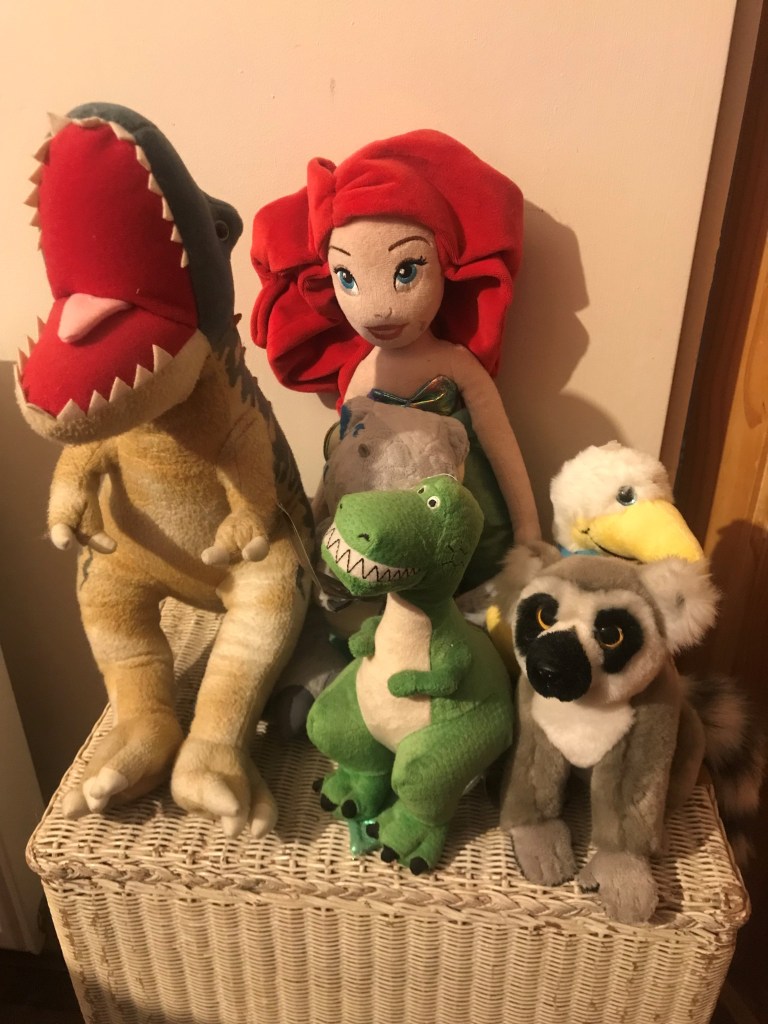
In semester 2, the level 4 BA Criminology students have been navigating different forms of socialisation for children, and thinking critically about where standards, assumptions and pressures on our children come from. Its been an interesting few weeks full of discussions building on personal experiences, documentaries and the wider academic literature. Now, whilst I could write a detailed reflection on the classroom discussions, what instead I want to, shockingly, moan about in the blog this week are the labels applied to young adults and adults implying being ‘childish’ is something to be ashamed of.
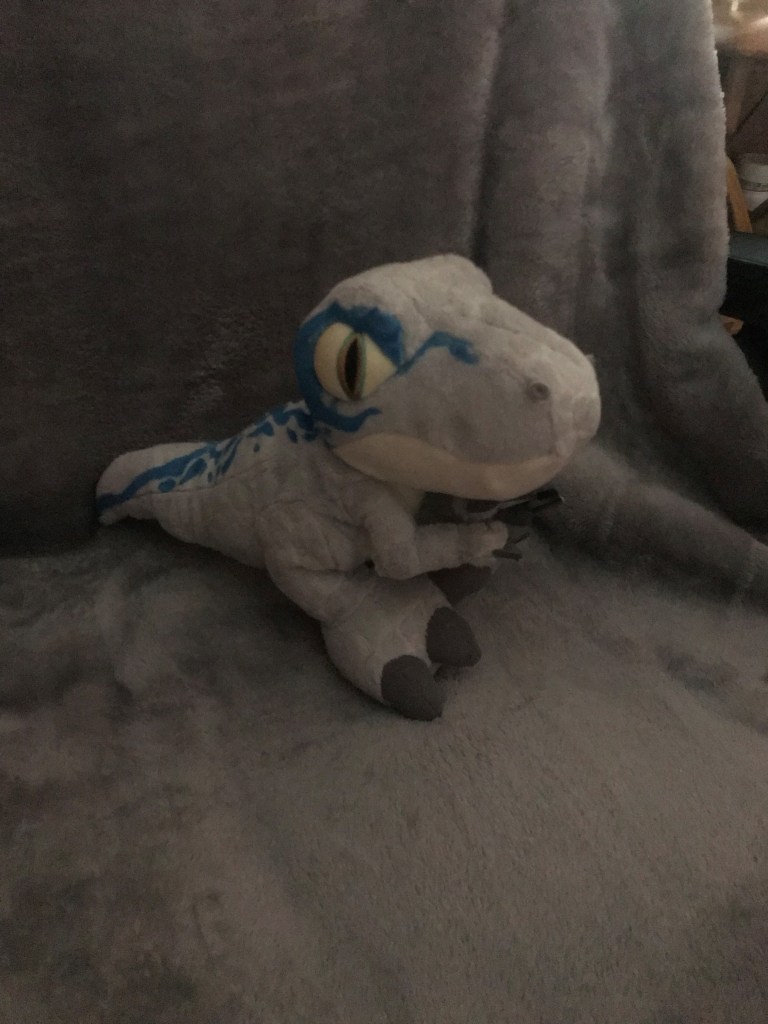
Many who know me will be aware I am a huge Disney fan, particularly Disney and Disney Pixar animations, which includes watching, gaming, clothing and accessories which all match my love for these films. I am also a big, big, big fan of dinosaurs, although if I’m being honest, its more so the Jurassic Park/World franchise. Again, books, films, toys, stuffed dinosaurs (shout out to my Beta stuffed toy – pictured above) from the Natural History Museum) and also a tattoo. These things bring me joy and also peace. Many a times when I’m overwhelmed, the go to is a Disney animation or Jurassic Park (much to my partner’s pain) for familiarity, comfort and relaxation. Yet despite the comfort and joy it brings me, often I am met with commentary about my ‘childish’ interests and questions around ‘when will I grow up’.
Now for clarity, most of these comments (but not all) are from friends and loved-ones who are saying so (I presume) in jest. There is no malice behind the comments, but still it has given me food for thought. Lots of people of all ages share the same joys as myself (social media fan pages are many), but is there any harm in pressing people to justify and commenting on their pastimes? Possibly. I am in a fortunate position to be able to afford various Disney-themed items of clothing (huge shout out to Primark and their Stitch section), Jurassic Park official merchandise, POP! Figures, clothes, posters etc whereas when I was younger, this was not something we could afford. Being in a privileged position and having a disposable income means I get to explore interests from my childhood, and have them develop into passions. Something which wasn’t available to me as a child, or even as a young adult at University. Being older and engaging with interests from childhood also uncovers new ways of appreciating the messages, artwork, and stories.
The presumption that my interests are ‘childish’ is not clearly explained by those who comment. What is meant by ‘childish’ and why is it presumed to be negative is not clear. But there appears to be some stigma around it. There is a push, as we are slowly uncovering in classroom discussions, for everyone to ‘grow-up’, but is this what is best for the individual? Or does this serve some greater purpose for society? I’m not sure what the point of the above ramblings are for, other than it might be best to keep opinions to yourself if you do not share the same interest. In a word that is full of harm and disadvantage, especially for children, let people enjoy their interests and passions, commentary free, if they aren’t harming you!

 Thoughts from the criminology team