
Home » Social science (Page 4)
Category Archives: Social science

Those kinde of people
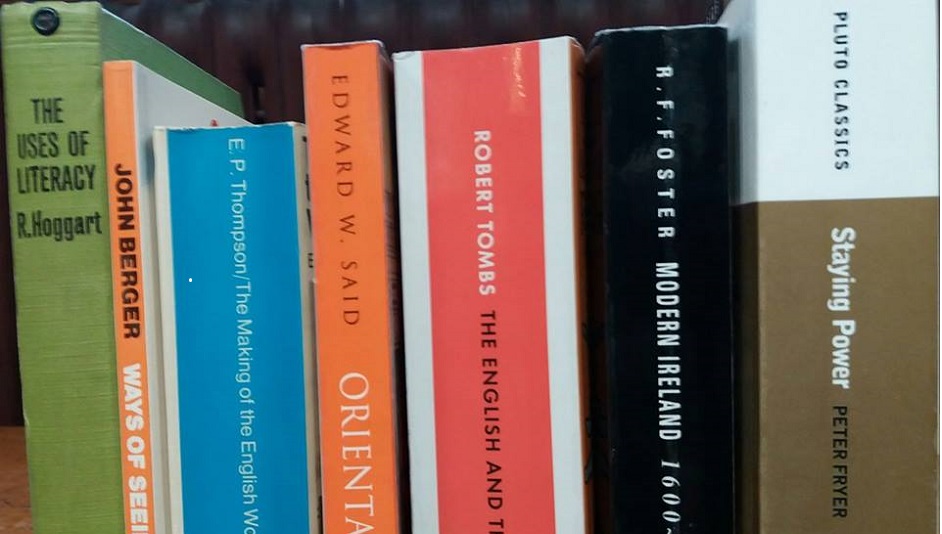
This poem is named for the first chapter of the iconic book Staying Power (1984) by historian and academic Peter Fryer. A book that talks about the history of Black people in Britain, from Roman times up to his modern-day. It’s also inspired by ‘Mathematics’ by British poet and author Hollie McNish.
Adam said:
those goddamn universities
and their goddamn books
learned people, crippling egos
with nothing but a look
he says those goddamn historians
and their god damn history
I tell them they worked hard
to get there, can’t you see?
I ask him what
he expects British history to be
he says he remembers
the land of Blyton and Christie
coastal wrecks, greenery
and a good wage before those people came
where people went to work, pot-bellied
national pride, stood proud before they came
now no British jobs, their kinde are to blame

I ask how he knows this to be true
he said he saw it on BBC News
every time a Pole takes a job from us
each time he hears a different language
whilst riding the bus
this divide and conquer, them and us
to me just does not add up
he makes a brew, two sugars in his tea
I say didn’t you know those granules
came from the sugar economy
he grunts, goddamn Blacks came and took our stuff
I tell him about sugar and cotton, you know
how slaves gave us indigo and tobacco – hot air to puff
I show him Brixton Road and Portobello Market
I show him rock n roll, Network Rail and the NHS
I show him the immigrant-built west
I show him straight roads and pictures of my Gran
how the Jamaican ackee comes from the Ghanaian Akan
He’s sick of history and social science
sitting all sad and smug on his island
I spent three years on a degree
did a dissertation on British identity
I geek over John Blanke
renaissance trumpeter who was Black
Oh and Ann Lister, call her Gentleman Jack
and Afro-Romans and The Slave Trade
Black Georgians, Saxons and Viking Raids
and I so want to scream when I hear folks say
goddamn immigrants taking our jobs
but how we teach history – we don’t talk
of Mrs Shah’s shop employing Bill and Bob
where people with money love to spend
employing women and men in tens,
her gift for business is self-taught
all her plans meticulously well-thought
and all your prejudice talk
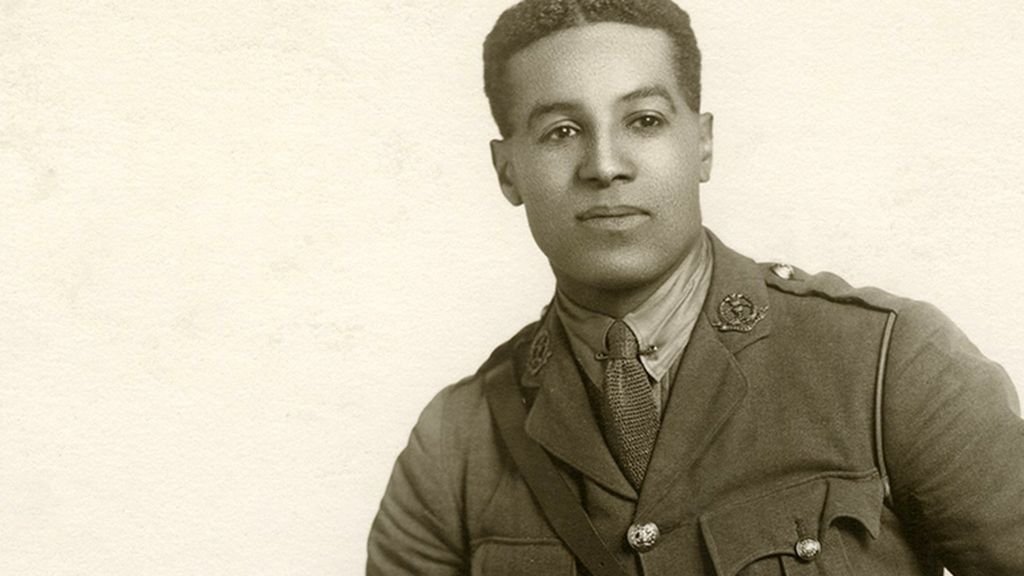
forgets the soldiers the colonies pledged
forgets the men left for dead
in Tangiers, Dunkirk and at the Somme
as the world wars went on and on
from Mr Smith to Mr Wong
and I know people love to complain
but England our name
the land of Angles is all that remains
from Saxons to Jutes
stories of migration since before WW2
and often, those kind of people
are more native than the locals.
Share this:


A Love Letter: in praise of art

Some time ago, I wrote ‘A Love Letter: in praise of poetry‘, making the case as to why this literary form is important to understanding the lived experience. This time, I intend to do similar in relation to visual art.
Tomorrow, I’m plan to make my annual visit to the Koestler Arts’ Exhibition on show at London’s Southbank Centre. This year’s exhibition is entitled Another Me and is curated by the musician, Soweto Kinch. Previous exhibitions have been curated by Benjamin Zephaniah, Antony Gormley and prisoners’ families. Each of the exhibitions contain a diverse range of unique pieces, displaying the sheer range of artistic endeavours from sculpture, to pastels and from music to embroidery. This annual exhibition has an obvious link to criminology, all submissions are from incarcerated people. However, art, regardless of medium, has lots of interest to criminologists and many other scholars.
I have never formally studied art, my reactions and interpretations are entirely personal. I reason that the skills inherent in criminological critique and analysis are applicable, whatever the context or medium. The picture above shows 4 of my favourite pieces of art (there are many others). Each of these, in their own unique way, allow me to explore the world in which we all live. For me, each illustrate aspects of social (in)justice, social harms, institutional violence and the fight for human rights. You may dislike my choices. arguing that graffiti (Banksy) and photography (Mona Hatoum) have no place within art proper. You may disagree with my interpretation of these pieces, dismissing them as pure ephemera, forgotten as quickly as they are seen and that is the beauty of discourse.
Nonetheless, for me they capture the quintessential essence of criminology. It is a positive discipline, focused on what “ought” to be, rather than what is. To stand small, in front of Picasso’s (1937) enormous canvas Guernica allows for consideration of the sheer scale of destruction, inherent in mechanised warfare. Likewise, Banksy’s (2005) The Kissing Coppers provides an interesting juxtaposition of the upholders of the law behaving in such a way that their predecessors would have persecuted them. Each of the art pieces I have selected show that over time and space, the behaviours remain the same, the only change, the level of approbation applied from without.
Art galleries and museums can appear terrifying places, open only to a select few. Those that understand the rules of art, those who make the right noises, those that have the language to describe what they see. This is a fallacy, art belongs to all of us. If you don’t believe me, take a trip to the Southbank Centre very soon. It’s not scary, nobody will ask you questions, everyone is just there to see the art. Who knows you might just find something that calls out to you and helps to spark your criminological imagination. You’ll have to hurry though…closes 3 November, don’t miss out!
Share this:


How to prepare for a year in University

In our society consumerism seems to rain supreme. We can buy stuff to make us feel better and we can buy more stuff to express our feeling to others and mark almost most events around us. Retail and especially all the shops have long been aware of this and so they have developed their seasonal material. These seasonal promotions may have become consumer events now although they do signify something incredibly important to culture and our collective consciousness. There is time for Christmas decorations and festive foods, Easter time and chocolate eggs, mother’s day and nauseating cards father’s day for equally grinchworthy cards. There is valentine’s day to say I love you in full fat chocolates, Halloween to give little kids rotten teeth and a red poppy to remember some of our dead. To those add the summer season with the disposable BBQs and of course the back to school season!
The back to school is one of the interesting ones. Geared to prepare pupils and parents for going back to school and plan ahead. From ordering the uniforms to getting all the stationery and books required. I remember this time of the year with some rather mixed emotions. It was the end of my summer holidays, but it was also the time to get back to school. Until one day I finished school and I went to university. Education is seen as part of a continuous process that we are actively involved from the first day at school to the last day in high school and more recently for more people also involve the first day of going to university. Every year is more challenging than the next, but we move up and continue. For those of us who enjoy education we continue the journey further to further or high education.
There is something to said about the preparation process coming to University; it is interesting seeing advertisements on education this time of the year on the tv and social media promoting stuff for this transition; from the got to have smartphone to the best laptop, the fastest printer scanner all in one thingy to the greatest sound system and many more stuff that would get you ready for the year ahead. Do they really help us out and if not, what do we got to do to prepare for coming to university?
Unfortunately, there is no standard formula here but there is a reason for that. Higher education is adult education. This is the first time in our educational journey that we are sitting firmly on the driving seat. We choose to study (or ought to) what we wish to study. It is an incredibly liberating process to have choice. This however is only the beginning. We make plans of our time. In higher education the bulk of the time required is independent study, and as such we got to negotiate how we will plan our time. We got to decide which reading we are going to do first which notes to read what seminar we shall prepare and what assignment we will make a draft of.
There will be days spent in the library looking for a book, days in a coffee shop talking to fellow students about the seminar reading, days in the learning hub working on an assignment. There are highs, lows and everything in between. But regardless of the emotion at every stage thee will be a sense of ownership of knowledge.
In the first couple of sessions, the bulk of the students keep quiet expecting the correct answer to be given. One interpretation or one truth that describes all. It takes a few times before the realisation emerges that the way we analyse, and project knowledge can be different provided we go through the same processes of scrutiny and analysis. Then conversation emerges and the more reading the better the quality of the ideas that shall emerge.
The first year at University is definitely a declaration of independence and the realisation that we all have a voice. Getting on to the road on empowerment. This is a long journey, and on occasions arduous but incredibly rewarding because it leads to an insight greater than before that removes ignorance and lifts the veil of the unfamiliar.
To our newest students – Welcome to the University and to our returning 2 and 3 years – Welcome back!
Share this:


Thinking “outside the box”
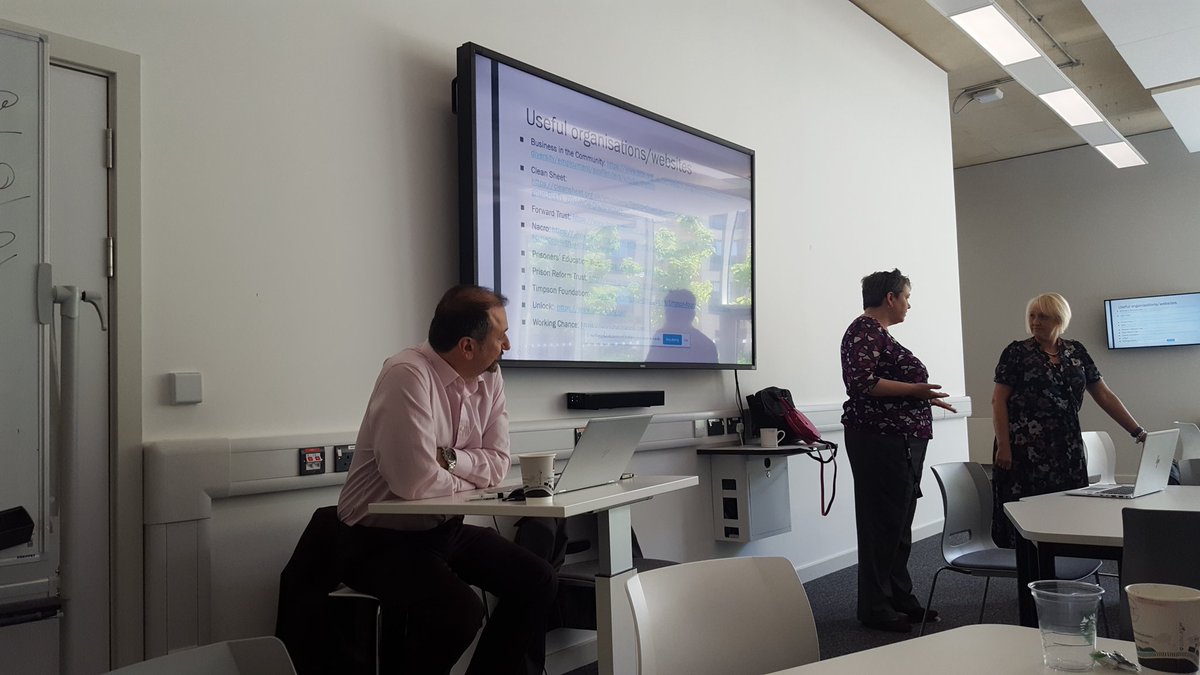
Having recently done a session on criminal records with @paulaabowles to a group of voluntary, 3rd sector and other practitioners I started thinking of the wider implications of taking knowledge out of the traditional classroom and introducing it to an audience, that is not necessarily academic. When we prepare for class the usual concern is the levelness of the material used and the way we pitch the information. In anything we do as part of consultancy or outside of the standard educational framework we have a different challenge. That of presenting information that corresponds to expertise in a language and tone that is neither exclusive nor condescending to the participants.
In the designing stages we considered the information we had to include, and the session started by introducing criminology. Audience participation was encouraged, and group discussion became a tool to promote the flow of information. Once that process started and people became more able to exchange information then we started moving from information to knowledge exchange. This is a more profound interaction that allows the audience to engage with information that they may not be familiar with and it is designed to achieve one of the prime quests of any social science, to challenge established views.
The process itself indicates the level of skill involved in academic reasoning and the complexity associated with presenting people with new knowledge in an understandable form. It is that apparent simplicity that allows participants to scaffold their understanding, taking different elements from the same content. It is easy to say to any audience for example that “every person has an opinion on crime” however to be able to accept this statement indicates a level of proficiency on receiving views of the other and then accommodating it to your own understanding. This is the basis of the philosophy of knowledge, and it happens to all engaged in academia whatever level, albeit consciously or unconsciously.
As per usual the session overran, testament that people do have opinions on crime and how society should respond to them. The intriguing part of this session was the ability of participants to negotiate different roles and identities, whilst offering an explanation or interpretation of a situation. When this was pointed out they were surprised by the level of knowledge they possessed and its complexity. The role of the academic is not simply to advance knowledge, which is clearly expected, but also to take subjects and contextualise them. In recent weeks, colleagues from our University, were able to discuss issues relating to health, psychology, work, human rights and consumer rights to national and local media, informing the public on the issues concerned.
This is what got me thinking about our role in society more generally. We are not merely providing education for adults who wish to acquire knowledge and become part of the professional classes, but we are also engaging in a continuous dialogue with our local community, sharing knowledge beyond the classroom and expanding education beyond the campus. These are reasons which make a University, as an institution, an invaluable link to society that governments need to nurture and support. The success of the University is not in the students within but also on the reach it has to the people around.
At the end of the session we talked about a number of campaigns to help ex-offenders to get forward with work and education by “banning the box”. This was a fitting end to a session where we all thought “outside the box”.
Share this:

Documenting inequality: how much evidence is needed to change things?
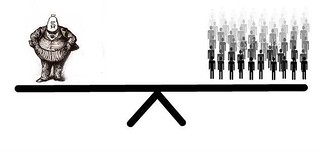
In our society, there is a focus on documenting inequality and injustice. In the discipline of criminology (as with other social sciences) we question and read and take notes and count and read and take more notes. We then come to an evidence based conclusion; yes, there is definite evidence of disproportionality and inequality within our society. Excellent, we have identified and quantified a social problem. We can talk and write, inside and outside of that social problem, exploring it from all possible angles. We can approach social problems from different viewpoints, different perspectives using a diverse range of theoretical standpoints and research methodologies. But what happens next? I would argue that in many cases, absolutely nothing! Or at least, nothing that changes these ingrained social problems and inequalities.
Even the most cursory examination reveals discrimination, inequality, injustice (often on the grounds of gender, race, disability, sexuality, belief, age, health…the list goes on), often articulated, the subject of heated debate and argument within all strata of society, but remaining resolutely insoluble. It is as if discrimination, inequality and injustice were part and parcel of living in the twenty-first century in a supposedly wealthy nation. If you don’t agree with my claims, look at some specific examples; poverty, gender inequality in the workplace, disproportionality in police stop and search and the rise of hate crime.
- Three years before the end of World War 2, Beveridge claimed that through a minor redistribution of wealth (through welfare schemes including child support) poverty ‘could have been abolished in Britain‘ prior to the war (Beveridge, 1942: 8, n. 14)
- Yet here we are in 2019 talking about children growing up in poverty with claims indicating ‘4.1 million children living in poverty in the UK’. In addition, 1.6 million parcels have been distributed by food banks to individuals and families facing hunger
- There is legal impetus for companies and organisations to publish data relating to their employees. From these reports, it appears that 8 out of 10 of these organisations pay women less than men. In addition, claims that 37% of female managers find their workplace to be sexist are noted
- Disproportionality in stop and search has long been identified and quantified, particularly in relation to young black males. As David Lammy’s (2017) Review made clear this is a problem that is not going away, instead there is plenty of evidence to indicate that this inequality is expanding rather than contracting
- Post-referendum, concerns were raised in many areas about an increase in hate crime. Most attention has focused on issues of race and religion but there are other targets of violence and intolerance
These are just some examples of inequality and injustice. Despite the ever-increasing data, where is the evidence to show that society is learning, is responding to these issues with more than just platitudes? Even when, as a society, we are faced with the horror of Grenfell Tower, exposing all manner of social inequalities and injustices no longer hidden but in plain sight, there is no meaningful response. Instead, there are arguments about who is to blame, who should pay, with the lives of those individuals and families (both living and dead) tossed around as if they were insignificant, in all of these discussions.
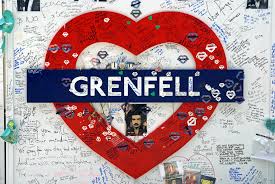
As the writer Pearl S. Buck made explicit
‘our society must make it right and possible for old people not to fear the young or be deserted by them, for the test of a civilization is in the way that it cares for its helpless members’ (1954: 337).
If society seriously wants to make a difference the evidence is all around us…stop counting and start doing. Start knocking down the barriers faced by so many and remove inequality and injustice from the world. Only then can we have a society which we all truly want to belong to.
Selected bibliography
Beveridge, William, (1942), Report of the Inter-Departmental Committee on Social Insurance and Allied Services, (HMSO: London)
Buck, Pearl S. (1954), My Several Worlds: A Personal Record, (London: Methuen)
Lammy, David, (2017), The Lammy Review: An Independent Review into the Treatment of, and Outcomes for, Black, Asian and Minority Ethnic Individuals in the Criminal Justice System, (London: Ministry of Justice)
Share this:


How to boil an egg…A criminological issue?

Another academic year is coming close to an end. After the plans and the changes made there is always a little time for reflection to ask what is in a year? The rhetorical question implies that there is an expected answer and that is true, well sometimes! After years serving HE it is becoming clear that things change “τα πάντα ρει”, everything flows as Heraclitus once said. Education is about knowledge and as it progresses, we progress with it.
In previous posts the value of education and reading for a subject like criminology has been argued, but ultimately what does it really mean to complete one year of education in HE? Well if you are on your first year it is the recognition that you can do this! The first step in many more to follow on the road to academic understanding. If you are on your second year you demonstrate perseverance, sticking with the subject you chose, and you continue to read more of it. Finally, if you are on your third year it is the anticipation of completion of a course of study. The successful conclusion of studies that will award you with a title.
This end for some is the end of the formal part of their higher education, whilst for others it is simply the beginning of the end of a longer and more arduous journey in learning. An exam board shall mark this end when all colleagues will read name after name, grade after grade, but this is only part of that story. The other part is the memories on learning that it will launch. I still hear stories of students remembering a lecture with a slide title “Lesbian Vampire Killers” on a session on media and crime which seems to tickle our alumni, or a phrase used in a class again and again for emphasis. Using a metaphor or an example that takes you away from the prescribed values. Some of the readers may remember my question “How long to hard boil an egg?” A question that revealed some of us have limited culinary skills, but the intended purpose was to allow us to look at the question of positionality and context. It only takes a couple of pre vs post- war Italian cookbooks to realise that the question can be answered considering the social situation and the energy requirements of its time. A country famed for its culinary status, but also broken from a second world war that decimated infrastructures and harmed population. Poverty, theft, antisocial behaviour, violence but also recriminations for the incurred destruction became the other effects hidden behind a seemingly random change in a number on a cookbook. *
My personal favourite was going over a criminal profiling case with students of the wrong year who were looking at me rather confused on the content. I shall never of course forget my sex offenders lecture to accounting students (I got the place and time wrong) which according to my bemused colleague who was watching me from the corner an interesting interlude from his session! These little anecdotes do not sustain knowledge, but they remind us how we got to be in that place.
Regardless of the subject of study or its level, all “participants” who engage in higher education gain one significant attribute, that of perspective. The ability to look closely of a idea through the disciplinary lens but also to zoom out and look at the bigger picture, thus making perspective more relevant. Perspective is distance and as we gain more knowledge, the better our judgement becomes in using this lens to zoom in and out. This is what we acquire as we progress through higher education.
*I could also point out the existential symbolism of the egg as the representation of the soul and the time to boil it is a metaphor for torment in the proverbial purgatory…but I will not
Share this:


Hillsborough 30 years on. A case study in liberating the truth

Dr Stephen O’Brien is the Dean for the Faculty of Health and Society at the University of Northampton
Before I start this blog, it is important to declare my personal position. I am a lifelong supporter of Liverpool Football Club (LFC) and had I not been at a friend’s wedding on that fatal Saturday in April 1989, I may well have been in the Leppings Lane end of the Hillsborough stadium in Sheffield. I have followed the unfolding Hillsborough phenomenon for 30 years now and like the football club itself, it is an integral part of my life. To all caught up in the horrific events of Hillsborough, I echo a phrase synonymous with LFC and say; “You’ll Never Walk Alone”.
On April 15th, 1989 ninety-six men, women and children, supporters of Liverpool Football Club, died in a severe crush at an FA Cup semi-final at the Hillsborough Stadium, Sheffield. Hundreds were injured, and thousands traumatised. Within hours, the causes and circumstances of the disaster were being contested. While an initial judicial inquiry found serious institutional failures in the policing and management of the capacity crowd, no criminal prosecutions resulted, and the inquests returned ‘accidental death’ verdicts. Immediately, the authorities claimed that drunken, violent fans had caused the fatal crush. In the days and weeks following the disaster, police fed false stories to the press suggesting that hooliganism and drunkenness by Liverpool supporters were the root causes of the disaster. The media briefing was most significantly demonstrated in the headline “THE TRUTH” which appeared in The Sun newspaper immediately after the event devoting its front page to the story and reporting that: ‘Some fans picked pockets of victims; Some fans urinated on the brave cops; Some fans beat up PC giving life kiss’. What of course we appreciate now is that this headline was far from truth, however the blame narrative was already being set. For example, Chief Superintendent David Duckenfield, the match commander on the day, misinformed senior officials from the Football Association that fans had forced entry causing an inrush into already packed stadium pens. Yet it was Duckenfield who had ordered the opening of the gates to relieve the crush at the turnstiles. Within minutes the lie was broadcast internationally.
Blaming of Liverpool fans persisted even after the Taylor Report of 1990, which found that the main cause of the disaster was a profound failure in police control. While directing its most damning conclusions towards the South Yorkshire Police, it also criticised Sheffield Wednesday Football Club, its safety engineers and Sheffield City Council. However, following the Taylor Report, the Director of Public Prosecutions (DPP) ruled there was no evidence to justify prosecution of any individuals or institutions. On a more positive note, the disaster did lead to safety improvements in the largest English football grounds, notably the elimination of fenced terraces in favour of all seated stadiums.With the media allegations unchallenged and in the absence of any imminent prosecutions the families of the 96 hugely supported by the people of the City of Liverpool and it’s two football clubs began an exerted and prolonged campaign for truth and justice. In late June 1997, soon after the election of the Labour Government and following a concerted campaign by families, the Home Secretary Jack Straw proposed an unprecedented judicial scrutiny of any new evidence and appointed senior appeal court judge and former MI6 Commissioner Lord Justice Stuart-Smith to review further material that interested parties wished to submit. A large volume of new material was presented. However, Stuart-Smith rejected the new evidence concluding that there was no basis for a further public inquiry or new material of interest to the DPP or police disciplinary authorities. Undeterred by such a devastating outcome the families undertook a series of private prosecutions again to no avail.
It is important to note that public inquiries, convened in the aftermath of major incidents such as Hillsborough or to address alleged irregularities or failures in the administration of justice, should not be considered a panacea but provide an opportunity to speedily ensure that management failings are exposed to public scrutiny. They are popularly perceived to be objective and politically independent. On the other hand, they also have the potential to act as a convenient mechanism of legitimation for the state. It appeared to the families that the various inquiries that followed Hillsborough were incapable of surfacing the truth as the cards were stacked in favour of the state.
Roll forward to 2009. On the 20th anniversary, invited by the Hillsborough Family Support Group, Minister for Health Andy Burnham MP addressed over 30,000 people attending the annual memorial service at Liverpool FC’s Anfield stadium. Whilst acknowledging the dignity, resolve and courage they had exhibited in all the events of the previous 20 years he offered support and hope that their struggle would be further supported by the MPs in Liverpool as a whole. The cries of “Justice for the 96” that rang out that day heralded a turning point. Consequently, in December 2009, following the families unrelenting campaign, the Bishop of Liverpool, James Jones, was appointed to chair the Hillsborough Independent Panel. It was given unfettered access to all the documentation that had been generated in all the enquiries and investigations to date. The outcomes of their deliberations were presented in closed session to the bereaved families at Liverpool’s Anglican Cathedral on 12 September 2012, the report concluded that there was no evidence among the vast documentation to support or verify the serious allegations of exceptional levels of drunkenness, fans with no tickets or violence. The bereaved families and survivors were overwhelmed by the unqualified exoneration of those who died and survived. Shortly after, the Prime Minister David Cameron responded in detail to a packed House of Commons. He made a proper apology to the families of the 96 for all they have suffered over the past 23 years. In April 2016, a special Coroner’s Court ruled that the Hillsborough dead had been unlawfully killed and a campaign for justice that had run for well over two decades was concluded.
This year will be the 30th anniversary of that tragic event and I believe it is fair to say that the ensuing years have provided us with a troubling case study with features of institutional cover up, the power of the state, the Establishment, the resilience of the victim’s families, community and a social movement which Scraton (1999, 2013) refers to as an alternative method for liberating truth, securing acknowledgement and pursuing justice. Scraton has written extensively on the disaster and the subsequent events. He draws on human rights discourse to show how ‘regimes of truth’ operate to protect and sustain the interests of the ‘powerful’. He examined in detail the formal legal processes and their outcomes regarding Hillsborough and demonstrated how they were manipulated to degrade the truth and deny justice to the bereaved. He exposed the procedural and structural inadequacies of these processes and raised fundamental questions about the legal and political accountability of the instruments of authority. The broader socio/legal policy question that emerges from Hillsborough is whether ‘truth’ can ever be acknowledged and institutionalized injustices reconciled in a timely fashion when the force of the state apparatus works to differing ends. Time will only tell. In 2019 there are many other tragic examples where we could replace Hillsborough with Orgreave, Lawrence, Windrush, Grenfell. Let’s hope that it doesn’t take 30 years for truth and justice to emerge in the future.
References
Scraton P., (1999) Policing with Contempt: The Degrading of Truth and Denial of Justice in the Aftermath of the Hillsborough Disaster. Journal of Law and Society 26, 3, p273-297
Scraton P., (2013) The Legacy of Hillsborough: liberating truth, challenging power Race and Class, 55, 2, p1-27
Share this:


Beyond education…
In a previous blog I wrote about the importance of going through HE as a life changing process. The hard skills of learning about a discipline and the issues, debates around it, is merely part of the fun. The soft skills of being a member of a community of people educated at tertiary level, in some cases, outweigh the others, especially for those who never in their lives expected to walk through the gates of HE. For many who do not have a history in higher education it is an incredibly difficult act, to move from differentiating between meritocracy to elitism, especially for those who have been disadvantaged all their lives; they find the academic community exclusive, arrogant, class-minded and most damning, not for them.
The history of higher education in the UK is very interesting and connected with social aspiration and mobility. Our University, along with dozens of others, is marked as a new institution that was created in a moment of realisation that universities should not be exclusive and for the few. In conversation with our students I mentioned how as a department and an institution we train the people who move the wheels of everyday life. The nurses in A&E, the teachers in primary education, the probation officers, the paramedics, the police officers and all those professionals who matter, because they facilitate social functioning. It is rather important that all our students understand that our mission statement will become their employment identity and their professional conduct will be reflective of our ability to move our society forward, engaging with difficult issues, challenging stereotypes and promoting an ethos of tolerance, so important in a society where violence is rising.
This week we had our second celebration of our prison taught module. For the last time the “class of 2019” got together and as I saw them, I was reminded of the very first session we had. In that session we explored if criminology is a science or an art. The discussion was long, and quite unexpected. In the first instance, the majority seem to agree that it is a social science, but somehow the more questions were asked, the more difficult it became to give an answer. What fascinates me in such a class, is the expectation that there is a clear fixed answer that should settle any debate. It is little by little that the realisation dawns; there are different answers and instead of worrying about information, we become concerned with knowledge. This is the long and sometimes rocky road of higher education.
Our cohort completed their studies demonstrating a level of dedication and interest for education that was inspiring. For half of them this is their first step into the world of HE whilst the other half are close to heading out of the University’s door. It is a great accomplishment for both groups but for the first who may feel they have a long way to go, I will offer the words of a greater teacher and an inspiring voice in my psyche, Cavafy’s ‘The First Step’
Even this first step
is a long way above the ordinary world.
To stand on this step
you must be in your own right
a member of the city of ideas.
And it is a hard, unusual thing
to be enrolled as a citizen of that city.
Its councils are full of Legislators
no charlatan can fool.
To have come this far is no small achievement:
what you have done already is a glorious thing
Thank you for entering this world. You earn it and from now on do not let others doubt you. You can do it if you want to. Education is there for those who desire it.
C.P. Cavafy, (1992) Collected Poems, Translated by Edmund Keeley and Philip Sherrard, Edited by George Savidis, Revised Edition, Princeton University Press, Princeton.
Share this:

Questions, questions, questions…..
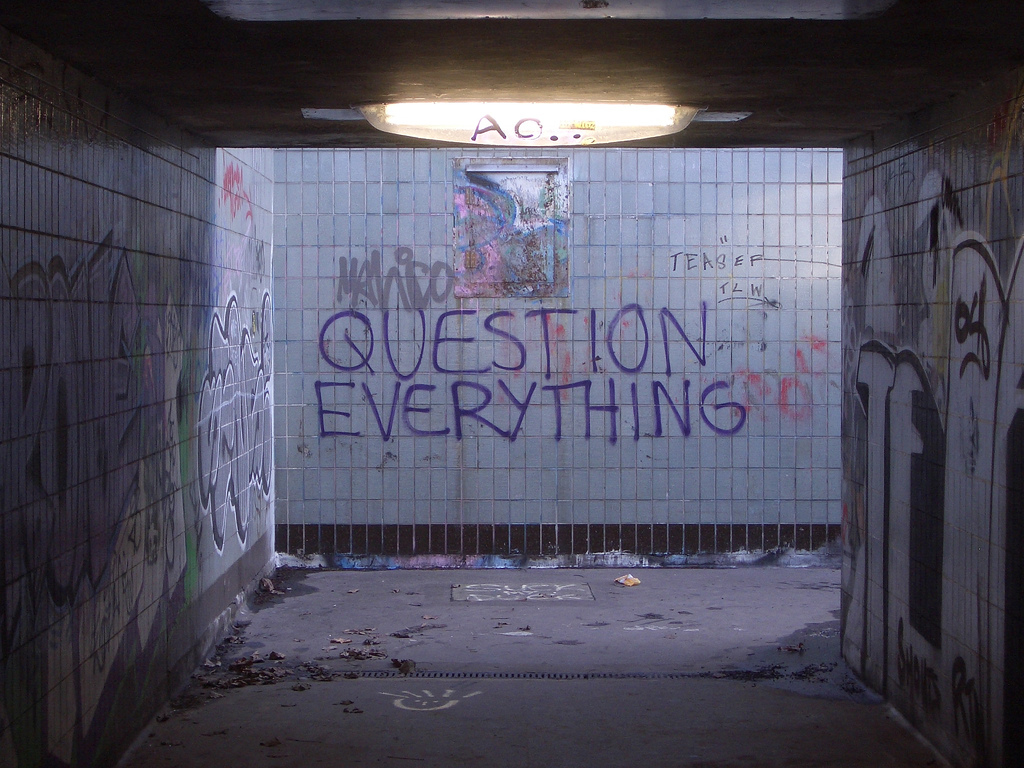
Over the last two weeks we have welcomed new and returning students to our brand-new campus. From the outside, this period of time appears frenetic, chaotic, and incredibly noisy. During this period, I feel as if I am constantly talking; explaining, indicating, signposting, answering questions and offering solutions. All of this is necessary, after all we’re all in a new place, the only difference is that some of us moved in before others. This part of my role has, on the surface, little to do with Criminology. However, once the housekeeping is out of the way we can move to more interesting criminological discussion.
For me, this focuses on the posing of questions and working out ways in which answers can be sought. It’s a common maxim, that within academia, there is no such thing as a silly question and Criminology is no exception (although students are often very sceptical). When you are studying people, everything becomes complicated and complex and of course posing questions does not necessarily guarantee a straightforward answer. As many students/graduates over the years will attest, criminological questions are often followed by yet more criminological questions… At first, this is incredibly frustrating but once you get into the swing of things, it becomes incredibly empowering, allowing individual mental agility to navigate questions in their own unique way. Of course, criminologists, as with all other social scientists, are dependent upon the quality of the evidence they provide in support of their arguments. However, criminology’s inherent interdisciplinarity enables us to choose from a far wider range of materials than many of our colleagues.
So back to the questions…which can appear from anywhere and everywhere. Just to demonstrate there are no silly questions, here are some of those floating around my head currently:
- This week I watched a little video on Facebook, one of those cases of mindlessly scrolling, whilst waiting for something else to begin. It was all about a Dutch innovation, the Tovertafel (Magic Table) and I wondered why in the UK, discussions focus on struggling to feed and keep our elders warm, yet other countries are interested in improving quality of life for all?
- Why, when with every fibre of my being, I abhor violence, I am attracted to boxing?

3. Why in a supposedly wealthy country do we still have poverty?
4. Why do we think boys and girls need different toys?

5. Why does 50% of the world’s population have to spend more on day-to-day living simply because they menstruate?
6. Why as a society are we happy to have big houses with lots of empty rooms but struggle to house the homeless?

7. Why do female ballroom dancers wear so little and who decided that women would dance better in extremely high-heeled shoes?
This is just a sample and not in any particular order. On the surface, they are chaotic and disjointed, however, what they all demonstrate is my mind’s attempt to grapple with extremely serious issues such as inequality, social deprivation, violence, discrimination, vulnerability, to name just a few.
So, to answer the question posed last week by @manosdaskalou, ‘What are Universities for?’, I would proffer my seven questions. On their own, they do not provide an answer to his question, but together they suggest avenues to explore within a safe and supportive space where free, open and academic dialogue can take place. That description suggests, for me at least, exactly what a university should be for!
And if anyone has answers for my questions, please get in touch….
Share this:


Working-Class foundations and the ‘inner-inferiority battle’
Sam is a 2017 graduate having read BA Criminology with Sociology. His blog entry reflects on the way in which personal experience and research can sometimes collide. His dissertation is entitled Old Merseyside, New Merseyside: An investigation into the long-term relationship of the Merseyside public and the police, following the Hillsborough Stadium Disaster, 1989.

This little piece has been inspired by the process of writing a dissertation that, having focused on the Hillsborough Stadium Disaster of 1989, the police, government and the media, inherently highlighted issues of class and punitive attitudes. It is one of completely subjective nature that I can not possibly explain or explore in enough depth here, but it is certainly not a proclamation of superiority of one social class over another.
The 1980s Conservative Government (namely, Thatcher), football fans, violence and football hooliganism, media and police; all have their links to one another, all have links to the working-class. The Hillsborough Stadium Disaster, prior to, during and even some 28 years later was influenced by all of these. Who Suffered? The working-class. They were victims, offenders, liars and hooligans. In many respects, this was the ultimate fruition of the aforementioned elements, and could now justify further punitive action against socially constructed concepts of working-class, masculine-fuelled disorder by the Government. Step Forward, Professor Phil Scraton.
Mr Hillsborough, Phil Scraton, the working-class boy that redefined the notion of inferiority amongst a typically working-class Merseyside. He sketched new boundaries for the working-class, but not before he himself felt ‘totally estranged’ to be at University and that it was not ‘for the likes of him’ (Scraton, 2017) . This is what I term the inner-battle.
I can relate. The working-class background I classify myself as growing up in does not mean I am any better or worse than any other class members. As a child, often working-class means nothing to you apart from the occasional taunts and the disappointment of not having the top gadgets of other children, or the most expensive shoes. This kind of belittlement can embed and settle within your mind, to costly effect in later life. But it does differentiate me, I feel, in the way I am able to reflect on situations. Sunday 15th September, 2013, the day after moving into University, I felt the same. Yet I had a habit at school of proving people wrong and thriving on it. I didn’t simply succumb to the pressure of knowing people expected me to fail or simply didn’t believe I would succeed . And here we are with a substantial issue in criminology; the notion of working-class inferiority through stereotypes. Socially constructed ideas of working-class and crime and consequently the self-fulfilling prophecy, which then authenticates the original concept. This is a psychological battle. Undeniably, the working class are not strictly exclusive to psychological battles with themselves, but it is a unique battle in a way.
In this same way, the Hillsborough families could have read the headlines, acknowledged the power of the institutions they were dealing with, and accepted their fate and their injustice, especially given the numerous setbacks over the years. Yes they will say they would never give up, but they are only human, and could be forgiven for thinking of succumbing to the inner-pressure, caused by the external, institutional pressure and ultimately just lose the battle. 28 years later they are gaining more and more momentum and are overturning all the social, institutional injustice of the past 3 decades. Individual families may not have been so working-class, but the representation of them was as a working-class mob all those years ago. They fought the inferiority battle.
Professor Phil Scraton did not succumb to his inner battle of feeling out of place, like a small fish in a very large ocean. But all too often working-class people seem to give in, having accepted their early experiences as pronouncing their social inferiority. I sit here now, having failed one dissertation and coming much closer to failing the resit than I would have ever imagined in August last year. The battle was not between University and myself. It was the inner-processes that lie between myself and the end of University. Forcing yourself to do things that at times, you don’t believe you can do, and others especially do not, in order to reach the end goal.
Ultimately, meeting Professor Phil Scraton and hearing of some of the families experiences and their unrelenting desire and growing momentum in obtaining their long-awaited justice first-hand, sparked the realisation that it is simply a mental barrier, a fight within regarding inferiority that stood between them and justice. Had they have lost their inner-battle twenty years ago, they would not still be fighting so effectively, if at all. This is completely applicable to many other situations regarding working-class people in everyday life.
Undoubtedly, this is a view based on experience that is biased in some way, yet challenges the issue of stereotypes. It is also open to blogging and academic retaliation by those of other backgrounds. These socially constructed notions and stereotypes have longstanding effects on so many people, yet I would argue is overlooked and simply put down to being lazy by outsiders and “can’t-do”, inferior attitudes of those in the working-class circle. Interestingly, this debate has not even touched upon racial, ethnic, gender/sex issues, for which the idea of inferiority could often be a detrimental inner-battle, stemming from discriminatory, stereotypical views.
Scraton, P. (2017). Hillsborough: Resisting Injustice, Recovering Truth. [Professional presentation]. University of Liverpool. 15th February. Available at https://www.youtube.com/watch?v=I0K4iDgrJQo

 Thoughts from the criminology team