
Home » Social science (Page 2)
Category Archives: Social science

Meet the Team: Liam Miles, Lecturer in Criminology

Hello!
I am Liam Miles, a lecturer in criminology and I am delighted to be joining the teaching team here at Northampton. I am nearing the end of my PhD journey that I completed at Birmingham City University that explored how young people who live in Birmingham are affected by the Cost-of-Living Crisis. I conducted an ethnographic study and spent extensive time at two Birmingham based youth centres. As such, my research interests are diverse and broad. I hold research experience and aspirations in areas of youth and youth crime, cost of living and wider political economy. This is infused with criminological and social theory and qualitative research methods. I am always happy to have a coffee and a chat with any student and colleague who wishes to discuss such topics.
Alongside my PhD, I have completed two solo publications. The first is a journal article in the Sage Journal of Consumer Culture that explored how violent crime that occurs on British University Campuses can be explained through the lens of the Deviant Leisure perspective. An emerging theoretical framework, the Deviant Leisure perspective explores how social harms are perpetuated under the logics and entrenchment of free-market globalised capitalism and neoliberalism. As such, a fundamental source of culpability towards crime, violence and social harm more broadly is located within the logics of neoliberal capitalism under which a consumer culture has arisen and re-cultivated human subjectivity towards what is commonly discussed in the literature as a narcissistic and competitive individualism. My second publication was in an edited book titled Action on Poverty in the UK: Towards Sustainable Development. My chapter is titled ‘Communities of Rupture, Insecurity, and Risk: Inevitable and Necessary for Meaningful Political Change?’. My chapter explored how socio-political and economic moments of rupture to the status quo are necessary for the summoning of political activism; lobbying and subsequent change.
It is my intention to maintain a presence in the publishing field and to work collaboratively with colleagues to address issues of criminal and social justice as they present themselves. Through this, my focus is on a lens of political economy and historical materialism through which to make sense of local and global events as they unfold. I welcome conversation and collaboration with colleagues who are interested in these areas.
Equally, I am committed to expanding my knowledge basis and learning about the vital work undertaken by colleagues across a breadth of subject areas, where it is hoped we can learn from one another.
I am thoroughly looking forward to meeting everyone and getting to learn more!
Share this:


What to do with my criminology?

Let’s arrange time and set out two temporal constants: point one: a random meeting now and another one about three years later! The first one occurs during a standard University Open Day; a young person coming to a session to hear about criminology; they have seen crime programmes, read crime fiction, bought some real crime literature and now they feel fascinated. There is an interest there; what happens next? Why did they do it? How did they do it? Many questions and even more ideas of what to do to those who do horrible things. The Open Day is not just a response to singular identities, in fact it takes these curiosities and turns them on their head. Crime is bigger and smaller; its is more and less and, of course, most importantly is socially constructed, meaning that is does not mean the same thing across time and space.
This first encounter, was interesting, informative, and on the way home generated more questions and more curiosities. It is the first step to a decision to come back to read the subject, to get involved studying the course material and engaging in discussions. Suddenly the crime programme seems artificial; it does not explore social realities; the methods employed are too expensive and the investigation timeframe random. Knowledge is constructed on information but challenging the source of that information becomes the tool of academic exploration. Reading the crime novel or exploring true crime literature is not simply a guilty pleasure, it is a means to get narratives to ascertain cultural dominance and to address crime prioritisation (you wish to know more…then join us!).
Point two: an event sometime after the three years; a graduation. Wearing a gown and taking pictures with family and friends. A recognition that three years of study have come to a successful conclusion. The curiosity remains; there are still a lot of questions to ponder but now there is a difference in how this takes hold. The concept of crime becomes complex, interconnected with social and personal experience, but this is just the beginning. Studies haven’t answered the original questions, in fact they have added more questions, but they have given a “methodology of thought”. A process to relate to any situation that is known or unknown and explore the criminology within.
The completion of studies inevitably bring the issue of what to do next. How to use criminology; professionally, educationally, academically. As a social science, criminology contains plenty of theoretical perspectives and those relate to the lived experience and in many ways explain it or even predict future criminalities. Some decades ago, criminological imagination, considered cyber justice as a model of swift resolution, international justice was seen as the tool to prevent conflict and global crisis. Suffice to say that neither worked. Criminologists are more than keen to explain why neither of these work.
At both points we have been there; we saw you struggle at first to set the question, to consider the merit of the argument. We also saw you growing in confidence and writing work that you never thought you would, but most importantly to consider perspectives never thought of before. Your criminology is a tool; an instrument to understand social realities, when people are at their worst. To observe, study, analyse and explain crime without judgment or bias. Your criminology is a tool to let you join those groups that will ask “what about the human rights” that will consider “what is the value in this rehabilitation” that will advocate the objections for those people who are deprived a voice and for you to give them space. It is not always easy working with people who are kept locked up for the protection of others but it is in that point that your criminology lights up their lives. When all others give up and when the systems seem not to be working and when all seems so hopeless, your criminology will give hope and clarity to those who need it.
From a small personal curiosity, this is not a simple journey, but it is definitely one worth taking and now that you finish, you take with you that mindset and the professional obligation to carry it further. It’s your voice and the way you articulate it; it’s your appreciation of the complexity and these are invaluable skills to carry with you. From us, all we have to say now is…Happy journeys.
Share this:


Violence on the Frontline: Guest speakers and CRI3003

Before starting the CRI3003 module, if you asked me what violence was, I was pretty confident that I could answer. Violence, of course, is a “behaviour involving physical force intended to hurt, damage, or kill someone or something” (Oxford Dictionary). Alike to the Oxford Dictionary, this was also my understanding. It wasn’t until I started the module that I was bombarded by a whole different understanding: violence as institutional.
At first, this concept confused me. I think anybody who believes they fully understand the complexities of violence is not yet finished in their journey to understanding. This module, unlike other modules on the course, allowed students to listen to guest speakers from the frontline of the many institutions in which we learnt about. This, for me, proved invaluable. It helped me understand institutional violence, and why it is so complex. The speakers, albeit brilliant and informing, sometimes themselves didn’t completely understand the concept of institutional violence, and for me this highlighted the exact reason why it flourishes: lack of understanding within the institution. As violence is not understood as institutional, its insidious nature will never be understood, and neither will its impact. Instead, institutions desperately want to point the finger, and struggle to understand violence which has no actor.
In my opinion, not only did I learn as a student from the guest speakers, I believe the guest speakers also learnt from us. The interaction and questioning as a result of these sessions is where the crucial learning took place, as it allowed me as a student to understand an institutionalised perspective, and it allowed the guest speaker to understand an outsider perspective; a view they may not be encouraged to adopt within the institution in which they operate. This cross examination of ideas allowed for a more informed, deeper understanding. I think it is very easy to think you understand a concept, but applying it in your evaluation of the guest speaker’s experiences accelerates your understanding.
It is fair to say I learnt a lot from all the guest speakers on the module, and I believe it is a great opportunity and privilege to have had as an undergraduate student. Just when you think you understand a case in class, the guest speaker will make you re-evaluate everything you had learnt previously. This is a skill which is not only useful for a criminology degree, but also for everyday life when you enter the social world in which is made up by such institutions.
It is for the reasons stated above that I believe CRI3003: Violence from Domestic to Institutional is a brilliant module. Personally, it was my favourite. It consolidated my learning perfectly and allowed me to demonstrate all of the knowledge I had previously learnt. As I said before, the guest speakers allowed students to question their own understanding, and perhaps view a case in an alternative lens. This multifaceted understanding of such complex concepts is crucial in criminology, and life as a whole.
From my experience, the guest speaker sessions are only as good as the questions asked, so come prepared! In asking the right questions, invisible violence becomes visible, and all of the content learnt before finally falls into place.
Share this:


Thinking about ‘Thoughts from the Criminology Team’

This is the sixth anniversary of the blog, and I am proud to have been a contributor since its inception. Although, initially I only somewhat reluctantly agreed to contribute. I dislike social media with a passion, something to be avoided at all costs, and I saw this as yet more intrusive social media. A dinosaur, perhaps, but one that has years of experience in the art of self-preservation. Open up to the world and you risk ridicule and all sorts of backlash and yet, the blog somehow felt and feels different. It is not a university blog, it is our team;s blog, it belongs to us and the contributors. What is written are our own personal opinions and observations, it is not edited, save for the usual grammar and spelling faux pas, it is not restricted in any way save that there is an inherent intolerance within the team for anything that may cause offence or hurt. Government, management, organisations, structures, and processes are fair game for criticism or indeed ridicule, including at times our own organisation. And our own organisation deserves some credit for not attempting to censure our points of view. Attempts at bringing the blog into the university fold have been strongly resisted and for good reason, it is our blog, it does not belong to an institution.
As contributors, and there are many, students, academics and guests, we have all been able to write about topics that matter to us. The blog it seems to me serves no one purpose other than to allow people space to write and to air their views in a safe environment. For me it serves as a cathartic release. A chance to tell the world (well at least those that read the blog) my views on diverse topics, not just my views but my feelings, there is something of me that goes into most of my writing. It gives me an opportunity to have fun as well, to play with words, to poke fun without being too obvious. It has allowed us all to pursue issues around social injustices, to question the country, indeed the world in which we live. And it has allowed writers to provide us all with an insight into what goes on elsewhere in the world, a departure from a western colonial viewpoint. I think, as blogs go it is a pretty good blog or collection of blogs, I’m not sure of the terminology but it is certainly better than being a twit on Twitter.
Share this:


Is the cost of living crisis just state inflicted violence

Back in November 2022, social media influencer Lydia Millen was seen to spark controversy on the popular app ‘TikTok’ when she claimed that her heating was broken, so she therefore was going to check into the Savoy in London.
Her video, which she filmed whilst wearing an outfit worth over £30,000, sparked outrage on the app and across popular social media platforms. People began to argue that her comment was not well received in our current social climate, where people have to choose whether they should spend money on heating or groceries. For many, no matter your financial situation, problems with heating rarely resorts in a luxury stay in London.
With pressure mounting, Lydia decided to reply to comments on her video. When one individual stated “My heating is off because I can’t afford to put it on”, Lydia replied “It’s honestly heart breaking I just hope you know that other people’s realities can be different and that’s not wrong”. Sorry, Lydia; it is wrong. Realities are not different; they are miles apart. This is clearly seen in the fact that the National Institute of Economic and Social Research estimate that 1.5 million households in the UK over the next year will be landed in poverty (NIESR, 2022).
Ultimately, this is a social issue. Like Lydia said, in a society in which individuals are stratified based on their economic, cultural and social capital, we are conditioned to believe that this is just the way it is, and therefore, it is not wrong that other people have different realities. However, for me, it is not ‘different realities’, it is a matter of being able to eat and be warm versus being able to stay in a luxury hotel in London.
So, why is this a criminological issue? The cost of living crisis is simply just state inflicted poverty. Alike to Lydia with her social following, the government have the power to make change and use their position in society to remedy cost of living issues, but they don’t. This is not a mark of their failure as a government, it is a mark of their success. You only have to look at the government’s complete denial surrounding social issues to realise that this was their plan all along, and the longer this denial continues, the longer they succeed. This is seen in the case of Lydia Millen, who has acted as a metaphor for the level of negligence in which the government exercises over its citizens. Ultimately, for Lydia, it is very easy to tuck yourself into a luxury bed in the Savoy and close the curtains on the real world. The people affected by the crisis are not people like Lydia Millen, they are everyday people who work 40+ hours a week, and still cannot make ends meet. For the government, the cost of living crisis is the perfect way to separate the wheat from the chaff.
Ultimately, the cost of living crisis is not too dissimilar to the strikes that the UK is currently experiencing. Alike to the strikes, the cost of living crisis was always going to happen at the hands of a negligent government. The only way we can begin to address this problem is by giving our support, by supporting strikes all across the country, and by standing up for what is right. After all, the powers in our country have shown that our needs as a society are not a priority, so it is time to support ourselves.
“Injustice anywhere is a threat to justice everywhere.” ― Martin Luther King Jr.
References:
National Institute of Economic and Social Research (2022) What Can Be Done About the Cost-of-Living Crisis? NIESR [online]. Available from: https://www.niesr.ac.uk/blog/what-can-be-done-about-the-cost-of-living-crisis [Accessed 23/01/23].
Share this:


Thinking Criminologically: Engaging with darkness

Often when you mention the word criminology to lay people outside of the academy, the initial response is “ooh that’s interesting” or “that sounds exciting”. The next step in the conversation usually reverts to the most extreme forms of interpersonal violence, murderers, serial killers and so on. For many, criminology appears to be the home of “whodunnits”. People talk of Ted Bundy, Ian Brady and Myra Hindley, Fred and Rose West and want to know why they did what they did. For decades, the unsolved case of Jack the Ripper has been pored over by authors, television makers and the general public. For those who choose to engage, we have seen the female victims of this unknown man, eviscerated, degraded and ultimately slain, again and again for the reader/viewers’ delectation. This is not criminology.
Criminology recognises there are no winners in crime, only people left shattered, those devastated by their actions or those impacted by criminality. People are left bloody, bowed and bereaved through victimisation by individuals, institutions and the State. Yet just look on a bookshops ‘Crime’ shelves or flick through the programme schedules and you will find no sign of this. As a society we revel in this darkness and package it as entertainment. This is not criminology.
On the news we see discussions around crime and criminals. What should we do? Shall we give the police yet more powers? Shall we give those oh so lenient judges less leeway for discretion? Should we lock the offenders up and throw away the key? Should we bring back National Service? What about a boot camp? Should we consider bringing back the death penalty? How can we teach these people a lesson they won’t forget? Notice that all of these suggestions are designed to be more and more punitive, no discussions are focused around purely rehabilitative programmes, defunding the police or penal abolition. This is not criminology.
The problem with all of the ideas contained within the preceding paragraphs, is they are entirely negative. Criminology despite its focus on crime, criminality and criminalisation, has a positive focus, motivated by empathy and non-violence, if not pacifism. It is about trying to understand complexity and nuance in human and institutional behaviour. It is not interested in simplistic, quick fire, off the cuff answers for crime. It is forward looking, unconcerned with the status quo and more focused on what ought or might be. It intrinsically has social justice at its heart, an overwhelming desire for fairness for everyone, not just some. This is criminology.
This month is Gypsy, Romany, Traveller History Month, this week is also Refugee Week. Both are groups rarely treated fairly, they are criminalised and subjected to victimisation by individuals, institutions and the State. Their narratives have profound importance to our society. These experiences are far more central to Criminology than who Jack the Ripper might have been. This is criminology.
Also the beginning of this week marked the fourth anniversary of the disaster at Grenfell Tower. The graffiti above (I know, @5teveh and @jesjames50!) seems to capture the feelings of many when we consider this horrific tragedy. I taught for the first time on Grenfell in 2020/2021 and again this year. Both times I have been wracked with huge concerns around whether it was appropriate (many of our students are intimately connected), whether it was too soon and whether I could teach around the disaster with sensitivity. Running counter to this was a strong belief that criminology had a duty to acknowledge the disaster and enable our students to also make sense of such horror. In classes we have utilised poetry, music, graffiti and testimony in sessions to give us all space to consider how we can respond as a society. The biggest question of all, is what would justice look like for the bereaved, the survivors, friends, families and neighbours, the first responders? Some of that discussion is focused on the Grenfell Inquiry but far more is on how we can support those involved, what kind of advocacy can we engage with and how we can all raise our voices. As a society we cannot bring the dead back to life, but we can insist that the survivors and their families get meaningful answers. We can also insist that we make room for these individuals and families to have their voices heard. We can demand that fundamental changes are made so that disasters like these do not happen again. That we learn valuable lessons. This is criminology.
Unfortunately, experience tells us that previous victims of similarly horrible disasters do not receive anything that approximates justice, consider the events at Hillsborough in 1989. Likewise, as a society we do not seem able to learn lessons from inquiries, think about the deaths of Victoria Climbié and Peter Connelly. Nevertheless, as humans we have huge capacity for change, we do not need to keep repeating the same behaviours ad nauseum. As scholars of criminology we are well placed to argue for this change, to understand holistically, the complexities of crime and deviance, to empathise and to make space for marginalised voices to be heard. In addition we must be prepared to challenge and advocate for change. Some of us may be pacifist in orientation, but we must never be passive! This is Criminology.
Share this:


April Showers: so many tears

What does April mean to you? April showers as the title would suggest, April Fools which I detest, or the beginning of winter’s rest? Today I am going to argue that April is the most criminogenic month of the year. No doubt, my colleagues and readers will disagree, but here goes….
What follows is discussion on three events which apart from their occurrence in the month of April are ostensibly unrelated. Nevertheless, scratch beneath the surface and you will see why they are so important to the development of my criminological understanding, forging the importance I place on social justice.
On 15 April 1912, RMS Titanic sank to the bottom of the sea, with more than 1,500 lost lives. We know the story reasonably well, even if just through film. Fewer people are aware that this tragedy led to inquiries on both sides of the Atlantic, as well, as Limitation of Liability Hearings. These acknowledged profound failings on the part of White Star and made recommendations primarily relating to lifeboats, staffing and structures of ships. Each of these were to be enshrined in law. Like many institutional inquiries these reports, thankfully digitised so anyone can read them, are very dry, neutral, inhumane documents. There is very little evidence of the human tragedy, instead there are questions and answers which focus on procedural and engineering matters. However, if you look carefully, there are glimpses of life at that time and criminological questions to be raised.
The table below is taken from the British Wreck Commissioners Inquiry Report and details both passengers and staff onboard RMS Titanic. This table allows us to do the maths, to see how many survived this ordeal. Here we can see the violence of social class, where the minority take precedence over the majority. For those on that ship and many others of that time, your experiences could only be mediated through a class based system. Yet when that ship went down, tragedy becomes the great equaliser.

On 15th April, 1989 fans did as they do (pandemics aside) every Saturday during the football season, they went to the game. On that sunny spring day, Liverpool Football Club were playing Nottingham Forest, both away from home and over 50,000 fans had travelled some distance to watch their team with family and friends. Tragically 96 of those fans died that day or shortly after. @anfieldbhoy has written a far more extensive piece on the Hillsborough Disaster and I don’t plan to revisit the details here. Nevertheless, as with RMS Titanic, questions were asked in relation to the loss of life and institutional or corporate failings which led to this tragedy. Currently it is not possible to access the Taylor Report due to ongoing investigation, but it makes for equally dry, neutral and inhuman, reading. It is hard to catch sight of 96 lives in pages dense with text, focused on answering questions that never quite focus on what survivors and families need. The Hillsborough Independent Panel [HIP] is far more focused on people as are the Inquests (also currently unavailable) which followed. Criminologically, HIP’s very independence takes it outside of powerful institutions. So whilst it can “speak truth to power” it has no ability to coerce answers from power or enforce change. For the survivors and family it brings some respite, some acknowledgement that what happened that day should have never have happened. However, for those individuals and wider society, there appears to be no semblance of justice, despite the passing of 32 years.

On 22 April 1993, Stephen Lawrence was murdered. He was the victim of a horrific, racially motivated, violent assault by a group of young white man. This much was known, immediately to his friend Duwayne Brooks, but was apparently not clear to the attending police officers. Instead, as became clear during the Stephen Lawrence Inquiry the police investigation was riddled with institutional racism from the outset. The Macpherson report (1999) tries extremely hard to keep focus on Stephen Lawrence as a human being, try to read the evidence given by Duwayne Brooks and Stephen’s parents without shedding a tear. However, much of the text is taken is taken up with procedural detail, arguments and denial. In 2012 two of the men who murdered Stephen Lawrence were found guilty and sentenced to be detained under Her Majesty’s pleasure (both were juveniles in 1993). Since 1999, when the report was published we’ve learnt even more about the police’s institutional racism and their continual attacks on Stephen’s family and friends designed to undermine and harm. So whilst institutions can be compelled to reflect upon their behaviour and coerced into recognising the need for change, for evolution, in reality this appears to be a surface activity. Criminologically, we recognise that Stephen was the victim of a brutal crime, some, but not all, of those that carried out the attack have been held accountable. Justice for Stephen Lawrence, albeit a long time coming, has been served to some degree. But what about his family? Traumatised by the loss of one of their own, a child who had been nurtured to adulthood, loved and respected, this is a family deserving of care and support. What about the institutions, the police, the government? It seems very much business as usual, despite the publication of Lammy (2017) and Williams (2018) which provide detailed accounts of the continual institutional racism within our society. Instead, we have the highly criticised Sewell Report (2021) which completely dismisses the very idea of institutional racism. I have not linked to this document, it is beneath contempt, but if you desperately want to read it, a simple google search will locate it.

In each of the cases above and many others, we know instinctively that something is fundamentally wrong. That what has happened has caused such great harm to individuals, families, communities, that it must surely be a crime. But a crime as we commonly understand it involves victim(s) and perpetrator(s). If the Classical School of Criminology is to be believed, it involves somebody making a deliberate choice to do harm to others to benefit ourselves. If there is a crime, somebody has to pay the price, whatever that may be in terms of punishment. We look to the institutions within our society; policing, the courts, the government for answers, but instead receive official inquiries that appear to explore everything but the important questions. As a society we do not seem keen to grapple with complexity, maybe it’s because we are frightened that our institutions will also turn against us?
The current government assures us that there will be an inquiry into their handling of the pandemic, that there will be some answers for the families of the 126,000 plus who have died due to Covid-19. They say this inquiry will come when the time is right, but right for who?
Maybe you can think of other reasons why April is a criminologically important month, or maybe you think there are other contenders? Either way, why not get in touch?
Share this:


Late: The word that defines the UK’s Coronavirus pandemic management

Picture the scene. We are in Downing Street and the news media are awaiting another coronavirus press conference. Professor Chris Whitty, the Chief Medical Officer for England is ready. Sir Patrick Vallance the Chief Scientific Advisor is ready. Where is the Prime Minister (PM)? Late again.
I have this vision of our PM frantically scurrying around like the White Rabbit in Alice in Wonderland humming “I’m late I’m late for very important date”. We might all smile at this vision but I’m afraid the analogy of being late is not a laughing matter when it is applied as the major theme for the UK governments management of what I described in a previous blog as the worst public health crisis in my lifetime. I also recall the PM famously using the phrase “A stitch in time saves nine” which is indeed true however in a pandemic being late or not sewing that stitch in time can and has cost thousands of lives.

In the week that has seen the UK pass 100,000 deaths it is right to reflect on the tragic loss of life. The call from government saying this is not the time to analyse why the UK has done so badly is in my view the wrong line to take. The government could learn a thing or two from the UK health care professions who for years have developed themselves as reflective practitioners. Donald Schon (1983) wrote extensively about reflection in terms of the creation of learning organisations who can both reflect in and on action. It is the former that has been sadly lacking in the UKs response to the coronavirus crisis. Reflection needs to be on the table throughout the pandemic and had it been, we may not have repeated the same mistakes. The management of pandemics is well documented in the medical literature. Professor Chris Whitty the Chief Medical Officer for England outlines how to manage a pandemic in this useful lecture at Gresham College.
Indeed it is also important to remind us of the words of Sir Patrick Vallance who when recommending the urgency of action in a pandemic implored that we “go earlier than you think you want to, go a bit harder than you think you want to and go broader than you think you want to in terms of restrictions.” My observation of the UK pandemic response leads me to conclude that we failed to do any of these. However, for this blog let’s focus on timing. Going early in terms of restrictions and other actions can have an enormous beneficial impact.
The last year has been to coin an overstated phrase “unprecedented” with many arguing that any government would have been overwhelmed and struggled to manage the crisis. Is this fair? One can look at other countries who have managed the situation better and as such have had better outcomes. New Zealand, Australia, Korea for example. Others will point to the differences between countries in terms of geography, population, culture, transport, relative poverty, healthcare systems, reporting mechanisms and living conditions which make comparisons inherently complex.
With the current death toll in the UK so high and continuing to rise, and many scientists telling us that things will inevitably get worse before they get better the question everyone is asking is : What has gone wrong? In this blog I’m going to argue that in large part our problems are based on a lack of urgency in acting. I’m arguing that we have not followed Sir Patrick Vallance’s recommendation and in particular we have been late to act throughout. Below I will set out the evidence for this and propose some tentative reasons as to why this has been the case.
Firstly, despite a pandemic being recognised as the largest threat to any country (it will always be top of any country’s risk register) the UK was slow to recognise the impending crisis and late to recognise the implications of a virus of this nature and how quickly it can spread globally. History informs us of how quickly Spanish flu spread in 1918. The UK was never going to be immune. Late recognition and poor pandemic preparedness meant we were late to get in place the critical infrastructure required to mount a response. Despite several warnings and meetings of the civil contingencies committee (COBR) the health secretary Matt Hancock was dismissive of the threat playing it down. Indeed, the PM failed to attend several early meetings giving the impression that the UK were not taking this as seriously as they should.
When faced with a looming medical/public health emergency it is important that the scientific advisors are in place early (which they were) and that their advice is acted upon. The evidence clearly points to a slow response to this advice which manifested itself in several critical late decisions early in the pandemic. The UK did not close its borders and implement quarantine measures allowing the virus to seed extensively in all parts of the community. Once community transmission had been established it was too late. It did not have in place a substantive testing regime, largely because we were unprepared. It very quickly became clear when we switched from community testing to testing only those in hospital with Covid symptoms that we lacked critical mass testing capacity and hence spent months trying to catch up. Evidence from previous outbreaks of SARS and MERS demonstrated how important mass testing was in controlling the spread, a position advocated by the World Health Organization (WHO). The UK saw case numbers grow rapidly and was slow to get the important public health messages out. Consequently, hospital admissions increased, and the death toll leapt. We were in serious danger of the NHS becoming overwhelmed with critically ill Covid patients.
Public health, medical and scientific experts suggested through their modelling exercises that the death toll, if we didn’t act quickly, could exceed 500,000; a situation socially and politically unpalatable. Therefore, in the absence of no known treatments and no vaccine we would have to resort to the tried and tested traditional methods for the suppression of a respiratory borne virus. Robust hand hygiene, respiratory/cough etiquette and maintaining social distance to reduce close social interaction. The logical conclusion was that to radically reduce social contacts we needed to lockdown. It is widely acknowledged now that the UK was at least a week late in introducing the first lockdown in March 2020.
In the meantime, the virus was sweeping through vulnerable elderly groups in care homes. We were again late to recognise this threat and late to protect them despite Hancock’s claims of throwing a ring of protection around them. The death toll continued to mount. At this stage both the Health (NHS) and care sectors were under enormous pressure and ill equipped to manage. The greatest worry at that stage was lack of adequate Personal Protective Equipment (PPE). Due to our ill preparedness we were late to provide appropriate PPE to both the NHS and the care home sector, exposing healthcare workers to undue risk. The death toll of healthcare workers in any pandemic is high and we were now starting to see this rise in the UK.
Another major criticism during the earlier months was how slow we were in ramping up testing capacity, tracking, tracing cases and ensuring isolation measures were in place. Indeed, concerns about test, trace and isolation continue today. However, lockdown and other public health measures did reduce the case numbers through the summer but inevitably the virus, which thrives in cold damp conditions started to cause further problems as we approached autumn and winter. Combined with this the UK saw a new variant of the virus emerge in the autumn with greater transmissibility. Cases started to rise again along with the inevitable hospital admissions and deaths. It appeared despite warnings from all scientists and health professionals that a second wave was highly possible we were late to recognise the emergence of a second wave of infections. The signs of which were there in September 2020. This led to a second lockdown in November when the advice from the scientific advisors was to lockdown in mid-October or earlier. This decision was compounded by a complex tiered restrictions arrangement to manage outbreaks locally aimed at the avoidance of unnecessary restrictions. Meanwhile the death toll continued to mount.
Notwithstanding the emergence of a new variant of the virus during the second lockdown everyone’s attention was switched to Christmas. The advice offered from government that restrictions would be relaxed for five days was met with incredulity by health professions who argued that this would simply allow the virus to be spread exponentially through greater household mixing. All the evidence at this stage pointed to household mixing as the primary source of transmission. As the situation worsened following the release of lockdown in early December it became obvious that the Christmas guidance had to change. To no ones surprise the advice was changed at the last-minute meaning everyone would have to rearrange their plans. The late change to the Xmas guidance probably meant more family mixing than would have happened had the advice been robust and communicated to the public earlier. Very quickly after Christmas we saw rapid changes to the tier management despite calls for a further lockdown. Cases rose rapidly, hospital admissions were now worse than in the first wave and scientists called for a lockdown. Consequently, we were late implementing Lockdown 3.
Throughout the pandemic the government has provided detailed guidance on restrictions, care homes, travel arrangements and education. It’s difficult to get this right all the time but the issuing of guidance was at times so late it became difficult to interpret the issues with clarity. Probably one the best examples of this relates to the advice provided to schools. Should they stay open or close? What should the Covid secure measures be? How do you construct bubbles of students to reduce social contact? Covid testing of pupils and staff? examinations and assessment guidance? However, the final straw was surely when schools opened in January after the Christmas break to only be told they had to close the very next day as we moved into Lockdown 3.

In conclusion it is said that to manage a pandemic you need a clear, robust strategic plan. The evidence presented here would suggest a lack of strategic planning with crisis decision making on the hoof. Some have argued that we have a PM who struggles to take the big decisions required, who procrastinates and inevitably is left with Hobson’s choice. If you couple this with a group of key ministers who appear to lack the competence to carry their portfolios we have the recipe for a disaster. The consequence of which means the UK has experienced a terrible outcome across a whole set of health, education and economic indicators.
References
Schon, D. (1983) The reflective practitioner: how professionals think in action Basic Books, New York
Whitty, C. (2018) How to Control an Epidemic https://www.youtube.com/watch?v=rn55z95L1h8
Share this:


My Criminology Journey: Haley

The start of my criminology journey is not very exciting. I am not fully sure of how or why I ended up studying the subject. I was advised to study hairdressing at school as my predicted grades were not good enough for university, but the idea of trusting myself with a pair of scissors was very unnerving. I had a dilemma at college as I was unable to decide whether I wanted to study healthcare or construction – two courses which bore no similarity. In the end I give up trying to make decisions and studied A Levels because that was what my friends were doing.
University may as well have been on Mars at this point, as it was completely mysterious and unknown to me. Whilst at college, I was asked by my tutor to go to an open day at Oxford University. I saw this as an opportunity to unmask this university ‘thing’ for what it really was, so I agreed to go. I felt completely out of place throughout the day and found myself gobsmacked by the sheer privilege of the place, the culture and the students etc. At the same time, I was fascinated by the available courses, so I decided to continue my studies into higher education.
My first attempt at university did not go as well as I had intended it to. I had other issues to contend with at the time, so I dropped out after two weeks. However, in 2010 I enrolled at the UoN and never really left. I had a great time studying criminology at UoN as I thought that my course was very interesting and the teaching staff (aka @paulaabowles and @manosdaskalou) were spectacular.
I did not realise this it at the time but I was well prepared for critical criminological discussions because I came from a background where people would be demonized for a whole host of social problems – it was clear to me at the time that this was unfair. Whilst enjoying the course content I did have to make a considered effort to improve on my writing skills, but it was worth the effort as this improvement worked wonders on my grades. As an undergraduate, I used my overdraft and savings from working part-time jobs to go travelling at the end of each academic year, this was beneficial for helping me to understand criminological issues outside of the UK.
In 2015 I began teaching as an associate lecturer at UoN and I really enjoyed it. I also completed an MA degree in Social Research. To fast-forward to today, I now work as a lecturer in criminology – and this really is, beyond my wildest dreams!
Studying is not always a smooth ride for some, but if you work hard, you never know where you might end up.

Share this:


Witches and warlocks
Time and time again we revisit previous times of our lives, especially when trying to come to terms with unprecedented realities. Society works with precedent and continuity that allows people to negotiate their own individual identities. We live in a society that fostered the culture of the one, and played down the importance of the collective, especially when people in positions of power declared that they can do more with less.
One pandemic later, and we clapped at the heroes those we regarded as needy money-grabbers previously, those we acknowledge now, that we previously cast aside as low skilled workers. One pandemic later, and social movements came to prominence, asking big questions about the criminal justice system and the way it interacts with those numerous people, that are not perceived as “mainstream”. Across Western countries, people are registering the way the system is operating to maintain social order, through social injustice. Each case that appears in the news is not an individual story as before, but are becoming evidence of something wider, systemic and institutional.
Covid-19 affects people, and so we must maintain social distancing, cover our faces and clean our hands. Clear advice from WHO about the pandemic, but people also die when they drown as refugees crossing troubled waters. People also die when someone puts a knee on their throat (who knew?), people die when they have to deal with abject poverty and have no means to cover their basic subsistence. People die, and we record their deaths but officially some of those are normalised to the point that they become expected. Every year I pose the question about good and evil to a group of young adults who seem uncertain about the answer.
I was recently reminded of a statement made a long time ago by Manos Xatzidakis in relation to the normalisation of evil: “If you are not afraid of the face of evil it means that you have become accustomed to it. Then you accept the horror and you are frightened by beauty”. When we are expecting death for seemingly preventable causes, we have crossed that Rubicon according to Xatzidakis.
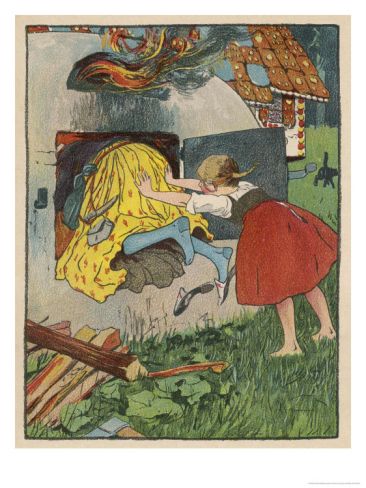
As a kid, one of my favourite stories was Hansel and Gretel. Like all fairy-tales it has a moral signature and is a cautionary lesson. In my mind it contracted the first image of evil, that of a witch. The illustration made it very real, but also quite specific. An oversized, badly dressed witch, with an unsatisfiable taste for children’s flesh. It was the embodiment of true evil. In later years, reading The Witches by Roald Dahl exacerbated the fear of this creature, seemingly normal but with layers of ugly under their skin. The evil that was on the face of the beholder, their intentions clear and their behaviour manipulative but clear on their objectives. This, I learn as an adult, is an evil that only exists in stories.
This kind of witch, is a demonstration of the social vilification of women and especially those who actively try to challenge the status quo, but not the evil that runs in our societies. The construction of social demons is a convenient invention to evoke fears and maintain order; well that is something a sceptic may say…but social scientists ought to question everything and be a bit of a sceptic. In my version of the fairytale the wicked witch is pushed into the oven by Hansel and Gretel, the image of her oversized bottom sticking out, whilst the rest of her body is consumed by the flames.
Admittedly, I was too old to get into the Harry Potter genre and read the books but the image of his opposition made it to popular culture. The “He who cannot be named” became another convenient, albeit complex, evil capable of unspeakable evils. An icon in its own right of the corruptive nature of evil.
The reality of course is slightly different. The big evils do not get extinguished with flames or other means. They do not cease and there is not necessarily happy ever after; social injustice and unfairness is continuous and so is the struggle to fight them. The victories are not complete, but gradual and small. If the pandemic shows us something other than death and heartache, it is the brittleness of life and the need to ask for more in a society that is geared to prime individualism over social solidarity. It is perhaps a good time, for those who never did, to engage with social movements, for those who left them to return and all find their passion of sharing human experience, that is predicated on equality and fairness.
Fairytales, are interesting insomuch of giving us some moral direction but they do not help us to understand the wider social issues and the actions people have to take. The witches out there may not carry brooms and mix spells in cauldrons but evil carries indifference, apathy and lack of empathy. As Edmund Burke said “The only thing necessary for the triumph of evil is for good men to do nothing”, now that is true evil. After all, is there such a thing called evil or are we content with finding easy answers?

 Thoughts from the criminology team