
Home » Social norms (Page 3)
Category Archives: Social norms

The day after!
“I know not with what weapons World War III will be fought, but World War IV will be fought with sticks and stones.” This quote allegedly belongs to A. Einstein who imagined a grim day in the aftermath of a world war among nations who carried nuclear arms.
It is part of human curiosity to imagine beyond the current as to let the mind to wonder on the aftermath of this unique international lockdown! Thoughts wonder on some prosaic elements of the lockdown and to wonder the side effects on our psyche. Obviously as I do not have a vast epidemiological knowledge, I can only consider what I know from previous health scares.
The previous large-scale health scare was in the 1980s. I still remember the horrible ad with the carved headstone that read AIDS. One word that scared so many people then. People were told to practice safe sex and to avoid sharing needles. People became worried and at the time an HIV diagnoses was a death sentence. Images of people suffering Kaposi’s sarcoma began to surface in what became more than a global epidemic; it became a test in our compassion. Early on, gay people reported discrimination, victimisation and eventual, vilification. It took some mobilisation from the gay community and the death of some famous people to turn the tide of misconceptions, before we turned the tide of the disease. At this stage, HIV is not a death sentence and people who are in receipt of medical attention can live full and long lives.
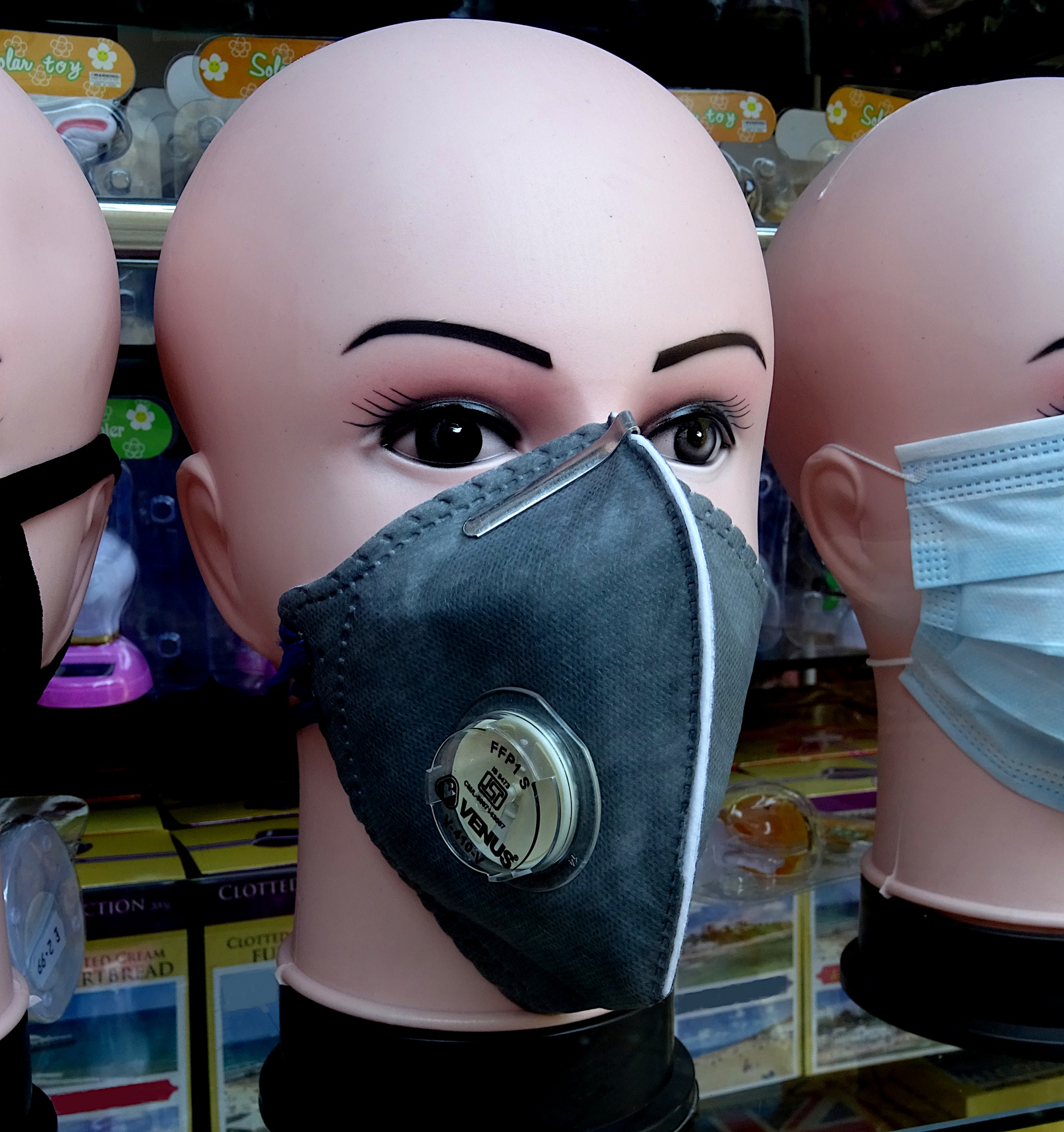
It is interesting to consider how we will react to the easing of the restrictions and the ushering on a new age. In some Asian countries, since SARS in 2003 some people wear face masks and gloves. Will that become part of our attire and will it be part of professional wear beyond the health care professions? If this becomes a condition, how many people will comply, and what will happen to those who will defy them.
We currently talk about resilience and the war spirit (a very British motif) but is this the same for all? This is not a lockdown on equal terms. There are people in isolation in mansions, whilst some others share rooms or even beds with people, they would rather they did not. At the same time, we talk about resilience, all domestic violence charities speak of a surge in calls that have reached crisis levels. “Social distancing” has entered the lexicon of our everyday, but there are people who simply cannot cope. One of the effects the day after, will be several people who will be left quite traumatised. Some may develop an aversion to people and large crowds so it will be interesting to investigate if agoraphobia will surge in years to come.
In one of my exercise walks. I was observing the following scene. Grandparents waving at their children and grandchildren from a distance. The little ones have been told not to approach the others. You could see the uneasiness of contactless interaction. It was like a rehearsal from an Ibsen play; distant and emotionally frigid. If this takes a few more months, will the little ones behave differently when these restrictions are lifted? We forget that we are social animals and although we do not consciously sniff each other like dogs, we find the scent of each other quite affirming for our interactions. Smell is one of the senses that has the longest memory and our proximity to a person is to reinforce that closeness.
People can talk on social media, use webcams and their phones to be together. This is an important lifeline for those fortunate to use technology, but no one can reach the level of intimacy that comes from a hug, the touch on the skin, the warmth of the body that reassures. This was what I missed when my grandparents died, the ability to touch them, even for the last time.
If we are to come out of social distancing, only to go into social isolation, then the disease will have managed something that previous epidemics did not; to alter the way we socialise, the way we express our humanity. If fear of the contagion makes us withdrawn and depressed, then we will suffer a different kind of death; that of what makes us human.
During the early stages of the austerity we saw the recurrence of xenophobia and nationalism across Europe. This was expected and sociologically seemed to move the general discussions about migration in rather negative terms. In the days before the lockdown people from the Asian community already reported instances of abusive behaviour. It will be very interesting to see how people will react to one another once the restrictions are lifted. Will we be prepared to accept or reject people different from ourselves?
In the meantime, whilst doctors will be reassessing the global data the pandemic will leave behind, the rest of us will be left to wonder. Ultimately for every country the strength of healthcare and social systems will inevitably be evaluated. Countries will be judged, and questions will be asked and rightfully so. Once we burry our dead, we must hold people to account. This however should not be driven by finding a scapegoat but so we can make the most of it for the future. Only if we prepare to see the disease globally, we can make good use of knowledge and advance our understanding of the medicine.
So maybe, instead of recriminations, when we come outside from our confinement, we connect with our empathy and address the social inequalities that made so many people around us, vulnerable to this and many other diseases.
Share this:


Social Psychology in a Time of Crisis

I am currently sitting in an empty classroom because, although face to face teaching is not officially suspended until tomorrow, none of my seminar students have turned up. In this rather depressing situation, however, there is much for a psychologist to reflect upon, particularly the process of social influence.
First there is the phenomenon of obedience to authority. In his seminal series of experiments, Milgram (1974) was trying to understand the destructive power of obedience; the tendency of people to do what they are told even when it is morally wrong and they know it to be so. The current situation is different. While it is always important to question science (as anyone who has studied CRI1007) should be well aware!) large scale public health measures have no hope of working unless everyone obeys. Milgram did not just explore how obedient people can be – he also investigated the conditions under which obedience is strongest. One of the factors that enhanced obedience was an aura of scientific authority. Participants were more likely to obey when they were instructed by a person in a white coat, who worked in a smart laboratory in a reputable university and who made reference to science, research and experiments, than when they were confronted by someone in scruffy clothes in a run-down building in a tatty back street. Boris Johnson has a poor record of telling the truth and inspiring trust. It is no coincidence that he is currently delivering his daily briefings flanked by his chief medical officer and chief scientific advisor.
Then there is the phenomenon of panic buying. There is probably a deep-seated evolutionary drive that causes us to hoard food in times of potential shortage. Just as the onset of autumn drives squirrels to bury hazelnuts, so the mention of self-isolation drives humans to buy pasta and tinned tomatoes (or potatoes in the case of one of my elderly relatives). My grandmother, who was her family’s main breadwinner through the Second World War, kept a stash of sugar under her bed until the day she went into a care home. And I guess Freud might have had something to say about the fact that the items we are hoarding most fervently are toilet rolls!
Evolutionary drives are, however, not the whole story and social influences play a part too. We panic buy because everyone else is panic buying. In his research on conformity, Asch (1956) identified two main reasons why people went along with the crowd: some just wanted to fit in and be socially accepted (compliance); others doubted their own judgment and believed that everyone else must be correct (conversion). The latter process is helping to drive the current retail crisis – people think “everyone else is panic buying, so there must be a good reason to do so, so I need to do it too!”
Asch was investigating the influence of majorities but minorities can be influential too, often for similar reasons (Moscovici, 1976). As if we didn’t have enough disease to worry about, I have just passed a screen warning students about outbreaks of mumps in British universities. The reason why mumps is on the rise among students is that 20 years ago, when the current generation of students were babies, a small minority of scientific opinion suggested a link between the MMR vaccine and autism. Backed by authoritative sounding research and confident and charismatic individuals, it led parents to doubt mainstream opinion and reject vaccination for their children.
Another topic which has puzzled social psychologists for many years is that of altruism. Are we ever truly, selflessly altruistic? Or are we good to others because it has rewards for us? Looking at the Facebook group for the village where I live, there are some heart-breaking accounts of selfishness over the last few days. The grandmother desperately appealing for Calpol for a 5-month-old baby with chicken pox, because every shop she has tried has been cleared out by panic buyers. And the farm that sells eggs by the side of the road with an honesty box that is now asking customers to phone with orders because someone has stolen all the eggs and all the cash. But there are some lovely examples of altruism too. People offering to shop or collect prescriptions for the elderly and vulnerable. People offering to cook meals for health professionals. People setting up Facebook and WhatsApp groups in order to maintain social contact. And the wonderful woman who offered free mango chutney to anyone in the village, just because she was making a batch and wanted to share the love!
We live in interesting times! Stay safe, keep calm and use this opportunity to read and reflect.
References
Asch, S.E. (1956) Studies of independence and submission to group pressure: 1 A minority of one against a unanimous majority. In Psychological Monographs, 70, (9) (Whole No. 416).
Milgram, S. (1974) Obedience to Authority. New York: Harper and Row.
Moscovici, S. (1976). Social influence and social change. London: Academic Press.
Share this:


Things I used to could do without a phone. #BlackenAsiaWithLove
A Spoken Word poem for young people everywhere, esp Youth in Asia, who may never know WE LIVED before smartphones…and live to tell about it.
Walk.
Walk down the street.
Find my way.
Go someplace.
Go someplace I had previously been.
Go someplace I had previously not been.
Meet.
Meet friends.
Meet friends at a specific time and place.
Meet new people.
Meet new people without suspicion.
Strike up a conversation with a stranger.
Make myself known to a previously unknown person.
Now, everything and everyone unknown is literally described as ‘weird’.
Eat.
Eat in a restaurant by myself.
Pay attention to the waiter.
Wait for my order to arrive.
Sit.
Sit alone.
Sit with others.
Listen.
Listen to the sound of silence.
Listen to music.
Listen to a whole album.
Listen to the cityscape.
Overhear others’ conversations in public.
Watch kids play.
Shop.
Share.
Share pictures.
Take pictures.
Develop pictures.
Frame pictures.
See the same picture in the same spot.
Read.
Read a book.
Read a long article.
Read liner notes.
Pee.
I used to be able to stand at a urinal and focus on what I was doing,
Not feeling bored,
Not feeling the need to respond to anything that urgently.
Nothing could be so urgent that I could not, as the Brits say, ‘take a wee’.
Wait.
Wait at a traffic light.
Wait for a friend at a pre-determined place and time.
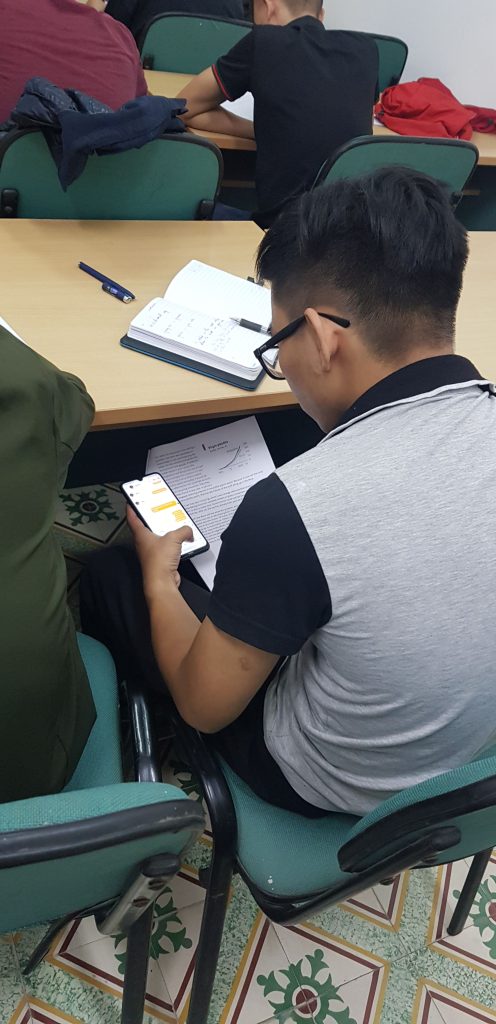
Wait for my turn.
Wait for a meal I ordered to arrive.
Wait in an office for my appointment.
Wait in line.
Wait for anything!
I used to appreciate the downtime of waiting.
Now waiting fuels FOMO.
I used to enjoy people watching…
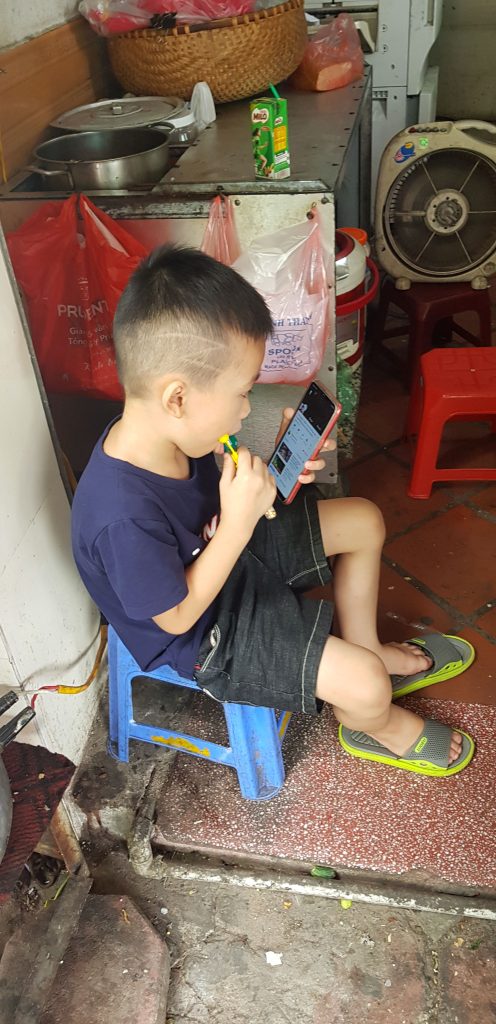
Now I just watch people on their phones.
It’s genuine anxiety.
Walk.
Walk from point A to B.
I used to could walk between two known points without having to mark the moment with a post.
Now I can’t walk down the hall,
Or through the house or even to the toilet without checking my phone.
I avoid eye contact with strangers.
Anyone I don’t already know is strange.
I used to could muscle through this awkwardness.
Talk.
Have a conversation.
A friend and I recently lamented about how you used to could have a conversation and
Even figure out a specific thing that you couldn’t immediately recall…
Just by talking.
I also appreciate the examples we discussed.
Say you wanted to mention a world leader but couldn’t immediately remember their name. What would you do before?
Rattle off the few facts you could recall and in so doing you’d jog your memory.
Who was the 43rd US president?
If you didn’t immediately recall his name,
You might have recalled that the current one is often called “45” since
Many folks avoid calling his name.
You know Obama was before him, therefore he must’ve been number “44.”
You know Obama inherited a crap economy and several unjust wars,
Including the cultural war against Islam. And
That this was even one of the coded racial slurs used against him: “A Muslim.”
Putting these facts together,
You’d quickly arrive at Dubya! And
His whole warmongering cabinet. And
Condi Rice. And
General Powell’s botched PowerPoint presentation at the UN. And
Big dick Cheney, Halliburton and that fool shooting his friend while hunting.
That whole process might have taken a full minute,
But so would pulling up 43’s name on the Google.
This way, however, you haven’t lost the flow of conversation nor the productive energy produced between two people when they talk.
(It’s called ‘limbic resonance’, BTW).
Yeah, I used to be able to recall things…
Many more things about the world without my mobile phone.

Wonder.
Allow my mind to wander.
Entertain myself with my own thoughts.
Think.
Think new things.
Think differently just by thinking through a topic.
I used to know things.
Know answers that weren’t presented to me as search results.
I used to trust my own knowledge.
I used to be able to be present, enjoying my own company,
Appreciating the wisdom that comes with the mental downtime.
Never the fear of missing out,
Allowing myself time to reflect.
It is in reflection that wisdom is born.
Now, most of us just spend our time simply doing:
Surfing, scrolling, liking, dissing, posting, sharing and the like.
Even on a wondrous occasion, many of us would rather be on our phones.
Not just sharing the wonderful occasion –
Watching an insanely beautiful landscape through our tiny screens,
Phubbing the people we’re actually with,
Reducing a wondrous experience to a well-crafted selfie –
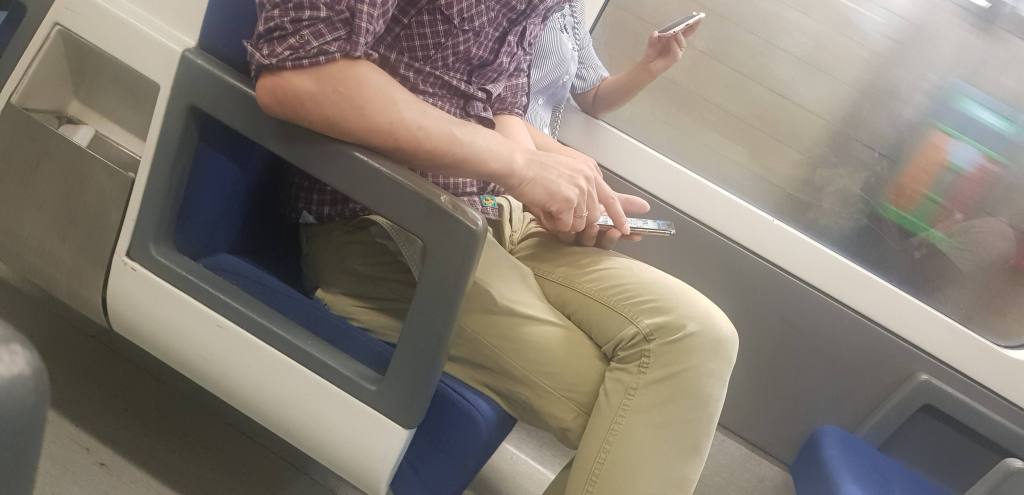
But just making sure we’re not missing out on something rather mundane happening back home.
I used to could be in the world.
Now, I’m just in cyberspace.
I used to be wiser.
Share this:


“Truth” at the age of uncertainty
Research methods taught for undergraduate students is like asking a young person to eat their greens; fraught with difficulties. The prospect of engaging with active research seems distant, and the philosophical concepts underneath it, seem convoluted and far too complex. After all, at some point each of us struggled with inductive/deductive reasoning, whilst appreciating the difference between epistemology over methodology…and don’t get me stated on the ontology and if it is socially proscribed or not…minefield. It is through time, and plenty of trial and error efforts, that a mechanism is developed to deliver complex information in any “palatable” format!
There are pedagogic arguments here, for and against, the development of disentangling theoretical conventions, especially to those who hear these concepts for the first time. I feel a sense of deep history when I ask students “to observe” much like Popper argued in The Logic of Scientific Discovery when he builds up the connection between theory and observational testing.
So, we try to come to terms with the conceptual challenges and piqued their understanding, only to be confronted with the way those concepts correlate to our understanding of reality. This ability to vocalise social reality and conditions around us, is paramount, on demonstrating our understanding of social scientific enquiry. This is quite a difficult process that we acquire slowly, painfully and possibly one of the reasons people find it frustrating. In observational reality, notwithstanding experimentation, the subjectivity of reality makes us nervous as to the contentions we are about to make.
A prime skill at higher education, among all of us who have read or are reading for a degree, is the ability to contextualise personal reality, utilising evidence logically and adapting them to theoretical conventions. In this vein, whether we are talking about the environment, social deprivation, government accountability and so on, the process upon which we explore them follows the same conventions of scholarship and investigation. The arguments constructed are evidence based and focused on the subject rather than the feelings we have on each matter.
This is a position, academics contemplate when talking to an academic audience and then must transfer the same position in conversation or when talking to a lay audience. The language may change ever so slightly, and we are mindful of the jargon that we may use but ultimately we represent the case for whatever issue, using the same processes, regardless of the audience.
Academic opinion is not merely an expert opinion, it is a viewpoint, that if done following all academic conventions, should represent factual knowledge, up to date, with a degree of accuracy. This is not a matter of opinion; it is a way of practice. Which makes non-academic rebuttals problematic. The current prevailing approach is to present everything as a matter of opinion, where each position is presented equally, regardless of the preparation, authority or knowledge embedded to each. This balanced social approach has been exasperated with the onset of social media and the way we consume information. The problem is when an academic who presents a theoretical model is confronted with an opinion that lacks knowledge or evidence. The age-old problem of conflating knowledge with information.
This is aggravated when a climatologist is confronted by a climate change denier, a criminologist is faced with a law and order enthusiast (reminiscing the good-old days) or an economist presenting the argument for remain, shouted down by a journalist with little knowledge of finance. We are at an interesting crossroad, after all the facts and figures at our fingertips, it seems the argument goes to whoever shouts the loudest.
Popper K., (1959/2002), The Logic of Scientific Discovery, tr. from the German Routledge, London
Share this:


Empower like Michelle
If you go to Freshers’, you will probably think this is for White people. But you’ve got to occupy your space. Better get used to occupying your space now because you’ll have to fight wherever you go, university or otherwise. Don’t let that deter you from your goals but more vitally, don’t let anybody make you feel bad about yourself. Don’t be silent in the discussions on slavery or the prison system. Use your voice, a sonicboom in the seminar. Don’t be mute to appease the White fragility of your peers, or even your lecturers and personal academic tutors.

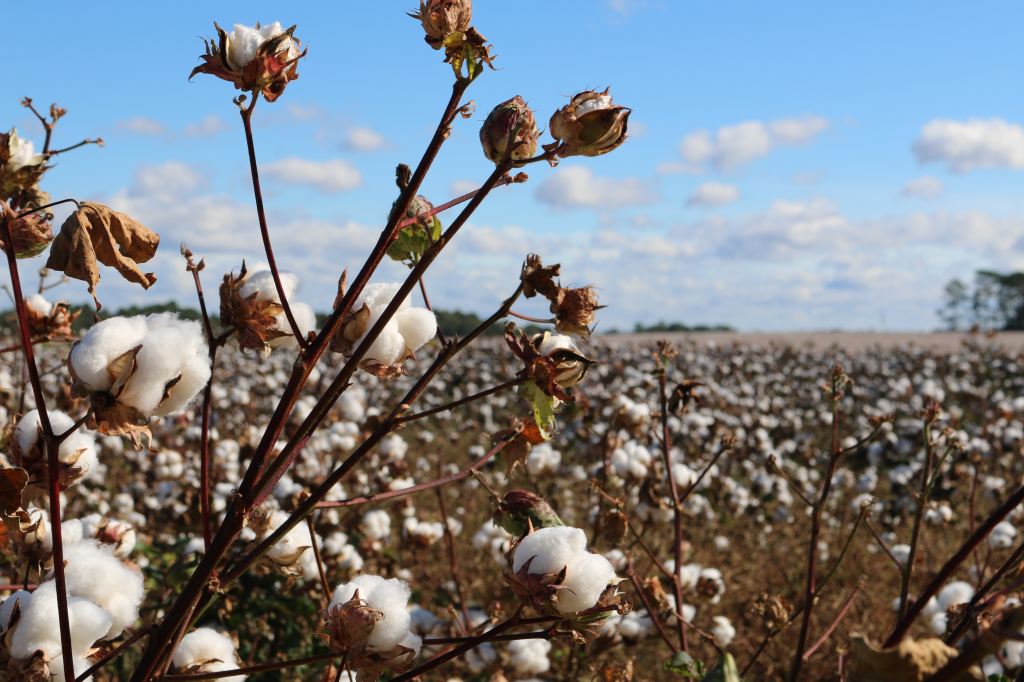
You worked hard to get here, so occupy your space. Fill these spaces with jollof rice and jerk chicken and calypso and steel drums – the guts, determination and sheer willpower your parents and grandparents had when they arrived all those years ago. Don’t ever feel that you have to dilute your opinions for White consumption, or tell bitesize histories for the masses. In that Business class, talk loud about the Cheshire and Lancashire cotton mills written in the blood of African-American slaves.
Students, you might get lecturers that call you angry, who will have a hard time coming to terms with their own prejudice and White privilege. You will see that within a few weeks of studying. But keep your head down and think about graduation. Come and speak to me at the Students’ Union if you have any worries or just want to vent. Sometimes it’s just about finding solace in someone that gets it. Cry into that cheeky Nando’s. Buy that weave. Write a damn good assignment and prove all the naysayers wrong.
You will also find lecturers that are willing to listen to your experiences of racism and prejudice. They will implore you to write a dissertation that’s personal to you. You will find lecturers that give a shit, and will stand by you to the very end – who will say it’s absolutely fine to lace your dissertation with personal history – roots, rocks, and rebellion – academic staff that are activists in their own right (but will never openly admit it!)
Write about the politics of Black hair. Write about the Windrush Scandal or the legacy of colonialism on the Black body, or even Black men and mental health. Write every assignment for your aunties, who live in headwraps, talking in Twi and give you sound advice. Write in ruthless rebellion to the White Eurocentric reading of your degree, break the colour bar in style!
You will likely not relate to your course content. You will find it reflects the experiences of White people. No Afropean stories. No love for Sarah Forbes on History, or the Slave Trade cases of the 1700s on Law – the cases that helped forge the legal profession into what it is today. Or even the racial theories of the 18th and 19th century that we living in the remnants of – not Edward Long’s History of Jamaica nor the Black writers that top bestsellers lists. Write about a decolonised curriculum and inclusive course content.
When your lecturers make no allusion to American Slavery when you study the Industrial Revolution, give them the evilest evils you can muster. And challenge them on it. Leave them shook. Educate your “woke” White friends on why this is important. And when it comes to race, don’t feel you need to talk about race just because you’re the only non-White person in the class.
When you come to university, you will feel the urge to be someone that you are not just to fit in. BE YOU. You will try studenty things. JUST DO YOU. You’ll go out drinking, even if you don’t normally drink. You will join every society at Union Day and your emails will be chocka block. You’ll change your accent and “be friends” with people you dislike to conform to social norms. You will then admit you hate going out out and prefer a good book, or one of my poetry nights or just a chat with good people in your halls.
Tell yourself “Black is beautiful.” You know it, I know it. But there are people out there that’ll try to make you feel bad about your culture, as is life. Come back to campus in January with that Angela Davis afro, or be a dreadlock rastaman. Play cricket, like Jofra Archer or play football like Raheem Sterling. And, your hair is not an exotic specimen to gawked at and touched like a museum exhibit. Remember, say no. No means no. Always.
Black students, walk with pride. YOU DO YOU. Be united. You’ll see quickly that there are forces that are waiting for you to make a mistake. To fail. To point the finger. You’ll see quickly that failure is racialised and that failure in a White person is not as bad. You’ll see that we live in a society that doesn’t include you in its definition of beauty standards. So girls, when someone says “You’re pretty for a dark-skinned girl,” pay them no mind. Find beauty in your melanin. Find your tribe. Sisterhood is paramount.
When someone asks “Where are you from?” – it’s fine to say London or Milton Keynes or any British town or city. You do not need to entertain them when they ask “Where are you really from?” You can be British and African. You can be British and Caribbean. You belong here. You can just be British. And that is also fine. Previously, you’d not have found events that represent Black people or felt inclusive. But my philosophy is “Black History Month is every month, 365 days a year.” October, November forever. See me!
Listen, you might be made to feel conscious of your otherness and not everyone will get your “I Am Proud of My Blackness” mentality. Not everyone will understand the nuanced politics of Blackness at Northampton. That even in inaction, the supposed “woke” White people are still complicit in racism. And remember it isn’t YOUR JOB to explain what is racist and what is not. Do not take on that emotional labour. You are not the mouthpiece for Black people, and you don’t have to be.
You will have days where you will say “I hate this town, I want to go home – there is no culture and nothing to do” but Northampton can work for you. There are other communities of African and Caribbean here where you will be welcomed with rice and stew. You will find family and community.

And you are not alone. There are a lot of us here. Build communities. Join the resident ACS (African-Caribbean Society). Empower yourselves. Come to see me, as your Student Union representative. Look after each other. Be good to yourselves and one another – and above all, enjoy it.
Yours,
Tré Ventour
Vice President BME
Northampton Students’ Union


