
Home » Social justice (Page 2)
Category Archives: Social justice

A review of In-Extremis: The Life of War Correspondent Marie Colvin
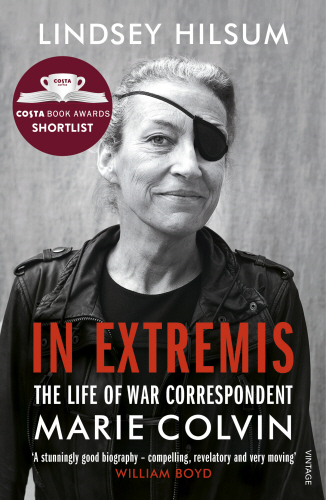
Recently, I picked up a book on the biography of Marie Colvin, a war correspondent who was assassinated in Syria, 2012. Usually, I refrain from reading biographies, as I consider many to be superficial accounts of people’s experiences that are typically removed from wider social issues serving no purpose besides enabling what Zizek would call a fetishist disavowal. It is the biographies of sports players and singers, found on the top shelves of Waterstones and Asda that spring to mind. In-Extremis, however, was different. I consider this book to be a very poignant and captivating biography of war correspondent Marie Colvin, authored by fellow journalist Lindsey Hilsum. The book narrates Marie’s life before her assassination. Her early years, career ventures, intimate relationships, friendships, and relationships with drugs and alcohol were all discussed. So too were the accounts of Marie’s fearless reporting from some of the world’s most dangerous conflict zones, including Sri-Lanka, Iraq, Lebanon, and Syria. Hilsum wrote on the events both before Marie’s exhilarating career and during the peak of her war correspondence to illustrate the complexities in her life. This reflected on Marie’s insatiability of desire to tell the truth and capture the voices of those who are absent from the ‘script’. So too, reporting on the emotions behind war and conflict in addition to the consistent acts of personal sacrifice made in the name of Justice for the disenfranchised and the voiceless.
Across the first few chapters, Hilsum wrote on the personal life of Marie- particularly her traits of bravery, resilience, persistence, and an undying quest for the truth. Hilsum further delved into the complexities of Marie’s personality and life philosophies. A regular smoker, drinker and partygoer with a captivating personality that drew people in were core to who Marie was according to Hilsum. However, the psychological toils of war reporting became clear, particularly as later in the book, the effects of Marie’s PTSD and trauma began to present itself, particularly after Marie lost eyesight in her left eye after being shot in Sri-Lanka. The eye-patch worn by Marie to me symbolised the way she carried the burdens of her profession and personal vulnerabilities, particularly between maintaining her family life and navigating her occupational hazards.
In writing this biography, Hilsum not only mapped the life of one genuinely awesome and inspiring woman, but also highlighted the importance of reporting and capturing the voices of the casualties of war. Much of her work, I felt resonated with my own. As an academic researcher, it is my job to research on real-life issues and to seek the truth. I resonated with Marie’s quest for the truth and strongly aligned myself to her principles on capturing the lived experiences of those impacted by war, conflict, and social justice issues. These people, I consider are more qualified to discuss these issues than those of us who sit in the ivory towers of institutions (me included!).
Moreover, I considered how I can be more like Marie and how I can embed her philosophies more so into my own research… whether that’s through researching with communities on the cost-of-living crisis or disseminating my research to students, fellow academics, policymakers, and practitioners. I feel inspired and moving forward, I seek to embody the life and spirit of Marie and thousands of other journalists and academics who work tirelessly to research on and understand the truth to bring forward the narratives of those who are left behind and discarded by society in its mainstream.
Share this:


Realtopia?

I have recently been reading and re-reading about all things utopic, dystopic and “real[life]topic” for new module preparations; Imagining Crime. Dystopic societies are absolutely terrifying and whilst utopic ideas can envision perfect-like societies these utopic worlds can also become terrifying. These ‘imagined nowhere’ places can also reflect our lived realities, take Nazism for an example.
In CRI1009 Imagining Crime, students have already began to provide some insightful criticism of the modern social world. Questions which have been considered relate to the increasing use of the World Wide Web and new technologies. Whilst these may be promoted as being utopic, i.e., incredibly advanced and innovative, these utopic technological ideas also make me dystopic[ly] worry about the impact on human relations.
In the documentary America’s New Female Right there are examples of families who are also shown to be using technology to further a far right utopic agenda. An example includes a parent that is offended because their child’s two favourite teachers were (described as being) ‘homosexuals’, the parents response to this appeared to be taking the child out of school to home school the child instead, but also to give their child an iPad/tablet screen to use as a replacement for the teachers. Another example consisted of a teen using social media to spread far right propaganda and organise a transphobic rally. In the UK quite recently the far right riots were organised and encouraged via online platforms.
I would not advise watching the documentary, aside from being terrifying, the report and their team did very little to challenge these ideas. I did get the sense that the documentary was made to satisfy voyeuristic tendencies, and as well as this, it seems to add to the mythical idea that far right ideology and actions only exists within self identified far right extremist groups when this is not the case.
Mills (1959) suggests that people feel troubled if the society in which they live in has wide scale social problems. So might the unquestioning and increased use of technologies add to troubles due to the spreading of hate and division? And might this have an impact on our ability to speak to and challenge each other? Or to learn about lives different to our own? This reminds me of Benjamin Zephaniah’s children’s book titled People Need People (2022), maybe technologies and use of the internet are both connecting yet removing us from people in some way.
References
Mills, C. W. (2000) The Sociological Imagination. Fortieth anniversary edition. Oxford: Oxford University Press.
Zephaniah, B. (2022) People Need People. (London: Orchard Books)
Share this:


Labour’s Winter Fuel Allowance Cut: Austerity 2.0 and the need for De-commodification?

Last week, the Government voted as an overwhelming majority to scrap the winter fuel allowance. This has been met with fierce backlash from critics, particularly Labour MP Zara Sultana who stated her removal of taking part in ‘Austerity 2.0’. Meanwhile, in Prime Minister Questions, Kier Starmer defended the decision by referring to the ’22-billion-pound black hole’ that was left by the former Conservative Government (See Amos, 2024). This policy decision will mean that pensioners and vulnerable social groups across the UK will face a loss of financial support to pay for the ever-rising energy costs, particularly over the coming winter months. The health implications and fears onto those who will be affected were reported widely by critics. For example, Labour MP Rosie Duffield represented her constituents, some of whom were cancer patients who were severely worried about keeping warm this coming winter and relied on the winter fuel allowance as a reliable source of financial support (Lavelle, 2024).
This latest move initiated by Starmer’s Labour Government is primarily justified through the need for temporary acts of austerity, to balance the books and reduce the national debt and deficit which according to Starmer’s speech at the latest Prime Minister’s Questions now sits at over twenty billion.
A fundamental question here is not of the need for action to reduce the national deficit…. rather the question is- who should foot the bill? Latest figures show that within the same time as when the country scraps the winter fuel allowance, According to Race and Jack (2024), major energy companies such as British Gas announced its profits for 2023 has increased ten-fold to £750 million with the profits forecast to soar higher at the end of this year. There are calls by some politicians, including Zara Sultana to introduce a windfall tax that will put a cap on the gross profits gained by energy companies and large-scale businesses, through which these taxes can be put into public infrastructure, services, and spending. A common counterargument here however is how these businesses and corporations will remove themselves from the UK and situate themselves in alternative global markets, that through globalisation and free-market economy principles has become easier.
The scrapping of the winter fuel allowance demonstrates how under economic crisis, it is communities who foot the bill and suffer the consequences of government failure to protect public infrastructure and avoid generating a deficit and national debt. This policy also represents a balancing act between keeping corporations and businesses active players in the free-market economy versus protecting the countries most vulnerable and providing sufficient public infrastructure and utilities. Perhaps there is an alternative way between preserving the markets and re-orienting their purpose back to a public good…
Capitalist markets are led by profiteering… however, through the process of de-commodification, these markets are brought back under state(s) control and are re-oriented to serve a greater public good and social need (Soron & Laxer, 2006; Hilary, 2013). De-commodification turns the modes of production and consumption towards serving a greater public need. Whilst there is profit opportunities for those on the supply side, this is met with serving a greater public need. Essentially, de-commodification removes acts of disempowerment and the dependency of people from the markets and restores the power, much of which is placed back into state control. Perhaps, the model of de-commodification might not work in all contexts, particularly when one considers the intensification of globalisation and geopolitical insecurity, however there should be discussions on de-commodification…. As otherwise, the markets will continue to over-rule the state and communities will continue to pay the price…
References
Amos, O (2024) Starmer and Sunak clash on winter fuel payments at PMQs. BBC News. 11th September. Available at https://www.bbc.co.uk/news/live/c303gm7qz3pt {Accessed 13th September 2024}.
Hilary, J (2013) The Poverty of Capitalism: Economic Meltdown and the struggle for what comes next. London: Pluto Press.
Lavelle, D (2024) Winter fuel pay decision ‘brutal’ and could lead to deaths, says Labour MP. The Guardian, 7th September. Available at https://www.theguardian.com/politics/article/2024/sep/07/winter-fuel-pay-decision-brutal-labour-mp-rosie-duffield {Accessed 13th September 2024}.
Race, M., and Jack, S (2024) British Gas sees profits increase ten-fold. BBC News. 15th February. Available at https://www.bbc.co.uk/news/business-68303647#:~:text=British%20Gas%20has%20announced%20its,of%20Russia’s%20invasion%20of%20Ukraine {Accessed 13th September 2024}.
Soron, D., and Laxer, G (2006) De-commodifying Public Life. Peterborough: Broadview Press.
Share this:


Zemiological Perspective: Educational Experiences of Black Students at the University of Northampton

As a young Black female who has faced many challenges within the education system, particularly related to behavioral issues, I noticed how the system can unintentionally harm black students. I observed that Black children’s experiences in the education system are not always viewed from a deviant perspective, because they are not inherently deviant. The institutional harm faced by Black students is not always a ‘crime’ nor is it illegal, yet it is profoundly damaging.
This realisation prompted me to adopt a zemiological perspective, drawing upon the work of Hillyard et al. (2004) to highlight the subtle yet impactful harms faced by Black students in the educational system. My primary objective was to uncover the challenges these students face, as outlined in my initial research question: ‘To what extent can the experiences of Black students in higher education be understood as a form of social harm?’ To achieve this, I analysed the educational experiences of Black students at the University of Northampton. This involved reviewing the university’s access and participation plans, which detail the performance, access, and progression of various demographics within the institution, with a particular focus on BAME students.
Critical race theory (CRT) was the guiding theoretical framework for this research study. CRT recognises the multifaceted nature of racism, encompassing both blatant acts of racial discrimination and subtler, systemic forms of oppression that negatively impact minority ethnic groups (Gillborn, 2006). This theoretical approach is directly correlated to my research and was strongly relevant. This allowed me to gain insight into the underlying reasons behind the disparities faced by Black students in higher education. As well as enabling me to unpack the complexities of racism and discrimination, providing a comprehensive understanding of how these issues manifest and persist within the educational landscape.
Through conducting content analysis on the UON Access and Participation Plan document and comparing it to sector averages in higher education, four major findings came to light:

Access and Recruitment: The University of Northampton has made impressive progress in improving access and recruitment for BAME students, fostering diversity and inclusivity in higher education, and surpassing sector standards. Yet, while advancements are apparent, there remains a need for more comprehensive approaches to tackle systemic barriers and facilitate academic success across the broader sector.
Non-Continuation: Alarmingly, non-continuation rates among BAME students at the University of Northampton have surpassed the sector average, indicating persistent systemic obstacles within the education system. High non-continuation rates perpetuate cycles of disadvantage and limit opportunities for personal and professional growth.
Attainment Gap: Disparities in academic attainment between White and BAME students have persisted and continue to persist, reflecting systemic inequalities and biases within the academic landscape. UON is significantly behind the sector average when it comes to attainment gaps between BAME students and their white counterparts. Addressing the attainment gap requires comprehensive approaches that tackle systemic difficulties and provide targeted support to BAME students.
Progression to Employment or Further Study: UON is also behind the sector average in BAME students progression in education or further study. BAME students face substantial disparities in progression to employment or further study, highlighting the need for collaborative efforts to promote diversity and inclusivity within industries and professions. Addressing entrenched biases in recruitment processes is essential to fostering equitable opportunities for BAME students.
Contributions to Research: This research deepens understanding of obstacles within the educational system, highlighting the effectiveness of a zemiological perspective in studying social inequalities in education. By applying Critical Race Theory, the study offers insights that can inform policies aimed at fostering equity and inclusion for Black students.
The findings hold practical implications for policy and practice, informing the development of interventions to address disparities and create a more supportive educational environment. This research significantly contributes to our understanding of the experiences of Black students in higher education and provides valuable guidance for future research and practice in the field.
Aside from other limitations in my dissertation, the main limitation was the frequent use of the term ‘BAME.’ This term is problematic as it fails to recognise the distinct experiences, challenges, and identities of individual ethnic communities, leading to generalisation and overlooking specific issues faced by Black students (Milner and Jumbe, 2020). While ‘BAME’ is used for its wide recognition in delineating systemic marginalisation (UUK 2016 cited in McDuff et al., 2018), it may conceal the unique challenges Black students face when grouped with other minority ethnic groups. The term was only used throughout this dissertation as the document being analysed also used the term ‘BAME’.
This dissertation was a very challenging but interesting experience for me, engaging with literature was honestly challenging but the content in said literature did keep me intrigued. Moving forward, i would love Black students experiences to continue to be brought to light and i would love necessary policies, institutional practises and research to allow change for these students. I do wish i was more critical of the education system as the harm does more so stem from institutional practices. I also wish i used necessary literature to highlight how covid-19 has impacted the experiences of black students, which was also feedback highlighted by my supervisor Dr Paula Bowles.
I am proud of myself and my work, and i do hope it can also be used to pave the way for action to be taken by universities and across the education system. Drawing upon the works of scholars like Coard, Gillborn, Arday and many others i am happy to have contributed to this field of research pertaining to black students experiences in academia. Collective efforts can pave the way for a more promising and fairer future for Black students in education.
References
Gillborn, D. (2006). Critical Race Theory and Education: Racism and anti-racism in educational theory and praxis. Discourse: Studies in the Cultural Politics of Education, 27 (1), 11–32. [Accessed 21 April 2024]
Hillyard, P., Pantazis, C., Tombs, S. and Gordon, D., (Eds), (2004). Beyond Criminology: Taking Harm Seriously, London: Pluto Press.
Milner, A. and Jumbe, S., (2020). Using the right words to address racial disparities in COVID-19. The Lancet Public Health, 5(8), pp. e419-e420
Mcduff, N., Tatam, J., Beacock, O. and Ross, F., (2018). Closing the attainment gap for students from Black and minority ethnic backgrounds through institutional change. Widening Participation and Lifelong Learning, 20(1), pp.79-101.
Share this:


A response to the Government’s plans to address ‘Mickey-mouse degrees’.

The Government’s latest plans to scrap university courses that are being considered as ‘under-achieving’ through poor graduate outcomes and progression should deeply concern all of us who work in and who have a passion for the Social Sciences, Arts and Humanities across Higher Education. It is no secret that Rishi Sunak and his Government have traditionally favoured apprentices in replacement of graduates. It is a truth that university and higher education is not for everyone, so whilst the value of undertaking an apprentice should be unequivocally un-challenged, this moment of rupture and insecurity for the Higher Education Sector should provoke us to think about how the culture of Higher Education has changed, and why people come to university in the first place. Engaging in these perspectives will put us in a stronger position to contribute to these debates occurring across the chambers of Parliament and at dinner tables across the country. So too should we as academics be actively challenging these attacks on the disciplines that we have passion for.
Before the awakening of neoliberalism, higher education was a vocation and a pursuit for those seeking to climb the ladder of ‘social mobility’. It is without question, that UK universities, particularly in the inter-war and the early post-war period were filled with young people with pre-existing economic fortune and privilege. Universities were not spaces for the working classes, nor for individuals achieving low grades outcomes. However, we can acknowledge that the class-based, gender and racial barriers into Higher Education have improved, yet we still have progress to make moving forward. Since the 2008 Global Financial Crash and the series of events that have followed, the motivations for coming to university have largely changed. Seemingly, it is predicated on a mode of response to economic re-structuring, particularly when the opportunities in the labour markets erode and become increasingly competitive, university seems for some as a suitable option to both buy time and up-skill to ‘stand out’. A sad truth remains however that these gravitations to university have contributed to degree inflation that has changed the way we see and value a degree. These changes have partially allowed the Government to play loose and fast with degrees that they consider ‘worthless’. However, those of us who actively teach and research in the social sciences will know that these degrees are invaluable…. Invaluable through teaching students to critically think about the seemingly ‘normal world’ around them- to question the logic of everyday practices, attitudes, norms and values that are engrained into our social fabric. To work with communities and organisations to identify and respond to issues of criminal and social injustice…. Be that austerity, homelessness, poverty, miscarriages of justice, and inequality. With this in mind, as educators in the social sciences, arts and humanities, we have a duty to show-case the momentous impact of our disciplines. To show-case movements of activism, government lobbying and social change. This emphasises the importance of research, knowledge exchange and adopting pedagogies enabling students to develop these works. Only then, can we put forward cases for impacts that at a government level could challenge these narratives. So too can we utilise these cases to infuse a passion for the discipline that with luck would enable a student to make a choice of coming to university that is right for them.
As a sector, we have numerous challenges facing us…. we need to think like and be activists…. We need to embody what we teach and speak out against those who reduce our work as a ‘worthless’ or ‘Mickey-Mouse’ degree. We may not change the Government’s approach but at least if departments do get shut down…. We went with a fight.
Share this:


Birth Trauma
I recently passed through Rugby Motorway Services with my family and I was amazed by what was on offer. It consisted of a free internal and external play area and the most baby friendly changing rooms that I have ever encountered. This visit to the Rugby services made me think;
Isn’t it a shame that the same amount of family friendly consideration is not found elsewhere.
Even more so;
Isn’t it a shame that many babies, mothers and birthing parents are treated with such a common and serious violence during the birth
The Birth Trauma Inquiry has been published this week, I am sure that CRI3003 students would be able to critique this Inquiry but in terms of the responses from mothers who have experienced birth trauma it makes for an incredibly harrowing read.
In the words of one mother;
‘Animals were treated better than the way we were treated in hospital’ (p.26).
Yet, none of these accounts of violence are surprising; casual conversations with friends, family, relatives resemble many of the key themes highlighted within the inquiry. The inquiry includes accounts of mothers before, during and after birth being ‘humiliated’ (p.20) and bullied, experiencing extreme amounts of pain, financial ruin, life limiting physical and mental health problems, due to institutional issues raised such as: negligence, poor professional practice, mistakes, mix ups, lack of consent, inhumane treatment, lack of pain relief and compassion. With the most serious consequences being baby and or mother loss.
The report also makes reference to at least a couple of incidents involving mobile phone usage. This did remind me of a conversation that I was having with a fellow criminologist quite recently. Aside from issues that have existed for a long time, it seems that the use of phones may impact on our ability to work in a safe and compassionate manner. I am sure that some staff scroll on phones when victims of crime report to the police station, or scroll whilst ‘caring’ for someone who is either mentally or physically unwell. How such small technological devices seem to have such huge impact on human interaction amazes me.
A quote from the inquiry states: ‘the baby is the candy, the mum is the wrapper, and once the baby is out of the wrapper, we cast it aside’ (p.20), how awful is that?
All-Party Parliamentary Group. Listen to Mums: Ending the Postcode Lottery on Perinatal Care (2024). Available at: https://www.theo-clarke.org.uk/sites/www.theo-clarke.org.uk/files/2024-05/Birth%20Trauma%20Inquiry%20Report%20for%20Publication_May13_2024.pdf [Accessed 16/05/24].
Share this:


It’s all about perspective…

Within criminology, and other social science disciplines, the understanding that knowledge is socially constructed and meaning is given to things from people and their interactions is particularly pertinent: especially for researchers involved with people. And ‘perspective’ can be challenging to navigate, challenging to be critical of and challenging to recognise within and outside of a research context. Thinking about the public, the understanding of the nature of knowledge is often taken at face value and not viewed critically; perhaps a skill or requirement which should be part of mainstream education, then again maybe not. Consider the below example, your thoughts and attitudes towards the actors, actions and outcomes… consider your perspective.
A boy begins testing boundaries with his father, he deliberately disobeys him around where he can go and what he can do. He even encourages a friend to join him on his adventures: ducking away from the adult eyes that are watching over them. The boy is told off for putting himself and friend in a dangerous situation, and he appears sincere for his mistakes. Alas, he finds himself in trouble again; this time with dire consequences. The boy’s father dies trying to get him out of trouble. The boy runs away to a place where his past is unknown, and joins a group of outcasts. He grows up into a young man on the fringes of society. He is persuaded to return home, whereby he is involved in a violent fight, which almost results in his death. Luckily, he overcomes his opposition; finding himself with a only a few cuts and bruises. His opponent is forced to flee. He is triumphant, but at what cost?
This is one perspective and overview: from an outsider looking in. There are other ways to describe the example below (which we will come on to), but firstly: what are your thoughts on the young boy and his behaviour? What outcomes are required, if any, and at what stages of this boy’s life? Is this something which requires support, love and care or surveillance, control and discipline?
Another way of looking at the above scenario is to watch the Lion King (1994).1 The young boy in question is Simba. Maybe you already spotted that, maybe you aren’t familiar with the story or perspectives the film is told by. Perspectives matter….
- For those less familiar with Disney animations, the themes are also apparent within Shakespeare’s Hamlet (c. 1600). ↩︎
Share this:


Doing the right thing
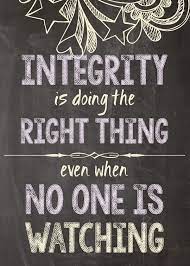
It seems that very often, the problem with politics in this country is that it gets in the way of doing the right thing. Despite the introduction of the The Seven Principles of Public Life known as the Nolan Principles, politicians (not all of them of course, but you will have seen ample examples) still seem to be hell bent on scoring political advantage, obfuscating on matters of principle and where possible avoiding real leadership when the country is crying out for it. Instead, they look to find someone, anyone, else to blame for failures that can only be described as laying clearly at the door of government and at times the wider institution of parliament.
One example you may recall was the complete farce in parliament where the speaker, Sir Lyndsay Hoyle, was berated for political interference and breaking the rules of the house prior to a debate about a ceasefire in Gaza. It became quite obvious to anyone on the outside that various political parties, Conservatives, Labour and the Scottish National Party were all in it to score points. The upshot, rather than the headlines being about a demand for a ceasefire in Gaza, the headlines were about political nonsense, even suggesting that the very core of our democracy was at stake. Somehow, they all lost sight of what was important, the crises, and it really is still a crisis, in Gaza. Doing the right thing was clearly not on their minds, morals and principles were lost along the way in the thrust for the best political posturing.
And then we come to the latest saga involving political parties, the WASPI women (Women Against State Pension Inequality) campaign. The report from the Parliamentary and Health Service Ombudsman has ruled that the Department for Work and Pensions (DWP) “failed to provide accurate, adequate and timely information” about changes to pension ages for women. The report makes interesting reading. In essence, it accuses the DWP of maladministration on several counts.
The Pensions Act 1995 changed the way in which women could draw their pensions in an effort to equalise the age with men. A timetable was drawn up raising the qualifying age for women from 60 to 65, with the change phased in between 2010 and 2020. However, under the Pensions Act 2011, the new qualifying age of 65 for women was brought forward to 2018. The report acknowledges that the DWP carried out campaigns from 1995 onwards but in 2004 received results of research that a considerable number of affected women still believed that their retiring age was 60. Unfortunately, through prevarication and for some quite inexplicable reasoning the women affected were not notified or were notified far too late. There was a calculation carried out that suggested some women were not told until 18 months before their intended retirement date. The matter was taken before the courts but the courts ruling did nothing to resolve the issue other than providing a ruling that the DWP were not required by law to notify the women.
You can read about the debacle anywhere on the Internet and the WASPI women have their own Facebook page. What seems astounding is that both the Government and the opposition have steadfastly avoided being drawn on the matter of compensation for these women. I should add that the maladministration has had serious detrimental impacts on many of them. Not even a sorry, we got it wrong. Instead we see articles written by right wing Conservatives suggesting the women had been provided with ample warning. If you read the report, it makes it clear that provisions under the Civil Service Code were not complied with. It is maladministration and it took place under a number of different governments.
Not getting it right in the first instance was compounded by not getting it right several times over later on. It seems that given the likely cost to the taxpayer, this maladministration is likely, like so many other cock ups by government and its agencies, to be kicked into the long grass. Doing the right thing is a very long, long way away in British politics. And lets not forget the Post Office scandal, the infected blood transfusion scandal and the Windrush scandal to name but a few. So little accountability, such cost to those impacted.
- The quotation in the image is often wrongly misattributed to C. S. Lewis. ↩︎
Share this:


‘A de-construction of the term ‘Cost of Living Crisis’ in recognition of globalism’

The term ‘Cost of Living Crisis’ gets thrown around a lot within everyday discussion, often with little reference to what it means to live under a Cost-of-Living Crisis and how such a crisis is constituted and compares with crises globally. In this blog, I will unpack these questions.
The 2008 Global Financial Crash served as a moment of rupture caused and exacerbated by a series of mini events that unfolded on the world stage…. This partly led to the rise in an annual deficit impacting national growth and debt recovery. Then we entered 2010 when the Coalition Government led by David Cameron and Nick Clegg in the Conservative and Liberal Democrat parties implemented a Big Society Agenda, underpinned by an anti-statist ideology and Austerity politics. The legacies of austerity have extensively been highlighted in my own research as communities faced severed cutbacks to social infrastructure and resources, many of whom utilised these resources as a lifeline. Moving forward to the present day in 2024, austerity continues to be alive and well and the national debt has continued to rise…. Events including the Corona Virus Pandemic that started in 2019, Brexit and Russia’s invasion of Ukraine have amongst other events served as precipitators to an already existing economic downturn. The rise of interest rates and inflation have been partly led by disruptions to global supply chains, particularly essential and often taken for granted food resources such as wheat and grains. So too has political instability hindering opportunities to invest and grow the local economy contributed towards this economic downturn.
As inflation and interest rates rose, so too did the average cost of living in terms of expenditure and disposable income for both the Working and Middle-Classes. At this point, one can begin to see the emergence of the cost-of-living crisis as being constituted as an issue affecting social class.
The cost-of-living crisis is inherently a term deployed by the Middle Classes as some faced an increase of interest rates on their mortgages in addition to rising costs in the supermarkets. These are valid concerns and the reality and hardship produced under these conditions is not being contested. However, we must not lose sight of the fact that economic downturn and the reality of poverty is nothing new for many working-class communities, who have suffered from disinvestment and austerity, long before the term Cost of Living Crisis came into being.
Equally, we can understand the Cost-of-Living Crisis as being a construction led by Western states, as part of a wider Global North. The separation between the Global North and Global South is bound by geography, but economic growth and its globally recognised position as an emerged or emerging economy. Note that such constructions within themselves are applied by the Global North. Similarly, the Cost-of-Living Crisis is nothing new for these states. The reality of living below a breadline is faced by many of these countries in the Global South and should be understood as a wider systemic and global issue that members of the International Community have a moral obligation to address.
So, when applying terms such as the Cost-of-Living Crisis under every-day discussion, it is necessary to contemplate the historicisms behind such an experience and how life under poverty and hardship is experienced globally and indeed across our own communities. This will enable us to think more critically about this term Cost of Living Crisis, which as it is widely used, faces threat of oversight as to the prevalence and effects of global and local inequalities.
Share this:


Justice or Just Another One?

Luckily I’ve never been one for romantic movies. I always preferred a horror movie. I just didn’t know that my love life would become the worst horror movie I could ever encounter. I was only 18 when I met the monster who presented as a half decent human being. I didn’t know the world very well at that point and he made sure that he became my world. The control and coercion, at the time, seemed like romantic gestures. It’s only with hind sight that I can look back and realise every “kind” and “loving” gesture came from a menacing place of control and selfishness. I was fully under his spell. But anyway, I won’t get into every detail ever. I guess I just wanted to preface this with the fact that abuse doesn’t just start with abuse. It starts with manipulation that is often disguised as love and romance in a twisted way.
This man went on to break me down into a shell of myself before the physical abuse started. Even then, him getting that angry was somehow always my fault. I caused that reaction in his sick, twisted mind and I started to believe it was my fault too. The final incident took place and the last thing I can clearly recall is hearing how he was going to cave my head in before I felt this horrendous pressure on my neck with his other hand keeping me from making any noise that would expose him.
By chance, I managed to get free and RUN to my family. Immediately took photos of my injuries too because even in my state, I know how the Criminal Justice System would not be on my side without evidence they deemed suitable.
Anyway, my case ended up going to trial. Further trauma. Great. I had to relive the entire relationship by having every part of my character questioned on the stand like I was the criminal in this instance. I even got told by his defence that I had “Histrionic Personality Disorder”. Something I have never been diagnosed with, or even been assessed for. Just another way the CJS likes to pathologise women’s trauma. Worst of all, turns out ‘Doctor Defence’ ended up dropping my abuser as he was professionally embarrassed when he realised he knew my mother who was also a witness. Wonderful. This meant I got to go through the process of being criminalised, questioned, diagnosed with disorders I hadn’t heard of at the time, hear the messages, see the photos ALL over again.
Although “justice” prevailed in as much as he was found guilty. All for the sake of a suspended sentence. Perfect. The man who made me feel like he was my world then also tried to end my life was still going to be free enough to see me. The law wasn’t enough to stop him from harming me, why would it be enough to stop him now?
Fortunately for me, it stopped him harming me. However, it did not stop him harming his next victim. For the sake of her, I won’t share any details of her story as it is not mine to share. Yet, this man is now behind bars for a pretty short period of time as he has once again harmed a woman. Evidently, I was right. The law was not enough to stop him. Which leads me to the point of this post, at what stage does the CJS actually start to take women’s pleas to feel safe seriously? Does this man have to go as far to take away a woman’s life entirely before someone finally deems him as dangerous? Why was my harm not enough? Would the CJS have suddenly seen me as a victim, rather than making me feel like a criminal in court, if I was eternally silenced? Why do women have to keep dying at the hands of men because the CJS protects domestic abusers?”

 Thoughts from the criminology team