
Home » Social distancing (Page 4)
Category Archives: Social distancing

Things I Miss, or Introverts vs Coronavirus

The thing I hate most about self-isolation is how quickly I eased into this new pace of life. Is that the privilege of having somewhere to self-isolate to or does it come with having an introverted personality? Before quarantine, many would perceive me as a mild-mannered individual. I ask a lot of questions. I guess that’s where my affinity for journalism comes from. Yet, in a global crisis, not much has changed. For someone that suffers from anxiety, one would think I would have more emotional unrest during the worst public health crisis in a generation. But no. I’m content, staying at home.
Whilst this pandemic has been liberating for me, it has shown how much privilege I still have despite being at three disadvantages in society: the colour of my skin, my invisible disability and being an introvert in a world designed for extroverts. Yet, cabin fever does set in once in a blue moon and sometimes it does feel like Groundhog Day. Despite being at comfort in my own space, my concept of time is being challenged. Like, what is a weekend? Not even Bill Murray can save me from this paradox. Not my books, nor Disney+ subscription, films, or The Doctor, Martha and that fogwatch.
What I hate about being an introvert in the buzz term of today – “unprecedented times” – is how I’m not suffering like my extroverted friends. Perhaps this is what it means to live in society designed to accommodate you. The world outside of a health crisis – is this what it’s like? Imagine if I also happened to be an able-bodied, White, straight man as well? Just imagine. Today, extroverts are suffering. Ambiverts are suffering. When this is over will we see an increase in agoraphobia?
And in a society where extroverts are privileged over introverts, the outgoing outspoken marketing professional is valued more than the introverted, reclusive schoolteacher.
Yet, today, we are seeing the value of nurses, doctors, teachers, lecturers / academics and so forth. Many of whom will be introverts going against the grain of what feels normal to them. The person seen to be outgoing and talking and networking is regarded as a team player, in comparison to the freelance blogger or journalist writing away on their computer at home. Many of my teacher friends that talk for a living also love to recluse in their homes, as drinking your own drinks and eating your own food in your own house is great. Can you hear the silence, the world in mute? Priceless.
In my job, I recall in the training we did the Myers-Briggs test in order to get to know each other better. Safe to say I was 97% introvert, which had increased somewhat since I was a student. Coincidence, I think not. In a job where I also go to meetings for a living, and network and people (if I can make a verb out of people), it can be draining. The meetings, the networking, the small talk, the different hats and masks people wear.
As awful as Coronavirus is, I will go back to my intro in saying that this new pace of life is almost like a dream, with intermittent periods of cabin fever. I can recharge my life batteries when I want. I can be alone when I want. I can read, watch films and television series when I want. I like to engage in activities that require critical thought. Self-isolation has given ample time for that. And good things have come from my introspection. Moreover, many conversations with myself. No, I’m not Bilbo Baggins. However, to talk with oneself is freeing. It’s the first sign of intelligence, don’t ya know?
But self-isolation to me and many of my introvert colleagues, it’s our normal. Social distancing is a farce because we are still being social. “Physical distancing” is a better term. Not in this era of WhatsApp, Instagram and Zoom, we’ve never been more social. Coronavirus has shown us a social solidarity that I thought I would not see in my lifetime. To put it bluntly, Coronavirus has pretty much eliminated the quite British obsession of small talk, and given me opportune moments to think.

Whilst my extrovert colleagues want to have that picnic in the park, I’m quite happy to sit in the garden. There lies another privilege. Simultaneously, I seldom feel the need to go out. Where I miss my cinema trips, I remember Netflix, Amazon Prime, Britbox and Disney+. Sure they’re not IMAX but they’ll do. I miss the pub but there’s the supermarket with all sorts of choices of IPA to choose from. Indeed, I have found solace in having my access stripped right back. The freedom to choose afforded to me because I work and live in a “developed country” (I use this term loosely).
For those of us that live in Britain, Coronavirus has swiftly shown that we live in a first-world country with a third-world healthcare system and levels of poverty – highly-skilled medical professionals in a perilously underfunded NHS systematically cut for the last ten years by the Tories.
Unlike University, I can mute social media for a couple of hours, and do some reading. I hate that I am so comfortable, whilst others are not. I often think about international students shafted by visa issues, and rough sleepers who don’t have the privilege of thinking about self-isolation. What about those having to self-isolate in tower blocks like Grenfell? What if we were to have another tragedy like Grenfell during a public health crisis? I hate how Coronavirus has exposed underlying inequalities, and how after this, these systems of power will likely carry on like it’s business as usual.
I don’t feel defeated or bored but the other inequalities in society do make me worry. Having been a victim of racism ten times over, both by individuals and institutions, I know that racism is its own disease and it won’t simply go on holiday because we’re in a pandemic. I know increasing police powers will disproportionately impact people from Black backgrounds, especially in working-class communities, but as Black people (pre-Coronavirus) at a rate of nine times more likely to be stopped and searched than a White person in Northamptonshire is bad enough, isn’t it?
This solitude has pushed me creatively with my poetry and own blogs. Take Eric Arthur Blair, or George Orwell as he was known; when he was sick with TB, he wrote Nineteen Eighty-Four. The book we now lord about today is essentially a first draft. Rushed. A last bout before death. In my isolation, I’m excited for the number of dystopian texts that will come out of Coronavirus, particularly political narratives on how Britain and America reacted. I’m looking forward to artistic expression and if the British public will hold the Government to account. One could argue their thoughtlessness, and support of genocide (herd immunity) is a state crime.
Whilst it is easy to blame the Chinese government, our own government have a lot to answer for and metaphorically speaking, someone (or quite a few people) need to hang.
A good friend and confidant has implored me to write a book as a project. Being naturally inward in my personality, I could do it. Though, I have my reservations. Perhaps I could write a work of genius that goes on to define a generation. Nonetheless, I observe that during lockdowns around the world, there will be both introverts and extroverts applying their minds to art and creativity. Writing books. Painting pictures. Discovering theories, like Isaac Newton did when he was “confined” to his estate during the Plague in 1665.
One day the curve will flatten: we will see each other again at the rising of the sun, folks say we must make use of this time; however, this is unprecedented, so it is also perfectly okay to be at peace with your loved ones, cherish those moments, and do absolutely nothing of consequence at all.
Share this:


Things I Miss (and don’t) – 5teveh

I was chatting with my wife the other day about household finances in the current situation. My wife has lost her two zero hours contract jobs (I’m not sure why they call it a contract when basically it’s a one-way thing; you work when we want you to and if you don’t agree then you don’t work) and adjustments have to be made. I’m not moaning about our finances, just stating a fact, things have to change. Anyway, my wife declares that whilst she enjoys visiting coffee shops it’s not something she particularly misses. A bit ironic really as we can’t go out for coffee anyway in the current countrywide shutdown. Of course, not going out for coffee saves money. The conversation got me thinking about what I miss, and conversely what I don’t in these unusual circumstances.
In a previous conversation, a friend and colleague said he missed the chats over coffee that we’d have on a weekly basis. I too miss this, but it wasn’t just the chats but also the venue, where we were able to somehow hide ourselves in our own little sanctuary, away from what at times felt like the madness of the daily machinations of campus life.
I never thought I’d say this, but I miss the classes, lectures, seminars, workshops, call them what you will. I miss the interaction with the students and that spark that sometimes occurs when you know they’ve got it, they comprehend what it is you are saying. I don’t miss the frustration felt when students for what ever reason just can’t or won’t engage. I don’t miss travelling into work in all the traffic. At least my fuel bill has gone down, and the environment is benefitting.
I miss seeing my boys, I get to speak to them or text them all the time but its not quite the same. They are grown men now but, they are still my boys. I miss being able to see my mum, she’s getting on a bit now. Sometimes I thought it a bit of a chore having to visit her, a duty to be carried out, but now… well its hard, despite speaking to her everyday on the phone.
I miss being able to pop out with my wife to various antique shops and auction rooms in pursuit of my hobby. I’m repairing an old clock now and need some parts. Ebay is useful but its not quite the same as sourcing them elsewhere.
I miss going out to meet my best mate for a beer and a Ruby (calling it a curry just isn’t cool). We’ve been friends for over forty years now and perhaps only meet up every three or four months. We text and chat but its not quite the same.
But what I miss most of all, is freedom. Freedom to see who I like and when I like. Freedom to visit where I like and to chat to whom I like, whether that be in a coffee shop with the owner or another customer or at an auction with other bidders and onlookers. It’s funny isn’t it, we take our freedom for granted until it is taken away from us. All those things that we moan about, all the problems that we see, real or imagined, pale into insignificance against a loss of freedom.
Share this:

Coronavirus (Covid-19): The greatest public health crisis in my lifetime
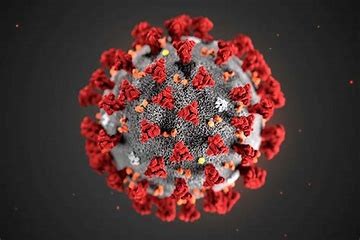
The coronavirus has caused an ongoing pandemic of coronavirus disease 2019 (COVID-19), caused by severe acute respiratory syndrome. The outbreak started in Wuhan, Hubei province, China, as early as November 2019. The World Health Organization (WHO) declared the outbreak to be a Public Health Emergency of International Concern on 30 January 2020 and recognized it as a pandemic on 11 March 2020. Whilst we all have an interest in the ongoing spread and consequence of the greatest public health crisis in generations it holds a specific interest for me given my visits to Wuhan and Hubei province whilst working for Coventry University. Wuhan is a massive city with over 11 million of a population, but little heard of until this outbreak. It is believed that its origins are most likely linked to the Huanan Seafood Wholesale Market, in Wuhan which also sold live animals, and one theory is that the virus came from one of these kinds of animals. The virus spread quickly through the population of Wuhan City which led to comprehensive lockdown to contain the virus. However, the virus spread beyond the city across China and into other countries. The scale of the spread has been significant and by the time the World Health Organisation declared the outbreak a full pandemic in March 2020 there were cases recorded in hundreds of countries.
Cases in the UK emerged on January 31st 2020, which prompted a government response to manage the outbreak. In the early stages there was some discussion about “taking it on the chin” and allowing the virus to spread through the population in order to gain “herd immunity”. However, the public health, medical and scientific experts at Imperial College London suggested that the death toll through their modelling exercises, if this strategy played out, could be in excess of 500,000. This was a situation that would be socially and politically unpalatable, and a change of thinking emerged with a combination of social distancing, public health advice on washing hands and a strategy to protect the capacity of the NHS to cope with escalating cases. A new lexicon emerged that we are now all familiar with: flattening the curve, delaying the spread, the peak of the infection and latterly the language of the health professionals in the frontline supporting and caring for people acutely ill with Covid-19; Personal Protective Equipment (PPE), Continuous Positive Airway Pressure (CPAP), ventilation and oxygen saturation and therapy. This is because the virus can attack the respiratory system leading to pneumonia and in several cases an immune response that leads to multi-organ shutdown. The media presentation of this crisis is all very frightening.
At the time of writing the pandemic has progressed relentlessly in the UK with currently over 65,000 people have tested positive and of those hospitalised nearly 8,000 patients have died. Some commentators have suggested that the UK was slow to recognise the seriousness of the virus and was slow to initiate the “lockdown” measures required to halt the spread. In addition, the UK’s position on testing for the virus has been criticised as slow, lacking preparation despite the global warnings from WHO and a shortage of the essential materials required. Whether these criticisms are valid only time will tell but the UK’s data on cases, hospitalisation, need for critical care and deaths is on a trajectory like other countries which could be described as liberal democracies. Here is the first clue to the timing of the response. The measures required to halt the spread of the virus have massive economic consequences. Balancing these two issues is incredibly difficult and has led to some commentators suggesting all liberal democracies will struggle to respond quickly enough.
What is now abundantly clear is that this is going to take some time for us to get through as a society and the consequences for large sections of our society are going to be devastating. However, what I’d like to discuss in the remainder of this blog are a number of early lessons and personal observations in terms of what we are seeing play out.
First, the data emerging indicates that the narrative about the “virus does not discriminate” is a false one. It is clear that health professionals are much more greatly exposed and that the data on cases and deaths indicate higher numbers of the socially deprived and BAME community. This should not be a surprise as the virus will be keenest felt in communities negatively impacted by health inequalities. This has been the case ever since we recognised this in the “Black Report” (DHSS 1980). The Report showed in detail the extent to which ill-health and death are unequally distributed among the population of Britain and suggested that these inequalities have been widening rather than diminishing since the establishment of the National Health Service in 1948. It is generally accepted that those with underlying health issues and therefore most at risk will be disproportionately from socially deprived communities.
Second, the coronavirus will force the return of big government. The response already supports this. In times of real crisis, the “State” always takes over. Will this lead to more state intervention going forward? If so then we will witness the greatest interventionist Conservative government in my lifetime.
Third, the coronavirus provides one more demonstration of the mystique of borders and will help reassert the role of the nation state. Therefore, the coronavirus is likely to strengthen nationalism, albeit not ethnic nationalism. To survive, the government will ask citizens to erect walls not simply between states but between individuals, as the danger of being infected comes from the people we meet most often. It is not the stranger but those closest to you who present the greatest risk.
Fourth, we see the return of the “expert”. Most people are very open to trusting experts and heeding the science when their own lives are at stake. One can already see the growing legitimacy that this has lent to the professionals who lead the fight against the virus. Professionalism is back in fashion, including recognition of the vital role of the NHS.
Fifth, the coronavirus could increase the appeal of the big data authoritarianism employed by some like the Chinese government. One can blame Chinese leaders for the lack of transparency that made them react slowly to the spread of the virus, but the efficiency of their response and the Chinese state’s capacity to control the movement and behaviour of people has been impressive.
Sixth, changing views on crisis management. What governments learned in dealing with economic crises, the refugee crisis, and terrorist attacks was that panic was their worst enemy. However, to contain the pandemic, people should panic – and they should drastically change their way of living.
Seventh, this will have an impact on intergenerational dynamics. In the context of debates about climate change and the risk it presents, younger generations have been very critical of their elders for being selfish and not thinking about the future seriously. Ironically the coronavirus reverses these dynamics.
Finally, I return to a point made earlier, governments will be forced to choose between containing the spread of the pandemic at the cost of destroying the economy or tolerating a higher human cost to save the economy. In conclusion, I have heard many say that this crisis is different to others we may have faced in the past 30 years and that as a result we can see society changing. Whilst I’m sure a number of the issues raised in this blog could potentially lead to society change it is also a truism that our memories are short, and we may return to life as it looked before this crisis quite quickly. Only time will tell.
Reference
“The Black Report” (1980): Inequalities in Health: Report of a Research Working Group. Department of Health and Social Security, London, 1980.
Share this:


A moment of volition and free will

On Good Friday, Christians will remember one of the most important covenants in their faith. The arrest, trial and execution of the head of their church. Jesus, an inspiring figure across centuries, will be in the garden of Gethsemane asking his father “to take this cup from me” (Luke 22:42), but finally accepting his fate. The significance of this self-sacrifice is the glue that connects the faith to its followers, because it is a selfless act, despite knowing in advance all that is to follow. The betrayal, the rejection, the torture, the humiliation and the eventual death. Even the resurrection, appears distant and therefore he will momentarily wish to abstain. Then, comes the thought; if not me, who? This act is conditional to all that will follow and so his free will ultimately condemn him.
These are steps that inspired many of his followers to take his word further across the world and subject themselves to whatever fate they were to suffer. The message rests in pure religious motives and motivations and over the years has eroded the implicit humanity that it contains. People have been able to demonstrate their destructive nature in wars, crime and continued injustices. Against them some people have taken exception and in acts of altruism willingly, sacrifice themselves for the greater good. People of, or without, faith, but with a firm conviction on the sacrament of humanity.
People stood up against oppression and faced the judgement of the apartheid regime that murdered them, like Steve Biko. People who spoke out against social injustice like Oscar Romero, who was shot during mass. Those who resisted fascism like Ilektra Apostolou, a woman tortured and executed by the Nazis, and countless others throughout time. These people maybe knew the “risks” of speaking out, of making a stand, but did it anyway. A free will that led them to their damnation, but for millions of others, they became an inspiration. At the worst of times, they shine and take their place in history, not for conquering and victories, but for reminding us all of the nobility in being principled.
Selflessness offers a signal to all, of how important it is, for all of us to be part of our society. It is when we dig deep on those qualities, that some may not even know that they have. I remember reading the interview of a person tortured during a dictatorship, being described as a hero; their response was incredibly disarming. “I am not a hero; I was just there”. I am quite aware that I write this blog at a time of self-isolation, lockdowns and the daily body count of the dead. Over a period of weeks, our lives have radically changed, and we live in self-imposed confinement. We are spectators in a medical drama with serious social implications. Those we do not quite know, but it looks very likely that these reverberations will last for at least a while.
It is interesting to see a renewed appreciation for professionals, namely health care and for those professions that we did not hold in high regard previously. Hero as a term seems to be rebranding itself and this may be one of those long-term effects afterwards. Just to remind us all that on this Good Friday, numerous professionals in the health care system, carers, teachers, public transport, logistics, council and retail workers will be going to work with their free will, knowing some of the risks for them and their families. This is their testament, this is their covenant and that forms part of our collective civilisation. Whilst people remind us to wash our hands, I kiss their hands for their altruism
Share this:


Some kind of normality in times of turmoil, or is it?

Way back when before we were in lockdown, social distancing and self-isolation, myself and my partner started to look for somewhere to move to. It wasn’t a decision made lightly, moving never is, but we had been in our current place of residency for 6 years and had got unlucky this year with the neighbours. Very unlucky! Fast forward to today, and we have signed contracts exchanged monies, and have received keys: a time to celebrate or a time of guilt?
Considering the circumstances we leave behind regarding neighbours, I am mostly happy, and grateful that the Government have stated moving is essential and still able to go ahead. The issues with this are as we have gone from a furnished property to an unfurnished property, we will be sleeping on a mattress until normalcy returns (or whatever that will look like when we are eventually through the end of the tunnel). Additionally we can’t help feeling guilty with being outside, packing/ unpacking cars, walking mattresses through the streets (because you cannot hire a van), and potentially increasing the risk of spreading anything. We are both fine, and have been in isolation since teaching moved online so we believe we are not carrying anything, but then I assume that is what everyone thinks.
So, it is an exciting time for us, but also a time filled with unease. What will people think of us moving in this time, should we have cancelled/pulled out? But then equally having this normal part of life during this time, I know, is making us happy: but is this selfish? My parents, whom I am contacting daily, and my grandparents are very excited and it seems to also be bringing them some kind of escape (not literally, they are isolating as hopefully we all are), so should I feel guilty?
Would this be something we could universalise? Is this absolutely wrong? I am not saying it is right, but knowing our previous circumstances and why we are moving, it is not a case of we want to live somewhere different (I would have stayed indefinitely – its home), but we were left with little choice, and the timing just outright sucks. But we will be sensible and get moved as soon as possible, and maintain social distancing whilst moving, and also fully submerge back into isolation when we are done!
Maybe I am being selfish, maybe us moving is wrong? What do you think?
Share this:


Never fear…. Spring is almost here

https://shop.royalacademy.org.uk/david-hockney-arrival-of-spring-poster
There is no doubt, we are living in a time of crisis. Everywhere we look there are signs of disorder, disruption and chaos, impinging on our real and virtual lives. You can see it in the faces of family, friends, colleagues, the old and the young from children to pensioners, and everyone in between. There is nothing else on anyone’s lips beyond what they’ve heard, what they’ve seen, how they’ve prepared, or haven’t for this human disaster. Scientific words like Covid-19, Coronavirus, criminological words such as isolation, criminalisation and newly minted words; social distancing are being pushed into conversations. These appear alongside the more prosaic questions, which shops have bread? toilet rolls? milk? eggs? Is this open, is that open, can I get there, am I allowed to go out?
Over the past week I have seen this fear develop, evolve and spread. It threatens to swallow us all up in our panic. Many people, myself included, are desperately trying to maintain the everyday, the mundane, some routine, some semblance of normality. My institution is trying to be supportive, lots of extra email, how to move your teaching online, what advice to give students, how to look after your mental and physical health and that of others, at a time like this. All of this advice is well-intentioned and aims to alleviate fear, after all scientia potentia est, or so we are told.
The problem with trying to recreate our real lives in a virtual environment is far more profound than simply changing our modes of operation. When people are worried, frightened and saddened, no amount of pretending that it is “business as usual” will distract them from the everyday lived experience. We can pretend, but when you are worried about your own health, that of your family, when you don’t know where you are going to be able to get the basics of life from, and for many, how on earth you will be able to pay for it with limited or no income, everything else pales into insignificance.
So far we have seen so much evidence of privilege: those that aren’t worried because they’re healthy, those that stockpile food and other essential products, because they can afford to and those that isolate themselves in the lap of luxury, because they have access to money, property and contacts. All of which feeds the fear by the second, minute and hour. Competing with this negativity are the stories around kindness, the narratives from the NHS, the police, carers, shop workers, the list goes on showing that the human spirit is still burning strong, that we have a choice about our behaviour, our thoughts and our feelings. That we can make a difference, if only we want to.
This week has felt like a nightmare, so dark, so stressed, the walls are closing in on all of us, forcing us into confinement. We look out of the window and nobody is moving outside. It has all the ingredients of my favourite genre, dystopic fiction, but this time we’re all fully immersed and we have no idea how the novel ends. How many will die, how many will find their finances, relationships, employment, education disrupted and/or destroyed?
That changed for me yesterday, when I stumbled upon a message from the artist David Hockney. The message was incredibly simple ‘Do remember they can’t cancel the spring’. I should declare in advance, I am a little biased, he’s one of my favourite artists, but with Hockney’s simple statement he touched on a profound truth. We are humans, infinitely resourceful, extremely adaptable, incredibly social.
Look after yourselves and each other, if not face to face, then virtually. Check in, touch base and create a life line for each other. But also remember to take some time away from the screens, look out of the window and remember the world is still a beautiful place, filled with many wonders, including humankind.
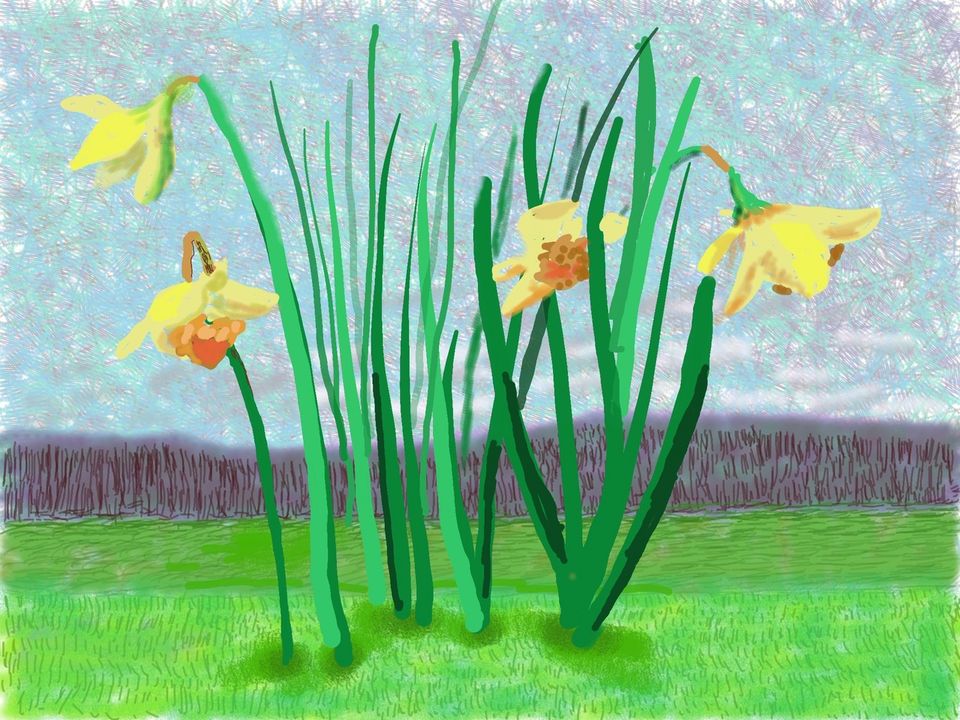
https://www.theartnewspaper.com/comment/a-message-from-david-hockney-do-remember-they-can-t-cancel-the-spring?fbclid=IwAR2iA8FWDHFu3fBQ067A7Hwm187IRfGVHcZf18p3hQzXJI8od_GGKQbUsQU

 Thoughts from the criminology team