
Home » Skills
Category Archives: Skills

Criminology in the neo-liberal milieu
I do not know whether the title is right nor whether it fits what I want to say, but it is sort of catchy, well I think so anyway even if you don’t. I could never have imagined being capable of thinking up such a title let alone using words such as ‘milieu’ before higher education. I entered higher education halfway through a policing career. I say entered; it was more of a stumble into. A career advisor had suggested I might want to do a management diploma to advance my career, but I was offered a different opportunity, a taster module at a ‘new’ university. I was fortunate, I was to renew an acquaintance with Alan Marlow previously a high-ranking officer in the police and now a senior lecturer at the university. Alan, later to become an associate professor and Professor John Pitts became my mentors and I never looked back, managing to obtain a first-class degree and later a PhD. I will be forever grateful to them for their guidance and friendship. I had found my feet in the vast criminology ocean. However, what at first was delight in my achievements was soon to be my Achilles heel.
Whilst policing likes people with knowledge and skills, some of the knowledge and skills butt up against the requirements of the role. Policing is functional, it serves the criminal justice system, such as it, and above all else it serves its political masters. Criminology however serves no master. As criminologists we are allowed to shine our spotlight on what we want, when we want. Being a police officer tends to put a bit of a dampener on that and required some difficult negotiating of choppy waters. It felt like I was free in a vast sea but restrained with a life ring stuck around my arms and torso with a line attached so as to never stray too far from the policing ideology and agenda. But when retirement came, so too came freedom.
By design or good luck, I landed myself a job at another university, the University of Northampton. I was interviewed for the job by Dr @manosdaskalou., along with Dr @paulaabowles (she wasn’t Dr then but still had a lot to say, as criminologists do), became my mentors and good friends. I had gone from one organisation to another. If I thought I knew a lot about criminology when I started, then I was wrong. I was now in the vast sea without a life ring, freedom was great but quite daunting. All the certainties I had were gone, nothing is certain. Theories are just that, theories to be proved, disproved, discarded and resurrected. As my knowledge widened and I began to explore the depths of criminology, I realised there was no discernible bottom to knowledge. There was only one certainty, I would never know enough and discussions with my colleagues in criminology kept reminding me that was the case.
Why the ‘neo-liberal milieu’ you might ask, after all this seems to be a romanticised story about a seemingly successful transition from one career to another. Well, here’s the rub of it, universities are no different to policing, both are driven, at an arm’s length, by neo liberal ideologies. The business is different but subjugation of professional ideals to managerialist ideology is the same. Budgets are the bottom line; the core business is conducted within considerable financial constraints. The front-line staff take the brunt of the work; where cuts are made and processes realigned, it is the front-line staff that soak up the overflow. Neo-Taylorism abounds, as spreadsheets to measure human endeavour spring up to aide managers both in convincing themselves, and their staff, that more work is possible in and even outside, the permitted hours. And to maintain control, there is always, the age-old trick of re-organisation. Keep staff on their toes and in their place, particularly professionals.
The beauty of being an academic, unlike a police officer, is that I can have an opinion and at least for now I’m able to voice it. But such freedoms are under constant threat in a neo-liberal setting that seems to be seeping into every walk of life. And to be frank and not very academic, it sucks!
Share this:


When will these issues be addressed?

In the realm of education, inclusivity and accessibility should be the foundation of any society aspiring for progress. However, in the case of special education schools in the United Kingdom, there exists a troubling narrative of systemic failings. Despite efforts to provide tailored education for students with diverse needs, the British educational system’s shortcomings in special education have cast a shadow over the pursuit of equal opportunities for all.
One of the main challenges facing special education schools in the UK is inadequate funding. These institutions often struggle with limited resources, hindering their ability to provide the necessary support for students with special educational needs. Insufficient funding results in larger class sizes, fewer specialized staff, and a lack of essential resources, all of which are detrimental to the quality of education these schools can offer. Furthermore, the heavy reliance on the UKs crumbling social care services and the overstretched NHS within special education settings exasperate poor outcomes for children and young people.
Special education students require a range of support services tailored to their individual needs. However, the inconsistency in the provision of support services across different regions of the UK is a glaring issue. Disparities in access to speech therapists, occupational therapists, and other essential services create an uneven educational landscape, leaving some students without the critical support they require to thrive.
Effective collaboration and communication between educators, parents, and support professionals are vital for the success of any special education school. Unfortunately, there is often a lack of seamless coordination. The lack of collaboration can and has result in fragmented support for the students, hindering their overall development and thus making it difficult to implement cohesive and effective educational plans.
The success of special education programs relies heavily on well-trained and empathetic educators. Unfortunately, the British educational system falls short in providing comprehensive training for teachers, working in special education schools. Many teachers express a lack of preparation to address the unique challenges posed by students with diverse needs, leading to a gap in understanding and effective teaching strategies. It is also important to note that many staff members that work within special education settings are not trained teachers, although they have been given the title of teachers. This further leads to inadequate education for children and young people. Moreover, post-covid has seen a high staff turnover within these settings. There have been many reports that have alluded to the notion that British schools are failing our children, but it seems that children from special education provisions are ignored, and families are dismissed when concerns are raised about the lack of education and preparation for the ‘real world’.
I am also critical of the overreliance of labelling students with specific disabilities. While categorization can be useful for designing targeted interventions, it can also lead to a narrow understanding of a student’s capabilities and potential. This labelling approach inadvertently contributes to stereotypes and stigmas, limiting the opportunities available to students with special needs….. There tends to be a focus on the troubling history of the way people with disabilities in the UK have been treated, but what I find interesting is there is a sense of disregard for the issues that are occurring in the here and now.
There is also a lack of special education provisions in the UK. This has led to many children with additional needs without a school place. And while a specific figure of the number of children being excluded from education has not been disclosed, West Northamptonshire, has awarded families over £49,000 over special education failings in 2023 (ITV, 2023). Furthermore, Education health care plan recommendations (EHCP) have not been followed within schools. These are legally binding documents that have been continuously dismissed which has led to further legal action against West Northants council in recent years (Local Government and Care Ombudsman, 2023).
The failings in special education schools have repercussions that extend beyond the classroom. Many students who leave these schools face challenges in transitioning to higher education, entering the workforce or living independently. The lack of adequately tailored support for post-education opportunities leaves these individuals at a disadvantage, perpetuating a cycle of limited prospects, which inevitably pull people with disabilities into a cycle of poor health and poverty (Scope, 2023). The disability employment gap in the UK is 29% and the average disabled household faces a £975 a month in extra costs (Scope, 2023) access to employment and financial independence is out of reach for disabled people due to failings within education because lack of preparation for life beyond school.
There needs to be reform in British schools from mainstream to special education. There are failings across the board. Adequate funding, improved teacher training, consistent support services, enhanced collaboration, and a shift away from overreliance on labelling are all crucial steps toward creating an inclusive educational environment. It is difficult to draw on optimism when the UK government continues to ignore age old concerns. This blog entry is to bring awareness to an issue, that may not be on your radar, but will hopefully get you to reflect on the copious barriers that people with disabilities face. Childhood should be a time when there is a fence built to protect children is schools. As we get older and face the challenges of the wider world, we should be equipped with some skills. Special education schools should not be used as a holding place until a child comes of age. There should be provisions put in place to give all young people an equitable chance.
Share this:


Proud to be kind
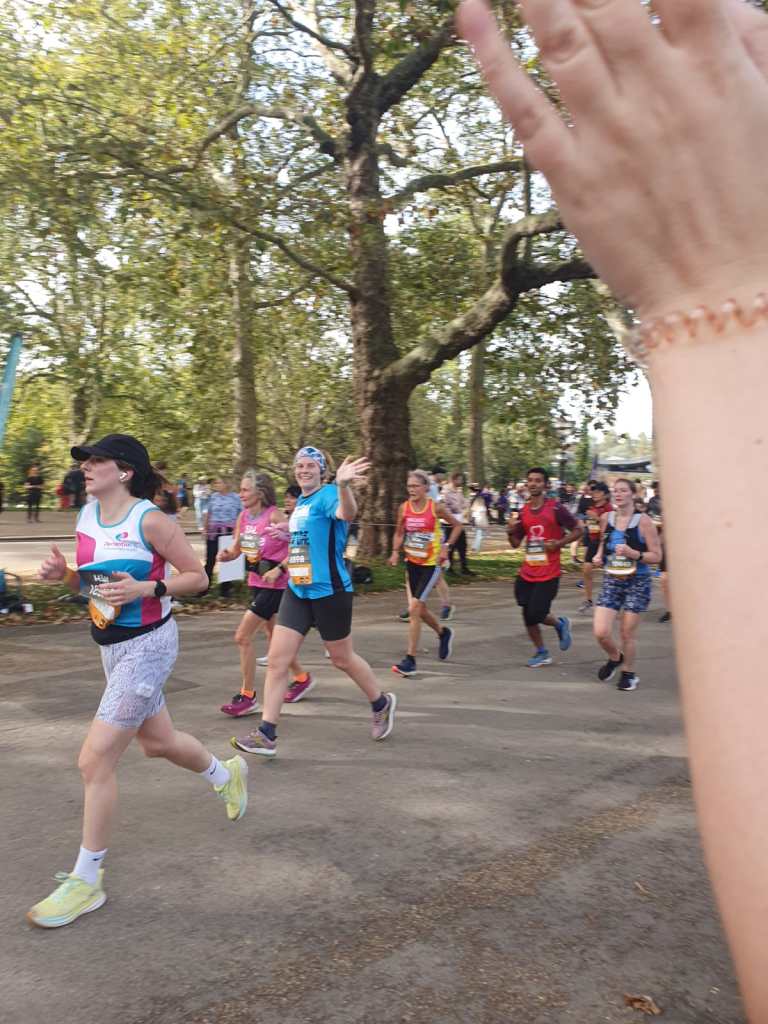
On Sunday 8th October 2023, I ran the Royal Parks Half Marathon to raise money for Freedom From Torture. It took 2hrs 11mins and 56 secs in 24 degree heat; 27 supporters who donated to Freedom From Torture to sponsor me; 5 friends who were with me on the day and kept my dehydrated spirits up; 30+ individual messages of support and encouragement on and before race day; countless well wishes and congratulations after the race; and £705 raised to rehabilitate and treat torture survivors.
The humanity and kindness shown by those who donated, checked in on me, wished me well and trained with me was overwhelming. £705 is an extraordinary amount of money and is going to make a huge difference to people’s lives who have run from torture, harm and unlawful persecution. Freedom From Torture offers, people who have experienced torture, safety and provides them with skills to be able to manage and overcome their trauma. Rooted in the foundations of this charity, and individuals that support it, is the notion of kindness, caring and wanting to live in a better world were our identities as humans are what transcends all conflict, hostility and harm in the world.
Sunday 8th October was an emotional day. Because of the focus on training (actually reaching 13.1miles/21.097km), my reasons for running and raising money for Freedom From Torture became, sort of, an afterthought- something that snuck up on me now and then rather than the focal fuel powering my legs! Even the steady influx of donations didn’t quite have the gravatas to let the reality sink in. That my silly (albeit very long) run is going to be positively impacting people’s lives! People who have experienced grave harms, displacement and social injustice. It wasn’t until the race began, where other charities and organisations were visible, being surrounded by other runners in their tops signifying who they were running for, where the enormity of the event, distance and possible impact this could have, hit home! Tears as the race begins.
Tears also followed after the race. Not to be too boastful but: I ran a half marathon! On a week where my chronic illness had seriously kicked my butt! Flash back to Thursday that week and I was concerned I wouldn’t make it to the race, let alone finish it! Once that wave of overwhelmingness passed, the next wave was not far behind. People I know and care for, and people I do not know, have banded together to support survivors of torture. Their donations will provide therapy, counselling, support for survivors of torture to manage their trauma and to be able to rebuild lives which had been destroyed. The people who donated and supported in all capacities have demonstrated incredible kindness, and the reality of what this money is going towards reduced me to yet another round of tears. But this time, tears of joy. Look what we can achieve! Look what we can do with kindness! Look what we can do when we lean on those around us!
Sunday 8th October 2023 will be a day I shall not forget. It is a day which I am immensely proud of. Not just of my running achievement, but the achievement of all those committed to making a change and providing support to those that need it. Thank you to everyone who has been with me on this journey to raise money to support survivors of torture: it couldn’t have been done without you!
Share this:


The True Crime Genre and Me

I have always enjoyed the true crime genre, I enjoyed the who dunnit aspect that the genre feeds into, I also enjoyed “learning” about these crimes, and why people committed them. I grew up with an avid interest in homicide, and the genre as a result. So, studying criminology felt like it was the best path for me. Throughout the three years, this interest has stayed with me, resulting in me writing my dissertation on how the true crime genre presents homicide cases, and how this presentation influences people’s engagement with the genre and homicides in general.
With this being my main interest within the field of criminology, it was natural that True Crime and Other Fictions (CRI1006) module in first year caught my attention. This module showed me that my interest can be applied to the wider study of criminology, and that the genre does extend into different areas of media and has been around for many years. Although this module only lasted the year, and not many other modules- at least of the ones that I took- allowed me to continue exploring this area, the other modules taught me the skills I would need to explore the true crime genre by myself. Something- in hindsight- I much prefer.
I continued to engage with the wider true crime genre in a different way than I did before studying criminology- using the new skills I had learnt. Watching inaccurate and insensitive true crime dramas on Netflix, watching YouTubers doing their makeup whilst talking about the torture of a young girl, podcasts about a tragic loss a family suffered intercut with cheery adverts. This acts as a small snapshot of what the genre is really like, whereas when I originally engaged with it, it was simple retellings of a range of cases, each portrayed in slightly different ways- but each as entertaining as the next. To me, I think this is where the genre begins to fall apart, when the creators see what they are producing as entertainment, with characters, rather than retellings of real-life events, that affects real people.
Having spent so much time engaging with the genre and having the skills and outlook that comes with studying criminology, you can’t help but to be critical of the genre, and what you are watching. You begin to look at the reasoning behind why the creators of this content choose to present it in such ways, why they skip out on key pieces of information. It all makes a bit more sense. Its just entertainment. A sensationalist retelling of tragic events.
Although studying criminology may have ruined how I enjoy my favourite genre of media, it also taught me so many skills, and allowed me to develop my understating in an area I’ve always been interested in. These skills can be applied in any area, and I think that is the biggest take away from my degree. Considering I now work as the Vice President of Welfare at the Students Union– and getting some odd looks when I say what my degree was- I have no regrets. Even if I walk away from my time at university and never use the knowledge I gained from my studies, I can walk away and know that my time was not wasted, as the skills I have learnt can be applied to whatever I do moving forward.
Share this:


Growth comes from discomfort

Getting closer to 30 has been really difficult. I had set goals for myself and I have not accomplished most of them.
I thought I had everything all planned out and I knew what I wanted. However, life comes at you fast. I honestly wonder how our parents made this look so easy.
The pandemic has also knocked us back a couple of years. Instead of focussing on goals and thinking about the future; we are simply trying our hardest to stay sane and survive each day. Remembering to breathe became the new main task. Making our mental health a priority has become the most important thing.
Trying to balance ‘living in the moment’ and thinking about the future is hard. My plans have changed so much over the last couple of years. I have more questions than answers. But I’m slowly learning not every question has to be answered straightaway.
The pressure I feel being a first generation immigrant is enormous. I believe that every generation has to show a level of socioeconomic improvement. Finding a way to achieve this, whilst in a foreign land is extremely overwhelming. You are constantly reminded close to each day that you are an outsider and you do not belong here.
Nonetheless, my mother did not work two jobs and not have any days off for me not to make it. This has always been my driving force. My mom always tells me I am being too hard on myself. She had the support from her relatives when she was home in our home country (Zimbabwe) and I don’t have the same luxury, as such I shouldn’t penalise myself for not achieving everything I want to achieve… yet. (The key word is ‘yet’). Just because it has not happened yet doesn’t mean it will not happen in the future. Delay does not mean denial.
Facing career challenges based on your race is a hard pill to swallow. Not knowing who to turn to for advice is even more frustrating. I used to think all women regardless of race would empathise and they would want to help. As we all have one struggle in common; being a woman. At least that should unify us… (so you would think). However, I have realised at times your level of ambition can be deemed as a threat. The same people might have experienced a glass ceiling can be the very same ones who add to your oppression because you are seen as ‘competition’. One of my mentors recently told me to relax in relation to my job searching as all institutions are not used to “aggressive job searches”. I find it pretty funny that the term “aggressive” will always be the main word used to describe Black people. How can a job search ever be aggressive?! Unless I’m standing outside your office threatening you to give me a job then yes, that’s aggressive. However, sending an email reminding a company to send me the new job specification they stated over the phone is not aggressive. In that moment, I knew she is an enemy of my progress.
I used to calculate my career progression based on if I have moved up to a certain level or my pay grade has increased. But I am starting to learn the skills I have acquired over the years are far more valuable. My confidence has grown incredibly. I have found my voice. That is something that cannot be taken from me. I am proud of my level of courage and perseverance. These are qualities not a lot of people have.
I am excited to see what 30 has in store for me. I have learnt so much. But there are a lot of skills I look forward to gaining in the upcoming years. I am slowly learning not to be so hard on myself.
Note to self – do not forget who you are… You are destined for greatness. Everything you want is coming. Do not compare your journey to others. Even if others are not willing to help you; there is always a way forward. Go back to the drawing board and restrategise. No one owes you anything. So do not expect anything from anyone.
“Remember diamonds are created under pressure so hold on, it will be your time to shine soon.” – Sope Agbelisi
Share this:


Meet the Team: Hannah Smith, Associate Lecturer in Criminology

Making that choice…
As semester two is now upon us, I thought it would be a nice time to introduce myself to you all.
My name is Hannah Smith and I started at UoN in 2015, although I began my degree in Criminology in 2014. I completed my first year at Sheffield Hallam University and then transferred to UoN to complete my final two years and graduated in 2017.
To be honest, when I graduated, I was not ready to give up studying. I enjoyed reading, analysing topics, and debating for hours in seminars. I really enjoyed Criminology as it gave me the passion to ask why and look deeper into issues. Because of this, I carried on my studies and completed a Master’s degree in International Criminal Law and Security at UoN, as I wanted to learn more about the legal aspects of certain areas such as migration and I felt this was a sensible step with my knowledge from Criminology.
Since graduating from my Master’s degree, I began an internship at a local anti-poverty charity where I learned lots about voluntary sector working, governance, as well as working on some of the matters we talked about a lot in Criminology. After a year, I decided to take a leap into the world of migration and began working for a regional organisation who works in partnership with the Home Office and local authorities. I spend my days challenging practices, influencing policy, and working to try and help people who experience isolation, victimisation, discrimination and much more resettle and integrate into the UK. I also joined the UoN Criminology team at the end of 2020 and support the team as an Associate Lecturer.
One thing I have learnt along my short career journey so far is that it is not always about having the bit of paper that counts. Don’t get me wrong, it helps to have it written down on your CV, but it ultimately is about what you do with it and what you do with the skills you develop along the way. I never thought that a Criminology degree would lead me to a career in migration, but each and every day I use the skills I gained. Being analytical, being able to have the confidence to have a debate, working on my own to deadlines, working in groups, presenting to professionals and lots more.
So, if there is any advice I could give to you, it would be to focus on what you want to get from your degree rather than where you want to be. I remember being asked ‘what do you want to do when you leave university’, which was so much pressure as I just didn’t know! But there is no harm in not knowing. I would say enjoy and embrace the moment you are in and also get stuck in. Try new things, challenge yourself and enjoy learning all the new concepts and ideas that come your way. Keep using those the skills that feel natural to you as these will just strengthen and challenge yourself with the ones that need some extra attention! Because one day it will help out and pay off. You won’t know when that will be until a time of reflection in a few years’, similar to my time of reflection right now.
& When that happens – I would love to see a blog from you on this page!
Look forward to seeing you all on campus this semester!

Share this:


Finding focus in office exile

I have now passed a year of being exiled from my office, separated from people for most of the time. A couple of weeks before the first lockdown I was working in another university and we had just a day or two notice to switch to online teaching. As a doctoral candidate I valued the flexibility of being able to work from home, in the office, and in overpriced coffee shops in Manchester’s Northern Quarter. The weather helped with the first lockdown. I would have virtual office working sessions with my colleagues in the criminology department in my garden. I thought I was coping but the reality was I was masking any fear, sadness and the effects of having no human contact. I was training two or three times per day, counting every calorie I ate. I lost a few pounds, got stronger, fitter and felt physically amazing.
We got some respite in the summer when lockdown restrictions were lessened. However, I lost a family member to Covid-19 and still felt unsure and anxious about going out so I didn’t make the most of it. I did have a couple of work sessions in my local library which was a welcome change of scenery. This was short lived as I currently live in Manchester and we have been in either lockdown or tier 3 restrictions for most of the last year. My saving grace was my gym. We had outdoor sessions, new members joined, and I got to see real people, albeit in socially distanced marked off squares of territory on the gym floor. Life was much better then. I left the house most days.
By December’s lockdown I was starting to struggle. With dark mornings and nights there would be days when I wouldn’t leave the front door. I went from training daily to training once or twice per week and some days I wouldn’t get any more than 2,000 steps in. For my, training is my anti-depressant. It keeps me sane, it keeps be focussed and it keeps me connected to a community of people who value it too. For me, this was a worrying sign.
Fast-forward to today, a year on from lockdown 1. I sit here in front of my laptop day in, day out, trying to concentrate, trying to find the perfect playlist to make me concentrate, taking nootropic supplements (legal, not the drugs), brain vitamins and high caffeine supplements to make me concentrate. I sit here researching symptoms and self-diagnosing ADHD. But really, I just need my office. I need an over-priced lemon and ginger tea, I need a commute, I need people, I need to get out of my living room. But I don’t need it at a cost of losing more lives to Covid-19 so I’ll sit in my living room and wait.
For now, as difficult as it is to focus, I manage. I just have to work harder than ever at it. So for all of our students who are also struggling, I will finish with some of my top tips but bear in mind we all learn differently so find what works for you.

Amy’s top study from home tips:
- Host virtual study sessions with colleagues. I have at least 2 sessions per week with a colleague. We start the session by saying hi and having some human interaction before stating our goals. We keep each other accountable by asking if our goals are achievable within the 2 hour frame and suggesting more specific goals. We then mute and work, coming back at the end of the 2 hours to hold one another accountable and share how we have done. I cannot emphasise enough how much this has helped me!
- Write a to do list each day and week with SMART goals. You’re better off having smaller goals that are achievable than bigger goals that are not
- Use the Pomodoro technique. Ordinarily this is 25 mins work followed by a 5 or 10 minute break. There are online tools and apps or you can set a timer. One of my supervisors recently suggested to me to reduce the working session to 15 minutes to account for my reduced concentration span. This is helping!
- Don’t have the same expectations on yourself as you ordinarily would. These are not ordinary times
- Work with your own mind. My brain works well early in the morning so sometimes I have my laptop open at 5.30am. I have friends that work late in the night. I also know I read well in the afternoon and I do my best thinking when I am on a solitary walk in nature
- Set yourself little goals with rewards. Currently, if I finish editing 5 pages I get an episode of Grey’s Anatomy or a cookie (bad idea) or a 10 minute browse on Instagram
- Lean on the resources available to you. At UoN our students are lucky to have a tonne of informative resources on Skills Hub (see the section on ‘How to Study’), our Learning Development team to help with academic skills, a mental health team who can help support mental wellbeing, and a whole host of other services. Ask for help and accept it when it is offered (this I need to work on)
- Listen to a focus playlist. My go to Spotify playlists are here and here
Share this:


Some lessons from the lockdown
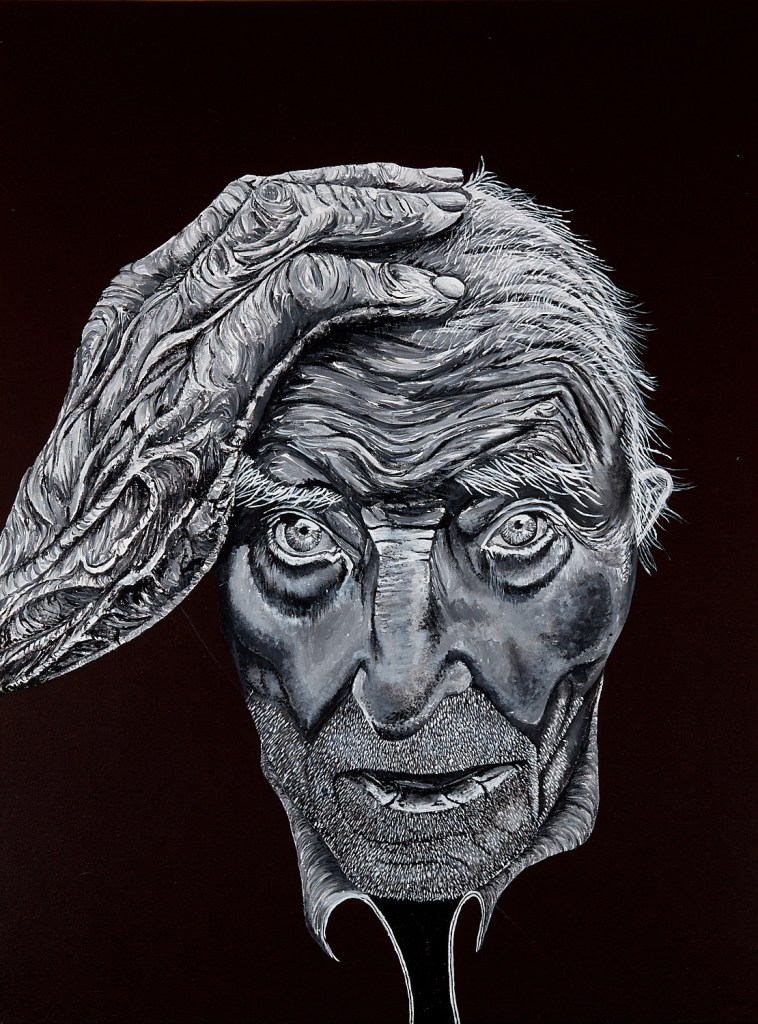
Koestler Arts (2019), Another Me: The Redwoods Centre (secure mental health unit), James Wood QC Silver Award for Portrait, 2019
In March 23, 2020, the UK went into lockdown. The advice given, albeit conflicting in parts, was clear. Do not leave your home unless absolutely necessary, banning all travel and social interactions. This unprecedented move forced people to isolate at home for a period, that for some people will come to an end, when the WHO announces the end of the pandemic. For the rest of us, the use of a face mask, sanitiser and even plastic gloves have become modern day accessories. The way the lockdown was imposed and the threat of a fine, police arrest if found outside one’s home sparked some people to liken the experience with that of detention and even imprisonment.
There was definite social isolation during the pandemic and there is some future work there to be done to uncover the impact it has had on mental health. Social distancing was a term added to our social lexicon and we discovered online meetings and working from home. Schools closed and parents/guardians became de facto teachers. In a previous blog entry, we talked about the issues with home schooling but suffice to say many of our friends and colleagues discovered the joys of teaching! On top of that a number of jobs that in the past were seeing as menial. Suddenly some of these jobs emerge as “key professions”
The first lesson therefore is:
Our renewed appreciation for those professions, that we assumed just did a job, that was easy or straightforward. As we shall be coming back eventually to a new normality, it is worth noting how easy it will be to assign any job as trivial or casual.
As online meetings became a new reality and working from home, the office space and the use of massive buildings with large communal areas seemed to remain closed. This is likely to have a future impact on the way business conduct themselves in the future.
Second lesson:
Given how many things had to be done now, does this mean that the multi occupancy office space will become redundant, pushing more work to be done from home. This will alter the way we divide space and work time.
During the early stages of the lockdown, some people asked for some reflection of the situation in relation to people’s experiences in prisons. The lockdown revealed the inequality of space. The reality is that for some families, space indicated how easy is to absorb the new social condition, whilst other families struggled. There is anecdotal information about an increase on mental health and stress caused from the intensive cohabitation. Several organisations raised the alarm that since the start of the lockdown there has been a surge in incidents of domestic violence and child abuse. The actual picture will become clearer of the impact the lockdown had on domestic violence in future years when comparisons can be drawn. None the less it reveals an important issue.
Third lesson:
The home is not always the safest place when dealing with a global pandemic. The inequality of space and the inequality in relationships revealed what need to be done in the future in order to safeguard. It also exposed the challenges working from home for those that have no space or infostructure to support it.
In the leading up to the lockdown many households of vulnerable people struggled to cope with family members shielding from the virus. These families revealed weaknesses in the welfare system and the support they needed in order to remain in lockdown. Originally the lack of support was the main issue, but as the lockdown continued more complex issues emerged, including the financial difficulties and the poverty as real factors putting families at risk.
Fourth lesson:
Risk is a wider concern that goes beyond personal and family issues. The lockdown exposed social inequality, poverty, housing as factors that increase the vulnerability of people. The current data on Covid-19 fatalities reveal a racial dimension which cannot longer be ignored.
During the lockdown, the world celebrated Easter and commemorated Mayday, with very little interaction whilst observing social distancing. At the end of May the world watched a man gasping for breath that died in police custody. This was one of the many times the term police brutality has related to the dead of another black life. People took to the streets, protested and toppled a couple of statues of racists and opened a conversation about race relations.
Fifth lesson:
People may be in lockdown, but they can still express how they feel.
So, whilst the lockdown restrictions are easing and despite having some measures for the time being, we are stepping into a new social reality. On the positive side, a community spirit came to the surface, with many showing solidarity to those next to them, taking social issues to heart and more people talked of being allies to their fellow man. It seems that the state was successful to impose measures that forced people indoors that borderline in totalitarianism, but people did accept them, only as a gesture of goodwill. This is the greatest lesson of them all in lockdown; maybe people are out of sight, appear to be compliant in general but they are still watching, taking note and think of what is happening. What will happen next is everyone’s guess.
Share this:


Who cares what I think?

Erzsébet Korb (1923) Girl’s Portrait (Thinker; Contemplation)
The other week, I went for a meal with a friend. The food was lovely, the staff and environment welcoming and friendly and company, fabulous. A couple of days later I was thinking about that evening and I wondered why I had not felt the need to write some positive feedback on google, or similar. The answer was because I felt that I and my dining companion, had expressed our pleasure both in word and deed (the plates were clean!). Thus, the relationship between diners and restaurant staff had been overwhelmingly positive and this had been expressed by both.
However, wherever we go nowadays, we are regularly confronted by requests for feedback; “how is my driving?”, “did you enjoy your meal?” “would you recommend our services to others”? Often these questions are accompanied by Likert scales, so we can record our opinion on almost everything. Sometimes we might take some time to consider the options, other times we might just tick random boxes, more usually (if I’m anything to go by) I just don’t engage with such requests. Despite their often-jolly appearance, these questions are not harmless, they have an impact, most usually to measure individuals’ performances.
Whether we engage with such requests or not, we do not question whether we are well-placed to judge. So, for instance, as a driver of probably one of the smallest cars on the market (that’s me!), I’m expected to be able to mark the driver of a lorry. Or someone, who has the cooking know-how of a small child (I speak for myself again!) is expected to form an opinion on a dish prepared by a trained chef, these questions are hardly fair. More importantly, my answers are meaningless; whilst I might respond “the lorry appeared to take the corner a bit wide”, I have neither knowledge or understanding of the turning circle of a 32-tonne lorry. Similarly, my thoughts about the heat of a Bangladeshi biryani or the sweetness of a mille-feuille is neither here nor there. Given I can neither drive a lorry nor cook these wonderful dishes, who am I to voice an opinion?
Of course, there are times when it is necessary to voice an opinion, the lorry driver is behaving in a dangerous manner liable to cause an accident, or the restaurant is serving rancid or rotten food; both scenarios likely to involve serious harm. However, these concerns would need to be raised immediately, either by alerting the police (in the case of the lorry) or the management of the restaurant. In the case of the latter, you may also feel it necessary to contact environmental health if you felt that your complaint had not been addressed or you had concerns about the hygiene of the restaurant in general. However, these types of problems are largely outside the feedback requested.
In many of the scenarios/environments we are asked to comment on, we are in a relationship with the other party. Take the restaurant; if I am friendly and polite to the staff, I can expect a reciprocal relationship. If I am rude and aggressive, is it any wonder staff behave in a different way. They are constrained by their professions to focus on customer service, but this should not lay them open to abuse. Whilst the old adage “the customer is always right” might be an excellent baseline, it is not possible for this always to be the case. As someone who has spent a previous lifetime working in retail, sometimes the customer can be obtuse, rude or even downright, ignorant and abusive. Adherence to such an adage, at all costs, can only open the way for abuse.
But what about those feedback forms? On a bad day, in a rash moment, or because I’m bored, I decide to complete one of these forms. The waiter kept me waiting, the food was too spicy, I didn’t like the feedback I was given on my job application, my essay was critiqued, my teeth haven’t been flossed regularly, I didn’t like the book recommended to me by the librarian or the book seller, I can’t believe my line manager has turned down my application for annual leave. I can easily demonstrate my unhappiness with the situation with a few judiciously placed ticks, circles or smiley/sad faces. Can I say the waiter, the chef, the HR professional, the lecturer, the dentist, the librarian, the book seller and my line manager are performing poorly? Can I say they are unprofessional, unprepared, untrained, lacking in knowledge or skills or just plain wrong? And if I do, is that fair or just? Furthermore, am I happy to be subject to the same judgement from people who do not share my experiences; professional or otherwise? Remember too much of this bad feedback, however flippant and lacking in evidence it may be, may lead to disciplinary action, including dismissal.
There is an oft-cited, albeit crude, truth: “Opinions are like arseholes; everyone has one”! Ultimately, whether we choose to share (either) in public is up to us! Think carefully before ticking those boxes and encourage others to do the same. Who knows, someone may well be ticking boxes about you!
Share this:

What are Universities for?

As we go through another welcome week it becomes quite apparent in conversations with new students that their motivation for coming to University and joining a course is not singular. Of course there are some very clear objectives that are shared across like the interest for the subject and the employability afterwards for underlying those there are so many different personal motivations and aspirations attached.
In the eyes of our new cohort, I can see a variety of responses, the eagerness to learn the joy of studying, the expectation of belonging and the anticipation of ordering their lives across the University life, just to name but a few.
In conversation, I see these attributes in a different light. “I want to belong but I am shy”, “I wish to learn but I am worried about learning” “I want to engage but I am concern with my writing”. This is the soft underbelly of becoming a student; because in education our own insecurities are playing up. These little devils, who rest on the back of the head of many people who doubt themselves and worry them.
One of the greatest fears I hear and see been rehearsed before me is that of intellectual ability. This is one of those issues that becomes a significant barrier to many people’s fear when joining a University course. Of course the intellectual level of study is high. There are expectations of the degree of knowledge a student will build on and the way they will be able to utilise that level of knowledge. After all a University is an institution of High Learning. The place where disciplines are explored in totality and subjects are taught holistically. Nevertheless the University is not the end of one’s education but rather the door to a new dimension of learning.
For myself and many of my colleagues what makes this process incredibly exciting is to see those eyes of the new students across the years brighten up, as they “get it” as the penny drops and they connect different parts of knowledge together. Once people reach that part of their educational journey realise that coming to University was not simply an means to an end but something beyond that; the joy of lifelong learning.
As this is a early session, I shall address the intellectual fear. The greatest skills that any student need to bring with them in class is patience and passion. Passion for the subject; this is so important because it will sustain during the long cold winter days when not feeling 100%. Patience is equally important; to complete the course, needs plenty of hours out of class and a level of concentration that allows the mind to focus. Any successful student can testify to the long hours required to be in the library or at home going over the material and making sense of some challenging material. This ultimately unravels the last of the requirements, that of perseverance. It is through trial and error, rising up to a challenge that each student thrives.
So for those who joined us this year, welcome. The door to an exciting new world is here, to those returning, we shall pick up from where we left off and those who completed, hopefully University has now opened your eyes to a new world.

 Thoughts from the criminology team