
Home » Shame
Category Archives: Shame
LET THEM EAT SOUP

Introduction
What is a can of soup? If you ask a market expert, it is a high-profit item currently pushing £2.30 (branded) in some UK shops[i]. If you ask a historian[ii], it is the very bedrock of organised charity-the cheapest, easiest way to feed a penniless and hungry crowd.
The high price of something so basic, like a £2.30 can of soup, is a massive conundrum when you remember that soup’s main historical job was feeding poor people for almost nothing. Soup, whose name comes from the old word Suppa[iii](meaning broth poured over bread), was chosen by charities because it was cheap, could be made in huge pots, and best of all could be ‘stretched’ with water to feed even more people on a budget[iv].
In 2025, the whole situation is upside down. The price of this simple food has jumped because of “massive economic problems and big company greed[v]. At the same time, the need for charity has exploded with food bank use soaring by an unbelievable 51% compared to 2019[vi]. When basic food is expensive and charity is overwhelmed, it means our country’s safety net is broken.
For those of us who grew up in the chilly North, soup is more than a commodity: it is a core memory. I recall winter afternoons in Yorkshire, scraping frost off the window, knowing a massive pot of soup was bubbling away. Thick, hot and utterly cheap. Our famous carrot and swede soup cost pennies to make, tasted like salvation and could genuinely “fix you.” The modern £2.30 price tag on a can feels like a joke played on that memory, a reminder that the simplest warmth is now reserved for those who can afford the premium.
This piece breaks down some of the reasons why a can of soup costs so much, explores the 250-year-old long, often embarrassing history of soup charity in Britain and shows how the two things-high prices and huge charity demand-feed into a frustrating cycle of managed hunger.
Why Soup Costs £2.30
The UK loves its canned soup: it is a huge business worth hundreds of millions of pounds every year[vii], but despite being a stable market, prices have been battered by outside events.
Remember that huge cost of living squeeze? Food inflation prices peaked at 19.1% in 2023, the biggest rise in 40 years[viii]. Even though things have calmed down slightly, food prices jumped again to 5.1% in August 2025, remaining substantially elevated compared to the overall inflation rate of 3.8% in the same month[ix]. This huge price jump hits basic stuff the hardest, which means that poor people get hurt the most.
Why the drama? A mix of global chaos (like the Ukraine conflict messing up vegetable oil and fertiliser supplies) and local headaches (like the extra costs from Brexit) have made everything more expensive to produce[x].
Here’s the Kicker: Soup ingredients themselves are super cheap. You can make a big pot of vegetable soup at home for about 66p a serving, but a can of the same stuff? £2.30. Even professional caterers can buy bulk powdered soup mix for just 39p per portion[xi].
The biggest chunk of that price has nothing to do with the actual carrots and stock. It’s all the “extras”. You must pay for- the metal can, the flashy label and the marketing team that tries to convince you this soup is a “cosy hug”, and, most importantly everyone’s cut along the way.
Big supermarkets and shops are the main culprits. They need a massive 30-50% profit margin on that can for just putting it on the shelf[xii]. Because people have to buy food to live (you can’t just skip dinner) big companies can grab massive profits, turning something that you desperately need into something that just makes them rich.
This creates the ultimate cruel irony. Historically, soup was accessible because it was simple and cheap. Now, the people who are too busy, too tired or too broke to cook from scratch-the working poor are forced to buy the ready-made cans[xiii]. They end up paying the maximum premium for the convenience they need most, simply because they don’t have the time or space to do it the cheaper way.
How Charity Got Organised
The idea of soup as charity is ancient, but the dedicated “soup kitchen” really took off in late 18th century Britain[xiv].
The biggest reasons were the chaos after the Napoleonic wars and the rise of crowded industrial towns, which meant that lots of people had no money if their work dried up. By 1900 England had gone from a handful of soup kitchens to thousands of them[xv].
The first true soup charity in England was likely La Soupe, started by Huguenot refugees in London in the late 17th Century[xvi]. They served beef soup daily-a real community effort before the phrase “soup kitchen” was even popular.
Soup was chosen as the main charitable weapon because it was incredibly practical. It was cheap, healthy and could be made in enormous quantities. Its real superpower was that it could be “stretched” by adding more water allowing charities to serve huge numbers of people for minimum cost[xvii].
These kitchens were not just about food; they were tools for managing poor people. During the “long nineteenth century” they often fed up to 30% of a local town’s population in winter[xviii]. This aid ran alongside the stern rules of the Old Poor Laws which sorted people into “deserving” (the sick or old) and the ‘undeserving’ (those considered lazy).
The queues, the rules, and the interviews at soup kitchens were a kind of “charity performance” a public way of showing who was giving and who was receiving, all designed to reinforce class differences and tell people how to behave.
The Stigma and Shame of Taking The Soup
Getting a free bowl of soup has always come with a huge dose of shame. It’s basically a public way of telling you “We are the helpful rich people and you are the unfortunate hungry one” Even pictures in old newspapers were designed to make the donors look amazing whilst poor recipients were closely watched[xix].
Early British journalists like Bart Kennedy used to moan about the long, cold queues and how staff would ask “degrading questions” just before you got your soup[xx]. Basically, you had to pass a misery test to get a bowl of watery vegetables, As one 19th Century writer noted, the typical soup house was rarely cleaned, meaning the “aroma of old meals lingers in corners…when the steam from the freshly cooked vegetables brings them back to life”[xxi].
For the recipient, the act of accepting aid became a profound assault on their humanity. The writer George Orwell, captured this degradation starkly, suggesting that a man enduring prolonged hunger “is not a man any longer, only a belly with a few accessory organs”[xxii]. That is the tragic joke here, you are reduced to a stomach that must beg.
By the late 19th Century, people started criticising soup kitchens arguing that they “were blamed for creating the problem they sought to alleviate”[xxiii]. The core problem remains today: giving someone a temporary food handout is just a “band-aid” solution that treats the symptom but ignores the real disease i.e. not enough money to live on.
This critique was affirmed during the Great Depression in Britain, when mobile soup kitchens and dispersal centres became a feature of the British urban landscape[xxiv]. The historical lesson is clear: private charity simply cannot solve a national economic disaster.
The ultimate failure of the system as the historian A.J.P. Taylor pointed out is that the poor demanded dignity. “Soup kitchens were the prelude to revolution, The revolutionaries might talk about socialism, those who actually revolted wanted ‘the right to work’-more capitalism, not it’s abolition[xxv]” They wanted a stable job, not perpetual charity.
Expensive Soup Feeds The Food Bank
The UK poverty crisis means that 7.5 million people (11% of the population) were in homes that did not have enough food in 2023/24[xxvi]. The Trussell Trust alone gave out 2.9 million emergency food parcels in 2024/2025[xxvii]. Crucially, poverty has crept deeper into the workforce: research indicates that three in every ten people referred to in foodbanks in 2024 were from working households[xxviii]. They have jobs but still can’t afford the supermarket prices.
The charities themselves are struggling, hit by a “triple whammy” of rising running costs (energy, rent) and fewer donations[xxix]. This means that many charities have had to cut back, sometimes only giving out three days food instead of a week[xxx]. The safety net in other words is full of holes.
The necessity of navigating poverty systems just to buy food makes people feel trapped and hopeless which is a terrible way to run a country[xxxi].
Modern food banks are still stuck in the old ways of the ‘deserving poor.’ They usually make you get a formal referral—a special voucher—from a professional like a doctor, a Jobcentre person, or the Citizens Advice bureau[xxxii].It’s like getting permission from three different people to have a can of soup.
Charity leaders know this system is broken. The Chief Executive of the Trussell Trust has openly said that food banks are “not the answer” and are just a “fraying sticking plaster[xxxiii].” The system forces a perpetual debate between temporary relief and systemic reform[xxxiv]. The huge growth of private charity, critics argue, just gives the government an excuse to cut back on welfare, pretending that kind volunteers can fix the problem for them[xxxv].
The final, bitter joke links the expensive soup back to the charity meant to fix the cost. Big food companies use inflation to jack up prices and boost profits. Then, they look good by donating their excess stock—often the highly processed, high-profit stuff—to food banks.
This relationship is called the “hunger industrial complex”[xxxvi]. The high-margin, heavily processed canned soup—the quintessential symbol of modern pricing failure—often becomes a core component of the charitable food parcel. The high price charged for the commodity effectively pays for the charity that manages the damage the high price caused[xxxvii]. You could almost call it “Soup-er cyclical capitalism.”
Conclusion
The journey from the 18th-century charitable pot to the 21st-century £2.30 can of soup shows a deep failure in our society. Soup, the hero of cheap hunger relief, has become too pricey for the people who need it most. This cost is driven by profit, not ingredients.
This pricing failure traps poor people in expensive choices, forcing them toward overwhelmed charities. The modern food bank, like the old soup kitchen, acts as a temporary fix that excuses the government from fixing the root cause: low income. As social justice campaigner Bryan Stevenson suggests, “Poverty is the parent of revolution and crime”[xxxviii]. No amount of £2.30 soup can mask the fact that hunger is fundamentally an issue of “justice,” not merely “charity”.
Fixing this means shifting focus entirely. We must stop just managing hunger with charity[xxxix] and instead eliminate the need for charity by making sure everyone has enough money to live and buy their own food. This requires serious changes: regulating the greedy markups on basic food and building a robust state safety net that guarantees a decent income[xl]. The price of the £2.30 can is not just inflation: it’s a receipt for systemic unfairness.
[i]Various Contributors, ‘Reddit Discussion on High Soup Prices’ (Online Forum, 2023) https://www.reddit.com/r/CasualUK/comments/1eooo3o/why_has_soup_gotten_so_expensive
[ii] Philip J Carstairs, ‘A generous helping? The archaeology of Soup Kitchens and their role in post-medieval philanthropy 1790-1914 (PhD Thesis, University of Leicester 2022) https://figshare.le.ac.uk/articles/thesis/A_generous_helping_The_archaeology_of_soup_kitchens_and_their_role_in_post-medieval_philanthropy_1790-1914/21187117?file=37564186
[iii] Soup – etymology, origin & meaning[iii] https://www.etymonline.com/word/soup
[iv] Philip J Carstairs, ‘A generous helping? The archaeology of soup kitchens and their role in post-medieval philanthropy 1790–1914’ (Summary, University of Leicester 2022)(https://figshare.le.ac.uk/articles/thesis/A_generous_helping_The_archaeology_of_soup_kitchens_and_their_role_in_post-medieval_philanthropy_1790-1914/21187117)
[v] ONS, ‘Food Inflation Data, UK: August 2025’ (Trading Economics Data) https://tradingeconomics.com/united-kingdom/food-inflation
[vi] The Trussell Group-End Of Year Foodbank Stats
https://www.trussell.org.uk/news-and-research/latest-stats/end-of-year-stats
[vii] GlobalData, ‘Ambient Soup Market Size, Growth and Forecast Analytics, 2023-2028’ (Market Report, 2023) https://www.globaldata.com/store/report/uk-ambient-soup-market-analysis/
[viii] ONS, ‘Consumer Prices Index, UK: August 2025’ (Summary) https://www.ons.gov.uk/economy/inflationandpriceindices
[ix] Food Standards Agency, ‘Food System Strategic Assessment’ (March 2023) https://www.food.gov.uk/research/food-system-strategic-assessment-trends-and-issues-impacted-by-uk-economic-condition
[x] Wholesale Soup Mixes (Brakes Foodservice) https://www.brake.co.uk/dry-store/soup/ambient-soup/bulk-soup-mixes
[xii] A Semuels, ‘Why Food Company Profits Make Groceries Expensive’ (Time Magazine, 2023) https://time.com/6269366/food-company-profits-make-groceries-expensive/
[xiii] Christopher B Barrett and others, ‘Poverty Traps’ (NBER Working Paper No. 13828, 2008) https://www.nber.org/system/files/chapters/c13828/c13828.pdf
[xiv] Philip J Carstairs, ‘A generous helping? The archaeology of soup kitchens and their role in post-medieval philanthropy 1790–1914’ (Summary, University of Leicester 2022)(https://figshare.le.ac.uk/articles/thesis/A_generous_helping_The_archaeology_of_soup_kitchens_and_their_role_in_post-medieval_philanthropy_1790-1914/21187117
[xv] Philip J Carstairs, ‘A generous helping? The archaeology of soup kitchens and their role in post-medieval philanthropy 1790–1914’ (Summary, University of Leicester 2022)(https://figshare.le.ac.uk/articles/thesis/A_generous_helping_The_archaeology_of_soup_kitchens_and_their_role_in_post-medieval_philanthropy_1790-1914/21187117
[xvi] The Soup Kitchens of Spitalfields (Blog, 2019) https://spitalfieldslife.com/2019/05/15/the-soup-kitchens-of-spitalfields/
[xvii] Birmingham History Blog, ‘Soup for the Poor’ (2016) https://birminghamhistoryblog.wordpress.com/2016/02/04/soup-for-the-poor/
[xviii] [xviii] Philip J Carstairs, ‘A generous helping? The archaeology of soup kitchens and their role in post-medieval philanthropy 1790–1914’ (Summary, University of Leicester 2022)(https://figshare.le.ac.uk/articles/thesis/A_generous_helping_The_archaeology_of_soup_kitchens_and_their_role_in_post-medieval_philanthropy_1790-1914/21187117
[xix] Journal Panorama, ‘Feeding the Conscience: Depicting Food Aid in the Popular Press’ (2019) https://journalpanorama.org/article/feeding-the-conscience/
[xx] Journal Panorama, ‘Feeding the Conscience: Depicting Food Aid in the Popular Press’ (2019) https://journalpanorama.org/article/feeding-the-conscience/
[xxi] Joseph Roth, Hotel Savoy (Quote on Soup Kitchens) https://www.goodreads.com/quotes/tag/soup-kitchens
[xxii] Convoy of Hope, (Quotes on Dignity and Poverty) https://convoyofhope.org/articles/poverty-quotes/
[xxiii] Philip J Carstairs, ‘A generous helping? The archaeology of soup kitchens and their role in post-medieval philanthropy 1790–1914’ (Summary, University of Leicester 2022)(https://figshare.le.ac.uk/articles/thesis/A_generous_helping_The_archaeology_of_soup_kitchens_and_their_role_in_post-medieval_philanthropy_1790-1914/21187117
[xxiv] Science Museum Group, ‘Photographs of Poverty and Welfare in 1930s Britain’ (Blog, 2017) https://blog.scienceandmediamuseum.org.uk/photographs-of-poverty-and-welfare-in-1930s-britain/
[xxv] AJ P Taylor, (Quote on Revolution) https://www.goodreads.com/quotes/tag/soup-kitchens
[xxvi] House of Commons Library, ‘Food poverty: Households, food banks and free school meals’ (CBP-9209, 2024) https://commonslibrary.parliament.uk/research-briefings/cbp-9209/
[xxvii] Trussell Trust, ‘Factsheets and Data’ (2024/25) https://www.trussell.org.uk/news-and-research/latest-stats/end-of-year-stats
[xxviii] The Guardian, ‘Failure to tackle child poverty UK driving discontent’ (2025) https://www.theguardian.com/society/2025/sep/10/failure-tackle-child-poverty-uk-driving-discontent
[xxix] Charity Link, ‘The cost of living crisis and the impact on UK charities’ (Blog) https://www.charitylink.net/blog/cost-of-living-crisis-impact-uk-charities
[xxxi] The Soup Kitchen (Boynton Beach), ‘History’ https://thesoupkitchen.org/home/history/
[xxxii] Transforming Society, ‘4 uncomfortable realities of food charity’ (Blog, 2023) https://www.transformingsociety.co.uk/2023/12/01/4-uncomfortable-realities-of-food-charity-power-religion-race-and-cash
[xxxiii] The Trussell Group-End Of Year Foodbank Stats
https://www.trussell.org.uk/news-and-research/latest-stats/end-of-year-stats
[xxxiv] The Guardian, ‘Food banks are not the answer’ (2023) https://www.theguardian.com/society/2023/jun/29/food-banks-are-not-the-answer-charities-search-for-new-way-to-help-uk-families
[xxxv] The Guardian, ‘Britain’s hunger and malnutrition crisis demands structural solutions’ (2023) https://www.theguardian.com/uk-news/commentisfree/2023/dec/27/britain-hunger-malnutrition->
[xxxvi] Jacques Diouf, (Quote on Hunger and Justice, 2007) https://www.hungerhike.org/quotes-about-hunger/
[xxxvii] Borgen Magazine, ‘Hunger Awareness Quotes’ (2024) https://www.borgenmagazine.com/hunger-awareness-quotes/
[xxxviii] he Guardian, ‘Failure to tackle child poverty UK driving discontent’ (2025) https://www.theguardian.com/society/2025/sep/10/failure-tackle-child-poverty-uk-driving-discontent
[xxxix] Charities Aid Foundation, ‘Cost of living: Charity donations can’t keep up with rising costs and demand’ (Press Release, 2023) https://www.cafonline.org/home/about-us/press-office/cost-of-living-charity-donations-can-t-keep-up-with-rising-costs-and-demand
[xl] The “Hunger Industrial Complex” and Public Health Policy (Journal Article, 2022) https://pmc.ncbi.nlm.nih.gov/articles/PMC9437921/
Share this:


8 Kids and Judging
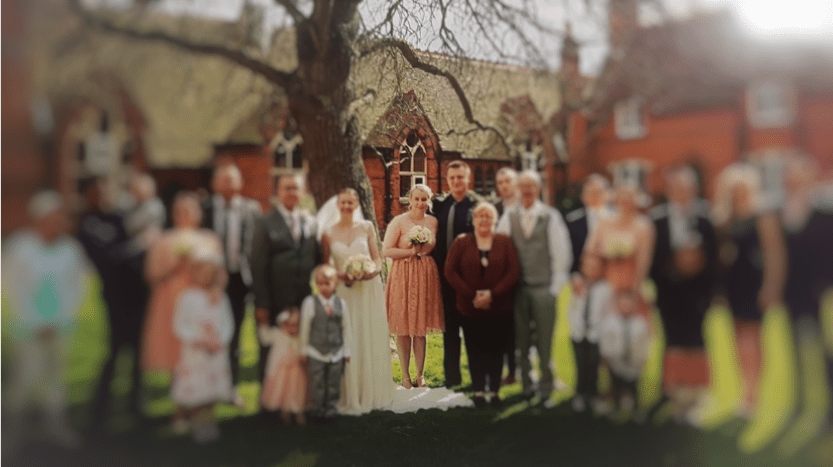
Written by @bethanyrdavies with contributions from @haleysread
Big Families are unique, the current average family size is 2.4 (Office for National Statistics, 2017) which has declined but remained as such for the past decade. Being 1 of 8 Children is unique, it’s an interesting fact both myself and Haley (also a former graduate and also 1 of 8) both fall back on when you have those awful ice breakers and you have to think of something ‘special’ about yourself.
There is criminological research which identifies ‘large families’ as a characteristic for deviance in individuals (Farrington & Juby, 2001; Wilson, 1975). It’s argued alongside other family factors, such as single-parent households, which maybe more people are familiar with in those discussions. In fact, when looking for criminological research around big families, I didn’t find a great deal. Most of what I found was not looking at deviance but how it affects the children, with suggestions of how children in big families suffer because they get less attention from their parents (Hewitt et al. 2011). Which may be the reality for some families, but I also think it’s somewhat subjective to determine an amount of time for ‘attention’ rather than the ‘quality’ of time parents need to spend with children in order to both help fulfil emotional and cognitive needs. This certainly was not the case from both Haley’s and experience.
When I first thought about writing this piece and talking to Haley about her experiences. I did question myself on how relevant this was to criminology. The answer to that I suppose depends on how you perceive the vastness of criminology as an academic field. The family unit is something we discuss within criminology all the time, but family size is not always the focus of that discussion. Deviance itself by definition and to deviate from the norms of society, well I suppose myself and Haley do both come from ‘deviant’ families.
However, from speaking with Haley and reflecting on my own experience, it feels that the most unique thing about being part of a large family, is how others treat you. I would never think to ask anyone or make comments such as; “How much do your parents earn to look after you all?” or “Did they want a family that big or was it lots of accidents?” or even just make comments, about how we must be on benefits, be ‘Scroungers’ or even comments about my parents sexual relationship. Questions and comments that both I and Haley have and occasionally still experience. Regardless of intent behind them, you can’t help but feel like you have to explain or defend yourself. Even as a child when others would ask me about my family, I had always made a point of the fact that we are all ‘full siblings’ as if that could protect me from additional shame , shame that I had already witnessed in conversations and on TV, with statements such as “She’s got 5 kids all different dads”. Haley mentioned how her view of large families was presented to her as “Those on daytime television would criticise large families” and “A couple of people on our street would say that my parents should stop having kids as there are enough of us as it is.”
Haley and I grew up in different parts of the UK. Haley grew up in the Midlands and describes the particular area as disadvantaged. Due to this Haley says that it wasn’t really a problem of image that the family struggled financially, as in her area everyone did, so therefore it was normal. I grew up in a quite affluent area, but similar to Haley, we were not well-off financially. My childhood home was a council house, but it didn’t look like one, my mum has always been house proud and has worked to make it not look like a council house, which in itself has its own connotations of the ‘shame’ felt on being poor, which Haley also referenced to me. It was hard to even think of labeling us as ‘poor’, as similar to Haley, we had loads of presents at Christmas, we still had nice clothes and did not feel like we were necessarily different. Though it appears me and Haley were also similar in that both our dads worked all the hours possible, I remember my dad worked 3 jobs at one point. I asked my dad about what it was like, he said it was very hard, and he remembers that they were working so hard because if they went bankrupt, it would be in the newspaper and the neighbors would see. Which I didn’t even know was something that happened and has its own name and shame the poor issues for another post. Haley spoke of similar issues and the stress of ‘childcare and the temporary loss of hot water, electric and gas.’
The main points that came from both mine and Haley’s discussions were actually about how fun it is to have a large family, especially as we were growing up. It may not seem like it from my earlier points around finance, but while it was a factor in our lives, it also didn’t feel as important as actually just being a part of that loving family unit. Haley put it perfectly as “I loved being part of a large family as a child. My brothers and sisters were my best friends”. We spoke of the hilarity of simple things such as the complexities of dinner times and having to sit across multiple tables to have dinners in the evening. I had brothers and sisters to help me with my homework, my eldest sister even helped me with my reading every night while I was in primary school. Haley and I both seemed to share a love for den making, which when your parents are big into DIY (almost a necessity when in a big family) you could take tools and wood to the forest and make a den for hours on end. There is so much good about having a large family that I almost feel sorry for those who only believe the negatives. This post was simply to share a snippet of my findings, as well as mine and Haley’s experience. At the very least I hope it will allow others to think of large families in an alternative way and to realise the problems both me and Haley experienced, weren’t necessarily solely linked to our family size, but rather attitudes around social norms and financial status.
References:
Juby, H. and Farrington, D., 2001. Disentangling the Link between Disrupted Families and Delinquency: Sociodemography, Ethnicity and Risk Behaviours. The British Journal of Criminology, 41(1), pp.22-40.
Office for National Statistics. (2017). Families and households in the UK, Available at: https://www.ons.gov.uk/peoplepopulationandcommunity/birthsdeathsandmarriages/families/bulletins/familiesandhouseholds/2017 (Accessed: 5th June 2020).
Regoli, R., Hewitt, J. and DeLisi, M., 2011. Delinquency In Society. Boston: McGraw-Hill Higher Education.
Wilson, H., 1975. Juvenile Delinquency, Parental Criminality and Social Handicap. The British Journal of Criminology, 15(3), pp.241-250.
Share this:


Empathy Amid the “Fake Tales of San Francisco”*

This time last week, @manosdaskalou and I were in San Francisco at the American Society of Criminology’s conference. This four-day meeting takes place once a year and encompasses a huge range of talkers and subjects, demonstrating the diversity of the discipline. Each day there are multiple sessions scheduled, making it incredibly difficult to choose which ones you want to attend.
Fortunately, this year both of our two papers were presented on the first day of the conference, which took some of the pressure off. We were then able to concentrate on other presenters’ work. Throughout discussions around teaching in prison, gun violence and many other matters of criminological importance, there was a sense of camaraderie, a shared passion to understand and in turn, change the world for the better. All of these discussions took place in a grand hotel, with cafes, bars and restaurants, to enable the conversation to continue long after the scheduled sessions had finished.
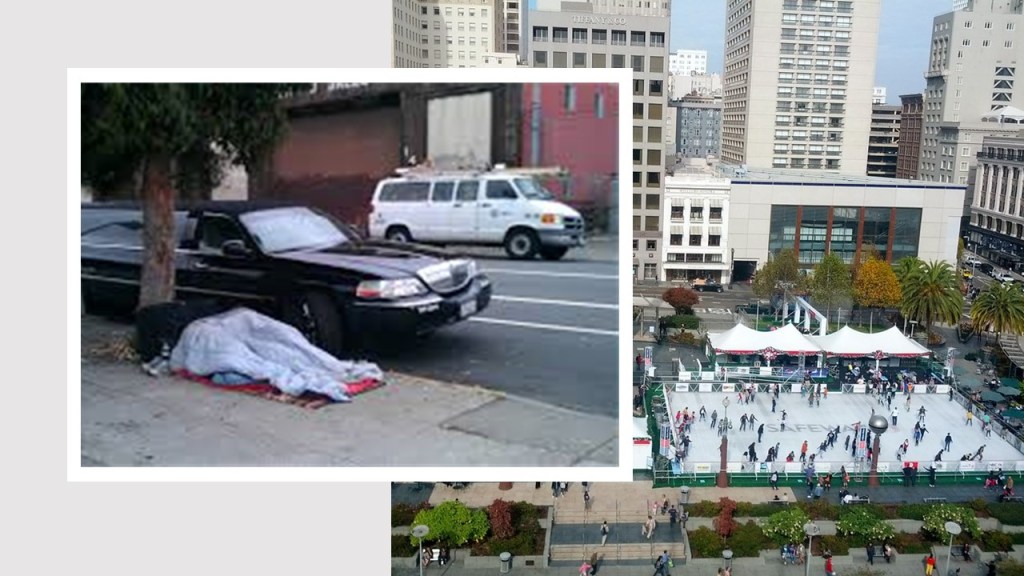
Outside of the hotel, there is plenty to see. San Francisco is an interesting city, famous for its Golden Gate Bridge, the cable cars which run up and down extraordinarily steep roads and of course, criminologically speaking, Alcatraz prison. In addition, it is renowned for its expensive designer shops, restaurants, bars and hotels. But as @haleysread has noted before, this is a city where you do not have to look far to find real deprivation.
I was last in San Francisco in 2014. At that point cannabis had been declassified from a misdemeanour to an infraction, making the use of the drug similar to a traffic offence. In 2016, cannabis was completely decriminalised for recreational use. For many criminologists, such decriminalisation is a positive step, marking a change from viewing drug use as a criminal justice problem, to one of public health. Certainly, it’s a position that I would generally subscribe to, not least as part of a process necessary to prison abolition. However, what do we really know about the effects of cannabis? I am sure my colleague @michellejolleynorthamptonacuk could offer some insight into the latest research around cannabis use.
When a substance is illegal, it is exceedingly challenging to research either its harms or its benefits. What we know, in the main, is based upon problematic drug use, those individuals who come to the attention of either the CJS or the NHS. Those with the means to sustain a drug habit need not buy their supplies openly on the street, where the risk of being caught is far higher. Thus our research population are selected by bad luck, either they are caught or they suffer ill-effects either with their physical or mental health.
The smell of cannabis in San Francisco is a constant, but there is also another aroma, which wasn’t present five years ago. That smell is urine. Furthermore, it has been well documented, that not only are the streets and highways of San Francisco becoming public urinals, there are also many reports that public defecation is an increasing issue for the city. Now I don’t want to be so bold as to say that the decriminalisation of cannabis is the cause of this public effluence, however, San Francisco does raise some questions.
- Does cannabis cause or exacerbate mental health problems?
- Does cannabis lead to a loss of inhibition, so much so that the social conventions around urination and defecation are abandoned?
- Does cannabis lead to an increase in homelessness?
- Does cannabis increase the likelihood of social problems?
- Does the decriminalisation of cannabis, lead to less tolerance of social problems?
I don’t have any of the answers, but it is extremely difficult to ignore these problems. The juxtaposition of expensive shops such as Rolex and Tiffany just round the corner from large groups of confused, homeless people, make it impossible to avoid seeing the social problems confronted by this city. Of course, poor mental health and homelessness are not unique to San Francisco or even the USA, we have similar issues in our own town, regardless of the legal status of cannabis. Certainly the issue of access to bathroom facilities is pressing; should access to public toilets be a right or a privilege? This, also appears to be a public health, rather than CJS problem, although those observing or policing such behaviour, may argue differently.
Ultimately, as @haleysread found, San Francisco remains a City of Contrast, where the very rich and the very poor rub shoulders. Unless, society begins to think a little more about people and a little less about business, it seems inevitable that individuals will continue to live, eat, urinate and defection and ultimately, die upon the streets. It is not enough to discuss empathy in a conference, no matter how important that might be, if we don’t also empathise with people whose lives are in tatters.
*Turner, Alex, (2006), Fake Tales of San Francisco, [CD]. Recorded by Arctic Monkeys in Whatever People Say I Am, That’s What I’m Not, The Chapel: Domino Records
Share this:


Thinking “outside the box”
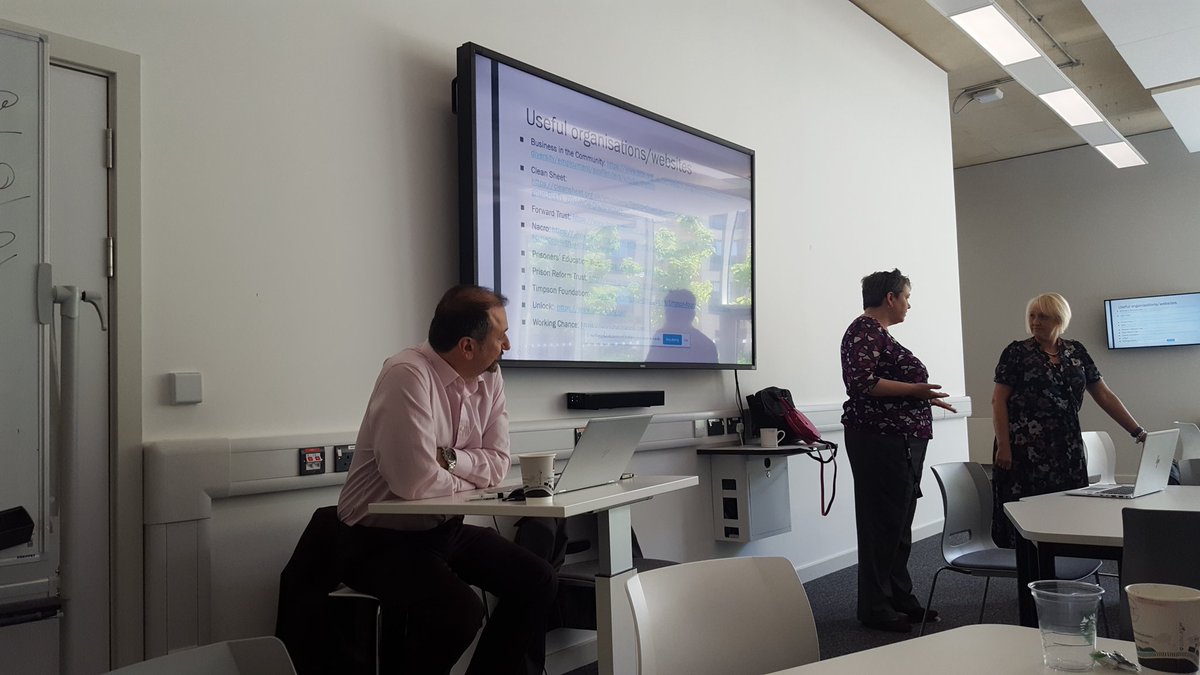
Having recently done a session on criminal records with @paulaabowles to a group of voluntary, 3rd sector and other practitioners I started thinking of the wider implications of taking knowledge out of the traditional classroom and introducing it to an audience, that is not necessarily academic. When we prepare for class the usual concern is the levelness of the material used and the way we pitch the information. In anything we do as part of consultancy or outside of the standard educational framework we have a different challenge. That of presenting information that corresponds to expertise in a language and tone that is neither exclusive nor condescending to the participants.
In the designing stages we considered the information we had to include, and the session started by introducing criminology. Audience participation was encouraged, and group discussion became a tool to promote the flow of information. Once that process started and people became more able to exchange information then we started moving from information to knowledge exchange. This is a more profound interaction that allows the audience to engage with information that they may not be familiar with and it is designed to achieve one of the prime quests of any social science, to challenge established views.
The process itself indicates the level of skill involved in academic reasoning and the complexity associated with presenting people with new knowledge in an understandable form. It is that apparent simplicity that allows participants to scaffold their understanding, taking different elements from the same content. It is easy to say to any audience for example that “every person has an opinion on crime” however to be able to accept this statement indicates a level of proficiency on receiving views of the other and then accommodating it to your own understanding. This is the basis of the philosophy of knowledge, and it happens to all engaged in academia whatever level, albeit consciously or unconsciously.
As per usual the session overran, testament that people do have opinions on crime and how society should respond to them. The intriguing part of this session was the ability of participants to negotiate different roles and identities, whilst offering an explanation or interpretation of a situation. When this was pointed out they were surprised by the level of knowledge they possessed and its complexity. The role of the academic is not simply to advance knowledge, which is clearly expected, but also to take subjects and contextualise them. In recent weeks, colleagues from our University, were able to discuss issues relating to health, psychology, work, human rights and consumer rights to national and local media, informing the public on the issues concerned.
This is what got me thinking about our role in society more generally. We are not merely providing education for adults who wish to acquire knowledge and become part of the professional classes, but we are also engaging in a continuous dialogue with our local community, sharing knowledge beyond the classroom and expanding education beyond the campus. These are reasons which make a University, as an institution, an invaluable link to society that governments need to nurture and support. The success of the University is not in the students within but also on the reach it has to the people around.
At the end of the session we talked about a number of campaigns to help ex-offenders to get forward with work and education by “banning the box”. This was a fitting end to a session where we all thought “outside the box”.
Share this:


The Bride of Frankenstein

The classic novel by Mary Shelley back in the early 19th century was an apocalyptic piece of work that imagined the future in a world where technology appeared to be a marvel that professes to make everyday people into gods. The creation of a man by a man (deliberately gendered) in accordance to his wishes, and morals. The metaphysical constraints of the soul seemingly absent, until all comes to head. This was dystopic, but at the same time philosophical, of the future of humanity.
In the 20th century John B. Watson believed that he could shape the behaviour of anyone, mostly children in any possible way. Some of his ideas even made it into popular psychology where he offered advice to parents of how to raise their children. Although no monster is mentioned, there is still the view that a man can shape a child in whatever way he chooses. A creationist and most importantly, arrogant view of the world.
Decades later Robert Martinson, a sociologist will look at all these wonderful and great programmes designed to challenge behaviours and change people, so they can rehabilitate leaving criminality behind. He found the results to be disappointing. In the meantime, child psychologists could not achieve this leap that Watson seem to think they could make in changing people.
In the 21st century we began to realise at a discipline level that forcing change upon people is rather impossible. How about a man creating a man? Can you develop a new human that will be developed espousing the creator’s desired attributes and thus become a model citizen? In recent years we have been talking about designer babies, gene harvesting and genetic modification. Such a surprising concept considering the Lebensborn experience during the Nazi regime. That super-man concept was shattered in thousands little pieces, and for many relegated to history books. Therefore, designer babies are such a cautionary tale.
As a society we are still curious on what can technology can achieve, how far can we go and what can we develop. Still in science there are seeds of creationism proposing ideas of that we can develop; a world of people without illness, disorder and deviance. Pure, healthy and potentially exceptional individuals who may be physiologically right but sadly devoid of humanity. Why devoid? Because what makes a person? Our imperfections, deviances and foibles. These add to, rather than substract from, our uniqueness and individuality.
In a recent twitter discussion one of my colleagues engaged in a discussion about the repatriation of one of those women called “Isis brides”. The colleague posed the question, why not allow her to return, only to receive in response, because these are no humans. As I read it I thought, well this is a new interpretation of the monster. A 21st century monster that we can chase out of the proverbial village with torches because its alive and it shouldn’t be. We can wish for people to be good to us, open armed and happy all the time, but that is not necessarily how it is. We know that this is the case and of course we want to be reminded of our humanity, not for the positives but for the negatives. Not what we can be but what the others are not. So, we can always be the villagers and never the monster.
Mary Shelley (1888) Frankenstein or The Modern Prometheus, London, George Routledge and Sons.
Share this:


Student support

I recently read Melanie Reynolds’s article in The Guardian ‘Working-class lecturers should come out of the closet,’ and it resonated with me. I was the first generation in my family to go to university and it was difficult. I grew up in a poor socio-economic position, received government allowances, there was a stigma to this, and unspoken expectation that you kept this hidden. When I turned 18 I moved out of home and went to university, from the start I was supporting myself. I worked in a pizza shop, a convenience store, a sandwich shop, and a call centre. I lived pay day to pay day. Starting university felt like learning a new language to me, it was a shock.
I remember one of my first assignments I handed in. I had to print it on lined foolscap paper because I didn’t have any printer paper and I couldn’t afford to buy any. It is all well and good to tell a student to be prepared – trust me I would’ve been if I had the money. This meant I couldn’t afford to print at university either (before the days of online submission!). But I also didn’t know how to print at the university at that stage and I didn’t want to let on to anyone that I didn’t know how, I already felt like I stood out. It seemed that everyone around me had this innate understanding of how everything worked. It seemed like a simple thing, but it was hard to ask for help.
Another time I lost my student card on the train and when I got on the bus to go to university the bus driver asked for it. He stayed at the stop while I literally went through every compartment in my bag looking for it, with everyone watching it just brought feelings of shame. I had to pay an adult fare in addition to the three-zone student fare I had already paid, and those couple of dollars extra made a big difference to me, considering I knew I would also need to replace my student card.
I didn’t feel like I belonged, I didn’t know anyone at university, I didn’t know what services were available, even if I did I would have felt like I was wasting their time – taking away time for ‘real’ students. It was difficult to watch other students be involved in activities and wonder how they found the time and the money. Being in law school made me feel like I didn’t dress right, didn’t talk properly, that I was not connected to the legal profession because no one in my family was a lawyer or judge, I was an impostor. It was very isolating.
What can I say to help – it will get better? That you’ll get over the feelings of impostor syndrome? It does get a little better, for me it took time, realising that I was not alone in these feelings, that many students had the same questions, and to build the confidence to speak up. There was a lot of pressure to succeed and this is something you need to manage.
I try to be open about my experiences with my students so that they may feel more comfortable approaching me with their issues. To me there are no stupid questions. One of my most disliked words is ‘just’ – ‘well you just do this’ the expectation that you’ll ‘just’ know. I don’t expect my students to ‘just’ know. When I ask students to tell me when they are having difficulties I truly mean it. This is my job and it is the university’s job to support you. Starting university can be overwhelming. So, remember students ALWAYS ask me for help, email, phone or in-person.
What can we do as educators? Universities and their staff need to be pro-active in connecting with students and providing assistance – not ‘do you need help?’ but ‘what can I do to help?’ We need to seek to bridge the gap and bring equity to our students, not just equality.
For all students there are support services available to you at the University of Northampton, please take advantage of them.

 Thoughts from the criminology team