
Home » Sexual offending (Page 2)
Category Archives: Sexual offending

The dance of the vampires

We value youth. There is greater currency in youth, far greater than wisdom, despite most people when they are looking back wishing they had more wisdom in life. Modernity brought us the era of the picture and since then we have become captivated with images. Pictures, first black and white, then replaced by moving images, and further replaced by colour became an antidote to a verbose society that now didn’t need to talk about it…it simply became a case of look and don’t talk!
The image became even more important when people turned the cameras on themselves. The selfie, originally a self-portrait of reclusive artists evolved into a statement, a visual signature for millions of people using it every day on social media. Enter youth! The engagement with social media is regarded the gift of computer scientists to the youth of today. I wonder how many people know that one of the first images sent as a jpeg was that of a Swedish Playboy playmate the ‘lady with the feathers’. This “captivating” image was the start of the virtual exchange of pictures that led to billions of downloads every day and social media storing an ever-expanding array of images.
The selfie, brought with it a series of challenges. How many times can you take a picture, even of the most beautiful person, before you become accustomed to it. Before you say, well yes that is nice, but I have seen it before. To resolve the continuous exposure the introduction of filters, backgrounds and themes seems to add a sense of variety. The selfie stick (banned from many museums the world over) became the equipment, along with the tripod, the lamp and the must have camera, with the better lens in the pursue of the better selfie. Vanity never had so many accessories!
The stick is an interesting tool. It tells the individual nature of the selfie. The voyage that youthful representation takes across social media is not easy, it is quite a solitary one. In the representation of the image, youth seem to prefer. The top “influencers” are young, who mostly like to pose and sometimes even offer some advice to their followers. Their followers, their contemporaries or even older individuals consume their images like their ‘daily (visual) bread’. This seems to be a continuous routine, where the influencer produces images, and the followers watch them and comment. What, if anything, is peculiar about that? Nothing! We live in a society build on consumption and the industry of youth is growing. So, this is a perfect marriage of supply and demand. Period!
Or is it? In the last 30 years in the UK alone the law on protecting children and their naivety from exploitation has been centre stage of several successive governments. Even when discussing civil partnerships for same sex couples, Baroness Young, argued against the proposed act, citing the protection of children. Youth became a precious age that needed protection and nurturing. The law created a layer of support for children, particularly those regarded vulnerable. and social services were drafted in to keep them safe and away from harm. In instances when the system failed, there has been public outrage only to reinforce the original notion that children and young people are to be protected in our society.
That is exactly the issue here! In the Criminology of the selfie! Governments introducing policies to generate a social insulation of moral righteousness that is predicated on individual – mostly parental – responsibility. The years of protective services and we do not seem to move passed them. In fact, their need is greater than ever. Are we creating bad parents through bad parenting or are people confronted with social forces that they cannot cope with? The reality is that youth is more exposed than ever before. The images produced, unlike the black and white photos of the past, will never fade away. Those who regret the image they posted, can delete it from their account, but the image is not gone. It shall hover over them for the eternity of the internet. There is little to console and even less to help. During the lockdown, I read the story of the social carer who left their job and opened an OnlyFans account. These are private images provided to those who are willing to pay. The reason this experience became a story, was the claim that the carer earned in one month of OnlyFans, more than their previous annual income. I saw the story being shared by many young people, tagging each other as if saying, look at this. The image that captures their youth that can become a trap to contain them in a circle of youth. Because in life, before the certainty of death there is another one, that of aging and in a society that values youth so much, can anyone be ready to age?
As for the declared care for the young, would a society that cares have been closing the doors to HE, to quality apprenticeships, a living wage and a place to live? The same society that stirs emotions about protection, wants young people to stay young so that they cannot ask for their share in their future. The social outrage about paedophiles is countered with high exposure to a particular genre in the movies and literature that promotes it. The vampire that has been fashioned as young adult literature is the proverbial story of an (considerably) older man who deflowers a young innocent girl until she becomes infatuated with him. The movies can be visually stunning because it involves the images of young beautiful people but there is hardly any mention of consent or care!
It is one of the greatest ironies to revive the vampire image in youth culture. A cultural representation of a male prototype that is manipulative, intruding into the lives of seemingly innocent young people who become his prey. There is something incredibly unsettling to explore the semiology of an immortal that is made through a blood ritual. A reverse Peter Pan who consumes the youth of his victims. The popularity of this Victorian literary character, originally conceived in the era of industrial advancement,at a time when modernity challenged tradition, resurfaces with other monsters at times of great uncertainty. The era of the picture has not made everyday life easier, and modernity did not improve quality of life to the degree it proclaimed. Instead, whilst people are becoming captivated by ephemera they are focused on the appearance and missing substance. An old experience man, dark, mysterious with white skin may be an appealing character in literature but in real life a someone who feeds on young people’s blood is hardly an exciting proposition.
The blood sacrifice demanded by a vampire is a metaphor of what our society requires for those who wish to retain youth and save their image into the ether of the cyberworld as a permanent Portrait of Dorian Gray. In this context, the vampire is not only a man in power, using his privilege to dominate, but a social representation of what a consumer society places as the highest value. It is life’s greatest irony that the devouring power of a vampire is becoming a representation of how little value we place on both youth and life! A society focused on appearance, ignoring the substance. Youth looking but not youth caring!
Share this:


The Color Purple, The Musical: What in the Misogynoir?!

TW: mentions of rape, child rape, racism, and misogynoir.
Alice Walker’s novel The Color Purple is a story loved around the world. So, when I saw that it was adapted to stage and touring the UK, my interest was peaked just enough to consider a visit to my local theatre the Royal & Derngate in Northampton. A Curve and Birmingham Hippodrome co-production, it came to Northampton in the first week of October. Largely, audiences that frequent my local theatre are overwhelmingly white – thus, watching The Color Purple it was a joy to my heart to hear Black people in my community engaging with the arts, because the last time I heard so many Black people attended, was for Our Lady of Kibeho as part of the R&D’s Made in Northampton season. This dates back to 2019, a production I reviewed for The Nenequirer showing that Northampton(shire) arts has work to do.
Social media platforms like Twitter and Instagram showed me the pretty unanimous positive praise for the Leicester-Birmingham co-production, while local critics also enjoyed it – including reviews from The Chronicle & Echo and The Nenequirer as well as further reviews by The Real Chris Sparkle and Northampton Town Centre BID. However, there were elements of the show that caused me great distress, no less than the perpetuation of misogynoir and racist stereotypes against Black men. It was deeply triggering, showing how historical trauma and vicarious trauma are ever present, including when white organisations have not done the work of protecting Black mental health when producing “Black-centred media.”
At the head of this cast, Me’sha Bryan gives a knockout performance as Celie (previous played by Whoopi Goldberg in the film) accompanied by Aaliya Zhané as Nettie, with Bree Smith as Shug Avery, and brilliant musical numbers grounded in the traditions of blues music that finds its origins in the trauma of enslaved Africans in the American South. They sang when “they got the blues” … and as far as performance and the commitment from the cast, I couldn’t ask for better.
However, whilst I have praised the musical numbers above, I did not believe it fitted with the tones of The Color Purple curating a rift between what the actors were saying and doing on stage, and the intonations of the music – as well as the lighting design. And despite the directorial position deciding the rape of a child wasn’t musical material (rightly so), the choice to have it as a passing detail with no further discussion, I found particularly off-key. This is one of the moments that highlights that The Color Purple may not have been musical material and better considered as a serious drama. I did not walk away feeling that bleak, much ado with contradictory lighting choices to character moods. The characters were feeling one away and lights did something else. By the by, rather than skip over the rape to maintain “the musicalness”, it may have been more effective to have done this story as a stage drama (with musical elements, if at all). The horrors depicted at the beginning of the novel are pretty nonexistent in musical.
So, this recent adaptation was a disappointment. Not from an acting point of view but behind-the-scenes pre-production elements like direction. The start of story includes a fourteen year-old who births two children after being raped by her father. So, the amount of trauma that exists around child sexual abuse and rape appear unconsidered when they glossed over these parts of the story. Furthermore, I do question if they consulted with any survivors when doing research for this adaptation. A ‘sensitivity consultant’ would not have gone amiss either, further to considerations of intersectionality and how cultural nuances in global, but still different Black communities, will be interpreted by white people, especially in provincial Little England.
Blown away by the musical abilities of the cast, stage productions (like much art) are often labelled as “escapist” so is not afforded the same criticality as for example – policing, education, sport and so on – we are all guilty of this and we can do better. This may be art; there were no redeeming Black characters, and Black men calling Black women “ugly” (written into the script) in full face of a white audience is cultural violence. In Northampton, the large white audience laughed at this example of ableist misogynoir, and in many ways this production felt to be played up for white audiences. Lots of white people are not used to seeing Black people as full human beings, and I do feel the play draws out our humanity. And by proxy centres white comfort with a Black aesthetic reinforced by white supremacy in media.
Disability justice activist Talia Lewis has released definitions of ableism every year since 2019. In January 2022, she discussed ableism as a violent social discourse that values people’s bodies and minds according to societally constructed ideas of “normalcy, productivity, desirability, intelligence, excellence and fitness …” Lewis (2022) states that these ideas are embedded in other violent discourses such as eugenics, capitalism, misogyny and white supremacy. The adaptation of these characters is only part of this debate, where another part may want to consider how this play has informed everpresent white superemacism pervasive across Northamptonnshire. It may impact how local white audiences may view Black people when they perceive that in this cultural text – ‘this is how Black people talk and act around each other.’
“This systemic oppression leads to people and society determining people’s value based on their culture, age, language, appearance, religion, birth or living place, “health/wellness”, and/or their ability to satisfactory re/produce, “excel” and “behave.” You do not have to be disabled to experience ableism.”
Talia Lewis (2022)
In Homegrown (hooks and Mesa-Bains, 2017), bell hooks tell us “We have to constantly critique imperialist white supremacist patriarchal culture because it is so normalized by mass media and rendered unproblematic. The products of mass media offer the tools of the new pedagogy.” Theatre is no different to films, literature or television programmes. Watching the musical, it struck me how the numbers of people who haven’t done the work of unlearning their own white supremacy would be impacted by such an adaptation (yes, as we know all humans can reproduce these isms but in a global western context, however, white supremacy has put white people on the top of that racial hierarchy).
One instance of misogynoir and ableism was underpinned by the three Black women singers (their character names escape me) who were written as Sassy Black Women inherently “comedifying” Black womanhood. Brilliant singers, but were written lazily reinforcing a damaging cultural media narrative that diminishes the three-dimensional personhoods of Black women. This was offered with no alternative. The Hypersexual Jezebel (named after the “sinful” Biblical character) appears in numbers of characters while Sofia was written as the Strong Black Woman. Black men were then written as violent, comedic relief, illiterate, and other harmful stereotypes, and domestic abuser Mr Albert is redeemed to the sound of musical harmonies and joyful lighting.
At a Northampton level, the critics from local media revisited a culture of uncritically discussing art. Stories aren’t just stories but a product of the society that created them, and we are a society that finds it easier to challenge the criminal justice system than it does liberal arts institutions, in spite of both having a say in how Black people are viewed and treated. Despite “Black theatre” not being genre, we need more shows at the Derngate that centre Blackness in Britain. And whilst commissioning and hosting shows about ‘Black issues’ is not evidence of an anti-racist commitment, it would be nice to see more shows locally about Black people in the UK by Black people.
When we do get “Black stories”, they so often centre the US, most recently The Color Purple (Oct, 2022) and Two Trains Running (Sept, 2019) – denying local audiences a context for Blackness within the United Kingdom, while recentring American Blacknesses is gaslighting through art. In November, Dreamgirls centring American Blackness is coming to the Derngate. A co-production between The Curve and the Birmingham Hippodrome, this adaptation of The Color Purple was deeply problematic on many levels that local white critics may not have picked up on because of their whiteness – drawn in by a spectacle of a “Black show”, viewed through a white gaze that is unused to talking about white supremacy as a political structure.
The white audience for these misogynoir tropes specifically – largely one of laughter – reminded me of the white gaze, with white laughter as eased white supremacy. Whiteness continues to pervade through ‘acceptable racism’ where serious digs made at Black people in-text laughed at by white people may show how white people may think about Black people in designated white spaces. A Black man seriously calling a Black woman ugly and a white audience laughing at that is incredibly revealing – a comfortableness in spaces coded as white … and how white people may act when thinking and talking about Black people in private (i.e in spaces coded as culturally white and desgined to their comfort).
“I grew up in a culture of bantering and, ngl, I love a caustic riposte. And while in certain ways I resent the current policing of language, there is a distinction. I hate to break it to you, but a “joke” in which the gag is that the person is black isn’t a joke, it’s just racism disguised as humor. A joke told to a white audience where the punch line is a racist stereotype isn’t a joke, again it’s just racism; if there is only one black person present, it’s also cowardly and it’s bullying. Jokes of this nature probably aren’t funny for black people.”
Emma Dabiri (2021: 98)
Art imitating life is one thing, but when life imitates art is another. White laughter at Black people in cultural media texts goes back to the days when blackface was on the BBC (until 1978). To see this platformed by a local arts institution then profiting from it, is revealing of how whiteness is performed and profited from, when white people think they’re not being watched. Creatives have a responsibility and so do those institutions that platform them.
Myself and fellow blogger @haleysread discuss this further in our prior entries about the scandal surrounding Jimmy Carr and Netflix. On that October evening, being one of the few Black people in the audience, it was incredibly uncomfortable. To consider art uncritically is to be entertained from a vantage point of privilege (or ignorance). Attending with my friend, to see unanimous positive feedback from the public made us feel a way, no less than from many Black people. We must always be critical; being critical is not the same as criticising, and those who are critical only take the time to be so because we care.
It is not about individual actors but about the lack of critique of institutional platforming in producing “art” that goes on to cause harm. Another fellow blogger Stephanie @svr2727 talked about misogynoir and the media in her recent webinar with the Criminology Team and Black Criminology Network. Violent mistakes in arts productions show a need not for more historical consultants, but sensitivity readers and empathy viewers. One cannot teach empathy, you either have it or you do not. Extending this gaze to screen media texts as well like Bridgerton and others, it is a further reminder that social scientists are needed at the very top of media … especially those of us that research about race, racism, and other forms of violence.
These cultural texts are rehearsed, edited, and considered by multiple hands before any public audience sees them. So, why are we still having to challenge? Simple: misogynoir, ableism, and whiteness are institutionalised and normalised socially and culturally into our day-to-day practice. No less than in “liberal” arts institutions.
“Nothing but a circus, with clowns and all.” – Malcolm X
Share this:


Looking in all the wrong places and finding no answers
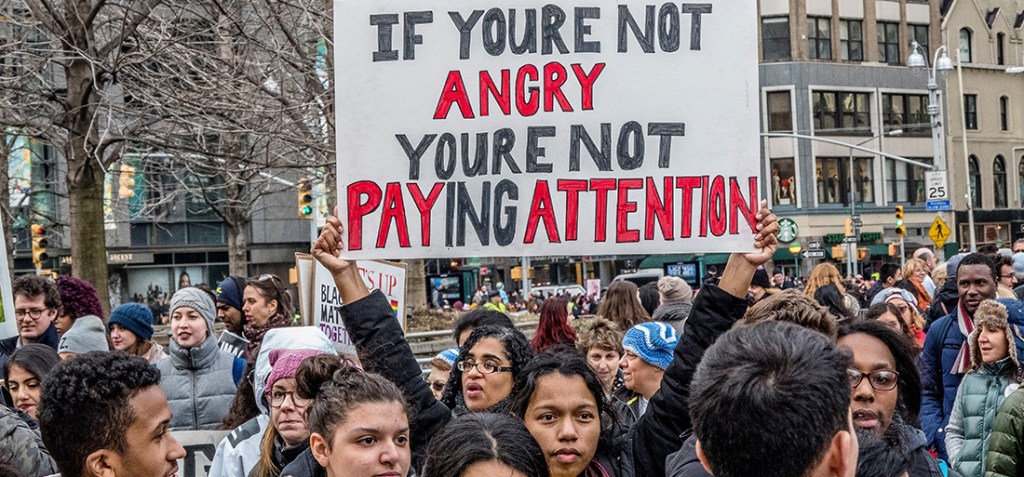
Recently we saw the killer of Sarah Everard receive a whole life sentence for her murder and with the sentence came the usual rhetoric from the politicians and media alike. I could tell you how I feel as a former police officer, but I just don’t think that really matters, others have said it but what they say, undoubtedly with conviction, seems rather hollow. What matters is that another life has been taken as a result of male violence, not just violence, male violence. I don’t disagree with those that want to make the streets safe for women, reclaim the streets, I don’t disagree with the ‘me too movement’, but somehow, I feel that the fundamental issue is being missed. Somehow, I think that all the rhetoric and calls for action concentrate too much on women as victims and looking for someone or some organisation to blame. There seems to be a sense created that this is a problem for women and in doing so concentrates on the symptoms rather than the cause. This is a problem for men and our society. Let’s not dress it up, pretend it could be something else, use terms like ‘not all men’, it is a fact nearly all violence, whether that be against women or men is perpetrated by … you guessed it, men.
I was watching a tv programme the other day about migraines and as it transpires there are millions of migraine sufferers around the world, most are women. It seems as a man I’m in the minority. One of the interviewees, a professor was asked why so little had been done in terms of research and finding a cure. He was frank, if it had been a male problem then there would have been more done. I’m not sure I totally subscribe to that because there are lots of other factors, after all prostate cancer a major cause of male deaths seems to have received comparatively little coverage until recently. But he made me think, if men, particularly those of influence accepted there was a problem would they be inclined to act? We call for more females in policing, we call for more females in the boardroom, predominately because we want to make things look a little fairer, a bit more even. We still have a massive gender pay gap in so many businesses and the public sector, we still have accusations and proven cases of sexual harassment. We still have archaic attitudes to women in so many walks of life, including religion. Words are great, useless but great. If you own the problem, you find solutions, men don’t own the problem and that is a problem.
So, it seems to me, that we are looking in the wrong place. Removing Cressida Dick as the head of the Metropolitan Police service isn’t going to change things. Blaming the police as an organisation isn’t going to change things. Look around you, look at all the scandals, all the sexual offences against women, against children. Look at where the perpetrators are placed in society, in positions of trust, as members of a variety of organisations, organisations that traditionally we thought we could turn to in our need. And look at the gender of those that commit those crimes, almost always men.
The solution to all of this is beyond me. As a criminologist I know of so many theories about why people commit crime or are victims of crime. Some are a little ridiculous but are a product of their time, others fit quite nicely into different circumstances, but none fully explain why. There are no real certainties and predicting who and where is almost impossible. Somehow, we need our leaders, predominately men, to grasp the mettle, to accept this a problem for men. If we owned the problem, we might start to tackle the causes of male violence, whatever they might be. Maybe then we might start to address the symptoms, society will be a safer place, and nobody will need to reclaim the streets.
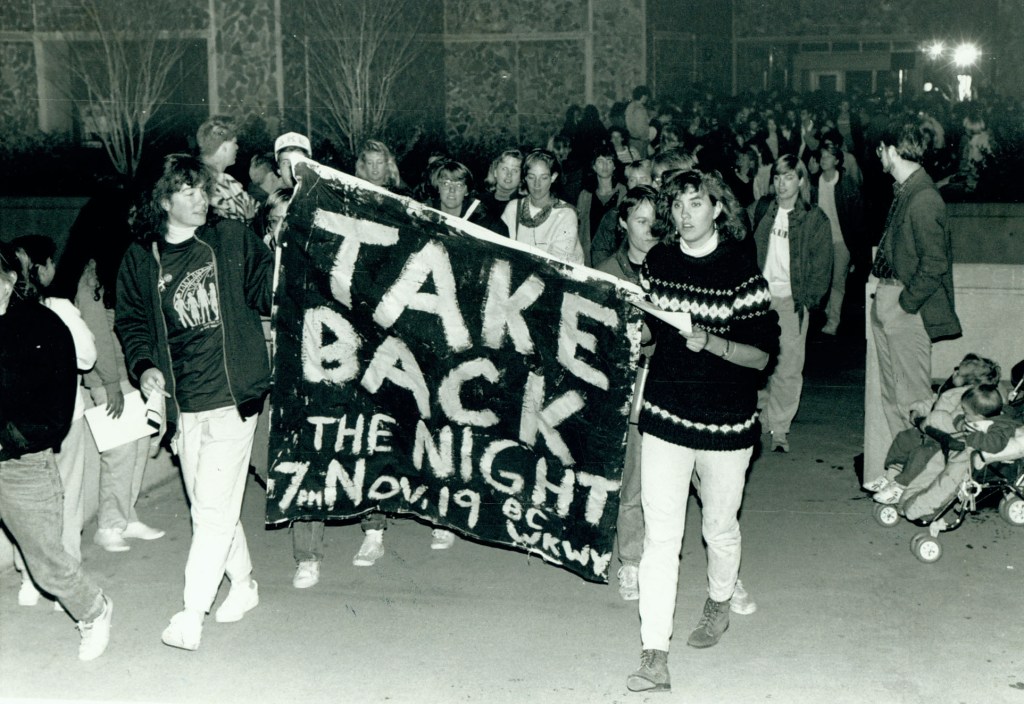
https://www.theloquitur.com/get-educated-and-be-aware-sexual-assault-will-affect-your-life/
Share this:


Do we have to care?

In recently published The end-to-end rape review report on findings and actions the responsible minister admitted that “victims of rape [are] being failed”. This stark admission is based on data that indicates that the current situation on dealing with rape is far worst than 5 years ago. The ministers are “ashamed” of the data but luckily in their report they offer some suggestions on how to improve things; what to do to bring the conviction rates to the 2016 level and to move more cases forward for trial, leading to successful convictions. At that point, the report presents the Criminal Justice System [CJS] as a singular entity that needs to address the issue collectively. This, in part, is a fair assessment although it ignores the cultural differences of the constituent parts of the system. Nonetheless, the government has identified a problem, commissioned a report and has a clear “ambitious” plan of how to address it.
The report indeed presents some interesting findings and I urge people to review it whenever they can (https://www.gov.uk/government/publications/end-to-end-rape-review-report-on-findings-and-actions). We know for example already that the number of cases that went into prosecution were low; in the last years this has become even lower. That despite the prevalence rate remaining more or less the same. Victims report that they are treated poorly, not believed arguing that the investigative model needs changing. No wonder the ministers appear apologetic of the situation. A headline crime category that is likely to cause an uproar and whilst thinking of the political fallout they come out in support of the victims! Who wouldn’t? Supporting a victim of crime, any crime is one of the main objectives of the CJS; once they have handed out retribution and prioritised on making an example of specific crimes and focusing on particular criminals, then their focus is on the victims! The findings were expected, but even so when reading about the higher vulnerability of disabled women to rape and sexual abuse, underscores the systemic failure to deal with this crime. It does not read like care!
If I was an agitator, I would say that a criminal committing rape has less chance (statistically) to be convicted than someone who commits theft; but then I will be making a criminological cardinal sin; conflating criminalities and confusing the data. In our profession we deal with data all the time. Many of them come in the form of metrics looking at the way different crimes are reported, recorded etc. We also know that context gives a perspective to these data. Numbers may look the same, but that is arguably part of the problem. It does not take into account the source of the data and their circumstances. Not all numbers are the same and most importantly they do not measure similar trends. The way the success rates are to be measured is not dissimilar from before and without owning a magic ball, it can be foreseen that rape will remain as is. Of course, the metrics may change colour to signal improvement, but that will not alter the fundamental issues.
On the day, one may have their car broken into, to report the incident can be a requirement from their insurance if they are to cover the cost. On the day, the said person got raped by a current/former partner the matter is not about insurance. These acts are not similar and to treat criminality as a singularity draws up uneven comparisons. In this case we have a list of recommendations trying to ameliorate the bad metrics. What are the recommendations? The focus is again on the police and the Crime Prosecution Service [CPS] and the court experience the victims will have. Again, indicates that these institutions have been criticised before for similar failings. The change of practices in the police does not go as far as exploring the institutional culture. The CPS’s requirement to do more is tied with the successful cases they will prosecute. The need for the two organisations to work together more closely has been a discussion point for the last 20 years; as for the better experience in courts, it is definitely welcomed but in recent years, Victim Support as an organisation was stripped bare, the additional services cut and the domestic violence shelters disappearing. The call for more services was continuously met with the offer of voluntary organisations stepping in, into such a complex area to provide help and support. One may think that if we are to prioritise on victim experience these services may need to become professional and even expand the current ones.
Lastly in this document the tone is clear; the focus yet again is reactionary. We have some bad data that we need to change somehow; we have got some clear action plans and we can measure them (as the report intimates) at regular times. This approach is the main problem on dealing with rape! It does not offer any interventions prior to the crime. There is nothing to deal say with rape culture, the degradation of women, the inequality and the rape myths that women are still subjected to. Interestingly there are mention of empathy toward the rape victim but there is not a plan to instil empathy for people more widely. No plan to engage the educational system with respect for the other (whoever the other is; a woman, a person of colour, disability, different origin) regarding sexual behaviours. The report tenuously mentions consent (or lack of understanding it) instead of making plans how it can be understood across. Unfortunately, this crime reveals the challenges we face in the discipline but also the challenges we face as a society that has traded care for metrics and the tyranny of managerialism.
Share this:


Reflecting on International Women’s Day
On International Women’s Day I wanted to write a blog to celebrate the incredible women who have inspired me, supported me, fought for the rights of women all over the world both past and present. Perhaps that post will come but I felt sadness and anger, rage that made me want to shout and swear from the rooftops that feminism is not done. Gender equality has not been completed. We may have advanced a few levels, but patriarchy is still alive and free right here in England as well as throughout the world. The reality is that gender equality is a myth. Ordinarily I’m more hopeful and positive and maybe the pandemic combined with finishing my PhD is pushing me over the edge. But as well as celebrating International Women’s Day I wanted to identify some of the areas in which there is work to do, both in the UK and worldwide.
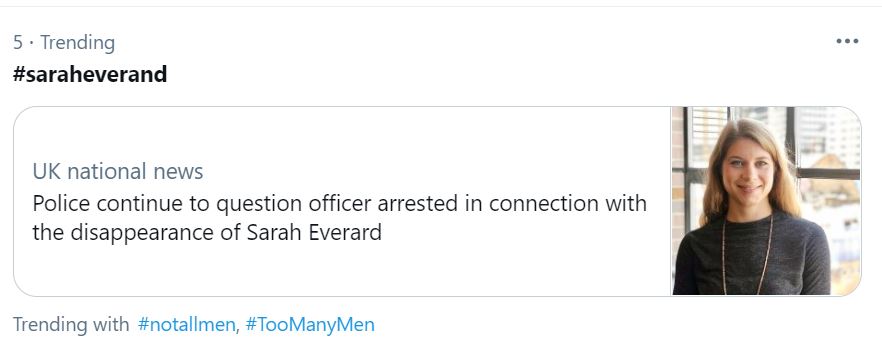
On the week of International Women’s Day, the media has been filled with women, but not for the right reasons. Let us start with the interview broadcasted on International Women’s Day with Megan Markle and Prince Harry which highlighted not only her position as a woman but also the intersectionality of being a woman of colour in the royal family and the implications of this. The interview was responded in an appalling manner by Piers Morgan who questioned her experience of feeling suicidal which was then reflected on social media (never read the comments!!!). A woman’s experiences with mental health were questioned and ridiculed. Not long after the tragic death of Caroline Flack, people – including many other women – have forgotten to #bekind. The investigation over the disappearance of Sarah Everard was responded to by the Met police advising women in the local area not to go out at night, perpetuating a culture of victim blaming. A woman’s actions were being questioned. So here we are in 2021 with our internal thoughts and emotions and our external actions being judged by others. When women have spoken out about our right to feel safe walking home at night, about how we walk the long way home and hold a key between our fingers for protection, #notallmen resurfaces on Twitter, in a similar tone to #alllivesmatter last year. When one group renews a call for equality, the patriarchs and supremacists oppress harder. These are just a couple of examples in the media, the public domain, this week but there is also clear inequality in domestic life.
Throughout the pandemic there have been numerous reports suggesting that women have disproportionately undertaken childcare which has had a devastating impact, particularly for single mothers. While data from the Office for National Statistics shows that home schooling is distributed equally in mixed sex couples, women have undertaken substantially more of non-developmental childcare – the bathing, bedtime routine, feeding etc. I recall the days of being a working single parent with a small child. With no after school club and no family available to chip in, I relied on childcare swaps, a childminder (who I couldn’t afford to pay more than a couple of days per week). It was a case of beg, borrow or steal whatever childcare I could get to get to work and would often miss lectures because I didn’t have any childcare (note to students – if you have childcare responsibilities and are struggling please do not hesitate to drop me an email. I have almost a decade of experience juggling kids with studies and I am always happy to share tips or just have a mutual rant about how hard it is!). I cannot imagine how I would have managed with the pandemic if my children were younger. I am lucky enough to work in a team where my colleagues don’t bat an eyelid when my teenager pops her head in asking for food or help with schoolwork but I do have friends telling me how their male counterparts have given them advice on how to juggle virtual meetings with parenting small children. Men (not all men – some men are excellent allies) having no clue how hard women have to fight as women to do it all – the career, the childcare, the housework, all while earning less than our male counterparts (currently 15.5% less). Of course the data on equal pay is complex but the bottom line is we get paid less, it’s harder to advance our careers because as we live in the bodies that produce babies and we have career breaks when we take maternity leave or go part time while the children are young – the only way that can change is if we choose not to have kids and we are criticised for that too!
I have so far established that the UK is hostile in the media and not equal in the home and employment but where do we sit globally? It was placed 21st on the Global Gender Gap Index 2020. Do you think you could guess which countries are higher than the UK? Go on, spend a minute and write down who you would expect to be in the top 20. Of course, there are the countries one might expect – Iceland is top of the list, Norway, Finland and New Zealand too. But let’s throw a curveball in there. Albania. Having worked with and interviewed many female Albanian asylum seekers and refugees who have usually fled Albania due to at least one but often many forms of gendered violence this comes as quite a surprise to me. Of course, I have a biased experience and have only come into contact with those who have had devastating experiences of patriarchy in the country. Rwanda is up there too within the top 10. Not long after the devastating genocide in Rwanda where women were brutally raped as a weapon of war (see here for a cheeky plug and an analysis of sexual violence in conflict in a different geographical context). Today, women make up half of the politicians in the country. Women have risen up and have taken power. In the UK I look at the female politicians in power today and in recent years and I recoil in horror. Priti Patel is probably (barring the Queen) the most powerful female politician in England. I witness first hand in my work with asylum seekers the harm she causes every day. Intentional harm, following in Theresa May’s footsteps to create a hostile environment for migrants. These women are not the people I want to look up to, or want my children to look up to. In fact, one of the few shared interests my daughter and I have is our disdain for these women.
The women I do look up to are those asylum seekers Patel and her band of merry men at the Home Office are trying to repel. Those who have fled situations that I, as a middle class white woman cannot even begin to comprehend. All the women who I have interviewed in my doctoral research had either fled gendered violence including forced and child marriage, domestic abuse, sex trafficking and honour violence; or their gender had intersected with other forms of persecution making their living situation untenable because they were women. They fled life or death situations to the point of leaving their homes, families and countries because their governments could not, or would not, protect them. They arrive in the UK and are faced with the hostile environment conjured by May and continued by Patel and both the Home Secretaries in between. They face structural violence in the forms of forced poverty, illegal detention, substandard and sometimes dangerous accommodation perpetrated under the mandate of women. All the while being vilified by the tabloids and swathes of the public. Some of my participants arrived here as children and were bullied in school because they were asylum seekers, being told that they were taking jobs and money. The bullies could not comprehend that they were prohibited by law from working and were given £5 per day to live on. They then hid their identities, never telling anyone that they were an asylum seeker, lying to their friends about why they couldn’t go on college trips abroad, why they couldn’t have a bank account, why they couldn’t get a job or go to university.
I want to celebrate Amira* who defied the odds. She came here when she was in her early teens, knowing just a few words of English. She worked hard to learn the language and passed her GCSEs and A-levels, gaining a competitive Sanctuary scholarship which funded her university education. I want to celebrate Drita, an Eastern European woman who was physically abused by her father as a child, forced to marry an abusive man who eventually left her destitute with three children. She then left her children with her parents while she sought work, got a boyfriend who sold her into sex slavery, set her room on fire to kill herself but managed to escape, picked up her children and fled a lifetime of gendered violence from every man she had ever met. She spent 2 days in a lorry with her children to get to the UK. Not really the UK, she would have gone anywhere, just out of her country to safety. These women are survivors. These women fought to stay alive. They fought to escape. They didn’t escape. They arrived here to face May’s legacy of a hostile environment. These women are terrified every time they have to report to the Home Office, every letter they get threatens them with detention and deportation and reminds them that they or on bail, literally equating them with a process usually found in the criminal justice system. These women are heroes and should be celebrated for surviving. On International Women’s Day yes, let us celebrate all that all we have achieved so far but it cannot end here. Each year we need a renewed call for action for women.
*All names are pseudonyms to protect the anonymity of participants
Share this:


“Things you need to know about criminology”: A student perspective – Natalie Humphrey, 1st Year student

We are all living in very strange times, not sure when life will return to normal...but if you're thinking about studying criminology, here is some advice from those best placed to know!

The most important module to my understanding of criminology is: At the beginning of the year I believed the True Crime module to be the most important in understanding why crimes are caused. However, I quickly learned that these are not always the best source of information! The Science module is the basis of Criminology in the first year, laying down where it emerged, with Lombroso and Bertillon. I believe these figures are important to understand to grasp criminology.


The academic criminology book you must read:
The SAGE dictionary of Criminology has helped me with the basics of the subject. If there was something I became stuck on, this book would usually have an explanation for it. It also has examples which make it much easier to apply

The academic journal article you must read:
Attitudes towards the use of Racial/Ethical Profiling to Prevent Crime and Terrorism, by Johnson, D et al.(2011)
I came across this article when researching my Independant Project on racial stereotyping. It goes into the systematic racism that black people face and how disproportionate racism truly is. With more recently, the George Floyd case, this is still a very prominent article that is true to date

The criminology documentary you must watch:
I am a lover of many true crime documentaries and am always first to watch the new one that has been added to Netflix! The famous ones, such as Ted Bundy’s confession tapes, are fascinating to me, Bundy especially. However, there are many injustices that need to be addressed, not just the notorious serial killers. Jeffrey Epstein’s new documentary is very important in understanding sexual abuse that happened to over 200 underage girls. Athlete A also shows the sexual abuse of underage girls who were part of USA gymnastics.

The most important criminologist you must read:
Becker stood out to me this year as a very important figure. Understanding how young people are so heavily influenced by the labels people and society give, so much so it can shape their lives. Even older people can be easily labelled. This was quite surprising to me at the beginning of my studies.

Something criminological that fascinates me:
DNA and fingerprinting are fascinating to me. I find the science behind the discovery of what occurred at a crime scene and how they unpick it very interesting. This is definitely something I would like to study further.

The most surprising thing I know about criminology is:
It is a much wider subject than I first thought, it involves so much more than you could imagine. It questions everything in society.

The most important thing I've learnt from studying criminology is:
I have learned how unjust our criminal justice system is and how much, we as individuals, stereotype every person we meet. I’ve become more aware of this and have a better understanding of what needs to change.

The most pressing criminological problem facing society is:
Racism is a massive problem today. The racism black people face, especially in the US, is hard to understand as a white woman, but difficult to even contemplate people are treated in such ways. George Floyd, as I mentioned before, was killed because of his race. Problems like this would not happen to a white male, especially when his alleged crime was not violent. Young black men are labelled by the media to be seen as a thug and dangerous, causing many to be assumed of acts they just would not commit. Jane Elliott’s experiment on racism and eye colour from the 1970s is still a lesson that needs to be learned today!

When family and friends ask, I tell them criminology is:
Its more than it seems. Most just think it's about crime, which yes it is, but there is so much more to it. It is not one subject, it is so many put together. Science, psychology, sociology for example.

Share this:


“A small case of injustice”

Pride as a movement in the UK but also across the world signals a history of struggles for LGBTQ+ community and their recognition of their civil rights. A long journey fraught with difficulties from decriminalisation to legalisation and the eventual acceptance of equal civil rights. The movement is generational, and in its long history revealed the way social reactions mark our relationship to morality, prejudice, criminalisation and the recognition of individual rights. In the midst of this struggle, which is ongoing, some people lost their lives, others fell compelled to end theirs whilst others suffer social humiliation, given one of the many colourful pejoratives the English language reserved for whose accused or suspected for being homosexuals.
This blog will focus on one of the elements that demonstrates the relationship between the group of people identified homosexual and the law. In sociological terms, marginalised groups, has a meaning and signals how social exclusion operates against some groups of people, in these case homosexuals but it does apply to any group. These groups face a “sharper end” of the law, that presumably is equal to all. This is the fallacy of the law; that there are no inherent unfairness or injustice in laws. The contention for marginalised groups is that there are presumptions in the law on purported normality that disallows them to engage fully with the wider community in some cases forced to live a life that leads all the way to segregation.
Take for example “entrapment”. Originally the practice was used by law enforcement officers to identify counterfeit money, later to investigate the sales of untaxed tobacco or the use of unlicensed taxis. The investigation in law allows for the protection of the public, non uniform officers to pose as customers in order to reveal criminalities that occur in the dark corners of society. The focus predominantly was to protect consumers and the treasury from unpaid tax. So, from that how did the law enforcement officers use it to arrest homosexuals? It is interesting to note we can separate the letter of the law as opposed to the spirit of the law. This distinction is an important one criminologically whilst for the law enforcement agencies evidently there is no such distinction.
The most recent celebrity case led to the arrest of George Michael in Los Angeles, US; the operation led to the outing of the artist and his conviction. As a practice across many years, entrapment played a significant part in the way numerous homosexuals found themselves arrested given a criminal record, loss of employment and in some cases ending up in prison. It is important to note that prior to the Sexual Offences Act of 1967, the biggest sexual crime in England and Wales was that of homosexuality (recorded as indecency or buggery). It took decades for that statistic to change, although historically remains still the highest category.
The practice of entrapment employed by the police demonstrates the uphill struggle the LGBTQ+ community faced. Not only they had to deal with social repulsion of the wider community that detested, both their practices and their existence, but also with public officials who used entrapment to criminalise them. This was happening whilst the professionals were divided about the origins of homosexual “anomaly” and how to deal with it, the practice of entrapment added new convictions and supplied more humiliation to those arrested. For the record, the criminological community was split along theoretical lines on this; the classicists such as Bentham argued for the decriminalisation of sodomy whilst the positivists namely Lombroso considered homosexuals to be in the class of moral criminals (one of the worst because they are undeterred) .
The issue however is neither theoretical, nor conceptual; for those who were aware of their sexuality it was real and pressing. During the post WWII civil rights movement, people started taking note of individual differences and how these should be protected by privacy laws allowing those who do not meet the prescribed “normal” lifestyles to be allowed to live. It emerged that people who were successful in their professional lives, like Alan Turing, John Forbes Nash Jr, John Gielgud etc etc, found themselves facing criminal procedures, following string operations from the police. This injustice became more and more evident raising the profile of the change in the law but also in the social attitudes.
In 2001 Lord Nicholls of Birkenhead addressed the issue of entrapment head on. In his judgement in Regina v Looseley:
“It is simply not acceptable that the state through its agents should lure its citizens into committing acts forbidden by the law and then seek to prosecute them for doing so. That would be entrapment. That would be a misuse of state power, and an abuse of the process of the courts. The unattractive consequences, frightening and sinister in extreme cases, which state conduct of this nature could have are obvious. The role of the courts is to stand between the state and its citizens and make sure this does not happen.”
This was the most damming condemnation of the practice of entrapment and a vindication for all those who faced prosecution as the unintended consequence of the practise. For the record, in 2017 under the Policing and Crime Act, included the “Alan Turing law” that pardoned men who were cautioned or convicted for historical homosexual acts. The amnesty received mixed reviews and some of those who could apply for denied doing so because that would require admission of wrongdoing. The struggle continues…
Regina v Looseley, 2001 https://publications.parliament.uk/pa/ld200102/ldjudgmt/jd011025/loose-1.htm
Share this:


Rocket Scientist (Ode to those real-life really Hidden Figures all around us) #BlackenAsiaWithLove
Rocket scientist.
Let’s face it. When most of us read those words,
We ‘see’ a man in our mind’s eye.
The so-called smartest job on earth belongs solely to women men.
What if those dreams kids dreamed – of going anywhere in the world –
Also included smart women?
What if we grew up knowing that women were rocket scientists?
As much as we use the oft phrase “it’s not rocket science” to exclaim simplicity,
What if the smartest person nobody ever met was a woman?
Nobody anybody knows has ever met a rocket scientist or a nuclear physicist, but we’re all sure THESE guys represent humanity’s brightest.
What if the brightest people in the world were both women AND men?
The black women ‘behind’ America’s space race, yet, ‘one step for man…’ really did mean one giant step for man-kind.
Have we stolen little girls’ dreams?
By concealing the truth of the Black women rocket scientists behind America’s moon landing,
Haven’t we squashed those ambitions for black girls?
It’s not that Black girls are absent in Pop Culture, they’re just normally, regularly
Relegated to a few very banal stereotypes.
By praising Black Jezebels, Sapphires and Mammies above all,
Haven’t we assured everyone on the planet that the last thing a black girl could do was grow up to become a rocket scientist?
Or president of America?
One giant step for white man-kind, indeed!
Now we have an unkind thug running thangs.
Mr. Backlash! Mr. Backlash!
It’s telling that the biggest modern feminist march happened because of his inauguration.

Michele Obama as Sapphire
What if the most powerful leaders in history were women?
What if, instead of deifying generals and soldiers, and
Rather than holding the torch for sword-bearers,
What if we regarded HIS-story through women’s contributions to society?
How have women determined the fates of nations,
Irregardless of men’s war of conquest and colonization?
What if we studied those who avoided war, not just those who indulged?
Would so many world leaders be calling the Coronavirus an “enemy” that we must “defeat”?
What if we celebrated the survivors of millennia of mostly male belligerence – where
Women couldn’t even own property, let alone vote.
Let alone control their own bodies.
Who were those men and women who fought for equality even then, and
Who were the detractors?
Who were those masochists who believed God had a son, not a daughter, and
Therefore, men have divine right to rule?
What if women had written the Bible, or any holy book or writings from any world religion?
Would patriarchy so regularly be the order of the day?
I’ll have an order of patriarchy with a side of misogyny and sexual objectification for dessert!
My drink order?
Ah, give me a cup of control over every business, government, religious and labor institution for over a thousand years!
Don’t forget the lemon, this is a sour business!
Oh great, free refills!
[sigh]
Wasn’t Shirley Chisholm brave for being the first black woman to run for president?
Let’s face it, a woman running for any office right now is likely to get trolled online,
Likely to have folks write that they’re gonna rape her, so
You can imagine the hate Ms. Chisholm faced.
And oh, did I mention she was queer?
What gymnastics did Ms. Chisholm have to practice in earnest in those days?
“A woman cannot do the job of a man.”
This is a direct quote from a policeman’s wife when the NYPD integrated patrol teams back in the 70’s.
Aren’t the brave first female officers heroes?
A woman said the same thing at a 2016 Trump rally.
Aren’t women brave for running for political office and raising their voices in chambers?
[sigh]
There is no equal pay.
There are plenty o’ glass ceilings to shatter all around the world.
Yet, we take issue with this word feminist.
Feminist.
When some hear feminist, they think bra-burning,
Even though they never burned bras at the infamous feminist protest at the ‘68 Miss America pageant.
Media coverage dismissed this early feminist protest for equality as “bra-burning,” and thus the moniker stuck!
Bra-burning!
You side with anti-feminist masochists when you use that phrase.
You outta keep “bras” outta your mouth until you know first-hand what you’re talking ‘bout!
When some hear feminist, they don’t think ‘feminism’ oh, that means
‘My sister shouldn’t grow up beside me, scared of getting raped by a man in our family.’
When some hear feminist, they think ‘lesbians’.
So, feminists are lesbians, or lesbians are feminists?
What-ever!
It’s way too easy to say straight women can’t support equality in power, opportunity and access for all genders!
Seriously?!?
When some hear feminist, they think about men being oppressed.
They don’t think about the rights husbands have over wives’ bodies – marital rape is a fairly recent feminist protection.
When some hear feminist, they think feminists are ugly, jealous women.
They don’t think about the pressure to be beautiful,
Even in the age of social media where millennials show-up selfie-ready at breakfast, and
Spend half of breakfast posting about the breakfast rather than actually enjoying said breakfast.
But at least their lashes and brows are flawless!
Naw, when some people hear feminist,
They couldn’t even begin to think the amount of money an average woman spends on make-up over a lifetime, trying to make herself beautiful for the male gaze.
[Sing] “The men all paused when I walked into the room…
The men all paused and the brides held their grooms!”
You can best bet her face was beat up before she stepped a foot outside for her “burgers and sodas”.
Yes, there’s “A Meeting in the Ladies Room,” so you’d better bring your best compact, girl.
Flawless!
When some hear feminist, they think privileged white women.
They don’t think, ‘oh, my sister should have the same opportunities as me’.
Or, ‘gee, my sister shouldn’t have to worry about some creep making moves on her at work while she’s trying to feed her kids.’
They couldn’t even begin to know about the Hidden Figures.
When some hear feminist, they think men-haters.
They don’t think about all the hateful things we’ve heard our whole lives
About the dangers of women’s bodies:
Females menstruate -problem 1.
Menstruation makes females moody – problem 2.
Females can get pregnant- problem 3.
Female bodies are problematic… dangerous.
We teach this to everyone.
We teach girls to be mindful of men; we don’t teach boys not to prey on women.
We teach girls to dress appropriately; we don’t teach boys to respect girls’ bodies.
We teach girls to take a pill, almost a rite of passage, but
We don’t teach boys to grow up and research, develop and market a pill for men.
We teach girls: her power is in her sex; we don’t teach boys ‘conquering her sexually is sexist’.
Bash her!
“Beat that p*ssy up!” goes the chant of an infamous deep House beat!
You can take these lessons to the Supreme Court and still win!
So, what if we grew up knowing women were rocket scientists?
What if boys and girls grew up knowing this… taking for granted that girls were smart, too?
If this AND may such stories hadn’t been so conveniently “forgotten”
Would women have to prove themselves so much at work?
Would we be asking women how they balance a career and motherhood?
Or would we be asking dads that question just as often and effortlessly?
So, what if we grew up knowing women were rocket scientists, that
Women were excellent and disciplined at the height of logic?
What if we grew up knowing women were rocket scientists?
Would we use words like “hysterical” to mete out a symbolic hysterectomy?
Would insults like “bitch” or “like a girl” carry any weight?
Notice by adding “like a girl” to any phrase, it becomes an insult!
If women were known to excel at rational thinking like rocket science, then
Wouldn’t we then assume males are emotional beings, too?
Would there be such a thing as toxic masculinity, the irrational, natural extension of teaching kids the ‘Boys Don’t Cry’?
Did you know that by age 7,
Girls know significantly more words to talk about their feelings than boys?
If women were rocket scientists, too,
Would we still refuse to teach boys Emotional Intelligence?
Bury your feelings, boys, take it out with your fists.
Would we still refuse to teach girls that they can excel at math?
What world would we craft, if little boys and girls grew up knowing that muscle and brawn didn’t matter in the world of equality and respect we were told we’d built?
Michele Obama as Sapphire
Share this:


Within Grey Walls
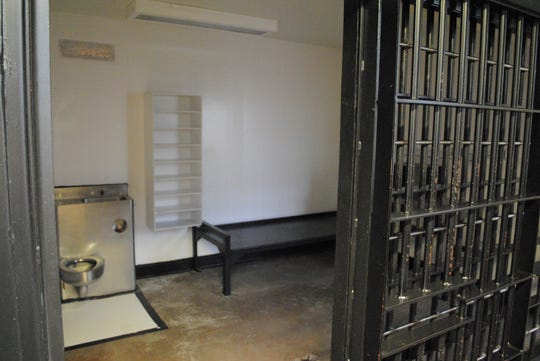
“Waking up to gray walls and black bars…in the silence of ones own thoughts, leaves one to a feeling of somberness…as those around begin to stir and began their individual day, hope creeps into ones mind….as the discussions regarding legal strategies began, hope then becomes more than just a shadow…as guys began to discuss their potential future beyond prison and being locked in a cell for days at a time, hope becomes more than just a fleeting moment! Silence can sometimes be ones own enemy on death row:-…So I condition myself to discover the “why” I fight through the fits of depression and despair, instead of focusing on the “how’s”….because pursuit of the “why’s” bring about methods of finding a solution….encouragement to remain hopeful!”
Everyone has the right to life, liberty and security of person (1).
Without the right to life, we cannot enjoy the freedoms set forth in the Universal Declaration of Human Rights.
However, what if one’s life was imprisoned and waiting to be ended for crime? In addition, what if a person was to be put to death for associating with a particular demographic?
The death penalty is the authorization of the state to kill a citizen for a crime, whether it’s murder, rape, treason, or more severe crimes, such as crimes against humanity and genocide (2).
Whilst the death penalty can be a deterrent, provide justice, and be the ultimate punishment for a crime and justice for victims, it is also used in some countries to persecute minority groups, such as the LGBT community (3) (4). (In references, there is a link to an interactive map of countries that utilize the death penalty for LGBT groups).
According to the Death Penalty Information Centre (DPIC), around 82% of cases involving capital punishment, race was a determining factor of giving this punishment, in comparison to white counterparts (5). However, the justice system is far from perfect, and miscarriages of justice occur. Due to issues of racism and racial bias (particularly within the American Justice System), this has seen members of minority groups and innocent people put on death row whilst a criminal still walks free. A damning example of a miscarriage of justice, and a clear demonstration of racism, is the case of George Stinney, whom, at the age of 14, was wrongly accused of murdering 2 girls. He was taken to court, tried by an all white jury, and was given the electric chair (6).
This, ultimately, is the state failing to protect its citizens, and causing irreparable damage to others. The George Stinney case is a condemnatory example of this. On top of that, it is hard to measure deterrence, and whether capital punishment actually deters people from committing crime.
However, what is it actually like being on death row?
June 2017 saw the start of a new friendship – a unique friendship. What simply started out with me wanting to reach out and be a ray of light to someone on death row, turned into a wonderful experience of sharing, support and immeasurable beauty. In June 2017, I began writing to a man on death row, and simply wanted to be a ray of light to someone in a dark place.
He has shared some of his thoughts of what it is like to be on death row:
“Perseverance. This is key when facing a day in prison (physically and mentally) because is never “where” you are physically, but your ability and willingness took push through those times of adversity and overcome the very things that have the power to bring you down….such as evil”. BUT- when we examine the word “evil” look closely…. Do you see it yet? ….. It’s “LIVE” backwards and to me its when we lose our patience to “LIVE” that we have brushes with “evil”…no???? So within these walls I do my best to find the “silver lining” and develop the better aspects of me”.
Now, it may seem effortlessly -but- in all honestly….its very difficult to face each day with the uncertainty of knowing whether the presence I have is one that has significance….in here I have to prepare myself on a constant basis in order to be the best version of myself no matter what lays ahead.
Thankfully….I have met an incredible person, who guides me by way of her words…offers me comforts by way of her thoughts and prayer and encourages me through her never ending presence! She is beautiful in every aspect of the word…She has helped me to discover that EVERYTHING and NOTHING awaits beyond forever!
References
(1) Universal Declaration of Human Rights (UNDH) Article 1 Available online at: https://www.un.org/en/universal-declaration-human-rights/ Accessed on 21/01/2020
(2) Louise Gaille ’15 Biggest Capitol Pros and Cons’ Available online at: https://vittana.org/15-biggest-capital-punishment-pros-and-cons Accessed on 24/03/2020
(3) The Human Dignity Trust ‘Saudi Arabia: Types of Criminalisation’ Available online at: https://www.humandignitytrust.org/country-profile/saudi-arabia/ Accessed on 24/03/2020
(4) Death Penalty Information Centre ‘Executions By Race and Race of Victim’ Available online at: https://deathpenaltyinfo.org/executions/executions-overview/executions-by-race-and-race-of-victim
(5) Ibid
(6) Snopes Fact Check ‘Did South Carolina Execute 14-year-old George Stinney, then declare him innocent 70 years later?’ Available online at: https://www.snopes.com/fact-check/george-stinney-execution-exoneration/ Accessed on 24/03/2020
Other
Interactive map of countries where the death penalty is used against the LGBT community: https://www.humandignitytrust.org/lgbt-the-law/map-of-criminalisation/?type_filter=crim_gender_exp
Human Writes: https://www.humanwrites.org
Share this:

The Ho Stro’ (A quick peek at a little sex work) #BlackAsiaWithLove

The original, unofficial Ho Stro’ theme song. Play this while reading (see below).
Sitting on the curb of a busy road along the railroad track.
Wearing a mini skirt with your legs spread, bent over
Scratching your wig with one of your long fire-engine red fingernails, while
Reaching in your purse for the matching lipstick.
It’s half past midnight, the night is young.
4 women on the Ho Stro’ between the railroad track, a busy road, and a giant city park.
Hoes stroll day and night.
I’ve been on my way to work, or
Watching the sunrise on my way home from clubbing,
Rain or shine,
These hoes are inline
On time.
Scattered along the railroad track facing the park,
Sometimes 1 by 1, sometimes in twos;
And an elderly woman within eyeshot.
I’ve seen a crack head or two, too,
Trying to push herself up to any mens passing by.
Crack or smack,
I’m not sure what these hoes do,
But I know it’s whack.
Frail, emaciated, veins popping and tattered.
They rarely cross the road and venture along the train track.
Over here it’s wide open,
The hoes along the track roam in packs…
Whereas the park side of the stroll provides the crack heads some cover.
For a while, I resisted knowing that these women were hoes.
But one evening,
A couple of hoes showed up at my favorite Beef Noodle joint as I sat for dinner.
All cheery and bubbly,
Dressed for a night out.
Greeting everyone that comes in as you do in your neighborhood joint*
One of the ladies came over towards me, all bubbly and cheery,
Stretched out and unfolded her hands as if she were about to offer me something,
Then jabbed her index finger in-and-out of… you get it.
Yes, THAT universal gesture,
Though it didn’t seem lude coming from her, over a bowl of Pho.
I politely declined, they placed their orders and sat down.
Hoes gotta eat, too.
In my after-dinner walks around the lake,
I have to watch out when I reach the long, straight, tree-lined stretch along the track.
There, there’s nothing but cars parked,
And tea stalls at both ends.
Hoes tend to congregate right in the middle.
Pulling tricks.
No man gets by unsolicited.
It’s as if the bright fire-red were their signal.
Fire-engine red lipstick and false nails to match.
Sometimes a matching skirt, purse and shoes, too.
It’s loitering, but
Soliciting men, too.
The men know where to find them, these hoes are always there.
Street crawlers know where to find them.
Rush hour or late-night,
Early morning, and absolutely at high noon…
Women can’t loiter.
Just look at how we treat women who are not even in the trade.
Meanwhile, men and boys in most parts of the world can hang out anywhere, anytime.
Men are much freer at this level of corporeal control and bodily integrity –
In public and private space.
Although I’d argue that we teach boys to disintegrate into the night.
This is exactly the breach that’s reached here.
These hoes stroll.
There is a Ho Stro’ in every city I know!
Pimps, hookers, hoes, tricks, johns and everybody in between can see.
Who do the law-keepers claim are the criminals?
Hey mister, have you got a dime?
Mister: Voulez-vous coucher avec moi ce soir?
—
*I’ve only lived here a half a year, so I’m sure this is their hood; I’m new to the party.
NB: Ho Stro’ or whore stroll is an American southern vernacular term – the first term I learned as a kid – for a red-light district. PLEASE, do not look up Ho Stroll on YouTube but if you must this one from LA is HILARIOUS And please, seriously, don’t bother looking up words for the clients of female sex workers.

 Thoughts from the criminology team