
Home » Sexual assault
Category Archives: Sexual assault

Same shit, different day

I’ve thought long and hard about whether or not to write this blog, it contains nothing new, it adds nothing to the discussion and it is borne of frustration, not just mine. Nevertheless, if the same thing keeps happening, then why not keep shouting about it, even if no-one appears to be listening.
Recently I attended an event supposedly focused on Violence Against Women & Girls [VAWG], the organisers, the venue, the speakers remain anonymous, because this is not about specific individuals or organisations. Instead, as the title indicates, the issues raised below are repeated again and again, across different times and place, involving different people, with different claims to knowledge. Nevertheless, they have far more in common than they would care to acknowledge.
In September 2024, the government announced a commitment to halving VAWG over the next decade. The announcement itself was rather confused, seemingly conflating the term VAWG with Domestic Abuse [DA] whilst simultaneously promising to ‘take back our streets’. The latter horribly reminiscent of the far right’s racists diatribe around taking back our country. But I digress, in the government statement there is no mention of sexual violence, despite Rape Crisis England and Wales’ assertion that 1 in 4 women and girls over 16 have been subjected to sexual assault or rape. Similarly, Refuge suggest that 1 in 4 women will be subjected to forms of domestic abuse across their lifetimes. The statistical data is shaky, the problems with reporting are well documented, but ask any woman, and they will tell you about their own experiences and those of friends and families. A brief glance at the Everyday Sexism Project or Everyone’s Invited will give you some idea of the scale of the violences facing women and girls.
But to return to the latest VAWG event, there have been very many of these, all following the same pattern. Crowds of women in the audience, all experts, some professional, some academic, some through victimisation, some through vicarious victimisation and of course, some of those women encapsulate more than one of those categories, they are not mutually exclusive. So how do we harness and utilise this great body of knowledge, experience and expertise? The sad answer for events like this, is 99% of the time, we don’t. They’re there to sit quietly and listen to the same old narrative from police leaders and officers, saying that the institution has got it wrong in the past, but has learnt lessons and is now doing much better. Noticeably, there are few men in the audience, only those compelled to attend by their employment, after all VAWG explicitly mentions women and girls so it must be a female problem, despite the fact that the violences are predominately carried out by men.
To really drive the message home, we have speakers who can’t be bothered to prepare an accessible presentation for their audience. Relying instead on their white privilege, their charisma and charm (think a poor parody of a 1990’s Hugh Grant in a Richard Curtis film), with their funny little anecdotes of how they met a woman who changed their view on VAWG. Or how primary school teachers are usually women, and that’s where the problems begin, they just don’t do enough to support our little boys and young men on their journeys. Similarly, mothers who don’t pay enough attention which mean their sons go onto to become these violent men. We have white women too, ones that want the audience to focus on women who have been killed by men, but who cannot actually be bothered to find out how to say their names, stumbling over any name that is not anglicised.
In the audience it is notable that there are few Black and Brown women present. Even when they are invited as speakers, they are cut short, talked over, their names forgotten or mispronounced. They are the add-ons, a pathetic attempt at inclusivity, but don’t worry they’re never the main attraction. That spotlight is always reserved for men. No wonder Black and Brown women can’t face attending, or leave part way through, they’re sick and tired of being patronised while they pick up the broken pieces of men’s violences.
So what do women actually learn from these events? They learn to keep quiet, to pretend they’re learning something, but in the breaks they get together and talk about their frustrations, their ongoing exclusion from discussions. They learn that the problem belongs to them. That not only have they got to mop up women’s blood, sweat and tears, using plenty of their own in the process, to support and rebuild women after trauma, they are also responsible for the boys and men.
It really does not have to be this way! In every community there are women of all colours, all religions, all sexualities, all nations, doing the hard work. Building each other up against a maelstrom of never ending male violence, not to mention the additional violences of racism, microaggressions and exclusion. These are the experts, these are the people with whom the solutions lie. The police have had almost 200 years to get it right, they are nowhere near, time for them to move over and let the real experts do the talking, whilst they listen and start to hear and learn!
Share this:


Sabrina Carpenter and Feminist Utopia
I have recently been introduced to Sabrina Carpenter via online media commentary about the image of her new album cover Man’s Best Friend. Whilst some claim the image is playing with satire, the image appears to have been interpreted by others as being hyper-sexual and pandering to the male gaze.

I am not sure why this specific album cover and artist has attracted so much attention given that the hyper-sexual depiction of women is well-represented within the music industry and society more generally. However, because Sabrina’s main audience base is apparently young women under 30 it did leave me thinking about the module CRI1009 and feminist utopia, as it left me with questions that I would want to ask the students like: In a feminist utopia should the hyper-sexualized imagery of women exist?
Some might be quick to point out that this imagery should not exist as it could be seen to contribute towards the misogynistic sexualisation of women and the danger of this, as illustrated with Glasgow Women’s Aid comments about Sabrina’s album cover via Instagram (2025)
‘Sabrina Carpenter’s new album cover isn’t edgy, it’s regressive.
Picturing herself on all fours, with a man pulling her hair and calling it “Man’s Best Friend” isn’t subversion. 😐
It’s a throwback to tired tropes that reduce women to pets, props, and possessions and promote an element of violence and control. 🚩
We’ve fought too hard for this. ✊🏻
We get Sabrina’s brand is packaged up retro glam but we really don’t need to go back to the tired stereotypes of women. ✨
Sabrina is pandering to the male gaze and promoting misogynistic stereotypes, which is ironic given the majority of her fans are young women!
Come on Sabrina! You can do better! 💖’
However, thinking about utopia is always complicated as Sabrina’s brand appears to some a ‘sex-positive feminism’ by apparently allowing women to be free to represent themselves and ‘feel sexy’ rather than being controlled by the rules and expectations of other people. For some this idea of sexual freedom aka ‘sex-positive feminism’ branded via an inequitable capitalistic male dominated industry and represented by an incredibly rich white woman would be a bit of a mythical representation. As while this idea of sexy feminism is promoted by the privileged few this occurs in a societal context where many feel that women’s rights are being/at risk of being eroded and women are being subjected to sexual violence on a daily basis.
I am not sure what a workshop discussion with CRI1009 students would conclude about this, but certainly there would need to be a circling back to more never- ending foundational questions about utopia: what else would exist in this feminist utopia? Whose feminist utopic vision should get priority? Would anyone be damaged in a utopic society that does promote this hyper-sexualization? If so, should this utopia prioritise individual expression or have collective responsibility? In a society without hyper-sexualisation of women would there be rule breakers, and if so, what do you do with them?
Share this:


Changing the Narrative around Violence Against Women and Girls

For Criminology at UON’s 25th Birthday, in partnership with the Northampton Fire, Police and Crime Commissioner, the event “Changing the Narrative: Violence Against Women and Girls” convened on the 2nd April. Bringing together a professional panel, individuals with lived experience and practitioners from charity and other sectors, to create a dialogue and champion new ways of thinking. The first in a series, this event focused on language.
All of the discussions, notes and presentations were incredibly insightful, and I hope this thematic collation does it all justice.
“A convenient but not useful term.”
Firstly an overwhelming reflection on the term itself; ‘Violence Against Women and Girls’ – does it do justice to all of the behaviour under it’s umbrella? We considered this as reductionist, dehumanising, and often only prompts thinking and action to physical acts of violence, but perhaps neglects many other harms such as emotional abuse, coercion and financial abuse which may not be seen as, or felt as ‘severe enough’ to report. It may also predominantly suggest intimate partner or domestic abuse which may too exclude other harms towards women and girls such as (grand)parent/child abuse or that which happens outside of the home. All of which are too often undetected or minimised, potentially due to this use of language. Another poignant reflection is that we may not currently be able to consider ‘women and girls’ as one group, given that girls under 16 may not be able to seek help for domestic abuse, in the same way that women may be able to. We also must consider the impact of this term on those whose gender identity is not what they were assigned at birth, or those that identify outside of the gender binary. Where do they fit into this?
To change the narrative, we must first identify what we are talking about. Explicitly. Changing the narrative starts here.
“I do not think I have survived.”
We considered the importance of lived experience in our narratives and reflected on the way we use it, and what that means for individuals, and our response.
Firstly, the terms ‘victim’ and ‘survivor’ – which we may use without thought, use as fact, particularly as descriptors within our professions, but actually these are incredibly personal labels that only individuals with such experience can give to themselves. This may be reflective of where they are in their journey surrounding their experiences and have a huge impact on their experience of being supported. It was courageously expressed that we also must recognise that individuals may not identify with either of those terms, and that much more of that person still exists outside of that experience or label. We also took a moment to remember that some victims, will never be survivors.
Lived experience is making its way into our narratives more and more, but there is still much room for improvement. We champion that if we are to create a more supportive, inclusive, practical and effective narrative, we must reflect the language of individuals with lived experience and we must use it to create a narrative free from tick boxes, from the lens of organisational goals and societal pressure.
Lived experience must be valued for what it is, not in spite of what it is.
“In some cases, we allow content – which would otherwise go against our standards – if its newsworthy.”
A further theme was a reflection on language which appears to be causing an erosion of moral boundaries. For example, the term ‘misogyny’ – was considered to be used flippantly, as an excuse, and as a scapegoat for behaviour which is not just ‘misogynistic’ but unacceptable, abhorrent, inexcusable behaviour – meaning the extent of the harms caused by this behaviour are swept away under a ‘normalised’ state of prejudice.
This is one of many terms that along with things like ‘trauma bond’ and ‘narcissist’ which have become popular on social media without any rigour as to the correct use of the term – further normalises harmful behaviour, and prevents women and girls from seeking support for these very not normal experiences. In the same vein it was expressed that sexual violence is often seen as part of ‘the university experience.’
This use of language and its presence on social media endangers and miseducates, particularly young people, especially with new posting policies around the freedom of expression. Firstly, in that many restrictions can be bypassed by the use of different text, characters and emoji so that posts are not flagged for certain words or language. Additionally, guidelines from Meta were shared and highlighted as problematic as certain content which would, and should, normally be restricted – can be shared – as long as is deemed ‘newsworthy.’
Within the media as a whole, we pressed the importance of using language which accurately describes the actions and experience that has happened, showing the impact on the individual and showing the extent of the societal problem we face… not just what makes the best headline.
“We took action overnight for the pandemic.”
Language within our response to these crimes was reflected upon, in particular around the term ‘non-emergency’ which rape, as a crime, has become catalogued as. We considered the profound impact of this language for those experiencing/have experienced this crime and the effect it has on the resources made available to respond to it.
Simultaneously, in other arenas, violence toward women and girls is considered to be a crisis… an emergency. This not only does not align with the views of law enforcement but suggests that this is a new, emerging crisis, when in fact it is long standing societal problem, and has faced significant barriers in getting a sufficient response. As reflected by one attendee – “we took action overnight for the pandemic.”
“I’ve worked with women who didn’t report rape because they were aroused – they thought they must have wanted it.”
Education was another widely considered theme, with most talk tables initially considering the need for early education and coming to the conclusion that everyone needs more education; young and old – everything in between; male, female and everything in between and outside of the gender binary. No-one is exempt.
We need all people to have the education and language to pass on to their children, friends, colleagues, to make educated choices. If we as adults don’t have the education to pass on to children, how will they get it? The phrase ‘sex education’ was reflected upon, within the context of schools, and was suggested to require change due to how it triggers an uproar from parents, often believing their children will only be taught about intercourse and that they’re too young to know. It was expressed that age appropriate education, giving children the language to identify harms, know their own body, speak up and speak out is only beneficial and this must happen to help break the cycle of generational violence. We cannot protect young people if we teach them ignorance.
Education for all was pressed particularly around education of our bodies, and our bodily experiences. In particular of female bodies, which have for so long been seen as an extension of male bodies. No-one knows enough about female bodies. This perpetuates issues around consent, uneducated choices and creates misplaced and unnecessary guilt, shame and confusion for females when subjected to these harms.
“Just because you are not part of the problem, does not mean you are part of the solution.“
Finally, though we have no intention or illusion of resolution with just one talk, or even a series of them – we moved to consider some ways forward. A very clear message was that this requires action – and this action should not fall on women and girls to protect themselves, but for perpetrators for be stopped. We need allies, of all backgrounds, but in particular, we need male allies. We need male allies who have the education, and the words necessary to identify and call out the behaviour of their peers, their friends, their colleagues, of strangers on the bus. We asked – would being challenged by a ‘peer’ have more impact? Simply not being a perpetrator, is not enough.
Share this:


Let’s talk about sex!

Very few topics receive attention as much as sex. A very primal human behaviour that gets people talking. In Criminology any discussion on sex contains those elements that make it less than appealing, abuse, exploitation and violation. Our focus on the criminal dimensions of sexual behaviour can disfigure the way we talk about it and misrepresent the joys of sex. It can be argued however that outlining the negatives gives way to a positive outlook to sex in a similar way to health professional’s focus on avoiding sexually transmitted diseases, leading to a healthy sexual life.
Sex is about affirming social relations, as part of our own intimacy. There is a variety on sex from feelings, practices and expressions that is as wide as humanity itself. It is a language we talk that needs no translation. This is why that abusive behaviours are regarded such a violation of the person. Rape, legally, is as serious as murder. The person victimised is losing something so intimate that it may never be recovered; one of the many reasons why people who suffered abuse are called survivors.
Our perspectives on sex changes and our society tried to accommodate them. Some years ago, Holland decided to include some scenes on “public liberal expressions on sexuality” as part of their material for their immigration test. This is a marked difference from the UK who decriminalised homosexuality but only behind closed doors.
Criminologically speaking there are certain elements that safeguard sexual behaviours. Age, relation, location and consent. The age of consent is recognising the minimum age any person can be legally responsible to engage in sexual relations. Under that age and it is statutory rape. Any relationship between close relatives in the UK can lead to imprisonment. Any sexual acts in public are regarded illegal, including sex in public toilets (cottaging) so sex remains behind closed doors. The final point is the most controversial; consent is paramount to any sexual relations. The important thing in sex is that we choose to engage with others or not.
Part of the criminological process is to ascertain how we understand consent and disseminate it to others. Academically there are several issues to consider and to investigate. This is one of criminology’s strengths to tap into the sociological and philosophical discourses offering some practical perspectives. In recent years the discussion about sex on campus for example has been one that raised awareness on consent. In criminology we discuss it in ways to amplify the importance of consent in sex and in relationships in general.
For a long time now, we have talked about safe spaces as a mechanism of allowing people to talk without judgement. We focus on educational practices that are focused on inclusion and empathy and disseminate work that challenges established notions that mythologise sexual relations and minimise the importance of consent.
Let’s explore some of the key points we disseminate. Sex is an individual right for all regardless of origin or identity, which makes it also a universal right. Law safeguards sexual relations, but the lack of reporting of sexual violence, the low conviction rate of those processed cases and the volume of unknowns underscore that we cannot resolve sexual violence legally. We cannot police sexual relations when our community does not prioritise the importance of safeguarding human rights. What we can do instead is to change that social discourse on sex. In one of my previous posts, I underscored the irony of proliferating legal interventions, whilst culturally we seem happy to receive expressions on misogyny, abuse and exploitation as legitimate expressions on sexuality. Policing sexual behaviours for example comes with a long history of retaining the straight man’s privilege of pleasure over all others. A privilege long retained unchallenged making the work of current and future criminologists even more pressing! At the end of this month, it is International Day of Consent in November 30, so from today until the end of the month, ask yourself what you have done to change the established narrative to make your own space more inclusive.

Share this:


Justice or Just Another One?

Luckily I’ve never been one for romantic movies. I always preferred a horror movie. I just didn’t know that my love life would become the worst horror movie I could ever encounter. I was only 18 when I met the monster who presented as a half decent human being. I didn’t know the world very well at that point and he made sure that he became my world. The control and coercion, at the time, seemed like romantic gestures. It’s only with hind sight that I can look back and realise every “kind” and “loving” gesture came from a menacing place of control and selfishness. I was fully under his spell. But anyway, I won’t get into every detail ever. I guess I just wanted to preface this with the fact that abuse doesn’t just start with abuse. It starts with manipulation that is often disguised as love and romance in a twisted way.
This man went on to break me down into a shell of myself before the physical abuse started. Even then, him getting that angry was somehow always my fault. I caused that reaction in his sick, twisted mind and I started to believe it was my fault too. The final incident took place and the last thing I can clearly recall is hearing how he was going to cave my head in before I felt this horrendous pressure on my neck with his other hand keeping me from making any noise that would expose him.
By chance, I managed to get free and RUN to my family. Immediately took photos of my injuries too because even in my state, I know how the Criminal Justice System would not be on my side without evidence they deemed suitable.
Anyway, my case ended up going to trial. Further trauma. Great. I had to relive the entire relationship by having every part of my character questioned on the stand like I was the criminal in this instance. I even got told by his defence that I had “Histrionic Personality Disorder”. Something I have never been diagnosed with, or even been assessed for. Just another way the CJS likes to pathologise women’s trauma. Worst of all, turns out ‘Doctor Defence’ ended up dropping my abuser as he was professionally embarrassed when he realised he knew my mother who was also a witness. Wonderful. This meant I got to go through the process of being criminalised, questioned, diagnosed with disorders I hadn’t heard of at the time, hear the messages, see the photos ALL over again.
Although “justice” prevailed in as much as he was found guilty. All for the sake of a suspended sentence. Perfect. The man who made me feel like he was my world then also tried to end my life was still going to be free enough to see me. The law wasn’t enough to stop him from harming me, why would it be enough to stop him now?
Fortunately for me, it stopped him harming me. However, it did not stop him harming his next victim. For the sake of her, I won’t share any details of her story as it is not mine to share. Yet, this man is now behind bars for a pretty short period of time as he has once again harmed a woman. Evidently, I was right. The law was not enough to stop him. Which leads me to the point of this post, at what stage does the CJS actually start to take women’s pleas to feel safe seriously? Does this man have to go as far to take away a woman’s life entirely before someone finally deems him as dangerous? Why was my harm not enough? Would the CJS have suddenly seen me as a victim, rather than making me feel like a criminal in court, if I was eternally silenced? Why do women have to keep dying at the hands of men because the CJS protects domestic abusers?”
Share this:

A world without prisons follow-up. A student/staff reflection piece
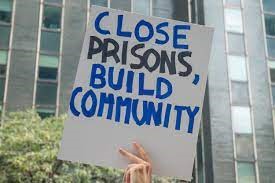
As a department Criminology has pushed the envelope in promoting discussions around the key disciplinary debates. @franbitalo and myself co-ordinated a conversation where the main focus was to imagine “a world without prisons”. The conversation was very interesting, and we decided to post parts of it as a legacy of the social debates we engage in. The discussion is captured as a series of comments made by the students with some prompts in bold.
The original question stands, can you imagine a world without prisons? First thing first, there is a feeling that prisons will always exist as mechanisms to control our society. Mainly because our society is too punitive and focused on punishment rather than rehabilitation. We live in a society that ideologically sees the prison as the representation of being hard on crime. Further to this point we may never be able to abolish the prison, so it can always remain as the last resort of what to do with those who have harm others. Especially for those in our society who deserve to be punished because of what they did. Perhaps we could reform it or extend the use of the probation service dealing with crime.
In an ideal world prisons should not exist especially because the system seems to target particular groups, namely minorities and people from specific background. It important to note that it does stop people seeking or taking justice into their hands and deflecting any need for vengeance “eye for an eye”. Prison is a punishment done in the name of society, but it does carry political overtones. There are parts of political ideology that support the idea that punishment is meant to make an example of those breaking the law. This approach is deeply rooted, and is impervious to reform or change. Which can become one of the biggest issues regarding prisons.
Then there is the public’s view on prisons. When people hear that prisons will go they will be very unhappy and even frightened. They will feel that without prisons people will go crazy and commit crimes without any consequences. Society, people feel, will go into a state of anarchy where vigilantism will become the acceptable course of action. This approach becomes more urgent when considering particular types of criminals, like sex offenders and in particular, paedophiles. Regardless of the intention of the act, these types of crime cause serious harm that the victim carries for the rest of their lives. The violation of trust and the lack of consent makes these crimes particularly repulsive and prison worthy. How about child abduction? Not sure if we should make prison crime specific. That will not serve its purpose, instead it will make it the dumping ground for some crime categories, sending a message that only some people will go to prison.
Will that be the only crime category worthy of prison? In an ideal world, those who commit serious financial crimes should be going to prison, if such a prison existed. Again, here if we are considering harm as the reason to keep prisons open these types of crime cause maximum harm. The implication of white-collar crime, serious fraud and tax evasion deprive our society of taxes and income that is desperately needed in social infrastructure, services and social support. Financial crime flaunts the social contract and weakens society. Perhaps those involved should be made to contribute reparations. The prison question raises another issue to consider especially with all the things said before! Who “deserves” to go to prison. Who gets to go and who is given an alternative sentence is based on established views on crime. There are a lot of concerns on the way crime is prioritised and understood because these prioritisations do not reflect the reality of social disorder. Prison is an institution that scapegoats the working classes. Systematically the system imprisons the poor because class is an imprisonable factor; the others being gender and race.
If we keep only certain serious crimes on the books, we are looking at a massive reduction in prison numbers. Is that the way to abolitionism? The prison plays too much of a role in the Criminal Justice System to be discounted. The Industrial Prison Complex as a criminological concept indicates the strengths of an institution that despite its failings, hasn’t lost its prominence. On the side of the State, the establishment is a barrier to any reform or changes to this institution. Changes are not only needed for prison, but also for the way the system responds to the victims of crime as well. Victims are going through a process of re-victimisation and re-harming them. This is because the system is using the victims as part of the process, in giving evidence. If there is concern for those harmed by crime, that is not demonstrated by the strictness of the prison.
As a society currently we may not be able to abolish prisons but we ought to reduce the harm punishment has onto people. In order to abolish prisons, the system will have to be ready to allow for the change to happen. In the meantime, alternative justice systems have not delivered anything different from what we currently have. One of the reasons is that as a society we have the need to see justice being served. A change so drastic as this will definitely require a change in politics, a change in ideology and a change in the way we view crime as a society in order to succeed. The conversation continues…
Thank you to all the participating students: Katja, Aimee, Alice, Zoe, Laura, Amanda, Kayleigh, Chrissy, Meg, and Ellie also thank you to my “partner in crime” @franbitalo.
Share this:


The Problem is Bigger than Tate
While there are many things that have got under my skin lately, it seems that every time I go on social media, turn on the television, or happen to have a conversation, the name Andrew Tate is uttered. His mere existence is like a virus, attacking not only my brain and soul but it seems a large population of the world. His popularity stems from his platform followed by thousands of men and young boys (it’s known as the ‘Real World’).
His platform ‘educating’ men on working smarter not harder has created a ‘brotherhood’ within the manosphere that celebrates success and wealth. Tate is framed as a man’s man, physically strong, rich and he even has a cigar attached to his hand (I wonder if he puts it down when he goes to the bathroom). It seems many of his aspiring followers want to mimic his fast rich lifestyle.
This seems to be welcomed, especially now when the price of bread has significantly risen (many of his followers would sell the closest women in their life for a whiff of his cigar, and of course to be deemed to have an Insta-desirable lifestyle). While this ideology has gained hype and mass traction in recent years (under the Tate trademark) it seems that his narcissistic, problematic image and what he stands for has only just been deemed a problem … due to his recent indiscretions.
There is now outrage in UK schools over the number of young boys following Tate and his misogynistic ideology. But I cannot help but ask … why was this not an issue before? I am aware of rape culture, victim blaming, sexual harassment, and systems of silence at every level of the UK education establishment. The launch of ‘Everyone’s Invited’ shone a light on the problematic discourse, so why are we only seeing that there is a problem now?
There are many reasons why there’s a delayed outrage, and I would be here all day highlighting all the problems. So, I will give you a couple of reasons. The first is the Guyland ideology: many Tate supporters who fall into the cultural assumption of masculinity expect to be rewarded for their support, in ways of power and material possession (this includes power over women and others deemed less powerful). If one does not receive what they believe they are owed or expected, they will take what they believe they are owed (by all means necessary).
There is also a system of silence within their peer group which is reinforced by parents, female friends, the media, and those that are in administrative power. The protection of toxic behavior has been continuously put under the umbrella of ‘boys will be boys’ or the idea that the toxic behavior is outside the character of the individual or not reflective of who they truly are.
I will go one step further and apply this to the internalised patriarchy/misogyny of the many women that came out and supported Jeremy Clarkson when he callously attacked Meghan. While many of the women have their individual blight with Meghan for reasons I do not really care to explore, by supporting the rhetoric spewed by Clarkson, they are upholding systemic violence against women.
The third point is that capitalism overthrows humanity and empathy in many ways. All you need to do is to look at a history books, it seems that lessons will never be learned. The temptation of material possessions has overthrown morality. The media gives Tate a platform and in turn Tate utters damaging ideology. This brings more traffic to the platforms that he is on and thus more money and influence….after all he is one of the most googled people in the world.
The awareness of the problematic behaviour and the total disregard for protecting women and girls from monsters like Tate shows, how the outrage displayed by the media about harms against victims such as Sabina Nessa and Sarah Everard is performative. The news coverage and the discussion that centred on the victimisation of these two women have easily been forgotten. If the outrage is real then why are we still at a point where we are accepting excuses and championing misogyny under the guise of freedom of speech, without challenging the harm it really does.
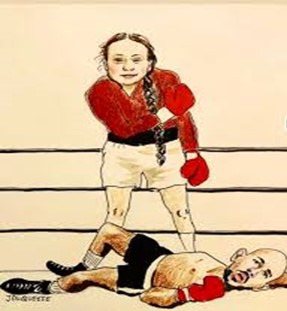
It seems that society is at a point of total desensitization where there is more interest in Tate losing an argument with Greta Thunberg, posing with a cigar on an exotic beach for likes, than really acknowledging the bigger picture. Andrew Tate has been accused of rape and human trafficking. The worst thing is, this is not the first time that he has been accused of horrific crimes – and with the audio evidence that was released to the press recently, he should be in prison. But with the issues that permeate the Met police there is no surprise as to why he has been given the green light to continue his violent behaviour. But this is not just a UK issue. There has been a large amount of support overseas with young men and boys marching in masses in support of Tate, so I cannot be surprised that he was able to and continues to build a platform that celebrates and promotes horrendous treatment of women.
For many the progression of a fair and equal society is an aspiration, but for the supporters of the Tate’s in the world they tend to lean on the notion that they are entitled to more, and to acquire what they think they are owed, and will behave to the extreme of toxicity. While it is easy to fixate on a pantomimic villain like Tate to discuss his problematic use of language and how this translates in schools, the bigger picture of institutionalised patriarchy is always being missed.
It is important to unpick the toxic nature of our society, to understand the contributing factors that have allowed Andrew Tate and others like him to be such influential figures.
Share this:


The dance of the vampires

We value youth. There is greater currency in youth, far greater than wisdom, despite most people when they are looking back wishing they had more wisdom in life. Modernity brought us the era of the picture and since then we have become captivated with images. Pictures, first black and white, then replaced by moving images, and further replaced by colour became an antidote to a verbose society that now didn’t need to talk about it…it simply became a case of look and don’t talk!
The image became even more important when people turned the cameras on themselves. The selfie, originally a self-portrait of reclusive artists evolved into a statement, a visual signature for millions of people using it every day on social media. Enter youth! The engagement with social media is regarded the gift of computer scientists to the youth of today. I wonder how many people know that one of the first images sent as a jpeg was that of a Swedish Playboy playmate the ‘lady with the feathers’. This “captivating” image was the start of the virtual exchange of pictures that led to billions of downloads every day and social media storing an ever-expanding array of images.
The selfie, brought with it a series of challenges. How many times can you take a picture, even of the most beautiful person, before you become accustomed to it. Before you say, well yes that is nice, but I have seen it before. To resolve the continuous exposure the introduction of filters, backgrounds and themes seems to add a sense of variety. The selfie stick (banned from many museums the world over) became the equipment, along with the tripod, the lamp and the must have camera, with the better lens in the pursue of the better selfie. Vanity never had so many accessories!
The stick is an interesting tool. It tells the individual nature of the selfie. The voyage that youthful representation takes across social media is not easy, it is quite a solitary one. In the representation of the image, youth seem to prefer. The top “influencers” are young, who mostly like to pose and sometimes even offer some advice to their followers. Their followers, their contemporaries or even older individuals consume their images like their ‘daily (visual) bread’. This seems to be a continuous routine, where the influencer produces images, and the followers watch them and comment. What, if anything, is peculiar about that? Nothing! We live in a society build on consumption and the industry of youth is growing. So, this is a perfect marriage of supply and demand. Period!
Or is it? In the last 30 years in the UK alone the law on protecting children and their naivety from exploitation has been centre stage of several successive governments. Even when discussing civil partnerships for same sex couples, Baroness Young, argued against the proposed act, citing the protection of children. Youth became a precious age that needed protection and nurturing. The law created a layer of support for children, particularly those regarded vulnerable. and social services were drafted in to keep them safe and away from harm. In instances when the system failed, there has been public outrage only to reinforce the original notion that children and young people are to be protected in our society.
That is exactly the issue here! In the Criminology of the selfie! Governments introducing policies to generate a social insulation of moral righteousness that is predicated on individual – mostly parental – responsibility. The years of protective services and we do not seem to move passed them. In fact, their need is greater than ever. Are we creating bad parents through bad parenting or are people confronted with social forces that they cannot cope with? The reality is that youth is more exposed than ever before. The images produced, unlike the black and white photos of the past, will never fade away. Those who regret the image they posted, can delete it from their account, but the image is not gone. It shall hover over them for the eternity of the internet. There is little to console and even less to help. During the lockdown, I read the story of the social carer who left their job and opened an OnlyFans account. These are private images provided to those who are willing to pay. The reason this experience became a story, was the claim that the carer earned in one month of OnlyFans, more than their previous annual income. I saw the story being shared by many young people, tagging each other as if saying, look at this. The image that captures their youth that can become a trap to contain them in a circle of youth. Because in life, before the certainty of death there is another one, that of aging and in a society that values youth so much, can anyone be ready to age?
As for the declared care for the young, would a society that cares have been closing the doors to HE, to quality apprenticeships, a living wage and a place to live? The same society that stirs emotions about protection, wants young people to stay young so that they cannot ask for their share in their future. The social outrage about paedophiles is countered with high exposure to a particular genre in the movies and literature that promotes it. The vampire that has been fashioned as young adult literature is the proverbial story of an (considerably) older man who deflowers a young innocent girl until she becomes infatuated with him. The movies can be visually stunning because it involves the images of young beautiful people but there is hardly any mention of consent or care!
It is one of the greatest ironies to revive the vampire image in youth culture. A cultural representation of a male prototype that is manipulative, intruding into the lives of seemingly innocent young people who become his prey. There is something incredibly unsettling to explore the semiology of an immortal that is made through a blood ritual. A reverse Peter Pan who consumes the youth of his victims. The popularity of this Victorian literary character, originally conceived in the era of industrial advancement,at a time when modernity challenged tradition, resurfaces with other monsters at times of great uncertainty. The era of the picture has not made everyday life easier, and modernity did not improve quality of life to the degree it proclaimed. Instead, whilst people are becoming captivated by ephemera they are focused on the appearance and missing substance. An old experience man, dark, mysterious with white skin may be an appealing character in literature but in real life a someone who feeds on young people’s blood is hardly an exciting proposition.
The blood sacrifice demanded by a vampire is a metaphor of what our society requires for those who wish to retain youth and save their image into the ether of the cyberworld as a permanent Portrait of Dorian Gray. In this context, the vampire is not only a man in power, using his privilege to dominate, but a social representation of what a consumer society places as the highest value. It is life’s greatest irony that the devouring power of a vampire is becoming a representation of how little value we place on both youth and life! A society focused on appearance, ignoring the substance. Youth looking but not youth caring!
Share this:


The Color Purple, The Musical: What in the Misogynoir?!

TW: mentions of rape, child rape, racism, and misogynoir.
Alice Walker’s novel The Color Purple is a story loved around the world. So, when I saw that it was adapted to stage and touring the UK, my interest was peaked just enough to consider a visit to my local theatre the Royal & Derngate in Northampton. A Curve and Birmingham Hippodrome co-production, it came to Northampton in the first week of October. Largely, audiences that frequent my local theatre are overwhelmingly white – thus, watching The Color Purple it was a joy to my heart to hear Black people in my community engaging with the arts, because the last time I heard so many Black people attended, was for Our Lady of Kibeho as part of the R&D’s Made in Northampton season. This dates back to 2019, a production I reviewed for The Nenequirer showing that Northampton(shire) arts has work to do.
Social media platforms like Twitter and Instagram showed me the pretty unanimous positive praise for the Leicester-Birmingham co-production, while local critics also enjoyed it – including reviews from The Chronicle & Echo and The Nenequirer as well as further reviews by The Real Chris Sparkle and Northampton Town Centre BID. However, there were elements of the show that caused me great distress, no less than the perpetuation of misogynoir and racist stereotypes against Black men. It was deeply triggering, showing how historical trauma and vicarious trauma are ever present, including when white organisations have not done the work of protecting Black mental health when producing “Black-centred media.”
At the head of this cast, Me’sha Bryan gives a knockout performance as Celie (previous played by Whoopi Goldberg in the film) accompanied by Aaliya Zhané as Nettie, with Bree Smith as Shug Avery, and brilliant musical numbers grounded in the traditions of blues music that finds its origins in the trauma of enslaved Africans in the American South. They sang when “they got the blues” … and as far as performance and the commitment from the cast, I couldn’t ask for better.
However, whilst I have praised the musical numbers above, I did not believe it fitted with the tones of The Color Purple curating a rift between what the actors were saying and doing on stage, and the intonations of the music – as well as the lighting design. And despite the directorial position deciding the rape of a child wasn’t musical material (rightly so), the choice to have it as a passing detail with no further discussion, I found particularly off-key. This is one of the moments that highlights that The Color Purple may not have been musical material and better considered as a serious drama. I did not walk away feeling that bleak, much ado with contradictory lighting choices to character moods. The characters were feeling one away and lights did something else. By the by, rather than skip over the rape to maintain “the musicalness”, it may have been more effective to have done this story as a stage drama (with musical elements, if at all). The horrors depicted at the beginning of the novel are pretty nonexistent in musical.
So, this recent adaptation was a disappointment. Not from an acting point of view but behind-the-scenes pre-production elements like direction. The start of story includes a fourteen year-old who births two children after being raped by her father. So, the amount of trauma that exists around child sexual abuse and rape appear unconsidered when they glossed over these parts of the story. Furthermore, I do question if they consulted with any survivors when doing research for this adaptation. A ‘sensitivity consultant’ would not have gone amiss either, further to considerations of intersectionality and how cultural nuances in global, but still different Black communities, will be interpreted by white people, especially in provincial Little England.
Blown away by the musical abilities of the cast, stage productions (like much art) are often labelled as “escapist” so is not afforded the same criticality as for example – policing, education, sport and so on – we are all guilty of this and we can do better. This may be art; there were no redeeming Black characters, and Black men calling Black women “ugly” (written into the script) in full face of a white audience is cultural violence. In Northampton, the large white audience laughed at this example of ableist misogynoir, and in many ways this production felt to be played up for white audiences. Lots of white people are not used to seeing Black people as full human beings, and I do feel the play draws out our humanity. And by proxy centres white comfort with a Black aesthetic reinforced by white supremacy in media.
Disability justice activist Talia Lewis has released definitions of ableism every year since 2019. In January 2022, she discussed ableism as a violent social discourse that values people’s bodies and minds according to societally constructed ideas of “normalcy, productivity, desirability, intelligence, excellence and fitness …” Lewis (2022) states that these ideas are embedded in other violent discourses such as eugenics, capitalism, misogyny and white supremacy. The adaptation of these characters is only part of this debate, where another part may want to consider how this play has informed everpresent white superemacism pervasive across Northamptonnshire. It may impact how local white audiences may view Black people when they perceive that in this cultural text – ‘this is how Black people talk and act around each other.’
“This systemic oppression leads to people and society determining people’s value based on their culture, age, language, appearance, religion, birth or living place, “health/wellness”, and/or their ability to satisfactory re/produce, “excel” and “behave.” You do not have to be disabled to experience ableism.”
Talia Lewis (2022)
In Homegrown (hooks and Mesa-Bains, 2017), bell hooks tell us “We have to constantly critique imperialist white supremacist patriarchal culture because it is so normalized by mass media and rendered unproblematic. The products of mass media offer the tools of the new pedagogy.” Theatre is no different to films, literature or television programmes. Watching the musical, it struck me how the numbers of people who haven’t done the work of unlearning their own white supremacy would be impacted by such an adaptation (yes, as we know all humans can reproduce these isms but in a global western context, however, white supremacy has put white people on the top of that racial hierarchy).
One instance of misogynoir and ableism was underpinned by the three Black women singers (their character names escape me) who were written as Sassy Black Women inherently “comedifying” Black womanhood. Brilliant singers, but were written lazily reinforcing a damaging cultural media narrative that diminishes the three-dimensional personhoods of Black women. This was offered with no alternative. The Hypersexual Jezebel (named after the “sinful” Biblical character) appears in numbers of characters while Sofia was written as the Strong Black Woman. Black men were then written as violent, comedic relief, illiterate, and other harmful stereotypes, and domestic abuser Mr Albert is redeemed to the sound of musical harmonies and joyful lighting.
At a Northampton level, the critics from local media revisited a culture of uncritically discussing art. Stories aren’t just stories but a product of the society that created them, and we are a society that finds it easier to challenge the criminal justice system than it does liberal arts institutions, in spite of both having a say in how Black people are viewed and treated. Despite “Black theatre” not being genre, we need more shows at the Derngate that centre Blackness in Britain. And whilst commissioning and hosting shows about ‘Black issues’ is not evidence of an anti-racist commitment, it would be nice to see more shows locally about Black people in the UK by Black people.
When we do get “Black stories”, they so often centre the US, most recently The Color Purple (Oct, 2022) and Two Trains Running (Sept, 2019) – denying local audiences a context for Blackness within the United Kingdom, while recentring American Blacknesses is gaslighting through art. In November, Dreamgirls centring American Blackness is coming to the Derngate. A co-production between The Curve and the Birmingham Hippodrome, this adaptation of The Color Purple was deeply problematic on many levels that local white critics may not have picked up on because of their whiteness – drawn in by a spectacle of a “Black show”, viewed through a white gaze that is unused to talking about white supremacy as a political structure.
The white audience for these misogynoir tropes specifically – largely one of laughter – reminded me of the white gaze, with white laughter as eased white supremacy. Whiteness continues to pervade through ‘acceptable racism’ where serious digs made at Black people in-text laughed at by white people may show how white people may think about Black people in designated white spaces. A Black man seriously calling a Black woman ugly and a white audience laughing at that is incredibly revealing – a comfortableness in spaces coded as white … and how white people may act when thinking and talking about Black people in private (i.e in spaces coded as culturally white and desgined to their comfort).
“I grew up in a culture of bantering and, ngl, I love a caustic riposte. And while in certain ways I resent the current policing of language, there is a distinction. I hate to break it to you, but a “joke” in which the gag is that the person is black isn’t a joke, it’s just racism disguised as humor. A joke told to a white audience where the punch line is a racist stereotype isn’t a joke, again it’s just racism; if there is only one black person present, it’s also cowardly and it’s bullying. Jokes of this nature probably aren’t funny for black people.”
Emma Dabiri (2021: 98)
Art imitating life is one thing, but when life imitates art is another. White laughter at Black people in cultural media texts goes back to the days when blackface was on the BBC (until 1978). To see this platformed by a local arts institution then profiting from it, is revealing of how whiteness is performed and profited from, when white people think they’re not being watched. Creatives have a responsibility and so do those institutions that platform them.
Myself and fellow blogger @haleysread discuss this further in our prior entries about the scandal surrounding Jimmy Carr and Netflix. On that October evening, being one of the few Black people in the audience, it was incredibly uncomfortable. To consider art uncritically is to be entertained from a vantage point of privilege (or ignorance). Attending with my friend, to see unanimous positive feedback from the public made us feel a way, no less than from many Black people. We must always be critical; being critical is not the same as criticising, and those who are critical only take the time to be so because we care.
It is not about individual actors but about the lack of critique of institutional platforming in producing “art” that goes on to cause harm. Another fellow blogger Stephanie @svr2727 talked about misogynoir and the media in her recent webinar with the Criminology Team and Black Criminology Network. Violent mistakes in arts productions show a need not for more historical consultants, but sensitivity readers and empathy viewers. One cannot teach empathy, you either have it or you do not. Extending this gaze to screen media texts as well like Bridgerton and others, it is a further reminder that social scientists are needed at the very top of media … especially those of us that research about race, racism, and other forms of violence.
These cultural texts are rehearsed, edited, and considered by multiple hands before any public audience sees them. So, why are we still having to challenge? Simple: misogynoir, ableism, and whiteness are institutionalised and normalised socially and culturally into our day-to-day practice. No less than in “liberal” arts institutions.
“Nothing but a circus, with clowns and all.” – Malcolm X
Share this:


Stop strip searching children!

The Metropolitan Police are under constant criticism, more than any other police force, for at least as long as I have been a criminologist. Their latest scandal began with the case of Child Q, a 15 year old girl who was strip searched in school while she was menstruating after being suspected of carrying cannabis. No drugs were found and Child Q was extremely traumatised, resulting in self-harm and a suicide attempt. Tré Ventour recently wrote a blog about Child Q, race and policing in education here but following this week’s Children’s Commissioner report, there’s so much more to discuss.
The report focussed on the Metropolitan Police who strip searched 650 children in 2 years, many (23%) of whom were searched without the presence of an appropriate adult and as we criminologists would expect, the children were disproportionately Black boys. These findings were not surprising or shocking to me, and I also know that the Metropolitan Police force are not just one bad apple in this respect. The brutal search of Child Q occurred in 2020 but incidences such as these have been happening for years.
A teenage boy aged 17 was subject to an intimate search in 2019 where the police breached a number of clauses of PACE, ultimately resulting in the boy receiving an apology and £10,000 damages for the distress caused by the unlawful actions. These actions started with basic information being withheld such as the police officer failing to identify himself and informing the boy of his rights and ended with the strip search being undertaken without an appropriate adult present, in the presence of multiple officers, without authorisation from a senior officer and with no justification for the search recorded in the officer’s pocket book. Now I understand that things may be forgotten in the moment when a police officer is dealing with a suspect but the accumulation of breaches indicates a more serious problem and a disregard to the rights of suspects in general but children more specifically.
These two cases are the cases of children who were suspected of carrying cannabis, an offence likely to be dealt with via a warning or on the spot fine. Hardly the crime of the century warranting the traumatising strip searching of children. And besides, we criminologists know that the war on drugs is a failed project. Is it about time we submit and decriminalise cannabis, save police time and suspect trauma?
What happens next is a slightly different story. Strip searching in custody is different because as well as searching for contraband, it can also be justified as a protective measure where there is a risk of self-harm or suicide. Strip searching of children by the police has risen in a climate of fear surrounding deaths in custody, and it has been reported that there could be an overuse of the practice as a result of this. When I read the report, I recalled the many conversations I have had over the years with my friend Rosie Flatman who is a practitioner who specialises in working with victims of Child Sexual Exploitation (CSE) and other forms of abuse. Rosie has worked with many girls who have been subject to strip searches when in custody. She told me how girls would often perceive the search as punishment for being what the police believed was disruptive. That is not to say that the police were using strip searches as punishment, but that is how girls would experience it.
Girls in custody are often particularly vulnerable. Like Rosie’s clients, many are victims and have a number of compounding vulnerabilities such as mental ill health or they may be looked after children. Perhaps then, we need to look at alternatives to strip searching but also custody for children, particularly for those who have suffered trauma. Rosie, who has delivered training to various agencies, suggests only undertaking strip searches where absolutely necessary and even then, using a trauma informed approach. She argues that even the way the procedure and justification is explained can make a big difference to the amount of harm caused to vulnerable children in police custody.

 Thoughts from the criminology team