
Home » Self-harm
Category Archives: Self-harm

Navigating the Realm of Harm Reduction in the Midst of Chaos
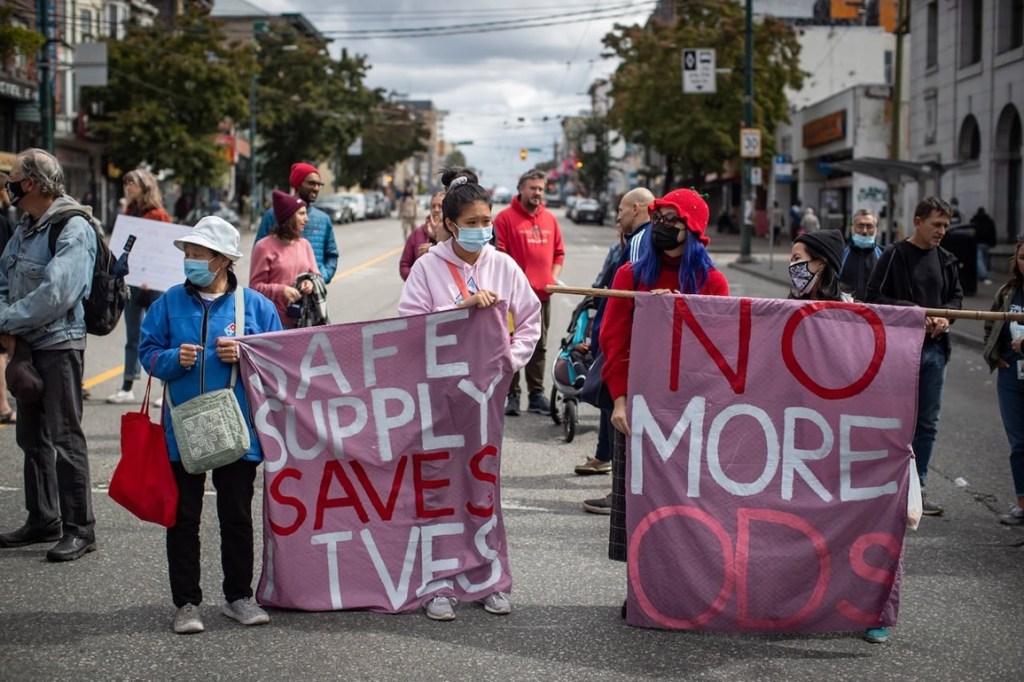
In recent years, Canada has emerged as a trailblazer in progressive drug policy by embracing a bold approach to decriminalization. This paradigm shift represents a departure from the traditional punitive stance toward drug offenses, instead prioritizing harm reduction strategies. As the nation navigates the complex terrain of drug policy reform, it becomes evident that this move holds the promise of addressing public health issues more effectively.
The decriminalization of drugs in Canada is rooted in a recognition of the failure of punitive measures to curb substance abuse. Rather than treating drug addiction as a criminal issue, the emphasis is now on approaching it as a public health concern. By lifting criminal penalties for possession of small amounts of drugs, the Canadian government aims to break the cycle of imprisonment and provide individuals struggling with addiction access to the help they need.
At the core harm reduction is a guiding principle in Canada’s evolving drug policy. Instead of focusing solely on preventing drug use, the emphasis has shifted to minimizing the negative consequences associated with it. This approach includes the distribution of clean needles, supervised injection sites, and access to overdose-reversing medications. By adopting harm reduction strategies, Canada aims to protect the well-being of both individuals using drugs and the broader community.
The decision to decriminalize drugs draws inspiration from the success of Portugal’s approach. In 2001, Portugal decriminalized the possession and use of all drugs, opting for a health-focused model. Over the years, Portugal has witnessed a decline in drug-related deaths, HIV infections, and problematic drug use. Canadian policymakers are eager to replicate these positive outcomes and shift the narrative around drug use from punishment to rehabilitation.
Despite the potential benefits, the decriminalization of drugs in Canada has sparked debates and concerns. Many people have argued that lenient drug policies may contribute to increased drug use, while others worry about the potential strain on public resources for addiction treatment. Furthermore, investigative reporter Tyler Oliveira has demonstrated the damaging effects of drug misuse and homelessness in Vancouver. From watching his investigation, I wonder whether the Canadian government could better use their resources to tackle issues pertaining to homelessness, rather than creating a wider problem of social ills. While there are calls to treat people with issues of addiction more humanely in Canada, Oliveira’s documentary is shocking and, in many ways, frightful. With images of large amounts of methamphetamine users unable to walk and becoming extremely violent to healthcare workers and the general public I wonder if this more towards progressive policy has gone too far (I don’t know how I would feel inhaling meth fumes on my way to my local shop).
Striking a balance between personal freedom and public welfare remains a challenge, but advocates believe that the emphasis on harm reduction will ultimately lead to better outcomes for everyone….
Decriminalization opens the door for more community involvement in addressing drug-related issues. Local initiatives, grassroots organizations, and community outreach programs gain significance as they become crucial players in the broader strategy of harm reduction. By empowering communities, Canada aims to foster a collaborative and compassionate approach to tackling the complex issue of drug addiction.
Canada’s journey toward the decriminalization of drugs represents a paradigm shift in the global war on drugs. By embracing harm reduction as a cornerstone of its strategy, the nation aims to prioritize the health and well-being of its citizens over punitive measures. The lessons learned from Portugal and other progressive models underpin the potential for positive change. As Canada continues to navigate the complexities of drug policy reform, the emphasis on harm reduction holds the promise of transforming the narrative around drug use and addiction. Only time will tell if this bold approach will lead to a healthier, more compassionate society.
Share this:


The Importance of Lived Experience in Making Change

***There is a content warning for this post as it briefly mentions self-harm***
I am a mature student entering the 3rd year of my degree, joint honours psychology and criminology. My choice in academic study (and hopeful career path) is largely informed by my own life experiences which have and will continue to be one of my biggest strengths. I have been in mental health services as a patient since my pre-teens and I have worked in a variety of mental health settings including inpatient forensic mental health and rehabilitation. My criminological interest was piqued after being a victim to violent crimes as an adult. All of this, as well as some conversations I have had with lecturers and peers over the last 2 years, has me thinking about the influence and importance of lived experiences in our academic and career choices, and the opportunities that lived experiences create for making change and battling adversity.
When we experience anything in life, big or small, positive or negative, we can gain incredible insight about ourselves and the world around us in a way that we would never have done if we didn’t have those experiences. It can change or set the trajectory of our lives. When we are in the correct place in our lives, our recovery, our minds to be able to pour from a cup that isn’t empty, we can find ourselves in an amazing place where we can help others and inspire change for those who have experienced or are likely to experience what we have. Perhaps even the ones who never have and never will. All equally as important.
Every system, service, or organisation needs to have the input from those who have experienced it from the other side. We need to know how the work is being perceived at the other end. It can be really difficult to collate feedback, especially the positive stuff, or see end-to-end results and we find that if no-one speaks up, what will be done is the easy thing, the cheap thing, or the well-intentioned but mismatched thing. Of course, we may be able to go beyond advice and become a part of a service or a voice ourselves and ‘be the change.’ We can inspire change by instilling more trust in others that we truly understand their predicament and that we have moved or are moving through it, showing them that it is possible or that they’re not alone. It can be refreshing and a huge learning experience for others in the service, as a user or provider, who may be stuck, going through the motions unequipped with knowledge of how to make change for the better, especially in sectors that can be particularly challenging day-to-day.
If I may give a personal example from when I worked on a psychiatric ward for forensic rehabilitation. I worked with many patients who felt as though it was staff vs patients, that we couldn’t possibly know what it was like for them, that we were only there because we were paid, and because they were detained against their will, we had to keep them there. I didn’t hide my personal experiences, my real reasons for being there, but no one really asked so I didn’t shout about them either. When the COVID-19 pandemic hit, for reasons of infection control, I had no choice but to obey a rule, ‘‘bare-below-the-elbow.’’ That meant I had to wear short sleeves on the ward. It meant revealing to my patients the scars I bear from self-harm. This prompted lots of questions, some less awkward than others, but it opened up so many wonderful conversations and breakthroughs. I spoke with my patients about knowing how that feels, that I’ve been on the medication they’re struggling with, and I’ve done the therapy they’re reluctant to try. It connected me to my patients and my work in such a wonderful way and meant my patients trusted me more, trusted the process more and engaged in ways they haven’t before. It meant that when decisions were made about patient care or ward processes, I could advocate from a place of empathy and understanding and in cases where people have their rights reduced or taken away, detained against their will, are vulnerable, are disadvantaged, we can’t do it enough.
Being loud about our experiences means raising awareness, breaking down stigma and stereotypes to create more inclusive and accepting societies, building supportive communities, and helping people along their path. It can serve as inspiration for people who may never have even given a thought to their experiences, things they witness or people who experience hardship and keep it under wraps.
Perhaps this even serves as a little nudge to be open to the experiences of others, to recognise and challenge your own biases, the things you may or may not understand. If you find yourself in a position to decide who to hire, interact with, which project to run; find the lived experience, consider the people who just need a little more support and feel like a little risk, because you never know what it could do. We can apply this to healthcare, criminology, charity, or anything that feels like it is our calling.
It can be such a tough and slow process, it won’t always be welcomed, it might not always work out. There may be people, services and societal norms or stigma that have an agenda or goals that don’t align with yours, not everybody likes change or will be willing to put in the effort. We may not always get the answers we are looking for because of the complex world we live in. But that doesn’t mean we shouldn’t try, right?
Share this:


Stop strip searching children!

The Metropolitan Police are under constant criticism, more than any other police force, for at least as long as I have been a criminologist. Their latest scandal began with the case of Child Q, a 15 year old girl who was strip searched in school while she was menstruating after being suspected of carrying cannabis. No drugs were found and Child Q was extremely traumatised, resulting in self-harm and a suicide attempt. Tré Ventour recently wrote a blog about Child Q, race and policing in education here but following this week’s Children’s Commissioner report, there’s so much more to discuss.
The report focussed on the Metropolitan Police who strip searched 650 children in 2 years, many (23%) of whom were searched without the presence of an appropriate adult and as we criminologists would expect, the children were disproportionately Black boys. These findings were not surprising or shocking to me, and I also know that the Metropolitan Police force are not just one bad apple in this respect. The brutal search of Child Q occurred in 2020 but incidences such as these have been happening for years.
A teenage boy aged 17 was subject to an intimate search in 2019 where the police breached a number of clauses of PACE, ultimately resulting in the boy receiving an apology and £10,000 damages for the distress caused by the unlawful actions. These actions started with basic information being withheld such as the police officer failing to identify himself and informing the boy of his rights and ended with the strip search being undertaken without an appropriate adult present, in the presence of multiple officers, without authorisation from a senior officer and with no justification for the search recorded in the officer’s pocket book. Now I understand that things may be forgotten in the moment when a police officer is dealing with a suspect but the accumulation of breaches indicates a more serious problem and a disregard to the rights of suspects in general but children more specifically.
These two cases are the cases of children who were suspected of carrying cannabis, an offence likely to be dealt with via a warning or on the spot fine. Hardly the crime of the century warranting the traumatising strip searching of children. And besides, we criminologists know that the war on drugs is a failed project. Is it about time we submit and decriminalise cannabis, save police time and suspect trauma?
What happens next is a slightly different story. Strip searching in custody is different because as well as searching for contraband, it can also be justified as a protective measure where there is a risk of self-harm or suicide. Strip searching of children by the police has risen in a climate of fear surrounding deaths in custody, and it has been reported that there could be an overuse of the practice as a result of this. When I read the report, I recalled the many conversations I have had over the years with my friend Rosie Flatman who is a practitioner who specialises in working with victims of Child Sexual Exploitation (CSE) and other forms of abuse. Rosie has worked with many girls who have been subject to strip searches when in custody. She told me how girls would often perceive the search as punishment for being what the police believed was disruptive. That is not to say that the police were using strip searches as punishment, but that is how girls would experience it.
Girls in custody are often particularly vulnerable. Like Rosie’s clients, many are victims and have a number of compounding vulnerabilities such as mental ill health or they may be looked after children. Perhaps then, we need to look at alternatives to strip searching but also custody for children, particularly for those who have suffered trauma. Rosie, who has delivered training to various agencies, suggests only undertaking strip searches where absolutely necessary and even then, using a trauma informed approach. She argues that even the way the procedure and justification is explained can make a big difference to the amount of harm caused to vulnerable children in police custody.

 Thoughts from the criminology team