
Home » Science (Page 2)
Category Archives: Science
HMP Science Competition 2020: “Will humans ever meet space aliens?”
The last few months have been challenging for all of us, in one form or another, regardless of personal circumstances. Many of us have faced loneliness, illness, bereavement, as well as a range of other challenges. Prisoners have particularly been hit hard, with the cessation of family visits as well as, an extremely restrictive regime. As a response to the Covid-19 lockdown, the Criminology team have created a range of different activities which can be undertaken in cell and which have hopefully helped to pass the long hours. Similarly, colleagues within Geography have created a number of different quizzes which have tested both staff and prisoners. As part of this initiative, Professor Nick Petford, Vice Chancellor of UoN kindly offered to run a writing competition focused on science. The winning entry can be read below
There is a near 100% certainty that humans will indeed meet space aliens – and if not within our generation, then most likely within the lives of our children or grandchildren.
However, whilst generations built up on visions of Star Wars and Star Trek might envisage us clasping hands with humanesque visitors from outer space, Babel fish in their ears, the first and perhaps only encounter ever likely to happen is that of a scientist peering at the screen of an electron microscope, to study the truly spectacular and epoch-making vision of an alien self-replicating molecule, or single-celled proto organism, retrieved from a volcanic rent on volcanic vent on Io [moon of Jupiter], Mars or another near neighbour.
The mathematician von Neumann’s concept of the ‘von Neumann probe’, or self-replicating space vehicle capable of travelling interstellar distances, to replicate itself on other planets, from where it would then head off to further star systems, populating the entire Milky Way in less than a million years, does neatly encapsulate the question: If there is intelligent alien life out there, why haven’t we seen it? The only answer to which must be, to the extent it does exist, it must be a long, long way away, in remote galaxies, perhaps too distant to ever be reached by man, as the universe expands more rapidly than we could ever travel.
Initial results from the studies of now thousands of exo-planets have also failed to give chemical indications of oxygen, or other synthesised chemicals likely to indicate life in detectable quantities on our near neighbouring planets.
However, on the smaller scale, if scientists such as Langland are correct in their view that the evolutionary adaptation of self-replicating molecules, leading to early life forms, can be explained by the laws of thermodynamics, prior to any Darwinian pressures on replication, mutation and inheritance traits, life in its most basic forms is likely to be a common phenomenon. Rather than needing a primeval chemical soup struck by lightening to foster the creation of RNA-like molecules, any simple source of energy such as volcanic spark could, over time give rise to simple life forms. Indeed, this is seen here on earth, where a bewildering variety of non-oxygen based simple life forms exist in the plumes of deepwater volcanic rents.
Such life forms may be simple, and their environmental conditions not far extensive enough or long-lived enough for complex life to form, or spread from the immediate vicinity. Even here on earth, life may have existed for two billion years or more before that fateful day when two became one, and complex cellular life came into being.
Sometimes in the near future, life will no doubt be discovered elsewhere than just on earth – with all the implications that will doubtless bring to the monotheistic religions placing God and Man at the centre of creation. But one thing is certain, our first encounter with alien life will be through a microscope, not a spaceship.
M.R. (2020)
Share this:


“Things you need to know about criminology”: A student perspective – Mary Adams, recent Graduate and mature student.

We are all living in very strange times, not sure when life will return to normal...but if you're thinking about studying criminology, here is some advice from those best placed to know!

The most important module to my understanding of criminology is: I would have to say they are all equally important for understanding different aspects of Criminology. In first year I loved The Science of Crime which showed how things have evolved over time, and that what we now see as funny was actually cutting edge in its day. True Crime also makes you look beyond the sensational headlines and separate fact from fiction. In second year Crime & Justice gave a brilliant grounding in the inner workings, and failings, of the criminal justice system. And in third year, the Violence module explores personal and institutional violence, which is especially relevant in current times

The academic criminology book you must read: Becker’s Outsiders and Cohen’s Folk Devils and Moral Panics are a must. I also found Hopkins-Burke’s An Introduction to Criminological Theory and Newburn’s Criminology essential reading for first year as well as Finch & Fafinski’s Criminological Skills. For second year I recommend Davies, Croall & Tyrer’s Criminal Justice. If you choose the Violence module in third year you will be grateful for Curtin & Litke’s Institutional Violence. And don’t forget Foucault’s Discipline & Punish!

The academic journal article you must read:
There are so many excellent journal articles out there, it’s difficult to choose! Some of my favourites have been:
'Alphonse Bertillon & the measure of man' by Farebrother & Champkin;
'Bad Boys, Good Mothers & the ‘’Miracle’’ of Ritalin by Ilina Singh';
'Detainee Abuse & the Ethics of Psychology' by Kathryn French;
'Attachment, Masculinity & Self-control' by Hayslett-McCall & Bernard;
'Grenfell, Austerity & Institutional Violence' by Cooper & Whyte;
'The Phenomenology of Paid Killing' by Laurie Calhoun;
'A Utilitarian Argument Against Torture Interrogation of Terrorists' by J. Arrigo.

The criminology documentary you must watch:
Without a doubt, a must-see is the Panorama documentary London Tower Fire: Britain’s Shame. I would also highly recommend the movie The Stanford Prison Experiment

The most important criminologist you must read:
Of course you must read Lombroso, Beccaria & Bentham. I also enjoyed reading work by feminist criminologists like Pat Carlen, Carol Smart & Sandra Walklate. And of course, Angela Davis is a must!

Something criminological that fascinates me:
What fascinates me is how the powers that be, and a good proportion of the public, cannot seem to realise that social injustice is one of the major factors behind why people commit crime. And the fact that putting more & more people in prison is seen as a ‘good’ thing is mind-boggling!

The most surprising thing I know about criminology is:
The fact that it is such a diverse subject & incorporates so many other disciplines

The most important thing I've learnt from studying criminology is:
Question everything! Don’t take anything at face-value. Try to look beyond the attention grabbing headlines to find out the real story. Read, read, read!

The most pressing criminological problem facing society is:
Unfortunately I think there are many pressing problems facing society today, the main ones being social injustice & inequality, systemic racism, institutional violence, and mass incarceration


When family and friends ask, I tell them criminology is:
Some people joke that I’m learning how to be a criminal! Others think it’s all about locking people up! I tell them it’s all about looking at the mechanisms in-built in our society that disadvantage & discriminate against whole groups of people, and that, unless we are part of the rich & powerful elite, any one of us could find ourselves in the ‘out’ group at any time. I also tell them to stop reading The Daily Mail, vote Labour, and question everything!!
Share this:


“Things you need to know about criminology”: A student perspective – Bonnie Middleton (2017-2020)
We are all living in very strange times, not sure when life will return to normal...but if you're thinking about studying criminology, here is some advice from those best placed to know!

The most important module to my understanding of criminology is: All of them! Every module contributes to your understanding of Criminology and all are different and enjoyable. Personally, my favourite module was Violence: From Domestic to Institutional in Year 3; this module ties together everything you know about Criminology; the reasons why we are subjective as criminologists and our ability to look beyond the scope of what we know.

The academic criminology book you must read:
Outsiders: Studies in the sociology of deviance (1963) by Howard Becker. Albeit a dated book, its ideas are relevant and relate to many criminological such as; how and why criminals are labelled and stigmatised; why are the youth demonised; why people reject the norms and values of society and become criminals in doing so.

The academic journal article you must read:
This is a hard one. Articles are great for discovering new ideas and methodologically testing theories. I would recommend reading: Arrigo, J. (2004). A Utilitarian Argument Against Torture, Interrogation of Terrorists. Science and Engineering Ethics. 10(3), pp. 543-572. This article poses many questions for a criminologist which enlightens you to think subjectively and challenge your own views; which is what Criminology is all about. From reading this article you will learn to think critically when faced with a challenging dilemma; the rights of a terrorist and how can the law can be tailored to fit the crime.

The criminology documentary you must watch:
Where do I begin? Louis Theroux and Stacey Dooley are both great journalists and documentary makers. If I had to pick one, I would recommend watching the BBC’s documentary on Grenfell If you watch this documentary you must consider; the government’s response; who is accountable; why are the residents of Grenfell still in temporary accommodation. These are the sorts of questions you should be asking as someone studying Criminology.

The most important criminologist you must read:
Familiarise yourself with the ideas of Lombroso, this will aid your understanding on how criminological theory and ideas have developed overtime through biological, psychological and sociological standpoints.

Something criminological that fascinates me:
Domestic abuse. I had done my dissertation on this as I have a great interest in male dominance and power over women, especially in intimate relationships. Gender plays a key role in this which when examined in depth, will change your view on gender paradigms.

The most surprising thing I know about criminology is: Criminality was believed by Lombroso to be inherited and that criminals possessed physical defects, criminality would be measured by the size and shape of particular body parts; this was later discredited. I can remember learning this in first year and it fascinated me.

The most important thing I've learnt from studying criminology is:
To not judge a book by its cover and to not take everything at face value. Do not be afraid to challenge other’s standpoints and beliefs. Thinking critically is the most important skill to have, search deeper into issues and apply your own thoughts and experiences.

The most pressing criminological problem facing society is:
Mass incarceration and reoffending rates. The UK is yet to move away from the ‘tough on crime’ approach favouring law and order and punishment. The penal system needs to be reformed to ensure offenders are rehabilitated to break the cycle of criminality; definitely educate yourself on political party’s manifesto’s and what they say about crime and justice before voting.

When family and friends ask, I tell them criminology is: I tell family and friends that criminology is such a broad field of study; we look at law, psychology, science, sociology, politics, penal systems, criminal justice organisations, media and much more. From this, you attain the ability to think critically and reflect, it can help you in many situations not just criminological issues. It is an incredibly insightful and enlightening field to study; it opens up many opportunities.

Share this:


Home educating in a pandemic
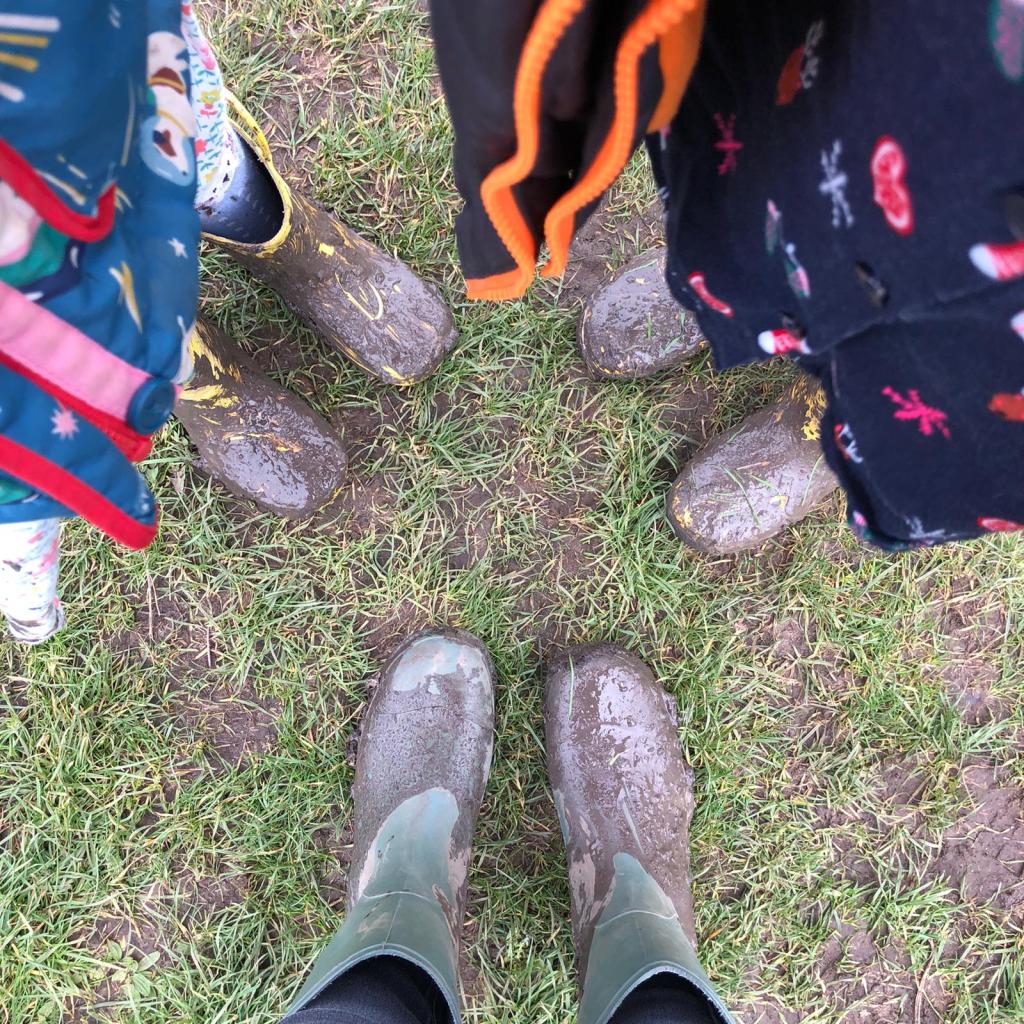
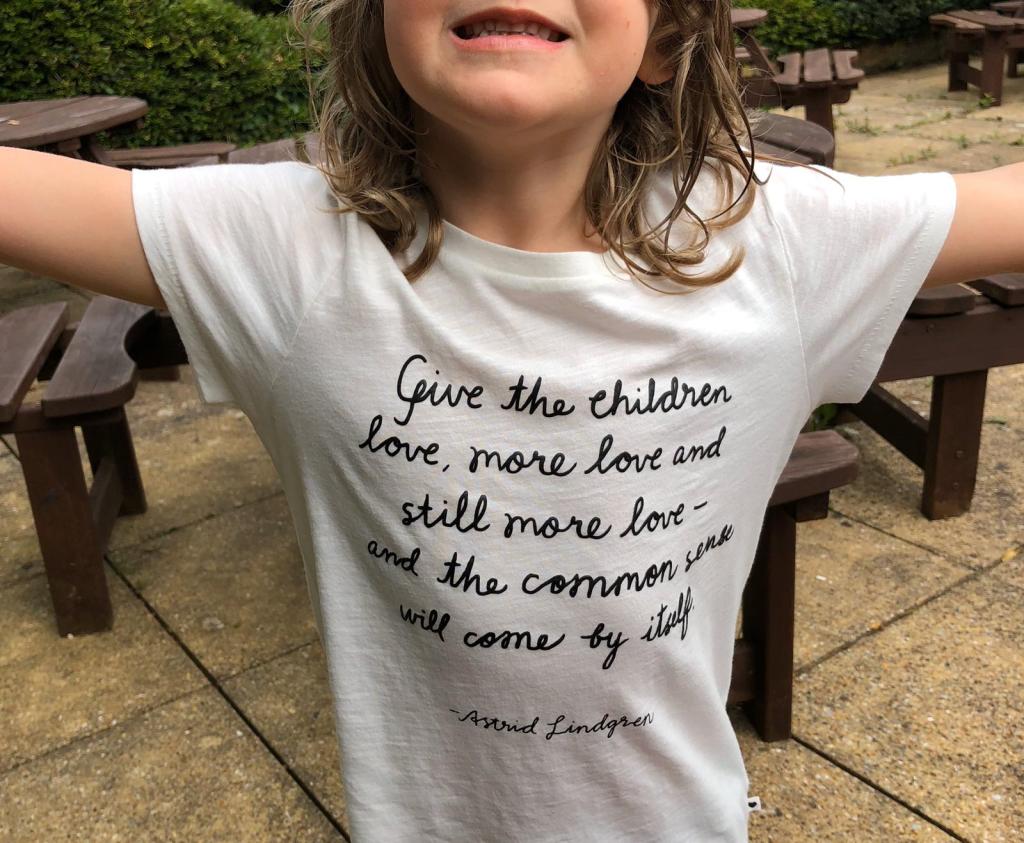
“Give the children love, more love and still more love - and the common sense will come by itself” - Astrid Lindgren
My children are aged 5 and 7 and they have never been to school. We home educate and though ‘home’ is in the title, we are rarely there. Our days are usually filled with visits to museums and galleries, meet-ups with friends, workshops in lego, drama and science and endless hours at the park. We’ve never done a maths lesson: sometimes they will do workbooks, but mostly they like to count their money, follow a recipe, add up scores in a game, share out sweets… I am not their teacher but an enthusiastic facilitator – I provide interesting ideas and materials and see what meaning they can take and make from them. Children know their own minds and learning is what they are built for.
If there was ever a time to throw away the rulebook it’s when the rules have all changed. Put ‘home’ at the centre of your homeschooling efforts. Make it a safe and happy place to be. Fill it with soft, warm and beautiful things. Take your time.
All this to say that what children need most is your love and attention. This is so far from an ideal situation for anyone – so cut yourselves some slack and enjoy your time together. You don’t need to model your home like a school. Share stories and poems, cuddle, build dens, howl at the moon, play games, look for shapes in clouds and stars, do experiments round your kitchen table, bake cakes, make art, explore your gardens and outside spaces and look for nature everywhere. This is the stuff that memories are made of.
As adults we don’t continue to categorise our learning by subjects – we see the way things are interconnected across disciplines, sometimes finding parallels in unlikely places. When we allow children to pursue their own interests we give them the tools and the freedom to make their own connections.
What’s important is their happiness, their kindness, their ability to love and be loved in return. They are curious, they are ready made learning machines and they seek out the knowledge they need when they need it.
It’s an interesting time to be a home educator – more children than ever are currently out of school and the spotlight is on ‘homeschooling’. I prefer the term ‘home educator’ because for me and my family it isn’t about replicating the school environment at home and perhaps it shouldn’t be for you either.
Treat it as an extended holiday and do fun stuff together but also let them be bored.
Share this:

When I grow up what will I be?

Don’t worry I’ve not regressed, well not yet anyway. I was watching Match of the Day last night, not quite the usual programme, as there are no football matches at the moment. In its place was a podcast by three football legends, the usual presenter Gary Lineker (he does more than Walkers’ crisp adverts), Ian Wright and Alan Shearer. It was more like three old codgers around a kitchen table reminiscing about football than a Match of the Day programme, but it was funny and enlightening. One of the topics that arose was what made a top striker, was it being gifted or was it hard work and tenacity? I have to confess by this time I was half falling asleep aided by three gin and tonics and a large helping of pizza, but I do recall through the haze, that the three of them seemed to agree that it was a bit of both, maybe 50/50. What did make me sit up was when Shearer declared , or was it Lineker, who cares, there were a number of more talented players around when they were younger but they didn’t stick at it and, I presume fell by the wayside. So, three very talented footballers agree that hard work and tenacity has a major part to play in success.
When I was young, I wanted to be a doctor. By the age of 14, I had this firmly set in my mind. I was good at the sciences, maths and English were no problem and I was predicted to get good grades when leaving school, university was on the cards. Then the teenage years really took hold, I grew lazy, rebelled, preferred football, rugby and girls. Hard work at school sucked and I stopped working, anyway someone told me that I had to do 7 years at medical school if I wanted to be a doctor. F*** that, I thought, I want out of school now, not to prolong it by another 7 years. We were overseas at the time, so when I returned to England, I ended up going to college to complete my ‘O’ levels. I remember thinking the work was a breeze, it seemed that I had been working at a higher level at my overseas school. I found myself a part time job, occasionally skipped college classes but in general my attendance was good. I achieved 5 good ‘O’ level grades. I do remember working very hard at science as a subject (I achieved an A for that) but the rest, well you know, it just happened. English language was my worst subject (a grade C), mind numbingly boring.
So, after school, well a job in a petrol station as a cashier, it was a job, better than nothing. I do remember one of my college lecturers coming into the station and was almost apoplectic about me working there. I was better than that, I think was the gist of it. Then my family went back overseas again. I found myself a few jobs overseas and simply drifted; I could have had an apprenticeship, but we were returning to England, so not much point. On our return though I decided I needed a job, not so easy. This was the early 1980s, UB40 released a song One in Ten, I was one of those one in ten unemployed souls. Disheartening wouldn’t describe it adequately. My working mates were going out to pubs and clubs and eating kebabs after to soak up the alcohol, I couldn’t afford a kebab, let alone the alcohol and you don’t meet girls on the dole queue.
I always had a hankering to join the Royal Navy, probably fuelled by the fact my grandad had been in the navy. I liked the idea of being an engineer, so I went along to the recruitment office and eventually turned up for an entrance exam. I failed, maths of all things. I remember sitting there and panicking whilst trying to do equations and fractions. Basic stuff that I’d breezed through at ‘O’ level. Nobody told me about preparation, and I didn’t even think about it. Why would I, up to that point I really hadn’t had to work hard at anything other than my science subject at ‘O’ level. Reality hit home. I signed up for an A level maths course at college – free to the unemployed. I wrote to Whitehall to explain how well I’d done in my entrance exam apart from the sticky little subject, maths, but pointed out that I was doing something about that. I didn’t want to wait the usual statutory year to retake the exam and I wasn’t disappointed; they wrote back stating I could take it in 6 months’ time. Someone obviously thought this boy’s got a bit of gumption. But six months of unemployment is a long and depressing time. An advert in the local Sunday newspaper caught my attention, the police were recruiting. I applied and found myself in a career that was to last thirty years. Not something I planned or even wanted.
Maybe that’s when the hard work and tenacity started, I don’t know. Maybe it started when I was driven by the desperation of being unemployed. One thing I learnt though is that sitting on your backside and drifting along doesn’t get you anywhere. Having a gift or intelligence will not in itself get you success. Only hard work and of course, that all important thing called opportunity, helps to garner something.
The recruitment process for the police wasn’t the same as it is now. Maybe I should leave that for another blog.
Share this:


Social Psychology in a Time of Crisis

I am currently sitting in an empty classroom because, although face to face teaching is not officially suspended until tomorrow, none of my seminar students have turned up. In this rather depressing situation, however, there is much for a psychologist to reflect upon, particularly the process of social influence.
First there is the phenomenon of obedience to authority. In his seminal series of experiments, Milgram (1974) was trying to understand the destructive power of obedience; the tendency of people to do what they are told even when it is morally wrong and they know it to be so. The current situation is different. While it is always important to question science (as anyone who has studied CRI1007) should be well aware!) large scale public health measures have no hope of working unless everyone obeys. Milgram did not just explore how obedient people can be – he also investigated the conditions under which obedience is strongest. One of the factors that enhanced obedience was an aura of scientific authority. Participants were more likely to obey when they were instructed by a person in a white coat, who worked in a smart laboratory in a reputable university and who made reference to science, research and experiments, than when they were confronted by someone in scruffy clothes in a run-down building in a tatty back street. Boris Johnson has a poor record of telling the truth and inspiring trust. It is no coincidence that he is currently delivering his daily briefings flanked by his chief medical officer and chief scientific advisor.
Then there is the phenomenon of panic buying. There is probably a deep-seated evolutionary drive that causes us to hoard food in times of potential shortage. Just as the onset of autumn drives squirrels to bury hazelnuts, so the mention of self-isolation drives humans to buy pasta and tinned tomatoes (or potatoes in the case of one of my elderly relatives). My grandmother, who was her family’s main breadwinner through the Second World War, kept a stash of sugar under her bed until the day she went into a care home. And I guess Freud might have had something to say about the fact that the items we are hoarding most fervently are toilet rolls!
Evolutionary drives are, however, not the whole story and social influences play a part too. We panic buy because everyone else is panic buying. In his research on conformity, Asch (1956) identified two main reasons why people went along with the crowd: some just wanted to fit in and be socially accepted (compliance); others doubted their own judgment and believed that everyone else must be correct (conversion). The latter process is helping to drive the current retail crisis – people think “everyone else is panic buying, so there must be a good reason to do so, so I need to do it too!”
Asch was investigating the influence of majorities but minorities can be influential too, often for similar reasons (Moscovici, 1976). As if we didn’t have enough disease to worry about, I have just passed a screen warning students about outbreaks of mumps in British universities. The reason why mumps is on the rise among students is that 20 years ago, when the current generation of students were babies, a small minority of scientific opinion suggested a link between the MMR vaccine and autism. Backed by authoritative sounding research and confident and charismatic individuals, it led parents to doubt mainstream opinion and reject vaccination for their children.
Another topic which has puzzled social psychologists for many years is that of altruism. Are we ever truly, selflessly altruistic? Or are we good to others because it has rewards for us? Looking at the Facebook group for the village where I live, there are some heart-breaking accounts of selfishness over the last few days. The grandmother desperately appealing for Calpol for a 5-month-old baby with chicken pox, because every shop she has tried has been cleared out by panic buyers. And the farm that sells eggs by the side of the road with an honesty box that is now asking customers to phone with orders because someone has stolen all the eggs and all the cash. But there are some lovely examples of altruism too. People offering to shop or collect prescriptions for the elderly and vulnerable. People offering to cook meals for health professionals. People setting up Facebook and WhatsApp groups in order to maintain social contact. And the wonderful woman who offered free mango chutney to anyone in the village, just because she was making a batch and wanted to share the love!
We live in interesting times! Stay safe, keep calm and use this opportunity to read and reflect.
References
Asch, S.E. (1956) Studies of independence and submission to group pressure: 1 A minority of one against a unanimous majority. In Psychological Monographs, 70, (9) (Whole No. 416).
Milgram, S. (1974) Obedience to Authority. New York: Harper and Row.
Moscovici, S. (1976). Social influence and social change. London: Academic Press.

 Thoughts from the criminology team