
Home » Sacrifice
Category Archives: Sacrifice
‘Do or do not, there is no try’

The Red Roses are playing in the rugby union world cup final on Saturday and I, amongst thousands, will be watching it on television with a heady mixture of anticipation, trepidation, excitement, fear and expectation. The England Women’s rugby union team is made up of some very talented individuals that come together as a team to produce some of the most electrifying displays of rugby, that is both mystical and awesome to watch. I won’t just be watching, I’ll be dodging every lunge, wincing at every tackle made, running like the wind, dotting down the ball and willing every kick over, I’ll be totally engrossed.
I will be watching elite athletes at the top of their game, and I know, not one of them got there by chance. To be an elite athlete requires hours of training, a strict dietary regime, and dedication. It requires mental agility, physical strength, sacrifice and focus. To get to the pinnacle of their chosen profession, requires total commitment, ‘Do or do not, there is no try’ (Yoda – The Empire Strikes Back).
We can’t all be elite athletes, for a variety for reasons, but what they demonstrate is that achievement is not chance. My life experience, like that of many others, has shown me that there is no such thing as a free lunch. Success, whatever that looks like, requires hard work, sacrifice and commitment. In any walk of life, people that are successful in what they do, have had to put in a lot of effort and make sacrifices. That effort and those sacrifices often started with study. Whether that’s study at school, further education or higher education, or study outside of the educational environment they have been committed to their learning and achieving the best they could. Some may have better opportunities than others but nonetheless, doing nothing, achieving nothing, rarely qualifies an individual to be a top executive in a company, a top lawyer, surgeon, politician, lecturer, sports person or anything else. Top footballers in both the men’s and women’s games don’t just turn up on a Saturday for a kick around. None of them allow themselves to be distracted from what they want to achieve. Some people may not be academically gifted but their success is predicated on hard work and dedication.
This week we welcome new students to the university and next week we will see familiar faces returning. To all our students I would urge you to remember why you are here, what it is you want to achieve? Education is a right but look around the world and you will see that not many can avail themselves of that right. You are privileged and whilst you may not be able to match the commitment shown by the Red Roses, few of us could, it is worth remembering that no one achieves anything without some commitment and sacrifice. Set your sights high and go for it, we are all willing you on. And like the Red Roses we want to rejoice in your success.
Share this:


The industry of hope
There is expectation in hope that things will change. Every personal and social issue that is not going according to plan, all the adversities and the misfortunes, are placed on the anticipation that eventually, things will change. The conviction for the change is hope. Hope is a feeling based on emotions, irrational and inexplicable.
Hope is a refuge for those whose lives are wronged and feel unable to do anything but to hope. Millions of people hope for better days, better health, better relationships, better lives. This hope keeps expectations high even when you are told of the opposite.
Consider the following dialogues:
“The environment is changing, global warming, the pandemic and the economic recession. It looks like we’ve had it! We are one meteor away from a catastrophic event”. “I agree with what you say, but I hope that despite all these we will find a way out of all these.”
“Your crime is too serious; looks like you are going to jail”. “I hope the judge is lenient and maybe I will not go to prison”
“The tests indicate that your health has deteriorated, it is unlikely to change; I am afraid you have only a few months to live”. “I hope that God will listen to my prayer and cure me”.
“I do not love you anymore, I want to leave you! “Don’t break my heart; I hope you change your mind.”
All these have one thing in common. The respondent’s hope for something, despite the overwhelming evidence to the contrary. This unwavering conviction comes at a price! The entire world is built on an industry of hope. Institutions, systems, “experts” and many more who profit from the misfortune of others. One of the main benefactors in this industry is undoubtedly religious institutions and belief experts.
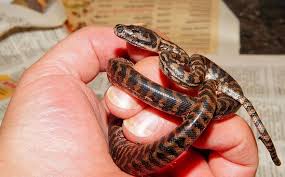
Some years ago, in one of my trips, in found myself in a monastery that has a tradition of snakes appearing on the day of the ascension of the Virgin Mary. The revellers regard it as a sign of good fortune and favour from her grace. I was in the monastery on a different day, when a group of boisterous Russian tourists were trying to buy some grace. The lady in the church was clear; a small bottle of holy water 3 euros, a small bottle of oil 5 euros. There were bigger sizes and of course for more certainty of hope, a purchase of both is indicated. Since then, it got me thinking; what is the price of hope?
Faced with a terminal disease, how much would any of us will pay to live a little bit longer? The question is merely rhetorical, because each of us is likely to pay according to what they can afford. There are those who may care less for themselves, but are willing to sacrifice anything for someone special; or a great idea.
Since the discovery of electricity, Victorian scientists dispelled the expertise of those charlatans that spoke with the dead and commuted with the spirits. Even though there have been mounting evidence against them, their industry of hope is still booming. People like to hope. They embrace its positive message. After all Dum Spiro Spero.*
There is of course the other side; Nikos Kazantzakis famously said; “I hope for nothing. I fear nothing. I am free.” It is liberating not to hope, but it is very difficult to achieve. Personally, despite experiencing negative situations, and even after meeting some naysayers armed with a sour face in life, I will never stop hoping that people are better inside and they can change and embrace their better selves. My hope, I fear, is incurable.
*While I breathe, I hope
Share this:


A moment of volition and free will

On Good Friday, Christians will remember one of the most important covenants in their faith. The arrest, trial and execution of the head of their church. Jesus, an inspiring figure across centuries, will be in the garden of Gethsemane asking his father “to take this cup from me” (Luke 22:42), but finally accepting his fate. The significance of this self-sacrifice is the glue that connects the faith to its followers, because it is a selfless act, despite knowing in advance all that is to follow. The betrayal, the rejection, the torture, the humiliation and the eventual death. Even the resurrection, appears distant and therefore he will momentarily wish to abstain. Then, comes the thought; if not me, who? This act is conditional to all that will follow and so his free will ultimately condemn him.
These are steps that inspired many of his followers to take his word further across the world and subject themselves to whatever fate they were to suffer. The message rests in pure religious motives and motivations and over the years has eroded the implicit humanity that it contains. People have been able to demonstrate their destructive nature in wars, crime and continued injustices. Against them some people have taken exception and in acts of altruism willingly, sacrifice themselves for the greater good. People of, or without, faith, but with a firm conviction on the sacrament of humanity.
People stood up against oppression and faced the judgement of the apartheid regime that murdered them, like Steve Biko. People who spoke out against social injustice like Oscar Romero, who was shot during mass. Those who resisted fascism like Ilektra Apostolou, a woman tortured and executed by the Nazis, and countless others throughout time. These people maybe knew the “risks” of speaking out, of making a stand, but did it anyway. A free will that led them to their damnation, but for millions of others, they became an inspiration. At the worst of times, they shine and take their place in history, not for conquering and victories, but for reminding us all of the nobility in being principled.
Selflessness offers a signal to all, of how important it is, for all of us to be part of our society. It is when we dig deep on those qualities, that some may not even know that they have. I remember reading the interview of a person tortured during a dictatorship, being described as a hero; their response was incredibly disarming. “I am not a hero; I was just there”. I am quite aware that I write this blog at a time of self-isolation, lockdowns and the daily body count of the dead. Over a period of weeks, our lives have radically changed, and we live in self-imposed confinement. We are spectators in a medical drama with serious social implications. Those we do not quite know, but it looks very likely that these reverberations will last for at least a while.
It is interesting to see a renewed appreciation for professionals, namely health care and for those professions that we did not hold in high regard previously. Hero as a term seems to be rebranding itself and this may be one of those long-term effects afterwards. Just to remind us all that on this Good Friday, numerous professionals in the health care system, carers, teachers, public transport, logistics, council and retail workers will be going to work with their free will, knowing some of the risks for them and their families. This is their testament, this is their covenant and that forms part of our collective civilisation. Whilst people remind us to wash our hands, I kiss their hands for their altruism

 Thoughts from the criminology team