
Home » Responsibility
Category Archives: Responsibility

The coffee shop that’s worth more than its profit margin

Every morning follows the same rhythm. Finish my gym session, towel off, and head straight to the M&S café for my coffee. It’s not just about the caffeine – though God knows I need it. It’s about the ladies behind the counter who greet me with genuine warmth, who remember my order, who take pride in their work. In a world that often feels rushed and impersonal, their kindness has become my daily reset button.

But this isn’t really a story about my coffee ritual. It’s about what I’ve witnessed in that café—something far more important than any morning black americano.

The tables are always dotted with elderly faces. At first, I didn’t think much of it. But over time, as I’ve chatted with them, “I come here every Tuesday and Thursday,” one gentleman told me in the queue, staring at his menu. “Meet up with whoever’s about. Talk football, moan about the weather.” He smiled. “Beats sitting at home staring at the four walls, doesn’t it?” It’s beautiful, really. Watching strangers become friends over scones, toasties and crosswords. Seeing lonely people find their people, even if just for an hour.

The gentle hum of conversation about politics, memories, grandchildren, postwar Britain, the price of everything these days. This is what community looks like – unscripted, unglamorous, essential. I’ve become friends with some of them myself. They’ve told me about children who live too far away, partners they’ve lost, days that feel too long and too empty. For many, this café visit is their main activity. Their reason to get dressed. Their connection to the outside world.

A couple of days ago, I was at the gym when I overheard a conversation that stopped me mid-rep. They’re closing the café. The M&S café. Our café. I asked one of the staff members – one of those lovely ladies who makes this place what it is. She confirmed it quietly, almost apologetically, but couldn’t (or wouldn’t) share the details. The rumour mill says it’s about profit margins. The official line from M&S is that they’re repurposing spaces to create room for more popular products. More popular products!. And I felt something crack inside me.
If this is truly about profits, then we need to have a serious conversation about what we value as a society. Yes, businesses need to be viable. Yes, companies have shareholders and bottom lines and quarterly targets. I understand economics, I used to work in the financial services – a Bank to be precise, so I understand numbers. But when did we collectively decide that every single square foot of commercial space must justify its existence purely through revenue? This café might not be their most profitable location. But what’s the cost of closing it? Where exactly do we expect these elderly people to go?
“Just go to another café,” someone might say. But you’re missing the point entirely. This isn’t about coffee. It’s about familiarity. It’s about the staff who know your name. It’s about the community that’s been built, brick by brick, conversation by conversation, over months and years. You can’t just transplant that somewhere else. Community doesn’t work like that.
My elderly friends at the café (many of them in their 80s) represent a growing crisis we’d rather not acknowledge. Let me give you some numbers. According to a recent report on Age and loneliness in the UK, nearly 940,000 older people in the UK are often lonely – that’s one in fourteen people over 65 (Age UK 2024). And here’s the truly heartbreaking bit: 270,000 older people go an entire week without speaking to a single friend or family member.
Do you know how crazy that sounds? Not speaking to a single friend or family member!! A whole week!!
And loneliness doesn’t just make people sad—it kills. It increases the risk of depression, heart disease, stroke, dementia etc. This isn’t just about comfort or quality of life. This is a public health crisis. And yet, we’re closing the very spaces where people find connection. Where will they go? Costa? Starbucks? Even if they could afford the higher prices, those chains don’t foster the same sense of belonging. They’re designed for laptop workers and quick takeaways, not for lingering conversation and community building.
Councils cut funding for community centers – libraries operate on skeleton hours, now commercial spaces that accidentally became social lifelines are vanishing too.
I’m not naive. I know M&S isn’t a charity. I’m also aware they do good work by partnering with food banks and donating surplus food to people who need it. They clearly have a social conscience. But they brand themselves on quality, trust, and British values. Well, here’s a British value: looking after our elderly. Not abandoning them.
M&S, you have an opportunity here. An opportunity to position yourselves as a company that doesn’t just talk about community values but actually lives them. You could be the retailer that says, “We’re keeping our cafés open because we recognise they’re tackling one of the biggest health crises facing our aging population.” Imagine the goodwill. Imagine the respect. Imagine being the company that genuinely helps combat loneliness alongside all the good work you’re already doing – that’s how you truly stand tall amongst your peers.
There’s such thing as enough profit. There’s such a thing as being a responsible corporate citizen. There’s such a thing as recognising that some things – like providing a warm, safe space for lonely pensioners to find friendship – might be worth preserving even if it means slightly less room for those “more popular products.”
Our very own café will probably close. The space will be repurposed – maybe more retail shelving, maybe nothing at all. The decision-makers will never meet the people affected. They’ll never know about the Tuesday regular who’ll now have nowhere to go, or the widow who found a reason to leave the house, or the gentleman who finally made friends after his kids relocated to another country. And my morning ritual? I’ll find another coffee shop. I’ll survive.
But what about the people for whom this was so much more than coffee? What about the 270,000 older people who might go another week without speaking to anyone? What about your chance to be part of the solution instead of part of the problem?#
This is what the world is turning into: a place where community is a nice-to-have but never a must-have. Have we forgotten that sometimes the most valuable things can’t be measured on a balance sheet. We can do better than this.
What do you think? Are there spaces in your community facing similar threats? I’d genuinely love to hear your thoughts.
Reference list
Age UK (2024) Age UK’s new report shows ‘you are not alone in feeling lonely’. Available at: https://www.ageuk.org.uk/latest-press/articles/age-uks-new-report-shows-you-are-not-alone-in-feeling-lonely/ (Accessed: 27 October 2025)
Share this:


Doing the right thing
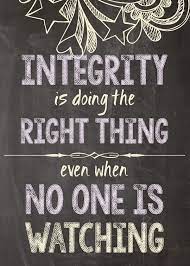
It seems that very often, the problem with politics in this country is that it gets in the way of doing the right thing. Despite the introduction of the The Seven Principles of Public Life known as the Nolan Principles, politicians (not all of them of course, but you will have seen ample examples) still seem to be hell bent on scoring political advantage, obfuscating on matters of principle and where possible avoiding real leadership when the country is crying out for it. Instead, they look to find someone, anyone, else to blame for failures that can only be described as laying clearly at the door of government and at times the wider institution of parliament.
One example you may recall was the complete farce in parliament where the speaker, Sir Lyndsay Hoyle, was berated for political interference and breaking the rules of the house prior to a debate about a ceasefire in Gaza. It became quite obvious to anyone on the outside that various political parties, Conservatives, Labour and the Scottish National Party were all in it to score points. The upshot, rather than the headlines being about a demand for a ceasefire in Gaza, the headlines were about political nonsense, even suggesting that the very core of our democracy was at stake. Somehow, they all lost sight of what was important, the crises, and it really is still a crisis, in Gaza. Doing the right thing was clearly not on their minds, morals and principles were lost along the way in the thrust for the best political posturing.
And then we come to the latest saga involving political parties, the WASPI women (Women Against State Pension Inequality) campaign. The report from the Parliamentary and Health Service Ombudsman has ruled that the Department for Work and Pensions (DWP) “failed to provide accurate, adequate and timely information” about changes to pension ages for women. The report makes interesting reading. In essence, it accuses the DWP of maladministration on several counts.
The Pensions Act 1995 changed the way in which women could draw their pensions in an effort to equalise the age with men. A timetable was drawn up raising the qualifying age for women from 60 to 65, with the change phased in between 2010 and 2020. However, under the Pensions Act 2011, the new qualifying age of 65 for women was brought forward to 2018. The report acknowledges that the DWP carried out campaigns from 1995 onwards but in 2004 received results of research that a considerable number of affected women still believed that their retiring age was 60. Unfortunately, through prevarication and for some quite inexplicable reasoning the women affected were not notified or were notified far too late. There was a calculation carried out that suggested some women were not told until 18 months before their intended retirement date. The matter was taken before the courts but the courts ruling did nothing to resolve the issue other than providing a ruling that the DWP were not required by law to notify the women.
You can read about the debacle anywhere on the Internet and the WASPI women have their own Facebook page. What seems astounding is that both the Government and the opposition have steadfastly avoided being drawn on the matter of compensation for these women. I should add that the maladministration has had serious detrimental impacts on many of them. Not even a sorry, we got it wrong. Instead we see articles written by right wing Conservatives suggesting the women had been provided with ample warning. If you read the report, it makes it clear that provisions under the Civil Service Code were not complied with. It is maladministration and it took place under a number of different governments.
Not getting it right in the first instance was compounded by not getting it right several times over later on. It seems that given the likely cost to the taxpayer, this maladministration is likely, like so many other cock ups by government and its agencies, to be kicked into the long grass. Doing the right thing is a very long, long way away in British politics. And lets not forget the Post Office scandal, the infected blood transfusion scandal and the Windrush scandal to name but a few. So little accountability, such cost to those impacted.
- The quotation in the image is often wrongly misattributed to C. S. Lewis. ↩︎
Share this:


2024: the year for community and kindness?



The year 2023 was full of pain, loss, suffering, hatred and harm. When looking locally, homelessness and poverty remain very much part of the social fabric in England and Wales, when looking globally, genocide, terror attacks and dictatorships are evident. Politics appear to have lost what little, if any, composure and respect it had: and all in all, the year leaves a somewhat bitter taste in the mouth.
Nevertheless, 2023 was also full of joy, happiness, hope and love. New lives have been welcomed into the world, achievements made, milestones met, communities standing together to march for a ceasefire and to protest against genocide, war, animal rights, global warming and violence against women to name but a few. It is this collective identity I hope punches its way into 2024, because I fear as time moves forward this strength in community, this sense of belonging, appears to be slowly peeling away.
When I recollect my grandparents and parents talking about ‘back in the day’ what stands out most to me is the community identity: the banding together during hard times. The taking an interest, providing a shoulder should it be required. Today, and even if I think back critically over the pandemic, the narrative is very singular: you must stay inside. You must be accountable, you must be responsible, you must get by and manage. There is no narrative of leaning on your neighbours, leaning on your community to the extent that, I’m under the impression, existed before. We have seen and felt this shift very much so within the sphere of criminal justice: it is the individual’s responsibility for their actions, their circumstances and their ‘lot in life’. And the Criminologists amongst you will be uttering expletives at this point. I think what I am attempting to get at, is that for 2024 I would like to see a shared identity as humankind come front and central. For inclusivity, kindness and hope to take flight and not because it benefits us as singular entities, but because it fosters our shared sense of, and commitment to, community.
But ‘community’ exists in so much more than just actions, it is also about our thoughts and beliefs. My worry: whilst kindness and support exist in the world, is that these features only exist if it does not disadvantage (or be perceived to disadvantage) the individual. An example: a person asks me for a sanitary product, and having many of them on me the vast majority of the time, means I am able and happy to accommodate. But what if I only had one left and the likelihood of me needing the last one is pretty high? Do I put myself at a later disadvantage for this person? This person is a stranger: for a friend I wouldn’t even think, I would give it to them. I know I would, and have given out my last sanitary product to strangers who have asked on a number of occasions. And if everyone did this, then once I need a product I can have faith that someone else will be able to support me when required. The issue, in this convoluted way of getting there, is for most of us (including me as evidenced) there is an initial reaction to centralise ‘us’ as an individual rather than focus on the community aspect of it. How will, or even could, this impact me?
Now, I appreciate this is overly generalised, and for those that foster community to all (not just those in their community and are generally very selfless) I apologise. But in 2024, I would like to see people, myself included, act and believe in this sense of community rather than the individualised self. I want people to belong, to support and to generally be kind and not through thinking about how it impacts them to do so. We do not have to be friends with everyone, but just a general level of kindness, understanding and a shared want for a better, inclusive, and safe future would be great!
So Happy New Year to everyone! I hope our 2024 is full of peace, prosperity, community, safety and kindness!

Share this:


The ‘Dangers’ of Travelling

This month, during the brief lull between the teaching and marking season, I had allocated myself a bit more free-time than usual. I have not been able to indulge in my hobby of travelling for a while, so instead of this, I have been watching travel related-television programmes with the hope that these will provide me with some kind of joy.
This attempt has been a partial success; an influx of comedy travel shows have worked wonders to uplift my spirits whilst simultaneously reminding me about the beauty of nature; animals, plants, sea, land…(and even humans).
Covid has taken over travel related news at the moment, but in ‘usual’ times it does not require much effort to come across travel documentaries or news reports that seem to encourage prejudice by depicting other countries and travelling as being strange or dangerous. I do worry that this type of coverage might discourage people from wanting to explore the world.
It is difficult to assess the extent to which the television influences our opinions, but when I was a bit younger and discussing my travel plans with others, sometimes I would be met with the following comments:
Response: I would love to travel but I can’t
Me: Why can’t you?
Response: It is dangerous!
Me: How do you know this?
Response: …It said so on the television
There are many genuine reasons that prevent people from travelling, such as, money, responsibilities, health, conflict, misogyny and racism etc. But I find the above reason to be such a shame.
I have encountered many myths over the years which seem to have been gained from watching the television. Here are some of my favorites:
Myth 1: If you see a [insert wild animal here], it will eat you alive
My experience: Take crocodiles for example, these are not as bad as they seem. Yes, arguably crocodiles are death machines but I have seen many in the wild and I am still alive.
Myth 2: The local ‘criminals’ are dangerous
My experience: On very rare occasions I have witnessed crime being committed whilst abroad. I once sat on a coach full of people who were attempting to smuggle cocaine to Brazil. I have also stumbled upon situations which the media described as ‘riots’ and I have also witnessed a few thefts. In these situations, the locals were not a danger to myself, but crime seemed to be a way of being able to afford to live or the result of the occasional angry outburst amongst crowds of protesters, motivated by frustrations with the state.
Myth 3: If you accept the hospitality of strangers you will be murdered in your sleep
My experience: The chances of this happening are very slim. Travelling tends to restore my faith in humanity, the people that I meet whilst travelling can be incredibly kind and helpful.
I found that whilst I was a student, I was able to travel to many places on relatively limited over-draft funds. I hope that the students that I teach are able to do the same, as travel really can broaden the mind. Although, maybe I am wrong for encouraging others to travel, as travelling also makes you very aware of the damage that has been caused to the world, and my own part with in it.
Share this:


Misfortune and the Blame Game
It seems to be a peculiar past-time in this country to moan and find fault with everything and blame anyone but ourselves for our mishaps and misfortune.
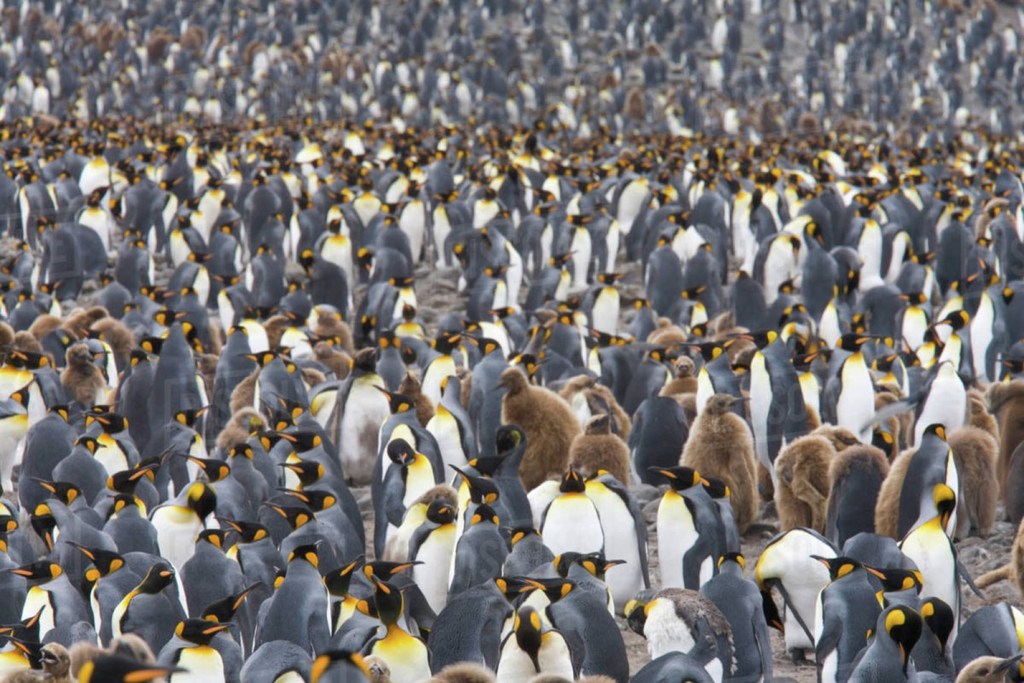
I was watching a television programme last night about Britain’s bizarre weather conditions in 2020 and what struck me, actually you could have slapped me round the face with a wet kipper, was the behaviour of people in the heatwave of April 2020. An extraordinary heatwave saw people flocking to parks and to the beach. Some scenes looked more akin to those pictures we see of seals or penguins on a remote island where there isn’t an inch to move without stumbling over the next incumbent, all staking their claim to a little parcel of land on which they can sunbathe or nest. ‘Weren’t we supposed to be social distancing and in lockdown’? Of course, we blame the government for lockdown 2 and the tier system. How unfair it is that we can’t see our loved ones, oh the mental anguish when we miss school, or have to learn online or get made redundant or our business goes belly up. But flock to the seaside we must, go to the park and mingle is a necessity, rush to the pub and drink and make merry, have parties and raves and forget about social distancing and that awful thing that the government keeps wittering on about. Let’s blame the police for dishing out fines, its so unfair and let’s even blame the hospitals, that’s where my loved one caught Corona virus. Yes, the government were to blame for suggesting that we should ‘eat out to help out’, but did we really think it was suddenly fine to plunder food from every outlet that provided a cut-price meal? Like lemmings, people rushed to pack out restaurants and pubs in search of a culinary bargain and many got more than they bargained for. ‘Two for the price of one’ had a new meaning.
None of this of course is a new phenomenon; the virus might be, the behaviour is not. We speed along the road and when caught by the police ask them if they haven’t got anything better to do than stop us. We complain about the NHS but carry on drinking lots, eating rubbish and failing to exercise. Our illness in the morning is due to the bad kebab, not the large amount of alcohol we consumed. We moan about our rubbish grades, somehow expecting that the parties, the staying in bed all day, the failure to attend, the work commitments and all the other hubris will get us an A grade or at least a B. It’s the way the lecturers teach, not our lack of commitment, that’s the problem here, ‘oh and I’m paying for this rubbish’. In football, we blame the referee for not giving a foul or for giving a foul when we are convinced it wasn’t one and yet watch players carry on diving all over the place rolling around as if they’ve been scythed down by the grim reaper and then chewed up by Jaws before being magically revived by the miraculous sponge. More at home with an Equity Card, players constantly seek to bamboozle the referee, it’s no wonder they sometimes get it wrong. We moan about the stampede at the start of the shop sales, not that that’s been a problem this year, well not yet anyway, but we are part of the stampede, shoving and trampling over others to get to the much reduced bargain. We lament the demise of the high street, watching the tumbleweed blow past as we scuttle away to our laptops, pads and phones to do a bit more online shopping only rushing out in droves (social distancing ignored) to take advantage of the demise of yet another retail outlet.
Whilst ministers are trying to hammer out a Brexit deal, posturing and moaning about the intransigence of the other side, they probably secretly hope that there will be no deal. That way we can blame the Europeans and the Europeans can blame us. But are we not to blame for this monstrosity; we voted for it? We live in a democracy and are rightly proud of it and yet Trump like we are quick to point out that we personally didn’t vote for that bit that we don’t like, and the vote was probably rigged anyway. Having realised our error, we still voted in the government that said it would get it done and we didn’t care about the price. Let’s hope that a return to the troubles in Ireland doesn’t become a reality, but if it does, it’ll no doubt be the fault of the Irish. Our sense of history only stretches back to when we saved the world from the Nazis.
We need to look to ourselves and our own action and behaviour before we start blaming everyone and everything around us. Yes, misfortune does fall on some of us and sometimes it isn’t our fault but like it or not, many of the problems are caused by us and we compound the problems by blaming others. If we fail to grip the notion that we have responsibility, then history will judge us as a nation that moaned about everything and did nothing but cause calamitous problems for ourselves and the rest of the world.
Share this:


What is the value of your ‘yes’ when you never say ‘no’?

A good few years ago a senior colleague asked me that very question. It was more of a statement, than a question and it was designed to make me think about how I approached work and perhaps more importantly how others saw me in the workplace. It fits very nicely with another saying, ‘if you want the job done, give it to a busy person’. It seems there are those in the workplace that get the job done and those that don’t. There are those that always say ‘yes’ and others that often say ‘no’. There are those that solve problems and those that don’t. Another saying from a senior manager, ‘don’t bring me problems, just bring me solutions’ sums up the majority of relationships in organisations.
My experience of managers (both middle and upper) has been varied, but unfortunately most have fallen into the category of poor, bordering on awful. Perhaps that colours my judgement, but I do know that I’ve also had some very good managers. The good managers always made me feel like I was working in partnership with them and, yet I knew who was the boss. I always tried to find a solution to a problem but if I couldn’t then the boss knew that it was a problem he or she needed to deal with, they trusted my judgement. Often what appears to be the most trivial of problems can be a show stopper, a good boss knows this. If I said ‘no’ to a piece of work, then the boss negotiated which other piece of work would be set to one side for now. Sometimes everything is a priority, and everything is important, it is for those at the most senior level to make the decisions about what will or will not get done. Making no choice is an abrogation of responsibility, suggesting it is another person’s problem is just as bad if not worse.
Good managers understand how much work people are doing and trust their workers to get on with the job in hand. A good manager knows that even the most menial of tasks takes more time than might be imagined and that things rarely go exactly to plan. There is always an element of redundancy. When someone says ‘no’ to a piece of work they understand that there is a reason for that ‘no’ and rather than simply seeing that person as being difficult or lazy, they listen and seek solutions. More importantly, they take responsibility for the problem, ‘bring me the problem and I’ll help you find the solution’.
As we move into a summer of uncertainty where the ‘new normal’ is an anxious time for most, where the ‘yes’ people are needed more than ever, and the managers need to lead from the front, if you are a manager, what will you response be when your undervalued ‘yes’ person says ‘no’?
Share this:


#CriminologyBookClub: My Sister, the Serial Killer

The latest book to grace the Criminology book club was My Sister, the Serial Killer by Oyinkan Braithwaite, and after some excellent choices by @5teveh and @manosdaskalou, and a meh choice from @paulaabowles, the pressure was on for my choice. Unfortunately, it received mixed reviews, but I think I speak for all members of the book club when I say: It’s definitely better than The Yellow Room (sorry @paulaabowles)!
The negatives of the book, as expressed by the uneducated and picky members of the club (I promise I’m not bitter-HA), include the unlikableness of the characters: all morally repulsive, selfish and uninspiring. Whilst the book is set in Nigeria, there isn’t much description to transport you there, something the other books have done well, so this was disappointing. And there is a lot left unanswered. At times the book drops some hints into the characters’ past, hinting at why the sisters are the way they are (basically why one of them is a serial killer of her ex-boyfriends and the other mops up the mess), which is gripping and exciting, until it is left unanswered. The ‘older’ members of the club who weren’t overly keen on the book, felt it had potential but it wasn’t their cup of tea… and in all fairness the factors which they raised as being disappointing, were disappointing. BUT, it was still an excellent read! Myself (@jesjames50), @saffrongarside and @haleysread enjoyed the book, and below we have shared our views:
It is fast past, written in what feels like snippets, dangling possibilities and explanations in each chapter, throwing it back to their childhood, alluding at the dangers they faced together, fighting over the same man who isn’t great so that is slightly confusing: c’mon, have better choices in life partners, or even just dates! So many questions raised and so many left unanswered, but this is part of the book’s charm. It’s a story, an experience, a gripping account of a sister’s devotion to her strange, ex-boyfriend stabbing, sister. How far will she go? Why does she go to these lengths? What happens when the sister becomes too much of a loose cannon? You’ll have to read and not find out! But that’s what makes it an excellent read, by an excellent writer!
@jesjames50
My Sister, the Serial Killer is unlike any other book I have read before. I loved the fast pace and the creeping sense of dread that builds as you read on. The book is like a snapshot in time of the lives of two sisters – there are no right answers, no resolutions and no sense of justice served. Although I felt little affection for the characters, I was invested in their relationships, the story and how it would play out. I think it would work well as a TV or film adaptation and I look forward to reading other books by Oyinkan Braithwaite in the future
@saffrongarside
In an odd sort of way this book reminds me of my relationship with my younger siblings. I’m sure that many older siblings will agree that there is an unwritten obligation to support and protect younger siblings in many situations. In Kerode’s case… she takes this obligation to the extremes! I enjoyed this book as a thriller, but as with the last thriller we endured for book club I did not like any of the amoral characters. I also desired a bit more depth to the story line, the characters and location background – but maybe this is what makes thrillers so successful? Who knows?
@haleysread
So overall, not quite as successful as the Baby Ganesha Detective Agency novels, but I mean come on, its competing with a Cadbury chocolate eating baby elephant! But it’s a book that’s modern, well written, gripping and possess twists and turns. It’s short, sharp and snappy! I am proud and satisfied with my choice, as is Saffron and Haley. The others are in agreement that they struggled to put it down, it was intriguing! But alas not all literature is for everyone (albeit I think they are just being fussy)! On to @saffrongarside’s choice next, wonder what the club will think of The Tokyo Zodiac Murders by Soji Shimada? Stay tuned…

Share this:


Putting the I back into responsibility
As I sit in our ensuite, I gaze around with pride remembering how I built this. I built the room structure before plumbing in a toilet, sink and shower. I tiled the walls and laid the flooring. The only thing I didn’t do was plaster the walls, not really my forte and sometimes we have to recognise our own limitations. A few weeks ago though, I wasn’t admiring a job well done; the shower leaked. Nothing drastic, but nonetheless there would be a small pool of water outside of the shower after use. The problem being that the floor wasn’t level, therefore the shower tray wasn’t level, and this left a gap under the shower door. I’d tried to adjust the frame but had taken it to its limit which meant the door was wobbly. I didn’t think much of the mastic job around the shower either, uneven and already starting to lift slightly in places.
The problem is obvious, the floor is not level, I didn’t build the house so that’s someone else’s fault. There’s not enough compensation in the frame to rectify the first problem, poor shower design if you ask me. I can’t think of an excuse for the mastic debacle.
Now I can sit in the ensuite every morning for as long as I like lamenting others’ poor workmanship and poor design, and I did for a while, but it won’t solve the problem.
I decided to try to fix the issue, after all, in the current climate we do have to try to keep ourselves amused. Thinking about this, I really ought to have made a better job of levelling the shower tray in the first place. Too late now though, it’s bonded in place. I decided to move the shower frame away from the wall slightly, this adjustment was enough to stabilise the door, why I didn’t do this in the first place I can’t say, probably too focused on finishing the job, maybe a bit of laziness crept in. The adjustment also meant that the gap below the door was minimised and this solved the leak. I took all the mastic off around the shower tray and started again. A far better finish was achieved.
In deciding to do something about the problem, I stopped seeing it as a problem, stopped blaming others and stopped thinking about my misfortune. I took responsibility for my own poor workmanship, realising that I had failed to take into account the fact the floor wasn’t level.
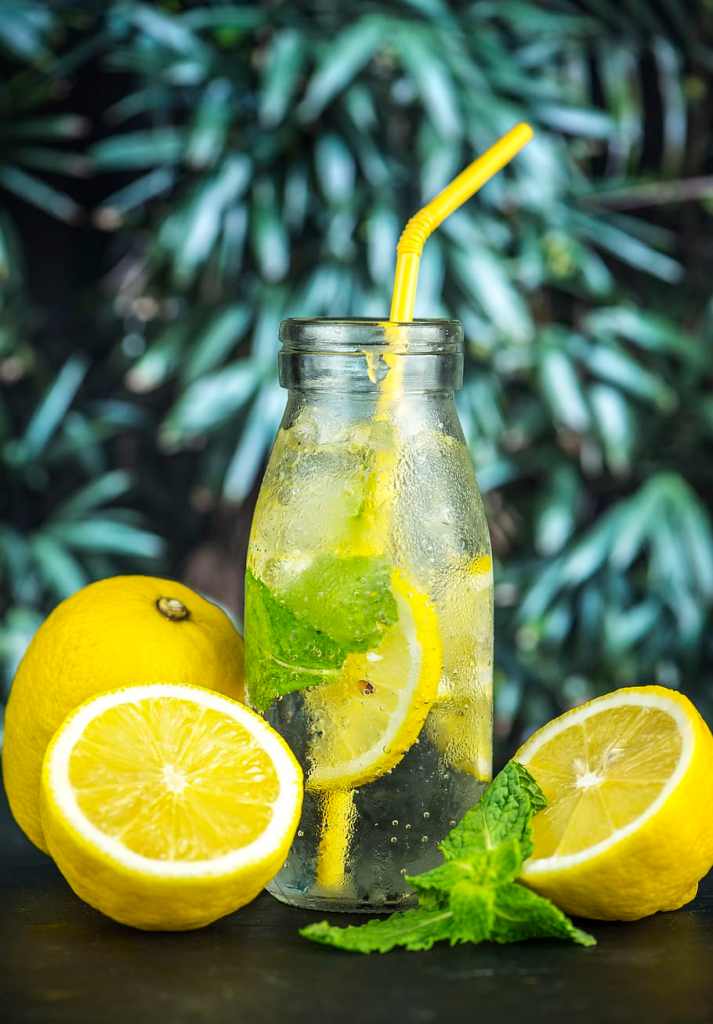
Sometimes we spend too much time complaining about problems, finding fault in others, that we fail to see where we might have done better. When we fall short, we blame others or blame circumstances, rarely do we consider that we could have done the job better or handled the situation differently. If we start to take responsibility for our own shortcomings, then the world becomes a better place. Putting the ‘I’ back into ‘responsibility’ really is quite empowering. ‘When fate hands us a lemon, let’s try to make a lemonade’ (Carnegie, 1998:185).
Reference
Carnegie, D (1998) How to Stop Worrying and Start Living, London: Vermilion

 Thoughts from the criminology team