
Home » Religion
Category Archives: Religion

Does compassion have a place in Criminology or is this a forgotten element in Justice?

In recent months, I’ve been thinking about the idea of compassion and its diminishing presence in societies. Let me start by saying this blog wasn’t prompted by any specific event, but rather by observing the increasing prevalence of hate speech in media and public discourse. More and more, we are seeing this troubling pattern manifesting across all levels of society – from world leaders mocking marginalised populations, citizens spreading hate speech online, media outlets amplifying divisive rhetoric in the name of balanced reporting, workplaces failing their employees on many grounds, public institutions are becoming more and more intolerant of the ‘other’ – extending into criminal justice systems where overcrowded prisons, harsh sentencing guidelines, limited rehabilitation programmes, and the stigmatisation of former offenders all continue to reflect this absence of compassion.
Against this backdrop of increasing hostility, the teachings of Pope Francis (1936 – 2025) offer a powerful counterpoint that resonates beyond religious boundaries. He consistently championed respect, dignity, and compassion towards all people. You don’t have to be religious to recognise the universal truth in his words: “A little bit of mercy makes the world less cold and more just.” This intersection of justice and mercy naturally leads us to examine criminology through that very compassionate lens, because the moment we strip compassion from our criminal justice systems, the consequences become counterproductive. By this, I mean rehabilitation becomes secondary to punishment, criminogenic factors become ignored, recidivism rates become affected as former offenders encounter insurmountable barriers to reintegration and so forth.
The question I want you to ponder over this sunny weekend is: What defines us when compassion vanishes from our interactions? When hatred becomes our default response? Personally, I believe compassionate approaches to criminology do not weaken justice – they strengthen it by addressing root causes while maintaining accountability. I won’t elaborate further here, but if you’re interested in exploring these concepts more deeply, consider enrolling in my new module launching this September on global perspectives of crime, where a comparative approach to understanding and responding to crime will also be explored.
Have a lovely sunny weekend!
Share this:


I want to study Criminology

This is the time of the year we meet a lot of prospective students who come to one of our discovery/open days telling us why they wish to join us! I have taken some of their ideas and put them into content reflecting on our curriculum and the programme(s) we offer at the UON
I have read something in my sociology textbook, it was talking about deviant behaviour, and I thought to myself; that is interesting! I was reading in a psychology textbook something about a doll that adults are hitting and the kids watching them emulate their behaviour and I thought, if that explains the behaviour in my school when the kids used to fight. I was going over my notes in religious education talking about ethics and morality and I wondered if we are born with an innate moral compass that tell us right from wrong. The starting point in all three examples is curiosity. We explore some ideas at school, we hear stories in the news, and we are intrigued. The name sounds interesting because at the end of deviance lies crime, in the explanation of doll hitting the behaviour is violence and at the end of the questions about morality, rests criminality. For some others the curiosity comes from a true crime book that describes how a monstrous killer was able to kill two schoolgirls whilst joining the town in their search: or after watching a documentary of this female serial killer who worked as a sex worker and occasionally killed her punters. Maybe it was that crime series about this seemingly nice, terminally ill schoolteacher who started making drugs and selling them to gangs.
Any of the above sound exciting, interesting to enroll in at a university of your choice. In fact, every year hundreds of UK students will choose to study criminology in one of the different available ways to study it across the country. The curiosity and interest materialise and in recent years criminology has overtaken several cognate disciplines in terms of student numbers. Universities have invested in teams delivering renditions of criminology across the country. Our version of criminology is focused on multidisciplinary perspectives exploring different theoretical conventions and helping our students to grow in confidence in an area that is both fascinating and complex. Firstly we dispel the mythology on criminology from the reality and the scientific explorations of the discipline. We provide the relevant examples to see the evolution of thought and the development of perspectives. Then we work with our students to acquire the skills to seek out the information that will become their knowledge base. We encourage the development of independence, creativity and critical analysis.
In a recent session with finalists, one student commented that she found criminology challenging. It is a discipline that looks at crime and its aftermath but also considers that as a phenomenon crime is a social construct. In other words, of course its complex; we are talking about harm and the effects/causes it has on individuals and the wider society; but understanding how crime is generated, the impact it has and the ways we can address the “problem of crime” is an insightful educational experience. Like going up a mountain, you may feel the strain and pain of doing it whilst at the base camp or halfway but once you reach the peak, you get views of something else. For those who wish to join us; be open to new perspectives and be prepared to have your mind blown!
To find out more, please visit:
BA (Hons) Criminology with Psychology
Share this:


Witches, Broomsticks and Libraries
My son has been gifted and collected many delightful children’s books since his recent birth. A book which stands out to me on Women’s History Month is: Room on the Broom (2001) by writer Julia Donaldson and Illustrator Axel Scheffler.
Aside from the fabulous use of words and illustrations, the main character of the story is a lovely witch who makes room on her broom for her cat, a dog, bird and frog. The latter part of the story consists of the broom snapping, presumably due to the extra weight of these passengers, then the witch risks being eaten by a dragon. But eventually all is well as the witch creates a new super broomstick with;
seats for the witch
and the cat and the dog,
a nest for the bird and
a shower for the frog.

This book’s depiction of the witch as a morally good character is wonderful but this is not usual. In popular culture, such as fiction, television and film witches seem to have flawed character traits, are morally bad cackling devious women who fly about casting spells on poor and (un/)suspecting folk.
The negative connotations of witches today reflect a long dreadful real-life history of outsiders being accused of being witches – with some being tortured and murdered due to this. The outsiders aka witches tended to be women, women who were providing a service for other women, such as support during childbirth or healing practices, or those that practice spiritualisms that differ to dominant religions. If re-born today some of these women may have been celebrated as midwifes and nurses, although their wages and workloads would still illustrate that predominantly women centered roles tend to be under appreciated.
On International Women’s Day I finished reading Disobedient Bodies (2023) by Emma Dabiri. Disobedient Bodies reminds me about how in a white capitalist cis male world bodies categorised as female and women are constructed as deviant. Proof of being a witch was apparently not just found in practices but on the bodies of women. Emma Dabiri adds to the discussion on witches that I did not consider; that groups of women aka groups of deviant witches were considered to be the most threatening to witch hunters. For a long time women have been pitted against each other, the historical nature of women meeting in groups to support each other as a threat to patriarchal capitalist white systems has added to this.
My son is very privileged to have so many book at the age of 1. Unfortunately I am writing during a time where there are threats to close 25 libraries in Birmingham. Notably, the libraries that me and my son frequent consist of mostly women staff (both paid and volunteers). In addition to the potential for job losses, if this happens there will be babies, children and adults without access to books, artistic classes, warm and safe spaces. To quote my friend and colleague, “soon there will be nothing left”.
Share this:


A visual walk around a panopticon prison in the city of “Brotherly Love”
Conferences…people even within academia have views on them. This year the American Society of Criminology hosted its annual meeting in Philadelphia. In the conference we had the opportunity to talk about course development and the pedagogies in criminology. Outside the conference we visited Eastern State Penitentiary one of the original panopticon prisons…now a decaying museum on penal philosophy and policy.

The bleak corridors of a panopticon prison

the walls are closing in and there is only light from above

these cells smell of decay; they were the last residence of those condemned to death

the old greenhouse; now a glass/concrete structure…then a place to plant flowers. Even in the darkest places life finds a way to persevere

isolation: a torture within an institution of violence. The people coming out will be forever scared as time leaves the harshest wounds

a place of worship: for some the only companion to abject desperation; for those who did not lose their minds or try to end their lives; faith kept them at least alive.

the yard is monitored by the guards at the core; the chained prisoners will walk outside or get some exercise but only if they behave. To be outside in here is a privilege

the corridors look identical; you become disoriented and disillusioned

everything here conjures images of pain

an ostentatious building, build back in the 19th century to lock in criminals. It housed a new principled idea, a new system on penal reform. the first penitentiary of its kind. Nonetheless it never stopped being an institution of oppression…it closed in 1970.
The role of the criminologist (among others) is to explain, analyse and discuss our responses to crime, the systems we use and the strategies employed. So before a friendly neighbour tells you that sending people to an island or arming the police with guns or giving juveniles harsher penalties, they better talk to a criminologist first.
As a final thought, I leave you with this…there are people who left the prison broken but there are those who died in this prison. Eleven people tried to escape but were recaptured. Once you are sent down, the prison owns you.
Share this:


Saluting Our Sisters: A Reflection on the Living Ghost of the Past
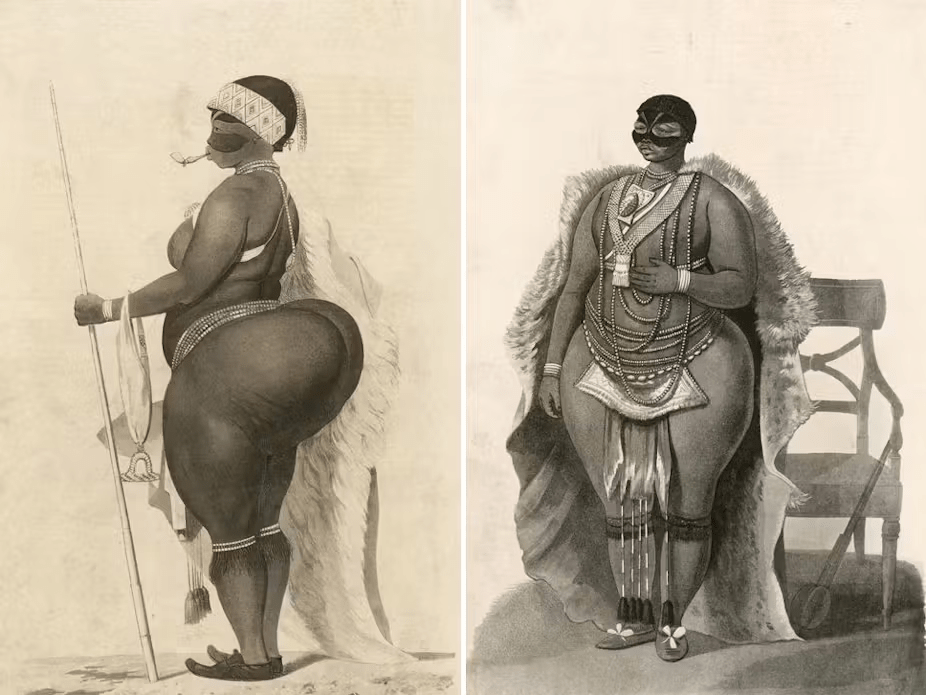
Sarah Baartman. Image source: https://shorturl.at/avLO4
In the 20th century, many groups of people who had been overpowered, subdued, and suppressed by imperialist expansionist movements under arbitrary boundaries began challenging their subjugation. These emancipation struggles resulted in the emergence of quasi-independent, self-governed African nation-states. However, avaricious socio-economic opportunists were aided into political leadership and have continued to perpetuate imperial interests while crippling their own emerging nations. Decades later, it has become clear that these ‘new states’ have become shackled under the grips of strong and powerful men who lead a backward and dysfunctional system with the majority of people impoverished while they enervate justice and political institutions.
Prior to this, the numerous nation states now recognised as African states had developed their distinct social, political, and economic systems which emerged from and reflected their distinctive norms and cultural values. Barring communal disputes and conflicts, robust inter-communal associations, interaction, and commerce subsisted amongst the nations, and paced socio-economic developments were occurring until external incursions under different guises began. Notably, the tripartite monsters of transatlantic slave trade, pillage of natural resources, and colonisation which not only lasted for centuries, disrupted the steady pace and development of these nations. It destroyed all existing social fabric and capital of the people, and forcefully installed a religious, socio-political, and economic systems that are alien to the people.
Ironically, while the transatlantic slave trade and colonialism were perpetuated under the guise of a “civilizing mission,” it took over three centuries for the “civilised” to realise that these abhorrent incursions were far from being civilising, and that they themselves required the civilisation they purported to be administering. However, while one might imagine that this awareness would lead to remorse and guilt-tripped sincere repentance for the pillage, pain, and atrocities, the abolition and relinquishing of political power to natives, the following events symbolized the contrary. Neo-colonialism was born, and international systems and conglomerates have continued the pillage on different fronts as aided by the greedy political class. Thus, it is unsurprising that yet again, strong, and powerful men are revolting against and deposing the self-perpetuating, avaricious socio-economic opportunists who wield political power against the interests of their nations in series of military coup d’état.
It is clear that the legacy of exploitation and subjugation has brought about a new set of challenges. Leaders entrusted with the responsibility of fostering prosperity in their nations often succumbed to personal gain, perpetuating a cycle of exploitation reminiscent of the imperialist era. This grim reality creates a stark contrast: while the majority of citizens are trapped in poverty, a powerful minority wields disproportionate influence, eroding the foundations of justice, economic prosperity, and political stability. As a result, for the vulnerable, seeking safety, economic freedom, and escaping from dysfunctional systems through deadly and illegal migration to other parts of the world becomes the only viable option. However, unbeknownst to many, the lands they risk everything to reach are grappling with their own challenges, including issues of acceptance and association with once labelled ‘uncivilized’ peoples.
Black History Month sheds light on these challenges faced by the black community and other marginalized ethnic groups globally. This year, the theme ‘Saluting our Sisters’ invites us to reflect on the contributions of Black women to society and the challenges they continue to face. It is also important to reflect deeply on how we consciously or unconsciously perpetuate rather than disprove, discourage, and distance ourselves from sustaining and growing the living ghost of the past. As Chimamanda urges, perhaps considering a feminist perspective in our actions, practices, and behaviour can be a powerful step toward recognizing and acknowledging how we perpetuate these problems. Dear Sister, I admire and salute you for your resilience and tenacity in making the world a better place.
Share this:

For years I’ve participated in my own oppression
I’d shout out against hate in public, but in private spaces I sat silent as homophobic slights and slurs came at me from people who said they cared for me.
I grinned and accepted the kindness of colleagues when they have said that their faith does not condone my “lifestyle,” telling myself kindness was a lifestyle as much as hypocrisy.
I tolerated students who sat in my office accepting my extra time and unpaid assistance,
Even when they’ve said, “hate the sin, love the sinner,” to my face.
I’ve been patient and listened deeply to my own students – beyond the call of duty –
Even when the very same folks used anti-gay slurs in my presence because their faith said so.
I remained silent even when I’ve seen those folks sin like nobody’s business.
I’ve waltzed quietly past openly anti-gay church groups passing out fliers of their flock, when I know plenty-o-gay folks who’ve barely survived growing up inside those hate cults.
I’ve walked by entire groups of people who look like me, holding my head high and pretending not to hear their snide comments about my lack of gender conformity.
I’ve been the only openly queer person in crowds of Black people, and
One of few Black people in entire crowds of queer folks, and
Accepted mere tolerance in place of respect, and
Refused to speak up against stereotypes about people like me in all these spaces, and
Acted like it didn’t matter.
It mattered.
It mattered each and every time, but
I covered my wounds, and
I learned to heal quickly, and
I kept moving so quickly that
Folks couldn’t see my feet shifting, and
I kept telling myself “It’ll be ok,” just because it gets better.
Life has gotten better, and
Allyship is real, and
Folks have stood by me in dark and in light, and
Friends have held my hand in my times of despair, so
Still I rise.
But even then, I’ve starred in my very own version of imitation of life.
I pretended that words didn’t hurt because I’m an adult, and
A role model to the youth I serve.
I’ve acted like I didn’t hear youth laugh and snicker as soon as I entered the room.
I heard.
I’ve acted like I didn’t see their parents side-eye me as I walked by.
I saw.
I acted like I didn’t care as some kid called me a sissy as I walked into the mall.
I cared.
When a 12-year-old kid called me a homophobic slur in class,
I facilitated an age-appropriate discussion about bullying, and
Pushed the shame he caused to the back of my mind.
I didn’t want to embarrass my colleagues by bringing it up.
Words from 12-year-old kids aren’t supposed to penetrate adults’ souls.
When the latest daily news repeatedly targets people like me for exclusion,
I’ve pretended like our lives didn’t matter.
We matter.
Words aren’t supposed to hurt, and
Stares aren’t supposed to mean much, and
I’m supposed to have it all together.
Let hate “roll off of you like water off a duck’s back” would roll off my tongue as easily as I could bump-n-grind to Cardi B.
But there comes a point when silence suffocates.
One reaches a point when staying quiet is untenable.
My inaudible screams of terror only turned inwards and tore my own heart out.
Silence equals death.
For years, I’ve participated in my own oppression.
Share this:


The Origins of Criminology

The knife was raised for the first time, and it went down plunging into naked flesh; a spring of blood flowed cascading and covering all in red. The motion was repeated several times. Abel fell to his death and according to scriptures this was the first crime. Cain who wielded the knife roamed the earth until his demise. The fratricide that was committed was the first recorded murder and the very first crime. A colleague tried to be smart and pointed that the first crime is Eve’s violation in the garden with the apple, but I did point out that according to Helena Kennedy QC, she was framed! In the least Eve’s was a case of entrapment which is criminological but leaves the first crime vacant. So, murder it is! A crime of violence that separates aggressor and victim.
The response to this crime is retribution. In the scriptures a condemnation to insanity. In later years this crime formed the basis of the Mosaic Law inclusive of the 10 commandments and death as the indicative punishment. In the Ancien Régime the punishment became a spectacle on deterrence whilst the crowds denounced the evildoer as they were wheeled into the square! In modern times this criminality incorporated rehabilitation to offer the opportunity for the criminal to repent and make amends.
‘The first man who having enclosed a piece of ground bethought himself of saying “This is mine”’! This is an alternative interpretation of the first crime, according to Jean-Jacques Rousseau (1762/1993: 192). In The Social Contract he identifies the first crime very differently from the scriptures. In this case the crime is not directed at a person but the wider community. The usurping of land or good in any manner that violates the rights of others is crime because it places individualism ahead of the common good. As in this crime there is no violence against the person, the way in which we respond to it is different. Imperialism as a historical mechanism accepts the infringement of property, rights, and human rights as a necessity in human interactions. The law here is primarily protected for the one who claims the land rather than those who have been left homeless. In this case, crime is associated with all those mechanisms that protect privilege and property. Soon after titles of land emerged and thereafter titles of people owning other people follow. The land becomes an empire, and the empire allows a man and his regime to set the laws to protect him and his interests. Traditionally empires change from territories of land to centres of government and control of people. The land of the English, the land of the Finnish, the land of the Zulu. In this instance the King become a figure and custom law subverts natural law to accommodate authority and power.
These two “original” crimes represent the diversity in which criminology can be seen; one end is the interpersonal psychological rendition of criminality based on the brutality of violence whilst on the other end is an exploration of wider structural issues and the institutional violence they incorporate. The spectrum of variety criminology offers is a curse and a blessing in one. From one end, it makes the discipline difficult to specify, but it also allows colleagues to explore so many different issues. Regardless of the type of crime category for any person attracted to the discipline there is a criminology for all.
Between these two polar apart approaches, it is interesting to note their interaction. In that it can be seen the interaction of the social and historical priorities of crime given at any given time. This historical positivism of identifying milestones of progression is an important source of understanding the evolution of social progression and movements. Let’s face it, crime is a social construct and as such regardless of the perspective is indicative of the way society prioritises perceptions of deviance.
Arguably the crimes described previously denote different schools of thought and of course the many different perspectives of criminology. A perfectly contorted discipline that not only adapts following the evolution of crime but also theorises criminality in our society. When you are asked to describe criminology, numerous associations come to mind, “the study of crime and criminality” the “discipline of criminal behaviours” “the social construction of crime” “the historical and philosophical understanding of crime in society across time” “the representation of criminals, victims, and agents in society”. These are just a few ways to explain criminology. In this entry we explore the origins of two perspectives; theology and sociology; image that the discipline is influenced by many other perspectives; so consider their “origin” story. How different the first crime can be from say a psychological or a biological perspective. The origins of criminology is an ongoing tale of fascinating specialisms.
Rousseau, Jean-Jacques, (1762/1993), The Social Contract and Discourses, tr. from the French by G.D.H. Cole, (London: Everyman’s Library)
Share this:


If we could empathize with all life, we… [fill in the blank]
In Honour of my two teachers’ passing (seen together here). Rest In Power, bell hooks (d. 15/12/21) and Thich Nhat Hanh (d. 22/01/22).
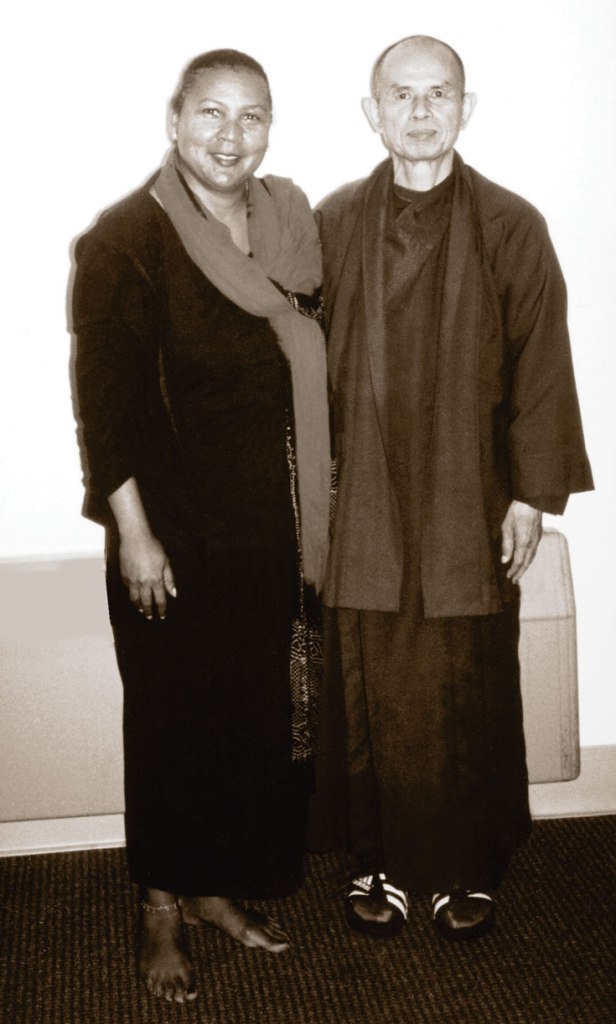
If we could empathize with all life, we…
… wouldn’t treat all animals as either food or fodder.
… wouldn’t develop nuclear technology into bombs.
…would never show an interest in making so many guns and ways of destroying life.
…would more genuinely aim to achieve mutual understanding between individuals.
…wouldn’t have so much intergenerational trauma within families, communities, nations.
…would be more neighborly in all our affairs.
…wouldn’t treat trade like a sport, a winner-takes-all competition over natural resources.
…would harness the power of the sun for it shines on all life collectively.
…would cultivate care, and be kinder as a general rule.
… would teach kindness in school, a required class on every campus.
…would not build entire ideologies, systems of government, religions, arts, and culture around patriarchy.
… would not be reduced to binaries, not just in gender, but ‘black or white’ in our overall thinking, because that’s where it came from: A false yet powerful and enduring dichotomy.
Binary thinking produced gender binaries, not the other way around. Knowing this is key to its undoing. Please know that capitalism produced racism, and greed crafted classism. A2 + B2 = C2, still. Racism is exponentially untamed greed; and patriarchy an inferiority complex run rampant and amok. Such cultures of greed can’t be conquered by competition; greed can’t be beat! We need a new dimension.
If we could empathize with all life, we would aspire to be far more fair.
If we could empathize with all life, we would love more.
Your turn.
Fill in the blank.
Share this:


Merry Christmas
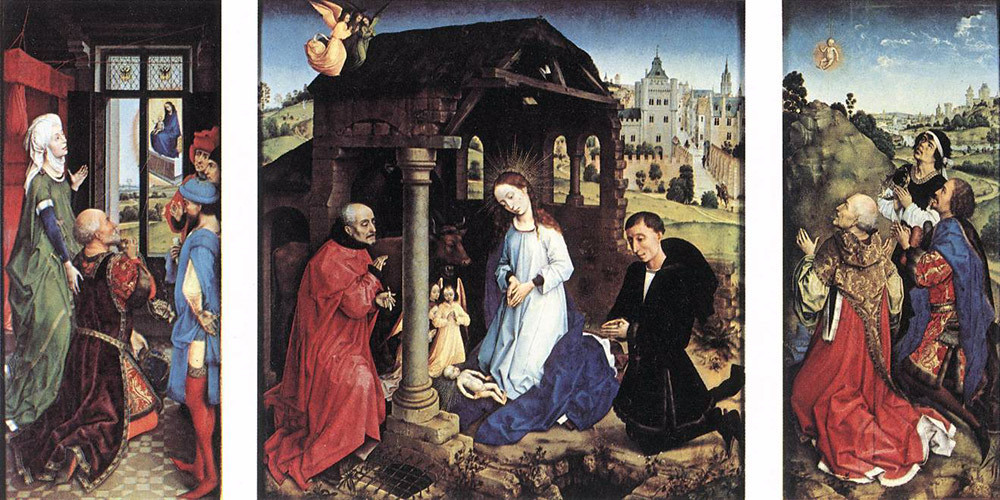
“Merry Christmas”, a seasonal greeting dating back in 1534 when Bishop John Fisher was the first on record to write it. Since then across the English-speaking world, Merry Christmas became the festive greeting to mark the winter festive season. Although it marks a single day, the greeting relates to an entire season from Christmas Eve to the 12th night (eve of the epiphany). The season simulates the process of leading to the birth, circumcision and the baptism of Jesus. Like all births, there is an essential joy in the process, which is why in the middle of it there is the calendar change of the year, to mark more clearly the need for renewal. At the darkest time of the year, for the Northern hemisphere the anticipation of life and lights to come soon. Baby Jesus becomes an image of piety immortalised in numerous mangers in cities around the world.
The meaning is primarily religious dating back to when faith was the main compass of moral judgment. In fact, the celebrations were the last remnants of the old religion before the Romans established Christianity as the main faith. The new religion brought some changes, but it retained the role of moral authority. What is right and wrong, fair and unfair, true and false, all these questions were identified by men of faith who guided people across life’s dilemmas. There is some simplicity in life that very difficult decisions can be referred to a superior authority, especially when people question their way of living and the social injustice they experience. A good, faithful person need not to worry about these things, as the greater the suffering in this life, the greater the happiness in the afterlife. Marx in his introduction to Hegel’s philosophy regarding religion said, “Die Religion ist das Opium des Volkes”, or religion is the opium of the people. His statement was taken out of context and massively misquoted when the main thrust of his point was how religion could absorb social discontent and provide some contentment.
Faith has a level of sternness and glumness as the requirement to maintain a righteous life is difficult. Life is limited by its own existence, and religion, in recognition of the sacrifices required, offers occasional moments for people to indulge and embrace a little bit of happiness. When religious doctrine forgot happiness, people became demoralised and rebellious. A lesson learned by those dour looking puritans who banned dancing and singing at their own peril! Ironically the need to maintain a virtuous life was reserved primarily for those who were oppressed, the enslaved, the poor, the women, many others deemed to have no hope in this life. The ones who lived a privileged life had to respond to a different set of lesser moral rules.
People, of course, know that they live in an unjust society regardless of the time; whether it is an absolute monarchy or a representative republic. Regardless of the regime, religion was there to offer people solace in despair and destitution with the hope of a better afterlife. Even in prisons the charitable wealthy will offer a few ounces of meat and grain for the prisoners to have at least a festive meal on Christmas Day. Traditionally, employers will offer a festive bonus so that employees can get a goose for the festive meal, leaving those who didn’t to be visited by the ghosts of their own greed, as Dickens tells us in a Christmas carol. At that point, Dickens concerned with dire working conditions and the oppression of the working classes subverts the message to a social one.
By the time we move to the age of discovery, we witness the way knowledge conflicts with faith and starts to question the existence of afterlife…but still we say Merry Christmas! There is a recognition that the message now is more humanist, social and even family focused rather than a reaffirmation of faith. So, the greeting may have remained the same, but it could symbolise something quite different. If that is the case, then our greeting today should mean, the need to embrace humanity to accept those around us unconditionally, work and live in the world fighting injustices around. “Merry Christmas” and Speak up to injustices. Rulers and managers come and go; their oppression, madness and tyranny are temporary but people’s convictions, collectivity and fortitude remain resolute.
Christmas is meant to be a happy time full of joy, wonder and gifts. Lights in the streets, cheerful music in the shops, a lot of good food and plenty of gifts. This is at least the “official” view; which has grown to become such an oppressive event for those who do not share this experience. There are people who this festive season live alone, and their social isolation will become even greater. There are those who live in abusive relationships. There are children who instead of gifts will receive abuse. There are people locked up feeling despair; traditionally in prisons suicide rates go rocket high at the festive season. There are those who live in such conditions that even a meal is a luxury that they cannot afford every day. There are who live without a shelter in cold and inhuman conditions. These are people to whom festivities come as a slap in the face, in some cases even literal, to underline the continuous unfairness of their situation.
Most of us may have read “the little match girl” as kids. A story that let us know of the complete desperation of those people living in poverty. A child, like the more than a million children every year that die hoping until the very end. The irony is that for many millions of people around the world conditions have not changed since the original publication of the story back in mid-19th century. During this Christmas, there will be a child in a hospital bed, a child with a family of refugees crossing at sea, or a child working in the most inhuman conditions. Millions of children whose only wish is not a gift but life. The unfairness of these conditions makes it clear that “Merry Christmas” is not enough of a greeting. So, either we need to rebrand the wish or change its meaning!
The Criminology Team would like to wish “Social Justice” for all; our colleagues who fight for the future, our students who hope for a better life, our community that wishes for a better tomorrow, our world who deals with the challenges of the environment and the pandemic. Diogenes the Cynic used to carry a lantern around in search of humans; we hope that this winter you have the opportunity (unlike Diogenes) to find another person and spend some pleasant moments together.
Share this:

Organisational reputation: A euphemism for institutional corruption and violence
The Independent Inquiry into Child Sexual Abuse published a damming report regarding child protection in religious organisations and settings. One of the findings was that ‘In many cases, concerns about external involvement are connected to a desire to protect the reputation of a religious organisation’. Of course, there are many other issues highlighted in the report, but I wanted to concentrate on this notion of protecting organisational reputation. When I hear the phrase ‘organisational reputation’ my blood generally runs cold because I know that behind these words lay a multitude of sins.
Companies and public sector bodies have policies that are designed, at least in part to protect organisational reputation. The rationale behind these policies often lacks transparency. It might be that the protection of the organisation’s reputation ensures it maintains its customer or client base, an enhanced reputation sees more customers or clients, a poor reputation might see this dwindle, to the detriment of the organisation and ultimately to the detriment of its employees and owners. It is difficult to recover from a poor reputation and in the case of business, this is sometimes catastrophic.
However, behind the notions of organisational reputation and policies lays a multi-layer of complex organisational and human behaviours which ultimately lead to institutional corruption and violence. Things will go wrong in organisations, whether that be as a result of human behaviour such as poor decision making or illegal activity or as a result of system failure, such as the failure of software or hardware. Any of these failures might harm the reputation of the organisation and herein lies the nub of the matter. When there are failures, because of organisational culture, which often finds its basis in finding someone to blame, there is a propensity to try to keep the issues ‘in house’, to protect the organisation. By doing so, managers and those in charge ensure that they are not scrutinised regarding the failure, be that individual failures, failures of policies or failures of systems and processes. So, the organisational reputation is not necessarily about protecting the organisation, it is more about avoiding scrutiny of those individuals in power. The mention of organisational reputation in policies and processes has another effect, it silences employees. Whistle blowing policies are subjugated to notions of organisational reputation and as a result silence is maintained for fear of some form of informal sanction. The maintenance of silence ensures organisational reputation, but this corruption also ensures continued institutional violence and corrupt practices. The longer it continues the more those in power have a vested interest in ensuring that the issues are not addressed, lest they are uncovered as offenders through their inaction. ‘We are all in this together’ takes on a new meaning. Thus, corrupt or criminal practices simply continue.
And if the wrongdoing is uncovered, becomes public, then the first reaction is to find a scapegoat thus avoiding the scrutiny of those in power. Rarely in these inquiries do we find that those put in the dock are the managing directors, the chief constables, the heads of children’s services, the archbishops or politicians. Rarely do we see those that caused the problem through inadequate or unworkable policies or strategies or working conditions are ever brought to book. Often its simply portrayed as one or two bad apples in the organisation. Thus, organisational reputation is maintained by further institutional violence perpetrated against the employee. That is not to say that in some cases, the employee should not be brought to book, but rarely should they be standing in the dock on their own.
For ‘organisational reputation, just read institutional corruption and violence.

 Thoughts from the criminology team