
Home » Rehabilitation (Page 2)
Category Archives: Rehabilitation

Animal therapy in prisons – a loyal friend where it is needed most

This week I could have written about Brexit, the Tory Leadership contest, Trump’s visit or climate change, but I decided all of it was too depressing and anxiety inducing, so this week – Dogs in Prisons! There is a serious message behind this, as it is clear there needs to be a rethink about the use of prison and more attention paid to conditions if we are ever going to meaningfully address high re-offending rates. This is where I would normally link this to austerity and a need for wholescale reform in the delivery of justice. While this is important, I decided this week, it would be nice to focus on the positives of initiatives which aim to help the most marginalised in our society.
Animal Assisted Therapies (using animals to create a therapeutic environment) have been adopted in health settings, to enhance social care and mental health treatment, and findings from research show positive results (Durcan, 2018). The pilot for this innovation to be used in prisons was introduced by Rethink Mental Illness in the North East, and involved the use of therapy dogs working with men, women and young men. It was the result of a partnership between Her Majesty’s Prison and Probation Service (HMPPS), Rethink and the National Health Service (NHS). The evaluation showed a ‘considerable, measurable, and statistically significant benefit to the scheme’s participants’ (p.4) during its inception, as represented by clinical ratings such as the reduction of self-harm.
The observations from the study noted the calming effects of therapy dogs – anyone who has a pet will know all about this – and, they also helped with coping skills, supporting engagement and provided prisoners with a space in which to express emotion and not feel judged. Of course, with findings like this they make a case for recommending roll out of the scheme, but also that the prison service needs to tackle the stigma which was reported by staff, about taking part in such innovations, cited as part of the ‘rehabilitative culture’ (Durcan, 2018). The title of the report itself is ‘restoring something lost’ and this struck a chord as I reflected that the loss is perhaps the rehabilitative function of prison. Instead we have a penal system which is dominated by security concerns and tough on crime rhetoric, meaning our prisons have become ‘abject places of despair built on the infliction of punishment and pain’ where prisoners feel ‘bereft, disorientated and terrorised’ (Simms, 2015 – see https://www.crimeandjustice.org.uk/resources/beyond-govism). Therefore, anything which changes this state of existence in prisons should be adopted, especially if it improves engagement between staff and prisoners and gives them a sense of normality in a place so far removed from life outside. Along with improving coping skills, better engagement could also mean prisoners are more invested in their rehabilitation and open to interventions which may change their behaviour in a way which leads to desistance.
This was certainly found to be the case with arts and music therapy in prisons as shown by an evaluation of the ‘Good Vibrations’ project, a music-based therapy programme used in HMP Grendon (Wilson et al, 2009). A key finding was that participation led to better engagement with other forms of education and skills training, building a sense of confidence among prisoners that they were capable of learning something new. As with the animal assisted therapy scheme, the findings also reported that prisoners felt a sense of calm and had better relationships with staff. Desistance theorists highlight the importance of understanding the interaction between individual motivation to change and external conditions required to support this (Maruna, 2001; King 2012). That said, it is also widely accepted that even with both in place, desistance is likely to be a process of dealing with obstacles, un-intended consequences and unforeseen risks. I would argue no amount of pet therapy can help anyone overcome the challenges of being labelled an ex-offender, seeking jobs, training, housing and support to resettle into a community which may or may not support them. However, if the support is in place, alongside more meaningful and widespread reforms, animal therapy and arts and music-based programmes could trigger a change of direction for those prisoners who feel a loss of hope and sense of despair.
David Gauke, the (current) Secretary of State for Justice has promised to abolish prison sentences under six months this summer – at a time when the make up of the Cabinet could be changing in late July, this may be another bold promise which will not be delivered. But much more needs to be done. Perhaps this reflects acknowledgement of the need for more radical change, and that innovations such as animal assisted therapies, problem solving approaches and restorative practice should be considered as part of the reforms of the justice system. My more cynical view is a change of cabinet roles will once again mean an announcement which may take us in the right direction becomes consigned to the past, and ‘normal’ service resumes. It makes the efforts of organisations such as Rethink, Good Vibrations and the hundreds of other charities which support marginalised groups more vital. Of course, they should be better supported and incorporated into mainstream policies, rather than left tinkering at the edges, on a constant scrabble for funding and subject to the whims of ministerial judgements on what is important. However, to end on a more hopeful note, the fact that there are people and organisations who still seek to find ways to improve the lives of those in prison, whether as part of rehabilitation or just in some small way to make prison bearable is something to be cherished. In the face of all the challenges, they carry on with their work and refuse to give up, much like our loyal pets who bring so much joy, wherever they are.
References
DURCAN, G. (2018) Restoring something lost: The mental health impact of therapy dogs in prisons, Centre for Mental Health, London.
KING, S. (2012) Transformative agency and desistance from crime. Criminology and Criminal Justice. 13 (3), 366-383.
MARUNA, S. (2001) Making Good: How ex-convicts reform and rebuild their lives. Washington DC: American Psychological Association Books.
SIMMS, J. (2015) Beyond Govism, Centre for Crime and Justice Studies, https://www.crimeandjustice.org.uk/resources/beyond-govism.
WILSON, D., CAULFIELD, L. AND ATHERTON, S. (2009) Good Vibrations: The long-term impact of a prison based music project. Prison Service Journal, 182, pp. 27-32
Share this:


Should reading be a punishment?

Gillian is an Academic Librarian at the University of Northampton, supporting the students and staff in the Faculty of Health and Society.
I was inspired to write this blog post by an article from the BBC news website that my friend sent me (BBC, 2019). A reading list was used as a punishment for teenagers who were convicted of daubing graffiti across a historically significant building in the state of Virginia, USA. Normally such an offence would earn a community service order. In this case, due to the nature of the crime – using racially charged symbols and words, the Prosecutor and Deputy Commonwealth Attorney Alejandra Rueda decided education may be the cure. She provided the five teenagers with a reading list that they had to read, and write assignments on, over the course of their 12-month sentence.
“Ignorance is not an excuse” is a principle expressed regularly throughout society, yet are we doing anything to address or dispel this ignorance? Rueda realised that books may help these teenagers to understand the impact of what they’d done and the symbols and language they had used in the graffiti. She chose books that would help educate them about racism, anti-Semitism, apartheid and slavery, to name just a few of the topics covered in the reading list. These were the books that helped her understand the wider world, as she grew up. Rueda’s approach indicated that punishment without an understanding of the impact of their crime, would not help these teenagers to engage with the world around them. These books would take them to worlds far outside their own and introduce them to experiences that were barely covered in their High School history lessons.
It’s not the only time an ignorance of history has been highlighted in the news recently. A premiere league football player was investigated for apparently making a Nazi salute. Although he was found not guilty, the FA investigation found him to be appallingly ignorant of Fascism and Hitler’s impact on millions of people across the globe (Church, 2019). Whilst the FA lamented his ignorance, I’m unsure they have done anything to help him address it. Would he be willing to read about the Holocaust and impact of Fascism in Europe? Would being forced to read about the lives of people over 70 years ago, help him understand how a chance photograph can affect people?
Should reading be a punishment, would it help people understand the impact of their actions? As a Librarian, people often assume that all I do all day is read. For me, reading is a luxury I indulge in daily, when I’m at home. I find a distinct difference between reading by choice, for escapism, and reading because you have to. I remember studying English Literature at school and finding any books I was forced to read, quickly lost their charm and became a chore rather than a pleasure. I’m not sure reading should be a punishment; it could disengage people from the joy and escapism of a good book. However, I understand the value of reading in helping people to explore topics and ideas that may be well outside their own world.
There is a growing body of literature that reflects on bibliotherapy and how reading can help people in varying stages of their life (Hilhorst et al., 2018; Brewster et al., 2013). A recent report by Hilhorst et al., (2018) advocates reading to transform British society, address isolation and improve social mobility. I believe reading can help improve our quality of life, helping us improve literacy, understand complex social issues and offer escapism from the everyday. However, I hesitate to view reading as a magical solution to society’s problems. Some people advocate the literary classics, the numerous lists you can find online that extort the virtues of reading the finest of the literary canon – but how much of it is just to conform to the social snobbery around reading ‘good literature’, a tick list? We should encourage reading, not force it upon people (McCrum, 2003; Penguin Books Ltd, 2019; Sherman, 2019).
Reading can help expand horizons and can have a tremendous impact on your world view, but it shouldn’t be a punishment. What Rueda did in Virginia, is illustrate how an education can help us address the ignorance in our society. We should encourage people to explore beyond their community to understand the world around us. Reading books can offer an insight and allow us to explore these ideas, hopefully helping us to avoid repeating or perpetuating the mistakes of the past.
References:
BBC (2019) Graffiti punished by reading – ‘It worked!’ says prosecutor, BBC News [Online]. Available from: https://www.bbc.co.uk/news/stories-47936071 [Accessed 18/04/19].
Brewster, L., Sen, B. and Cox, A. (2013) ‘Mind the Gap: Do Librarians Understand Service User Perspectives on Bibliotherapy?’, Library Trends, 61(3), pp. 569–586. doi: 10.1353/lib.2013.0001.
Church, B. (2019) Wayne Hennessey: EPL player showed ‘lamentable’ ignorance of Fascism, CNN [Online]. Available from: https://edition.cnn.com/2019/04/16/football/wayne-hennessey-fa-nazi-salute-english-premier-league-crystal-palace-spt-intl/index.html [Accessed 18/04/19].
Hilhorst, S., Lockey, A. and Speight, T. (2018) “It’s no exaggeration to say that reading can transform British society…”: A Society of Readers, DEMOS [online] Available from: http://giveabook.org.uk/wp-content/uploads/2018/11/A_Society_of_Readers_-_Formatted__3_.pdf [Accessed 15/04/19]
McCrum, R. (2003) The 100 greatest novels of all time: The list, The Guardian [Online]. Available from: https://www.theguardian.com/books/2003/oct/12/features.fiction [Accessed 18/04/19].
Penguin Books Ltd (2019) 100 must-read classic books, as chosen by our readers, Penguin [Online]. Available from: https://www.penguin.co.uk/articles/2018/100-must-read-classic-books/ [Accessed 18/04/19].
Sherman, S. (2019) The Greatest Books, The Greatest Books [Online]. Available from: https://thegreatestbooks.org/ [Accessed 18/04/19].
Share this:


Interview with a sex offender
Bethany Davies is an Associate Lecturer teaching modules in the first year.
“Was this your first arrest?”
“Yes I’ve been in trouble with the police before, but just like cautions, like some old man called the police because we played football on the grass near his house. That was literally only about a couple months before i got arrested… for rape.”
I had just turned 20 years old when I conducted my first interview with a sex offender. I was prepping for my dissertation in the summer before my final year, conducting research in a probation office I volunteered at. I was allowed to observe, teach and in the final week I would be able to interview 3 males I had been observing. I interviewed the first two males who both I had taught some very basic numeracy skills to, they were both as they were in my observations, very calm and just trying to get through each day without breaching their probation orders. My final interview was with a young male who I had been helping prepare to apply for a construction worker card, which would allow him to apply for building work. In my months of observing and teaching him I felt like he was no different to males I went to school with or anyone you would pass on the street. I did not want to know what his crime was, as a probation mentor that was never my focus, nor my business to know.
Ethically speaking, I was challenged by the idea that I was conducting an interview and research with the consent of an individual who in my eyes did not understand the concept of consent. That may seem like a harmful way to view this man and the outlook of his time in probation as ultimately it was about reform and reintegration after his time in prison. I have progressed a lot since this day and I no longer view this person so hopelessly in my memory, then again, I am unsure of what he is doing now.
Each time I remember the interview and my experience there, I have different thoughts and different feelings, which I suppose is human nature. I also get annoyed at myself that I cannot seem to understand or rather pinpoint my own thoughts on it, I go between thinking what I did (teaching) was a good thing and it may have helped him, to thinking what I did was waste my time on someone who probably didn’t deserve it in many people’s eyes.
I had always felt I was very understanding of those labelled ‘ex-offenders’ and the cycle they can become trapped in. But before this experience, I had always worked with those whose crimes seemed relatively minor comparatively. Sexual violence is not something to me that is as simple to categorise or try to understand. I remember getting home a few hours later and sobbing for a victim I knew nothing about other than her perpetrator.
The experience has always stuck with me and made me appreciate the complexity of not only sexual offences but also the role of reform with sexual offences. It has led me to explore research around sexual violence and I have recently been exploring the work of Elizabeth Stanko and also revisiting my books by Susan Brownmiller. Both examine the role of the victim of sexual violence and raise questions about how historically sexual violence has been viewed.
This is a personal experience and not something I think everyone will relate to, but from experiences shared, there are lessons to be learnt.
Share this:


The Criminology Toolbox

Whilst sitting at my desk at work recently I realised just how much I took away with me in my toolbox from my time studying Criminology. I wanted this blog to be about exactly how this discipline has helped me in my personal and working life and the transferable skills I acquired without even realising I was using them.
In 2011 I came to University an 18 year old with a very closed and one sided mind set and this is something I will openly admit to! A memory that I feel will stick with me forever is from a Crime and Society seminar in the first year with @manosdaskalou. I remember openly saying to him that I felt prisoners should not be allowed to have televisions whilst in prison and that they were there to do their sentence and not watch this week’s Hollyoaks (@manosdaskalou you may remember that sour faced girl sat in front of you, although the sour face is still very much there!). I am sure those of you reading will be cursing BUT my self-righteous opinions did change and the more I attended various lectures and seminars, the more I became open to listening to and respecting the opinions of my peers and became further educated about the impact rehabilitation and second chances have on lives.
In my second year I volunteered for an organisation focusing primarily on helping individuals who had been in the Criminal Justice System with gaining employment and education. As soon as I walked through those doors I saw first-hand the positive impact this organisation had on the lives of those using the service.
I had an opportunity to assist on a healthy living course for individuals recovering from drug and alcohol addictions. Some of those attending the course had never taken an exam before or even been in an educational setting and others struggled with reading. I quickly realised the privileged position I was in to be able to even be at University and do things I feel we all take for granted sometimes such as reading. I also provided some advice to a young female who completely freaked out at the idea of taking a multiple choice test. I gave her some tips before that I had acquired from my own experiences. She was so very thankful to me and I will always remember her.
In terms of the other skills I now have in my toolbox, the thought of standing up and presenting in front of my peers at University terrified me, however in doing that I can now confidently stand up in front of my colleagues and bosses to present information and contribute in meetings. I can also provide evidence in court thanks to learning about the criminal process.
Having the opportunity to debate certain issues within the criminological world and society has taught me to have a voice and provide my point in a professional manner whilst listening to others. From the assignments set, to working within a timetable, it has all enabled me to build upon my time management and organisational skills. Working to tight deadlines also does not daunt me especially when I now have work to them daily.
I think we can all be truthful here and say we did groan a little bit when we were given extra reading to do at home and to critically analyse various pieces of text for the next seminar (heaven forbid!). However, being able to analyse a piece of text is a skill I use every day in my job with Northamptonshire Police especially when building court files and reading the fibs and fairy tales that some of our customers can provide. Criminology taught me to be critical of everything around me, take on board criticism and ask questions. I now ensure I stick my head above the parapet and often put the police officers in their place, as they do need it sometimes!
On the whole, I am thankful for the transferable skills I acquired from studying Criminology despite using them daily and not realising until my desk epiphany! I graduated in 2014 with a toolbox of skills ready for the big wide world and I will cherish them always. Who knows, it may even help me with becoming a parent in November!
Share this:


Out early on good behaviour
Dr Stephen O’Brien is the Dean for the Faculty of Health and Society at the University of Northampton
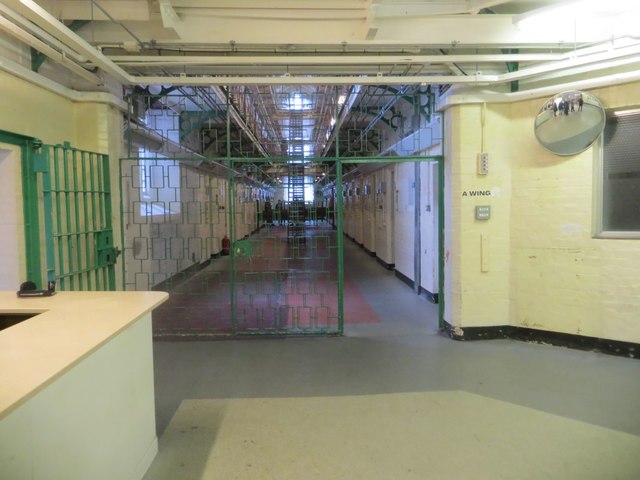
The other week I had the opportunity to visit one of our local prisons with academic colleagues from our Criminology team within the Faculty of Health and Society at the University of Northampton. The prison in question is a category C closed facility and it was my very first visit to such an institution. The context for my visit was to follow up and review the work completed by students, prisoners and staff in the joint delivery of an academic module which forms part of our undergraduate Criminology course. The module entitled “Beyond Justice” explores key philosophical, social and political issues associated with the concept of justice and the journeys that individuals travel within the criminal justice system in the UK. This innovative approach to collaborative education involving the delivery of the module to students of the university and prisoners was long in its gestation. The module itself had been delivered over several weeks in the Autumn term of 2017. What was very apparent from the start of this planned visit was how successful the venture had been; ground-breaking in many respects with clear impact for all involved. Indeed, it has been way more successful than anyone could have imagined when the staff embarked on the planning process. The project is an excellent example of the University’s Changemaker agenda with its emphasis upon mobilising University assets to address real life social challenges.
My particular visit was more than a simple review and celebration of good Changemaker work well done. It was to advance the working relationship with the Prison in the signing of a memorandum of understanding which outlined further work that would be developed on the back of this successful project. This will include; future classes for university/prison students, academic advancement of prison staff, the use of prison staff expertise in the university, research and consultancy. My visit was therefore a fruitful one. In the run up to the visit I had to endure all the usual jokes one would expect. Would they let me in? More importantly would they let me out? Clearly there was an absolute need to be on my best behaviour, keep my nose clean and certainly mind my Ps and Qs especially if I was to be “released”. Despite this ribbing I approached the visit with anticipation and an open mind. To be honest I was unsure what to expect. My only previous conceptual experience of this aspect of the criminal justice system was many years ago when I was working as a mental health nurse in a traditional NHS psychiatric hospital. This was in the early 1980s with its throwback to a period of mental health care based on primarily protecting the public from the mad in society. Whilst there had been some shifts in thinking there was still a strong element of the “custodial” in the treatment and care regimen adopted. Public safety was paramount and many patients had been in the hospital for tens of years with an ensuing sense of incarceration and institutionalisation. These concepts are well described in the seminal work of Barton (1976) who described the consequences of long term incarceration as a form of neurosis; a psychiatric disorder in which a person confined for a long period in a hospital, mental hospital, or prison assumes a dependent role, passively accepts the paternalist approach of those in charge, and develops symptoms and signs associated with restricted horizons, such as increasing passivity and lack of motivation. To be fair mental health services had been transitioning slowly since the 1960s with a move from the custodial to the therapeutic. The associated strategy of rehabilitation and the decant of patients from what was an old asylum to a more community based services were well underway. In many respects the speed of this change was proving problematic with community support struggling to catch up and cope with the numbers moving out of the institutions.
My only other personal experience was when I spent a night in the cells of my local police station following an “incident” in the town centre. This was a case of being in the wrong place at the wrong time. (I know everyone says that, but in this case it is a genuine explanation). However, this did give me a sense of what being locked up felt like albeit for a few hours one night. When being shown one of the single occupancy cells at the prison those feelings came flooding back. However, the thought of being there for several months or years would have considerably more impact. The accommodation was in fact worse than I had imagined. I reflected on this afterwards in light of what can sometimes be the prevailing narrative that prison is in some way a cushy number. The roof over your head, access to a TV and a warm bed along with three square meals a day is often dressed up as a comfortable daily life. The reality of incarceration is far from this view. A few days later I watched Trevor MacDonald report from Indiana State Prison in the USA as part of ITV’s crime and punishment season. In comparison to that you could argue the UK version is comfortable but I have no doubt either experience would be, for me, an extreme challenge.
There were further echoes of my mental health experiences as I was shown the rehabilitation facilities with opportunities for prisoners to experience real world work as part of their transition back into society. I was impressed with the community engagement and the foresight of some big high street companies to get involved in retraining and education. This aspect of the visit was much better than I imagined and there is evidence that this is working. It is a strict rehabilitation regime where any poor behaviour or departure from the planned activity results in failure and loss of the opportunity. This did make me reflect on our own project and its contribution to prisoner rehabilitation. In education, success and failure are norms and the process engenders much more tolerance of what we see as mistakes along the way. The great thing about this project is the achievement of all in terms of both the learning process and outcome. Those outcomes will be celebrated later this month when we return to the prison for a special celebration event. That will be the moment not only to celebrate success but to look to the future and the further work the University and the Prison can do together. On that occasion as on this I do expect to be released early for good behaviour.
Reference
Barton, R., (1976) Institutional Neurosis: 3rd edition, Butterworth-Heinemann, London.

 Thoughts from the criminology team