
Home » Reading (Page 7)
Category Archives: Reading
A Love Letter: in praise of Agatha Christie

For most of my life, I have been an avid reader of all types of books. As my family will confirm, from childhood, I was never without a book. As an adult, I have regularly selected coats with large pockets and bags purely on the basis that they can hold a book. As many students will attest, my answer to most academic questions is “read, read and read some more”. Despite the growth of the internet and other media, which as @drkukustr8talk has noted recently, diverts and subverts our attention and concentration, reading remains my first and truest love.
This, my third ‘Love Letter’, focuses on my favourite author, above all others, Agatha Christie. I have previously dedicated ‘Love Letters’ to poetry, and art. Both of these forms took a long time for me to develop my understanding of and my love for. This ‘Love Letter’ is slightly different.
I first discovered Christie’s novels when I was about 12, since then they have formed a regular backdrop to my life. They act as a comfort blanket when I am tired, stressed, sad or away from home. I have read and reread everything she wrote and know the stories inside and out. Despite my decades of adoration, it remains challenging to know exactly what it is that appeals to me so much about Christie’s novels.
Perhaps it is the symmetry, the fact that for Christie every crime has a solution. Conceivably, given my pacifist tendencies, it could be the absence of explicit violence within her books. Maybe it’s Christie use of stereotypical characters, who turn out to be anything but. You don’t have to look very far to find the oh-so suspicious foreigner, who turns out to be a caring father (Dr Jacob Tanois) or the shell-shocked former military man trained in violence, who metamorphosises into a rather lonely man, who suffers from epilepsy (Alexander Cust). In all these cases, and many others, Christie plays with the reader’s prejudices, whatever they might be, and with deft sleight of hand, reveals that bias as unfounded.
To be honest, until relatively recently, I did not think much about the above, reading Christie was so much part of my life, that I took it very much for granted. All that changed in 2017, when I spotted a ‘Call for Chapters’
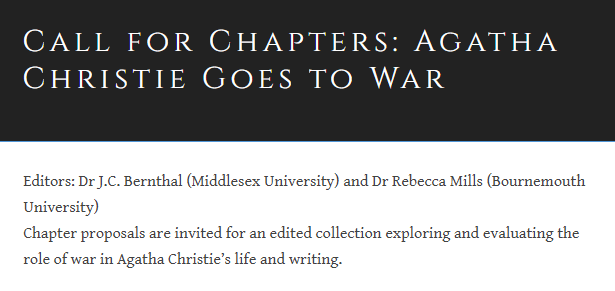
It seemed too good an opportunity to miss, after all I had spent a lifetime reading Christie, not to mention more than a decade studying war and crime. After all, what did I have to lose? I submitted an abstract, with no real expectation that someone who had never studied fiction academically, would be accepted for the volume. After all, who would expect a criminologist to be interested in the fictional writing of a woman who had died over 40 years ago? What could criminology learn from the “golden age” of “whodunnit” fiction?
Much to my surprise the abstract was accepted and I was invited to contribute a chapter. The writing came surprisingly easy, one of very few pieces of writing that I have ever done without angst. Once I got over the hurdle of forcing myself to send my writing to strangers (thank you @manosdaskalou for the positive reassurance and gentle coercion!) , what followed was a thoroughly pleasant experience. From the guidance of the volume’s editors , Drs J. C. Bernthal and Rebecca Mills, to the support from many colleagues, not mention the patience of Michelle (Academic Librarian) who restrained from strangling me whilst trying to teach me the complexities of MLA. Each of these people gave me confidence that I had something different to say, that my thinking and writing was good enough.
Last week, my copy of the book arrived. It was very strange to see my chapter in print, complete with my name and a brief biography. Even more surreal was to read the editors’ introduction and to see my work described therein, with its contribution to the volume identified. I doubt many people will ever read my chapter, it is published in a very expensive academic book destined for academics and libraries. Nevertheless, I have left the tiniest of marks in academic literature and perhaps more importantly, publicly acknowledged my love for the writing of Agatha Christie.
The finished article:
Bowles, Paula, (2020), ‘Christie’s Wartime Hero: Peacetime Killer’ in Rebecca Mills and J. C. Bernthal, Agatha Christie Goes to War, (Abingdon: Routledge): 28-45
Share this:


Things I used to could do without a phone. #BlackenAsiaWithLove
A Spoken Word poem for young people everywhere, esp Youth in Asia, who may never know WE LIVED before smartphones…and live to tell about it.
Walk.
Walk down the street.
Find my way.
Go someplace.
Go someplace I had previously been.
Go someplace I had previously not been.
Meet.
Meet friends.
Meet friends at a specific time and place.
Meet new people.
Meet new people without suspicion.
Strike up a conversation with a stranger.
Make myself known to a previously unknown person.
Now, everything and everyone unknown is literally described as ‘weird’.
Eat.
Eat in a restaurant by myself.
Pay attention to the waiter.
Wait for my order to arrive.
Sit.
Sit alone.
Sit with others.
Listen.
Listen to the sound of silence.
Listen to music.
Listen to a whole album.
Listen to the cityscape.
Overhear others’ conversations in public.
Watch kids play.
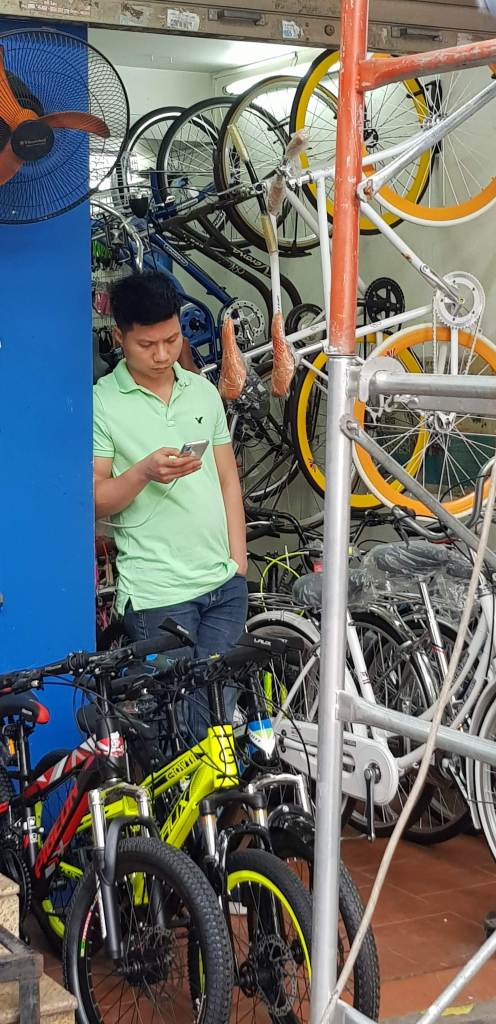
Shop.
Share.
Share pictures.
Take pictures.
Develop pictures.
Frame pictures.
See the same picture in the same spot.
Read.
Read a book.
Read a long article.
Read liner notes.
Pee.
I used to be able to stand at a urinal and focus on what I was doing,
Not feeling bored,
Not feeling the need to respond to anything that urgently.
Nothing could be so urgent that I could not, as the Brits say, ‘take a wee’.
Wait.
Wait at a traffic light.
Wait for a friend at a pre-determined place and time.
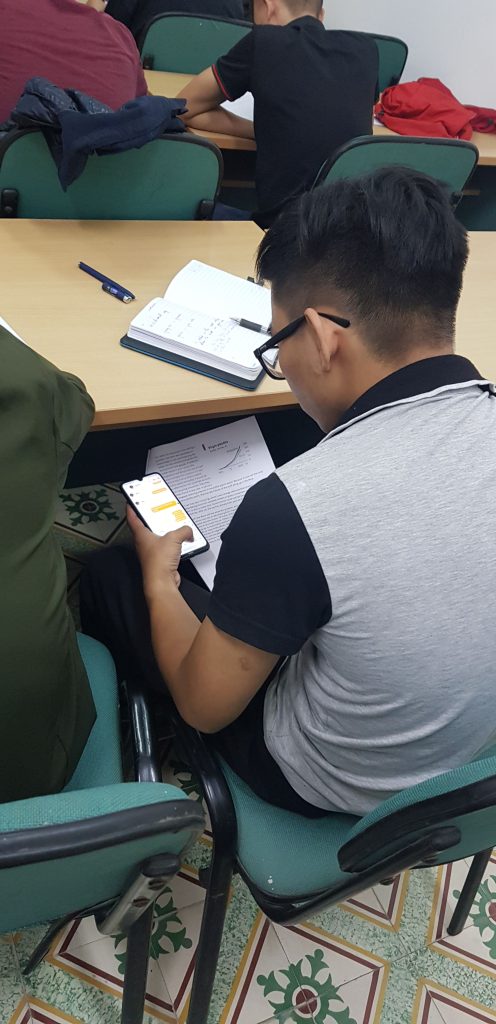
Wait for my turn.
Wait for a meal I ordered to arrive.
Wait in an office for my appointment.
Wait in line.
Wait for anything!
I used to appreciate the downtime of waiting.
Now waiting fuels FOMO.
I used to enjoy people watching…
Now I just watch people on their phones.
It’s genuine anxiety.
Walk.
Walk from point A to B.
I used to could walk between two known points without having to mark the moment with a post.
Now I can’t walk down the hall,
Or through the house or even to the toilet without checking my phone.
I avoid eye contact with strangers.
Anyone I don’t already know is strange.
I used to could muscle through this awkwardness.
Talk.
Have a conversation.
A friend and I recently lamented about how you used to could have a conversation and
Even figure out a specific thing that you couldn’t immediately recall…
Just by talking.
I also appreciate the examples we discussed.
Say you wanted to mention a world leader but couldn’t immediately remember their name. What would you do before?
Rattle off the few facts you could recall and in so doing you’d jog your memory.
Who was the 43rd US president?
If you didn’t immediately recall his name,
You might have recalled that the current one is often called “45” since
Many folks avoid calling his name.
You know Obama was before him, therefore he must’ve been number “44.”
You know Obama inherited a crap economy and several unjust wars,
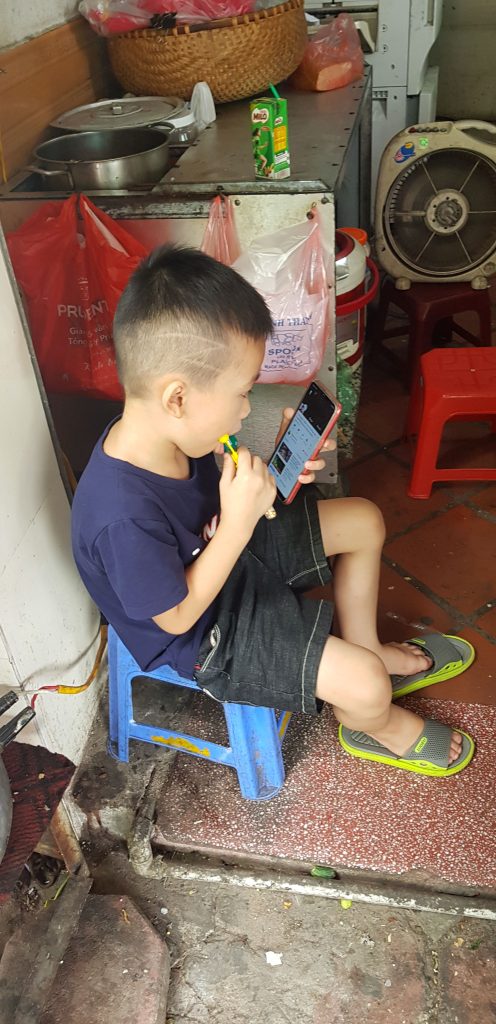
Including the cultural war against Islam. And
That this was even one of the coded racial slurs used against him: “A Muslim.”
Putting these facts together,
You’d quickly arrive at Dubya! And
His whole warmongering cabinet. And
Condi Rice. And
General Powell’s botched PowerPoint presentation at the UN. And
Big dick Cheney, Halliburton and that fool shooting his friend while hunting.
That whole process might have taken a full minute,
But so would pulling up 43’s name on the Google.
This way, however, you haven’t lost the flow of conversation nor the productive energy produced between two people when they talk.
(It’s called ‘limbic resonance’, BTW).
Yeah, I used to be able to recall things…
Many more things about the world without my mobile phone.

Wonder.
Allow my mind to wander.
Entertain myself with my own thoughts.
Think.
Think new things.
Think differently just by thinking through a topic.
I used to know things.
Know answers that weren’t presented to me as search results.
I used to trust my own knowledge.
I used to be able to be present, enjoying my own company,
Appreciating the wisdom that comes with the mental downtime.
Never the fear of missing out,
Allowing myself time to reflect.
It is in reflection that wisdom is born.
Now, most of us just spend our time simply doing:
Surfing, scrolling, liking, dissing, posting, sharing and the like.
Even on a wondrous occasion, many of us would rather be on our phones.
Not just sharing the wonderful occasion –
Watching an insanely beautiful landscape through our tiny screens,
Phubbing the people we’re actually with,
Reducing a wondrous experience to a well-crafted selfie –

But just making sure we’re not missing out on something rather mundane happening back home.
I used to could be in the world.
Now, I’m just in cyberspace.
I used to be wiser.
Share this:


You can’t tell me what to do….
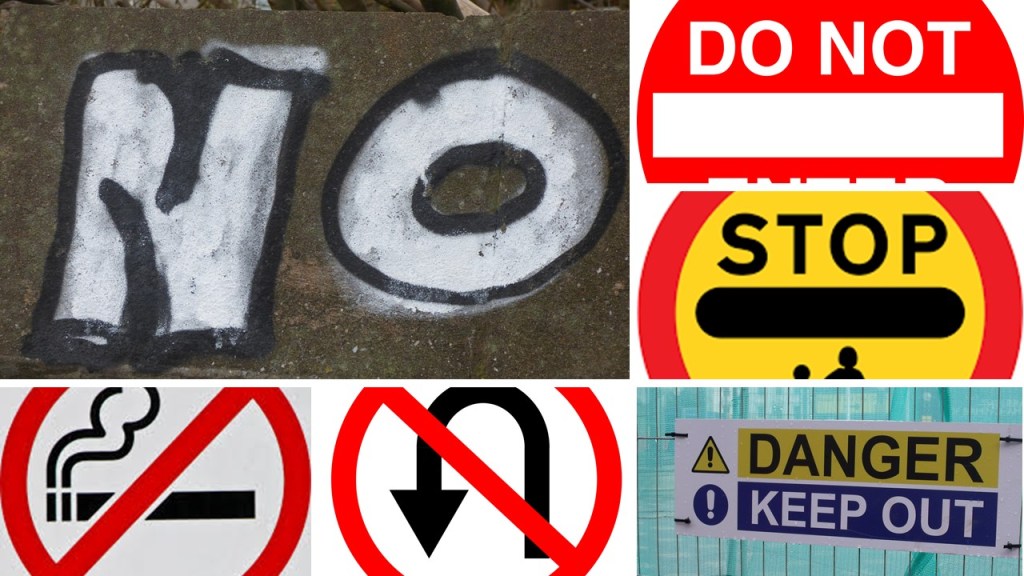
It seems that much criminological discussion centres on motivation. This ranges from focusing on the motivation to commit crime, the motivation to report victimisation, the motivation to work within the criminal justice system, all the way though to the motivation for punishment. In each of these circumstances, much is taken for granted, assumed and reacted to as if there were a consensus.
However, how much do we really know about motivation? To be sure, there are plenty of criminological theories focusing on individual explanations for criminality and deviance, particularly around psychopathy, personality and biology. Others, such as Classical theory assume that we are all the same, rational creatures motivated by the same factors. But take a moment and consider what motivates you? Are those factors positive or negative?
Let’s take the prison for example. According to some politicians, the media and other commentators, incarceration can punish and rehabilitate, frighten people out of crime whilst also empowering them to move away from crime. It offers an opportunity to desist from drug taking, whilst simultaneously enabling prisoners to develop a drug habit. Prison can offer a haven from social problems on the outside, whilst also creating a dangerous environment on the inside and these are just a few of the many pronouncements on the prison. Although oppositional, these differing narratives all indicate the prison as a place of change; transformation, the only difference is whether this is positive or negative, in essence does prison make people better or worse?
Considering much of the blog’s readership is focused on education, it might be useful to apply the prison experience to our own personal motivations. Would it be helpful to have someone constantly telling you what to do? Escorting you to and from the toilet, the classroom, the workplace? Controlling your every move? Deciding when and what you eat? Determining if you can access a shower, the library, the gym and so on? Passing judgement on who can visit you and when they can come? Would these “motivational” factors inspire you to study more? What if you were locked in a very small room (think student accommodation) for hour upon end, would your essays be any better?
For me personally, all of the above, would not motivate; they might frighten or even terrify me. They would allow me to feel resentful, bitter, alienated, perhaps even aggressive. Maybe I would become depressed, self-harm, or turn to drugs for consolation. Maybe, I could retreat into studying as release from an oppressive regime, but is that motivation? or escapism? or even institutionalisation?
I wonder, surely there must be far better, less harmful ways of tapping into motivation? By looking at our own experiences and considering what has motivated us in a positive way previously, we can begin to consider how we might motivate ourselves and others. Some of the motivational factors I can identify from my own life include, people who are prepared to listen to my ideas (good and bad) without interrupting, to guide (but not tell, never tell!) me to finding solutions to problems and to treat me with dignity and respect. Other examples, include introducing me to important literature, but not batting an eyelid when I excitedly tell them all about the content. Being there for me as a fellow human regardless of status (perceived or otherwise), when everything is a challenge, and I just want to vent and celebrating all successes (however tiny). These are just a few, personal reflections, but what they have in common, is the focus on another human who matters to you, who is cheering you on from the side-lines and is able to empathise and encourage. The other commonality, of course, is that these factors are not entrenched within the prison or the wider criminal justice system.[1]
Have a think for yourself and see if you can find anything currently within the prison or CJS that would motivate you! If it doesn’t, you need to question what it is the prison is actually trying to achieve.
[1] This does not preclude individual positive interpersonal relationships within the prison or CJS, but it is not a primary function of either.
Share this:


A Love Letter: in praise of art

Some time ago, I wrote ‘A Love Letter: in praise of poetry‘, making the case as to why this literary form is important to understanding the lived experience. This time, I intend to do similar in relation to visual art.
Tomorrow, I’m plan to make my annual visit to the Koestler Arts’ Exhibition on show at London’s Southbank Centre. This year’s exhibition is entitled Another Me and is curated by the musician, Soweto Kinch. Previous exhibitions have been curated by Benjamin Zephaniah, Antony Gormley and prisoners’ families. Each of the exhibitions contain a diverse range of unique pieces, displaying the sheer range of artistic endeavours from sculpture, to pastels and from music to embroidery. This annual exhibition has an obvious link to criminology, all submissions are from incarcerated people. However, art, regardless of medium, has lots of interest to criminologists and many other scholars.
I have never formally studied art, my reactions and interpretations are entirely personal. I reason that the skills inherent in criminological critique and analysis are applicable, whatever the context or medium. The picture above shows 4 of my favourite pieces of art (there are many others). Each of these, in their own unique way, allow me to explore the world in which we all live. For me, each illustrate aspects of social (in)justice, social harms, institutional violence and the fight for human rights. You may dislike my choices. arguing that graffiti (Banksy) and photography (Mona Hatoum) have no place within art proper. You may disagree with my interpretation of these pieces, dismissing them as pure ephemera, forgotten as quickly as they are seen and that is the beauty of discourse.
Nonetheless, for me they capture the quintessential essence of criminology. It is a positive discipline, focused on what “ought” to be, rather than what is. To stand small, in front of Picasso’s (1937) enormous canvas Guernica allows for consideration of the sheer scale of destruction, inherent in mechanised warfare. Likewise, Banksy’s (2005) The Kissing Coppers provides an interesting juxtaposition of the upholders of the law behaving in such a way that their predecessors would have persecuted them. Each of the art pieces I have selected show that over time and space, the behaviours remain the same, the only change, the level of approbation applied from without.
Art galleries and museums can appear terrifying places, open only to a select few. Those that understand the rules of art, those who make the right noises, those that have the language to describe what they see. This is a fallacy, art belongs to all of us. If you don’t believe me, take a trip to the Southbank Centre very soon. It’s not scary, nobody will ask you questions, everyone is just there to see the art. Who knows you might just find something that calls out to you and helps to spark your criminological imagination. You’ll have to hurry though…closes 3 November, don’t miss out!
Share this:


Are you faking it? : Impostor Syndrome in Academia

Bethany Davies is an Associate Lecturer teaching modules in the first year.
I really enjoyed my time at university but for me it felt almost like I’d got in by some whim of luck, I worked hard to get there but I still felt as though I had got in by chance. Which meant by I had even started; I feared others would think that too and I would become exposed. I’d picture that in class everyone would know something about a really important event in history that I was ignorant to not have heard of. I remember wishing there was a documentary I could watch or a book I could read that gave a brief summary of everything that was meant to be important so I could at least have a basic knowledge of everything and maybe I could fake the rest.
Impostor syndrome doesn’t go away, it evolves and alters and that doesn’t mean it necessarily grows or decreases in time. But rather it just seems like an annoying person sat in the back of hall that occasionally shouts loud enough that you can hear it.
I think it’s important to talk about it, I’m not even sure what it could be regarded as, I don’t believe it be a disease or a form of anxiety but rather something just in its own class that to a degree I like to think everybody has. It doesn’t have to ruin your university experience, it didn’t ruin mine, but it was certainly a part of it, almost like a step in the process; go to lectures, deal with the feeling that I’m pretending I belong there, go home, revise.
I had really only became aware of it properly further in my studies and it continues when working in academia. The labels of what degree you have or what level you are and how many certificates you have can give you the confidence you need to overcome this, but it can also feed it.
There will be students starting University in the next few weeks who already feel like this, asking questions of themselves or even dreading having to talk in lectures in case they reveal what they most fear – that they are a fake and do not actually know what they think they should know by now. There will be others submitting essays or dissertations who think they have got to where they are by pure luck and chance and that this is the time where it might be made public that they are not worthy of their previous grades. There are individuals who are considered as ‘Experts’ on a particular subject by everyone but themselves as they feel the area is so vast that even they are at the basics of the subject.
Even when I received high grades, or was given positive feedback, it didn’t silence the thoughts that I somehow didn’t earn them. From graduation to working in academia, I thought that would be it, I would prove to myself that I knew enough and that I wasn’t an impostor. To an extent, it did help, mainly because I didn’t have to prove myself in an essay or a test anymore. But I still think it’s there, because I know there is always another step when you are in academia, you can keep going forever and you’ll never truly be done.
If that sounds familiar, it is something you can take some comfort in the number of others with the same feelings. It should give you comfort because it shows the inaccuracy in those intrusive thoughts, as surely, we can’t all be faking it and impostors in our academic journeys? And if we are… then there isn’t really a problem either.
I’m not a psychologist nor would I be so impostorous to claim to be (do you like what I did there?) but I think we all know that the negative things we say about ourselves are not true, but they are a way to stop ourselves from doing something out of our comfort zone, which in itself is subjective – but that’s starting a philosophical ramble.
This blog post isn’t to make you overly aware of your fears nor do you have to address them right now. But rather, my intention is letting students know you are not alone, it doesn’t go away but it can get better if you separate how you think you feel about yourself from the reality of what you are achieving whether that be good feedback or even achieving a degree. The same way as receiving negative feedback, should not reaffirm your fears. Learn to accept that you will never know everything and that it’s okay to not know something even if everyone makes you feel like you should. Be kind to yourself in your studies, otherwise you might forget to enjoy the process of learning.
Share this:


Three Tips for Uni:

There are lots of blogs, articles, and Youtube videos which offer some useful tips for going to university, yet it always appears as though students haven’t watched/read them or in the excitement of coming to university they have forgotten what they were. So in the hope that new and existing students might read this, here are my 3 tips for studying at university, and they apply to all levels:
1) READ!!!
At various stages throughout your degree you will be told that you are reading for a degree, and that is the truth. Now reading may not be everybody’s cup of tea, however it is vital to attaining a degree. Lecturers will provide reading lists for your modules, and readings for seminars, however it is vital you go beyond these lists. In first year everything is new, and the likelihood of you being experienced in reading academic journals and textbooks is pretty slim, and therefore there is a good chance you’ll be reading things that don’t appear to make much sense. That is how I remember most of my first year at undergrad! However, perseverance is key: if you didn’t understand it the first time round, take a break and read it again! Still not making sense, then read it again. Variety in source selection and reading is also key, do not feel like you have to read everything off the reading lists, or that those are the only sources you should be engaging with: get creative, mix it up! To change a phrase from a certain, loveable but forgetful blue fish: ‘Just keep reading, just keep reading, just keep reading reading reading, what do we do, we read, read…’.
2) TALK!!
University is a new experience and it is very different from school! There are no teachers who will give you the answers, but rather lecturers who will help you harness the tools in order to pursue answers. Even returning students who are familiar with the university format of being vocal in seminars still feel uncomfortable the first few weeks back as they find their rhythm. Reading is key to acquire knowledge, but so is talking. Share your ideas and understandings with your friends, colleagues and lecturers. Answer the questions put to you by others. Ask questions when you are unsure or curious. Challenge views. Seminars run much smoother for everyone when discussion takes place, and discussion cannot happen without first reading and second talking. It can be uncomfortable and unnerving, even at MSc level when you’ve had 3 years of undergrad experience of talking in front of others and sharing ideas. It is not easy, and there is always fear of being wrong or sounding silly, but that is how we learn. I’m not saying you should go around talking to everyone and anyone about anything and everything, because I most certainly would not do that. But in seminars and lectures where knowledge is the goal, talking is key.
3) ENGAGE WITH FEEDBACK!
Finally, part of university life is assessments. Now if you are successful with reading and talking, then the assessment part of university should be less scary and more positive than if you otherwise have not read or asked questions/shared ideas. A large part of assessment is writing style, and there are various resources provided by the university at your disposal to help improve your writing, and to tailor your writing depending on the assessment. But a really crucial and essential tool is the feedback given to you by your lecturers. Whilst the feedback given to you on a piece of assessment is specific to that assessment in terms of content covered, it can also be applied to future assignments and therefore should be engaged with. We spend a large amount of time constructing feedback for students, in order to help improve their work and ultimately to help them succeed but very few students engage with it. If we have said you need to engage with more sources, the likelihood is that this needs to be done for all your assessments, similarly if there is a referencing issue or writing style concern. Engaging with your feedback is one of the quickest ways to improve your work, and if you do not understand the feedback, TALK to your lecturer about it.
Studying any level at university is very different to A-levels and college: it is ultimately independent learning where the lecturers will guide you and help you attain the skills required to complete your degree. It is an exciting and challenging time regardless of which stage you are at in your academic journey, and ultimately when you look back it should be something you are proud of. So to new students, welcome, to returning students, welcome back, and to you all: GOOD LUCK! 😊
Share this:


Empower like Michelle

If you go to Freshers’, you will probably think this is for White people. But you’ve got to occupy your space. Better get used to occupying your space now because you’ll have to fight wherever you go, university or otherwise. Don’t let that deter you from your goals but more vitally, don’t let anybody make you feel bad about yourself. Don’t be silent in the discussions on slavery or the prison system. Use your voice, a sonicboom in the seminar. Don’t be mute to appease the White fragility of your peers, or even your lecturers and personal academic tutors.

You worked hard to get here, so occupy your space. Fill these spaces with jollof rice and jerk chicken and calypso and steel drums – the guts, determination and sheer willpower your parents and grandparents had when they arrived all those years ago. Don’t ever feel that you have to dilute your opinions for White consumption, or tell bitesize histories for the masses. In that Business class, talk loud about the Cheshire and Lancashire cotton mills written in the blood of African-American slaves.
Students, you might get lecturers that call you angry, who will have a hard time coming to terms with their own prejudice and White privilege. You will see that within a few weeks of studying. But keep your head down and think about graduation. Come and speak to me at the Students’ Union if you have any worries or just want to vent. Sometimes it’s just about finding solace in someone that gets it. Cry into that cheeky Nando’s. Buy that weave. Write a damn good assignment and prove all the naysayers wrong.
You will also find lecturers that are willing to listen to your experiences of racism and prejudice. They will implore you to write a dissertation that’s personal to you. You will find lecturers that give a shit, and will stand by you to the very end – who will say it’s absolutely fine to lace your dissertation with personal history – roots, rocks, and rebellion – academic staff that are activists in their own right (but will never openly admit it!)
Write about the politics of Black hair. Write about the Windrush Scandal or the legacy of colonialism on the Black body, or even Black men and mental health. Write every assignment for your aunties, who live in headwraps, talking in Twi and give you sound advice. Write in ruthless rebellion to the White Eurocentric reading of your degree, break the colour bar in style!
You will likely not relate to your course content. You will find it reflects the experiences of White people. No Afropean stories. No love for Sarah Forbes on History, or the Slave Trade cases of the 1700s on Law – the cases that helped forge the legal profession into what it is today. Or even the racial theories of the 18th and 19th century that we living in the remnants of – not Edward Long’s History of Jamaica nor the Black writers that top bestsellers lists. Write about a decolonised curriculum and inclusive course content.
When your lecturers make no allusion to American Slavery when you study the Industrial Revolution, give them the evilest evils you can muster. And challenge them on it. Leave them shook. Educate your “woke” White friends on why this is important. And when it comes to race, don’t feel you need to talk about race just because you’re the only non-White person in the class.
When you come to university, you will feel the urge to be someone that you are not just to fit in. BE YOU. You will try studenty things. JUST DO YOU. You’ll go out drinking, even if you don’t normally drink. You will join every society at Union Day and your emails will be chocka block. You’ll change your accent and “be friends” with people you dislike to conform to social norms. You will then admit you hate going out out and prefer a good book, or one of my poetry nights or just a chat with good people in your halls.
Tell yourself “Black is beautiful.” You know it, I know it. But there are people out there that’ll try to make you feel bad about your culture, as is life. Come back to campus in January with that Angela Davis afro, or be a dreadlock rastaman. Play cricket, like Jofra Archer or play football like Raheem Sterling. And, your hair is not an exotic specimen to gawked at and touched like a museum exhibit. Remember, say no. No means no. Always.

Black students, walk with pride. YOU DO YOU. Be united. You’ll see quickly that there are forces that are waiting for you to make a mistake. To fail. To point the finger. You’ll see quickly that failure is racialised and that failure in a White person is not as bad. You’ll see that we live in a society that doesn’t include you in its definition of beauty standards. So girls, when someone says “You’re pretty for a dark-skinned girl,” pay them no mind. Find beauty in your melanin. Find your tribe. Sisterhood is paramount.
When someone asks “Where are you from?” – it’s fine to say London or Milton Keynes or any British town or city. You do not need to entertain them when they ask “Where are you really from?” You can be British and African. You can be British and Caribbean. You belong here. You can just be British. And that is also fine. Previously, you’d not have found events that represent Black people or felt inclusive. But my philosophy is “Black History Month is every month, 365 days a year.” October, November forever. See me!
Listen, you might be made to feel conscious of your otherness and not everyone will get your “I Am Proud of My Blackness” mentality. Not everyone will understand the nuanced politics of Blackness at Northampton. That even in inaction, the supposed “woke” White people are still complicit in racism. And remember it isn’t YOUR JOB to explain what is racist and what is not. Do not take on that emotional labour. You are not the mouthpiece for Black people, and you don’t have to be.
You will have days where you will say “I hate this town, I want to go home – there is no culture and nothing to do” but Northampton can work for you. There are other communities of African and Caribbean here where you will be welcomed with rice and stew. You will find family and community.

And you are not alone. There are a lot of us here. Build communities. Join the resident ACS (African-Caribbean Society). Empower yourselves. Come to see me, as your Student Union representative. Look after each other. Be good to yourselves and one another – and above all, enjoy it.
Yours,
Tré Ventour
Vice President BME
Northampton Students’ Union
Share this:


How to prepare for a year in University

In our society consumerism seems to rain supreme. We can buy stuff to make us feel better and we can buy more stuff to express our feeling to others and mark almost most events around us. Retail and especially all the shops have long been aware of this and so they have developed their seasonal material. These seasonal promotions may have become consumer events now although they do signify something incredibly important to culture and our collective consciousness. There is time for Christmas decorations and festive foods, Easter time and chocolate eggs, mother’s day and nauseating cards father’s day for equally grinchworthy cards. There is valentine’s day to say I love you in full fat chocolates, Halloween to give little kids rotten teeth and a red poppy to remember some of our dead. To those add the summer season with the disposable BBQs and of course the back to school season!
The back to school is one of the interesting ones. Geared to prepare pupils and parents for going back to school and plan ahead. From ordering the uniforms to getting all the stationery and books required. I remember this time of the year with some rather mixed emotions. It was the end of my summer holidays, but it was also the time to get back to school. Until one day I finished school and I went to university. Education is seen as part of a continuous process that we are actively involved from the first day at school to the last day in high school and more recently for more people also involve the first day of going to university. Every year is more challenging than the next, but we move up and continue. For those of us who enjoy education we continue the journey further to further or high education.
There is something to said about the preparation process coming to University; it is interesting seeing advertisements on education this time of the year on the tv and social media promoting stuff for this transition; from the got to have smartphone to the best laptop, the fastest printer scanner all in one thingy to the greatest sound system and many more stuff that would get you ready for the year ahead. Do they really help us out and if not, what do we got to do to prepare for coming to university?
Unfortunately, there is no standard formula here but there is a reason for that. Higher education is adult education. This is the first time in our educational journey that we are sitting firmly on the driving seat. We choose to study (or ought to) what we wish to study. It is an incredibly liberating process to have choice. This however is only the beginning. We make plans of our time. In higher education the bulk of the time required is independent study, and as such we got to negotiate how we will plan our time. We got to decide which reading we are going to do first which notes to read what seminar we shall prepare and what assignment we will make a draft of.
There will be days spent in the library looking for a book, days in a coffee shop talking to fellow students about the seminar reading, days in the learning hub working on an assignment. There are highs, lows and everything in between. But regardless of the emotion at every stage thee will be a sense of ownership of knowledge.
In the first couple of sessions, the bulk of the students keep quiet expecting the correct answer to be given. One interpretation or one truth that describes all. It takes a few times before the realisation emerges that the way we analyse, and project knowledge can be different provided we go through the same processes of scrutiny and analysis. Then conversation emerges and the more reading the better the quality of the ideas that shall emerge.
The first year at University is definitely a declaration of independence and the realisation that we all have a voice. Getting on to the road on empowerment. This is a long journey, and on occasions arduous but incredibly rewarding because it leads to an insight greater than before that removes ignorance and lifts the veil of the unfamiliar.
To our newest students – Welcome to the University and to our returning 2 and 3 years – Welcome back!
Share this:


Should reading be a punishment?

Gillian is an Academic Librarian at the University of Northampton, supporting the students and staff in the Faculty of Health and Society.
I was inspired to write this blog post by an article from the BBC news website that my friend sent me (BBC, 2019). A reading list was used as a punishment for teenagers who were convicted of daubing graffiti across a historically significant building in the state of Virginia, USA. Normally such an offence would earn a community service order. In this case, due to the nature of the crime – using racially charged symbols and words, the Prosecutor and Deputy Commonwealth Attorney Alejandra Rueda decided education may be the cure. She provided the five teenagers with a reading list that they had to read, and write assignments on, over the course of their 12-month sentence.
“Ignorance is not an excuse” is a principle expressed regularly throughout society, yet are we doing anything to address or dispel this ignorance? Rueda realised that books may help these teenagers to understand the impact of what they’d done and the symbols and language they had used in the graffiti. She chose books that would help educate them about racism, anti-Semitism, apartheid and slavery, to name just a few of the topics covered in the reading list. These were the books that helped her understand the wider world, as she grew up. Rueda’s approach indicated that punishment without an understanding of the impact of their crime, would not help these teenagers to engage with the world around them. These books would take them to worlds far outside their own and introduce them to experiences that were barely covered in their High School history lessons.
It’s not the only time an ignorance of history has been highlighted in the news recently. A premiere league football player was investigated for apparently making a Nazi salute. Although he was found not guilty, the FA investigation found him to be appallingly ignorant of Fascism and Hitler’s impact on millions of people across the globe (Church, 2019). Whilst the FA lamented his ignorance, I’m unsure they have done anything to help him address it. Would he be willing to read about the Holocaust and impact of Fascism in Europe? Would being forced to read about the lives of people over 70 years ago, help him understand how a chance photograph can affect people?
Should reading be a punishment, would it help people understand the impact of their actions? As a Librarian, people often assume that all I do all day is read. For me, reading is a luxury I indulge in daily, when I’m at home. I find a distinct difference between reading by choice, for escapism, and reading because you have to. I remember studying English Literature at school and finding any books I was forced to read, quickly lost their charm and became a chore rather than a pleasure. I’m not sure reading should be a punishment; it could disengage people from the joy and escapism of a good book. However, I understand the value of reading in helping people to explore topics and ideas that may be well outside their own world.
There is a growing body of literature that reflects on bibliotherapy and how reading can help people in varying stages of their life (Hilhorst et al., 2018; Brewster et al., 2013). A recent report by Hilhorst et al., (2018) advocates reading to transform British society, address isolation and improve social mobility. I believe reading can help improve our quality of life, helping us improve literacy, understand complex social issues and offer escapism from the everyday. However, I hesitate to view reading as a magical solution to society’s problems. Some people advocate the literary classics, the numerous lists you can find online that extort the virtues of reading the finest of the literary canon – but how much of it is just to conform to the social snobbery around reading ‘good literature’, a tick list? We should encourage reading, not force it upon people (McCrum, 2003; Penguin Books Ltd, 2019; Sherman, 2019).
Reading can help expand horizons and can have a tremendous impact on your world view, but it shouldn’t be a punishment. What Rueda did in Virginia, is illustrate how an education can help us address the ignorance in our society. We should encourage people to explore beyond their community to understand the world around us. Reading books can offer an insight and allow us to explore these ideas, hopefully helping us to avoid repeating or perpetuating the mistakes of the past.
References:
BBC (2019) Graffiti punished by reading – ‘It worked!’ says prosecutor, BBC News [Online]. Available from: https://www.bbc.co.uk/news/stories-47936071 [Accessed 18/04/19].
Brewster, L., Sen, B. and Cox, A. (2013) ‘Mind the Gap: Do Librarians Understand Service User Perspectives on Bibliotherapy?’, Library Trends, 61(3), pp. 569–586. doi: 10.1353/lib.2013.0001.
Church, B. (2019) Wayne Hennessey: EPL player showed ‘lamentable’ ignorance of Fascism, CNN [Online]. Available from: https://edition.cnn.com/2019/04/16/football/wayne-hennessey-fa-nazi-salute-english-premier-league-crystal-palace-spt-intl/index.html [Accessed 18/04/19].
Hilhorst, S., Lockey, A. and Speight, T. (2018) “It’s no exaggeration to say that reading can transform British society…”: A Society of Readers, DEMOS [online] Available from: http://giveabook.org.uk/wp-content/uploads/2018/11/A_Society_of_Readers_-_Formatted__3_.pdf [Accessed 15/04/19]
McCrum, R. (2003) The 100 greatest novels of all time: The list, The Guardian [Online]. Available from: https://www.theguardian.com/books/2003/oct/12/features.fiction [Accessed 18/04/19].
Penguin Books Ltd (2019) 100 must-read classic books, as chosen by our readers, Penguin [Online]. Available from: https://www.penguin.co.uk/articles/2018/100-must-read-classic-books/ [Accessed 18/04/19].
Sherman, S. (2019) The Greatest Books, The Greatest Books [Online]. Available from: https://thegreatestbooks.org/ [Accessed 18/04/19].
Share this:


A Love Letter: in praise of poetry

Avoid loud and aggressive persons,
they are vexations to the spirit.
If you compare yourself with others,
you may become vain and bitter;
for always there will be greater and lesser persons than yourself.
Enjoy your achievements as well as your plans
(Max Ehrmann, 1927)
Last week marked International Poetry Day (21 March 2019, to be precise) and it seems only right to consider this form of narrative in more detail. When I was younger (so much younger than today)[i] poetry left me rather cold. Why read short, seemingly impenetrable bursts of language when you could read whole books? To me, it seemed as if poetry was simply lyrics that no-one had got around to putting music to.[ii] Looking back, this may have been the folly of youth, alternatively, I simply was unable at that time to see the value, the beauty of poetry, both written and spoken.
Poetry isn’t meant to be consumed whole, like fast food to be gobbled in between anything and everything else, fuel to get you through the day. Neither is it like googling facts, just enough to enable you to know what you need to know at that instant. Instead, it’s meant to be savoured, to stay with you; like many good things in life, it takes time to ponder and digest. In turn, it takes on its own distinct and entirely personal meaning. It offers the opportunity for all of us, individually, to reflect, ruminate and interpret, at our own pace, according to our own place in time and space. The extract which opens this entry comes from Desiderata which carries particular resonance for me and my academic journey. It may or may not do the same for you, but it’s worth having a look at the entirety of the text, just in case.
An obvious criminological place to start to explore poetry, was always a favourite. Long before I discovered criminology, I discovered the work of Oscar Wilde (1854-1900). Starting with his novels, it wasn’t long before I stumbled upon his Ballad of Reading Gaol. With its haunting refrain; ‘each man kills the thing he loves’ it is difficult not to captured by its innate melody, as well as the story of the murderous soldier. After studying criminology and spending time in prison (albeit not serving a sentence), the verses take on a different dimension. It is difficult not to be moved by his description of the horror of the prison, even more so, given his practical experience of surviving in this hostile and unforgiving environment:
With sudden shock the prison-clock
Smote on the shivering air,
And from all the gaol rose up a wail
Of impotent despair,
Like the sound that frightened marshes hear
From a leper in his lair
(Oscar Wilde, 1898)
On the surface, poets like the Greek, civil servant C. P. Cavafy (1863-1933) have nothing to say about my life, yet his words make my heart ache. Cavafy’s tale of a mystical and mythical journey to Ithaka which seems to me to represent my educational journey in ways that I am only just beginning to appreciate. Replace the mythical Ithaka, with my all too real experience of doctoral study and you get the picture.
Keep Ithaka always in your mind.
Arriving there is what you’re destined for.
But don’t hurry the journey at all.
Better if it lasts for years,
so you’re old by the time you reach the island,
wealthy with all you’ve gained on the way,
not expecting Ithaka to make you rich
(C. P Cavafy, 1910/1911)
Furthermore, The Satrapy appears to represent ambition, desire and above all, the necessity of educating oneself in order to become something more. To truly realise your humanity and not just your mere existence, is a constant struggle. Cavafy’s words offer encouragement and a recognition that individual struggle is a necessity for independence of thought.
Your soul seeks other things, weeps for other things;
the praise of the public and the Sophists,
the hard-won and inestimable Well Done;
the Agora, the Theater, and the Laurels
(C. P. Cavafy, 1911)
Poets like Maya Angelou celebrate gender and race (among many other aspects), identifying intersectionality and the struggles fought and won, and the struggles still ongoing. Despite historical and contemporaneous injustice, to be able to shout from the rooftops Still I Rise in answer to the questions she poses, is truly inspirational:
Did you want to see me broken?
Bowed head and lowered eyes?
Shoulders falling down like teardrops,
Weakened by my soulful cries?
(Maya Angelou, 1978)
Likewise, Hollie McNish utilises her anger and frustration to powerful effect, targeting racism with the linguistic gymnastics and logic of Mathematics , demonstrating that immigration is one of the greatest things to happen in the UK. To really get the full force, you should watch the video!
Cos sometimes one that comes makes two
And sometimes one can add three more
And sometimes two times two is much much more
Than four
And most times immigrants bring more
Than minuses
(Hollie McNish, 2013).
To conclude, you have nothing to lose by immersing yourself in a bit of poetry, but everything to gain. The poets and poems above are just some of my favourites (what about Akala, Cooper Clarke, McGough, Plath, Tempest, Zephaniah, the list goes on) they may not be yours, but it doesn’t matter. Don’t rush it, read a little something and read it again. Let the words and imagery play around in your head. If it sings to you, try to remember the name and the poet, and you can return again and again. If it doesn’t sing to you, don’t lose hope, choose another poet and give their work a chance to inveigle its way into your life. I promise you, it will be worth it
Selected Bibliography
Angelou, Maya, (1978/1999), And Still I Rise, (8th ed.), (London: Virago Press)
Cavafy, C. P., (2010), Collected Poems, tr. from the Greek by Daniel Mendelsohn, (New York: Alfred A. Knopf)
Lennon, John and McCartney, Paul, (1965) Help!, [CD], Recorded by The Beatles in Help!. Parlophone, [s.l.], Apple
Wilde, Oscar, (1898), The Ballad of Reading Gaol by C. 3. 3., (London: Leonard Smithers)
[i] Lennon and McCartney, (1965).
[ii] Not always the case, as can be seen by the Arctic Monkey’s (2013) musical rendering of John Cooper Clarke’s I Wanna Be Yours

 Thoughts from the criminology team