
Home » Reading
Category Archives: Reading

Not reading criminology? That’s criminal!

There are two kinds of criminology conversations I get embroiled in these days! Those with people who read criminology where we discuss many social/cultural phenomena under a specific lens or those with people who find criminology interesting, but consume popular crime instead. The first group with varying level of engagement is beginning to decode some tell-tell signs in current events, using their knowledge of the discipline, as a deciphering mechanism. The second group is quite different. Their understanding of crime is based on dramatisations and literary conventions around plots and characters. Even real crime is harbouring under the guise of some “exclusive” journalistic exposé…far from any basic criminological understanding.
Years ago, a colleague from Sociology told me a story regarding a family event. They were completing their PhD in the discipline, and they were questioned by an elderly person, as to what they would do when they finished their thesis. They responded in the usual way many graduate students tend to, about hoping to get into academia or get some funding for some further research. The elderly person didn’t seem satisfied…. they prompted further. What will be your specialism? What will you be able to tell people that you are proficient in? Society and people, the colleague replied! That’s hardly a skill, the old relative replied; we all live in society! The colleague was equally intrigued and offended. They thought that by offering a succinct response it would have helped their relative to understand without being confounded with notions on symbolic interactionism and ethnomethodology. This was a little anecdote that resonates with many social scientists, criminologists included, that whilst they try to explore people and culture around them, they are becoming distant to the actual people around them.
The degree of challenge in recent years seems to increase for disciplines where people in general have a vague idea of what it is. Many try to use psychological terms to explain other people’s behaviours, without realty appreciating, the clinical and scientific conditions of the term. That is relevant to criminology too. The representation of crime for public consumption has introduced some of the discipline’s terms into everyday parlance. From forensic terms on profiling, to the origins of criminality, expectations on crime are forged. A criminologist’s reaction to popular criminology pundits tends to be, well not quite, only to be met with disbelief of the criminology they know!
One of the ways to appeal to those interested in popular criminology and take them to the discipline will be to add some facts and figures that promote reality. Perhaps but that has been done before but only to give a gloss of “legitimacy” in fiction. It makes it more compelling, but it doesn’t really offer the depth of knowledge. To understand criminology, one must read criminology. The history is filled with colleagues who brought their imagination to the discipline. From Bonger’s Criminality and Economic Conditions to Jock Young and The Criminological Imagination there are books and papers that are waiting to be read by a new audience to try to figure out these ideas.
Maybe we all live in society and heard about crime and even experienced it, but to understand it we need some criminology. The discipline, as with all social sciences, is a dialogue between people ready to carry forward the next constructs that shall appear as crimes. If we read them and take part in these conversations maybe the area of harsh punishments, exclusion and persecution may not be as appealing. We are an academic discipline but at the same time we open the discussion to our community. So if you are neither a student, graduate, nor fellow academic and you are interested in criminology, why don’t you come to visit? https://www.northampton.ac.uk/about-us/contact-us/open-days/
Share this:


What should criminologists talk about?

Recently, Criminology with Psychology graduate, now PhD student @zo3conneely wrote an entry focused on the rise of the Reform Party in British politics, which you can find here. In response, we received a comment via social media, asking what this entry had to do with Criminology. As we always say in Criminology, all questions are welcome and valid, after all, for many of us our mantra is ‘question everything’! From a lay perspective, the question indicates a particular understanding of academic disciplines, it presupposes that Criminology has a very narrow focus. In this view, criminologists should stay in their own lane and focus purely and simply on what is commonly understood as crime, i.e. actions which are against the law.
But hang on, doesn’t that fall under the purview of those who study or practice criminal law, something neither I not Zoe have undertaken? Alternatively, is it the business of those who work in the field of criminal justice, investigating and processing those believed to have been involved in law-breaking? Again, not something either Zoe or I have experience of. If my colleagues in law and criminal justice are the experts in actions against the law, where does Criminology fit in and why include a discussion on political parties such as Reform in a blog dedicated to the discipline?
However, the answer is more complex than the original question would indicate. The answer is also much longer than the question. Criminology has been described as a rendezvous or umbrella discipline, a space where everyone can gather to discuss crime from all perspectives. This includes disciplines as diverse as Drama, History, Literature, Philosophy, Psychology as well as many others, including Politics. It is therefore, expected that those who write for a Criminology blog will be drawn from a diverse range of academic backgrounds, for instance, whilst I have a BA and a PhD in Criminology, my MA is in the History of Medicine. For my fellow bloggers, their academic journeys will also be reflective of their curiosity and their developing academic knowledge and skills. It is therefore anticipated that each academic brings their own unique academic knowledge and personal experiences to the discussion table. It is this which enables Criminology to take a holistic approach, we don’t and should not seek consensus, but incorporate as many diverse views as is possible. Only then can we gain a real understanding of the phenomena we call crime, criminality, victimisation, and of course, the responses to such.
But what of crime itself? Do we all have a shared understanding of what ‘crime’ is? After all, much of the time we don’t see crime, only potentially some evidence that is has occurred. Furthermore, it depends very much on time and space. If we were living in 1960’s Britain, suicide, abortion and homosexuality would all feature heavily in our list of crimes. However, suicide was decriminalised in 1961, and abortion and homosexuality were partially decriminalised in 1967, with the latter further decriminalised in 2003. Likewise, if we were to look further afield we would crimes listed in statute books that we do not have here, for example adultery is a crime in Iran, Pakistan, Saudi Arabia, Somalia and was only repealed in Taiwan in 2020. Thus it is quickly evident that crime is not static, it can change drastically through time and place. We also have to recognise that crime can be decriminalised and recriminalised, for example the overturning of Roe vs Wade in the USA, removes the constitutional right for those pregnant to access abortions. If it taught us nothing else, the Covid-19 pandemic showed us rights can be granted and rights can be taken away, which means that criminologists need to keep a very careful eye on both the past and the present.
Whilst my colleagues in law have as their focus current legislation and how it is practised, and my colleagues in criminal justice seek to ensure that the law is enacted and used to the letter of that law, criminology is much freer. After all, we need to know who is making those laws and why. Whilst we can answer quite simply parliamentarians, this does not tell us very much. We also need to know who, for example only 14% of the current parliament belong to the Global Ethnic Majority, a smaller percentage than the population proportionately. Of these 90, 66 are drawn from the Labour Party, 15 Conservative and 5 Liberal Democrats. Likewise, at the 2024 election 40% of MPs are women, despite women making up over 50% of the UK’s population. Let’s not even get started on the disproportionate number of privately educated MPs, or the lack of visibility of disability, sexuality and so on…. Needless to say, the UK parliament does not look like the vast majority of the British public. Yet these are the people make our laws, and if we don’t understand that as a criminological issue, we will soon come unstuck.
We all need to understand what is happening once those laws have been passed, who is delivering justice for the UK? Whether we look at Judges, Barristers, Solicitors, we find a predominance of white men, only when we look at the magistracy we begin to find some real diversity. But don’t forget magistrates are unpaid, lay members of the judiciary, so it is perhaps unsurprising that women make up 57% of this particular field. So what about criminal justice practitioners? If we look at the police for England and Wales, over 91% are white, 65% are men. In relation to His Majesty’s Prison and Probation Service [HMPPS], over 54% are female, yet these are predominantly based within probation, not the prison service. So we begin to see that the people making, enacting and facilitation legislation and criminal justice do not look very much like the country’s population. Criminologically, this matters, how can we hope to tackle serious social harms like Violence Against Women and Girls [VAWG], homelessness, poverty etc when people have neither knowledge nor experience? Can we really talk achieve just outcomes if the people responsible do not look, sound like us, have very different, often privileged backgrounds which mean we have little shared experience?
Hopefully, this entry has gone a little way towards explaining why the discipline of Criminology (and of course, this blog) maintains an careful eye on politics, among a huge range of other interests. Don’t forget, Criminology is a positive discipline, focused on what could be, what ought to be, a fairer society for all of us.
Share this:


School’s out!

The end of the academic year comes in many forms and guises. The end of the examination period, the submission of a final piece of work, the release of the grades and many more ways you can say that’s the end of this year! Unlike the calendar year, the end of the academic year comes in the summer as a natural end to work. It is like the school year that was shaped centuries ago! The reason for the summer break was the need for the kids to work in the harvest, a tradition that has remained past the agrarian society.
So, what does the end of an academic year signifies? For the students, there is a sense of accomplishment as they have completed their course or level of study. All the hard work, coming to class, long hours of making notes to complete THAT assignment, and all the heartache preparing the exams finally paid off and they can see their labours paying off. It is also a natural intellectual boundary that takes them a step up in the way they see the world through the lens of their subject. For colleagues the end of an academic year is slightly different…the next academic year’s preparation is upon them, the paper that needed writing is now facing a fast-approaching deadline and the resetting of all these priorities as set by management.
Since joining academia, the process of end of summer, has changed significantly from the working on research and scholarly output to administrative tasks! For those interested in a career in academia, on top of working with others, enjoying a discipline and being involved in education a wider question on how well they can handle paperwork, albeit virtual, is part of the job description. That comes as part of the job, always did, it is that it feels more intertwined with what we do.
There is undoubtedly a change in the role education plays in peoples lives especially Higher Education. This is a sector that in the 1970s recruited less than half a million to now being near the three million mark. This massive rise on student number has changed the way we see high education and the role it plays in our society. This is not the education of the elite but the opportunity for all to embrace opportunities and explore areas of interest that will allow them to find themselves, employment, build a career and ultimately a life! Whilst HE is still expanding the job market is becoming increasingly competitive and the cost of living is forcing people to adjust in how they plan the future.
So, what will the future hold for the end of year hiatus? Financially HE is facing challenges, culturally it is under attack, and socially it is being critiqued around whether it offers what it was set up to do. All these are short- and long-term challenges and they are not going away. Some will affect in future, access to HE, others will question the content and the basis of academic freedom and finally with the onset of Ai, the scope of HE itself. Despite all, I am still hopeful that HE is not a degree nor a job opportunity but a moment in any person’s life that takes a step up. It is a very important human need to fulfil curiosity and to embrace a path that wasn’t clear at the beginning of the journey. The first academia was founded in an agora under a tree and maybe we get back to that, but in the end human intellect will need stimulation and that is where, despite all challenges, HE prevails.
Perhaps the future of higher education won’t be defined by buildings or systems, but by the enduring human need to learn, to question, and to grow. Whether under a tree in an agora or through the lens of AI, the pursuit of knowledge remains a profoundly human act—and that is where higher education will always find its purpose.
Share this:


25th Year Reflection

I have been part of Criminology at UON as BA Criminology student, then Associate Lecturer then Lecturer in Criminology for about 13 years in total. My last reflection on my Criminology journey was in 2020 as I had just embarked on my new role as a Lecturer in Criminology. Every now and then I reflect on how lucky I am to be able to have a job role which has the potential to encourage a passion for learning, reading, writing, critical thinking as well as other life skills.
When reflecting on the 25th year Criminology anniversary I think mostly of the old Park Campus that I used to frequent and study at as a student. It had quite a nice feel to it and there was also enough surrounding nature for a famous badger to make this place part of its habitat! There were less books available online when I was an undergraduate compared to today so I have fond memories of going to the library often to have a browse and coming away with as many criminology related books that I could fit in my bag at once. Finding places where I could study for hours that were less frequented than the main library also gave me a bit of a buzz. There also used to be a Pavilion bar near to where the majority of exams would take place, one of my favorite past time memories is sipping on a beer in the Pavilion just after the end of my final third year Criminology exam season, (whilst secretly thinking of how I thought the exams went much better than expected).
When reflecting I am also reminded of how lecturers like Dr @manosdaskalou and Dr @paulaabowles can be incredibly inspirational and influential at guiding academic paths (such as my own!). The re-occurring ideas that ‘criminology is everywhere’ and that we should ‘question everything’ has boded well for helping me to make difficult decisions and in thinking about how I interacted with people when I was working within crime related industries.
In more recent years staff and students have moved to a new campus, have worked and studied through the challenges that come with Covid-19 and contextual uncertainties. This year has had some highlights for me, such as working on a new module Imagining Crime. Whereby we used inspiration from the novel 1984 by George Orwell to task students with committing weekly ‘thought crimes’ by seeing/hearing/reading about something criminological and questioning this by using critical thinking. Listening to the development of critical thinking via the ‘thought crime’ method has been a delight. The flexible, creative and multidisciplinary nature of criminology is also quite fabulous for maintaining interest in criminology over a long period of time but also for venturing into new and less explored areas. For instance, staff and students in Imagining Crime had the pleasure of attending a guest speaker session with @saffrongarside about children’s literature and the environment this academic year – at a time when Northampton itself seemed to be struggling to cope with flooding. Of course, this did highlight the importance of seeing environmental issues as criminological issues, but also the importance of considering children’s books as criminologically cultural artifacts, was something completely new and intriguing for me. I also gained a lot from hearing what our students (who are predominantly) young people think about environmental issues outside of the mainstream media angles that I have seen.
To round up, I loved my student life whilst studying BA Criminology and I am sure many others will say ‘ditto to that’. Long may the love for Criminology at UON continue!
Share this:


A Love Letter to Criminology at UON


In 2002, I realised I was bored, I was a full-time wife and parent with a long-standing part-time job in a supermarket. I first started the job at 15, left at 18 to take up a job at the Magistrates’ court and rejoined the supermarket shortly after my daughter was born. My world was comfortable, stable and dependable. I loved my family but it was definitely lacking challenge. My daughter was becoming increasingly more independent, I was increasing my hours and moving into retail management and I asked myself, is this it? Once my daughter had flown the nest, could I see myself working in a supermarket for the rest of my life? None of this is to knock those those that work in retail, it is probably the best training for criminology and indeed life, that anyone could ask for! I got to meet so many people, from all backgrounds, ethnicities, ages, religions and classes. It taught me that human beings are bloody awkward, including myself. But was it enough for me and if it wasn’t, what did I want?
At school, the careers adviser suggested I could work in Woolworths, or if I tried really hard at my studies and went to college, I might be able to work for the Midland Bank (neither organisation exists today, so probably good I didn’t take the advice!). In the 1980s, nobody was advocating the benefits of university education, at least not to working-class children like me. The Equal Pay Act might have been passed in 1970 but even today we’re a long way from equality in the workplace for women. In the 1980s there was still the unwritten expectation (particularly for working class children from low socio economic backgrounds) that women would get married, have children and perhaps have a part-time job but not really a career….I was a textbook example! I had no idea about universities, knew nobody that had been and assumed they were for other people, people very different from me.
That changed in 2002, I had read something in a newspaper about a Criminology course and I was fascinated. I did not know you could study something like that and I had so many questions that I wanted to answer. As regular readers of the blog will know I’m a long-standing fan of Agatha Christie whose fiction regularly touches upon criminological ideas. Having been born and raised in North London, I was very familiar with HMP Holloway’s buildings, both old and new, which raised lots of questions for a curious child, around who lived there, how did they get in and out and what did they do to the women held inside. Reading suffragette narratives had presented some very graphic images which further fed the imagination. Let’s just say I had been thinking about criminology, without even knowing such a discipline existed.
Once I was aware of the discipline, I needed to find a way to get over my prejudices around who university was for and find a way of getting in! To cut a long story short, I went to an Open Day and was told, go and get yourself an access course. At the time, it felt very blunt and reinforced my view that universities weren’t for the likes of me! Looking back it was excellent advice, without the access course, I would never have coped, let alone thrived, after years out of education.
In 2004 I started reading BA Criminology, with reading being the operant word. I had been an avid reader since early childhood (the subject of an earlier blog) and suddenly I was presented with a license to read whatever and whenever I wanted and as much as I could devour! For the first time in my life, people could no longer insist that I was wasting time with my head always in a book, I had “official” permission to read and read, I did! I got the chance to read, discuss, write and present throughout the degree. I wrote essays and reports, presented posters and talked about my criminological passions. I got the chance to undertake research, both empirical and theoretical, and lawks did I revel in all this opportunity. Of course, by looking back and reflecting, I forget all the stresses and strains, the anxieties around meeting so many new people, the terror of standing up in front of people, of submitting my first assessment, of waiting for grades….but these all pale into insignificance at the end and three years goes so very quickly….
In the summer of 2007, I had a lovely shiny degree in Criminology from the University of Northampton, but what next? By this point, I had the studying bug, and despite my anticipation that university would provide all the answers, I had a whole new set of questions! These were perhaps more nuanced and sophisticated than before but still driving me to seek answers. As I said earlier, human beings are awkward and at this point I decided, despite my earlier passion, I didn’t want to be put in a box labelled “Criminology“. I felt that I had finally cracked my fear of universities and decided to embark on a MA History of Medicine at Oxford Brookes. I wanted to know why Criminology textbooks and courses still included the racist, sexist, disablist (and plenty more) “theories” of Cesare Lombroso, a man whose ideas of the “born criminal” had been discredited soon after they were published.
But again the old fears returned….what did I know about history or medicine? What if the Criminology degree at Northampton hadn’t been very good, what if they just passed everyone, what if I was kidding myself? Everything at Brookes felt very different to Northampton, everyone on the course had studied BA History there. Their research interests were firmly centred on the past and on medicine, nursing, doctoring, hospitals and clinics and there was me, with my ideas around 20th century eugenics, a quasi-scientific attempt to rationalise prejudice and injustice. Along with studying the discipline, I learnt a lot about how different institutions work, I compared both universities on a regular basis. What did I like about each, what did I dislike. i thought about how academics operate and started to think about how I would be in that profession.
I successfully completed the MA and began to think maybe Northampton hadn’t given me good grades out of our pity or some other misplaced emotion, but that I had actually earnt them. I was very fortunate, I had maintained connection with Criminology at UON, and had the opportunity to tip my toe in the water of academia. I was appointed as an Associate Lecturer (for those not familiar with the title, it is somebody who is hourly paid and contribute as little or as much as the department requires) and had my first foray into university teaching. To put it bluntly, I was scared shitless! But, I loved every second in the classroom, I began to find my feet, slowly but surely, and university which had been so daunting began to seep into my very being.
Fast forward to 2025, I have been involved with UON for almost 22 years, first as a student, then as an academic, achieving my PhD in the process It is worth saying that the transition is not easy, but then nothing worth having ever is. I have gained so much from my studies, my relationship with two universities and the experiences I have had along the way. It is fair to say that I have shed many tears when studying, but also had some of my very highest highs, learning is painful, just watch a small child learning to read or write.
Hopefully, over the past decades I have repaid some of the debt I owe to the academics that have taught me, coached me, mentored me and supported me (special mention must go to @manosdaskalou who has been part of my journey since day 1). My life looks very different to 2002 and it is thanks to so many people, so many opportunities, the two universities that have provided me with a home from home and all of the students I have had the privilege to engage with.
I am so delighted to have been part of Criminology at UON’s 25 years of learning and teaching. To my colleagues, old and new, students, graduates and everyone I have met along the way, I raise my glass. Together we have built something very special, a community of people committed to exploring criminological ideas and making the world an equitable place.
Share this:


Book blurbs: a necessity or frill?

I have always been, and imagine I will always be, a lover of books. Until the summer of last year, it has always been physical books. The feel, the smell, the shock when you drop it as you’re drifting off to sleep, the dampness of pages when you’ve picked it up too quickly after getting out of a pool or the sea on holiday and that beautiful crinkle crisp after the page dries. Physical books are beautiful (even the ugly ones). And this holds for academic sources, non-fiction books and novels! One of the joys of selecting a book (new or often second-hand charity gems), is reading the blurb. It might give you a brief introduction to characters you are following, or if an academic source it might provide you with a brief list of topics the book navigates. The blurb might also contain some quotations and reviews expressing the ‘excellence’ or ‘gripping’ nature of the book. And whilst this is generally a positive feature, since reading e-books (where I do not read the blurb or even access the blurb), I have started to wonder if the blurb is actually a hinderance to the potential reader…
Now, this entry is not to debate the great debate of the 21st century: e-book versus book. But rather the format of an e-book not having a blurb per se versus the blurb on the back of a book. I am fortunate enough to have a Kindle: one of my most prized possessions. It’s beautiful, it can be read in all environments (warmth setting and light setting is incredible), it’s lightweight and fits in almost all of my bags and many of my pockets #notsponsored, but I have never read a blurb of a book on the Kindle, and I can’t work out if I’m missing out or if this is actually an improvement of the ‘book selection’ process.
Some positives of not accessing the blurb on the e-readers is it has opened up my reading list astronomically. I have read and loved books I am certain I would never have picked up or purchased had I read what they were about. Some have been heavy, taxing reads but so worth it in the end, others have been bizarre and wonderful but not something I would have ever recommended to myself. Had these been physical books, having read the blurb, these would have been left by me on the shelf and therefore I would have lost out on the joy, wonder and sadness that these books had to offer.
There are of course issues with not reading the blurbs and these issues reinforce the importance of the feature as a necessity and not just a frill. I have also read a number of books I quite simply wish I hadn’t. And had I read the blurb I would have known not to start these monstrosities (once I’ve started, unfortunately my brain makes me finish – commitment [even to books] is important to my brain). I have also read some incredible books but at the wrong time: again had I read the blurb I would have known that this book is not a sensible choice given my headspace.
The issue is most likely me, rather than whether blurbs are actually necessary or just frill. And I’d imagine it’s better to have them and not use them, them not have them and miss them. But if they aren’t being used, they have no purpose and become redundant. Is this a wider symptom of the rise of the e-book or just a side-effect that no one else is concerned about but me? I do not know. But I find it strange how heavily I rely on blurbs with physical books and how void they are with e-books. Are e-books the beginning of the end for blurbs or am I over think this? Penny for your thoughts?

Share this:


An annual reflection and a glance to the year ahead!

As we complete the last day before the Christmas break, I encourage you to sit back and reflect on what you have achieved this academic term. Some of you will have started university for the first time and will be getting to grips with the processes, the assessments, the staff and the learning styles of the university. Some of you will be navigating second year and the new expectations of you at this level, learning to move beyond discussion to instead evaluation and being critical, honing your research skills in preparation for your dissertations in the next academic year. For some of you this may have been a hard journey and one that will progress into the second semester, but please know that this will build up your skills and your confidence, turning you into the academic you need to be in order to succeed.
For some of you, you will have moved into your third and final year. With this comes more independence, and some of this may feel uncertain, confusing, and a bit unknown. Please know that again this does not last and you will find your feet. Whether that is a lightbulb moment with your dissertation, or finally finding the right article that helps you to write your essay. For those of you that have exams coming up in January, make sure you can enjoy the festivities and take a well earned break. But when you find those moments where you’re bored and have nothing to do, and you start to think about your criminology course, I think that will be a good indication to pick up a book, to read through your notes, or to practice some exam questions.
On a personal note as I reflect on this year there are things I am definitely proud to have achieved, and things I would like to work on in the future. One of my biggest achievements this year was completing my PhD. It has been a long, difficult journey, spanning over eight years, but the feeling of successfully completing my viva, making those final changes, and the recognition I feel when discussing my research to various people reminds me of its importance. The special moment of my graduation. At my graduation my research title was read aloud, I was applauded, and then welcomed into the academic community onstage to be seated with fellow academics such as my supervisors. This was a special moment I will cherish and having family there was all the more memorable and precious. Whilst the PhD journey has come to an end, new opportunities arise, so keep an eye out in 2025 for further publications!
In addition, this year, I navigated my new job at the University of Northampton. In the 12 months I’ve been here I have learnt a lot from colleagues, from the faculty, and from other departments. Looking ahead, the road is one of change and adjustment, but I am optimistic and ready for whatever changes may come.
I wish everyone a wonderful and restful Christmas. Like myself, I hope you return in the New Year with renewed energy ready to tackle any new adventures with poise and determination. Remember to push yourselves to get to the best version of you!
Share this:

A review of In-Extremis: The Life of War Correspondent Marie Colvin
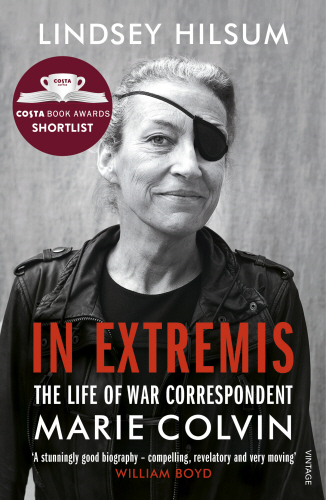
Recently, I picked up a book on the biography of Marie Colvin, a war correspondent who was assassinated in Syria, 2012. Usually, I refrain from reading biographies, as I consider many to be superficial accounts of people’s experiences that are typically removed from wider social issues serving no purpose besides enabling what Zizek would call a fetishist disavowal. It is the biographies of sports players and singers, found on the top shelves of Waterstones and Asda that spring to mind. In-Extremis, however, was different. I consider this book to be a very poignant and captivating biography of war correspondent Marie Colvin, authored by fellow journalist Lindsey Hilsum. The book narrates Marie’s life before her assassination. Her early years, career ventures, intimate relationships, friendships, and relationships with drugs and alcohol were all discussed. So too were the accounts of Marie’s fearless reporting from some of the world’s most dangerous conflict zones, including Sri-Lanka, Iraq, Lebanon, and Syria. Hilsum wrote on the events both before Marie’s exhilarating career and during the peak of her war correspondence to illustrate the complexities in her life. This reflected on Marie’s insatiability of desire to tell the truth and capture the voices of those who are absent from the ‘script’. So too, reporting on the emotions behind war and conflict in addition to the consistent acts of personal sacrifice made in the name of Justice for the disenfranchised and the voiceless.
Across the first few chapters, Hilsum wrote on the personal life of Marie- particularly her traits of bravery, resilience, persistence, and an undying quest for the truth. Hilsum further delved into the complexities of Marie’s personality and life philosophies. A regular smoker, drinker and partygoer with a captivating personality that drew people in were core to who Marie was according to Hilsum. However, the psychological toils of war reporting became clear, particularly as later in the book, the effects of Marie’s PTSD and trauma began to present itself, particularly after Marie lost eyesight in her left eye after being shot in Sri-Lanka. The eye-patch worn by Marie to me symbolised the way she carried the burdens of her profession and personal vulnerabilities, particularly between maintaining her family life and navigating her occupational hazards.
In writing this biography, Hilsum not only mapped the life of one genuinely awesome and inspiring woman, but also highlighted the importance of reporting and capturing the voices of the casualties of war. Much of her work, I felt resonated with my own. As an academic researcher, it is my job to research on real-life issues and to seek the truth. I resonated with Marie’s quest for the truth and strongly aligned myself to her principles on capturing the lived experiences of those impacted by war, conflict, and social justice issues. These people, I consider are more qualified to discuss these issues than those of us who sit in the ivory towers of institutions (me included!).
Moreover, I considered how I can be more like Marie and how I can embed her philosophies more so into my own research… whether that’s through researching with communities on the cost-of-living crisis or disseminating my research to students, fellow academics, policymakers, and practitioners. I feel inspired and moving forward, I seek to embody the life and spirit of Marie and thousands of other journalists and academics who work tirelessly to research on and understand the truth to bring forward the narratives of those who are left behind and discarded by society in its mainstream.
Share this:


Welcome to the University: How can I help you?

In recent years, and to be more specific, ever since universities were forced to introduce fees, a wider discussion emerged regarding what the Universities are for. The fees changed the nature of education and from a right, it became a privilege. The choice of going to Higher Education [HE] to improve oneself was combined with what the universities can offer to make their education “value for money”! This of course had to be done in line with consumer policy and practice. That led to a shift from educational principles to commercial concerns. Changing the process from what universities do, to what they can offer for their prospective students. Talking consumer law and setting thing up to align with what we can offer, not what students can achieve. This led to a fierce competition in the sector about which university offers the greatest value for money.
“Come to our university, we have nice buildings”, “come to us we have nicer laptops”, “no, come to us we have fabulous sports facilities” “no please come to us we will take you away on great trips”. Although telling students what to expect and how this is offered is great, it does miss the fundamental principle of what a university is! Universities evolved from philosophical academies that posed questions about the world. The participants engaged in dialogue that challenged their perspectives and viewpoints. Out of their works our collective understanding on nature and the world, was and is still, being shaped.
A university is an annex of learning. It covers a wide variety of disciplines and provides opportunities for advancing education locally, nationally and internationally. Academics who teach are experts in their field, having undergone a long educational process themselves. The people who come to the university to learn, are adults, the majority still young adults, who wish to develop their skills and advance their education to the highest level. The last point is the most poignant when it comes to Higher Education. It builds up learning experience together with hard and soft skills on academic writing and articulation, advancing disciplinary knowledge and a profound understanding of self; “a know thyself” moment.
The services offered pale into comparison with what students can really acquire from a university education. No amount of consumer products can replace the insight and of course the transformative nature of Higher Education. A number of helpful services are a great addition to the educational experience, and I am forever grateful to the hard work to all of our colleagues in students’ services and other administrative services that makes our lives, and the lives of the students so much better, but they are not the main reason why so many come through the doors of HE. The university has its place in education and what it does is already clear. It gives people the opportunity for employment and personal advancement, and that is great, but what it really does is to be transformative. People get time to consider things they may have never thought before and discuss them with people who have spent a considerable time in studying them.
As this week marks the start of the academic year and we are all happy welcoming our students, I would like to remind everyone that Higher Education is not a passive process but an active one that allows each participant to interact with and to interrogate the materials and ideas they are presented with. Whilst some students influenced by a consumer mentality may be asking what I am getting, this may not be a satisfactory question because each person wants different things, but we all aspire to improve ourselves in the process. So to paraphrase a US president: “Ask not what your University can do for you – ask what you can do for your University studies”.
Share this:


Reflecting on my viva experience
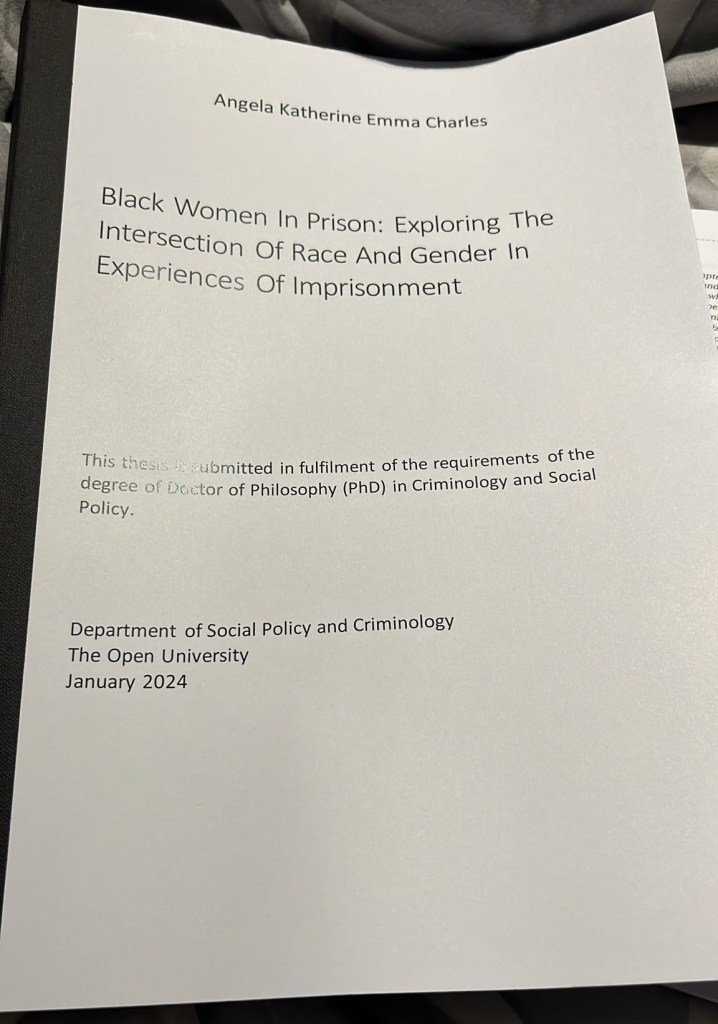
I reflect one week after one of the most important examinations in academia, the viva. Like any examination you never know what is going to come up and therefore you have to be prepared for anything. This makes preparation tricky, uncertain and at times perplexing. There were areas I thought might come up, and in those cases I had a response ready.
On the day, despite all the preparation there were questions that required pause, thought, navigation and discussion. Upon reflection, there were times where I would have liked to provide a more polished and articulate answer, but I am not a robot and therefore my answers are human, with stutters and pauses, passion and dedication; they are unpolished and there is a beauty to that.
What made the difference was having two very supportive examiners that were approachable, interested in my research and wanting me to fulfil my potential. Their additional years in the field/academia over mine were not used to demonstrate their superiority, but instead to guide me in the final process of completing my thesis.
The process acted as a reminder to me that how you approach a situation is so important. In academia, whilst we may be trying to highlight the flaws in a potential project or correcting errors or misconceptions in student’s writing so they can improve, we also ought to put the effort into seeing the good in someone’s work where possible. Think about whether your approach is constructive, how can that individual be supported to the finish line. It pays to maybe think back to the time when your work was being dissected, analysed, with the outcome affecting your academic career in front of you, what type of examiner would you have wanted, maybe that is the one you need to strive to be to others.
I passed with minor corrections that they stressed would only take a few days work. I hope this is acts a testament to what is possible. As a first-generation Black woman that tentatively stepped into academia, achieved a first-class honours degree, navigated a masters at Oxford University, was successful in achieving a funded PhD to then pass with minor corrections, challenge yourself and dare to dream!

 Thoughts from the criminology team