
Home » Racism (Page 4)
Category Archives: Racism

At The Mouth of ‘Bloody Sunday’ #Travel #Prose #History
At the Mouth of Bloody Sunday
I know the one thing we did right, was the day we started to fight. Keep your eyes on the prize…hold on. Hold on.
Bloody Sunday in Selma only highlighted the bloody Mondays, Tuesdays, Wednesdays, Thursdays, Fridays, and Saturdays that Black people in America have faced from the first time we laid eyes on these shores. It took people to gather and protest to change. In December ’64, the good Rev. Dr. King was awarded the Nobel Peace Prize for this movement. That spring in Selma, people marched across a bridge in order to highlight the normal voter suppression practices still happening throughout the south – and still in 2021.
“If you can’t vote, you ain’t free. If you ain’t free, well then you a slave.” –Intro interview to Eyes on the Prize part 6/8.
According to the National Park Service, who oversees the important civic monument now:
“On “Bloody Sunday,” March 7, 1965, some 600 civil rights marchers headed east out of Selma on U.S. Route 80. They got only as far as the Edmund Pettus Bridge six blocks away, where state and local lawmen attacked them with billy clubs and tear gas and drove them back into Selma.”
From my 7th grade social studies class circa ‘87, I would also add: The good white citizens of Selma gathered at the mouth of the bridge for the spectacle, to witness or probably participate in the oppression. We see them in the footage, films, pictures and media coverage of the events, and we know many are likely still alive. Black-n-white news footage of the days leading to Bloody Sunday show the sheriff and his angry henchmen prodding people with their clubs, plenty of ‘regular’ people watching in joy.
The people prodded? Well-dressed and behaved Black citizens of Selma and activists who’d come to support them. According to the footage, white citizens came out in droves for what they knew would be a bloody suppression of simple voting rights. As spectators, their presence made the massacre spectacular.

I’ve visited the National Voter Rights Museum and Institute at the mouth of the bridge, and there they have an actual jar of jellybeans used to test Black people coming to sign up to vote at the local government office. Yes, sitting behind that booth was a white man who demanded that a black person – any citizen of the darker complexion – accurately guess the number of jellybeans in a jar in order to be allowed – in order for him to allow them – to register to vote. I feel like I have to repeat that, or say it in different ways because it is so unbelievable.
This September, I visited a museum at the edge of the Edmund Pettus bridge in Selma, Alabama, on the way to Montgomery, the state capital. This historical museum marks local efforts to contest voter restriction practices. These practices were heinous in tone and texture, yet creative and cringe-worthy in nurture and nature. For example, consider the ingenious of these jellybean-counting white men in DC who created the separate-n-unequal space to inspire a variety of voter suppression taxes, tests and clauses throughout the south. It is these sorts of mad men who make decisions that impact the entire world as we have come to know and understand it now.
Yes, it is these sorts of men who send politicians to the state houses, and sent/send senators to Washington DC, to cajole politicians of every hue to compromise on their values. Now, we also know they send mobs to storm the capitol on the very day all the legislators gather to confirm the election results.
I know the one thing we did right, was the day we started to fight. Keep your eyes on the prize…hold on. Hold on.

Imagine yourself standing there in a museum, looking at a shelf, and there is a jar of jellybeans. There’s nothing spectacular about the jar, nor its contents. For any of us have seen something like this in virtually any kitchen, or supermarket. My granny grew, harvested and canned vegetables, so growing up I got to handle many mason jars first hand.
In fact, I love jellybeans. I used to visit the gourmet jellybeans shop in the mall after school when I was a kid. You could pick out any flavour that you liked, and I always went for blueberry, and cherry. I loved the contrast between the royal blue and Corvette red. It is a childhood fascination that my dentists still adore me for to this day. Naturally, these gourmet jellybeans were a little more expensive than the ones you get in the supermarkets, but I liked to save my money and treat myself sometimes. Plus, it felt very special being able to pick out the ones you like, and not have to discard the disgusting ones – who ever thought licorice or cola belonged on a jelly bean!?!
As a candy, jellybeans are so visually enticing. As you enter the shop, the walls are covered from floor to ceiling with all sorts of bright neon colors. Every shade of the rainbow grabs your eyes, calls to you. Between stacks of plastic bags and scoops, you are awed by the massive jars of each individual jellybean color ready for you to pick-and-mix. There are also tables with stacks of both empty and pre-filled jars. There are jars of all sizes filled with colorful patterns of jellybeans with matching ribbons tied in bows around the lids. Of course, the entire shop smells like fruit, all kinds of fruits, sweet, succulent fruits that you cannot even imagine. You are the customer, you are king. By virtue of entering the fancy shop, this is your kingdom.
Now take all of that and put it in a jar. To get to this jar, you have to enter an official government building in the town center. Next to the entrance stands an armed, uniformed white man who gives you a disgruntled look as you enter, signaling that he’s not there for your safety but aggravation. Now, as you approach, you see the jar, sitting on a counter, and behind it sits another white man. Try to imagine this white man, probably with a gun next to him or somewhere nearby, with nothing better to do than to threaten your life. Because the town is so small, he knows your last name, and may know of your family.
Since this is a small town, he knows your employer, he knows where you live as you’ve just written this down. He may even know your family, as the local history is so insidious, his family may have even owned or overseen yours at one time. Or, at that very moment, you or a family member may work for him or his kin. Your kids might play together. You may have played with him as a kid when, for example, your mother was his nanny (read-and-said-in-the-south: Mammy). Yet now, here in a free democracy, it is his job to register citizens to vote.
It is his prerogative, the birthright of this individual, plain (white) man on the other side of the glass to demand that you count the number of jellybeans in the goddamn jar. It is a privilege that no one anywhere near here has ever questioned. So, with a smile, he plops a big red “DENIED” stamp on your registration form. Of course yo’cain’t! A “killing rage” surges. Be glad you don’t have a gun with you.

Share this:

My First Foreign Friend #ShortStory #BlackAsiaWithLove
I love school.
In the third grade, we had a foreign student named Graham. His parents had come over to our hometown from England with a job, and his family was to stay in our town for a year or two.
Other than Graham’s accent, at first he didn’t in anyway appear, or feel different.
The only time that Graham’s difference mattered , or that I knew Graham’s difference mattered, was on the spelling test. We had moved far away from three letter words, to larger words and sentences, and by fourth grade we were writing our own books.
But in the third grade, there was Graham on our first spelling test, and our teacher drilling words like color.
The teacher made it fun by using word association to aid in memory. Then, he paused to explain that Graham would be excused if he misspelled certain words because where he’s from, they spelt (spelled) things differently. Spell “color” differently, we all wondered?
Our teacher explained that there are many words where they add the letter U, that are pronounced in the same way. Anyway we have different accents in our own country. Heck, we had different ways of saying the word “colour” in our own city. Where does the extra-U go? Then of course, the teacher spelled out the word. He could not write it on the chalkboard because we were sitting in a circle on the area rug, on the library side of the classroom. It is then that I also realized that I had a visual memory, even visualizing words audible words, both the letters and images representing the meaning. I wanted to know why people in England spelled things differently than in America. Despite Graham’s interesting accent, and easy nature which got him along fine with everyone, he was going to have to answer some questions.
Though our teacher did not write the letters, in hearing them I could see them in my mind moving around. I started imagining how moving the different letters shifted – or did not shift – differences in sound, across distances, borders, and cultures. I started imagining how the sounds moved with the people. Irish? Scottish? People in our city claimed these origins, and they talk funny on TV. Britain has many accents, our teacher explained. “I’m English,” blurted Graham.
We didn’t know much, but we knew that except for our Jewish classmates, everyone in that room had a last name from the British Isles, which we took a few moments to discuss. Most our last names were English, like my maternal side. A few kids had heard family tales of Scottish or Irish backgrounds, German, too. One girl had relatives in Ireland. And wherever the McConnell’s are from, please come get Mitch. Hurry up!
How did we Blacks get our Anglicized names? Ask Kunta Kinte! And how did this shape Black thought/conscience, or the way we talk? I wanted to know MORE. I thought Jewish people were lucky: At least they knew who they were, and they were spoken of with respect. Since my dad is Nigerian, (and my name identifiably African) I had a slight glimpse of this. I knew I had a history, tied to people and places beyond the plantation, and outside of any textbook I’ve ever had (until now where I get to pick the texts and select the books).
My family is full of migrants, both geographically and socially, so homelife was riddled with a variety of accents. Despite migrating north, my grandparents’ generation carried their melodic Alabama accents with them their whole lives. Their kids exceeded them in education, further distancing our kin from cotton farming, both in tone and texture. This meant that my generation was the first raised by city-folk, and all the more distant from our roots since we came of age in the early days of Hip-Hop. At home, there were so many different kinds of sounds, music, talk and accents. Fascinating we can understand done another.
Our teacher also told us that Americans also used some of the same words differently. Now, I’ve lived here in the UK for a decade and I can’t be bothered to call my own car’s trunk a boot. Toilet or loo? Everybody here gets it. Unfortunately, Graham explained that he knew the British term for what we call ‘eraser’, which the teacher couldn’t gloss over because we each had one stashed in our desks, and he knew we’d have the giggles each time the word was mentioned.
I was still struck by the fact that in spite of all these differences and changes, meanings of words could shift or be retained, both in written and spoken forms. I wanted to know more about these words – which words had an extra U – and where had the British got their languages and accents. For me, Graham represented the right to know and experience different people, that this was what was meant by different cultures coming together.
“Here I am just drownin’ in the rain/With a ticket for a runaway train…” – Soul Asylum, 1992, senior year.
In retrospect it’s weird that Graham’s my first foreign friend. Both my father and godmother immigrated to America – initially to attend my hometown university. They’d come from Nigeria and China, respectively, and I’d always assumed that I’d eventually visit both places, which I have. Perhaps this particular friendship sticks with me because Graham’s the first foreign kid I got to know.
Through knowing Graham, I could for the first time imagine myself, in my own shoes, living in another part of the world, not as a young adult like my folks, but in my 8-year-old body. What interested me more was that I could also see Graham was not invested in the macho culture into which we were slowly being indoctrinated (bludgeoned). For example, Graham had no interest in basketball, which is big as sh*t in Kentucky. Nor did I. “Soccer is more popular over there,” our teacher explained, deflecting from Graham’s oddness. “But they call it football.” Who cares! I’d also seen Graham sit with his legs crossed, which was fully emasculating as far as I knew back then. The teacher defended him, saying that this also was different where Graham came from. I definitely knew I wanted to go there, and sit anyway I wanted to sit.
Share this:


Black History Month: A Final Thought

As we come to the end of Black History Month it is important to shine a light on the Black Lives Matters Movement and highlight the historical significance to the problematic discourse of racialisation.
Black history month is an opportunity for people from the various pockets of the Black community to learn about our own history and educate those who are not from the Black community, in order to decolonise our institutions and our society. As Black people we have our own history formed by systemic oppressions and great triumphs. While it is easy (and lazy) for institutions to use terms such as BAME and People of Colour (POC) these problematic uses of language oppress blackness. We are not a monolith of coloured people. Different racialised groups have and will experience, and uphold difference, harms and achievements within society. Furthermore, it would be naïve to ignore the narrative of anti-blackness that people from racialised groups uphold. Therefore, it is important for us and people that look like us, to continue to have the space to talk about our history and our experiences.
For many people in the UK and indeed around the world BLM became a mainstream topic for discussion and debate following the murder of George Floyd. While the term BLACK LIVES MATTER is provocative and creates a need for debate, it signifies the historical ideology that black lives haven’t mattered in historical and in many ways, contemporary terms.
While it is easy to fall into the trap of describing the Black experience as an experience of victimhood, Black history months allows us to look deep at all our history and understand why and where we are as a society.
The UK is one of the most diverse places in the world, yet we continue to fall prey to the Eurocentric ideology of history. And while it is important to always remember our history, the negativity of only understanding black history from the perspective of enslavement needs to be questioned. Furthermore, the history of enslavement is not just about the history of Black people, we need to acknowledge that this was the history of the most affluent within our society. Of course, to glaze over the triangle trade is problematic as it allows us to understand how and why our institutions are problematic, but it is redundant to only look at Black history from a place of oppression. There are many great Black historical figures that have contributed to the rich history of Britain, we should be introducing our youth to John Edmonstone, Stuart Hall, Mary Prince and Olive Morris (to name a few). We should also be celebrating prominent Black figures that still grace this earth to encourage the youth of today to embrace positive Black role models.
Black history for us, is not just about the 1st-31st of October. We are all here because of history we need to start integrating all our history into our institutions, to empower, educate and to essentially make sense of our society.
Share this:


‘White Women, Race Matters’: The White Man’s Burden
This post in-part takes its name from a book by the late Whiteness Studies academic Ruth Frankenberg (1993) and is the final of three that will discuss Whiteness, women, and racism.
Chapter III: Your Problem but not Your Problem
Despite women’s investment in football, at least socially, in terms of Women’s Football (much better than the men’s game in my opinion), it was interesting to observe the reactions of White men that positioned themselves as progressives when I challenged the national response to racism in the game. When we realise that ‘football hooligans’ all have jobs across sector, I would bring people to consider this is not just a working-class issue, as football is a game that transcends socioeconomic lines. This post isn’t necessarily about the violence White women have commited against me but is certainly their problem, and they could have a deciding voice of how White men act at football matches. When we consider racial hiearchies, I am reminded of the gendered components of colonialism where White men are at the top of that hierachy followed by the White woman. In spite of White women’s complicity in those histories of racism (Ware, 1992), logic dictates that White women’s privilege will have some sway when White men act in hostility to people of colour. That said, still today I find White women all too happy to take on misogyny / patriarchy but not racism / White supremacy. In this blog, I will start with a Twitter encounter where I dared to say there isn’t a “racism-in-football-problem” but a more societal issue of White supremacy. Until we start thinking about White supremacy as a political system, just as women have done patriarchy (DeBeavoir, 1949; Friedan, 1963; Davis, 1981; hooks, 1991; Adichie, 2014) and others have done class (Marx and Engles, 1848; Chomsky, 1999; Tom Nicholas, 2020), we will never solve this racism issue.
When I challenged the concept of “racism in football” in July 2021, a local BBC journalist claimed I could make it both about ‘racism in football’ and in society. The problem with this is, dominant media discourses have already stitched it all up by relegating racism to specific spaces somewhat divorced from a global system of violence. At this time as well, I saw the term ‘football hooliganism’ being used as double talk for ‘working-class thuggery’. However, to understand how football got to where it is today, we need to know how football was not originally made by the working-class.
Much alike my favourite sport cricket (Tre Ventour Ed, 2021), football started as a sport for characteristically ‘English gentlemen’. It was made for the rich by the rich to really celebrate themselves. Their game by their rules. When the working-class started to advocate for players playing for money, in its day (so the late nineteenth century), it was thought controversial. Yet, the rich controlled the boards and they could afford to play for free, taking days off for matches. The proleterians could not. Here, then you see that it came down to money, where a game made by the wealthy for them and their friends was then changed forever by working people, no less than mill and factoryworkers.

Actions that society most associates with the working-class majority today – including public fights, vandalism, brawls, and riotting in Britain are not new phenomena but has a long history going back to even before 1900 uncoincidentally coinciding with the construction of London Metropolitan Police Service in 1829 (Storch, 1975). Following the signing of the Armistice in November 1918, for example, so-called ‘race riots’ took place in no fewer than nine port communities between January and August 1919 (Jenkinson, 1996: 92). However, media footage and pictures of British riots before the Second World War have rarely been seen by the public but “…individual memories of civil disorder [in those days were] surprisingly widespread” and when riotting did happen, “governments often denied they had, and censored the newsreel pictures” (Forbidden Britain). Historically speaking, these uprisings grew out of a response to state-sanctioned violence frequently mass unemployment and poverty. Under the threat of poverty, homelessness, or even death, groups will attack shops and other structures to acquire food where “the turbulence of the colliers is, of course, to be accounted for by something more elementary than politics: it was the instinctive reaction of virility to hunger” (Ashton and Sykes, 1967: 131). Yet, the male violence that occured at the England v Italy Euro finale football match in London July 2021 has a precedent going back to the days of Walter Tull where his biographer historian Phil Vasili writes:
“In 1919, working-class Britain was in a rebellious state. Whether the war created the mood of revolt among workers – sometimes taking a horribly distorted and misguided form as we saw with the race riots – or merely speeded up the process that had been years in fermentation, is not for debate here. The fact is it happened. Families, individuals, veterans were changed by the war, including Tull, his eagerness to enlist souring to a hatred for carnage.”
Vasili, 2010: 229
On the morning of the final, I saw evidence of local Northamptonians heading to the pubs to get their fill as early as 8AM before the game that evening at 8PM (@cllrjameshill). In London, however, White (let’s be honest of course dominantly heterosexual cisgendered) patriarchal violence, was in full swing on Leicester Square, described as a “fanzone for thousands of England fans” before even two o’clock. Furthermore, according to Hutchinson (1975), “riots, unruly behaviour, violence, assault and vandalism, appear to have been a well-established, but not necessarily dominant pattern of crowd behaviour at football matches, at least from the 1870s” (p11). Whilst football today has united people across racial and class lines, many Black men of my dad’s generation (born 1971) would not find themselves anywhere near a match when they were my age or even as teenagers purely for the fact that these crowds were frequently racist and the risk of violence was significant. Today, while racism in football is largely in response to the actions of White people against Black players, there is a further history of White racism against Black fans too.
As I do not doubt that there is racism in women’s football (there is racism at every level of society), I wonder why women’s sports (especially football) is not associated with violence. Heck, other men’s sports do not have these connotations attached. We do not see it in cricket, nor do we see it in rugby to these extremes or tennis. Looking at the conversations in what happened following the game, it seemed to me that people were trying so hard to divorce this male violence from the rest of society, as if it is only specific to football. I would argue this is Britain’s soul, an unfiltered and grandiose example of the gendered racial privilege that comes with being a White man in the UK. It is very easy to stigmatise the working-class in this instance and call them “thugs”, but when we know football unites across class divides, it would do us well to consider how lots of the perpetrators were also probably middle-class as well, with jobs that permeate every level of British society: from accounting to education to sports, unions and more. That while it is incredibly easy to scapegoat them as there are histories of working-class responding with riots against state violence (no less than sports riots), we must think about how for some reason, football in particular, turns lots of men feral.
I was talking to one family member who claimed this is where men get to claim their base instincts, that violence seems to come naturally. I would need to think more on this, but it must be said that many social settings condition violence out of us, from school to the workplace. Even so, that in schools violence is punished, many students (especially boys) being placed pupil referral units. Whilst society brutalises in many ways, the pugilistic scenes we are witness to at football matches is one that is considered unsavoury by most. Men gathering together at the football … does this flick a switch? In the late nineteenth century, polymath Gustave LeBon writes about what he called “the collective mind” (1896: 2) whilst another scholar later states “the natural crowd is the open crowd; there are no limits … it does not recognise houses, doors, or locks and those that shut themselves in are suspect” (Canetti, 1962: 16). Football matches may be an apt site to discuss what the psychology profession now calls ‘crowd theory’ which was further developed on by psychologist Neil Smelser analysing the American ‘race riots’ in the first half of the last century (1962: 253, 260-61).
In my last post, I talked about ‘Karen’ in relation to racist middle-aged White women that harrass Black people minding their business. Yet, one does not see White women congregating like this together in mass as instigators of violence, where if at all in my experience violence from White women has been more individualistic or covert. Though, if women friends/colleagues disagree and know more, I’m happy to be put right from their personal experience (and do more reading). Rioting, however, is frequently often hypermasculine (Gary Younge in: DDN, 2020) and so is the violence around football. The role of White women in racism can be more insidious but my encounter on Twitter with this White man comes after my many encounters with White men that think they know more than Black people about racism.
Both White men and women are complicit in White supremacy as aggressors and bystanders. To keep this on topic, every time a White woman watches a White man’s racism but stays silent, they are as bad as they are really showing how White supremacy is the symptom and racism is the problem.
Now, you have three entries. Have a think on them.
Reference
Adichie, C.N. (2014) We Should All Be Feminists. London: 4th Estate.
Ashton, T. S., and Sykes, J. (1967). The Coal Industry of the Eighteenth Century. 2nd ed. New York: A. M. Kelley.
Canetti, E. (1962) Crowds and Power. London: Gollancz.
Chomsky, N (1999) Profit over People. New York: Seven Story Press.
Davis, A. (1981) Women, Race, and Class. London: Penguin.
DeBeauvoir, S. (1949) The Second Sex. London: Vintage.
[DDN] Double Down News (2020) Black Lives Matter & The Question of Violence | Gary Younge. YouTube [online].
Forbidden Britain (1994) Riots Episode 3 [via YouTube]. London: BBC 2.
Frankenberg, R. (1993) White Women, Race Matters. MI: University Press.
Friedan, B (1963) The Feminine Mystique. London: Penguin.
hooks, b (1991) All About Love: New Vision. London: HarperCollins.
Hutchinson, J. (1975) Some aspects of football crowds before 1914. In. The Working Class. University of Sussex Conference Report.
Jenkinson, J (1996) The 1919 Riots. In: Panayi, P (ed) Racial Violence in Britain in the Nineteenth and Twentieth Centuries. Leicester: University Press, pp. 92-111.
Le Bon, G (1896) The Crowd: A Study of the Popular Mind. London: T. Fisher Unwin.
Marx, K and Engels, F. (1848/1967) The Communist Manifesto. London: Penguin.
Smelser, N. (1962/2011) Theories of Collective Behaviour. New Orleans, LA: Quid Pro.
Storch, R.D. (1975) The Plague of the Blue Locusts: Police Reform and Popular Resistance in Northern England, 1840–57. International Review of Social History, 20 (1), pp.61-90
Tom Nicholas (2020) Whiteness: WTF? White Privilege and the Invisible Race. YouTube.
Tre Ventour Ed. (2021) 22 Yards of Whiteness: ‘You Don’t Have to be Posh to be Privileged’. YouTube.
Vasili, P. (2010) Walter Tull, (1888-1918), Officer, Footballer: All the Guns in France Couldn’t Wake Me. London: Raw.
Ware, V. (1992/2015) Beyond the Pale: White Women, Racism, and History. London: Verso.
Share this:

‘White Women, Race Matters’: Fantasies of a White Nation
Chapter II: Moving Mad in these Streets
This post in-part takes its name from a book by the late Whiteness Studies academic Ruth Frankenberg (1993) and is the second of three that will discuss Whiteness, women, and racism.
If you grew up racialised outside of Whiteness in Britain or really any Anglo-European country, the chances are you will be asked “where are you from?” on a regular basis. After reading some poems on this very issue at a Northamptonshire arts and heritage festival, I was walking home only to be stopped in my tracks by a White woman probably in her late 40s / early 50s saying “people like you aren’t really British.” Whilst I have been asking myself similar questions, for a White person to do this so confidently is unsettling … they’re moving mad in these streets. In this blog post, I will discuss this racial micro-aggression, underpinned by racist epistemologies with us Black people viewed in this country as immigrant; interloper; Other, whilst simultaneously Whiteness being synonymous with “localness” (Brown, 2006). In this encounter just outside of Northampton, I was further reminded that to be Black and British in this country is to live in a perpetual state of “double consciousness” (DuBois, 1903: 1).
Rather than identify with “Black Britishness”, (a pigeon-hole in my opinion), the term ‘afropean’ (Philips, 1987; Pitts, 2020) feels much more appropriate and fluid. However, the term Karen is one I don’t particular enjoy, but the woman in question could be described as such. In using this label, I am trying to create a frame of reference for you (the audience), not allow the person in question to escape scrutiny. This woman was a Jane Bloggs, I had never seen her before and she felt entitled enough to stop me in the street and continually criticise my right to belong. For those of you local to Northampton, I was walking between that stretch of path on Wellingborough Road, between Weston Favell Centre and Aldi. This encounter reminded me of my place in Britain, where ‘British-Asianness’ (Shukla, 2016; Riz Ahmed, 2019; Shukla, 2021) and ‘Black Britishness’ have frequently been difficult to define (Rich 1986, Gilroy, 1987; Yeboah, 1988; Young, 1995; Christian, 2008; Olusoga, 2016; Hirsch, 2017, Ventour, 2020). Even amongst White subjects themselves, what it means to be British has often been a question of challenge (Fox, 2014), and when I articulated that both my parents were born in the UK (Lichfield City and Northampton), she was visiblely upset and put-out.
The term ‘Karen’ comes from a name that was frequent among middle-aged women who were born between 1957 and 1966 with its peak in 1965 (Social Security Data). The name is also the Danish rendition of Katherine associated with the Greek for pure. Yet, the meaning of the word has undergone pejoration. In sociolinguistics, ‘pejoration’ is when a positive word becomes negative over time. ‘Karen’ as it has come to be known today has uses as early as September 2016 and as we know now, Karen has become synonymous with racist middle-aged White women, often associated with their harrassment of Black people just minding their business. On my way home, this harrassment found me walking while Black. For others, it has occured shopping while Black; birdwatching while Black; jogging while Black; listening to music in their house while Black, and more. The encounters we know about are generally examples that make news headlines but there are far more examples that do not make the national press, because they are pervasive.
Writing my MA dissertation on the 1919 Race Riots, I saw even in Edwardian Britain the nationality and citizenship rights of Black people in this country were contested (Belchem, 2014: 56), both those born British subjects in parts of the British Empire and those that were in fact born and raised here (May and Cohen, 1974), in spite of their legal status under the 1914 British Nationality and Aliens Act. Today, we are asked “where you from?” underpinned by historical racist epistemologies that defined Englishness as White (Dabiri, 2021). However, even in the image of so-called multiculturalism in the UK, the Britishness of Black and Brown people still has qualifiers attached. Watching ‘Homecoming’, the finale of David Olusoga’s popular series Black and British, the historian claims “… there is one barrier that confronted the Windrush Generation that we have largely overcome, and that’s because there are few people these days who question the idea that it is possible to be both Black and British” (54:46-55:00).
My experiences as a child and as an adult still tell me that Black Britishness is an increasingly contentious question, but even more testing … to be Black and English. In August 2021, MP David Lammy defended his right to call himself Black English from a caller into his LBC show. Whilst he was later met with lots of support online, what is interesting was the numbers of Black people on Twitter that challenged him on his right to be Black and English. If English is a nationality, better yet, a “civic identity”, nobody should be argueing someone’s right to choose where they belong. Furthermore, David Olusoga’s comments in ‘Homecoming’ seem blinkered and out of touch with people on the ground that still experience this epistemic racism on a daily basis. Especially my generation navigating the superhighways of identity where as one scholar writes, “The BBC had a whole series dedicated to ‘Black Britishness’ [Olusoga’s], which essentially amounted to propaganda for the idea that we are now accepted as part of the nation …” (Andrews, 2019: xiii).
My encounter with the woman on the street is one more example of racial privilege knowing full well that her Whiteness protected her from repercussions. Furthermore, whilst the ‘Karen’ meme started as a commentary on racial privilege (Williams, 2020) and White women in histories of racism (Ware, 1992), it’s a shame that is has been co-opted by people as a catch-all term for any woman that happens to annoy them. I think my encounter is certainly definable under the remits of the original Karen mythology, but there are those out there who would also argue my thoughts as misogynistic, namely because of what the mythology has become. In the UK, this mythology is “more proof the internet speaks American” (Lewis, 2020). And how Black Lives Matter is still spoken about is a reminder of the divides between anti-Blackness in the US and anti-Blackness in Britain. Yet, discourses on “Karen spotting” online also speak an American voice even though equivalents exist in Britain – especially in schools, colleges / universities and healthcare.
Those interested in the cultures of Black and Brown people; it would be more useful to ask about heritage over the racist “where are you from?”, as for me at least the latter is underpinned by racist binaries that say POCs cannot relate to ‘Anglo-Europeanness’, whilst the former speaks to the fluidity of an individual’s relationship with Home.
References
Andrews, K (2019) Back to Black: Retelling Black Radicalism for the 21st Century. London: ZED Books.
Belchem, J (2014) Before the Windrush: Race Relations in 20th Century Liverpool. Liverpool: University Press.
Black and British (2016) Episode 4: Homecoming [BBC iPlayer]. London: BBC 2.
Brown, J.N. (2006) Dropping Anchor Setting Sail: Geographies of Race in Black Liverpool. NJ: Princeton University Press.
Christian, M. (2008) The Fletcher Report 1930: A Historical Case Study of Contested Black Mixed Heritage Britishness. Journal of HIstorical Sociology, 21(2-3), pp. 213-241.
Dabiri, E. (2021) What White People Can Do Next: From Allyship to Coalition. London: Penguin.
DuBois, W.E.B. (1903) The Souls of Black Folk. New York: Dover Thrift.
Fox, K. (2014) Watching the English: the hidden rules of English behaviour. London: Hodder & Stoughton.
Frankenberg, R. (1993) White Women, Race Matters: The Social Construction of Whiteness. MI: UoM Press.
Gilroy, P. (1987) There Ain’t No Black in the Union Jack. London: Routledge.
Hirsch, A. (2017) Brit(ish). London: Jonathan Cape.
Lewis, H. (2020) The Mythology of Karen. The Atlantic.
May, R and Cohen, R. (1974) The Interaction Between Race and Colonialism: A Case Study of the Liverpool Race Riots of 1919. Race and Class. 16(2), pp. 111-126.
Olusoga, D. (2017) Black and British: A Forgotten History. London: Pan.
Philips, C. (1987) The European Tribe. London: Faber & Faber.
Pitts, J. (2020) Afropean: Notes from Black Europe. London: Penguin.
Rich, P.B. (1986) Race and Empire in British Politics, Cambridge: Cambridge University.
Riz Ahmed (2019) Where You From? YouTube.
Shukla, N. (2016) The Good Immigrant. London: Unbound
— (2021). Brown Baby: A Memoir of Race, Family, and Home. London: Pan.
Social Security. Top 5 Names in Each of the Last 100 Years.
Ventour, T. (2020) Where Are You From? (For ‘Effing Swings & Roundabouts’ by Lauren D’Alessandro-Heath). Medium.
Ware, V. (1992) Beyond the Pale: White Women, Racism and History. London: Verso.
Williams, A. (2020) Black Memes Matter: #LivingWhileBlack With Becky and Karen. Social Media + Society. 6(4), pp. 1-14.
Yeboah, S.K. (1988) The Ideology of Racism, London: Hansib.
Young, R.J.C. (1995) Colonial Desire: Hybridity in Theory, Culture and Race, London: Routledge.
Share this:

‘White Women, Race Matters’: The White Saviour Industrial Complex
Chapter I: No More White Saviours
This post in-part takes its name from a book by the late Whiteness Studies academic Ruth Frankenberg (1993) while the subtitle is taken from a journal article by Brittany Aronson (2017), the first of three blogs that will discuss Whiteness, women, and racism.
In the middle of August 2021, I saw a Facebook post by an institution platforming one of their staff who happened to say that she helped build a playground in an African country. I shared this post with a gentle critique of Whiteness attached. In the comments some of my friends and colleagues gave their two cents, with comments such as ‘white privilege’ and ‘gap-year activism’. It would be useful to say this staff member was White. A week to ten days later I recieved of a hostile message from one of their friends claiming I had upset the person in question with the comments. In the conversation I had with the third party (over messenger), I was witness to the hostility that Black and Brown people often experience from White women via tone-policing and their emotions as weapons (Hamad, 2018; Phipps, 2021). Her friend thus began to lecture me on the work of East African Playgrounds and use the so-called ethnically diverse makeup of the group that built the playground as a cover for the friend’s participation. In short, “I have Black / Asian / POC friends so it’s all good” – not, let me check my White privilege.
After being called a “bully” I did apologise, as maybe some of the comments did make it about the individual in question. However, in hindsight I do not think I should have (I was manipulated). I do not think the comments were bullyish, but this was simply a response consistent with ‘White defense’ (Lewis, 2000; Gunaratnam, 2003; DiAngelo, 2019), and I was not as savvy because it happened online rather in person. I was bullied as a youth so I have done my utmost since to not be one of those people. However, in this first act of ‘White defense’ it brought me to think about charity as one of the sectors where Whiteness is most pervasive. As an undergrad, I remember attending a presentation evening at Park Campus aiming to convince students to do aid work in East Africa, presented as “good for the CV”. How HE works with charities to send students to these places is problematic revisiting violent histories of colonial paternalism and the place of Blackness and Browness in the White imagination. Or as one postcolonial theorist writes:
“The Orient is not only adjacent to Europe; it is also the place of Europe’s greatest and richest and oldest colonies, the source of its civilizations and languages, its cultural contestant, and one of its deepest and most recurring images of the Other. In addition, the Orient has helped to define Europe (or the West) as its contrasting image, idea, personality, experience.”
Said, 1978: 2
The “helping hand of the West” in countries that are seemingly presented as unable to help themselves (or so is the concept / idea that White Western Aid presents) is rooted in White supremacy. When White people go to these countries under the guise of “good intent”, it brings the histories of White supremacy in these nations back to the floor. For Black/Brown people, who do this work, irrespective of our ancestries in global southern countries, I have to ask myself if I’m wanted there. Although I’m racialised outside of Whiteness, I was still reared in Europe. It is also a reminder of the differences between race and culture, as a Black person that was raised in Britain compared to my grandfather, for example, who spent nearly all of his childhood in Grenada. “Aid” reminds me of Othering through how previously colonised nations “still apparently” need “the help” of the West, countries that were never able to realise their potentials because of colonial exploitation wrought by Europe (re: the plot to Black Panther) colonialisms they still continue to do through different means. i.e the Israeli state’s illegal occupation of Palestine. Colonialism never ended.
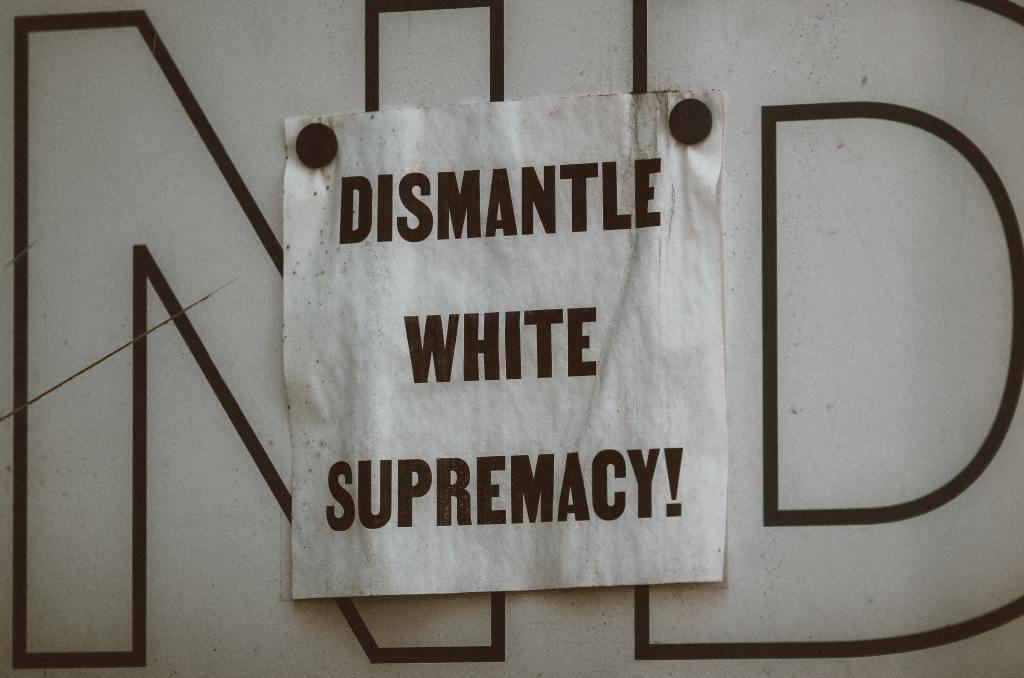
It reminds me of the so-called “inferiority” of countries in the Global South (what many sectors call developing nations) when westerners continue to go there in the name of aid, whilst at the same time not helping these countries to be self-sufficient. Simply we just send people there hoping that is enough. And we do this yearly without thinking about the broader problems. The roles of individuals in doing that, is really complicit into Whiteness through aid AKA White savourism. Short term, it feels good; long-term, this does more for the West than it does for those we want to help.
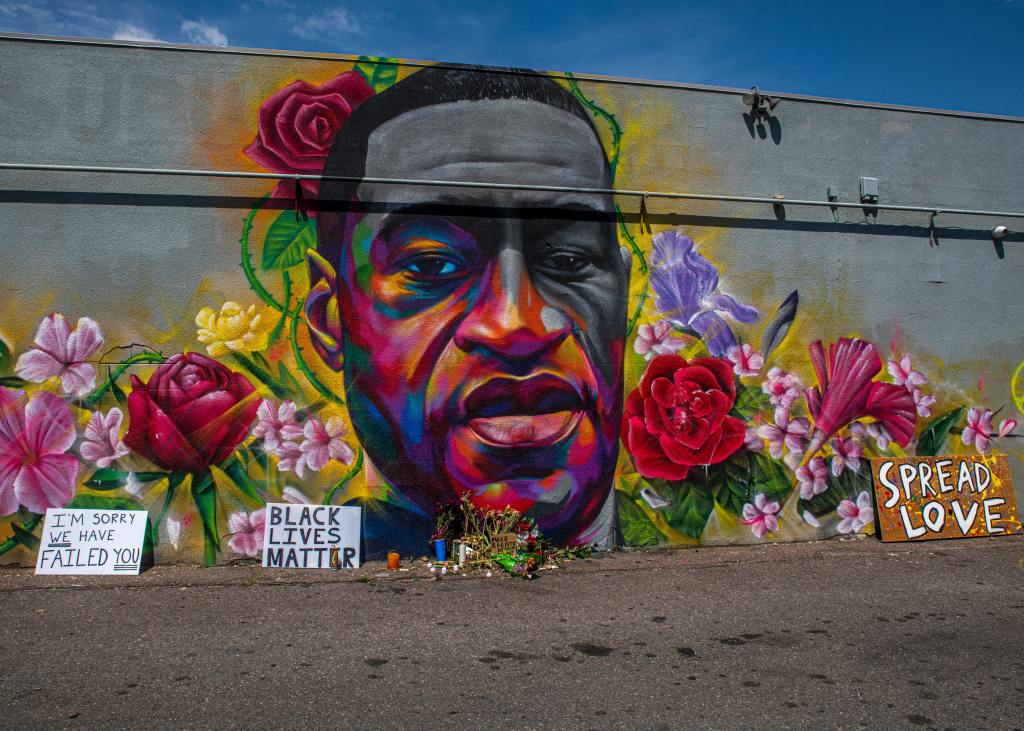
Aid aside, a comparison could be how following the Murder of George Floyd, lots of White people felt the euphoria of the protests and solidarity, but when it came to making good on pledging to dismantle systems of violence they benefit from, I could hear a pin drop. Seldom do we seek to empower these nations. What we frequently do is send westerners, often (but not always) for that feeling of goodness in building schools and their CVs, but at the end of it all, these tourists get to come back to the West. And when global sourthern nations have organised themselves historically, western governments have assasinated their leaders (i.e Belgium and Congo’s Patrice Lumumba).
What has become known as ‘poverty tourism’ is purported by not just White people from the Global North but also people like me who have ancestry in the Global South but were born and raised in the West. For those of us that do aid work, it would be worth thinking about how Whiteness can appear in the faces of Black and Brown people through the social, economic, and political investments institutions continue to have in these nations via the actions of individuals on the ground. That aside, it is seen as much more acceptable for a White person to do this work than it is for people of colour. When White people do “aid work” in previously colonised nations, it is viewed as “adventure” (i.e look at lit canon works of White westerners going to these nations). However, when Black and Brown people do this, in Northampton we just call it community work. To see an institution platform this ‘white saviourism’, it was insulting to many of my friends and colleagues, and their heritage, as descendants of indentured and enslaved labour.
Whilst I know there are many people ignorant to this history, I also know there are many people that know this and still continue to do it anyway. They may well go to countries in the African and Asian continents with good intentions, but those intentions are not divorced from histories of colonial exploitation these countries still haven’t recovered from. In seeing numbers of White people celebrating these “achievements” supported by White institutions, White privilege is evidently in-play in charity and in education, when the institutional thought plays into ‘institutional Whiteness’ because:
“the everyday work of establishing whiteness as a racialised enactment; of doing whiteness; of getting into it, is also institutional work. Whiteness is not just a personal investment practice it frames our chances for life or death, whether we are imprisoned or walk free, we are rich or poor, which university or not we attend, what marks we attain when we get there, if we do. The notion of institutional whiteness is a way of recognising the links between whiteness and institutional reproduction.”
White Spaces
In charity and by association third sector, this is an environment dominated by White middle-class women and White women are not divorced from histories of racism, in fact they are an important part of it (Ware, 1992). Rather than send students into these countries, I ask what global northern universities are doing with their global sourthern partner institutions to help on the ground. It is all very well sending students to build schools, but decolonisation is more than a curriculum-focussed endeavour. We must understand as Prof. Tao Leigh Goffe writes, “colonialism is ongoing … profound, sad, and beautiful because … decolonization is a prophecy and urgent call to action” Decolonisation requires colonisers to give the colonised their lands back and she goes on to say that “…decolonize is a a verb not a metaphor as Tuck and Yang teach us they wonder why Afro-Asian solidarity and Afro-Native coalition does not always exist in the world where it should or could.” I question if it is appropriate for higher education to send, often people who are westerners, to these countries, without any prior exploration of Whiteness nor the overarching system of White supremacy as a social and political system (Mills, 2003; 2004). My encounter with this White woman also saw her position bodies like mine in effort to cover Whiteness, but when we have a history/present of Black/Brown bodies being used as a flimsy cover for White supremacy (Ash Sakar in DDN, 2021), it makes sense that she would do this.
As a precedent, discourses around David Lammy and Stacey Dooley are worth looking at. Brittany Aronson (2017) argues that in the system of White supremacy, “we are falsely taught that being white is better so it makes sense why we would instill our white values upon students of color.” The hostility of this encounter in my direct messages reflects the ongoing systematic racism that people of colour face, via tone-policing because so often White people do not like how we experess ourselves, be it through speech or even in body language. For me, this has come more from White women than it has from White men. Today, I am still more conscious of them in anti-racism spaces than men. With the added intersection of womanhood, women of colour frequently experience this, with one of the most vivid examples of policing women of colour being when Matt Hancock tone-policed Dr Rosena Allin-Khan MP in May 2020.
When White people go into these countries to build schools, it makes many of us Black/Brown people uncomfortable when we as POCs have done this historically, only for these buildings to have been destroyed by White supremacists, or when we do like-for-like community work in the Global North … it is scorned. And whilst the woman in my messenger praised the diversity of this project, this revisits how Whiteness as an action can also be done by people that are not racialised as White (i.e The Sewell Report). So, although POCs took part, they are enacting the dominant thought of the institution which is the White institution. Seeing that western institutions are shaped by Euroecentricism AKA White thought / epistemologies, we can see regardless of how institutions can sometimes position POCs on these trips, they are in some ways doing the bidding of the institution really showing how Whiteness can appear with Black and Brown faces. The comments from the staff member’s friend in my messenger claimed the comments of my friends were “hateful” and “bullying”, this is a covert example of tone-policing when White people are held accountable.
After to-ing and fro-ing, this conversation ended with an obligation for the commenters and I to educate her and her friend. I’m not against aid work per sé, simply the lack of analysis or critique of aid work through a Whiteness lens by the institutions initiating those projects is troubling. Furthermore, I do not see White people that want to think about their own complicity in White supremacy in this work. If I saw more of an anti-racist commitment from aid institutions and so proclaimed White anti-racists, I would be less cynical about it. Yet, until that day comes, it will always be an uncomfortable topic especially when these countries only need aid namely because of colonialism and the postcolonial aftershocks countries like Britain left behind. It’s one thing saying these countries are “unstable” politically and socially as I am often told (but when you start asking why, it leads in one direction). It’s really an open secret that lots of White people, do emotionally benefit from this work (verily women), and that is Whiteness. This happens at the same time as White subjects really benefiting from Black/Brown trauma. If all of the above is acknowledged and explored in doing the work, then I might relax a bit more but it looks to me that the West is still profitting from the issues they create(d).
We said our goodbyes. Actually, I said goodbye, and that was that.
One thing is certain, this encounter for me, assured the everlasting relevance of Critical Race and Whiteness Studies further showing how Whiteness happens on social media. The microaggressions felt like bell hooks’ “white terror” (1992: 167) … it’s violence upon the body via stress. I’m tired now.
References
Aronson, B (2017) The White Savior Industrial Complex … Journal of Critical Thought and Praxis, 6(3), pp. 36-54.
DiAngelo, R (2019) White Fragility. London: Allen Lane.
[DDN] Double Down News (2021) The Alternative Race Report. YouTube.
Frankenberg, R (1993) White Women, Race Matters: The Social Construction of Whiteness. MI: UoM Press.
Gunaratnam, Y (2003) Researching ‘Race’ and Ethnicity: Methods, Knowledge and Power. London, Sage.
hooks, b. (1992) Black Looks: Race and Representation. MA: Southend Press.
Hamad, R (2018) How white women use strategic tears to silence women of colour. The Guardian.
Lewis, G (2000) Race, Gender, Social Welfare: Encounters in a Postcolonial Society. Oxford: Polity Press.
Mills, C. (2003) White Supremacy as a Sociopolitical System: A Philosophical Perspective. In: Doane, A and Bonilla-Silva, E (eds) White Out: The Continuing Significance of Racism. London: Routledge, pp. 35-48.
Mills, C. W (2004) Racial Exploitation and the Wages of Whiteness. In: Yancy, G (ed.) What White Looks Like: African-American Philosophers on the Whiteness Question. London: Routledge. pp. 25-54.
Phipps, A (2021) White tears, white rage: Victimhood and (as) violence in mainstream feminism. European Journal of Cultural Studies, 24(1), pp. 81-93.
Said, E (1978) Orientalism. London: Penguin.
Ware, V. (1992/2015) Beyond the Pale: White Women, Racism, and History. London: Verso.
White Spaces. Institutional Witnesses. White Spaces.
Share this:


Gypsy, Roma, Traveller History Month: #MakeSomeSpace

When I reflect upon my childhood, I recall the fondness that I have towards the Romany culture. I am reminded of the wonderful bond that my family had with horses, of good people, of the older generations of my family telling stories and singing Romany songs around tables at parties, of a strong sense of tight-knit togetherness and resilience when times got tough. I remember being educated about life from a young age and being taught the skills needed to be able to earn a living when it became difficult to do so. I am also reminded of the generosity involved in giving all that you can to your family and friends despite not having much. I especially think of this generosity in relation to the Irish Travellers that welcomed my brothers into their homes and provided for them when they were in times of need.
My instant thoughts about Gypsy, Romany Travellers (GRT) is that of fondness, but living in our society I have learnt that this is not the typical thoughts of the dominant public, media or government. When considering dominant media, public and government attitudes towards travellers, I am reminded of the GRTs that live in a society where people are prejudice because of long-standing stereotypes that have been created about their culture. I am also reminded of the lack of understanding and/or empathy that others have about the disproportionate amounts of social harm that those within the GRT families will encounter.
Since the recent Black Lives Matter protests there has been an explosion of anti-racist efforts, which I am hopeful of, yet, even some of those who are passionately ‘anti-racist’ continue to either project prejudice towards GRT people or deny that prejudice towards GRT is a problem. Adding to this, anti-racist messages communicated via the media do not seem to apply to GRT. A recent example of this is Dispatches: The Truth About Traveller Crime which is like a thorn in my side. This documentary discusses GRT as though they are a group of ‘dangerous criminals’. With an ‘expert’ criminologist present within the documentary it becomes difficult for the public to understand the stereotypes and lack of understanding that the documentary includes.
This year I have been able to incorporate GRT into the modules that I teach. I am pleased that some students have been able to navigate themselves to information about GRT from organisations like Traveller Movement and Friends Families and Travellers as these provide me with some hope in terms of GRT awareness and inclusion. However, it seems that these organisations will continue to have many pressing concerns to deal with, especially as the recent government proposals included within the Police, Crime, Sentencing and Courts Bill seem to be nothing more than another attack on the more traditional way GRT of life.

There is a worry for some GRT that upon moving into housing these cultures will decline. In terms of my own family my Nan was my idol, she was born in the 1920s in a traditional horse drawn wagon. Since moving into housing my Nan remained proud of her Romany heritage and she instilled this within my Dad’s upbringing. I only ever practiced aspects of the Romany culture in a marginal sense, and the decline of this part of my own heritage is connected to the social harm that my own family have experienced.
With GRT month I hope that more people question the prejudices that they have about others, I hope that people also question the media, government and supposed ‘experts’. You could begin by attempting to put yourself in the shoes of others, try to imagine how you would feel if society collectively judged yourself or your family despite knowing little to nothing about who you/they are. After all, this kind of overt prejudice that GRT encounter would not be acceptable in many situations if this was aimed at other groups, so why should it be acceptable when aimed at GRT?
Share this:


Not so Priti politics: setting a clear example
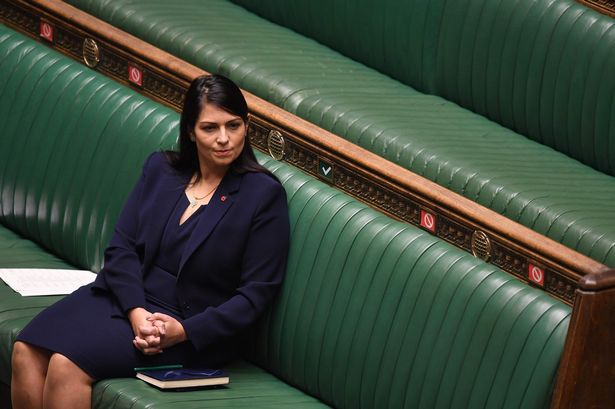
Of course Priti Patel the home secretary is correct when she declared that England fans have a right to boo England football players taking the knee before the England versus Croatia match on Sunday. Correct that is, in considering the spirit of the European Convention on Human Rights and Article 10, Freedom of Expression. This being encapsulated in our own Human Rights Act 1998. But whilst, the home secretary considers such booing, lets call it a form of protest, acceptable, she then adds that the ‘taking of the knee’ is simply ‘gesture politics’ and finds this form of protest unacceptable. The players and others through television advertising have made it clear that the statement is not political, it is simply a reminder of the need to tackle inequality and racism.
So, I’m left considering this, according to Priti Patel, it is acceptable to protest against those that oppose inequality and in particular racism, but it is not acceptable to protest against that in equality and racism. The first is a right, the second is some form of gesture politics. Ms Patel doesn’t end it there though but bemoans the Black Lives Matter protests and the ‘devastating impact they had on policing’. Somehow, I think she’s missed the point. If it is simply about the resources required to police the BLM protests, well the right of expression you say people have (you can boo if you want to) was simply being exercised and the police have a duty to facilitate those protests, devastating or not. If the devastation was about some other impact such as morale, then I think a bit of introspection wouldn’t go amiss. There is far too much evidence to show that the criminal justice system and the application of policing in particular is unequal, unfair and in need of change.
The home secretary is ultimately in charge of policing in this country. A politician, yes, but also supposedly a leader, who should be leading by example. What sort of example have her views set police forces across the country? Carry on folks, this is just gesture politics. No empathy, no understanding and a devil may care attitude, suggests that tackling inequality is not on the home secretary’s, let alone this government’s, agenda. This is not politics of the right, this smacks of politics of the far right. This is something we should all be worried about.
Share this:


The ‘Dangers’ of Travelling

This month, during the brief lull between the teaching and marking season, I had allocated myself a bit more free-time than usual. I have not been able to indulge in my hobby of travelling for a while, so instead of this, I have been watching travel related-television programmes with the hope that these will provide me with some kind of joy.
This attempt has been a partial success; an influx of comedy travel shows have worked wonders to uplift my spirits whilst simultaneously reminding me about the beauty of nature; animals, plants, sea, land…(and even humans).
Covid has taken over travel related news at the moment, but in ‘usual’ times it does not require much effort to come across travel documentaries or news reports that seem to encourage prejudice by depicting other countries and travelling as being strange or dangerous. I do worry that this type of coverage might discourage people from wanting to explore the world.
It is difficult to assess the extent to which the television influences our opinions, but when I was a bit younger and discussing my travel plans with others, sometimes I would be met with the following comments:
Response: I would love to travel but I can’t
Me: Why can’t you?
Response: It is dangerous!
Me: How do you know this?
Response: …It said so on the television
There are many genuine reasons that prevent people from travelling, such as, money, responsibilities, health, conflict, misogyny and racism etc. But I find the above reason to be such a shame.
I have encountered many myths over the years which seem to have been gained from watching the television. Here are some of my favorites:
Myth 1: If you see a [insert wild animal here], it will eat you alive
My experience: Take crocodiles for example, these are not as bad as they seem. Yes, arguably crocodiles are death machines but I have seen many in the wild and I am still alive.
Myth 2: The local ‘criminals’ are dangerous
My experience: On very rare occasions I have witnessed crime being committed whilst abroad. I once sat on a coach full of people who were attempting to smuggle cocaine to Brazil. I have also stumbled upon situations which the media described as ‘riots’ and I have also witnessed a few thefts. In these situations, the locals were not a danger to myself, but crime seemed to be a way of being able to afford to live or the result of the occasional angry outburst amongst crowds of protesters, motivated by frustrations with the state.
Myth 3: If you accept the hospitality of strangers you will be murdered in your sleep
My experience: The chances of this happening are very slim. Travelling tends to restore my faith in humanity, the people that I meet whilst travelling can be incredibly kind and helpful.
I found that whilst I was a student, I was able to travel to many places on relatively limited over-draft funds. I hope that the students that I teach are able to do the same, as travel really can broaden the mind. Although, maybe I am wrong for encouraging others to travel, as travelling also makes you very aware of the damage that has been caused to the world, and my own part with in it.
Share this:


The 7 shots of Isaiah Brown (April, post-George Floyd murder case) #BlackenAsiaWithLove
Isaiah Brown was shot by the policeman who’d given him a ride home less than an hour earlier, after his car had broken down at a gas station. He was shot 3 minutes into his 9-1-1 call. The cop mistook the cordless phone Isaiah was holding for a gun. This was the very phone he’d mentioned to the 9-11 dispatcher, using the very same cordless phone from his home. On the 9-1-1 call, Isaiah is explicitly asked, and confirms that he is unarmed, also that he was walking down the street on the phone, escaping a volatile situation.
On the call, it’s clear that Isaiah was reaching out for a lifeline – calling out from hell in sheer crisis. It wasn’t that he was in danger, he had the emotional maturity to call for help when he felt himself at risk of endangering another. “I’m about to kill my brother,” he calmly tells the dispatcher, who by now can start to hear him panting from walking.
“Do you understand that you just threatened to kill your brother on a recorded line on 9-1-1,” she asks calmly. “Mmm Hmm,” he confirms casually. He was calling her for help, and by now it’s clear that she’s attempting to keep him talking, i.e. redirect his attention from his crisis by having him describe the crisis. She’s helping Isaiah to look at his situation objectively, and it’s working. This is a classic de-escalation tool that anyone who has ever taken care of a toddler knows. Isaiah calmly and rationally confirmed that he knew the implications of his words, and he kept pleading for help.
This was a call about a domestic dispute and there was talk of a gun, which never materialized, neither did the caller nor his brother in the background suggest the actual presence of a gun. Isaiah can be heard twice ushering someone out with him, and by his tone it seemed that he was speaking to a child, using a Black girl’s name. None of Isaiah’s ushering is noted in the transcript. In hearing so many keystrokes, one wonders which parts of this is being taken down. Again, she asked him to confirm that he was unarmed. In fact, she seemed bewildered that he was using a house phone, yet still able to walk down the street, again, evidently attempting to de-escalate the situation. How many times have you told some to “take a walk!”
“How are you walking down the road with the house phone,” she asks. “because I can,” he says, and leaves it at that.
In the background of the call, we hear police sirens approaching. “You need to hold your hands up,” she says. “Huh,” he asks. “Hold your hands up,” she says sharply, as if anticipating the coming agitation. It’s interesting to note here that we, too, know that despite the casual nature of this distress call, despite all clear and explicit confirmation that the gentleman was unarmed, and regardless of the fact that the dispatcher knew that Isaiah would be in the street when officers approached, the raising in alarm in her voice betrayed the fact that she knew the officer would escalate the situation.
“Why would you want to do something like that,” she calmly asks, he calmly answers. She engages him in this topic for a while, and we can hear the background become quieter. His explanations are patchy and make little sense, yet he remains calm. By now, it’s clear that the caller is of danger to no one else but his brother, and that he’d managed to create some physical distance between the two. So far, nothing suggests anyone is about to die. Yet, the officer arrives, and within 30 seconds, 7 shots are fired, Isaiah is down.
After the 7 shots are fired, you can hear someone moaning in pain, and you can’t exactly tell if it’s Isaiah or the dispatcher; the dispatcher’s recording continues. After the shots are fired, and it’s clear from the audio that the victim is moaning in pain, the cop continues to bark out orders: “Drop the gun” and so forth. He’s just 7 times, we hear a fallen man, and the cop is still barking in anger and anguish. Is he saying “drop the gun” to Isaiah, or performing for the record, as Black twitter has suggested? Confusingly, moments later the officer is heard playing Florence Nightingale, complete with gentle bedside manner. We hope Isaiah survives; issuing aid at this moment is life-saving.
“He just shot ‘em, the dispatcher says to someone off call, who can now be heard on another dispatch call regarding the incident. “I got you man” the policeman says to Isaiah moments after shooting him, then mercifully: “I’m here for you, ok.”
Now, in the distance, we hear the familiar voice of Isaiah’s brother calling out, “Hey, what’s going on, bro?” “It’s ok” the officer calls out quickly. He never says what’s just happened. Then, “Go to my car, grab the medical kit,” he calls out to the brother. “You shot ‘em,” the brother asks. The cop says nothing.
The previous news report on the network nightly news was about Merrick Garland launching a civil rights investigation into my hometown’s police force, just over a year after the police murdered Breonna Taylor on my mother’s birthday. “It’s necessary because, police reform quite honestly, is needed, in nearly every agency across the country” says Louisville Metro Police Chief, Erika Shields. On that area’s local news website reporting this story, the next news story bleeds reads: “ Black gun ownership on the rise,” on no one should wonder why. But, this is America, so the headline finishes with: “But Black gun store owners are rare.” The all-American solution – more peace-makers!
Please stop ignoring our distress, or minimizing our pain with your calls to “go slow.” How slow did Isaiah have to move to avoid getting shot 7 times by a cop who’d just shown him an act of kindness and mercy!?! #BLM #BlackLivesMatter #Seriously #Nokidding

 Thoughts from the criminology team
