
Home » Racism (Page 3)
Category Archives: Racism

“Quelle surprise” – another fine mess
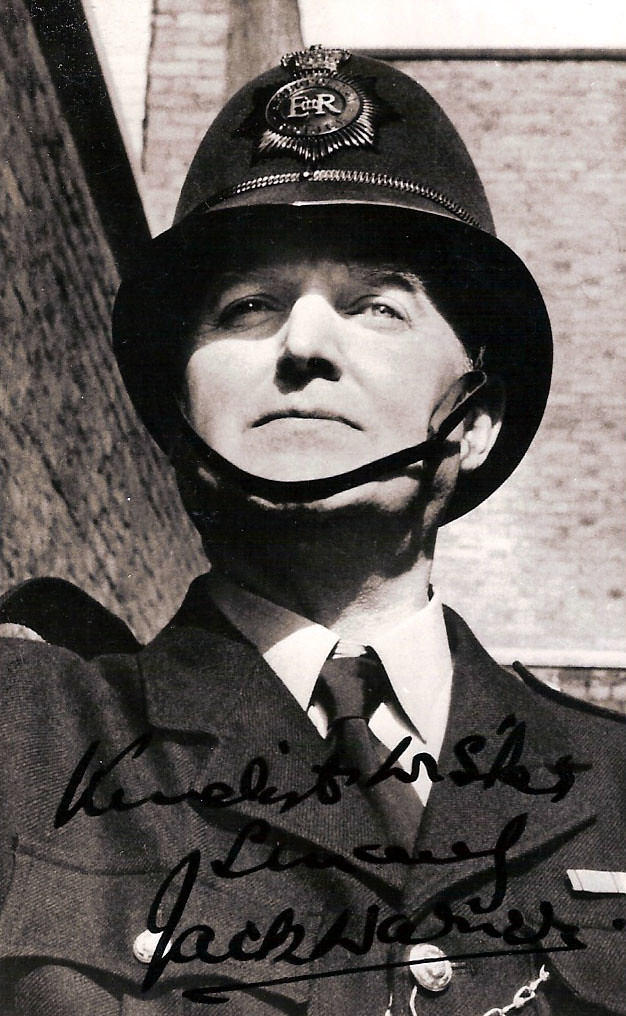
The recent HMICFRS publication An inspection of vetting misconduct and misogyny in the police service makes difficult reading for those of us that have or have had any involvement in the police service in England and Wales. Of course, this is not the first such report and I dare say it will not be the last. There is enough evidence both academic and during the course of numerous inquiries to suggest that there is institutional corruption of all sorts in the police service, coupled with prevailing racist and misogynistic attitudes. Hardly a surprise then that public confidence is at an all-time low.
As with so many reports and associated inquiries, the finger of blame is pointed at the institution or individuals within it. The failings are organisational failings or departmental or individual. I cast my mind back to those inquiries into the failings of social services or the failings of NHS trusts or the failings of the Fire and Rescue service or any other public body, all the fault of the organisation itself or individuals within it. Too many inquiries and too many failings to count. More often than not the recommendations from these reports and inquiries involve rectifying processes and procedures and increasing training. Rarely if ever do these reports even dare to dip their toe into the murky waters relating to funding. Nobody on these inquiries would have the audacity to suggest that the funding decisions made in the dark corridors of government would later have a significant contribution to the failings of all of these organisations and the individuals within them. Perhaps that’s why those people are chosen to head the inquiries or maybe the funding decisions are long forgotten.
Twenty percent budget cuts in public services in 2010/11 meant that priorities were altered often with catastrophic consequences. But to be honest the problems go much further back than the austerity measures of 2010/11. Successive governments have squeezed public services in the interest of efficiency and effectiveness. The result, neither being achieved, just some tinder box ready to explode into disaster. And yet more hand wringing and finger pointing and costly inquiries.
The problem is not just that the organisations failed or that departments or individuals failed, the problem is that all the failings might have been prevented if there was money available to deliver the service properly in the first place. And to do that, there needs to be enough staff, enough training, and enough equipment. And who is responsible for ensuring that happens?
Now you may say that is all very well but what of the police officers that are racist and misogynistic or corrupt and what of institutional corruption? After all the HMICFRS report is not just about vetting procedures but about the attitudes and behaviours of staff. A good point but let me point you to the behaviour of government, not just this government but preceding governments as well. The expenses scandal, the bullying allegations, the improper behaviour in parliament, the complete disregard for the ethics or for that matter, common decency. And what of those successive budget cuts and lack of willingness to address very real issues faced by staff in the organisations.
Let me also point you to the behaviour of the general public from whom the police officers are recruited. A society where parents that attend children’s football matches and hurl abuse at the referee and linesmen, even threatening to see them in the car park after the match. Not a one off but from recent reports a weekly occurrence and worse. A society now where staff in shops are advised not to challenge shoplifters in fear of their own safety. A society where there is a complete disregard for the law by many on a daily basis, including those that consider themselves law abiding citizens. A society where individuals blame everyone else, always in need of some scapegoat somewhere. A society where individuals know individually and collectively how they want others to behave but don’t know or disregard how they should behave.
I’m not surprised by the recent reports into policing and other services, saddened but not surprised. I’m not naïve enough to think that society was really any better at some distant time in the past, in fact there were some periods where it was definitely worse and policing of any sort has always been problematic. My fear is we are heading back to the worst times in humanity and these reports far from highlighting just an organisational problem are shining a floodlight on a societal one. But it suits everyone to confine the focus to the failings of organisations and the individuals within them. Not my fault, not my responsibility it’s the others not me, quelle surprise.
Share this:


The Color Purple, The Musical: What in the Misogynoir?!

TW: mentions of rape, child rape, racism, and misogynoir.
Alice Walker’s novel The Color Purple is a story loved around the world. So, when I saw that it was adapted to stage and touring the UK, my interest was peaked just enough to consider a visit to my local theatre the Royal & Derngate in Northampton. A Curve and Birmingham Hippodrome co-production, it came to Northampton in the first week of October. Largely, audiences that frequent my local theatre are overwhelmingly white – thus, watching The Color Purple it was a joy to my heart to hear Black people in my community engaging with the arts, because the last time I heard so many Black people attended, was for Our Lady of Kibeho as part of the R&D’s Made in Northampton season. This dates back to 2019, a production I reviewed for The Nenequirer showing that Northampton(shire) arts has work to do.
Social media platforms like Twitter and Instagram showed me the pretty unanimous positive praise for the Leicester-Birmingham co-production, while local critics also enjoyed it – including reviews from The Chronicle & Echo and The Nenequirer as well as further reviews by The Real Chris Sparkle and Northampton Town Centre BID. However, there were elements of the show that caused me great distress, no less than the perpetuation of misogynoir and racist stereotypes against Black men. It was deeply triggering, showing how historical trauma and vicarious trauma are ever present, including when white organisations have not done the work of protecting Black mental health when producing “Black-centred media.”
At the head of this cast, Me’sha Bryan gives a knockout performance as Celie (previous played by Whoopi Goldberg in the film) accompanied by Aaliya Zhané as Nettie, with Bree Smith as Shug Avery, and brilliant musical numbers grounded in the traditions of blues music that finds its origins in the trauma of enslaved Africans in the American South. They sang when “they got the blues” … and as far as performance and the commitment from the cast, I couldn’t ask for better.
However, whilst I have praised the musical numbers above, I did not believe it fitted with the tones of The Color Purple curating a rift between what the actors were saying and doing on stage, and the intonations of the music – as well as the lighting design. And despite the directorial position deciding the rape of a child wasn’t musical material (rightly so), the choice to have it as a passing detail with no further discussion, I found particularly off-key. This is one of the moments that highlights that The Color Purple may not have been musical material and better considered as a serious drama. I did not walk away feeling that bleak, much ado with contradictory lighting choices to character moods. The characters were feeling one away and lights did something else. By the by, rather than skip over the rape to maintain “the musicalness”, it may have been more effective to have done this story as a stage drama (with musical elements, if at all). The horrors depicted at the beginning of the novel are pretty nonexistent in musical.
So, this recent adaptation was a disappointment. Not from an acting point of view but behind-the-scenes pre-production elements like direction. The start of story includes a fourteen year-old who births two children after being raped by her father. So, the amount of trauma that exists around child sexual abuse and rape appear unconsidered when they glossed over these parts of the story. Furthermore, I do question if they consulted with any survivors when doing research for this adaptation. A ‘sensitivity consultant’ would not have gone amiss either, further to considerations of intersectionality and how cultural nuances in global, but still different Black communities, will be interpreted by white people, especially in provincial Little England.
Blown away by the musical abilities of the cast, stage productions (like much art) are often labelled as “escapist” so is not afforded the same criticality as for example – policing, education, sport and so on – we are all guilty of this and we can do better. This may be art; there were no redeeming Black characters, and Black men calling Black women “ugly” (written into the script) in full face of a white audience is cultural violence. In Northampton, the large white audience laughed at this example of ableist misogynoir, and in many ways this production felt to be played up for white audiences. Lots of white people are not used to seeing Black people as full human beings, and I do feel the play draws out our humanity. And by proxy centres white comfort with a Black aesthetic reinforced by white supremacy in media.
Disability justice activist Talia Lewis has released definitions of ableism every year since 2019. In January 2022, she discussed ableism as a violent social discourse that values people’s bodies and minds according to societally constructed ideas of “normalcy, productivity, desirability, intelligence, excellence and fitness …” Lewis (2022) states that these ideas are embedded in other violent discourses such as eugenics, capitalism, misogyny and white supremacy. The adaptation of these characters is only part of this debate, where another part may want to consider how this play has informed everpresent white superemacism pervasive across Northamptonnshire. It may impact how local white audiences may view Black people when they perceive that in this cultural text – ‘this is how Black people talk and act around each other.’
“This systemic oppression leads to people and society determining people’s value based on their culture, age, language, appearance, religion, birth or living place, “health/wellness”, and/or their ability to satisfactory re/produce, “excel” and “behave.” You do not have to be disabled to experience ableism.”
Talia Lewis (2022)
In Homegrown (hooks and Mesa-Bains, 2017), bell hooks tell us “We have to constantly critique imperialist white supremacist patriarchal culture because it is so normalized by mass media and rendered unproblematic. The products of mass media offer the tools of the new pedagogy.” Theatre is no different to films, literature or television programmes. Watching the musical, it struck me how the numbers of people who haven’t done the work of unlearning their own white supremacy would be impacted by such an adaptation (yes, as we know all humans can reproduce these isms but in a global western context, however, white supremacy has put white people on the top of that racial hierarchy).
One instance of misogynoir and ableism was underpinned by the three Black women singers (their character names escape me) who were written as Sassy Black Women inherently “comedifying” Black womanhood. Brilliant singers, but were written lazily reinforcing a damaging cultural media narrative that diminishes the three-dimensional personhoods of Black women. This was offered with no alternative. The Hypersexual Jezebel (named after the “sinful” Biblical character) appears in numbers of characters while Sofia was written as the Strong Black Woman. Black men were then written as violent, comedic relief, illiterate, and other harmful stereotypes, and domestic abuser Mr Albert is redeemed to the sound of musical harmonies and joyful lighting.
At a Northampton level, the critics from local media revisited a culture of uncritically discussing art. Stories aren’t just stories but a product of the society that created them, and we are a society that finds it easier to challenge the criminal justice system than it does liberal arts institutions, in spite of both having a say in how Black people are viewed and treated. Despite “Black theatre” not being genre, we need more shows at the Derngate that centre Blackness in Britain. And whilst commissioning and hosting shows about ‘Black issues’ is not evidence of an anti-racist commitment, it would be nice to see more shows locally about Black people in the UK by Black people.
When we do get “Black stories”, they so often centre the US, most recently The Color Purple (Oct, 2022) and Two Trains Running (Sept, 2019) – denying local audiences a context for Blackness within the United Kingdom, while recentring American Blacknesses is gaslighting through art. In November, Dreamgirls centring American Blackness is coming to the Derngate. A co-production between The Curve and the Birmingham Hippodrome, this adaptation of The Color Purple was deeply problematic on many levels that local white critics may not have picked up on because of their whiteness – drawn in by a spectacle of a “Black show”, viewed through a white gaze that is unused to talking about white supremacy as a political structure.
The white audience for these misogynoir tropes specifically – largely one of laughter – reminded me of the white gaze, with white laughter as eased white supremacy. Whiteness continues to pervade through ‘acceptable racism’ where serious digs made at Black people in-text laughed at by white people may show how white people may think about Black people in designated white spaces. A Black man seriously calling a Black woman ugly and a white audience laughing at that is incredibly revealing – a comfortableness in spaces coded as white … and how white people may act when thinking and talking about Black people in private (i.e in spaces coded as culturally white and desgined to their comfort).
“I grew up in a culture of bantering and, ngl, I love a caustic riposte. And while in certain ways I resent the current policing of language, there is a distinction. I hate to break it to you, but a “joke” in which the gag is that the person is black isn’t a joke, it’s just racism disguised as humor. A joke told to a white audience where the punch line is a racist stereotype isn’t a joke, again it’s just racism; if there is only one black person present, it’s also cowardly and it’s bullying. Jokes of this nature probably aren’t funny for black people.”
Emma Dabiri (2021: 98)
Art imitating life is one thing, but when life imitates art is another. White laughter at Black people in cultural media texts goes back to the days when blackface was on the BBC (until 1978). To see this platformed by a local arts institution then profiting from it, is revealing of how whiteness is performed and profited from, when white people think they’re not being watched. Creatives have a responsibility and so do those institutions that platform them.
Myself and fellow blogger @haleysread discuss this further in our prior entries about the scandal surrounding Jimmy Carr and Netflix. On that October evening, being one of the few Black people in the audience, it was incredibly uncomfortable. To consider art uncritically is to be entertained from a vantage point of privilege (or ignorance). Attending with my friend, to see unanimous positive feedback from the public made us feel a way, no less than from many Black people. We must always be critical; being critical is not the same as criticising, and those who are critical only take the time to be so because we care.
It is not about individual actors but about the lack of critique of institutional platforming in producing “art” that goes on to cause harm. Another fellow blogger Stephanie @svr2727 talked about misogynoir and the media in her recent webinar with the Criminology Team and Black Criminology Network. Violent mistakes in arts productions show a need not for more historical consultants, but sensitivity readers and empathy viewers. One cannot teach empathy, you either have it or you do not. Extending this gaze to screen media texts as well like Bridgerton and others, it is a further reminder that social scientists are needed at the very top of media … especially those of us that research about race, racism, and other forms of violence.
These cultural texts are rehearsed, edited, and considered by multiple hands before any public audience sees them. So, why are we still having to challenge? Simple: misogynoir, ableism, and whiteness are institutionalised and normalised socially and culturally into our day-to-day practice. No less than in “liberal” arts institutions.
“Nothing but a circus, with clowns and all.” – Malcolm X
Share this:


Do You Remember the Time? At the Lynching Memorial
On September 11, 2021 I visited the Lynching Memorial, which is near the newly expanded Equal Justice Initiative Museum, From Enslavement to Mass Incarceration.
At the heart of the “National Memorial for Peace and Justice” (Lynching memorial) is a vast collection of giant, rusty metal, rectangular pillars, hanging tightly together like a neatly planned and well-looked-after orchard.
Etched in each are the names of (known) lynching victims by date.
We can see that, at times, entire families were lynched.

The pillars are hung so cleverly that one has to experience this artistic installation in person.
Nonetheless, the subject of white terrorism in the deep south is heavy,
Which is perhaps why Guests are invited to visit the nearby museum before the Memorial.
One needs time to prepare.
Naturally, sandwiched between enslavement and mass incarceration exhibits,
The museum also has an array of material on lynching.
This included a giant mural of jars surrounded by videos, infographic murals, maps and
An interactive register of every known lynching by county, date, state, and name.
I’m still stuck on the mural of snapshots of actual lynching advertisements, and
Pictures of actual news reports of victims’ final words.
These were the actual final words of folks etched forever in these hanging, rusty pillars.
Ostensibly, written by war correspondents.
Standing in awe of the museum’s wall of jars, I chatted with a tall Black man about my age.
He’d traveled here from a neighboring state with his teen son to, as he said,
“See how this stuff we go through today ain’t new.”
I recounted to him what a young man at the EJI memorial had showed me a few years ago:
A man’s name who’d been lynched early last century for selling loose cigarettes –
Just like Eric Garner!
Yet, even since then,
We’ve gotten the police murders of George Floyd and Breonna Taylor,
Or even Michael Brown, Walter Scott and Philando Castile.
Amadou Diallo was shot 19 times in 1999, standing on his own stoop
And while Jayland Walker got 46 bullets this year while fleeing on foot.
Tamir Rice!
Tamir Rice was a little boy.
A little boy playing in the park. But his mere presence terrified a white man.
So he called 9-1-1 and the police showed up and shot Tamir within seconds!
We can watch the tape.
All of these martyrs are included in the museum’s growing timelines (sigh).
After their own legal work in representing the wrongfully imprisoned for damn near life,
EJI began collecting jars of dirt near every known lynching, and
If invited by local officials, EJI would offer a memorial plaque and ceremony commemorating that community’s recognition of historic injustice(s).
An open field sits next to the suspended pillars, filled with a duplicate of each pillar.
These duplicates sit, having yet to be collected and properly dedicated by each county.
These communities are denied healing, and we know wounds fester.
The field of lame duplicates effectively memorializes the festering denial in our body politic.
There are far too many unrecorded victims and versions of white mob violence, and intimidation, not just barbarous torture and heinous murder.
Outside of these few sorts of memorials,
We do have to wonder how else this rich history has stayed in our collective memories.
Too many Black families were too traumatized to talk and didn’t want to pass it to their kids.
We know many fled after any minor incursion,
Just as someone had advised Emmet Till to do,
And there’s no accounting for them and the victims’ families who fled and
Even hid or discarded any news clippings they’d seen of the events.
Yet, whites must have kept record.
Did whites collect the newspaper ads or reports of a lynching they’d attended or hoped to?
They made and sold lynching postcards, curios, and other odd lynching souvenirs.
Where are the avid collectors?
Plus, apparently, terrorists don’t just kidnap and hang someone to death,
So what did they do with all the ears, noses, fingers, and genitals they cut off?
Or eyes they plucked out?
Or scalps they shaved?
Many victims pass out from the immense pain of being tortured and burned alive, but still
I doubt all those pieces and parts got thrown in the fire, because, of course,
Plenty of pictures show entire white families there to celebrate the lynching like (a) V-day.
And in many ways, it was, and
The whites looked as if they would’ve wanted to remember.
Looks can be deceiving, but the ways whites were also bullied into compliance is real.
Still, my mother swears that some white families’ heirlooms must include
Prized, preserved pieces of Nat Turner.
Ooh, wouldn’t that be a treasure that would be.
Plus, given the spate and state of anti-Black policing and violence,
Our democracy, nay, our Constitution itself, is as rusty as these pillars.
The pillars resting in the field remind us not only the work left to do, but also, it’s urgency.
How many more pillars may we still need?
How many amendments did will freedom take?
It goes to show how great thou art now!
See: Slave Ads at the EJI Museum
Share this:


A Punky Reggae Party

In June 1977, 45 years ago, I saw the Queen, albeit fleetingly, being driven past Piccadilly Circus en-route to Buckingham Palace for the culmination of the Silver Jubilee celebrations. I wasn’t there for the party. I was making my way to Camden Town and the rehearsal studios used by the Punk-inspired band Subway Sect, who my friend from school had joined as their drummer. The studio, part of a crumbling yard of railway buildings, some still bombed out from the War, would soon begin its transformation into trendy Camden Market.
Punk shared an interesting crossover with Black music culture, in particular reggae. As teenagers, most of us growing up in the 70s were familiar with Blues and Tamala Motown, but reggae was new to me, especially the Heavy Dub style popular in the Jamaican community. The man largely responsible for my education was Don Letts, the House DJ at The Roxy in Neil St, Covent Garden. Originally a fruit and veg warehouse, between 1976 and 1978 the Club shot to fame/notoriety as the top Punk venue in London. The problem for the promoters was that in 1977 the scene was so embryonic there were as yet no home-grown punk records to play. So, in the gaps between live bands, Don played what he wanted, namely reggae, which went down well with the mostly white crowd. To quote from his website: “he came to notoriety in the late 70s as the DJ that single handedly turned a whole generation of punks onto reggae”. In fact, the combination became so popular that Bob Marley’s Punky-Reggae Party released in 1977 as a 12 inch (Jamaica only) and as the B-side to Jamming, reached number 9 in the UK singles charts. Don’s choice of tracks from his Roxy days are captured in the critically acclaimed compilation Dread Meets The Punk Rockers Uptown (Heavenly Records).
Scroll forward a couple of years and I’m working as assistant van driver to my boss Morris, a Jamaican-born reggae fan. He was involved in the local music scene and sometimes I would help him set up a Sound System for private house parties, in and around Brixton. We would use the work van, a sackable offence given the prestige brand name of our West End employer, but worth the risk. Think Small Axe: Lovers Rock, but with more sound gear and ganja-smoking Rastas, and you’ve got the picture. While sometimes out of my comfort zone, it was uplifting to witness first-hand a community at one with its own identity while lobbying for change in wider society that remained indifferent at best.
It was also a time in London when the Metropolitan Police stop and search “SUS” law reigned high. I witnessed several occasions where Morris was subject to blatant racial harassment. Once I was on a delivery to an exclusive residential part of Town. On these visits we played a game, coined by Morris, as Dropsy or Tipsy – would we be offered a Dropsy (cup of tea/coffee) or a cash tip for the delivery, typically a sofa or expensive Persian rug? The winner was the one who made the right call in advance. We parked in the street and as we got out several police officers on foot suddenly approached Morris and demanded to know what he was doing, despite the rather obvious fact he was at work. When they saw me, the situation cooled off, but the aggressive tone of the questioning was clear and present intimidation of a black man, whose only ‘offence’, while going about his legitimate business, was to be in a white, rich area. I wish I could say this was a one-off. Unfortunately, we all know that’s not the case. Another time relates to the shocking mistreatment he got crossing a picket line. The work van was kept in a British Road Services Depot at Elephant and Castle. We both turned up on the day a lightning strike had been called by the Transport and General Workers Union. I understand emotions can run high in these situations, but there was no excuse for the barrage of racial abuse he took from sections of the crowd. He brushed it off with characteristic good humour, but the episode tainted my view of trade unions ever since.
As this is a criminology blog I should probably throw in an example of real-life criminality. It happened mid-morning one Friday following a drop-off in busy Bishopsgate. Returning to the van I noticed a castor wheel on the pavement. “Looks like it’s come from one of our sofas” I remarked. It had. When we pulled back the shutter, the van was empty. Everything we’d loaded up an hour ago was gone. Sofas, walnut dressers, rugs, porcelain table lamps, all cleaned out. The castor was all that was left! Robbed in broad daylight, next to a bus stop. In panicked disbelief we asked those in the queue if they’d seen anything but we were wasting our breath. It was left to Mr Farooqui, the long-suffering Despatch floor manager, to take the heat from angry customers as he rang round to tell them the good news. Needless to say, management weren’t impressed and dished out first and final written warnings. Soon after we went our separate ways.
Meanwhile, the overlap between black and white youth culture in London was being fostered in creative ways. Rock Against Racism (RAR), founded in 1976 along with the Anti-Nazi League (ANL), a year later, were both set up to combat a surge in far-right extremism. Music, especially the cross-over between various genres including punk and reggae, was an important enabler in that it found common ground from which more overtly political discussions could take place. I was one of the many thousands who, in April 1978, joined The Clash, Steele Pulse and others at Victoria Park, Hackney, in what was RAR’s finest hour. Also in the audience that day was Gerry Gable, the veteran anti-fascist campaigner and founder of Searchlight magazine, whose archive is hosted here at the University. I spoke to Gerry about this and he has very fond memories of the day and his role in helping it come about through his associations with both RAR and the ANL.
So, in the year of the Platinum Jubilee, has popular music culture continued as a positive force for race integration since the punky-reggae days of 77? It’s probably a PhD project or two (dozen), but Bob Marley sums it up for me nicely:
What did you say?
Rejected by society
Treated with impunity
Protected by my dignity
I search for reality
If by the search for reality we mean certainty, then how certain are we things have changed for the better? My experience is that, on average, they have, and that music has played its precious role in bring people closer together. The key here is “on average”. If by reality we mean a search for legitimacy, there is evidence to the contrary. Differences of course remain, and there is no room for complacency. The one pledge we must agree on though is to never stop searching – for melody, for rhythm, for harmony.

Share this:


Refugee Week 2022

Next week (20th-26th June) is Refugee Week, coming at a moment in time days after the first deportation flight of asylum seekers to Rwanda was scheduled. Luckily the government’s best efforts were thwarted by the ECHR this time. Each year Refugee Week has a theme and this year’s focus is healing. People fleeing conflict and persecution have a lot to heal from and I am pessimistic about whether healing is possible in the UK. My own research examines the trajectories of victimisation among people seeking safety. I trace experiences of victimisation starting from the context from which people fled, during their journeys and after arrival in the UK. It is particularly disturbing as someone who researches people seeking safety that once they arrive in a place they perceived to be safe, they continue to be victimised in a number of ways. People seeking safety in the UK encounter the structurally violent asylum ‘system’ and discriminatory attitudes of swathes of the public, sections of the media and last not certainly not least, political discourse. Even after being granted leave to remain, refugees face a struggle to find accommodation, employment, convert education certificates and discrimination and hate crime is ongoing.
Over the years I have supported refugees who suffered breakdowns after having their asylum claim awarded. They are faced with the understanding of the trauma they suffered pre-migration, compounded by the asylum system and the move-on period following claims being awarded. Yet this is no time to heal. In the wake of the Nationality and Borders Act 2022, no migrant nor British citizen with a claim to citizenship elsewhere is safe. There is no safety here and therefore there can be no healing, not meaningful healing anyway.

Despite my negative outlook on the state of immigration policy in the UK, there are some positive signs of healing for some people seeking safety. These experiences are often facilitated by peer support, grassroots organisations and charities. I recall one woman who had fled Iraq coming into a charity I was undertaking research in. When we met for the first time, she was tiny and looked much older than she was. She would pull her veil tightly around her head, almost like it was protecting her. This woman did not speak a word of English and the only volunteer Kurdish Sorani interpreter did not attend the group every week. The womens’ group I attended conducted activities which overcame language barriers and at the time we were working with tiles and mosaics on a project which lasted a few weeks. During this time I could visibly see this woman start to heal. She started to stand up straight, making her appear taller. Her face softened and she appeared younger. She started smiling and her veil loosened. She was relaxing among us. In my experience, I’ve noticed that the healing comes in ebbs and flows. Relief of being ‘safe’, compounding stress of asylum, making friends, waiting, waiting, waiting for a negative decision, being supported by NGOs, letters threatening deportation, having a ‘safe’ place to live, having a firework posted through your letterbox.
For me this week is about celebrating those fleeting moments of healing, since I spend so much of my time discussing and researching the negative. The University of Northampton is co-hosting a number of events to mark Refugee Week 2022, starting with a service being held to remember all those seeking sanctuary both past and present. The event will be held on Monday 20th June at 1pm at Memorial Garden, Nunn Mills Road, Northampton, NN1 5PA (parking available at Midsummer Meadow car park).
Monday will end with an ‘in conversation with’ event with University of Northampton doctoral candidate Amir Darwish. Amir is Kurdish-Syrian and arrived in the UK as an asylum seeker in 2003. He is now an internationally published poet and writer. This event will be run in conjunction woth Northampton Town of Sanctuary and will be hosted at Delapre Abbey at 7pm. You can find further details and book tickets here.
On Wednesday the University of Northampton and Northampton Town of Sanctuary will be hosting an online seminar at 3pm with Professor Peter Hopkins, whose recent research examined the exacerbation of existing inequlaities for asylum seekers during the pandemic. I’ve just written a book chapter on this for a forthcoming volume reflecting on the unequal pandemic and it was staggering – but unsurprising – to see the impact on asylum seekers. This seminar can be accessed online here.
The week’s events will conclude with a Refugee Support Showcase which does what it says on the tin. This event will be an opportunity for organisations working with refugees in the local area to show the community the valuable work they do. This event will take place on Thursday 23rd June 4-6pm at the Guildhall, St. Giles Square, Northampton.
This year the University has worked with a number of organisations to produce a well-rounded series of events. Starting with reflection and thought of those who have sought, and continue to seek sanctuary and celebrating the achievements of someone who has lived experiences of the asylum system. Wednesday contibutes to the understanding of inequalities for people seeking safety and we end Friday on a positive note with the work of those who facilitate healing.
Share this:


Au revoir Le Pen, take the rest of the far right with you!

The recent French election once again saw centrist Macron head to head with far right nationalist Le Pen. Macron won the election by a much narrower margin that the 2017 elections. I have an interest in the French elections as my parents live there and are not far away from applying for citizenship. For them, the prospect of a far right president was worrying.
The politics of much of the world has shifted to the right of late, often to the far right. Perhaps this hasn’t been a recent thing. Indeed, before this wave of Trump, Modi, and Le Pen, we had UKIP and for a while the BNP was making a lot of noise. The writing was on the wall with New Labour and their many new immigration offences, Blair’s tough on crime and it’s causes approach, and not forgetting war on Iraq and Afghanistan. This was swiftly followed with then Home Secretary Theresa May’s hostile environment agenda which has been advanced again and again by consecutive Home Secretaries until we passed the point of no return with Priti Patel and her Nationality and Borders Act 2022 (it pains me to type ‘Act’ instead of ‘Bill’ – it’s black and white now) from which not the Lords nor God nor the best lawyers in the land seem have yet been able to save us from. What we see now is a Conservative government embedded with far right ideology, and this is not an isolated island in that respect.
This current uprising of the far right, racist, and xenophobic politicians is a global phenomenon. Modi, the far right Hindu nationalist is knee deep in his campaign against Muslims, revoking autonomy in Jammu and Kashmir (ironically – or deliberately – this took place on 31st October 2019, the day Britain was supposed to leave the EU), invoking the Citizenship (Amendment) Act 2019 which disproportionately affects the citizenship of Muslims who now face the possibility of expulsion, and even outright attacks on Muslims.
Then there was Trump and the less said about him, the better. But let us return to France. This is the second consecutive election in which Macron has faced Le Pen and won. In France, elections are held in two stages. All parties and candidates go head to head in stage one and if no candidate holds a majority, a second round between the top two candidates takes place. In 2017, Macron won the second stage with 66.1% of the vote. This time around, the vote was much narrower 58.6%. Le Pen’s Rassemblement National party has ‘transformed’ since the 2017 election, with the party’s councillor for Gironde arguing that they are not the far right, and instead are localists and nationalists. Are they not one and the same?
In recent years, the rise of the far right in Europe has been fuelled by fears of refugees, terrorism, and open borders within the European Union. In addition to this, concerns over employment and poverty have contributed to this. It is not all about them, it is preservation of us.

In a globalised era, we have seen decades of erosion of the working class jobs of old combined with distorted perceptions of immigration and population changes. People living in poverty, unemployed or in insecure employment look for someone to blame and the someone tends to be them. So, parties who say they stand for the working man and oppose immigration become popular, not because voters are necessarily racist but because they are fearful and suffering. Bearing that in mind, where does that leave us now? The whole of Europe is facing a cost of living crisis, war on our doorstep. Here in the UK, inflation and interest rates are rising but wages are not. We cannot blame this on them, on people fleeing persecution, on people who come to the UK to fill the jobs nobody wants or are not qualified to do. This us and them narrative causes nothing but division and hatred, fuelling hateful politicians who – let’s face it – serve nobody’s interests but their own.
My Monday message: Choose love
Share this:


Growth comes from discomfort

Getting closer to 30 has been really difficult. I had set goals for myself and I have not accomplished most of them.
I thought I had everything all planned out and I knew what I wanted. However, life comes at you fast. I honestly wonder how our parents made this look so easy.
The pandemic has also knocked us back a couple of years. Instead of focussing on goals and thinking about the future; we are simply trying our hardest to stay sane and survive each day. Remembering to breathe became the new main task. Making our mental health a priority has become the most important thing.
Trying to balance ‘living in the moment’ and thinking about the future is hard. My plans have changed so much over the last couple of years. I have more questions than answers. But I’m slowly learning not every question has to be answered straightaway.
The pressure I feel being a first generation immigrant is enormous. I believe that every generation has to show a level of socioeconomic improvement. Finding a way to achieve this, whilst in a foreign land is extremely overwhelming. You are constantly reminded close to each day that you are an outsider and you do not belong here.
Nonetheless, my mother did not work two jobs and not have any days off for me not to make it. This has always been my driving force. My mom always tells me I am being too hard on myself. She had the support from her relatives when she was home in our home country (Zimbabwe) and I don’t have the same luxury, as such I shouldn’t penalise myself for not achieving everything I want to achieve… yet. (The key word is ‘yet’). Just because it has not happened yet doesn’t mean it will not happen in the future. Delay does not mean denial.
Facing career challenges based on your race is a hard pill to swallow. Not knowing who to turn to for advice is even more frustrating. I used to think all women regardless of race would empathise and they would want to help. As we all have one struggle in common; being a woman. At least that should unify us… (so you would think). However, I have realised at times your level of ambition can be deemed as a threat. The same people might have experienced a glass ceiling can be the very same ones who add to your oppression because you are seen as ‘competition’. One of my mentors recently told me to relax in relation to my job searching as all institutions are not used to “aggressive job searches”. I find it pretty funny that the term “aggressive” will always be the main word used to describe Black people. How can a job search ever be aggressive?! Unless I’m standing outside your office threatening you to give me a job then yes, that’s aggressive. However, sending an email reminding a company to send me the new job specification they stated over the phone is not aggressive. In that moment, I knew she is an enemy of my progress.
I used to calculate my career progression based on if I have moved up to a certain level or my pay grade has increased. But I am starting to learn the skills I have acquired over the years are far more valuable. My confidence has grown incredibly. I have found my voice. That is something that cannot be taken from me. I am proud of my level of courage and perseverance. These are qualities not a lot of people have.
I am excited to see what 30 has in store for me. I have learnt so much. But there are a lot of skills I look forward to gaining in the upcoming years. I am slowly learning not to be so hard on myself.
Note to self – do not forget who you are… You are destined for greatness. Everything you want is coming. Do not compare your journey to others. Even if others are not willing to help you; there is always a way forward. Go back to the drawing board and restrategise. No one owes you anything. So do not expect anything from anyone.
“Remember diamonds are created under pressure so hold on, it will be your time to shine soon.” – Sope Agbelisi
Share this:


DIE in Solidarity with Diversity-Inclusion-Equality
As an associate lecturer on a casual contract, I was glad to stand in solidarity with my friends and colleagues also striking as part of UCU Industrial Action. Concurrently, I was also glad to stand in solidarity with students (as a recent former undergrad and masters student … I get it), students who simply want a better education, including having a curriculum that represents them (not a privileged minority). I wrote this poem for the students and staff taking part in strike action, and it comes inspired from the lip service universities give to doing equality while undermining those that actually do it (meanwhile universities refuse to put in the investment required). This piece also comes inspired by ‘This is Not a Humanising Poem’ by Suhaiymah Manzoor-Khan, a British author-educator from Bradford in Yorkshire.
Some issues force you to protest
the way oppression knocks on your front door
and you can’t block out the noise
“protest peacefully, non-violently”
I have heard people say
show ‘the undecided’, passive respectability
be quiet, leave parts of yourself at home
show them you’re just as capable of being liked
enough for promotion into the canteen,
protest with kindness and humour
make allusions to smiling resisters in literature
they’d rather passive images of Rosa Parks all honestly
but not her politics against racism, patriarchy, and misogyny
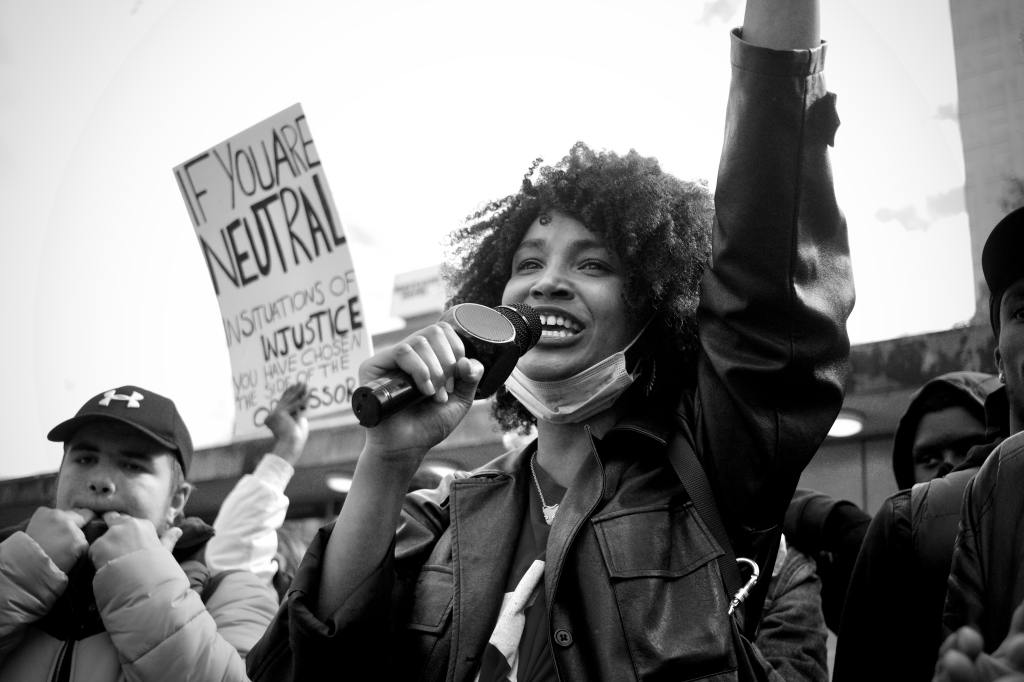
but I wanna tell them about British histories of dissent
the good and the bad – 1919 Race Riots
the 1926 general strikes, and the not so quiet
interwar years of Caribbean resistance to military conscription
I wanna talk about how Pride was originally a protest
I wanna talk about the Grunwick Strike and Jayaben Desai
and the Yorkshire miners that came to London in solidarity
with South Asian migrant women in what was 1980s austerity
I want to rant about Thatcherism as the base
for the neoliberal university culture we work in today
I want to talk about the Poll Tax Riots of 1990
and the current whitewashing of the climate emergency
they want protesters to be frugal in activism,
don’t decolonise the curriculum
they say decolonise
they mean monetise, let’s diversify …
but not that sort of diversity
nothing too political, critical, intellectual
transform lives, inspire change?
But no,
they will make problems out of people who complain
it’s your fault, for not being able to concentrate
in workplaces that separate the work you do
from the effects of Black Lives Matter and #MeToo
they make you the problem
they make you want to leave
unwilling to acknowledge that universities
discriminate against staff and students systemically
POCs, working-class, international, disabled, LGBT
but let’s show the eligibility of staff networks
while senior leaders disproportionately hire TERFs

staff and students chequered with severe floggings
body maps of indenture and slavery
like hieroglyphics made of flesh
but good degrees, are not the only thing that hold meaning
workers rights, students’ rights to education
so this will not be a ‘people are human’ poem
we are beyond respectability now
however, you know universities will DIE on that hill
instead,
treat us well when we’re tired
productive, upset, frustrated
when we’re in back-to-back global crises
COVID-19, Black Lives Matter, femicide,
failing in class, time wasting, without the right visas,
the right accents; Black, white, homeless, in poverty,
women, trans, when we’re not A-Grade students, when we don’t
have the right last name; when we’re suicidal
when people are anxious, depressed, autistic
tick-box statistics within unprotected characteristics
all permeates through workers’ and student rights
When you see staff on strike now,
we’re protesting things related to jobs yes,
but also, the after-effects
as institutions always protect themselves
so sometimes I think about
when senior management vote on policies…
if there’s a difference between the nice ones ticking boxes
and the other ones that scatter white supremacy?
I wonder if it’s about diversity, inclusion, and equality [DIE],
how come they discriminate in the name of transforming lives
how come Black students are questioned (under caution) in disciplinaries
like this is the London Met maintaining law and order …
upholding canteen cultures of policing
Black and Brown bodies. Decolonisation is more
than the curriculum; Tuck and Yang
tell us decolonisation is not a metaphor,
so why is it used in meetings as lip service –

why aren’t staff hired in
in critical race studies, whiteness studies, decolonial studies
why is liberation politics and anti-racism not at the heart of this
why are mediocre white men failing upwards,
they tell me we have misunderstood
but promotion based on merit doesn’t exist
bell hooks called this
imperialist heteropatriarchal white supremacy
you know Free Palestine, Black Lives Matter, and the rest
we must protest how we want to protest
we must never be silenced; is this being me radical, am I radical
Cos I’m tired of being called a “millennial lefty snowflake”, when I’m just trying not to DIE?!
Further Reading
Ahmed, Sara (2012) On Being Included: Racism and Diversity in Institutional Life. London: Duke.
Ahmed, Sara (2021) Complaint. London: Duke.
Bhanot, Kavita (2015) Decolonise, Not Diversify. Media Diversified [online].
Double Down News (2021) This Is England: Ash Sakar’s Alternative Race Report. YouTube.
Chen, Sophia (2020) The Equity-Diversity-Inclusion Industrial Complex Gets a Makeover. Wired [online].
Puwar, Nirmal (2004) Space Invaders: Race, Gender and Bodies Out of Place. Oxford: Berg.
Read, Bridget (2021) Doing the Work at Work What are companies desperate for diversity consultants actually buying? The Cut [online].
Ventour, Tré (2021) Telling it Like it is: Decolonisation is Not Diversity. Diverse Educators [online].
Share this:


Who’s to blame, Jimmy Carr or the system that feeds him?

NB: The term ‘white’ in this blog is being used to describe those racialised as white within the dominant culture of the UK, and those that benefit the most from white privilege. Though Gypsy Roma Traveller [GRT] communities may in cases be racialised as white, their culture sits juxtaposed to the dominant thus ‘not white enough’, so may not always be seen as white by white British people (see Bhopal, 2018: 29-47).
“Extending the gaze to whiteness enables us to observe the many shades of difference that lie within this category – that some people are ‘whiter’ than others, some are not white enough and many are inescapably cast beneath the shadow of whiteness” (Nayak, 2007).
Following Haley’s excellent blog on the Jimmy Carr debacle, I would like to bring another perspective. For those of us racialised outside of whiteness, I know I do not need to describe the litany of examples where those racialised as white portray racist hatred as humour on and off social media. Haley continues in writing, “Jimmy Carr’s [His] Dark Material stand-up comedy is the latest in a long line of everyday racism that has been subjected to a trial by Twitter.” When we challenge these “jokes”, at least in my experience I was told iterations of “stop being so sensitive”; “it’s just a joke”; “lighten up” and so on …
In her long-essay What White People Can Do Next: From Allyship to Coalition, Irish author-academic Emma Dabiri (2021) writes:
“I grew up in a culture of bantering and, ngl, I love a caustic riposte. And while in certain ways I resent the current policing of language, there is a distinction. I hate to break it to you, but a “joke” in which the gag is that the person is black isn’t a joke, it’s just racism disguised as humor. A joke told to a white audience where the punch line is a racist stereotype isn’t a joke, again it’s just racism; if there is only one black person present, it’s also cowardly and it’s bullying. Jokes of this nature probably aren’t funny for black people.”
Emma Dabiri (2021: 98)

Whilst in my time writing for Thoughts I have engaged with many issues, one I have not yet written on is the ‘canteen culture’ of bantering I grew up in amid the English private school system. So, I am quite familiar with the culture of private schools having gone to them myself (aged 5-16) where racism (specifically anti-Blackness) against me was passed off as “a ‘joke’ in which the gag is … just racism disguised as humour”(Dabiri, 2021: 98). As a boy, Carr went to sixth form at Royal Grammar School, a selective boys’ school in High Wycombe in the image of a posh state school famous for projecting its boys into Oxbridge. Thus Jimmy Carr passed into Gonville and Caius College, Cambridge.
If there was to be a culture of ‘banter’ where Carr learned such behaviours, these selective schools and universities are a good place to start. For people not racialised as white, these places can be a new-kind of hell very much in the image of colonial-style racism. At school, in my experience there existed a toxic human concotion of racism (as banter) which infected not only the students but also the staff. It’s this sort of thing that may sit under the thinking behind Carr’s “joke”, and why he thought it was okay to make it in the first place. However, as much as I would like make this about him, this isn’t really about him at all.
Carr has had a very successful career of punching down on the marginalised and historically excluded, profiting from their suffering. For me, this is more about how large institutions like Netflix give platforms to people they know are bad news and let them espouse hatred anyway. Professor Sunny Singh tweeted how it is a “reminder that Jimmy Carr’s joke went through a whole production process in order to appear on @netflix.” When we consider how any piece of media goes through a rigorous editing / production process, the fact nobody questioned a Holocaust “joke” about Roma and Sinti people is a stark reminder of how white supremacy functions in media.
Here a white man makes a “joke” to an audience of mostly white people backed by a production team (largely white, let’s be honest) at a white institution Netflix … with ‘institutional whiteness’ hardening (Ahmed 2006; 2007; 2012; 2014; Hunter, 2015; 2019; White Spaces). Simply affirming what the late Charles Mills (2004) wrote where “… white supremacy implies the existence of a system that not only privileges whites but is run by whites, for white benefit” (p31).
The uproar to Jimmy Carr’s “joke” follows #ClanchyGate where author-schoolteacher Kate Clanchy was criticised for perpetuating racism and ableism in her 2019 memoir Some Kids I Taught and What They Taught Me. She used descriptions like “chocolate-coloured skin” and “almond-shaped eyes.”Moreover, she referred to autistic children as “unselfconsciously odd” and “probably more than an hour a week” around them “would irriate me, too, but for that hour I like them very much.”
Like Netflix, her publisher Picador did not spot these in the editing process. Or they did spot them, and said nothing … reiterating the ableism, racism, and white supremacy that exists in publishing where rather than hold Kate Clanchy accountable, her colleagues like Philip Pullman berated women of colour who challenged her taking to Twitter and comparing them to the Taliban. The same three women of colour who have been erased from this discourse. The issue with Picador is a reminder of how predominantly white artists (not always … like Dave Chappelle in his Netflix special The Closer) with power are then platformed with no accountability when they cause harm (intended or not). Kate Clanchy has since gone on to find another publisher for her book after she was required to rewrite!!
Jimmy Carr follows Chapelle, Clanchy as well as Joe Rogan and his racist rhetoric. Not only is Carr’s just horrific, but it also reinforces the the discrimination Gypsy, Roma, and Traveller [GRT] people face in Britain where their cultures will be erased should the government’s crime, policing and sentencing bill reach fruition. The conversation around Carr’s “joke” reminds me how general opinion is still comfortable with racism so long as it is wrapped in ‘humour’. With the ‘free speech’ champions following behind. It’s also showing me the number of people that think racism only happens to those racialised as Black or Brown.
It is not so simple. The way we define racism is worthy of further discussion and analysis when we consider the racism that happens because of cultural belongings. As Emma Dabiri writes:
“The myth of a unified white ‘race’ makes white people, from what are in truth distinct groups, better able to identify common ground with each other and to imagine kinship and solidarity with others racialized as ‘white’, while at the same time withholding the humanity of racialized others. The ability of whiteness to create fictive kinships where differences might outweigh similarities, or where one ‘white’ group thrives and prospers through the exploitation of another ‘white’ group, all united under the rubric of whiteness constructs at the same time a zone of exclusion for racialized ‘others’, where in fact less expected affinities and even cultural resonances might reside.
In truth, this is the work of whiteness, who invention was to serve that function. Saying that all “white” people are the same irrespective of say, culture, nationality, locatioin, and class literally does the work of whiteness for it. But despite the continuities of whiteness – the sense of superiority that is embedded in its existence – we cannot disregard the differences that exist. This demands a truthful reckoning with the fact that the particulars of whiteness, as well as the nature of the relationship between black and white, will show up differently in different countries and require the crafting of different responses.”
(Dabiri, 2021: 45-46)
Emma Dabiri’s What White People Can Do Next (2021) follows David Roediger’s Wages of Whiteness (1991), Noel Ignatiev’s How the Irish Became White (1995), Matthew Jacobson’s Whiteness of a Different Color (1998) and Nell Irvin Painter’s The History of White People (2010), all of which in some way show how different white groups have modifiers attached when talking about “white people.” This must be discussed interlocking with other factors including culture, place/geography, and class. Through Roediger, Ignatiev, Jacobson, Painter, Dabiri, and other scholars, we can see how whiteness splits and mutates to serve its purpose of divide and rule, and really how white supremacy may also negatively impact against those read as white and ‘not white enough’ in different ways.

The late archbishop Desmond Tutu believed that our quest for liberating the oppressed must also come with liberating the oppressor too. He saw how white South Africans during Apartheid had become bitter and hateful as a result of the racism that pervaded through their lives on a daily basis. Visiting Israel as well, he saw the same thing in the Israeli state’s dehumanisation of the Palestinian people. As Tutu himself states:
“Part of my own concern for what is happening there [Israel] is in fact not what is happening to the Palestinians, but is what the Israelis are doing to themselves. When you go to those checkpoints and you see these young soldiers behaving abominably badly, they are not aware when you carry out dehumanising policies, whether you like it or not those policies dehumanise the perpetrator.”
Demond Tutu
That ‘dehumanisation of the Other’ is central to any system of oppression, and we see this again in Britain with the police’s treatment of Black people going all the way back to 1919. However, we also see it in the state’s treatment of GRT people, compounded by the policing and sentencing bill. On a local level, the dehumanisation of GRT communities can be seen again when we observe the comments sections of local news. The comments of everyday people reflect the racist policymaking of politicians. In the continuous persecution of racialised minorities more generally in Britain, we must also consider what racism does to the perpetrators and what this ‘dehumanisation of the Other’ has done to the cultural majority. Even scarier, what has this dehumanisation done to the people that do not even realise they are racist?
When that ‘dehumanising’ appears on big public platforms like stand-up “comedy” shows, we have a problem – essentially giving racism the green light underpinned by violent policymaking in government. So, the discussions around Jimmy Carr not only show me that there needs to be more conversation about how whiteness impacts those read as Black or Brown, but also how whiteness impacts those read as white or not white enough (GRT, Eastern Europeans and so forth). We have work to do and lots of it.
Share this:


Jimmy Carr and Acceptable Racism
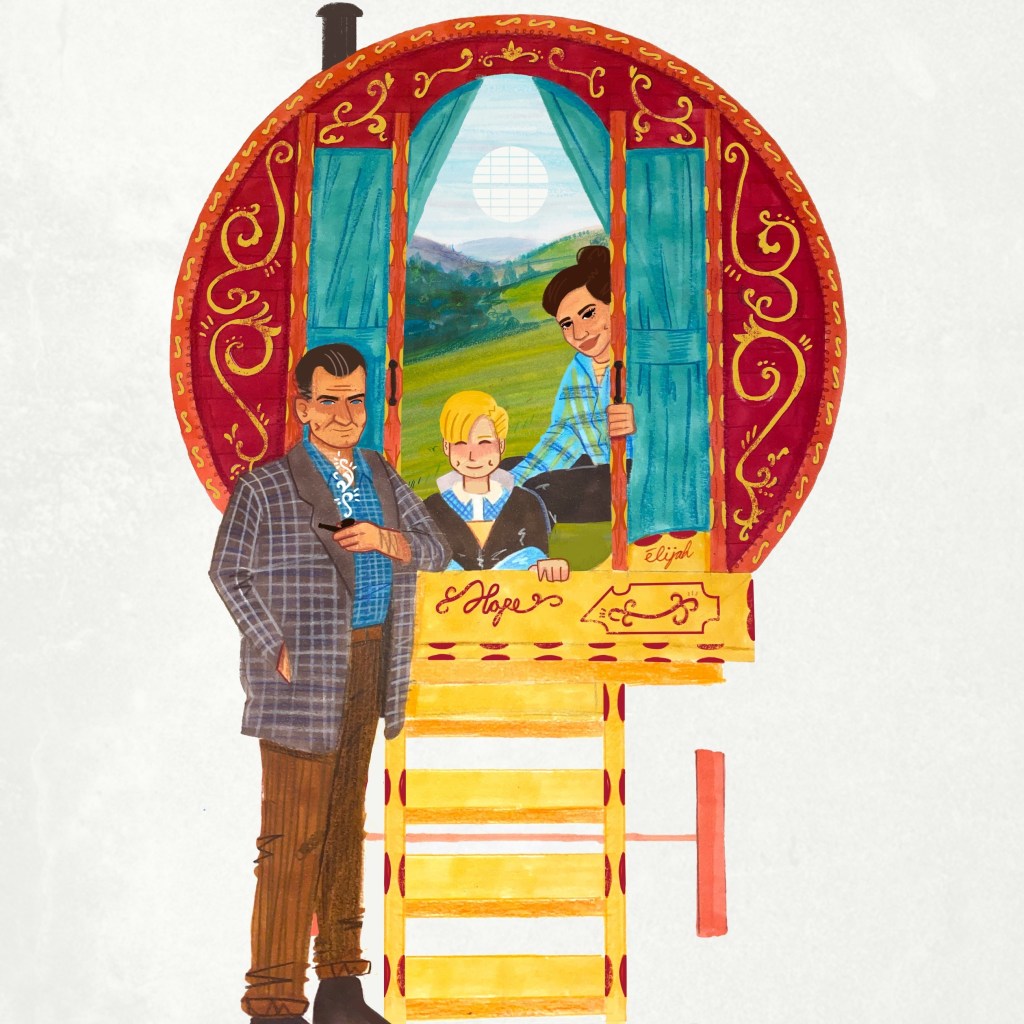
Jimmy Carr’s Dark Material stand-up comedy is the latest in a long line of everyday racism that has been subjected to a trial by Twitter. The context in which the joke is told is as follows:
A wealthy white gorger man mocks Roma and Sinti people because of who they are. His mostly white gorger audience than laughs and finds this hilarious. This man’s stand-up is so successful that it is endorsed by Netflix, of which the CEO appears to be a rich white gorger man. Both Jimmy Carr and Netflix profit from dehumanising a marginalised group of people.
If the joke had been delivered to audiences which were predominantly Gypsy Roma and Traveller people this would not have been viewed as funny. To adapt Emma Dabiri’s (2021, p. 98) work, ‘a ‘joke’ in which the gag is that the person is [a Gypsy, Roma or Traveller] isn’t a joke, it’s just racism disguised as humour’ (2021, p. 98).
Carr’s joke should not be surprising as he prides himself on his use of homophobic, racist and misogynistic ‘career ending’ jokes and these jokes are enjoyed by many.
The anti-racist Twitter reactions to this joke could provide some hope that many people are becoming more willing to challenge racism. Some Tweets were aimed at increasing the awareness and calling-out racism. Many Tweets were kind, and others were asking for Jimmy to provide a genuine apology. Although, Carr’s words (plus the support of the audience and Netflix) are a symptom of a racist society, so does the focus on Carr’s interpersonal actions mean that people are being distracted from the broader structural issues of racism and white supremacy?
After scrolling though Twitter there was a clear divide between those claiming to be ‘anti-racist’ and those claiming that ‘the freedom of speech’ is more important than combating racism. This left me thinking,
How do we get to a point where people are willing to recognise that oppressive systems impact us all, but differently, in some way shape or form?
And;
How could people be encouraged to fight against unequal and damaging systems in a way that encourages social change and forgiveness rather than hate and division?
It seems that online activism might be useful for raising awareness and giving voices to those pushed out of mainstream media. However, if focused on just ‘calling out’ individual acts of racism whilst online there is a danger of being caught up in an online culture war and not actually doing much to change structural issues in the offline world.
Whilst the Jimmy Carr Twitter debates continue, the Police, Crime, Sentencing and Courts Bill which could further damage Gypsy Roma and Traveller lives is in the final stages of Bill passage. As well as this, inequality and misery is set to become further entrenched with the impending surge in energy bills. All of this is thanks to a government which is a mess, corrupt and devoid of any sense of morality. Even so, maybe Jimmy Carr should stick to making jokes about his own experiences of upper class tax avoidance next time.
Note: Thank you to Emma Dabiri’s What White People Can Do Next (2021) for helping me to articulte my frustrations with online Twitter debates.

 Thoughts from the criminology team