
Home » Race (Page 6)
Category Archives: Race
Someday at Christmas. #BlackenAsiaWithLove
Now that folks have returned to their normal lives, and the Christmas credit card bills have arrived, let’s reflect on the reason for the season. To get you in the mood, the writer suggests listening to Stevie Wonder’s Someday at Christmas alongside this read; lyrics included here.
Someday at Christmas men won’t be boys
Playing with bombs like kids play with toys
Today’s divisions are so profound, and illiberal tribalism runs so deep, that I believe only art can speak to them – they not hearing me when people like me speak. I’m clearly not an illiberal tribe member, and as soon as I open my mouth, my ‘proper’ American English is dismissed alongside the liberal elite media, Hollywood, etc. The tribe dismisses us, I surmise, due to our training and faith in the transformative power of critical thinking.
“If Republicans ran on their policy agenda alone,” clarifies one article from a prominent liberal magazine, “they would be at a disadvantage. So they have turned to a destructive politics of white identity, one that seeks a path to power by deliberately dividing the country along racial and sectarian lines.” This is lit-er-ally happening right now as the presidential impeachment hearings follows party-not-morality lines. Conservatives are voting along their tribe to support the so-called leader of the free world. Are they free?
Words like ‘diversity’ sound threatening to today’s illiberal thinkers. Those who tout PC-culture as going too far may as well go ahead and admit that they are anti-evolution! Those who denounce implicit racial bias have little to say about any form of racism, save for its so-called ‘reverse’. Those who would rather decry ‘feminism’ as man-hating have little to say about actual misogyny. Yet, it is the liberal candidate/leader/thinker who is held to a higher standard. Are we free?
 Someday in a world where men are free
Maybe not in time for you and me
But someday at Christmastime
We are in an era of supreme conservative/illiberal tribalism. That’s the unique We are in an era of supreme conservative/illiberal tribalism. That’s the unique ties that bind America’s 45, to Britain’s BJ to Germany’s AFD, France’s infamous National Front (now in its second generation), Italy’s Lega Nord, Austria’s FPO– yes, the F is for ‘freedom’- all the way to India’s leading Islamaphobe. Let’s not forget Poland’s tiki-torch bearing PiS party that filthy-up the European Parliament joined by their brethren from Denmark to Estonia to Belgium and beyond.

EU’s Right-wingers!
Illiberal tribes are tricking masses of those inside cultures of power into voting against their own interests. This is not, as many commentators have noted, to suggest that their so-called liberal alternatives are virtuous. Of course not, but it’s clear that masses can be motivated through fear of the other, whereas organizing around widening the pool of cooperation and humane concern is simply not sexy.
Someday at Christmas there’ll be no tears
All men are equal and no men have fears
Today’s brand of conservatism is an entire illiberal ethic that clearly must be cultivated from birth. Either you get it, or you don’t. Imagine the folks they’re turning against, and tuning out in order to hold onto those values. Imagine the teacher, friend, colleague, schoolmate, neighbour of ‘foreign’ origin that a Brexiteer must wipe away from their consciousness in order to support the anti-EU migration that fueled the campaign. The ability to render folks as ‘other’ is not an instantaneous predicament. It’s well cultivated like a cash crop, say cotton, cane or tobacco! Going to the ballot box to support bigots can’t be an easy feat when we’re literally surrounded by the type of diversity we seek to eliminate.
Someday at Christmas man will not fail
Hate will be gone love will prevail
There are those who voted for Brexit under some false notion of British independence, despite clear and present evidence of British inter-dependence. Perhaps no nation has been more inter-dependent on its neighbors and former colonies than the British Isles. Yet this illiberal disease is global. Imagine the rich diversity of the Indian sub-continent, yet look squarely at the Hindu nationalism sweeping India right now (as if the Taj Mahal weren’t a global treasure that just happens to have a few mosques on board). Plus, I’m not the first to point out that the Jesus racists celebrate was Jewish and spent most of his life in what we now call the Arab world. No nativity scene without foreigners!
Maybe not in time for you and me
But someday at Christmastime
‘Someday at Christmas’ was written in 1967 for Stevie Wonder, then a 17-year-old bulwark of Motown. Wonder wasn’t yet writing all his songs, yet he was already introduced as the ‘Profit of Soul’. In 1980, he sang: “Why has there never been a holiday, yeah/Where peace is celebrated,” in a song aimed at getting Reagan to declare Rev. Dr. Martin Luther King Jr.’s birthday a national holiday. Wonder won. Happy MLK day!

Naturally, looking back we have to wonder if one could have predicted the impact Wonder would soon have on American music. He’d dominate pop music once he set out on his own, set his fingers to funk instead of pop, and began to bare his soul.
Someday at Christmas we’ll see a Man
No hungry children, no empty hand
One happy morning people will share
Our world where people care
In the summer of ‘67, Wonder’d released another record, I Was Made to Love Her, featuring plenty of his infamous harmonica solos. ‘Someday at Christmas’ was released four years before the other most infamous Christmas message song, John Lennon’s War Is Over. SMH, I get goose-bumps hearing a kids’ chorus sing melancholically “War is over/If you want it.” Much of the world was at war then, struggling to comprehend the incomprehensible devastation meted out on the tiny southeast Asian nation of Vietnam, from where I pen this piece – a virtuoso clash of titans. It’s not surprising that those two troubadours began their careers in popcorn pop, yet had to leave the genre to deliver their most potent, fiercest messages.

Motown was decisively a Popular music machine, specifically crafted to appeal to the wider/whiter masses. Motown steered clear away from ‘message’ songs, a real keel in the heal of the likes of Stevie, Marvin Gaye and eventually Michael Jackson. Each of those Motown troubadours has penned plenty of songs of freedom and ecology, and the ethical interdependence between the two. Those guys must be liberals. Ugh!
Share this:

The ‘other’ BBC worldservice. #BlackenAsianWithLove
The ‘other’ BBC worldservice.
If you google “BBC+Mandingo,” please be aware that it is NSFW. Use your imagination. Now, imagine an auction block. Imagine a slave standing there. Breeding slaves underpinned the ‘white supremacist, capitalist, patriarchal’ system that placed their bodies upon that auction block. Hyper-sexualisation of Black bodies began right there. It is bell hooks’ Intersectionality lens that’s necessary for a holistic gaze upon consumer commodification.
Now, imagine that one Black boy in class, vying for attention just as any other adolescent, yet he’s got an entire multitude of hyper-sexualised images filling the heads of virtually everyone in the room. By the time they hit the locker-room, everyone is expecting to see this kid’s BBC. I’ve had many (non-Black) adults say that to me explicitly, inexplicably in any given situation where one might not otherwise imagine penis size would surface so casually in conversation. Hence, we can all imagine that with the crudeness of adolescent male vernacular: Your kid is asking my kid why his penis isn’t what all the rappers rap about. 
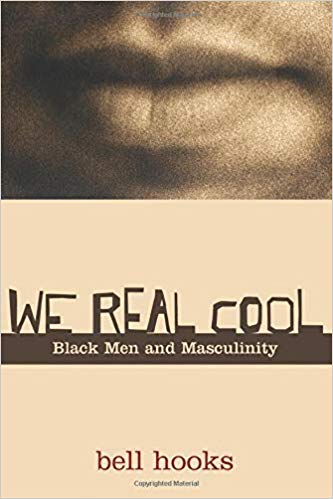
Why are so many commercially successful rappers’ fantasies reduced to “patriarchal f*cking?” Reading Michael Kimmel’s essay “Fuel for Fantasy: The Ideological Construction of Male Lust,” in her seminal book We Real Cool: Black Masculinity, bell hooks clarifies: “In the iconography of black male sexuality, compulsive-obsessive fucking is represented as a form of power when in actuality it is an indication of extreme powerlessness” (hooks: 67-8).
It’s auto-asphyxiation, a kind of nihilistic sadomasochism that says, if the world thinks of me as a beast, then a beast I shall be. Plenty of kids work this out by the time they hit the playground. “Patriarchy, as manifest in hip-hop, is where we can have our version of power within this very oppressive society,” explains writer/activist Kevin Powell (qtd. in hooks: 56). Ironically, Powell came to fame in the 90’s on MTV through the original reality show aptly entitled “The Real World.”
Plantation Politics 101
Since at least 2017, commercial rap has been the most widely sold musical genre; it’s pop. Beyond roughly 700,000 sales, Black people are not the primary purchasers of commercialised rap, as explained in the documentary Hip-Hop: Beyond Beats and Rhymes. It takes millions to earn ‘multi-platinum’ status. Yet, while created by and for Black and brown people in ghettoized communities, it has morphed into a transnational commodity having little to do with the realities of its originators, save for the S&M fantasies of wealth beyond imagination. And what do they boast of doing with that power, read as wealth? Liberating the masses from poverty? Intervening on the Prison Industrial Complex? Competing with the “nightmare” racist landlords like Donald Trump’s dad Fred? No! They mimic the very gangsters they pretend to be. Once Italian-Americans held hard that stereotype, but now it’s us. It’s always about power. Truly, ‘it’s bigger than Hip-Hop’.
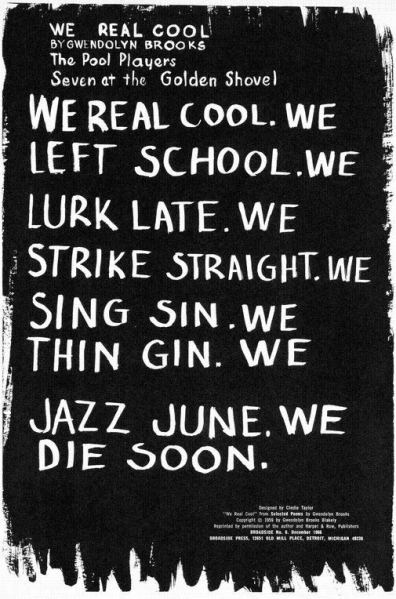 The more painful question few bother asking is why commercial rap music focuses so keenly on pimps, thugs, b*tches and whores? Like other commodities, commercial rap is tailored to the primary consumer base, which isn’t (fellow) Black people, but white youth. What is it about contemporary white youth that craves images of salacious, monstrous, licentious and violent Black people boasting about killing and maiming one another? Describing this mass commercial “Misogynistic rap music,” hooks states: “It is the plantation economy, where black males labor in the field of gender and come out ready to defend their patriarchal manhood by all manner of violence against women and men whom they perceive to be weak and like women” (hooks: 57-8). Plainly, the root of commercial rap’s global prominence is the reenactment of “sadomasochistic rituals of domination, of power and play” (hooks: 65).
Hyper-sexualisation is a form of projection onto Black people a mass white anxiety about our shared “history of their brutal torture, rape, and enslavement of black bodies” (hooks: 63). She goes on to explain: “If white men had an unusual obsession with black male genitalia it was because they had to understand the sexual primitive, the demonic beast in their midst. And if during lynchings they touched burnt flesh, exposed private parts, and cut off bits and pieces of black male bodies, white folks saw this ritualistic sacrifice as in no way a commentary on their obsession with black bodies, naked flesh, sexuality” (ibid). Hence the BBC obsession finds a consumer home safely in pop music!
“I am ashamed of my small penis,” a stranger recently mentioned to me in a grilled wing joint I happened upon here in Hanoi. The confession came from nowhere, having nothing to do with anything happening between us at the time. Is this the locker-room banter I always hear about? Are straight men really so obsessed with their penises? Given his broken English and my non-existent Vietnamese, I tried comforting him by explaining in the simplest terms the saying: “It’s not the size of the wave but the motion of the ocean.” Colloquialisms never translate easily, but I did at least deflect the subject away from ethno-sexual myths spread worldwide through contemporary consumer culture.
We’ve got to talk about ethno-sexual myths with openness, honesty and integrity. Silence is the master’s tool; silence = death! Further, echoing ‘black, lesbian, mother, warrior, poet’ Audre Lorde, ‘The master’s tools will never dismantle the master’s house”. I am Black in Asia, and there are perhaps no two groups of men at polar opposites of ethno-sexual myths. Like the hyper-sexualisation of women of colour, these myths reveal that neither Blackness nor Asianess is at the centre of these globally circulated myths. Hyper-sexual in comparison to who or what? Hegemonic heteronormative whiteness. Say it with me: Duh!
To get In-formation:
hooks, b. (2004) We Real Cool: Black Men and Masculinity. New York: Routledge.
Lorde, A. (1984) Sister Outsider: Essays and Speeches. Berkeley: Crossing Press.
Share this:

In Armistice, do Black lives matter?

Over a century ago in Sarajevo (Serbia), an Austrian archduke was shot. And next, millions more non-archdukes were shot, faffing about at The Front. And for what? And to me, learning about this war at school, it seemed more of a class war than anything else. Kaiser Wilhelm II being the grandson of Queen Victoria and his cousins being the monarchs of Britain and its vast empire, from India, to the Caribbean and bits of Africa.
And I never saw anyone that looked like me; I thought this war was for White people. And, I know now over four million non-Whites contributed, giving their lives, but that’s not the narrative I was sold at school. And at eleven o’clock on the 11th November 1918, screams sang into silence.
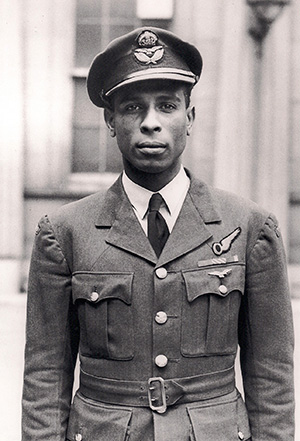
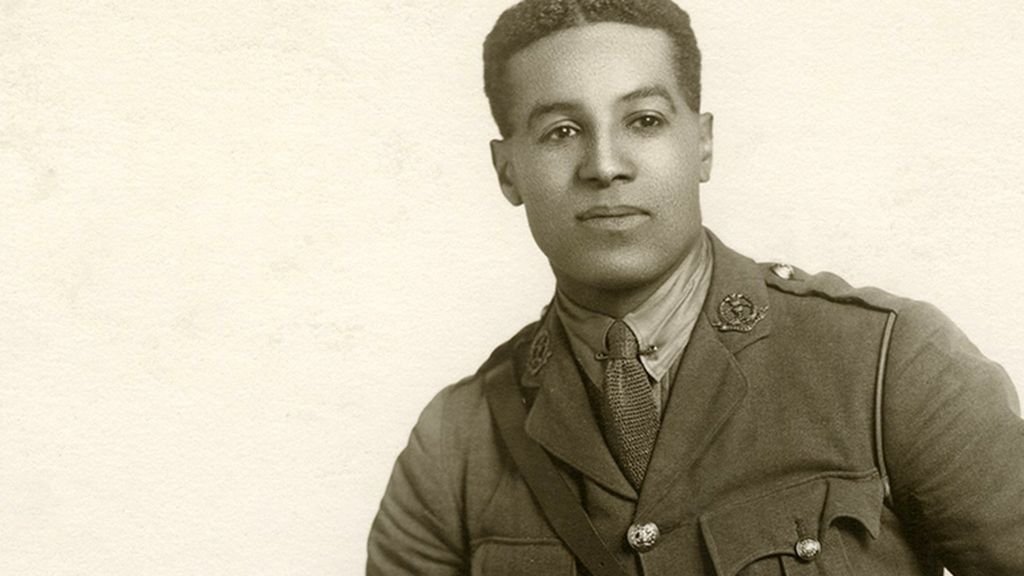
who went onto to be lawyer and instrumental
in Ghanaian independence in 1957
Knowing what I know now about history, even if it is just a basic knowledge (I’m no historian) Armistice Day does not mark peacetime. The fallout of the war to end all wars was a Pandora’s Box no signed treaty could contain. And in all conflicts it’s always the working-class who suffer most.
And it would be the archdukes of that world who would be having a jolly old time as if nothing had happened. But 1919 ushered in a wind of change: mass unemployment and uncertainty followed working-class communities from France and Belgium onto the streets of London, Cardiff and Liverpool.
When I think Armistice, I’m scratching my head as to when peacetime really does begin. 1919 brought in the Liverpool Race Riots where a one Charles Wotten was lynched at Albert Dock. Films like Doctor Zhivago depicting the Russian Civil War (1917 – 1922) remind me of the violence that occurred outside of the main narrative of the war (during and after). What of those calls for independence, Easter Risings on streets of Dublin?
HBO’s Watchmen, based on the Alan Moore comic – a vivid depiction of Tulsa, a section of American history most people haven’t heard of, including Black people. Why would people have heard of it? Vital parts of our own history have been erased, (I think) because it makes “the victors” look bad.
Tulsa, Oklahoma 1921:
Often referred to as the Tulsa Race Massacre (or Riot), this was when a White mob attacked the residents, livelihoods, homes and businesses of the majorly Black Greenwood area of Tulsa in the state of Oklahoma. This was what we’d now call a White supremacist attack and an act of domestic terrorism, or even genocide. Hundreds killed and thousands displaced.
In 1915, D. W. Griffith’s Birth of a Nation was released and has often been blamed for the resurgence of the Klu Klux Klan. After The War, there was a spike in racial tension in America, and Tulsa was basically Black Wall Street. The U. S Army was racially segregated in itself too. 1921 Greenwood was booming, a success story for Black business owners, despite high crime rates and racial segregation. However, history is a hotbed for Black excellence, but when Black people gain momentum, the establishment shoots them down, literally – from Fred Hampton to Medgar Evers.
At school, I was not taught, not once, about the four million non-Whites non-European that fought and laboured in those four years. I think if I was able to see myself in this history from when I was a child, I would have more time for Armistice. The great stage of the First and Second World War is tied up in Britain’s popular memory / national identity, and British identity is in crisis. Still, today, I’ve found to be British, is to be White.
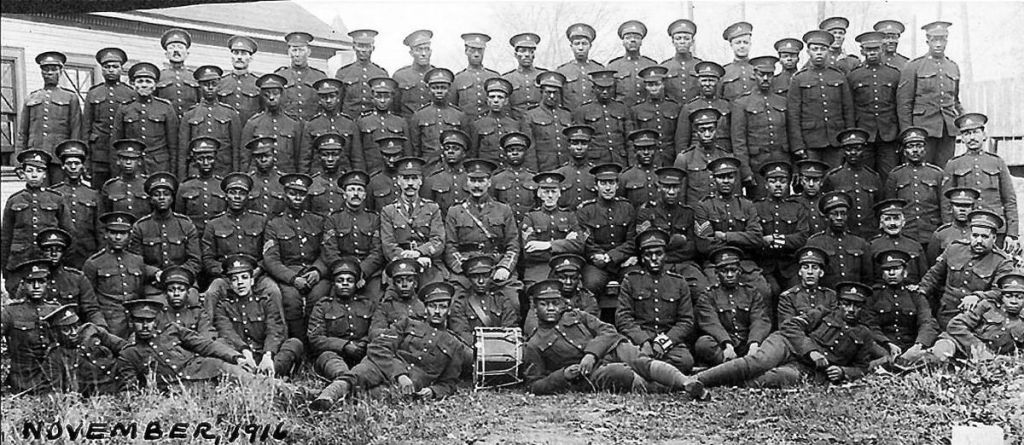
(The Black Cultural Center for Nova Scotia)
The yearly cycle of remembrance; from the procession in Northampton to interviews on BBC with veterans of the Second World War, I’ve always found it’s the voices of White British people. But there was racism at the front. The imperial mindset of European colonialism ran rampant in the British and German armies, tools of institutional racism, and by extension an instrument to whip up hate and institutional violence against colonial servicemen from places that included Senegal, China and the West Indies.
“Troops formed of coloured individuals belonging to savage tribes and barbarous races should not be employed in a war between civilised states. The enrolling, however, of individuals belonging to civilised coloured races and the employment of whole regiments of disciplined coloured soldiers is not forbidden.”
1914 Manual of Military Law
AND:
“Commissions in the special reserves of officers are given to qualified candidates who are natural-born or naturalised British subjects of pure European descent.”
1914 Manual of Military Law
Where are those stories of race at war? To be a soldier of colour, British-born or otherwise would not be the same as being a White (European) soldier, soldiers that toiled in France but also in the skirmishes of the African continent, Asia and the Middle East – erased out of our nationhood.
Over a million soldiers from what was then British India (pre-1947) fought for the allies, along with over two million from French Indo-China, as well as 100,000 Chinese labourers. But I did not have this on my history curriculum, when we looked at the stories between 1914 – 1918. But I was bludgeoned with images of White European soldiers having a great time.

To me, Armistice Day is in remembrance of a White Man’s war. And to (begrudgingly) mimic poet, colonialist and Jungle Book author Rudyard Kipling, it feels like a “White man’s burden,” even if people of colour fought too. In seeing how Britain portrays those wars in schools but also how they are represented in popular memory, can you blame activists and academics looking at the stories of race and racism on the front lines under a microscope?
Race / racial identity are massive factors in these conflicts, as historian David Olusoga talks about in his article. We would not need to keep talking about race if race wasn’t treated like a minor inconvenience and those often treating it like an that are White people, refusing to acknowledge their own whiteness and White Privilege.
However, if we really are serious about Armistice, we have to acknowledge that working-class people yet again were at the whim of the titled and the entitled. We remember the soldiers but never their victims, portraying death (murder) as honorable, as said in Wilfred Owen’s (from Horace) Dulce et Decorum Est “pro patria mori” (“it is sweet and proper to die for one’s country”). What is sweet about sending good men to the slaughterhouse?
Both wars are riddled with nationalism, and portray patriotism with grandeur. Great Britain raised at half-mast, celebrating Britain’s militarism –from Churchill to the Dreadnought (but no love for Bengal or Dresden). In how the wars are taught (popular nationalism), we encourage the living to join the dead, an ode to the Union Jack, even today in a postcolonial world.
“The colour bar on non-regular officers in the armed forces, designed and imposed by the political and military, is explicitly in the Short Guide to Observing a Commission in the Special Reserve of Officers, published by His Majesty’s Stationary Office in 1912.” – Phil Vasili
The world wars are full of people that are products of empire, in the ruins of class but also race. An archduke gets shot and millions of non-archdukes pay the price. Millions dead. After the war – widespread unemployment, uncertainty, race riots, class divides, The Depression, a grim state of affairs.
When you add the layer of race into that, it makes it more complex. Colonial soldiers coming to Britain after the First World War who were left out of the victory parades. Charles Wotten’s lynching in Liverpool. Men from British colonies who came here after the Second World War – to fill in labour shortages – White Supremacist fever and contested Britishness.

The narrative of Black soldiers goes all the way back to Roman Britain. Olusoga stated “Black soldiers were expendable – then forgotten” and I agree. In erasing Black and brown soldiers from the narrative, it’s a declaration of White lives being worth more than Black / brown lives.
And yes, we have the red poppy which is supposed to include everyone but it feels very exclusionary; and Britain’s popular memory is selective and needs to explore its colonial legacy – how imperial racial thinking played a role in both wars, otherwise we are continuing to tell stories that only include the experiences and memories of a White European majority.
“Black subjects had their actions during the war written out of history.” – Emma Dabiri
Works Mentioned
1914 Manual of Military Law
BBC Stories. “Alt History: White-washing black soldiers from WW1- BBC Stories.” YouTube. 27/06/19. Online. 10/11/19.
BBC Stories. “Alt History: A British lynching – BBC Stories.” YouTube. 13/07/19. Online. 10/11/19/
Birth of a Nation. Dir. D. W. Griffith. 1915, Epoch Producing Company. YouTube.
Channel 4 Documentary. “Dulce Et Decorum Est by Wilfred Owen: Read by Christopher Eccleston | Remembering World War 1 | C4”. Youtube. 07/11/13. Online. 08/09/19.
Doctor Zhivago. Dir. David Lean. 1965, MGM. DVD
History.com Editors. “Tulsa Race Massacre.” History.com. 2019. Web. Accessed: 10/11/19.
Lindeloff, Damien, creator. Watchmen. White Rabbit, Paramount Television, DC Entertainment, Warner Bros. Television, 2019.
Olusoga, David. “Black soldiers were expendable – then forgettable.” theguardian.com. 2018. Web. Accessed: 09/11/19
Vasili, Phil. Walter Tull, 1888 – 1918 Officer, Footballer […] Surrey: Raw Pres, 2010. Print.
Share this:


100% of the emotional labour, 0% of the emotional reward: #BlackenAsiawithLove

Last night over dinner and drinks, I spoke about race in the classroom with two white, upper-middle-class gay educators. Neither seemed (able) to make any discernable effort to understand any perspective outside their own. I had to do 100% of the emotional labour, and got 0% of the emotional reward. It was very sad how they went on the attack, using both passive and active aggression, yet had the nerve to dismiss my words as ‘victimhood discourse’. This is exactly why folks write books, articles, and blogs like ‘Why I’m No Longer Talking to White People About Race’.
Worse, they both had experienced homophobia in the classroom, at the hands of both students and parents. Nonetheless, they had no ability to contribute to the emotional labour taking place as we spoke about race. Even worse, the one in charge of other educators had only 24 hours earlier performed the classic micro-aggression against me: The brown blur. He walked right past me at our initial meeting as I extended my hand introducing myself while mentioning the mutual friend who’d connected us because, as he said, he was “expecting” to see a white face. He was the one to raise that incident, yet literally threw his hands in the air, nodding his head dismissively as he refused any responsibility for the potential harm caused.
“I’m an adult,” I pled, explaining the difference between me facing those sorts of aggressions, versus the young people we all educate. This all fell on deaf ears. Even worse still, he’d only moments earlier asked me to help him understand why the only Black kid in one of his classes called himself a “real nigger.” Before that, he had asked me to comment on removing the N-word from historical texts used in the classroom, similar to the 2011 debate about erasing the N-word and “injun” from Huckleberry Finn, first published in 1884. According to the Guardian, nigger is “surely the most inflammatory word in the English language,” and “appears 219 times in Twain’s book.”
Again, he rejected my explanations as “victimhood.” He even kept boasting about his own colorblindness – a true red flag! Why ask if you cannot be bothered to listen to the answer, I thought bafflingly? Even worse, rather than simply stay silent – which would have been bad enough – the other educator literally said to him “This is why I don’t get involved in such discussions with him.” They accused me of making race an issue with my students, insisting that their own learning environments were free of racism, sexism and homophobia.
They effectively closed ranks. They asserted the privilege of NOT doing any of the emotional labour of deep listening. Neither seemed capable of demonstrating understanding for the (potential) harm done when they dismiss the experiences of others, particularly given our differing corporealities. I thought of the “Get Out” scene in the eponymously named film.
“Do you have any Black teachers on your staff,” I asked knowing the answer. OK, I might have said that sarcastically. Yet, it was clear that there were no Black adults in his life with whom he could pose such questions; he was essentially calling upon me to answer his litany of ‘race’ questions.
Armed with mindfulness, I was able to get them both to express how their own corporeality impacts their classroom work. For example, one of the educators had come out to his middle-school students when confronted by their snickers when discussing a gay character in a textbook. “You have to come out,” I said, whereas I walk in the classroom Black.” Further still, they both fell silent when I pointed out that unlike either of them, my hips swing like a pendulum when I walk into the classroom. Many LGBTQ+ people are not ‘straight-acting’ i.e. appear heteronormative, as did these two. They lacked self-awareness of their own privilege and didn’t have any tools to comprehend intersectionality; this discussion clearly placed them on the defense.
I say, 100% of the emotional labour and none of the emotional reward, yet this is actually untrue. I bear the fruits of my own mindfulness readings. I see that I suffer less in those instances than previously. I rest in the comfort that though understanding didn’t come in that moment, future dialogue is still possible. As bell hooks says on the first page in the first chapter of her groundbreaking book Killing Rage: Ending Racism: “…the vast majority of black folks who are subjected daily to forms of racial harassment have accepted this as one of the social conditions of our life in white supremacist patriarchy that we cannot change. This acceptance is a form of complicity.” I accept that it was my decision to talk to these white people about race.
I reminded myself that I had foreseen the micro-aggression that he had committed the previous day when we first met. A mutual friend had hooked us up online upon his visit to this city in which we now live. I doubted that she’d mentioned my blackness. Nonetheless, I had taken the chance of being the first to greet our guest, realizing that I am in a much safer space both in terms of my own mindfulness, as well as the privilege I had asserted in coming to live here in Hanoi; I came here precisely because I face such aggression so irregularly in Vietnam that these incidents genuinely stand out.
—
Works mentioned:
Eddo-Lodge, R. (2018). Why I’m No Longer Talking to White People About Race. London: Bloomsbury Publishing.
Hanh, T. (2013). The Art of Communicating. New York: HarperOne.
hooks, b. (1995). Killing rage: Ending racism. New York: Henry Holt and Company, Inc.
Share this:


A month of Black history through the eyes of a white, privileged man… an open letter
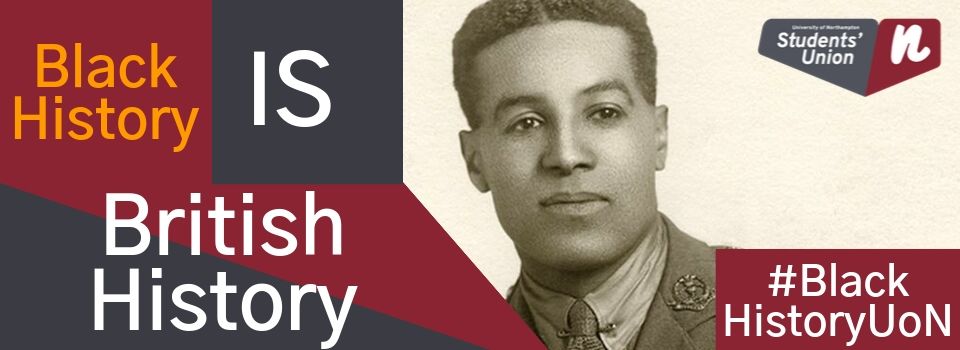
Dear friends,
Over the years, in my line of work, there was a conviction, that logic as the prevailing force allows us to see social situations around (im)passionately, impartially and fairly. Principles most important especially for anyone who dwells in social sciences. We were “raised” on the ideologies that promote inclusivity, justice and solidarity. As a kid, I remember when we marched as a family against nuclear proliferation, and later as an adult I marched and protested for civil rights on the basis of sexuality, nationality and class. I took part in anti-war marches and protested and took part in strikes when fees were introduced in higher education.
All of these were based on one very strongly, deeply ingrained, view that whilst the world may be unfair, we can change it, rebel against injustices and make it better. A romantic view/vision of the world that rests on a very basic principle “we are all human” and our humanity is the home of our unity and strength. Take the environment for example, it is becoming obvious to most of us that this is a global issue that requires all of us to get involved. The opt-out option may not be feasible if the environment becomes too hostile and decreases the habitable parts of the planet to an ever-growing population.
As constant learners, according to Solon (Γηράσκω αεί διδασκόμενος)[1] it is important to introspect views such as those presented earlier and consider how successfully they are represented. Recently I was fortunate to meet one of my former students (@wadzanain7) who came to visit and talk about their current job. It is always welcome to see former students coming back, even more so when they come in a reflective mood at the same time as Black history month. Every year, this is becoming a staple in my professional diary, as it is an opportunity to be educated in the history that was not spoken or taught at school.
This year’s discussions and the former student’s reflections made it very clear to me that my idealism, however well intended, is part of an experience that is deeply steeped in white men’s privilege. It made me question what an appropriate response to a continuous injustice is. I was aware of the quote “all that is required for evil to triumph is for good men to do nothing” growing up, part of my family’s narrative of getting involved in the resistance, but am I true to its spirit? To understand there is a problem but do nothing about it, means that ultimately you become part of the same problem you identify. Perhaps in some regards a considered person is even worse because they see the problem, read the situation and can offer words of solace, but not discernible actions. A light touch liberalism, that is nice and inclusive, but sits quietly observing history written in the way as before, follow the same social discourses, but does nothing to change the problems. Suddenly it became clear how wrong I am. A great need to offer a profound apology for my inaction and implicit collaboration to the harm caused.
I was recently challenged in a discussion about whether people who do not have direct experience are entitled to a view. Do those who experience racism voice it? Of course, the answer is no; we can read it, stand against it, but if we have not experienced it, maybe, just maybe, we need to shut up and let other voices be heard and tell their stories. Black history month is the time to walk a mile in another person’s shoes.
Sincerely yours
M
[1] A very rough translation: I learn, whilst I grow, life-long learning.
Share this:

Those kinde of people
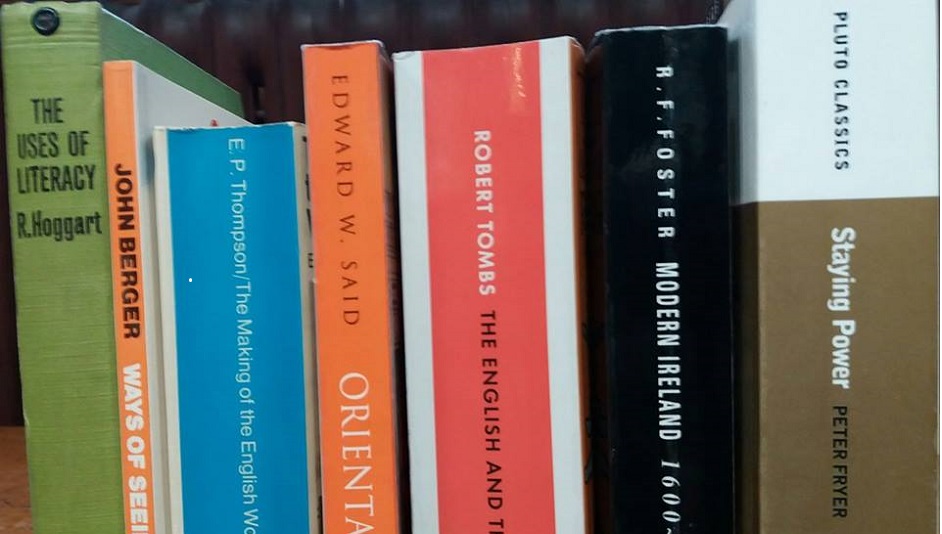
This poem is named for the first chapter of the iconic book Staying Power (1984) by historian and academic Peter Fryer. A book that talks about the history of Black people in Britain, from Roman times up to his modern-day. It’s also inspired by ‘Mathematics’ by British poet and author Hollie McNish.
Adam said:
those goddamn universities
and their goddamn books
learned people, crippling egos
with nothing but a look
he says those goddamn historians
and their god damn history
I tell them they worked hard
to get there, can’t you see?
I ask him what
he expects British history to be
he says he remembers
the land of Blyton and Christie
coastal wrecks, greenery
and a good wage before those people came
where people went to work, pot-bellied
national pride, stood proud before they came
now no British jobs, their kinde are to blame
I ask how he knows this to be true
he said he saw it on BBC News
every time a Pole takes a job from us
each time he hears a different language
whilst riding the bus
this divide and conquer, them and us
to me just does not add up
he makes a brew, two sugars in his tea
I say didn’t you know those granules
came from the sugar economy
he grunts, goddamn Blacks came and took our stuff
I tell him about sugar and cotton, you know
how slaves gave us indigo and tobacco – hot air to puff
I show him Brixton Road and Portobello Market
I show him rock n roll, Network Rail and the NHS
I show him the immigrant-built west
I show him straight roads and pictures of my Gran
how the Jamaican ackee comes from the Ghanaian Akan
He’s sick of history and social science
sitting all sad and smug on his island
I spent three years on a degree
did a dissertation on British identity
I geek over John Blanke
renaissance trumpeter who was Black
Oh and Ann Lister, call her Gentleman Jack
and Afro-Romans and The Slave Trade
Black Georgians, Saxons and Viking Raids
and I so want to scream when I hear folks say
goddamn immigrants taking our jobs
but how we teach history – we don’t talk
of Mrs Shah’s shop employing Bill and Bob
where people with money love to spend
employing women and men in tens,
her gift for business is self-taught
all her plans meticulously well-thought
and all your prejudice talk
forgets the soldiers the colonies pledged
forgets the men left for dead
in Tangiers, Dunkirk and at the Somme
as the world wars went on and on
from Mr Smith to Mr Wong
and I know people love to complain
but England our name
the land of Angles is all that remains
from Saxons to Jutes
stories of migration since before WW2
and often, those kind of people
are more native than the locals.
Share this:


Is unconscious bias a many-headed monster?
When I was fourteen, I was stopped and searched in broad daylight. I was wearing my immaculate (private) school uniform – tie, blazer, shoes… the works. The idea I went to private school shouldn’t matter, but with that label comes an element of “social class.” But racial profiling doesn’t see class. And I remember being one of those students who was very proud of his uniform. And in cricket matches, we were all dressed well. I remember there being a school pride to adhere to and when we played away, we were representing the school and its reputation that had taken years to build. And within those walls of these private schools, there was a house pride.
Yet when I was stopped, it smeared a dark mark against the pride I had. I was a child. Innocent. If it can happen to me – as a child – unthreatening – it can really happen to anyone and there’s nothing they can to stop it. Here I saw unconscious bias rear its ugly head, like a hydra – a many-headed monster (you have to admire the Greeks, you’re never stuck for a metaphor!)
If we’re to talk about unconscious bias, we must say that it only sees the surface level. It doesn’t see my BA Creative Writing nor would it see that I work at a university. But unconscious bias does see Black men in hoodies as “trouble” and it labels Black women expressing themselves as “angry.”
Unconscious bias forces people of colour to censor their dress code – to not wear Nike or Adidas in public out of fear that it increases your chances of being racially profiled. Unconscious bias pushes Black and Asians to code-switch. If a White person speaks slang, it’s cool. When we do it, it’s ghetto. That’s how I grew up and when I speak well, I’ve had responses such as “What good English you speak.” Doomed if you do, doomed if you don’t.
How you speak, what you wear – all these things are scrutinised more when you don’t have White Privilege. And being educated doesn’t shield non-White people (British people of colour included) from racist and xenophobic attacks, as author Reni Eddo-Lodge says in her book:
“Children of immigrants are often assured by well-meaning parents that educational access to the middle classes can absolve them from racism. We are told to work hard, go to a good university, and get a good job.”
The police can stop and question you at any time. The search comes into play, depending on the scenario. But when I was growing up, my parents gave me The Talk – on how Black people can get hassled by police. For me, I remember my parents sitting me down at ten years old. That at some point, you could be stopped and searched at any time – from aimlessly standing on a street corner, to playing in the park. Because you are Black, you are self-analysing your every move. Every footstep, every breath.
And to be stopped and searched is to have your dignity discarded in minutes. When it happened, the officer called me Boy – like Boy was my name – hello Mr Jim Crow – like he was an overseer and I was a slave – hands blistering in cotton fields – in the thick of southern summertime heat. Call me Boy. Call me Thug. No, Call me Target. No, slave. Yes master, no master, whatever you say master. This was not Mississippi, Selma or Spanish Town – this was Northamptonshire in the 2000s and my name is Tré.

Yes, Northamptonshire. And here in 2019, the statistics are damning. Depending on which Black background you look at, you are between six and thirteen times more likely to be stop and searched if you are Black than if you are White (British). And reading these statistics is an indication of conversations we need to be having – that there is a difference between a Black encounter with the police and a White encounter. And should we be discussing the relationship between White Privilege and unconscious bias?
Are these two things an overspill of colonialism? Are they tied up in race politics and how we think about race?
Whilst these statistics are for Northamptonshire, it wouldn’t be controversial to say that stop and search is a universal narrative for Black people in Europe and the Americas. Whether we’re talking about being stopped by police on the street or being pressed for papers in 1780s Georgia. Just to live out your existence; for many its tiring – same story, different era.
You are between six and thirteen times more likely to be stopped if you are Black than if you are White (British) – but you know… let’s give Northamptonshire police tasers and see what happens. Ahem.
Bibliography
Eddo-Lodge, Reni. Why I’m No Longer Talking to White People About Race. London: Bloomsbury Publishing, 2018. Print
Share this:

Your Name Is Not BAME
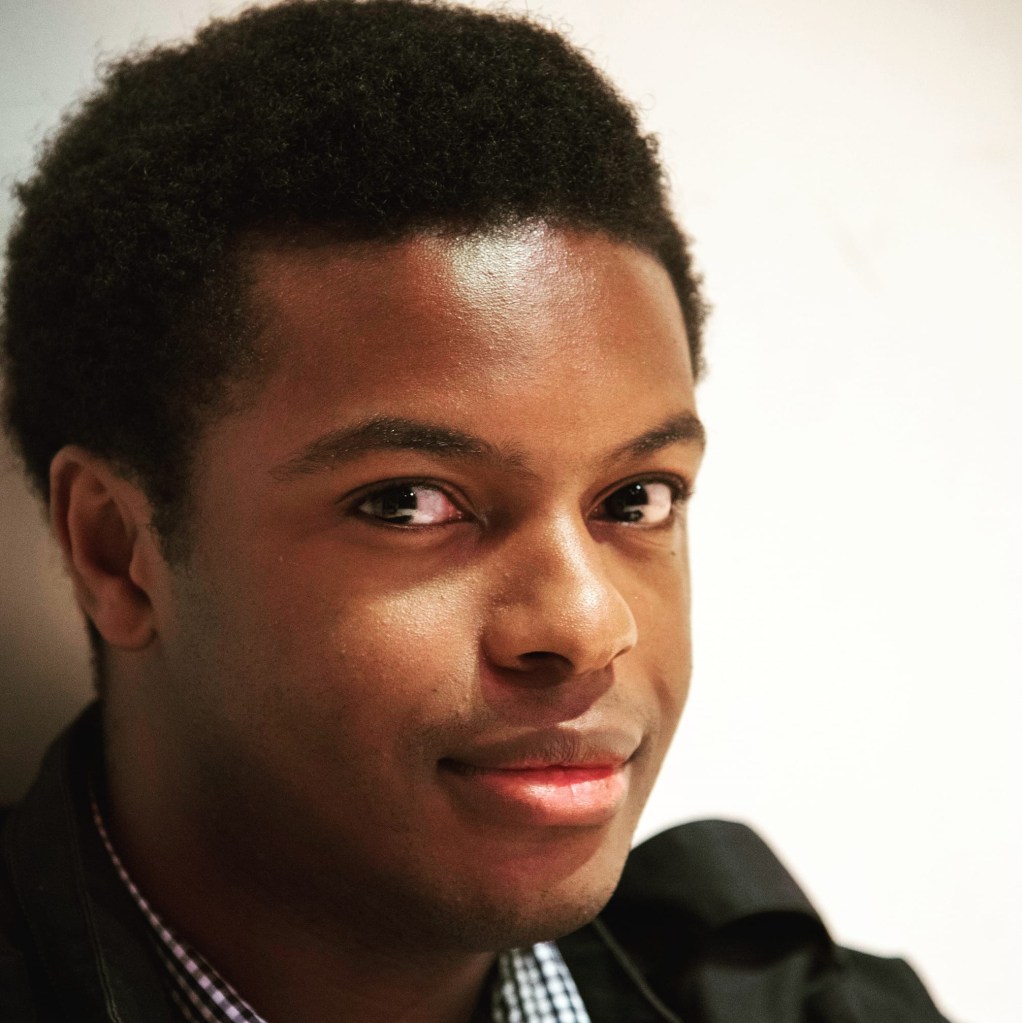
My name is Tré Ventour and I am the Students’ Union’s Vice President BME Sabbatical Officer. When I’ve asked students what BME stands for, most have been clueless – Black Minority Ethnic. The same could be said for BAME – Black Asian Minority Ethnic. I was elected to represent ethnic minority students. But I’ve been asking myself how much longer will this 47% be an ethnic minority? At Northampton, they will soon be the majority. This 14,000-student university in which nearly 7000 fit into this BME box.
Pigeon-holed. To be put into a box. I don’t like to think in boxes. I try not to think in labels but in this world, it’s naive to be colourblind. In the education sector, in this day and age, especially at Northampton, to not see race is to ignore the experiences of nearly 7,000 students – nearly 7,000 stories about potential hate crimes, and what about BAME members of staff? We must see race. We must see sex, class, and gender (all genders).
To be colourblind is to live life high on privilege – to exist without the consequences of hate crime. Some people live with racism, sexism and / or homophobia all their lives.
Many say “there’s one race, the human race.” That may be true but how comfortable must you be in your existence to come to that notion? And then push that notion on those who experience racism on a daily basis.
When I’ve spoken to students about BAME or ethnic minority, they say “Just call me by my name.” Students are flesh and bone, more than acronyms. And I do what they tell me to do (in a manner of speaking / within reason). I’m not Vice President, I’m not Mr Ventour; I am Tré and I am here to help students, to represent students (of colour) – more so Black students that look at White authority and see invader. Who I have heard compare university to apartheid South Africa – one in, one out – to a Zimbabwe under British rule – De Beers, Rhodes and racism. Fear and exclusion.
Call them minorities, call them BME, call them BAME. Yet, this acronym just seems like coded language for Black. And at Northampton, when people say BME or BAME, they mean Black students, so just say what you mean, “Black.”
And if these labels, if these pigeon-hole terms help Higher Education solve issues like attainment perhaps it’s worth it. But what I can say is that not all Black experiences are the same. To be a Black British student is not the same as to be a Black international from Africa, the EU or elsewhere.

But to be a person of colour in this country is to be immigrant, British or otherwise. To be overly polite. To be overly grateful or gracious. To be a good immigrant.
Share this:


The struggle is real

© Jonathan McHugh
Stephanie is a BA Criminology graduate of 2019 and was motivated to write this blog through the experience of her own dissertation.
Last year was a very important time for me, during my second year of studying Criminology I began doing a work placement with Race Act 40, which was an oral history project to celebrate 40 years of the Race Relations Act 1974. The interviews that were conducted during my placement allowed me to get a variety of in-depth stories about racial inequalities of Afro-Caribbean migration settlers in the UK. During my time with the Race Act 40 project it became clear to me that the people who had volunteered their stories had witnessed a long line of injustices from not only individuals within society, but also institutions that makeup the ‘moral fabric’ within society. When exploring whether they have seen changes post and pre-Race Relations they insisted that although the individual within society treated them better and accepted them post-Race relations, to an extent there is a long way to go to improve the hostile relationships that has been formed with politicians and police.
The notion of hostility between politicians and the Afro-Caribbean community was reinforced, as the UK was going through the Windrush scandal which affected the core of every Afro-Caribbean household within the UK. This was extremely important for me as both paternal and maternal grandparents were first generation Windrush settlers. During the scandal my father became extremely anxious and the ramifications of the Windrush scandal hit home when some of his friends that came to the UK in 1961, the same time as he did, were detained and deported on the grounds of them being ‘illegals’. The UK Government used their ‘Hostile Environment’ policy to reintroduce Section 3 paragraph 8 of the Immigration Act 1971, which puts burden of proof on anyone that is challenged about their legal status in the UK’.
The UK government was ‘legally’ able to deport Caribbean settlers, as many of them did not have a British passport and could not prove their legal right to be in the UK and the Home Office could not help them prove their legal rights because all archival documents had been destroyed. This was a hard pill to swallow, as the United Kingdom documents and preserves all areas of history yet, overnight, the memory of my family’s journey to the UK was removed from the National Archives, without any explanation or reasoning. The anxiety that my father felt quickly spread over my whole family and while I wanted to scream and kick down doors demanding answers, I used my family’s history and the experiences of other Black people under British colonial rule as the basis for my dissertation. The hostility that they faced stepping off the Windrush echoed similar hostility they were facing in 2018, the fact that the British government had started deporting people who were invited into the country as commonwealth workers to build a country that had been torn apart as a corollary of war was a slap in the face.
Under Winston Churchill’s government, officials were employed to research Black communities to prove they were disproportionately criminal as a strategy to legally remove them from the UK and although they did not have any evidence to prove this notion the government did not apologize for the distasteful and racist treatment they demonstrated. It is hard to convince Black people in 2019 that they are not targets of poor similar treatment when they have been criminalised again and documents have been destroyed to exonerate them from criminality.
A final thought:
I have outlined the reasons why this topic has been important to me and my advice to any Criminology student who is going to be writing a dissertation is, to find a topic that is important and relevant to you, if you are passionate about a topic it will shine through in your research.
Share this:

How literature failed me as a black student

My name is Francine Bitalo, I am 21 years old and a Criminology undergraduate at the University of Northampton. Coming from a black African background I have always had a strong interest in the Criminal Justice System and its treatment towards different groups in society.
My dissertation was based on the impact of police practices such as stop and search on young black men and their families. Whilst statistics present the alarming racial disproportionately which exist in many areas in the criminal justice system, it fails to portray the long-lasting effects it has had on Black families. For example, the daily harassment and differential treatment subjected to young Black men has forced black families to reinvent themselves to conform to institutional racism. Coming from a Black family myself and having male family member, the findings in my dissertation quickly became personal to me, as I could constantly relate them to the structuring of my own family. For example, the fact that it would take my father longer to find a job due to institutional racism, making my mother the breadwinner, or when my mother is preparing my brothers for police harassment and discrimination, but not me and sisters.
While conducting my research I was quick to learn that what literature may describe as a phenomenon, for many of us is a reality. If I am honest the writing stage of my dissertation was difficult for me because it was a passionate topic. I experienced a lot of self-doubt regarding my positionality for example, being a Black woman and facing my own forms of discrimination and now having to talk about the experiences of young Black men. I think my dissertation tutor would agree with me on this as I remember emailing her after I submitted my work expressing how I felt like I didn’t effectively capture the effects and the voices of the young Black men I interviewed, despite that being my main goal. I mean who would blame me, as a student, if I am honest I felt like literature really let me down for instance, when writing my literature review I found that literature neglected the subject of racism solely from the perspectives of young Black men, despite statistics showing them to being the largest group to experience institutional racism. At this point I had to laugh at the criminal justice system and its propositions to improving police relations as well as re offending.
With that being said the information I did come across I couldn’t help but sense the notion of white privilege lingering in the perspective of some scholars. I understand this is a strong claim to make however I say this because not only did literature provide little of the work of Black scholars regarding the topic, yet it was evident that most white scholars did not see the issue with stop and search and its discriminate use. Arguments for this were discussed in my dissertation for example, some argued that the process of racial socialisation in Black households were ineffective to police relations and the functioning of their services, which creates the notion that the Black community should submit to discrimination and harassment in favour of procedures and compliance during police encounter. Some tried to justify the disproportionality in stop and search by claiming that young Black men should be harassed because they tend to be out more especially in certain urban areas or the disproportionate targeting of Black minors is due to parental criminality. I felt there was a lack of accountability from white scholar thus, little understanding in the issue of race which is natural because their experiences do not allow them to understand. Yet this led me to ask questions such as why shouldn’t Black mothers have the right to prepare their sons for police discrimination, does it matter what time and area should a person of colour be around for them to be targeted at?
After completing my dissertation and getting a First Class I felt extremely proud of myself, the fact that I did not shy away from the research topic despite it being limited in literature. As a result, it was satisfying to know that I was able to articulate the experiences of others to a First Class standard. I hope this can encourage others to trust in their abilities and put aside any doubts especially when choosing a research topic. As a student writing a dissertation or even an assignment, I believe we should explore the unexplored, open the unopened and always be willing to discover and learn. Do not be afraid of researching something that is limited or has never been done. Lastly as my dissertation was extremely passionate to me I have decided to turn it into a personal project and continue researching the topic

 Thoughts from the criminology team