
Home » PTSD
Category Archives: PTSD

A review of In-Extremis: The Life of War Correspondent Marie Colvin
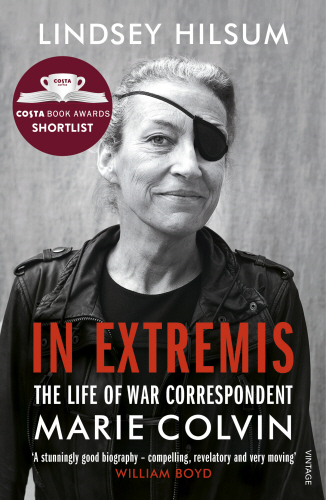
Recently, I picked up a book on the biography of Marie Colvin, a war correspondent who was assassinated in Syria, 2012. Usually, I refrain from reading biographies, as I consider many to be superficial accounts of people’s experiences that are typically removed from wider social issues serving no purpose besides enabling what Zizek would call a fetishist disavowal. It is the biographies of sports players and singers, found on the top shelves of Waterstones and Asda that spring to mind. In-Extremis, however, was different. I consider this book to be a very poignant and captivating biography of war correspondent Marie Colvin, authored by fellow journalist Lindsey Hilsum. The book narrates Marie’s life before her assassination. Her early years, career ventures, intimate relationships, friendships, and relationships with drugs and alcohol were all discussed. So too were the accounts of Marie’s fearless reporting from some of the world’s most dangerous conflict zones, including Sri-Lanka, Iraq, Lebanon, and Syria. Hilsum wrote on the events both before Marie’s exhilarating career and during the peak of her war correspondence to illustrate the complexities in her life. This reflected on Marie’s insatiability of desire to tell the truth and capture the voices of those who are absent from the ‘script’. So too, reporting on the emotions behind war and conflict in addition to the consistent acts of personal sacrifice made in the name of Justice for the disenfranchised and the voiceless.
Across the first few chapters, Hilsum wrote on the personal life of Marie- particularly her traits of bravery, resilience, persistence, and an undying quest for the truth. Hilsum further delved into the complexities of Marie’s personality and life philosophies. A regular smoker, drinker and partygoer with a captivating personality that drew people in were core to who Marie was according to Hilsum. However, the psychological toils of war reporting became clear, particularly as later in the book, the effects of Marie’s PTSD and trauma began to present itself, particularly after Marie lost eyesight in her left eye after being shot in Sri-Lanka. The eye-patch worn by Marie to me symbolised the way she carried the burdens of her profession and personal vulnerabilities, particularly between maintaining her family life and navigating her occupational hazards.
In writing this biography, Hilsum not only mapped the life of one genuinely awesome and inspiring woman, but also highlighted the importance of reporting and capturing the voices of the casualties of war. Much of her work, I felt resonated with my own. As an academic researcher, it is my job to research on real-life issues and to seek the truth. I resonated with Marie’s quest for the truth and strongly aligned myself to her principles on capturing the lived experiences of those impacted by war, conflict, and social justice issues. These people, I consider are more qualified to discuss these issues than those of us who sit in the ivory towers of institutions (me included!).
Moreover, I considered how I can be more like Marie and how I can embed her philosophies more so into my own research… whether that’s through researching with communities on the cost-of-living crisis or disseminating my research to students, fellow academics, policymakers, and practitioners. I feel inspired and moving forward, I seek to embody the life and spirit of Marie and thousands of other journalists and academics who work tirelessly to research on and understand the truth to bring forward the narratives of those who are left behind and discarded by society in its mainstream.
Share this:


The Maid: A Few Thoughts

Last week featured my first weekend of rest in a long time and I was desperate to do nothing. In conversation with a friend I mentioned that I had not binge-watched anything in a long time and she suggested The Maid (streaming on Netflix) with a warning that it was brilliant but that I might find it traumatic. I consumed the entire season over the weekend, even after I messaged said friend to inform her after episode two that it was a difficult watch and I would need a break. I did not take a break and powered through. If you have ever been through, witnessed or supported someone through abuse, this will be a difficult watch but I also found it quite therapeutic because it was realistic.
The series is about domestic abuse and focuses on emotional abuse, addressing some of the stigma and contested victimhood of those who suffer non-physical abuse. Although based in the US, it addresses the lack of recognition in the legal system for abusive relationships that do not feature physical violence. The show highlighted that many in society do not recognise non-physical domestic abuse as ‘real’ or ‘enough’, and for a while the female lead (Alex) herself did not perceive herself to be victimised enough to warrant support from a refuge or seek help from the police. She later moves through her denial after getting flashbacks as a symptom of PTSD. She realised that having witnessed her father perpetrate violence towards her mother as a child, her daughter was now impacted in exactly the same way, despite this ‘lesser’ form of abuse.
Much of the series showed the struggles of single mothers leaving abusive relationships, often with nothing but the clothes on their backs. Forcibly displaced, they slowly try to rebuild their lives, applying for state benefits, social housing and childcare. Alex quickly finds a job and still finds it difficult to find a place to live because she needs state support to supplement her rent and deposit. There are few landlords who accept tenants receiving state support, both in the US and the UK. She is repeatedly facing the barriers of an unjust system, stacked against her because of the type of victimisation she suffered.
While facing structural barriers, the maid found help in the most unlikely people: women in the shelter, a social worker helping her to fight the system, a wealthy woman she worked for. Her relationships changed with some people to access support. She was forced to seek help from her father and another male friend when she was left homeless which had difficult gendered dynamics. The father had been abusive to her mother and when she recalled this, it caused conflict in her relationship and she left his home, despite this leaving her homeless once again. Her male friend appeared to be helpful and kind but did so with the expectation she would start a relationship with him and when this did not materialise she was again asked to leave with nowhere to go so she returns to her ex-partner.
The maid does not as much get back into a relationship with him than coexists with him. The relationship he thinks they have is not what her reality is. He thinks she has come home, she is there because she is homeless with nowhere else to go. They live parallel lives. After returning to the ‘family home’, Alex falls into depression and suffers PTSD. Some of the imagery here is intense. In one scene the sofa swallows her up, as if she wished to sink into the cracks of the furniture, not wanting to be seen, wanting to escape but with no means to flee or places to flee to. In other scenes, she tries to go for a walk in the forest, but the trees close in around her, visually representing the isolation her abuser has forced upon her.
My main criticism is in the final episode when Sean tells the maid he will get sober but getting sober will not fix this. Alcohol is not the problem. He was abusive during his sober phases. Quitting alcohol does not transplant men’s attitudes, values and beliefs towards women. Being sober does not remove the need for abusive men to control women. This sends the wrong message to the audience, and it is a dangerous message to send. I would have liked to see the series end with Sean admitting he was a controlling, abusive man and that he would get help for this. Instead he blamed his behaviour on alcohol.
I’m going to play the tape forward and imagine a season 2 because I have witnessed this scenario a few times over the years. He cleans up, gets sober and appears to look like he is doing well. He may have been to rehab or AA where he was taught that he probably should not punch walls or throw objects at people’s heads. He gets in a new relationship and it looks like all is well for a while but he still has not admitted or addressed why he was abusive so his behaviours are there, they are just more subtle. He gaslights, manipulates, controls. But he isn’t outwardly aggressive so he gets away with it for a while. Until he doesn’t.

 Thoughts from the criminology team