
Home » Professionals/practitioners
Category Archives: Professionals/practitioners

Changing the Narrative around Violence Against Women and Girls

For Criminology at UON’s 25th Birthday, in partnership with the Northampton Fire, Police and Crime Commissioner, the event “Changing the Narrative: Violence Against Women and Girls” convened on the 2nd April. Bringing together a professional panel, individuals with lived experience and practitioners from charity and other sectors, to create a dialogue and champion new ways of thinking. The first in a series, this event focused on language.
All of the discussions, notes and presentations were incredibly insightful, and I hope this thematic collation does it all justice.
“A convenient but not useful term.”
Firstly an overwhelming reflection on the term itself; ‘Violence Against Women and Girls’ – does it do justice to all of the behaviour under it’s umbrella? We considered this as reductionist, dehumanising, and often only prompts thinking and action to physical acts of violence, but perhaps neglects many other harms such as emotional abuse, coercion and financial abuse which may not be seen as, or felt as ‘severe enough’ to report. It may also predominantly suggest intimate partner or domestic abuse which may too exclude other harms towards women and girls such as (grand)parent/child abuse or that which happens outside of the home. All of which are too often undetected or minimised, potentially due to this use of language. Another poignant reflection is that we may not currently be able to consider ‘women and girls’ as one group, given that girls under 16 may not be able to seek help for domestic abuse, in the same way that women may be able to. We also must consider the impact of this term on those whose gender identity is not what they were assigned at birth, or those that identify outside of the gender binary. Where do they fit into this?
To change the narrative, we must first identify what we are talking about. Explicitly. Changing the narrative starts here.
“I do not think I have survived.”
We considered the importance of lived experience in our narratives and reflected on the way we use it, and what that means for individuals, and our response.
Firstly, the terms ‘victim’ and ‘survivor’ – which we may use without thought, use as fact, particularly as descriptors within our professions, but actually these are incredibly personal labels that only individuals with such experience can give to themselves. This may be reflective of where they are in their journey surrounding their experiences and have a huge impact on their experience of being supported. It was courageously expressed that we also must recognise that individuals may not identify with either of those terms, and that much more of that person still exists outside of that experience or label. We also took a moment to remember that some victims, will never be survivors.
Lived experience is making its way into our narratives more and more, but there is still much room for improvement. We champion that if we are to create a more supportive, inclusive, practical and effective narrative, we must reflect the language of individuals with lived experience and we must use it to create a narrative free from tick boxes, from the lens of organisational goals and societal pressure.
Lived experience must be valued for what it is, not in spite of what it is.
“In some cases, we allow content – which would otherwise go against our standards – if its newsworthy.”
A further theme was a reflection on language which appears to be causing an erosion of moral boundaries. For example, the term ‘misogyny’ – was considered to be used flippantly, as an excuse, and as a scapegoat for behaviour which is not just ‘misogynistic’ but unacceptable, abhorrent, inexcusable behaviour – meaning the extent of the harms caused by this behaviour are swept away under a ‘normalised’ state of prejudice.
This is one of many terms that along with things like ‘trauma bond’ and ‘narcissist’ which have become popular on social media without any rigour as to the correct use of the term – further normalises harmful behaviour, and prevents women and girls from seeking support for these very not normal experiences. In the same vein it was expressed that sexual violence is often seen as part of ‘the university experience.’
This use of language and its presence on social media endangers and miseducates, particularly young people, especially with new posting policies around the freedom of expression. Firstly, in that many restrictions can be bypassed by the use of different text, characters and emoji so that posts are not flagged for certain words or language. Additionally, guidelines from Meta were shared and highlighted as problematic as certain content which would, and should, normally be restricted – can be shared – as long as is deemed ‘newsworthy.’
Within the media as a whole, we pressed the importance of using language which accurately describes the actions and experience that has happened, showing the impact on the individual and showing the extent of the societal problem we face… not just what makes the best headline.
“We took action overnight for the pandemic.”
Language within our response to these crimes was reflected upon, in particular around the term ‘non-emergency’ which rape, as a crime, has become catalogued as. We considered the profound impact of this language for those experiencing/have experienced this crime and the effect it has on the resources made available to respond to it.
Simultaneously, in other arenas, violence toward women and girls is considered to be a crisis… an emergency. This not only does not align with the views of law enforcement but suggests that this is a new, emerging crisis, when in fact it is long standing societal problem, and has faced significant barriers in getting a sufficient response. As reflected by one attendee – “we took action overnight for the pandemic.”
“I’ve worked with women who didn’t report rape because they were aroused – they thought they must have wanted it.”
Education was another widely considered theme, with most talk tables initially considering the need for early education and coming to the conclusion that everyone needs more education; young and old – everything in between; male, female and everything in between and outside of the gender binary. No-one is exempt.
We need all people to have the education and language to pass on to their children, friends, colleagues, to make educated choices. If we as adults don’t have the education to pass on to children, how will they get it? The phrase ‘sex education’ was reflected upon, within the context of schools, and was suggested to require change due to how it triggers an uproar from parents, often believing their children will only be taught about intercourse and that they’re too young to know. It was expressed that age appropriate education, giving children the language to identify harms, know their own body, speak up and speak out is only beneficial and this must happen to help break the cycle of generational violence. We cannot protect young people if we teach them ignorance.
Education for all was pressed particularly around education of our bodies, and our bodily experiences. In particular of female bodies, which have for so long been seen as an extension of male bodies. No-one knows enough about female bodies. This perpetuates issues around consent, uneducated choices and creates misplaced and unnecessary guilt, shame and confusion for females when subjected to these harms.
“Just because you are not part of the problem, does not mean you are part of the solution.“
Finally, though we have no intention or illusion of resolution with just one talk, or even a series of them – we moved to consider some ways forward. A very clear message was that this requires action – and this action should not fall on women and girls to protect themselves, but for perpetrators for be stopped. We need allies, of all backgrounds, but in particular, we need male allies. We need male allies who have the education, and the words necessary to identify and call out the behaviour of their peers, their friends, their colleagues, of strangers on the bus. We asked – would being challenged by a ‘peer’ have more impact? Simply not being a perpetrator, is not enough.
Share this:


Criminology in the neo-liberal milieu

I do not know whether the title is right nor whether it fits what I want to say, but it is sort of catchy, well I think so anyway even if you don’t. I could never have imagined being capable of thinking up such a title let alone using words such as ‘milieu’ before higher education. I entered higher education halfway through a policing career. I say entered; it was more of a stumble into. A career advisor had suggested I might want to do a management diploma to advance my career, but I was offered a different opportunity, a taster module at a ‘new’ university. I was fortunate, I was to renew an acquaintance with Alan Marlow previously a high-ranking officer in the police and now a senior lecturer at the university. Alan, later to become an associate professor and Professor John Pitts became my mentors and I never looked back, managing to obtain a first-class degree and later a PhD. I will be forever grateful to them for their guidance and friendship. I had found my feet in the vast criminology ocean. However, what at first was delight in my achievements was soon to be my Achilles heel.
Whilst policing likes people with knowledge and skills, some of the knowledge and skills butt up against the requirements of the role. Policing is functional, it serves the criminal justice system, such as it, and above all else it serves its political masters. Criminology however serves no master. As criminologists we are allowed to shine our spotlight on what we want, when we want. Being a police officer tends to put a bit of a dampener on that and required some difficult negotiating of choppy waters. It felt like I was free in a vast sea but restrained with a life ring stuck around my arms and torso with a line attached so as to never stray too far from the policing ideology and agenda. But when retirement came, so too came freedom.
By design or good luck, I landed myself a job at another university, the University of Northampton. I was interviewed for the job by Dr @manosdaskalou., along with Dr @paulaabowles (she wasn’t Dr then but still had a lot to say, as criminologists do), became my mentors and good friends. I had gone from one organisation to another. If I thought I knew a lot about criminology when I started, then I was wrong. I was now in the vast sea without a life ring, freedom was great but quite daunting. All the certainties I had were gone, nothing is certain. Theories are just that, theories to be proved, disproved, discarded and resurrected. As my knowledge widened and I began to explore the depths of criminology, I realised there was no discernible bottom to knowledge. There was only one certainty, I would never know enough and discussions with my colleagues in criminology kept reminding me that was the case.
Why the ‘neo-liberal milieu’ you might ask, after all this seems to be a romanticised story about a seemingly successful transition from one career to another. Well, here’s the rub of it, universities are no different to policing, both are driven, at an arm’s length, by neo liberal ideologies. The business is different but subjugation of professional ideals to managerialist ideology is the same. Budgets are the bottom line; the core business is conducted within considerable financial constraints. The front-line staff take the brunt of the work; where cuts are made and processes realigned, it is the front-line staff that soak up the overflow. Neo-Taylorism abounds, as spreadsheets to measure human endeavour spring up to aide managers both in convincing themselves, and their staff, that more work is possible in and even outside, the permitted hours. And to maintain control, there is always, the age-old trick of re-organisation. Keep staff on their toes and in their place, particularly professionals.
The beauty of being an academic, unlike a police officer, is that I can have an opinion and at least for now I’m able to voice it. But such freedoms are under constant threat in a neo-liberal setting that seems to be seeping into every walk of life. And to be frank and not very academic, it sucks!
Share this:


What’s stopping us from rehabilitating mentally ill offenders?

I wanted to share with you some key takeaways from the findings of my dissertation; “Understanding Positive Risk-Taking and Barriers to Implementation in Forensic Mental Health.”
For context, positive risk taking is the process of supporting recovery and rehabilitation by actively and carefully engaging service users in decisions and activities that have previously posed a risk, in full acknowledgement of that risk, in the hope it has a positive outcome and builds new skills.
My thematic structure from 5 interviews with forensic healthcare professionals is below for reference.
| Theme | Subtheme |
| Engaging the Service User | – Offering, Accepting, Assessing – Staffing Safe Opportunities |
| Professional Development and Confidence in Practice | – Specialised Training and Professional Development – Confidence in Practice and Taking Responsibility – Challenging Anti-Progressive Attitudes |
| Navigating the Unique Needs of the Service User Group | – Acknowledging and Communicating Risk – Severe, Enduring and Fluctuating Conditions – Stuck in the System – The Juxtaposition of Justice |
Engaging the service user is around the safe engagement of the service user within this process:
- Service users are not being engaged in their own risk assessment which would allow them to build up skills in identifying and managing their own risk.
- Seclusion is being used for more ‘difficult’ to manage service users to compensate for low staffing which is detrimental to service user progress and a huge ethical problem.
Professional Development and Confidence in Practice discussed the complexities of training to work in forensic care and the fear around being responsible for decisions that could go very wrong.
- My participants expressed concerns that primarily clinical practitioners (i.e. clinical psychologists over forensic psychologists) may not be able to work as sufficiently with forensic clients as their training backgrounds and treatment models may favour either the judicial process or the therapeutic outcome, and whilst both are needed, it is unlikely to be available.
- Healthcare professionals also battle with colleagues who are not on board with the approach of offering positive risks, sometimes due to fear, others to not believing that the experience should positive due to the reasons a person is there.
Navigating the Unique Needs of the Service User Group discusses the nuances of forensics and what makes this service different to others.
- It is identified that some professionals find it more difficult to engage in and justify positive risks when it involves certain (overrepresented) conditions, such as psychosis, and certain offenses (sexual), particularly if there are vulnerable victims, which may impact treatment opportunities regardless of other ‘good’ factors.
- Information handed over from the criminal justice system to healthcare system is often dehumanising, reductionist and causes exaggerated risk levels which increases fear and safety behaviours from healthcare staff.
- Service users are subject to the conditions and restrictions of both the healthcare services and the criminal justice system which can present conflicting interests and outcomes from each institution. Additionally, the decisions made by the criminal justice system are often done so despite caseworkers never having met or worked directly with the service user, inhibiting healthcare professionals from using their professional judgement to offer positive risk-taking opportunities.
- Service users are very often ‘in the system’ for a long time, so much so that they may begin to fear life outside of an institution and may sabotage their own progress in order to stay within a familiar institution and possibly even to go back to prison.
Much more needs to be done, and needs to change to improve this increasingly prevalent service. It is my hope that more research within this area will help to support the recovery and rehabilitation of those who are cared for in forensic mental health settings and that my findings might inspire anyone who goes on to work with mentally ill offenders to make improvements to what they find in their workplace. Whilst my study was primarily within the secure healthcare space, much is transferrable to other areas of the criminal justice system.
Share this:


Still holding Black women to European beauty standards

Many of you, like me will be enjoying the 2024 Olympic games in Paris: from the sheer amount of dedication, talent, and passion, to the ups and downs, the shocks and surprises and everything else in-between. However, it was something outside of the games that struck me. Simone Biles, the most decorated gymnast in history, received negative criticism online about her hair being unkempt on a video that she uploaded of herself and teammates on a bus. Simone then felt the need to address the comments and remind the public about overstepping the mark.
At first, Simone justified why her hair may have looked ‘messy’, explaining that it had been done prior to the bus journey, and that it was the heat and the long bus ride that had led to her hair falling out of place. She followed up these justifications with another post that reminded the public to kindly not mention a Black woman’s hair. This brought me back to discussions within my research where I highlight the European beauty standards that Black women are held to (Charles, 2024). Black women’s hair has for a long time been seen as unprofessional, messy and problematic. On the other spectrum, Black women’s natural hair has been marvelled at and touched without permission, causing Black women to feel hyper-visible and uncomfortable. Whichever encounter, it can lead to many Black women feeling the need to change their hair or mould it into something that looks more European (Charles, 2024; Patton, 2006). European beauty ideals and standards create further challenges and judgement that Black women face in society. Black women are scrutinised against racialised beauty ideals they cannot achieve, and they are perceived to be failing to measure up to the normative standard (Patton, 2006).
It should be a woman’s choice to style her hair how she wants, without external factors influencing or determining these choices. Additionally, Black hair needs to stop being compared to European hairstyles, in which such comparisons put European hairstyles on a pedestal. Speaking from experience, for many Black women, learning to love your hair for what it is rather than lament over what it is not can sometimes be a process. It can be a process of confusion, growth, trial and error, liberation, empowerment and pride. Moreover, it can be an important part of someone’s identity. I hope Simone Biles’ courage to challenge such comments can act as a springboard for others to do the same with power and resilience, and I hope we can start to normalise Black hair and hairstyles for future generations.
References
Charles, A. (2024) Black Women in Prison: Exploring the Intersection of Race and Gender in Experiences of Imprisonment. Unpublished PhD Thesis. Milton Keynes: The Open University.
Patton, T. O. (2006) ‘Hey Girl, Am I More than My Hair?: African American Women and Their Struggles with Beauty, Body Image, and Hair’, NWSA Journal, 18(2), pp. 24-51. Available at: http://www.jstor.org/stable/4317206
Share this:


What to do with my criminology?

Let’s arrange time and set out two temporal constants: point one: a random meeting now and another one about three years later! The first one occurs during a standard University Open Day; a young person coming to a session to hear about criminology; they have seen crime programmes, read crime fiction, bought some real crime literature and now they feel fascinated. There is an interest there; what happens next? Why did they do it? How did they do it? Many questions and even more ideas of what to do to those who do horrible things. The Open Day is not just a response to singular identities, in fact it takes these curiosities and turns them on their head. Crime is bigger and smaller; its is more and less and, of course, most importantly is socially constructed, meaning that is does not mean the same thing across time and space.
This first encounter, was interesting, informative, and on the way home generated more questions and more curiosities. It is the first step to a decision to come back to read the subject, to get involved studying the course material and engaging in discussions. Suddenly the crime programme seems artificial; it does not explore social realities; the methods employed are too expensive and the investigation timeframe random. Knowledge is constructed on information but challenging the source of that information becomes the tool of academic exploration. Reading the crime novel or exploring true crime literature is not simply a guilty pleasure, it is a means to get narratives to ascertain cultural dominance and to address crime prioritisation (you wish to know more…then join us!).
Point two: an event sometime after the three years; a graduation. Wearing a gown and taking pictures with family and friends. A recognition that three years of study have come to a successful conclusion. The curiosity remains; there are still a lot of questions to ponder but now there is a difference in how this takes hold. The concept of crime becomes complex, interconnected with social and personal experience, but this is just the beginning. Studies haven’t answered the original questions, in fact they have added more questions, but they have given a “methodology of thought”. A process to relate to any situation that is known or unknown and explore the criminology within.
The completion of studies inevitably bring the issue of what to do next. How to use criminology; professionally, educationally, academically. As a social science, criminology contains plenty of theoretical perspectives and those relate to the lived experience and in many ways explain it or even predict future criminalities. Some decades ago, criminological imagination, considered cyber justice as a model of swift resolution, international justice was seen as the tool to prevent conflict and global crisis. Suffice to say that neither worked. Criminologists are more than keen to explain why neither of these work.
At both points we have been there; we saw you struggle at first to set the question, to consider the merit of the argument. We also saw you growing in confidence and writing work that you never thought you would, but most importantly to consider perspectives never thought of before. Your criminology is a tool; an instrument to understand social realities, when people are at their worst. To observe, study, analyse and explain crime without judgment or bias. Your criminology is a tool to let you join those groups that will ask “what about the human rights” that will consider “what is the value in this rehabilitation” that will advocate the objections for those people who are deprived a voice and for you to give them space. It is not always easy working with people who are kept locked up for the protection of others but it is in that point that your criminology lights up their lives. When all others give up and when the systems seem not to be working and when all seems so hopeless, your criminology will give hope and clarity to those who need it.
From a small personal curiosity, this is not a simple journey, but it is definitely one worth taking and now that you finish, you take with you that mindset and the professional obligation to carry it further. It’s your voice and the way you articulate it; it’s your appreciation of the complexity and these are invaluable skills to carry with you. From us, all we have to say now is…Happy journeys.
Share this:


Violence on the Frontline: Guest speakers and CRI3003

Before starting the CRI3003 module, if you asked me what violence was, I was pretty confident that I could answer. Violence, of course, is a “behaviour involving physical force intended to hurt, damage, or kill someone or something” (Oxford Dictionary). Alike to the Oxford Dictionary, this was also my understanding. It wasn’t until I started the module that I was bombarded by a whole different understanding: violence as institutional.
At first, this concept confused me. I think anybody who believes they fully understand the complexities of violence is not yet finished in their journey to understanding. This module, unlike other modules on the course, allowed students to listen to guest speakers from the frontline of the many institutions in which we learnt about. This, for me, proved invaluable. It helped me understand institutional violence, and why it is so complex. The speakers, albeit brilliant and informing, sometimes themselves didn’t completely understand the concept of institutional violence, and for me this highlighted the exact reason why it flourishes: lack of understanding within the institution. As violence is not understood as institutional, its insidious nature will never be understood, and neither will its impact. Instead, institutions desperately want to point the finger, and struggle to understand violence which has no actor.
In my opinion, not only did I learn as a student from the guest speakers, I believe the guest speakers also learnt from us. The interaction and questioning as a result of these sessions is where the crucial learning took place, as it allowed me as a student to understand an institutionalised perspective, and it allowed the guest speaker to understand an outsider perspective; a view they may not be encouraged to adopt within the institution in which they operate. This cross examination of ideas allowed for a more informed, deeper understanding. I think it is very easy to think you understand a concept, but applying it in your evaluation of the guest speaker’s experiences accelerates your understanding.
It is fair to say I learnt a lot from all the guest speakers on the module, and I believe it is a great opportunity and privilege to have had as an undergraduate student. Just when you think you understand a case in class, the guest speaker will make you re-evaluate everything you had learnt previously. This is a skill which is not only useful for a criminology degree, but also for everyday life when you enter the social world in which is made up by such institutions.
It is for the reasons stated above that I believe CRI3003: Violence from Domestic to Institutional is a brilliant module. Personally, it was my favourite. It consolidated my learning perfectly and allowed me to demonstrate all of the knowledge I had previously learnt. As I said before, the guest speakers allowed students to question their own understanding, and perhaps view a case in an alternative lens. This multifaceted understanding of such complex concepts is crucial in criminology, and life as a whole.
From my experience, the guest speaker sessions are only as good as the questions asked, so come prepared! In asking the right questions, invisible violence becomes visible, and all of the content learnt before finally falls into place.
Share this:


When This is Over: Reflections on an Unequal Pandemic
This week a book was released which I both co-edited and contributed to and which has been two years in the making. When This is Over: Reflections on an Unequal Pandemic is a volume combining a range of accounts from artists to poets, practitioners to academics. Our initial aim of the book was borne out of a need for commemoration but we cannot begin to address this without considering inequalities throughout the pandemic.
Each of the four editors had both personal and professional reasons for starting the project. I – like many – was (and still is) deeply affected by the COVID-19 pandemic. When we first went into lockdown, we were shown the data every day, telling us the numbers of people who had the virus and of those who had died with COVID-19. Behind these numbers, I saw each and every person. I thought about their loved ones left behind, how many of them died alone without being able to say goodbye other than through a video screen. I thought about what happened to the bodies afterwards, how death rites would be impacted and how the bereaved would cope without hugs and face to face social support. Then my grandmother died. She had overcome COVID-19 in the way that she was testing negative. But I heard her lungs on the day she died. I know. And so, I became even more consumed with questions of the COVID-19 dead, with/of debates. I was angry at the narratives surrounding the disposability of people’s lives, at people telling me ‘she had a good innings’. It was personal now.
I now understood the impact of not being able to hug my grandpa at my grandmother’s funeral, and how ‘normal’ cultural practices surrounding death were disturbed. My grandmother loved singing in choirs and one of the traumatic parts of our bereavement was not being able to sing at her funeral as she would have wanted and how we wanted to remember her. Lucy Easthope, a disaster planner and one of my co-authors speaks of her frustrations in this regard:
“we’ve done something incredibly traumatising to the families that is potentially bigger than the bereavement itself. In any disaster you should still allow people to see the dead. It is a gross inhumanity of bad planning that people couldn’t’t visit the sick, view the deceased’s bodies, or attend funerals. Had we had a more liberal PPE stockpile we could have done this. PPE is about accessing your loved ones and dead ones, it is not just about medical professionals.”
The book is divided into five parts, each addressing a different theme all of which I argue are relevant to criminologists and each part including personal, professional, and artistic reflections of the themes. Part 1 considered racialised, classed, and gendered identities which impacted on inequality throughout the pandemic, asking if we really are in this together? In this section former children’s laureate Michael Rosen draws from his experience of having COVID-19 and being hospitalised in intensive care for 48 days. He writes about disposability and eugenics-style narratives of herd immunity, highlighting the contrast between such discourse and the way he was treated in the NHS: with great care and like any other patient.
The second part of the book considers how already existing inequalities have been intensified throughout the pandemic in policing, law and immigration. Our very own @paulsquaredd contributed a chapter on the policing of protests during the pandemic, drawing on race in the Black Lives Matter protests and gender in relation to Sarah Everard. As my colleagues and students might expect, I wrote about the treatment of asylum seekers during the initial lockdown periods with a focus on the shift from secure and safe self-contained housing to accommodating people seeking safety in hotels.
Part three considers what happens to the dead in a pandemic and draws heavily on the experiences of crematoria and funerary workers and how they cared for the dead in such difficult circumstances. This part of the book sheds light on some of the forgotten essential workers during the pandemic. During lockdown, we clapped for NHS workers, empathised with supermarket workers and applauded other visible workers but there were many less visible people doing valuable unseen work such as caring for the dead. When it comes to death society often thinks of those who cared for them when they were alive and the bereaved who were left to the exclusion of those who look after the body. The section provides some insight into these experiences.
Moving through the journey of life and death in a pandemic, the fourth section focusses on questions of commemoration, a process which is both personal and political. At the heart of commemorating the COVID-19 dead in the UK is the National COVID Memorial Wall, situated facing parliament and sat below St Thomas’ hospital. In a poignant and political physical space, the unofficial wall cared for by bereaved family members such as Fran Hall recognises and remembers the COVID dead. If you haven’t visited the wall yet, there will be a candlelit vigil walk next Wednesday, 29th March at 7pm and those readers who live further afield can digitally walk the wall here, listening to the stories of bereaved family members as you navigate the 150,837 painted hearts.

The final part of the book both reflects on the mistakes made and looks forward to what comes next. Can we do better in the next pandemic? Emergency planner Matt Hogan presents a critical view on the handling of the pandemic, returning to the refrain, ‘emergency planning is dead. Long live emergency planning’. Lucy Easthope is equally critical, developing what she has discussed in her book When the Dust Settles to consider how and what lessons we can learn from the management of the pandemic. Lucy calls out for activism, concluding with calls to ‘Give them hell’ and ‘to shout a little louder’.
Concluding in his afterword, Gary Younge suggests this is ‘teachable moment’, but will we learn?
When This is Over: Reflections on an Unequal Pandemic is published by Policy Press, an imprint of Bristol University Press. The book can be purchased directly from the publisher who offer a 25% discount when subscribing. It can also be purchased from all good book shops and Amazon.
Share this:


Cash Strapped, Vote-Buying, Petroleum Scarcity, and the Challenge of a 21st Century Election
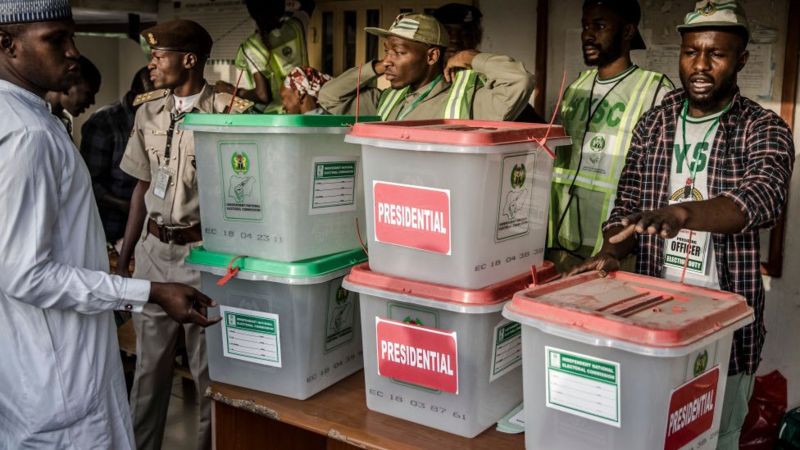
Democratic elections are considered an important mechanism and a powerful tool used to choose political leaders. However, the level of transparency and the safety of votes, the electorates, and the aspirants as recent elections in supposed strong democracies indicate is not a given. Even more, in weak and fragile states, voters grapple with uncertainties including the herculean task of deciding on whom or perhaps what to pledge allegiance to?
Nigerians face such uncertainties as over 93 million voters are set to decide the new leadership of the most populous country in Africa in less than 24 hours. Three contestants: Ahmed Bola Tinubu of the ruling All Progressive Congress (APC); Peter Obi of the Labour Party(LP); and Atiku Abubakar of the Peoples Democratic Party (PSP) are considered the major contestants of the coveted seat of the presidency. All 3 contestants are neither strangers to political power nor free of controversies. Nevertheless, a plethora of problems awaits the successful candidate, including a spiking impatience with government policies from the populace.
Since assuming office in 2015, President Muhammadu Buhari has consciously implemented numerous policies aimed at changing the tide of the crippling economy of Nigeria. One of this was tightening control of foreign exchange and forex restrictions to minimise pressure on the weak exchange rate of the naira against other currencies, and to encourage local manufacturing. Furtherance to this, the government implemented more restrictions including closing all its land borders in August 2019 to curtail smuggling contrabands and to boost agricultural outputs. These policies have been criticised for increasing the hardship of the mostly poor masses and failing to yield desired goals, despite its resulting in an increase in local production of some agricultural products.
The aviation sector and multinational companies were also heavily impacted by the forex restrictions. International airliners were unable to access and repatriate their business funds and profits. As a result, some suspended operations while some multinationals closed down completely. Flawed policy articulation and implementation and a slow or total failure to respond to public disenchantment has been the bane of the 8 years of Buhari regime which ends in a few months. While the masses grappled with surviving movement restrictions during the Covid-19 lockdown, palliative meant for to ease their suffering were hoarded for longer than necessary, thereby provoking series of mass looting and destruction of the storage warehouses.
Demands for action and accountability over police reform also assumed a painful dimension. On 20 October 2020, peaceful protesters demanding the abolishment of a notoriously corrupt, brutal, rogue, and stubborn police unit called SARS were attacked by government forces who killed at least 12 protesters. Incidents as this supports Nigeria’s ranking as an authoritarian regime on the democratic index. Unsurprisingly, the regime appears numb to the spate of violence, insecurity, and recurring killings perpetrated by a complex mix of militias, criminal groups, terrorists, and state institutions as the #EndSARS massacre demonstrates. Thus, a wave of migration among mainly skilled and talented young Nigerians now manifests as a #Japa phenomenon. The two most impacted sectors, health and education ironically supply significant professionals in nations where the political class seek medical treatment or educate their children while neglecting own sectors.
Certainly, the legacy of the Buhari regime would be marred by these challenges which his party presidential candidate and prominent party stalwarts have distanced from. Indeed, they fear electorates would vote against the party as a protest over their suffering. Suffice it that Nigerians lived through the previous year in acute scarcity and non-availability of petroleum products, which further deepened inflation. Currently, cash scarcity is causing untold hardship due to the implementation of a currency redesign and withdrawal limits policy. The timing of the implementation of the policy coincides with the election and is thought to aim at curtailing vote-buying as witnessed in party primary elections. However, there is no guarantee that bank officials would effectively implement the policy.
Thus, as Nigeria decides, the 3 contestants present different realities for the country. For some, voting in the ruling APC candidate who has a questionable history could mean a continuation of the woes endured during the Buhari regime. The PDP candidate who was instrumental in the 2015 election of Buhari has severally been fingered for numerous controversies and corruption, despite having not been prosecuted for any. Similarly, allegations levelled against the LP candidate who has found wide popularity and acceptance amongst the young population has not resulted in any prosecution. However, while the candidate is popular for his anti-establishment stance and desire to change the current system, it is unclear if his party which has no strong political structure, serving governors, or representatives can pull the miracle his campaign has become associated with to win the coveted seat.
Share this:


Policy, procedures, processes, and failure

Examine any organisation and you will find a myriad of policy and procedures that are designed to inform its processes and guide employees. On paper, these formalised ideals and directions make absolute sense but frequently they bear no relationship to reality and rather than empowering, they constrain and often demoralise. These idealistic notions of how an organisation should function facilitate the dehumanising effects of managerial diktat and engender an internalisation of failure amongst employees.
By way of an example, in the 1990s police forces began to consider notions of Standard Operating Procedures (SOPs) in respect of crime investigation. These SOPs seemed on the face of it to be a good idea. The police service, driven by government notions of New Public Management, were being measured on crime reduction and crime detection. Performance indicators were propped up by idealistic notions coming out of government supported by HMIC and the now defunct Audit Commission that catching more criminals would engender a virtuous circle resulting in crime reduction. Nothing of course, was further from the truth. But the introduction of SOPs was meant to attempt to address police failings. These, certainly in one force, were at the outset seen as a guide, a minimum standard required in an investigation. They weren’t intended to constrain.
A small department was set up in this force to measure adherence to these SOPs and to report back where there were inherent failures. For example, on attending a house burglary, the attendant officers were required to take a statement from the householder, and they were required to carry out house to house enquiries in the vicinity. At the very least, they needed to knock on doors either side of the house that had been burgled and a couple of houses across the road. Frequently the statement wasn’t taken, or the house-to-house enquiries hadn’t been completed. It became clear that the officers were failing to carry out simple procedures. Measuring adherence to SOPs and providing feedback to promote improvement soon resulted in measuring adherence in order to enforce compliance.
In hindsight, there should have been a realisation that the SOPs, far from being helpful were in fact having a detrimental effect. Where officers could have carried out further investigations based on their professional judgement, they adhered to the minimum required in the SOPs or simply failed to comply with them fully. This was partially resultant of a notion amongst officers that discretion was being curtailed, but more notably it was driven by other processes and organisational priorities. These other processes were to do with attendance at other incidents. Graded as a priority by the control room, officers were being pulled off the burglary investigation and therefore couldn’t comply with the burglary investigation SOPs. Police forces were also being measured on how quickly they responded to and arrived at various calls for service. There was clearly a direct conflict between management ideals and reality with the officers being set up to fail in one aspect or another. There were simply not enough staff to do all the work and to manage the overwhelming demands at certain times.
One way of dealing with the failures was to link these to the performance and development review (PDR) process. The development aspect was a somewhat redundant term as the PDR was all about performance. Of course, each time the PDR came around the officers had failed to achieve their objectives. This provided lots of evidence of people not doing their job properly. In the wider gamut of crime figures officers at various levels began to realise that the only way to avoid accusations of poor performance was to manipulate the crime figures. In the meantime, those driving the behaviours, washed their hands of them whenever someone was found out, often hiding behind the SOPs and policy. The misuse of the PDR process and the consistent scrutiny of performance metrics resulted in the internalising of failure by staff. Whole systems and processes had been set up to measure failure, after all how could success be measured if it could never be achieved. Of course, it could never be achieved because the ambition and driving force behind this, government’s notions of crime control, were based on ideals and rhetoric not science. But the overriding fact was that it could never be achieved because there were never enough resources to achieve it.
The failure of course wasn’t in the officers that didn’t adhere to the SOPs or those that manipulated crime figures to try to avoid overbearing scrutiny, it was the failure of managers to provide adequate resources. It was a failure of managers to try to understand what reality looked like and it was a failure of managers to deal with the dehumanising effects of policy, procedure and processes.
Having left the police, I thought higher education would somehow be different. I don’t think I need to say anymore.
Share this:


Meet the Team: Helen Trinder, Associate Lecturer in Criminology

My Academic Journey
Two weeks ago, I attended a university reunion. My cohort are now in our late 40s or early 50s but it is remarkable how little we had all changed. Being back in the place where we all studied together put me in reflective mood and that (combined with some timely prompting from Paula) inspired me to share my academic journey.
I was one of those annoying kids who did well at school and knew exactly what they wanted to do. As a small child, I wanted to be a nurse but I later developed an aversion to bodily fluids which made that career choice untenable. I briefly flirted with the idea of being an English teacher, but both of my parents were in education and strenuously tried to dissuade me. So, at the age of about 14, I decided that I wanted to be a prison psychologist. I was in a careers lesson at school, and we had a big green plastic box filled with cards on which were written descriptions of different jobs. I announced that I wanted to be a psychiatrist (I think I was just being provocative) but I couldn’t find “psychiatrist” in the box, so I picked the closest one that I could find: “psychologist”. I read the card and it sounded really interesting, so I decided to find out more about psychology. The more I read, the more interesting I found it, and when I looked into the sorts of settings where I could work as a psychologist, prisons called out to me.
I was very lucky to secure a place to read Experimental Psychology at University College, Oxford in 1990. People have an image of ancient universities as being elitist, but what struck me was the huge diversity of people who were there. They were all clever and had studied hard to achieve their places, but beyond that they came from an enormous range of backgrounds – a far greater variety than I had encountered in my Shropshire comprehensive school. Our tutors worked us extremely hard. We had weekly tutorials, either in pairs or one-to-one, in two modules every term and we had to prepare an essay for each tutorial (two essays a week). In tutorials, we read out, discussed and analysed our essays and the reading on which they were based. There were lectures and practical classes on top of that and we had exams at the beginning of each term to make sure that we hadn’t forgotten anything over the vacations! That’s why I’m sometimes not very sympathetic to students who struggle to read one paper in preparation for a seminar!
At the end of my undergraduate studies, I still wanted to work in prisons but I knew very little about them. My degree had given me an excellent grounding in psychology but I knew little about the study of crime. So I applied to do an M.Phil. at the Institute of Criminology in Cambridge. This gave me an extra year as a full-time student and I thoroughly enjoyed it! I was privileged to be taught by such eminent criminologists as Loraine Gelsthorpe, Alison Liebling and David Farrington. I particularly enjoyed the penology seminars with Nigel West, which I attended just out of interest – I wasn’t taking the assessment in that module! The assessments were all coursework (extended essays and a dissertation) and had to be submitted at the start of each term, so I studied hard in the vacations, and I attended my seminars in term time, but there was also plenty of time for sport and socialising and making the most of my last year as a student!
At that time, HM Prison Service recruited new psychologists once a year through a national assessment centre. I applied in 1994, just after I had submitted my M.Phil. dissertation but I was unsuccessful. I got a job instead at the University of Wales, Swansea, as a research assistant in the Department of Social Policy and Applied Social Studies. I was involved in an evaluation of drug and alcohol treatment centres, funded by the Welsh Office, which employed both quantitative measures and participant observation. When that contract ended, I obtained another contract with Swansea City Council to compile a community profile of a “problem” estate. This required knocking on doors to interview residents, and participant observation in community settings such as the youth club, old people’s bingo sessions and the local pub. It was considered a rather intimidating environment to drop a well-educated 24-year-old English girl into, but I found the residents to be remarkably warm and welcoming and it was a highly rewarding piece of work.
By the time I finished the community profile, I had re-applied to the Prison Service and passed the assessment centre – the interpersonal skills I had developed through my action research had served me well. I had, however, joined the Prison Service at an unfortunate time. There was a recruitment ban in force which meant that although I had passed the psychologist assessment centre, I couldn’t actually secure a job. I was eventually given a temporary contract to collect data at HMP Littlehey for a large-scale research project analysing effective prison regimes. After 10 months of doing this, the recruitment ban was lifted and I was taken on as a prison psychologist, sharing my time between HMP Littlehey and HMP Wellingborough. The Prison Service used to fund a part-time M.Sc. at Birkbeck University, which all newly recruited psychologists undertook. Obtaining a suitably accredited M.Sc., along with completing a satisfactory period of supervised practice, is an essential requirement of becoming a fully qualified “Chartered” psychologist. In another piece of unfortunate timing, the Birkbeck M.Sc. ceased to run just as I joined the service. At first, there was nothing to take its place. However, other universities soon noticed the gap in the market. I, and others in my prison psychology cohort, were relieved when the University of Leicester set up an M.Sc. in Forensic and Legal Psychology by Distance Learning. The Prison Service agreed to pay my fees and my manager allowed a small amount of study leave when assignments were due. Completing a post-graduate degree while working full-time in a demanding job was hard work and I vowed I would never do it again!
I moved to HMP Woodhill in 1998, completed my M.Sc. in 1999 and became a Chartered Psychologist in 2001. At some point after that, I remember receiving a phone call at work from someone called “@manosdaskalou” at, what was then, University College Northampton! I don’t know where he got my number from, but he wanted someone to talk to his third year Forensic Psychology students about the work that psychologists do in prisons. My parents had not completely succeeded in knocking a desire to teach out of me (in fact I probably inherited my urge to educate from them), and my Dad had taught at Northampton when it was Nene College, so I was keen to fulfil the request. The talk became a regular fixture and, after a few years (by which time I was Head of Psychology at HMP Woodhill), we extended it from a single guest lecture to a series of four, to allow me to cover topics such as risk assessment and offending behaviour interventions in more detail.
My son was born in 2008 and I took 12 months maternity leave from the Prison Service. At the end of that time, I didn’t feel ready to go back, so I negotiated a further 12 months career break. I wasn’t ready to return to the full intensity of managing a team in a high security prison, but I did want to keep my brain active. I asked Manos if there were any opportunities to expand my teaching commitments. The University was in the process of setting up a foundation degree in Offender Management, which was aimed primarily at custodial officers at HMP Rye Hill but was also delivered to a small cohort of full-time students. They were short of lecturers to deliver the modules and my offer to help out was eagerly accepted. The terms of my career break meant that I couldn’t earn money from another employer, but a couple of hours a week teaching suited me very well, so I gave my services for free and taught a module on Professional Practice alongside a lecturer with a background in probation, from another university, called Keith Davies.
After a year of this arrangement, HMP Woodhill were unwilling to have me back part-time, so I resigned from the Prison Service and joined the Parole Board as a part-time psychologist member. This allowed me to work much more flexibly and, with a toddler in the family, it suited me well. It also meant that I could have a proper contract with the University of Northampton and I became an associate lecturer in September 2010. Keith had moved to a different job but I continued to teach Professional Practice on the Offender Management degree. There was also a module in Offender Management on “The Psychology of Crime and Criminal Behaviour”. The person who taught this left after a couple of years and I took it over. Returning to basic psychology and teaching it every week was daunting at first, but I really enjoyed going back to what I had learned as an undergraduate and re-discovering how relevant it was to real-life criminal justice.
The arrangement with HMP Rye Hill had never really taken off and the Offender Management degree only ever attracted small numbers of full-time students, so in 2014 the course closed. Manos was keen, however, to incorporate more psychology into the B.A. Criminology course, so we adapted “The Psychology of Crime and Criminal Behaviour” into a first-year criminology module and I’ve been teaching it ever since! I’ve also taught a module on violence and I’ve covered maternity leave and sickness absence in other modules too. My students will have heard me banging on about forensic psychologists being “scientist-practitioners” and I feel that teaching at the University of Northampton has allowed me to fulfil this role. As a practitioner, I have lots of interesting real-life examples to use to illustrate points to my students, but teaching also keeps me up-to-date with research and theory which I can use to inform my practice.
My academic journey continues to take me to new places. My position on the Parole Board was a public appointment with a fixed tenure that came to an end in September 2020. I decided at that point to start a part-time Ph.D. with the University of Birmingham. I had not wanted to go into research straight from my M.Phil. because I felt that, in order to understand people who committed offences, I really needed some direct experience of working with them, but after 24 years as a practitioner, the time seemed right. I am now 18 months into a 6-year part-time degree. I am exploring the role of empathy deficits in violent and sexual offending. Trying to undertake research (which ideally requires access to prisoners) has not been easy during a pandemic and I have faced a number of obstacles but nothing insurmountable yet.
I am still keen to maintain a scientist-practitioner balance, and I need to pay my university fees and make a contribution to the family income, so in February of last year I started working as a Forensic Psychologist at St Andrew’s hospital. I am primarily based on a medium-secure ward for men with learning disabilities. Forensic mental health is a new area of practice for me and, although I have plenty of transferable skills from my previous roles, I have had to adapt to a different approach to the people we work with and a completely new set of jargon.
Reflecting on my academic journey, it is the people that stand out. I think that the most profound learning has taken place when I have been able to engage with experts who have shared their enthusiasm. In this respect, my undergraduate tutorials and M.Phil. seminars contrast with my distance learning M.Sc., which was a means of obtaining a qualification rather than an immersive learning experience. I hope that, as a practitioner who also teaches, I have been able to share some of my enthusiasm for forensic psychology with my own students. In order to benefit from this, however, students need to take up the opportunity to engage fully with teaching and not just see their university experience as a means to a qualification. Of course, COVID has not helped this, and the university’s penchant for remote learning placed it in a good position to maintain teaching when the pandemic struck. But it is very difficult to engage students when they are just names on a screen. I hope that, as we return to more face-to-face teaching, I can once again inspire my students, not just to pass their exams but to develop a life-long fascination for understanding criminal behaviour and the people that perpetrate it.
Helen Trinder, M.A., M.Phil., M.Sc., C.Psychol.
Forensic Psychologist and Associate Lecturer


 Thoughts from the criminology team
%3Amax_bytes(150000)%3Astrip_icc()%3Afocal(749x0%3A751x2)%2Fsimone-biles-hair-paris-heatwave-073024-tout-52887c1302ff465d8797f003c452ecba.jpg&imgrefurl=https%3A%2F%2Fpeople.com%2Fsimone-biles-claps-back-people-commenting-hair-amid-2024-paris-olympics-heatwave-8685988&docid=8zbppZtCkxUTxM&tbnid=VEKrr21i-NVrWM&vet=12ahUKEwj_0LS80-WHAxV2UkEAHZ8GAGkQM3oECF0QAA..i&w=1500&h=1000&hcb=2&ved=2ahUKEwj_0LS80-WHAxV2UkEAHZ8GAGkQM3oECF0QAA)