
Home » Poverty
Category Archives: Poverty

Reform: The New Opposition, or an Uncomfortable Hiccup in British Politics

British politics is particularly interesting at the moment, as no one is really sure if we are witnesses to a radical change or if Reform will fizzle out and be a distant memory within 10 years or so (here’s hoping). I’m here to bounce some ideas around, think about the current political climate and just put out some comments about what’s going on. I’m hoping to keep at least light, and possibly short.
It’s structured as starting off with some points that are to Reform’s advantage, including the national political climate. It continues to some things working against Reform, including its sustainability. Considering how Reform has managed to gain such support is kind of weaved into the middle and briefly mentioned at the end.
The Political Climate: Inside the UK
Populism is on the rise, restriction of human rights is increasing and people seem to be getting angrier and more frustrated about politics. On a national level, there is a plethora of individuals who are disillusioned with modern day politics and seeking simple answers to big issues quickly and, unfortunately, right wing populism fills this gap perfectly.
Immigration problems? Ban them and deport them.
Crime problems? Give longer and harsher sentences.
Have a problem with the elite? Let Nigel speak up for the British People and let common sense prevail.
They’re easily digestible, easily understandable solutions to big societal issues and that definitely appeals to people.

We can easily dismiss supporters of any right wing populist party as incorrect, immoral and uneducated. But it is really not as simple as that. When an attractive left wing party is not there to foster a society which is genuinely has the interests of the working class at it’s heart, we open the door for right wing populism to scoop up the working class electorate. Indeed, we can’t totally blame the current ‘Labour’ government for the increase in Reform UK voters, as we can see trends of right wing populism globally, but we can definitely think about whether these UK voters would have gone to Reform UK if Labour was offering a better solution. A solution which had working class people front and centre, providing meaningful change such as education reform, anti-poverty initiatives, workers rights focuses, renationalisation policies and council house stock rebuilding. What we are possibly seeing here are voters with no party to call home, frustrated and without answers, so they seek these things in easily digestible populist parties.
Sustainability: Party Identity and Hypocrisy
Perhaps Reform UK’s biggest stumbling block, in my opinion, is its internal contradictions and its lack of preestablished identity as a party.
The internal contradictions are simple and obvious. Reform UK prides itself on being anti- elitist and anti-establishment but the party is lead by a millionaire bankrolled by aristocrats with a private education. Right wing populist parties are simply an extension of the elite and the establishment; an obvious conclusion if you dig even slightly under the surface. Surely this hypocrisy will be called out soon and listened to?
A slightly more long winded pitfall in the Reform Party (among many others) is its lack of party identity. Labour and even the Tories can rely at least slightly on their voters who vote for them because they always have, because of nostalgia for what the party used to be, because they’re a traditional party. Reform don’t have this. And not only this, but they don’t really have any developed policies; the Conservatives have the idea of low taxes, competitive markets, low regulation. Traditional Labour have higher taxes, redistribution of wealth, working class empowerment, nationalisation. and Reform have…? Immigration freezes, law and order and ‘taking the country back’. I’m not sure if their party identity and policies will keep their momentum moving to the next general election.
However, I do think that if they are able to maintain their momentum and get to the election they may go far, and may possibly overtake the Tories. But I think it rests on two things 1) momentum going into the next election and 2) No proper left wing alternatives emerging between now and then. Unfortunately I think number two is already certain.
The title of this blog, is a sort of tongue in cheek title. I do understand how dire this could be should Reform become positioned as the official opposition. For many people around the UK the effects of pandering to right wing populist racist rhetoric has already been experienced, and it will only get worse if Reform continue to gain popularity. Remember to vote, be politically engaged and speak up, we as young people have a huge role to play as our turn out is generally so low.
Images from https://www.reformparty.uk/ and https://tribunemag.co.uk/2024/07/the-anti-elite-elites-reform-far-right
Share this:

LET THEM EAT SOUP

Introduction
What is a can of soup? If you ask a market expert, it is a high-profit item currently pushing £2.30 (branded) in some UK shops[i]. If you ask a historian[ii], it is the very bedrock of organised charity-the cheapest, easiest way to feed a penniless and hungry crowd.
The high price of something so basic, like a £2.30 can of soup, is a massive conundrum when you remember that soup’s main historical job was feeding poor people for almost nothing. Soup, whose name comes from the old word Suppa[iii](meaning broth poured over bread), was chosen by charities because it was cheap, could be made in huge pots, and best of all could be ‘stretched’ with water to feed even more people on a budget[iv].
In 2025, the whole situation is upside down. The price of this simple food has jumped because of “massive economic problems and big company greed[v]. At the same time, the need for charity has exploded with food bank use soaring by an unbelievable 51% compared to 2019[vi]. When basic food is expensive and charity is overwhelmed, it means our country’s safety net is broken.
For those of us who grew up in the chilly North, soup is more than a commodity: it is a core memory. I recall winter afternoons in Yorkshire, scraping frost off the window, knowing a massive pot of soup was bubbling away. Thick, hot and utterly cheap. Our famous carrot and swede soup cost pennies to make, tasted like salvation and could genuinely “fix you.” The modern £2.30 price tag on a can feels like a joke played on that memory, a reminder that the simplest warmth is now reserved for those who can afford the premium.
This piece breaks down some of the reasons why a can of soup costs so much, explores the 250-year-old long, often embarrassing history of soup charity in Britain and shows how the two things-high prices and huge charity demand-feed into a frustrating cycle of managed hunger.
Why Soup Costs £2.30
The UK loves its canned soup: it is a huge business worth hundreds of millions of pounds every year[vii], but despite being a stable market, prices have been battered by outside events.
Remember that huge cost of living squeeze? Food inflation prices peaked at 19.1% in 2023, the biggest rise in 40 years[viii]. Even though things have calmed down slightly, food prices jumped again to 5.1% in August 2025, remaining substantially elevated compared to the overall inflation rate of 3.8% in the same month[ix]. This huge price jump hits basic stuff the hardest, which means that poor people get hurt the most.
Why the drama? A mix of global chaos (like the Ukraine conflict messing up vegetable oil and fertiliser supplies) and local headaches (like the extra costs from Brexit) have made everything more expensive to produce[x].
Here’s the Kicker: Soup ingredients themselves are super cheap. You can make a big pot of vegetable soup at home for about 66p a serving, but a can of the same stuff? £2.30. Even professional caterers can buy bulk powdered soup mix for just 39p per portion[xi].
The biggest chunk of that price has nothing to do with the actual carrots and stock. It’s all the “extras”. You must pay for- the metal can, the flashy label and the marketing team that tries to convince you this soup is a “cosy hug”, and, most importantly everyone’s cut along the way.
Big supermarkets and shops are the main culprits. They need a massive 30-50% profit margin on that can for just putting it on the shelf[xii]. Because people have to buy food to live (you can’t just skip dinner) big companies can grab massive profits, turning something that you desperately need into something that just makes them rich.
This creates the ultimate cruel irony. Historically, soup was accessible because it was simple and cheap. Now, the people who are too busy, too tired or too broke to cook from scratch-the working poor are forced to buy the ready-made cans[xiii]. They end up paying the maximum premium for the convenience they need most, simply because they don’t have the time or space to do it the cheaper way.
How Charity Got Organised
The idea of soup as charity is ancient, but the dedicated “soup kitchen” really took off in late 18th century Britain[xiv].
The biggest reasons were the chaos after the Napoleonic wars and the rise of crowded industrial towns, which meant that lots of people had no money if their work dried up. By 1900 England had gone from a handful of soup kitchens to thousands of them[xv].
The first true soup charity in England was likely La Soupe, started by Huguenot refugees in London in the late 17th Century[xvi]. They served beef soup daily-a real community effort before the phrase “soup kitchen” was even popular.
Soup was chosen as the main charitable weapon because it was incredibly practical. It was cheap, healthy and could be made in enormous quantities. Its real superpower was that it could be “stretched” by adding more water allowing charities to serve huge numbers of people for minimum cost[xvii].
These kitchens were not just about food; they were tools for managing poor people. During the “long nineteenth century” they often fed up to 30% of a local town’s population in winter[xviii]. This aid ran alongside the stern rules of the Old Poor Laws which sorted people into “deserving” (the sick or old) and the ‘undeserving’ (those considered lazy).
The queues, the rules, and the interviews at soup kitchens were a kind of “charity performance” a public way of showing who was giving and who was receiving, all designed to reinforce class differences and tell people how to behave.
The Stigma and Shame of Taking The Soup
Getting a free bowl of soup has always come with a huge dose of shame. It’s basically a public way of telling you “We are the helpful rich people and you are the unfortunate hungry one” Even pictures in old newspapers were designed to make the donors look amazing whilst poor recipients were closely watched[xix].
Early British journalists like Bart Kennedy used to moan about the long, cold queues and how staff would ask “degrading questions” just before you got your soup[xx]. Basically, you had to pass a misery test to get a bowl of watery vegetables, As one 19th Century writer noted, the typical soup house was rarely cleaned, meaning the “aroma of old meals lingers in corners…when the steam from the freshly cooked vegetables brings them back to life”[xxi].
For the recipient, the act of accepting aid became a profound assault on their humanity. The writer George Orwell, captured this degradation starkly, suggesting that a man enduring prolonged hunger “is not a man any longer, only a belly with a few accessory organs”[xxii]. That is the tragic joke here, you are reduced to a stomach that must beg.
By the late 19th Century, people started criticising soup kitchens arguing that they “were blamed for creating the problem they sought to alleviate”[xxiii]. The core problem remains today: giving someone a temporary food handout is just a “band-aid” solution that treats the symptom but ignores the real disease i.e. not enough money to live on.
This critique was affirmed during the Great Depression in Britain, when mobile soup kitchens and dispersal centres became a feature of the British urban landscape[xxiv]. The historical lesson is clear: private charity simply cannot solve a national economic disaster.
The ultimate failure of the system as the historian A.J.P. Taylor pointed out is that the poor demanded dignity. “Soup kitchens were the prelude to revolution, The revolutionaries might talk about socialism, those who actually revolted wanted ‘the right to work’-more capitalism, not it’s abolition[xxv]” They wanted a stable job, not perpetual charity.
Expensive Soup Feeds The Food Bank
The UK poverty crisis means that 7.5 million people (11% of the population) were in homes that did not have enough food in 2023/24[xxvi]. The Trussell Trust alone gave out 2.9 million emergency food parcels in 2024/2025[xxvii]. Crucially, poverty has crept deeper into the workforce: research indicates that three in every ten people referred to in foodbanks in 2024 were from working households[xxviii]. They have jobs but still can’t afford the supermarket prices.
The charities themselves are struggling, hit by a “triple whammy” of rising running costs (energy, rent) and fewer donations[xxix]. This means that many charities have had to cut back, sometimes only giving out three days food instead of a week[xxx]. The safety net in other words is full of holes.
The necessity of navigating poverty systems just to buy food makes people feel trapped and hopeless which is a terrible way to run a country[xxxi].
Modern food banks are still stuck in the old ways of the ‘deserving poor.’ They usually make you get a formal referral—a special voucher—from a professional like a doctor, a Jobcentre person, or the Citizens Advice bureau[xxxii].It’s like getting permission from three different people to have a can of soup.
Charity leaders know this system is broken. The Chief Executive of the Trussell Trust has openly said that food banks are “not the answer” and are just a “fraying sticking plaster[xxxiii].” The system forces a perpetual debate between temporary relief and systemic reform[xxxiv]. The huge growth of private charity, critics argue, just gives the government an excuse to cut back on welfare, pretending that kind volunteers can fix the problem for them[xxxv].
The final, bitter joke links the expensive soup back to the charity meant to fix the cost. Big food companies use inflation to jack up prices and boost profits. Then, they look good by donating their excess stock—often the highly processed, high-profit stuff—to food banks.
This relationship is called the “hunger industrial complex”[xxxvi]. The high-margin, heavily processed canned soup—the quintessential symbol of modern pricing failure—often becomes a core component of the charitable food parcel. The high price charged for the commodity effectively pays for the charity that manages the damage the high price caused[xxxvii]. You could almost call it “Soup-er cyclical capitalism.”
Conclusion
The journey from the 18th-century charitable pot to the 21st-century £2.30 can of soup shows a deep failure in our society. Soup, the hero of cheap hunger relief, has become too pricey for the people who need it most. This cost is driven by profit, not ingredients.
This pricing failure traps poor people in expensive choices, forcing them toward overwhelmed charities. The modern food bank, like the old soup kitchen, acts as a temporary fix that excuses the government from fixing the root cause: low income. As social justice campaigner Bryan Stevenson suggests, “Poverty is the parent of revolution and crime”[xxxviii]. No amount of £2.30 soup can mask the fact that hunger is fundamentally an issue of “justice,” not merely “charity”.
Fixing this means shifting focus entirely. We must stop just managing hunger with charity[xxxix] and instead eliminate the need for charity by making sure everyone has enough money to live and buy their own food. This requires serious changes: regulating the greedy markups on basic food and building a robust state safety net that guarantees a decent income[xl]. The price of the £2.30 can is not just inflation: it’s a receipt for systemic unfairness.
[i]Various Contributors, ‘Reddit Discussion on High Soup Prices’ (Online Forum, 2023) https://www.reddit.com/r/CasualUK/comments/1eooo3o/why_has_soup_gotten_so_expensive
[ii] Philip J Carstairs, ‘A generous helping? The archaeology of Soup Kitchens and their role in post-medieval philanthropy 1790-1914 (PhD Thesis, University of Leicester 2022) https://figshare.le.ac.uk/articles/thesis/A_generous_helping_The_archaeology_of_soup_kitchens_and_their_role_in_post-medieval_philanthropy_1790-1914/21187117?file=37564186
[iii] Soup – etymology, origin & meaning[iii] https://www.etymonline.com/word/soup
[iv] Philip J Carstairs, ‘A generous helping? The archaeology of soup kitchens and their role in post-medieval philanthropy 1790–1914’ (Summary, University of Leicester 2022)(https://figshare.le.ac.uk/articles/thesis/A_generous_helping_The_archaeology_of_soup_kitchens_and_their_role_in_post-medieval_philanthropy_1790-1914/21187117)
[v] ONS, ‘Food Inflation Data, UK: August 2025’ (Trading Economics Data) https://tradingeconomics.com/united-kingdom/food-inflation
[vi] The Trussell Group-End Of Year Foodbank Stats
https://www.trussell.org.uk/news-and-research/latest-stats/end-of-year-stats
[vii] GlobalData, ‘Ambient Soup Market Size, Growth and Forecast Analytics, 2023-2028’ (Market Report, 2023) https://www.globaldata.com/store/report/uk-ambient-soup-market-analysis/
[viii] ONS, ‘Consumer Prices Index, UK: August 2025’ (Summary) https://www.ons.gov.uk/economy/inflationandpriceindices
[ix] Food Standards Agency, ‘Food System Strategic Assessment’ (March 2023) https://www.food.gov.uk/research/food-system-strategic-assessment-trends-and-issues-impacted-by-uk-economic-condition
[x] Wholesale Soup Mixes (Brakes Foodservice) https://www.brake.co.uk/dry-store/soup/ambient-soup/bulk-soup-mixes
[xii] A Semuels, ‘Why Food Company Profits Make Groceries Expensive’ (Time Magazine, 2023) https://time.com/6269366/food-company-profits-make-groceries-expensive/
[xiii] Christopher B Barrett and others, ‘Poverty Traps’ (NBER Working Paper No. 13828, 2008) https://www.nber.org/system/files/chapters/c13828/c13828.pdf
[xiv] Philip J Carstairs, ‘A generous helping? The archaeology of soup kitchens and their role in post-medieval philanthropy 1790–1914’ (Summary, University of Leicester 2022)(https://figshare.le.ac.uk/articles/thesis/A_generous_helping_The_archaeology_of_soup_kitchens_and_their_role_in_post-medieval_philanthropy_1790-1914/21187117
[xv] Philip J Carstairs, ‘A generous helping? The archaeology of soup kitchens and their role in post-medieval philanthropy 1790–1914’ (Summary, University of Leicester 2022)(https://figshare.le.ac.uk/articles/thesis/A_generous_helping_The_archaeology_of_soup_kitchens_and_their_role_in_post-medieval_philanthropy_1790-1914/21187117
[xvi] The Soup Kitchens of Spitalfields (Blog, 2019) https://spitalfieldslife.com/2019/05/15/the-soup-kitchens-of-spitalfields/
[xvii] Birmingham History Blog, ‘Soup for the Poor’ (2016) https://birminghamhistoryblog.wordpress.com/2016/02/04/soup-for-the-poor/
[xviii] [xviii] Philip J Carstairs, ‘A generous helping? The archaeology of soup kitchens and their role in post-medieval philanthropy 1790–1914’ (Summary, University of Leicester 2022)(https://figshare.le.ac.uk/articles/thesis/A_generous_helping_The_archaeology_of_soup_kitchens_and_their_role_in_post-medieval_philanthropy_1790-1914/21187117
[xix] Journal Panorama, ‘Feeding the Conscience: Depicting Food Aid in the Popular Press’ (2019) https://journalpanorama.org/article/feeding-the-conscience/
[xx] Journal Panorama, ‘Feeding the Conscience: Depicting Food Aid in the Popular Press’ (2019) https://journalpanorama.org/article/feeding-the-conscience/
[xxi] Joseph Roth, Hotel Savoy (Quote on Soup Kitchens) https://www.goodreads.com/quotes/tag/soup-kitchens
[xxii] Convoy of Hope, (Quotes on Dignity and Poverty) https://convoyofhope.org/articles/poverty-quotes/
[xxiii] Philip J Carstairs, ‘A generous helping? The archaeology of soup kitchens and their role in post-medieval philanthropy 1790–1914’ (Summary, University of Leicester 2022)(https://figshare.le.ac.uk/articles/thesis/A_generous_helping_The_archaeology_of_soup_kitchens_and_their_role_in_post-medieval_philanthropy_1790-1914/21187117
[xxiv] Science Museum Group, ‘Photographs of Poverty and Welfare in 1930s Britain’ (Blog, 2017) https://blog.scienceandmediamuseum.org.uk/photographs-of-poverty-and-welfare-in-1930s-britain/
[xxv] AJ P Taylor, (Quote on Revolution) https://www.goodreads.com/quotes/tag/soup-kitchens
[xxvi] House of Commons Library, ‘Food poverty: Households, food banks and free school meals’ (CBP-9209, 2024) https://commonslibrary.parliament.uk/research-briefings/cbp-9209/
[xxvii] Trussell Trust, ‘Factsheets and Data’ (2024/25) https://www.trussell.org.uk/news-and-research/latest-stats/end-of-year-stats
[xxviii] The Guardian, ‘Failure to tackle child poverty UK driving discontent’ (2025) https://www.theguardian.com/society/2025/sep/10/failure-tackle-child-poverty-uk-driving-discontent
[xxix] Charity Link, ‘The cost of living crisis and the impact on UK charities’ (Blog) https://www.charitylink.net/blog/cost-of-living-crisis-impact-uk-charities
[xxxi] The Soup Kitchen (Boynton Beach), ‘History’ https://thesoupkitchen.org/home/history/
[xxxii] Transforming Society, ‘4 uncomfortable realities of food charity’ (Blog, 2023) https://www.transformingsociety.co.uk/2023/12/01/4-uncomfortable-realities-of-food-charity-power-religion-race-and-cash
[xxxiii] The Trussell Group-End Of Year Foodbank Stats
https://www.trussell.org.uk/news-and-research/latest-stats/end-of-year-stats
[xxxiv] The Guardian, ‘Food banks are not the answer’ (2023) https://www.theguardian.com/society/2023/jun/29/food-banks-are-not-the-answer-charities-search-for-new-way-to-help-uk-families
[xxxv] The Guardian, ‘Britain’s hunger and malnutrition crisis demands structural solutions’ (2023) https://www.theguardian.com/uk-news/commentisfree/2023/dec/27/britain-hunger-malnutrition->
[xxxvi] Jacques Diouf, (Quote on Hunger and Justice, 2007) https://www.hungerhike.org/quotes-about-hunger/
[xxxvii] Borgen Magazine, ‘Hunger Awareness Quotes’ (2024) https://www.borgenmagazine.com/hunger-awareness-quotes/
[xxxviii] he Guardian, ‘Failure to tackle child poverty UK driving discontent’ (2025) https://www.theguardian.com/society/2025/sep/10/failure-tackle-child-poverty-uk-driving-discontent
[xxxix] Charities Aid Foundation, ‘Cost of living: Charity donations can’t keep up with rising costs and demand’ (Press Release, 2023) https://www.cafonline.org/home/about-us/press-office/cost-of-living-charity-donations-can-t-keep-up-with-rising-costs-and-demand
[xl] The “Hunger Industrial Complex” and Public Health Policy (Journal Article, 2022) https://pmc.ncbi.nlm.nih.gov/articles/PMC9437921/
Share this:


Cost of Living Crisis: Don’t worry it’s the Sovereign’s Birthday!*

On Saturday 31st May 2025, on Wellington Arch there was an increased presence of police. It was a sunny, albeit windy day in central London, and lots of people (tourists and locals) raised questions around why there appeared to be an increased police presence on this final Saturday of the May half term. At around 1pm approximately, what appeared to be hundreds of uniformed royal officers on horseback paraded through Wellington Arch into Hyde Park. They appeared to have come from Buckingham Palace. It was quite a sight to see! Every Sunday, there is a small parade, known as Changing of the Guard, but this was a substantially bigger ordeal. There is usually 2/3 police bikes that escorts the parade on the Sunday but not the numbers of Police (vans, bikes and officers) out on this sunny Saturday. It is over quickly, but the amount of people power, and I would imagine money, this has used seems quite ridiculous.
It turns out the large parade on May 31st was a ‘practice run’ for the Trooping of the Colour, which will occur on Saturday 15th June 2025. The Trooping of the Colour marks the ‘official’ birthday of the British Soverign and has done so for over 260years (Royal Household, 2025). It involves “Over 1400 parading soldiers, 200 horses and 400 musicians […] in a great display of military precision, horsemanship and fanfare to mark the Sovereign’s official birthday” (Royal Household, 2025). Having seen this every year, it is quite a spectacle and it does generate a buzz and increase in tourism to the area every year. I know the local small businesses in the surrounding areas are grateful for the increase in people, and it draws tourists in globally to view which generates money for the economy. But given the poverty levels visibly evident in London (not to mention those which are hidden), is this a suitable spend of money? Add on the more alarming issues with the monarchy and what it represents steeped in the clutches of empire and fostering hierarchies and inequalities, should this ‘celebration’ still be occurring? It’s the ‘Official’ Birthday of the Sovereign, but how many Birthdays does one need?
According to a Freedom of Information Request, the Ministry of Defence claimed in 2021, the Trooping of the Colour cost taxpayers around £60,000 (not the cost of the event, as there would have been other monies attached to funding this). Imagine what good this money could do: the people it could feed, the people it could provide shelter for, the medical treatment or research it could fund! Given this was 2021, I am going to hazard a guess that in 2025 this is going to cost significantly more. And for what? The Monarchy is the visual embodiment of empire, and according to the National Centre of Social Research, support for and interest in the Monarchy has been steadily declining for the past decade (NCSR, 2025). So even if people choose to ignore the horrific past of the British Sovereigns, it would appear that many are not interested in the Monarchy, regardless of its history (NCSR, 2025). I am aware the Royal family, and these ‘celebrations’, bring in income and generates global interest which translates to the argument that having a Monarchy is ‘economically viable’, but when you look at the disadvantage elsewhere, especially in London, its hard not to question clinging on to such traditions and the expense of meeting people’s basic needs. There is no critical consideration of what maintaining these traditions might suggest, or how they might impact those most effected by the British Empire and Colonialism. So why are these ‘celebrations’ persisting, and why are they having a practice run when steps away from them, in the underpass by Hyde Park Tube station there are people sleeping rough and begging for food? It feels as though there is a serious disconnect between what society needs (affordable homes, food, reasonable living wage, rehabilitation programmes, support and care) and what society will get (a glorified Birthday party for the ‘British Sovereign’).
*Note: the title of the blog should be read dripping in sarcasm.
References:
The National Centre for Social Research (2024) British Social Attitudes: Support for the Monarchy Falls [online]. Available at: https://natcen.ac.uk/news/british-social-attitudes-support-monarchy-falls-new-low [Accessed 4th June 2025].
The Royal Household (2025) What is Trooping the Colour? [Online]. Available at: https://www.royal.uk/what-is-trooping-the-colour#:~:text=The%20Trooping%20of%20the%20Colour,mark%20the%20Sovereign’s%20official%20birthday [Accessed 4th June 2025].
Share this:


Extortionate Concert Tickets and the Cost of Access

In the realm of live music, few things can compare to the amazing feeling of a packed venue, a beloved band, and the shared energy of thousands of fans singing in unison. But for many, especially those from lower socio-economic backgrounds, this dream remains frustratingly out of reach not due to lack of passion, but because of skyrocketing ticket prices driven by monopolized ticketing systems. Using the example of the band Oasis and their upcoming tour.
The recent announcement of Oasis’ long-awaited reunion concerts sent shockwaves through the music world; particularly for fans who have waited over a decade to hear some of their classic songs sung live again. The excitement was quickly tempered by the reality of ticket prices and the process of getting tickets. Standard Oasis tickets before any premium charges were reportedly being resold for upwards of £300, with official prices starting around £75. For a band rooted in working-class Manchester, the irony is stark: the people who Oasis originally resonated with most are now priced out of seeing them live. Oasis is just an example of this, this can be seen with many different artists globally, and it raises a question of should something be done, and if so, who needs to make the first step and what should that first step be?
At the heart of this issue are ticketing giants who dominate the live event landscape. These companies often employ dynamic pricing models similar to airline pricing where ticket prices fluctuate based on demand. In theory, this aims to reflect market value. In practice, it frequently drives up costs to exploit fan enthusiasm, creating a system that prioritizes profit over accessibility. Worse still, these companies allow and often profit from reselling schemes that further inflate prices. It is only recently where some sites have now put procedures in place for tickets to be resold at the same value to which they were purchased. Additionally, there is the issue of bots buying hundreds of tickets during presales then relisting them on other sites for extortionate prices.
Now to put it into perspective, are there more pressing issues globally that need to be addressed, the answer is yes. However, in the world of criminology where we are constantly thinking about harm, what should be a crime or criminalised, it poses an interesting question and debate. The consequences are significant, particularly for lower-income individuals. Live music, once a unifying and accessible cultural experience, has become a luxury. For a working-class fan, spending £300 on a single concert excluding travel, accommodation, and other costs is unlikely. Add to this the current economic constraints they may be facing elsewhere, and it makes it even more unlikely.
In a world where there are so many pressures, restrictions, worries and concerns, music can be a form of escape and enjoyment. So, should ticket companies be held more accountable? Should there be stronger regulations to prevent price gouging and limit resale abuses? Governments could enforce price caps, mandate transparent pricing structures, or require a certain percentage of tickets to be sold at accessible prices. Additionally, artists themselves may have a role to play; by partnering with ethical ticket vendors or pushing for more equitable ticket distribution. I managed to get tickets at face value price after trying for the third time recently, this was through a process of receiving a unique code via email as a result of being identified as one of the many who had failed on previous occasions. In this sense, I may be classed as one of the lucky ones.
Oasis, a band that once embodied the voice of working-class Britain, now symbolizes a broader issue: the commercialisation of joy. Music should transcend economic boundaries rather than reinforcing them.
Share this:


A Love Letter: in praise of board games
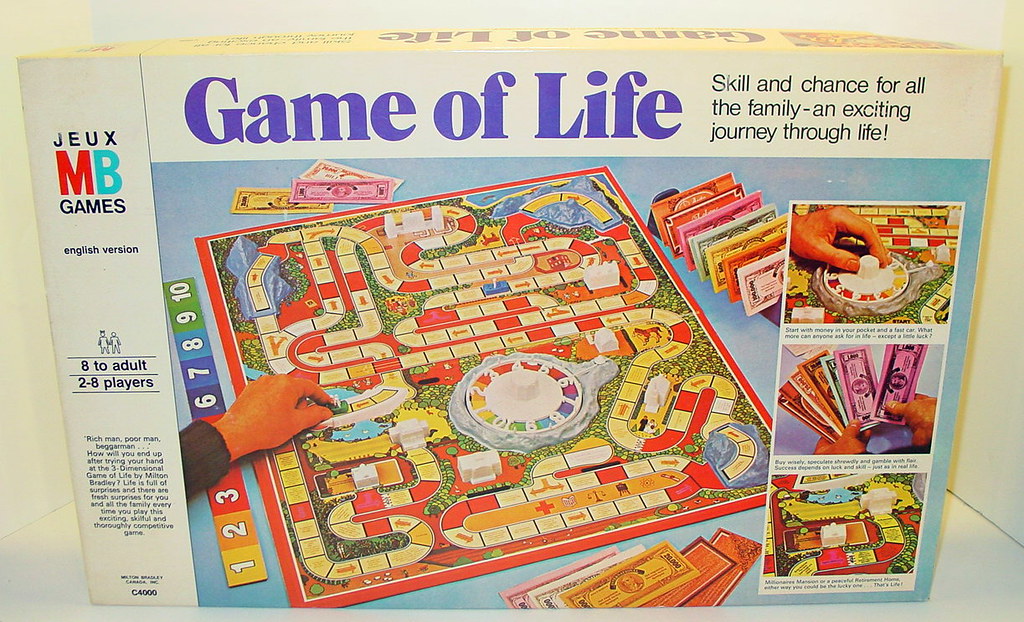
This my fifth love letter, previously I have written in praise of poetry, art, Agatha Christie and the Thoughts from the Criminology Team blog. Since early childhood, I have loved playing games and today’s entry is dedicated to this form of media. In the early years, the focus on fun is paramount, after all who wants to play a dull game? Equally important, the educational aim of games is sometimes explicit, other times less so. Nevertheless, they help us learn to match and sort colours and shapes, to develop our counting skills in an applied setting and improve our memory recall, as well as spelling. Games likes Snap, Happy Families, Hungry Hippos, Snakes and Ladders, Guess Who, Junior Scrabble offer a variety of different ways for children to learn important skills whilst playing. These games enable even very small children to share space, develop important interpersonal skills like taking turns and learn to deal with winning, and of course, losing. Often the latter is a very slow and painful lesson to learn….and one that isn’t always remembered into adulthood!
Of course, one of the most explicit part of playing games is learning the rules of the game, and of course, what happens when we deviate from those rules. It might lead to the loss of a turn or even forfeiture of the entire game. People interpret rules in different ways and families often develop their own “house” rules, but nevertheless there is always an agreed upon set of rules and a way of policing and punishing those who break them.
But once these lessons have been learned, what do games have to teach us as adults? I would say plenty! On a surface level, they offer an opportunity to relax and do something outside of our humdrum lives. Once the games have been purchased, they generally cost nothing to play unlike other forms of leisure time.1 Some can be played alone, others require competitors or even teams. They can aid our thinking, concentration and develop skills of strategy and tactics. They also have the general benefit of not being all consuming (unless at competition level), allowing for conversation to flow. The latter, conversing whilst doing something else, can often be useful for difficult emotional conversations, allowing people to open up without pressure (known colloquially as “health by stealth”).
But do board games have anything to offer to Criminology? Again, I would argue yes! Most games involve chance or luck, will you get the numbers you need, will you have the right pieces/cards in your hand, will the other person play their game in a way that benefits you? It is easy to recognise the role that luck or chance plays in games, but are we equally aware of their role in our lives. More importantly, as criminologists do we fully understand and acknowledge the role played by both in relation to criminality and victimisation?
We have no choice about whether we are born or not, when and where we arrive on the earth, who our parents are. These are all down to forces outside our individual and collective control. Our upbringing, our education, our employment opportunities are largely constrained by geography, money and influence. Compare the opportunities available to a baby born today in Sudan, with one born in the UK, another born in Palestine, and another born in Finland. Compare again, thinking about race, sex, class, disability, sexuality and so on. Very quickly you begin to understand the role played by chance and luck.
So if all of the above are imponderables, how much of a role does luck play in relation to criminality and victimisation? The regular publication of data relating to crime in postcodes, towns/cities and globally show huge diversity in the chance of victimisation. Lucky you, if you were born and live in the ‘Nordic countries of Europe (Norway, Sweden, Denmark, Iceland, and Finland) who rank among the 25 safest globally, most of them also being among the top 10 happiest nations worldwide’. Less fortunate, if you were born in Haiti, Ukraine, Palestine, Sudan or Iraq identified as some of the most dangerous places on earth currently. It is not very difficult to imagine the difference in opportunities in fundamental human rights; food, shelter, healthcare, education and so on. In war ridden nations it is incredibly difficult to separate different typologies of victimisation and for the individuals living under these conditions, it makes no meaningful difference who is/are the perpetrators.
Even if you are living in a “peaceful” state2 such as the UK, there are vast differences in the opportunities available. If you have money you can buy a car to get to work in your evening/night job, if you don’t, maybe you can take a bus, failing that you can walk. Each of those journeys carries its own risks. Your sex, your race, your ethnicity, your sexuality, your abilities/disabilities, your age add the aggravating/mitigating factors and see your risk increase/decrease. All a matter of chance and luck
What about criminality, is this, as the Classical School of Criminology would have us accept, a matter of free will, weighing up the pros and cons and making a deliberate and calculating choice to commit crime? Or can we also identify the same issues of luck and chance as shown above? If your family is loving, everyone has good health, housing is secure, food is plentiful and there are plenty of educational and employment opportunities in your area, would you still choose a life of crime? If there is violence at home, poverty impacts health, housing and regular meals, making it challenging to study or work, would you perceive crime to be a choice?
And what of those board game rules and consequences, real life has its own rules, some written in the forms of laws, others engrained via family, friends, institutions; the norms of our society. In the board game, these rules apply equally (aside from luck and chance) but in real life, not so much. Consider racial and ethnic disproportionality and the treatment of vulnerable women in the CJS, as just two examples. We may all be playing in the same “Game of Life”, but luck, chance and the rules we are subjected to are very different when it comes to criminality and victimisation.
- I appreciate that there are some very expensive board games out there, as well as expansion packs to enhance play. ↩︎
- There are lots of academic arguments around what constitutes a peaceful state, most agree that it more than just the absence of war. Whilst the UK has not seen active warfare on its shores for decades, its military has been involved in conflict throughout the world for more than a century. ↩︎
Share this:


Labour’s Winter Fuel Allowance Cut: Austerity 2.0 and the need for De-commodification?

Last week, the Government voted as an overwhelming majority to scrap the winter fuel allowance. This has been met with fierce backlash from critics, particularly Labour MP Zara Sultana who stated her removal of taking part in ‘Austerity 2.0’. Meanwhile, in Prime Minister Questions, Kier Starmer defended the decision by referring to the ’22-billion-pound black hole’ that was left by the former Conservative Government (See Amos, 2024). This policy decision will mean that pensioners and vulnerable social groups across the UK will face a loss of financial support to pay for the ever-rising energy costs, particularly over the coming winter months. The health implications and fears onto those who will be affected were reported widely by critics. For example, Labour MP Rosie Duffield represented her constituents, some of whom were cancer patients who were severely worried about keeping warm this coming winter and relied on the winter fuel allowance as a reliable source of financial support (Lavelle, 2024).
This latest move initiated by Starmer’s Labour Government is primarily justified through the need for temporary acts of austerity, to balance the books and reduce the national debt and deficit which according to Starmer’s speech at the latest Prime Minister’s Questions now sits at over twenty billion.
A fundamental question here is not of the need for action to reduce the national deficit…. rather the question is- who should foot the bill? Latest figures show that within the same time as when the country scraps the winter fuel allowance, According to Race and Jack (2024), major energy companies such as British Gas announced its profits for 2023 has increased ten-fold to £750 million with the profits forecast to soar higher at the end of this year. There are calls by some politicians, including Zara Sultana to introduce a windfall tax that will put a cap on the gross profits gained by energy companies and large-scale businesses, through which these taxes can be put into public infrastructure, services, and spending. A common counterargument here however is how these businesses and corporations will remove themselves from the UK and situate themselves in alternative global markets, that through globalisation and free-market economy principles has become easier.
The scrapping of the winter fuel allowance demonstrates how under economic crisis, it is communities who foot the bill and suffer the consequences of government failure to protect public infrastructure and avoid generating a deficit and national debt. This policy also represents a balancing act between keeping corporations and businesses active players in the free-market economy versus protecting the countries most vulnerable and providing sufficient public infrastructure and utilities. Perhaps there is an alternative way between preserving the markets and re-orienting their purpose back to a public good…
Capitalist markets are led by profiteering… however, through the process of de-commodification, these markets are brought back under state(s) control and are re-oriented to serve a greater public good and social need (Soron & Laxer, 2006; Hilary, 2013). De-commodification turns the modes of production and consumption towards serving a greater public need. Whilst there is profit opportunities for those on the supply side, this is met with serving a greater public need. Essentially, de-commodification removes acts of disempowerment and the dependency of people from the markets and restores the power, much of which is placed back into state control. Perhaps, the model of de-commodification might not work in all contexts, particularly when one considers the intensification of globalisation and geopolitical insecurity, however there should be discussions on de-commodification…. As otherwise, the markets will continue to over-rule the state and communities will continue to pay the price…
References
Amos, O (2024) Starmer and Sunak clash on winter fuel payments at PMQs. BBC News. 11th September. Available at https://www.bbc.co.uk/news/live/c303gm7qz3pt {Accessed 13th September 2024}.
Hilary, J (2013) The Poverty of Capitalism: Economic Meltdown and the struggle for what comes next. London: Pluto Press.
Lavelle, D (2024) Winter fuel pay decision ‘brutal’ and could lead to deaths, says Labour MP. The Guardian, 7th September. Available at https://www.theguardian.com/politics/article/2024/sep/07/winter-fuel-pay-decision-brutal-labour-mp-rosie-duffield {Accessed 13th September 2024}.
Race, M., and Jack, S (2024) British Gas sees profits increase ten-fold. BBC News. 15th February. Available at https://www.bbc.co.uk/news/business-68303647#:~:text=British%20Gas%20has%20announced%20its,of%20Russia’s%20invasion%20of%20Ukraine {Accessed 13th September 2024}.
Soron, D., and Laxer, G (2006) De-commodifying Public Life. Peterborough: Broadview Press.
Share this:


A response to the Government’s plans to address ‘Mickey-mouse degrees’.

The Government’s latest plans to scrap university courses that are being considered as ‘under-achieving’ through poor graduate outcomes and progression should deeply concern all of us who work in and who have a passion for the Social Sciences, Arts and Humanities across Higher Education. It is no secret that Rishi Sunak and his Government have traditionally favoured apprentices in replacement of graduates. It is a truth that university and higher education is not for everyone, so whilst the value of undertaking an apprentice should be unequivocally un-challenged, this moment of rupture and insecurity for the Higher Education Sector should provoke us to think about how the culture of Higher Education has changed, and why people come to university in the first place. Engaging in these perspectives will put us in a stronger position to contribute to these debates occurring across the chambers of Parliament and at dinner tables across the country. So too should we as academics be actively challenging these attacks on the disciplines that we have passion for.
Before the awakening of neoliberalism, higher education was a vocation and a pursuit for those seeking to climb the ladder of ‘social mobility’. It is without question, that UK universities, particularly in the inter-war and the early post-war period were filled with young people with pre-existing economic fortune and privilege. Universities were not spaces for the working classes, nor for individuals achieving low grades outcomes. However, we can acknowledge that the class-based, gender and racial barriers into Higher Education have improved, yet we still have progress to make moving forward. Since the 2008 Global Financial Crash and the series of events that have followed, the motivations for coming to university have largely changed. Seemingly, it is predicated on a mode of response to economic re-structuring, particularly when the opportunities in the labour markets erode and become increasingly competitive, university seems for some as a suitable option to both buy time and up-skill to ‘stand out’. A sad truth remains however that these gravitations to university have contributed to degree inflation that has changed the way we see and value a degree. These changes have partially allowed the Government to play loose and fast with degrees that they consider ‘worthless’. However, those of us who actively teach and research in the social sciences will know that these degrees are invaluable…. Invaluable through teaching students to critically think about the seemingly ‘normal world’ around them- to question the logic of everyday practices, attitudes, norms and values that are engrained into our social fabric. To work with communities and organisations to identify and respond to issues of criminal and social injustice…. Be that austerity, homelessness, poverty, miscarriages of justice, and inequality. With this in mind, as educators in the social sciences, arts and humanities, we have a duty to show-case the momentous impact of our disciplines. To show-case movements of activism, government lobbying and social change. This emphasises the importance of research, knowledge exchange and adopting pedagogies enabling students to develop these works. Only then, can we put forward cases for impacts that at a government level could challenge these narratives. So too can we utilise these cases to infuse a passion for the discipline that with luck would enable a student to make a choice of coming to university that is right for them.
As a sector, we have numerous challenges facing us…. we need to think like and be activists…. We need to embody what we teach and speak out against those who reduce our work as a ‘worthless’ or ‘Mickey-Mouse’ degree. We may not change the Government’s approach but at least if departments do get shut down…. We went with a fight.
Share this:


‘A de-construction of the term ‘Cost of Living Crisis’ in recognition of globalism’

The term ‘Cost of Living Crisis’ gets thrown around a lot within everyday discussion, often with little reference to what it means to live under a Cost-of-Living Crisis and how such a crisis is constituted and compares with crises globally. In this blog, I will unpack these questions.
The 2008 Global Financial Crash served as a moment of rupture caused and exacerbated by a series of mini events that unfolded on the world stage…. This partly led to the rise in an annual deficit impacting national growth and debt recovery. Then we entered 2010 when the Coalition Government led by David Cameron and Nick Clegg in the Conservative and Liberal Democrat parties implemented a Big Society Agenda, underpinned by an anti-statist ideology and Austerity politics. The legacies of austerity have extensively been highlighted in my own research as communities faced severed cutbacks to social infrastructure and resources, many of whom utilised these resources as a lifeline. Moving forward to the present day in 2024, austerity continues to be alive and well and the national debt has continued to rise…. Events including the Corona Virus Pandemic that started in 2019, Brexit and Russia’s invasion of Ukraine have amongst other events served as precipitators to an already existing economic downturn. The rise of interest rates and inflation have been partly led by disruptions to global supply chains, particularly essential and often taken for granted food resources such as wheat and grains. So too has political instability hindering opportunities to invest and grow the local economy contributed towards this economic downturn.
As inflation and interest rates rose, so too did the average cost of living in terms of expenditure and disposable income for both the Working and Middle-Classes. At this point, one can begin to see the emergence of the cost-of-living crisis as being constituted as an issue affecting social class.
The cost-of-living crisis is inherently a term deployed by the Middle Classes as some faced an increase of interest rates on their mortgages in addition to rising costs in the supermarkets. These are valid concerns and the reality and hardship produced under these conditions is not being contested. However, we must not lose sight of the fact that economic downturn and the reality of poverty is nothing new for many working-class communities, who have suffered from disinvestment and austerity, long before the term Cost of Living Crisis came into being.
Equally, we can understand the Cost-of-Living Crisis as being a construction led by Western states, as part of a wider Global North. The separation between the Global North and Global South is bound by geography, but economic growth and its globally recognised position as an emerged or emerging economy. Note that such constructions within themselves are applied by the Global North. Similarly, the Cost-of-Living Crisis is nothing new for these states. The reality of living below a breadline is faced by many of these countries in the Global South and should be understood as a wider systemic and global issue that members of the International Community have a moral obligation to address.
So, when applying terms such as the Cost-of-Living Crisis under every-day discussion, it is necessary to contemplate the historicisms behind such an experience and how life under poverty and hardship is experienced globally and indeed across our own communities. This will enable us to think more critically about this term Cost of Living Crisis, which as it is widely used, faces threat of oversight as to the prevalence and effects of global and local inequalities.
Share this:


The racialised cost of e-waste
We are in a climate where electronic goods are the norm and the way ‘forward’ for the modern society in which we live. But what of the effects of living in a world with so much technology and a constant need to replace and upgrade our electrical goods? One of these effects is toxic waste and pollution. According to the Global E-Waste Monitor, of the 53.6 million metric tons of e-waste generated in 2019, only 17.4% was collected and recycled properly (ITU, 2020)
When you get rid of an old phone or laptop, where does it go? In some cases, it may be reused or recycled safely, but for many, they may end up in parts of Asia or on a site like Agbogbloshie in Accra, Ghana.

Agbogbloshie was one of the largest e-waste sites in the world, hundreds of thousands of tons of waste were dumped at this site. Workers at this site spent hours looking through the waste site for valuable parts and scrap metal they could sell. Doing this on a daily basis for years had adverse effects on the health of these workers: skin problems, headaches, stomach ulcers, and those are the health effects that are more easily identified, but what of those health defects not yet visible.
In July 2021, the Agbogbloshie site was demolished suddenly and without warning. Whilst some have heralded this as a great move, the way it was done was arguably inhumane and irresponsible. Workers at the site were not notified of the demolition and were forcibly removed from the site without time to take their belongings with them. They were not given the time or support to find alternative employment arrangements, leaving many in financial difficulty. For many, they have now moved to smaller waste sites, or they bring scrap metal into their homes and around their families as they no longer have a site to work from. Is this better? It could be argued that if the aim was to help these individuals minimise the health risks associated with working on the scrapyard, then they have failed. If the claim is that human rights were being violated by allowing individuals to work on the scrapyard, what of the human rights violations when the workers were forcibly removed?
I draw similarities to the aerial destroying of coca crops in countries such as Colombia. Hidden under the guise of the greater good and supporting the impoverished, why is it always those at the bottom of the ladder who are adversely affected. It is time for governments to be held accountable for the harms they cause and to start supporting and investing in their citizens.
To find out more: https://africanarguments.org/2022/07/agbogbloshie-a-year-after-the-violent-demolition/
Share this:


When will these issues be addressed?

In the realm of education, inclusivity and accessibility should be the foundation of any society aspiring for progress. However, in the case of special education schools in the United Kingdom, there exists a troubling narrative of systemic failings. Despite efforts to provide tailored education for students with diverse needs, the British educational system’s shortcomings in special education have cast a shadow over the pursuit of equal opportunities for all.
One of the main challenges facing special education schools in the UK is inadequate funding. These institutions often struggle with limited resources, hindering their ability to provide the necessary support for students with special educational needs. Insufficient funding results in larger class sizes, fewer specialized staff, and a lack of essential resources, all of which are detrimental to the quality of education these schools can offer. Furthermore, the heavy reliance on the UKs crumbling social care services and the overstretched NHS within special education settings exasperate poor outcomes for children and young people.
Special education students require a range of support services tailored to their individual needs. However, the inconsistency in the provision of support services across different regions of the UK is a glaring issue. Disparities in access to speech therapists, occupational therapists, and other essential services create an uneven educational landscape, leaving some students without the critical support they require to thrive.
Effective collaboration and communication between educators, parents, and support professionals are vital for the success of any special education school. Unfortunately, there is often a lack of seamless coordination. The lack of collaboration can and has result in fragmented support for the students, hindering their overall development and thus making it difficult to implement cohesive and effective educational plans.
The success of special education programs relies heavily on well-trained and empathetic educators. Unfortunately, the British educational system falls short in providing comprehensive training for teachers, working in special education schools. Many teachers express a lack of preparation to address the unique challenges posed by students with diverse needs, leading to a gap in understanding and effective teaching strategies. It is also important to note that many staff members that work within special education settings are not trained teachers, although they have been given the title of teachers. This further leads to inadequate education for children and young people. Moreover, post-covid has seen a high staff turnover within these settings. There have been many reports that have alluded to the notion that British schools are failing our children, but it seems that children from special education provisions are ignored, and families are dismissed when concerns are raised about the lack of education and preparation for the ‘real world’.
I am also critical of the overreliance of labelling students with specific disabilities. While categorization can be useful for designing targeted interventions, it can also lead to a narrow understanding of a student’s capabilities and potential. This labelling approach inadvertently contributes to stereotypes and stigmas, limiting the opportunities available to students with special needs….. There tends to be a focus on the troubling history of the way people with disabilities in the UK have been treated, but what I find interesting is there is a sense of disregard for the issues that are occurring in the here and now.
There is also a lack of special education provisions in the UK. This has led to many children with additional needs without a school place. And while a specific figure of the number of children being excluded from education has not been disclosed, West Northamptonshire, has awarded families over £49,000 over special education failings in 2023 (ITV, 2023). Furthermore, Education health care plan recommendations (EHCP) have not been followed within schools. These are legally binding documents that have been continuously dismissed which has led to further legal action against West Northants council in recent years (Local Government and Care Ombudsman, 2023).
The failings in special education schools have repercussions that extend beyond the classroom. Many students who leave these schools face challenges in transitioning to higher education, entering the workforce or living independently. The lack of adequately tailored support for post-education opportunities leaves these individuals at a disadvantage, perpetuating a cycle of limited prospects, which inevitably pull people with disabilities into a cycle of poor health and poverty (Scope, 2023). The disability employment gap in the UK is 29% and the average disabled household faces a £975 a month in extra costs (Scope, 2023) access to employment and financial independence is out of reach for disabled people due to failings within education because lack of preparation for life beyond school.
There needs to be reform in British schools from mainstream to special education. There are failings across the board. Adequate funding, improved teacher training, consistent support services, enhanced collaboration, and a shift away from overreliance on labelling are all crucial steps toward creating an inclusive educational environment. It is difficult to draw on optimism when the UK government continues to ignore age old concerns. This blog entry is to bring awareness to an issue, that may not be on your radar, but will hopefully get you to reflect on the copious barriers that people with disabilities face. Childhood should be a time when there is a fence built to protect children is schools. As we get older and face the challenges of the wider world, we should be equipped with some skills. Special education schools should not be used as a holding place until a child comes of age. There should be provisions put in place to give all young people an equitable chance.

 Thoughts from the criminology team