
Home » politics (Page 5)
Category Archives: politics

Empower like Michelle

If you go to Freshers’, you will probably think this is for White people. But you’ve got to occupy your space. Better get used to occupying your space now because you’ll have to fight wherever you go, university or otherwise. Don’t let that deter you from your goals but more vitally, don’t let anybody make you feel bad about yourself. Don’t be silent in the discussions on slavery or the prison system. Use your voice, a sonicboom in the seminar. Don’t be mute to appease the White fragility of your peers, or even your lecturers and personal academic tutors.

You worked hard to get here, so occupy your space. Fill these spaces with jollof rice and jerk chicken and calypso and steel drums – the guts, determination and sheer willpower your parents and grandparents had when they arrived all those years ago. Don’t ever feel that you have to dilute your opinions for White consumption, or tell bitesize histories for the masses. In that Business class, talk loud about the Cheshire and Lancashire cotton mills written in the blood of African-American slaves.
Students, you might get lecturers that call you angry, who will have a hard time coming to terms with their own prejudice and White privilege. You will see that within a few weeks of studying. But keep your head down and think about graduation. Come and speak to me at the Students’ Union if you have any worries or just want to vent. Sometimes it’s just about finding solace in someone that gets it. Cry into that cheeky Nando’s. Buy that weave. Write a damn good assignment and prove all the naysayers wrong.
You will also find lecturers that are willing to listen to your experiences of racism and prejudice. They will implore you to write a dissertation that’s personal to you. You will find lecturers that give a shit, and will stand by you to the very end – who will say it’s absolutely fine to lace your dissertation with personal history – roots, rocks, and rebellion – academic staff that are activists in their own right (but will never openly admit it!)

Write about the politics of Black hair. Write about the Windrush Scandal or the legacy of colonialism on the Black body, or even Black men and mental health. Write every assignment for your aunties, who live in headwraps, talking in Twi and give you sound advice. Write in ruthless rebellion to the White Eurocentric reading of your degree, break the colour bar in style!
You will likely not relate to your course content. You will find it reflects the experiences of White people. No Afropean stories. No love for Sarah Forbes on History, or the Slave Trade cases of the 1700s on Law – the cases that helped forge the legal profession into what it is today. Or even the racial theories of the 18th and 19th century that we living in the remnants of – not Edward Long’s History of Jamaica nor the Black writers that top bestsellers lists. Write about a decolonised curriculum and inclusive course content.
When your lecturers make no allusion to American Slavery when you study the Industrial Revolution, give them the evilest evils you can muster. And challenge them on it. Leave them shook. Educate your “woke” White friends on why this is important. And when it comes to race, don’t feel you need to talk about race just because you’re the only non-White person in the class.
When you come to university, you will feel the urge to be someone that you are not just to fit in. BE YOU. You will try studenty things. JUST DO YOU. You’ll go out drinking, even if you don’t normally drink. You will join every society at Union Day and your emails will be chocka block. You’ll change your accent and “be friends” with people you dislike to conform to social norms. You will then admit you hate going out out and prefer a good book, or one of my poetry nights or just a chat with good people in your halls.
Tell yourself “Black is beautiful.” You know it, I know it. But there are people out there that’ll try to make you feel bad about your culture, as is life. Come back to campus in January with that Angela Davis afro, or be a dreadlock rastaman. Play cricket, like Jofra Archer or play football like Raheem Sterling. And, your hair is not an exotic specimen to gawked at and touched like a museum exhibit. Remember, say no. No means no. Always.

Black students, walk with pride. YOU DO YOU. Be united. You’ll see quickly that there are forces that are waiting for you to make a mistake. To fail. To point the finger. You’ll see quickly that failure is racialised and that failure in a White person is not as bad. You’ll see that we live in a society that doesn’t include you in its definition of beauty standards. So girls, when someone says “You’re pretty for a dark-skinned girl,” pay them no mind. Find beauty in your melanin. Find your tribe. Sisterhood is paramount.
When someone asks “Where are you from?” – it’s fine to say London or Milton Keynes or any British town or city. You do not need to entertain them when they ask “Where are you really from?” You can be British and African. You can be British and Caribbean. You belong here. You can just be British. And that is also fine. Previously, you’d not have found events that represent Black people or felt inclusive. But my philosophy is “Black History Month is every month, 365 days a year.” October, November forever. See me!
Listen, you might be made to feel conscious of your otherness and not everyone will get your “I Am Proud of My Blackness” mentality. Not everyone will understand the nuanced politics of Blackness at Northampton. That even in inaction, the supposed “woke” White people are still complicit in racism. And remember it isn’t YOUR JOB to explain what is racist and what is not. Do not take on that emotional labour. You are not the mouthpiece for Black people, and you don’t have to be.
You will have days where you will say “I hate this town, I want to go home – there is no culture and nothing to do” but Northampton can work for you. There are other communities of African and Caribbean here where you will be welcomed with rice and stew. You will find family and community.

And you are not alone. There are a lot of us here. Build communities. Join the resident ACS (African-Caribbean Society). Empower yourselves. Come to see me, as your Student Union representative. Look after each other. Be good to yourselves and one another – and above all, enjoy it.
Yours,
Tré Ventour
Vice President BME
Northampton Students’ Union
Share this:

Cutting to the chase: A policy of ruination and mayhem.

“London Riots (Hackney) 8/8/11” by Mohamed Hafez is licensed under CC BY-SA 4.0 (edited)
The governments contingency plan ‘Operation Yellowhammer’ has just been released. Notice I use the words released rather than published, the latter suggesting that the government provided the information to the public willingly. Of course, nothing is further from the truth, the government were forced by parliament to release the document and it does not make pretty reading.
On closer examination, there are few surprises. Food prices will go up as certain foods become less available. More importantly, the document recognises that vulnerable groups, those on low incomes “will be disproportionately affected by any price rises in food and fuel”.
Protests and counter protest will take place across the country, inevitably this will lead to major disorder and will stretch an already overstretched police service to breaking point. The 20,000 extra police officers the government has promised are going to be needed. Some serious magic is required to produce these and quickly.
Lorries will be queuing up to cross the channel further stretching police and highways resources as they attempt to implement ‘Operation Brock’. The flow of goods will be severely disrupted and could have an impact on the supply of medicines and medical supplies. Once again, the vulnerable will be hit the hardest.
Some businesses will cease trading. You can bet that the people affected will not be those with money, only those without. Unemployment will go up as the economy takes a nose dive and fewer jobs become available.
There will be a growth in the black market. It doesn’t take a genius to work out the concept of supply and demand. Left unchecked, we could see the rise of organised crime far beyond that impacting the country presently. To exacerbate the problem, law enforcement data between the EU and the UK will be disrupted. Those 20,000 police officers are going to need to do double shifts.
Social care providers might fail. Never mind, its only the most vulnerable in society that are being looked after by them. If you can afford a good care home, it shouldn’t impact, if not, there are always police cells.
Just a few minor problems then with the advent of a ‘no deal Brexit’. Possibly exacerbated by natural phenomena such as flooding (of course that never happens) or a flu pandemic (I hope you’ve had your flu vaccine).
It doesn’t matter whether you voted to leave the European Union, or you voted to stay, you would have to be rather vacuous if you are not concerned by the contents of ‘Operation yellowhammer’.
But the most worrying aspect of all of this is that the government have been openly and vigorously pursuing a policy of leaving the EU with or without a deal. Let’s cut to the chase then, by pursuing its course of action, this government’s policy is to ruin the country and create mayhem. Would you really vote for that, I know I wouldn’t?
Share this:


Brexit, bullying and bull****.
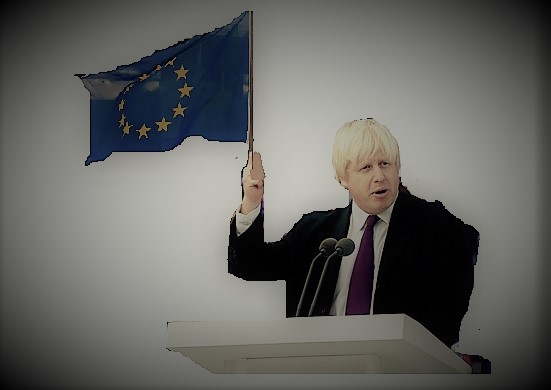
“Boris Mayor of London” by Fred Dawson is licensed under CC BY-NC-ND 2.0 (edited)
It seems remarkable doesn’t it that that we have reached the stage where the democratic institutions we hold dear are so openly crumbling before our eyes. Whilst many have been sceptical about how much you can trust a politician; rarely do we get the opportunity to gaze at the vitriolic evidence that embodies everything that we thought about politics in this country.
We have a prime minister who appears so simplistically single minded that he is blinded to the obvious and prepared to put the peace process in Ireland at risk, ruin the fragile economy, run rough shod over democracy and further damage his own party in the process.
Two concepts come to mind, the concept of leadership and ethics. There are several leadership typologies and I don’t propose to rehearse them here, save to say that there are good leaders and there are bad. The good ones we will follow anywhere, the bad, well they fall by the wayside eventually but usually not without having some calamitous impact. And as for ethics, I am minded to revert to the ‘Nolan principles’, the basis of ethical standards in public life. An examination of some of these principles against the backdrop of past and current political events reveals some interesting incongruities.
Selflessness – Holders of public office should act solely in terms of the public interest.
When former prime minister David Cameron called for a referendum did he have the ‘national interest’ at heart or was it more to do with the divisions within the Tory party? What government would be so foolhardy to think that there would be no consequences from such a referendum? Where were the government advisors pointing to the very real possibility that peace on the Irish mainland would be threatened if the referendum went the wrong way? Did anyone in government really care; was healing the divisions in the Tory party more important?
When Boris Johnson decided to prorogue parliament, did he do so in the public interests or was it simply to ensure that the possibility of parliament having its say on Brexit would be seriously curtailed? For ministers to state this is simply ordinary business appears to be somewhat disingenuous given the circumstances and the extraordinary length of the break.
When ‘leave means leave’ does that mean that ‘a no deal’ Brexit is in the public interests?
Objectivity – Holders of public office must act and take decisions impartially, fairly and on merit, using the best evidence and without discrimination or bias.
How can the prime minister state that he is taking decisions on merit using best evidence when he intends to shut down parliament, preventing any debate? Where is the impartiality when he is so single minded? How can he be viewed as impartial when he advocates bullying to get his own way, threatening to withhold the whip from any that vote against his wishes. Bullying is not leadership, threats of job losses will not galvanise people to the cause, it only alienates and divides.
Accountability – Holders of public office are accountable to the public for their decisions and actions and must submit themselves to the scrutiny necessary to ensure this.
Just where is the scrutiny if parliament is prorogued? Just how accountable are ministers if they avoid confirming that they will abide by any legislation that prevents a ‘no-deal’ Brexit being passed?
Honesty – Holders of public office should be truthful.
Now here lies the crux of it all. Leaders are not leaders if the have a propensity to be somewhat economical with the actualité. Enter the red bus, just how truthful was it to suggest that we could save £350 million a week and use that to fund the NHS? Just how honest is it to say that proroguing parliament had nothing to do with shutting up opponents? Just how much can we believe this prime minister or any other leader when the lies are so obviously blatant?
Leadership – Holders of public office should exhibit these principles in their own behaviour. They should actively promote and robustly support the principles and be willing to challenge poor behaviour wherever it occurs.
It isn’t too difficult to conclude that a leader that does not display ethical behaviours is hardly likely to promote them elsewhere. Currently, as with so many institutions, this government lacks real leadership and it would appear that principles are no more than a wish list. Just who will hold government and the past and current leaders to account for Brexit, bullying and all the bull****?
Share this:


The tyranny of populism

Himmler (1943)
So, we have a new prime minister Boris Johnson. Donald Trump has given his endorsement, hardly surprising, and yet rather than having a feeling of optimism that Boris in his inaugural speech in the House of Commons wished to engender amongst the population, his appointment fills me with dread. Judging from reactions around the country, I’m not the only one, but people voted for him just the same as people voted for Donald Trump and Volodymyr Zelensky, the recently elected Ukrainian president.
The reasons for their success lie not in a proven ability to do the job but in notions of popularity reinforced by predominantly right-wing rhetoric. Of real concern, is this rise of right wing populism across Europe and in the United States. References to ‘letter boxes’ (Johnson, 2018), degrading Muslim women or tweeting ethnic minority political opponents to ‘go back to where they came from’ (Lucas, 2019) seems to cause nothing more than a ripple amongst the general population and such rhetoric is slowly but surely becoming the lingua franca of the new face of politics. My dread is how long before we hear similar chants to ‘Alle Juden Raus!’ (1990), familiar in 1930s Nazi Germany?
It seems that such politics relies on the ability to appeal to public sentiment around nationalism and public fears around the ‘other’. The ‘other’ is the unknown in the shadows, people who we do not know but are in some way different. It is not the doctors and nurses, the care workers, those that work in the hospitality industry or that deliver my Amazon orders. These are people that are different by virtue of race or colour or creed or language or nationality and, yet we are familiar with them. It is not those, it is not the ‘decent Jew’ (Himmler, 1943), it is the people like that, it is the rest of them, it is the ‘other’ that we need to fear.
The problems with such popular rhetoric is that it does not deal with the real issues, it is not what the country needs. John Stuart Mill (1863) was very careful to point out the dangers that lie within the tyranny of the majority. The now former prime minister Theresa May made a point of stating that she was acting in the national Interest (New Statesman, 2019). But what is the national interest, how is it best served? As with my university students, it is not always about what people want but what they need. I could be very popular by giving my students what they want. The answers to the exam paper, the perfect plan for their essay, providing a verbal precis of a journal article or book chapter, constantly reminding them when assignments are due, turning a blind eye to plagiarism and collusion*. This may be what they want, but what they need is to learn to be independent, revise for an exam, plan their own essays, read their own journal articles and books, plan their own assignment hand in dates, and understand and acknowledge that cheating has consequences. What students want has not been thought through, what students need, has. What students want leads them nowhere, hopefully what students need provides them with the skills and mindset to be successful in life.
What the population wants has not been thought through, the ‘other’ never really exists and ‘empire’ has long gone. What the country needs should be well thought out and considered, but being popular seems to be more important than delivering. Being liked requires little substance, doing the job is a whole different matter.
*I am of course generalising and recognise that the more discerning students recognise what they need, albeit that sometimes they may want an easier route through their studies.
Alle Juden Raus (1990) ‘All Jews Out’, Directed by Emanuel Rund. IMDB
Himmler, H. (1943) Speech made at Posen on October 4, 1943, U.S. National Archives, [online] available at http://www.historyplace.com/worldwar2/holocaust/h-posen.htm [accessed 26 July 2019].
Johnson, B. (2018) Denmark has got it wrong. Yes, the burka is oppressive and ridiculous – but that’s still no reason to ban it, The Telegraph, 5th August 2018.
Lucas, A. (2019) Trump tells progressive congresswomen to ‘go back’ to where they came from, CNBC 14 July 2019 [online] available at https://www.cnbc.com/2019/07/14/trump-tells-progressive-congresswomen-to-go-back-to-where-they-came-from.html [accessed 26 July 2019]
Mill, J. S. (1863) On Liberty, [online] London: Tickner and Fields, Available from https://play.google.com/store/books [accessed 26 July 2019]
New Statesman (2019) Why those who say they are acting in “the national interest” often aren’t, [online] Available at https://www.newstatesman.com/politics/uk/2019/01/why-those-who-say-they-are-acting-national-interest-often-arent [accessed 26 July 2019]
Share this:


The struggle is real

© Jonathan McHugh
Stephanie is a BA Criminology graduate of 2019 and was motivated to write this blog through the experience of her own dissertation.
Last year was a very important time for me, during my second year of studying Criminology I began doing a work placement with Race Act 40, which was an oral history project to celebrate 40 years of the Race Relations Act 1974. The interviews that were conducted during my placement allowed me to get a variety of in-depth stories about racial inequalities of Afro-Caribbean migration settlers in the UK. During my time with the Race Act 40 project it became clear to me that the people who had volunteered their stories had witnessed a long line of injustices from not only individuals within society, but also institutions that makeup the ‘moral fabric’ within society. When exploring whether they have seen changes post and pre-Race Relations they insisted that although the individual within society treated them better and accepted them post-Race relations, to an extent there is a long way to go to improve the hostile relationships that has been formed with politicians and police.
The notion of hostility between politicians and the Afro-Caribbean community was reinforced, as the UK was going through the Windrush scandal which affected the core of every Afro-Caribbean household within the UK. This was extremely important for me as both paternal and maternal grandparents were first generation Windrush settlers. During the scandal my father became extremely anxious and the ramifications of the Windrush scandal hit home when some of his friends that came to the UK in 1961, the same time as he did, were detained and deported on the grounds of them being ‘illegals’. The UK Government used their ‘Hostile Environment’ policy to reintroduce Section 3 paragraph 8 of the Immigration Act 1971, which puts burden of proof on anyone that is challenged about their legal status in the UK’.
The UK government was ‘legally’ able to deport Caribbean settlers, as many of them did not have a British passport and could not prove their legal right to be in the UK and the Home Office could not help them prove their legal rights because all archival documents had been destroyed. This was a hard pill to swallow, as the United Kingdom documents and preserves all areas of history yet, overnight, the memory of my family’s journey to the UK was removed from the National Archives, without any explanation or reasoning. The anxiety that my father felt quickly spread over my whole family and while I wanted to scream and kick down doors demanding answers, I used my family’s history and the experiences of other Black people under British colonial rule as the basis for my dissertation. The hostility that they faced stepping off the Windrush echoed similar hostility they were facing in 2018, the fact that the British government had started deporting people who were invited into the country as commonwealth workers to build a country that had been torn apart as a corollary of war was a slap in the face.
Under Winston Churchill’s government, officials were employed to research Black communities to prove they were disproportionately criminal as a strategy to legally remove them from the UK and although they did not have any evidence to prove this notion the government did not apologize for the distasteful and racist treatment they demonstrated. It is hard to convince Black people in 2019 that they are not targets of poor similar treatment when they have been criminalised again and documents have been destroyed to exonerate them from criminality.
A final thought:
I have outlined the reasons why this topic has been important to me and my advice to any Criminology student who is going to be writing a dissertation is, to find a topic that is important and relevant to you, if you are passionate about a topic it will shine through in your research.
Share this:

How literature failed me as a black student

My name is Francine Bitalo, I am 21 years old and a Criminology undergraduate at the University of Northampton. Coming from a black African background I have always had a strong interest in the Criminal Justice System and its treatment towards different groups in society.
My dissertation was based on the impact of police practices such as stop and search on young black men and their families. Whilst statistics present the alarming racial disproportionately which exist in many areas in the criminal justice system, it fails to portray the long-lasting effects it has had on Black families. For example, the daily harassment and differential treatment subjected to young Black men has forced black families to reinvent themselves to conform to institutional racism. Coming from a Black family myself and having male family member, the findings in my dissertation quickly became personal to me, as I could constantly relate them to the structuring of my own family. For example, the fact that it would take my father longer to find a job due to institutional racism, making my mother the breadwinner, or when my mother is preparing my brothers for police harassment and discrimination, but not me and sisters.
While conducting my research I was quick to learn that what literature may describe as a phenomenon, for many of us is a reality. If I am honest the writing stage of my dissertation was difficult for me because it was a passionate topic. I experienced a lot of self-doubt regarding my positionality for example, being a Black woman and facing my own forms of discrimination and now having to talk about the experiences of young Black men. I think my dissertation tutor would agree with me on this as I remember emailing her after I submitted my work expressing how I felt like I didn’t effectively capture the effects and the voices of the young Black men I interviewed, despite that being my main goal. I mean who would blame me, as a student, if I am honest I felt like literature really let me down for instance, when writing my literature review I found that literature neglected the subject of racism solely from the perspectives of young Black men, despite statistics showing them to being the largest group to experience institutional racism. At this point I had to laugh at the criminal justice system and its propositions to improving police relations as well as re offending.
With that being said the information I did come across I couldn’t help but sense the notion of white privilege lingering in the perspective of some scholars. I understand this is a strong claim to make however I say this because not only did literature provide little of the work of Black scholars regarding the topic, yet it was evident that most white scholars did not see the issue with stop and search and its discriminate use. Arguments for this were discussed in my dissertation for example, some argued that the process of racial socialisation in Black households were ineffective to police relations and the functioning of their services, which creates the notion that the Black community should submit to discrimination and harassment in favour of procedures and compliance during police encounter. Some tried to justify the disproportionality in stop and search by claiming that young Black men should be harassed because they tend to be out more especially in certain urban areas or the disproportionate targeting of Black minors is due to parental criminality. I felt there was a lack of accountability from white scholar thus, little understanding in the issue of race which is natural because their experiences do not allow them to understand. Yet this led me to ask questions such as why shouldn’t Black mothers have the right to prepare their sons for police discrimination, does it matter what time and area should a person of colour be around for them to be targeted at?
After completing my dissertation and getting a First Class I felt extremely proud of myself, the fact that I did not shy away from the research topic despite it being limited in literature. As a result, it was satisfying to know that I was able to articulate the experiences of others to a First Class standard. I hope this can encourage others to trust in their abilities and put aside any doubts especially when choosing a research topic. As a student writing a dissertation or even an assignment, I believe we should explore the unexplored, open the unopened and always be willing to discover and learn. Do not be afraid of researching something that is limited or has never been done. Lastly as my dissertation was extremely passionate to me I have decided to turn it into a personal project and continue researching the topic
Share this:


Celebrations and Commemorations: What to remember and what to forget

Today is Good Friday (in the UK at least) a day full of meaning for those of the Christian faith. For others, more secularly minded, today is the beginning of a long weekend. For Blur (1994), these special days manifest in a brief escape from work:
Bank holiday comes six times a year
Days of enjoyment to which everyone cheers
Bank holiday comes with six-pack of beer
Then it’s back to work A-G-A-I-N
(James et al., 1994).
However, you choose to spend your long weekend (that is, if you are lucky enough to have one), Easter is a time to pause and mark the occasion (however, you might choose). This occasion appears annually on the UK calendar alongside a number other dates identified as special or meaningful; Bandi Chhorh Divas, Christmas, Diwali, Eid al-Adha, Father’s Day, Guys Fawkes’ Night, Hallowe’en, Hanukkah, Hogmanay, Holi, Mothering Sunday, Navaratri, Shrove Tuesday, Ramadan, Yule and so on. Alongside these are more personal occasions; birthdays, first days at school/college/university, work, graduations, marriages and bereavements. When marked, each of these days is surrounded by ritual, some more elaborate than others. Although many of these special days have a religious connection, it is not uncommon (in the UK at least) to mark them with non-religious ritual. For example; putting a decorated tree in your house, eating chocolate eggs or going trick or treating. Nevertheless, many of these special dates have been marked for centuries and whatever meanings you apply individually, there is an acknowledgement that each of these has a place in many people’s lives.
Alongside these permanent fixtures in the year, other commemorations occur, and it is here where I want to focus my attention. Who decides what will be commemorated and who decides how it will be commemorated? For example; Armistice Day which in 2018 marked 100 years since the end of World War I. This commemoration is modern, in comparison with the celebrations I discuss above, yet it has a set of rituals which are fiercely protected (Tweedy, 2015). Prior to 11.11.18 I raised the issue of the appropriateness of displaying RBL poppies on a multi-cultural campus in the twenty-first century, but to no avail. This commemoration is marked on behalf of individuals who are no longing living. More importantly, there is no living person alive who survived the carnage of WWI, to engage with the rituals. Whilst the sheer horror of WWI, not to mention WWII, which began a mere 21 years later, makes commemoration important to many, given the long-standing impact both had (and continue to have). Likewise, last year the centenary of (some) women and men gaining suffrage in the UK was deemed worthy of commemoration. This, as with WWI and WWII, was life-changing and had profound impact on society, yet is not an annual commemoration. Nevertheless, these commemoration offer the prospect of learning from history and making sure that as a society, we do much better.
Other examples less clear-cut include the sinking of RMS Titanic on 15 April 1912 (1,503 dead). An annual commemoration was held at Belfast’s City Hall and paying guests to the Titanic Museum could watch A Night to Remember. This year’s anniversary was further marked by the announcement that plans are afoot to exhume the dead, to try and identify the unknown victims. Far less interest is paid in her sister ship; RMS Lusitania (sank 1915, 1,198 dead). It is difficult to understand the hold this event (horrific as it was) still has and why attention is still raised on an annual basis. Of course, for the families affected by both disasters, commemoration may have meaning, but that does not explain why only one ship’s sinking is worthy of comment. Certainly it is unclear what lessons are to be learnt from this disaster.
Earlier this week, @anfieldbhoy discussed the importance of commemorating the 30th anniversary of the Hillsborough Disaster. This year also marks 30 years since the publication of MacPherson (1999) and Monday marks the 26th anniversary of Stephen Lawrence’s murder. In less than two months it will two years since the horror of Grenfell Tower. All of these events and many others (the murder of James Bulger, the shootings of Jean Charles de Menezes and Mark Duggan, the Dunblane and Hungerford massacres, to name but a few) are familiar and deemed important criminologically. But what sets these cases apart? What is it we want to remember? In the cases of Hillsborough, Lawrence and Grenfell, I would argue this is unfinished business and these horrible events remind us that, until there is justice, there can be no end.
However, what about Arthur Clatworthy? This is a name unknown to many and forgotten by most. Mr Clatworthy was a 20-year-old borstal boy, who died in Wormwood Scrubs in 1945. Prior to his death he had told his mother that he had been assaulted by prison officers. In the Houses of Parliament, the MP for Shoreditch, Mr Thurtle told a tale, familiar to twenty-first century criminologists, of institutional violence. If commemoration was about just learning from the past, we would all be familiar with the death of Mr Clatworthy. His case would be held up as a shining example of how we do things differently today, how such horrific events could never happen again. Unfortunately, that is not the case and Mr Clatworthy’s death remains unremarked and unremarkable. So again, I ask the question: who decides what it is worthy of commemoration?
Selected Bibliography:
James, Alexander, Rowntree, David, Albarn, Damon and Coxon, Graham, (1994), Bank Holiday, [CD], Recorded by Blur in Parklife, Food SBK, [RAK Studios]
Share this:


Hillsborough 30 years on. A case study in liberating the truth

Dr Stephen O’Brien is the Dean for the Faculty of Health and Society at the University of Northampton
Before I start this blog, it is important to declare my personal position. I am a lifelong supporter of Liverpool Football Club (LFC) and had I not been at a friend’s wedding on that fatal Saturday in April 1989, I may well have been in the Leppings Lane end of the Hillsborough stadium in Sheffield. I have followed the unfolding Hillsborough phenomenon for 30 years now and like the football club itself, it is an integral part of my life. To all caught up in the horrific events of Hillsborough, I echo a phrase synonymous with LFC and say; “You’ll Never Walk Alone”.
On April 15th, 1989 ninety-six men, women and children, supporters of Liverpool Football Club, died in a severe crush at an FA Cup semi-final at the Hillsborough Stadium, Sheffield. Hundreds were injured, and thousands traumatised. Within hours, the causes and circumstances of the disaster were being contested. While an initial judicial inquiry found serious institutional failures in the policing and management of the capacity crowd, no criminal prosecutions resulted, and the inquests returned ‘accidental death’ verdicts. Immediately, the authorities claimed that drunken, violent fans had caused the fatal crush. In the days and weeks following the disaster, police fed false stories to the press suggesting that hooliganism and drunkenness by Liverpool supporters were the root causes of the disaster. The media briefing was most significantly demonstrated in the headline “THE TRUTH” which appeared in The Sun newspaper immediately after the event devoting its front page to the story and reporting that: ‘Some fans picked pockets of victims; Some fans urinated on the brave cops; Some fans beat up PC giving life kiss’. What of course we appreciate now is that this headline was far from truth, however the blame narrative was already being set. For example, Chief Superintendent David Duckenfield, the match commander on the day, misinformed senior officials from the Football Association that fans had forced entry causing an inrush into already packed stadium pens. Yet it was Duckenfield who had ordered the opening of the gates to relieve the crush at the turnstiles. Within minutes the lie was broadcast internationally.
Blaming of Liverpool fans persisted even after the Taylor Report of 1990, which found that the main cause of the disaster was a profound failure in police control. While directing its most damning conclusions towards the South Yorkshire Police, it also criticised Sheffield Wednesday Football Club, its safety engineers and Sheffield City Council. However, following the Taylor Report, the Director of Public Prosecutions (DPP) ruled there was no evidence to justify prosecution of any individuals or institutions. On a more positive note, the disaster did lead to safety improvements in the largest English football grounds, notably the elimination of fenced terraces in favour of all seated stadiums.With the media allegations unchallenged and in the absence of any imminent prosecutions the families of the 96 hugely supported by the people of the City of Liverpool and it’s two football clubs began an exerted and prolonged campaign for truth and justice. In late June 1997, soon after the election of the Labour Government and following a concerted campaign by families, the Home Secretary Jack Straw proposed an unprecedented judicial scrutiny of any new evidence and appointed senior appeal court judge and former MI6 Commissioner Lord Justice Stuart-Smith to review further material that interested parties wished to submit. A large volume of new material was presented. However, Stuart-Smith rejected the new evidence concluding that there was no basis for a further public inquiry or new material of interest to the DPP or police disciplinary authorities. Undeterred by such a devastating outcome the families undertook a series of private prosecutions again to no avail.
It is important to note that public inquiries, convened in the aftermath of major incidents such as Hillsborough or to address alleged irregularities or failures in the administration of justice, should not be considered a panacea but provide an opportunity to speedily ensure that management failings are exposed to public scrutiny. They are popularly perceived to be objective and politically independent. On the other hand, they also have the potential to act as a convenient mechanism of legitimation for the state. It appeared to the families that the various inquiries that followed Hillsborough were incapable of surfacing the truth as the cards were stacked in favour of the state.
Roll forward to 2009. On the 20th anniversary, invited by the Hillsborough Family Support Group, Minister for Health Andy Burnham MP addressed over 30,000 people attending the annual memorial service at Liverpool FC’s Anfield stadium. Whilst acknowledging the dignity, resolve and courage they had exhibited in all the events of the previous 20 years he offered support and hope that their struggle would be further supported by the MPs in Liverpool as a whole. The cries of “Justice for the 96” that rang out that day heralded a turning point. Consequently, in December 2009, following the families unrelenting campaign, the Bishop of Liverpool, James Jones, was appointed to chair the Hillsborough Independent Panel. It was given unfettered access to all the documentation that had been generated in all the enquiries and investigations to date. The outcomes of their deliberations were presented in closed session to the bereaved families at Liverpool’s Anglican Cathedral on 12 September 2012, the report concluded that there was no evidence among the vast documentation to support or verify the serious allegations of exceptional levels of drunkenness, fans with no tickets or violence. The bereaved families and survivors were overwhelmed by the unqualified exoneration of those who died and survived. Shortly after, the Prime Minister David Cameron responded in detail to a packed House of Commons. He made a proper apology to the families of the 96 for all they have suffered over the past 23 years. In April 2016, a special Coroner’s Court ruled that the Hillsborough dead had been unlawfully killed and a campaign for justice that had run for well over two decades was concluded.
This year will be the 30th anniversary of that tragic event and I believe it is fair to say that the ensuing years have provided us with a troubling case study with features of institutional cover up, the power of the state, the Establishment, the resilience of the victim’s families, community and a social movement which Scraton (1999, 2013) refers to as an alternative method for liberating truth, securing acknowledgement and pursuing justice. Scraton has written extensively on the disaster and the subsequent events. He draws on human rights discourse to show how ‘regimes of truth’ operate to protect and sustain the interests of the ‘powerful’. He examined in detail the formal legal processes and their outcomes regarding Hillsborough and demonstrated how they were manipulated to degrade the truth and deny justice to the bereaved. He exposed the procedural and structural inadequacies of these processes and raised fundamental questions about the legal and political accountability of the instruments of authority. The broader socio/legal policy question that emerges from Hillsborough is whether ‘truth’ can ever be acknowledged and institutionalized injustices reconciled in a timely fashion when the force of the state apparatus works to differing ends. Time will only tell. In 2019 there are many other tragic examples where we could replace Hillsborough with Orgreave, Lawrence, Windrush, Grenfell. Let’s hope that it doesn’t take 30 years for truth and justice to emerge in the future.
References
Scraton P., (1999) Policing with Contempt: The Degrading of Truth and Denial of Justice in the Aftermath of the Hillsborough Disaster. Journal of Law and Society 26, 3, p273-297
Scraton P., (2013) The Legacy of Hillsborough: liberating truth, challenging power Race and Class, 55, 2, p1-27
Share this:


Forgotten
It is now nearly two weeks since Remembrance Day and reading Paula’s blog. Whilst understanding and agreeing with much of the sentiment of the blog, I must confess I have been somewhat torn between the critical viewpoint presented and the narrative that we owe the very freedoms we enjoy to those that served in the second world war. When I say served, I don’t necessarily mean those just in the armed services, but all the people involved in the war effort. The reason for the war doesn’t need to be rehearsed here nor do the atrocities committed but it doesn’t hurt to reflect on the sacrifices made by those involved.
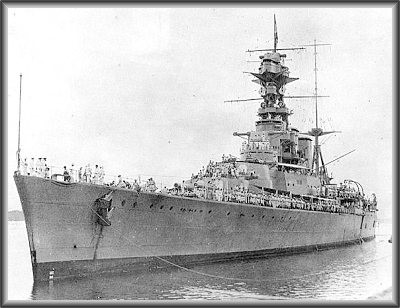
My grandad, now deceased, joined the Royal Navy as a 16-year-old in the early 1930s. It was a job and an opportunity to see the world, war was not something he thought about, little was he to know that a few years after that he would be at the forefront of the conflict. He rarely talked about the war, there were few if any good memories, only memories of carnage, fear, death and loss. He was posted as missing in action and found some 6 months later in hospital in Ireland, he’d been found floating around in the Irish Sea. I never did find out how this came about. He had feelings of guilt resultant of watching a ship he was supposed to have been on, go down with all hands, many of them his friends. Fate decreed that he was late for duty and had to embark on the next ship leaving port. He described the bitter cold of the Artic runs and the Kamikaze nightmare where planes suddenly dived indiscriminately onto ships, with devastating effect. He had half of his stomach removed because of injury which had a major impact on his health throughout the rest of his life. He once described to me how the whole thing was dehumanised, he was injured so of no use, until he was fit again. He was just a number, to be posted on one ship or another. He swerved on numerous ships throughout the war. He had medals, and even one for bravery, where he battled in a blazing engine room to pull out his shipmates. When he died I found the medals in the garden shed, no pride of place in the house, nothing glorious or romantic about war. And yet as he would say, he was one of the lucky ones.
My grandad and many like him are responsible for my resolution that I will always use my vote. I do this in the knowledge that the freedom to be able to continue to vote in any way I like was hard won. I’m not sure that my grandad really thought that he was fighting for any freedom, he was just part of the war effort to defeat the Nazis. But it is the idea that people made sacrifices in the war so that we could enjoy the freedoms that we have that is a somewhat romantic notion that I have held onto. Alongside this is the idea that the war effort and the sacrifices made set Britain aside, declaring that we would stand up for democracy, freedom and human rights.
But as I juxtapose these romantic notions against reality, I begin to wonder what the purpose of the conflict was. Instead of standing up for freedom and human rights, our ‘Great Britain’ is prepared to get into bed with and do business with the worst despots in the world. Happy to do business with China, even though they incarcerate up to a million people such as the Uygurs and other Muslims in so called ‘re-education camps’, bend over backwards to climb into bed with the United States of America even though the president is happy to espouse the shooting of unarmed migrating civilians and conveniently play down or ignore Saudi Arabia’s desolation of the Yemini people and murder of political opponents.
In the clamber to reinforce and maintain nationalistic interests and gain political advantage our government and many like it in the west have forgotten why the war time sacrifices were made. Remembrance should not just be about those that died or sacrificed so much, it should be a time to reflect on why.
Share this:

“Political Drillin”
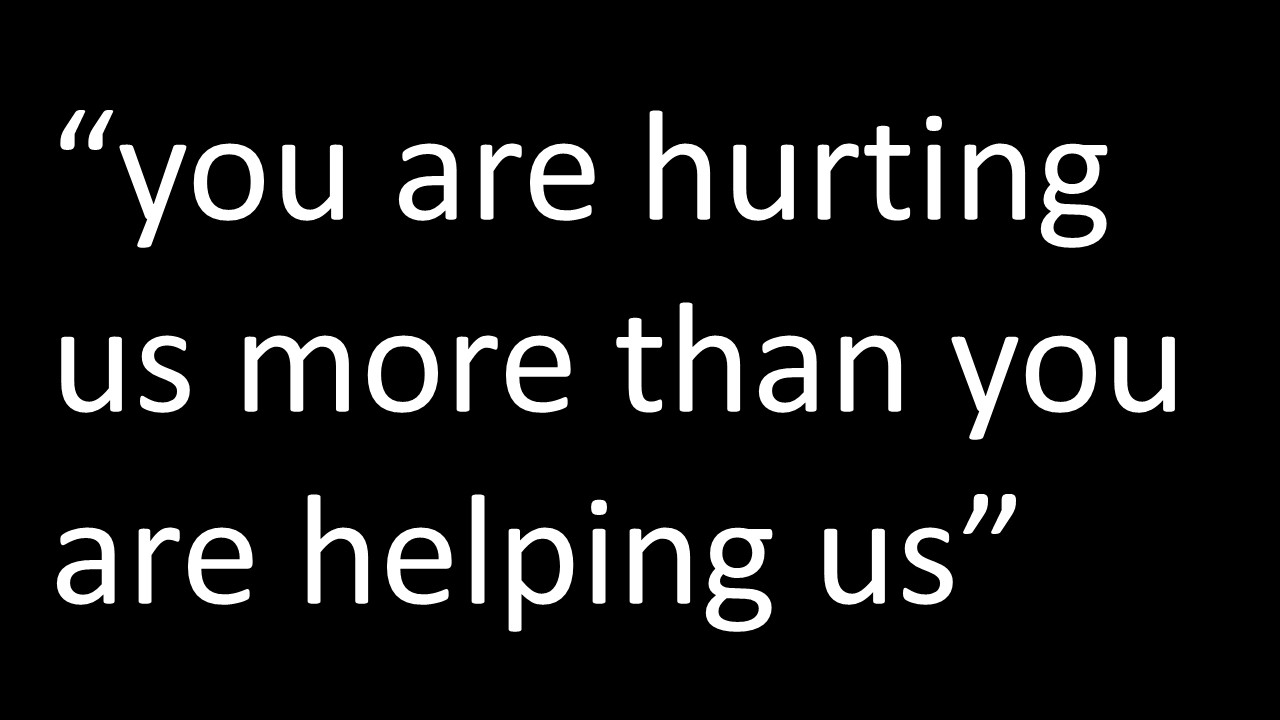
A recent track that has come to light which incorporates Drill Music is that called ‘Political Drillin’. On the track the artist manages to incorporate quotes from politicians; which proves he is highly deserving of his title ‘DrillMinister’.
What was particularly shocking to me was how easy it was for the governmental quotes to actually fit in with what he was initially rapping about, considering how frowned upon the genre is by these same figures.
It becomes very obvious that the slurs deemed as “violent” are ones that much of us are accustomed to hearing on a daily basis. In my interpretation, the artist seems to be bringing this to light. When young people use similar racial, derogatory terms towards one another it is seen to be violent and makes headlines, but politicians seem to throw these around in parliament without being reprimanded for their actions. Why is this continuously tolerated?
The fact that these comments are known to all and no action is taken against them demonstrates that there is a certain calibre of people that can be deemed as criminal and those who will not. Once again shedding light on the class, age and racial division that is hanging over society.
So once again I put the question out…is drill music a cause of violent crime, or are we simply a criminal society? If the DrillMinister can be labelled violent, surely politicians should be too?
*The image contains a quote from Jess Phillips MP utilised as a lyric by DrillMinister:
https://www.youtube.com/watch?v=spJoRLpDLLM

 Thoughts from the criminology team