
Home » politics
Category Archives: politics

25 years is but a drop in time!

If I was a Roman, I would be sitting in my comfortable triclinium eating sweet grapes and dictating my thoughts to a scribe. It was the Roman custom of celebrating a double-faced god that started European celebrations for a new year. It was meant to be a time of reflection, contemplation and future resolutions. It is under these sentiments that I shall be looking back over the year to make my final calculations. Luckily, I am not Roman, but I am mindful that over 2025 years have passed and many people, have tried to look back. Since I am not any of these people, I am going to look into the future instead.
In 25 years from now we shall be heading to the middle of the 21st century. A century that comes with great challenges. Since the start of the century there has been talk of economic bust. The banking crisis slowed down the economy and decreased real income for people. Then the expectation was that crime will rise as it did before; whilst the juries may still be out. the consensus is that this crime spree did not come…at least not as expected. People became angry and their anger was translated in changes on the political map, as many countries moved to the right.
Prediction 1: This political shift to the right in the next 25 years will intensify and increase the polarisation. As politics thrives in opposition, a new left will emerge to challenge the populist right. Their perspective will bring another focus on previous divisions such as class. Only on this occasion class could take a different perspective. The importance of this clash will define the second half of the 21st century when people will try to recalibrate human rights across the planet. Globalisation has brought unspeakable wealth to few people. The globalisation of citizenship will challenge this wealth and make demands on future gains.
As I write these notes my laptop is trying to predict what I will say and put a couple of words ahead of me. Unfortunately, most times I do not go with its suggestions. As I humanise my device, I feel sorry for its inability to offer me the right words and sometimes I use the word as to acknowledge its help but afterwards I delete it. My relationship with technology is arguably limited but I do wonder what will happen in 25 years from now. We have been talking about using AI for medical research, vaccines, space industry and even the environment. However currently the biggest concern is not AI research, but AI generated indecent images!
Prediction 2: Ai is becoming a platform that we hope will expand human knowledge at levels that we could have not previously anticipated. One of its limitations comes from us. Our biology cannot receive the volume of information created and there is no current interface that can sustain it. This ultimately will lead to a divide between people. Those who will be in favour of incorporating more technology into their lives and those who will ultimately reject it. The polarisation of politics could contribute to this divide as well. As AI will become more personal and intrusive the more the calls will be made to regulate. Under the current framework to fully regulate it seems rather impossible so it will lead to an outright rejection or a complete embrace. We have seen similar divides in the past during modernity; so, this is not a novel divide. What will make it more challenging now is the control it can hold into everyday life. It is difficult to predict what will be the long-term effects of this.
During the late 20th and early 21st centuries drug abuse and trafficking seemed to continue to scandalise the public and maintain attention as much as it did back in the 1970s and 80s. Drugs have been demonised and became the topic of media representation of countless moral panics. Its reach in the public is wide and its emotional effect rivals only that of child abuse. Is drugs abuse an issue we shall be considering in 25 years from now?
Prediction 3: People used substances as far back as we can record history. Therefore, there will be drugs in the future to the joy of all these people who like to get high! It is most likely that the focus will be on synthetic drugs that will be more focused on their effects and how they impact people. The production is likely to change with printers being able to develop new substances on a massive scale. These will create a new supply line among those who own technology to develop new synthetic forms and those who own the networks of supply. In previous times a takeover did happen so it is likely to happen again, unless these new drugs emerge under formal monopolies, like drug companies who will legalise their recreative use.
One of the biggest tensions in recent years is the possibility of another war. Several European politicians have already raised it pretending to be making predictions. Their statements however are clear signs of war preparation. The language is reminiscent of previous eras and the way society is responding to these seems that there is some fertile ground. Nationalism is the shelter of every failed politician who promises the world and delivers nothing. Whether a citizen in Europe (EU/UK) the US or elsewhere, they have likely to have been subjected to promises of gaining things, better days coming, making things great…. only to discover all these were empty vacant words. Nothing has been offered and, in most cases, working people have found that their real incomes have shrunk. This is when a charlatan will use nationalism to push people into hating other people as the solution to their problems.
Prediction 4: Unfortunately, wars seem to happen regularly in human history despite their destructive nature. We also forget that war has never stopped and elusive peace happens only in parts of the world when different interests converge. There is a combination of patriotism, national pride and rhetoric that makes people overlook how damaging war is. It is awfully blindsided not to recognise the harm war can do to them and to their own families. War is awful and destroys working people the most. In the 20th century nuclear armament led to peace hanging by a thread. This fear stupidly is being played down by fraudsters pretending to be politicians. Currently the talk about hybrid war or proxy war are used to sanitise current conflicts. The use of drones seems to have altered the methodology of war, and the big question for the next 25 years is, will there be someone who will press THAT button? I am not sure if that will be necessary because irrespective of the method, war leaves deep wounds behind.
In recent years the discussion about the weather have brought a more prevailing question. What about the environment? There is a recognised crisis that globally we seem unable to tackle, and many make already quite bleak predictions about it. Decades ago, Habermas was exploring the idea of “colonization of the lifeworld” purporting that systemic industrial agriculture will lead to environmental degradation. Now it seems that this form of farming, the greenhouse gasses and deforestation are becoming the contributing factors of global warming. The inaction or the lack of international coordination has led calls for immediate action. Groups that have been formed to pressure political indecision have been met with resistance and suspicion, but ultimately the problem remains.
Prediction 5: The world acts when confronted with something eminent. In the future some catastrophic events are likely to shape views and change attitudes. Unfortunately, the planet runs on celestial and not human time. When a prospective major event happens, no one can predict its extent or its impact. The approach by some super-rich to travel to another planet or develop something in space is merely laughable but it is also a clear demonstration why wealth cannot be in the hands of few oligarchs. Life existed before them and hopefully it will continue well beyond them. On the environment I am hopeful that people’s views will change so by the end of this century we will look at the practices of people like me and despair.
These are mere predictions of someone who sits in a chair having read the news of the day. They carry no weight and hold no substantive strength. There is a recognition that things will change at some level and we shall be asked to adapt to whatever new conditions we are faced with. In 25 years from now we will still be asking similar questions people asked 100 years ago. Whatever happens, however it happens, life always finds a way to continue.
Share this:


Reform: The New Opposition, or an Uncomfortable Hiccup in British Politics

British politics is particularly interesting at the moment, as no one is really sure if we are witnesses to a radical change or if Reform will fizzle out and be a distant memory within 10 years or so (here’s hoping). I’m here to bounce some ideas around, think about the current political climate and just put out some comments about what’s going on. I’m hoping to keep at least light, and possibly short.
It’s structured as starting off with some points that are to Reform’s advantage, including the national political climate. It continues to some things working against Reform, including its sustainability. Considering how Reform has managed to gain such support is kind of weaved into the middle and briefly mentioned at the end.
The Political Climate: Inside the UK
Populism is on the rise, restriction of human rights is increasing and people seem to be getting angrier and more frustrated about politics. On a national level, there is a plethora of individuals who are disillusioned with modern day politics and seeking simple answers to big issues quickly and, unfortunately, right wing populism fills this gap perfectly.
Immigration problems? Ban them and deport them.
Crime problems? Give longer and harsher sentences.
Have a problem with the elite? Let Nigel speak up for the British People and let common sense prevail.
They’re easily digestible, easily understandable solutions to big societal issues and that definitely appeals to people.

We can easily dismiss supporters of any right wing populist party as incorrect, immoral and uneducated. But it is really not as simple as that. When an attractive left wing party is not there to foster a society which is genuinely has the interests of the working class at it’s heart, we open the door for right wing populism to scoop up the working class electorate. Indeed, we can’t totally blame the current ‘Labour’ government for the increase in Reform UK voters, as we can see trends of right wing populism globally, but we can definitely think about whether these UK voters would have gone to Reform UK if Labour was offering a better solution. A solution which had working class people front and centre, providing meaningful change such as education reform, anti-poverty initiatives, workers rights focuses, renationalisation policies and council house stock rebuilding. What we are possibly seeing here are voters with no party to call home, frustrated and without answers, so they seek these things in easily digestible populist parties.
Sustainability: Party Identity and Hypocrisy
Perhaps Reform UK’s biggest stumbling block, in my opinion, is its internal contradictions and its lack of preestablished identity as a party.
The internal contradictions are simple and obvious. Reform UK prides itself on being anti- elitist and anti-establishment but the party is lead by a millionaire bankrolled by aristocrats with a private education. Right wing populist parties are simply an extension of the elite and the establishment; an obvious conclusion if you dig even slightly under the surface. Surely this hypocrisy will be called out soon and listened to?
A slightly more long winded pitfall in the Reform Party (among many others) is its lack of party identity. Labour and even the Tories can rely at least slightly on their voters who vote for them because they always have, because of nostalgia for what the party used to be, because they’re a traditional party. Reform don’t have this. And not only this, but they don’t really have any developed policies; the Conservatives have the idea of low taxes, competitive markets, low regulation. Traditional Labour have higher taxes, redistribution of wealth, working class empowerment, nationalisation. and Reform have…? Immigration freezes, law and order and ‘taking the country back’. I’m not sure if their party identity and policies will keep their momentum moving to the next general election.
However, I do think that if they are able to maintain their momentum and get to the election they may go far, and may possibly overtake the Tories. But I think it rests on two things 1) momentum going into the next election and 2) No proper left wing alternatives emerging between now and then. Unfortunately I think number two is already certain.
The title of this blog, is a sort of tongue in cheek title. I do understand how dire this could be should Reform become positioned as the official opposition. For many people around the UK the effects of pandering to right wing populist racist rhetoric has already been experienced, and it will only get worse if Reform continue to gain popularity. Remember to vote, be politically engaged and speak up, we as young people have a huge role to play as our turn out is generally so low.
Images from https://www.reformparty.uk/ and https://tribunemag.co.uk/2024/07/the-anti-elite-elites-reform-far-right
Share this:


What society do we want to live in?

Recently after using a service, I received an email to provide some online feedback. The questionnaire was asking about the services I received and to offer any suggestions on anything that could be done to improve services. This seems to become common practice across the board regarding all types of services and commercial interactions. This got me thinking…we are asked to provide feedback on a recent purchase, but we are not asked about issues that cut through the way we live our lives. In short, there is value in my opinion on a product that I bought, where is the value in my views of how I would want my community to be. Who’s going to ask me what society I want to live in!
Consumerism may be the reason we get asked questions about products but surely before and above being consumers, aren’t we all citizens? I can make helpful suggestions on what I would like to see in services/products but not on government. We profess democratic rule but the application of vote every now and then is not a true reflection on democracy. As we can offer online surveys for virtually everything, we have ways of measuring trends and reactions, why not use these to engage in a wider public discourse on the way to organise our communities, discuss social matters and engage in a public dialogue about our society.
Our political system is constructed to represent parties of different ideologies and practices offering realistic alternatives to governance. An alternative vision about society that people can come behind and support. This ideological diversion is essential for the existence of a “healthy political democratic process”. This ideological difference seems to be less prevalent in public dialogue with the main political parties focusing their rhetoric on matters that do not necessarily affect society.
Activism, a mechanism to bring about social change is becoming a term that sparks controversy whilst special interest groups maintain and even exert their influence on political parties. This allows private special interests to take the “ear of the government” on matters that matter to them, whilst the general public participate in social discourses that never reach the seat of power.
Asking citizens to be part of the social discussion, unlike customer service, is much more significant; it allows us to be part of the process. Those who have no other way of participating in any part of the system will be castigated to cast their vote and may participate in some party political activities. This leaves a whole heap of everyday issues unaddressed. In recent years the cost of living crisis pushed more people into poverty, food, housing and transport became issues that needed attention, not to mention health, post-covid-19.
These and many more social issues have been left either neglected only to be given the overhead title of crisis but with no action plan of how to resolve them. People affected are voiceless, having to pick up the injustices they suffer without any regard to the long term effects. Ironically the only plausible explanation given now that “Brussels’ rule” and “EU bureaucracy” are out of the picture, has become that of the immigrants. The answer to various complex problems became the people on the boats!
This is a simplification in the way social problems happen and most importantly can be resolved. Lack of social discourse has left the explanation and problem solving of said problems to an old rhetoric founded on xenophobia and discrimination. Simple explanations on social problems where the answer is a sentence tend to be very clear and precise, but very rarely can count the complexity of the problems they try to explain. There is a great disservice to our communities to oversimplify causes because the public cannot understand.
Cynically someone may point out that feedback from companies is not routed in an honest request to understand customer satisfaction but a veiled lip-service about company targets and metrics. So the customer’s response becomes a tradable figure of the company’s objectives. This is very likely the case and this is why the process has become so focused on particular parts of the consumer process. Nonetheless and here is the irony; a private company has some knowledge of a customer’s views on their recent purchase, as opposed to the government and people’s views and expectations on many social issues.
Maybe the fault lies with all of us. The presumption of democratic rule, especially in parliamentary democracies, a citizen is represented by a person they elect every four years. This representation detaches the citizen from their own responsibilities and obligations to the process. The State is happy to have citizens that engage only during elections, something that can be underscored by the way in recent years that protests on key social issues have been curtailed.
That does not sound right! I can provide an opinion over the quality of a chocolate bar or a piece of soap but I cannot express my views as a citizen over war, climate, genocide, immigration, human rights or justice? If we value opinion then as society we ought to make space for opinion to be heard, to be articulated and even expressed. In the much published “British Values” the right to protest stands high whilst comes in conflict with new measures to stop any protests. We are at a crossroads and ultimately we will have to decide what kind of society we live in. If we stop protests and we ban venues for people to express themselves, what shall we do next to curtail further the voices of dissent? It is a hackneyed phrase that we are stepping into a “slippery slope” and despite the fact that I do not like the language, there is a danger that we are indeed descending rapidly down that slope.
The social problems our society faces at any given time are real and people try to understand them and come to terms with them. Unlike before, we live in a world that is not just visual, it relies on moving images. Our communities are global and many of the problems we face are international and their impact is likely to affect us all as people, irrespective of background or national/personal identity. At times like this, it is best to increase the public discourse, engage with the voices of descent. Maybe instead of banning protests, open the community to those who are willing to discuss. The fear that certain disruptive people will lead these debates are unfounded. We have been there before and we have seen that people whose agenda is not to engage, but simply to disrupt, soon lose their relevance. We have numerous examples of people that their peers have rejected and history left them behind as a footnote of embarrassment.
Feedback on society, even if negative, is a good place to start when/if anyone wants to consider, what kind of society I want and my family to live in. Giving space to numerous people who have been vastly neglected by the political systems boosts inclusivity and gives everyone the opportunity to be part of our continuous democratic conversation. Political representation in a democracy should give a voice to all especially to those whose voice has long been ignored. Let’s not forget, representation is not a privilege but a necessity in a democracy and we ensure we are making space for others. A democracy can only thrive if we embrace otherness; so when there are loud voices that ask higher level of control and suppression, we got to rise above it and defend the weakest people in our community. Only in solidarity and support of each other is how communities thrive.
Share this:


Criminology in the neo-liberal milieu
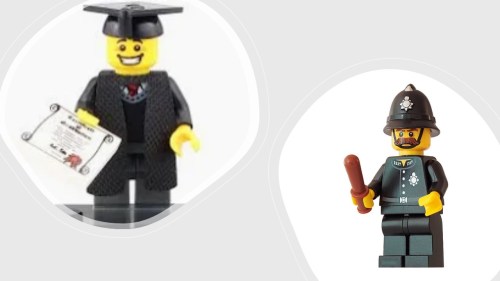
I do not know whether the title is right nor whether it fits what I want to say, but it is sort of catchy, well I think so anyway even if you don’t. I could never have imagined being capable of thinking up such a title let alone using words such as ‘milieu’ before higher education. I entered higher education halfway through a policing career. I say entered; it was more of a stumble into. A career advisor had suggested I might want to do a management diploma to advance my career, but I was offered a different opportunity, a taster module at a ‘new’ university. I was fortunate, I was to renew an acquaintance with Alan Marlow previously a high-ranking officer in the police and now a senior lecturer at the university. Alan, later to become an associate professor and Professor John Pitts became my mentors and I never looked back, managing to obtain a first-class degree and later a PhD. I will be forever grateful to them for their guidance and friendship. I had found my feet in the vast criminology ocean. However, what at first was delight in my achievements was soon to be my Achilles heel.
Whilst policing likes people with knowledge and skills, some of the knowledge and skills butt up against the requirements of the role. Policing is functional, it serves the criminal justice system, such as it, and above all else it serves its political masters. Criminology however serves no master. As criminologists we are allowed to shine our spotlight on what we want, when we want. Being a police officer tends to put a bit of a dampener on that and required some difficult negotiating of choppy waters. It felt like I was free in a vast sea but restrained with a life ring stuck around my arms and torso with a line attached so as to never stray too far from the policing ideology and agenda. But when retirement came, so too came freedom.
By design or good luck, I landed myself a job at another university, the University of Northampton. I was interviewed for the job by Dr @manosdaskalou., along with Dr @paulaabowles (she wasn’t Dr then but still had a lot to say, as criminologists do), became my mentors and good friends. I had gone from one organisation to another. If I thought I knew a lot about criminology when I started, then I was wrong. I was now in the vast sea without a life ring, freedom was great but quite daunting. All the certainties I had were gone, nothing is certain. Theories are just that, theories to be proved, disproved, discarded and resurrected. As my knowledge widened and I began to explore the depths of criminology, I realised there was no discernible bottom to knowledge. There was only one certainty, I would never know enough and discussions with my colleagues in criminology kept reminding me that was the case.
Why the ‘neo-liberal milieu’ you might ask, after all this seems to be a romanticised story about a seemingly successful transition from one career to another. Well, here’s the rub of it, universities are no different to policing, both are driven, at an arm’s length, by neo liberal ideologies. The business is different but subjugation of professional ideals to managerialist ideology is the same. Budgets are the bottom line; the core business is conducted within considerable financial constraints. The front-line staff take the brunt of the work; where cuts are made and processes realigned, it is the front-line staff that soak up the overflow. Neo-Taylorism abounds, as spreadsheets to measure human endeavour spring up to aide managers both in convincing themselves, and their staff, that more work is possible in and even outside, the permitted hours. And to maintain control, there is always, the age-old trick of re-organisation. Keep staff on their toes and in their place, particularly professionals.
The beauty of being an academic, unlike a police officer, is that I can have an opinion and at least for now I’m able to voice it. But such freedoms are under constant threat in a neo-liberal setting that seems to be seeping into every walk of life. And to be frank and not very academic, it sucks!
Share this:


Britain’s new relationship with America…Some thoughts

Within the coming weeks, Keir Starmer is due to meet Donald Trump and in doing so has offered an interesting view into the complexities of managing diplomacy in the modern age. Whilst the UK and US work collaboratively through bi-lateral trade agreements, and national security collaborations, the change in power structures within the UK and USA marks significant ideological difference that can arguably present a myriad of implications for both countries and for those countries who are implicated by these relations between Britain and America. In this blog, I will outline some of the factors that ought to be considered as we fast-approach this new age of international relations.
It can be understood that Starmer meeting Trump, despite some ideological difference is rooted in a pragmatic diplomacy approach and for what some might say is for the greater good. In an age of continual risk and uncertainty, allyship across nations has seldom been more necessary nor consolidated. On addressing issues including climate change, national security, trade agreements within a post-Brexit adversity, the relationship between America and Britain I sense is being foregrounded by Starmer’s Labour Government.
Moreover, I consider that Starmer should tread carefully and not appear globally as though he is too strongly aligned with Trump’s policies, especially on foreign policy. This mistake was once made by Tony Blair, following the New Beginnings movement after 9/11. It is essential that whilst we maintain good relations with America, this does not come at a cost to our own sovereignty and influence on global issues. I see here an opportunity for Starmer to re-build Britain’s place on the global stage. Despite this as what some strategists might call a ‘bigger picture’, it goes without saying that Starmer may face backlash from his peers based on his willingness to enter a liaison with Trump’s Government. For many inside and outside of the Labour Party, the politics of Trump are considered dangerous, regressive, and ideologically dumbfounded. I happen to agree with much of these sentiments, and I think there is a risk for Starmer… that will later develop into a dilemma. This dilemma will be between appeasing the party majority and those who hold traditional Labour values in place of moving further into the clutches of the far right, emboldened by neoliberalism. It is no secret however that the Labour party has entered a dangerous liaison with neoliberalism and has alienated many traditional Labour voters and has offered no real political alternative.
Considering this, I sense an apprehension is in the air regarding Starmer’s relationship building with America and Donald Trump, that some might argue might be more counter-productive than good. Starmer must demonstrate political pragmatism and arguably the impact of this government and the governments to come will weigh on these relations… Albeit time will tell in determining how these future relations are mapped out.
Share this:

Corruption: A Very Noble Pastime

Only a couple of months ago there was a furore about the current prime minister Sir Keir Starmer receiving gifts from Lord Alli. He wasn’t the only one to benefit but it rather tainted the Labour Party’s victory in the election and made a mockery of promises to clean up politics. Let’s not get too hung up about political parties though, there is plenty of previous evidence of other parties dabbling in, let’s call them, immoral practices that benefit the individual.
I shouldn’t have been surprised then to hear about some research carried out by Tortoise that suggested a quarter of the members of the House of Lords do two thirds of the work in the upper chamber. They found that approximately 210 members of a total of 830 are actively involved in the business of the upper chamber and the rest well, your guess is as good as mine. So what you might ask, we have some rather lazy nobles, but they don’t get paid unless they turn up. Well true, but then if you read some other research, it becomes apparent that there are vast sums of money being paid for doing nothing. Turning up is one thing, working is quite something else.
‘Over the course of the last parliament, £400,000 has been paid to 15 peers who have claimed attendance for at least 80 per cent of days in at least one month without any discernible activity in that time. Some have made repeated claims of this kind over the parliament’ (Tortoise, 2024).
Up till now I’ve always had a begrudging respect for the upper chamber, particularly when they have knocked back poor, ill thought out or inappropriate legislation conjured up by the government. That’s not to say I haven’t questioned the manner in which the chamber is constituted but I have felt a sense of relief when government have had a hard task railroading through some of their legislation. But it doesn’t seem to matter which chamber it is in parliament, there are a significant number of individuals in both houses whose actions can only be described as corrupt. From the expenses scandal in 2009 to the latest failures to declare interests, it becomes clear that corruption is endemic.
It seems to me during an era of cuts in public services, the withholding of funds to the most vulnerable designed to help them keep warm, and job losses in sectors where past and present policies make organisations unsustainable, the disregard for proper financial management and constraint in government is immoral. I will leave the debate about whether we should have governance in its current format to others who probably know better than I do but there is clearly a need to abolish the policies and processes that allow for what can only be described as a corrupt noble gravy train.
The Nolan Principles setting out the standards that those involved in public life should adhere to are still in existence and expected to be complied with and yet I fail to see how so many members of our great institutions have even come close to adherence. In case you are unsure what those principles are, I have listed them below and I will leave you to judge whether the nobility stand up to scrutiny.
- Selflessness
- Integrity
- Objectivity
- Accountability
- Openness
- Honesty
- Leadership
References
BBC (2019) MPs’ expenses: The Legacy of a Scandal [online] Available at https://www.bbc.co.uk/news/uk-politics-48187096 Accessed: 22/11/2024.
BBC (2024) Keir Starmer received more clothes worth £16,000 [online] Available at https://www.bbc.co.uk/news/articles/cdd4z9vzdnno Accessed: 22/11/2024.
Information Commissioner’s Office (ND) MP’s expenses scandal [online] Available at https://ico.org.uk/for-the-public/ico-40/mp-expenses-scandal/ Accessed: 22/11/2024
Tortoise (2024a) Lording it: some peers claim £400,000 for little discernible work, [online] available at https://www.tortoisemedia.com/2024/11/20/lording-it-some-peers-claim-400000-for-little-discernible-work/, Accessed: 22/11/2024
Tortoise (2024b) The Lords’ work: Tortoise’s Peer Review [online] available at https://www.tortoisemedia.com/2024/11/20/the-lords-work-tortoises-peer-review/, Accessed: 22/11/2024.
UK Parliament (ND) Standards, [online] available at https://www.parliament.uk/about/mps-and-lords/members/standards/, Accessed: 22/11/2024.
Share this:


Uncertainties…
Sallek Yaks Musa

Who could have imagined that, after finishing in the top three, James Cleverly – a frontrunner with considerable support – would be eliminated from the Conservative Party’s leadership race? Or that a global pandemic would emerge, profoundly impacting the course of human history? Indeed, one constant in our ever-changing world is the element of uncertainty.
Image credit: Getty images

The COVID-19 pandemic, which emerged in late 2019, serves as a stark reminder of our world’s interconnectedness and the fragility of its systems. When the virus first appeared, few could have foreseen its devastating global impact. In a matter of months, it had spread across continents, paralyzing economies, overwhelming healthcare systems, and transforming daily life for billions. The following 18 months were marked by unprecedented global disruption. Lockdowns, travel restrictions, and social distancing became the new norms, forcing us to rethink how we live, work, and interact.
The economic fallout was equally staggering. Supply chains crumbled, unemployment surged, and entire industries teetered on the brink of collapse. Education was upended as schools and universities hastily shifted online, exposing the limitations of existing digital infrastructure. Yet, amid the chaos, communities displayed remarkable resilience and adaptability, demonstrating the need for flexibility in the face of uncertainty.
Beyond health crises, the ongoing climate and environmental emergencies continue to fuel global instability. Floods, droughts, erratic weather patterns, and hurricanes such as Helene and Milton not only disrupt daily life but also serve as reminders that, despite advances in meteorology, no amount of preparedness can fully shield us from the overwhelming forces of nature.
For millions, however, uncertainty isn’t just a concept; it’s a constant reality. The freedom to choose, the right to live peacefully, and the ability to build a future are luxuries for those living under the perpetual threat of violence and conflict. Whether in the Middle East, Ukraine, or regions of Africa, where state and non-state actors perpetuate violence, people are forced to live day by day, confronted with life-threatening uncertainties.
On a more optimistic note, some argue that uncertainty fosters innovation, creativity, and opportunity. However, for those facing existential crises, innovation is a distant luxury. While uncertainty may present opportunities for some, for others, it can be a path to destruction. Life often leaves little room for choice, but when faced with uncertainty, we must make decisions – some minor, others, life-altering. Nonetheless, I am encouraged that while we may not control the future, we must navigate it as best we can, and lead our lives with the thought and awareness that, no one knows tomorrow.
Share this:


Liberalism, Capitalism and Broken Promises

With international conflict rife, imperialism alive and well and global and domestic inequalities broadening, where are the benefits that the international liberal order promised?
As part of my masters, I am reading through an interesting textbook named Theories of International Relations (Burchill, 2013). Soon, I’ll have a lecture speaking about liberalism within the realm of international relations (IR). The textbook mentions liberal thought concerning the achievement of peace through processes of democracy and free trade, supposedly, through these mechanisms, humankind can reach a place of ‘perpetual peace’, as suggested by Kant.
Capitalism supposedly has the power to distribute scarce resources to citizens, while liberalist free trade should break down artificial barriers between nations, uniting them towards a common goal of sharing commodities and mitigating tensions by bringing states into the free trade ‘community’. With this, in theory, should bring universal and democratic peace, bought about by the presence of shared interest.
Liberal capitalism has had a long time to prove its worth, with the ideology being adopted by the majority of the west, and often imposed on countries in the global south through coercive trade deals, political interference and the establishment of dependant economies. Evidence of the positives of liberal capitalism, in my opinion are yet to be seen. In fact, the evidence points towards a global and local environment entirely contrary to the claims of liberal capitalism.
The international institutions, constructed to mitigate against the anarchic system we live under become increasingly fragile and powerless. The guarantee of global community and peace seems further and further away. The pledge that liberalism will result in the spread of resources, resulting in the ultimate equalisation is unrealised.
Despite all of this, the global liberal order seems to still be supported by the majority of the elite and by voters alike. Because with the outlined claims comes the promise that one day, with some persistence, patience and hard work, you too could reap the rewards of capitalism just like the few in society do.
Share this:


Civilian Suffering Beyond the Headlines
In the cacophony of war, amidst the geopolitical chess moves and strategic considerations, it’s all too easy to lose sight of the human faces caught in its relentless grip. The civilians, the innocents, the ordinary people whose lives are shattered by the violence they never asked for. Yet, as history often reminds us, their stories are the ones that linger long after the guns fall silent. In this exploration, we delve into the forgotten narratives of civilian suffering, from the tragic events of Bloody Sunday to the plight of refugees and aid workers in conflict zones like Palestine.
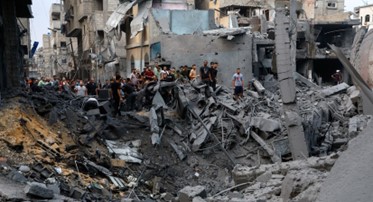
On January 30, 1972, the world watched in horror as British soldiers opened fire on unarmed civil rights demonstrators in Northern Ireland, in what would become known as Bloody Sunday. Fourteen innocent civilians lost their lives that day, and many more were injured physically and emotionally. Yet, as the decades passed, the memory of Bloody Sunday faded from public consciousness, overshadowed by other conflicts and crises. But for those who lost loved ones, the pain and trauma endure, a reminder of the human cost of political turmoil and sectarian strife.
Fast forward to the present day, and we find a world still grappling with the consequences of war and displacement. In the Middle East, millions of Palestinians endure the daily hardships of life under occupation, their voices drowned out by the rhetoric of politicians and the roar of military jets. Yet amid the rubble and despair, there are those who refuse to be silenced, who risk their lives to provide aid and assistance to those in need. These unsung heroes, whether they be doctors treating the wounded or volunteers distributing food and supplies, embody the spirit of solidarity and compassion that transcends borders and boundaries.

But even as we celebrate their courage and resilience, we must also confront our own complicity in perpetuating the cycles of violence and injustice that afflict so many around the world. For every bomb that falls and every bullet that is fired, there are countless civilians who pay the price, their lives forever altered by forces beyond their control. And yet, all too often, their suffering is relegated to the footnotes of history, overshadowed by the grand narratives of power and politics.
So how do we break free from this cycle of forgetting? How do we ensure that the voices of the marginalized and the oppressed are heard, even in the midst of chaos and conflict? Perhaps the answer lies in bearing witness, in refusing to turn away from the harsh realities of war and its aftermath. It requires us to listen to the stories of those who have been silenced, to amplify their voices and demand justice on their behalf.
Moreover, it necessitates a revaluation of our own priorities and prejudices, a recognition that the struggle for peace and justice is not confined to distant shores but is woven into the fabric of our own communities. Whether it’s challenging the narratives of militarism and nationalism or supporting grassroots movements for social change, each of us has a role to play in building a more just and compassionate world.
The forgotten faces of war remind us of the urgent need to confront our collective amnesia and remember the human cost of conflict. From the victims of Bloody Sunday to the refugees fleeing violence and persecution, their stories demand to be heard and their suffering acknowledged. Only then can we hope to break free from the cycle of violence and build a future were peace and justice reigns supreme.
Share this:


State Crime

A year ago, on this day a terrible accident took place. Two trains collided head on: a passenger and a cargo train. The crash was ferocious, following a massive bright explosion, that was heard for miles. The official count of fatalities are 57 dead and over 100 injured, some of whom very seriously, one of whom at least on a medically-induced coma. The term accident implies something that happened unintentionally and unexpectedly. As the story emerged, different elements came to the surface which indicated that what happened, was not unexpected. The people who worked in the train service raised the alarm months, if not years in advance, sending official statements to the relevant departments and the minister for transport. There were several accidents months before the disaster and there were calls to correct the infrastructure, including the signalling system. Several politically motivated appointments in key positions also meant that the people in the organisation at certain levels lacked the expertise and knowledge to work with the complexities of the railways. The employees’ protests were largely ignored as they never received an official response. So, was it an accident, a disaster, or a crime?
I have left the details, names and even the country of the disaster out, for one reason only. This tragedy can happen in any place at any time and for any kind of people. The aftermath leaves people wondering why it happened and if it was preventable. The pain of those who lost loved ones transcends borders, race, and origin. The question posed earlier remains. Worldwide we have seen similar disasters some of which have permanently marked the local and international community. It is the way we deal with the aftermath that will partially answer the question of what this tragedy was. A disaster goes in deep highlighting questions such as; what do people pay taxes for, what is the role of the State and how important is human life?
People in position of power were warned about it beforehand. There were similar incidents that should have signalled that something wasn’t right. There was underfunding and lack of staffing. All of these may have happened separately, but considered together, they cannot support this being an accidental event. It was a disaster waiting to happen. Then the question is whether this event is a crime or not. Crime is usually seen as a social construction of individual behaviour in conflict with social conventions. This focuses crime onto an action by an individual and therefore the motivations and intent focus on the usual gains, opportunity and other personal rewards. This approach largely ignores an entire section of criminology that deals with harm and social injustices. A crime of this magnitude has individual actors who for their own motivations contributed to the disaster. Nonetheless this is something bigger; it encompasses, services, organisations, departments, and ministries. This is a State crime. Different parts of the State contributed to the disaster and once it happened, they tried to provide a harried response on an individual’s fault…human error.
Years ago, in another place the toxic gases of a plant killed and blinded thousands of people; a nuclear cloud was released in another incident and people were made to evacuate their homes for ever. Some years ago, a fault in a type of plane grounded an entire fleet after a couple of crashes. A terrible earthquake which revealed errors in construction and design. Boats full of people sinking and no one seems to take any notice. A similar picture in most disasters: people looking for their loved ones, feeling powerless in front of a State that took decisions to ignore the risk and the calls of the experts. So, what does this train disaster, the plane crashes, the boat sinkings and the earthquake destruction have in common? They are all State crimes. In modern literature we have learnt to recognise them, identify the commonalities, and explain what a State crime is. What we haven’t done as effectively is to find a way to punish those responsible. Each State, like in this train disaster, recoils into providing all necessary information and changing its mechanisms; maybe because for some countries profit is above people, providing of the main intentions behind State crime. Whilst the State delays, the dead await justice.
In memoriam to the 57 and to the millions of victims of state crimes.

 Thoughts from the criminology team