
Home » Policy
Category Archives: Policy

A new model for policing: same old rhetoric, same old politics, same old reality

The Home Secretary’s White Paper ‘From Local to National: A New Model for Policing’ promises a complete revamp of policing in England and Wales. The Northamptonshire Police Federation website provides a fairly good synopsis of what the white paper contains. Although one does hope that they didn’t resort to the use of AI to produce it otherwise they may find themselves going the same way as the beleaguered former chief constable of the West Midlands Police.
When listening to the Home Secretary Shabana Mahmood’ address to parliament regarding these reforms, I am reminded of a timeless quote from Robert Reiner regarding a former Home Secretary, Michael Howard’s address to parliament regarding another Home Office police reform White Paper back in the early 1990s. Michael Howard had stated that ‘the job of the police was to catch criminals’ and Robert Reiner, if I remember the quote correctly, stated that this statement was ‘breathtaking in its audacious simple mindedness’.
My bookshelf used to be full of Home Office White papers regarding police reform. If I went through every one of them, I would find almost all the suggestions, in one form or another, being put forward by this Home Secretary. It is like revisiting my former reality, change for change’s sake to detract from a poor performing government. Although no one could have guessed that Lord Mandelson would quickly hog the news and railroad the political landscape.
The police don’t do themselves any favours, you’ve only got to look at the headlines over the decades to know that. But of course, policing is not easy and sometimes hitting the headlines for the wrong reasons is inevitable. Rarely do the police hit the headlines for the right reasons, not because there aren’t plenty of right reasons, they simply aren’t newsworthy. However, every failure or perceived failure is ammunition for the ambitious politician and police reform is always a headline grabbing option and a distraction from other politically difficult and damning matters.
Let’s be clear, policing doesn’t happen in a vacuum. Policing relies on the public; it relies on other institutions within the criminal justice system and outside of it and it relies on good governance. If the police are underfunded, then the service they deliver to the public is substandard and this then dents confidence in the police which in turn impacts public co-operation. If the other institutions within the criminal justice system are poorly funded such as the courts, then it doesn’t matter what the police do, cases do not get to court in a timely manner, the public withdraw their support and cases collapse. If prisons are overcrowded due to lack of funding and other issues, the courts can’t function correctly and the public lose confidence. As an aside remember the furore around the wrong prisoners being released and the number of prisoners wrongly released over a year. Funny how that seems to have disappeared from the news.
But the problems for policing and the rest of the judicial system pale into insignificance when compared to the issues with underfunding in areas of social services, welfare, the NHS, education and so much more. It is easy to point to policing when the key areas that impact the public the most are decimated. People don’t just commit crime because they are greedy, they don’t resort to violence for absolutely no reason. And it doesn’t take a rocket scientist to work out that if you stop supporting young people, stop giving them hope for a future, stop keeping them engaged in meaningful activities when they are out of school then you will see crime and anti-social behaviour spiral out of control. And of course, its not just young people that feel the impact. Not so long ago there was a movement towards defunding the police. The ideas behind the movement were sound but I think perhaps a little naïve. But what was right was the idea of pouring more money into welfare and youth services. Crime is so much more than just policing, and the police have very little control over it, despite all the rhetoric.
As for policing, the white paper is just a rehash of the same old ideas and another way of wasting public money, not dissimilar to that in 2006 when another Home Secretary decided on police mergers which saw millions spent before the idea was shelved as too expensive. The police have adapted to issues identified by HMIC prior to the proposed mergers in 2006. Collaboration between forces works well, saves money and enables smaller forces to deal with large scale issues. There is no evidence anywhere that big is better. In fact there is plenty of evidence to suggest that it may not be.
If the police have retracted from neighbourhood policing it is because of underfunding. Austerity measures introduced in 2010/11 decimated police forces and their ability to deliver both neighbourhood and response policing. Neighbourhood policing became a luxury and coincidentally was also the area where instant savings could be made. Police Community Support Officers could be shed because unlike police officers, they can be made redundant. As for vetting, something that has grabbed the headlines, well what did you expect? Cut the budgets and those important but less immediate functions are also decimated. Add to this the political pressure to recruit 20,000 officers in a short space of time and you have a recipe for disaster.
I do wonder whether those chief officers that support the latest police reform agenda do so because they really understand policing and its history or because they are naïve or ambitious or perhaps a bit of both. To return to Robert Reiner, the reforms are quite simply ‘breathtaking in their audacious simple mindedness’ and the sooner they are shelved the better.
Share this:


What price justice?

It was reported in the news a couple of days ago that a super complaint has been lodged against the police in England and Wales in respect of their handling of sexual offence cases (The Guardian 15.12). Not long before that article was published, another gave us the news that prisoners have erroneously been released from prison (BBC 5.11). These stories sandwiched another, that concerning the abolition of trial by jury for offences attracting anything less than three years imprisonment (BBC 02.12). The rationale behind these proposals is the reduction of the appalling backlog of court cases awaiting trial.
These stories beg the very simple question what an earth is going on with the criminal justice system? To say it is in crises would be an understatement. The system is broken, and it is hard to see how it can be fixed but perhaps it isn’t difficult to see how it got into its present state.
The justice process is complex and above all else, for it to work effectively, it is costly and by its very nature, it is inefficient. And this has presented problems for successive governments over decades. The conundrum, how to deliver a cost effective, efficient criminal justice system. Put simply the mantra seems to have been how do you achieve cheap justice?
The various components of the criminal justice system are interdependent, when one part fails, it has a knock-on effect to the others. Each part of the criminal justice system has seen so called efficiency and economy drives over the decades, and the consequence has been a cut in service across the board.
How many times do we hear complaints that the police just don’t turn up when a crime is reported or that they are disinterested? But have a look at the sustained cuts in budgets, the burgeoning costs of policing as the social and technological worlds change around us and the constant reprioritising of policing efforts and, it is little wonder that there is no one to turn up or that the crime you are reporting just isn’t important enough. Or maybe the people that do the policing are simply just worn out, disenchanted and frustrated by a system that fails their efforts at every turn. They even conspire to fail themselves.
And what of the Crown Prosecution Service (CPS)? Understaffed and under crude directions to enforce tests and codes to minimise court cases as best they can. With a little bit of research, you can find complaints against the CPS relating to the changing of the threshold in relation to sexual offences. To some extent CPS lawyers act as judge and jury before a defendant is even charged. Economic perhaps, effective, no. This has a knock-on effect to the police who then pre-empt that decision making. No point in sending a file to the CPS just to see it knocked back. The CPS must of course also have a mind to the backlog in the courts, no point sending a case there if it won’t be heard for months, if not years on end. And then the courts. The consistent closure of courts, both magistrates and crown over the years beggars belief. There is no local justice now, if you are defendant, witness or victim, you will be travelling miles to get to the allotted court. And if you do make it, the chance of your case being heard on that day is a lottery. As for legal aid, a pipe dream. Defendants in court trying to defend themselves and having to be assisted by the court clerk because quite frankly, they do not have a clue. But then who would? All of this presupposes the case gets to court in a timely fashion. You try remembering what happened 3 years ago when cross examined by a solicitor or barrister.
And prisons, well, overcrowded, understaffed and failing to provide anything but the basics, if that. Many a report suggests a crumbling prison estate and inhumane conditions within prisons. There has to be something fundamentally wrong with a system that allows prisoners to walk out the gates and then sees vast sums of money and resource poured into trying to find them. Efficient, or effective, not really. As for rehabilitation, don’t even bother thinking about it.
And what of you and I, the public? What faith do you have in the criminal justice system? Is it little wonder that victims will not report crimes, and if they do, they quickly lose interest in supporting a prosecution. If the police rely on the public to help them investigate cases, what hope have they got if the public have no faith in them or the rest of the system?
The problem with successive governments is that they have been too keen to cut costs without understanding or caring about the impact. And they are too quick to judge when things go wrong, pointing the finger anywhere but at themselves. They fail to see the system as a whole; they just seem to fail to see.
Justice costs money. Cutting cases that can go to trial by jury simply displays a lack of interest in justice or incompetence in governing or perhaps both. A government that fails to deliver justice for its citizens is failing in its fundamental duty as a government. The problem is, it’s not only this government that has failed us; the failures go a long way back and any attempt to fix the issues requires a fundamental shift in policy and a significant injection of public money that is just not available. Well, that’s what they will have us believe anyway.
Share this:


A thin veneer of respectability – management culture in uncertain times

I’ve long been interested in management culture in organisations, particularly policing and other organisations that provide a service, rather than a product per se. Although, management jargon might suggest that, in thinking outside the box, the service is a product, produced by a human resource, and therefore productivity is as easy to measure as that of a product coming off a conveyor belt; nothing like a bit of Neo-Taylorism (Pollitt, 1993) to get the party started.
Anyway, enough of that, the other day in a student discussion I was talking about policing and ethics and professionalism and all that stuff. Stuff that, I was trying to convey, was easier said than done because the social world is both complex and complicated. We happened to discuss the Mission and Vision of New York Police, and it reminded me of research carried out regarding how the New York Police recorded, or more to the point failed to record, crimes (Eterno and Silverman, 2012). Some of the crimes were very serious and at least one case led to an offender going on to commit more crime, when had the original crime been recorded, he might well have been caught before inflicting further serious harm.
This all occurred in the nineties at a time when crime in New York was through the roof and when Mayor Guiliani and Commissioner Bratton were at the helm. Under their stewardship, crime came down, detection rates went up, and Bratton was hailed as a hero with a suggestion that he could become the new commissioner of the Metropolitan Police in this country. Those of you that are old enough to remember will know it was more than just mooted by government sources. Zero Tolerance policing (based on the much-criticised Broken Windows Theory) had been forged in New York and Jack Straw our home secretary was talking about it being introduced here. The so-called success also lay in the fact that CompStat had been introduced in New York where borough commanders were publicly hauled over the coals and humiliated if their crime figures were not up to scratch. The fact that they had little or no control over crime (Hough, 1987), and the reduction of crime had more to do with the declining crack market (Bowling, 1999), was neither here nor there. What Bratton and Guiliani had done was to throw a thin veneer of respectability over the crime problem.
Eterno and Silverman (2012) through their research, however, threw a whole new light on what turned out to be corrupt practices and, research in England and Wales began to throw up the same issues in crime recording practices on this side of the ‘pond’ (Her Majesty’s Inspectorate of Constabulary, 1999; 2000). In this country the practices emanated from government’s preoccupation with statistics and the measurement of success through what can only be described as bean counting or what was officially known as objectives and Key Performance Indicators. The Audit Commission and Her Majesty’s Inspectorate of Constabulary (HMIC) applied pressure on forces to ‘perform’ and league tables were developed and published, the media love league tables. The ideal place to be; mid table. That way no-one scrutinised what you were doing. Crime figures were massaged to produce the desired results. There was a whole industry in examining and manipulating statistics. If you were at the bottom of the table, then interventions were put in place. An action plan was imposed, the rationale behind the figures was ignored, this was not about quality, although the action plans were dressed up as quality improvement, this was simply about applying sufficient pressure to get forces to produce pleasing statistics. The pressure was applied at the top, but very quickly through managerial manoeuvring, became a problem for those at the bottom. Chief constables were quick to point out the failures of departments and individuals in departments. CompStat but in a different guise came to the fore. What became clear was that those at the bottom were supposedly, both ‘lazy and incompetent’. If they weren’t, they were certainly made to feel that they were.
The corrupt practices that ensued (manipulation of crime statistics, misclassification of crimes, failure to record crimes, detection of crimes that were not really detected) were a direct consequence of overburdened frontline staff being charged with producing results that were not within their control and managers, rather than managing expectations, directing operations through innuendo and veiled threats. Or in some cases such as CompStat, very direct threats. Officers that were ignorant of the issues such practices might cause, obliged and were fêted as being exemplary, others that were not compliant, perhaps because they knew what the consequences were to the public, were shunned and humiliated, until they bowed to the inevitable. The bottom line was simply to cheat and not get caught, forget integrity and ethics, those values were just not worth the stress. Although of course, the cheats if caught, were on their own as managers pointed to current published policy and rules (not the real policy and rules though). Some forces ended up in deep water as whistle-blowers spilled the beans on what was going on and the press had a field day. Institutional reputations took a major blow and to this day the Office for National Statistics carries a rider about the validity of police statistics.
Over a period of time, to some extent, the issues of performance management were addressed at government level, but the culture had become so inculcated that problems continued and manifest themselves in different ways to this day.
What of this tale? My observations are that other organisations are not immune to this phenomenon particularly in times of financial stress and political uncertainty. A management culture that either wittingly or unwittingly pushes staff on the front line, to make unethical decisions may produce a thin veneer of respectability, but they fail society miserably and risk significant reputational damage whilst doing so.
It seems to me that organisations can learn a great deal from the historic mismanagement of policing and the lack of ethical leadership in uncertain times.
References
Bowling, B. (1999) The rise and fall of New York murder: Zero tolerance or crack’s decline? The British Journal of Criminology, 39 (4), p.p. 531–554.
Eterno, J. A. and Silverman E. B. (2012) The Crime Numbers Game: Management by Manipulation. Boca Raton: CRC Press
Her Majesty’s Inspectorate of Constabulary (1999) Police Integrity: securing and maintaining public confidence. London: Her Majesty’s Inspectorate of Constabulary.
Her Majesty’s Inspectorate of Constabulary (2000) On the Record: Thematic Inspection Report on Police Crime Recording, the Police National Computer and Phoenix Intelligence System Data Quality. London: Her Majesty’s Inspectorate of Constabulary.
Hough, M. (1987) Thinking About Effectiveness. In Reiner, R. and Shapland, J. (eds.), Why Police? Special Issue on Policing in Britain: British Journal of Criminology, 27, 1, p.p. 70-79
Pollitt, C. (1993) Managerialism and the Public Services: Cuts or Cultural Change in the 1990’s. 2nd edn. Oxford: Blackwell.
Share this:

Corruption: A Very Noble Pastime

Only a couple of months ago there was a furore about the current prime minister Sir Keir Starmer receiving gifts from Lord Alli. He wasn’t the only one to benefit but it rather tainted the Labour Party’s victory in the election and made a mockery of promises to clean up politics. Let’s not get too hung up about political parties though, there is plenty of previous evidence of other parties dabbling in, let’s call them, immoral practices that benefit the individual.
I shouldn’t have been surprised then to hear about some research carried out by Tortoise that suggested a quarter of the members of the House of Lords do two thirds of the work in the upper chamber. They found that approximately 210 members of a total of 830 are actively involved in the business of the upper chamber and the rest well, your guess is as good as mine. So what you might ask, we have some rather lazy nobles, but they don’t get paid unless they turn up. Well true, but then if you read some other research, it becomes apparent that there are vast sums of money being paid for doing nothing. Turning up is one thing, working is quite something else.
‘Over the course of the last parliament, £400,000 has been paid to 15 peers who have claimed attendance for at least 80 per cent of days in at least one month without any discernible activity in that time. Some have made repeated claims of this kind over the parliament’ (Tortoise, 2024).
Up till now I’ve always had a begrudging respect for the upper chamber, particularly when they have knocked back poor, ill thought out or inappropriate legislation conjured up by the government. That’s not to say I haven’t questioned the manner in which the chamber is constituted but I have felt a sense of relief when government have had a hard task railroading through some of their legislation. But it doesn’t seem to matter which chamber it is in parliament, there are a significant number of individuals in both houses whose actions can only be described as corrupt. From the expenses scandal in 2009 to the latest failures to declare interests, it becomes clear that corruption is endemic.
It seems to me during an era of cuts in public services, the withholding of funds to the most vulnerable designed to help them keep warm, and job losses in sectors where past and present policies make organisations unsustainable, the disregard for proper financial management and constraint in government is immoral. I will leave the debate about whether we should have governance in its current format to others who probably know better than I do but there is clearly a need to abolish the policies and processes that allow for what can only be described as a corrupt noble gravy train.
The Nolan Principles setting out the standards that those involved in public life should adhere to are still in existence and expected to be complied with and yet I fail to see how so many members of our great institutions have even come close to adherence. In case you are unsure what those principles are, I have listed them below and I will leave you to judge whether the nobility stand up to scrutiny.
- Selflessness
- Integrity
- Objectivity
- Accountability
- Openness
- Honesty
- Leadership
References
BBC (2019) MPs’ expenses: The Legacy of a Scandal [online] Available at https://www.bbc.co.uk/news/uk-politics-48187096 Accessed: 22/11/2024.
BBC (2024) Keir Starmer received more clothes worth £16,000 [online] Available at https://www.bbc.co.uk/news/articles/cdd4z9vzdnno Accessed: 22/11/2024.
Information Commissioner’s Office (ND) MP’s expenses scandal [online] Available at https://ico.org.uk/for-the-public/ico-40/mp-expenses-scandal/ Accessed: 22/11/2024
Tortoise (2024a) Lording it: some peers claim £400,000 for little discernible work, [online] available at https://www.tortoisemedia.com/2024/11/20/lording-it-some-peers-claim-400000-for-little-discernible-work/, Accessed: 22/11/2024
Tortoise (2024b) The Lords’ work: Tortoise’s Peer Review [online] available at https://www.tortoisemedia.com/2024/11/20/the-lords-work-tortoises-peer-review/, Accessed: 22/11/2024.
UK Parliament (ND) Standards, [online] available at https://www.parliament.uk/about/mps-and-lords/members/standards/, Accessed: 22/11/2024.
Share this:


Zemiological Perspective: Educational Experiences of Black Students at the University of Northampton

As a young Black female who has faced many challenges within the education system, particularly related to behavioral issues, I noticed how the system can unintentionally harm black students. I observed that Black children’s experiences in the education system are not always viewed from a deviant perspective, because they are not inherently deviant. The institutional harm faced by Black students is not always a ‘crime’ nor is it illegal, yet it is profoundly damaging.
This realisation prompted me to adopt a zemiological perspective, drawing upon the work of Hillyard et al. (2004) to highlight the subtle yet impactful harms faced by Black students in the educational system. My primary objective was to uncover the challenges these students face, as outlined in my initial research question: ‘To what extent can the experiences of Black students in higher education be understood as a form of social harm?’ To achieve this, I analysed the educational experiences of Black students at the University of Northampton. This involved reviewing the university’s access and participation plans, which detail the performance, access, and progression of various demographics within the institution, with a particular focus on BAME students.
Critical race theory (CRT) was the guiding theoretical framework for this research study. CRT recognises the multifaceted nature of racism, encompassing both blatant acts of racial discrimination and subtler, systemic forms of oppression that negatively impact minority ethnic groups (Gillborn, 2006). This theoretical approach is directly correlated to my research and was strongly relevant. This allowed me to gain insight into the underlying reasons behind the disparities faced by Black students in higher education. As well as enabling me to unpack the complexities of racism and discrimination, providing a comprehensive understanding of how these issues manifest and persist within the educational landscape.
Through conducting content analysis on the UON Access and Participation Plan document and comparing it to sector averages in higher education, four major findings came to light:

Access and Recruitment: The University of Northampton has made impressive progress in improving access and recruitment for BAME students, fostering diversity and inclusivity in higher education, and surpassing sector standards. Yet, while advancements are apparent, there remains a need for more comprehensive approaches to tackle systemic barriers and facilitate academic success across the broader sector.
Non-Continuation: Alarmingly, non-continuation rates among BAME students at the University of Northampton have surpassed the sector average, indicating persistent systemic obstacles within the education system. High non-continuation rates perpetuate cycles of disadvantage and limit opportunities for personal and professional growth.
Attainment Gap: Disparities in academic attainment between White and BAME students have persisted and continue to persist, reflecting systemic inequalities and biases within the academic landscape. UON is significantly behind the sector average when it comes to attainment gaps between BAME students and their white counterparts. Addressing the attainment gap requires comprehensive approaches that tackle systemic difficulties and provide targeted support to BAME students.
Progression to Employment or Further Study: UON is also behind the sector average in BAME students progression in education or further study. BAME students face substantial disparities in progression to employment or further study, highlighting the need for collaborative efforts to promote diversity and inclusivity within industries and professions. Addressing entrenched biases in recruitment processes is essential to fostering equitable opportunities for BAME students.
Contributions to Research: This research deepens understanding of obstacles within the educational system, highlighting the effectiveness of a zemiological perspective in studying social inequalities in education. By applying Critical Race Theory, the study offers insights that can inform policies aimed at fostering equity and inclusion for Black students.
The findings hold practical implications for policy and practice, informing the development of interventions to address disparities and create a more supportive educational environment. This research significantly contributes to our understanding of the experiences of Black students in higher education and provides valuable guidance for future research and practice in the field.
Aside from other limitations in my dissertation, the main limitation was the frequent use of the term ‘BAME.’ This term is problematic as it fails to recognise the distinct experiences, challenges, and identities of individual ethnic communities, leading to generalisation and overlooking specific issues faced by Black students (Milner and Jumbe, 2020). While ‘BAME’ is used for its wide recognition in delineating systemic marginalisation (UUK 2016 cited in McDuff et al., 2018), it may conceal the unique challenges Black students face when grouped with other minority ethnic groups. The term was only used throughout this dissertation as the document being analysed also used the term ‘BAME’.
This dissertation was a very challenging but interesting experience for me, engaging with literature was honestly challenging but the content in said literature did keep me intrigued. Moving forward, i would love Black students experiences to continue to be brought to light and i would love necessary policies, institutional practises and research to allow change for these students. I do wish i was more critical of the education system as the harm does more so stem from institutional practices. I also wish i used necessary literature to highlight how covid-19 has impacted the experiences of black students, which was also feedback highlighted by my supervisor Dr Paula Bowles.
I am proud of myself and my work, and i do hope it can also be used to pave the way for action to be taken by universities and across the education system. Drawing upon the works of scholars like Coard, Gillborn, Arday and many others i am happy to have contributed to this field of research pertaining to black students experiences in academia. Collective efforts can pave the way for a more promising and fairer future for Black students in education.
References
Gillborn, D. (2006). Critical Race Theory and Education: Racism and anti-racism in educational theory and praxis. Discourse: Studies in the Cultural Politics of Education, 27 (1), 11–32. [Accessed 21 April 2024]
Hillyard, P., Pantazis, C., Tombs, S. and Gordon, D., (Eds), (2004). Beyond Criminology: Taking Harm Seriously, London: Pluto Press.
Milner, A. and Jumbe, S., (2020). Using the right words to address racial disparities in COVID-19. The Lancet Public Health, 5(8), pp. e419-e420
Mcduff, N., Tatam, J., Beacock, O. and Ross, F., (2018). Closing the attainment gap for students from Black and minority ethnic backgrounds through institutional change. Widening Participation and Lifelong Learning, 20(1), pp.79-101.
Share this:


Navigating the Realm of Harm Reduction in the Midst of Chaos
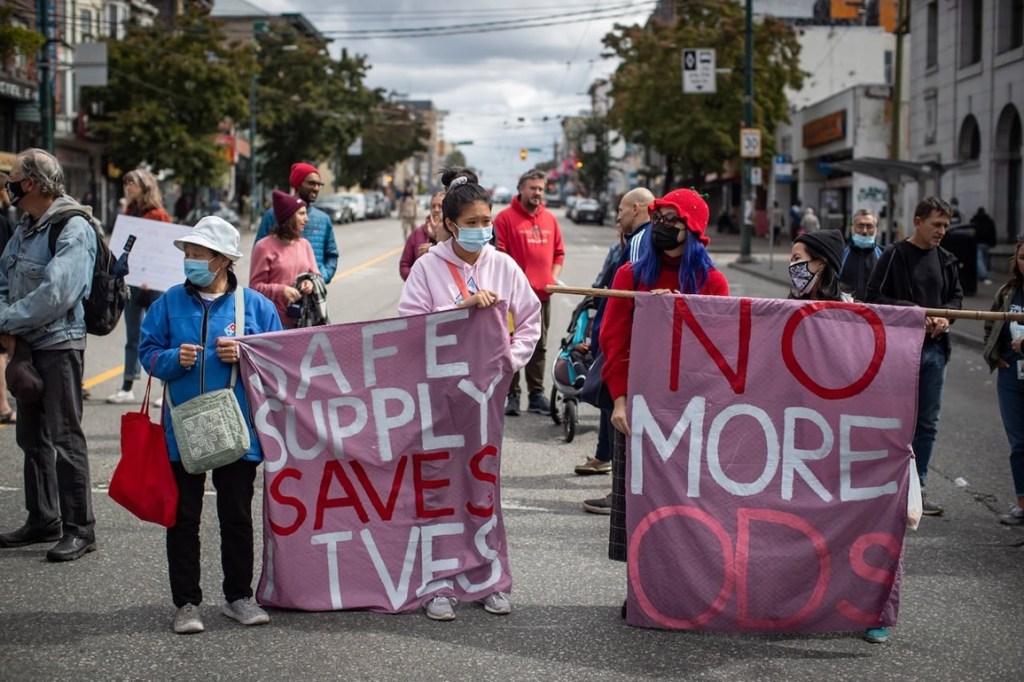
In recent years, Canada has emerged as a trailblazer in progressive drug policy by embracing a bold approach to decriminalization. This paradigm shift represents a departure from the traditional punitive stance toward drug offenses, instead prioritizing harm reduction strategies. As the nation navigates the complex terrain of drug policy reform, it becomes evident that this move holds the promise of addressing public health issues more effectively.
The decriminalization of drugs in Canada is rooted in a recognition of the failure of punitive measures to curb substance abuse. Rather than treating drug addiction as a criminal issue, the emphasis is now on approaching it as a public health concern. By lifting criminal penalties for possession of small amounts of drugs, the Canadian government aims to break the cycle of imprisonment and provide individuals struggling with addiction access to the help they need.
At the core harm reduction is a guiding principle in Canada’s evolving drug policy. Instead of focusing solely on preventing drug use, the emphasis has shifted to minimizing the negative consequences associated with it. This approach includes the distribution of clean needles, supervised injection sites, and access to overdose-reversing medications. By adopting harm reduction strategies, Canada aims to protect the well-being of both individuals using drugs and the broader community.
The decision to decriminalize drugs draws inspiration from the success of Portugal’s approach. In 2001, Portugal decriminalized the possession and use of all drugs, opting for a health-focused model. Over the years, Portugal has witnessed a decline in drug-related deaths, HIV infections, and problematic drug use. Canadian policymakers are eager to replicate these positive outcomes and shift the narrative around drug use from punishment to rehabilitation.
Despite the potential benefits, the decriminalization of drugs in Canada has sparked debates and concerns. Many people have argued that lenient drug policies may contribute to increased drug use, while others worry about the potential strain on public resources for addiction treatment. Furthermore, investigative reporter Tyler Oliveira has demonstrated the damaging effects of drug misuse and homelessness in Vancouver. From watching his investigation, I wonder whether the Canadian government could better use their resources to tackle issues pertaining to homelessness, rather than creating a wider problem of social ills. While there are calls to treat people with issues of addiction more humanely in Canada, Oliveira’s documentary is shocking and, in many ways, frightful. With images of large amounts of methamphetamine users unable to walk and becoming extremely violent to healthcare workers and the general public I wonder if this more towards progressive policy has gone too far (I don’t know how I would feel inhaling meth fumes on my way to my local shop).
Striking a balance between personal freedom and public welfare remains a challenge, but advocates believe that the emphasis on harm reduction will ultimately lead to better outcomes for everyone….
Decriminalization opens the door for more community involvement in addressing drug-related issues. Local initiatives, grassroots organizations, and community outreach programs gain significance as they become crucial players in the broader strategy of harm reduction. By empowering communities, Canada aims to foster a collaborative and compassionate approach to tackling the complex issue of drug addiction.
Canada’s journey toward the decriminalization of drugs represents a paradigm shift in the global war on drugs. By embracing harm reduction as a cornerstone of its strategy, the nation aims to prioritize the health and well-being of its citizens over punitive measures. The lessons learned from Portugal and other progressive models underpin the potential for positive change. As Canada continues to navigate the complexities of drug policy reform, the emphasis on harm reduction holds the promise of transforming the narrative around drug use and addiction. Only time will tell if this bold approach will lead to a healthier, more compassionate society.
Share this:


A Snapshot of My Dissertation: Portuguese Drug Decriminalisation and Some Other Things
I submitted my dissertation back in April, and now the dust has settled I thought it would be good to share the most interesting parts of my research, think of this blog post as an abridged version of my dissertation. Towards the end I’ve also included some tips for completing a dissertation, along with some reading you might like to do if you found this interesting.
What Was my Research About?
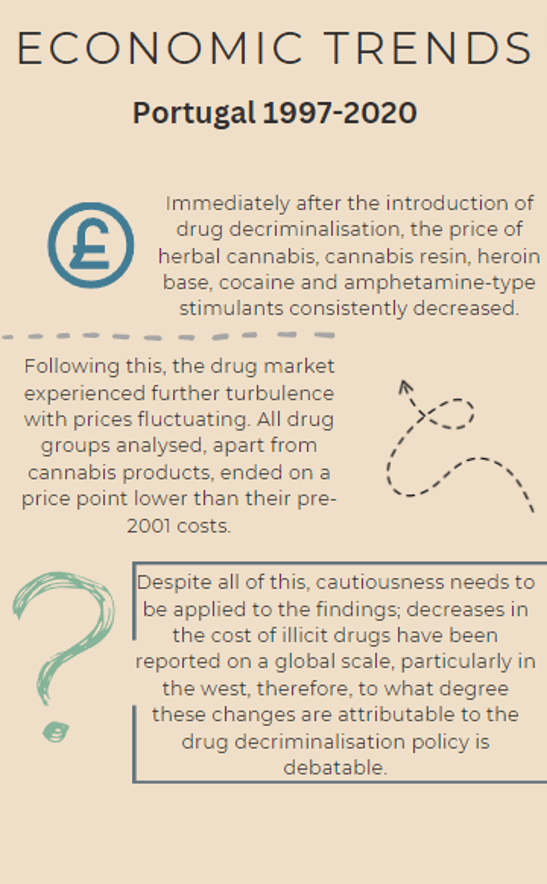
My research was about two main areas; Firstly, I wanted to assess the effects of Portugal’s 2001 drug policy whereby all illicit drugs were decriminalised, meaning drug offences relating to personal possession result in a civil punishment rather than a criminal punishment. I assessed key indicators within Portuguese society, gathering data from international, European and national databases which measured public health trends, criminal justice trends and economic trends. Some fields of data I looked at included prices of drugs at market level, drug seizure data, HIV/ AIDS rates among people who inject drugs and the Portuguese prison population.
The second part of my research involved understanding whether a drug decriminalisation policy similar to Portugal’s could currently happen in the UK. I researched this by performing a discourse analysis on drug related House of Commons debate occurring between the years 1970- 2023, selecting roughly one debate every two years. By doing this, I was able to analysis common themes across the years, understanding the political barriers which may mean drug decriminalisation is not a feasible policy idea at the moment given the political attitude and climate within the House of Commons when it comes to illicit drug policy.
What Did I Find Out?
Look through the slideshow below to view summaries of my findings.



Some Final Comments and Conclusions:
Generally, my research found that Portuguese drug decriminalisation correlated with effects that can be seen as positives. Of course, my research needs to be looked at critically, I don’t claim that all of the societal indicators are directly attributable to the drug decriminalisation policy, however, the correlations that were found are promising. Policy is always a really complex, multi-faceted topic and it would be simplistic to suggest otherwise.
So is a drug decriminalisation policy likely to happen in the UK? The short answer is probably not very likely at all. My discourse analysis pointed towards five decades of debate which was hyper focused on a law and order approach to drug use, a fixation on low level cannabis use and an insistence on the idea that deterrence measures and the war on drugs is actually working. The debates felt stagnant, with new and progressive approaches being hindered by penal populism and ‘tough on crime’ stances.
During my research I found some really interesting reads and different points of view that I hadn’t considered before. I’ve listed some of my favourite pieces below if you’d like to have a read further into this subject.
- Cebral T.S. (2017) “The 15th anniversary of the Portuguese Drug Policy: Its history, its success and its future,” Drug Science, Policy and Law, 3. https://doi.org/10.1177/2050324516683640
- Eastwood, N., Fox, E. and Rosmarin, A. (2016) “Portugal,” in A quiet revolution: Drug decriminalisation across the Globe. London, UK: Release drugs the law and human rights. https://www.release.org.uk/sites/default/files/pdf/publications/A%20Quiet%20Revolution%20-%20Decriminalisation%20Across%20the%20Globe.pdf
- Goldstein, P.J. (1985) “The drugs/violence nexus: A Tripartite Conceptual Framework,” Journal of Drug Issues, 15(4). https://doi.org/10.1177/002204268501500406
- Jacques, S. and Allen, A. (2015) “Drug market violence: Virtual anarchy, police pressure, predation, and retaliation,” Criminal Justice Review, 40(1). https://doi.org/10.1177/0734016814553266
All of the data used is available from The Hansard Archives, European Monitoring Centre for Drugs and Drug Addiction, European Centre for Disease Prevention and Control and The World Prison Brief. Also, I used Taguette to analyse my qualitative data, it’s totally free and it was so useful.

Share this:


Is Criminology Up to Speed with AI Yet?
On Tuesday, 20th June 2023, the Black Criminology Network (BCN) together with some Criminology colleagues were awarded the Culture, Heritage, and Environment Changemaker of the Year Award 2023. The University of Northampton Changemaker Awards is an event showcasing, recognising, and celebrating some of the key success and achievements of staff, students, graduates, and community initiatives.
For this award, the BCN, and the team held webinars with a diverse audience from across the UK and beyond to mark the Black History Month. The webinars focused on issues around the ‘criminalisation of young Black males, the adultification of Black girls, and the role of the British Empire in the marking of Queen Elizabeth’s Jubilee.’. BCN was commended for ‘creating a rare and much needed learning community that allows people to engage in conversations, share perspectives, and contextualise experiences.’ I congratulate the team!
The award of the BCN and Criminology colleagues reflects the effort and endeavour of Criminologists to better society. Although Criminology is considered a young discipline, the field and the criminal justice system has always demonstrated the capacity to make sense of criminogenic issues in society and theorise about the future of crime and its administration/management. Radical changes in crime administration and control have not only altered the pattern of some crime, but criminality and human behaviour under different situations and conditions. Little strides such as the installation and use of fingerprints, DNA banks, and CCTV cameras has significantly transformed the discussion about crime and crime control and administration.
Criminologist have never been shy of reviewing, critiquing, recommending changes, and adapting to the ever changing and dynamic nature of crime and society. One of such changes has been the now widely available artificial intelligence (AI) tools. In my last blog, I highlighted the morality of using AI by both academics and students in the education sector. This is no longer a topic of debate, as both academics and students now use AI in more ways than not, be it in reading, writing, and formatting, referencing, research, or data analysis. Advance use of various types of AI has been ongoing, and academics are only waking up to the reality of language models such as Bing AI, Chat GPT, Google Bard. For me, the debate should now be on tailoring artificial intelligence into the curriculum, examining current uses, and advancing knowledge and understanding of usage trends.
For CriminologistS, teaching, research, and scholarship on the current advances and application of AI in criminal justice administration should be prioritised. Key introductory criminological texts including some in press are yet to dedicate a chapter or more to emerging technologies, particularly, AI led policing and justice administration. Nonetheless, the use of AI powered tools, particularly algorithms to aid decision making by the police, parole, and in the courts is rather soaring, even if biased and not fool-proof. Research also seeks to achieve real-world application for AI supported ‘facial analysis for real-time profiling’ and usage such as for interviews at Airport entry points as an advanced polygraph. In 2022, AI led advances in the University of Chicago predicted with 90% accuracy, the occurrence of crime in eight cities in the US. Interestingly, the scholars involved noted a systemic bias in crime enforcement, an issue quite common in the UK.
The use of AI and algorithms in criminal justice is a complex and controversial issue. There are many potential benefits to using AI, such as the ability to better predict crime, identify potential offenders, and make more informed decisions about sentencing. However, there are also concerns about the potential for AI to be biased or unfair, and to perpetuate systemic racism in the criminal justice system. It is important to carefully consider the ethical implications of using AI in criminal justice. Any AI-powered system must be transparent and accountable, and it must be designed to avoid bias. It is also important to ensure that AI is used in a way that does not disproportionately harm marginalized communities. The use of AI in criminal justice is still in its early stages, but it has the potential to revolutionize the way we think about crime and justice. With careful planning and implementation, AI can be used to make the criminal justice system fairer and more effective.
AI has the potential to revolutionize the field of criminology, and criminologists need to be at the forefront of this revolution. Criminologists need to be prepared to use AI to better understand crime, to develop new crime prevention strategies, and to make more informed decisions about criminal justice. Efforts should be made to examine the current uses of AI in the field, address biases and limitations, and advance knowledge and understanding of usage trends. By integrating AI into the curriculum and fostering a critical understanding of its implications, Criminologists can better equip themselves and future generations with the necessary tools to navigate the complex landscape of crime and justice. This, in turn, will enable them to contribute to the development of ethical and effective AI-powered solutions for crime control and administration.
Share this:


Cash Strapped, Vote-Buying, Petroleum Scarcity, and the Challenge of a 21st Century Election
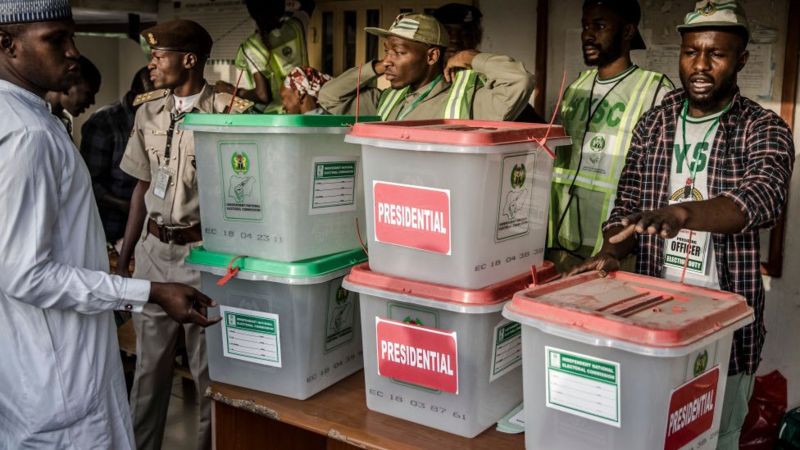
Democratic elections are considered an important mechanism and a powerful tool used to choose political leaders. However, the level of transparency and the safety of votes, the electorates, and the aspirants as recent elections in supposed strong democracies indicate is not a given. Even more, in weak and fragile states, voters grapple with uncertainties including the herculean task of deciding on whom or perhaps what to pledge allegiance to?
Nigerians face such uncertainties as over 93 million voters are set to decide the new leadership of the most populous country in Africa in less than 24 hours. Three contestants: Ahmed Bola Tinubu of the ruling All Progressive Congress (APC); Peter Obi of the Labour Party(LP); and Atiku Abubakar of the Peoples Democratic Party (PSP) are considered the major contestants of the coveted seat of the presidency. All 3 contestants are neither strangers to political power nor free of controversies. Nevertheless, a plethora of problems awaits the successful candidate, including a spiking impatience with government policies from the populace.
Since assuming office in 2015, President Muhammadu Buhari has consciously implemented numerous policies aimed at changing the tide of the crippling economy of Nigeria. One of this was tightening control of foreign exchange and forex restrictions to minimise pressure on the weak exchange rate of the naira against other currencies, and to encourage local manufacturing. Furtherance to this, the government implemented more restrictions including closing all its land borders in August 2019 to curtail smuggling contrabands and to boost agricultural outputs. These policies have been criticised for increasing the hardship of the mostly poor masses and failing to yield desired goals, despite its resulting in an increase in local production of some agricultural products.
The aviation sector and multinational companies were also heavily impacted by the forex restrictions. International airliners were unable to access and repatriate their business funds and profits. As a result, some suspended operations while some multinationals closed down completely. Flawed policy articulation and implementation and a slow or total failure to respond to public disenchantment has been the bane of the 8 years of Buhari regime which ends in a few months. While the masses grappled with surviving movement restrictions during the Covid-19 lockdown, palliative meant for to ease their suffering were hoarded for longer than necessary, thereby provoking series of mass looting and destruction of the storage warehouses.
Demands for action and accountability over police reform also assumed a painful dimension. On 20 October 2020, peaceful protesters demanding the abolishment of a notoriously corrupt, brutal, rogue, and stubborn police unit called SARS were attacked by government forces who killed at least 12 protesters. Incidents as this supports Nigeria’s ranking as an authoritarian regime on the democratic index. Unsurprisingly, the regime appears numb to the spate of violence, insecurity, and recurring killings perpetrated by a complex mix of militias, criminal groups, terrorists, and state institutions as the #EndSARS massacre demonstrates. Thus, a wave of migration among mainly skilled and talented young Nigerians now manifests as a #Japa phenomenon. The two most impacted sectors, health and education ironically supply significant professionals in nations where the political class seek medical treatment or educate their children while neglecting own sectors.
Certainly, the legacy of the Buhari regime would be marred by these challenges which his party presidential candidate and prominent party stalwarts have distanced from. Indeed, they fear electorates would vote against the party as a protest over their suffering. Suffice it that Nigerians lived through the previous year in acute scarcity and non-availability of petroleum products, which further deepened inflation. Currently, cash scarcity is causing untold hardship due to the implementation of a currency redesign and withdrawal limits policy. The timing of the implementation of the policy coincides with the election and is thought to aim at curtailing vote-buying as witnessed in party primary elections. However, there is no guarantee that bank officials would effectively implement the policy.
Thus, as Nigeria decides, the 3 contestants present different realities for the country. For some, voting in the ruling APC candidate who has a questionable history could mean a continuation of the woes endured during the Buhari regime. The PDP candidate who was instrumental in the 2015 election of Buhari has severally been fingered for numerous controversies and corruption, despite having not been prosecuted for any. Similarly, allegations levelled against the LP candidate who has found wide popularity and acceptance amongst the young population has not resulted in any prosecution. However, while the candidate is popular for his anti-establishment stance and desire to change the current system, it is unclear if his party which has no strong political structure, serving governors, or representatives can pull the miracle his campaign has become associated with to win the coveted seat.
Share this:


A race to the bottom
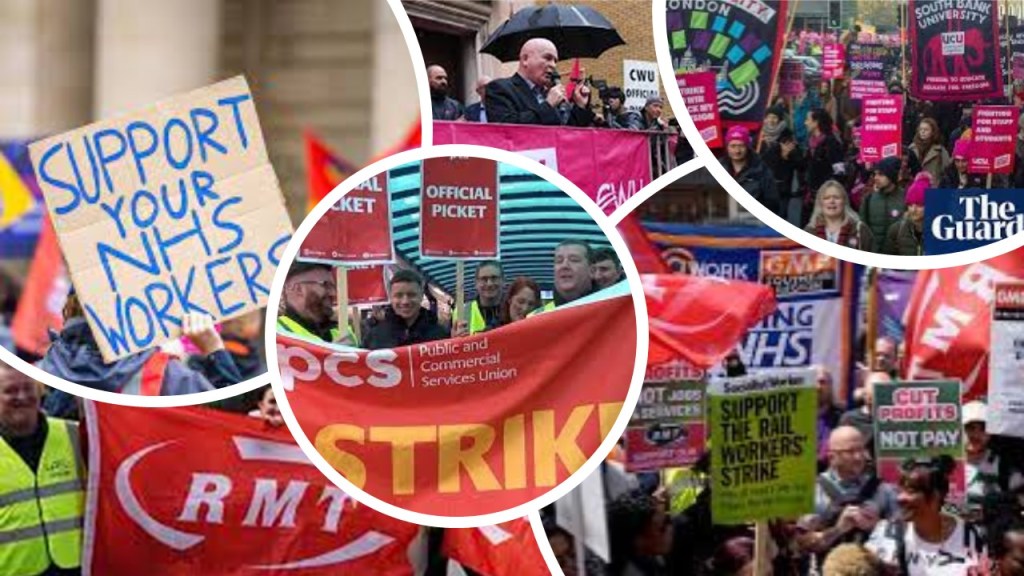
Happy new year to one and all, although I suspect for many it will be a new year of trepidation rather than hope and excitement.
It seems that every way we turn there is a strike or a threat of a strike in this country, reminiscent, according to the media, of the 1970s. It also seems that every public service we think about (I mean this in the wider context so would include Royal Mail for example,) is failing in one way or another. The one thing that strikes me though, pardon the pun, is that none of this has suddenly happened. And yet, if you were to believe media reporting, this is something that is caused by those pesky unions and intransigent workers or is it the other way round? Anyway, the constant rhetoric of there is ‘no money’, if said often enough by politicians and echoed by media pundits becomes the lingua franca. Watch the news and you will see those ordinary members of the public saying the same thing. They may prefix this with ‘I understand why they are striking’ and then add…’but there is no money’.
When I listen to the radio or watch the news on television (a bit outdated I know), I am incensed by questions aimed at representatives of the railway unions or the nurses’ union, amongst others, along the lines of ‘what have you got to say to those businesses that are losing money as a result of your strikes or what would you like to say to patients that have yet again had their operations cancelled’? This is usually coupled with an interview of a suffering business owner or potential patient. I know what I would like to say to the ignorant idiot that asked the question and I’m sure most of you, especially those that know me, know what that is. Ignorant, because they have ignored the core and complex issues, wittingly or unwittingly, and an idiot because you already know the answer to the question but also know the power of the media. Unbiased, my ….
When we look at all the different services, we see that there is one thing in common, a continuous, often political ideologically uncompromising drive to reduce real time funding for public services. As much as politicians will argue about the amount of money ploughed into the services, they know that the funding has been woefully inadequate over the years. I don’t blame the current government for this, it is a succession of governments and I’m afraid Labour laying the blame at the Tory governments’ door just won’t wash. Social care, for example, has been constantly ignored or prevaricated over, long before the current Tories came to power, and the inability of social care to respond to current needs has a significant knock-on effect to health care. I do however think the present government is intransigent in failing to address the issues that have caused the strikes. Let us be clear though, this is not just about pay as many in government and the media would have you believe. I’m sure, if it was, many would, as one rather despicable individual interviewed on the radio stated, ‘suck it up and get on with it’. I have to add, I nearly crashed the car when I heard that, and the air turned blue. Another ignoramus I’m afraid.
Speak to most workers and they will tell you it is more about conditions rather than pay per se. Unfortunately, those increasingly unbearable and unworkable conditions have been caused by a lack of funding, budget restraints and pay restraints. We now have a situation where people don’t want to work in such conditions and are voting with their feet, exacerbating the conditions. People don’t want to join those services because of poor pay coupled with unworkable conditions. The government’s answer, well to the nurses anyway, is that they are abiding by the independent pay review body. That’s like putting two fingers up to the nurses, the health service and the public. When I was in policing it had an independent pay review body, the government didn’t always abide by it, notably, they sometimes opted to award less than was recommended. The word recommendation only seems to work in favour of government. Now look at the police service, underfunded, in chaos and failing to meet the increasing demands. Some of those demands caused by an underfunded social and health care service, particularly mental health care.
Over the years it has become clear that successive governments’ policies of waste, wasted opportunity, poor decision making, vote chasing, and corruption have led us to where we are now. The difference between first and third world country governments seems to only be a matter of degree of ineptitude. It has been a race to the bottom, a race to provide cheap, inadequate services to those that can’t afford any better and a race to suck everyone other than the rich into the abyss.
A government minister was quoted as saying that by paying wage increases it would cost the average household a thousand pound a year. I’d pay an extra thousand pound, in fact I’d pay two if it would allow me to see my doctor in a timely manner, if it gave me confidence that the ambulance would turn up promptly when needed, if it meant a trip to A&E wouldn’t involve a whole day’s wait or being turned away or if I could get to see a dentist rather than having to attempt DIY dentistry in desperation. I’d like to think the police would turn up promptly when needed and that my post and parcels would be delivered on time by someone that had the time to say hello rather than rushing off because they are on an unforgiving clock (particularly pertinent for elderly and vulnerable people).
And I’m not poor but like so many people I look at the new year with trepidation. I don’t blame the strikers; they just want to improve their conditions and vis a vis our conditions. Blaming them is like blaming cows for global warming, its nonsensical.
And as a footnote, I wonder why we never hear about our ex-prime minister Liz Truss and her erstwhile Chancellor Kwasi Kwarteng; what a fine mess they caused. But yesterday’s news is no news and yet it is yesterday’s news that got us to where we are now. Maybe the media could report on that, although I suspect they probably won’t.

 Thoughts from the criminology team
