
Home » Police (Page 8)
Category Archives: Police

Everyday harms: Policing in an age of austerity

On recently seeing a news story is about a police officer being diagnosed with PTSD, I wanted to reflect on the broader contexts which led to this. The officer was assaulted during a single crew shift, and inevitably, found himself dealing with a dangerous situation, with no back up, leading to being injured. It struck me that this impact on physical and mental health is a form of social harm, which can all to easily be disregarded as ‘part of the job’, and a risk all police officers must expect, as action-oriented risk-takers, keen to do what is necessary to protect and serve. The link to social harm came to me from having recently taught students about this in relation to gambling as a form of deviant leisure (see Smith and Raymen, 2017), who cited the impact of gambling addiction affecting personal relationships, physical and mental health. We discussed the wider implications of this, and the need to acknowledge social harms which cause injury, violate rights and lead to ill health, but which stem from accepted behaviours and working conditions. There is also a wide body of literature which analyses structural harms resulting in discrimination, poverty and neglect of considerations for citizens’ safety (Pemberton, 2016). The perpetrators of such harms are not criminals as many people understand them, but corporations, states and politicians who could act to prevent harm and choose not to, or act with the full knowledge of the risks they are creating.
The study of social harm, zemiology, has much more to say on this perspective than this blog allows, but PC Johnson’s story, to me, reflected a society and a government who are implementing policies they know will cause harm, neglecting their responsibilities when downplaying the harms caused and who insist on placing blame on individuals or other organisations when incidences occur. It is clear there are there are various factors which created this situation for this officer, including the reduction of police officer numbers in the name of austerity. We do not know the details behind the perpetrator’s behaviour enough to attribute causes or contributory factors, but from this short story we can easily see the harms being caused, to those who wish to protect and serve citizens, resulting from an officer being out on a single crew shift. PC Mick Johnson is very clear that staff shortages led to him operating on his own on the day he was stabbed, a problem echoed by 90% of 18,000 officers of all ranks who reported to a Police Federation of England and Wales survey that they are understaffed. The health impact of this understaffing was also reported, in that 79% reported feelings of stress and anxiety in the past 12 months and 61.7% reported suffering at least one traumatic experience in the past 12 months.
A key rationale behind double crewing is to avoid having officers alone in vulnerable situations with no back up, a situation which single crewing creates, and which is described by the Police Federation as ‘unacceptable’, in a service feeling the ‘brunt of issues around resilience’ (Police Federation, 2017). Work pattern analysis shows many having to work overtime, routinely on 10 hour shifts and having rest days cancelled, and being unable to take break entitlements. The survey also shows a 14% fall in police officer numbers from 2009 to 2016, and is described as having ‘significant repercussions’. This is manifest in officers mental and physical well-being and it is having an impact on family life, childcare and officers’ skills development as they cannot spare the time for additional training. PC Johnson’s story clearly reflects these issues, as he reported that his assault led to symptoms of mood swings, lack of sleep and reported that the incident ‘utterly changed him as a person’. His unit has shrunk from 20 officers in 2009, to 10, and he expressed the frustration at not being able to do the job he once loved; that the conditions of his employment now meant he was counting down the days until retirement.
The motivation for becoming a police officer and staying in the job has been widely attributed to police culture characteristics which attract and are reinforced through a process of socialisation and acceptance of this culture; key characteristics which represent positive aspects of this are being action oriented, risk takers and pragmatic (Reiner, 1992). While there are negative connotations associated with police culture as impediments to reform and change (Loftus, 2009), it is difficult to imagine how cutting numbers will help with this in anyway, and in fact, to add to the stress on officers, could arguably bring out the worse aspects of police culture in the form of prejudices and discrimination, borne out of frustrations with the job and every day stress. The demonstration of personal and social harms caused by austerity cuts, stagnating wages and fewer staff are clearly demonstrated by PC Johnson’s final quote, and raise some serious questions for those responsible for keeping communities and citizens safe, and for those tasked with managing this service:
“We are all devastated, as we joined to protect our communities and to serve the public, we didn’t expect to have to sacrifice our families and our physical and mental health.” (PC Mick Johnson, BBC News, 2019).
References
BBC News (2019) Police shortages: ‘Working alone left me with PTSD, Ian Westbrook, available from https://www.bbc.co.uk/news/uk-47212662.
Loftus, B. (2009) Police Culture in a Changing World, Oxford University Press: Oxford.
Pemberton, S. (2016) Harmful Societies: Understanding social harm, Policy Press: Bristol.
Police Federation (2017) Three quarters of officers ‘often or always’ single-crewed, available from http://www.polfed.org/newsroom/4094.aspx
Reiner, R. (1992) The Politics of the Police, Oxford University Press: Oxford.
Smith, O. and Raymen, T. (2017) Lifestyle gambling, indebtedness and
anxiety: A deviant leisure perspective, Journal of Consumer Culture, 0(0) 1–19.
Share this:


Beyond education…
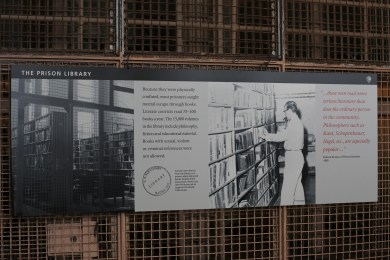
In a previous blog I wrote about the importance of going through HE as a life changing process. The hard skills of learning about a discipline and the issues, debates around it, is merely part of the fun. The soft skills of being a member of a community of people educated at tertiary level, in some cases, outweigh the others, especially for those who never in their lives expected to walk through the gates of HE. For many who do not have a history in higher education it is an incredibly difficult act, to move from differentiating between meritocracy to elitism, especially for those who have been disadvantaged all their lives; they find the academic community exclusive, arrogant, class-minded and most damning, not for them.
The history of higher education in the UK is very interesting and connected with social aspiration and mobility. Our University, along with dozens of others, is marked as a new institution that was created in a moment of realisation that universities should not be exclusive and for the few. In conversation with our students I mentioned how as a department and an institution we train the people who move the wheels of everyday life. The nurses in A&E, the teachers in primary education, the probation officers, the paramedics, the police officers and all those professionals who matter, because they facilitate social functioning. It is rather important that all our students understand that our mission statement will become their employment identity and their professional conduct will be reflective of our ability to move our society forward, engaging with difficult issues, challenging stereotypes and promoting an ethos of tolerance, so important in a society where violence is rising.
This week we had our second celebration of our prison taught module. For the last time the “class of 2019” got together and as I saw them, I was reminded of the very first session we had. In that session we explored if criminology is a science or an art. The discussion was long, and quite unexpected. In the first instance, the majority seem to agree that it is a social science, but somehow the more questions were asked, the more difficult it became to give an answer. What fascinates me in such a class, is the expectation that there is a clear fixed answer that should settle any debate. It is little by little that the realisation dawns; there are different answers and instead of worrying about information, we become concerned with knowledge. This is the long and sometimes rocky road of higher education.
Our cohort completed their studies demonstrating a level of dedication and interest for education that was inspiring. For half of them this is their first step into the world of HE whilst the other half are close to heading out of the University’s door. It is a great accomplishment for both groups but for the first who may feel they have a long way to go, I will offer the words of a greater teacher and an inspiring voice in my psyche, Cavafy’s ‘The First Step’
Even this first step
is a long way above the ordinary world.
To stand on this step
you must be in your own right
a member of the city of ideas.
And it is a hard, unusual thing
to be enrolled as a citizen of that city.
Its councils are full of Legislators
no charlatan can fool.
To have come this far is no small achievement:
what you have done already is a glorious thing
Thank you for entering this world. You earn it and from now on do not let others doubt you. You can do it if you want to. Education is there for those who desire it.
C.P. Cavafy, (1992) Collected Poems, Translated by Edmund Keeley and Philip Sherrard, Edited by George Savidis, Revised Edition, Princeton University Press, Princeton.
Share this:


We Want Equality! When do we want it?

I’ve been thinking a lot about equality recently. It is a concept bandied around all the time and after all who wouldn’t want equal life opportunities, equal status, equal justice? Whether we’re talking about gender, race, sexual orientation, disability, age, marital status. religion, sex or maternity (all protected characteristics under the Equality Act, 2010) the focus is apparently on achieving equality. But equal to what? If we’re looking for equivalence, how as a society do we decide a baseline upon which we can measure equality? Furthermore, do we all really want equality, whatever that might turn out to be?
Arguably, the creation of the ‘Welfare State’ post-WWII is one of the most concerted attempts (in the UK, at least) to lay foundations for equality.[1] The ambition of Beveridge’s (1942) Report of the Inter-Departmental Committee on Social Insurance and Allied Services was radical and expansive. Here is a clear attempt to address, what Beveridge (1942) defined as the five “Giant Evils” in society; ‘squalor, ignorance, want, idleness, and disease’. These grand plans offer the prospect of levelling the playing field, if these aims could be achieved, there would be a clear step toward ensuring equality for all. Given Beveridge’s (1942) background in economics, the focus is on numerical calculations as to the value of a pension, the cost of NHS treatment and of course, how much members of society need to contribute to maintain this. Whilst this was (and remains, even by twenty-first century standards) a radical move, Beveridge (1942) never confronts the issue of equality explicitly. Instead, he identifies a baseline, the minimum required for a human to have a reasonable quality of life. Of course, arguments continue as to what that minimum might look like in the twenty-first century. Nonetheless, this ground-breaking work means that to some degree, we have what Beveridge (1942) perceived as care ‘from cradle to grave’.
Unfortunately, this discussion does not help with my original question; equal to what? In some instances, this appears easier to answer; for example, adults over the age of 18 have suffrage, the age of sexual consent for adults in the UK is 16. But what about women’s fight for equality, how do we measure this? Equal pay legislation has not resolved the issue, government policy indicates that women disproportionately bear the negative impact of austerity. Likewise, with race equality, whether you look at education, employment or the CJS there is a continuing disproportionate negative impact on minorities. When you consider intersectionality, many of these inequalities are heaped one on top of the other. Would equality be represented by everyone’s life chances being impacted in the same way, regardless of how detrimental we know these conditions are? Would equality mean that others have to lose their privilege, or would they give it up freely?
Unfortunately, despite extensive study, I am no closer to answering these questions. If you have any ideas, let me know.
References
Beveridge, William, (1942), Report of the Inter-Departmental Committee on Social Insurance and Allied Services, (HMSO: London)
The Equality Act, 2010, (London: TSO)
[1] Similar arguments could be made in relation to Roosevelt’s “New Deal” in the USA.
Share this:


Goodbye 2018….Hello 2019

Now that the year is almost over, it’s time to reflect on what’s gone before; the personal, the academic, the national and the global. This year, much like every other, has had its peaks and its troughs. The move to a new campus has offered an opportunity to consider education and research in new ways. Certainly, it has promoted dialogue in academic endeavour and holds out the interesting prospect of cross pollination and interdisciplinarity.
On a personal level, 2018 finally saw the submission of my doctoral thesis. Entitled ‘The Anti-Thesis of Criminological Research: The case of the criminal ex-servicemen,’ I will have my chance to defend this work, so still plenty of work to do.
For the Criminology team, we have greeted a new member; Jessica Ritchie and congratulated the newly capped Dr Susie Atherton. Along the way there may have been plenty of challenges, but also many opportunities to embrace and advance individual and team work. In September 2018 we greeted a bumper crop of new apprentice criminologists and welcomed back many familiar faces. The year also saw Criminology’s 18th birthday and our first inaugural “Big Criminology Reunion”. The chance to catch up with graduates was fantastic and we look forward to making this a regular event. Likewise, the fabulous blog entries written by graduates under the banner of “Look who’s 18” reminded us all (if we ever had any doubt) of why we do what we do.
Nationally, we marked the centenaries of the end of WWI and the passing of legislation which allowed some women the right to vote. This included the unveiling of two Suffragette statues; Millicent Fawcett and Emmeline Pankhurst. The country also remembered the murder of Stephen Lawrence 25 years earlier and saw the first arrests in relation to the Hillsborough disaster, All of which offer an opportunity to reflect on the behaviour of the police, the media and the State in the debacles which followed. These events have shaped and continue to shape the world in which we live and momentarily offered a much-needed distraction from more contemporaneous news.
For the UK, 2018 saw the start of the Grenfell Tower Inquiry, the Windrush scandal, the continuing rise of the food bank, the closure of refuges, the iniquity of Universal Credit and an increase in homelessness, symptoms of the ideological programmes of “austerity” and maintaining a “hostile environment“. All this against a backdrop of the mystery (or should that be mayhem) of Brexit which continues to rumble on. It looks likely that the concept of institutional violence will continue to offer criminologists a theoretical lens to understand the twenty-first century (cf. Curtin and Litke, 1999, Cooper and Whyte, 2018).
Internationally, we have seen no let-up in global conflict, the situation in Afghanistan, Iraq, Myanmar, Syria, Yemen (to name but a few) remains fraught with violence. Concerns around the governments of many European countries, China, North Korea and USA heighten fears and the world seems an incredibly dangerous place. The awarding of the Nobel Peace Prize to Denis Mukwege and Nadia Murad offers an antidote to such fears and recognises the powerful work that can be undertaken in the name of peace. Likewise the deaths of Professor Stephen Hawking and Harry Leslie Smith, both staunch advocates for the NHS, remind us that individuals can speak out, can make a difference.
To my friends, family, colleagues and students, I raise a glass to the end of 2018 and the beginning of 2019:
‘Let’s hope it’s a good one, without any fear’ (Lennon and Ono, 1974).
References:
Cooper, Vickie and Whyte, David, (2018), ‘Grenfell, Austerity and Institutional Violence,’ Sociological Research Online, 00, 0: 1-10
Curtin, Deane and Litke, Robert, (1999) (Eds), Institutional Violence, (Amsterdam: Rodopi)
Lennon, John and Ono, Yoko, (1974) Happy Xmas (War is Over), [CD], Recorded by John and Yoko: Plastic Ono Band in Shaved Fish. PCS 7173, [s.l.], Apple
Share this:


Interview with a sex offender
Bethany Davies is an Associate Lecturer teaching modules in the first year.
“Was this your first arrest?”
“Yes I’ve been in trouble with the police before, but just like cautions, like some old man called the police because we played football on the grass near his house. That was literally only about a couple months before i got arrested… for rape.”
I had just turned 20 years old when I conducted my first interview with a sex offender. I was prepping for my dissertation in the summer before my final year, conducting research in a probation office I volunteered at. I was allowed to observe, teach and in the final week I would be able to interview 3 males I had been observing. I interviewed the first two males who both I had taught some very basic numeracy skills to, they were both as they were in my observations, very calm and just trying to get through each day without breaching their probation orders. My final interview was with a young male who I had been helping prepare to apply for a construction worker card, which would allow him to apply for building work. In my months of observing and teaching him I felt like he was no different to males I went to school with or anyone you would pass on the street. I did not want to know what his crime was, as a probation mentor that was never my focus, nor my business to know.
Ethically speaking, I was challenged by the idea that I was conducting an interview and research with the consent of an individual who in my eyes did not understand the concept of consent. That may seem like a harmful way to view this man and the outlook of his time in probation as ultimately it was about reform and reintegration after his time in prison. I have progressed a lot since this day and I no longer view this person so hopelessly in my memory, then again, I am unsure of what he is doing now.
Each time I remember the interview and my experience there, I have different thoughts and different feelings, which I suppose is human nature. I also get annoyed at myself that I cannot seem to understand or rather pinpoint my own thoughts on it, I go between thinking what I did (teaching) was a good thing and it may have helped him, to thinking what I did was waste my time on someone who probably didn’t deserve it in many people’s eyes.
I had always felt I was very understanding of those labelled ‘ex-offenders’ and the cycle they can become trapped in. But before this experience, I had always worked with those whose crimes seemed relatively minor comparatively. Sexual violence is not something to me that is as simple to categorise or try to understand. I remember getting home a few hours later and sobbing for a victim I knew nothing about other than her perpetrator.
The experience has always stuck with me and made me appreciate the complexity of not only sexual offences but also the role of reform with sexual offences. It has led me to explore research around sexual violence and I have recently been exploring the work of Elizabeth Stanko and also revisiting my books by Susan Brownmiller. Both examine the role of the victim of sexual violence and raise questions about how historically sexual violence has been viewed.
This is a personal experience and not something I think everyone will relate to, but from experiences shared, there are lessons to be learnt.
Share this:

Changes in Life
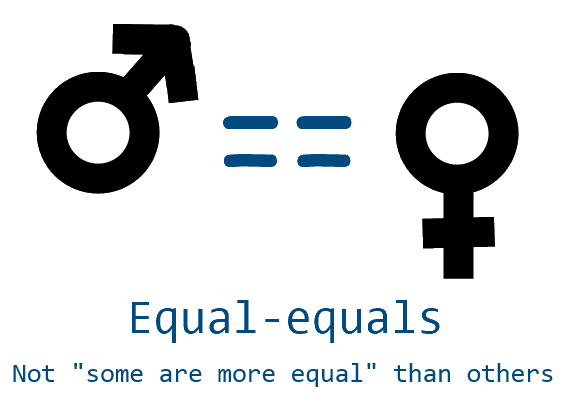
When I suggested writing for this blog to certain colleagues I was told that this topic would be of no interest and nobody would read it as it is not relevant. I consider the topic very relevant to me and to every woman. The term used is ‘women of a certain age’ (I hate the expression) to explain the menopause.
I am a 55-year-old woman who is going through the menopause and I make no apologies as there is nothing I can do about it. There is acceptance of women starting their periods and the advertisements for period poverty. There are extensive adverts, promotions, books all on pregnancy but very little about the menopause. At last, just this evening, I have seen an advert by Jenny Éclair on TV about a product for one symptom of the menopause. I fail to understand why this subject is not discussed more openly?
Having reached the menopause, I can honestly say this is the worst I have ever felt both emotionally and physically. The brain fog, not being able to put a sentence together sometimes, clumsiness, the lack of sleep, loss of confidence, weight gain; aching limbs. The list goes on. I know that each woman is different, and their body responds differently so I speak for me. I know that I am not alone though just by the conversations I have with other women and on the menopause chat room.
In accepting my situation and desperately trying to work through these symptoms I reflect on an incident where my mother was arrested for shoplifting. She would have been my age at the time. I was so angry at her as I was a serving police officer and I was so embarrassed. I never tried to understand why she did it. Did the menopause contribute to the theft of cushion covers she did not need? To this day we have never spoken about the incident and never will.
Also, my thoughts around this situation extends to the research I am conducting around the treatment of transgender people in prison. Researching the prison estate, I find that the prison population is getting older and the policies link to women in prison, catering for women and babies, addictions, mental health etc but there is no mention of older women going through the menopause?
I served in the police at a time when women were not equal to men and I would never have raised, and written this blog entry exposing ‘weaknesses’. To write this is progress for me and I can even see that the police are addressing the issues of the menopause through conversations, presentations and support groups. They have come a long way. All family, friends, colleagues and employers need to try and understand this debilitating change in life for us ‘women of a certain age’.
Share this:


An Officer’s Perspective
Northampton University…. In 2011, I first moved up to Northampton to study criminology and sociology. At the time I had never moved away from home before and it was a somewhat daunting experience. However, now looking back at this, it was one of the best decisions I have made.
Before I set out to go to university I had always said to my family I wanted to join the police force. I chose to study criminology as I believed this was going to help me with joining the police and also provide me with an insight as to what I was potentially going to be letting myself in for.
From studying criminology for three years I learnt about various ideas surrounding police and their interactions with communities, portrayal within the media and about the history of the police and how it has developed into the service we have today.
I remember, in particular, being interested in the way in which the media portrayed the police and the impact this had on how young people, and whether this influenced their opinions on police, so much to the point I completed a dissertation on this topic. This interest came about from a module called YOUTH CRIME AND MEDIA. Ultimately, I found that young people, in particular those aged between 18-25, were influenced by the media and this helped them form their opinions of the police.
Whilst I was at Northampton University, I was a Special Constable for the Metropolitan Police having joined them in 2013, my third year at uni. This began to give me some experience into what the police dealt with on a day to day basis. Although I was only doing this for 16 hours per month, I would recommend this to anybody who is considering joining the police.
Since graduating from Northampton University, I joined the Metropolitan Police as a PC and I have been with the Met now for 2 years. I can honestly say that, when people say this is a job like no other, they are all correct. I go to work not knowing what I am going to encounter from one call to the next. The one thing which has really stood out for me since joining as a PC, and having graduated from university, is how misunderstood the role of police appears to have become. When I was growing up I remember thinking that the role of police was to chase criminals and drive fast cars. However, this nowadays is a small proportion of the work we do and the role of police officers is a lot more diverse and changing daily. We have a lot of interactions with people who are suffering a mental health crisis who may need our assistance because they are feeling suicidal, investigate the disappearance of missing people and even attend calls where someone is suffering a cardiac arrest and a defibrillator is required, as police officers now carry these in their vehicles.
However. I feel the biggest thing that my criminology degree has assisted me with in relation to my job is how I analyse situations. Criminology was largely centred around different theories and analysing these perspectives. On a day to day basis I regularly find myself analysing information provided to me and trying to understand different accounts people provide me with and trying to use these accounts to decide what action needs to be taken. Overall criminology has allowed me to take a step back from somewhat stressful situations and analyse what has happened. This has given me the confidence to present different viewpoints to people and also challenge people at times on controversial topics or viewpoints they may have.
I do think that I took the right path to becoming a police officer; criminology did equip me with various different skills that I utilise in my day-to-day role. I wouldn’t change the path I took. I enjoyed every bit of my degree, and the lecturers were always supportive.
Share this:


The Voice Behind the Music

Marginalised voices were the focal point of my dissertation.
My dissertation explored social issues through the musical genres of Rap and Hip-Hop. During the time period of writing my dissertation there was the rising debate surrounding the association of a new genre, Drill music, being linked to the rise in violent crimes by young people in England (London specifically). The following link to an article from the Guardian newspaper will provide a greater insight to the subject matter:
The idea of music having a direct correlation with criminality sweeps issues such as poverty, social deprivation, class and race all under the rug; when in reality these are just a few of the definitive issues that these marginalised groups face. We see prior examples of this in the late 80s, with rap group N.W.A with their song “F*** the police”. The song surrounded the topic of police brutality and brought light to the disgust and outrage of the wider community to this issue. Simultaneously to this, the N.W.A were refused from running concerts as they were accused of starting revolts. The song was made as a response to their environment, but why is freedom of speech limited to certain sectors of society?
In the present day, we see young people having lower prospects of being homeowners, high rates of unemployment, and the cost of living increasing. In essence the rich are getting richer and the poor continue to struggle; the violence of austerity at its finest. Grenfell Tower is the perfect example of this, for the sake of a cheaper cost lives were lost. Simply because these individuals were not in a position to greatly impact the design of their housing. Monetary status SHOULD NOT determine your right to life, but unfortunately in those circumstances it did.
The alienation of young people was also a topic that was highlighted within my research into my dissertation. In London specifically, youth clubs are being closed down and money is being directed heavily towards pensions. An idea would be to invest in young people as this would potentially provide an incentive and subsequently decrease the prospect of getting involved in negative activities.
In no means, was the aim to condone the violence but instead to simply shed light on the issues that young people face. There is a cry for help but the issue is only looked at from the surface as a musical problem. If only it were that simple, maybe considering the voice behind the music would lead to the solution of the problem.
Share this:

Autism: Police discretion and decision making in an uncertain environment

A question that always strikes when discussing my dissertation topic is why did I chose that particular area to research – is it a topic that I was passionate about, or was it my personal life experience that lead me into that field? The answer to these questions is quite simply, no. In fact, it was a topic I accidentally fell into after reading existing research on the area for one of my other modules in second year. Intellectual disabilities within the Criminal Justice System are quite often misunderstood, and as with all academics, the more I read the more questions I had. Taking this topic at face value, the field is extremely vast, therefore after taking some time to digest many angles of research I narrowed my topic down into two areas. Firstly, an institution that I have always been interested in, policing, and one intellectual disability in particular, autism (ASD).
To give you a brief background; the examination of the relationship between criminal offending and intellectual impairments is proved as complex and problematic. This is due to the issues associated with the definition of intellectual disability, as well as the contribution of unreported crime which means researchers can only examine individuals who are currently involved in the criminal justice process (Talbot, 2007). From a policing perspective, these complexities and concerns increase in terms of conflicting procedures and relevant training which can later impact levels of service and effective results (Mercier, 2011). Amongst academic literature, it is evident that contemporary policing institutions are subject to increasing budget cuts which means that police staff must exercise discretion in processing large amounts of work with inadequate resources, in which shortcuts and simplifications are made (Lipsky 2010; Loftus 2012). This is highly problematic as policies have a tendency to occupy a one size fits all approach. In effect, this becomes increasingly difficult when dealing with individuals with autism, as increased support and time is needed to sufficiently deal with vulnerable groups.
In terms of Autistic Spectrum Disorder (ASD), this is a common form of learning impairment which can affect patterns of behaviour within a social setting. Autism is characterised by a triad of impairments, which includes difficulties in social interactions, communication and repetitiveness in daily activities (Roth, 2010, p.6). The varying expression and severity of these characteristics means that autism is recognised into sub-types, and therefore, is also considered as a spectrum disorder (King and Murphy, 2014).
On the occasions that an individual with ASD comes into contact with the police and wider criminal justice services, it is normally a result of their social and communication skills being misunderstood which means that they are not given the appropriate support (Cockram, 2005; Tucker et al, 2008). Research suggests that autistic individuals are likely to become extremely distressed in unfamiliar, confusing and loud situations whereby their actions and behaviour can be easily misinterpreted and subsequent actions could escalate the situation (Hayes, 2007). Complimented by the current implications previously discussed that are faced by the police and wider services, it is no surprise that there are issues and concerns surrounding police responses and decision-making processes towards the ASD community. After personally interviewing police constables and custody officers from Northamptonshire Police to investigate the initial responses when dealing with such individuals; the realities of such dilemmas were highlighted.
After now completing my studies with First Class Honours, I am now fortunate enough to work for The Appropriate Adult Service (TAAS) where such theoretical standpoints are often presented to me in a practical environment. From a personal judgement, Appropriate Adults can be easily dismissed, but just being a friendly face who can help and support a vulnerable person within a custody setting is far more rewarding than meets the eye. In fact, it is my dissertation itself that has lead me into this career and has now also given me a thirst for further study in my chosen research area.
References
Lipsky, M. (2010) Street- Level Bureaucracy: Dilemmas of the Individual in Public Services. New York: Russell Sage Foundation.
Loftus, B. (2012) Police culture in a changing world. Oxford: Oxford University Press.
Mercier, C. (2011) The first critical steps through the criminal justice system for persons with intellectual disabilities. British Journal of Learning Disabilities. 39(2), pp.130-138.
Roth, L. (2010) Autism: an evolving concept. In: Roth, L. (ed.) The Autism Spectrum in the 21st Century: Exploring Psychology, Biology and Practice. 1st ed. London: Jessica Kingsley Publishers, pp.1-29.
Share this:

Divided States of America

Nahida is a BA (Hons) Criminology graduate of 2017, who recently returned from travelling.
Ask anyone that has known me for a long time, they would tell you that I have wanted to go to America since I was a little girl. But, at the back of my mind, as a woman of colour, and as a Muslim, I feared how I would be treated there. Racial discrimination and persecution is not a contemporary problem facing the States. It is one that is rooted in the country’s history.
I had a preconceived idea, that I would be treated unfairly, but to be fair, there was no situation where I felt completely unsafe. Maybe that was because I travelled with a large group of white individuals. I had travelled the Southern states, including Louisiana, Texas, Tennessee and Virginia and saw certain elements that made me uncomfortable; but in no way did I face the harsh reality that is the treatment of people of colour in the States.
Los Angeles was my first destination. It was my first time on a plane without my family, so I was already anxious and nervous, but on top of that I was “randomly selected” for extra security checks. Although these checks are supposedly random and indiscriminate, it was no surprise to me that I was chosen. I was a Muslim after all; and Muslim’s are stereotyped as terrorists. I remember my travel companion, who was white, and did not have to undergo these checks, watch as I was taken to the side, as several other white travellers were able to continue without the checks. She told me she saw a clear divide and so could I.
In Lafayette, Louisiana, I walked passed a man in a sandwich café, who fully gawked at me like I had three heads. As I had walked to the café, I noticed several cars with Donald Trump stickers, which had already made me feel quite nervous because several of his supporters are notorious for their racist views.
Beale Street in Downtown Memphis is significant in the history of the blues, so it is a major tourist attraction for those who visit. It comes alive at night; but it was an experience that I realised how society has brainwashed us into subliminal racism. The group of people I was travelling with were all white and they had felt uncomfortable and feared for their safety the entire time we were on Beale Street. The street was occupied by people of colour, which was not surprising considering Memphis’ history with African-Americans and the civil rights movement. That night, the group decided to leave early for the first time during the whole trip. I asked, “Do you think it’s our subconscious racist views, which explains why we feel so unsafe?” It was a resounding yes. As a woman of colour, I was not angry at them, because I knew they were not racist, but a fraction of their mind held society’s view on people of colour; the view that people of colour are criminals, and, or should be feared. That viewpoint was clearly exhibited by the heavy police presence throughout the street. It was the most heavily policed street I had seen the entire time I was in the States. Even Las Vegas’ strip didn’t seem to have that many police officers patrolling.
It was on the outskirts of Tennessee, where I came across an individual whose ignorance truly blindsided me. We had pulled up at a gas station, and the man approached my friends. I was inside the station at this point. The man was preaching the bible and looking for new followers for his Church. He stumbled upon the group and looked fairly displeased with the way they were dressed in shorts and skirts. He struck a conversation with them and asked generic questions like “Where are you from?” etcetera. When he found out the group were from England, he asked if in England, they spoke English. At this point, the group concluded that he wasn’t particularly educated. I joined the group outside, post this conversation, and the man took one look at me and turned to my friend who was next to him, and shouted “Is she from India?” The way he yelled seemed like an attempt to guage if I could understand him or not. Not only was that rude, but also very ignorant, because he made a narrow-minded assumption that a person of my skin colour, could not speak English, and were all from India.
I was completely taken aback, but also, I found the situation kind of funny. I have never met someone so uneducated in my entire life. In England, I have been quite privileged to have never faced any verbal or physical form of racial discrimination; so, to meet this man was quite interesting. This incident took place in an area populated by white individuals. I was probably one of the very few, or perhaps the first Asian woman he had ever met in his life; so, I couldn’t make myself despise him. He was not educated, and to me, education is the key to eliminating racism.
Also, the man looked be in his sixties, so his views were probably set, so anything that any one of us could have said in that moment, would never have been able to erase the years of discriminatory views he had. The bigotry of the elder generation is a difficult fight because during their younger days, such views were the norm; so, changing such an outlook would take a momentous feat. It is the younger generation, that are the future. To reduce and eradicate racism, the younger generation need to be educated better. They need to be educated to love, and not hate and fear people that have a different skin colour to them.

 Thoughts from the criminology team