
Home » Poetry
Category Archives: Poetry
Family life in Tenerife versus the UK
I have recently been on a family holiday with our toddler to Tenerife. We began the journey by getting to an airport in the UK. Whilst there the security checks were done for families alongside everyone else. Toddlers were required to get out of their prams, to have their shoes taken off and could not hold onto their toys. The security seemed relatively tight as my hands were swabbed, my toddler was searched with a security stick and the small volume of water that he was allowed was also swabbed.
Whilst arriving and departing via the airport in Tenerife the security allocated a separate quieter section of space for families, this seemed far more relaxed, staff were smiling and dared to say ‘hola’ and ‘hello’. There were no additional checks and a toddler cup of water was allowed. Some staff were also making a deliberate attempt to identify the names of babies, toddlers and children from boarding passes or passports to be able to greet them by their names with waves and smiles.
Whilst on holiday I could be forgiven for thinking that we were royalty whilst pushing a pram and toddler around the streets. As pedestrians always had the right of way, whenever there is a road to cross, the cars must stop due to zebra-like crossings marking on the ground. There are also plenty of playgrounds and toilets and plenty of opportunity for play outdoors in sea and sand.
Whilst at home in Birmingham (UK) there are far less zebra crossings and on quite a few occasions cars have failed to stop at zebra crossings whilst I have been waiting with a pram and toddler. Baby and toddler swimming pools also seem to be difficult to access due to locations and restrictions on pool opening time frames. There are parks but I have never seen a park within a shopping centre like I did in Tenerife. Despite the UK becoming quite cold in the winter, the ability to access free indoor play during winter time also seems to be a privilege, rather than a given. Whilst there are some fabulous playgroups and library sessions for babies and toddlers, sometimes establishments promoting themselves as ‘family friendly’ places do not always feel friendly to toddlers at all. This is especially the case if toddlers are required to adhere to adult informal rules, such as not touching things or making loud noise. As some how toddlers trying to explore their world are labelled by some as ‘terrible’ at ‘two’ (see below poem by Holly McNish).

Whilst I have no idea about the education system in Tenerife, these experiences did leave me reflecting on the provision of mainstream education for babies, toddlers and children in the UK. In comparison to countries such as Finland, some mainstream UK education settings are often critiqued for limiting play, time spent in the outdoors, creativity and freedom to think (Dorling and Koljonen, 2020). The popularity of European influenced Montessori nurseries and Forest Schools in the UK seem to indicate that some parents do want something different for children. Whilst on mention of difference, UK mainstream educational approaches to difference seem to be about an assimilation type of inclusivity and diversity, rather than celebrating and learning from the variety of UK cultures. For instance, it seems “marvelous” that if attending mainstream schools in the UK some Romany gypsies are required to fit the restrictive and disciplinarian like school mould, i.e., of shutting up and sitting down (see Good English by Tawona Sithole) or sitting straight and not talking (see Julia Donaldson’s children’s book: The Snail and the Whale). Yet there is little (if any) acknowledgment of how some Romany have an educating culture of fostering independence, voice, freedom and creativity through plenty of outdoor play, roaming around and human interaction is a huge positive. Dorling and Koljonen (2020) state that investment in children and family support is incredibly beneficial for society, as well as families. The reflection above left me thinking that more or something different could be done.
Reference:
Dorling, D and Koljonen, A. (2020) Finntopia : What We Can Learn from the World’s Happiest Country. Newcastle upon Tyne: Agenda Publishing.
Share this:


“My Favourite Things”: Paul

My favourite TV show - I prefer a movie any day.. episodes are draining

My favourite place to go - Home

My favourite city - London, Zanzibar, and Lagos... Ain’t no party like a Lagos party!

My favourite thing to do in my free time - Bonding with my toddler

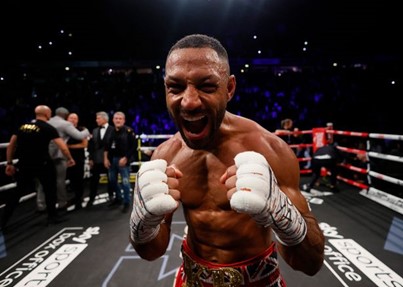
My favourite athlete/sports personality - – BOXING: The Special One! Kell Brook

My favourite actor - Joe Pesci

My favourite author - Sidney Sheldon

My favourite drink - Depends.. Red wine after work or Whiskey for the Weekends

My favourite food - Medium Rare Steak, Lasagne (only from Rodizio Rico, O2 arena), or Egusi & Pounded Yam (Authentic)

My favourite place to eat - As long as the wine is delightful and the food is delicious, I don’t mind

I like people who - are generous & helpful

I don’t like it when people - don’t mind their business

My favourite book - The Doomsday Conspiracy

My favourite book character - Who has time to read fiction?

My favourite film - The Goodfellas, of course!

My favourite poem - 'The Second Coming' by William B Yeats

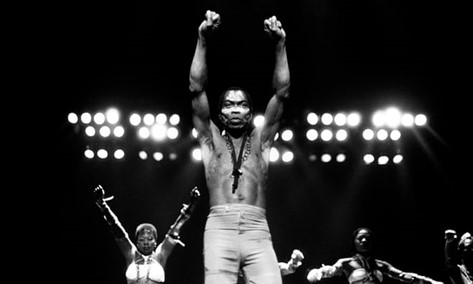
My favourite artist/band -  FELA!

My favourite song - 1. Coffin for Head of State by Fela
 2.  The soundtrack of the Sound of Music – that’s one album I can listen to without skipping a track (My wife thinks I’m weird)

My favourite art - Jean Basquiat: GOD, LAW – an exceptional piece full of symbolism. I need to write a blog on this painting at some point!

My favourite person from history - My favourite person from history – Too many to name just one – but for the sake of this blog, I’ll go with Patrice Lumumba of the Democratic Republic of Congo

Share this:


When This is Over: Reflections on an Unequal Pandemic
This week a book was released which I both co-edited and contributed to and which has been two years in the making. When This is Over: Reflections on an Unequal Pandemic is a volume combining a range of accounts from artists to poets, practitioners to academics. Our initial aim of the book was borne out of a need for commemoration but we cannot begin to address this without considering inequalities throughout the pandemic.
Each of the four editors had both personal and professional reasons for starting the project. I – like many – was (and still is) deeply affected by the COVID-19 pandemic. When we first went into lockdown, we were shown the data every day, telling us the numbers of people who had the virus and of those who had died with COVID-19. Behind these numbers, I saw each and every person. I thought about their loved ones left behind, how many of them died alone without being able to say goodbye other than through a video screen. I thought about what happened to the bodies afterwards, how death rites would be impacted and how the bereaved would cope without hugs and face to face social support. Then my grandmother died. She had overcome COVID-19 in the way that she was testing negative. But I heard her lungs on the day she died. I know. And so, I became even more consumed with questions of the COVID-19 dead, with/of debates. I was angry at the narratives surrounding the disposability of people’s lives, at people telling me ‘she had a good innings’. It was personal now.
I now understood the impact of not being able to hug my grandpa at my grandmother’s funeral, and how ‘normal’ cultural practices surrounding death were disturbed. My grandmother loved singing in choirs and one of the traumatic parts of our bereavement was not being able to sing at her funeral as she would have wanted and how we wanted to remember her. Lucy Easthope, a disaster planner and one of my co-authors speaks of her frustrations in this regard:
“we’ve done something incredibly traumatising to the families that is potentially bigger than the bereavement itself. In any disaster you should still allow people to see the dead. It is a gross inhumanity of bad planning that people couldn’t’t visit the sick, view the deceased’s bodies, or attend funerals. Had we had a more liberal PPE stockpile we could have done this. PPE is about accessing your loved ones and dead ones, it is not just about medical professionals.”
The book is divided into five parts, each addressing a different theme all of which I argue are relevant to criminologists and each part including personal, professional, and artistic reflections of the themes. Part 1 considered racialised, classed, and gendered identities which impacted on inequality throughout the pandemic, asking if we really are in this together? In this section former children’s laureate Michael Rosen draws from his experience of having COVID-19 and being hospitalised in intensive care for 48 days. He writes about disposability and eugenics-style narratives of herd immunity, highlighting the contrast between such discourse and the way he was treated in the NHS: with great care and like any other patient.
The second part of the book considers how already existing inequalities have been intensified throughout the pandemic in policing, law and immigration. Our very own @paulsquaredd contributed a chapter on the policing of protests during the pandemic, drawing on race in the Black Lives Matter protests and gender in relation to Sarah Everard. As my colleagues and students might expect, I wrote about the treatment of asylum seekers during the initial lockdown periods with a focus on the shift from secure and safe self-contained housing to accommodating people seeking safety in hotels.
Part three considers what happens to the dead in a pandemic and draws heavily on the experiences of crematoria and funerary workers and how they cared for the dead in such difficult circumstances. This part of the book sheds light on some of the forgotten essential workers during the pandemic. During lockdown, we clapped for NHS workers, empathised with supermarket workers and applauded other visible workers but there were many less visible people doing valuable unseen work such as caring for the dead. When it comes to death society often thinks of those who cared for them when they were alive and the bereaved who were left to the exclusion of those who look after the body. The section provides some insight into these experiences.
Moving through the journey of life and death in a pandemic, the fourth section focusses on questions of commemoration, a process which is both personal and political. At the heart of commemorating the COVID-19 dead in the UK is the National COVID Memorial Wall, situated facing parliament and sat below St Thomas’ hospital. In a poignant and political physical space, the unofficial wall cared for by bereaved family members such as Fran Hall recognises and remembers the COVID dead. If you haven’t visited the wall yet, there will be a candlelit vigil walk next Wednesday, 29th March at 7pm and those readers who live further afield can digitally walk the wall here, listening to the stories of bereaved family members as you navigate the 150,837 painted hearts.

The final part of the book both reflects on the mistakes made and looks forward to what comes next. Can we do better in the next pandemic? Emergency planner Matt Hogan presents a critical view on the handling of the pandemic, returning to the refrain, ‘emergency planning is dead. Long live emergency planning’. Lucy Easthope is equally critical, developing what she has discussed in her book When the Dust Settles to consider how and what lessons we can learn from the management of the pandemic. Lucy calls out for activism, concluding with calls to ‘Give them hell’ and ‘to shout a little louder’.
Concluding in his afterword, Gary Younge suggests this is ‘teachable moment’, but will we learn?
When This is Over: Reflections on an Unequal Pandemic is published by Policy Press, an imprint of Bristol University Press. The book can be purchased directly from the publisher who offer a 25% discount when subscribing. It can also be purchased from all good book shops and Amazon.
Share this:

DIE in Solidarity with Diversity-Inclusion-Equality
As an associate lecturer on a casual contract, I was glad to stand in solidarity with my friends and colleagues also striking as part of UCU Industrial Action. Concurrently, I was also glad to stand in solidarity with students (as a recent former undergrad and masters student … I get it), students who simply want a better education, including having a curriculum that represents them (not a privileged minority). I wrote this poem for the students and staff taking part in strike action, and it comes inspired from the lip service universities give to doing equality while undermining those that actually do it (meanwhile universities refuse to put in the investment required). This piece also comes inspired by ‘This is Not a Humanising Poem’ by Suhaiymah Manzoor-Khan, a British author-educator from Bradford in Yorkshire.
Some issues force you to protest
the way oppression knocks on your front door
and you can’t block out the noise
“protest peacefully, non-violently”
I have heard people say
show ‘the undecided’, passive respectability
be quiet, leave parts of yourself at home
show them you’re just as capable of being liked
enough for promotion into the canteen,
protest with kindness and humour
make allusions to smiling resisters in literature
they’d rather passive images of Rosa Parks all honestly
but not her politics against racism, patriarchy, and misogyny
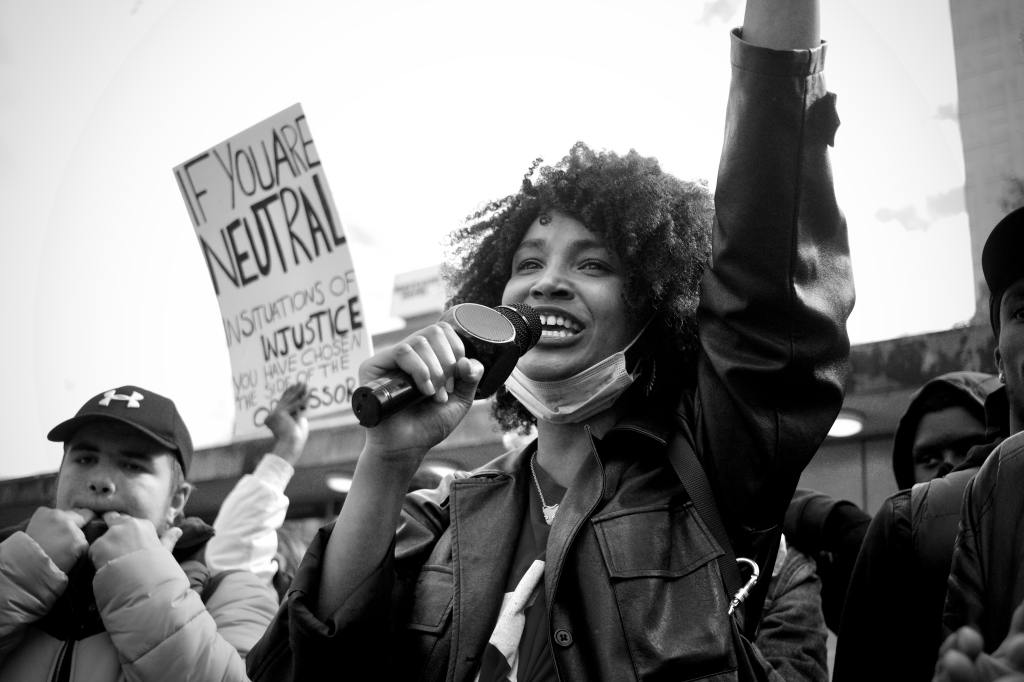
but I wanna tell them about British histories of dissent
the good and the bad – 1919 Race Riots
the 1926 general strikes, and the not so quiet
interwar years of Caribbean resistance to military conscription
I wanna talk about how Pride was originally a protest
I wanna talk about the Grunwick Strike and Jayaben Desai
and the Yorkshire miners that came to London in solidarity
with South Asian migrant women in what was 1980s austerity
I want to rant about Thatcherism as the base
for the neoliberal university culture we work in today
I want to talk about the Poll Tax Riots of 1990
and the current whitewashing of the climate emergency
they want protesters to be frugal in activism,
don’t decolonise the curriculum
they say decolonise
they mean monetise, let’s diversify …
but not that sort of diversity
nothing too political, critical, intellectual
transform lives, inspire change?
But no,
they will make problems out of people who complain
it’s your fault, for not being able to concentrate
in workplaces that separate the work you do
from the effects of Black Lives Matter and #MeToo
they make you the problem
they make you want to leave
unwilling to acknowledge that universities
discriminate against staff and students systemically
POCs, working-class, international, disabled, LGBT
but let’s show the eligibility of staff networks
while senior leaders disproportionately hire TERFs

staff and students chequered with severe floggings
body maps of indenture and slavery
like hieroglyphics made of flesh
but good degrees, are not the only thing that hold meaning
workers rights, students’ rights to education
so this will not be a ‘people are human’ poem
we are beyond respectability now
however, you know universities will DIE on that hill
instead,
treat us well when we’re tired
productive, upset, frustrated
when we’re in back-to-back global crises
COVID-19, Black Lives Matter, femicide,
failing in class, time wasting, without the right visas,
the right accents; Black, white, homeless, in poverty,
women, trans, when we’re not A-Grade students, when we don’t
have the right last name; when we’re suicidal
when people are anxious, depressed, autistic
tick-box statistics within unprotected characteristics
all permeates through workers’ and student rights
When you see staff on strike now,
we’re protesting things related to jobs yes,
but also, the after-effects
as institutions always protect themselves
so sometimes I think about
when senior management vote on policies…
if there’s a difference between the nice ones ticking boxes
and the other ones that scatter white supremacy?
I wonder if it’s about diversity, inclusion, and equality [DIE],
how come they discriminate in the name of transforming lives
how come Black students are questioned (under caution) in disciplinaries
like this is the London Met maintaining law and order …
upholding canteen cultures of policing
Black and Brown bodies. Decolonisation is more
than the curriculum; Tuck and Yang
tell us decolonisation is not a metaphor,
so why is it used in meetings as lip service –

why aren’t staff hired in
in critical race studies, whiteness studies, decolonial studies
why is liberation politics and anti-racism not at the heart of this
why are mediocre white men failing upwards,
they tell me we have misunderstood
but promotion based on merit doesn’t exist
bell hooks called this
imperialist heteropatriarchal white supremacy
you know Free Palestine, Black Lives Matter, and the rest
we must protest how we want to protest
we must never be silenced; is this being me radical, am I radical
Cos I’m tired of being called a “millennial lefty snowflake”, when I’m just trying not to DIE?!
Further Reading
Ahmed, Sara (2012) On Being Included: Racism and Diversity in Institutional Life. London: Duke.
Ahmed, Sara (2021) Complaint. London: Duke.
Bhanot, Kavita (2015) Decolonise, Not Diversify. Media Diversified [online].
Double Down News (2021) This Is England: Ash Sakar’s Alternative Race Report. YouTube.
Chen, Sophia (2020) The Equity-Diversity-Inclusion Industrial Complex Gets a Makeover. Wired [online].
Puwar, Nirmal (2004) Space Invaders: Race, Gender and Bodies Out of Place. Oxford: Berg.
Read, Bridget (2021) Doing the Work at Work What are companies desperate for diversity consultants actually buying? The Cut [online].
Ventour, Tré (2021) Telling it Like it is: Decolonisation is Not Diversity. Diverse Educators [online].
Share this:


Complaint! (For Sara Ahmed)
This poem comes inspired from the recent UCU strikes, and also the underpinning arguements of Complaint by Sara Ahmed. The institution protects itself, while removing those who complain (or in many cases, they remove themselves). It is also inspired by ‘Testimony’ by Irish poet Seamus Heaney.
As higher education burns,
they blame white lecturers who picket,
and the Black and Brown lecturers
no longer willing to be ‘paid in exposure’
to the hull of slave ships. Colonialism’s hot mouth
at the nucleus of HE’s epistemes,
so senior leaders blame lecturers
for neglect. Meanwhile, the upper echelons
play Monopoly with staff pay checks
students left to grieve assignment
work revolving around conveyer belts
like undead corpses between indenture and slavery
it’s a Tuesday morning
a fever of claret runs riot
across picketing lines
turn cloaks to justice and equality,
there’s just ice behind the scab
where hearts used to beat. Back in the 80s,
gay and lesbian activists stood in solidarity
with the miners; and Arthur Scargill
and co scurried to Jayaben Desai at Grunwick
from the main road, you can still hear the screams
of comradery, and ‘we see yous’ …
yet behind picket tea and biscuits,
there are teary smiles –
death behind the bags,
and behind the pyre …
smoke could be seen for miles.
Share this:

Auschwitz – secrets of the ground
Indifference is not a beginning; it is an end. And, therefore, indifference is always a friend to the enemy, for it benefits the aggressor – never his victim
Elie Wiesel
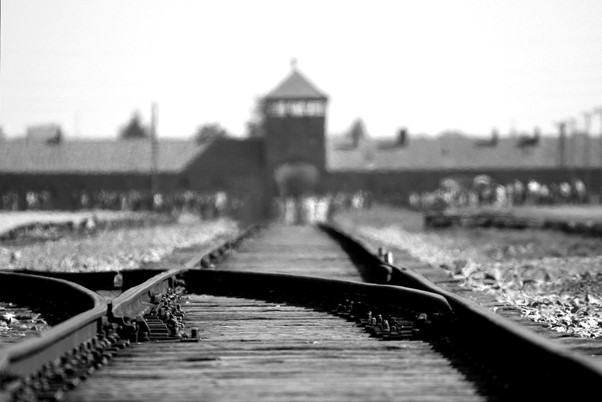
I have been fortunate enough in my life to have been able to live and travel abroad, a luxury you should never take for granted. Having traveled in every continent there are plenty of things I will never forget, mostly good but one thing that will stay with me will be Auschwitz. It is hard to get excited about visiting Auschwitz, but it is also hard to not get excited about visiting Auschwitz. The day I visited Auschwitz, on the journey there a flurry of strange thoughts went through my head, perhaps ones you would only have when attending a funeral where you are supposed to be in grief. What do you wear, should I smile, what do you talk about, essentially you are creating a rule book inside your head of how not to be offensive. It’s a strange thought process and perhaps completely irrational, one of which I will probably never go through again. If I had to describe Auschwitz in one word, that word would be haunting and I could write for hours about Auschwitz without ever being able to get across the feeling of visiting it, but instead, I am going to share with you a poem I wrote on the journey back from Auschwitz, this poem has never seen the light of day and has been in my diary for over a decade, until now, but it feels like a perfect time to finally share, it’s called secrets of the ground.
Dark skies and tearful eyes,
only God knows the secrets this ground hides.
The flowers mask the crimes of old,
the walls are chipped by bullet holes.
Haunting sounds drowned out by hymns,
the shoes of children too scared to blink.
A cold wind howls in these Polish fields,
one million people how can this be real.
A train stands alone on the blackened track,
barb wire fences to hold them back.
The secrets out, the grounds have spoken,
we must never forget the lives that were taken.
Share this:


Poetry on prisons

Recently in CRI3001 Crime and Punishment we’ve been exploring prison poetry drawn from the volumes published by the fantastic Koestler Arts (some examples and inspiration can be found here). Students were inspired by this to write their own poems on prison and you will find some excellent examples below.
Moonlight
I sing to all of the spiders on the wall
They comfort me from my fear of the unknown
All the sounds outside as I lay here petrified
Of the consequences that lay aheadTime is far behind my state of mind
Noran
Deprived myself of the will to fight
For peaceful nights
Moving on
Longing for the past,
Wanting to go back,
To change our future.
Living with regret,
Feeling sorry for hurting you,
Living in isolation,
Needing to hear from you.
Wondering if you’re doing well,
Do you remember me?
Are you moving on?
Do you like it?
Living on the outside?
Outside of these four walls.
These grey walls entrap me,
Every day I feel smaller.
Unimportant. I’m suffocating.
I hope the world hasn’t changed.
I hope everything stays the same.
So that one day, maybe
I could come back to you
Danique
Trapped,
Between four walls for life.
Non-existent,
I am but a shadow of my past self.
Detached,
No amount of WIFI can ever reconnect what was lost.
A
Prisoner’s Perspective
Prison is an escape, prison is a relief, prison is warm, prison is secure. Prison is easier than the cold, sleepless, torrid nights. Prison is not a punishment. Prison is a consolation.
Prison is lonely, prison is isolated. Prison does not help; it does not rehabilitate. Prison stops the time. Prison fails us.
Prison is opportunistic, prison allows me to be a leader, prison allows people to live in fear of me. Something I never was in the outside world.
Prison isn’t a one fits all, prison is individualised offender to offender. Does prison work? Is Prison effective? Is prison the way forward?
Saiya
I Created This
Pulled up and stopped
Big iron gates spiked with fear and dread
he shouts “Clear” and gates open
with rumbling vibration
Why does this feel like the beginning of the end
Queueing quietly waiting turn for changing clothing
Wishing the view was slightly different
This is my home, the world is now distant
Showers cold and beds so hard
Waiting for the order from the guards
“Dinner served” I hear them shout
Hoping it’s not just bland
Thinking about roast dinners
This is my life, I created this
Given the chance, time and again,
But now this is my life, I created this
SKM
Poetry and other forms of literature offer the opportunity to explore criminological issues in a different medium. They allow for ideas to develop in a more natural way than academic conventions usually allow. As you can see from the poems above, our students rose to the challenge and embraced the opportunity to think differently about Criminology.
Share this:


‘White Women, Race Matters’: Fantasies of a White Nation
Chapter II: Moving Mad in these Streets
This post in-part takes its name from a book by the late Whiteness Studies academic Ruth Frankenberg (1993) and is the second of three that will discuss Whiteness, women, and racism.
If you grew up racialised outside of Whiteness in Britain or really any Anglo-European country, the chances are you will be asked “where are you from?” on a regular basis. After reading some poems on this very issue at a Northamptonshire arts and heritage festival, I was walking home only to be stopped in my tracks by a White woman probably in her late 40s / early 50s saying “people like you aren’t really British.” Whilst I have been asking myself similar questions, for a White person to do this so confidently is unsettling … they’re moving mad in these streets. In this blog post, I will discuss this racial micro-aggression, underpinned by racist epistemologies with us Black people viewed in this country as immigrant; interloper; Other, whilst simultaneously Whiteness being synonymous with “localness” (Brown, 2006). In this encounter just outside of Northampton, I was further reminded that to be Black and British in this country is to live in a perpetual state of “double consciousness” (DuBois, 1903: 1).
Rather than identify with “Black Britishness”, (a pigeon-hole in my opinion), the term ‘afropean’ (Philips, 1987; Pitts, 2020) feels much more appropriate and fluid. However, the term Karen is one I don’t particular enjoy, but the woman in question could be described as such. In using this label, I am trying to create a frame of reference for you (the audience), not allow the person in question to escape scrutiny. This woman was a Jane Bloggs, I had never seen her before and she felt entitled enough to stop me in the street and continually criticise my right to belong. For those of you local to Northampton, I was walking between that stretch of path on Wellingborough Road, between Weston Favell Centre and Aldi. This encounter reminded me of my place in Britain, where ‘British-Asianness’ (Shukla, 2016; Riz Ahmed, 2019; Shukla, 2021) and ‘Black Britishness’ have frequently been difficult to define (Rich 1986, Gilroy, 1987; Yeboah, 1988; Young, 1995; Christian, 2008; Olusoga, 2016; Hirsch, 2017, Ventour, 2020). Even amongst White subjects themselves, what it means to be British has often been a question of challenge (Fox, 2014), and when I articulated that both my parents were born in the UK (Lichfield City and Northampton), she was visiblely upset and put-out.
The term ‘Karen’ comes from a name that was frequent among middle-aged women who were born between 1957 and 1966 with its peak in 1965 (Social Security Data). The name is also the Danish rendition of Katherine associated with the Greek for pure. Yet, the meaning of the word has undergone pejoration. In sociolinguistics, ‘pejoration’ is when a positive word becomes negative over time. ‘Karen’ as it has come to be known today has uses as early as September 2016 and as we know now, Karen has become synonymous with racist middle-aged White women, often associated with their harrassment of Black people just minding their business. On my way home, this harrassment found me walking while Black. For others, it has occured shopping while Black; birdwatching while Black; jogging while Black; listening to music in their house while Black, and more. The encounters we know about are generally examples that make news headlines but there are far more examples that do not make the national press, because they are pervasive.
Writing my MA dissertation on the 1919 Race Riots, I saw even in Edwardian Britain the nationality and citizenship rights of Black people in this country were contested (Belchem, 2014: 56), both those born British subjects in parts of the British Empire and those that were in fact born and raised here (May and Cohen, 1974), in spite of their legal status under the 1914 British Nationality and Aliens Act. Today, we are asked “where you from?” underpinned by historical racist epistemologies that defined Englishness as White (Dabiri, 2021). However, even in the image of so-called multiculturalism in the UK, the Britishness of Black and Brown people still has qualifiers attached. Watching ‘Homecoming’, the finale of David Olusoga’s popular series Black and British, the historian claims “… there is one barrier that confronted the Windrush Generation that we have largely overcome, and that’s because there are few people these days who question the idea that it is possible to be both Black and British” (54:46-55:00).
My experiences as a child and as an adult still tell me that Black Britishness is an increasingly contentious question, but even more testing … to be Black and English. In August 2021, MP David Lammy defended his right to call himself Black English from a caller into his LBC show. Whilst he was later met with lots of support online, what is interesting was the numbers of Black people on Twitter that challenged him on his right to be Black and English. If English is a nationality, better yet, a “civic identity”, nobody should be argueing someone’s right to choose where they belong. Furthermore, David Olusoga’s comments in ‘Homecoming’ seem blinkered and out of touch with people on the ground that still experience this epistemic racism on a daily basis. Especially my generation navigating the superhighways of identity where as one scholar writes, “The BBC had a whole series dedicated to ‘Black Britishness’ [Olusoga’s], which essentially amounted to propaganda for the idea that we are now accepted as part of the nation …” (Andrews, 2019: xiii).
My encounter with the woman on the street is one more example of racial privilege knowing full well that her Whiteness protected her from repercussions. Furthermore, whilst the ‘Karen’ meme started as a commentary on racial privilege (Williams, 2020) and White women in histories of racism (Ware, 1992), it’s a shame that is has been co-opted by people as a catch-all term for any woman that happens to annoy them. I think my encounter is certainly definable under the remits of the original Karen mythology, but there are those out there who would also argue my thoughts as misogynistic, namely because of what the mythology has become. In the UK, this mythology is “more proof the internet speaks American” (Lewis, 2020). And how Black Lives Matter is still spoken about is a reminder of the divides between anti-Blackness in the US and anti-Blackness in Britain. Yet, discourses on “Karen spotting” online also speak an American voice even though equivalents exist in Britain – especially in schools, colleges / universities and healthcare.
Those interested in the cultures of Black and Brown people; it would be more useful to ask about heritage over the racist “where are you from?”, as for me at least the latter is underpinned by racist binaries that say POCs cannot relate to ‘Anglo-Europeanness’, whilst the former speaks to the fluidity of an individual’s relationship with Home.
References
Andrews, K (2019) Back to Black: Retelling Black Radicalism for the 21st Century. London: ZED Books.
Belchem, J (2014) Before the Windrush: Race Relations in 20th Century Liverpool. Liverpool: University Press.
Black and British (2016) Episode 4: Homecoming [BBC iPlayer]. London: BBC 2.
Brown, J.N. (2006) Dropping Anchor Setting Sail: Geographies of Race in Black Liverpool. NJ: Princeton University Press.
Christian, M. (2008) The Fletcher Report 1930: A Historical Case Study of Contested Black Mixed Heritage Britishness. Journal of HIstorical Sociology, 21(2-3), pp. 213-241.
Dabiri, E. (2021) What White People Can Do Next: From Allyship to Coalition. London: Penguin.
DuBois, W.E.B. (1903) The Souls of Black Folk. New York: Dover Thrift.
Fox, K. (2014) Watching the English: the hidden rules of English behaviour. London: Hodder & Stoughton.
Frankenberg, R. (1993) White Women, Race Matters: The Social Construction of Whiteness. MI: UoM Press.
Gilroy, P. (1987) There Ain’t No Black in the Union Jack. London: Routledge.
Hirsch, A. (2017) Brit(ish). London: Jonathan Cape.
Lewis, H. (2020) The Mythology of Karen. The Atlantic.
May, R and Cohen, R. (1974) The Interaction Between Race and Colonialism: A Case Study of the Liverpool Race Riots of 1919. Race and Class. 16(2), pp. 111-126.
Olusoga, D. (2017) Black and British: A Forgotten History. London: Pan.
Philips, C. (1987) The European Tribe. London: Faber & Faber.
Pitts, J. (2020) Afropean: Notes from Black Europe. London: Penguin.
Rich, P.B. (1986) Race and Empire in British Politics, Cambridge: Cambridge University.
Riz Ahmed (2019) Where You From? YouTube.
Shukla, N. (2016) The Good Immigrant. London: Unbound
— (2021). Brown Baby: A Memoir of Race, Family, and Home. London: Pan.
Social Security. Top 5 Names in Each of the Last 100 Years.
Ventour, T. (2020) Where Are You From? (For ‘Effing Swings & Roundabouts’ by Lauren D’Alessandro-Heath). Medium.
Ware, V. (1992) Beyond the Pale: White Women, Racism and History. London: Verso.
Williams, A. (2020) Black Memes Matter: #LivingWhileBlack With Becky and Karen. Social Media + Society. 6(4), pp. 1-14.
Yeboah, S.K. (1988) The Ideology of Racism, London: Hansib.
Young, R.J.C. (1995) Colonial Desire: Hybridity in Theory, Culture and Race, London: Routledge.
Share this:


The First Day of Freedom -#SpOkenWoRd #BlackenAsiaWithLove
What must September 30th have felt like?
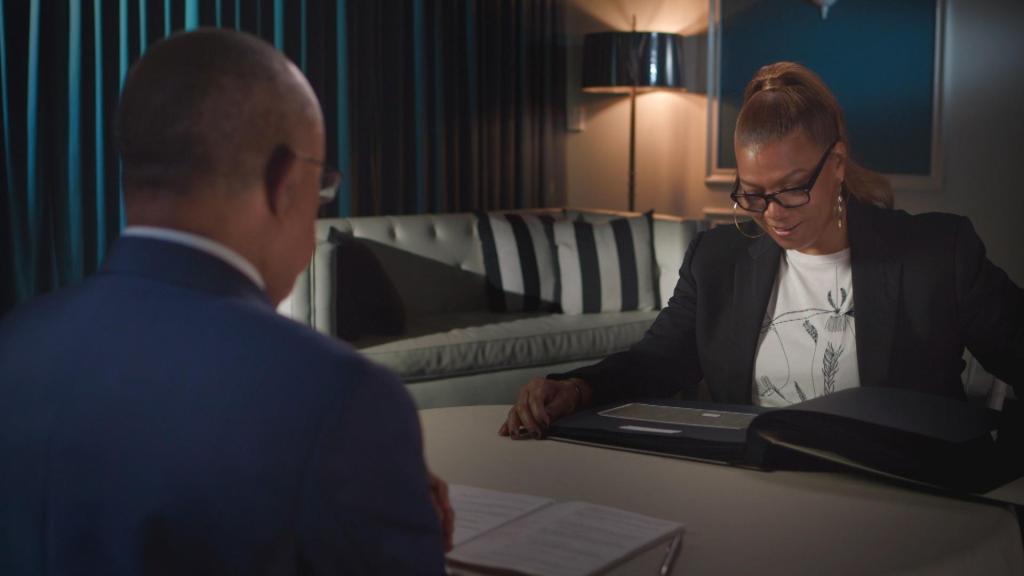
On a season seven episode of historian Prof. Skip Gates’ public broadcast show, Finding Your Roots, Queen Latifah read aloud the document that freed her first recorded ancestor:
“Being conscious of the injustice and impropriety of holding my fellow creature in state of slavery, I do hereby emancipate and set free one Negro woman named Jug, who is about 28 years old, to be immediate free after this day, October 1st, 1792. -Mary Old” (slave-owner).
“No way,” Latifah sighs, and repeats this twice after she recites the words “set free.”
“OMG, I’m tingling right now,” she whispers.
‘The Queen L-A-T-I-F-A-H in command’ spent her entire rap career rapping about freedom.
And: U-N-I-T-Y!
Now she asks: “What must that have been like…to know that you are free?”
Indeed, what did it feel like to hold your own emancipation piece of paper for the first time?
Or, to receive this piece of paper in your (embondaged) hands?
Or, pen a document liberating another who you believe to be a fellow human being?
What must September 30th have felt like for this slave…
The day before one’s own manumission, the eve of one’s freedom?
What ever did Ms. Jug do?
How can I…
How can I claim any linkages to, or even feign knowing anything about –
Let alone understand – anyone who’s lived in bondage?
However, I can see that
We’re all disconnected from each other today, without seeking to know all our own pasts.
Or, consider:
The 1870 Federal census was the first time Africans in America were identified by name, Meaning:
Most of us can never know our direct lineage …no paper trail back to Africa.
So, what must it feel like to find the first record of your ancestors – from the first census –
Only to discover a record of your earliest ancestor’s birthplace: Africa!?!
Though rare, it’s written before you that they’d survived capture and permanent separation,
The drudgery of trans-Atlantic transport, and
A life-till-death of cruel and brutal servitude, and
Somehow, miraculously, here you are.
“The dream and the hope of the slave.”
Slavery shattered Black families.
This was designed to cut us off at the roots, stunt our growth – explicit daily degradation:
You’z just a slave! No more no less.
For whites hearing this, it may evoke images of their ancestors who committed such acts. How exactly did they become capable of such every day cruelty…and live with it?
All must understand our roots in order to grow.
For slave descendants, we see survivors of a tremendously horrible system.
This includes both white and Black people.
Those who perpetrated, witnessed, resisted or fell victim to slavery’s atrocities.
We’re all descended from ‘slavery survivors’ too – our shared culture its remnants.
Of the myriad of emotions one feels in learning such facts, one is certainly pride.
Another is compassion.
We survived. And we now know better.
We rise.
We rise.
We rise.
[sigh]
Suggesting that we forget about slavery,
Or saying “Oh, but slavery was so long ago,”
Demands that we ignore our own people’s resilience, and will to live.
It’s akin to encouraging mass suicide.
For, to forget is to sever your own roots.
“Blood on the leaves, and blood at the root.”
And like any tree without roots, we’d wither and die, be crushed under our own weight.
Or, get chopped up and made useful.
Or, just left “for the sun to rot, for the tree to drop.”
Erasing history, turning away because of its discomfort, is a cult of death.
It moralizes its interest in decay.
To remember is to live, and celebrate life.
We must reckon with how our lives got here, to this day, to this very point.
Therefore, to learn is to know and continue to grow, for
A tree that’s not busy growing is busy dying.
The quest for roots is incredibly, powerfully, life-giving.
Find yours.
Call their names.
Knowledge further fertilizes freedom.
Know better. Do better.
Rise, like a breath of fresh air.
Share this:


Another Lone Gunman #BlackenAsiaWithLove #SpOkenWoRd
A lone gunman killed numerous people at a public place in America.
Another lone gunman shot up a school, another a nightclub, and
Another killed a kid walking down the street.
A few years ago,
Another lone gunman shot up a movie premier, dressed as one of the film’s villains.
Another – armed with a badge-
Took a woman’s life after a routine traffic stop.
Plenty of his comrades routinely did the same.
Another lone gunman in blue, killed a kid playing in the park, and
Another shot a man who was reaching for his wallet as he’d demanded.
Another shot a man with his kid in the backseat, while his girlfriend live-streamed it, and
Another took 8 minutes and 46 seconds to kill again.
Another watched while it happened, while
Another kept the crowd at bay.
Another. And another, and
Last week, in another American city, another lone gunman murdered more.
The lone gunman in blue responsible for safely apprehending this latest lone gunman said: This poor lone gunman just had “a bad day.”
We bide our time till next week’s breaking news.

 Thoughts from the criminology team